Articles | Volume 23, issue 19
https://doi.org/10.5194/bg-23-6915-2026
© Author(s) 2026. This work is distributed under
the Creative Commons Attribution 4.0 License.
https://doi.org/10.5194/bg-23-6915-2026
© Author(s) 2026. This work is distributed under
the Creative Commons Attribution 4.0 License.
Summer oxygen dynamics in the bottom waters of a wide, temperate shelf sea

Xin Meng
School of Environmental Sciences, University of Liverpool, Brownlow Street, Liverpool, L69 3GP, UK
Department of Geography, University of Exeter, Exeter, EX4 4QE, UK
Claire Mahaffey
School of Environmental Sciences, University of Liverpool, Brownlow Street, Liverpool, L69 3GP, UK
Juliane Wihsgott
Plymouth Marine Laboratory, Prospect Place, Plymouth, PL1 3DH, UK
Jonathan Sharples
CORRESPONDING AUTHOR
School of Environmental Sciences, University of Liverpool, Brownlow Street, Liverpool, L69 3GP, UK
Related authors
No articles found.
Dale Partridge, Deep Banerjee, David Ford, Ke Wang, Jozef Skákala, Juliane Wihsgott, Prathyush P. Menon, Susan Kay, Daniel Clewley, Andrea Rochner, Emma Sullivan, and Matthew Palmer
Ocean Sci., 22, 2083–2100, https://doi.org/10.5194/os-22-2083-2026, https://doi.org/10.5194/os-22-2083-2026, 2026
Short summary
Short summary
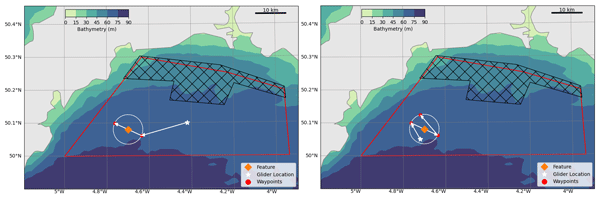
This study outlines the development and testing of a Digital Twin Ocean (DTO) framework, aimed at improving coastal ocean forecasts through the use of autonomous underwater gliders. A fleet of gliders were deployed in the western English Channel during August–September 2024 to collect measurements of temperature, salinity, chlorophyll and oxygen, aiming to track the movement of the harmful algal bloom Karenia mikimotoi.
Zhibo Shao, Yangchun Xu, Hua Wang, Weicheng Luo, Lice Wang, Yuhong Huang, Nona Sheila R. Agawin, Ayaz Ahmed, Mar Benavides, Mikkel Bentzon-Tilia, Ilana Berman-Frank, Hugo Berthelot, Isabelle C. Biegala, Mariana B. Bif, Antonio Bode, Sophie Bonnet, Deborah A. Bronk, Mark V. Brown, Lisa Campbell, Douglas G. Capone, Edward J. Carpenter, Nicolas Cassar, Bonnie X. Chang, Dreux Chappell, Yuh-ling Lee Chen, Matthew J. Church, Francisco M. Cornejo-Castillo, Amália Maria Sacilotto Detoni, Scott C. Doney, Cecile Dupouy, Marta Estrada, Camila Fernandez, Bieito Fernández-Castro, Debany Fonseca-Batista, Rachel A. Foster, Ken Furuya, Nicole Garcia, Kanji Goto, Jesús Gago, Mary R. Gradoville, M. Robert Hamersley, Britt A. Henke, Cora Hörstmann, Amal Jayakumar, Zhibing Jiang, Shuh-Ji Kao, David M. Karl, Leila R. Kittu, Angela N. Knapp, Sanjeev Kumar, Julie LaRoche, Hongbin Liu, Jiaxing Liu, Caroline Lory, Carolin R. Löscher, Emilio Marañón, Lauren F. Messer, Matthew M. Mills, Wiebke Mohr, Pia H. Moisander, Claire Mahaffey, Robert Moore, Beatriz Mouriño-Carballido, Margaret R. Mulholland, Shin-ichiro Nakaoka, Joseph A. Needoba, Eric J. Raes, Eyal Rahav, Teodoro Ramírez-Cárdenas, Christian Furbo Reeder, Lasse Riemann, Virginie Riou, Julie C. Robidart, Vedula V. S. S. Sarma, Takuya Sato, Himanshu Saxena, Corday Selden, Justin R. Seymour, Dalin Shi, Takuhei Shiozaki, Arvind Singh, Rachel E. Sipler, Jun Sun, Koji Suzuki, Kazutaka Takahashi, Yehui Tan, Weiyi Tang, Jean-Éric Tremblay, Kendra Turk-Kubo, Zuozhu Wen, Angelicque E. White, Samuel T. Wilson, Takashi Yoshida, Jonathan P. Zehr, Run Zhang, Yao Zhang, and Ya-Wei Luo
Earth Syst. Sci. Data, 15, 3673–3709, https://doi.org/10.5194/essd-15-3673-2023, https://doi.org/10.5194/essd-15-3673-2023, 2023
Short summary
Short summary
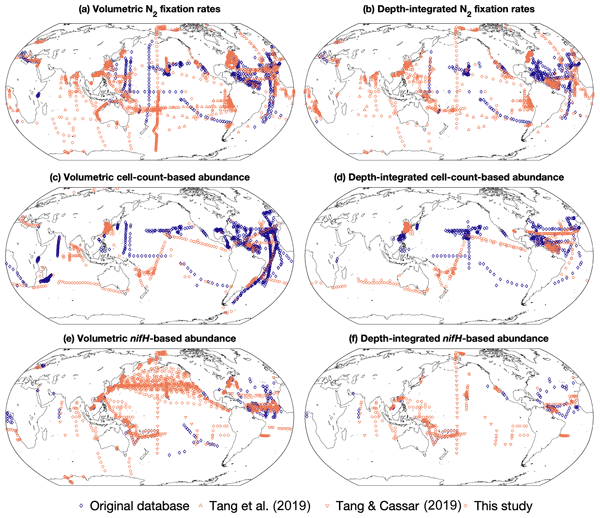
N2 fixation by marine diazotrophs is an important bioavailable N source to the global ocean. This updated global oceanic diazotroph database increases the number of in situ measurements of N2 fixation rates, diazotrophic cell abundances, and nifH gene copy abundances by 184 %, 86 %, and 809 %, respectively. Using the updated database, the global marine N2 fixation rate is estimated at 223 ± 30 Tg N yr−1, which triplicates that using the original database.
Adam Francis, Raja S. Ganeshram, Robyn E. Tuerena, Robert G. M. Spencer, Robert M. Holmes, Jennifer A. Rogers, and Claire Mahaffey
Biogeosciences, 20, 365–382, https://doi.org/10.5194/bg-20-365-2023, https://doi.org/10.5194/bg-20-365-2023, 2023
Short summary
Short summary
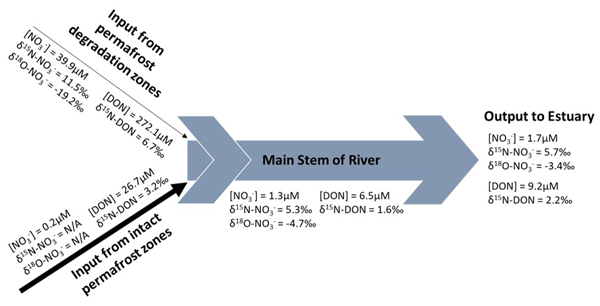
Climate change is causing extensive permafrost degradation and nutrient releases into rivers with great ecological impacts on the Arctic Ocean. We focused on nitrogen (N) release from this degradation and associated cycling using N isotopes, an understudied area. Many N species are released at degradation sites with exchanges between species. N inputs from permafrost degradation and seasonal river N trends were identified using isotopes, helping to predict climate change impacts.
Cited articles
Adams, K. A., Barth, J. A., and Chan, F.: Temporal variability of near‐bottom dissolved oxygen during upwelling off central Oregon, J. Geophys. Res.-Oceans, 118, 4839–4854, 2013.
Barth, J. A., Pierce, S. D., Carter, B. R., Chan, F., Erofeev, A. Y., Fisher, J. L., Feely, R. A., Jacobson, K. C., Keller, A. A., and Morgan, C. A.: Widespread and increasing near-bottom hypoxia in the coastal ocean off the United States Pacific Northwest, Scientific Reports, 14, 3798, https://doi.org/10.1038/s41598-024-54476-0, 2024.
Bendtsen, J., Hilligsøe, K. M., Hansen, J. L., and Richardson, K.: Analysis of remineralisation, lability, temperature sensitivity and structural composition of organic matter from the upper ocean, Prog. Oceanogr., 130, 125–145, 2015.
Breitburg, D.: Effects of hypoxia, and the balance between hypoxia and enrichment, on coastal fishes and fisheries, Estuaries, 25, 767–781, 2002.
Breitburg, D. L., Grégoire, M., and Isensee, K.: The ocean is losing its breath: Declining oxygen in the world's ocean and coastal waters, IOC-UNESCO, IOC Technical Series, IOC/2018/TS/137,, 40 pp., 2018.
Brewer, P. G. and Peltzer, E. T.: Depth perception: the need to report ocean biogeochemical rates as functions of temperature, not depth, Philos. T. Roy. Soc. A, 375, 20160319, https://doi.org/10.1098/rsta.2016.0319, 2017.
Burchard, H. and Rippeth, T. P.: Generation of bulk shear spikes in shallow stratified tidal seas, J. Phys. Oceanogr., 39, 969–985, 2009.
Capuzzo, E., Lynam, C. P., Barry, J., Stephens, D., Forster, R. M., Greenwood, N., McQuatters‐Gollop, A., Silva, T., van Leeuwen, S. M., and Engelhard, G. H.: A decline in primary production in the North Sea over 25 years, associated with reductions in zooplankton abundance and fish stock recruitment, Glob. Change Biol., 24, e352–e364, 2018.
Ciavatta, S., Kay, S., Saux‐Picart, S., Butenschön, M., and Allen, J.: Decadal reanalysis of biogeochemical indicators and fluxes in the North West European shelf‐sea ecosystem, J. Geophys. Res.-Oceans, 121, 1824–1845, 2016.
Davis, C. E., Blackbird, S., Wolff, G., Woodward, M., and Mahaffey, C.: Seasonal organic matter dynamics in a temperate shelf sea, Prog. Oceanogr., 177, 101925, https://doi.org/10.1016/j.pocean.2018.02.021, 2019.
Diaz, R. J. and Rosenberg, R.: Spreading dead zones and consequences for marine ecosystems, Science, 321, 926–929, 2008.
García-Martín, E. E., Daniels, C. J., Davidson, K., Davis, C. E., Mahaffey, C., Mayers, K. M., McNeill, S., Poulton, A. J., Purdie, D. A., and Tarran, G. A.: Seasonal changes in plankton respiration and bacterial metabolism in a temperate shelf sea, Prog. Oceanogr., 177, 101884, https://doi.org/10.1016/j.pocean.2017.12.002, 2019.
Greenwood, N., Parker, E. R., Fernand, L., Sivyer, D. B., Weston, K., Painting, S. J., Kröger, S., Forster, R. M., Lees, H. E., Mills, D. K., and Laane, R. W. P. M.: Detection of low bottom water oxygen concentrations in the North Sea; implications for monitoring and assessment of ecosystem health, Biogeosciences, 7, 1357–1373, https://doi.org/10.5194/bg-7-1357-2010, 2010.
Hersbach, H., Bell, B., Berrisford, P., Biavati, G., Horányi, A., Muñoz Sabater, J., Nicolas, J., Peubey, C., Radu, R., and Rozum, I.: ERA5 hourly data on single levels from 1940 to present, Copernicus Climate Change Service (C3S) Climate Data Store (CDS) [data set], https://doi.org/10.24381/cds.adbb2d47, 2023.
Hicks, N., Ubbara, G., Silburn, B., Smith, H. E., Kröger, S., Parker, E., Sivyer, D., Kitidis, V., Hatton, A., and Mayor, D.: Oxygen dynamics in shelf seas sediments incorporating seasonal variability, Biogeochemistry, 135, 35–47, 2017.
Holt, J., Wakelin, S., Lowe, J., and Tinker, J.: The potential impacts of climate change on the hydrography of the northwest European continental shelf, Prog. Oceanogr., 86, 361–379, 2010.
Hopkins, J. E., Palmer, M. R., Poulton, A. J., Hickman, A. E., and Sharples, J.: Control of a phytoplankton bloom by wind‐driven vertical mixing and light availability, Limnol. Oceanogr., 66, 1926–1949, 2021.
Hull, T., Johnson, M., Greenwood, N., and Kaiser, J.: Bottom mixed layer oxygen dynamics in the Celtic Sea, Biogeochemistry, 149, 263–289, https://doi.org/10.1007/s10533-020-00662-x, 2020.
Kemp, W. M., Sampou, P., Garber, J., Tuttle, J., and Boynton, W.: Seasonal depletion of oxygen from bottom waters of Chesapeake Bay: roles of benthic and planktonic respiration and physical exchange processes, Mar. Ecol. Prog. Ser., 85, 137–152, 1992.
Laufkötter, C., John, J. G., Stock, C. A., and Dunne, J. P.: Temperature and oxygen dependence of the remineralization of organic matter, Global Biogeochem. Cy., 31, 1038–1050, 2017.
Lefevre, D., Bentley, T., Robinson, C., and Blight, S.: The temperature response of gross and net community production and respiration in time-varying assemblages of temperate marine micro-plankton, J. Exp. Mar. Biol. Ecol., 184, 201–215, 1994.
Levin, L. A., Ekau, W., Gooday, A. J., Jorissen, F., Middelburg, J. J., Naqvi, S. W. A., Neira, C., Rabalais, N. N., and Zhang, J.: Effects of natural and human-induced hypoxia on coastal benthos, Biogeosciences, 6, 2063–2098, https://doi.org/10.5194/bg-6-2063-2009, 2009.
Lincoln, B., Rippeth, T., and Simpson, J.: Surface mixed layer deepening through wind shear alignment in a seasonally stratified shallow sea, J. Geophys. Res.-Oceans, 121, 6021–6034, 2016.
Mahaffey, C., Hull, T., Hunter, W., Greenwood, N., Palmer, M., Sharples, J., Wakelin, S., and Williams, C.: Climate change impacts on dissolved oxygen concentration in marine and coastal waters around the UK and Ireland, MCCIP Science Review, 31 pp., https://doi.org/10.14465/2023.reu07.oxy, 2023.
Okubo, A.: Oceanic diffusion diagrams, Deep Sea Research and Oceanographic Abstracts, 18, 789–802, https://doi.org/10.1016/0011-7471(71)90046-5, 1971.
Oschlies, A., Brandt, P., Stramma, L., and Schmidtko, S.: Drivers and mechanisms of ocean deoxygenation, Nat. Geosci., 11, 467–473, 2018.
Palmer, M. R., Rippeth, T. P., and Simpson, J. H.: An investigation of internal mixing in a seasonally stratified shelf sea, J. Geophys. Res.-Oceans, 113, C12005, https://doi.org/10.1029/2007JC004531, 2008.
Palmer, M. R., Inall, M. E., and Sharples, J.: The physical oceanography of Jones Bank: A mixing hotspot in the Celtic Sea, Prog. Oceanogr., 117, 9–24, 2013.
Queste, B. Y., Fernand, L., Jickells, T. D., and Heywood, K. J.: Spatial extent and historical context of North Sea oxygen depletion in August 2010, Biogeochemistry, 113, 53–68, 2013.
Rippeth, T., Shen, S., Lincoln, B., Scannell, B., Meng, X., Hopkins, J., and Sharples, J.: The deepwater oxygen deficit in stratified shallow seas is mediated by diapycnal mixing, Nat. Commun., 15, 3136, https://doi.org/10.1038/s41467-024-47548-2, 2024.
Rovelli, L., Dengler, M., Schmidt, M., Sommer, S., Linke, P., and McGinnis, D. F.: Thermocline mixing and vertical oxygen fluxes in the stratified central North Sea, Biogeosciences, 13, 1609–1620, https://doi.org/10.5194/bg-13-1609-2016, 2016.
Ruiz-Castillo, E., Sharples, J., and Hopkins, J.: Wind‐driven strain extends seasonal stratification, Geophys. Res. Lett., 46, 13244–13252, 2019.
Sarma, V., Rao, G., Viswanadham, R., Sherin, C., Salisbury, J., Omand, M. M., Mahadevan, A., Murty, V., Shroyer, E. L., and Baumgartner, M.: Effects of freshwater stratification on nutrients, dissolved oxygen, and phytoplankton in the Bay of Bengal, Oceanography, 29, 222-231, 2016.
Schmidtko, S., Stramma, L., and Visbeck, M.: Decline in global oceanic oxygen content during the past five decades, Nature, 542, 335–339, 2017.
Seguro, I., Marca, A. D., Painting, S. J., Shutler, J. D., Suggett, D. J., and Kaiser, J.: High-resolution net and gross biological production during a Celtic Sea spring bloom, Prog. Oceanogr., 177, 101885, https://doi.org/10.1016/j.pocean.2017.12.003, 2019.
Sharples, J., Moore, M. C., Rippeth, T. P., Holligan, P. M., Hydes, D. J., Fisher, N. R., and Simpson, J. H.: Phytoplankton distribution and survival in the thermocline, Limnol. Oceanogr., 46, 486–496, 2001.
Sharples, J., Tweddle, J. F., Mattias Green, J., Palmer, M. R., Kim, Y.-N., Hickman, A. E., Holligan, P. M., Moore, C. M., Rippeth, T. P., and Simpson, J. H.: Spring‐neap modulation of internal tide mixing and vertical nitrate fluxes at a shelf edge in summer, Limnol. Oceanogr., 52, 1735–1747, 2007.
Sharples, J., Holt, J., and Dye, S. R.: Impacts of climate change on shelf sea stratification, MCCIP Science Review 2013, 67–70, https://doi.org/10.14465/2013.arc08.067-070, 2013.
Sharples, J., Mayor, D. J., Poulton, A. J., Rees, A. P., and Robinson, C.: Shelf Sea Biogeochemistry: Nutrient and carbon cycling in a temperate shelf sea water column, Prog. Oceanogr., 177, 102182, https://doi.org/10.1016/j.pocean.2019.102182, 2019.
Sharples, J., Holt, J., and Wakelin, S.: Impacts of climate change on shelf sea stratification, relevant to the coastal and marine environment around the UK, MCCIP Science Review 2020, 103–115, https://doi.org/10.14465/2020.arc05.str, 2020.
Tweddle, J. F., Sharples, J., Palmer, M. R., Davidson, K., and McNeill, S.: Enhanced nutrient fluxes at the shelf sea seasonal thermocline caused by stratified flow over a bank, Prog. Oceanogr., 117, 37–47, https://doi.org/10.1016/j.pocean.2013.06.018, 2013.
Wakelin, S. L., Artioli, Y., Holt, J. T., Butenschön, M., and Blackford, J.: Controls on near-bed oxygen concentration on the Northwest European Continental Shelf under a potential future climate scenario, Prog. Oceanogr., 187, 102400, https://doi.org/10.1016/j.pocean.2020.102400, 2020.
Wihsgott, J. U., Sharples, J., Hopkins, J. E., Woodward, E. M. S., Hull, T., Greenwood, N., and Sivyer, D. B.: Observations of vertical mixing in autumn and its effect on the autumn phytoplankton bloom, Prog. Oceanogr., 177, 102059, https://doi.org/10.1016/j.pocean.2019.01.001, 2019.
Williams, C., Sharples, J., Mahaffey, C., and Rippeth, T.: Wind‐driven nutrient pulses to the subsurface chlorophyll maximum in seasonally stratified shelf seas, Geophys. Res. Lett., 40, 5467–5472, 2013.
Williams, C., Davis, C., Palmer, M., Sharples, J., and Mahaffey, C.: The three Rs: Resolving respiration robotically in shelf seas, Geophys. Res. Lett., 49, e2021GL096921, https://doi.org/10.1029/2021GL096921, 2022.
Woolf, D. and Wolf, J.: Impacts of climate change on storms and waves, MCCIP Science Review 2013, 20–26, https://doi.org/10.14465/2013.arc03.020-026, 2013.
Short summary
Summer oxygen loss in Celtic Sea bottom waters was investigated using ship observations and an oxygen budget. Seasonal layering cuts deep water off from the air, while microbes breaking down organic matter consume most oxygen. Winds can mix oxygen downward, but warming may worsen oxygen loss by speeding microbial activity and lowering oxygen solubility. This could push parts of the shelf sea toward oxygen deficiency, with risks for seafloor life and ecosystem health.
Summer oxygen loss in Celtic Sea bottom waters was investigated using ship observations and an...
Altmetrics
Final-revised paper
Preprint