
Articles | Volume 23, issue 19
https://doi.org/10.5194/bg-23-6931-2026
© Author(s) 2026. This work is distributed under
the Creative Commons Attribution 4.0 License.
the Creative Commons Attribution 4.0 License.
https://doi.org/10.5194/bg-23-6931-2026
© Author(s) 2026. This work is distributed under
the Creative Commons Attribution 4.0 License.
the Creative Commons Attribution 4.0 License.
Research article
| 
06 Oct 2026
Research article |
| 06 Oct 2026
| 06 Oct 2026
Unlocking the air: DNA metabarcoding sheds light on seasonal fungal dynamics in a temperate floodplain forest
Ettore Fedele
Institute of Biology, Biodiversity of the Atmosphere, Leipzig University, Talstraße 33, 04103 Leipzig, Germany
Department of Biosciences, Swansea University, Margam Building, Singleton Campus, SA2 8PP, Swansea, UK
Christina M. Müller
Systematic Botany, Justus-Liebig-University Giessen, Heinrich-Buff-Ring 38, 35392 Giessen, Germany
Volker Wissemann
Systematic Botany, Justus-Liebig-University Giessen, Heinrich-Buff-Ring 38, 35392 Giessen, Germany
Birgit Gemeinholzer
Systematic Botany, Justus-Liebig-University Giessen, Heinrich-Buff-Ring 38, 35392 Giessen, Germany
Department of Botany, FB 10/Institute for Biology, University of Kassel, Heinrich-Plett-Straße 40, 34132 Kassel, Germany
Christian Wirth
Systematic Botany and Functional Biodiversity, Institute for Biology, Leipzig University, Johannisallee 21, 04103 Leipzig, Germany
German Centre for Integrative Biodiversity Research (iDiv) Halle-Jena-Leipzig, Puschstraße 4, 04103 Leipzig, Germany
Beatriz Sánchez-Parra
CORRESPONDING AUTHOR

Institute of Biology, Biodiversity of the Atmosphere, Leipzig University, Talstraße 33, 04103 Leipzig, Germany
German Centre for Integrative Biodiversity Research (iDiv) Halle-Jena-Leipzig, Puschstraße 4, 04103 Leipzig, Germany
Related authors
No articles found.
Josefine Umlauft, Karin Mora, Fabian Limberger, Kilian Gerberding, Stefanie Dumberger, Simon Haberstroh, Markus Sulzer, Lea Dedden, Markus Weiler, Christian Wirth, Christiane Werner, and Teja Kattenborn
EGUsphere, https://doi.org/10.5194/egusphere-2026-6435, https://doi.org/10.5194/egusphere-2026-6435, 2026
This preprint is open for discussion and under review for Biogeosciences (BG).
Short summary
Short summary
Can we tell when trees lack water by listening to the ground? Over three growing seasons in a German forest, we recorded vibrations generated by trees swaying in the wind and compared them with changes in trunk thickness, weather and soil moisture. These signals helped predict how much water trees lacked, providing information beyond weather and soil measurements alone. Our findings suggest that ground sensors could offer a new way to monitor water conditions in forests.
Luis Kremer, Jan Pisek, Ronny Richter, Julian Frey, Daniel Lusk, Christiane Werner, Christian Wirth, and Teja Kattenborn
Biogeosciences, 23, 5607–5624, https://doi.org/10.5194/bg-23-5607-2026, https://doi.org/10.5194/bg-23-5607-2026, 2026
Short summary
Short summary
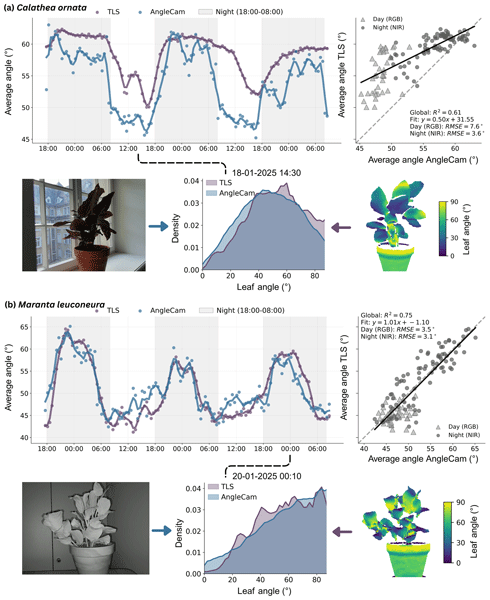
To adapt to changing environmental conditions, plants can adjust their leaf angles. We developed AngleCam V2, an AI method that estimates leaf inclination angles from photos taken during day and night. Trained on thousands of images from about 200 species, it monitors daily changes in leaf angle, aligns with laser-scanning data, and detects systematic shifts under water limitation. AngleCam V2 provides an open-source tool for monitoring leaf angle dynamics over time, taxa, and environments.
Samuel Kwakye, Heike Kalesse-Los, Maximilian Maahn, Patric Seifert, Roel van Klink, Christian Wirth, and Johannes Quaas
Atmos. Meas. Tech. Discuss., https://doi.org/10.5194/amt-2023-69, https://doi.org/10.5194/amt-2023-69, 2023
Publication in AMT not foreseen
Short summary
Short summary
Insect numbers in the atmosphere can be calculated using polarimetric weather radar but they have to be identified and separated from other echoes, especially weather phenomena. Here, the separation is demonstrated using three machine-learning algorithms and insect count data from suction traps and the nature of radar measurements of different radar echoes is revealed. Random forest is the best separating algorithm and insect echoes radar measurements are distinct.
J. Pacheco-Labrador, U. Weber, X. Ma, M. D. Mahecha, N. Carvalhais, C. Wirth, A. Huth, F. J. Bohn, G. Kraemer, U. Heiden, FunDivEUROPE members, and M. Migliavacca
Int. Arch. Photogramm. Remote Sens. Spatial Inf. Sci., XLVI-1-W1-2021, 49–55, https://doi.org/10.5194/isprs-archives-XLVI-1-W1-2021-49-2022, https://doi.org/10.5194/isprs-archives-XLVI-1-W1-2021-49-2022, 2022
Cited articles
Abarenkov, K., Zirk, A., Piirmann, T., Pöhönen, R., Ivanov, F., Nilsson, R. H., and Kõljalg, U.: UNITE general FASTA release for Fungi 2, Version 18.07.2023, https://doi.org//10.15156/BIO/2938068, 2023.
Abuley, I. K. and Nielsen, B. J.: Evaluation of models to control potato early blight (Alternaria solani) in Denmark, Crop Prot., 102, 118–128, https://doi.org/10.1016/j.cropro.2017.08.012, 2017.
Akgül, H., Yılmazkaya, D., Akata, I., Tosunoğlu, A., and Bıçakçı, A.: Determination of airborne fungal spores of Gaziantep (SE Turkey), Aerobiologia, 32, 441–452, https://doi.org/10.1007/s10453-015-9417-z, 2016.
Albrectsen, B. R. and Witzell, J.: Disentangling functions of fungal endophytes in forest trees, in Fungi: Types, environmental impact and role in disease, edited by: Silva, A. P. and Sol, M., Nova Science Publishers, 235–246, ISBN 978-1-61942-671-9, 2012.
Almaguer, M., Aira, M.-J., Rodríguez-Rajo, F. J., and Rojas, T. I.: Temporal dynamics of airborne fungi in Havana (Cuba) during dry and rainy seasons: influence of meteorological parameters, Int. J. Biometeorol., 58, 1459–1470, https://doi.org/10.1007/s00484-013-0748-6, 2014.
Andrew, C., Heegaard, E., Kirk, P. M., Bässler, C., Heilmann-Clausen, J., Krisai-Greilhuber, I., Kuyper, T. W., Senn-Irlet, B., Büntgen, U., Diez, J., and Egli, S.:. Big data integration: Pan-European fungal species observations' assembly for addressing contemporary questions in ecology and global change biology, Fungal Biol. Rev., 31, 88–98, 2017.
Antón, S. F., de la Cruz, D. R., Sánchez, J. S., and Sánchez Reyes, E.: Analysis of the airborne fungal spores present in the atmosphere of Salamanca (MW Spain): a preliminary survey, Aerobiologia, 35, 447–462, https://doi.org/10.1007/s10453-019-09569-z, 2019.
Asemaninejad, A., Thorn, R. G., Branfireun, B. A., and Lindo, Z.: Climate change favours specific fungal communities in boreal peatlands, Soil Biol. Biochem., 120, 28–36, https://doi.org/10.1016/j.soilbio.2018.01.029, 2018.
Bai, W., Li, Y., Xie, W., Ma, T., Hou, J., and Zeng, X.: Vertical variations in the concentration and community structure of airborne microbes associated with PM2.5, Sci. Total Environ., 760, 143396, https://doi.org/10.1016/j.scitotenv.2020.143396, 2021.
Baldocchi, D. D., Hincks, B. B., and Meyers, T. P.: Measuring Biosphere‐Atmosphere Exchanges of Biologically Related Gases with Micrometeorological Methods, Ecology, 69, 1331–1340, https://doi.org/10.2307/1941631, 1988.
Bavbek, S., Erkekol, F.Ö., Çeter, T., Mungan, D., Özer, F., Pinar, M., and Misirligil, Z.: Sensitization to Alternaria and Cladosporium in Patients with Respiratory Allergy and Outdoor Counts of Mold Spores in Ankara Atmosphere, Turkey, J. Asthma, 43, 421–426, https://doi.org/10.1080/02770900600710706, 2006.
Bowers, R. M., McCubbin, I. B., Hallar, A. G., and Fierer, N.: Seasonal variability in airborne bacterial communities at a high-elevation site, Atmos. Environ., 50, 41–49, https://doi.org/10.1016/j.atmosenv.2012.01.005, 2012.
Brown, J. K. M. and Hovmøller, M. S.: Aerial Dispersal of Pathogens on the Global and Continental Scales and Its Impact on Plant Disease, Science, 297, 537–541, https://doi.org/10.1126/science.1072678, 2002.
Cáliz, J., Triadó-Margarit, X., Camarero, L., and Casamayor, E. O.: A long-term survey unveils strong seasonal patterns in the airborne microbiome coupled to general and regional atmospheric circulations, P. Natl. Acad. Sci. USA, 115, 12229–12234, https://doi.org/10.1073/pnas.1812826115, 2018.
Callahan, B. J., McMurdie, P. J., Rosen, M. J., Han, A. W., Johnson, A. J. A., and Holmes, S. P.: DADA2: High-resolution sample inference from Illumina amplicon data, Nat. Methods, 13, 581–583, https://doi.org/10.1038/nmeth.3869, 2016.
Camacho, C., Coulouris, G., Avagyan, V., Ma, N., Papadopoulos, J., Bealer, K., and Madden, T. L.: BLAST+: architecture and applications, BMC Bioinformatics, 10, 421, https://doi.org/10.1186/1471-2105-10-421, 2009.
Chakraborty, S. and Newton, A. C.: Climate change, plant diseases and food security: an overview, Plant Pathol., 70, 581–595, https://doi.org/10.1111/j.1365-3059.2010.02411.x, 2021.
Chao, A. and Chun-Huo, C.: Species richness: estimation and comparison, Encyclopedia of Statistical Sciences, 1, 1–26, https://doi.org/10.1002/9781118445112.stat03432.pub2, 2016.
Christiansen, C. T., Haugwitz, M. S., Priemé, A., Nielsen, C. S., Elberling, B. O., Michelsen, A., Grogan, P., and Blok, D.: Enhanced summer warming reduces fungal decomposer diversity and litter mass loss more strongly in dry than in wet tundra, Glob. Change Biol., 23, 406–420, https://doi.org/10.1111/gcb.13362, 2017.
Crous, P. W., Wingfield, M. J., Guarro, J., Cheewangkoon, R., Van der Bank, M., Swart, W. J., Stchigel, A. M., Cano-Lira, J. F., Roux, J., Madrid, H., and Damm, U.: Fungal Planet description sheets: 154–213, Persoonia-Molecular Phylogeny and Evolution of Fungi, 31, 188–296, 2013.
Du, P., Du, R., Ren, W., Lu, Z., and Fu, P.: Seasonal variation characteristic of inhalable microbial communities in PM2.5 in Beijing city, China, Sci. Total Environ., 610/611, 308–315, https://doi.org/10.1016/j.scitotenv.2017.07.097, 2018.
Emeis, S.: Analytical Description and Vertical Structure of the Atmospheric Boundary Layer, In: Surface-Based Remote Sensing of the Atmospheric Boundary Layer, Atmos. Oceanogr. Sci. Libr., 40, https://doi.org/10.1007/978-90-481-9340-0_2, 2011.
Fisher, M. C., Henk, D. A., Briggs, C. J., Brownstein, J. S., Madoff, L. C., McCraw, S. L., and Gurr, S. J.: Emerging fungal threats to animal, plant and ecosystem health, Nature, 484, 186–194, https://doi.org/10.1038/nature10947, 2012.
Fröhlich-Nowoisky, J., Kampf, C. J., Weber, B., Huffman, J. A., Pöhlker, C., Andreae, M. O., Lang-Yona, N., Burrows, S. M., Gunthe, S. S., Elbert, W., Su, H., Hoor, P., Thines, E., Hoffmann, T., Després, V. R., and Pöschl, U.: Bioaerosols in the Earth system: Climate, health, and ecosystem interactions, Atmos. Res., 182, 346–376, https://doi.org/10.1016/j.atmosres.2016.07.018, 2016.
Gandy, D. G.: Itersonilia perplexans on chrysanthemums: Alternative hosts and ways of overwintering, Trans. Br. Mycol. Soc., 49, 499–507, https://doi.org/10.1016/S0007-1536(66)80096-7, 1966.
Grinn-Gofroń, A. and Bosiacka, B.: Effects of meteorological factors on the composition of selected fungal spores in the air, Aerobiologia, 31, 63–72, https://doi.org/10.1007/s10453-014-9347-1, 2015.
Grinn-Gofroń, A., Bosiacka, B., Bednarz, A., and Wolski, T.: A comparative study of hourly and daily relationships between selected meteorological parameters and airborne fungal spore composition, Aerobiologia, 34, 45–54, https://doi.org/10.1007/s10453-017-9493-3, 2018.
Grinn-Gofroń, A., Çeter, T., Pinar, N. M., Bosiacka, B., Çeter, S., Keçeli, T., Myśliwy, M., Şahin, A. A., and Bogawski, P.: Airborne fungal spore load and season timing in the Central and Eastern Black Sea region of Turkey explained by climate conditions and land use, Agr. Forest Meteorol., 295, 108191, https://doi.org/10.1016/j.agrformet.2020.108191, 2020.
Harrison, J. G., Forister, M. L., Parchman, T. L., and Koch, G. W.: Vertical stratification of the foliar fungal community in the world's tallest trees, Am. J. Bot., 103, 2087–2095, https://doi.org/10.3732/ajb.1600277, 2016.
Henkel, S., Richter, R., Andraczek, K., Mundry, R., Dontschev, M., Engelmann, R. A., Hartmann, T., Hecht, C., Kasperidus, H. D., Rieland, G., Scholz, M., Seele-Dilbat, C., Vieweg, M., and Wirth, C.: Ash dieback and hydrology affect tree growth patterns under climate change in European floodplain forests, Sci. Rep., 15, 10117, https://doi.org/10.1038/s41598-025-92079-5, 2025.
Hennecke, J., Bassi, L., Mommer, L., Albracht, C., Bergmann, J., Eisenhauer, N., Guerra, C. A., Heintz-Buschart, A., Kuyper, T. W., Lange, M., Solbach, M. D., and Weigelt, A.: Responses of rhizosphere fungi to the root economics space in grassland monocultures of different age, New Phytol., 240, 2035–2049, https://doi.org/10.1111/nph.19261, 2023.
Huang, Z., Yu, X., Liu, Q., Maki, T., Alam, K., Wang, Y., Xue, F., Tang, S., Du, P., Dong, Q., Wang, D., and Huang, J.: Bioaerosols in the atmosphere: A comprehensive review on detection methods, concentration and influencing factors, Sci. Total Environ., 912, 168818, https://doi.org/10.1016/j.scitotenv.2023.168818, 2024.
Joung, Y. S., Ge, Z., and Buie, C. R.: Bioaerosol generation by raindrops on soil, Nat. Commun., 8, 14668, https://doi.org/10.1038/ncomms14668, 2017.
Kadykalo, A. N., Buxton, R. T., Morrison, P., Anderson, C. M., Bickerton, H., Francis, C. M., Smith, A. C., and Fahrig, L.: Bridging research and practice in conservation, Conserv. Biol., 35, 1725–1737, https://doi.org/10.1111/cobi.13732, 2021.
Krah, F., Büntgen, U., and Bässler, C.: Temperature affects the timing and duration of fungal fruiting patterns across major terrestrial biomes, Ecol. Lett., 26, 1572–1583, https://doi.org/10.1111/ele.14275, 2023.
Lam, H. C. Y., Anees-Hill, S., Satchwell, J., Symon, F., Macintyre, H., Pashley, C. H., Marczylo, E. L., Douglas, P., Aldridge, S., and Hansell, A.: Association between ambient temperature and common allergenic pollen and fungal spores: A 52-year analysis in central England, United Kingdom, Sci. Total Environ., 906, 167607, https://doi.org/10.1016/j.scitotenv.2023.167607, 2024.
Lappan, R., Thakar, J., Molares Moncayo, L., Besser, A., Bradley, J. A., Goordial, J., Trembath-Reichert, E., and Greening, C.: The atmosphere: a transport medium or an active microbial ecosystem?, ISME J., 18, https://doi.org/10.1093/ismejo/wrae092, 2024.
Li, S., Liu, W. Y., Li, D. W., Song, L., Shi, X. M., and Lu, H. Z.: Species richness and vertical stratification of epiphytic lichens in subtropical primary and secondary forests in southwest China, Fung. Ecol., 17, 30–40, https://doi.org/10.1016/j.funeco.2015.02.005, 2015.
Liu, S., Cai, D.-Y., Chai, C.-Y., and Hui, F.-L.: Five new epiphytic species of Vishniacozyma (Bulleribasidiaceae, Tremellales) from China, MycoKeys, 113, 321–336, https://doi.org/10.3897/mycokeys.113.140598, 2025.
Loucks, D. P.: Impacts of climate change on economies, ecosystems, energy, environments, and human equity: A systems perspective, in: The Impacts of Climate Change, Elsevier, 19–50, https://doi.org/10.1016/B978-0-12-822373-4.00016-1, 2021.
Love, M. I., Huber, W., and Anders, S.: Moderated estimation of fold change and dispersion for RNA-seq data with DESeq2, Genome Biol., 15, 550, https://doi.org/10.1186/s13059-014-0550-8, 2014.
Magurran, A. E.: Measuring Biological Diversity, Blacwell Publishing, ISBN 978-0-632-05633-0, 2004
Maki, T., Bin, C., Kai, K., Kawai, K., Fujita, K., Ohara, K., Kobayashi, F., Davaanyam, E., Noda, J., Minamoto, Y., Shi, G., Hasegawa, H., and Iwasaka, Y.: Vertical distributions of airborne microorganisms over Asian dust source region of Taklimakan and Gobi Desert, Atmos. Environ., 214, 116848, https://doi.org/10.1016/j.atmosenv.2019.116848, 2019.
Mantoani, M. C., Sapucci, C. R., Guerra, L. C. C., Andrade, M. F., Dias, M. A. F. S., Dias, P. L. S., Albrecht, R. I., Silva, E. P., Rodrigues, F., Araujo, G. G., Galante, D., Silva, D. M. C., Martins, J. A., Martins, L. D., Boschilia, S. M., Phillips, V. T. J., Carotenuto, F., Šantl-Temkiv, T., Morris, C. E., and Gonçalves, F. L. T: Airborne fungal spore concentrations double but diversity decreases with warmer winter temperatures in the Brazilian Atlantic Forest biodiversity hotspot, Microbe, 7, 100300, https://doi.org/10.1016/j.microb.2025.100300, 2025.
Marçais, B. and Desprez-Loustau, M. L.: European oak powdery mildew: impact on trees, effects of environmental factors, and potential effects of climate change, Ann. For. Sci., 71, 633–642, https://doi.org/10.1007/s13595-012-0252-x, 2014.
Martin, M.: Cutadapt removes adapter sequences from high-throughput sequencing reads, EMBnet. J., 17, 10, https://doi.org/10.14806/ej.17.1.200, 2011.
McMurdie, P. J. and Holmes, S.: phyloseq: An R Package for Reproducible Interactive Analysis and Graphics of Microbiome Census Data, PLoS ONE, 8, e61217, https://doi.org/10.1371/journal.pone.0061217, 2013.
McMurdie, P. J. and Holmes, S.: Waste Not, Want Not: Why Rarefying Microbiome Data Is Inadmissible, PLoS Comput. Biol., 10, e1003531, https://doi.org/10.1371/journal.pcbi.1003531, 2014.
Metaxatos, A., Georgiadou, D., Hatzinikolaou, D., and Mainelis, G.: The Diversity, Richness, and Potential Health and Ecological Role of the Fungal Aerosols in Attica, Greece, Aerosol Air Qual. Res., 24, 1–20, https://doi.org/10.4209/aaqr.240170, 2024.
Müller, G. K.: Die Leipziger Auen – Bestandsaufnahme und Vorschläge für eine Gebietsentwicklung, Sächsisches Staatsministerium für Umwelt- und Landesentwicklung (SMU), Dresden, 1995.
Murali, A., Bhargava, A., and Wright, E. S.: IDTAXA: a novel approach for accurate taxonomic classification of microbiome sequences, Microbiome, 6, 140, https://doi.org/10.1186/s40168-018-0521-5, 2018.
Nowakowska, M., Wrzesińska, M., Kamiński, P., Szczechura, W., Lichocka, M., Tartanus, M., Kozik, E. U., and Nowicki, M.: Alternaria brassicicola – Brassicaceae pathosystem: insights into the infection process and resistance mechanisms under optimized artificial bio-assay, Eur. J. Plant Pathol., 153, 131–151, https://doi.org/10.1007/s10658-018-1548-y, 2019.
Núñez, A., Amo de Paz, G., Ferencova, Z., Rastrojo, A., Guantes, R., García, A. M., Alcamí, A., Gutiérrez-Bustillo, A. M., and Moreno, D. A.: Validation of the Hirst-Type Spore Trap for Simultaneous Monitoring of Prokaryotic and Eukaryotic Biodiversities in Urban Air Samples by Next-Generation Sequencing, Environ. Sci. Technol., 83, e00472-17, https://doi.org/10.1128/AEM.00472-17, 2017.
Oksanen, J., Simpson, G., Blanchet, F., Kindt, R., Legendre, P., Minchin, P., O’Hara, R., Solymos, P., Stevens, M., Szoecs, E., Wagner, H., Barbour, M., Bedward, M., Bolker, B., Borcard, D., Borman, T., Carvalho, G., Chirico, M., De Caceres, M., Durand, S., Evangelista, H., FitzJohn, R., Friendly, M., Furneaux, B., Hannigan, G., Hill, M., Lahti, L., Martino, C., McGlinn, D., Ouellette, M., Ribeiro Cunha, E., Smith, T., Stier, A., Ter Braak, C., and Weedon, J.: vegan: Community Ecology Package, R package version 2.8-0, CRAN [code], https://doi.org/10.32614/CRAN.package.vegan, 2025.
Oliveira, M., Ribeiro, H., Delgado, J. L., and Abreu, I.: The effects of meteorological factors on airborne fungal spore concentration in two areas differing in urbanisation level, Int. J. Biometeorol., 53, 61–73, https://doi.org/10.1007/s00484-008-0191-2, 2009.
Peltoniemi, K., Laiho, R., Juottonen, H., Kiikkilä, O., Mäkiranta, P., Minkkinen, K., Pennanen, T., Penttilä, T., Sarjala, T., Tuittila, E. S., Tuomivirta, T., and Fritze, H.: Microbial ecology in a future climate: effects of temperature and moisture on microbial communities of two boreal fens, FEMS Microbiol. Ecol., 91, fiv062, https://doi.org/10.1093/femsec/fiv062, 2015.
Pereira Freitas, G., Adachi, K., Conen, F., Heslin-Rees, D., Krejci, R., Tobo, Y., Yttri, K. E., and Zieger, P.: Regionally sourced bioaerosols drive high-temperature ice nucleating particles in the Arctic, Nat. Commun., 14, 5997, https://doi.org/10.1038/s41467-023-41696-7, 2023.
Piao, S., Liu, Q., Chen, A., Janssens, I. A., Fu, Y., Dai, J., Liu, L., Lian, X. U., Shen, M., and Zhu, X.: Plant phenology and global climate change: Current progresses and challenges, Glob. Change Biol., 25, 1922–1940, 2019.
Prass, M., Andreae, M. O., de Araùjo, A. C., Artaxo, P., Ditas, F., Elbert, W., Förster, J.-D., Franco, M. A., Hrabe de Angelis, I., Kesselmeier, J., Klimach, T., Kremper, L. A., Thines, E., Walter, D., Weber, J., Weber, B., Fuchs, B. M., Pöschl, U., and Pöhlker, C.: Bioaerosols in the Amazon rain forest: temporal variations and vertical profiles of Eukarya, Bacteria, and Archaea, Biogeosciences, 18, 4873–4887, https://doi.org/10.5194/bg-18-4873-2021, 2021.
Prospero, J. M., Blades, E., Mathison, G., and Naidu, R.: Interhemispheric transport of viable fungi and bacteria from Africa to the Caribbean with soil dust, Aerobiologia, 21, 1–19, https://doi.org/10.1007/s10453-004-5872-7, 2005.
Pullin, A. S. and Knight, T. M.: Effectiveness in Conservation Practice: Pointers from Medicine and Public Health, Conserv. Biol., 15, 50–54, https://doi.org/10.1111/j.1523-1739.2001.99499.x, 2001.
R Core Team: R: A language and environment for statistical computing (Version 4.3.1), R Foundation for Statistical Computing, Vienna, Austria, https://www.R-project.org/ (last access: 29 September 2026), 2023.
Richter, R., Reu, B., Wirth, C., Doktor, D., and Vohland, M.: The use of airborne hyperspectral data for tree species classification in a species-rich Central European forest area, Int. J. Appl. Earth Obs. Geoinf., 52, 464–474, https://doi.org/10.1016/j.jag.2016.07.018, 2016.
Rippon, J. W. and Anderson, D. N.: Metabolic rate of fungi as a function of temperature and oxidation-reduction potential (Eh), Mycopathologia et mycologia applicata, 40, 349–352, https://doi.org/10.1007/BF02051788, 1970.
Sadyś, M., Strzelczak, A., Grinn-Gofroń, A., and Kennedy, R.: Application of redundancy analysis for aerobiological data, Int. J. Biometeorol., 59, 25–36, https://doi.org/10.1007/s00484-014-0818-4, 2015.
Sadyś, M., Kennedy, R., and West, J. S.: Potential impact of climate change on fungal distributions: analysis of 2 years of contrasting weather in the UK, Aerobiologia, 32, 127–137, https://doi.org/10.1007/s10453-015-9402-6, 2016.
Safatov, A. S., Andreeva, I. S., Buryak, G. A., Olkin, S. E., Reznikova, I. K., Belan, B. D., Panchenko, M. V., and Simonenkov, D. V.: Long-Term Studies of Biological Components of Atmospheric Aerosol: Trends and Variability, Atmosphere, 13, 651, https://doi.org/10.3390/atmos13050651, 2022.
Sahu, N. and Tangutur, A. D.: Airborne algae: overview of the current status and its implications on the environment, Aerobiologia, 31, 89–97, https://doi.org/10.1007/s10453-014-9349-z, 2015.
Salafsky, N., Boshoven, J., Burivalova, Z., Dubois, N. S., Gomez, A., Johnson, A., Lee, A., Margoluis, R., Morrison, J., Muir, M., Pratt, S. C., Pullin, A. S., Salzer, D., Stewart, A., Sutherland, W. J., and Wordley, C. F. R.: Defining and using evidence in conservation practice, Conserv. Sci. Pract., 1, https://doi.org/10.1111/csp2.27, 2019.
Sánchez-Parra, B., Núñez, A., García, A. M., Campoy, P., and Moreno, D. A.: Distribution of airborne pollen, fungi and bacteria at four altitudes using high-throughput DNA sequencing, Atmos. Res., 249, 105306, https://doi.org/10.1016/j.atmosres.2020.105306, 2021.
Šantl-Temkiv, T., Sikoparija, B., Maki, T., Carotenuto, F., Amato, P., Yao, M., Morris, C. E., Schnell, R., Jaenicke, R., Pöhlker, C., DeMott, P. J., Hill, T. C. J., and Huffman, J. A.: Bioaerosol field measurements: Challenges and perspectives in outdoor studies, Aerosol Sci. Tech., 54, 520–546, https://doi.org/10.1080/02786826.2019.1676395, 2020.
Ščevková, J. and Kováč, J.: First fungal spore calendar for the atmosphere of Bratislava, Slovakia, Aerobiologia, 35, 343–356, https://doi.org/10.1007/s10453-019-09564-4, 2019.
Seinfeld, J. H. and Pandis, S. N.: Environmental Chemistry – Chemistry – Subjects – Wiley, in: Atmospheric Chemistry and Physics: From Air Pollution to Climate Change, 3rd edn., Hoboken, NJ, USA, Wiley-Interscience, ISBN 978-1-118-94740-1, 2016.
Shannon, C. E.: A Mathematical Theory of Communication, Bell Syst. Tech. J., 27, 379–423, https://doi.org/10.1002/j.1538-7305.1948.tb01338.x, 1948.
Shelton, J. M. G., Rhodes, J., Uzzell, C. B., Hemmings, S., Brackin, A. P., Sewell, T. R., Alghamdi, A., Dyer, P. S., Fraser, M., Borman, A. M., Johnson, E. M., Piel, F. B., Singer, A. C., and Fisher, M. C.: Citizen science reveals landscape-scale exposures to multiazole-resistant Aspergillus fumigatus bioaerosols, Sci. Adv., 9, https://doi.org/10.1126/sciadv.adh8839, 2023.
Simpson, E. H.: Measurement of Diversity, Nature, 163, 688–688, https://doi.org/10.1038/163688a0, 1949.
Souza, F. F. C., Mathai, P. P., Pauliquevis, T., Balsanelli, E., Pedrosa, F. O., Souza, E. M., Baura, V. A., Monteiro, R. A., Cruz, L. M., Souza, R. A. F., Andreae, M. O., Barbosa, C. G. G., Hrabe de Angelis, I., Sánchez-Parra, B., Pöhlker, C., Weber, B., Ruff, E., Reis, R. A., Godoi, R. H. M., Sadowsky, M. J., and Huergo, L. F.: Influence of seasonality on the aerosol microbiome of the Amazon rainforest, Sci. Total Environ., 760, 144092, https://doi.org/10.1016/j.scitotenv.2020.144092, 2021.
Stein, A. F., Draxler, R. R., Rolph, G. D., Stunder, B. J. B., Cohen, M. D., and Ngan, F.: NOAA's HYSPLIT Atmospheric Transport and Dispersion Modeling System, Bull. Am. Meteorol. Soc., 96, 2059–2077, https://doi.org/10.1175/BAMS-D-14-00110.1, 2015.
Sutherland, W. J., Pullin, A. S., Dolman, P. M., and Knight, T. M.: The need for evidence-based conservation, Trends Ecol. Evol., 19, 305–308, https://doi.org/10.1016/j.tree.2004.03.018, 2004.
Tang, K., Huang, Z., Huang, J., Maki, T., Zhang, S., Shimizu, A., Ma, X., Shi, J., Bi, J., Zhou, T., Wang, G., and Zhang, L.: Characterization of atmospheric bioaerosols along the transport pathway of Asian dust during the Dust-Bioaerosol 2016 campaign, Atmos. Chem. Phys., 18, 7131–7148, https://doi.org/10.5194/acp-18-7131-2018, 2018.
Tăut, I., Moldovan, M., Șimonca, V., Varga, M.I., Rob, M., Chira, F., and Chira, D.: Control of Pathogen Erysiphe alphitoides Present in Forest Crops in Current Climatic Conditions, Microbiol. Res., 15, 1441–1458, https://doi.org/10.3390/microbiolres15030097, 2024.
Tedersoo, L., Anslan, S., Bahram, M., Põlme, S., Riit, T., Liiv, I., Kõljalg, U., Kisand, V., Nilsson, H., Hildebrand, F., Bork, P., and Abarenkov, K.: Shotgun metagenomes and multiple primer pair-barcode combinations of amplicons reveal biases in metabarcoding analyses of fungi, MycoKeys, 10, 1–43, https://doi.org/10.3897/mycokeys.10.4852, 2015.
Tian, J., Dungait, J.A., Hou, R., Deng, Y., Hartley, I. P., Yang, Y., Kuzyakov, Y., Zhang, F., Cotrufo, M. F., and Zhou, J.: Microbially mediated mechanisms underlie soil carbon accrual by conservation agriculture under decade-long warming, Nat. Commun., 15, 377, https://doi.org/10.1038/s41467-023-44647-4, 2024.
Tignat-Perrier, R., Dommergue, A., Vogel, T. M., and Larose, C.: Microbial Ecology of the Planetary Boundary Layer, Atmosphere, 11, 1296, https://doi.org/10.3390/atmos11121296, 2020.
Uetake, J., Tobo, Y., Uji, Y., Hill, T. C. J., DeMott, P. J., Kreidenweis, S. M., and Misumi, R.: Seasonal Changes of Airborne Bacterial Communities Over Tokyo and Influence of Local Meteorology, Front. Microbiol., 10, https://doi.org/10.3389/fmicb.2019.01572, 2019.
Torriani, S. F., Melichar, J. P., Mills, C., Pain, N., Sierotzki, H., and Courbot, M.: Zymoseptoria tritici: a major threat to wheat production, integrated approaches to control, Fungal Genet. Biol., 79, 8–12, 2015.
Větrovský, T., Kohout, P., Kopecký, M., Machac, A., Man, M., Bahnmann, B. D., Brabcová, V., Choi, J., Meszárośová, L., Human, Z. R., and Lepinay, C.: A meta-analysis of global fungal distribution reveals climate-driven patterns, Nat. Commun., 10, 5142, https://doi.org/10.1038/s41467-019-13164-8, 2019.
Vishniac, H. S.: Cryptococcus tephrensis, sp.nov., and Cryptococcus heimaeyensis, sp.nov.; new anamorphic basidiomycetous yeast species from Iceland, Can. J. Microbiol., 48, 463–467, https://doi.org/10.1139/w02-041, 2002.
Vitte, J., Michel, M., Malinovschi, A., Caminati, M., Odebode, A., Annesi-Maesano, I., Caimmi, D. P., Cassagne, C., Demoly, P., Heffler, E., Menu, E., Nwaru, B. I., Sereme, Y., Ranque, S., Raulf, M., Feleszko, W., Janson, C., and Galán, C.: Fungal exposome, human health, and unmet needs: A 2022 update with special focus on allergy, Allergy, 77, 3199–3216, https://doi.org/10.1111/all.15483, 2022.
Waheed, A., Haxim, Y., Islam, W., Ahmad, M., Muhammad, M., Alqahtani, F. M., Hashem, M., Salih, H., and Zhang, D.: Climate change reshaping plant-fungal interaction, Environ. Res., 238, 117282, https://doi.org/10.1016/j.envres.2023.117282, 2023.
Wei, X.-Y., Zhu, H.-Y., Song, L., Zhang, R.-P., Li, A.-H., Niu, Q.-H., Liu, X.-Z., and Bai, F.-Y.: Yeast Diversity in the Qaidam Basin Desert in China with the Description of Five New Yeast Species, J. Fungi, 8, 858, https://doi.org/10.3390/jof8080858, 2022.
White, T. J., Bruns, T., Lee, S., and Taylor, J.: Amplification and direct sequencing of fungal ribosomal rna genes for phylogenetics, in: PCR Protocols, Elsevier, 315–322, https://doi.org/10.1016/B978-0-12-372180-8.50042-1, 1990.
Wirth, C., Engelmann, R. A., Haack, N., Hartmann, H., Richter, R., Schnabel, F., Scholz, M., and Seele-Dilbat, C.: Biodiversity conservation and climate change in the floodplain forest of Leipzig, Biologie in Unserer Zeit, 51, 55–65, https://doi.org/10.11576/biuz-4107, 2021.
Wiśniewska, K., Lewandowska, A. U., and Śliwińska-Wilczewska, S.: The importance of cyanobacteria and microalgae present in aerosols to human health and the environment – Review study, Environ. Int., 131, 104964, https://doi.org/10.1016/j.envint.2019.104964, 2019.
Wright, E. S.: Using DECIPHER v.2.0 to analyze big biological sequence data in R, R Journal, 8, https://doi.org/10.32614/RJ-2016-025, 2016.
Xie, W., Li, Y., Bai, W., Hou, J., Ma, T., Zeng, X., Zhang, L., and An, T.: The source and transport of bioaerosols in the air: A review, Front. Environ. Sci. Eng., 15, 44, https://doi.org/10.1007/s11783-020-1336-8, 2021.
Yamaguchi, N., Ichijo, T., Sakotani, A., Baba, T., and Nasu, M.: Global dispersion of bacterial cells on Asian dust, Sci. Rep., 2, 525, https://doi.org/10.1038/srep00525, 2012.
Short summary
Fungi are key component of the air we breathe. They travel short and long distances, influencing ecosystems, agriculture and human health worldwide. Using advanced DNA techniques, we monitored airborne fungi in a European floodplain forest and linked their presence to climatic conditions. We found that temperature can shape airborne fungal communities, including the presence of allergenic and pathogenic fungi. This highlights the importance of long-term monitoring under climate change scenarios.
Fungi are key component of the air we breathe. They travel short and long distances, influencing...


Altmetrics
Final-revised paper
Preprint