
the Creative Commons Attribution 4.0 License.
the Creative Commons Attribution 4.0 License.
 | 06 Oct 2026
Unlocking the air: DNA metabarcoding sheds light on seasonal fungal dynamics in a temperate floodplain forest
Ettore Fedele
Christina M. Müller
Volker Wissemann
Birgit Gemeinholzer
Christian Wirth
Beatriz Sánchez-Parra

Airborne fungi play a pivotal role in ecosystem functioning, agriculture, people health and wellbeing, yet their response to increasingly frequent climate extremes remains poorly understood. There is thus a need for long-term studies that can capture both seasonal and annual dynamics of fungal remnants in the air. Here, we applied DNA metabarcoding of the fungal ITS region to investigate the composition and responses of fungal aerosols to meteorological variables in a temperate floodplain forest habitat. Passive air samples were collected continuously at three heights above the ground between March 2019 and February 2020 at the Leipzig Canopy Crane (Germany). Fungal aerosol assemblages were found to be dominated by Ascomycota (74.3 %) and Basidiomycota (25.1 %), with the genera Cladosporium, Epicoccum, and Alternaria consistently prevailing across samples. Our results revealed that seasonal changes in air temperature were the primary driver for compositional changes in fungal aerosols, with Ascomycota increasing in abundance during warmer months and Basidiomycota dominating during colder months. Through abundance differential analysis, we identified 66 genera, including allergenic and pathogenic taxa, that shifted significantly in abundance with seasonal temperatures. Interestingly, neither sampling height nor humidity had a significant effect. Our study highlights the importance of conducting long-term monitoring of bioaerosols under changing climate conditions while also creating a benchmark for future comparative studies.
- Article
(2676 KB) - Full-text XML
-
Supplement
(2363 KB) - BibTeX
- EndNote


The accelerating pace of human-driven climate change is altering ecological cycles and biodiversity patterns, with profound consequences for ecosystem stability and human well-being (Loucks, 2021). Consequently, there is growing interest in evidence-based approaches to biodiversity conservation and the management of natural resources as means to assess and enhance the effectiveness of nature conservation efforts (Pullin and Knight, 2001; Sutherland et al., 2004; Salafsky et al., 2019; Kadykalo et al., 2021). Within this broader context, the biological component of the atmosphere represents an often-overlooked but highly dynamic part of the biosphere that both influences and responds to environmental change.
An important fraction of atmospheric particulate matter is of biological origin. In particular, airborne bioparticles, also known as bioaerosols, are estimated to contribute to > 10 % of the total atmospheric particulate matter (PM) mass (Sahu and Tangutur, 2015; Fröhlich-Nowoisky et al., 2016; Joung et al., 2017; Wiśniewska et al., 2019). These particles encompass a wide range of biological materials, including microorganisms (e.g., bacteria, archaea, and unicellular algae), dispersal units (e.g., pollen grains and fungal spores), and biological excretions or debris (e.g., insect scales and shed animal cells). Through their ability to disperse pathogens and allergens and act as ice-nucleating particles that facilitate cloud formation, thereby influencing the hydrological cycle and climate, bioaerosols play a central role in shaping ecosystem functions and service provision (Brown and Hovmøller, 2002; Pereira Freitas et al., 2023; Shelton et al., 2023; Huang et al., 2024). Moreover, given their sensitivity to environmental conditions, bioaerosols serves as valuable indicators of ecosystem responses to climate change.
The composition of bioaerosols depends primarily on the emission sources, which can be both natural (e.g. plants, fungi, water bodies) and anthropogenic (e.g. industrial activities and farming) (Xie et al., 2021). Climate change can alter the ecology and phenology of source species, hence influencing the timing and intensity of bioparticle aerosolisation (Fröhlich-Nowoisky et al., 2016). As such, shifts in bioaerosols composition can be regarded both as a consequence and as an indicator of climate and environmental change (Lappan et al., 2024).
In this regard, it is imperative to understand how seasonal changes in abiotic factors, including temperature, humidity, and wind speed, influence the bioaerosols composition, viability and dispersal rate. Previous studies have been able to relate the abundance of fungi belonging to the phylum Ascomycota- the most abundant fungal phylum- such as Alternaria and Cladosporium species, both potent allergens associated with respiratory diseases and exacerbations of asthma, with high temperatures and low humidity levels (Vitte et al., 2022; Lam et al., 2024). In contrast, fungi within the phylum Basidiomycota – which includes clinically relevant species such as Schizophyllum commune, whose airborne spores can induce allergic bronchopulmonary disease and sinusitis upon inhalation – have been observed to reach higher abundances in spring and fall, when temperatures are relatively lower and humidity is higher (Oliveira et al., 2009; Grinn-Gofroń and Bosiacka, 2015; Sánchez-Parra et al., 2021).
Altitude is one of the main factors to consider when studying bioaerosols. Their capacity for long-distance dispersal can depend on whether they reach the upper layers of the atmosphere, where transoceanic transport has already been demonstrated (Prospero et al., 2005, Yamaguchi et al., 2012). In addition, the concentration of bioparticles also varies with altitude. Some studies report a decrease in particle abundance with increasing the altitude (Bai et al., 2021; Safatov et al., 2022), while others indicate that bioaerosols can persist far from their sources, especially when attached to mineral dust particles (Tang et al., 2018). In this regard, a recent study indicates that bioaerosol abundance does not show significant variation with altitude, reflecting the complexity of bioparticle dynamics in the atmosphere (Sánchez-Parra et al., 2021).
Despite increasing interest in the vertical dynamics of bioaerosols, studies analysing their distribution across different altitudes, remain highly heterogenous in terms of testing the effect of different meteorological conditions, bioaerosol types, and methodological variables, making it difficult to resolve the vertical distribution of bioparticles. Moreover, potential differences among canopy strata remain poorly understood. Prass et al. (2021) addressed this issue in the Amazon rainforest, observing a decrease in bioaerosol concentrations – more marked for eukaryotic than for procaryotic – from the understory (5 m) to above the canopy (325 m). However, their sampling design included only a single height within the canopy (60 m), leaving the vertical structure of bioaerosols within this ecologically complex layer unresolved. Because of that, studies incorporating the vertical resolution within the canopy are critically needed.
At the same time, within the planetary boundary layer (PBL), air masses are continuously mixed by turbulence, which likely reduces vertical differences in the abundance and composition of airborne particles (Emeis, 2011). Consequently, although the distribution of potential source communities of plants and fungi varies markedly from the forest ground to the upper canopy (Harrison et al., 2016; Li et al., 2015), such stratification may not translate into strong vertical gradients in airborne fungal communities. As such, only limited divergence in the composition of fungal aerosols collected within the canopy layer is expected. In forest ecosystems, seasonal changes in vegetation phenology and fungal life cycles are expected to be major drivers of bioaerosol composition, with meteorological variables acting as interacting factors (Waheed et al., 2023).
In order to fill these gaps, our aim was to investigate changes in the composition and diversity of fungal bioaerosols in relation to meteorological variables (i.e., temperature, wind, and humidity) throughout an entire year at three different heights above ground level (i.e., 3, 15, and 28 m). For this, we have used a DNA metabarcoding approach, which has previously been confirmed to be useful for the study of bioaerosols (Bowers et al., 2012; Núñez et al., 2017; Maki et al., 2019; Sánchez-Parra et al., 2021). The study was conducted at the Leipzig Canopy Crane (LCC), a research facility managed by the German Institute for Integrative Biodiversity Research (iDiv) located in the floodplain of the Elster, Pleiße, and Luppe rivers, near Leipzig (Germany) (Wirth et al., 2021). Here, we collected fungal bioaerosols between March 2019 and February 2020 and examined their ecological guilds in relation to seasonal and meteorological variations, providing insights into the drivers of airborne fungal community dynamics and establishing a baseline for future comparative studies.
2.1 Study site
The study was conducted at the Leipzig Canopy Crane (LCC); a research facility established in 2001 and currently managed by the German Institute for Integrative Biodiversity Research (iDiv) as part of the iForm platforms. LCC is located in the Leipzig floodplain hardwood forest, one of the largest remaining floodplain forests in Central Europe (Müller, 1995). The crane enables access to about 800 individual trees distributed over an area of 1.65 ha up to a height of 33 m from ground level. The prevailing climate is continental with an annual mean temperature of 9.7 °C and an annual average precipitation of 520 mm (Henkel et al., 2025). The forest is dominated by broadleaf deciduous plant species such as sycamore maple (Acer pseudoplatanus L.), common ash (Fraxinus excelsior L.), English oak (Quercus robur L.), and hornbeam (Carpinus betulus L.), with smaller contribution of small-leaved lime (Tilia cordata MILL.) and field elm (Ulmus minor MILL.) (Richter et al., 2016; Henkel et al., 2025).
2.2 Sampling design
Samples were collected on a weekly basis from March 2019 to February 2020 at LCC. The sampling protocol involved the deployment of 9 Durham-type spore traps, each equipped with a sterile Petri dish evenly coated with a thin layer of Vaseline (Racel®, Mexico). For efficient coverage and representation, three distinct tree gaps were identified on site and designated as sampling stations, with distances between them ranging from 40 to 60 m (Fig. S1).
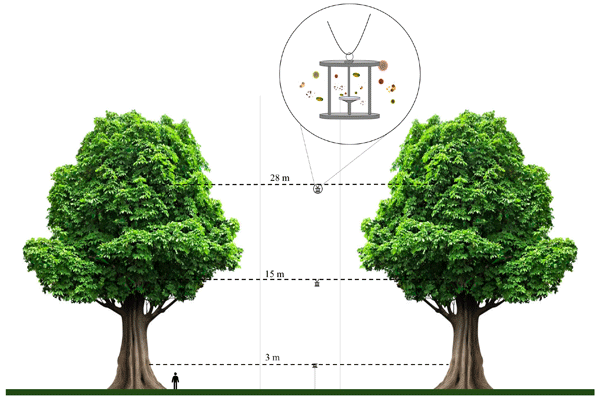
At each of these stations, three bioaerosol traps were positioned at increasing distances from the ground: 3, 15, and 28 m (Fig. 1 and Table S1).
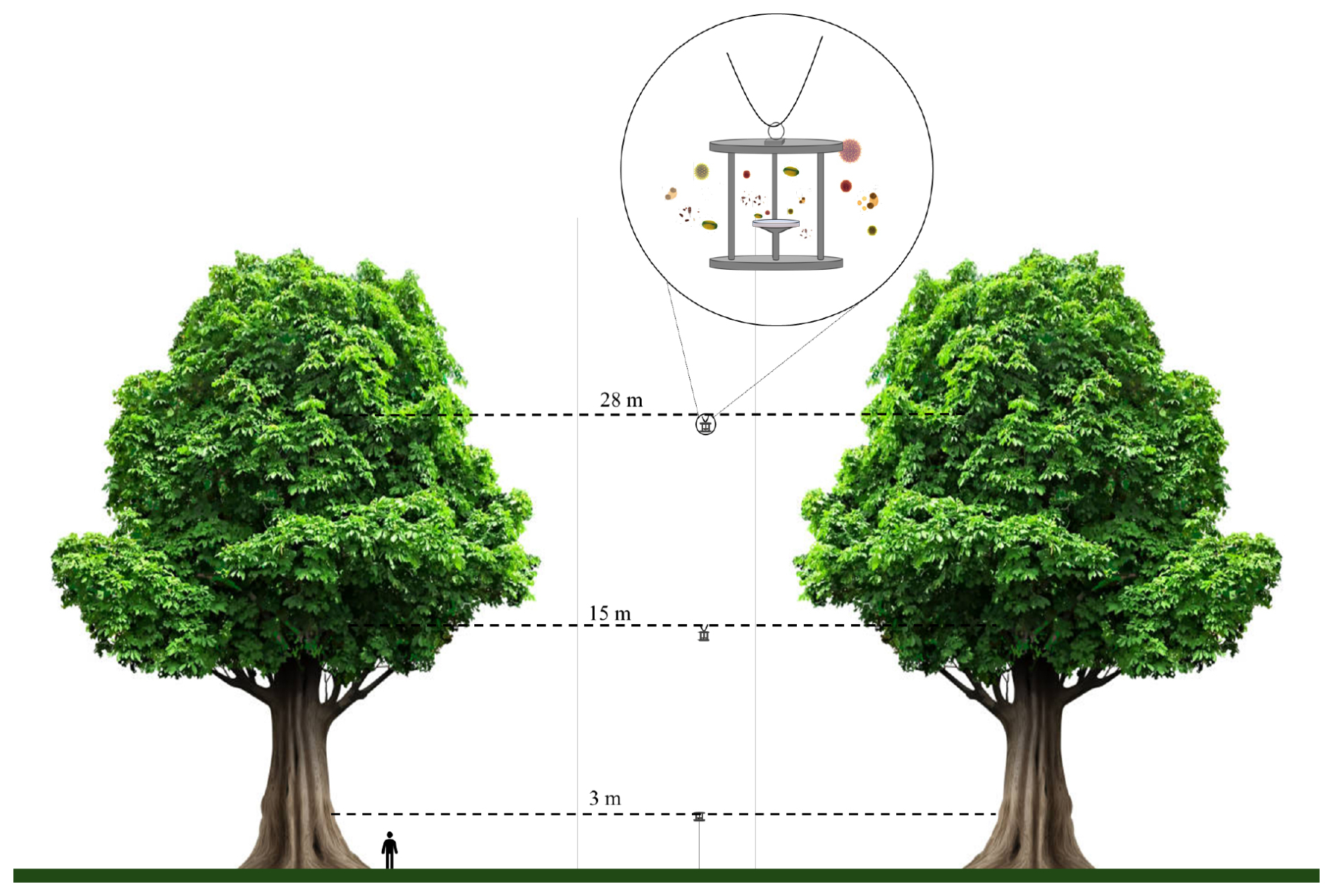
Petri dishes were collected weekly, every Tuesday morning, stored at −20 °C, and replaced with freshly prepared petri dishes. For this study, we analysed one week of samples for each month between March 2019 and February 2020 (Table S2). Specifically, the 4th week of each month was selected due to logistical and financial constraints and to ensure comparability with meteorological records across all months.
2.3 Fungal amplicon sequencing and data processing
Fungal genomic DNA was extracted from half-section of each petri dish sample using PowerLyzer PowerSoil DNA kit (Qiagen) according to the manufacturer's recommendations in sterile laboratory conditions. DNA content was measured with a NanoDrop 2000 spectrophotometer (Thermo Fisher Scientific, Dreieich, Germany), and the lysate stored at −20 °C. Extraction blanks were also included to control for cross-sample DNA extraction and amplification contamination. The fungal internal transcribed spacer (ITS) region was amplified using three different primer combinations (Table 1). These were selected based on previous work aiming to maximise fungal taxonomic coverage (Tedersoo et al., 2015; White et al., 1990). PCR reactions were performed on the same DNA extract, and the resulting amplicons were pooled prior to sequencing (see below for specific details). Because amplicons from different primer pairs were not individually barcoded, it was not possible to assess primer-specific differences in richness or diversity.
Table 1Primer pairs used for ITS amplification, including primer sequences, target region, and references.

PCR was performed using the followed Mastermix: 3.1275 µL dd-H2O, 3.125 µL Trehalose 20 %, 1.25 µL Buffer 10 × (-MgCl2), 1.25 µL DMSO 50 %, 0.625 µL MgCl2 50 mM, 0.25 µL BSA 0.1 mg mL−1, 0.25 µL Primer F 5 µM, 0.25 µL Primer R 5 µM, 0.3125 µL dNTP 2 mM, 0.06 µL Polymerase PLATINUM 5 U µL−1 and 2 µL DNA. Thermal cycling protocol comprised an initial activation at 95 °C for 3 min, followed by 35 cycles of denaturation at 95 °C for 30 s, annealing at 52.5 °C for 30 s, and extension at 72 °C for 45 s and an additional final extension at 72 °C for 10 min. The three PCRs, generated with different primer regions, but originated from the same sampling event, were pooled. PCR products were then purified with Exo I (Thermo Scientific, EN0582). All samples were sent to LGC Biosearch Technologies (Berlin, Germany) where an additional PCR for site tagging and sequencing primer elongation was added. All samples were pooled into one flow cell of a MiSeq sequencer (Illumina, San Diego, CA) and sequenced using a MiSeq Reagent Kit v.3.
Sequence reads were processed using the DADA2 (1.16) method, which incorporates an error model that enables sequence inference with single nucleotide resolution (Callahan et al., 2016). In short, primer sequences were trimmed using CUTADAPT (Martin, 2011), the polished reads were then quality-filtered discarding those shorter than 100 bp and with an expected error higher than 2 (Callahan et al., 2016; Hennecke et al., 2023). Sequence reads were then dereplicated and merged, with a minimum overlap of 20 bp, and filtered for chimeras using the DADA2 “consensus” algorithm for the determination of exact sequence variants (Amplicon Sequence Variants, ASVs). Lastly, ASVs found in contamination controls were removed from further analysis (Uetake et al., 2019).
Next, taxonomy was assigned using the IDTAXA (Murali et al., 2018) classifier implemented in the R package DECIPHER (Wright, 2016) against the UNITE v9.0 database (Abarenkov et al., 2023), followed by BLASTN against the NCBI ITS reference database (Camacho et al., 2009) in case of missing identification from IDTAXA. Putative fungal ecological guilds were then assigned to ASVs based on taxonomic annotation using the FungalTraits database (Põlme et al., 2020).
2.4 Meteorological Data
All meteorological data, including air temperature, wind speed, precipitation, and air humidity levels (Table S1), were retrieved from the LCC weather station located on the top of the LCC (see Henkel et al., 2025, for further details). Daily data were transformed to 7 d averages to parallel the duration of our sampling periods. We also retrieved air masses trajectories, which were modelled with the splitR package (Stein et al., 2015) using data from the GDAS 1 model (lat = 51.36588, lon = 12.31009, height = 3, 15, and 28, duration = 24), starting from 12:00 (UTC) for each day of sampling.
2.5 Statistical analysis
All analyses were performed using R Statistical Software (v.4.3.1, R Core Team, 2023) and appropriate packages. Fungal abundance and taxonomy were kept in a PHYLOSEQ object (McMurdie and Holmes, 2013). After removal of contaminants, the dataset was further filtered to remove low-abundance and low-prevalence ASVs (≤ 2 reads and present in < 1 % of samples) prior to downstream analyses. The data set was then normalised, and not rarefied, to enable comparisons between sampling periods. In fact, while rarefaction is still commonly used in the analysis of microbiome data, recent findings suggest that investigators should avoid rarefying, as this can lead to a high rate of false positives in tests that include differentially abundant species across samples (McMurdie and Holmes, 2014). Normalisation was performed using total-sum scaling, whereby ASV counts in each sample were converted to relative abundances by dividing by the total number of reads per sample and multiplying by 100, to ensure comparability among samples with different sequencing depths. Prior to statistical analyses, one bioaerosol sample (“t3h3_2002”) collected in February 2020 at 33 m above ground failed to amplify and was excluded. Two additional samples (“t2h3_1904” and “t1h1_2002”), collected in April 2019 and February 2020 respectively, yielded disproportionately low (53) and high (51 992) read counts relative to the dataset mean, and were therefore removed to avoid bias in diversity estimates.
We then investigated alpha diversity by means of Chao1 for estimates of total ASV richness (Chao and Chun-Huo, 2016), Shannon index as a measure of diversity that takes into account both richness and evenness (Shannon, 1948), and Simpson's reciprocal as a measure of evenness (Simpson, 1949). To quantify beta diversity, we calculated Bray-Curtis dissimilarities among all samples using the vegan package (Oksanen et al., 2025). The resulting distance matrices were used for Principal Coordinates Analysis (PCoA), to assess differences in community composition, and for inferential tests of community dissimilarity, including distance-based Redundancy Analysis (dbRDA) of similarity (ANOSIM). Finally, we performed permutational multivariate analysis of variance (PERMANOVA) to investigate the influence of season (i.e., temperature, wind speed, rainfall, and humidity), sampling height and tree location in the fungal aerosols' community structure. While our focus was on the climatic parameters as potential drivers, we acknowledge that endogenous phenological rhythms of the surrounding vegetation and other biotic factors may also contribute to community variation, regardless of the climatic conditions. By including sampling height and the sampling station location as covariates, and by sampling across multiple heights and stations throughout a full annual cycle, we sought to partially account for such biotic structuring effects, though these were not explicitly modelled. Differential abundance analysis (DAA) was conducted using DESEQ2 (Love et al., 2014) to identify fungal genera that most strongly responded to seasonal meteorological variables; results were considered significant for p ≤ 0.05. We then investigated the FungalTraits database to derive putative ecological guilds for each significantly affected ASV to shed light on the potential implications of climate change for agriculture and public health.
3.1 Airborne fungal diversity analysis
Our quality-filtered dataset consisted of 1 421 177 fungal sequencing reads, with an average of 13 198 reads per sample. After removal of contaminants, 1877 ASVs were identified. Following additional filtering of low-abundance and low-prevalence ASVs, 760 ASVs were retained for downstream analyses (Table S3).
Most sequence reads belonged to the phylum Ascomycota (74.3 %), followed by Basidiomycota (25.1 %). The remaining phyla accounted for approximately 0.6 % of the total number of reads (Table S3).
As anticipated, we found no significant effect of trap height and location on airborne fungal diversity (i.e., Shannon's index) during the twelve sampling periods (p ≥ 0.05; Table S4). In addition, PERMANOVA (9999 permutations, Bray-Curtis dissimilarities) indicated that trap sampling height had only a minor effect (R2=0.02, p=0.04), while location was not significant (p ≥ 0.05). Therefore, given the small effect size of height and the lack of compositional and diversity differences across locations, we merged data obtained from different heights and locations for each month with the objective of reducing computational complexity and focusing on the effects of meteorological variables and fungal spore abundance and composition. This decision was further supported by a visual inspection of the analysis of wind trajectories (via SplitR) for each sampling period, which revealed a substantial degree of overlap across the three different heights. This suggests that the airborne fungi sampled at different heights originated from the same sources and followed similar air trajectories (Fig. S2).
Alpha diversity was found to be relatively high in April (SObs=165, SChao1=172.50) and September 2019 (SObs=172, SChao1=173.11), and again in February 2020 (SObs=203, SChao1=205.00). Conversely, we found that alpha diversity was low in July (2019) (Table S5). Spearman's correlation with meteorological data (air temperature, wind speed, rain and humidity) showed that, air temperature had a negative effect on Shannon and Simpson indexes, whereas wind speed correlated positively with Simpson's index. However, no significant effect of humidity nor rainfalls on fungal aerosols' diversity was recorded (Fig. 2).
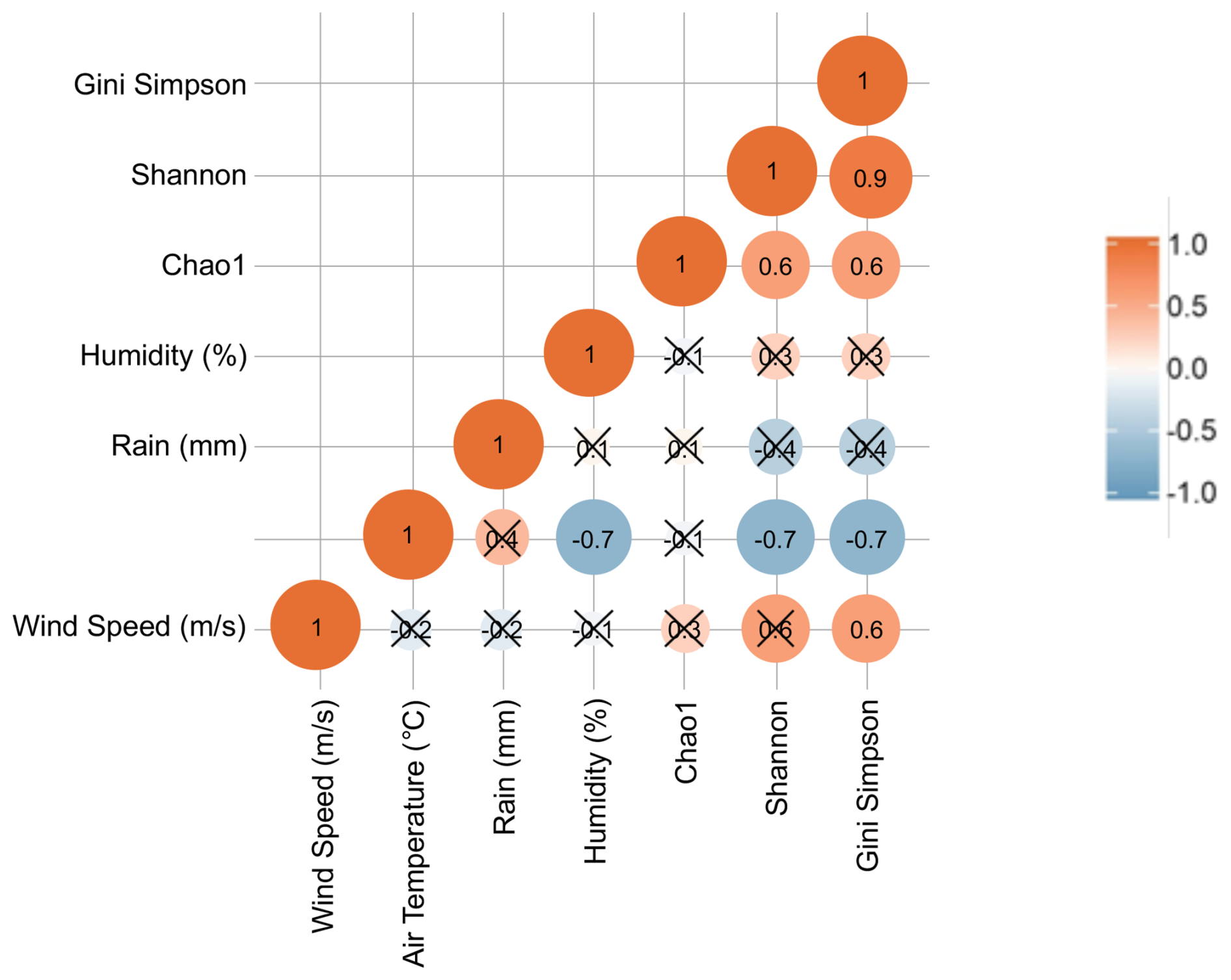
Figure 2Spearman's correlation between alpha diversity and meteorological factors. Red/orange circles show positive correlation, and blue circles show negative correlation. A cross “X” on the circle indicates no significance (p > 0.05).
The slight discrepancy observed between Shannon and Gini–Simpson diversity in relation to wind speed likely reflects their different weighting of common versus rare taxa, with Gini–Simpson being more influenced by dominant taxa and Shannon diversity placing relatively greater weight on rare taxa (Magurran, 2004).
Furthermore, the PERMANOVA test, which was employed for the analysis of the effects of meteorological factors on beta diversity, revealed a significant correlation between average air temperature and variations in airborne fungal community composition over the study period (PERMANOVA, p < 0.005, Table 2).
Table 2Results of PERMANOVA test of the overall fungal community and meteorological factors. Bold values indicate statistically significant results.
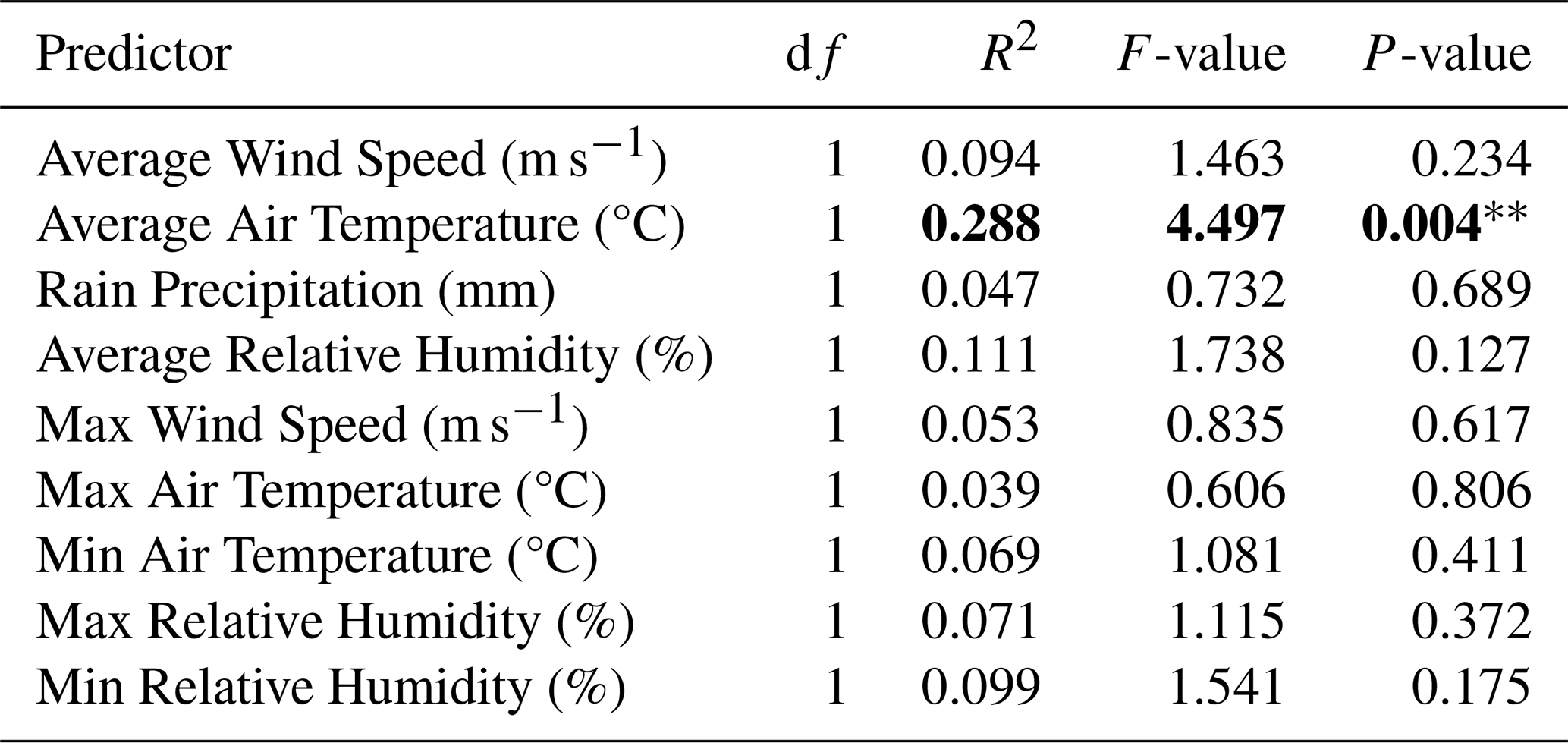
** indicates p<0.01.
3.2 Core mycobiome
Every ecoclimatic region has a relatively constant airborne biological diversity that contributes to the stability and function of the environment. Knowing this baseline community makes it easier to identify local sources of bioaerosols and to distinguish the effect of external factors such as meteorological conditions. In our study location, we found 27 ASVs that were shared by all bioaerosol samples and thus constituted the core mycobiome (i.e. the constant airborne fungal community expected to be found in this Leipzig floodplain forest). At the class level, the most abundant taxa within this group of 27 ASVs were Dothideomycetes (30 %), Tremellomycetes (26 %), Agaricomycetes (11 %), and Leotiomycetes (7 %). These results indicated that the core mycobiome is composed of members from the two main fungal phyla, Ascomycota (which includes the most and least abundant of the four classes) and Basidiomycota. The set of ASVs consistently detected across samples, representing the core mycobiome, is reported in Table S6.
3.3 Effect of seasonal meteorological variables on the fungal spore bioaerosols
The impact of seasonal variations on fungal spore bioaerosols was further elucidated through the use of distance-based redundancy analysis (dbRDA), which resulted in a clear clustering of ASVs in relation to temperature (Fig. 3).
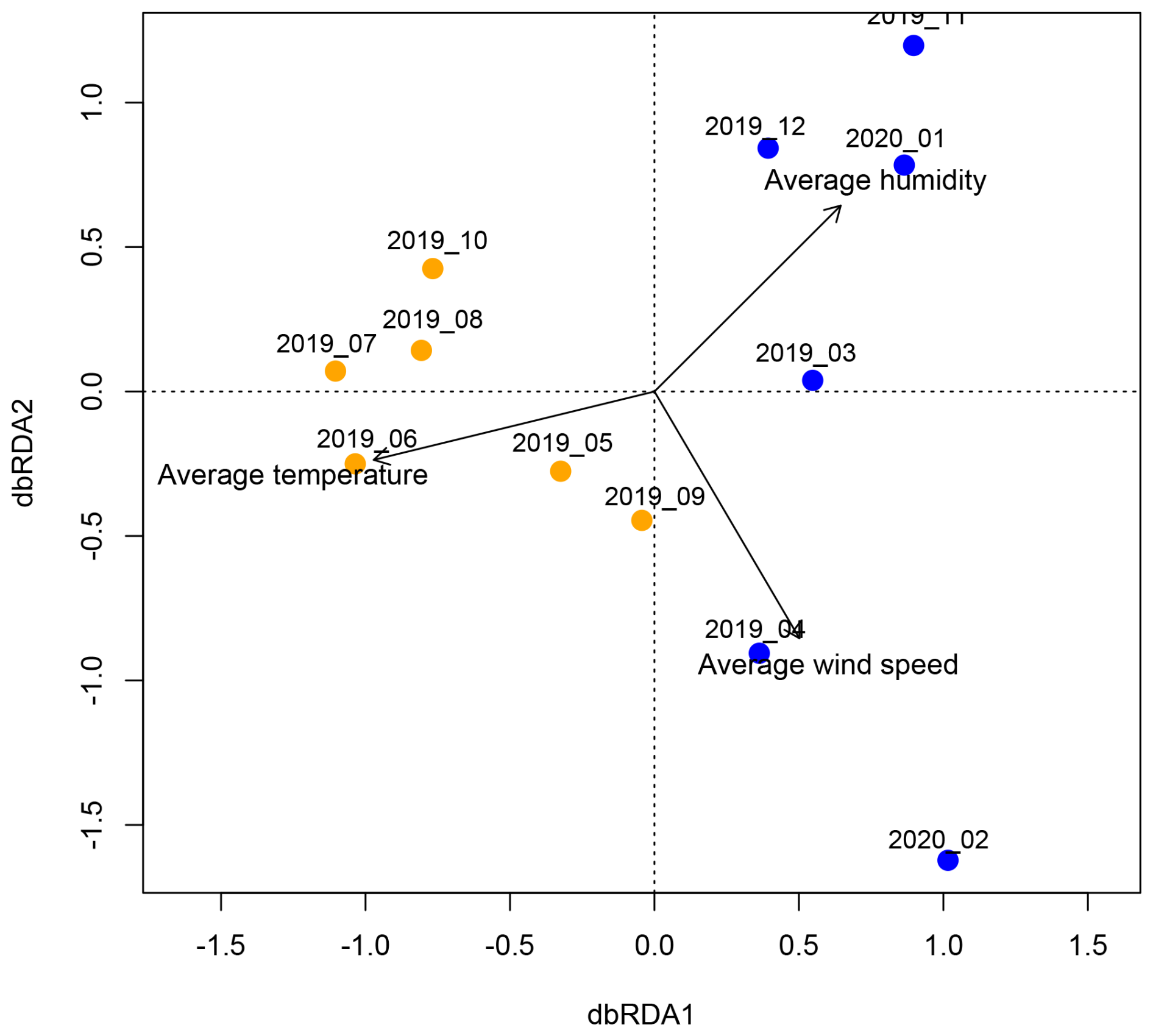
Figure 3Analysis of distance-based redundancy (dbRDA) relating meteorological variables with fungal community structure of aerosol samples. The coloured circles represent the respective months for each season, with orange indicating warmer months and blue indicating colder months.
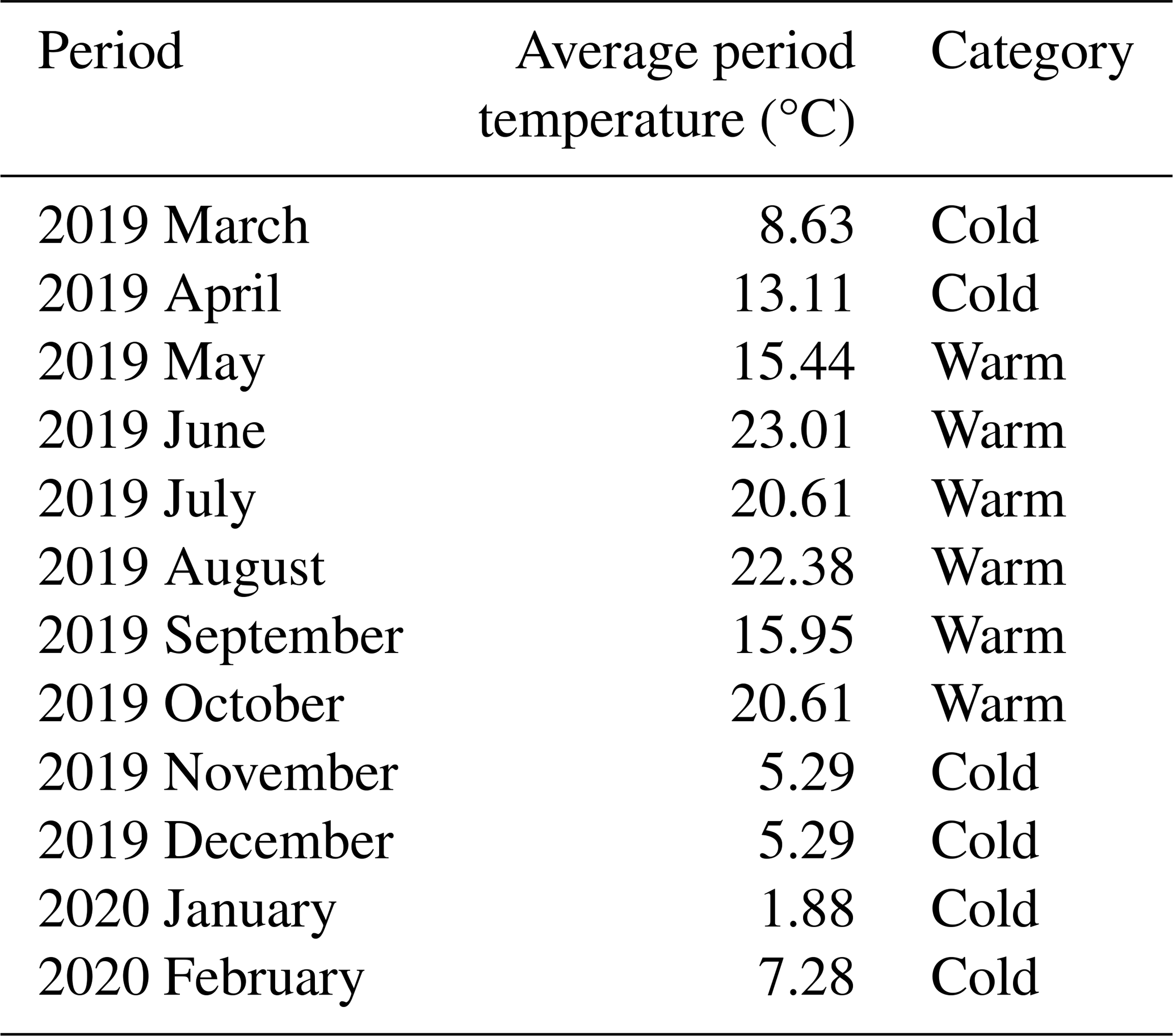
Following the aforementioned observation, our database was then divided into two subsets based on the average temperature values. Monthly temperatures below the study period average (i.e., 13.29 °C) were categorised as “cold”, while those above were classified as “warm” (Table 3).
Table 3Categorisation of period's temperature into “Warm” and “Cold”, based on the annual mean temperature of 13.29 °C.
Taxonomic analysis revealed that while Ascomycota was the most abundant phylum throughout the entire sampling period, its relative abundance increased during the “warm” season. Conversely, Basidiomycota became more abundant during the “cold” months (Fig. 4). Differences in relative abundance between warm and cold months were assessed using a Wilcoxon rank-sum test. Ascomycota showed significantly higher values during the warm season, whereas Basidiomycota was significantly more abundant during colder months (Wilcoxon test, p = 6.68 × 10⁻⁵ and p = 2.0 × 10⁻⁶, respectively).
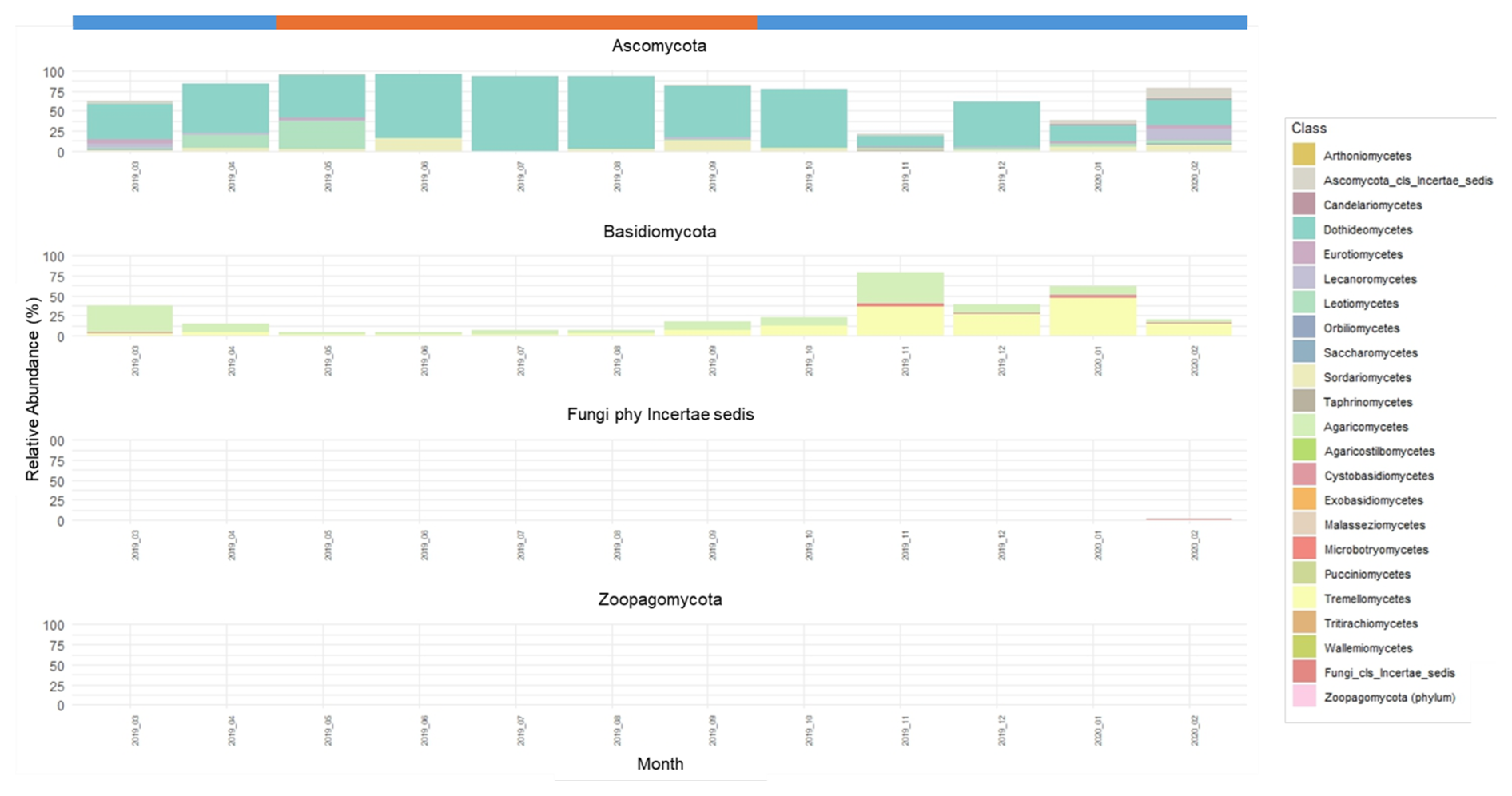
Figure 4Class level classification of fungal communities associated with monthly aerosol samples. The bar at the top identifies the “warm” months (mean air temperature > 13.29 °C, indicated in orange) and the “cold” months (mean air temperature < 13.29 °C, indicated in blue). The value 13.29 °C is the mean annual temperature between March 2019 and February 2020.
Across all bioaerosol samples, it was found that three genera from Class Dothideomycetes (phylum Ascomycota) appeared as the most abundant fungal particles in the atmosphere for the entire duration of the study: Cladosporium (with 30.52 % of the total reads), followed by Epicoccum (11.58 %) and Alternaria (5.62 %). All three genera showed peak abundances during the warm months, with Cladosporium peaking in July and Epicoccum and Alternaria in August (Table S3). Within Basidiomycota, the class Tremellomycetes was particular prominent, with the genera Vishniacozyma and Itersonilia representing the most abundant taxa, accounting for 5.68 % and 4.14 % of the total number of reads, respectively. Both genera showed peak abundances during the coldest month of the study period, January (Table S3).
To further investigate the differences observed between warm and cold months, we conducted a differential abundance analysis (DAA) to identify fungal genera responding to seasonal temperature variation (Fig. 5). However, neither genus showed any significant correlation with fluctuations in temperature during the period of study (Fig. 5).
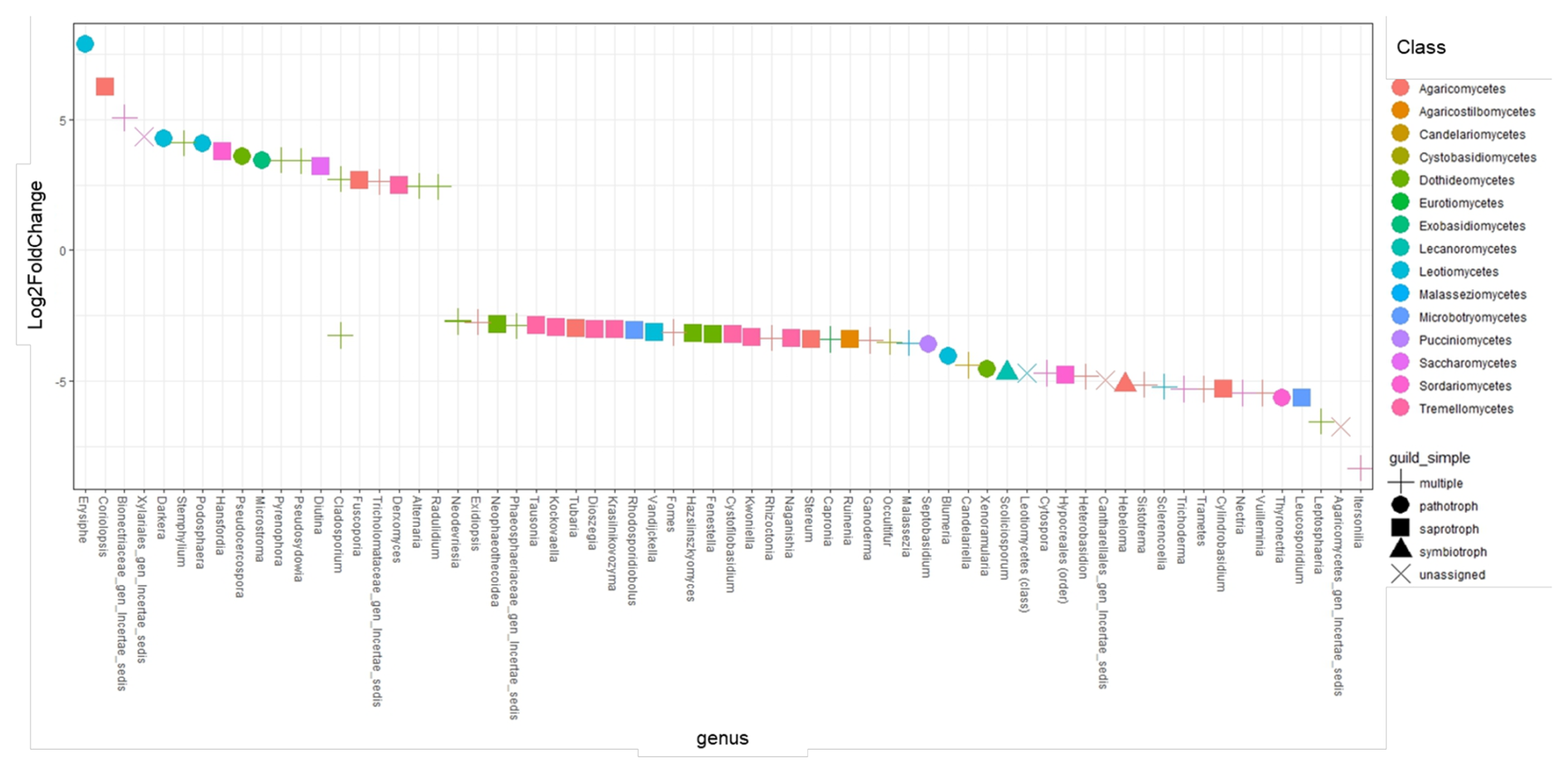
Figure 5Log2 fold change in abundance of fungal genera in response to seasonal changes in temperature (i.e. “warm” vs. “cold”), grouped by fungal guild. Each point represents a genus, coloured by fungal class and shaped by simplified guild category (pathotroph, symbiotroph, saprotroph, unassigned, or multiple guild assignments). Genera are displayed along the x-axis, with log2 fold change on the y-axis. The shape legend indicates guild affiliation, highlighting differences in functional responses across ecological guilds.
This analysis showed that 68 ASVs belonging to 66 different genera (i.e. ∼ 21 % of the total) were significantly affected by changes in average annual air temperature during the study period. These ASVs were all assigned to the phyla Ascomycota and Basidiomycota. A significant finding of our study was that nearly 40 % of Ascomycota genera exhibited a positive correlation with increasing mean air temperature, whereas only 15 % of Basidiomycota genera were similarly affected by higher temperatures. As we previously reported, the abundance of genera belonging to Alternaria and Cladosporium was found to be positively correlated with higher temperatures, thereby further corroborating the findings of Oliveira et al., (2009).
In addition, we were able to assign ecological guild affiliations to 62 of the 66 fungal genera significantly affected by changes in average annual air temperature, based on FUNGuild annotations. To facilitate interpretation and account for overlapping functions, these guilds were grouped into four broader categories: “pathotroph”, “symbiotroph”, “saprotroph”, and “multiple”, with the latter representing genera associated with more than one guild (Fig. 5). Of these categories, a considerable proportion of the genera (46 %) were classified as “multiple”, and four genera were designated as “unassigned”, due to limitations in ASV-level taxonomic assignment (data not shown).
Overall, we found no evidence of a clear trend in the response to temperature changes among fungal genera when grouped by their ecological guild (Kruskal-Wallis test, χ2 = 5.659, df = 4, p = 0.226), nor between phyla (Kruskal-Wallis test, χ2 = 3.641, df = 1, p = 0.056). This lack of a consistent pattern is illustrated by the pathotrophs, where the genus Erysiphe increased in abundance at higher temperatures while Thyronectria decreased significantly (Fig. 5). Nevertheless, the genera that responded positively to warmer temperatures are of particular relevance in the context of future climate change scenarios. For instance, Erysiphe exhibited the highest positive mean log2 fold change in response to warmer temperatures and corresponds to ASV_111 in our dataset, identified as Erysiphe alphitoides – an invasive pathogenic species responsible for the Oaks Powdery Mildew (OPM). This species poses a significant threat to forest health and productivity across Europe (Tăut et al., 2024).
To the best of our knowledge, this study represents the first comprehensive assessment of the impact of meteorological variables on airborne fungi across seasonal cycles in a Central European floodpain forest. Additionally, by applying multivariate statistical analysis, we were able to assess the combined effects of meteorological variables and sampling protocols on the composition of fungal aerosols, thereby providing a basis to discuss the potential consequences for ecosystem functioning and human wellbeing under changing climate conditions.
Here, we showed that airborne fungal particles respond strongly to shifts in air temperature, corroborating the findings reported in previous studies conducted elsewhere (Sadyś et al., 2016; Lam et al., 2024; Mantoani et al., 2025). In line with this, the dominance of genera such as Cladosporium, Alternaria, and Epicoccum observed in this study is consistent with previous works conducted in temperate environments, where these taxa are commonly reported as major components of airborne fungal communities (Almaguer et al., 2014; Sadyś et al., 2015; Akgül et al., 2016; Grinn-Gofroń et al., 2018; Antón et al., 2019; Ščevková and Kováč, 2019; Grinn-Gofroń et al., 2020). These three genera are also some of the best-known sources of allergic reactions and plant diseases (Bavbek et al., 2006; Abuley and Nielsen, 2017; Nowakowska et al., 2019; Grinn-Gofroń et al., 2020). Their increased abundance during the summer months supports the hypothesis that Ascomycota are favoured under warmer conditions, likely reflecting enhanced sporulation and dispersal during these periods.
In contrast, members of Basidiomycota, particularly within the class Tremellomycetes, were more prevalent during colder periods, indicating a seasonal pattern opposite to that observed for Ascomycota. The detection of genera such as Vishniacozyma and Itersonilia, both associated with plants as endophytes or pathogens (Liu et al., 2025; Gandy, 1966), further supports the role of surrounding vegetation as a source of airborne fungal propagules.
At a finer taxonomic resolution, the species Vishniacozyma tephrensis, characterised as psychrotolerant and psychrophilic, was predominantly detected during colder periods, with higher abundance in late autumn. Its occurrence under these conditions reflects its tolerance to low temperatures and environmental stress (Vishniac, 2002; Wei et al., 2022). In this context, it is worth noting that, while environmental factors such as temperature, humidity, precipitation, and wind speed have been reported to affect the aerosolisation process and bioaerosol composition (Cáliz et al., 2018; Du et al., 2018; Uetake et al., 2019; Souza et al., 2021), these same factors can also influence the phenology of the source species, thereby influencing the spore-forming cycle (Krah et al., 2023). This overlap in environmental influence can confound the interpretation of observed patterns, as it becomes difficult to disentangle direct effects on aerosol dynamics from indirect effects mediated through changes in fungal life cycles. Therefore, disentangling the combined influences of temperature, humidity, and other climatic factors on fungal phenology and aerosol release is key to predicting fungal community dynamics and ecological repercussions for future climate change scenarios (Albrectsen and Witzell, 2012).
As expected, the lack of bioaerosols compositional differences between sampling heights and locations was consistent throughout our study period. This is likely due to the influence exerted by site topography and local source species communities on bioaerosols collected at lower altitudes (Seinfeld and Pandis, 2016; Tignat-Perrier et al., 2020). Additionally, the sampling locations were separated by only a few dozen meters, which may have further limited spatial variability. One might still expect vertical gradients in species composition at the LCC to be reflected in aerosolised fungal diversity. However, it appears that sampling within the Planetary Boundary Layer, where there is continuous mixing of aerosols by the convective boundary layer (Emeis, 2011), has a major influence, de facto cancelling any altitudinal gradient effect on bioaerosol composition (Baldocchi et al., 1988; Šantl-Temkiv et al., 2020). In this context, the backward air mass trajectories that were used only as a qualitative assessment to verify that the different sampling heights were exposed to comparable air masses, support our decision to merge samples across heights for their analysis. In addition, our data were analysed at a monthly resolution represented by one week of sampling, which may limit our ability to detect short-term or day-to-day height-dependent effects. Future studies with higher temporal resolution could address this more directly and effectively.
Interestingly, we found that among the meteorological variables analysed, only average air temperature influenced the composition of bioaerosols at LCC during the period of study. While we also examined the potential influence of average relative humidity levels – ranging from a minimum of 50.3 % in June 2019 to a maximum of 84.3 % in December 2019 (Fig. S3) – and the precipitation levels and shifts, no significant associations of them were detected on the composition and abundance of airborne fungi. The observed temperature-driven patterns, therefore, highlight the central role of temperature in impacting airborne microbial diversity, hence corroborating previous findings (Christiansen et al., 2017; Větrovský et al., 2019).
In this regard, the DAA showed that roughly 21 % of the genera analysed in this study were significantly affected by changes in air temperature between “warm” and “cold” seasons. This seasonal influence seems to be correlated with phylogenetic characteristics: Ascomycota generally responded positively to increased temperature whereas members of the Basidiomycota phylum were mostly negatively influenced by warmer conditions (Fig. 5). These differences highlight their different strategies or spore dispersal dynamics.
However, there were exceptions to these broad patterns. For example, we detected that two Cladosporium species (phylum Ascomycota) responded differently to changes in temperature. In particular, C. angustiherbarum was more abundant in warmer conditions, while C. asphidii showed the opposite trend (Table S7). These detected species-specific differences suggest that other environmental or physiological factors may modulate the community composition at detailed taxonomic scales.
In this regard, the pronounced increase in Ascomycota during the warm months may explain the observed differences in alpha diversity, by influencing the overall evenness across genera. In addition, the high relative abundance of Ascomycota throughout most of the warm months of our study (May–September) could be explained by the higher temperatures recorded during the study period compared to previous years (data not shown).
Additional research is still needed to relate the abundance shifts of Ascomycota through the years as a consequence of climate change and/or climate extreme events. Even so, previous research has already set the stage for this line of investigation, documenting clear short-term effects of increased temperature on the diversity of certain fungal guilds such as saprotrophs in boreal environments (Rippon and Anderson, 1970; Peltoniemi et al., 2015; Asemaninejad et al., 2018). Moreover, other studies have also suggested that climate change-induced shifts in the structure communities across habitats can represent a significant threat to ecosystem integrity and service provision under future climate change scenarios (Asemaninejad et al., 2018; Metaxatos et al., 2024; Tian et al., 2024). Fungal pathogens, in particular, may contribute to reduced agricultural yields and increased forest management costs, leading to substantial economic loss in affected regions (Fisher et al., 2012; Chakraborty and Newton, 2021).
In this context, the detection in our dataset of the plant pathogen Erysiphe alphitoides, a widespread pathogen causing oak powdery mildew in Europe (Marçais and Desprez-Loustau, 2014; Tăut et al., 2024), is consistent with the presence of suitable host plants (Quercus spp.) and likely reflects seasonal patterns in host phenology and canopy development (Andrew et al., 2017). More broadly, the occurrence of multiple phytopathogenic taxa, including species such as Zymoseptoria tritici, which affects wheat plantations (Torriani et al., 2015), suggests that surrounding vegetation and nearby agricultural areas represent potential sources of airborne fungal propagules. These observations indicate that seasonal changes in plant communities and phenology play a key role in shaping airborne fungal assemblages, alongside the influence of meteorological variables. In addition, it is important to note that climate change may further modulate these patterns by altering host plant phenology (Piao et al., 2019). In this context, we argue that disentangling the effects of meteorological conditions from broader seasonal dynamics remains challenging, as previously reported (Cáliz et al., 2018; Bowers et al., 2012), and that more robust assessments of these drivers require multi-year sampling.
Interestingly, the detection of taxa that have been previously reported primarily outside Europe e.g. Alanphillipsia aloetica from South Africa (Crous et al., 2013), further highlights the complexity of airborne fungal communities and the potential for long-distance dispersal. Taken together, these findings provide a baseline for assessing temporal dynamics and the impacts of environmental change in airborne fungal assemblages, thereby corroborating the role of this study as an important benchmark for future works.
In conclusion, while this study provides important insights on the composition and dynamics of airborne fungal communities in the Leipzig floodplain forest, future work should focus on extending these analyses across multiple years, to include the assessment of the impact of extreme climatic conditions implications and to disentangle the short-term (or seasonal) drivers from long-term climate change effects. Increasing the study period, to include interannual analysis, would enable to assess whether temperature-mediated shifts in species abundance and composition persists under climate changing conditions.
Our study highlights a significant influence of temperature in shaping airborne fungal communities, with distinct responses observed among fungal groups. Specifically, ascomycetes showed a positive response to increased temperatures, whereas basidiomycetes were negatively impacted. Nevertheless, we argue that future research should incorporate higher temporal resolution sampling, potentially including separation of daytime and nighttime periods, to better resolve the influence of diel temperature fluctuations, boundary-layer dynamics, and spore release phenology.
The central role of temperature in shaping airborne microbial diversity observed here supports and corroborates previous findings, reinforcing the key role of temperature in shaping microbial ecology. In this regard, prior studies have documented short-term effects of temperature increases on fungal guild diversity (Asemaninejad et al., 2018).
In addition, we emphasise the need for future research to focus on pathogen dynamics within airborne communities, as monitoring their spread is crucial for understanding the facilitating role of climate change in their expansion and the repercussions for ecosystem integrity and service provision globally. We believe it is imperative to conduct long-term and interannual analyses so as to determine whether changes in species abundance and composition are affected by climate change and extremes events. In this regard, our findings represent an important source of information and a benchmark for future comparative studies.
The raw sequencing data generated in this study have been deposited in the European Nucleotide Archive (ENA) at EMBL-EBI under accession number PRJEB106467 (https://www.ebi.ac.uk/ena/browser/view/PRJEB106467, last access: 22 September 2026). Data are publicly accesible via the ENA browser portal, API and FTP services.
The supplement related to this article is available online at https://doi.org/10.5194/bg-23-6931-2026-supplement.
BG and CW conceived the ideas and developed the concept of this study. BSP and CW acquired the financial support for the project leading to this publication. CMM processed the samples at the lab. VW provided lab resources for the analysis. EF developed the data curation and analysis with support of BSP. EF and BSP wrote the manuscript with contributions from all co-authors.
The contact author has declared that none of the authors has any competing interests.
Publisher's note: Copernicus Publications remains neutral with regard to jurisdictional claims made in the text, published maps, institutional affiliations, or any other geographical representation in this paper. The authors bear the ultimate responsibility for providing appropriate place names. Views expressed in the text are those of the authors and do not necessarily reflect the views of the publisher.
We thank Ronny Richter for his contributions to the design and development of the project, including support with sampling and climate sensor instrumentation. We also acknowledge Tom Künne and Rolf Engelmann for their help in the field and sampling. We are grateful for the opportunity to conduct this study at the Leipzig Canopy Crane (LCC) research facility.
This research was supported by the Saxon State Ministry for Science, Culture and Tourism (SMWK; grant no. 3-7304/44/4-2023/8846) and by the Open Access Publishing Fund of Leipzig University.
This paper was edited by Tina Šantl-Temkiv and reviewed by two anonymous referees.
Abarenkov, K., Zirk, A., Piirmann, T., Pöhönen, R., Ivanov, F., Nilsson, R. H., and Kõljalg, U.: UNITE general FASTA release for Fungi 2, Version 18.07.2023, https://doi.org//10.15156/BIO/2938068, 2023.
Abuley, I. K. and Nielsen, B. J.: Evaluation of models to control potato early blight (Alternaria solani) in Denmark, Crop Prot., 102, 118–128, https://doi.org/10.1016/j.cropro.2017.08.012, 2017.
Akgül, H., Yılmazkaya, D., Akata, I., Tosunoğlu, A., and Bıçakçı, A.: Determination of airborne fungal spores of Gaziantep (SE Turkey), Aerobiologia, 32, 441–452, https://doi.org/10.1007/s10453-015-9417-z, 2016.
Albrectsen, B. R. and Witzell, J.: Disentangling functions of fungal endophytes in forest trees, in Fungi: Types, environmental impact and role in disease, edited by: Silva, A. P. and Sol, M., Nova Science Publishers, 235–246, ISBN 978-1-61942-671-9, 2012.
Almaguer, M., Aira, M.-J., Rodríguez-Rajo, F. J., and Rojas, T. I.: Temporal dynamics of airborne fungi in Havana (Cuba) during dry and rainy seasons: influence of meteorological parameters, Int. J. Biometeorol., 58, 1459–1470, https://doi.org/10.1007/s00484-013-0748-6, 2014.
Andrew, C., Heegaard, E., Kirk, P. M., Bässler, C., Heilmann-Clausen, J., Krisai-Greilhuber, I., Kuyper, T. W., Senn-Irlet, B., Büntgen, U., Diez, J., and Egli, S.:. Big data integration: Pan-European fungal species observations' assembly for addressing contemporary questions in ecology and global change biology, Fungal Biol. Rev., 31, 88–98, 2017.
Antón, S. F., de la Cruz, D. R., Sánchez, J. S., and Sánchez Reyes, E.: Analysis of the airborne fungal spores present in the atmosphere of Salamanca (MW Spain): a preliminary survey, Aerobiologia, 35, 447–462, https://doi.org/10.1007/s10453-019-09569-z, 2019.
Asemaninejad, A., Thorn, R. G., Branfireun, B. A., and Lindo, Z.: Climate change favours specific fungal communities in boreal peatlands, Soil Biol. Biochem., 120, 28–36, https://doi.org/10.1016/j.soilbio.2018.01.029, 2018.
Bai, W., Li, Y., Xie, W., Ma, T., Hou, J., and Zeng, X.: Vertical variations in the concentration and community structure of airborne microbes associated with PM2.5, Sci. Total Environ., 760, 143396, https://doi.org/10.1016/j.scitotenv.2020.143396, 2021.
Baldocchi, D. D., Hincks, B. B., and Meyers, T. P.: Measuring Biosphere‐Atmosphere Exchanges of Biologically Related Gases with Micrometeorological Methods, Ecology, 69, 1331–1340, https://doi.org/10.2307/1941631, 1988.
Bavbek, S., Erkekol, F.Ö., Çeter, T., Mungan, D., Özer, F., Pinar, M., and Misirligil, Z.: Sensitization to Alternaria and Cladosporium in Patients with Respiratory Allergy and Outdoor Counts of Mold Spores in Ankara Atmosphere, Turkey, J. Asthma, 43, 421–426, https://doi.org/10.1080/02770900600710706, 2006.
Bowers, R. M., McCubbin, I. B., Hallar, A. G., and Fierer, N.: Seasonal variability in airborne bacterial communities at a high-elevation site, Atmos. Environ., 50, 41–49, https://doi.org/10.1016/j.atmosenv.2012.01.005, 2012.
Brown, J. K. M. and Hovmøller, M. S.: Aerial Dispersal of Pathogens on the Global and Continental Scales and Its Impact on Plant Disease, Science, 297, 537–541, https://doi.org/10.1126/science.1072678, 2002.
Cáliz, J., Triadó-Margarit, X., Camarero, L., and Casamayor, E. O.: A long-term survey unveils strong seasonal patterns in the airborne microbiome coupled to general and regional atmospheric circulations, P. Natl. Acad. Sci. USA, 115, 12229–12234, https://doi.org/10.1073/pnas.1812826115, 2018.
Callahan, B. J., McMurdie, P. J., Rosen, M. J., Han, A. W., Johnson, A. J. A., and Holmes, S. P.: DADA2: High-resolution sample inference from Illumina amplicon data, Nat. Methods, 13, 581–583, https://doi.org/10.1038/nmeth.3869, 2016.
Camacho, C., Coulouris, G., Avagyan, V., Ma, N., Papadopoulos, J., Bealer, K., and Madden, T. L.: BLAST+: architecture and applications, BMC Bioinformatics, 10, 421, https://doi.org/10.1186/1471-2105-10-421, 2009.
Chakraborty, S. and Newton, A. C.: Climate change, plant diseases and food security: an overview, Plant Pathol., 70, 581–595, https://doi.org/10.1111/j.1365-3059.2010.02411.x, 2021.
Chao, A. and Chun-Huo, C.: Species richness: estimation and comparison, Encyclopedia of Statistical Sciences, 1, 1–26, https://doi.org/10.1002/9781118445112.stat03432.pub2, 2016.
Christiansen, C. T., Haugwitz, M. S., Priemé, A., Nielsen, C. S., Elberling, B. O., Michelsen, A., Grogan, P., and Blok, D.: Enhanced summer warming reduces fungal decomposer diversity and litter mass loss more strongly in dry than in wet tundra, Glob. Change Biol., 23, 406–420, https://doi.org/10.1111/gcb.13362, 2017.
Crous, P. W., Wingfield, M. J., Guarro, J., Cheewangkoon, R., Van der Bank, M., Swart, W. J., Stchigel, A. M., Cano-Lira, J. F., Roux, J., Madrid, H., and Damm, U.: Fungal Planet description sheets: 154–213, Persoonia-Molecular Phylogeny and Evolution of Fungi, 31, 188–296, 2013.
Du, P., Du, R., Ren, W., Lu, Z., and Fu, P.: Seasonal variation characteristic of inhalable microbial communities in PM2.5 in Beijing city, China, Sci. Total Environ., 610/611, 308–315, https://doi.org/10.1016/j.scitotenv.2017.07.097, 2018.
Emeis, S.: Analytical Description and Vertical Structure of the Atmospheric Boundary Layer, In: Surface-Based Remote Sensing of the Atmospheric Boundary Layer, Atmos. Oceanogr. Sci. Libr., 40, https://doi.org/10.1007/978-90-481-9340-0_2, 2011.
Fisher, M. C., Henk, D. A., Briggs, C. J., Brownstein, J. S., Madoff, L. C., McCraw, S. L., and Gurr, S. J.: Emerging fungal threats to animal, plant and ecosystem health, Nature, 484, 186–194, https://doi.org/10.1038/nature10947, 2012.
Fröhlich-Nowoisky, J., Kampf, C. J., Weber, B., Huffman, J. A., Pöhlker, C., Andreae, M. O., Lang-Yona, N., Burrows, S. M., Gunthe, S. S., Elbert, W., Su, H., Hoor, P., Thines, E., Hoffmann, T., Després, V. R., and Pöschl, U.: Bioaerosols in the Earth system: Climate, health, and ecosystem interactions, Atmos. Res., 182, 346–376, https://doi.org/10.1016/j.atmosres.2016.07.018, 2016.
Gandy, D. G.: Itersonilia perplexans on chrysanthemums: Alternative hosts and ways of overwintering, Trans. Br. Mycol. Soc., 49, 499–507, https://doi.org/10.1016/S0007-1536(66)80096-7, 1966.
Grinn-Gofroń, A. and Bosiacka, B.: Effects of meteorological factors on the composition of selected fungal spores in the air, Aerobiologia, 31, 63–72, https://doi.org/10.1007/s10453-014-9347-1, 2015.
Grinn-Gofroń, A., Bosiacka, B., Bednarz, A., and Wolski, T.: A comparative study of hourly and daily relationships between selected meteorological parameters and airborne fungal spore composition, Aerobiologia, 34, 45–54, https://doi.org/10.1007/s10453-017-9493-3, 2018.
Grinn-Gofroń, A., Çeter, T., Pinar, N. M., Bosiacka, B., Çeter, S., Keçeli, T., Myśliwy, M., Şahin, A. A., and Bogawski, P.: Airborne fungal spore load and season timing in the Central and Eastern Black Sea region of Turkey explained by climate conditions and land use, Agr. Forest Meteorol., 295, 108191, https://doi.org/10.1016/j.agrformet.2020.108191, 2020.
Harrison, J. G., Forister, M. L., Parchman, T. L., and Koch, G. W.: Vertical stratification of the foliar fungal community in the world's tallest trees, Am. J. Bot., 103, 2087–2095, https://doi.org/10.3732/ajb.1600277, 2016.
Henkel, S., Richter, R., Andraczek, K., Mundry, R., Dontschev, M., Engelmann, R. A., Hartmann, T., Hecht, C., Kasperidus, H. D., Rieland, G., Scholz, M., Seele-Dilbat, C., Vieweg, M., and Wirth, C.: Ash dieback and hydrology affect tree growth patterns under climate change in European floodplain forests, Sci. Rep., 15, 10117, https://doi.org/10.1038/s41598-025-92079-5, 2025.
Hennecke, J., Bassi, L., Mommer, L., Albracht, C., Bergmann, J., Eisenhauer, N., Guerra, C. A., Heintz-Buschart, A., Kuyper, T. W., Lange, M., Solbach, M. D., and Weigelt, A.: Responses of rhizosphere fungi to the root economics space in grassland monocultures of different age, New Phytol., 240, 2035–2049, https://doi.org/10.1111/nph.19261, 2023.
Huang, Z., Yu, X., Liu, Q., Maki, T., Alam, K., Wang, Y., Xue, F., Tang, S., Du, P., Dong, Q., Wang, D., and Huang, J.: Bioaerosols in the atmosphere: A comprehensive review on detection methods, concentration and influencing factors, Sci. Total Environ., 912, 168818, https://doi.org/10.1016/j.scitotenv.2023.168818, 2024.
Joung, Y. S., Ge, Z., and Buie, C. R.: Bioaerosol generation by raindrops on soil, Nat. Commun., 8, 14668, https://doi.org/10.1038/ncomms14668, 2017.
Kadykalo, A. N., Buxton, R. T., Morrison, P., Anderson, C. M., Bickerton, H., Francis, C. M., Smith, A. C., and Fahrig, L.: Bridging research and practice in conservation, Conserv. Biol., 35, 1725–1737, https://doi.org/10.1111/cobi.13732, 2021.
Krah, F., Büntgen, U., and Bässler, C.: Temperature affects the timing and duration of fungal fruiting patterns across major terrestrial biomes, Ecol. Lett., 26, 1572–1583, https://doi.org/10.1111/ele.14275, 2023.
Lam, H. C. Y., Anees-Hill, S., Satchwell, J., Symon, F., Macintyre, H., Pashley, C. H., Marczylo, E. L., Douglas, P., Aldridge, S., and Hansell, A.: Association between ambient temperature and common allergenic pollen and fungal spores: A 52-year analysis in central England, United Kingdom, Sci. Total Environ., 906, 167607, https://doi.org/10.1016/j.scitotenv.2023.167607, 2024.
Lappan, R., Thakar, J., Molares Moncayo, L., Besser, A., Bradley, J. A., Goordial, J., Trembath-Reichert, E., and Greening, C.: The atmosphere: a transport medium or an active microbial ecosystem?, ISME J., 18, https://doi.org/10.1093/ismejo/wrae092, 2024.
Li, S., Liu, W. Y., Li, D. W., Song, L., Shi, X. M., and Lu, H. Z.: Species richness and vertical stratification of epiphytic lichens in subtropical primary and secondary forests in southwest China, Fung. Ecol., 17, 30–40, https://doi.org/10.1016/j.funeco.2015.02.005, 2015.
Liu, S., Cai, D.-Y., Chai, C.-Y., and Hui, F.-L.: Five new epiphytic species of Vishniacozyma (Bulleribasidiaceae, Tremellales) from China, MycoKeys, 113, 321–336, https://doi.org/10.3897/mycokeys.113.140598, 2025.
Loucks, D. P.: Impacts of climate change on economies, ecosystems, energy, environments, and human equity: A systems perspective, in: The Impacts of Climate Change, Elsevier, 19–50, https://doi.org/10.1016/B978-0-12-822373-4.00016-1, 2021.
Love, M. I., Huber, W., and Anders, S.: Moderated estimation of fold change and dispersion for RNA-seq data with DESeq2, Genome Biol., 15, 550, https://doi.org/10.1186/s13059-014-0550-8, 2014.
Magurran, A. E.: Measuring Biological Diversity, Blacwell Publishing, ISBN 978-0-632-05633-0, 2004
Maki, T., Bin, C., Kai, K., Kawai, K., Fujita, K., Ohara, K., Kobayashi, F., Davaanyam, E., Noda, J., Minamoto, Y., Shi, G., Hasegawa, H., and Iwasaka, Y.: Vertical distributions of airborne microorganisms over Asian dust source region of Taklimakan and Gobi Desert, Atmos. Environ., 214, 116848, https://doi.org/10.1016/j.atmosenv.2019.116848, 2019.
Mantoani, M. C., Sapucci, C. R., Guerra, L. C. C., Andrade, M. F., Dias, M. A. F. S., Dias, P. L. S., Albrecht, R. I., Silva, E. P., Rodrigues, F., Araujo, G. G., Galante, D., Silva, D. M. C., Martins, J. A., Martins, L. D., Boschilia, S. M., Phillips, V. T. J., Carotenuto, F., Šantl-Temkiv, T., Morris, C. E., and Gonçalves, F. L. T: Airborne fungal spore concentrations double but diversity decreases with warmer winter temperatures in the Brazilian Atlantic Forest biodiversity hotspot, Microbe, 7, 100300, https://doi.org/10.1016/j.microb.2025.100300, 2025.
Marçais, B. and Desprez-Loustau, M. L.: European oak powdery mildew: impact on trees, effects of environmental factors, and potential effects of climate change, Ann. For. Sci., 71, 633–642, https://doi.org/10.1007/s13595-012-0252-x, 2014.
Martin, M.: Cutadapt removes adapter sequences from high-throughput sequencing reads, EMBnet. J., 17, 10, https://doi.org/10.14806/ej.17.1.200, 2011.
McMurdie, P. J. and Holmes, S.: phyloseq: An R Package for Reproducible Interactive Analysis and Graphics of Microbiome Census Data, PLoS ONE, 8, e61217, https://doi.org/10.1371/journal.pone.0061217, 2013.
McMurdie, P. J. and Holmes, S.: Waste Not, Want Not: Why Rarefying Microbiome Data Is Inadmissible, PLoS Comput. Biol., 10, e1003531, https://doi.org/10.1371/journal.pcbi.1003531, 2014.
Metaxatos, A., Georgiadou, D., Hatzinikolaou, D., and Mainelis, G.: The Diversity, Richness, and Potential Health and Ecological Role of the Fungal Aerosols in Attica, Greece, Aerosol Air Qual. Res., 24, 1–20, https://doi.org/10.4209/aaqr.240170, 2024.
Müller, G. K.: Die Leipziger Auen – Bestandsaufnahme und Vorschläge für eine Gebietsentwicklung, Sächsisches Staatsministerium für Umwelt- und Landesentwicklung (SMU), Dresden, 1995.
Murali, A., Bhargava, A., and Wright, E. S.: IDTAXA: a novel approach for accurate taxonomic classification of microbiome sequences, Microbiome, 6, 140, https://doi.org/10.1186/s40168-018-0521-5, 2018.
Nowakowska, M., Wrzesińska, M., Kamiński, P., Szczechura, W., Lichocka, M., Tartanus, M., Kozik, E. U., and Nowicki, M.: Alternaria brassicicola – Brassicaceae pathosystem: insights into the infection process and resistance mechanisms under optimized artificial bio-assay, Eur. J. Plant Pathol., 153, 131–151, https://doi.org/10.1007/s10658-018-1548-y, 2019.
Núñez, A., Amo de Paz, G., Ferencova, Z., Rastrojo, A., Guantes, R., García, A. M., Alcamí, A., Gutiérrez-Bustillo, A. M., and Moreno, D. A.: Validation of the Hirst-Type Spore Trap for Simultaneous Monitoring of Prokaryotic and Eukaryotic Biodiversities in Urban Air Samples by Next-Generation Sequencing, Environ. Sci. Technol., 83, e00472-17, https://doi.org/10.1128/AEM.00472-17, 2017.
Oksanen, J., Simpson, G., Blanchet, F., Kindt, R., Legendre, P., Minchin, P., O’Hara, R., Solymos, P., Stevens, M., Szoecs, E., Wagner, H., Barbour, M., Bedward, M., Bolker, B., Borcard, D., Borman, T., Carvalho, G., Chirico, M., De Caceres, M., Durand, S., Evangelista, H., FitzJohn, R., Friendly, M., Furneaux, B., Hannigan, G., Hill, M., Lahti, L., Martino, C., McGlinn, D., Ouellette, M., Ribeiro Cunha, E., Smith, T., Stier, A., Ter Braak, C., and Weedon, J.: vegan: Community Ecology Package, R package version 2.8-0, CRAN [code], https://doi.org/10.32614/CRAN.package.vegan, 2025.
Oliveira, M., Ribeiro, H., Delgado, J. L., and Abreu, I.: The effects of meteorological factors on airborne fungal spore concentration in two areas differing in urbanisation level, Int. J. Biometeorol., 53, 61–73, https://doi.org/10.1007/s00484-008-0191-2, 2009.
Peltoniemi, K., Laiho, R., Juottonen, H., Kiikkilä, O., Mäkiranta, P., Minkkinen, K., Pennanen, T., Penttilä, T., Sarjala, T., Tuittila, E. S., Tuomivirta, T., and Fritze, H.: Microbial ecology in a future climate: effects of temperature and moisture on microbial communities of two boreal fens, FEMS Microbiol. Ecol., 91, fiv062, https://doi.org/10.1093/femsec/fiv062, 2015.
Pereira Freitas, G., Adachi, K., Conen, F., Heslin-Rees, D., Krejci, R., Tobo, Y., Yttri, K. E., and Zieger, P.: Regionally sourced bioaerosols drive high-temperature ice nucleating particles in the Arctic, Nat. Commun., 14, 5997, https://doi.org/10.1038/s41467-023-41696-7, 2023.
Piao, S., Liu, Q., Chen, A., Janssens, I. A., Fu, Y., Dai, J., Liu, L., Lian, X. U., Shen, M., and Zhu, X.: Plant phenology and global climate change: Current progresses and challenges, Glob. Change Biol., 25, 1922–1940, 2019.
Põlme, S., Abarenkov, K., Nilsson, R. H., Lindahl, B. D., Clemmensen, K. A., Kauserud, H., Nguyen, N., Kjøller, R., Bates, S. T., Baldrian, P., Frøslev, T. G., Adojaan, K., Vizzini, A., Suija, A., Pfister, D., Baral, H.-O., Järv, H., Madrid, H., Nordén, J., Liu, J.-K., Pawlowska, J., Põldmaa, K., Pärtel, K., Runnel, K., Hansen, K., Larsson, K.-H., Hyde, K. D., Sandoval-Denis, M., Smith, M. E., Toome-Heller, M., Wijayawardene, N. N., Menolli, N., Reynolds, N. K., Drenkhan, R., Maharachchikumbura, S. S. N., Gibertoni, T. B., Læssøe, T., Davis, W., Tokarev, Y., Corrales, A., Soares, A. M., Agan, A., Machado, A. R., Argüelles-Moyao, A., Detheridge, A., de Meiras-Ottoni, A., Verbeken, A., Dutta, A. K., Cui, B.-K., Pradeep, C. K., Marín, C., Stanton, D., Gohar, D., Wanasinghe, D. N., Otsing, E., Aslani, F., Griffith, G. W., Lumbsch, T. H., Grossart, H.-P., Masigol, H., Timling, I., Hiiesalu, I., Oja, J., Kupagme, J. Y., Geml, J., Alvarez-Manjarrez, J., Ilves, K., Loit, K., Adamson, K., Nara, K., Küngas, K., Rojas-Jimenez, K., Bitenieks, K., Irinyi, L., Nagy, L. G., Soonvald, L., Zhou, L.-W., Wagner, L., Aime, M. C., Öpik, M., Mujica, M. I., Metsoja, M., Ryberg, M., Vasar, M., Murata, M., Nelsen, M. P., Cleary, M., Samarakoon, M. C., Doilom, M., Bahram, M., Hagh-Doust, N., Dulya, O., Johnston, P., Kohout, P., Chen, Q., Tian, Q., Nandi, R., Amiri, R., Perera, R. H., Chikowski, R. dos S., Mendes- Alvarenga, R. L., Garibay-Orijel, R., Gielen, R., Phookamsak, R., Jayawardena, R. S., Rahimlou, S., Karunarathna, S. C., Tibpromma, S., Brown, S. P., Sepp, S.-K., Mundra, S., Luo, Z.-H., Bose, T., Vahter, T., Netherway, T., Yang, T., May, T., Varga, T., Li, W., Coimbra, V. R. M., Oliveira, V. R. T. de, Lima, V. X. de, Mikryukov, V. S., Lu, Y., Matsuda, Y., Miyamoto, Y., Kõljalg, U., and Tedersoo, L.: FungalTraits: a user-friendly traits database of fungi and fungus-like stramenopiles, Fungal Divers., 105, 1–16, https://doi.org/10.1007/s13225-020-00466-2, 2020.
Prass, M., Andreae, M. O., de Araùjo, A. C., Artaxo, P., Ditas, F., Elbert, W., Förster, J.-D., Franco, M. A., Hrabe de Angelis, I., Kesselmeier, J., Klimach, T., Kremper, L. A., Thines, E., Walter, D., Weber, J., Weber, B., Fuchs, B. M., Pöschl, U., and Pöhlker, C.: Bioaerosols in the Amazon rain forest: temporal variations and vertical profiles of Eukarya, Bacteria, and Archaea, Biogeosciences, 18, 4873–4887, https://doi.org/10.5194/bg-18-4873-2021, 2021.
Prospero, J. M., Blades, E., Mathison, G., and Naidu, R.: Interhemispheric transport of viable fungi and bacteria from Africa to the Caribbean with soil dust, Aerobiologia, 21, 1–19, https://doi.org/10.1007/s10453-004-5872-7, 2005.
Pullin, A. S. and Knight, T. M.: Effectiveness in Conservation Practice: Pointers from Medicine and Public Health, Conserv. Biol., 15, 50–54, https://doi.org/10.1111/j.1523-1739.2001.99499.x, 2001.
R Core Team: R: A language and environment for statistical computing (Version 4.3.1), R Foundation for Statistical Computing, Vienna, Austria, https://www.R-project.org/ (last access: 29 September 2026), 2023.
Richter, R., Reu, B., Wirth, C., Doktor, D., and Vohland, M.: The use of airborne hyperspectral data for tree species classification in a species-rich Central European forest area, Int. J. Appl. Earth Obs. Geoinf., 52, 464–474, https://doi.org/10.1016/j.jag.2016.07.018, 2016.
Rippon, J. W. and Anderson, D. N.: Metabolic rate of fungi as a function of temperature and oxidation-reduction potential (Eh), Mycopathologia et mycologia applicata, 40, 349–352, https://doi.org/10.1007/BF02051788, 1970.
Sadyś, M., Strzelczak, A., Grinn-Gofroń, A., and Kennedy, R.: Application of redundancy analysis for aerobiological data, Int. J. Biometeorol., 59, 25–36, https://doi.org/10.1007/s00484-014-0818-4, 2015.
Sadyś, M., Kennedy, R., and West, J. S.: Potential impact of climate change on fungal distributions: analysis of 2 years of contrasting weather in the UK, Aerobiologia, 32, 127–137, https://doi.org/10.1007/s10453-015-9402-6, 2016.
Safatov, A. S., Andreeva, I. S., Buryak, G. A., Olkin, S. E., Reznikova, I. K., Belan, B. D., Panchenko, M. V., and Simonenkov, D. V.: Long-Term Studies of Biological Components of Atmospheric Aerosol: Trends and Variability, Atmosphere, 13, 651, https://doi.org/10.3390/atmos13050651, 2022.
Sahu, N. and Tangutur, A. D.: Airborne algae: overview of the current status and its implications on the environment, Aerobiologia, 31, 89–97, https://doi.org/10.1007/s10453-014-9349-z, 2015.
Salafsky, N., Boshoven, J., Burivalova, Z., Dubois, N. S., Gomez, A., Johnson, A., Lee, A., Margoluis, R., Morrison, J., Muir, M., Pratt, S. C., Pullin, A. S., Salzer, D., Stewart, A., Sutherland, W. J., and Wordley, C. F. R.: Defining and using evidence in conservation practice, Conserv. Sci. Pract., 1, https://doi.org/10.1111/csp2.27, 2019.
Sánchez-Parra, B., Núñez, A., García, A. M., Campoy, P., and Moreno, D. A.: Distribution of airborne pollen, fungi and bacteria at four altitudes using high-throughput DNA sequencing, Atmos. Res., 249, 105306, https://doi.org/10.1016/j.atmosres.2020.105306, 2021.
Šantl-Temkiv, T., Sikoparija, B., Maki, T., Carotenuto, F., Amato, P., Yao, M., Morris, C. E., Schnell, R., Jaenicke, R., Pöhlker, C., DeMott, P. J., Hill, T. C. J., and Huffman, J. A.: Bioaerosol field measurements: Challenges and perspectives in outdoor studies, Aerosol Sci. Tech., 54, 520–546, https://doi.org/10.1080/02786826.2019.1676395, 2020.
Ščevková, J. and Kováč, J.: First fungal spore calendar for the atmosphere of Bratislava, Slovakia, Aerobiologia, 35, 343–356, https://doi.org/10.1007/s10453-019-09564-4, 2019.
Seinfeld, J. H. and Pandis, S. N.: Environmental Chemistry – Chemistry – Subjects – Wiley, in: Atmospheric Chemistry and Physics: From Air Pollution to Climate Change, 3rd edn., Hoboken, NJ, USA, Wiley-Interscience, ISBN 978-1-118-94740-1, 2016.
Shannon, C. E.: A Mathematical Theory of Communication, Bell Syst. Tech. J., 27, 379–423, https://doi.org/10.1002/j.1538-7305.1948.tb01338.x, 1948.
Shelton, J. M. G., Rhodes, J., Uzzell, C. B., Hemmings, S., Brackin, A. P., Sewell, T. R., Alghamdi, A., Dyer, P. S., Fraser, M., Borman, A. M., Johnson, E. M., Piel, F. B., Singer, A. C., and Fisher, M. C.: Citizen science reveals landscape-scale exposures to multiazole-resistant Aspergillus fumigatus bioaerosols, Sci. Adv., 9, https://doi.org/10.1126/sciadv.adh8839, 2023.
Simpson, E. H.: Measurement of Diversity, Nature, 163, 688–688, https://doi.org/10.1038/163688a0, 1949.
Souza, F. F. C., Mathai, P. P., Pauliquevis, T., Balsanelli, E., Pedrosa, F. O., Souza, E. M., Baura, V. A., Monteiro, R. A., Cruz, L. M., Souza, R. A. F., Andreae, M. O., Barbosa, C. G. G., Hrabe de Angelis, I., Sánchez-Parra, B., Pöhlker, C., Weber, B., Ruff, E., Reis, R. A., Godoi, R. H. M., Sadowsky, M. J., and Huergo, L. F.: Influence of seasonality on the aerosol microbiome of the Amazon rainforest, Sci. Total Environ., 760, 144092, https://doi.org/10.1016/j.scitotenv.2020.144092, 2021.
Stein, A. F., Draxler, R. R., Rolph, G. D., Stunder, B. J. B., Cohen, M. D., and Ngan, F.: NOAA's HYSPLIT Atmospheric Transport and Dispersion Modeling System, Bull. Am. Meteorol. Soc., 96, 2059–2077, https://doi.org/10.1175/BAMS-D-14-00110.1, 2015.
Sutherland, W. J., Pullin, A. S., Dolman, P. M., and Knight, T. M.: The need for evidence-based conservation, Trends Ecol. Evol., 19, 305–308, https://doi.org/10.1016/j.tree.2004.03.018, 2004.
Tang, K., Huang, Z., Huang, J., Maki, T., Zhang, S., Shimizu, A., Ma, X., Shi, J., Bi, J., Zhou, T., Wang, G., and Zhang, L.: Characterization of atmospheric bioaerosols along the transport pathway of Asian dust during the Dust-Bioaerosol 2016 campaign, Atmos. Chem. Phys., 18, 7131–7148, https://doi.org/10.5194/acp-18-7131-2018, 2018.
Tăut, I., Moldovan, M., Șimonca, V., Varga, M.I., Rob, M., Chira, F., and Chira, D.: Control of Pathogen Erysiphe alphitoides Present in Forest Crops in Current Climatic Conditions, Microbiol. Res., 15, 1441–1458, https://doi.org/10.3390/microbiolres15030097, 2024.
Tedersoo, L., Anslan, S., Bahram, M., Põlme, S., Riit, T., Liiv, I., Kõljalg, U., Kisand, V., Nilsson, H., Hildebrand, F., Bork, P., and Abarenkov, K.: Shotgun metagenomes and multiple primer pair-barcode combinations of amplicons reveal biases in metabarcoding analyses of fungi, MycoKeys, 10, 1–43, https://doi.org/10.3897/mycokeys.10.4852, 2015.
Tian, J., Dungait, J.A., Hou, R., Deng, Y., Hartley, I. P., Yang, Y., Kuzyakov, Y., Zhang, F., Cotrufo, M. F., and Zhou, J.: Microbially mediated mechanisms underlie soil carbon accrual by conservation agriculture under decade-long warming, Nat. Commun., 15, 377, https://doi.org/10.1038/s41467-023-44647-4, 2024.
Tignat-Perrier, R., Dommergue, A., Vogel, T. M., and Larose, C.: Microbial Ecology of the Planetary Boundary Layer, Atmosphere, 11, 1296, https://doi.org/10.3390/atmos11121296, 2020.
Uetake, J., Tobo, Y., Uji, Y., Hill, T. C. J., DeMott, P. J., Kreidenweis, S. M., and Misumi, R.: Seasonal Changes of Airborne Bacterial Communities Over Tokyo and Influence of Local Meteorology, Front. Microbiol., 10, https://doi.org/10.3389/fmicb.2019.01572, 2019.
Torriani, S. F., Melichar, J. P., Mills, C., Pain, N., Sierotzki, H., and Courbot, M.: Zymoseptoria tritici: a major threat to wheat production, integrated approaches to control, Fungal Genet. Biol., 79, 8–12, 2015.
Větrovský, T., Kohout, P., Kopecký, M., Machac, A., Man, M., Bahnmann, B. D., Brabcová, V., Choi, J., Meszárośová, L., Human, Z. R., and Lepinay, C.: A meta-analysis of global fungal distribution reveals climate-driven patterns, Nat. Commun., 10, 5142, https://doi.org/10.1038/s41467-019-13164-8, 2019.
Vishniac, H. S.: Cryptococcus tephrensis, sp.nov., and Cryptococcus heimaeyensis, sp.nov.; new anamorphic basidiomycetous yeast species from Iceland, Can. J. Microbiol., 48, 463–467, https://doi.org/10.1139/w02-041, 2002.
Vitte, J., Michel, M., Malinovschi, A., Caminati, M., Odebode, A., Annesi-Maesano, I., Caimmi, D. P., Cassagne, C., Demoly, P., Heffler, E., Menu, E., Nwaru, B. I., Sereme, Y., Ranque, S., Raulf, M., Feleszko, W., Janson, C., and Galán, C.: Fungal exposome, human health, and unmet needs: A 2022 update with special focus on allergy, Allergy, 77, 3199–3216, https://doi.org/10.1111/all.15483, 2022.
Waheed, A., Haxim, Y., Islam, W., Ahmad, M., Muhammad, M., Alqahtani, F. M., Hashem, M., Salih, H., and Zhang, D.: Climate change reshaping plant-fungal interaction, Environ. Res., 238, 117282, https://doi.org/10.1016/j.envres.2023.117282, 2023.
Wei, X.-Y., Zhu, H.-Y., Song, L., Zhang, R.-P., Li, A.-H., Niu, Q.-H., Liu, X.-Z., and Bai, F.-Y.: Yeast Diversity in the Qaidam Basin Desert in China with the Description of Five New Yeast Species, J. Fungi, 8, 858, https://doi.org/10.3390/jof8080858, 2022.
White, T. J., Bruns, T., Lee, S., and Taylor, J.: Amplification and direct sequencing of fungal ribosomal rna genes for phylogenetics, in: PCR Protocols, Elsevier, 315–322, https://doi.org/10.1016/B978-0-12-372180-8.50042-1, 1990.
Wirth, C., Engelmann, R. A., Haack, N., Hartmann, H., Richter, R., Schnabel, F., Scholz, M., and Seele-Dilbat, C.: Biodiversity conservation and climate change in the floodplain forest of Leipzig, Biologie in Unserer Zeit, 51, 55–65, https://doi.org/10.11576/biuz-4107, 2021.
Wiśniewska, K., Lewandowska, A. U., and Śliwińska-Wilczewska, S.: The importance of cyanobacteria and microalgae present in aerosols to human health and the environment – Review study, Environ. Int., 131, 104964, https://doi.org/10.1016/j.envint.2019.104964, 2019.
Wright, E. S.: Using DECIPHER v.2.0 to analyze big biological sequence data in R, R Journal, 8, https://doi.org/10.32614/RJ-2016-025, 2016.
Xie, W., Li, Y., Bai, W., Hou, J., Ma, T., Zeng, X., Zhang, L., and An, T.: The source and transport of bioaerosols in the air: A review, Front. Environ. Sci. Eng., 15, 44, https://doi.org/10.1007/s11783-020-1336-8, 2021.
Yamaguchi, N., Ichijo, T., Sakotani, A., Baba, T., and Nasu, M.: Global dispersion of bacterial cells on Asian dust, Sci. Rep., 2, 525, https://doi.org/10.1038/srep00525, 2012.