
Articles | Volume 23, issue 19
https://doi.org/10.5194/bg-23-7129-2026
© Author(s) 2026. This work is distributed under
the Creative Commons Attribution 4.0 License.
the Creative Commons Attribution 4.0 License.
https://doi.org/10.5194/bg-23-7129-2026
© Author(s) 2026. This work is distributed under
the Creative Commons Attribution 4.0 License.
the Creative Commons Attribution 4.0 License.
Research article
| 
12 Oct 2026
Research article |
| 12 Oct 2026
| 12 Oct 2026
Linking marine benthic biodiversity and ecosystem functions related to carbon cycling in a continental mud depocenter
Chueh-Chen Tung
CORRESPONDING AUTHOR

Alfred Wegener Institute Helmholtz Centre for Polar and Marine Research, Benthic Ecology, Am Handelshafen 12, 27570 Bremerhaven, Germany
Moritz Holtappels
Alfred Wegener Institute Helmholtz Centre for Polar and Marine Research, Benthic Ecology, Am Handelshafen 12, 27570 Bremerhaven, Germany
Alexa Wrede
Alfred Wegener Institute Helmholtz Centre for Polar and Marine Research, Biologische Anstalt Helgoland, Shelf Sea System Ecology, Am Binnenhafen 1117, 27498 Helgoland, Germany
Alfred Wegener Institute Helmholtz Centre for Polar and Marine Research, Coastal Ecology, Wadden Sea Station, Coastal Ecology, Hafenstrasse 43, 25992 List Auf Sylt, Germany
Male Köster
Alfred Wegener Institute Helmholtz Centre for Polar and Marine Research, Marine Geochemistry, Am Handelshafen 12, 27570 Bremerhaven, Germany
Lasse Sander
Alfred Wegener Institute Helmholtz Centre for Polar and Marine Research, Coastal Ecology, Wadden Sea Station, Coastal Ecology, Hafenstrasse 43, 25992 List Auf Sylt, Germany
Jan Beermann
Alfred Wegener Institute Helmholtz Centre for Polar and Marine Research, Benthic Ecology, Am Handelshafen 12, 27570 Bremerhaven, Germany
Vera Sidorenko
Alfred Wegener Institute Helmholtz Centre for Polar and Marine Research, Coastal Ecology, Wadden Sea Station, Coastal Ecology, Hafenstrasse 43, 25992 List Auf Sylt, Germany
Lars Gutow
Alfred Wegener Institute Helmholtz Centre for Polar and Marine Research, Benthic Ecology, Am Handelshafen 12, 27570 Bremerhaven, Germany
Related authors
No articles found.
Yanan Zhao, Vera Sidorenko, Carsten Lemmen, and Ingeborg Bussmann
EGUsphere, https://doi.org/10.5194/egusphere-2026-4822, https://doi.org/10.5194/egusphere-2026-4822, 2026
This preprint is open for discussion and under review for Biogeosciences (BG).
Short summary
Short summary
Shallow coastal waters release methane, a strong greenhouse gas, but bacteria living in the water consume part of it before it reaches the air. How fast they do this can normally only be measured in the laboratory, so it is rarely known. Using four years of measurements from the Elbe estuary and the German Bight, we found that this speed can be predicted from temperature, salinity and nutrients alone, making it possible to estimate the methane removal from routine monitoring data.
Martina Schmidt, Ingeborg Bussmann, Sarah J. E. Reith, Annika Palzer, Cedric Couret, Frank Keppler, Daniela Polag, Lasse Sander, Moritz Schroll, and Julia B. Wietzel
Biogeosciences, 23, 5095–5115, https://doi.org/10.5194/bg-23-5095-2026, https://doi.org/10.5194/bg-23-5095-2026, 2026
Short summary
Short summary
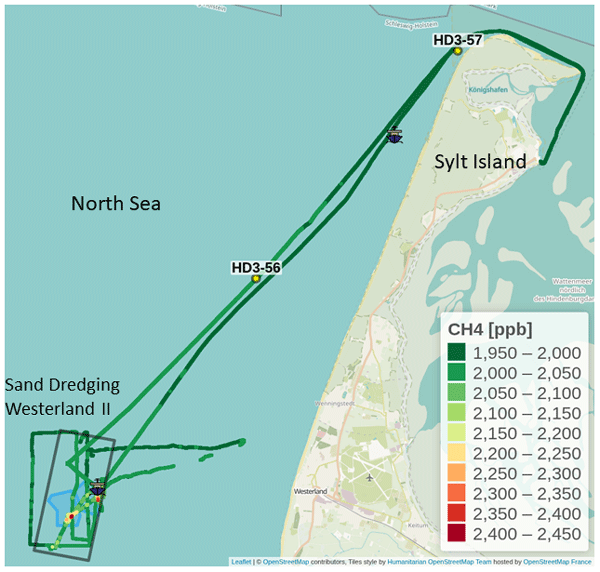
Methane (CH4) measurements near a sand dredging site off Sylt (North Sea) revealed elevated concentrations in both air and water, particularly during summer. CH4 fluxes were significantly higher at the dredging site compared to surrounding areas. Isotopic signatures suggest a microbial origin. These findings indicate that coastal sand extraction may represent a previously unaccounted source of atmospheric CH4.
Gaziza Konyssova, Vera Sidorenko, Alexey Androsov, Sabine Horn, Sara Rubinetti, Ivan Kuznetsov, Karen Helen Wiltshire, and Justus van Beusekom
Biogeosciences, 22, 7745–7767, https://doi.org/10.5194/bg-22-7745-2025, https://doi.org/10.5194/bg-22-7745-2025, 2025
Short summary
Short summary
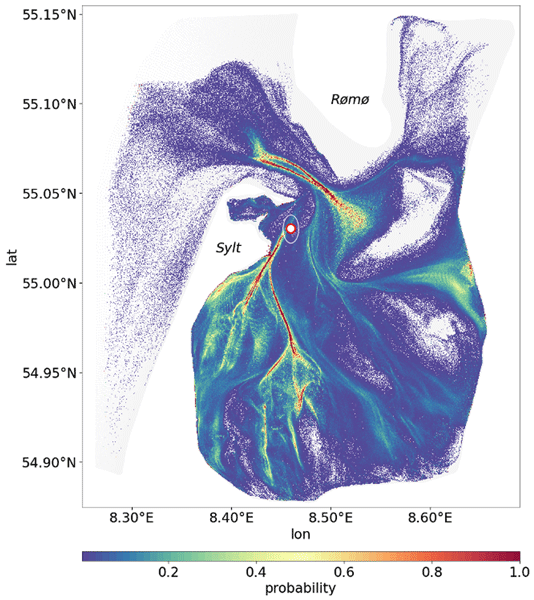
Combining long-term measurements, ocean modelling, and machine learning, we investigated the processes controlling suspended particulate matter concentrations in a Wadden Sea basin. Winter concentrations are shaped mainly by wind and tides, while biological activity exerts stronger influence in spring and summer. The study also reveals different short-term dynamics at shallow and deep sites, improving interpretation of long-term coastal observations.
Daniel Müller, Bo Liu, Walter Geibert, Moritz Holtappels, Lasse Sander, Elda Miramontes, Heidi Taubner, Susann Henkel, Kai-Uwe Hinrichs, Denise Bethke, Ingrid Dohrmann, and Sabine Kasten
Biogeosciences, 22, 2541–2567, https://doi.org/10.5194/bg-22-2541-2025, https://doi.org/10.5194/bg-22-2541-2025, 2025
Short summary
Short summary
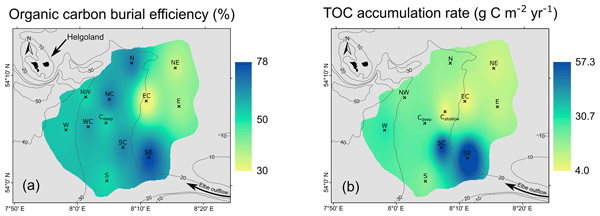
Coastal and shelf sediments are the most important sinks for organic carbon (OC) on Earth. We produced a new high-resolution sediment and porewater data set from the Helgoland Mud Area (HMA), North Sea, to determine which depositional factors control the preservation of OC. The burial efficiency is highest in an area of high sedimentation and terrigenous OC. The HMA covers 0.09 % of the North Sea but accounts for 0.76 % of its OC accumulation, highlighting the importance of the depocentre.
Felipe de Luca Lopes de Amorim, Areti Balkoni, Vera Sidorenko, and Karen Helen Wiltshire
Ocean Sci., 20, 1247–1265, https://doi.org/10.5194/os-20-1247-2024, https://doi.org/10.5194/os-20-1247-2024, 2024
Short summary
Short summary
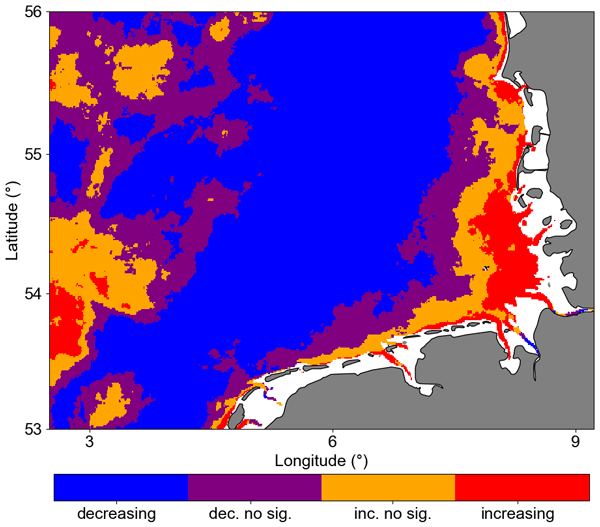
We studied the increasing or decreasing of chlorophyll a abundance in the German Bight. Chlorophyll a is the pigment present in algae that allows them to capture energy from the sun and indicates both the growth of the algae and the health of the environment. Most of the German Bight has decreasing chlorophyll a concentration in the analysed period. In addition, about 45 % of the changes happening in chlorophyll a were connected with changes in temperature.
Autun Purser, Laura Hehemann, Lilian Boehringer, Ellen Werner, Santiago E. A. Pineda-Metz, Lucie Vignes, Axel Nordhausen, Moritz Holtappels, and Frank Wenzhoefer
Earth Syst. Sci. Data, 14, 3635–3648, https://doi.org/10.5194/essd-14-3635-2022, https://doi.org/10.5194/essd-14-3635-2022, 2022
Short summary
Short summary
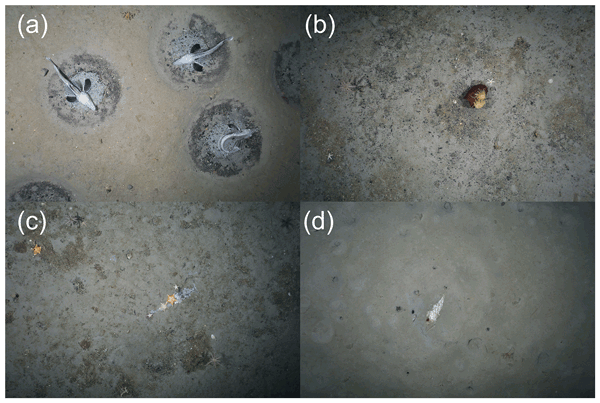
Within this paper we present the seafloor images, maps and acoustic camera data collected by a towed underwater research platform deployed in 20 locations across the eastern Weddell Sea, Antarctica, during the PS124 COSMUS expedition with the research icebreaker RV Polarstern in 2021. The 20 deployments highlight the great variability in seafloor structure and faunal communities present. Of key interest was the discovery of the largest fish nesting colony discovered globally to date.
Cited articles
Aller, R. C.: The effects of macrobenthos on chemical properties of marine sediment and overlying water, in: Animal-sediment relations: the biogenic alteration of sediments, Springer US, Boston, MA, 53–102, https://doi.org/10.1007/978-1-4757-1317-6_2, 1982.
Aller, R. C.: Bioturbation and remineralization of sedimentary organic matter: effects of redox oscillation, Chem. Geol., 114, 331–345, https://doi.org/10.1016/0009-2541(94)90062-0, 1994.
Alves, R. M., Van Colen, C., Vincx, M., Vanaverbeke, J., De Smet, B., Guarini, J. M., Rabaut, M., and Bouma, T. J.: A case study on the growth of Lanice conchilega (Pallas, 1766) aggregations and their ecosystem engineering impact on sedimentary processes, J. Exp. Mar. Biol. Ecol., 489, 15–23, https://doi.org/10.1016/j.jembe.2017.01.005, 2017.
Andresen, H. and Brey, T.: Benthic Energy Flow v1.0, R-package, GitHub, https://github.com/HenrikeAndresen/BenthicPro (last access: 1 February 2025), 2018.
Androsov, A., Fofonova, V., Kuznetsov, I., Danilov, S., Rakowsky, N., Harig, S., Brix, H., and Wiltshire, K. H.: FESOM-C v.2: coastal dynamics on hybrid unstructured meshes, Geosci. Model Dev., 12, 1009–1028, https://doi.org/10.5194/gmd-12-1009-2019, 2019.
Arndt, C. and Schiedek, D.: Nephtys hombergii, a free-living predator in marine sediments: energy production under environmental stress, Mar. Biol., 129, 643–650, https://doi.org/10.1007/s002270050207, 1997.
Bailey-Brock, J. H.: Ecology of the tube-building polychaete Diopatra leuckarti Kinberg, 1865 (Onuphidae) in Hawaii: community structure, and sediment stabilizing properties. Zool. J. Linn. Soc.-Lond., 80, 191–199, https://doi.org/10.1111/j.1096-3642.1984.tb01972.x, 1984.
Bernard, G., Gammal, J., Järnström, M., Norkko, J., and Norkko, A.: Quantifying bioturbation across coastal seascapes: Habitat characteristics modify effects of macrofaunal communities, J. Sea Res., 152, 101766, https://doi.org/10.1016/j.seares.2019.101766, 2019.
Beukema, J. J. and Dekker, R.: The commonly applied Brey model to estimate benthic secondary production cannot be used for communities dominated by large bivalves, Estuar. Coast. Shelf S., 270, 107836, https://doi.org/10.1016/j.ecss.2022.107836, 2022.
Biggs, C. R., Yeager, L. A., Bolser, D. G., Bonsell, C., Dichiera, A. M., Hou, Z., Keyser, S. R., Khursigara, A. J., Lu, K., Muth, A. F., Negrete Jr., B., and Erisman, B. E.: Does functional redundancy affect ecological stability and resilience? A review and meta-analysis, Ecosphere, 11, e03184, https://doi.org/10.1002/ecs2.3184, 2020.
Birchenough, S. N., Parker, R. E., McManus, E., and Barry, J.: Combining bioturbation and redox metrics: potential tools for assessing seabed function, Ecol. Indic., 12, 8–16, https://doi.org/10.1016/j.ecolind.2011.03.015, 2012.
Bockelmann, F. D., Puls, W., Kleeberg, U., Müller, D., and Emeis, K. C.: Mapping mud content and median grain-size of North Sea sediments – A geostatistical approach, Mar. Geol., 397, 60–71, https://doi.org/10.1016/j.margeo.2017.11.003, 2018.
Bolam, S. G. and Eggleton, J. D.: Macrofaunal production and biological traits: spatial relationships along the UK continental shelf, J. Sea Res., 88, 47–58, https://doi.org/10.1016/j.seares.2014.01.001, 2014.
Bolam, S. G., Fernandes, T. F., and Huxham, M.: Diversity, biomass, and ecosystem processes in the marine benthos, Ecol. Monogr., 72, 599–615, https://doi.org/10.1890/0012-9615(2002)072[0599:DBAEPI]2.0.CO;2, 2002.
Bolam, S. G., Eggleton, J., Smith, R., Mason, C., Vanstaen, K., and Rees, H.: Spatial distribution of macrofaunal assemblages along the English Channel, J. Mar. Biol. Assoc. UK, 88, 675–687, https://doi.org/10.1017/S0025315408001276, 2008.
Bonifácio, P., Grémare, A., Gauthier, O., Romero-Ramirez, A., Bichon, S., Amouroux, J. M., and Labrune, C.: Long-term (1998 vs. 2010) large-scale comparison of soft-bottom benthic macrofauna composition in the Gulf of Lions, NW Mediterranean Sea, J. Sea Res., 131, 32–45, https://doi.org/10.1016/j.seares.2017.08.013, 2018.
Braeckman, U., Provoost, P., Gribsholt, B., Van Gansbeke, D., Middelburg, J. J., Soetaert, K., Vincx, M., and Vanaverbeke, J.: Role of macrofauna functional traits and density in biogeochemical fluxes and bioturbation, Mar. Ecol. Prog. Ser., 399, 173–186, https://doi.org/10.3354/meps08336, 2010.
Braeckman, U., Foshtomi, M. Y., Van Gansbeke, D., Meysman, F., Soetaert, K., Vincx, M., and Vanaverbeke, J.: Variable Importance of Macrofaunal Functional Biodiversity for Biogeochemical Cycling in Temperate Coastal Sediments, Ecosystems, 17, 720–737, https://doi.org/10.1007/s10021-014-9755-7, 2014.
Bremner, J., Rogers, S. I., and Frid, C. L. J.: Assessing functional diversity in marine benthic ecosystems: a comparison of approaches, Mar. Ecol. Prog. Ser., 254, 11–25, https://doi.org/10.3354/meps254011, 2003.
Brey, T.: An empirical model for estimating aquatic invertebrate respiration, Methods Ecol. Evol., 1, 92–101, https://doi.org/10.1111/j.2041-210X.2009.00008.x, 2010.
Brey, T.: A multi-parameter artificial neural network model to estimate macrobenthic invertebrate productivity and production, Limnol. Oceanogr.-Meth., 10, 581–589, https://doi.org/10.4319/lom.2012.10.581, 2012.
Brey, T., Müller-Wiegmann, C., Zittier, Z. M., and Hagen, W.: Body composition in aquatic organisms – a global data bank of relationships between mass, elemental composition and energy content, J. Sea Res., 64, 334–340, https://doi.org/10.1016/j.seares.2010.05.002, 2010.
Burchard, H. and Hetland, R. D.: Quantifying the contributions of tidal straining and gravitational circulation to residual circulation in periodically stratified tidal estuaries, J. Phys. Oceanogr., 40, 1243–1262, https://doi.org/10.1175/2010JPO4270.1, 2010.
Cadotte, M. W., Carscadden, K., and Mirotchnick, N.: Beyond species: functional diversity and the maintenance of ecological processes and services, J. Appl. Ecol., 48, 1079–1087, https://doi.org/10.1111/j.1365-2664.2011.02048.x, 2011.
Chao, A., Chiu, C. H., and Jost, L.: Phylogenetic diversity measures based on Hill numbers, Philos. T. Roy. Soc. B, 365, 3599–3609, https://doi.org/10.1098/rstb.2010.0272, 2010.
Chao, A., Chiu, C. H., and Jost, L.: Unifying species diversity, phylogenetic diversity, functional diversity, and related similarity and differentiation measures through Hill numbers, Annu. Rev. Ecol. Evol. S., 45, 297–324, https://doi.org/10.1146/annurev-ecolsys-120213-091540, 2014a.
Chao, A., Gotelli, N., Hsieh, T., Sander, E., Ma, K., Colwell, R., and Ellison, A.: Rarefaction and extrapolation with Hill numbers: a framework for sampling and estimation in species diversity studies, Ecol. Monogr., 84, 45–67, https://doi.org/10.1890/13-0133.1, 2014b.
Charbonnier, C., Lavesque, N., Anschutz, P., Bachelet, G., and Lecroart, P.: Role of macrofauna on benthic oxygen consumption in sandy sediments of a high-energy tidal beach, Cont. Shelf Res., 120, 96–105, https://doi.org/10.1016/j.csr.2016.03.017, 2016.
Charvet, S., Kosmala, A., and Statzner, B.: Biomonitoring through biological traits of benthic macroinvertebrates: perspectives for a general tool in stream management, Arch. Hydrobiol., 142, 415–432, https://doi.org/10.1127/archiv-hydrobiol/142/1998/415, 1998.
Chegini, F., Holtermann, P., Kerimoglu, O., Becker, M., Kreus, M., Klingbeil, K., Gräwe, U., and Winter, C., and Burchard, H.: Processes of stratification and destratification during an extreme river discharge event in the German Bight ROFI, J. Geophys. Res.-Oceans, 125, e2019JC015987, https://doi.org/10.1029/2019JC015987, 2020.
Chen, J., Zhang, W., Porz, L., Arlinghaus, P., Hanz, U., Holtappels, M., and Schrum, C.: Physical mechanisms of sediment trapping and deposition on spatially confined mud depocenters in high-energy shelf seas, J. Geophys. Res.-Oceans, 130, e2025JC022622, https://doi.org/10.1029/2025JC022622, 2025.
Christensen, B., Vedel, A., and Kristensen, E.: Carbon and nitrogen fluxes in sediment inhabited by suspension-feeding (Nereis diversicolor) and non-suspension-feeding (N. virens) polychaetes, Mar. Ecol. Prog. Ser., 192, 203–217, https://doi.org/10.3354/meps192203, 2000.
Clare, D. S., Culhane, F., and Robinson, L. A.: Secondary production increases with species richness but decreases with species evenness of benthic invertebrates, Oikos, 2022, e08629, https://doi.org/10.1111/oik.08629, 2022.
Danovaro, R., Gambi, C., Dell'Anno, A., Corinaldesi, C., Fraschetti, S., Vanreusel, A., Vincx, M., and Gooday, A.: Exponential decline of deep-sea ecosystem functioning linked to benthic biodiversity loss, Curr. Biol., 18, 1–8, https://doi.org/10.1016/j.cub.2007.11.056, 2008.
Dernie, K. M., Kaiser, M. J., Richardson, E. A., and Warwick, R. M.: Recovery of soft sediment communities and habitats following physical disturbance, J. Exp. Mar. Biol. Ecol., 285, 415–434, https://doi.org/10.1016/S0022-0981(02)00541-5, 2003.
Diesing, M., Kubicki, A., Winter, C., and Schwarzer, K.: Decadal scale stability of sorted bedforms, German Bight, southeastern North Sea, Cont. Shelf Res., 26, 902–916, https://doi.org/10.1016/j.csr.2006.02.009, 2006.
Dippner, J. W.: A frontal-resolving model for the German Bight, Cont. Shelf Res., 13, 49–66, https://doi.org/10.1016/0278-4343(93)90035-V, 1993.
Dirzo, R., Young, H. S., Galetti, M., Ceballos, G., Isaac, N. J., and Collen, B.: Defaunation in the Anthropocene, Science, 345, 401–406, https://doi.org/10.1126/science.1251817, 2014.
Dolbeth, M., Lillebø, A. I., Cardoso, P. G., Ferreira, S. M., and Pardal, M. A.: Annual production of estuarine fauna in different environmental conditions: an evaluation of the estimation methods, J. Exp. Mar. Biol. Ecol., 326, 115–127, https://doi.org/10.1016/j.jembe.2005.05.010, 2005.
Dolbeth, M., Cusson, M., Sousa, R., and Pardal, M. A.: Secondary production as a tool for better understanding of aquatic ecosystems, Can. J. Fish. Aquat. Sci., 69, 1230–1253, https://doi.org/10.1139/f2012-050. 2012.
Dolbeth, M., Dolédec, S., and Pardal, M. Â.: Relationship between functional diversity and benthic secondary production in a disturbed estuary, Mar. Ecol. Prog. Ser., 539, 33–46, https://doi.org/10.3354/meps11473, 2015.
Duffy, J. E., Macdonald, K. S., Rhode, J. M., and Parker, J. D.: Grazer diversity, functional redundancy, and productivity in seagrass beds: an experimental test, Ecology, 82, 2417–2434, https://doi.org/10.1890/0012-9658(2001)082[2417:GDFRAP]2.0.CO;2, 2001.
Duffy, J. E., Lefcheck, J. S., Stuart-Smith, R. D., Navarrete, S. A., and Edgar, G. J.: Biodiversity enhances reef fish biomass and resistance to climate change, P. Natl. Acad. Sci. USA, 113, 6230–6235, https://doi.org/10.1073/pnas.1524465113, 2016.
Duffy, J. E., Godwin, C. M., and Cardinale, B. J.: Biodiversity effects in the wild are common and as strong as key drivers of productivity, Nature, 549, 261–264, https://doi.org/10.1038/nature23886, 2017.
Egbert, G. D. and Erofeeva, S. Y.: Efficient inverse modeling of barotropic ocean tides, J. Atmos. Ocean. Tech., 19, 183–204, https://doi.org/10.1175/1520-0426(2002)019<0183:EIMOBO>2.0.CO;2, 2002.
Elliott, A. J., and Clarke, T.: Seasonal stratification in the northwest European shelf seas, Cont. Shelf Res., 11, 467–492, https://doi.org/10.1016/0278-4343(91)90054-A, 1991.
Fauchald, O. K. and Jumars, P. A.: The diet of worms: a study of polychaete feeding guilds, Oceanogr. Mar. Biol., 17, 193–284, 1979.
Figge, K.: Sedimentverteilung in der Deutschen Bucht, Deutsches Hydrographisches Institut, Karte Nr. 2900 (mit Begleitheft), 1981.
Fofonova, V., Androsov, A., Sander, L., Kuznetsov, I., Amorim, F., Hass, H. C., and Wiltshire, K. H.: Non-linear aspects of the tidal dynamics in the Sylt-Rømø Bight, south-eastern North Sea, Ocean Sci., 15, 1761–1782, https://doi.org/10.5194/os-15-1761-2019, 2019.
Fofonova, V., Kärnä, T., Klingbeil, K., Androsov, A., Kuznetsov, I., Sidorenko, D., Danilov, S., Burchard, H., and Wiltshire, K. H.: Plume spreading test case for coastal ocean models, Geosci. Model Dev., 14, 6945–6975, https://doi.org/10.5194/gmd-14-6945-2021, 2021.
Gammal, J., Hewitt, J., Gladstone-Gallagher, R., Thrush, S., Douglas, E., Lohrer, A., and Pilditch, C.: Stressors increase the impacts of coastal macrofauna biodiversity loss on ecosystem multifunctionality, Ecosystems, 26, 539–552, https://doi.org/10.1007/s10021-022-00775-4, 2023.
Gilbert, F., Hulth, S., Strömberg, N., Ringdahl, K., and Poggiale, J. C.: 2-D optical quantification of particle reworking activities in marine surface sediments, J. Exp. Mar. Biol. Ecol., 285, 251–263, https://doi.org/10.1016/S0022-0981(02)00531-2, 2003.
Gilbertson, W. W., Solan, M., and Prosser, J. I.: Differential effects of microorganism–invertebrate interactions on benthic nitrogen cycling, FEMS Microbiol. Ecol., 82, 11–22, https://doi.org/10.1111/j.1574-6941.2012.01400.x, 2012.
Glud, R. N.: Oxygen dynamics of marine sediments, Mar. Biol. Res., 4, 243–289, https://doi.org/10.1080/17451000801888726, 2008.
Gogina, M., Morys, C., Forster, S., Gräwe, U., Friedland, R., and Zettler, M. L.: Towards benthic ecosystem functioning maps: Quantifying bioturbation potential in the German part of the Baltic Sea, Ecol. Indic., 73, 574–588, https://doi.org/10.1016/j.ecolind.2016.10.025, 2017.
Gray, J. S. and Elliott, M.: Ecology of marine sediments: from science to management, Oxford University Press, https://doi.org/10.1093/oso/9780198569015.001.0001, 2009.
Greenstreet, S. P., Fraser, H. M., Rogers, S. I., Trenkel, V. M., Simpson, S. D., and Pinnegar, J. K.: Redundancy in metrics describing the composition, structure, and functioning of the North Sea demersal fish community, ICES J. Mar. Sci., 69, 8–22, https://doi.org/10.1093/icesjms/fsr188, 2012.
Hampel, H., Elliott, M., and Cattrijsse, A.: Macrofaunal communities in the habitats of intertidal marshes along the salinity gradient of the Schelde estuary, Estuar. Coast. Shelf S., 84, 45–53, https://doi.org/10.1016/j.ecss.2009.05.029, 2009.
Hebbeln, D., Scheurle, C., and Lamy, F.: Depositional history of the Helgoland mud area, German Bight, North Sea, Geo-Mar. Lett., 23, 81–90, https://doi.org/10.1007/s00367-003-0127-0, 2003.
Heip, C., Basford, D., Craeymeersch, J. A., Dewarumez, J. M., Dörjes, J. D., De Wilde, P., Duineveld, G., Eleftheriou, A., Herman, P. M. J., Niermann, U., Kingston, P., Künitzer, A., Rachor, E., Rumohr, H., Soetaert, K., and Soltwedel, T.: Trends in biomass, density and diversity of North Sea macrofauna, ICES J. Mar. Sci., 49, 13–22, https://doi.org/10.1093/icesjms/49.1.13, 1992.
Herman, P. M. J., Middelburg, J. J., Van de Koppel, J., and Heip, C. H. R.: Ecology of estuarine macrobenthos, Adv. Ecol. Res., 29, 195–240, 1999.
Herringshaw, L. G., Sherwood, O. A., and McIlroy, D.: Ecosystem engineering by bioturbating polychaetes in event bed microcosms, Palaios, 25, 46–58, https://doi.org/10.2110/palo.2009.p09-055r, 2010.
Hill, M. O.: Diversity and evenness: a unifying notation and its consequences, Ecology, 54, 427–432, https://doi.org/10.2307/1934352, 1973.
Hooper, D. U. and Vitousek, P. M.: The effects of plant composition and diversity on ecosystem processes, Science, 277, 1302–1305, https://doi.org/10.1126/science.277.5330.1302, 1997.
Hooper, D. U., Chapin III, F. S., Ewel, J. J., Hector, A., Inchausti, P., Lavorel, S., Lawton, J. H., Lodge, D. M., Loreau, M., Naeem, S., Schmid, B., Setälä, H., Symstad, A. J., Vandermeer, J., and Wardle, D. A.: Effects of biodiversity on ecosystem functioning: a consensus of current knowledge, Ecol. Monogr., 75, 3–35, https://doi.org/10.1890/04-0922, 2005.
Horn, S., Meunier, C. L., Fofonova, V., Wiltshire, K. H., Sarker, S., Pogoda, B., and Asmus, H.: Toward improved model capacities for assessment of climate impacts on coastal bentho-pelagic food webs and ecosystem services, Front. Mar. Sci., 8, 567266, https://doi.org/10.3389/fmars.2021.567266, 2021.
Hsieh, T., Ma. K., and Chao, A.: iNEXT: Interpolation and Extrapolation for Species Diversity, R package version 3.0.2, http://chao.stat.nthu.edu.tw/wordpress/software_download/ (last access: 1 September 2025), 2025.
Huthnance, J. M.: Physical oceanography of the North Sea, Ocean and Shoreline Management, 16, 199–231, https://doi.org/10.1016/0951-8312(91)90005-M, 1991.
Jago, C. F., Bale, A. J., Green, M. O., Howarth, M. J., Jones, S. E., McCave, I. N., Millward, G. E., Morris, A. W., Rowden, A. A., and Williams, J. J.: Resuspension processes and seston dynamics, southern North Sea, Philos. T. R. Soc. Lond. Ser. A-Physical and Engineering Sciences, 343, 475–491, https://doi.org/10.1098/rsta.1993.0060, 1993.
Kauppi, L., Norkko, J., Ikonen, J., and Norkko, A.: Seasonal variability in ecosystem functions: quantifying the contribution of invasive species to nutrient cycling in coastal ecosystems, Mar. Ecol. Prog. Ser., 572, 193–207, https://doi.org/10.3354/meps12171, 2017.
Kopte, R., Becker, M., Holtermann, P., and Winter, C.: Tides, stratification, and counter rotation: The German Bight ROFI in comparison to other regions of freshwater influence, J. Geophys. Res.-Oceans, 127, e2021JC018236, https://doi.org/10.1029/2021JC018236, 2022.
Krause, G., Budeus, G., Gerdes, D., Schaumann, K., and Hesse, K.: Frontal systems in the German Bight and their physical and biological effects, Elsev. Oceanogr. Serie., 42, 119–140, https://doi.org/10.1016/S0422-9894(08)71042-0, 1986.
Kristensen, E., Penha-Lopes, G., Delefosse, M., Valdemarsen, T., Quintana, C. O., and Banta, G. T.: What is bioturbation? The need for a precise definition for fauna in aquatic sciences, Mar. Ecol. Prog. Ser., 446, 285–302, https://doi.org/10.3354/meps, 2012.
Kröncke, I., Stoeck, T., Wieking, G., and Palojärvi, A.: Relationship between structural and functional aspects of microbial and macrofaunal communities in different areas of the North Sea, Mar. Ecol. Prog. Ser., 282, 13–31, https://doi.org/10.3354/meps282013, 2004.
Kröncke, I., Reiss, H., Eggleton, J. D., Aldridge, J., Bergman, M. J., Cochrane, S., Craeymeersch, J. A., Degraer, S., Desroy N., Dewarumez J., Duineveld, G. C. A., Essink, K., Hillewaert, H., Lavaleye, M. S. S., Moll, A., Nehring, S., Newell, R., Oug, E., Pohlmann, T., Rachor, E., Robertson, M., Rumohr, H., Schratzberger, M., Smith, R., Berghe, B. V., van Dalfsen, J., van Hoey, G., Vincx, M., Willems, W., and Rees, H. L.: Changes in North Sea macrofauna communities and species distribution between 1986 and 2000, Estuar. Coast. Shelf S., 94, 1–15, https://doi.org/10.1016/j.ecss.2011.04.008, 2011.
Künitzer, A., Basford, D., Craeymeersch, J. A., Dewarumez, J. M., Dörjes, J., Duineveld, G. C. A., Eleftheriou, A., Heip, C., Herman, P., Kingston, P., Niermann, U., Rachor, E., Rumohr, H., and De Wilde, P. A. J.: The benthic infauna of the North Sea: species distribution and assemblages, ICES J. Mar. Sci., 49, 127–143, https://doi.org/10.1093/icesjms/49.2.127, 1992.
Kuznetsov, A. L., Kirichenko, A. V., Kiselev, V. S., and Semenov, A. D.: Simulation model for the North Sea Route transit time estimation, IOP C. Ser. Earth Env., 539, 012019, https://doi.org/10.1088/1755-1315/539/1/012019, 2020.
Laliberté, E., Legendre, P., Shipley, B., and Laliberté, M. E.: Package “fd”. Measuring functional diversity from multiple traits, and other tools for functional ecology, R package version 1.0-12, https://cran.r-project.org/web/packages/FD/FD.pdf (last access: 8 October 2026), 2014.
Lamarque, B., Deflandre, B., Schmidt, S., Bernard, G., Dubosq, N., Diaz, M., Lavesque, N., Garabetian, F., Grasso, F., Sottolichio, A., Rigaud, S., Romero-Ramirez, A., Cordier, M., Poirier, D., Danilo, M., and Gremare, A.: Spatiotemporal dynamics of surface sediment characteristics and benthic macrofauna compositions in a temperate high-energy River-dominated Ocean Margin, Cont. Shelf Res., 247, 104833, https://doi.org/10.1016/j.csr.2022.104833, 2022.
Lamarque, B., Deflandre, B., Schmidt, S., Lavesque, N., Bernard, G., Garabetian, F., Fontanier, C., Rigaud, S., Grasso, F., Diaz, M., Sottolichio, A., Poirier, D., Danilo, M., Romero-Ramirez, A., and Grémare, A.: Assessing spatiotemporal changes in the benthic habitats of the West Gironde Mud Patch through the analyses of surface sediments, benthic macrofauna and sediment profile images, Cont. Shelf Res., 105637, https://doi.org/10.1016/j.csr.2025.105637, 2025.
Laverock, B., Gilbert, J. A., Tait, K., Osborn, A. M., and Widdicombe, S.: Bioturbation: impact on the marine nitrogen cycle, Biochem. Soc. T., 39, 315–320, https://doi.org/10.1042/BST0390315, 2011.
Laverock, B., Tait, K., Gilbert, J. A., Osborn, A. M., and Widdicombe, S.: Impacts of bioturbation on temporal variation in bacterial and archaeal nitrogen-cycling gene abundance in coastal sediments, Env. Microbiol. Rep., 6, 113–121, https://doi.org/10.1111/1758-2229.12115, 2014.
Lercari, D. and Defeo, O.: Variation of a sandy beach macrobenthic community along a human-induced environmental gradient, Estuar. Coast. Shelf S., 58, 17–24, https://doi.org/10.1016/S0272-7714(03)00043-X, 2003.
Lindqvist, S., Engelbrektsson, J., Eriksson, S. P., and Hulth, S.: Functional classification of bioturbating macrofauna in marine sediments using time-resolved imaging of particle displacement and multivariate analysis, Biogeosciences Discuss. [preprint], https://doi.org/10.5194/bg-2016-411, 2016.
Lohrer, A. M., Halliday, N. J., Thrush, S. F., Hewitt, J. E., and Rodil, I. F.: Ecosystem functioning in a disturbance-recovery context: contribution of macrofauna to primary production and nutrient release on intertidal sandflats, J. Exp. Mar. Biol. Ecol., 390, 6–13, https://doi.org/10.1016/j.jembe.2010.04.035, 2010.
Long, J. A.: interactions: Comprehensive, User-Friendly Toolkit for Probing Interactions, R package version 1.2.0, https://doi.org/10.32614/CRAN.package.interactions, 2024.
Loo, L. O., Jonsson, P. R., Sköld, M., and Karlsson, Ö.: Passive suspension feeding in Amphiura filiformis (Echinodermata: Ophiuroidea): feeding behaviour in flume flow and potential feeding rate of field populations, Mar. Ecol. Prog. Ser., 139, 143–155, https://doi.org/10.3354/meps139143, 1996.
Loreau, M.: Biodiversity and ecosystem functioning: a mechanistic model, P. Natl. Acad. Sci. USA, 95, 5632–5636, https://doi.org/10.1073/pnas.95.10.5632, 1998.
Loreau, M.: Biodiversity and ecosystem functioning: recent theoretical advances, Oikos, 91, 3–17, https://doi.org/10.1034/j.1600-0706.2000.910101.x, 2000.
Loreau, M.: Linking biodiversity and ecosystems: towards a unifying ecological theory, Philos. T. Roy. Soc. B, 365, 49–60, https://doi.org/10.1098/rstb.2009.0155, 2010.
Loreau, M., Naeem, S., Inchausti, P., Bengtsson, J., Grime, J. P., Hector, A., Hooper, D. U., Huston, M. A., Raffaelli, D., Schmid, B., Tilman, D., and Wardle, D. A.: Biodiversity and ecosystem functioning: current knowledge and future challenges, Science, 294, 804–808, https://doi.org/10.1126/science.1064088, 2001.
Luckenbach, M. W.: Sediment stability around animal tubes: The roles of hydrodynamic processes and biotic activity, Limnol. Oceanogr., 31, 779–787, https://doi.org/10.4319/lo.1986.31.4.0779, 1986.
Maureaud, A., Hodapp, D., Van Denderen, P. D., Hillebrand, H., Gislason, H., Spaanheden Dencker, T., Esther, B., and Lindegren, M.: Biodiversity–ecosystem functioning relationships in fish communities: biomass is related to evenness and the environment, not to species richness, P. R. Soc. B, 286, 20191189, https://doi.org/10.1098/rspb.2019.1189, 2019.
McGrady-Steed, J., Harris, P. M., and Morin, P. J.: Biodiversity regulates ecosystem predictability, Nature, 390, 162–165, https://doi.org/10.1038/36561, 1997.
Meyer, J., Nehmer, P., Moll, A., and Kröncke, I.: Shifting south-eastern North Sea macrofauna community structure since 1986: a response to de-eutrophication and regionally decreasing food supply? Estuar. Coast. Shelf S., 213, 115–127, https://doi.org/10.1016/j.ecss.2018.08.010, 2018.
Michaelis, R., Hass, H. C., Mielck, F., Papenmeier, S., Sander, L., Ebbe, B., Gutow, L., and Wiltshire, K. H.: Hard-substrate habitats in the German Bight (South-Eastern North Sea) observed using drift videos, J. Sea Res., 144, 78–84, https://doi.org/10.1016/j.seares.2018.11.009, 2019.
Michaud, E., Desrosiers, G., Mermillod-Blondin, F., Sundby, B., and Stora, G.: The functional group approach to bioturbation: the effects of biodiffusers and gallery-diffusers of the Macoma balthica community on sediment oxygen uptake, J. Exp. Mar. Biol. Ecol., 326, 77–88, https://doi.org/10.1016/j.jembe.2005.05.016, 2005.
Mora, C., Aburto-Oropeza, O., Ayala Bocos, A., Ayotte, P. M., Banks, S., Bauman, A. G., Beger, M., Bessudo, S., Booth, D. J., Brokovich, E., Brooks, A., Chabanet, P., Cinner, J. E., Cortés, J., Cruz-Motta, J. J., Magaña, A. C., DeMartini, E. E., Edgar, G. J., Feary, D. A., Ferse, S. C. A., Friedlander, A. M., Gaston, K. J., Gough, C., Graham, N. A. J., Green, A., Guzman, H., Hardt, M., Kulbicki, M., Letourneur, Y., Pérez, A. L., Loreau, M., Loya, Y., Martinez, C., Mascareñas-Osorio, I., Morove, T., Nadon, M., Nakamura, Y., Paredes, G., Polunin, N. V. C., Pratchett, M. S., Bonilla, H. R., Rivera, F., Sala, E., Sandin, S. A., Soler, G., Stuart-Smith, R., Tessier, E., Tittensor, D. P., Tupper, M., Usseglio, P., Vigliola, L., Wantiez, L., Williams, I., Wilson, S. K. and Zapata, F. A.: Global human footprint on the linkage between biodiversity and ecosystem functioning in reef fishes, PLoS Biol., 9, e1000606, https://doi.org/10.1371/journal.pbio.1000606, 2011.
Mouillot, D., Bellwood, D. R., Baraloto, C., Chave, J., Galzin, R., Harmelin-Vivien, M., Kulbicki, M., Lavergne, S., Lavorel, S., Mouquet, N., Timothy Paine, C. E., Renaud, J., and Thuiller, W.: Rare species support vulnerable functions in high-diversity ecosystems, PLoS Biol., 11, e1001569, https://doi.org/10.1371/journal.pbio.1001569, 2013.
Müller, D., Liu, B., Geibert, W., Holtappels, M., Sander, L., Miramontes, E., Taubner, H., Henkel, S., Hinrichs, K.-U., Bethke, D., Dohrmann, I., and Kasten, S.: Depositional controls and budget of organic carbon burial in fine-grained sediments of the North Sea – the Helgoland Mud Area as a natural laboratory, Biogeosciences, 22, 2541–2567, https://doi.org/10.5194/bg-22-2541-2025, 2025.
Muus, K.: Density and growth of juvenile Amphiura filiformis (Ophiuroidea) in the Øresund, Ophelia, 20, 153–168, https://doi.org/10.1080/00785236.1981.10426567, 1981.
Needham, H. R., Pilditch, C. A., Lohrer, A. M., and Thrush, S. F.: Context-specific bioturbation mediates changes to ecosystem functioning, Ecosystems, 14, 1096–1109, https://doi.org/10.1007/s10021-011-9468-0, 2011.
Netto, S. A. and Lana, P. C.: Benthic macrofauna of Spartina alterniflora marshes and nearby unvegetated tidal flats of Paranaguá Bay (SE Brazil), Nerítica, 10, 41–55, https://doi.org/10.5380/rn.v10i1-2.85102, 1996.
Neumann, A., van Beusekom, J. E., Eisele, A., Emeis, K. C., Friedrich, J., Kröncke, I., Logemann, E. L., Meyer, J., Naderipour, C., Schückel, U., Wrede, A., and Zettler, M. L.: Macrofauna as a major driver of bentho-pelagic exchange in the southern North Sea, Limnol. Oceanogr., 66, 2203–2217, https://doi.org/10.1002/lno.11748, 2021.
Oehler, T., Martinez, R., Schückel, U., Winter, C., Kröncke, I., and Schlüter, M.: Seasonal and spatial variations of benthic oxygen and nitrogen fluxes in the Helgoland Mud Area (southern North Sea), Cont. Shelf Res., 106, 118–129, https://doi.org/10.1016/j.csr.2015.06.009, 2015.
Oksanen, J., Simpson, G., Blanchet, F., Kindt, R., Legendre, P., Minchin, P., O'Hara, R., Solymos, P., Stevens, M., Szoecs, E., Wagner, H., Bedward, M., Bolker, B., Borcard, D., Carvalho, G., De Caceres, M., Durand, S., Evangelista, H., Hannigan, G., Hill, M., Lahti, L., Martino, C., Ouellette, M., Ribeiro Cunha, E., Smith, T., Stier, A., Ter Braak, C., and Weedon, J.: vegan: Community Ecology Package, R package version 2.8-0, https://github.com/vegandevs/vegan (last access: 15 November 2025), 2025.
Oliver, T. H., Isaac, N. J., August, T. A., Woodcock, B. A., Roy, D. B., and Bullock, J. M.: Declining resilience of ecosystem functions under biodiversity loss, Nat. Commun., 6, 10122, https://doi.org/10.1038/ncomms10122, 2015.
Otto, L., Zimmerman, J. T. F., Furnes, G. K., Mork, M., Saetre, R., and Becker, G.: Review of the physical oceanography of the North Sea, Neth. J. Sea Res., 26, 161–238, https://doi.org/10.1016/0077-7579(90)90091-T, 1990.
Persson, A. and Rosenberg, R.: Impact of grazing and bioturbation of marine benthic deposit feeders on dinoflagellate cysts, Harmful Algae, 2, 43–50, https://doi.org/10.1016/S1568-9883(03)00003-9, 2003.
Petchey, O. L.: Integrating methods that investigate how complementarity influences ecosystem functioning, Oikos, 101, 323–330, https://doi.org/10.1034/j.1600-0706.2003.11828.x, 2003.
Petchey, O. L. and Gaston, K. J.: Functional diversity (FD), species richness and community composition. Ecol. Lett., 5, 402–411, https://doi.org/10.1046/j.1461-0248.2002.00339.x, 2002.
Petracco, M., Cardoso, R. S., Corbisier, T. N., and Turra, A.: Secondary production of sandy beach macrofauna: An evaluation of predictive models, Estuar. Coast. Shelf S., 115, 359–365, https://doi.org/10.1016/j.ecss.2012.10.002, 2012.
Provoost, P., Braeckman, U., Van Gansbeke, D., Moodley, L., Soetaert, K., Middelburg, J. J., and Vanaverbeke, J.: Modelling benthic oxygen consumption and benthic-pelagic coupling at a shallow station in the southern North Sea, Estuar. Coast. Shelf S., 120, 1–11, https://doi.org/10.1016/j.ecss.2013.01.008, 2013.
Queirós, A. M., Birchenough, S. N., Bremner, J., Godbold, J. A., Parker, R. E., Romero-Ramirez, A., Reiss, H., Solan, M., Somerfield, P. J., Van Colen, C., Van Hoey, G., and Widdicombe, S.: A bioturbation classification of European marine infaunal invertebrates, Ecol. Evol., 3, 3958–3985, https://doi.org/10.1002/ece3.769, 2013.
R Core Team: R: A Language and Environment for Statistical Computing, R Foundation for Statistical Computing, https://www.r-project.org/ (last access: 13 January 2025), 2025.
Ramalho, S. P., Lins, L., Soetaert, K., Lampadariou, N., Cunha, M. R., Vanreusel, A., and Pape, E.: Ecosystem functioning under the influence of bottom-trawling disturbance: an experimental approach and field observations from a continental slope area in the West Iberian Margin, Front. Mar. Sci., 7, 457, https://doi.org/10.3389/fmars.2020.00457, 2020.
Rao, C. R.: Diversity and dissimilarity coefficients: a unified approach, Theor. Popul. Biol., 21, 24–43, https://doi.org/10.1016/0040-5809(82)90004-1, 1982.
Reid, P. C. and Edwards, M.: Long-term changes in the pelagos, benthos and fisheries of the North Sea, Senck. Marit., 31, 107–115, https://doi.org/10.1007/BF03043021, 2001.
Reiss, H., Degraer, S., Duineveld, G. C., Kröncke, I., Aldridge, J., Craeymeersch, J. A., Eggleton, J. D., Hillewaert, H., Lavaleye, M. S. S., Moll, A., Pohlmann, T., Rachor, E., Robertson, M., vanden Berghe, E., van Hoey, G., and Rees, H. L.: Spatial patterns of infauna, epifauna, and demersal fish communities in the North Sea, ICES J. Mar. Sci., 67, 278–293, https://doi.org/10.1093/icesjms/fsp253, 2010.
Renz, J. R., Powilleit, M., Gogina, M., Zettler, M. L., Morys, C., and Forster, S.: Community bioirrigation potential (BIPc), an index to quantify the potential for solute exchange at the sediment-water interface, Mar. Environ. Res., 141, 214–224, https://doi.org/10.1016/j.marenvres.2018.09.013, 2018.
Ricotta, C. and Avena, G.: On the relationship between Pielou's evenness and landscape dominance within the context of Hill's diversity profiles, Ecol. Indic., 2, 361–365, https://doi.org/10.1016/S1470-160X(03)00005-0, 2003.
Ricotta, C., de Bello, F., Moretti, M., Caccianiga, M., Cerabolini, B. E., and Pavoine, S.: Measuring the functional redundancy of biological communities: a quantitative guide, Methods Ecol. Evol., 7, 1386–1395, https://doi.org/10.1111/2041-210X.12604, 2016.
Riisgård, H. U. and Larsen, P. S.: Filter-feeding in marine macro-invertebrates: pump characteristics, modelling and energy cost, Biol. Rev., 70, 67–106, https://doi.org/10.1111/j.1469-185X.1995.tb01440.x, 1995.
Rodil, I. F., Lucena-Moya, P., Tamelander, T., Norkko, J., and Norkko, A.: Seasonal variability in benthic–pelagic coupling: Quantifying organic matter inputs to the seafloor and benthic macrofauna using a multi-marker approach, Front. Mar. Sci., 7, 404, https://doi.org/10.3389/fmars.2020.00404, 2020.
Rodil, I. F., Lohrer, A. M., Attard, K. M., Thrush, S. F., and Norkko, A.: Positive contribution of macrofaunal biodiversity to secondary production and seagrass carbon metabolism, Ecology, 103, e3648, https://doi.org/10.1002/ecy.3648, 2022.
Rosenfeld, J. S.: Functional redundancy in ecology and conservation, Oikos, 98, 156–162, https://doi.org/10.1034/j.1600-0706.2002.980116.x, 2002.
Rowden, A. A., Jago, C. F., and Jones, S. E.: Influence of benthic macrofauna on the geotechnical and geophysical properties of surficial sediment, North Sea, Cont. Shelf Res., 18, 1347–1363, https://doi.org/10.1016/S0278-4343(98)00047-8, 1998.
Sahu, B. K.: Depositional mechanisms from the size analysis of clastic sediments, J. Sediment. Res., 34, 73–83, https://doi.org/10.1306/74D70FCE-2B21-11D7-8648000102C1865D, 1964.
Schrijvers, J., Okondo, J., Steyaert, M., and Vincx, M.: Influence of epibenthos on meiobenthos of the Ceriops tagal mangrove sediment at Gazi Bay, Kenya, Mar. Ecol. Prog. Ser., 128, 247–259, https://doi.org/10.3354/meps128247, 1995.
Schrum, C.: Thermohaline stratification and instabilities at tidal mixing fronts: results of an eddy resolving model for the German Bight, Cont. Shelf Res., 17, 689–716, https://doi.org/10.1016/S0278-4343(96)00051-9, 1997.
Shojaei, M. G., Gutow, L., Dannheim, J., Rachor, E., Schröder, A., and Brey, T.: Common trends in German Bight benthic macrofaunal communities: Assessing temporal variability and the relative importance of environmental variables, J. Sea Res., 107, 25–33, https://doi.org/10.1016/j.seares.2015.11.002, 2016.
Shull, D. H.: Bioturbation, Encyclopedia of Ocean Sciences, 3, 671–676, https://doi.org/10.1016/B978-012374473-9.00656-1, 2009.
Sidorenko, V., Rubinetti, S., Akimova, A., Pogoda, B., Androsov, A., Beng, K. C., Sell, A. F., Pineda-Metz, S. E. A., Wegner, K. M., Brand, S. C., Shama, L. N. S., Wollschläger, J., Klemm, K., Rahdarian, A., Winter, C., Badewien, T., Kuznetsov, I., Herrling, G., Laakmann, S., and Wiltshire, K. H.: Connectivity and larval drift across marine protected areas in the German bight, North Sea: Necessity of stepping stones, J. Sea Res., 204, 102563, https://doi.org/10.1016/j.seares.2025.102563, 2025.
Solan, M., Cardinale, B. J., Downing, A. L., Engelhardt, K. A., Ruesink, J. L., and Srivastava, D. S.: Extinction and ecosystem function in the marine benthos, Science, 306, 1177–1180, https://doi.org/10.1126/science.1103960, 2004.
Sousa, W. P.: The role of disturbance in natural communities, Annu. Rev. Ecol. Syst., 15, 353–391, https://doi.org/10.1146/annurev.es.15.110184.002033, 1984.
Sprong, P. A. A., Fofonova, V., Wiltshire, K. H., Neuhaus, S., Ludwichowski, K. U., Käse, L., Androsov, A., and Metfies, K.: Spatial dynamics of eukaryotic microbial communities in the German Bight, J. Sea Res., 163, 101914, https://doi.org/10.1016/j.seares.2020.101914, 2020.
Teschke, K., Kraan, C., Kloss, P., Andresen, H., Beermann, J., Fiorentino, D., Gusky, M., Hansen, M. L. S., Konijnenberg, R., Koppe, R., Pehlke, H., Piepenburg, D., Sabbagh, T., Wrede, A., Brey, T., and Dannheim, J.: CRITTERBASE, a science-driven data warehouse for marine biota, Sci. Data, 9, 483, https://doi.org/10.1038/s41597-022-01590-1, 2022.
Thistle, D.: Natural physical disturbances and communities of marine soft bottoms, Mar. Ecol. Prog. Ser., 6, 223–228, https://doi.org/10.3354/meps006223, 1981.
Tilman, D., Knops, J., Wedin, D., Reich, P., Ritchie, M., and Siemann, E.: The influence of functional diversity and composition on ecosystem processes, Science, 277, 1300–1302, https://doi.org/10.1126/science.277.5330.1300, 1997.
Tilman, D., Isbell, F., and Cowles, J. M.: Biodiversity and ecosystem functioning, Annu. Rev. Ecol. Evol. S., 45, 471–493, https://doi.org/10.1146/annurev-ecolsys-120213-091917, 2014.
Tonani, M., Sykes, P., King, R. R., McConnell, N., Péquignet, A.-C., O'Dea, E., Graham, J. A., Polton, J., and Siddorn, J.: The impact of a new high-resolution ocean model on the Met Office North-West European Shelf forecasting system, Ocean Sci., 15, 1133–1158, https://doi.org/10.5194/os-15-1133-2019, 2019.
Tung, C.-C., Beermann, J., Sander, L., and Gutow, L.: Benthic macrofauna abundance and biomass in the muddy region in southeast of the island of Helgoland (North Sea), PANGAEA [data set], https://doi.org/10.1594/PANGAEA.993038, 2026a.
Tung, C.-C., Beermann, J., Sander, L., and Gutow, L.: Sediment characteristics in the muddy region in southeast of the island of Helgoland (North Sea), PANGAEA [data set], https://doi.org/10.1594/PANGAEA.993036, 2026b.
Van Dalfsen, J. A., Essink, K., Madsen, H. T., Birklund, J., Romero, J., and Manzanera, M.: Differential response of macrozoobenthos to marine sand extraction in the North Sea and the Western Mediterranean, ICES J. Mar. Sci., 57, 1439–1445, https://doi.org/10.1006/jmsc.2000.0919, 2000.
van der Wal, D., Lambert, G. I., Ysebaert, T., Plancke, Y. M., and Herman, P. M.: Hydrodynamic conditioning of diversity and functional traits in subtidal estuarine macrozoobenthic communities, Estuar. Coast. Shelf S., 197, 80–92, https://doi.org/10.1016/j.ecss.2017.08.012, 2017.
Van Hoey, G., Guilini, K., Rabaut, M., Vincx, M., and Degraer, S.: Ecological implications of the presence of the tube-building polychaete Lanice conchilega on soft-bottom benthic ecosystems, Mar. Biol., 154, 1009–1019, https://doi.org/10.1007/s00227-008-0992-1, 2008.
Van Son, T. C., Oug, E., Halvorsen, R., and Melsom, F.: Gradients in traits composition and their relation to environmental complex-gradients and structuring processes: a study of marine sediment species communities, Open Mar. Biol. J., 7, 14–27, https://doi.org/10.2174/1874450820130827001, 2013.
Villéger, S., Mason, N. W., and Mouillot, D.: New multidimensional functional diversity indices for a multifaceted framework in functional ecology, Ecology, 89, 2290–2301, https://doi.org/10.1890/07-1206.1, 2008.
Vopel, K., Thistle, D., and Rosenberg, R.: Effect of the brittle star Amphiura filiformis (Amphiuridae, Echinodermata) on oxygen flux into the sediment, Limnol. Oceanogr., 48, 2034–2045, https://doi.org/10.4319/lo.2003.48.5.2034, 2003.
Wang, Z., Xu, J., Xu, Z., and Liu, X.: Functional diversity and secondary production of macrofaunal assemblages can provide insights of biodiversity-ecosystem function relationships, Environ. Sci. Eur., 36, 62, https://doi.org/10.1186/s12302-024-00889-7, 2024.
Wei, B., Mueller, D., Kusch, S., Niu, L., Hefter, J., Sander, L., Hanz, U., Mollenhauer, G., Jia, G., Kasten, S., and Holtappels, M.: Twice the global average carbon burial efficiency in the Helgoland Mud Area of the North Sea: Insights into carbon sequestration in small-size depocenters on sand-dominated shelves, Chem. Geol., 681, 122712, https://doi.org/10.1016/j.chemgeo.2025.122712, 2025.
Weinert, M., Kröncke, I., Meyer, J., Mathis, M., Pohlmann, T., and Reiss, H.: Benthic ecosystem functioning under climate change: modelling the bioturbation potential for benthic key species in the southern North Sea, PeerJ, 10, e14105, https://doi.org/10.7717/peerj.14105, 2022.
Wenzhöfer, F. and Glud, R. N.: Small-scale spatial and temporal variability in coastal benthic O2 dynamics: Effects of fauna activity, Limnol. Oceanogr., 49, 1471–1481, https://doi.org/10.4319/lo.2004.49.5.1471, 2004.
Wiesebron, L. E., Steiner, N., Morys, C., Ysebaert, T., and Bouma, T. J.: Sediment bulk density effects on benthic macrofauna burrowing and bioturbation behavior, Front. Mar. Sci., 8, 707785, https://doi.org/10.3389/fmars.2021.707785, 2021.
Wijsman, J. W., Herman, P. M., and Gomoiu, M. T.: Spatial distribution in sediment characteristics and benthic activity on the northwestern Black Sea shelf, Mar. Ecol. Prog. Ser., 181, 25–39, https://doi.org/10.3354/meps181025, 1999.
Wilson, J. B.: Guilds, functional types and ecological groups, Oikos, 507–522, https://doi.org/10.2307/3546655, 1999.
WoRMS Editorial Board: World Register of Marine Species, VLIZ, https://www.marinespecies.org (last access: 20 January 2026), 2021.
Wrede, A., Dannheim, J., Gutow, L., and Brey, T.: Who really matters: influence of German Bight key bioturbators on biogeochemical cycling and sediment turnover, J. Exp. Mar. Biol. Ecol., 488, 92–101, https://doi.org/10.1016/j.jembe.2017.01.001, 2017.
Wrede, A., Beermann, J., Dannheim, J., Gutow, L., and Brey, T.: Organism functional traits and ecosystem supporting services – A novel approach to predict bioirrigation, Ecol. Indic., 91, 737–743, https://doi.org/10.1016/j.ecolind.2018.04.026, 2018.
Wrede, A., Andresen, H., Asmus, R., Wiltshire, K. H., and Brey, T.: Macrofaunal irrigation traits enhance predictability of nutrient fluxes across the sediment-water interface, Mar. Ecol. Prog. Ser., 632, 27–42, https://doi.org/10.3354/meps13165, 2019.
Wright, L. D. and Nittrouer, C. A.: Dispersal of river sediments in coastal seas: six contrasting cases, Estuaries, 18, 494–508, https://doi.org/10.2307/1352367, 1995.
Zuur, A. F., Ieno, E. N., and Elphick, C. S.: A protocol for data exploration to avoid common statistical problems, Methods Ecol. Evol., 1, 3–14, https://doi.org/10.1111/j.2041-210X.2009.00001.x, 2010.
Short summary
Using 171 taxa from 50 stations in the southeastern North Sea, we show that environmental gradients structure benthic macrofaunal communities and their traits. Deeper communities had higher bioturbation and bioirrigation, whereas shallow communities showed greater respiration and secondary production. Environmental gradients also shifted biodiversity–ecosystem functioning relationships, highlighting macrofaunal control of carbon sequestration–related processes in shelf sea sediments.
Using 171 taxa from 50 stations in the southeastern North Sea, we show that environmental...


Altmetrics
Final-revised paper
Preprint