
Articles | Volume 23, issue 2
https://doi.org/10.5194/bg-23-751-2026
Copyright waived. This work has been dedicated to the public domain (Creative Commons Public Domain Dedication).
https://doi.org/10.5194/bg-23-751-2026
Copyright waived. This work has been dedicated to the public domain (Creative Commons Public Domain Dedication).
Research article
| 
26 Jan 2026
Research article |
| 26 Jan 2026
Sea-level rise in a coastal marsh: linking increasing tidal inundation, decreasing soil strength and increasing pond expansion
Mona Huyzentruyt
CORRESPONDING AUTHOR

ECOSPHERE research group, University of Antwerp, Antwerp, Belgium
Lennert Schepers
ECOSPHERE research group, University of Antwerp, Antwerp, Belgium
Matthew L. Kirwan
Virginia Institute for Marine Science, Williams and Mary, Gloucester Point, Virginia, USA
Glenn R. Guntenspergen
U.S. Geological Survey, Eastern Ecological Science Center, Duluth, MN, USA
Stijn Temmerman
ECOSPHERE research group, University of Antwerp, Antwerp, Belgium
Related authors
Mona Huyzentruyt, Maarten Wens, Gregory S. Fivash, David Walters, Steven Bouillon, Joel Carr, Glenn Guntenspergen, Matt L. Kirwan, and Stijn Temmerman
Biogeosciences, 23, 851–865, https://doi.org/10.5194/bg-23-851-2026, https://doi.org/10.5194/bg-23-851-2026, 2026
Short summary
Short summary
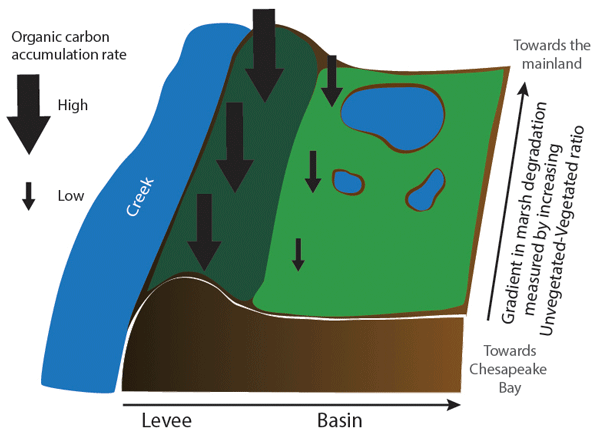
Vegetated environments from forests to peatlands store carbon in the soil, which mitigates climate change. But which environment does this best? In this study, we show how the levees of tidal marshes are one of the most effective carbon sequestering environments in the world. This is because soil water-logging and high salinity inhibits carbon degradation while the levee fosters fast vegetation growth, complimented also by the preferential settlement of carbon-rich sediments on the marsh levee.
Mona Huyzentruyt, Maarten Wens, Gregory S. Fivash, David Walters, Steven Bouillon, Joel Carr, Glenn Guntenspergen, Matt L. Kirwan, and Stijn Temmerman
Biogeosciences, 23, 851–865, https://doi.org/10.5194/bg-23-851-2026, https://doi.org/10.5194/bg-23-851-2026, 2026
Short summary
Short summary
Vegetated environments from forests to peatlands store carbon in the soil, which mitigates climate change. But which environment does this best? In this study, we show how the levees of tidal marshes are one of the most effective carbon sequestering environments in the world. This is because soil water-logging and high salinity inhibits carbon degradation while the levee fosters fast vegetation growth, complimented also by the preferential settlement of carbon-rich sediments on the marsh levee.
Junyan Ding, Nate McDowell, Vanessa Bailey, Nate Conroy, Donnie J. Day, Yilin Fang, Kenneth M. Kemner, Matthew L. Kirwan, Charlie D. Koven, Matthew Kovach, Patrick Megonigal, Kendalynn A. Morris, Teri O'Meara, Stephanie C. Pennington, Roberta B. Peixoto, Peter Thornton, Mike Weintraub, Peter Regier, Leticia Sandoval, Fausto Machado-Silva, Alice Stearns, Nick Ward, and Stephanie J. Wilson
Biogeosciences, 22, 6963–6978, https://doi.org/10.5194/bg-22-6963-2025, https://doi.org/10.5194/bg-22-6963-2025, 2025
Short summary
Short summary
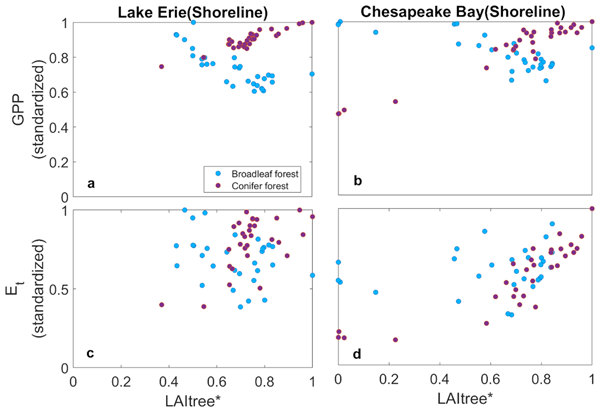
We used a vegetation model to study why coastal forests are dying due to rising water levels and what happens to the ecosystem when marshes take over. We found that tree death is mainly caused by water-damaged roots, leading to major changes in the environment, such as reduced water use and carbon storage. Our study helps explain how coastal ecosystems are shifting and offers new ideas to explore in future field research.
Sarah Hautekiet, Jan-Eike Rossius, Olivier Gourgue, Maarten Kleinhans, and Stijn Temmerman
Earth Surf. Dynam., 12, 601–619, https://doi.org/10.5194/esurf-12-601-2024, https://doi.org/10.5194/esurf-12-601-2024, 2024
Short summary
Short summary
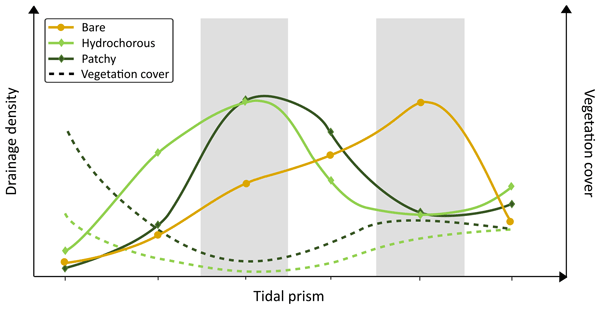
This study examined how vegetation growing in marshes affects the formation of tidal channel networks. Experiments were conducted to imitate marsh development, both with and without vegetation. The results show interdependency between biotic and abiotic factors in channel development. They mainly play a role when the landscape changes from bare to vegetated. Overall, the study suggests that abiotic factors are more important near the sea, while vegetation plays a larger role closer to the land.
Ignace Pelckmans, Jean-Philippe Belliard, Olivier Gourgue, Luis Elvin Dominguez-Granda, and Stijn Temmerman
Hydrol. Earth Syst. Sci., 28, 1463–1476, https://doi.org/10.5194/hess-28-1463-2024, https://doi.org/10.5194/hess-28-1463-2024, 2024
Short summary
Short summary
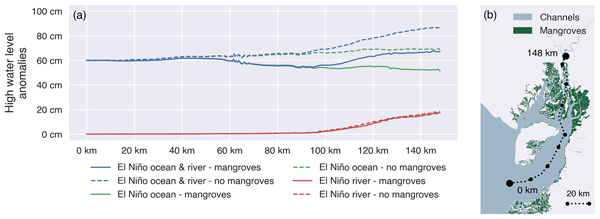
The combination of extreme sea levels with increased river flow typically can lead to so-called compound floods. Often these are caused by storms (< 1 d), but climatic events such as El Niño could trigger compound floods over a period of months. We show that the combination of increased sea level and river discharge causes extreme water levels to amplify upstream. Mangrove forests, however, can act as a nature-based flood protection by lowering the extreme water levels coming from the sea.
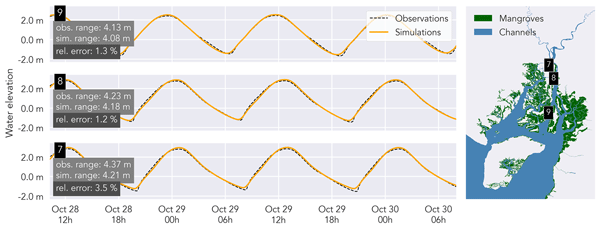
Ignace Pelckmans, Jean-Philippe Belliard, Luis E. Dominguez-Granda, Cornelis Slobbe, Stijn Temmerman, and Olivier Gourgue
Nat. Hazards Earth Syst. Sci., 23, 3169–3183, https://doi.org/10.5194/nhess-23-3169-2023, https://doi.org/10.5194/nhess-23-3169-2023, 2023
Short summary
Short summary
Mangroves are increasingly recognized as a coastal protection against extreme sea levels. Their effectiveness in doing so, however, is still poorly understood, as mangroves are typically located in tropical countries where data on mangrove vegetation and topography properties are often scarce. Through a modelling study, we identified the degree of channelization and the mangrove forest floor topography as the key properties for regulating high water levels in a tropical delta.
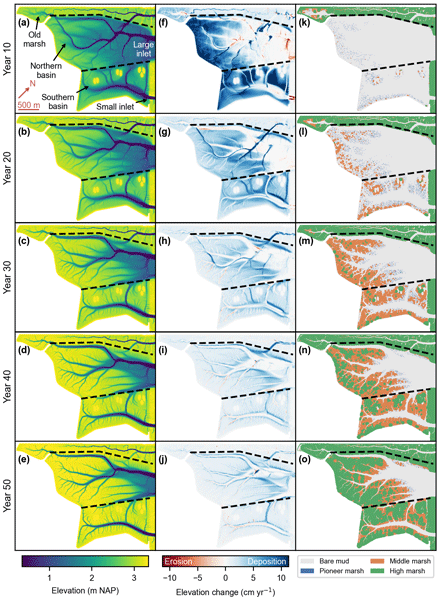
Olivier Gourgue, Jim van Belzen, Christian Schwarz, Wouter Vandenbruwaene, Joris Vanlede, Jean-Philippe Belliard, Sergio Fagherazzi, Tjeerd J. Bouma, Johan van de Koppel, and Stijn Temmerman
Earth Surf. Dynam., 10, 531–553, https://doi.org/10.5194/esurf-10-531-2022, https://doi.org/10.5194/esurf-10-531-2022, 2022
Short summary
Short summary
There is an increasing demand for tidal-marsh restoration around the world. We have developed a new modeling approach to reduce the uncertainty associated with this development. Its application to a real tidal-marsh restoration project in northwestern Europe illustrates how the rate of landscape development can be steered by restoration design, with important consequences for restored tidal-marsh resilience to increasing sea level rise and decreasing sediment supply.
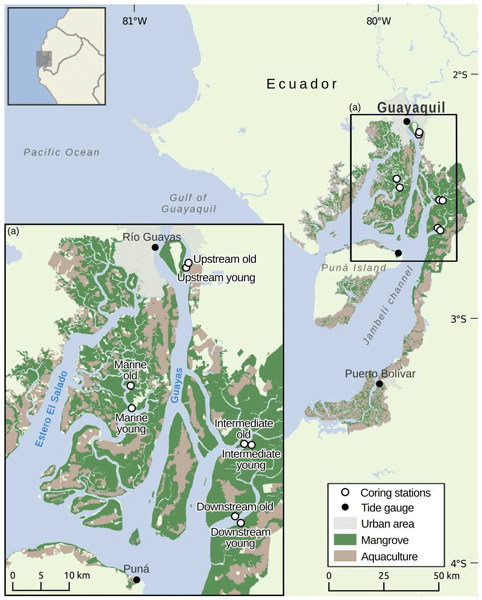
Rey Harvey Suello, Simon Lucas Hernandez, Steven Bouillon, Jean-Philippe Belliard, Luis Dominguez-Granda, Marijn Van de Broek, Andrea Mishell Rosado Moncayo, John Ramos Veliz, Karem Pollette Ramirez, Gerard Govers, and Stijn Temmerman
Biogeosciences, 19, 1571–1585, https://doi.org/10.5194/bg-19-1571-2022, https://doi.org/10.5194/bg-19-1571-2022, 2022
Short summary
Short summary
This research shows indications that the age of the mangrove forest and its position along a deltaic gradient (upstream–downstream) play a vital role in the amount and sources of carbon stored in the mangrove sediments. Our findings also imply that carbon capture by the mangrove ecosystem itself contributes partly but relatively little to long-term sediment organic carbon storage. This finding is particularly relevant for budgeting the potential of mangrove ecosystems to mitigate climate change.
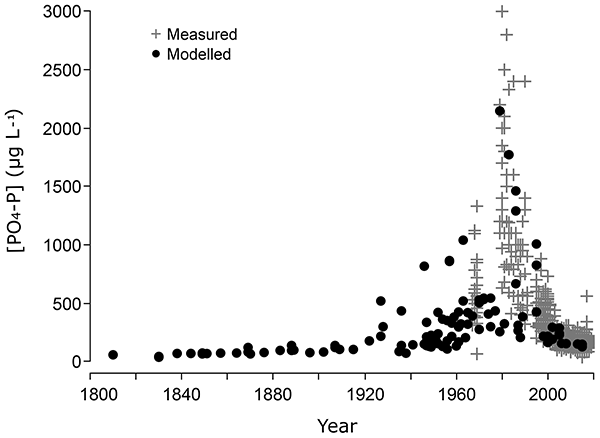
Florian Lauryssen, Philippe Crombé, Tom Maris, Elliot Van Maldegem, Marijn Van de Broek, Stijn Temmerman, and Erik Smolders
Biogeosciences, 19, 763–776, https://doi.org/10.5194/bg-19-763-2022, https://doi.org/10.5194/bg-19-763-2022, 2022
Short summary
Short summary
Surface waters in lowland regions have a poor surface water quality, mainly due to excess nutrients like phosphate. Therefore, we wanted to know the phosphate levels without humans, also called the pre-industrial background. Phosphate binds strongly to sediment particles, suspended in the river water. In this research we used sediments deposited by a river as an archive for surface water phosphate back to 1800 CE. Pre-industrial phosphate levels were estimated at one-third of the modern levels.
Viviana Otero, Steven Pint, Klaas Deneudt, Maarten De Rijcke, Jonas Mortelmans, Lennert Schepers, Patricia Cabrera, Koen Sabbe, Wim Vyverman, Michiel Vandegehuchte, and Gert Everaert
Biogeosciences Discuss., https://doi.org/10.5194/bg-2022-11, https://doi.org/10.5194/bg-2022-11, 2022
Revised manuscript not accepted
Short summary
Short summary
A mechanistic ecological model analysed which factors drive marine phytoplankton biomass dynamics in the southern part of the North Sea and how their relationship to primary production varies on a spatiotemporal scale. We found a spatiotemporal dependence, meaning that the effects of changing abiotic conditions on phytoplankton biomass dynamics are difficult to generalise. The tailor-made ecological model will enables to predict phytoplankton biomass dynamics under future climate scenarios.
Cited articles
Barbier, E. B., Hacker, S. D., Kennedy, C., Koch, E. W., Stier, A. C., and Silliman, B. R.: The value of estuarine and coastal ecosystem services, Ecological Monographs, 81, 169–193, https://doi.org/10.1890/10-1510.1, 2011.
Bates, D., Mächler, M., Bolker, B., and Walker, S.: Fitting Linear Mixed-Effects Models Using lme4. Journal of Statistical Software, 67, 1–48, https://doi.org/10.18637/jss.v067.i01, 2015.
Bendoni, M., Mel, R., Solari, L., Lanzoni, S., Francalanci, S., and Oumeraci, H.: Insights into lateral marsh retreat mechanism through localized field measurements, Water Resources Research, 52, 1446–1464, https://doi.org/10.1002/2015WR017966, 2016.
Brooks, H., Moeller, I., Spencer, T., Royse, K., Price, S., and Kirkham, M.: How strong are salt marshes? Geotechnical properties of coastal wetland soils, Earth Surface Processes and Landforms, 47, 1390–1408, https://doi.org/10.1002/esp.5322, 2022.
Brooks, H., Moeller, I., Spencer, T., and Royse, K.: Shear strength and erosion resistance of salt marsh substrates: Which method to use?, Estuarine, Coastal and Shelf Science, 292, https://doi.org/10.1016/j.ecss.2023.108452, 2023.
Broome, S. W., Mendelssohn, I. A., and McKee, K. L.: Relative growth of Spartina patens (Ait.) Muhl. and Scirpus olneyi gray occurring in a mixed stand as affected by salinity and flooding depth, Wetlands, 15, 20–30, https://doi.org/10.1007/BF03160676, 1995.
Cahoon, D., Guntenspergen, G., and Baird, S.: Do Annual Prescribed Fires Enhance or Slow the Loss of Coastal Marsh Habitat at Blackwater National Wildlife Refuge?, https://www.researchgate.net/publication/280662111 (last access: 26 April 2025), 2010.
Chen, Y., Thompson, C. E. L., and Collins, M. B.: Saltmarsh creek bank stability: Biostabilisation and consolidation with depth, Continental Shelf Research, 35, 64–74, https://doi.org/10.1016/j.csr.2011.12.009, 2012.
Coleman, D. J., Schuerch, M., Temmerman, S., Guntenspergen, G., Smith, C. G., and Kirwan, M. L.: Reconciling models and measurements of marsh vulnerability to sea level rise, Limnology And Oceanography Letters, 7, 140–149, https://doi.org/10.1002/lol2.10230, 2022.
Coops, H., Geilen, N., Verheij, H. J., Boeters, R., and van der Velde, G.: Interactions between waves, bank erosion and emergent vegetation: an experimental study in a wave tank, Aquatic Botany, 53, 187–198, https://doi.org/10.1016/0304-3770(96)01027-3, 1996.
Day, J. W., Kemp, G. P., Reed, D. J., Cahoon, D. R., Boumans, R. M., Suhayda, J. M., and Gambrell, R.: Vegetation death and rapid loss of surface elevation in two contrasting Mississippi delta salt marshes: The role of sedimentation, autocompaction and sea-level rise, Ecological Engineering, 37(2), 229–240, https://doi.org/10.1016/j.ecoleng.2010.11.021, 2011.
DeLaune, R. D., Nyman, J. A., and Patrick, W. H.: Peat collapse, ponding and wetland loss in a rapidly submerging coastal marsh, Journal of Coastal Research, 10, 1021–1030, 1994.
Duarte, C. M., Losada, I. J., Hendriks, I. E., Mazarrasa, I., and Marbà, N.: The role of coastal plant communities for climate change mitigation and adaptation, Nature Climate Change, 3, 961–968, https://doi.org/10.1038/nclimate1970, 2013.
Feagin, R. A., Lozada-Bernard, S. M., Ravens, T. M., Möller, I., Yeager, K. M., and Baird, A. H.: Does vegetation prevent wave erosion of salt marsh edges?, Proceedings of the National Academy of Sciences of the United States of America, 106, 10109–10113, https://doi.org/10.1073/pnas.0901297106, 2009.
Fleming, B. J., DeJong, B. D., and Phelan, D. J.: Geology, hydrology, and water quality of the Little Blackwater River watershed, Dorchester County, Maryland, 2006–09, U.S. Geological Survey Scientific Investigations Report 2011–5054, http://pubs.usgs.gov/sir/2011/5054/ (last access: 26 April 2025), 2011.
Francalanci, S., Bendoni, M., Rinaldi, M., and Solari, L.: Ecomorphodynamic evolution of salt marshes: Experimental observations of bank retreat processes, Geomorphology, 195, 53–65, https://doi.org/10.1016/j.geomorph.2013.04.026.
Ganju, N. K., Nidzieko, N. J., and Kirwan, M. L.: Inferring tidal wetland stability from channel sediment fluxes: Observations and a conceptual model, Journal of Geophysical Research: Earth Surface, 118, 2045–2058, https://doi.org/10.1002/jgrf.20143, 2013.
Ganju, N. K., Defne, Z., Kirwan, M. L., Fagherazzi, S., D'Alpaos, A., and Carniello, L.: Spatially integrative metrics reveal hidden vulnerability of microtidal salt marshes, Nature Communications, 8, 14156, https://doi.org/10.1038/ncomms14156, 2017.
Gedan, K. B., Kirwan, M. L., Wolanski, E., Barbier, E. B., and Silliman, B. R.: The present and future role of coastal wetland vegetation in protecting shorelines: Answering recent challenges to the paradigm, Climatic Change, 106, 7–29, https://doi.org/10.1007/s10584-010-0003-7, 2011.
Gillen, M. N., Messerschmidt, T. C., and Kirwan, M. L.: Biophysical controls of marsh soil shear strength along an estuarine salinity gradient, Earth Surf. Dynam., 9, 413–421, https://doi.org/10.5194/esurf-9-413-2021, 2021.
Himmelstein, J., Vinent, O. D., Temmerman, S., and Kirwan, M. L.: Mechanisms of Pond Expansion in a Rapidly Submerging Marsh, Frontiers in Marine Science, 8, https://doi.org/10.3389/fmars.2021.704768, 2021.
Howes, N. C., FitzGerald, D. M., Hughes, Z. J., Georgiou, I. Y., Kulp, M. A., Miner, M. D., Smith, J. M., and Barras, J. A.: Hurricane-induced failure of low salinity wetlands, Proceedings of the National Academy of Sciences, 107, 14014–14019, https://doi.org/10.1073/pnas.0914582107, 2010.
Huyzentruyt, M., Schepers, L., Kirwan, M., Guntenspergen, G., and Temmerman, S.: Sea-level rise in a coastal marsh: linking increasing tidal inundation, decreasing soil strength and increasing pond expansion – dataset, Zenodo [data set], https://doi.org/10.5281/zenodo.17206424, 2025.
Jafari, N. H., Harris, B. D., Morris, J. T., and Cadigan, J. A.: Interplay of Hydroperiod on Root Shear Strength for Coastal Wetlands, Geophysical Research Letters, 51, https://doi.org/10.1029/2023GL106531, 2024.
Joensuu, M., Pilditch, C. A., Harris, R., Hietanen, S., Pettersson, H., and Norkko, A.: Sediment properties, biota, and local habitat structure explain variation in the erodibility of coastal sediments, Limnology and Oceanography, 63, 173–186, https://doi.org/10.1002/lno.10622, 2018.
Kirwan, M. L. and Guntenspergen, G. R.: Feedbacks between inundation, root production, and shoot growth in a rapidly submerging brackish marsh, Journal of Ecology, 100, 764–770, https://doi.org/10.1111/j.1365-2745.2012.01957.x, 2012.
Kirwan, M. L. and Guntenspergen, G. R.: Response of Plant Productivity to Experimental Flooding in a Stable and a Submerging Marsh, Ecosystems, 18, 903–913, https://doi.org/10.1007/s10021-015-9870-0, 2015.
Kirwan, M. L., Langley, J. A., Guntenspergen, G. R., and Megonigal, J. P.: The impact of sea-level rise on organic matter decay rates in Chesapeake Bay brackish tidal marshes, Biogeosciences, 10, 1869–1876, https://doi.org/10.5194/bg-10-1869-2013, 2013.
Kirwan, M. L., Temmerman, S., Skeehan, E. E., Guntenspergen, G. R., and Fagherazzi, S.: Overestimation of marsh vulnerability to sea level rise, Nature Climate Change, 6, 253–260, https://doi.org/10.1038/nclimate2909, 2016.
Langley, J. A., Mozdzer, T. J., Shepard, K. A., Hagerty, S. B., and Megonigal, J. P.: Tidal marsh plant responses to elevated CO2, nitrogen fertilization, and sea level rise, Global Change Biology, 19, 1495–1503, https://doi.org/10.1111/gcb.12147, 2013.
Lo, V. B., Bouma, T. J., van Belzen, J., Van Colen, C., and Airoldi, L.: Interactive effects of vegetation and sediment properties on erosion of salt marshes in the Northern Adriatic Sea, Marine Environmental Research, 131, 32–42, https://doi.org/10.1016/j.marenvres.2017.09.006, 2017.
Macreadie, P. I., Anton, A., Raven, J. A., Beaumont, N., Connolly, R. M., Friess, D. A., Kelleway, J. J., Kennedy, H., Kuwae, T., Lavery, P. S., Lovelock, C. E., Smale, D. A., Apostolaki, E. T., Atwood, T. B., Baldock, J., Bianchi, T. S., Chmura, G. L., Eyre, B. D., Fourqurean, J. W., Hall-Spencer, J. M., Huxham, M., Hendriks, I. E., Krause-Jensen, D., Laffoley, D., Luisetti, T., Marbà, N., Masque, P., McGlathery, K. J., Megonigal, J. P., Murdiyarso, D., Russell, B. D., Santos, R., Serrano, O., Silliman, B. R., Watanabe, K., and Duarte, C. M.: The future of Blue Carbon science, Nature Communications, 10, https://doi.org/10.1038/s41467-019-11693-w, 2019.
Mariotti, G.: Revisiting salt marsh resilience to sea level rise: Are ponds responsible for permanent land loss?, Journal of Geophysical Research: Earth Surface, 121, 1391–1407, https://doi.org/10.1002/2016JF003900, 2016.
Mariotti, G.: Beyond marsh drowning: The many faces of marsh loss (and gain), Advances in Water Resources, 144, https://doi.org/10.1016/j.advwatres.2020.103710, 2020.
Mariotti, G. and Fagherazzi, S.: Critical width of tidal flats triggers marsh collapse in the absence of sea-level rise, Proceedings of the National Academy of Sciences of the United States of America, 110, 5353–5356, https://doi.org/10.1073/pnas.1219600110, 2013.
McLeod, E., Chmura, G. L., Bouillon, S., Salm, R., Björk, M., Duarte, C. M., Lovelock, C. E., Schlesinger, W. H., and Silliman, B. R.: A blueprint for blue carbon: Toward an improved understanding of the role of vegetated coastal habitats in sequestering CO2, Frontiers in Ecology and the Environment, 9, 552–560, https://doi.org/10.1890/110004, 2011.
Möller, I.: Quantifying saltmarsh vegetation and its effect on wave height dissipation: Results from a UK East coast saltmarsh, Estuarine, Coastal and Shelf Science, 69, 337–351, https://doi.org/10.1016/j.ecss.2006.05.003, 2006.
Möller, I., Kudella, M., Rupprecht, F., Spencer, T., Paul, M., van Wesenbeeck, B. K., Wolters, G., Jensen, K., Bouma, T. J., Miranda-Lange, M., and Schimmels, S.: Wave attenuation over coastal salt marshes under storm surge conditions, Nature Geoscience, 7, 727–731, https://doi.org/10.1038/ngeo2251, 2014.
Morton, R. A., Tiling, G., and Ferina, N. F.: Causes of hot-spot wetland loss in the Mississippi delta plain, Environmental Geosciences, 10, 71–80, https://doi.org/10.1306/eg100202007, 2003.
Mueller, P., Jensen, K., and Megonigal, J. P.: Plants mediate soil organic matter decomposition in response to sea level rise, Global Change Biology, 22, 404–414, https://doi.org/10.1111/gcb.13082, 2016.
Nyman, J. A., Carloss, M., Delaune, R. D., and Patrick, W. H.: Erosion rather than plant dieback as the mechanism of marsh loss in an estuarine marsh, Earth Surface Processes and Landforms, 19, 69–84, https://doi.org/10.1002/esp.3290190106, 1994.
Ortiz, A. C., Roy, S., and Edmonds, D. A.: Land loss by pond expansion on the Mississippi River Delta Plain, Geophysical Research Letters, 44, 3635–3642, https://doi.org/10.1002/2017GL073079, 2017.
Penland, S., Wayne, L., Britsch, D., Williams, S. J., Beall, A. D., and Butterworth, V.: Geomorphic Classification of Coastal Land Loss between 1932 and 1990 in the Mississippi River Delta Plain, Southeastern Louisiana, USGS Open File Report 00-417, https://pubs.usgs.gov/of/2000/of00-417/ (last access: 27 April 2025), 2000.
Redfield, A. C.: Development of a New England Salt Marsh, Ecological Monographs, 42, 201–237, https://www.jstor.org/stable/1942263 (last access: 26 April 2025), 1972.
Sasser, C. E., Evers-Hebert, E., Holm, G. O., Milan, B., Sasser, J. B., Peterson, E. F., and DeLaune, R. D.: Relationships of Marsh Soil Strength to Belowground Vegetation Biomass in Louisiana Coastal Marshes, Wetlands, 38, 401–409, https://doi.org/10.1007/s13157-017-0977-2, 2018.
Saunders, C. J., Megonigal, J. P., and Reynolds, J. F.: Comparison of belowground biomass in C3- and C4-dominated mixed communities in a Chesapeake Bay brackish marsh, Plant and Soil, 280, 305–322, https://doi.org/10.1007/s11104-005-3275-3, 2006.
Scheffer, R. A. and Aerts, R.: Root decomposition and soil nutrient and carbon cycling in two temperate fen ecosystems, Oikos, 91, 541–549, https://doi.org/10.1034/j.1600-0706.2000.910316.x, 2000.
Schepers, L., Kirwan, M., Guntenspergen, G., and Temmerman, S.: Spatio-temporal development of vegetation die-off in a submerging coastal marsh, Limnology and Oceanography, 62, 137–150, https://doi.org/10.1002/lno.10381, 2017.
Schepers, L., Brennand, P., Kirwan, M. L., Guntenspergen, G. R., and Temmerman, S.: Coastal Marsh Degradation Into Ponds Induces Irreversible Elevation Loss Relative to Sea Level in a Microtidal System, Geophysical Research Letters, 47, https://doi.org/10.1029/2020GL089121, 2020a.
Schepers, L., Kirwan, M. L., Guntenspergen, G. R., and Temmerman, S.: Evaluating indicators of marsh vulnerability to sea level rise along a historical marsh loss gradient, Earth Surface Processes and Landforms, 45, 2107–2117, https://doi.org/10.1002/esp.4869, 2020b.
Schoutens, K., Heuner, M., Minden, V., Schulte Ostermann, T., Silinski, A., Belliard, J. P., and Temmerman, S.: How effective are tidal marshes as nature-based shoreline protection throughout seasons?, Limnology and Oceanography, 64, 1750–1762, https://doi.org/10.1002/lno.11149, 2019.
Snedden, G. A., Cretini, K., and Patton, B.: Inundation and salinity impacts to above- and belowground productivity in Spartina patens and Spartina alterniflora in the Mississippi River deltaic plain: Implications for using river diversions as restoration tools, Ecological Engineering, 81, 133–139, https://doi.org/10.1016/j.ecoleng.2015.04.035, 2015.
Spivak, A. C., Gosselin, K. M., and Sylva, S. P.: Shallow ponds are biogeochemically distinct habitats in salt marsh ecosystems, Limnology and Oceanography, 63, 1622–1642, https://doi.org/10.1002/lno.10797, 2018.
Stark, J., Van Oyen, T., Meire, P., and Temmerman, S.: Observations of tidal and storm surge attenuation in a large tidal marsh, Limnology and Oceanography, 60, 1371–1381, https://doi.org/10.1002/lno.10104, 2015.
Stevenson, J. C., Kearney, M. S., and Pendleton, E. C.: Sedimentation and erosion in a Chesapeake Bay brackish marsh system, Marine Geology, 67, 213–235, https://doi.org/10.1016/0025-3227(85)90093-3, 1985.
Stoorvogel, M. M., van Belzen, J., Temmerman, S., Wiesebron, L. E., Fivash, G. S., van IJzerloo, L., van de Koppel, J., and Bouma, T. J.: Salt marshes for nature-based flood defense: Sediment type, drainage, and vegetation drive the development of strong sediment beds, Ecological Engineering, 207, https://doi.org/10.1016/j.ecoleng.2024.107335, 2024.
Stoorvogel, M. M., de Smit, J. C., Wiesebron, L. E., van Belzen, J., van de Koppel, J., Temmerman, S., and Bouma, T. J.: Plant species, inundation, and sediment grain size control the development of sediment stability in tidal marshes, Ecological Applications, 35, https://doi.org/10.1002/eap.3078, 2025a.
Stoorvogel, M. M., Willemsen, P. W. J. M., van Belzen, J., Temmerman, S., de Jonge, J. M., van de Koppel, J., and Bouma, T. J.: Nature-based mitigation of shoreline erosion risks in tidal marshes created by managed realignment vs. sediment nourishment, Ecological Engineering, 210, https://doi.org/10.1016/j.ecoleng.2024.107439, 2025b.
Temmerman, S., Horstman, E. M., Krauss, K. W., Mullarney, J. C., Pelckmans, I., and Schoutens, K.: Marshes and Mangroves as Nature-Based Coastal Storm Buffers, Annual Review of Marine Science, 118, https://doi.org/10.1146/annurev-marine-040422-092951, 2023.
Temmink, R. J. M., Lamers, L. P. M., Angelini, C., Bouma, T. J., Fritz, C., van de Koppel, J., Lexmond, R., Rietkerk, M., Silliman, B. R., Joosten, H., and van der Heide, T.: Recovering wetland biogeomorphic feedbacks to restore the world's biotic carbon hotspots, Science, 376, https://doi.org/10.1126/science.abn1479, 2022.
Turner, R. E., Swarzenski, C., and Bodker, J. E.: Soil Shear Strength Losses in Two Fresh Marshes with Variable Increases in N and P Loading, Wetlands, 40, 1189–1199, https://doi.org/10.1007/s13157-020-01265-w, 2020.
Valentine, K. and Mariotti, G.: Wind-driven water level fluctuations drive marsh edge erosion variability in microtidal coastal bays, Continental Shelf Research, 176, 76–89, https://doi.org/10.1016/j.csr.2019.03.002, 2019.
Valiela, I., Teal, J. M., and Persson, N. Y.: Production and dynamics of experimentally enriched salt marsh vegetation: Belowground biomass, Limnology and Oceanography, 21, 245–252, https://doi.org/10.4319/lo.1976.21.2.0245, 1976.
van de Koppel, J., van der Wal, D., Bakker, J. P., and Herman, P. M. J.: Self-Organization and Vegetation Collapse in Salt Marsh Ecosystems, The American Naturalist, 165, E1–E12, https://doi.org/10.1086/426602, 2005.
van der Wal, D., Wielemaker-Van den Dool, A., and Herman, P. M. J.: Spatial patterns, rates and mechanisms of saltmarsh cycles (Westerschelde, The Netherlands), Estuarine, Coastal and Shelf Science, 76, 357–368, https://doi.org/10.1016/j.ecss.2007.07.017, 2008.
van Huissteden, J. and van de Plassche, O.: Sulphate reduction as a geomorphological agent in tidal marshes (`Great Marshes' at Barnstable, Cape Cod, USA), Earth Surface Processes and Landforms, 23, 223–236, https://doi.org/10.1002/(SICI)1096-9837(199803)23:3<223::AID-ESP843>3.0.CO;2-I, 1998.
Vinent, O. D., Herbert, E. R., Coleman, D. J., Himmelstein, J. D., and Kirwan, M. L.: Onset of runaway fragmentation of salt marshes, One Earth, 4, 506–516, https://doi.org/10.1016/j.oneear.2021.02.013, 2021.
Voss, C. M., Christian, R. R., and Morris, J. T.: Marsh macrophyte responses to inundation anticipate impacts of sea-level rise and indicate ongoing drowning of North Carolina marshes, Marine Biology, 160, 181–194, https://doi.org/10.1007/s00227-012-2076-5, 2013.
Wang, H., van der Wal, D., Li, X., van Belzen, J., Herman, P. M. J., Hu, Z., Ge, Z., Zhang, L., and Bouma, T. J.: Zooming in and out: Scale dependence of extrinsic and intrinsic factors affecting salt marsh erosion, Journal of Geophysical Research: Earth Surface, 122, 1455–1470, https://doi.org/10.1002/2016JF004193, 2017.
Watson, E. B., Oczkowski, A. J., Wigand, C., Hanson, A. R., Davey, E. W., Crosby, S. C., Johnson, R. L., and Andrews, H. M.: Nutrient enrichment and precipitation changes do not enhance resiliency of salt marshes to sea level rise in the Northeastern U.S, Climatic Change, 125, 501–509, https://doi.org/10.1007/s10584-014-1189-x, 2014.
Wilson, K. R., Kelley, J. T., Tanner, B. R., and Belknap, D. F.: Probing the Origins and Stratigraphic Signature of Salt Pools from North-Temperate Marshes in Maine, U.S.A., J. Coast. Res., 26, 1007–1026, https://doi.org/10.2112/JCOASTRES-D-10-00007.1, 2010.
Zhu, Z., Vuik, V., Visser, P. J., Soens, T., van Wesenbeeck, B., van de Koppel, J., Jonkman, S. N., Temmerman, S., and Bouma, T. J.: Historic storms and the hidden value of coastal wetlands for nature-based flood defence, Nature Sustainability, 3, 853–862, https://doi.org/10.1038/s41893-020-0556-z, 2020.
Short summary
In some tidal marshes, vegetation can convert to ponds as a result of sea level rise. We investigated to what extent this is related to decreasing strength of the marsh soil in relation to sea level rise. We found a reduction of marsh soil strength in areas with more inundation by sea water and more ponding, which results in easier erosion of the marsh and thus further expansion of ponds. This decrease in marsh soil strength is highly related to lower content of roots in the soil.
In some tidal marshes, vegetation can convert to ponds as a result of sea level rise. We...


Altmetrics
Final-revised paper
Preprint