
the Creative Commons Attribution 4.0 License.
the Creative Commons Attribution 4.0 License.
 | 29 Oct 2026
Shell hash promotes growth in Pacific littleneck clams (Leukoma staminea) by altering pore water chemistry
Hannah L. Kempf
Alyssa J. Griffin
Gabriel Ng
Tessa M. Hill
Tsim D. Schneider
Sandra J. Carlson

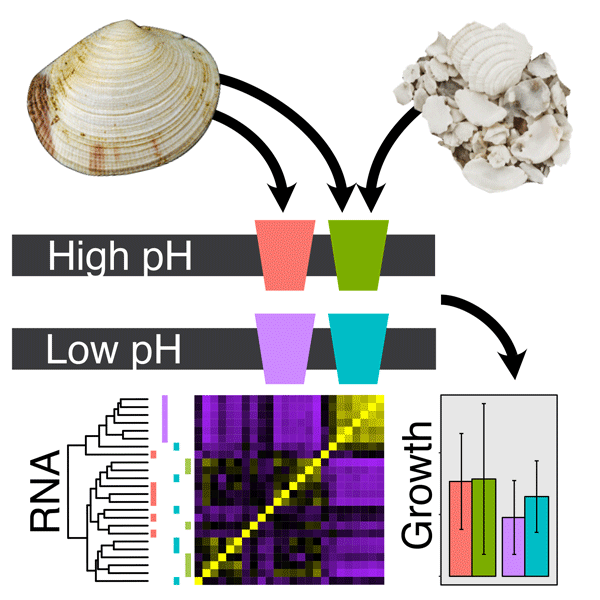
Bivalves that build calcium carbonate skeletons are at risk from ocean acidification, and mitigation strategies may be needed to keep coastal populations healthy. It can be energetically costly for organisms like clams and mussels to build their shells under low pH conditions, and acidification can lead to shell dissolution. Adding crushed shells (shell hash) to beach sediments, a practice used by some Indigenous communities and aquaculturists, may mitigate the negative effects of ocean acidification by altering the chemistry of the pore fluids in which they live. We tested the hypothesis that mixing shell hash into the sediment improves the growth and physiology of infaunal Pacific littleneck clams (Leukoma staminea). Juvenile clams were raised for 90 d under four conditions: control seawater with sediment, acidified seawater with sediment, control seawater with sediment plus shell hash, and acidified seawater with sediment plus shell hash. Pore water and overlying seawater were sampled three times a week for pH, alkalinity, salinity, temperature, and dissolved oxygen. Clam shell weight, soft tissue weight, and new shell growth were measured, and mantle tissue RNA was collected for gene sequencing after three months. Our results demonstrate that the addition of shell hash increased the pH of pore water relative to the control, acidified water decreased animal growth, and the presence of shell hash partially mitigated the effect. Gene expression profiling suggests that animals in acidified seawater with shell hash were largely indistinguishable from animals in non-acidified water. Our experimental results suggest that adding shell hash to sediments alters the chemistry of pore fluids, buffering against acidic conditions that can negatively affect the growth of economically and culturally important shellfish like littleneck clams.
- Article
(4069 KB) - Full-text XML
-
Supplement
(462 KB) - BibTeX
- EndNote


Anthropogenic carbon dioxide (CO2) inputs are disrupting the natural acid buffering feedback of the Earth system, leading to a ∼ 30 % increase in surface ocean acidity globally since pre-industrial times (e.g., Zeebe and Wolf-Gladrow, 2001; Caldeira and Wickett, 2003; Sabine et al., 2004; Zachos et al., 2008; Doney et al., 2009; Hönisch et al., 2012). As the ocean absorbs excess anthropogenic CO2, it shifts carbonate system equilibria towards lower concentrations of carbonate ions, an essential building block for calcium carbonate shells and skeletons (Caldeira and Wickett, 2003; Kleypas et al., 1999; Orr et al., 2005). Ocean acidification therefore makes it energetically costly for calcifying marine invertebrates, including animals such as corals and shellfish, to build their shells and skeletons, and acidic conditions can dissolve these structures (e.g., Kleypas et al., 1999; Green et al., 2004, 2009; Orr et al., 2005; Waldbusser et al., 2015; Bednaršek et al., 2019). Given the threats ocean acidification poses to global ecosystems, mitigation strategies are of growing interest to scientists, managers, and the public (e.g., Curtin et al., 2022; Mackenzie et al., 2022; Macreadie et al., 2019; Renforth and Henderson, 2017; Saderne et al., 2019).
Despite the concern, the impact of ocean acidification on specific species can be hard to predict, particularly on infauna – animals that live within the sediment and are not directly exposed to overlying waters (Ries et al., 2009; Mackenzie and Andersson, 2011; Widdicombe et al., 2011; Dodd et al., 2021; Gold and Vermeij, 2023). This is in part because of the complexity of carbonate chemistry in pore water (i.e. water within the sediment grains), which is related to the overlying seawater chemistry but is generally lower in pH (Widdicombe et al., 2011). Processes that impact pore water pH include microbially mediated redox reactions, abiotic mineral precipitation/dissolution, and mixing of sediments by macrofauna (Burdige et al., 2008; Dashfield et al., 2008; Kindeberg et al., 2020; Widdicombe et al., 2011). On the one hand, these naturally low pH environments may suggest infaunal bivalves are well-adapted to deal with ocean acidification (Gold and Vermeij, 2023). Alternatively, if shellfish fail to cope with the rapid pace of anthropogenic climate change, coastal ecosystems, commercial aquaculture, and communities dependent on shellfish for food security will suffer (e.g., Doney et al., 2020).
Attempts have been made to mitigate the effects of ocean acidification on bivalves. In the early 2000s, Pacific Northwest commercial oyster hatcheries experienced widespread collapse associated with coastal acidification (Feely et al., 2012; Barton et al., 2015). In response, hatchery, government, and academic scientists began to explore methods to buffer seawater used in shellfish culture. This included adding soda ash (Na2CO3) to seawater in larval rearing tanks (Barton et al., 2015; Clements and Chopin, 2017; Mackenzie et al., 2022). In the northeastern United States, adding pulverized shell hash to mudflats was shown to increase the pH of sediment pore waters, and increase settlement in the clam Mya arenaria (Green et al., 2009, 2013). Similarly, Ericson and Ragg (2021) demonstrated that rearing tanks enriched with mussel (Perna canaliculus) shell hash enhanced P. canaliculus larval shell development under high pCO2 conditions. Despite these promising studies, others have found little to no effect of shell hash on sediment chemistry or infauna. It therefore remains unclear whether chemical buffering of acidification will improve growth and survival under future ocean acidification scenarios, and may depend on what species is of interest, their habitat preferences, and regional oceanography (Greiner et al., 2018; Beal et al., 2020; Doyle and Bendell, 2022). Controlled experimental studies of the impacts of shell hash and acidification on growth, physiology, and survival of infaunal clams of the same age and genetic stock are needed to help disentangle these variables.
There is also significant evidence from traditional ecological knowledge that shell hash could be beneficial to bivalve health. Adding shell material back into intertidal sediments and/or creating spaces where shell hash naturally accumulates is one component of complex Indigenous mariculture systems (Lepofsky et al., 2015; Tadlock, 2019; Toniello et al., 2019), particularly along the Northwest coast of North America. Indigenous “clam gardens” promote healthy coastal ecosystems and provide food security (Deur et al., 2015; Groesbeck et al., 2014; Jackley et al., 2016; Lepofsky et al., 2015; Toniello et al., 2019). Although exact management techniques vary by location, clam gardening often involves the purposeful addition of pulverized shell material, or “shell hash,” into beach sediments (Deur et al., 2015; Greiner et al., 2018; Groesbeck et al., 2014; Salter, 2018). The existing published research on clam gardens demonstrates that they host larger populations of clams and greater intertidal biodiversity (Groesbeck et al., 2014; Jackley et al., 2016; Toniello et al., 2019; Cox et al., 2019). In the region surrounding Bodega Bay, CA, archaeological sites document evidence of past clam bed management by the Coast Miwok, who have lived in what is now western Marin county for at least 8000 years (Schneider et al., 2018). Traditional clam gardening eventually ended in the 1930s as a result of a federally mandated “conservation strategy” rooted in the idea that harvesting would deplete clam populations (Baker, 1992). Ironically, these restrictions led to smaller, or in some cases completely decimated, clam populations throughout the region (Baker, 1992; Schneider et al., 2018). The loss of clams in federally-managed lands points to the failure to recognize valuable traditional ecological knowledge in shellfish management. Shell hash offers an excellent opportunity to braid Indigenous knowledge with science and other “boundary spanning” approaches (Whyte et al., 2016; Atalay, 2020; Hatch et al., 2023; Kimmerer and Artelle, 2024; White et al., 2024; Wickham et al., 2022).
For this study, we examined the impacts of acidification and shell hash addition on infaunal Pacific littleneck clam (Leukoma staminea) calcification and genetics. All individuals were collected from the Bodega Bay region in Northern California. L. staminea is an excellent focal species, as it is geographically widespread, relatively abundant, and ecologically and culturally significant (Fraser and Smith, 1928; Lepofsky et al., 2015; Schneider et al., 2018). It is a marine venerid bivalve that burrows 5–15 cm beneath the sediment surface along nearly the entire coast of western North America, ranging from Baja California, Mexico, to Alaska (Fraser and Smith, 1928). Found in a wide range of habitats, including exposed rocky beaches and low-energy mudflats, L. staminea have been managed and harvested, along with other clam species, by Indigenous peoples across the northeastern Pacific coast for millennia (Lepofsky et al., 2015; Schneider et al., 2018; Toniello et al., 2019) and remain commonly collected and eaten by humans today. It is also an important food source within intertidal food webs, and is preyed upon by drilling gastropods, sea stars, crabs, birds, and sea otters (Feder et al., 1979; Hiebert, 2015). Like many bivalves, L. staminea is a suspension feeder, filtering ambient water that they take in with their siphons, while living in an infaunal environment where pore fluids affect their development once shell formation commences (Fraser and Smith, 1928). L. staminea grows a shell composed of the calcium carbonate polymorph aragonite, and contains light and dark banding patterns in the outer shell layers (Fraser and Smith, 1928; Takesue and van Geen, 2004; Kempf et al., 2023). The shells' banding patterns correspond with geochemical and microstructural changes in the shell, and significant size variability can exist within populations of the same age (Kempf et al., 2023). Recent research has documented population declines of L. staminea in some parts of the British Columbia coast, perhaps due to competition with invasive species (Bendell, 2014). Additional research suggests that some L. staminea populations have declined at least partly in response to oceanographic changes in salinity and temperature (Barber et al., 2019), but information regarding the specific impacts of acidification on L. staminea, particularly in juveniles, is lacking in the current literature. We hypothesized that shell hash would increase the pH, total alkalinity, and saturation state with respect to aragonite (ΩAr) of pore fluids, resulting in enhanced calcification and a loss of pH-stress genetic signatures in juvenile L. staminea exposed to experimental acidification.
2.1 Broodstock collection and husbandry
Juvenile clams used in this study came from a single genetic cohort from a controlled spawn in the lab, with parent individuals collected from Bodega Harbor in Bodega Bay, CA (Kempf et al., 2023). Bodega Bay is located approximately 96.5 km north of San Francisco on the coast of California, and sits within the California Current System (CCS) where seasonal upwelling creates large natural fluctuations in pH (Hickey and Banas, 2003; Feely et al., 2008; Checkley and Barth, 2009; Davis et al., 2018; Largier, 2020).
Adult broodstock L. staminea collected from Bodega Harbor during the winter of 2021 (n=22) were brought to the UC Davis Bodega Marine Laboratory (BML) in Bodega Bay, CA for conditioning. Seawater is supplied to the laboratory via intake lines approximately 61 m offshore. Intake elevation is approximately six feet below mean low tide, and water is sand-filtered to ∼ 30 µm before being gravity-fed to the facilities. Broodstock were placed in an open plastic basket (10′′ × 6′′) and set within a water table filled with circulating seawater. During the 6-week conditioning period clams were fed twice a day with a dense mixture of Nannochloropsis oculata and Isochrysis spp. algae. These species were chosen by BML aquaculturists as their preferred diet for raising juvenile bivalves. During the first week, seawater temperature gradually increased ∼ 1°C d−1 from 11 to 17 °C to condition the clams for spawning. The system was maintained with a steady influx of filtered seawater, and waste was siphoned from the holding containers daily. To check if clams were gravid, two animals were chosen, and the visceral mass was gently scraped with a scalpel. The gonadal fluid from these clams was pipetted onto a microscope slide and mixed with a small amount of seawater and checked for the presence of eggs or sperm.
Once gravid, all conditioned clams (n=20) were rinsed with ∼ 20 °C seawater and placed in clean baskets inside a 10-gallon container. The seawater was then slowly heated to ∼ 24 °C using a heated stirring rod. After reaching this temperature, 30 L of dense N. oculata was added, and clams fed for one hour while adjusting to room temperature (∼ 18 °C). Two additional feedings of algae heated to 30 °C followed at one-hour intervals. Each time the clams fed for a total of 2 h in darkness. As spawning had still not occurred, one clam was opened, sperm was confirmed, and gonadal fluid was pipetted into the setup to induce spawning. After two more hours at ∼ 24 °C, clams were fed a final time with 10 L of N. oculata and Isochrysis, then left overnight as the system gradually cooled to room temperature (∼ 20 °C). By morning, the remaining 19 clams had spawned.
Planktonic larvae were removed from the spawning container the following morning with a siphon, and transported into 400 L tanks in the Bodega Marine Laboratory Shellfish Hatchery. Once larvae began to settle at the bottom of the tank (three weeks post-fertilization), they were transferred onto a 250 µm settling screen and placed in a shallow water table supplied with filtered seawater in the same hatchery room (18–20 °C). Lights were kept on during the day and turned off at night, and salinity was maintained between 33–36 ppt and checked approximately every three days. The entire cohort was fed twice weekly with a 30 L mixture of N. oculata and Isochrysis algae. All individuals were kept in identical laboratory conditions during the juvenile rearing period (200 d). At 200 d old, juveniles were transported to the experimental conditions outlined below.
2.2 Experimental design and treatments
Juvenile clams were raised in four experimental conditions for 90 d where the pH of the overlying fluids was maintained in the following ways: (1) control filtered seawater (pH = ∼ 7.8), (2) experimentally acidified seawater (pH = ∼ 7.4), (3) control seawater with shell hash (pH = ∼ 7.8), and (4) acidified seawater with shell hash (pH = ∼ 7.4) (Fig. 1). Treatments were run in duplicate, totaling eight ∼ 22.7 L food-grade plastic buckets. Buckets were fed with filtered seawater held in header tanks kept at the ambient temperature of the wet lab space (∼ 15 °C), in which pH conditions were controlled using Pinpoint® pH controllers and regulators and a cylinder of compressed air with 1 % CO2 (Airgas) (Fig. 1). Probes were briefly removed every Monday and Friday in order to recalibrate using Pinpoint® recalibration fluids (pH = 4.0 and 10.0, NIST scale). Probe measurements were not used to calculate carbonate chemistry parameters, but to maintain approximate target pH conditions for the experiments. Each header tank was supplied with air via an airstone.
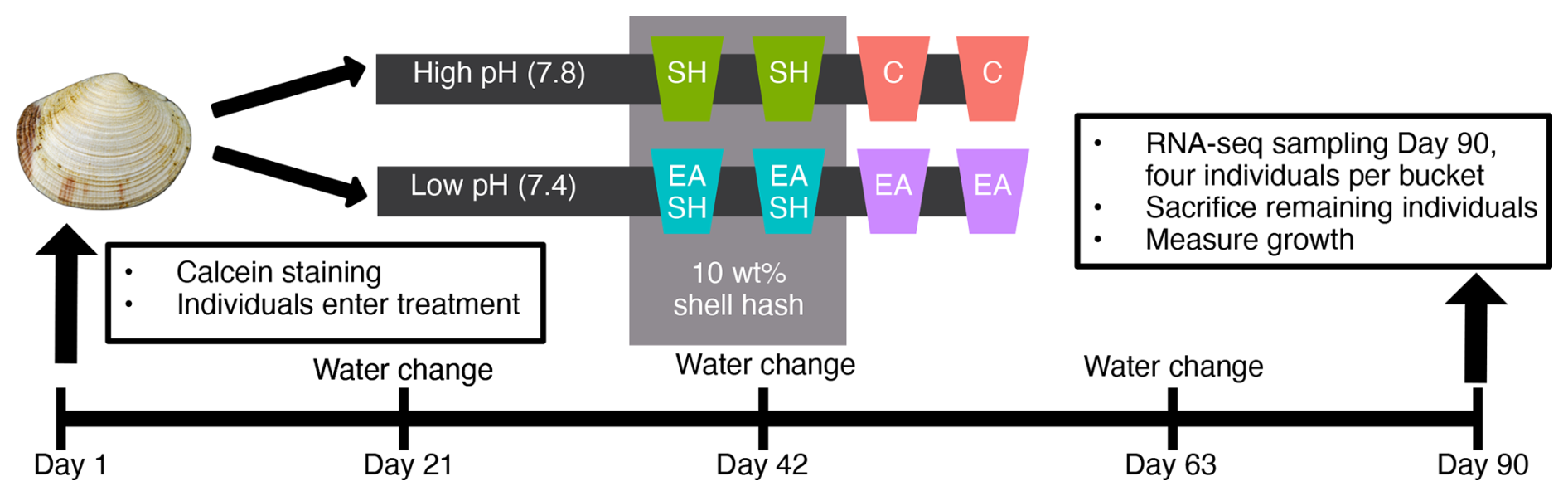
Figure 1Design of 90 d experiment. SH = shell hash, C = control, EASH = experimental acidification with shell hash, EA = experimental acidification.
The buckets were filled with filtered seawater for three days prior to the start of the experiment. Buckets were then filled with 5L of unconsolidated medium-grained quartz sand (AquaQuartz; porosity of 38.8 %) prior to adding seawater. This silica-based sand was chosen because it has comparable grain size to Bodega Bay sediment, and to minimize confounding variables that could significantly influence carbonate chemistry of the pore fluids via geochemical reactions (e.g., precipitation and dissolution) and/or microbial processes. Disarticulated clam shells were gathered in Bodega Bay, CA, bleached in 6 vol. % NaOCl for 30 min to minimize the effects of microorganisms, rinsed thoroughly with fresh water, and air dried for 48 h. Shells were then crushed using a mortar and pestle, and shell hash pieces were size-graded to 0.25–0.5 cm. All treatments with shell hash contained quartz sand with 10 wt % pulverized shells of L. staminea and Saxidomus nuttalli, species native to Bodega Bay. The addition of S. nuttalli shells, rather than just L. staminea, were used to ensure enough aragonitic shell material was available for the experimental setup. Juvenile clams (n=30 per bucket) were placed in each bucket at the beginning of the experiment. Eight liters of cultured N. oculata was added every Monday and Friday to the header tanks to feed the animals. Seawater was replaced in the header tanks approximately every three weeks (days 21, 42, 63, and 80). At the end of 90 d, four individuals were sampled from each bucket for genetic analyses, and the remaining living individuals were collected for growth analyses.
2.3 Calcein staining and fluorescence
All individuals were fluorescently stained with calcein immediately before the experiment to mark the animals' shell length at the start of the experiment. Following the protocols of Moran and Marko (2005), calcein powder and DI water were combined to make a concentrated stock solution of 6.25 g L−1 calcein, and the pH of the stock was adjusted to ∼ 7.5 using sodium bicarbonate to increase the solubility of the calcein. The stock was added to 1 L of filtered seawater (final concentration of 100 mg L−1) (Moran and Marko, 2005). After spending 24 h in this solution, clams were transported to the experimental buckets, and the 90 d experiment began.
2.4 Seawater chemistry
Throughout the duration of the 90 d experiment, seawater in the buckets was sampled for pH (Table S1), salinity (Table S2), dissolved oxygen (Table S3), and temperature (Table S4) every Monday, Wednesday, and Friday using a Pinpoint® pH probe, a VeeGee refractometer, a Pinpoint® dissolved oxygen probe, and a thermometer respectively. Pore water in each bucket was sampled for carbonate chemistry once per week. Pore water samples were taken using pore water wells (MHE products) from 8 cm depth in the substrate. This depth was slightly below the location that larval clams buried, although the actual depths of each clam was not measured. The 8 cm depth was chosen based on the amount of pore water needed to run the chemistry analysis, which was ∼ 250 mL per sample (125 mL for pH and 125 mL sample for alkalinity). Because of the large volume of pore water collected, our measurements represent an average of pore water chemistry, as opposed to a measurement of pore water chemistry at 8 cm specifically. Pore water was sampled less frequently than overlying fluids to allow the pore fluids more time to interact with shell hash before removing them for sampling.
Water samples for total pH and total alkalinity were collected for pore water and overlying water in 125 mL glass bottles with a positive meniscus once per week during the mornings (between 7:00 and 10:00 am) to characterize water chemistry. All pH samples were poisoned with mercuric chloride to stop microbial respiration and stored at 4 °C or analysed immediately. pH samples were run in duplicate on an Ocean Optics Jaz spectrophotometer EL200 (SD ± 0.003) using m-cresol purple dye (Table S5; Dickson et al., 2007). A calibration regression was produced for m-cresol and calibrated against TRIS buffer for a <0.1 pH offset. At the same time, total alkalinity (TA) samples were collected in 125 mL Nalgene with a small amount of headspace, frozen at −20 °C, and later analysed by Gran titration using an automatic titrator (809 Titrando, Metrohm) in triplicate (Table S6). Drift due to changes in temperature was measured with drift catchers every twelve samples. Outliers were removed, and measurements were corrected against Dickson certified reference material (Batch Nos. 189 and 197). The average precision of the certified reference materials was ±3.11 µmol kg−1. For runs 4, 5, 6, and 8, where certified reference materials were not analyzed due to instrument malfunctions, samples were secondarily calibrated to known drift catcher values, for which the average precision was ±9.2 µmol kg−1. Alkalinity data from one run (run 9) was discarded due to poor accuracy and precision. Uncertainty of these measurements was included in our statistical analyses. Salinity, pH and alkalinity, and temperature were used to calculate aragonite saturation state (ΩAr) using the “seacarb” package in R v4.1.3 (Table S7). Constants for K1 and K2 according to Lueker et al. (2000) and total boron according to Lee et al. (2010) were used.
2.5 RNA extraction and quality control protocol
Total RNA was extracted from clam mantle tissue on day 90 of the experiment. Four biological replicates (i.e., four individuals) were chosen from each of the eight buckets at day 90 (n=32). Total RNA was extracted from the mantle tissue using a TRIzol protocol. Approximately 50–100 mg of mantle tissue was removed from the mantle edge of each clam (i.e., the ridge of tissue near the ventral margin of the shell) using a surgical scalpel equipped with a new blade for each animal. Extractions were performed at ambient room temperature (∼ 19 °C) in a fume hood to avoid contamination. 1 mL of TRIzol was added to each tissue sample within five minutes of collection, and the sample was homogenized using an electric pestle. Next, 200 µL chloroform was added and the samples were centrifuged for 15 min at 12 000 × g and 4 °C to separate the molecular phases. The top aqueous layer was transferred to a new sample tube, and an equal volume of isopropyl alcohol and 1 µL GlycoBlue (ThermoFisher cat #AM9516) was added. After centrifuging the samples again for 10 min at 12 000 × g and 4 °C, the resulting RNA precipitate was washed with 75 % ethanol and air dried before being dissolved in RNase free water.
Concentration and quality of the RNA extractions were first evaluated using a NanoDrop spectrophotometer and QuBit fluorometer. Once assessed, samples were sent to the UC Davis DNA Technologies and Expression Analysis Core Laboratory, where the raw RNA was then run on an Agilent BioAnalyzer 2100. The highest quality samples (i.e., those with BioAnalyzer RNA integrity numbers > 7) were used for cDNA library prep and sequenced using Illumina High Throughput Sequencing (n=24 total, three per bucket). Samples were run on a NovaSeq 6000 S4 flow cell to produce ∼ 25 million 150 base pair paired-end reads per sample for all 24 individuals. The quality of raw sequencing data was evaluated using fastQC to identify whether adapter sequences were present (Andrews, 2010). Because adapters were present, we then used Trimmomatic to trim the first 15 base pairs from each read to remove adapters (Bolger et al., 2014). These reads are available through the National Center for Biotechnology Information (NCBI), accession PRJNA1011264.
2.6 Mantle transcriptome assembly
As there is no published reference genome for L. staminea, we assembled de novo (i.e., reference-free) transcriptomes with the raw Illumina reads in Trinity (Grabherr et al., 2011). The amount of data produced made it computationally infeasible to create a reference transcriptome from all data simultaneously. We therefore created two transcriptomes, each using half of the data, and combined the two datasets using Corset (Davidson and Oshlack, 2014). We mapped the reads back to the transcriptome using Salmon (Patro et al., 2017), with ∼ 75 %–82 % of reads mapping per dataset.
The transcriptome was then functionally annotated using Trinotate (Bryant et al., 2017), a comprehensive annotation suite designed for de novo transcriptomes, including a sequence similarity search (Uniprot/SwissProt), protein domain identification (HMMER and PFAM), and eggNog mapper (Cantalapiedra et al., 2021). We also used the Blast2Go program (OmicsBox 3.1.9) to get an additional set of annotation predictions for our differentially expressed transcripts by comparing our sequences against the non-redundant protein sequences database on NCBI.
2.7 Differential gene expression analysis
To determine which genes were differentially expressed across replicates and treatments, we used the R package edgeR (Robinson et al., 2010) which is part of the Trinity pipeline. Pairwise comparisons of gene expression were performed for all genes in all samples, and correlation heatmaps were produced to compare overall gene expression profile similarity across biological replicates. Genes were considered “differentially expressed” if there was a logarithm of fold change (logFC) > (i.e., a four-fold change in gene expression between experimental conditions) and a false-discovery rate adjusted p-value < 0.001. Differentially expressed genes were also annotated using the program Blast2Go (OmicsBox 3.1.9), which searches the National Center for Biotechnology Information (NCBI) protein database using a translated nucleotide sequence, and identified the top 100 protein hits for each of our differentially expressed transcripts.
2.8 Shell morphology and growth
On day 90, all surviving juvenile clams (n=137) were collected. Soft tissues were removed, immediately frozen at −20 °C and later freeze-dried. Shells were gently cleaned with fresh water and air-dried. We measured the following traits of clam shells: (1) total axis of maximum growth (AMG), (2) new growth along the AMG from the calcein mark, (3) shell dry weight and (4) freeze-dried soft tissue weight (Fig. 2; Table S8). Furthermore, in order to account for differences in shell sizes and growth rates, we calculated the percentage of new growth during the experiment as (5) % new growth = . Shell weight and soft tissue dry weight were then measured using a Mettler Toledo ME104E scale (0.0001 g). Shell length and AMG were measured using digital calipers (0.001 mm). New growth along the AMG was measured in Fiji (formerly ImageJ) using images taken on a Nikon AZ100 fluorescent microscope (Schindelin et al., 2012).
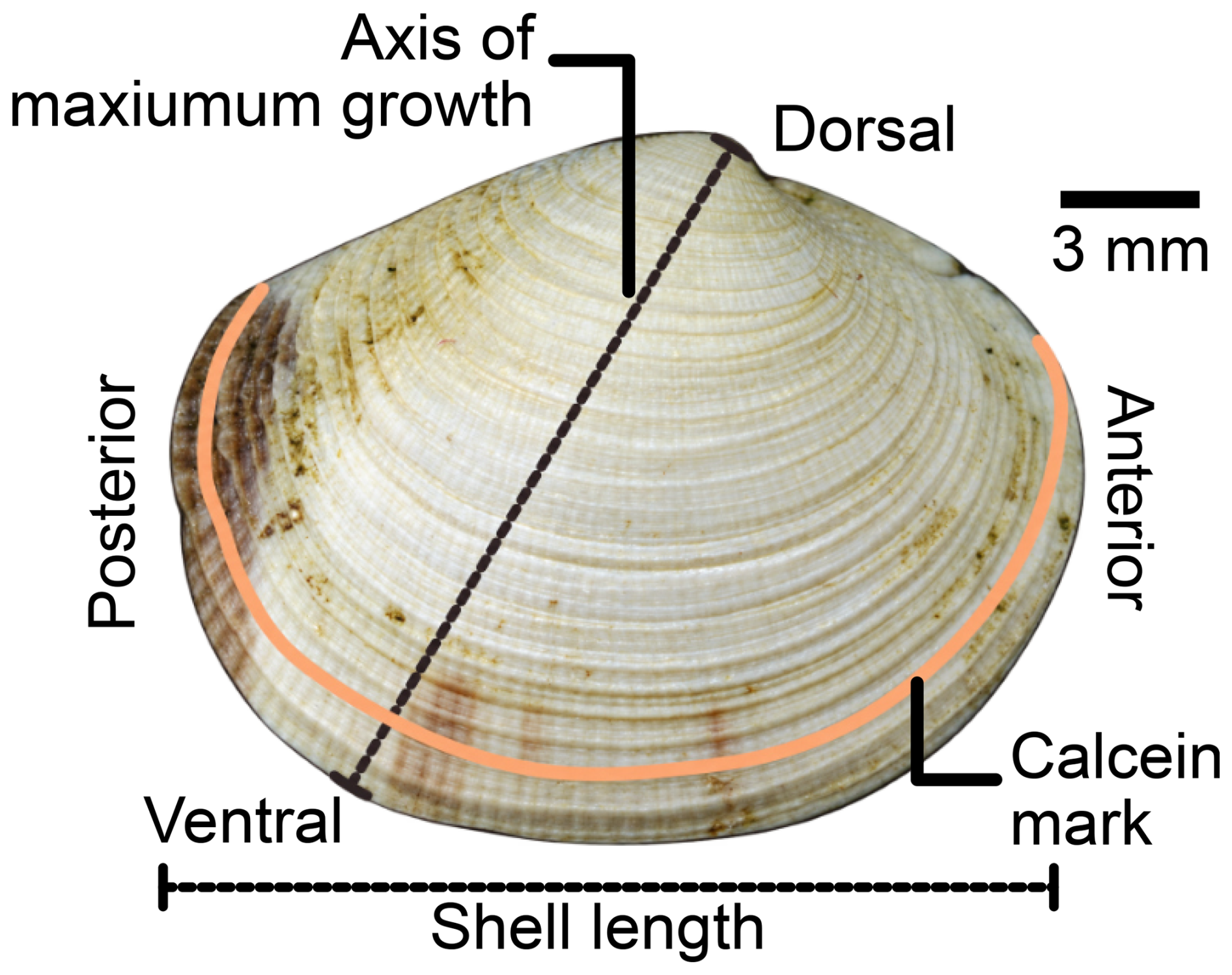
Figure 2Diagram illustrating the measurements taken on Leukoma staminea shells. Image taken on the right valve of a juvenile clam used in this study.
2.9 Statistical analyses
To compare the chemistry of the header tanks, we compared data on pH (measured with the Ocean Optics Jaz spectrophotometer), dissolved oxygen, salinity, and temperature. We calculated the sample size, mean, and standard deviation for each tank, and performed paired t-tests. To compare the pH of the water in the buckets to their respective header tanks (measured with the Pinpoint pH probe), we calculated the sample size, mean, and standard deviation for each bucket, as well as the buckets grouped together by their header tank. We also performed an additional paired t-test to test whether the header tanks differed from each other in pH based on the Pinpoint pH probe results.
We ran linear mixed effects regression models to test the effects of header tank (control vs. experimental acidification) and sediment type (sand vs. sand with shell hash) on various response variables for clam growth and pore water chemistry. In all models, header tank and sediment type along with their interaction term were treated as fixed effects, and bucket ID was included as a random effect. Additionally, we used a continuous autoregressive order-1 correlation structure in the mixed effects models for pore water chemistry to account for temporal autocorrelation from repeated measurements. The response variables for clam growth included percent growth (calculated as new growth divided by unit length), tissue weight, and shell weight. Pore water pH, saturation state, and total alkalinity were the response variables for the water chemistry regression models. We log-transformed the clam growth response variables to better fit the assumption of normally distributed residuals. The mixed effects model for clam growth was conducted using the “lme4” package (Bates et al., 2015) in R, and the models for pore water chemistry were conducted using the `nlme' package (Pinheiro and Bates, 2000).
3.1 Terminology
For readability, we will use the following terms for our experimental conditions: “C” = control (seawater pH ∼ 7.8, no shell hash in the sediment); “SH” = shell hash (seawater pH ∼ 7.8; shell hash added); “EA” = experimental acidification (seawater pH ∼ 7.4, no shell hash in the sediment); “EASH” = experimental acidification plus shell hash (seawater pH ∼ 7.4, shell hash added to the sediment).
3.2 Seawater chemistry
Seawater chemistry in the header tanks was stable throughout the experiment, with pH as the only significant difference. Measurements from the high- and low-pH header tanks were compared using paired t-tests, with day treated as paired observations. Salinity, dissolved oxygen, and temperature did not differ significantly between the two tanks (p-values = 0.32, 0.63, and 1.00, respectively). In contrast, pH differed significantly between the tanks based on measurements from the Ocean Optics Jaz spectrophotometer (p-value = 3.53e−45) and the Pinpoint pH probe (p-value = 2.2e−16). Both instruments gave an average pH of 7.80 ± 0.04 for the high-pH header tank and 7.30 ± 0.03 for the low-pH header tank. Bucket conditions were comparable to their respective header tanks; buckets attached to the high-pH tank had a mean pH of 7.80 ± 0.03 and those attached to the low-pH tank had a mean of 7.30 ± 0.02. Although our experimental design cannot distinguish between pH treatment and header tank identity, our measurements suggest that pH is the defining difference between the two treatments.
In contrast to the overlying water, pore water chemistry differed between treatments (Fig. 3; Table 1). Over the course of the experiment, pHTOT was highest in the shell hash (SH) condition, followed by experimental acidification plus shell hash (EASH) (Fig. 3A). Most values were stable through the experiment, though the control (C) showed a decline in pHTOT over time. A similar decline occurred in the control for aragonite saturation state (Fig. 3B), but not alkalinity (Fig. 3C). Compared to the experimental acidification (EA) condition, the addition of shell hash resulted in consistently higher values for pHTOT, aragonite saturation state, and total alkalinity. Compared to the control, the addition of shell hash resulted in consistently higher measurements for pHTOT and aragonite saturation state, but not total alkalinity. Linear mixed effects regression models suggest that pore water pH changed both as a function of sediment type and header tank but there were no significant interactive effects. Total alkalinity was significantly affected by the header tank (p-value = 0.023), and saturation state was affected by sediment type (p-value = 0.029). Together, these results indicate that shell hash consistently elevated pore water chemistry, though the magnitude and direction of treatment effects depended on the variable measured.
Table 1Fixed effects outputs for the generalized linear mixed effects models on the water quality parameters. Model results are provided for the response variables pore water pH, saturation state, and alkalinity respectively. Values have been rounded to the second decimal place.
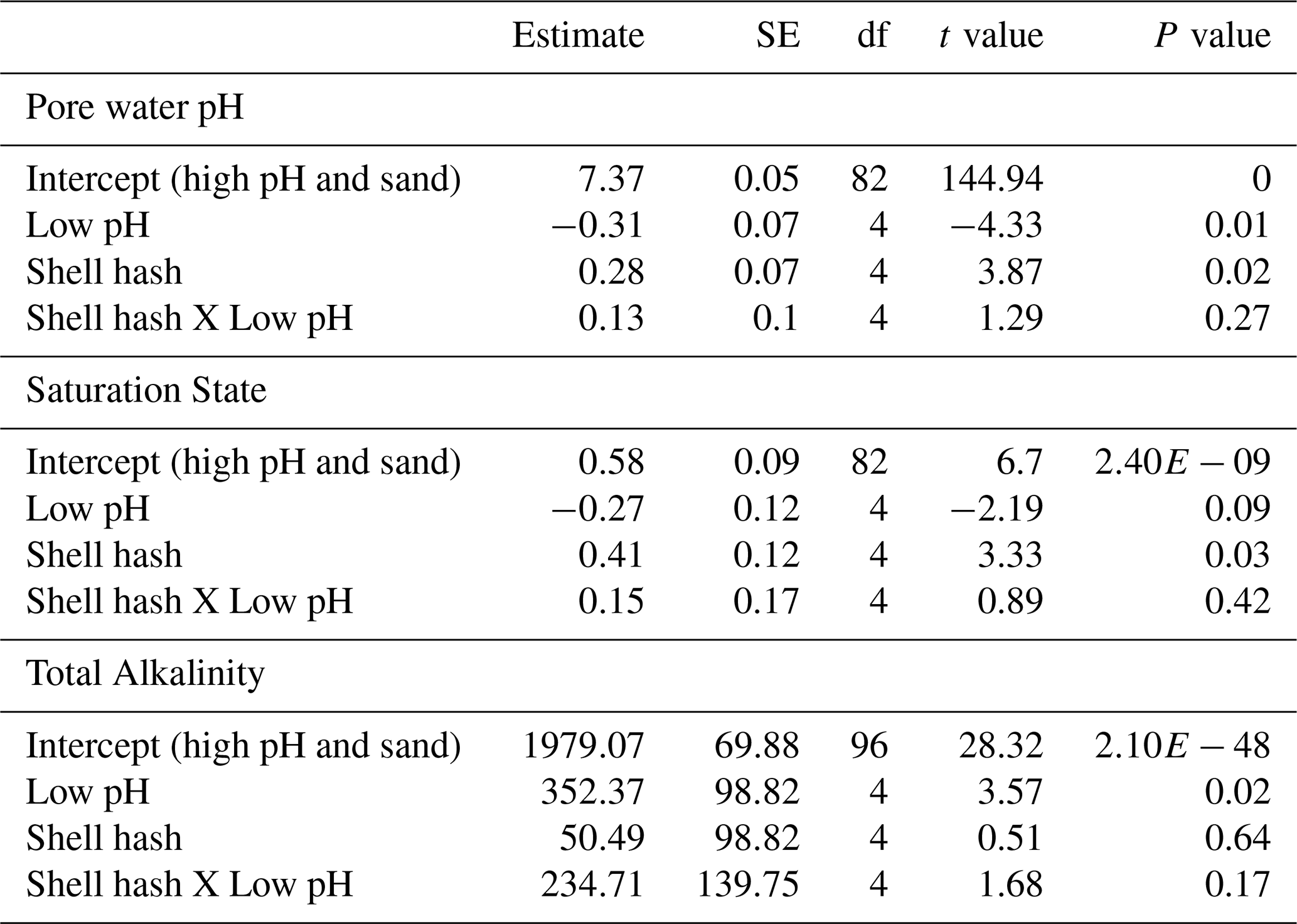
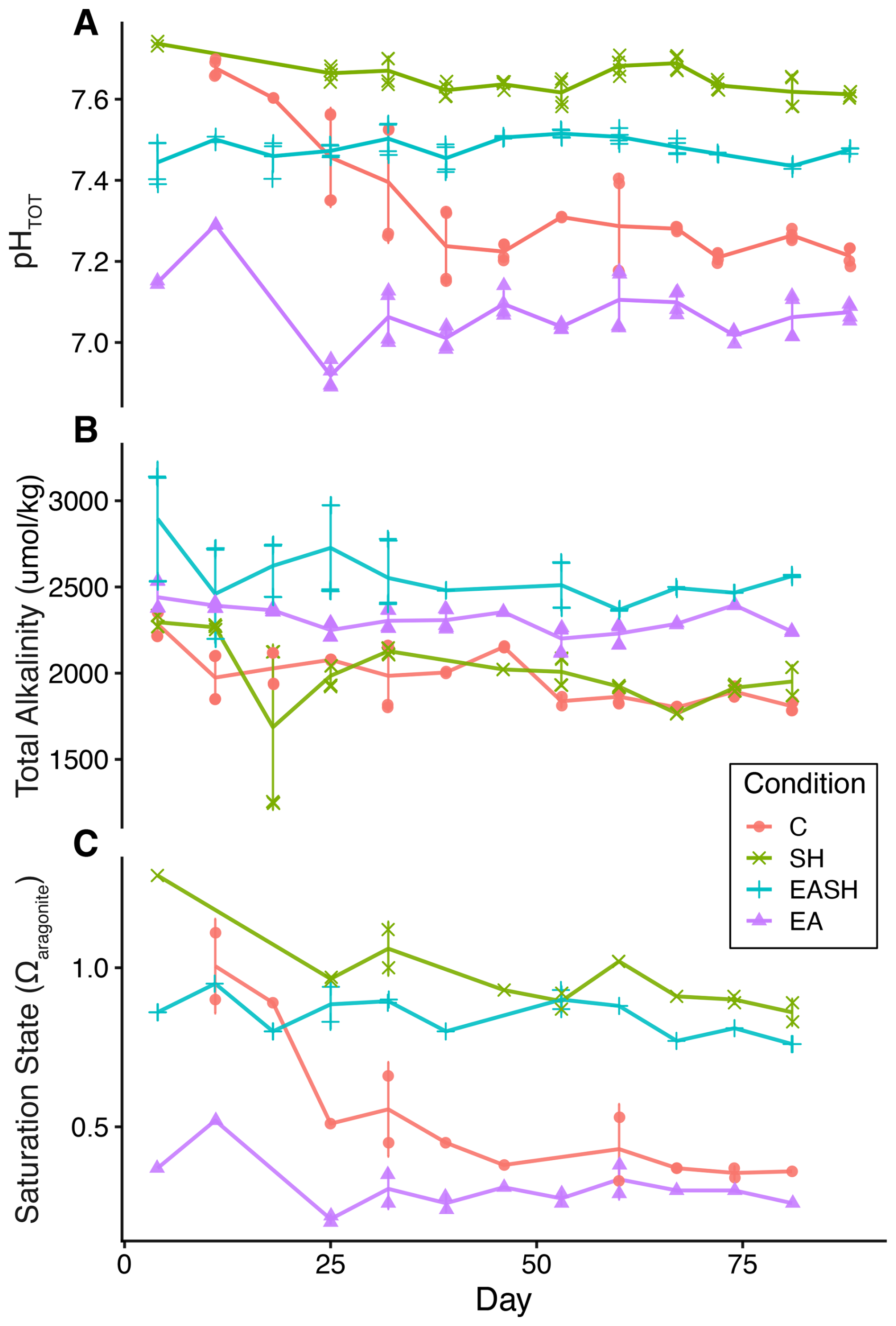
Figure 3Porewater chemistry over time (days). Points on each plot show recorded values, and bars denote the mean ±1 standard deviation. (A) pHTOT measurements (B) total alkalinity measurements (C) saturation state (Ωaragonite) measurements. Some samples are missing due to sampling error; see the Materials and Methods section for details.
3.3 Shell morphology and growth
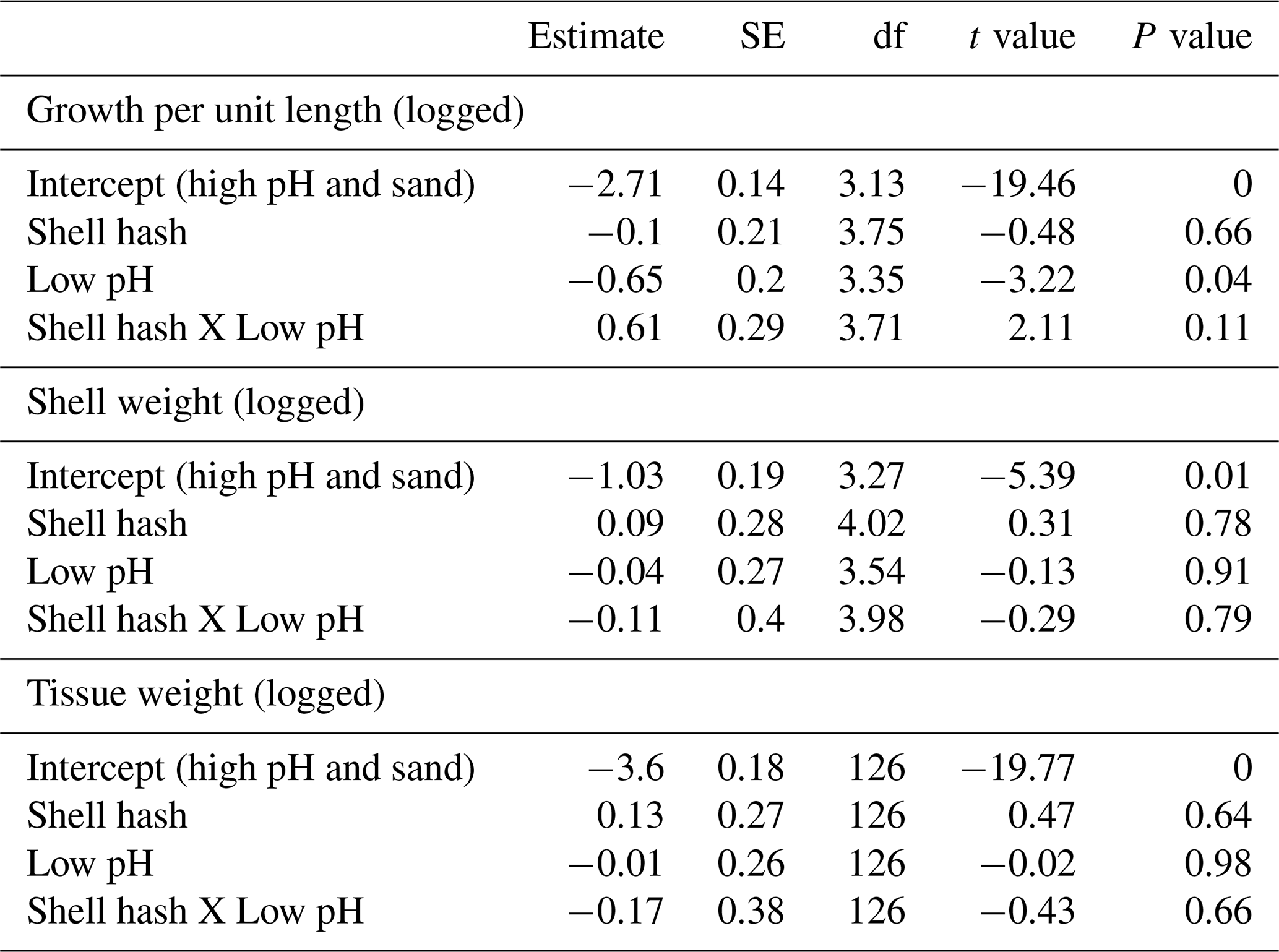
At the end of 90 d, 137 clams survived. Calcein stains were reliably produced in most individuals, with only a small subset lacking distinct lines (n=7). Therefore, a total of 130 clams were measured and compared statistically at the end of the experiment. Differences between treatments for percent growth, shell weight, and tissue weight are shown in Fig. 4 and Table 2. Linear mixed effects regression models on the log-transformed data suggest that differences between the treatments in shell and tissue weight are not statistically significant. Percent new growth (new growth over shell length) was statistically significant due to overlying pH (p-value = 0.042) but not presence/absence of shell hash, and the interaction between these treatments was not statistically significant (p-value = 0.11). Average percent new growth varied markedly across acidification treatments with clams in experimental acidification treatment growing 6.4 % (±2.9 %) and 4.7 % (±3.0 %) in shell hash and sand respectively, and those in control pH treatments growing 7.9 % (±6.1 %) and 7.7 % (±3.9 %) in shell hash and sand respectively. Although there is not a significant interaction between acidification treatments and sediment type, the percent growth results suggest that clams grow better in shell hash compared to just sand sediment under low pH conditions.
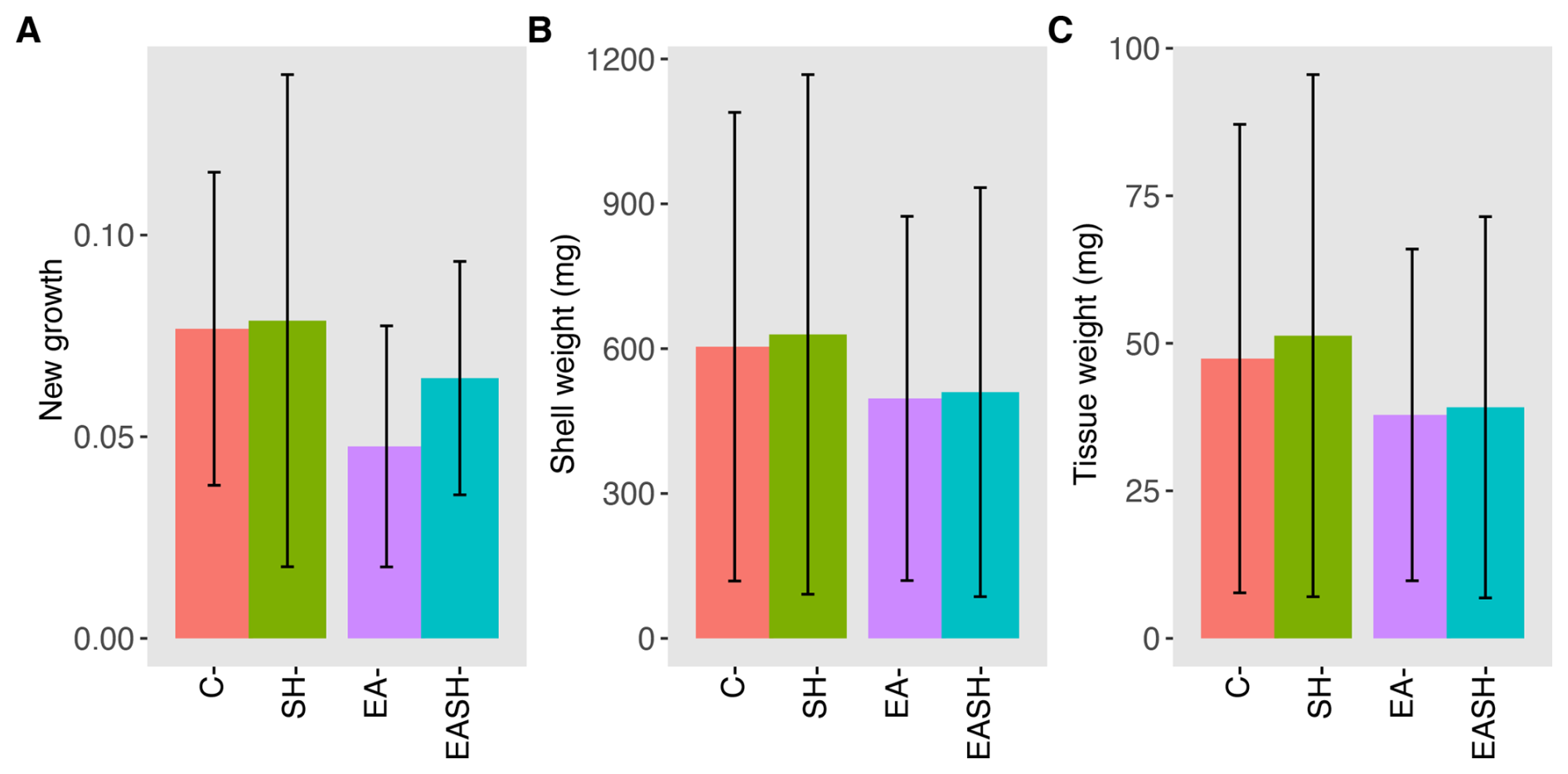
Figure 4Overview of clam growth in this study. The data is visualized as bar plots, with bars showing one standard deviation. (A) Results for percent new growth, (B) shell weight, and (C) tissue weight.
Table 2Fixed effects outputs for the generalized linear mixed effects models on clam growth. Model results are provided for the response variables growth per unit length, change in shell weight, and change in tissue weight respectively. Values have been rounded to the second decimal place.
3.4 Gene Expression Analysis
Our transcriptome of L. staminea mantle tissue included 638 598 transcript models, which grouped into 530 958 gene models. This number is likely far higher than the actual number of genes present, but this is not unusual for a de novo transcriptome assembly (Haas et al., 2013; Raghavan et al., 2022). 284 genes were found to be differentially expressed, based on a p-value cutoff of <0.001 and a >4-fold change in expression between two or more conditions. Notably, the experimentally acidified (EA) treatment looked markedly different from all other treatments. The principal components plot (Fig. 5A) and sample correlation matrix (Fig. 5B) demonstrate that the replicates from the EA treatment clustered together, while the other conditions are intermixed. These plots are consistent with the numbers of differentially expressed genes recovered; excluding the EA condition, no more than 11 of the 284 genes were differentially expressed in any pairwise comparison. This suggests that the addition of shell hash to experimentally acidified water resulted in a gene expression profile largely indistinguishable from animals raised in the low-pH header tank, with or without shell hash.
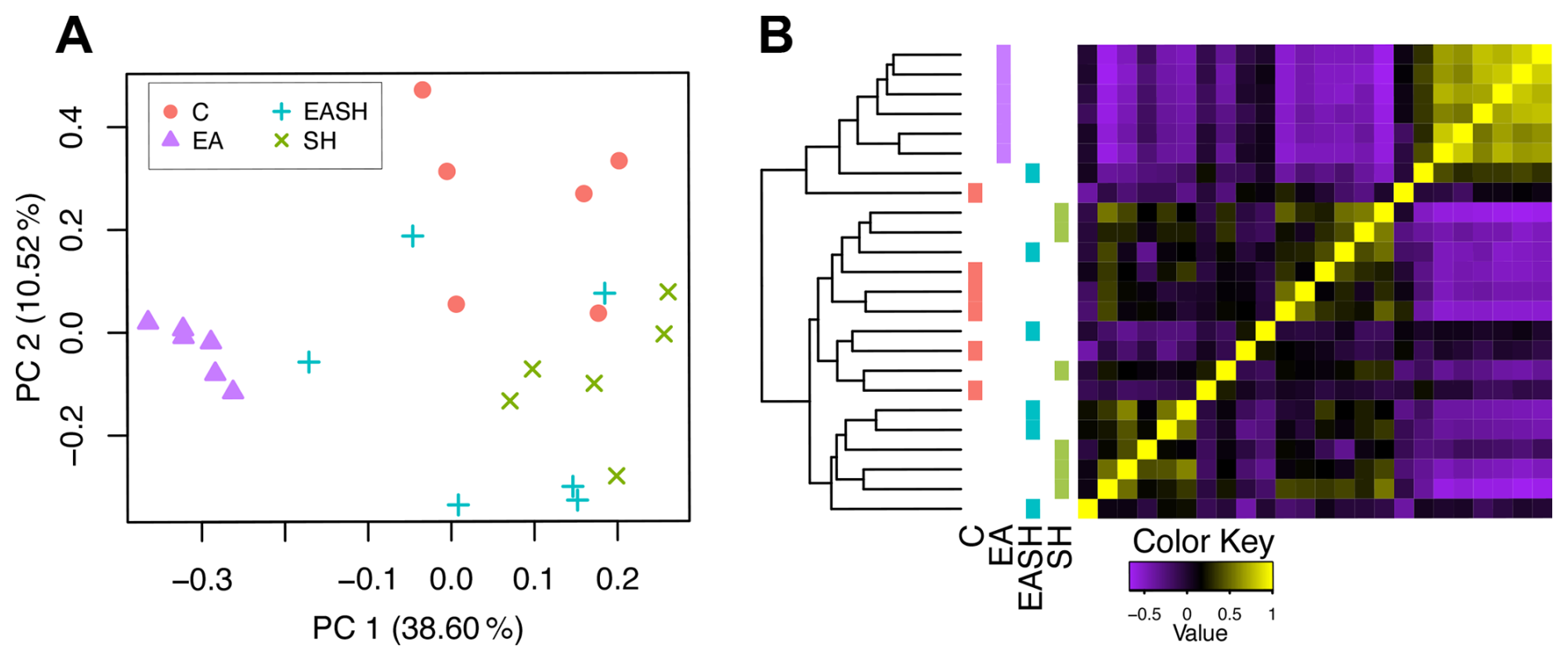
Figure 5Overview of differential gene expression analysis. (A) PCA plot demonstrating similarity among the replicates, based on the count of differentially expressed genes. (B) A correlation matrix of the same data, with the count data log transformed and centered around the mean. Note how, in both analyses, the EA replicates cluster together, while samples from all other conditions are intermixed.
While the broad pattern of gene expression supports our hypothesis that adding shell hash would result in a loss of pH-stress genetic signatures, we were only able to annotate a small subsample of the genes, which limited our ability to understand the range of biological processes being impacted in our experiment. The vast majority of our 284 differentially expressed genes failed to receive an annotation in the Trinotate pipeline; a second approach using Blast2Go did only marginally better (Table S9). Attempts to identify enriched biological pathways based on gene annotations failed to recover any statistically significant results. We therefore performed several additional analyses to look for possible genes that play a role in response to ocean acidification.
Firstly, we tested if any differentially expressed genes were shared between two or more treatments, looking for genes generally involved in tolerance to acidified seawater. Twelve genes were differentially expressed in two or more pairwise comparisons. Of these, 10 genes were found in multiple pairwise comparisons against the “EA” condition, suggesting these genes play a general role in acidification tolerance. Unfortunately, only one of these genes was annotated in our pipeline, showing ∼ 79 % similarity to “DNA repair protein complementing XPA cells homolog” of the Manila clam Ruditapes philippinarum. In mice, the XPA protein plays a critical role in nucleotide excision repair in response to ultraviolet and chemical damage (de Vries and van Steeg, 1996; Pan and Lee, 2009); it is unclear whether the L. staminea gene plays a similar role, but we note that four additional differentially expressed genes were similarly annotated as XPA-like proteins, and the role of XPA proteins in L. staminea in response to ocean acidification is worth exploring further.
We also tested how many of our differentially expressed genes could be identified in other bivalves, with the thought that these genes, though potentially unannotated, could reveal important clade-specific regulators of acidification tolerance. We downloaded a reference proteome for every bivalve genus in the UniProt database (https://www.uniprot.org/, last access: 9 April 2026), as well as a selection of non-bivalve animal outgroups. We then used BLASTx to compare our differentially expressed L. staminea transcripts against these proteomes, using an e-value cutoff of 1e−10. The results of this analysis are shown in Fig. 6 (and detailed in Table S10). We tested 299 transcripts predicted from the 284 gene models (Trinity attempts to predict isoforms, so there are often more transcripts than gene models), yet only 49 matched to a sequence in one or more proteomes. There is some phylogenetic signal in the data, with the highest number of matches coming from Dreissena polymorpha – which, like L. staminea, is part of the taxonomic superorder Imparidentia – and bivalves generally showed a larger number of matches than other animals (Fig. 6A). Fourteen transcripts were found across all datasets. Most of these appear to be general cell maintenance genes, but one notable exception is a perlucin-like protein, which is known to regulate calcium carbonate precipitation in some molluscs and is necessary for proper shell growth in oysters raised in acidified seawater (Schwaner et al., 2023). We also identified a putative monocarboxylate transporter, which has been recovered in other experimental acidification studies on bivalves, and is hypothesized to transport ions to the site of biomineralization (Li et al., 2022; Sleight et al., 2020). Another two transcripts from L. staminea matched sequences present in all analyzed bivalve proteomes. Both had annotations, including a putative NADPH oxidase 5-like gene, which has also been identified in Atlantic surf clams (Spisula solidissima) exposed to acute heat stress (Acquafredda et al., 2024). A final nine sequences were uniquely shared between D. polymorpha and L. staminea; most of these were unannotated and we found no evidence that the few genes with annotations had been identified in previous bivalve RNA-Seq studies. These results do not support the hypothesis that our dataset is enriched in bivalve-specific genes, but this exercise did reveal some important genes thought to regulate environmental tolerance and/or biomineralization in other species.
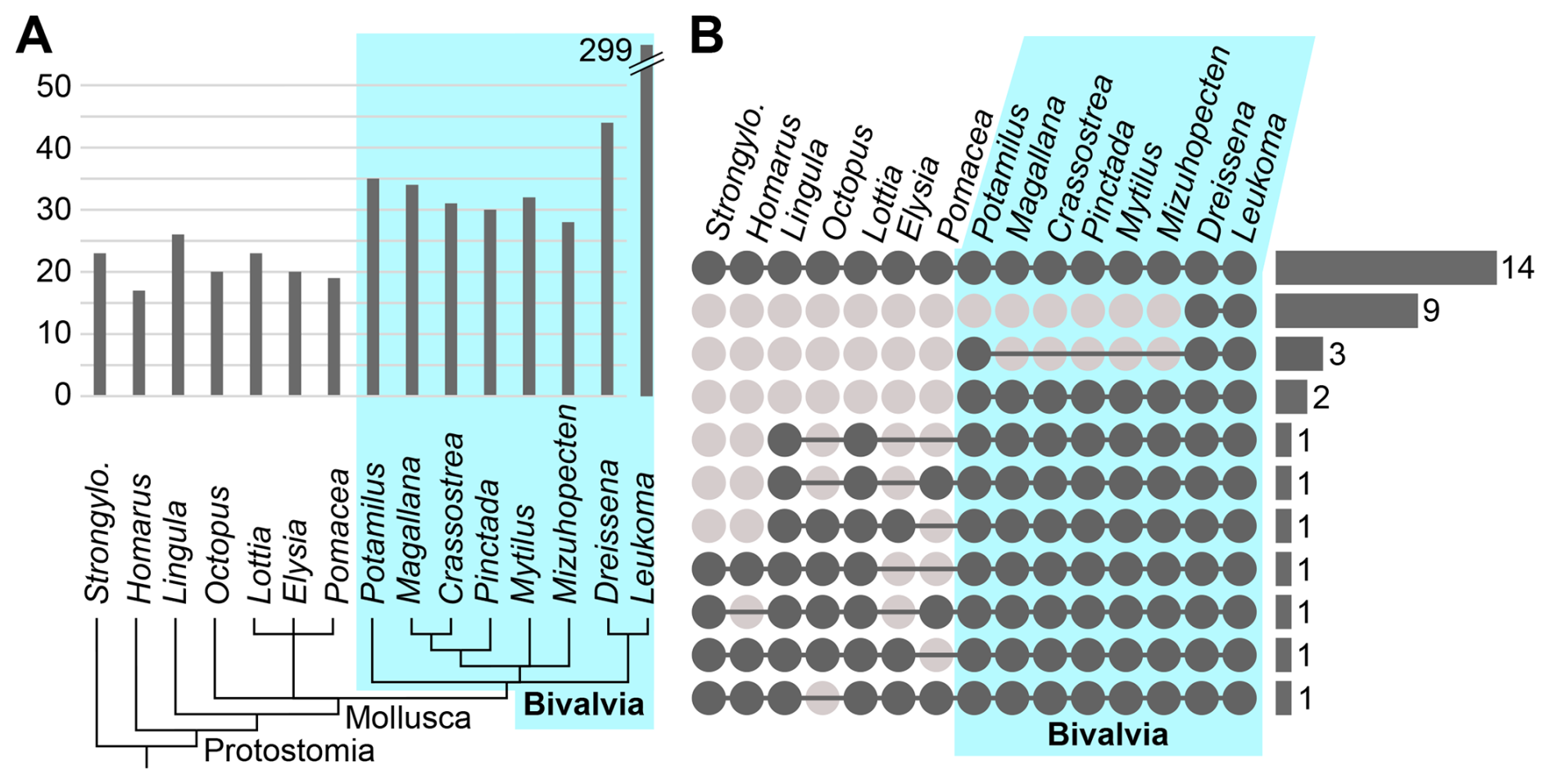
Figure 6Summary of sequence similarity between the differentially expressed genes in this study and proteomes from other species. (A) A plot showing the number of matching sequences between L.staminea and other genera, with a phylogenetic tree at the bottom showing evolutionary relationships. (B) An UpSet plot visualizing the shared number of transcripts found in L. staminea and other organisms. All other combinations resulted in one or fewer shared genes. In both images, the bivalves are highlighted in blue; “Strongylo.” = Strongylocentrotus.
Our results suggest that shell hash can lessen the effects of acidification by buffering the chemistry of pore fluids, thus providing a potential acidification mitigation strategy for infaunal organisms like clams (Curtin et al., 2022; Doyle and Bendell, 2022; Ericson and Ragg, 2021; Green et al., 2013; Salter, 2018). The limited structure of our experimental design constrained the power of our statistical analyses. In particular, the low level of technical replicates (n=2) made it difficult to detect significant differences among treatments. High variability in starting size across the clam cohort also complicated our analyses. Our clams were slow-growing, though the rates we recorded are consistent with our limited knowledge of the species: post-settlement juveniles grow ∼ 7–15 mm in length after 200 d (Kempf et al., 2023) and only 22–35 mm after several years. Given this slow growth, variation in starting size, which was not accounted for, likely played a role in the high variability in final shell weight and tissue size metrics (Fig. 4). In the future, additional studies using animals of the same size – alongside age and genetic cohort – may help disentangle individual variability from the effects of acidification on shell growth. Despite these limitations, we found that shell hash had a significant impact on the pore water chemistry, and that these differences correlated with L. staminea shell growth. Our gene expression profiling of clam mantle tissue is the most novel part of the work, and suggests that shell hash was beneficial for the clams, as the “acidification” signal present in animals grown under low-pH conditions disappeared when shell hash was added.
Our results add to a growing body of literature testing if shell hash mitigates the negative effects of ocean acidification on bivalves. For example, Green et al. (2009) showed that ΩAr of ∼ 0.4 caused significant mortality in juvenile Mercenaria mercenaria clams, and adding shell hash to a mudflat improved survivorship threefold over 30 d. The water chemistry results are consistent with ours, where experimental acidification resulted in ΩAr well below 0.5 for most of the experiment, while the addition of shell hash kept ΩArvalues close to 1 (Fig. 3B). Curtin et al. (2022) similarly found carbonate-buffered sediments improved clam growth and increased settlement rates of multiple species. Other studies have not found significant benefits for bivalves raised with shell hash. Greiner et al. (2018) found that the absence of macrophytes was more important to growth rates in Ruditapes philippinarum than the presence or absence of shell hash, while a three-year study found that the absence of predators had a much larger effect on the abundance of Mya arenaria and Mercenaria mercenaria than shell hash (Beal et al., 2020). The impact of shell hash on bivalves is unclear, and likely depends on a variety of confounding factors.
One of these confounding factors is variability between species. Previous studies have shown marked differences in the responses of marine calcifiers to ocean acidification, with molluscs generally being more resilient than groups such as corals or dinoflagellates (Bednaršek et al., 2025). Among bivalves, a recent meta-analysis suggests that calcification rates generally decrease under moderate ocean acidification conditions, but that these results vary widely by species and lifestage (Hu et al., 2026). For example, juvenile clams such as Tridacna squamosa and Chamelea gallina show decreased calcification under OA conditions (Armstrong et al., 2022; Sordo et al., 2021) while the scallop Argopecten purpuratus and the mussel Choromytilus chorus did not (Lagos et al., 2016; Benítez et al., 2018). These findings highlight the importance of accounting for species-specific responses when evaluating the effects of ocean acidification on marine calcification.
A second issue is the effectiveness of shell hash on particular environments. Previous studies have generally found significant but modest changes in pore water chemistry, and such changes are strongly site-specific. In the lab, Curtin et al. (2022) found that the addition of shell hash led to an increase in pore water pH (+0.23–0.73) and aragonite saturation state (+0.5–1.26), which is consistent with our results (Fig. 3). Green et al. (2009) similarly found that shell hash increased pore water ΩAr from ∼ 0.25 to ∼ 0.53. Field experiments have been more mixed; Doyle and Bendell (2022) found that shell hash reduced the variability (but not overall values) in pore water pH over a six-week period at a cobble-sand exposed beach in British Columbia, and had no discernable impact on a nearby organic-matter rich mudflat. McGarrigle et al. (2024) found that shell hash was modestly effective at increasing pH in a New Brunswick intertidal mudflat (∼ 0.09 pH units), but the effect was lost after two months. This timeframe is consistent with studies calculating the dissolution rate of biogenic calcite and aragonite, which suggest a half-life of ∼ 50 d (Biçe et al., 2025). As an ocean acidification mitigation strategy, shell hash appears best suited for local habitat-engineering or refugia establishment.
Still, our research provides clear support for the hypothesis that shell hash can buffer pore water chemistry, and mitigates a natural tendency for pore water pH to decrease over time (Fig. 3). It also provides, for the first time, evidence that genetic changes associated with acidified water are lost when shell hash is added. Therefore, this study warrants continued research investigating scalability, efficacy, and safety of using shell hash to buffer acidification. Further research is also needed to assess the ability of shell hash to buffer acidic conditions at the water-sediment interface where larvae first settle and clams' siphons extend (Green et al., 2009; Waldbusser et al., 2015). This research is needed for many infaunal species, as compounding environmental stressors could yield conditions that are too corrosive for larval settlement and development (Doyle and Bendell, 2022; Green et al., 2009; Waldbusser et al., 2015).
In conclusion, this experimental study suggests that shell hash buffers acidic conditions in pore waters, impacting clam shell growth and the genetic signatures of ocean acidification. Implementation of this technique in coastal settings, however, would best be considered on a site-by-site basis, and include partnerships with Indigenous communities and other experts with an understanding of local practices and recognizing that “place always matters” (Justice, 2016). The controlled conditions of the laboratory ignore confounding variables that will likely dictate the success of field projects, such as the chemical and microbial complexity of natural sediments and tidal influences. In all, this experiment provides significant evidence of shell hash buffering capacity, and provides promising results to prompt future collaborative research in coastal settings on clam bed tending in the face of continued climate change.
The datasets analyzed in this paper (Tables S1–S10) are provided in the Supplement. The genetic data produced in this study is accessible on NCBI (Accession: PRJNA1011264). The code used to analyze the data is provided on GitHub at https://github.com/DavidGoldLab/2025_Leukoma_RNA-Seq (last access: 20 October 2026; Zenodo DOI https://doi.org/10.5281/zenodo.19488332, Gold, 2026a). Shell images are available on Harvard Dataverse at https://doi.org/10.7910/DVN/DL8BY0 (Gold, 2026b).
The supplement related to this article is available online at https://doi.org/10.5194/bg-23-7627-2026-supplement.
HLK: conceptualization, investigation, model experiments, funding acquisition, formal analysis, visualization, and writing (original draft preparation). AJG: methodology and writing (review and editing). TMH: methodology and writing (review and editing). TDS: supervision, conceptualization, and writing (review and editing). SJC: project administration, supervision, conceptualization, and writing (review and editing). DAG: project administration, supervision, conceptualization, formal analysis, funding acquisition and writing (original draft preparation).
The contact author has declared that none of the authors has any competing interests.
Publisher's note: Copernicus Publications remains neutral with regard to jurisdictional claims made in the text, published maps, institutional affiliations, or any other geographical representation in this paper. The authors bear the ultimate responsibility for providing appropriate place names. Views expressed in the text are those of the authors and do not necessarily reflect the views of the publisher.
Thank you to Chris Mulligan, who assisted H.L.K with data visualization and experimental set-up, and Manuel Delgado, who assisted H.L.K with carbonate chemistry measurements. Thank you to Joe Newman and the Bodega Marine Laboratory Aquatic Resources Group for their help with animal husbandry and experimental design.
This work was supported by California Sea Grant (project Number: R/HCE-22F awarded to H.L.K. and D.A.G) and a Russell J. and Dorothy S. Bilinski Fellowship to H.L.K.
This paper was edited by Frédéric Gazeau and reviewed by Lennart de Nooijer and Fabrice Pernet.
Acquafredda, M., Guo, X., and Munroe, D.: Transcriptomic response of the Atlantic surfclam (Spisula solidissima) to acute heat stress, Mar. Biotechnol., 26, 149–168, https://doi.org/10.1007/s10126-024-10285-0, 2024.
Andersson, A. J. and Mackenzie, F. T.: Effects of ocean acidification on benthic processes, organisms, and ecosystems, in: Ocean Acidification, edited by: Gattuso, J.-P. and Hansson, L., Oxford University Press, https://doi.org/10.1093/oso/9780199591091.003.0012, 2011.
Andrews, S.: FastQC: A Quality Control Tool for High Throughput Sequence Data. Babraham Bioinformatics, Babraham Institute. https://www.bioinformatics.babraham.ac.uk/projects/fastqc/ (last access: 9 April 2026), 2010.
Armstrong, E. J., Watson, S. A., Stillman, J. H., and Calosi, P.: Elevated temperature and carbon dioxide levels alter growth rates and shell composition in the fluted giant clam, Tridacna squamosa, Sci. Rep., 12, 11034, https://doi.org/10.1038/s41598-022-14503-4, 2022.
Atalay, S.: Indigenous science for a world in crisis, Public Archaeol., 19, 37–52, https://doi.org/10.1080/14655187.2020.1781492, 2020.
Baker, R.: The clam “gardens” of Tomales Bay, News from Native California, 6, 28–29, 1992.
Barber, J. S., Ruff, C. P., McArdle, J. T., Hunter, L. L., Speck, C. A., Rogers, D. W., and Greiner, C. M.: Intertidal clams exhibit population synchrony across spatial and temporal scales, Limnol. Oceanogr., 64, S284–S300, https://doi.org/10.1002/lno.11085, 2019.
Barton, A., Waldbusser, G., Feely, R., Weisberg, S., Newton, J., Hales, B., Cudd, S., Eudeline, B., Langdon, C., Jefferds, I., King, T., Suhrbier, A., and McLaughlin, K.: Impacts of coastal acidification on the Pacific Northwest shellfish industry and adaptation strategies implemented in response, Oceanography, 28, 146–159, https://doi.org/10.5670/oceanog.2015.38, 2015.
Bates, D., Mächler, M., Bolker, B., and Walker, S.: Fitting linear mixed-effects models using lme4, J. Stat. Softw., 67, 1–48, https://doi.org/10.18637/jss.v067.i01, 2015.
Beal, B. F., Coffin, C. R., Randall, S. F., Goodenow, C. A., Pepperman, K. E., and Ellis, B. W.: Interactive effects of shell hash and predator exclusion on 0-year class recruits of two infaunal intertidal bivalve species in Maine, USA, J. Exp. Mar. Biol. Ecol., 530–531, 151441, https://doi.org/10.1016/j.jembe.2020.151441, 2020.
Bednaršek, N., Feely, R. A., Howes, E. L., Hunt, B. P. V., Kessouri, F., León, P., Lischka, S., Maas, A. E., McLaughlin, K., Nezlin, N. P., Sutula, M., and Weisberg, S. B.: Systematic review and meta-analysis toward synthesis of thresholds of ocean acidification impacts on calcifying pteropods and interactions with warming, Front. Mar. Sci., 6, 227, https://doi.org/10.3389/fmars.2019.00227, 2019.
Bednaršek, N., van de Mortel, H., Pelletier, G., García-Reyes, M., Feely, R. A., and Dickson, A. G.: Assessment framework to predict sensitivity of marine calcifiers to ocean alkalinity enhancement – identification of biological thresholds and importance of precautionary principle, Biogeosciences, 22, 473–498, https://doi.org/10.5194/bg-22-473-2025, 2025.
Bendell, L. I.: Evidence for declines in the native Leukoma staminea as a result of the intentional introduction of the non-native Venerupis philippinarum in coastal British Columbia, Canada, Estuaries Coast., 37, 369–380, 2014.
Benítez, S., Lagos, N. A., Osores, S., Opitz, T., Duarte, C. M., Navarro, J. M., and Lardies, M. A.: High pCO2 levels affect metabolic rate, but not feeding behavior and fitness, of farmed giant mussel Choromytilus chorus, Aquacult. Environ. Interact., 10, 267–278, 2018.
Biçe, K., Myers Stewart, T., Waldbusser, G. G., and Meile, C.: The effect of carbonate mineral additions on biogeochemical conditions in surface sediments and benthic–pelagic exchange fluxes, Biogeosciences, 22, 641–657, https://doi.org/10.5194/bg-22-641-2025, 2025.
Bolger, A. M., Lohse, M., and Usadel, B.: Trimmomatic: a flexible trimmer for Illumina sequence data, Bioinformatics, 30, 2114–2120, https://doi.org/10.1093/bioinformatics/btu170, 2014.
Bryant, D. M., Johnson, K., DiTommaso, T., Tickle, T., Couger, M. B., Payzin-Dogru, D., Lee, T. J., Leigh, N. D., Kuo, T.-H., Davis, F. G., Bateman, J., Bryant, S., Guzikowski, A. R., Tsai, S. L., Coyne, S., Ye, W. W., Freeman, R. M., Peshkin, L., Tabin, C. J., Regev A., Haas, B. J., and Whited, J. L.: A tissue-mapped axolotl de novo transcriptome enables identification of limb regeneration factors, Cell Rep., 18, 762–776, https://doi.org/10.1016/j.celrep.2016.12.063, 2017.
Burdige, D. J., Zimmerman, R. C., and Hu, X.: Rates of carbonate dissolution in permeable sediments estimated from pore-water profiles: the role of sea grasses, Limnol. Oceanogr., 53, 549–565, https://doi.org/10.4319/lo.2008.53.2.0549, 2008.
Caldeira, K. and Wickett, M. E.: Anthropogenic carbon and ocean pH, Nature, 425, 365, https://doi.org/10.1038/425365a, 2003.
Cantalapiedra, C. P., Hernández-Plaza, A., Letunic, I., Bork, P., and Huerta-Cepas, J.: eggNOG-mapper v2: functional annotation, orthology assignments, and domain prediction at the metagenomic scale, Mol. Biol. Evol., 38, 5825–5829, https://doi.org/10.1093/molbev/msab293, 2021.
Checkley, D. and Barth, J.: Patterns and processes in the California Current System, Prog. Oceanogr., 83, 49–64, https://doi.org/10.1016/j.pocean.2009.07.028, 2009.
Clements, J. C. and Chopin, T.: Ocean acidification and marine aquaculture in North America: potential impacts and mitigation strategies, Rev. Aquacult., 9, 326–341, https://doi.org/10.1111/raq.12140, 2017.
Cox, K. D., Gerwing, T. G., Macdonald, T., Hessing-Lewis, M., Millard-Martin, B., Command, R. J., Juanes, F., and Dudas, S. E.: Infaunal community responses to ancient clam gardens, ICES J. Mar. Sci., 76, 2362–2373, https://doi.org/10.1093/icesjms/fsz153, 2019.
Curtin, T. P., Volkenborn, N., Dwyer, I. P., Aller, R. C., Zhu, Q., and Gobler, C. J.: Buffering muds with bivalve shell significantly increases the settlement, growth, survival, and burrowing of the early life stages of the northern quahog, Mercenaria mercenaria, and other calcifying invertebrates, Estuar. Coast. Shelf Sci., 264, 107686, https://doi.org/10.1016/j.ecss.2021.107686, 2022.
Dashfield, S. L., Somerfield, P. J., Widdicombe, S., Austen, M. C., and Nimmo, M.: Impacts of ocean acidification and burrowing urchins on within-sediment pH profiles and subtidal nematode communities, J. Exp. Mar. Biol. Ecol., 365, 46–52, https://doi.org/10.1016/j.jembe.2008.07.039, 2008.
Davidson, N. M. and Oshlack, A.: Corset: enabling differential gene expression analysis for de novo assembled transcriptomes, Genome Biol., 15, 410, https://doi.org/10.1186/s13059-014-0410-6, 2014.
Davis, C. V., Hewett, K., Hill, T. M., Largier, J. L., Gaylord, B., and Jahncke, J.: Reconstructing aragonite saturation state based on an empirical relationship for northern California, Estuaries Coast., 41, 2056–2069, https://doi.org/10.1007/s12237-018-0372-0, 2018.
de Vries, A. and van Steeg, H.: Xpaknockout mice, Semin. Cancer Biol., 7, 229–240, https://doi.org/10.1006/scbi.1996.0031, 1996.
Deur, D., Dick, A., Recalma-Clutesi, K., and Turner, N. J.: Kwakwaka'wakw “Clam Gardens”, Hum. Ecol., 43, 201–212, https://doi.org/10.1007/s10745-015-9743-3, 2015.
Dodd, L. F., Grabowski, J. H., Piehler, M. F., Westfield, I., and Ries, J. B.: Juvenile eastern oysters more resilient to extreme ocean acidification than their mud crab predators, Geochem. Geophys. Geosyst., 22, e2020GC009180, https://doi.org/10.1029/2020GC009180, 2021.
Doney, S. C., Fabry, V. J., Feely, R. A., and Kleypas, J. A.: Ocean acidification: the other CO2 problem, Annu. Rev. Mar. Sci., 1, 169–192, https://doi.org/10.1146/annurev.marine.010908.163834, 2009.
Doney, S. C., Busch, D. S., Cooley, S. R., and Kroeker, K. J.: The impacts of ocean acidification on marine ecosystems and reliant human communities, Annu. Rev. Environ. Resour., 45, 83–112, https://doi.org/10.1146/annurev-environ-012320-083019, 2020.
Doyle, B. and Bendell, L. I.: An evaluation of the efficacy of shell hash for the mitigation of intertidal sediment acidification, Ecosphere, 13, e4003, https://doi.org/10.1002/ecs2.4003, 2022.
Ericson, J. A. and Ragg, N. L. C.: Effects of crushed mussel, Perna canaliculus, shell enrichment on seawater carbonate buffering and development of conspecific larvae exposed to near-future ocean acidification, J. World Aquacult. Soc., 53, 271–289, https://doi.org/10.1111/jwas.12779, 2021.
Feder, H. M., Hendee, J. C., Holmes, P., Mueller, G. J., and Paul, A. J.: Examination of a reproductive cycle of Protothaca staminea using histology, wet weight-dry weight ratios, and condition indices, Veliger, 22, 182–187, 1979.
Feely, R. A., Sabine, C. L., Hernandez-Ayon, J. M., Ianson, D., and Hales, B.: Evidence for upwelling of corrosive “acidified” water onto the continental shelf, Science, 320, 1490–1492, https://doi.org/10.1126/science.1155676, 2008.
Feely, R. A., Klinger, T., Newton, J. A., and Chadsey, M.: Scientific summary of ocean acidification in Washington State marine waters, Rep., Off. Ocean. Atmos. Res., Natl. Ocean. Atmos. Adm., Silver Spring, MD, https://repository.library.noaa.gov/view/noaa/11135 (last access: 20 October 2026), 2012.
Fraser, C. M. and Smith, G. M.: Notes on the ecology of the little neck clam, Paphia staminea Conrad, Trans. R. Soc. Can., 22, 249–269, 1928.
Gold, D. A.: DavidGoldLab/2025_Leukoma_RNA-Seq: Shell hash code (Version shell_hash), Zenodo [software], https://doi.org/10.5281/zenodo.19488332, 2026a.
Gold, D.: Shell hash promotes growth in Pacific littleneck clams (Leukoma staminea) by altering pore water chemistry, V1, Harvard Dataverse [data set], https://doi.org/10.7910/DVN/DL8BY0, 2026b.
Gold, D. A. and Vermeij, G. J.: Deep resilience: an evolutionary perspective on calcification in an age of ocean acidification, Front. Physiol., 14, 1092321, https://doi.org/10.3389/fphys.2023.1092321, 2023.
Grabherr, M. G., Haas, B. J., Yassour, M., Levin, J. Z., Thompson, D. A., Amit, I., Adiconis, X., Fan, L., Raychowdhury, R., Zeng, Q., Chen, Z., Mauceli E., Hacohen, N., Gnirke, A., Rhind, N., di Palma, F., Birren, B. W., Nusbaum, C., Lindblad-Toh, K., Friedman, N., and Regev, A.:: Full-length transcriptome assembly from RNA-Seq data without a reference genome, Nat. Biotechnol., 29, 644–652, https://doi.org/10.1038/nbt.1883, 2011.
Green, M. A., Jones, M. E., Boudreau, C. L., Moore, R. L., and Westman, B. A.: Dissolution mortality of juvenile bivalves in coastal marine deposits, Limnol. Oceanogr., 49, 727–734, https://doi.org/10.4319/lo.2004.49.3.0727, 2004.
Green, M. A., Waldbusser, G. G., Reilly, S. L., Emerson, K., and O'Donnell, S.: Death by dissolution: sediment saturation state as a mortality factor for juvenile bivalves, Limnol. Oceanogr., 54, 1037–1047, https://doi.org/10.4319/lo.2009.54.4.1037, 2009.
Green, M. A., Waldbusser, G. G., Hubazc, L., Cathcart, E., and Hall, J.: Carbonate mineral saturation state as the recruitment cue for settling bivalves in marine muds, Estuaries Coast., 36, 18–27, https://doi.org/10.1007/s12237-012-9549-0, 2013.
Greiner, C. M., Klinger, T., Ruesink, J. L., Barber, J. S., and Horwith, M.: Habitat effects of macrophytes and shell on carbonate chemistry and juvenile clam recruitment, survival, and growth, J. Exp. Mar. Biol. Ecol., 509, 8–15, https://doi.org/10.1016/j.jembe.2018.08.006, 2018.
Groesbeck, A., Rowell, K., Lepofsky, D., and Solomon, A.: Ancient clam gardens increased shellfish production: adaptive strategies from the past can inform food security today, PLoS ONE, 9, e91235, https://doi.org/10.1371/journal.pone.0091235, 2014.
Haas, B. J., Papanicolaou, A., Yassour, M., Grabherr, M., Blood, P. D., Bowden, J., Couger, M. B., Eccles, D., Li, B., Lieber, M., MacManes, M. D., Ott, M., Orvis, J., Pochet, N., Strozzi, F., Weeks, N., Westerman, R., William, T., Dewey, C. N., Henschel, R., LeDuc, R. D., Friedman, N., and Regev, A.: De novo transcript sequence reconstruction from RNA-seq using the Trinity platform for reference generation and analysis, Nat. Protoc., 8, 1494–1512, https://doi.org/10.1038/nprot.2013.084, 2013.
Hatch, M. B. A., Parrish, J. K., Heppell, S. S., Augustine, S., Campbell, L., Divine, L. M., Donatuto, J., Groesbeck, A. S., and Smith, N. F.: Boundary spanners: a critical role for enduring collaborations between Indigenous communities and mainstream scientists, Ecol. Soc., 28, https://doi.org/10.5751/ES-13887-280141, 2023.
Hickey, B. M. and Banas, N. S.: Oceanography of the U.S. Pacific Northwest coastal ocean and estuaries with application to coastal ecology, Estuaries, 26, 1010–1031, https://doi.org/10.1007/BF02803360, 2003.
Hiebert, T. C.: Leukoma staminea, in: Oregon Estuarine Invertebrates: Rudys' Illustrated Guide to Common Species, 3rd edn., University of Oregon Libraries and Oregon Institute of Marine Biology, https://scholarsbank.uoregon.edu/xmlui/bitstream/handle/1794/12918/L_staminea_2016_final.pdf (last access: 20 October 2026), 2015.
Hönisch, B., Ridgwell, A., Schmidt, D. N., Thomas, E., Gibbs, S. J., Sluijs, A., Zeebe, R., Kump, L., Martindale, R. C., Greene, S. E., Kiessling, W., Ries, J., Zachos, J. C., Royer, D. L., Barker, S., Marchitto, T. M., Moyer, R., Pelejero, C., Ziveri, P., Foster, G. L., and Williams, B.: The geological record of ocean acidification, Science, 335, 1058–1063, https://doi.org/10.1126/science.1208277, 2012.
Hu, N., Wang, Z., and Sun, J.: A global meta-analysis reveals consistently negative effects of ocean acidification on marine cultured bivalves: implications for future bivalve aquaculture, Rev. Fish Biol. Fish., 36, 10, https://doi.org/10.1007/s11160-025-10005-4, 2026.
Jackley, J., Gardner, L., Djunaedi, A., and Salomon, A.: Ancient clam gardens, traditional management portfolios, and the resilience of coupled human-ocean systems, Ecol. Soc., 21, https://doi.org/10.5751/ES-08747-210420, 2016.
Justice, D. H.: A better world becoming: placing critical Indigenous studies, in: Critical Indigenous Studies: Engagements in First World Location, edited by: Moreton-Robinson, A., University of Arizona Press, Tucson, USA, 19–32, ISBN 9780816532735, 0816532737, 2016.
Kempf, H. L., Gold, D. A., and Carlson, S. J.: Investigating the relationship between growth rate, shell morphology, and trace element composition of the Pacific littleneck clam (Leukoma staminea): implications for paleoclimate reconstructions, Minerals, 13, 814, https://doi.org/10.3390/min13060814, 2023.
Kimmerer, R. W. and Artelle, K. A.: Time to support Indigenous science, Science, 383, 243, https://doi.org/10.1126/science.ado0684, 2024.
Kindeberg, T., Bates, N. R., Courtney, T. A., Cyronak, T., Griffin, A., Mackenzie, F. T., Paulsen, M.-L., and Andersson, A. J.: Porewater carbonate chemistry dynamics in a temperate and a subtropical seagrass system, Aquat. Geochem., 26, 375–399, https://doi.org/10.1007/s10498-020-09378-8, 2020.
Kleypas, J. A., Buddemeier, R. W., Archer, D., Gattuso, J. P., Langdon, C., and Opdyke, B. N.: Geochemical consequences of increased atmospheric carbon dioxide on coral reefs, Science, 284, 118–120, https://doi.org/10.1126/science.284.5411.118, 1999.
Lagos, N. A., Benítez, S., Duarte, C. M., Lardies, M. A., Broitman, B. R., Tapia, C., Tapia, P., Widdicombe, S., and Vargas, C. A.: Effects of temperature and ocean acidification on shell characteristics of Argopecten purpuratus: implications for scallop aquaculture in an upwelling-influenced area, Aquacult. Environ. Interact., 8, 357–370, 2016.
Largier, J. L.: Upwelling bays: how coastal upwelling controls circulation, habitat, and productivity in bays, Annu. Rev. Mar. Sci., 12, 415–447, https://doi.org/10.1146/annurev-marine-010419-011020, 2020.
Lee, K., Kim, T. W., Byrne, R. H., Millero, F. J., Feely, R. A., and Liu, Y. M.: The universal ratio of boron to chlorinity for the North Pacific and North Atlantic oceans, Geochim. Cosmochim. Ac., 74, 1801–1811, 2010.
Lepofsky, D., Smith, N., Cardinal, N., Harper, J., Morris, M., Elroy White, G., Bouchard, R., Kennedy, D., Solomon, A., Puckett, M., and Rowell, K.: Ancient shellfish mariculture on the Northwest Coast of North America, Am. Antiq., 80, 236–259, 2015.
Li, J., Zhou, Y., Qin, Y., Wei, J., Shigong, P., Ma, H., Li, Y., Yuan, X., Zhao, L., Yan, H., Zhang, Y., and Yu, Z.: Assessment of the juvenile vulnerability of symbiont-bearing giant clams to ocean acidification, Sci. Total Environ., 812, 152265, https://doi.org/10.1016/j.scitotenv.2021.152265, 2022.
Lueker, T. J., Dickson, A. G., and Keeling, C. D.: Ocean pCO2 calculated from dissolved inorganic carbon, alkalinity, and equations for K1 and K2: validation based on laboratory measurements of CO2 in gas and seawater at equilibrium, Mar. Chem., 70, 105–119, 2000.
Mackenzie, F. T. and Andersson, A. J.: Biological control on diagenesis: influence of bacteria and relevance to ocean acidification, in: Encyclopedia of Geobiology, edited by: Reitner, J. and Thiel, V., Springer Netherlands, 137–143, https://doi.org/10.1007/978-1-4020-9212-1_73, 2011.
Mackenzie, C. L., Pearce, C. M., Leduc, S., Roth, D., Kellogg, C. T. E., Clemente-Carvalho, R. B. G., and Green, T. J.: Impacts of seawater pH buffering on the larval microbiome and carry-over effects on later-life disease susceptibility in Pacific oysters, Appl. Environ. Microbiol., 88, e01654-22, https://doi.org/10.1128/aem.01654-22, 2022.
Macreadie, P. I., Anton, A., Raven, J. A., Beaumont, N., Connolly, R. M., Friess, D. A., Kelleway, J. J., Kennedy, H., Kuwae, T., Lavery, P. S., Lovelock, C. E., Smale, D. A., Apostolaki, E. T., Atwood, T. B., Baldock, J., Bianchi, T. S., Chmura, G. L., Eyre, B. D., Fourqurean, J. W., Hall-Spencer, J. M., Huxham, M., Hendriks, I. E., Krause-Jensen, D., Laffoley, D., Luisetti, T., Marbà, N., Masque, P., McGlathery, K. J., Megonigal, J. P., Murdiyarso, D., Russell, B. D., Santos, R., Serrano, O., Silliman, B. R., Watanabe, K., and Duarte, C. M..: The future of blue carbon science, Nat. Commun., 10, 3998, https://doi.org/10.1038/s41467-019-11693-w, 2019.
McGarrigle, S. A., Francis, M. C., and Hunt, H. L.: Effects of experimental addition of algae and shell hash on an infaunal mudflat community, Estuaries Coast., 47, 1617–1636, https://doi.org/10.1007/s12237-024-01378-z, 2024.
Moran, A. and Marko, P.: A simple technique for physical marking of larvae of marine bivalves, J. Shellfish Res., 24, 567–571, https://doi.org/10.2983/0730-8000(2005)24[567:ASTFPM]2.0.CO;2, 2005.
Orr, J. C., Fabry, V. J., Aumont, O., Bopp, L., Doney, S. C., Feely, R. A., Gnanadesikan, A., Gruber, N., Ishida, A., Joos, F., Key, R. M., Lindsay, K., Maier-Reimer, E., Matear, R., Monfray, P., Mouchet, A., Najjar, R. G., Plattner, G.-K., Rodgers, K. B., Sabine, C. L., Sarmiento, J. L., Schlitzer, R., Slater, R. D., Totterdell, I. J., Weirig, M.-F., Yamanaka, Y., and Yool, A.: Anthropogenic ocean acidification over the twenty-first century and its impact on calcifying organisms, Nature, 437, 681–686, https://doi.org/10.1038/nature04095, 2005.
Pan, Y.-R. and Lee, E. Y.-H. P.: UV-dependent interaction between Cep164 and XPA mediates localization of Cep164 at sites of DNA damage and UV sensitivity, Cell Cycle, 8, 655–664, https://doi.org/10.4161/cc.8.4.7844, 2009.
Patro, R., Duggal, G., Love, M. I., Irizarry, R. A., and Kingsford, C.: Salmon provides fast and bias-aware quantification of transcript expression, Nat. Methods, 14, 417–419, https://doi.org/10.1038/nmeth.4197, 2017.
Pinheiro, J. and Bates, D.: Mixed-Effects Models in S and S-PLUS, Springer, ISBN 978-0-387-98957-0, 2000.
Raghavan, V., Kraft, L., Mesny, F., and Rigerte, L.: A simple guide to de novo transcriptome assembly and annotation, Brief. Bioinform., 23, bbab563, https://doi.org/10.1093/bib/bbab563, 2022.
Renforth, P. and Henderson, G.: Assessing ocean alkalinity for carbon sequestration, Rev. Geophys., 55, 636–674, https://doi.org/10.1002/2016RG000533, 2017.
Ries, J. B., Cohen, A. L., and McCorkle, D. C.: Marine calcifiers exhibit mixed responses to CO2-induced ocean acidification, Geology, 37, 1131–1134, https://doi.org/10.1130/G30210A.1, 2009.
Robinson, M. D., McCarthy, D. J., and Smyth, G. K.: edgeR: a Bioconductor package for differential expression analysis of digital gene expression data, Bioinformatics, 26, 139–140, https://doi.org/10.1093/bioinformatics/btp616, 2010.
Sabine, C. L., Feely, R. A., Gruber, N., Key, R. M., Lee, K., Bullister, J. L., Wanninkhof, R., Wong, C. S., Wallace, D. W. R., Tilbrook, B., Millero, F. J., Peng, T.-H., Kozyr, A., Ono, T., and Rios, A. F.: The oceanic sink for anthropogenic CO2, Science, 305, 367–371, https://doi.org/10.1126/science.1097403, 2004.
Saderne, V., Geraldi, N. R., Macreadie, P. I., Maher, D. T., Middelburg, J. J., Serrano, O., Almahasheer, H., Arias-Ortiz, A., Cusack, M., Eyre, B. D., Fourqurean, J. W., Kennedy, H., Krause-Jensen, D., Kuwae, T., Lavery, P. S., Lovelock, C. E., Marba, N., Masqué, P., Mateo, M. A., Mazarrasa, I., McGlathery, K. J., Oreska, M. P. J., Sanders, C. J., Santos, I. R., Smoak, J. M., Tanaya, T., Watanabe, K., and Duarte, C. M.: Role of carbonate burial in blue carbon budgets, Nat. Commun., 10, 1106, https://doi.org/10.1038/s41467-019-08842-6, 2019.
Salter, N.: Ancient clam gardens magnify bivalve production by moderating ambient temperature and enhancing sediment carbonate, Master's thesis, Simon Fraser University, 79 pp., https://summit.sfu.ca/item/18596 (last access: 20 October 2026), 2018.
Schindelin, J., Arganda-Carreras, I., Frise, E., Kaynig, V., Longair, M., Pietzsch, T., Preibisch, S., Rueden, C., Saalfeld, S., Schmid, B., Tinevez, J.-Y., White, D. J., Hartenstein, V., Eliceiri, K., Tomancak, P., and Cardona, A.: Fiji: an open-source platform for biological-image analysis, Nat. Methods, 9, 676–682, https://doi.org/10.1038/nmeth.2019, 2012.
Schneider, T., DeAntoni, G., Hill, A., and Apodaca, A.: Indigenous persistence and foodways at the Toms Point Trading Post (CA-MRN-202), Tomales Bay, California, J. Calif. Great Basin Anthropol., 38, 51–73, 2018.
Schwaner, C., Pales Espinosa, E., and Allam, B.: RNAi silencing of the biomineralization gene perlucin impairs oyster ability to cope with ocean acidification, Int. J. Mol. Sci., 24, 3661, https://doi.org/10.3390/ijms24043661, 2023.
Sleight, V. A., Antczak, P., Falciani, F., and Clark, M. S.: Computationally predicted gene regulatory networks in molluscan biomineralization identify extracellular matrix production and ion transportation pathways, Bioinformatics, 36, 1326–1332, https://doi.org/10.1093/bioinformatics/btz754, 2020.
Sordo, L., Duarte, C., Joaquim, S., Gaspar, M. B., and Matias, D.: Long-term effects of high CO2 on growth and survival of juveniles of the striped venus clam Chamelea gallina: implications of seawater carbonate chemistry, Mar. Biol., 168, 123, https://doi.org/10.1007/s00227-021-03931-x, 2021.
Tadlock, S.: “One day you're gonna know you won't starve here”: A Social and Cultural Exploration of Coast Salish Restoration of Clam Gardens, MA thesis, Department of Public Health, University of Washington, Seattle, https://digital.lib.washington.edu/researchworks/items/aba05cb4-42fb-41a1-aeeb-68cf5a15f231 (last access: 20 October 2026), 2019.
Takesue, R. K. and van Geen, A.: Mg/Ca, Sr/Ca, and stable isotopes in modern and Holocene Protothaca staminea shells from a northern California coastal upwelling region, Geochim. Cosmochim. Ac., 68, 3845–3861, https://doi.org/10.1016/j.gca.2004.03.021, 2004.
Toniello, G., Lepofsky, D., Lertzman-Lepofsky, G., Salomon, A., and Rowell, K.: 11,500 y of human–clam relationships provide long-term context for intertidal management in the Salish Sea, British Columbia, P. Natl. Acad. Sci. USA, 116, 22106–22114, 2019.
Waldbusser, G. G., Hales, B., Langdon, C. J., Haley, B. A., Schrader, P., Brunner, E. L., Gray, M. W., Miller, C. A., and Gimenez, I.: Saturation-state sensitivity of marine bivalve larvae to ocean acidification, Nat. Clim. Change, 5, 273–280, https://doi.org/10.1038/nclimate2479, 2015.
White, E., Artelle, K. A., Brown, E., Brown, K., Chan, D. E., and Housty, W.:  model for centering Indigenous knowledge and governance, Conserv. Biol., 38, e14398, https://doi.org/10.1111/cobi.14398, 2024.
Whyte, K. P., Brewer, J. P., and Johnson, J. T.: Weaving Indigenous science, protocols and sustainability science, Sustain. Sci., 11, 25–32, https://doi.org/10.1007/s11625-015-0296-6, 2016.
Wickham, S. B., Augustine, S., Forney, A., Mathews, D. L., Shackelford, N., Walkus, J., and Trant, A. J.: Incorporating place-based values into ecological restoration, Ecol. Soc., 27, 32, https://doi.org/10.5751/ES-13370-270332, 2022.
Widdicombe, S., Spicer, J. I., and Kitidis, V.: Effects of ocean acidification on sediment fauna, in: Ocean Acidification, edited by: Gattuso, J.-P., Hansson, L., Gattuso, J.-P., and Hansson, L., Oxford University Press, Oxford, New York, ISBN 978-0-19- 959109-1, 2011.
Zachos, J. C., Dickens, G. R., and Zeebe, R. E.: An early Cenozoic perspective on greenhouse warming and carbon-cycle dynamics, Nature, 451, 279–283, https://doi.org/10.1038/nature06588, 2008.
Zeebe, R. E. and Wolf-Gladrow, D.: CO2 in Seawater: Equilibrium, Kinetics, Isotopes, Elsevier, ISBN 9780080529226, 0080529224, 2001.