
Articles | Volume 23, issue 22
https://doi.org/10.5194/bg-23-8361-2026
© Author(s) 2026. This work is distributed under
the Creative Commons Attribution 4.0 License.
the Creative Commons Attribution 4.0 License.
https://doi.org/10.5194/bg-23-8361-2026
© Author(s) 2026. This work is distributed under
the Creative Commons Attribution 4.0 License.
the Creative Commons Attribution 4.0 License.
Research article
| 
17 Nov 2026
Research article |
| 17 Nov 2026
| 17 Nov 2026
Lake hydrochemistry and aquatic plant diversity across permafrost landscapes of Yakutia, Eastern Siberia

Polar Terrestrial Environmental Systems, Alfred Wegener Institute Helmholtz Centre for Polar and Marine Research, 14473 Potsdam, Germany
Polar Terrestrial Environmental Systems, Alfred Wegener Institute Helmholtz Centre for Polar and Marine Research, 14473 Potsdam, Germany
Jorge García Molinos
Arctic Research Center, Hokkaido University, 001-0021 Sapporo, Japan
Amelie Stieg
Polar Terrestrial Environmental Systems, Alfred Wegener Institute Helmholtz Centre for Polar and Marine Research, 14473 Potsdam, Germany
Hanno Meyer
Polar Terrestrial Environmental Systems, Alfred Wegener Institute Helmholtz Centre for Polar and Marine Research, 14473 Potsdam, Germany
Ramesh Glückler
Polar Terrestrial Environmental Systems, Alfred Wegener Institute Helmholtz Centre for Polar and Marine Research, 14473 Potsdam, Germany
Department of Physical Geography, Utrecht University, 3584CB Utrecht, the Netherlands
Kathleen R. Stoof-Leichsenring
Polar Terrestrial Environmental Systems, Alfred Wegener Institute Helmholtz Centre for Polar and Marine Research, 14473 Potsdam, Germany
Antje Eulenburg
Permafrost Research, Alfred Wegener Institute Helmholtz Centre for Polar and Marine Research, 14473 Potsdam, Germany
Pier Paul Overduin
Permafrost Research, Alfred Wegener Institute Helmholtz Centre for Polar and Marine Research, 14473 Potsdam, Germany
Evgenii S. Zakharov
Institute of Natural Sciences, North-Eastern Federal University of Yakutsk, 677007 Yakutsk, Russia
Aital V. Egorov
Institute of Natural Sciences, North-Eastern Federal University of Yakutsk, 677007 Yakutsk, Russia
Paraskovya V. Davydova
Institute of Natural Sciences, North-Eastern Federal University of Yakutsk, 677007 Yakutsk, Russia
Lena A. Ushnitskaya
Institute of Natural Sciences, North-Eastern Federal University of Yakutsk, 677007 Yakutsk, Russia
deceased
Sardana N. Levina
Institute of Natural Sciences, North-Eastern Federal University of Yakutsk, 677007 Yakutsk, Russia
Ruslan M. Gorodnichev
Institute of Natural Sciences, North-Eastern Federal University of Yakutsk, 677007 Yakutsk, Russia
Robert Jackisch
Institute of Landscape Architecture and Environmental Planning, Technical University Berlin, 10623 Berlin, Germany
Antonie Haas
Computing and Data Centre, Alfred Wegener Institute Helmholtz Centre for Polar and Marine Research, 27570 Bremerhaven, Germany
Nikolai V. Torgovkin
Melnikov Permafrost Institute, 677010 Yakutsk, Russia
School of Civil Engineering and Transportation, Northeast Forestry University, Northeast Forestry University, 150040 Harbin, China
Stefan Kruse
Polar Terrestrial Environmental Systems, Alfred Wegener Institute Helmholtz Centre for Polar and Marine Research, 14473 Potsdam, Germany
Luidmila A. Pestryakova
Institute of Natural Sciences, North-Eastern Federal University of Yakutsk, 677007 Yakutsk, Russia
Ulrike Herzschuh
Polar Terrestrial Environmental Systems, Alfred Wegener Institute Helmholtz Centre for Polar and Marine Research, 14473 Potsdam, Germany
Institute for Environmental Science and Geography, University of Potsdam, 14476 Potsdam, Germany
Institute for Biochemistry and Biology, University of Potsdam, 14476 Potsdam, Germany
Related authors
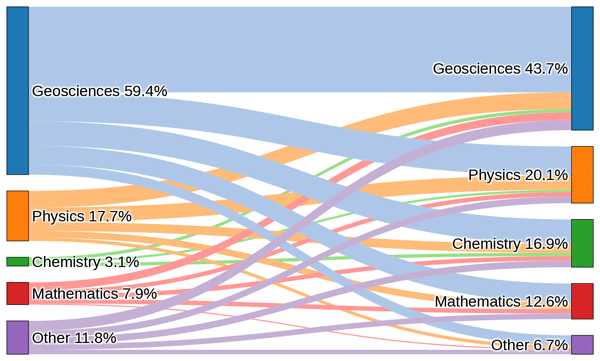
Inge Wiekenkamp, Valby van Schijndel, Jacob Hardt, Jonas Kuppler, Ramesh Glückler, Izabella Baisheva, Patricio Yeste, Paul Einhäupl, Maria Rosa Scicchitano, and Simeon Lisovski
Geosci. Commun., 9, 461–471, https://doi.org/10.5194/gc-9-461-2026, https://doi.org/10.5194/gc-9-461-2026, 2026
Short summary
Short summary
We conducted a survey on the topic of “interdisciplinarity” among early-career researchers in order to learn about their experiences. There are very different views on what interdisciplinarity means and many positive aspects are cited that enhance research, but there are also a few obstacles when it comes to communication, time management, and publication. It is precisely these obstacles that should be given greater consideration in education and research funding.
Ramesh Glückler, Rongwei Geng, Lennart Grimm, Izabella Baisheva, Ulrike Herzschuh, Kathleen R. Stoof-Leichsenring, Stefan Kruse, Andrei Andreev, Luidmila Pestryakova, and Elisabeth Dietze
EGUsphere, https://doi.org/10.5194/egusphere-2022-395, https://doi.org/10.5194/egusphere-2022-395, 2022
Preprint archived
Short summary
Short summary
Despite rapidly intensifying wildfire seasons in Siberian boreal forests, little is known about long-term relationships between changes in vegetation and shifts in wildfire activity. Using lake sediment proxies, we reconstruct such environmental changes over the past 10,800 years in Central Yakutia. We find that a more open forest may facilitate increased amounts of vegetation burning. The present-day dense larch forest might yet be mediating the current climate-driven wildfire intensification.
Ze Zhang, Ziyou Guo, Qingkai Yan, Jinbang Zhai, Leonid Gagarin, Nikolai Torgovkin, and Andrei Zhang
Earth Syst. Sci. Data Discuss., https://doi.org/10.5194/essd-2026-581, https://doi.org/10.5194/essd-2026-581, 2026
Preprint under review for ESSD
Short summary
Short summary
We assembled 5513 satellite image and water-map pairs from 23 Arctic lowland areas to support lake and pond mapping. The collection includes quality information, processing records and computer code. Tests in geographically separated areas and comparisons with an existing water product help users assess model performance and limitations. The data support the development and comparison of methods for mapping northern water bodies.
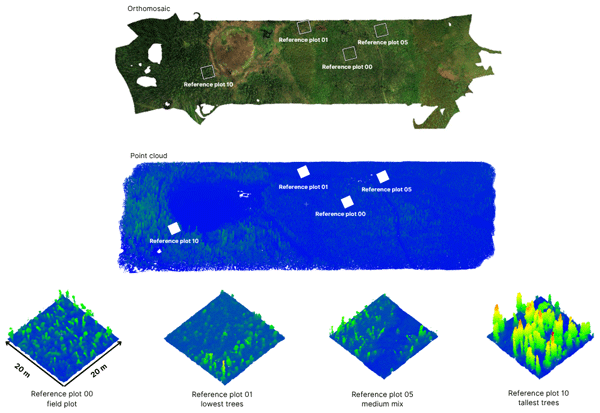
Jacob Schladebach, Birgit Heim, Léa Enguehard, Mareike Wieczorek, Jakob Broers, Robert Jackisch, Josias Gloy, Kunyan Hao, James Tretton, Anna Gorshunova, and Stefan Kruse
Earth Syst. Sci. Data, 18, 7763–7785, https://doi.org/10.5194/essd-18-7763-2026, https://doi.org/10.5194/essd-18-7763-2026, 2026
Short summary
Short summary
BorFIT is a novel training dataset for light detection and ranging (LiDAR) point cloud segmentation and tree species detection in boreal forests. Comprising 384 plots across Siberia, Canada, and Alaska, it features 16 530 manually segmented trees of 12 species. BorFIT supports artificial intelligence (AI) applications for analyzing species distribution, stand structure, and boreal forest response to climate change.
Inge Wiekenkamp, Valby van Schijndel, Jacob Hardt, Jonas Kuppler, Ramesh Glückler, Izabella Baisheva, Patricio Yeste, Paul Einhäupl, Maria Rosa Scicchitano, and Simeon Lisovski
Geosci. Commun., 9, 461–471, https://doi.org/10.5194/gc-9-461-2026, https://doi.org/10.5194/gc-9-461-2026, 2026
Short summary
Short summary
We conducted a survey on the topic of “interdisciplinarity” among early-career researchers in order to learn about their experiences. There are very different views on what interdisciplinarity means and many positive aspects are cited that enhance research, but there are also a few obstacles when it comes to communication, time management, and publication. It is precisely these obstacles that should be given greater consideration in education and research funding.
Tazio Strozzi, Barbara Widhalm, Nina Jones, Julia Boike, Sofia Antonova, Birgit Heim, Sebastian Westermann, Andreas Kääb, and Annett Bartsch
EGUsphere, https://doi.org/10.5194/egusphere-2026-5477, https://doi.org/10.5194/egusphere-2026-5477, 2026
This preprint is open for discussion and under review for Earth Observation (EO).
Short summary
Short summary
Monitoring long-term surface subsidence induced by ground ice thaw across the pan-Arctic is crucial to detect permafrost changes and assess impacts caused by recent atmospheric warming. Using Sentinel-1 satellite radar data, we successfully measured subsidence rates in Siberia’s Lena Delta and found that they vary remarkably among the three main geomorphological units. To enable continuous, large-scale monitoring, satellite data records must maintain coherence from one summer season to the next.
Antonia Dorea Ludwig, Birgit Heim, and Hannes Feilhauer
EGUsphere, https://doi.org/10.5194/egusphere-2026-5451, https://doi.org/10.5194/egusphere-2026-5451, 2026
This preprint is open for discussion and under review for Biogeosciences (BG).
Short summary
Short summary
The Arctic is changing rapidly, and its plants are changing with it. Using satellite images and computer analysis, we studied 20 plant features across Arctic North America and Greenland. We found that these features reveal meaningful patterns across the landscape and even to help tell different vegetation types apart. This offers a new way to track how Arctic plant life responds to a warming climate.
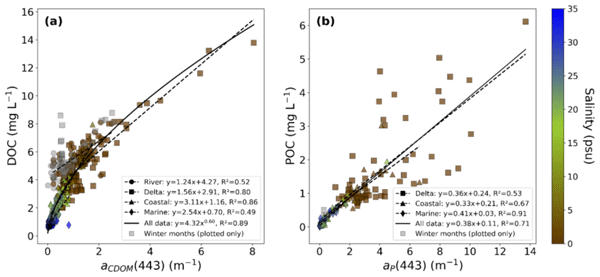
Annabeth McCall, Martin Hieronymi, P. Paul Overduin, Lisa Bröder, Julie Lattaud, Rüdiger Röttgers, Irina Overeem, Anne Morgenstern, Guido Grosse, and Bennet Juhls
Biogeosciences, 23, 5921–5942, https://doi.org/10.5194/bg-23-5921-2026, https://doi.org/10.5194/bg-23-5921-2026, 2026
Short summary
Short summary
This study examines how carbon and sediments move from the Mackenzie River, through its delta, and into the Beaufort Sea. We use data from 2009–2024 and show that major changes in carbon concentrations unfold in low-salinity mixing zones. As the optical properties of the water also shift, satellite estimates of carbon will require more tailored methods. These findings will improve our understanding of Arctic carbon fluxes and influences on the greater Arctic Ocean carbon budget.
Laura Schild, Simeon Lisovski, Peter Ewald, Julia Walsch, Danu Caus, and Ulrike Herzschuh
EGUsphere, https://doi.org/10.5194/egusphere-2026-4084, https://doi.org/10.5194/egusphere-2026-4084, 2026
Short summary
Short summary
This study presents a method for turning fossil pollen records into detailed maps of past land cover. Applied to Alaska and western Canada, it reconstructs vegetation change across 119 time periods at 300 m resolution. The maps show mostly stable recent landscapes, stronger changes around 10,000 years ago, and increasing uncertainty further back in time. The dataset helps study long-term ecosystem responses to climate change.
Hongyu Lu, Kathleen R. Stoof-Leichsenring, Josefine Friederike Weiß, Bernhard Diekmann, Heike H. Zimmermann, Lester Lembke-Jene, and Ulrike Herzschuh
EGUsphere, https://doi.org/10.5194/egusphere-2026-3670, https://doi.org/10.5194/egusphere-2026-3670, 2026
Short summary
Short summary
Marine sediments preserve organic material transported from land, but identifying its origin remains challenging. We analyzed ancient plant DNA preserved in marine sediments from the North Pacific. The DNA records revealed regional vegetation histories and information about the geographic origin of plant material transported from land to sea. Our results highlight the potential of ancient DNA for studying land–ocean carbon connections in high-latitude regions.
Linfeng Wei, Jian Ni, Xianyong Cao, and Stefan Kruse
EGUsphere, https://doi.org/10.5194/egusphere-2026-3246, https://doi.org/10.5194/egusphere-2026-3246, 2026
Short summary
Short summary
Warming can push mountain forests into higher habitats, but these changes may differ between rivers in mountain range area. We studied four river corridors in the Hengduan Mountains to understand how treeline may shift by 2100. The results show that treeline may move both upward and sideways, with different patterns among rivers. This suggests that future risks to high mountain habitats should be assessed locally rather than from elevation change alone.
Lutz Schirrmeister, Nikita Demidov, Vasily Demidov, Paul Overduin, Walter Schirrmeister, Diana Soloveva, Sergey Verkulich, and Sebastian Wetterich
EGUsphere, https://doi.org/10.5194/egusphere-2026-1377, https://doi.org/10.5194/egusphere-2026-1377, 2026
Short summary
Short summary
Based on permafrost core and exposure data, three main stages of landscape dynamics could be identified for the study region in the coastal areas of Isfjord and Grønfjord, and the Grøndalen and Hollendardalen valleys. Our research indicates spatial and temporal changes in landscape dynamics and permafrost conditions driven by deglaciation, climate, and sea-level changes. The present study provides insights into the response of permafrost to Late Glacial and Holocene environmental changes.
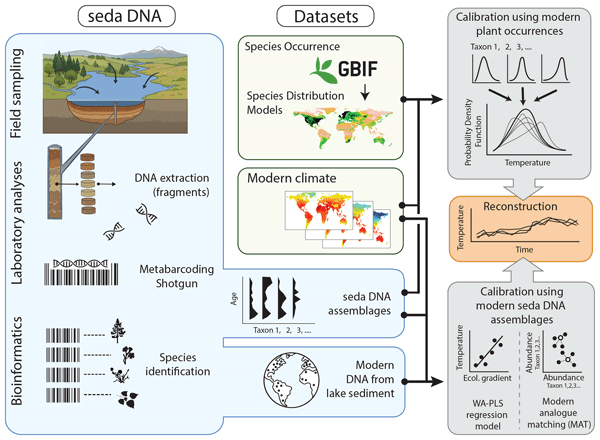
Ulrike Herzschuh, Thomas Böhmer, Weihan Jia, and Simeon Lisovski
Clim. Past, 22, 1159–1180, https://doi.org/10.5194/cp-22-1159-2026, https://doi.org/10.5194/cp-22-1159-2026, 2026
Short summary
Short summary
We introduce a new climate proxy based on plant DNA preserved in lake sediments. Validated with a large surface sample dataset and applied to a sediment record, this method provides more accurate and robust reconstructions of past climate change than traditional vegetation proxies like pollen, likely due to a higher taxonomic resolution and more localized signal.
Anne Dallmeyer, Nils Weitzel, Laura Schild, Ulrike Herzschuh, Thomas Kleinen, and Martin Claussen
Clim. Past, 22, 1125–1157, https://doi.org/10.5194/cp-22-1125-2026, https://doi.org/10.5194/cp-22-1125-2026, 2026
Short summary
Short summary
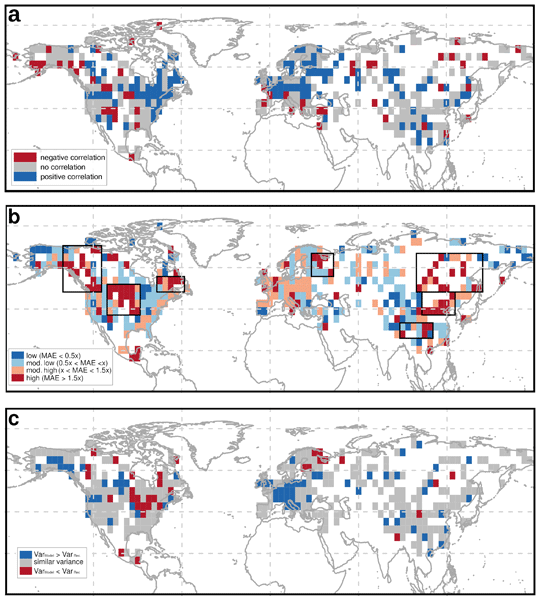
We compare pollen-based reconstructions of Northern Hemisphere tree cover over the last 20 000 years with simulations from the Max-Planck-Institute Earth System Model (MPI-ESM). The model captures broad forest trends but misses key regional patterns and the mid-Holocene forest peak. Testing climate drivers reveals mismatches in how temperature, water, and CO2 control forests, pointing to structural limits and the need for improved vegetation processes in models.
Steven Franke, Daniel Steinhage, Veit Helm, Tobias Binder, Uwe Nixdorf, Heinrich Miller, Angelika Humbert, Daniela Jansen, Graeme Eagles, Hannes Eisermann, Wilfried Jokat, Antonia Ruppel, Reinhard Drews, Alexandra Zuhr, Amelie Driemel, Andreas Walter, Peter Konopatzky, Robin Heß, Antonie Haas, Roland Koppe, Pascal H. Andreas, and Olaf Eisen
The Cryosphere, 20, 2485–2530, https://doi.org/10.5194/tc-20-2485-2026, https://doi.org/10.5194/tc-20-2485-2026, 2026
Short summary
Short summary
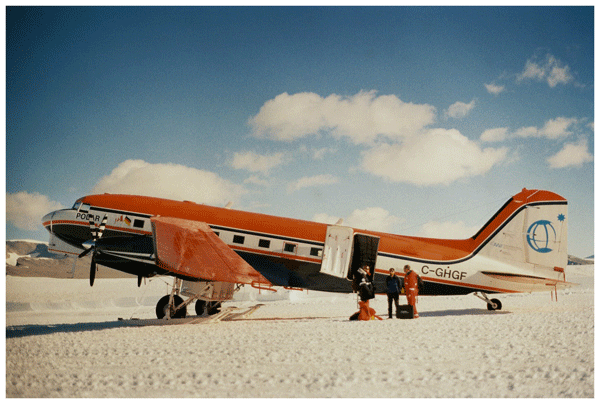
This review synthesizes 30 years of Alfred Wegener Institute’s (AWI) airborne radar research in Antarctica and Greenland, detailing six radar systems and their applications in studying ice dynamics, basal properties, and subglacial landscapes. Moreover, it introduces the public release of AWI's airborne radar datasets via the Radar Data over Polar Ice Sheets Viewer and PANGAEA, ensuring findable, accessible, interoperable, and reusable access for future polar research.

Sarah Haupt, Josias Gloy, Luca Farkas, Katharina Schildt, Lisa Trimborn, and Stefan Kruse
Biogeosciences, 22, 6811–6839, https://doi.org/10.5194/bg-22-6811-2025, https://doi.org/10.5194/bg-22-6811-2025, 2025
Short summary
Short summary
We studied alpine treeline migration in boreal forests using an enhanced vegetation model that includes snow processes. Our findings revealed site-specific migration drivers, with snow playing a dual role: supporting seedling establishment while increasing mortality risks. Results emphasize the need to include snow processes in vegetation models to better predict boreal forest responses.
Ingolf Kühn, Christian Hecht, Ulrike Herzschuh, and Dirk Scherler
Web Ecol., 25, 157–168, https://doi.org/10.5194/we-25-157-2025, https://doi.org/10.5194/we-25-157-2025, 2025
Short summary
Short summary
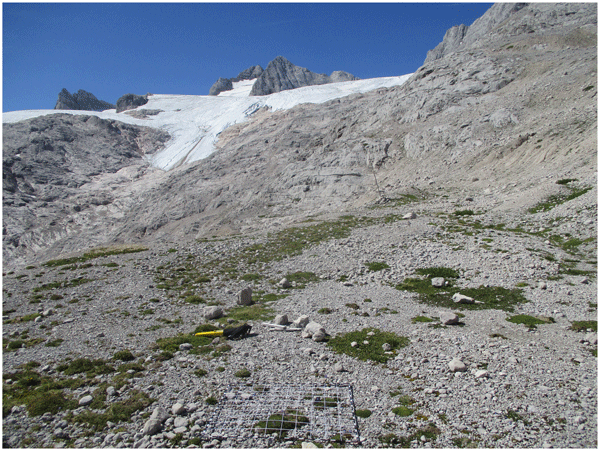
Since 1850, glaciers have retreated in the Alps, providing ground for vegetation succession. Such systems were studied intensively in other parts of the Alps, but excluding the Northern Limestone Alps. Hence, we initiated a long-term research programme, which we introduce here. Initial findings show an increase in plant species richness and cover with age since deglaciation. This is, however, by far slower than observed elsewhere in the Alps, likely due to the specific geology and geomorphology.
Mehriban Aliyeva, Michael Angelopoulos, Julia Boike, Moritz Langer, Frederieke Miesner, Scott Dallimore, Dustin Whalen, Lukas U. Arenson, and Pier Paul Overduin
EGUsphere, https://doi.org/10.5194/egusphere-2025-2675, https://doi.org/10.5194/egusphere-2025-2675, 2025
Preprint archived
Short summary
Short summary
In this study, we investigate the ongoing transformation of terrestrial permafrost into subsea permafrost on a rapidly eroding Arctic island using electrical resistivity tomography and numerical modelling. We draw on 60 years of shoreline data to support our findings. This work is important for understanding permafrost loss in Arctic coastal areas and for guiding future efforts to protect vulnerable shorelines.
Lucia S. Layritz, Konstantin Gregor, Andreas Krause, Stefan Kruse, Benjamin F. Meyer, Thomas A. M. Pugh, and Anja Rammig
Biogeosciences, 22, 3635–3660, https://doi.org/10.5194/bg-22-3635-2025, https://doi.org/10.5194/bg-22-3635-2025, 2025
Short summary
Short summary
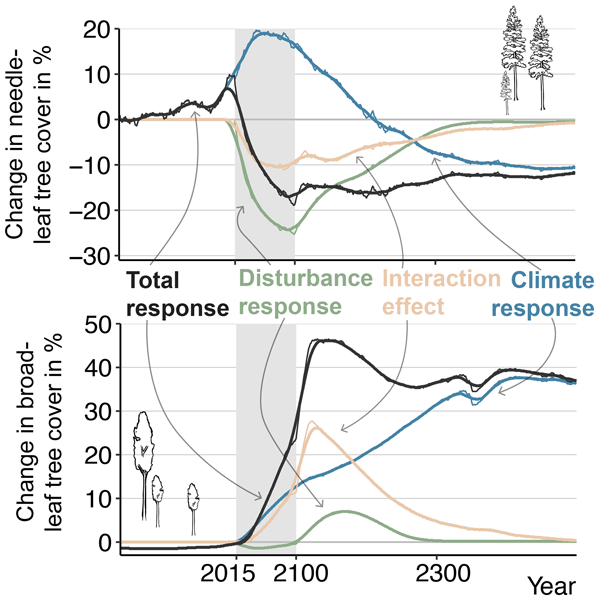
Disturbances, such as fire, can change which vegetation grows in a forest, affecting water and carbon flows and, thus, the climate. Disturbances are expected to increase with climate change, but it is uncertain by how much. Using a simulation model, we studied how future climate, disturbances, and their combined effect impact northern (high-latitude) forest ecosystems. Our findings highlight the importance of considering these factors and the need to better understand how disturbances will change in the future.
Lutz Schirrmeister, Margret C. Fuchs, Thomas Opel, Andrei Andreev, Frank Kienast, Andrea Schneider, Larisa Nazarova, Larisa Frolova, Svetlana Kuzmina, Tatiana Kuznetsova, Vladimir Tumskoy, Heidrun Matthes, Gerrit Lohmann, Guido Grosse, Viktor Kunitsky, Hanno Meyer, Heike H. Zimmermann, Ulrike Herzschuh, Thomas Böhmer, Stuart Umbo, Sevi Modestou, Sebastian F. M. Breitenbach, Anfisa Pismeniuk, Georg Schwamborn, Stephanie Kusch, and Sebastian Wetterich
Clim. Past, 21, 1143–1184, https://doi.org/10.5194/cp-21-1143-2025, https://doi.org/10.5194/cp-21-1143-2025, 2025
Short summary
Short summary
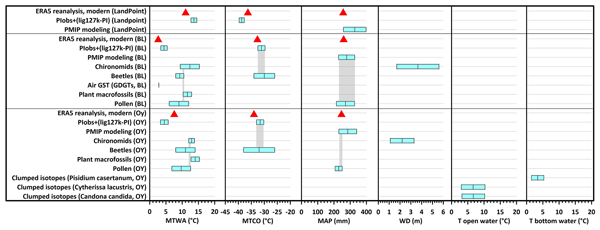
Geochronological, cryolithological, paleoecological, and modeling data reconstruct the Last Interglacial (LIG) climate around the New Siberian Islands and reveal significantly warmer conditions compared to today. The critical challenges in predicting future ecosystem responses lie in the fact that the land–ocean distribution during the LIG was markedly different from today, affecting the degree of continentality, which played a major role in modulating climate and ecosystem dynamics.
Chenzhi Li, Anne Dallmeyer, Jian Ni, Manuel Chevalier, Matteo Willeit, Andrei A. Andreev, Xianyong Cao, Laura Schild, Birgit Heim, Mareike Wieczorek, and Ulrike Herzschuh
Clim. Past, 21, 1001–1024, https://doi.org/10.5194/cp-21-1001-2025, https://doi.org/10.5194/cp-21-1001-2025, 2025
Short summary
Short summary
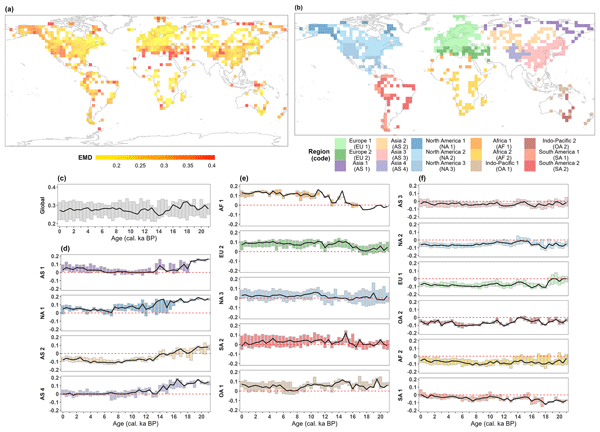
We present global megabiome dynamics and distributions derived from pollen-based reconstructions over the last 21 000 years, which are suitable for the evaluation of Earth-system-model-based paleo-megabiome simulations. We identified strong deviations between pollen- and model-derived megabiome distributions in the circum-Arctic and Tibetan Plateau areas during the Last Glacial Maximum and early deglaciation and in northern Africa and the Mediterranean region during the Holocene.
Amelie Stieg, Boris K. Biskaborn, Ulrike Herzschuh, Andreas Marent, Jens Strauss, Dorothee Wilhelms-Dick, Luidmila A. Pestryakova, and Hanno Meyer
Biogeosciences, 22, 2327–2350, https://doi.org/10.5194/bg-22-2327-2025, https://doi.org/10.5194/bg-22-2327-2025, 2025
Short summary
Short summary
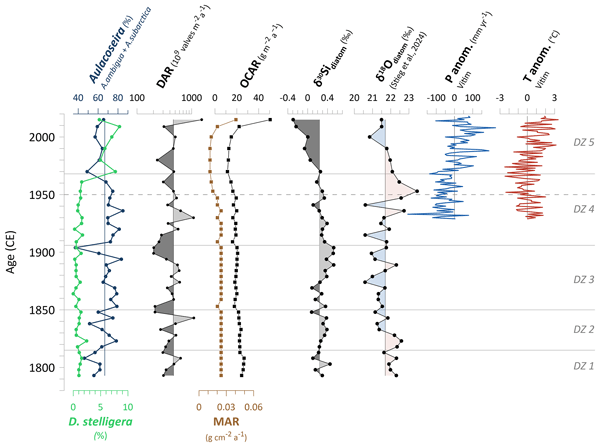
Globally, lake ecosystems have undergone significant shifts since the 1950s due to human activities. This study presents a unique ~220-year sediment record from a remote Siberian boreal lake, providing a multiproxy perspective on climate warming and anthropogenic air pollution. Analyses of diatom assemblages, diatom silicon isotopes, and carbon and nitrogen sediment proxies reveal complex biogeochemical interactions, highlighting anthropogenic influences even on remote water resources.
Laura Schild, Peter Ewald, Chenzhi Li, Raphaël Hébert, Thomas Laepple, and Ulrike Herzschuh
Earth Syst. Sci. Data, 17, 2007–2033, https://doi.org/10.5194/essd-17-2007-2025, https://doi.org/10.5194/essd-17-2007-2025, 2025
Short summary
Short summary
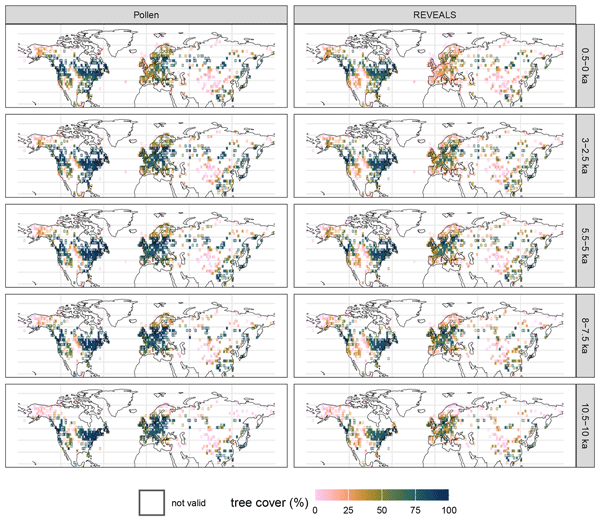
This study reconstructed vegetation and tree cover in the Northern Hemisphere from a harmonized dataset of pollen counts from sediment and peat cores for the past 14 000 years. A model was applied to correct for differences in pollen production between different plants, and modern remote-sensing forest cover was used to validate the reconstructed tree cover. Accurate data on past vegetation are invaluable for the investigation of vegetation–climate dynamics and the validation of vegetation models.
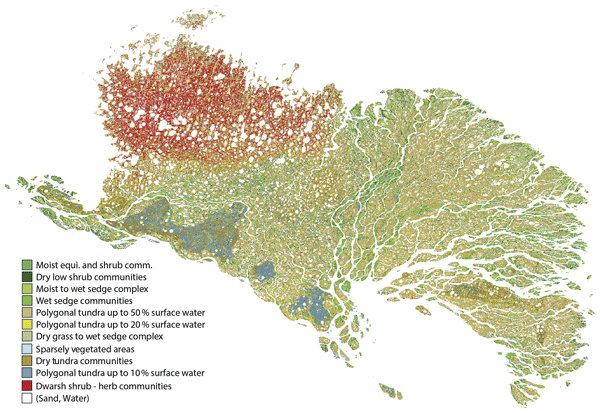
Simeon Lisovski, Alexandra Runge, Iuliia Shevtsova, Nele Landgraf, Anne Morgenstern, Ronald Reagan Okoth, Matthias Fuchs, Nikolay Lashchinskiy, Carl Stadie, Alison Beamish, Ulrike Herzschuh, Guido Grosse, and Birgit Heim
Earth Syst. Sci. Data, 17, 1707–1730, https://doi.org/10.5194/essd-17-1707-2025, https://doi.org/10.5194/essd-17-1707-2025, 2025
Short summary
Short summary
The Lena Delta is the largest river delta in the Arctic and represents a biodiversity hotspot. Here, we describe multiple field datasets and a detailed habitat classification map for the Lena Delta. We present context and methods of these openly available datasets and show how they can improve our understanding of the rapidly changing Arctic tundra system.
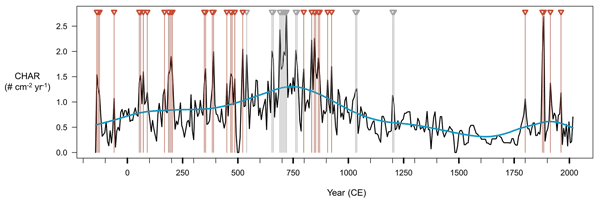
Ramesh Glückler
E&G Quaternary Sci. J., 74, 101–103, https://doi.org/10.5194/egqsj-74-101-2025, https://doi.org/10.5194/egqsj-74-101-2025, 2025
Short summary
Short summary
This dissertation evaluates long-term wildfire dynamics in eastern Siberia. A total of 11 new records of Holocene wildfire activity, based on charcoal particles in lake sediments, show past trends of biomass burning in a region that was previously strongly under-represented. A newly fire-enabled forest model is used alongside the charcoal-based reconstructions to further refine interpretations of climate, vegetation, and humans as potential drivers behind past fire regime changes.
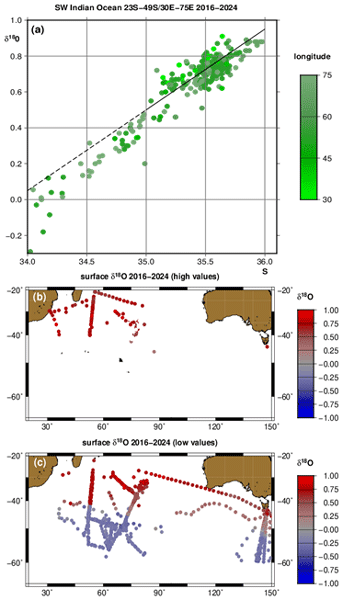
Gilles Reverdin, Claire Waelbroeck, Antje H. L. Voelker, and Hanno Meyer
Ocean Sci., 21, 567–575, https://doi.org/10.5194/os-21-567-2025, https://doi.org/10.5194/os-21-567-2025, 2025
Short summary
Short summary
Water isotopes in the ocean trace the freshwater exchanges between the ocean, the atmosphere, and the cryosphere and are used to investigate processes of the hydrological cycle. We illustrate offsets in seawater isotopic composition between different datasets that are larger than the expected variability that one often wants to explore. This highlights the need to share seawater isotopic composition samples dedicated to specific intercomparison of data produced in different laboratories.
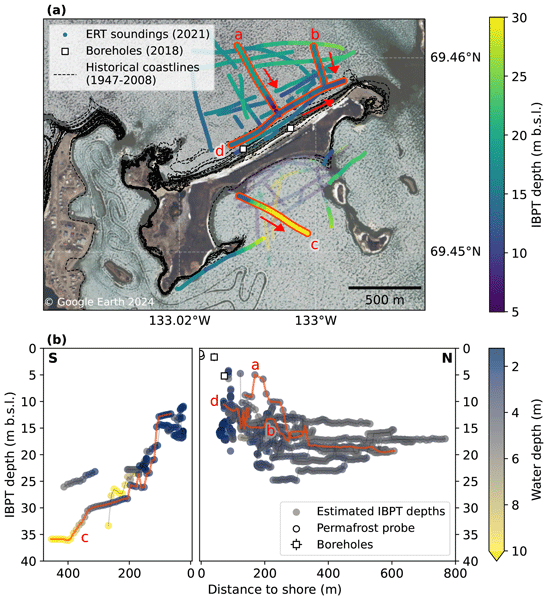
Ephraim Erkens, Michael Angelopoulos, Jens Tronicke, Scott R. Dallimore, Dustin Whalen, Julia Boike, and Pier Paul Overduin
The Cryosphere, 19, 997–1012, https://doi.org/10.5194/tc-19-997-2025, https://doi.org/10.5194/tc-19-997-2025, 2025
Short summary
Short summary
We investigate the depth of subsea permafrost formed by inundation of terrestrial permafrost due to marine transgression around the rapidly disappearing, permafrost-cored Tuktoyaktuk Island (Beaufort Sea, NWT, Canada). We use geoelectrical surveys with floating electrodes to identify the boundary between unfrozen and frozen sediment. Our findings indicate that permafrost thaw depths beneath the seabed can be explained by coastal erosion rates and landscape features before inundation.
Bennet Juhls, Anne Morgenstern, Jens Hölemann, Antje Eulenburg, Birgit Heim, Frederieke Miesner, Hendrik Grotheer, Gesine Mollenhauer, Hanno Meyer, Ephraim Erkens, Felica Yara Gehde, Sofia Antonova, Sergey Chalov, Maria Tereshina, Oxana Erina, Evgeniya Fingert, Ekaterina Abramova, Tina Sanders, Liudmila Lebedeva, Nikolai Torgovkin, Georgii Maksimov, Vasily Povazhnyi, Rafael Gonçalves-Araujo, Urban Wünsch, Antonina Chetverova, Sophie Opfergelt, and Pier Paul Overduin
Earth Syst. Sci. Data, 17, 1–28, https://doi.org/10.5194/essd-17-1-2025, https://doi.org/10.5194/essd-17-1-2025, 2025
Short summary
Short summary
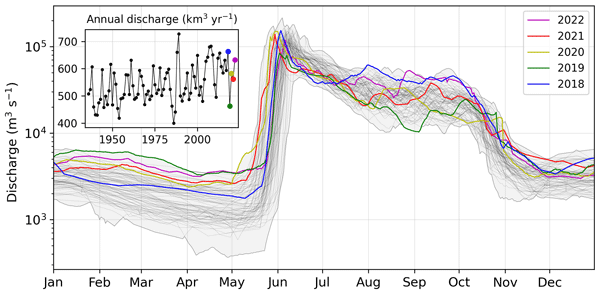
The Siberian Arctic is warming fast: permafrost is thawing, river chemistry is changing, and coastal ecosystems are affected. We aimed to understand changes in the Lena River, a major Arctic river flowing to the Arctic Ocean, by collecting 4.5 years of detailed water data, including temperature and carbon and nutrient contents. This dataset records current conditions and helps us to detect future changes. Explore it at https://doi.org/10.1594/PANGAEA.913197 and https://lena-monitoring.awi.de/.
Lydia Stolpmann, Ingmar Nitze, Ingeborg Bussmann, Benjamin M. Jones, Josefine Lenz, Hanno Meyer, Juliane Wolter, and Guido Grosse
EGUsphere, https://doi.org/10.5194/egusphere-2024-2822, https://doi.org/10.5194/egusphere-2024-2822, 2024
Preprint archived
Short summary
Short summary
We combine hydrochemical and lake change data to show consequences of permafrost thaw induced lake changes on hydrochemistry, which are relevant for the global carbon cycle. We found higher methane concentrations in lakes that do not freeze to the ground and show that lagoons have lower methane concentrations than lakes. Our detailed lake sampling approach show higher concentrations in Dissolved Organic Carbon in areas of higher erosion rates, that might increase under the climate warming.
Annett Bartsch, Aleksandra Efimova, Barbara Widhalm, Xaver Muri, Clemens von Baeckmann, Helena Bergstedt, Ksenia Ermokhina, Gustaf Hugelius, Birgit Heim, and Marina Leibman
Hydrol. Earth Syst. Sci., 28, 2421–2481, https://doi.org/10.5194/hess-28-2421-2024, https://doi.org/10.5194/hess-28-2421-2024, 2024
Short summary
Short summary
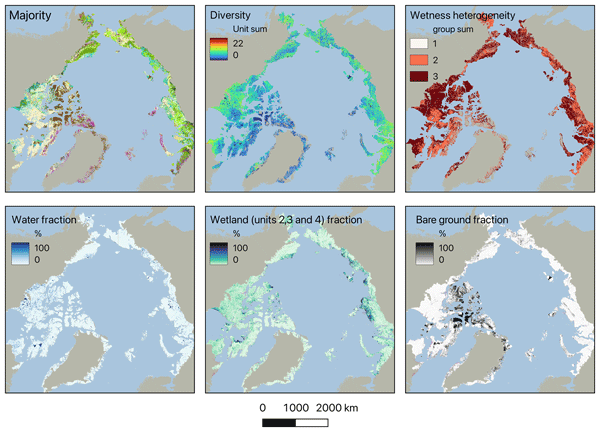
Wetness gradients and landcover diversity for the entire Arctic tundra have been assessed using a novel satellite-data-based map. Patterns of lakes, wetlands, general soil moisture conditions and vegetation physiognomy are represented at 10 m. About 40 % of the area north of the treeline falls into three units of dry types, with limited shrub growth. Wetter regions have higher landcover diversity than drier regions.

Frederieke Miesner, William Lambert Cable, Pier Paul Overduin, and Julia Boike
The Cryosphere, 18, 2603–2611, https://doi.org/10.5194/tc-18-2603-2024, https://doi.org/10.5194/tc-18-2603-2024, 2024
Short summary
Short summary
The temperature in the sediment below Arctic lakes determines the stability of the permafrost and microbial activity. However, measurements are scarce because of the remoteness. We present a robust and portable device to fill this gap. Test campaigns have demonstrated its utility in a range of environments during winter and summer. The measured temperatures show a great variability within and across locations. The data can be used to validate models and estimate potential emissions.
Alexandra M. Zuhr, Sonja Wahl, Hans Christian Steen-Larsen, Maria Hörhold, Hanno Meyer, Vasileios Gkinis, and Thomas Laepple
Earth Syst. Sci. Data, 16, 1861–1874, https://doi.org/10.5194/essd-16-1861-2024, https://doi.org/10.5194/essd-16-1861-2024, 2024
Short summary
Short summary
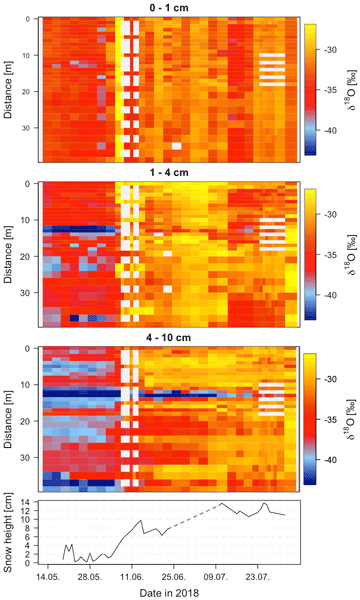
We present stable water isotope data from the accumulation zone of the Greenland ice sheet. A spatial sampling scheme covering 39 m and three depth layers was carried out between 14 May and 3 August 2018. The data suggest spatial and temporal variability related to meteorological conditions, such as wind-driven snow redistribution and vapour–snow exchange processes. The data can be used to study the formation of the stable water isotopes signal, which is seen as a climate proxy.
Amelie Stieg, Boris K. Biskaborn, Ulrike Herzschuh, Jens Strauss, Luidmila Pestryakova, and Hanno Meyer
Clim. Past, 20, 909–933, https://doi.org/10.5194/cp-20-909-2024, https://doi.org/10.5194/cp-20-909-2024, 2024
Short summary
Short summary
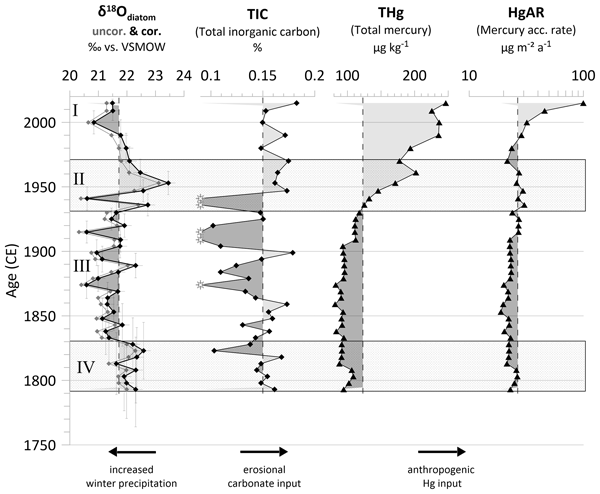
Siberia is impacted by recent climate warming and experiences extreme hydroclimate events. We present a 220-year-long sub-decadal stable oxygen isotope record of diatoms from Lake Khamra. Our analysis identifies winter precipitation as the key process impacting the isotope variability. Two possible hydroclimatic anomalies were found to coincide with significant changes in lake internal conditions and increased wildfire activity in the region.
Moein Mellat, Amy R. Macfarlane, Camilla F. Brunello, Martin Werner, Martin Schneebeli, Ruzica Dadic, Stefanie Arndt, Kaisa-Riikka Mustonen, Jeffrey M. Welker, and Hanno Meyer
EGUsphere, https://doi.org/10.5194/egusphere-2024-719, https://doi.org/10.5194/egusphere-2024-719, 2024
Preprint archived
Short summary
Short summary
Our research, utilizing data from the Arctic MOSAiC expedition, reveals how snow on Arctic sea ice changes due to weather conditions. By analyzing snow samples collected over a year, we found differences in snow layers that tell us about their origins and how they've been affected by the environment. We discovered variations in snow and vapour that reflect the influence of weather patterns and surface processes like wind and sublimation.
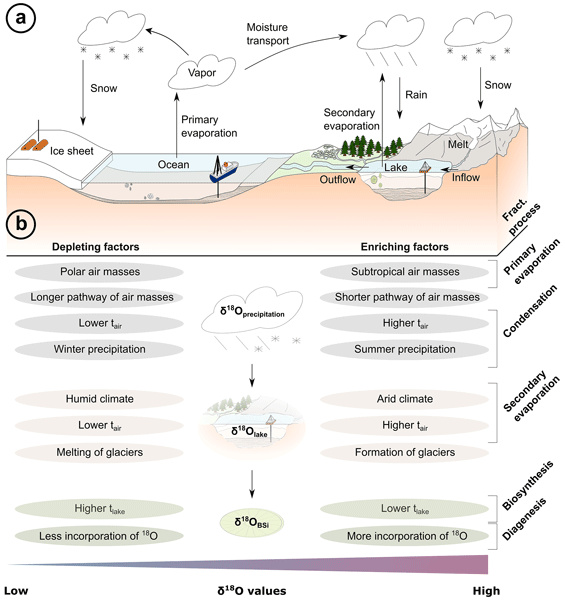
Philip Meister, Anne Alexandre, Hannah Bailey, Philip Barker, Boris K. Biskaborn, Ellie Broadman, Rosine Cartier, Bernhard Chapligin, Martine Couapel, Jonathan R. Dean, Bernhard Diekmann, Poppy Harding, Andrew C. G. Henderson, Armand Hernandez, Ulrike Herzschuh, Svetlana S. Kostrova, Jack Lacey, Melanie J. Leng, Andreas Lücke, Anson W. Mackay, Eniko Katalin Magyari, Biljana Narancic, Cécile Porchier, Gunhild Rosqvist, Aldo Shemesh, Corinne Sonzogni, George E. A. Swann, Florence Sylvestre, and Hanno Meyer
Clim. Past, 20, 363–392, https://doi.org/10.5194/cp-20-363-2024, https://doi.org/10.5194/cp-20-363-2024, 2024
Short summary
Short summary
This paper presents the first comprehensive compilation of diatom oxygen isotope records in lake sediments (δ18OBSi), supported by lake basin parameters. We infer the spatial and temporal coverage of δ18OBSi records and discuss common hemispheric trends on centennial and millennial timescales. Key results are common patterns for hydrologically open lakes in Northern Hemisphere extratropical regions during the Holocene corresponding to known climatic epochs, i.e. the Holocene Thermal Maximum.
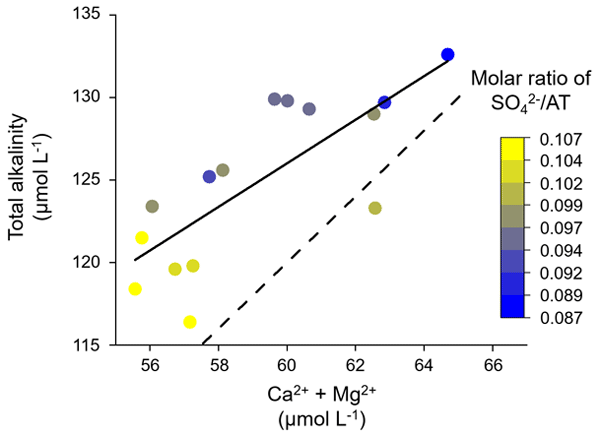
Nele Lehmann, Hugues Lantuit, Michael Ernst Böttcher, Jens Hartmann, Antje Eulenburg, and Helmuth Thomas
Biogeosciences, 20, 3459–3479, https://doi.org/10.5194/bg-20-3459-2023, https://doi.org/10.5194/bg-20-3459-2023, 2023
Short summary
Short summary
Riverine alkalinity in the silicate-dominated headwater catchment at subarctic Iskorasfjellet, northern Norway, was almost entirely derived from weathering of minor carbonate occurrences in the riparian zone. The uphill catchment appeared limited by insufficient contact time of weathering agents and weatherable material. Further, alkalinity increased with decreasing permafrost extent. Thus, with climate change, alkalinity generation is expected to increase in this permafrost-degrading landscape.
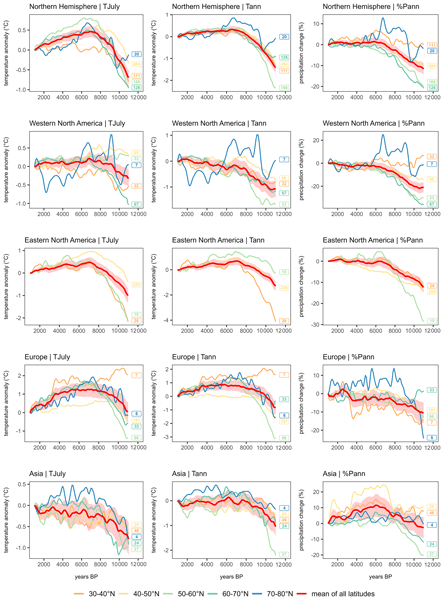
Ulrike Herzschuh, Thomas Böhmer, Manuel Chevalier, Raphaël Hébert, Anne Dallmeyer, Chenzhi Li, Xianyong Cao, Odile Peyron, Larisa Nazarova, Elena Y. Novenko, Jungjae Park, Natalia A. Rudaya, Frank Schlütz, Lyudmila S. Shumilovskikh, Pavel E. Tarasov, Yongbo Wang, Ruilin Wen, Qinghai Xu, and Zhuo Zheng
Clim. Past, 19, 1481–1506, https://doi.org/10.5194/cp-19-1481-2023, https://doi.org/10.5194/cp-19-1481-2023, 2023
Short summary
Short summary
A mismatch between model- and proxy-based Holocene climate change may partially originate from the poor spatial coverage of climate reconstructions. Here we investigate quantitative reconstructions of mean annual temperature and annual precipitation from 1908 pollen records in the Northern Hemisphere. Trends show strong latitudinal patterns and differ between (sub-)continents. Our work contributes to a better understanding of the global mean.
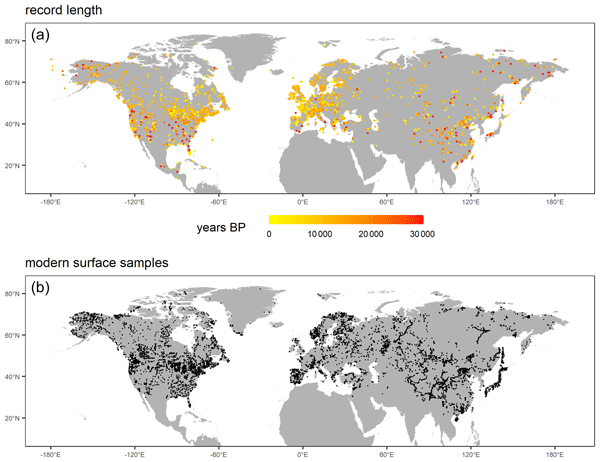
Ulrike Herzschuh, Thomas Böhmer, Chenzhi Li, Manuel Chevalier, Raphaël Hébert, Anne Dallmeyer, Xianyong Cao, Nancy H. Bigelow, Larisa Nazarova, Elena Y. Novenko, Jungjae Park, Odile Peyron, Natalia A. Rudaya, Frank Schlütz, Lyudmila S. Shumilovskikh, Pavel E. Tarasov, Yongbo Wang, Ruilin Wen, Qinghai Xu, and Zhuo Zheng
Earth Syst. Sci. Data, 15, 2235–2258, https://doi.org/10.5194/essd-15-2235-2023, https://doi.org/10.5194/essd-15-2235-2023, 2023
Short summary
Short summary
Climate reconstruction from proxy data can help evaluate climate models. We present pollen-based reconstructions of mean July temperature, mean annual temperature, and annual precipitation from 2594 pollen records from the Northern Hemisphere, using three reconstruction methods (WA-PLS, WA-PLS_tailored, and MAT). Since no global or hemispheric synthesis of quantitative precipitation changes are available for the Holocene so far, this dataset will be of great value to the geoscientific community.
Manuel Chevalier, Anne Dallmeyer, Nils Weitzel, Chenzhi Li, Jean-Philippe Baudouin, Ulrike Herzschuh, Xianyong Cao, and Andreas Hense
Clim. Past, 19, 1043–1060, https://doi.org/10.5194/cp-19-1043-2023, https://doi.org/10.5194/cp-19-1043-2023, 2023
Short summary
Short summary
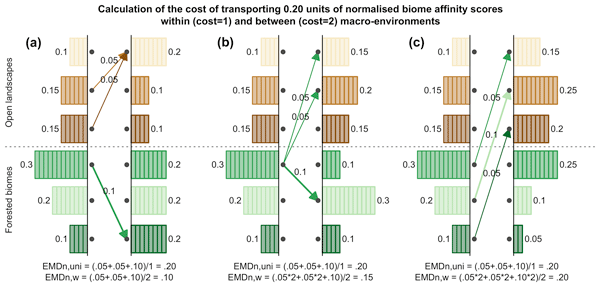
Data–data and data–model vegetation comparisons are commonly based on comparing single vegetation estimates. While this approach generates good results on average, reducing pollen assemblages to single single plant functional type (PFT) or biome estimates can oversimplify the vegetation signal. We propose using a multivariate metric, the Earth mover's distance (EMD), to include more details about the vegetation structure when performing such comparisons.
Sebastian Westermann, Thomas Ingeman-Nielsen, Johanna Scheer, Kristoffer Aalstad, Juditha Aga, Nitin Chaudhary, Bernd Etzelmüller, Simon Filhol, Andreas Kääb, Cas Renette, Louise Steffensen Schmidt, Thomas Vikhamar Schuler, Robin B. Zweigel, Léo Martin, Sarah Morard, Matan Ben-Asher, Michael Angelopoulos, Julia Boike, Brian Groenke, Frederieke Miesner, Jan Nitzbon, Paul Overduin, Simone M. Stuenzi, and Moritz Langer
Geosci. Model Dev., 16, 2607–2647, https://doi.org/10.5194/gmd-16-2607-2023, https://doi.org/10.5194/gmd-16-2607-2023, 2023
Short summary
Short summary
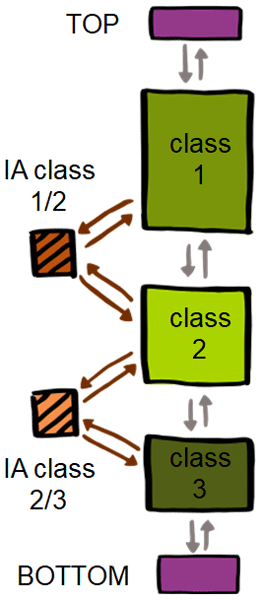
The CryoGrid community model is a new tool for simulating ground temperatures and the water and ice balance in cold regions. It is a modular design, which makes it possible to test different schemes to simulate, for example, permafrost ground in an efficient way. The model contains tools to simulate frozen and unfrozen ground, snow, glaciers, and other massive ice bodies, as well as water bodies.
Boris K. Biskaborn, Amy Forster, Gregor Pfalz, Lyudmila A. Pestryakova, Kathleen Stoof-Leichsenring, Jens Strauss, Tim Kröger, and Ulrike Herzschuh
Biogeosciences, 20, 1691–1712, https://doi.org/10.5194/bg-20-1691-2023, https://doi.org/10.5194/bg-20-1691-2023, 2023
Short summary
Short summary
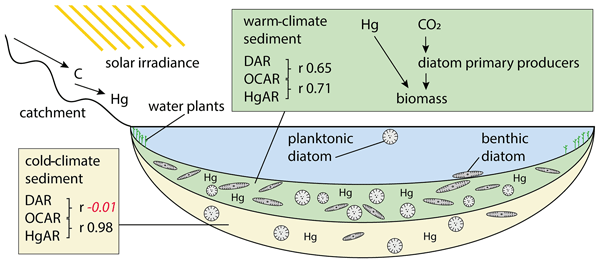
Lake sediment from the Russian Arctic was studied for microalgae and organic matter chemistry dated back to the last glacial 28 000 years. Species and chemistry responded to environmental changes such as the Younger Dryas cold event and the Holocene thermal maximum. Organic carbon accumulation correlated with rates of microalgae deposition only during warm episodes but not during the cold glacial.
Martine Lizotte, Bennet Juhls, Atsushi Matsuoka, Philippe Massicotte, Gaëlle Mével, David Obie James Anikina, Sofia Antonova, Guislain Bécu, Marine Béguin, Simon Bélanger, Thomas Bossé-Demers, Lisa Bröder, Flavienne Bruyant, Gwénaëlle Chaillou, Jérôme Comte, Raoul-Marie Couture, Emmanuel Devred, Gabrièle Deslongchamps, Thibaud Dezutter, Miles Dillon, David Doxaran, Aude Flamand, Frank Fell, Joannie Ferland, Marie-Hélène Forget, Michael Fritz, Thomas J. Gordon, Caroline Guilmette, Andrea Hilborn, Rachel Hussherr, Charlotte Irish, Fabien Joux, Lauren Kipp, Audrey Laberge-Carignan, Hugues Lantuit, Edouard Leymarie, Antonio Mannino, Juliette Maury, Paul Overduin, Laurent Oziel, Colin Stedmon, Crystal Thomas, Lucas Tisserand, Jean-Éric Tremblay, Jorien Vonk, Dustin Whalen, and Marcel Babin
Earth Syst. Sci. Data, 15, 1617–1653, https://doi.org/10.5194/essd-15-1617-2023, https://doi.org/10.5194/essd-15-1617-2023, 2023
Short summary
Short summary
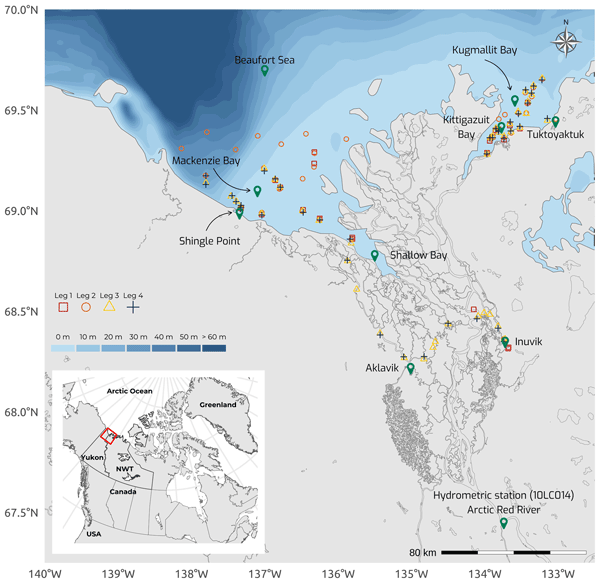
Permafrost thaw in the Mackenzie Delta region results in the release of organic matter into the coastal marine environment. What happens to this carbon-rich organic matter as it transits along the fresh to salty aquatic environments is still underdocumented. Four expeditions were conducted from April to September 2019 in the coastal area of the Beaufort Sea to study the fate of organic matter. This paper describes a rich set of data characterizing the composition and sources of organic matter.
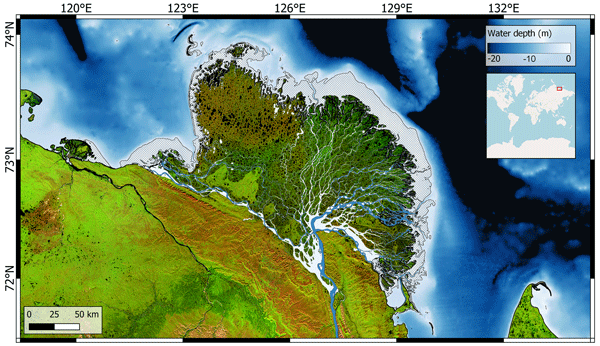
Ngai-Ham Chan, Moritz Langer, Bennet Juhls, Tabea Rettelbach, Paul Overduin, Kimberly Huppert, and Jean Braun
Earth Surf. Dynam., 11, 259–285, https://doi.org/10.5194/esurf-11-259-2023, https://doi.org/10.5194/esurf-11-259-2023, 2023
Short summary
Short summary
Arctic river deltas influence how nutrients and soil organic carbon, carried by sediments from the Arctic landscape, are retained or released into the Arctic Ocean. Under climate change, the deltas themselves and their ecosystems are becoming more vulnerable. We build upon previous models to reproduce for the first time an important feature ubiquitous to Arctic deltas and simulate its future under climate warming. This can impact the future of Arctic deltas and the carbon release they moderate.
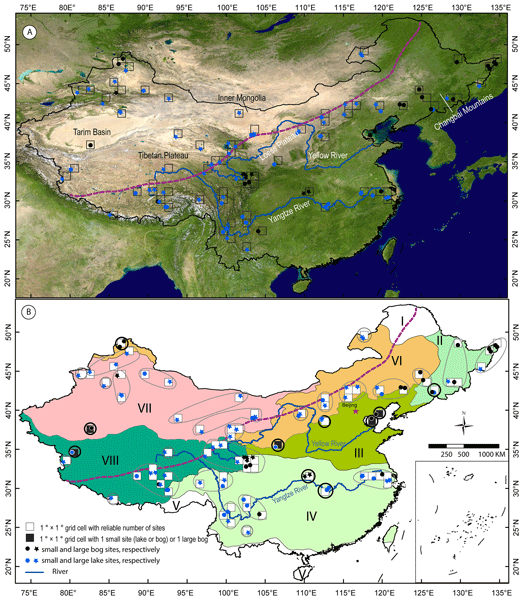
Furong Li, Marie-José Gaillard, Xianyong Cao, Ulrike Herzschuh, Shinya Sugita, Jian Ni, Yan Zhao, Chengbang An, Xiaozhong Huang, Yu Li, Hongyan Liu, Aizhi Sun, and Yifeng Yao
Earth Syst. Sci. Data, 15, 95–112, https://doi.org/10.5194/essd-15-95-2023, https://doi.org/10.5194/essd-15-95-2023, 2023
Short summary
Short summary
The objective of this study is present the first gridded and temporally continuous quantitative plant-cover reconstruction for temperate and northern subtropical China over the last 12 millennia. The reconstructions are based on 94 pollen records and include estimates for 27 plant taxa, 10 plant functional types, and 3 land-cover types. The dataset is suitable for palaeoclimate modelling and the evaluation of simulated past vegetation cover and anthropogenic land-cover change from models.
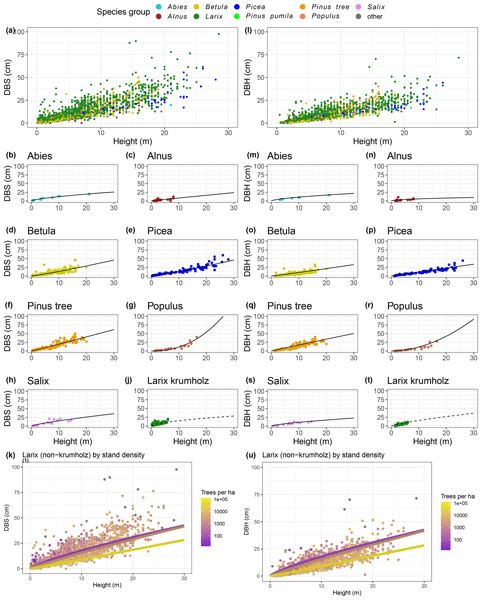
Timon Miesner, Ulrike Herzschuh, Luidmila A. Pestryakova, Mareike Wieczorek, Evgenii S. Zakharov, Alexei I. Kolmogorov, Paraskovya V. Davydova, and Stefan Kruse
Earth Syst. Sci. Data, 14, 5695–5716, https://doi.org/10.5194/essd-14-5695-2022, https://doi.org/10.5194/essd-14-5695-2022, 2022
Short summary
Short summary
We present data which were collected on expeditions to the northeast of the Russian Federation. One table describes the 226 locations we visited during those expeditions, and the other describes 40 289 trees which we recorded at these locations. We found out that important information on the forest cannot be predicted precisely from satellites. Thus, for anyone interested in distant forests, it is important to go to there and take measurements or use data (as presented here).

Femke van Geffen, Birgit Heim, Frederic Brieger, Rongwei Geng, Iuliia A. Shevtsova, Luise Schulte, Simone M. Stuenzi, Nadine Bernhardt, Elena I. Troeva, Luidmila A. Pestryakova, Evgenii S. Zakharov, Bringfried Pflug, Ulrike Herzschuh, and Stefan Kruse
Earth Syst. Sci. Data, 14, 4967–4994, https://doi.org/10.5194/essd-14-4967-2022, https://doi.org/10.5194/essd-14-4967-2022, 2022
Short summary
Short summary
SiDroForest is an attempt to remedy data scarcity regarding vegetation data in the circumpolar region, whilst providing adjusted and labeled data for machine learning and upscaling practices. SiDroForest contains four datasets that include SfM point clouds, individually labeled trees, synthetic tree crowns and labeled Sentinel-2 patches that provide insights into the vegetation composition and forest structure of two important vegetation transition zones in Siberia, Russia.
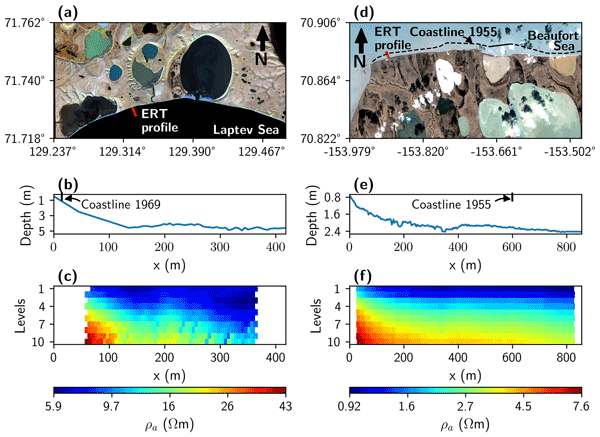
Mauricio Arboleda-Zapata, Michael Angelopoulos, Pier Paul Overduin, Guido Grosse, Benjamin M. Jones, and Jens Tronicke
The Cryosphere, 16, 4423–4445, https://doi.org/10.5194/tc-16-4423-2022, https://doi.org/10.5194/tc-16-4423-2022, 2022
Short summary
Short summary
We demonstrate how we can reliably estimate the thawed–frozen permafrost interface with its associated uncertainties in subsea permafrost environments using 2D electrical resistivity tomography (ERT) data. In addition, we show how further analyses considering 1D inversion and sensitivity assessments can help quantify and better understand 2D ERT inversion results. Our results illustrate the capabilities of the ERT method to get insights into the development of the subsea permafrost.
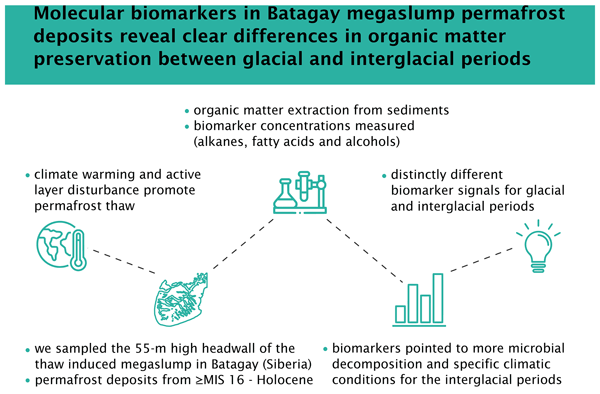
Loeka L. Jongejans, Kai Mangelsdorf, Cornelia Karger, Thomas Opel, Sebastian Wetterich, Jérémy Courtin, Hanno Meyer, Alexander I. Kizyakov, Guido Grosse, Andrei G. Shepelev, Igor I. Syromyatnikov, Alexander N. Fedorov, and Jens Strauss
The Cryosphere, 16, 3601–3617, https://doi.org/10.5194/tc-16-3601-2022, https://doi.org/10.5194/tc-16-3601-2022, 2022
Short summary
Short summary
Large parts of Arctic Siberia are underlain by permafrost. Climate warming leads to permafrost thaw. At the Batagay megaslump, permafrost sediments up to ~ 650 kyr old are exposed. We took sediment samples and analysed the organic matter (e.g. plant remains). We found distinct differences in the biomarker distributions between the glacial and interglacial deposits with generally stronger microbial activity during interglacial periods. Further permafrost thaw enhances greenhouse gas emissions.
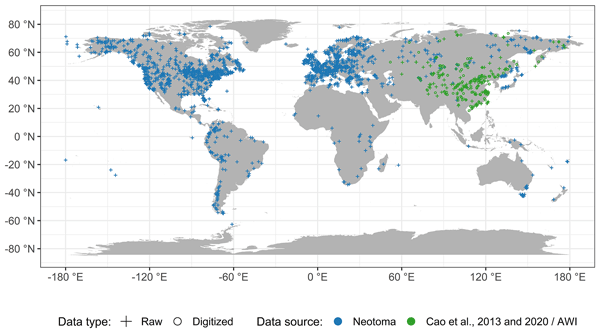
Ulrike Herzschuh, Chenzhi Li, Thomas Böhmer, Alexander K. Postl, Birgit Heim, Andrei A. Andreev, Xianyong Cao, Mareike Wieczorek, and Jian Ni
Earth Syst. Sci. Data, 14, 3213–3227, https://doi.org/10.5194/essd-14-3213-2022, https://doi.org/10.5194/essd-14-3213-2022, 2022
Short summary
Short summary
Pollen preserved in environmental archives such as lake sediments and bogs are extensively used for reconstructions of past vegetation and climate. Here we present LegacyPollen 1.0, a dataset of 2831 fossil pollen records from all over the globe that were collected from publicly available databases. We harmonized the names of the pollen taxa so that all datasets can be jointly investigated. LegacyPollen 1.0 is available as an open-access dataset.
Ramesh Glückler, Rongwei Geng, Lennart Grimm, Izabella Baisheva, Ulrike Herzschuh, Kathleen R. Stoof-Leichsenring, Stefan Kruse, Andrei Andreev, Luidmila Pestryakova, and Elisabeth Dietze
EGUsphere, https://doi.org/10.5194/egusphere-2022-395, https://doi.org/10.5194/egusphere-2022-395, 2022
Preprint archived
Short summary
Short summary
Despite rapidly intensifying wildfire seasons in Siberian boreal forests, little is known about long-term relationships between changes in vegetation and shifts in wildfire activity. Using lake sediment proxies, we reconstruct such environmental changes over the past 10,800 years in Central Yakutia. We find that a more open forest may facilitate increased amounts of vegetation burning. The present-day dense larch forest might yet be mediating the current climate-driven wildfire intensification.
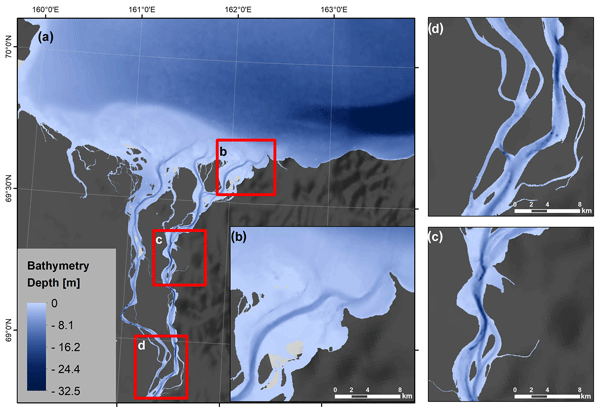
Matthias Fuchs, Juri Palmtag, Bennet Juhls, Pier Paul Overduin, Guido Grosse, Ahmed Abdelwahab, Michael Bedington, Tina Sanders, Olga Ogneva, Irina V. Fedorova, Nikita S. Zimov, Paul J. Mann, and Jens Strauss
Earth Syst. Sci. Data, 14, 2279–2301, https://doi.org/10.5194/essd-14-2279-2022, https://doi.org/10.5194/essd-14-2279-2022, 2022
Short summary
Short summary
We created digital, high-resolution bathymetry data sets for the Lena Delta and Kolyma Gulf regions in northeastern Siberia. Based on nautical charts, we digitized depth points and isobath lines, which serve as an input for a 50 m bathymetry model. The benefit of this data set is the accurate mapping of near-shore areas as well as the offshore continuation of the main deep river channels. This will improve the estimation of river outflow and the nutrient flux output into the coastal zone.

Charlotte Haugk, Loeka L. Jongejans, Kai Mangelsdorf, Matthias Fuchs, Olga Ogneva, Juri Palmtag, Gesine Mollenhauer, Paul J. Mann, P. Paul Overduin, Guido Grosse, Tina Sanders, Robyn E. Tuerena, Lutz Schirrmeister, Sebastian Wetterich, Alexander Kizyakov, Cornelia Karger, and Jens Strauss
Biogeosciences, 19, 2079–2094, https://doi.org/10.5194/bg-19-2079-2022, https://doi.org/10.5194/bg-19-2079-2022, 2022
Short summary
Short summary
Buried animal and plant remains (carbon) from the last ice age were freeze-locked in permafrost. At an extremely fast eroding permafrost cliff in the Lena Delta (Siberia), we found this formerly frozen carbon well preserved. Our results show that ongoing degradation releases substantial amounts of this carbon, making it available for future carbon emissions. This mobilisation at the studied cliff and also similarly eroding sites bear the potential to affect rivers and oceans negatively.
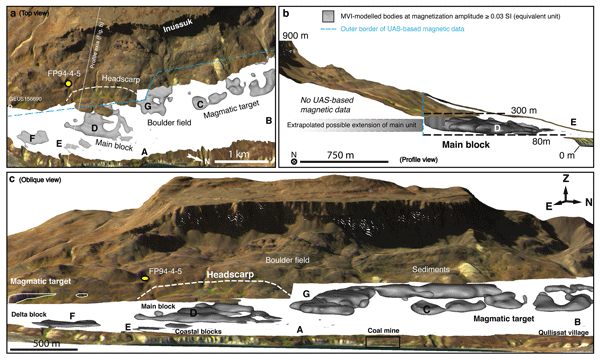
Robert Jackisch, Björn H. Heincke, Robert Zimmermann, Erik V. Sørensen, Markku Pirttijärvi, Moritz Kirsch, Heikki Salmirinne, Stefanie Lode, Urpo Kuronen, and Richard Gloaguen
Solid Earth, 13, 793–825, https://doi.org/10.5194/se-13-793-2022, https://doi.org/10.5194/se-13-793-2022, 2022
Short summary
Short summary
We integrate UAS-based magnetic and multispectral data with legacy exploration data of a Ni–Cu–PGE prospect on Disko Island, West Greenland. The basalt unit has a complex magnetization, and we use a constrained 3D magnetic vector inversion to estimate magnetic properties and spatial dimensions of the target unit. Our 3D modelling reveals a horizontal sheet and a strong remanent magnetization component. We highlight the advantage of UAS use in rugged and remote terrain.
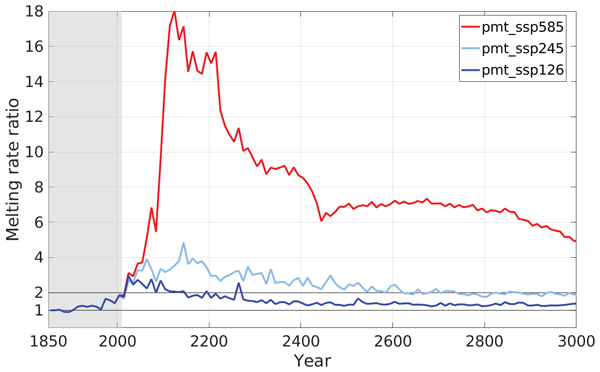
Stiig Wilkenskjeld, Frederieke Miesner, Paul P. Overduin, Matteo Puglini, and Victor Brovkin
The Cryosphere, 16, 1057–1069, https://doi.org/10.5194/tc-16-1057-2022, https://doi.org/10.5194/tc-16-1057-2022, 2022
Short summary
Short summary
Thawing permafrost releases carbon to the atmosphere, enhancing global warming. Part of the permafrost soils have been flooded by rising sea levels since the last ice age, becoming subsea permafrost (SSPF). The SSPF is less studied than the part on land. In this study we use a global model to obtain rates of thawing of SSPF under different future climate scenarios until the year 3000. After the year 2100 the scenarios strongly diverge, closely connected to the eventual disappearance of sea ice.
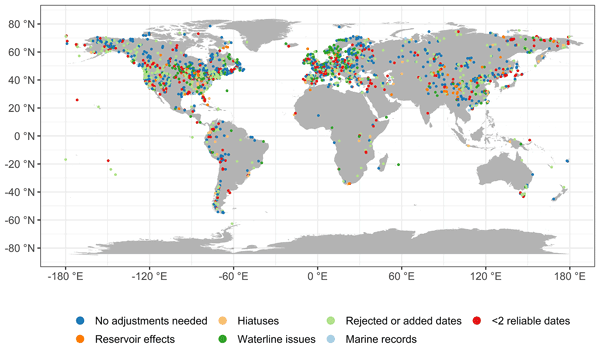
Chenzhi Li, Alexander K. Postl, Thomas Böhmer, Xianyong Cao, Andrew M. Dolman, and Ulrike Herzschuh
Earth Syst. Sci. Data, 14, 1331–1343, https://doi.org/10.5194/essd-14-1331-2022, https://doi.org/10.5194/essd-14-1331-2022, 2022
Short summary
Short summary
Here we present a global chronology framework of 2831 palynological records, including globally harmonized chronologies covering up to 273 000 years. A comparison with the original chronologies reveals a major improvement according to our assessment. Our chronology framework and revised chronologies will interest a broad geoscientific community, as it provides the opportunity to make use in synthesis studies of, for example, pollen-based vegetation and climate change.
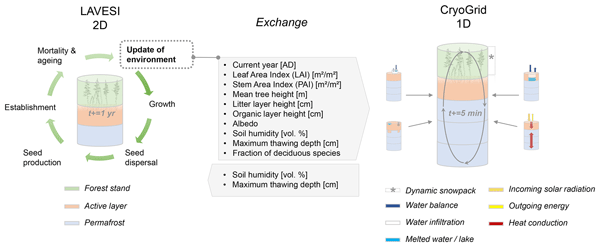
Stefan Kruse, Simone M. Stuenzi, Julia Boike, Moritz Langer, Josias Gloy, and Ulrike Herzschuh
Geosci. Model Dev., 15, 2395–2422, https://doi.org/10.5194/gmd-15-2395-2022, https://doi.org/10.5194/gmd-15-2395-2022, 2022
Short summary
Short summary
We coupled established models for boreal forest (LAVESI) and permafrost dynamics (CryoGrid) in Siberia to investigate interactions of the diverse vegetation layer with permafrost soils. Our tests showed improved active layer depth estimations and newly included species growth according to their species-specific limits. We conclude that the new model system can be applied to simulate boreal forest dynamics and transitions under global warming and disturbances, expanding our knowledge.
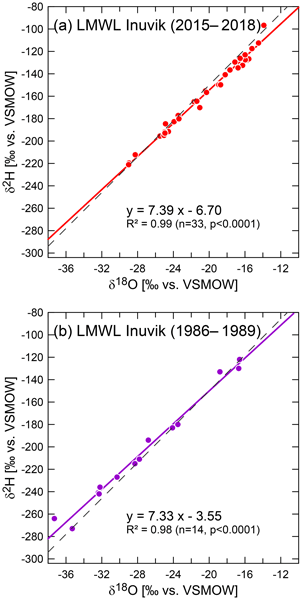
Michael Fritz, Sebastian Wetterich, Joel McAlister, and Hanno Meyer
Earth Syst. Sci. Data, 14, 57–63, https://doi.org/10.5194/essd-14-57-2022, https://doi.org/10.5194/essd-14-57-2022, 2022
Short summary
Short summary
From 2015 to 2018 we collected rain and snow samples in Inuvik, Canada. We measured the stable water isotope composition of oxygen (δ18O) and hydrogen (δ2H) with a mass spectrometer. This data will be of interest for other scientists who work in the Arctic. They will be able to compare our modern data with their own isotope data in old ice, for example in glaciers, and in permafrost. This will help to correctly interpret the climate signals of the environmental history of the Earth.

Anne Dallmeyer, Martin Claussen, Stephan J. Lorenz, Michael Sigl, Matthew Toohey, and Ulrike Herzschuh
Clim. Past, 17, 2481–2513, https://doi.org/10.5194/cp-17-2481-2021, https://doi.org/10.5194/cp-17-2481-2021, 2021
Short summary
Short summary
Using the comprehensive Earth system model, MPI-ESM1.2, we explore the global Holocene vegetation changes and interpret them in terms of the Holocene climate change. The model results reveal that most of the Holocene vegetation transitions seen outside the high northern latitudes can be attributed to modifications in the intensity of the global summer monsoons.
Cited articles
Abnizova, A., Siemens, J., Langer, M., and Boike J.: Small ponds with major impact: The relevance of ponds and lakes in permafrost landscapes to carbon dioxide emissions, Global Biogeochem. Cy., 26, GB2041, https://doi.org/10.1029/2011GB004237, 2012.
Alekseev, A. N. (Ed.): History of Yakutia, Volume 1, Nauka, Novosibirsk, 536 pp., ISBN 978-5-02-038819-2, 2020.
Alekseev, M. N., Grinenko, O. V., Kamaletdinov, V. A., and, Mochanov, Y. A.: Neogene and Quaternary Sediments of the Lower Aldan Depression and the Middle Lena (Central Yakutia), Guidebook of Geologic Excursions, Yakutsk, 12–21 July 1990, Yakutsk, Yakutsk Sci. Center Publ., 42 pp., 1990 (in Russian).
Aronsson, M., Heiðmarsson, S., Jóhannesdóttir, H., Barry, T., Braa, J., Burns, C. T., Coulson, S. J., Cuyler, C., Falk, K., Helgason, H., Lárusson, K. F., Lawler, J. P., Kulmala, P., MacNearney, D., Oberndorfer, E., Ravolainen, V., Schmidt, N. M., Soloviev, M., Coon, C., and Christensen, T.: State of the Arctic Terrestrial Biodiversity Report, Arctic Council, http://hdl.handle.net/11374/2627 (last access: 2 November 2026 ), 2021.
Arsenault, J., Talbot, J., Moore, T. R., Beauvais, M.-P., Franssen, J., and Roulet, N. T.: The Spatial Heterogeneity of Vegetation, Hydrology and Water Chemistry in a Peatland with Open-Water Pools, Ecosystems, 22, 1352–1367, https://doi.org/10.1007/s10021-019-00342-4, 2019.
Arsenault, J., Talbot, J., Brown, L. E., Holden, J., Martinez-Cruz, K., Sepulveda-Jauregui, A., Swindles, G. T., Wauthy, M., and Lapierre, J.-F.: Biogeochemical Distinctiveness of Peatland Ponds, Thermokarst Waterbodies, and Lakes, Geophys. Res. Lett., 49, e2021GL097492, https://doi.org/10.1029/2021GL097492, 2022.
Baisheva, I.: Past and present environmental conditions in Yakutia – a (palaeo)ecological study using lake sediments, Universität Potsdam, https://doi.org/10.25932/publishup-67056, 2025.
Baisheva, I., Pestryakova, L. A., Ushnitskaya, L., Davydova, P., Levina, S., Egorov, A., Zakharov, E. S., Gorodnichev, R., Glückler, R., Stieg, A., Eder, I., Kahl, J., Meister, P., Wieczorek, M., Overduin, P., Eulenburg, A., Stoof-Leichsenring, K., Biskaborn, B., Herzschuh, U., and Heim, B.: Summer anorganic hydrochemistry (cations and anions) of thermokarst lakes in the Central Yakutian Lowland and mountain lakes in the Verkhoyansk Mountain Range in Eastern Yakutia, PANGAEA [data set], https://doi.org/10.1594/PANGAEA.959459, 2022a.
Baisheva, I., Pestryakova, L. A., Ushnitskaya, L., Davydova, P., Levina, S., Egorov, A., Zakharov, E. S., Gorodnichev, R., Glückler, R., Stieg, A., Eder, I., Kahl, J., Meister, P., Wieczorek, M., Overduin, P., Eulenburg, A., Stoof-Leichsenring, K., Biskaborn, B., Herzschuh, U., and Heim, B.: Summer hydrophysical properties of thermokarst lakes in the Central Yakutian Lowland and mountain lakes in the Verkhoyansk Mountain Range in Eastern Yakutia, PANGAEA [data set], https://doi.org/10.1594/PANGAEA.952355, 2022b.
Baisheva, I., Pestryakova, L. A., Levina, S., Glückler, R., Biskaborn, B. K., Vyse, S. A., Heim, B., Herzschuh, U., and Stoof-Leichsenring, K. R.: Permafrost-thaw lake development in Central Yakutia: sedimentary ancient DNA and element analyses from a Holocene sediment record, J. Paleolimnol., 70, 95–112, https://doi.org/10.1007/s10933-023-00285-w, 2023.
Baisheva, I., Biskaborn, B. K., Stoof-Leichsenring, K. R., Andreev, A., Heim, B., Meucci, S., Ushnitskaya, L. A., Zakharov, E. S., Dietze, E., Glückler, R., Pestryakova, L. A., and Herzschuh, U.: Late Glacial and Holocene vegetation and lake changes in SW Yakutia, Siberia, inferred from sedaDNA, pollen, and XRF data, Front. Earth Sci., 12, https://doi.org/10.3389/feart.2024.1354284, 2024.
Becker, R. A., Wilks, A. R., Brownrigg, R., Minka, T. P., and Deckmyn, A.: maps: Draw Geographical Maps, CRAN [code], https://doi.org/10.32614/CRAN.package.maps, 2025.
Bekryaev, R. V., Polyakov, I. V., and Alexeev, V. A.: Role of Polar Amplification in Long-Term Surface Air Temperature Variations and Modern Arctic Warming, J. Climate, 23, 3888–3906, https://doi.org/10.1175/2010JCLI3297.1, 2010.
Bennion, H., Sayer, C. D., Clarke, S. J., Davidson, T. A., Rose, N. L., Goldsmith, B., Rawcliffe, R., Burgess, A., Clarke, G., Turner, S., and Wiik, E.: Sedimentary macrofossil records reveal ecological change in English lakes: implications for conservation, J. Paleolimnol., 60, 329–348, https://doi.org/10.1007/s10933-017-9941-7, 2018.
Bennion, H., Appleby, P. G., Boyle, J. J., Carvalho, L., Luckes, S. J., and Henderson, A. C. G.: Water quality investigation of Loweswater, Cumbria, (ECRC Research Report 68), Environmental Change Research Centre: London, Environmental Change Research Centre, London, 80 pp., https://www.lancaster.ac.uk/fass/projects/loweswater/docs/Bennion_report.pdf (last access: 15 August 2025), 2000.
Biskaborn, B. K., Herzschuh, U., Bolshiyanov, D., Savelieva, L., and Diekmann, B.: Environmental variability in northeastern Siberia during the last ∼ 13,300 yr inferred from lake diatoms and sediment–geochemical parameters, Palaeogeogr. Palaeocl., 329–330, 22–36, https://doi.org/10.1016/j.palaeo.2012.02.003, 2012.
Biskaborn, B. K., Subetto, D. A., Savelieva, L. A., Vakhrameeva, P. S., Hansche, A., Herzschuh, U., Klemm, J., Heinecke, L., Pestryakova, L. A., Meyer, H., Kuhn, G., and Diekmann, B.: Late Quaternary vegetation and lake system dynamics in north-eastern Siberia: Implications for seasonal climate variability, Quaternary Sci. Rev., 147, 406–421, https://doi.org/10.1016/j.quascirev.2015.08.014, 2016.
Biskaborn, B. K., Smith, S. L., Noetzli, J., Matthes, H., Vieira, G., Streletskiy, D. A., Schoeneich, P., Romanovsky, V. E., Lewkowicz, A. G., Abramov, A., Allard, M., Boike, J., Cable, W. L., Christiansen, H. H., Delaloye, R., Diekmann, B., Drozdov, D., Etzelmüller, B., Grosse, G., Guglielmin, M., Ingeman-Nielsen, T., Isaksen, K., Ishikawa, M., Johansson, M., Johannsson, H., Joo, A., Kaverin, D., Kholodov, A., Konstantinov, P., Kröger, T., Lambiel, C., Lanckman, J.-P., Luo, D., Malkova, G., Meiklejohn, I., Moskalenko, N., Oliva, M., Phillips, M., Ramos, M., Sannel, A. B. K., Sergeev, D., Seybold, C., Skryabin, P., Vasiliev, A., Wu, Q., Yoshikawa, K., Zheleznyak, M., and Lantuit, H.: Permafrost is warming at a global scale, Nat. Commun., 10, 264, https://doi.org/10.1038/s41467-018-08240-4, 2019.
Bosikov, N. P.: Evolution of alas of Central Yakutia, USSR Academy of Sciences, Siberian Branch, Institute of Permafrost Science, Yakutsk, 136 pp., https://nlrs.ru/open/11588 (last access: 5 May 2025), 1991 (in Russian).
Bouchard, F., MacDonald, L. A., Turner, K. W., Thienpont, J. R., Medeiros, A. S., Biskaborn, B. K., Korosi, J., Hall, R. I., Pienitz, R., and Wolfe, B. B.: Paleolimnology of thermokarst lakes: a window into permafrost landscape evolution, Arct. Sci., 3, 91–117, https://doi.org/10.1139/as-2016-0022, 2017.
Boyer, F., Mercier, C., Bonin, A., Le Bras, Y., Taberlet, P., and Coissac, E.: obitools: a unix-inspired software package for DNA metabarcoding, Mol. Ecol. Resour., 16, 176–182, https://doi.org/10.1111/1755-0998.12428, 2016.
Brouchkov, A., Fukuda, M., Fedorov, A., Konstantinov, P., and Iwahana, G.: Thermokarst as a short-term permafrost disturbance, Central Yakutia, Permafr. Periglac., 15, 81–87, https://doi.org/10.1002/ppp.473, 2004.
Burks, R. L., Mulderij, G., Gross, E., Jones, I., Jacobsen, L., Jeppesen, E., and Van Donk, E.: Center Stage: The Crucial Role of Macrophytes in Regulating Trophic Interactions in Shallow Lake Wetlands, in: Wetlands: Functioning, Biodiversity Conservation, and Restoration, vol. 191, edited by: Bobbink, R., Beltman, B., Verhoeven, J. T. A., and Whigham, D. F., Springer Berlin Heidelberg, Berlin, Heidelberg, 37–59, https://doi.org/10.1007/978-3-540-33189-6_3, 2006.
Coch, C., Juhls, B., Lamoureux, S. F., Lafrenière, M. J., Fritz, M., Heim, B., and Lantuit, H.: Comparisons of dissolved organic matter and its optical characteristics in small low and high Arctic catchments, Biogeosciences, 16, 4535–4553, https://doi.org/10.5194/bg-16-4535-2019, 2019.
Courtin, J., Stoof-Leichsenring, K. R., Lisovski, S., Liu, Y., Alsos, I. G., Biskaborn, B. K., Diekmann, B., Melles, M., Wagner, B., Pestryakova, L., Russell, J., Huang, Y., and Herzschuh, U.: Potential plant extinctions with the loss of the Pleistocene mammoth steppe, Nat. Commun., 16, 645, https://doi.org/10.1038/s41467-024-55542-x, 2025.
Craig, H.: Isotopic Variations in Meteoric Waters, Science, 133, 1702–1703, https://doi.org/10.1126/science.133.3465.1702, 1961.
Crate, S., Ulrich, M., Habeck, J. O., Desyatkin, A. R., Desyatkin, R. V., Fedorov, A. N., Hiyama, T., Iijima, Y., Ksenofontov, S., Mészáros, C., and Takakura, H.: Permafrost livelihoods: a transdisciplinary review and analysis of thermokarst-based systems of indigenous land use, Anthropocene, 18, https://doi.org/10.1016/j.ancene.2017.06.001, 2017.
Czerniawska, J. and Chlachula, J.: Climate-Change Induced Permafrost Degradation in Yakutia, East Siberia, Arctic, 73, 509–528, https://doi.org/10.14430/arctic71674, 2020.
Danilov, N. S. (Ed.): Diversity of the Flora of Yakutia. Novosibirsk, Izd. Sib. Otd. Ross. Akad. Nauk, 326 pp., https://kpabg.ru/cyanopro/index.html?q=toolbar/toggle&destination=taxonomy/term/570.html (last access: 5 May 2025), 2005 (in Russian).
Danilova, A. A., Danilov, P. P., Savvinov, G. N., Gavrilyeva, L. D., Petrov, A. A., and Alekseev, G. A.: Changes in properties of alas soils in Central Yakutia caused by pasture degradation, Arid Ecosyst., 3, 205–211, https://doi.org/10.1134/S2079096113040057, 2013.
Dansgaard, W.: Stable isotopes in precipitation, Tellus A, 16, 436, https://doi.org/10.1111/j.2153-3490.1964.tb00181.x, 1964.
De Cáceres, M.: Indicator species analysis, https://emf-creaf.github.io/indicspecies (last access: 15 August 2025), 2025.
Desyatkin, A. R., Takakai, F., Fedorov, P. P., Nikolaeva, M. C., Desyatkin, R. V., and Hatano, R.: CH4 emission from different stages of thermokarst formation in Central Yakutia, East Siberia, Soil Sci. Plant Nutr., 55, 558–570, https://doi.org/10.1111/j.1747-0765.2009.00389.x, 2009.
Desyatkin, R. and Desyatkin, A.: Thermokarst transformation of soil cover on cryolithozone flat territories, Symp. Environ. Chang. Sib. Permafr. Reg., 213–224, http://lab.agr.hokudai.ac.jp/env/ctc_siberia/abstract_pdf_2005/22Desyatkin_abstract.pdf (last access: 9 September 2026), 2006.
Desyatkin, R., Filippov, N., Desyatkin, A., Konyushkov, D., and Goryachkin, S.: Degradation of Arable Soils in Central Yakutia: Negative Consequences of Global Warming for Yedoma Landscapes, Front. Earth Sci., 9, 683730, https://doi.org/10.3389/feart.2021.683730, 2021.
Desyatkin, R. V.: Soil Formation in Thermokarst Depressions – Alases of Cryolithozone, Nauka, Novosibirsk, 324 pp., ISBN 978-5-02-023245-7, 2008 (in Russian).
Du, Y., Chen, F., Zhang, Y., He, H., Wen, S., Huang, X., Song, C., Li, K., Wang, J., Keellings, D., and Lu, Y.: Human Activity Coupled With Climate Change Strengthens the Role of Lakes as an Active Pipe of Dissolved Organic Matter, Earth's Future, 11, e2022EF003412, https://doi.org/10.1029/2022EF003412, 2023.
Dudarev, A. A.: Public Health Practice Report: water supply and sanitation in Chukotka and Yakutia, Russian Arctic, Int. J. Circumpol. Heal., 77, 1423826, https://doi.org/10.1080/22423982.2018.1423826, 2018.
Dvornikov, Y., Leibman, M., Heim, B., Bartsch, A., Herzschuh, U., Skorospekhova, T., Fedorova, I., Khomutov, A., Widhalm, B., Gubarkov, A., and Rößler, S.: Terrestrial CDOM in Lakes of Yamal Peninsula: Connection to Lake and Lake Catchment Properties, Remote Sensing, 10, 167, https://doi.org/10.3390/rs10020167, 2018.
Enguehard, L., Kruse, S., Heim, B., Nitze, I., Falco, N., Demir, B., and Herzschuh, U.: Unraveling boreal forest composition and drivers across scales in eastern Siberia, Environ. Res. Lett., 19, https://doi.org/10.1088/1748-9326/ad5742, 2024.
Epp, L. S., Zimmermann, H. H., and Stoof-Leichsenring, K. R.: Sampling and Extraction of Ancient DNA from Sediments, in: Ancient DNA, vol. 1963, edited by: Shapiro, B., Barlow, A., Heintzman, P.D., Hofreiter, M., Paijmans, J. L. A., and Soares, A. E. R., Springer New York, New York, NY, 31–44, https://doi.org/10.1007/978-1-4939-9176-1_5, 2019.
Fedorov, A. and Konstantinov, P.: Observations of surface dynamics with thermokarst initiation, Yukechi site, Central Yakutia, Proceedings of the 8th International Permafrost Conference, Zurich, Switzerland, 239–243, ISBN 978-5-02-023245-7, 2003.
Fedorov, A. N., Ivanova, R. N., Park, H., Hiyama, T., and Iijima, Y.: Recent air temperature changes in the permafrost landscapes of northeastern Eurasia, Polar Sci., 8, 114–128, https://doi.org/10.1016/j.polar.2014.02.001, 2014.
Gavrilova, M. K.: Climate, in: Gidrogeologiya SSSR. Tom XX. Yakutskaya ASSR [Hydrogeology of the USSR, Vol. XX: Yakut ASSR], edited by: Efimov, A. I. and Zaitsev, I. K., Nedra, Moscow, 32–39, https://djvu.online/file/xT1G2yLqVZMAB (last access: 3 September 2026), 1970 (in Russian).
Galanin, A. A.: Late Quaternary sand covers of Central Yakutia (Eastern Siberia): structure, facies composition and paleoenvironment significance, Earth's Cryosphere, 25, 3–34, https://doi.org/10.15372/KZ20210101, 2021.
Geng, R., Andreev, A., Kruse, S., Heim, B., van Geffen, F., Pestryakova, L., Zakharov, E., Troeva, E., Shevtsova, I., Li, F., Zhao, Y., and Herzschuh, U.: Modern Pollen Assemblages From Lake Sediments and Soil in East Siberia and Relative Pollen Productivity Estimates for Major Taxa, Front. Ecol. Evol., 10, 837857, https://doi.org/10.3389/fevo.2022.837857, 2022.
Gibbs, R. J.: Mechanisms Controlling World Water Chemistry, Science, 170, 1088–1090, https://doi.org/10.1126/science.170.3962.1088, 1970.
Grigoriev, S. V.: On some definitions and indices in limnology, Proceedings of the Karelian Branch of the USSR Academy of Sciences, 18, 29–45, 1959.
Grosse, G., Jones, B., and Arp, C.: Thermokarst lakes, drainage, and drained basins, in: Treatise on Geomorphology, edited by: Shroder, J. (Editor in Chief), Giardino, R., and Harbor, J., Academic Press, San Diego, CA, Glacial and Periglacial Geomorphology, 8, 325–353, https://doi.org/10.1016/B978-0-12-374739-6.00216-5, 2013.
Gu, Z., Gu, L., Eils, R., Schlesner, M., and Brors, B.: circlize implements and enhances circular visualization in R, Bioinformatics, 30, 2811–2812, https://doi.org/10.1093/bioinformatics/btu393, 2014.
Halford, K.: Piper and Stiff – A workbook for creating Piper plots and Stiff diagrams, version 9, Halford Hydrology LLC web page, https://halfordhydrology.com/piper-and-stiff/ (last access: 9 July 2024), 2024.
Herzschuh, U., Pestryakova, L. A., Savelieva, L. A., Heinecke, L., Böhmer, T., Biskaborn, B. K., Andreev, A., Ramisch, A., Shinneman, A. L. C., and Birks, H. J. B.: Siberian larch forests and the ion content of thaw lakes form a geochemically functional entity, Nat. Commun., 4, 2408, https://doi.org/10.1038/ncomms3408, 2013.
Herzschuh, U., Liu, Y., Liu, S., Stoof-Leichsenring, K. R., Porada, P., Courtin, J., Farkas, L. Z., Böhmer, T., Biskaborn, B. K., Diekmann, B., Huang, Y., Kaufman, D., Melles, M., Meyer, H., Pestryakova, L. A., Russell, J. M., and Wagner, B.: Arctic-Boreal Bryophyte Dynamics Since the Last Glacial Inferred From Ancient DNA Metabarcoding, J. Biogeogr., e70015, https://doi.org/10.1111/jbi.70015, 2025.
Hijmans, R. J.: raster: Geographic Data Analysis and Modeling, R package version 3.6-32, CRAN [code], https://doi.org/10.32614/CRAN.package.raster, 2025.
Hu, J., Long, Y., Zhou, W., Zhu, C., Yang, Q., Zhou, S., and Wu, P.: Influence of different land use types on hydrochemistry and heavy metals in surface water in the lakeshore zone of the Caohai wetland, China, Environ. Pollut., 267, 115454, https://doi.org/10.1016/j.envpol.2020.115454, 2020.
Hughes-Allen, L., Bouchard, F., Laurion, I., Séjourné, A., Marlin, C., Hatté, C., Costard, F., Fedorov, A., and Desyatkin, A.: Seasonal patterns in greenhouse gas emissions from thermokarst lakes in Central Yakutia (Eastern Siberia), Limnol. Oceanogr., 66, S98–S116, https://doi.org/10.1002/lno.11665, 2021.
Hughes-Allen, L., Bouchard, F., Séjourné, A., Fougeron, G., and Léger, E.: Automated Identification of Thermokarst Lakes Using Machine Learning in the Ice-Rich Permafrost Landscape of Central Yakutia (Eastern Siberia), Remote Sensing, 15, 1226, https://doi.org/10.3390/rs15051226, 2023.
Huser, B. J., Futter, M. N., Bogan, D., Brittain, J. E., Culp, J. M., Goedkoop, W., Gribovskaya, I., Karlsson, J., Lau, D. C. P., Rühland, K. M., Schartau, A. K., Shaftel, R., Smol, J. P., Vrede, T., and Lento, J.: Spatial and temporal variation in Arctic freshwater chemistry – Reflecting climate-induced landscape alterations and a changing template for biodiversity, Freshwater Biol., 67, 14–29, https://doi.org/10.1111/fwb.13645, 2020.
IPCC: Climate Change 2022 – Impacts, Adaptation and Vulnerability: Working Group II Contribution to the Sixth Assessment Report of the Intergovernmental Panel on Climate Change, 1st edn., Cambridge University Press, https://doi.org/10.1017/9781009325844, 2022.
Isaev, A. P., Gavrilyeva, T. N., Mikhaleva, L. G., and Chikidov, I. I.: Forest food resources in the Sakha Republic (Yakutia), Siberian Journal of Life Sciences and Agriculture, 16, 474–503, https://doi.org/10.12731/2658-6649-2024-16-3-847, 2024.
Jia, W., Liu, X., Stoof-Leichsenring, K. R., Liu, S., Li, K., and Herzschuh, U.: Preservation of sedimentary plant DNA is related to lake water chemistry, Environmental DNA, 4, 425–439, https://doi.org/10.1002/edn3.259, 2022.
Jones, B. M., Grosse, G., Arp, C. D., Jones, M. C., Anthony, K. M. W., and Romanovsky, V. E:. Modern thermokarst lake dynamics in the continuous permafrost zone, northern Seward Peninsula, Alaska, J. Geophys. Res.-Biogeo., 116, https://doi.org/10.1029/2011JG001666, 2011.
Jongejans, L. L., Liebner, S., Knoblauch, C., Mangelsdorf, K., Ulrich, M., Grosse, G., Tanski, G., Fedorov, A. N., Konstantinov, P. Ya., Windirsch, T., Wiedmann, J., and Strauss, J.: Greenhouse gas production and lipid biomarker distribution in Yedoma and Alas thermokarst lake sediments in Eastern Siberia, Glob. Change Biol., 27, 2822–2839, https://doi.org/10.1111/gcb.15566, 2021.
Jorgenson, M. T. and Shur, Y.: Evolution of lakes and basins in northern Alaska and discussion of the thaw lake cycle, J. Geophys. Res.-Earth, 112, F02S17, https://doi.org/10.1029/2006JF000531, 2007.
Juggins, S.: rioja: Analysis of Quaternary Science Data, CRAN [code], https://doi.org/10.32614/CRAN.package.rioja, 2024.
Karger, D. N., Conrad, O., Böhner, J., Kawohl, T., Kreft, H., Soria-Auza, R. W., Zimmermann, N. E., Linder, H. P., and Kessler, M.: Climatologies at high resolution for the earth's land surface areas, Sci. Data, 4, 170122, https://doi.org/10.1038/sdata.2017.122, 2017.
Karger, D. N., Nobis, M. P., Normand, S., Graham, C. H., and Zimmermann, N. E.: CHELSA-TraCE21k – high-resolution (1 km) downscaled transient temperature and precipitation data since the Last Glacial Maximum, Clim. Past, 19, 439–456, https://doi.org/10.5194/cp-19-439-2023, 2023.
Kassambara, A.: ggpubr: “ggplot2” Based Publication Ready Plots, CRAN [code], https://doi.org/10.32614/CRAN.package.ggpubr, 2026.
Kassambara, A., Mundt, F., and Erdey, L.: factoextra: Extract and Visualize the Results of Multivariate Data Analyses, CRAN [code], https://doi.org/10.32614/CRAN.package.factoextra, 2026.
Katamura, F., Fukuda, M., Bosikov, N. P., Desyatkin, R. V., Nakamura, T., and Moriizumi, J.: Thermokarst Formation and Vegetation Dynamics Inferred from A Palynological Study in Central Yakutia, Eastern Siberia, Russia, Arct. Antarct. Alp. Res., 38, 561–570, https://doi.org/10.1657/1523-0430(2006)38[561:TFAVDI]2.0.CO;2, 2006.
Khudoley, A. and Prokopiev, A.: Defining the eastern boundary of the North Asian craton from structural and subsidence history studies of the Verkhoyansk fold-and-thrust belt, Special Paper of the Geological Society of America, 433, 391–410, https://doi.org/10.1130/2007.2433(19), 2007.
Kirpotin, S. N., Naumov, A. V., Vorobiov, S. N., Mironycheva-Tokareva, N. P., Kosykh, N. P., Lapshina, E. D., Marquand, J., Kulizhski, S. P., and Bleuten, W.: Western-Siberian Peatlands: Indicators of Climate Change and Their Role in Global Carbon Balance, in: Climate Change and Terrestrial Carbon Sequestration in Central Asia, edited by: Lal, R., Suleimenov, M., Stewart, B. A, Hansen, D. O., and Doraiswamy, P., Taylor and Francis, Amsterdam, 453–472, https://doi.org/10.1201/9780203932698, 2007.
Kirpotin, S. N., Polishchuk, Y. M., Zakharova, E., Shirokova, L., Pokrovsky, O., Kolmakova, M., and Dupré, B.: One of possible mechanisms of thermokarst lakes drainage in West-Siberian North, Int. J. Environ. Stud., 65, 631–635, https://doi.org/10.1080/00207230802525208, 2008.
Klein Tank, A. M. G., Wijngaard, J. B., Können, G. P., Böhm, R., Demarée, G., Gocheva, A., Mileta, M., Pashiardis, S., Hejkrlik, L., Kern-Hansen, C., Heino, R., Bessemoulin, P., MüllerWestermeier, G., Tzanakou, M., Szalai, S., Pálsdóttir, T., Fitzgerald, D., Rubin, S., Capaldo, M., Maugeri, M., Leitass, A., Bukantis, A., Aberfeld, R., van Engelen, A. F. V., Forland, E., Mietus, M., Coelho, F., Mares, C., Razuvaev, V., Nieplova, E., Cegnar, T., Antonio López, J., Dahlström, B., Moberg, A., Kirchhofer, W., Ceylan, A., Pachaliuk, O., Alexander, L. V., and Petrovic, P.: Daily dataset of 20th-century surface air temperature and precipitation series for the European Climate Assessment, Int. J. Climatol., 22, 1441–1453, https://doi.org/10.1002/joc.773, 2002.
Kloss, A. L.: Water isotope geochemistry of recent precipitation in Central and North Siberia as a proxy for the local and regional climate system, Diplom, Leibniz Universität Hannover, 95 pp., https://epic.awi.de/id/eprint/25524/ (last access: 9 June 2024), 2008.
Kokelj, S. V. and Jorgenson, M. T.: Advances in Thermokarst Research: Recent Advances in Research Investigating Thermokarst Processes, Permafrost Periglac., 24, 108–119, https://doi.org/10.1002/ppp.1779, 2013.
Kokelj, S. V., Zajdlik, B., and Thompson, M. S.: The impacts of thawing permafrost on the chemistry of lakes across the subarctic boreal-tundra transition, Mackenzie Delta region, Canada, Permafr. Periglac., 20, 185–199, https://doi.org/10.1002/ppp.641, 2009
Ksenofontov, S. S., Kuklina, V., Kholodov, A., and Petrov, A.: On good terms: pathways to decolonizing science-appropriated Indigenous terminologies in Arctic research, Arct. Sci., 11, 1–9, https://doi.org/10.1139/as-2025-0025, 2025.
Kruse, S., Bolshiyanov, D., Grigoriev, M., Morgenstern, A., Pestryakova, L., Tsibizov, L., and Udke, A.: Russian-German Cooperation: Expeditions to Siberia in 2018, Berichte zur Polar- und Meeresforschung, 734, 136–153, https://doi.org/10.2312/BzPM_0734_2019, 2019.
Kruse, S., Herzschuh, U., Schulte, L., Stuenzi, S. M., Brieger, F., Zakharov, E. S., and Pestryakova, L. A.: Forest inventories on circular plots on the expedition Chukotka 2018, NE Russia, PANGAEA [data set], https://doi.org/10.1594/PANGAEA.923638, 2020.
Kruse, S., Jackisch, R., Heim, B., Gloy, J., Herzschuh, U., Kolmogorov, A., Zakharov, E. S., Pestryakova, L. A., Förster, M., and Kleinschmit, B.: Structure-from-motion (SfM) based point clouds of 21 Forest successional plots from UAV-based high-resolution photogrammetric survey in Central and Eastern Yakutia, Siberia, PANGAEA [data set], https://doi.org/10.1594/PANGAEA.958184, 2023a.
Kruse, S., Jackisch, R., Heim, B., Gloy, J., Herzschuh, U., Kolmogorov, A., Zakharov, E. S., Pestryakova, L. A., Förster, M., and Kleinschmit, B.: Point clouds and high-level data products of 21 Forest successional plots from UAV-based Lidar survey in Central and Eastern Yakutia, PANGAEA [data set], https://doi.org/10.1594/PANGAEA.957253, 2023b.
Kruse, S., Jackisch, R., Heim, B., Gloy, J., Herzschuh, U., Kolmogorov, A., Zakharov, E. S., Pestryakova, L. A., Förster, M., and Kleinschmit, B.: Lidar and multispectral footprint data of 21 forest successional plots from UAV-based survey in Central and Eastern Yakutia, Siberia, PANGAEA [data set], https://doi.org/10.1594/PANGAEA.958188, 2023c.
Kruse, S., Jackisch, R., Gloy, J., Farkas, L., Schladebach, J., Hao, K., Heim, B., Kolmogorov, A., Zakharov, E. S., Pestryakova, L. A., Förster, M., Kleinschmit, B., and Herzschuh, U.: Point clouds with ground point classification and individual tree segmentation of 89 northern boreal forest and tundra sites from UAV-based lidar surveys in Yakutia, Russia in 2021, PANGAEA [data set], https://doi.org/10.1594/PANGAEA.980735, 2025.
Kumke, T., Ksenofontova, M., Pestryakova, L., Nazarova, L., and Hubberten, H.-W.: Limnological characteristics of lakes in the lowlands of Central Yakutia, Russia, J. Limnol., 66, 40, https://doi.org/10.4081/jlimnol.2007.40, 2007.
Lento, J., Culp, J. M., Levenstein, B., Aroviita, J., Baturina, M. A., Bogan, D., Brittain, J. E., Chin, K., Christoffersen, K. S., Docherty, C., Friberg, N., Ingimarsson, F., Jacobsen, D., Lau, D. C. P., Loskutova, O. A., Milner, A., Mykrä, H., Novichkova, A. A., Ólafsson, J. S., Schartau, A. K., Shaftel, R., and Goedkoop, W.: Temperature and spatial connectivity drive patterns in freshwater macroinvertebrate diversity across the Arctic, Freshwater Biol., 67, 159–175, https://doi.org/10.1111/fwb.13805, 2022.
Li, K., Stoof-Leichsenring, K. R., Liu, S., Jia, W., Liao, M., Liu, X., Ni, J., and Herzschuh, U.: Plant sedimentary DNA as a proxy for vegetation reconstruction in eastern and northern Asia, Ecol. Indic., 132, 108303, https://doi.org/10.1016/j.ecolind.2021.108303, 2021.
Li, W., Cao, X., Stoof-Leichsenring, K., Hou, X., Yu, S.-Y., Tian, F., and Herzschuh, U.: Holocene lake response to glacier and catchment changes on the eastern Tibetan Plateau from quantitative conductivity reconstructions based on sedaDNA-derived macrophyte records, Quaternary Sci. Rev., 338, 108806, https://doi.org/10.1016/j.quascirev.2024.108806, 2024.
Lopez, C. M. L., Brouchkov, A., Nakayama, H., Takakai, F., Fedorov, A. N., and Fukuda, M.: Epigenetic salt accumulation and water movement in the active layer of central Yakutia in eastern Siberia, Hydrol. Process., 21, 103–109, https://doi.org/10.1002/hyp.6224, 2007.
Lytkin, V., Suleymanov, A., Vinokurova, L., Grigorev, S., Golomareva, V., Fedorov, S., Kuzmina, A., and Syromyatnikov, I.: Influence of Permafrost Landscapes Degradation on Livelihoods of Sakha Republic (Yakutia) Rural Communities, Land, 10, 101, https://doi.org/10.3390/land10020101, 2021.
Malea, L., Nakou, K., Papadimitriou, A., Exadactylos, A., and Orfanidis, S.: Physiological Responses of the Submerged Macrophyte Stuckenia pectinata to High Salinity and Irradiance Stress to Assess Eutrophication Management and Climatic Effects: An Integrative Approach, Water, 13, 1706, https://doi.org/10.3390/w13121706, 2021.
Manasypov, R. M., Pokrovsky, O. S., Kirpotin, S. N., and Shirokova, L. S.: Thermokarst lake waters across the permafrost zones of western Siberia, The Cryosphere, 8, 1177–1193, https://doi.org/10.5194/tc-8-1177-2014, 2014.
Marsh, P., Russell, M., Pohl, S., Haywood, H., and Onclin, C.: Changes in thaw lake drainage in the Western Canadian Arctic from 1950 to 2000, Hydrol. Process., 23, 145–158, https://doi.org/10.1002/hyp.7179, 2009.
Martinez-Cruz, T. E., Adelman, L., Castañeda-Quintana, L., and Mejía-Montalvo, D.: Water is more than a resource: Indigenous Peoples and the right to water, Social Sciences & Humanities Open, 10, 100978, https://doi.org/10.1016/j.ssaho.2024.100978, 2024.
Mc Cartney, A. M., Anderson, J., Liggins, L., Hudson, M. L., Anderson, M. Z., TeAika, B., Geary, J., Cook-Deegan, R., Patel, H. R., and Phillippy, A. M.: Balancing openness with Indigenous data sovereignty: An opportunity to leave no one behind in the journey to sequence all of life, P. Natl. Acad. Sci. USA, 119, e2115860119, https://doi.org/10.1073/pnas.2115860119, 2022.
Meyer, H., Schönicke, L., Wand, U., Hubberten, H. W., and Friedrichsen, H.: Isotope Studies of Hydrogen and Oxygen in Ground Ice – Experiences with the Equilibration Technique, Isot. Environ. Health S., 36, 133–149, https://doi.org/10.1080/10256010008032939, 2000.
Meyer, H., Dereviagin, A., Siegert, C., Schirrmeister, L., and Hubberten, H.-W.: Palaeoclimate Reconstruction on Big Lyakhovsky Island, North Siberia – Hydrogen and Oxygen Isotopes in Ice Wedges, Permafrost Periglac., 13, 91–105, https://doi.org/10.1002/ppp.416, 2002.
Meyer, H., Schirrmeister, L., Andreev, A., Wagner, D., Hubberten, H.-W., Yoshikawa, K., Bobrov, A., Wetterich, S., Opel, T., Kandiano, E., and Brown, J.: Lateglacial and Holocene isotopic and environmental history of northern coastal Alaska – Results from a buried ice-wedge system at Barrow, Quaternary Sci. Rev., 29, 3720–3735, https://doi.org/10.1016/j.quascirev.2010.08.005, 2010.
Miesner, T., Herzschuh, U., Pestryakova, L. A., Wieczorek, M., Zakharov, E. S., Kolmogorov, A. I., Davydova, P. V., and Kruse, S.: Forest structure and individual tree inventories of northeastern Siberia along climatic gradients, Earth Syst. Sci. Data, 14, 5695–5716, https://doi.org/10.5194/essd-14-5695-2022, 2022.
Miner, K. R., Turetsky, M. R., Malina, E., Bartsch, A., Tamminen, J., McGuire, A. D., Fix, A., Sweeney, C., Elder, C. D., and Miller, C. E.: Permafrost carbon emissions in a changing Arctic, Nat. Rev. Earth Environ., 3, 55–67, https://doi.org/10.1038/s43017-021-00230-3, 2022.
Ministry of Nature Protection of the Republic of Sakha: On the introduction of a special regime for the use and protection of unique lakes of the Republic of Sakha (Yakutia), Decree of the President of the Republic of Sakha (Yakutia) No. 836 of 16 August 1994, https://web.archive.org/web/20210117161927/http://www.oopt.aari.ru/sites/default/files/documents/prezident-respubliki-Saha-Yakutiya/N836_16-08-1994.pdf (last access: 2 August 2025), 1994 (in Russian).
Morgenstern, A. , Heim, B. , Pestryakova, L. A. , Bolshiyanov, D. Y. , Grigoriev, M. N. , Ayunov, D. , Dill, A., and Jünger, I.: Russian-German Cooperation: Expeditions to Siberia in 2021, in: Berichte zur Polar- und Meeresforschung = Reports on polar and marine research, Bremerhaven, edited by: Bornemann, H. and Amir Sawadkuhi, S., Alfred-Wegener-Institut Helmholtz-Zentrum für Polar- und Meeresforschung, 772, 120 pp., https://doi.org/10.57738/BzPM_0772_2023, 2023.
Naumov, A., Akimova, V., Sidorova, D., and Topnikov, M.: Agriculture and land use in the North of Russia: Case study of Karelia and Yakutia, Open Geosci., 12, 1497–1511, https://doi.org/10.1515/geo-2020-0210, 2020.
Nitzbon, J., Westermann, S., Langer, M., Martin, L. C. P., Strauss, J., Laboor, S., and Boike, J.: Fast response of cold ice-rich permafrost in northeast Siberia to a warming climate, Nat. Commun., 11, 2201, https://doi.org/10.1038/s41467-020-15725-8, 2020.
Nitze, I., Grosse, G., Jones, B. M., Romanovsky, V. E., and Boike, J.: Remote sensing quantifies widespread abundance of permafrost region disturbances across the Arctic and Subarctic, Nat. Commun., 9, 5423, https://doi.org/10.1038/s41467-018-07663-3, 2018.
Oksanen, J., Simpson, G. L., Blanchet, F. G., Kindt, R., Legendre, P., Minchin, P. R., O'Hara, R. B., Solymos, P., Stevens, M. H. H., Szoecs, E., Wagner, H., Barbour, M., Bedward, M., Bolker, B., Borcard, D., Carvalho, G., Chirico, M., Caceres, M. D., Durand, S., Evangelista, H. B. A., FitzJohn, R., Friendly, M., Furneaux, B., Hannigan, G., Hill, M. O., Lahti, L., McGlinn, D., Ouellette, M.-H., Cunha, E. R., Smith, T., Stier, A., Braak, C. J. F. T., and Weedon, J.: vegan: Community Ecology Package (2.6-4), https://cran.r-project.org/web/packages/vegan/index.html (last access: 11 October 2024), 2022.
Olago, D., Opere, A., and Barongo, J.: Holocene palaeohydrology, groundwater and climate change in the lake basins of the Central Kenya Rift, Hydrolog. Sci. J., 54, 765–780, https://doi.org/10.1623/hysj.54.4.765, 2009.
Ollivier, S., Séjourné, A., Hatté, C., Bouchard, F., Noret, A., Highes-Allen, L., Costard, F., and Gandois, L.: Massive concentrations of old dissolved organic carbon from Yedoma thaw in lakes in Siberia, Commun. Earth Environ., 7, 200, https://doi.org/10.1038/s43247-026-03229-0, 2026.
Pavlova, M. R., Galanin, A. A., Lytkin, V. M., and Torgovkin, N. V.: Structure and formation conditions of the ice complex in the lower reaches of the Vilyui River, Central Yakutia, Earth's Cryosphere, 28, 3–16, https://doi.org/10.15372/KZ20240601, 2024.
Pavlova, N. A. and Fedorova, S. V.: Fluoride Distribution in Subpermafrost Groundwater in Central Yakutia, Earth's Cryosphere, 2022, 26, 34–41, https://earthcryosphere.ru//archive/2022_2/eng_2022_2/03.Pavlova_2_2022_eng.pdf (last access: 15 August 2026), 2022.
Pavlova, N. A., Kolesnikov, A. B., Efremov, V. S., and Shepelev, V. V.: Groundwater chemistry in intrapermafrost taliks in Central Yakutia, Water Resour., 43, 353–363, https://doi.org/10.1134/S0097807816020135, 2016.
Pebesma, E. and Bivand, R.: Spatial Data Science: With Applications in R, 1st edn., Chapman and Hall/CRC, Boca Raton, 314 pp., https://doi.org/10.1201/9780429459016, 2023.
Pestryakova, L. A., Herzschuh, U., Wetterich, S., and Ulrich, M.: Present-day variability and Holocene dynamics of permafrost-affected lakes in central Yakutia (Eastern Siberia) inferred from diatom records, Quaternary Sci. Rev., 51, 56–70, https://doi.org/10.1016/j.quascirev.2012.06.020, 2012.
Pienitz, R. and Smol, J. P.: Diatom assemblages and their relationship to environmental variables in lakes from the boreal forest-tundra ecotone near Yellowknife, Northwest Territories, Canada, Hydrobiol., 269, https://doi.org/10.1007/BF00028037, 1993.
Pienitz, R., Smol, J. P., and Lean, D. R.: Physical and chemical limnology of 59 lakes located between the southern Yukon and the Tuktoyaktuk Peninsula, Northwest Territories (Canada), Can. J. Fish. Aquat. Sci., 54, 330–346, https://doi.org/10.1139/f96-274, 1997.
Piper, A. M.: A graphic procedure in the geochemical interpretation of water-analyses, Eos T. Am. Geophys. Un., https://doi.org/10.1029/TR025i006p00914, 1944.
Platonov, T., Stepanov, K., Nyukkanov, A., Kuzmina, N., and Gorokhova, A.: Food value and basic parasitosis of fish used in food by indigenous populations of Yakutia, BIO Web Conf., 17, 00242, https://doi.org/10.1051/bioconf/20201700242, 2020.
Pokrovsky, O. S., Shirokova, L. S., Kirpotin, S. N., Audry, S., Viers, J., and Dupré, B.: Effect of permafrost thawing on organic carbon and trace element colloidal speciation in the thermokarst lakes of western Siberia, Biogeosciences, 8, 565–583, https://doi.org/10.5194/bg-8-565-2011, 2011.
Pokrovsky, O. S., Shirokova, L. S., and Kirpotin, S. N.: Biogeochemistry of Thermokarst Lakes of Western Siberia, Nova Science Publ. Inc., NY, 163 pp., ISBN 978-1-62948-799-1, 2014.
Popova, L.: Indigenous Subsistence Practices of the Sakha Horse Herders under Changing Climate in the Arctic, Climate, 12, 134, https://doi.org/10.3390/cli12090134, 2024.
Popova, N. V., Abramov, A. F., and Markova, L. N.: Fishing as an important source of food in the Arctic and subarctic zones of Yakutia, Open Agriculture, 5, 213–218, https://doi.org/10.1515/opag-2020-0022, 2020.
Popp, S., Diekmann, B., Meyer, H., Siegert, C., Syromyatnikov, I., and Hubberten, H.-W.: Palaeoclimate signals as inferred from stable-isotope composition of ground ice in the Verkhoyansk foreland, Central Yakutia, Permafrost Periglac., 17, 119–132, https://doi.org/10.1002/ppp.556, 2006.
Rantanen, M., Karpechko, A. Y., Lipponen, A., Nordling, K., Hyvärinen, O., Ruosteenoja, K., Vihma, T., and Laaksonen, A.: The Arctic has warmed nearly four times faster than the globe since 1979, Commun. Earth Environ., 3, 1–10, https://doi.org/10.1038/s43247-022-00498-3, 2022.
R Core Team: R: A Language and Environment for Statistical Computing. R Foundation for Statistical Computing. Scientific Research Publishing, https://cran.r-project.org/doc/manuals/r-release/fullrefman.pdf (last access: 20 September 2026), 2026.
Revelle, W.: psych: Procedures for Psychological, Psychometric, and Personality Research (2.5.6), https://cran.r-project.org/web/packages/psych/index.html (last access: 29 July 2025), 2025.
Revéret, A., Alsos, I., and Heintzman, P.: Aquatic Vegetation DNA from Lake Sediments, 235–253, https://doi.org/10.1007/978-3-031-43799-1_8, 2023a.
Revéret, A., Rijal, D. P., Heintzman, P. D., Brown, A. G., Stoof-Leichsenring, K. R., and Alsos, I. G.: Environmental DNA of aquatic macrophytes: The potential for reconstructing past and present vegetation and environments, Freshwater Biol., 68, 1929–1950, https://doi.org/10.1111/fwb.14158, 2023b.
Rockström, J., Kotzé, L., Milutinović, S., Biermann, F., Brovkin, V., Donges, J., Ebbesson, J., French, D., Gupta, J., Kim, R., Lenton, T., Lenzi, D., Nakicenovic, N., Neumann, B., Schuppert, F., Winkelmann, R., Bosselmann, K., Folke, C., Lucht, W., Schlosberg, D., Richardson, K., and Steffen, W.: The planetary commons: A new paradigm for safeguarding Earth-regulating systems in the Anthropocene, P. Natl. Acad. Sci. USA, 121, e2301531121, https://doi.org/10.1073/pnas.2301531121, 2024.
Romanovsky, N. N.: Basics of Cryogenesis of the Lithosphere. Moscow, Izd. Mosk. Gos. Univ., 366 pp., https://www.geokniga.org/sites/geokniga/files/books/kriogeneza-litosfery-nnromanovskiy-1993.pdf (last access: 15 August 2026), 1993 (in Russian).
Romanovsky, V. E., Drozdov, D. S., Oberman, N. G., Malkova, G. V., Kholodov, A. L., Marchenko, S. S., Moskalenko, N. G., Sergeev, D. O., Ukraintseva, N. G., Abramov, A. A., Gilichinsky, D. A., and Vasiliev, A. A.: Thermal state of permafrost in Russia, Permafrost Periglac., 21, 136–155, https://doi.org/10.1002/ppp.683, 2010.
Różańska-Boczula, M. and Sender, J.: Exploring the relationships between macrophyte groups and environmental conditions in lake ecosystems, Sci. Rep., 15, 11162, https://doi.org/10.1038/s41598-024-80553-5, 2025.
Rumyantsev, V. A., Kondratyev, S. A., and Izmaylova, A. V.: Russian Lakes, Geographical Classification, in: Encyclopedia of Lakes and Reservoirs, Encyclopedia of Earth Sciences Series, edited by: Bengtsson, L., Herschy, R. W., and Fairbridge, R. W., Springer Netherlands, Dordrecht, 679–691, https://doi.org/10.1007/978-1-4020-4410-6_242, 2012.
Séjourné, A., Costard, F., Fedorov, A., Gargani, J., Skorve, J., Massé, M., and Mège, D.: Evolution of the banks of thermokarst lakes in Central Yakutia (Central Siberia) due to retrogressive thaw slump activity controlled by insolation, Geomorphology, 241, 31–40, https://doi.org/10.1016/j.geomorph.2015.03.033, 2015.
Serreze, M. C. and Barry, R. G.: Processes and impacts of Arctic amplification: A research synthesis, Global Planet. Change, 77, 85–96, https://doi.org/10.1016/j.gloplacha.2011.03.004, 2011.
Shahgedanova, M. (Ed.): The Physical Geography of Northern Eurasia, Oxford University Press, 597 pp., ISBN 978-01-982-3384-8, 2003.
Shirokova, L. S., Pokrovsky, O. S., Kirpotin, S. N., and Dupré, B.: Heterotrophic bacterio‐plankton in thawed lakes of the northern part of Western Siberia controls the CO2 flux to the atmosphere, Int. J. Environ. Stud., 66, https://doi.org/10.1080/00207230902758071, 2009.
Shpakova, R. N.: Changes in the Behavior of Long-Term Waterflow Variations in the Middle Part of Yakutia under the Global Warming Conditions, IOP Conf. Ser. Earth Environ. Sci., 666, 042010, https://doi.org/10.1088/1755-1315/666/4/042010, 2021.
Skorospekhova, T., Hei, B., Chetverova, A., Fedorova, I., Alekseeva, N., Bobrova, O., Dvornikov, Y., Eulenburg, A., Rössler, S., and Morgenstern, A.: Coloured Dissolved Organic Matter Variability in Tundra Lakes of the Central Lena River Delta (N-Siberia), Polarforschung, 87, 125–133, https://doi.org/10.2312/polarforschung.87.2.125, 2018.
Slowikowski, K., Schep, A., Hughes, S., Dang, T. K., Lukauskas, S., Irisson, J.-O., Kamvar, Z. N., Ryan, T., Christophe, D., Hiroaki, Y., Gramme, P., Abdol, A. M., Barrett, M., Cannoodt, R., Krassowski, M., Chirico, M., Aphalo, P., and Barton, F.: ggrepel: Automatically Position Non-Overlapping Text Labels with “ggplot2”, CRAN [code], https://slowkow.com/projects/ggrepel/ (last access: 12 June 2025), 2024.
Smith, S. L., O'Neill, H. B., Isaksen, K., Noetzli, J., and Romanovsky, V. E.: The changing thermal state of permafrost, Nat. Rev. Earth Environ., 3, 10–23, https://doi.org/10.1038/s43017-021-00240-1, 2022.
Sobek, S., Tranvik, L. J., Prairie, Y. T., Kortelainen, P., and Cole, J. J.: Patterns and regulation of dissolved organic carbon: An analysis of 7,500 widely distributed lakes, Limnol. Oceanogr., 52, 1208–1219, https://doi.org/10.4319/lo.2007.52.3.1208, 2007.
Soloviev, P. A.: The permafrost zone of the northern part of the Lena-Amga interfluve, Academy of Sciences of the USSR, V. A. Obruchev Institute of Permafrost Studies, Northeastern Branch, Moscow, 143 pp., 1959 (in Russian).
Squires, M. and Lesack, L.: The relation between sediment nutrient content and macrophyte biomass and community structure along a water transparency gradient among lakes of the Mackenzie Delta, Can. J. Fish. Aquat. Sci., 60, 333–343, https://doi.org/10.1139/f03-027, 2003.
Stieg, A., Herzschuh, U., Baisheva, I., Glückler, R., Eder, I., Zakharov, E.S., Biskaborn, B. K., Meister, P., Davydova, P. V., Kahl, J., Weiner, M., Marent, A., Heim, B., Wieczorek, M., and Meyer, H.: Stable water isotope data of 66 lakes from a summer field campaign in Central and Eastern Yakutia, Siberia in 2021 (RU-Land_2021_Yakutia), PANGAEA [data set], https://doi.org/10.1594/PANGAEA.950688, 2022.
Stieg, A., Kruse, S., Jackisch, R., Farkas, L., Büchner, J., Baisheva, I., Glückler, R., Zakharov, E. S., Heim, B., Wieczorek, M., Pestryakova, L. A., and Herzschuh, U.: 53 orthomosaics processed from Unoccupied Aerial Vehicle (UAV) image data of lake shorelines sampled during a field campaign in Central and Eastern Yakutia, Siberia in 2021 (RU-Land_2021_Yakutia), PANGAEA [data set], https://doi.org/10.1594/PANGAEA.956223, 2023a.
Stieg, A., Kruse, S., Jackisch, R., Farkas, L., Büchner, J., Baisheva, I., Glückler, R., Zakharov, E. S., Heim, B., Wieczorek, M., Pestryakova, L. A., and Herzschuh, U.: Lake information on orthomosaics created from lake image data sampled during a field campaign in Central and Eastern Yakutia, Siberia in 2021 (RU-Land_2021_Yakutia), PANGAEA [data set], https://doi.org/10.1594/PANGAEA.955723, 2023b.
Stoof-Leichsenring, K. R., Huang, S., Liu, S., Jia, W., Li, K., Liu, X., Pestryakova, L. A., and Herzschuh, U.: Sedimentary DNA identifies modern and past macrophyte diversity and its environmental drivers in high-latitude and high-elevation lakes in Siberia and China, Limnol. Oceanogr., 67, 1126–1141, https://doi.org/10.1002/lno.12061, 2022.
Strauss, J., Schirrmeister, L., Grosse, G., Fortier, D., Hugelius, G., Knoblauch, C., Romanovsky, V., Schädel, C., Schneider Von Deimling, T., Schuur, E. A. G., Shmelev, D., Ulrich, M., and Veremeeva, A.: Deep Yedoma permafrost: A synthesis of depositional characteristics and carbon vulnerability, Earth-Sci. Rev., 172, 75–86, https://doi.org/10.1016/j.earscirev.2017.07.007, 2017.
Sukneva, S. A.: Migration processes in the Sakha Republic (Yakutia), Espace populations sociétés, Space populations societies, https://doi.org/10.4000/eps.10352, 2021.
Suleymanov, A. A., Lytkin, V. M., Vinokurova, L. I., Grigoryev, S. A., Fedorov, S. I., Golomareva, V. Yu., Basharin, N. I., and Aprosimov, D. A.: Rural Communities of Yakutia in Conditions of Permafrost Degradation: Key Risks, Social Consequences, and Adaptation Mechanisms, AaN, 199–231, https://doi.org/10.37482/issn2221-2698.2023.52.199, 2023 (in Russian).
Taberlet, P., Coissac, E., Pompanon, F., Gielly, L., Miquel, C., Valentini, A., Vermat, T., Corthier, G., Brochmann, C., and Willerslev, E.: Power and limitations of the chloroplast trnL (UAA) intron for plant DNA barcoding, Nucleic Acids Res., 35, e14–e14, https://doi.org/10.1093/nar/gkl938, 2007.
Taberlet, P., Bonin, A., Zinger, L., and Coissac, E.: Environmental DNA: For Biodiversity Research and Monitoring, 1st edn., Oxford University Press, Oxford, https://doi.org/10.1093/oso/9780198767220.001.0001, 2018.
Tang, Y., Horikoshi, M., and Li, W.: The R Journal: ggfortify: Unified Interface to Visualize Statistical Results of Popular R Packages, The R Journal, 8, 474–485, https://doi.org/10.32614/RJ-2016-060, 2016.
The European Parliament and the Council of the European Union: Directive 2000/60/EC of the European Parliament and of the Council of 23 October 2000 establishing a framework for Community action in the field of water policy (Document 32000L0060), Official Journal L 327, https://eur-lex.europa.eu/legal-content/EN/TXT/HTML/?uri=CELEX:32000L0060 (last access: 29 July 2025), 2000.
Thomsen, P. F. and Willerslev, E.: Environmental DNA – An emerging tool in conservation for monitoring past and present biodiversity, Biol. Conserv., 183, 4–18, https://doi.org/10.1016/j.biocon.2014.11.019, 2015.
Torgovkin, N. V., Sivtsev, D. E., Gavrilova, A. A., Platonov, I. A., Kizyakov, A. I., Schirrmeister, L., Opel, T., Wetterich, S., Breitenbach, S. F. M., and Meyer, H.: New Data on the Geochronology of Quaternary Sediments and Stable Oxygen and Hydrogen Isotopes in Ground Ice of the Mamontova Gora, Earth's Cryosphere, 28, 3–11, https://epic.awi.de/id/eprint/60768 (last access: 13 July 2026), 2024.
Troeva, E. I. (Ed.): The far North: plant biodiversity and ecology of Yakutia, Springer, Dordrecht, New York, 390 pp., ISBN 978-90-481-3773-2, 2010.
Ulrich, M., Wetterich, S., Rudaya, N., Frolova, L., Schmidt, J., Siegert, C., Fedorov, A. N., and Zielhofer, C.: Rapid thermokarst evolution during the mid-Holocene in Central Yakutia, Russia, Holocene, 27, 1899–1913, https://doi.org/10.1177/0959683617708454, 2017a.
Ulrich, M., Matthes, H., Schirrmeister, L., Schütze, J., Park, H., Iijima, Y., and Fedorov, A. N.: Differences in behavior and distribution of permafrost-related lakes in Central Yakutia and their response to climatic drivers, Water Resour. Res., 53, 1167–1188, https://doi.org/10.1002/2016WR019267, 2017b.
Ulrich, M., Matthes, H., Schmidt, J., Fedorov, A. N., Schirrmeister, L., Siegert, C., Schneider, B., Strauss, J., and Zielhofer, C.: Holocene thermokarst dynamics in Central Yakutia – A multi-core and robust grain-size endmember modeling approach, Quaternary Sci. Rev., 218, 10–33, https://doi.org/10.1016/j.quascirev.2019.06.010, 2019.
Ulrich, M., Jongejans, L. L., Grosse, G., Schneider, B., Opel, T., Wetterich, S., Fedorov, A. N., Schirrmeister, L., Windirsch, T., Wiedmann, J., and Strauss, J.: Geochemistry and Weathering Indices of Yedoma and Alas Deposits beneath Thermokarst Lakes in Central Yakutia, Front. Earth Sci., 9, 704141, https://doi.org/10.3389/feart.2021.704141, 2021.
van Geffen, F., Heim, B., Brieger, F., Geng, R., Shevtsova, I. A., Schulte, L., Stuenzi, S. M., Bernhardt, N., Troeva, E. I., Pestryakova, L. A., Zakharov, E. S., Pflug, B., Herzschuh, U., and Kruse, S.: SiDroForest: a comprehensive forest inventory of Siberian boreal forest investigations including drone-based point clouds, individually labeled trees, synthetically generated tree crowns, and Sentinel-2 labeled image patches, Earth Syst. Sci. Data, 14, 4967–4994, https://doi.org/10.5194/essd-14-4967-2022, 2022.
van Geffen, F., Hänsch, R., Demir, B., Kruse, S., Herzschuh, U., and Heim, B.: A Benchmark Dataset for Sentinel-2 Based Forest Type Classification in the Siberian Summergreen-Evergreen Forest Transition Zone, IEEE J. Sel. Top. Appl., 18, 18509–18527, https://doi.org/10.1109/JSTARS.2025.3562912, 2025.
Vladimirtseva, M. V. and Germogenov, N. I.: Birds of Yakutia: Fauna Diversity, Ecology, Role in Ecosystems and Human Life, J. Biodivers. Endanger Species, 1, https://doi.org/10.4172/2332-2543.1000114, 2013.
Vonk, J. E., Tank, S. E., Bowden, W. B., Laurion, I., Vincent, W. F., Alekseychik, P., Amyot, M., Billet, M. F., Canário, J., Cory, R. M., Deshpande, B. N., Helbig, M., Jammet, M., Karlsson, J., Larouche, J., MacMillan, G., Rautio, M., Walter Anthony, K. M., and Wickland, K. P.: Reviews and syntheses: Effects of permafrost thaw on Arctic aquatic ecosystems, Biogeosciences, 12, 7129–7167, https://doi.org/10.5194/bg-12-7129-2015, 2015.
Walsh, J. E.: Intensified warming of the Arctic: Causes and impacts on middle latitudes, Global Planet. Change, 117, 52–63, https://doi.org/10.1016/j.gloplacha.2014.03.003, 2014.
Walvoord, M. A. and Kurylyk, B. L.: Hydrologic Impacts of Thawing Permafrost – A Review, Vadose Zone J., 15, vzj2016.01.0010, https://doi.org/10.2136/vzj2016.01.0010, 2016.
Wang, W., Jin, H., Zhang, Z., Zhelezniak, M. N., Spektor, V. V., Șerban, R.-D., Li, A., Tumskoy, V., Jin, X., Yang, S., Zhang, S., Li, X., Șerban, M., Wu, Q., and Wen, Y.: Monitoring Ground Surface Deformation of Ice-Wedge Polygon Areas in Saskylakh, NW Yakutia, Using Interferometric Synthetic Aperture Radar (InSAR) and Google Earth Engine (GEE), Remote Sensing, 15, 1335, https://doi.org/10.3390/rs15051335, 2023.
Wei, T., Simko, V., Levy, M., Xie, Y., Jin, Y., Zemla, J., Freidank, M., Cai, J., and Protivinsky, T.: corrplot: Visualization of a Correlation Matrix, CRAN [code], https://doi.org/10.32614/CRAN.package.corrplot, 2024.
Wen, D., Zhang, F., Zhang, E., Wang, C., Han, S., and Zheng, Y.: Arsenic, fluoride and iodine in groundwater of China, J. Geochem. Explor., 135, 1–21, https://doi.org/10.1016/j.gexplo.2013.10.012, 2013.
Wetterich, S., Herzschuh, U., Meyer, H., Pestryakova, L., Plessen, B., Lopez, C. M. L., and Schirrmeister, L.: Evaporation effects as reflected in freshwaters and ostracod calcite from modern environments in Central and Northeast Yakutia (East Siberia, Russia), Hydrobiologia, 614, 171–195, https://doi.org/10.1007/s10750-008-9505-y, 2008.
Wetzel, R. G.: Limnology: Lake and River Ecosystems, Gulf Professional Publishing, 1023 pp., ISBN 9780127447605, 2001.
Wickham, H.: Reshaping Data with the reshape Package, J. Stat. Softw., 21, 1–20, https://www.jstatsoft.org/v21/i12/ (last access: 15 August 2025), 2007.
Wickham, H., Hester, J., Chang, W., Bryan, J., and RStudio: devtools: Tools to Make Developing R Packages Easier, CRAN [code], https://doi.org/10.32614/CRAN.package.devtools, 2022.
Wickham, H., François, R., Henry, L., Müller, K., Vaughan, D., and Posit Software PBC: dplyr: A Grammar of Data Manipulation, CRAN [code], https://doi.org/10.32614/CRAN.package.dplyr, 2023.
Wickham, H., Chang, W., Henry, L., Pedersen, T. L., Takahashi, K., Wilke, C., Woo, K., Yutani, H., Dunnington, D., Brand, T., and Posit Software PBC: ggplot2: Create Elegant Data Visualisations Using the Grammar of Graphics, https://ggplot2.tidyverse.org/reference/ggplot2-package.html (last access: 31 August 2026), 2025.
Windirsch, T., Grosse, G., Ulrich, M., Schirrmeister, L., Fedorov, A. N., Konstantinov, P., Fuchs, M., and Strauss, J.: Carbon characteristics of permafrost core PG-YUK15-YED1 from Yukechi Alas, Central Yakutia, PANGAEA [data set], https://doi.org/10.1594/PANGAEA.898742, 2019.
Windirsch, T., Grosse, G., Ulrich, M., Schirrmeister, L., Fedorov, A. N., Konstantinov, P. Y., Fuchs, M., Jongejans, L. L., Wolter, J., Opel, T., and Strauss, J.: Organic carbon characteristics in ice-rich permafrost in alas and Yedoma deposits, central Yakutia, Siberia, Biogeosciences, 17, 3797–3814, https://doi.org/10.5194/bg-17-3797-2020, 2020.
Williamson, C. E., Saros, J. E., Vincent, W. F., and Smol, J. P.: Lakes and reservoirs as sentinels, integrators, and regulators of climate change, Limnol. Oceanogr., 54, https://doi.org/10.4319/lo.2009.54.6_part_2.2273, 2009.
Xenopoulos, M., Lodge, D., Frentress, J., Kreps, T., Bridgham, S., Grossman, E., and Jackson, C.: Regional Comparisons of Watershed Determinants of Dissolved Organic Carbon in Temperate Lakes from the Upper Great Lakes Region and Selected Regions Globally, Limnol. Oceanogr., 48, 2321–2334, https://doi.org/10.4319/lo.2003.48.6.2321, 2003.
Zakharova, E. A., Kouraev, A. V., Stephane, G., Franck, G., Desyatkin, R. V., and Desyatkin, A. R.: Recent dynamics of hydro-ecosystems in thermokarst depressions in Central Siberia from satellite and in situ observations: Importance for agriculture and human life, Sci. Total Environ., 615, 1290–1304, https://doi.org/10.1016/j.scitotenv.2017.09.059, 2018.
Zakharov, E., Smetanin, N., Sidorov, I., Zakharova, O., Filippova, V., and Zakharova, N.: Distribution of the Muskrat (Ondatra zibethicus L.) and the American Mink (Neovison vison Schreber) in Yakutia (Northeast Asia, Russia), Russian Journal of Biological Invasions, 14, 329–337, https://doi.org/10.1134/S2075111723030219, 2023.
Zakharov, E. S., Safronov, V. M., Zakharova, N. N., Petrov, R. E., Filippova, V. V., Koryakina, L. P., and Kruse, S.: Abundance dynamics of the Siberian weasel (Mustela sibirica) and their determinants on the northeastern periphery of its geographic range (Yakutia, Russia), Rus. J. Theriol., 21, 153–161, https://doi.org/10.15298/rusjtheriol.21.2.06, 2022.
Zanaga, D., Van De Kerchove, R., Daems, D., De Keersmaecker, W., Brockmann, C., Kirches, G., Wevers, J., Cartus, O., Santoro, M., Fritz, S., Lesiv, M., Herold, M., Tsendbazar, N.-E., Xu, P., Ramoino, F., and Arino, O.: ESA WorldCover 10 m 2021 v200 (v200) [dataset], Zenodo [data set], https://doi.org/10.5281/zenodo.7254221, 2022.
Zhirkov, A., Sivtsev, M., Lytkin, V., Kirillin, A., Séjourné, A., and Wen, Z.: An Assessment of the Possibility of Restoration and Protection of Territories Disturbed by Thermokarst in Central Yakutia, Eastern Siberia, Land, 12, 197, https://doi.org/10.3390/land12010197, 2023.
Zimmermann, H. H., Raschke, E., Epp, L. S., Stoof-Leichsenring, K. R., Schwamborn, G., Schirrmeister, L., Overduin, P. P., and Herzschuh, U.: Sedimentary ancient DNA and pollen reveal the composition of plant organic matter in Late Quaternary permafrost sediments of the Buor Khaya Peninsula (north-eastern Siberia), Biogeosciences, 14, 575–596, https://doi.org/10.5194/bg-14-575-2017, 2017.
Short summary
Our study provides a new comprehensive assessment of the limnological state of 66 lakes in the Central Yakutian alaas landscapes and the Verkhoyansk mountain range. Our analyses suggest that specific lake-type properties within the thermokarst lake sequence seem to drive inorganic, organic, and isotopic lake hydrochemistry. Future warming may prolong evaporation exposure, but it may also increase hydrological connectivity, potentially providing more freshwater to the region.
Our study provides a new comprehensive assessment of the limnological state of 66 lakes in the...


Altmetrics
Final-revised paper
Preprint