
Articles | Volume 23, issue 22
https://doi.org/10.5194/bg-23-8617-2026
© Author(s) 2026. This work is distributed under
the Creative Commons Attribution 4.0 License.
https://doi.org/10.5194/bg-23-8617-2026
© Author(s) 2026. This work is distributed under
the Creative Commons Attribution 4.0 License.
Research article
| 
26 Nov 2026
Research article |
| 26 Nov 2026
Experimental evidence that organo-mineral interactions regulate dissolved organic matter composition and lability across permafrost landscapes of northwestern Canada
Gabrielle K. F. Hatten
CORRESPONDING AUTHOR

Department of Biological Sciences, University of Alberta, Edmonton, T6G 2G5, Canada
Steven V. Kokelj
Northwest Territories Geological Survey, Yellowknife, X1A 2L9, Canada
Sophie Opfergelt
Earth and Life Institute, Université catholique de Louvain, Louvain-la-Neuve, 1348, Belgium
Duane G. Froese
Department of Earth and Atmospheric Sciences, University of Alberta, Edmonton, T6G 2G5, Canada
Alejandro Alvarez
Department of Earth and Atmospheric Sciences, University of Alberta, Edmonton, T6G 2G5, Canada
Joseph M. Young
Department of Earth and Atmospheric Sciences, University of Alberta, Edmonton, T6G 2G5, Canada
Suzanne E. Tank
Department of Biological Sciences, University of Alberta, Edmonton, T6G 2G5, Canada
Related authors
No articles found.
Stephen Andrew Wolfe, Hugh Brendan O'Neill, Steve Victor Kokelj, Caroline Duchesne, and Ryan Parker
EGUsphere, https://doi.org/10.5194/egusphere-2026-5454, https://doi.org/10.5194/egusphere-2026-5454, 2026
This preprint is open for discussion and under review for The Cryosphere (TC).
Short summary
Short summary
Thermokarst refers to landforms resulting from thaw of ice-rich permafrost. We summarize associations between thermokarst landforms and permafrost terrain conditions from an analysis of 19,549 observations in the literature. We recognize several thermokarst domains in Canada based on permafrost, ground ice distribution and past climate, modified by organic terrain conditions. The model provides a foundation for understanding the distribution of thermokarst landforms and future changes in Canada.
Olivia Meier-Legault, Nicholas Brown, Larry Adjun, Michel Allard, Alejandro Alvarez, Maude Auclair, Alex Bevington, Samuel Bilodeau, William Cable, Olivia Carpino, Ariane Castagner, Lin Chen, Alexandre Chiasson, Ryan Connon, Stephanie Coulombe, Jeffrey Crompton, Derek Cronmiller, Gautier Davesne, Mason Dominico, Marc-André Ducharme, Timothy Ensom, Louise Farquharson, Vanessa Foord, Daniel Fortier, Philippe Fortier, Duane Froese, Samuel Gagnon, Francis Gauthier, Marten Geertsema, Etienne Godin, Galina Jonat, Steven V. Kokelj, Michelle Landry, Antoni Lewkowicz, Panya Lipovsky, Emmanuel L'Hérault, Hannah Macdonell, Lancelot Massé, Dmitry Nicolsky, Moya Painter, Leesee Papatsie, Victor Pozsgay, William Quinton, Vladimir Romanovsky, Ashley C. A. Rudy, Denis Sarrazin, Emilie Stewart-Jones, Donald Walker, Thomas Wright, Joseph Young, and Stephan Gruber
Earth Syst. Sci. Data, 18, 7515–7534, https://doi.org/10.5194/essd-18-7515-2026, https://doi.org/10.5194/essd-18-7515-2026, 2026
Short summary
Short summary
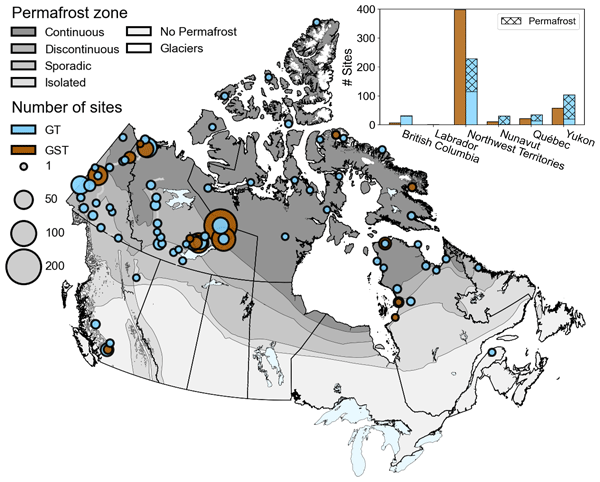
Ground temperature data is vital for permafrost and climate research yet data is often fragmented. We created a standardized collection of ground temperatures from over 900 sites across Canada. From 42 published and unpublished sources, we manually verified, cleaned and standardized data with a new software tool. This dataset supports permafrost research on a nationwide scale and can help improve models by acting as a reliable benchmark.
Angus Moore, Maud Henrion, Yanfei Li, Eléonore du Bois d'Aische, Philip Gautschi, Marcus Christl, François Jonard, Sébastien Lambot, Kristof Van Oost, Sophie Opfergelt, and Veerle Vanacker
Earth Surf. Dynam., 14, 763–780, https://doi.org/10.5194/esurf-14-763-2026, https://doi.org/10.5194/esurf-14-763-2026, 2026
Short summary
Short summary
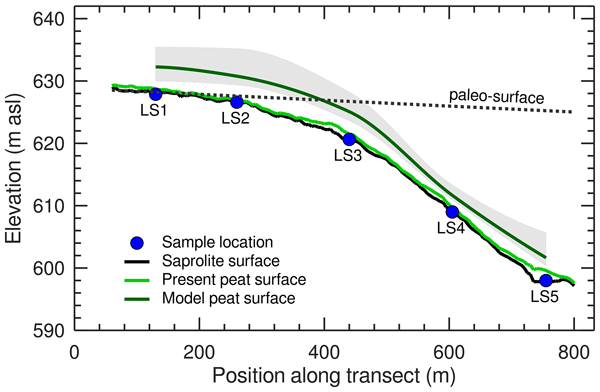
Studying peatland dynamics over long timescales requires a proxy for past peat cover. In this paper, we explore using cosmogenic nuclides to infer peat thicknesses averaged over 100 kyr timescales. We find that long-term peat thicknesses inferred from cosmogenic nuclides at an upland peatland site in the Belgian Ardennes are consistent with independent constraints, but exceed modern peat thicknesses. We attribute this discrepancy to peat degradation associated with historical land use.
Maëlle Villani, Louise M. Farquharson, Vladimir E. Romanovsky, and Sophie Opfergelt
EGUsphere, https://doi.org/10.5194/egusphere-2026-5453, https://doi.org/10.5194/egusphere-2026-5453, 2026
Short summary
Short summary
Taliks, unfrozen ground within permafrost, sustain year-round biogeochemical processes, mobilizing carbon, nutrients, and contaminants through lateral and open taliks, while closed and isolated taliks confine reactions locally. In this manuscript, we argue that taliks represent a critical and overlooked driver of Arctic and sub-Arctic biogeochemical processes. We put forward three testable hypotheses to advance the study of talik biogeochemical functioning and we propose a related road map.
Maxime Thomas, Thomas Moenaert, Julien Radoux, Baptiste Delhez, Eléonore du Bois d'Aische, Maëlle Villani, Catherine Hirst, Erik Lundin, François Jonard, Sébastien Lambot, Kristof Van Oost, Veerle Vanacker, Matthias B. Siewert, Carl-Magnus Mörth, Michael W. Palace, Ruth K. Varner, Franklin B. Sullivan, Christina Herrick, and Sophie Opfergelt
The Cryosphere, 20, 5271–5301, https://doi.org/10.5194/tc-20-5271-2026, https://doi.org/10.5194/tc-20-5271-2026, 2026
Short summary
Short summary
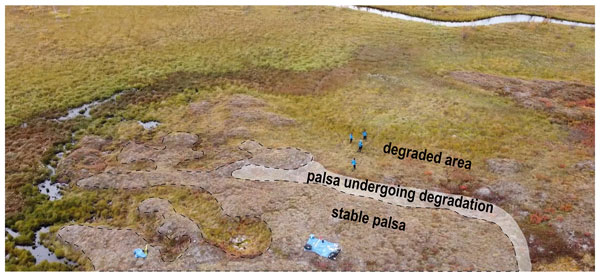
This study examines the rate of permafrost degradation, in the form of the transition from intact well-drained palsa to fully thawed and inundated fen at the Stordalen mire, Abisko, Sweden. Across the 14 hectares of the palsa mire, we demonstrate a 10-fold acceleration of the degradation in 2019–2021 compared to previous periods (1970–2014) which might lead to a pool of 12 × 10³ kg of organic carbon exposed annually for the topsoil (23 cm depth).
Anna-Maria Virkkala, Isabel Wargowsky, Judith Vogt, McKenzie A. Kuhn, Simran Madaan, Tiffany Windholz, Kyle A. Arndt, Gerard Rocher-Ros, Mathias Göckede, David Olefeldt, Edward A. G. Schuur, David Bastviken, Richard O'Keefe, Brendan M. Rogers, Jennifer D. Watts, Kelcy Kent, Kristoffer Aalstad, Kelly Aho, Joonatan Ala-Könni, Haley Alcock, Inge Althuizen, Christopher D. Arp, Jun Asanuma, Mika Aurela, Sivakiruthika Balathandayuthabani, Katrin Attermeyer, Alan Barr, Maialen Barret, Ochirbat Batkhishig, Christina Biasi, Mats P. Björkman, Andrew Black, Elena Blanc-Betes, Pascal Bodmer, Julia Boike, Abdullah Bolek, Frédéric Bouchard, Ingeborg Bussmann, Lea Cabrol, Eleonora Canfora, Sean Carey, Karel Castro-Morales, Namyi Chae, Andreas Christen, Torben R. Christensen, Casper T. Christiansen, Housen Chu, Graham Clark, Francois Clayer, Patrick Crill, Christopher Cunada, Scott J. Davidson, Joshua F. Dean, Sigrid Dengel, Matteo Detto, Catherine Dieleman, Florent Domine, Egor Dyukarev, Colin Edgar, Bo Elberling, Craig A. Emmerton, Eugenie Euskirchen, Grant Falvo, Thomas Friborg, Michelle Garneau, Mariasilvia Giamberini, Mikhail V. Glagolev, Miquel A. Gonzalez-Meler, Gustaf Granath, Jón Guðmundsson, Konsta Happonen, Yoshinobu Harazono, Lorna Harris, Josh Hashemi, Nicholas Hasson, Janna Heerah, Liam Heffernan, Manuel Helbig, Warren Helgason, Michal Heliasz, Greg Henry, Geert Hensgens, Tetsuya Hiyama, Beth Holmes, Macall Hock, David Holl, Jutta Holst, Thomas Holst, Gabriel Hould-Gosselin, Elyn Humphreys, Jacqueline Hung, Jussi Huotari, Hiroki Ikawa, Danil V. Ilyasov, Mamoru Ishikawa, Go Iwahana, Hiroki Iwata, Marcin Antoni Jackowicz-Korczynski, Joachim Jansen, Järvi Järveoja, Vincent E. J. Jassey, Rasmus Jensen, Katharina Jentzsch, Robert G. Jespersen, Carl-Fredrik Johannesson, Cheristy P. Jones, Anders Jonsson, Ji Young Jung, Sari Juutinen, Evan Kane, Jan Karlsson, Sergey Karsanaev, Kuno Kasak, Julia Kelly, Kasha Kempton, Marcus Klaus, George W. Kling, Natascha Kljun, Jacqueline Knutson, Hideki Kobayashi, John Kochendorfer, Kukka-Maaria Kohonen, Pasi Kolari, Mika Korkiakoski, Aino Korrensalo, Pirkko Kortelainen, Egle Koster, Kajar Koster, Ayumi Kotani, Praveena Krishnan, Juliya Kurbatova, Lars Kutzbach, Min Jung Kwon, Ethan D. Kyzivat, Jessica Lagroix, Theodore Langhorst, Elena Lapshina, Tuula Larmola, Klaus S. Larsen, Isabelle Laurion, Justin Ledman, Hanna Lee, A. Joshua Leffler, Lance Lesack, Anders Lindroth, David Lipson, Annalea Lohila, Efrén López-Blanco, Vincent L. St. Louis, Erik Lundin, Miska Luoto, Takashi Machimura, Marta Magnani, Avni Malhotra, Marja Maljanen, Ivan Mammarella, Elisa Männistö, Luca Belelli Marchesini, Phil Marsh, Pertti J. Martikainen, Maija E. Marushchak, Mikhail Mastepanov, Alex Mavrovic, Trofim Maximov, Christina Minions, Daniel F. Nadeau, Marco Montemayor, Tomoaki Morishita, Patrick Murphy, Erin Nicholls, Mats B. Nilsson, Anastasia Niyazova, Jenni Nordén, Koffi Dodji Noumonvi, Hannu Nykänen, Walter Oechel, Anne Ojala, Tomohiro Okadera, Sujan Pal, Alexey V. Panov, Tim Papakyriakou, Dario Papale, Sang-Jong Park, Frans-Jan W. Parmentier, Gilberto Pastorello, Mike Peacock, Matthias Peichl, Roman Petrov, Kyra St. Pierre, Norbert Pirk, Jessica Plein, Vilmantas Preskienis, Anatoly Prokushkin, Jukka Pumpanen, Hilary A. Rains, Niklas Rakos, Aleksi Räsänen, Helena Rautakoski, Riikka Rinnan, Janne Rinne, Adrian Rocha, Nigel Roulet, Alexandre Roy, Anna Rutgersson, Aleksandr F. Sabrekov, Torsten Sachs, Erik Sahlée, Alejandro Salazar, Henrique Oliveira Sawakuchi, Christopher Schulze, Roger Seco, Armando Sepulveda-Jauregui, Svetlana Serikova, Abbey Serrone, Hanna M. Silvennoinen, Sofie Sjogersten, June Skeeter, Jo Snöälv, Sebastian Sobek, Oliver Sonnentag, Emily H. Stanley, Maria Strack, Lena Strom, Patrick Sullivan, Ryan Sullivan, Anna Sytiuk, Torbern Tagesson, Pierre Taillardat, Julie Talbot, Suzanne E. Tank, Mario Tenuta, Irina Terenteva, Frederic Thalasso, Antoine Thiboult, Halldor Thorgeirsson, Fenix Garcia Tigreros, Margaret Torn, Amy Townsend-Small, Claire Treat, Alain Tremblay, Carlo Trotta, Eeva-Stiina Tuittila, Merritt Turetsky, Masahito Ueyama, Muhammad Umair, Aki Vähä, Lona van Delden, Maarten van Hardenbroek, Andrej Varlagin, Ruth K. Varner, Tarmo Virtanen, Elena Veretennikova, Timo Vesala, Carolina Voigt, Jorien E. Vonk, Robert Wagner, Katey Walter Anthony, Qinxue Wang, Masataka Watanabe, Hailey Webb, Jeffrey M. Welker, Andreas Westergaard-Nielsen, Sebastian Westermann, Jeffrey R. White, Christian Wille, Scott N. Williamson, Scott Zolkos, Donatella Zona, and Susan M. Natali
Earth Syst. Sci. Data, 18, 6357–6409, https://doi.org/10.5194/essd-18-6357-2026, https://doi.org/10.5194/essd-18-6357-2026, 2026
Short summary
Short summary
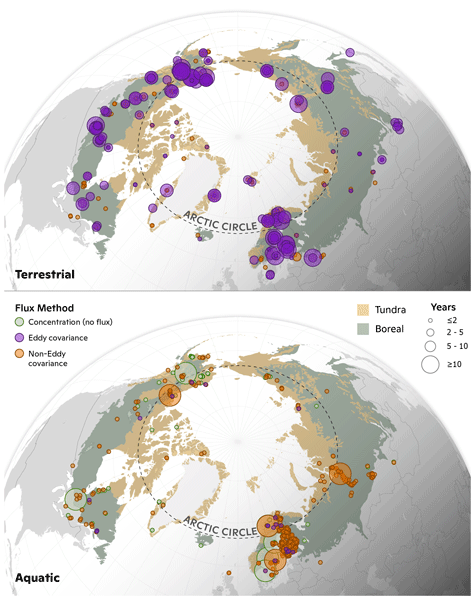
This dataset includes monthly measurements of carbon dioxide and methane exchange between land, water, and the atmosphere from over 1000 sites in Arctic and boreal regions. It combines measurements from a variety of ecosystems, including wetlands, forests, tundra, lakes, and rivers, gathered by over 260 researchers from 1984–2024. This dataset can be used to improve and reduce uncertainty in carbon budgets in order to strengthen our understanding of climate feedbacks in a warming world.
Patrick Neuberger, Alireza Saidi-Mehrabad, Duane Froese, and Brian Lanoil
Biogeosciences, 23, 5239–5253, https://doi.org/10.5194/bg-23-5239-2026, https://doi.org/10.5194/bg-23-5239-2026, 2026
Short summary
Short summary
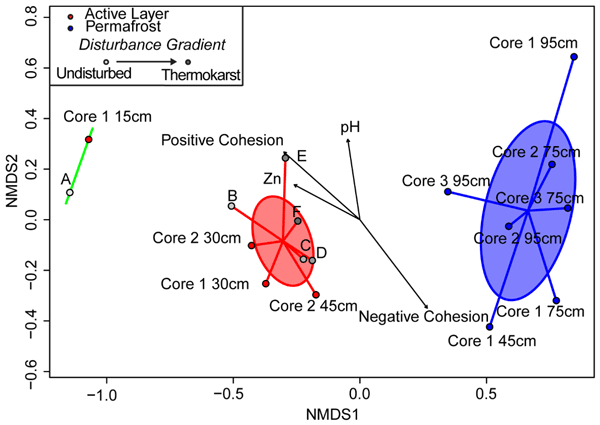
Permafrost is at increased risk of thaw due to climate change and anthropogenic disturbances. As permafrost thaws, the microbiomes within these systems may become more active and change in composition, releasing greenhouse gases such as CO2 and CH4. In this study, we determined that permafrost thaw caused by road construction caused permafrost microbiomes to become more similar to surface soils, which has implications for greenhouse gas modelling.
Maxime Thomas, Julien Fouché, Hugues Titeux, Charlotte Morelle, Nathan Bemelmans, Melissa J. Lafrenière, Joanne K. Heslop, and Sophie Opfergelt
SOIL, 12, 633–664, https://doi.org/10.5194/soil-12-633-2026, https://doi.org/10.5194/soil-12-633-2026, 2026
Short summary
Short summary
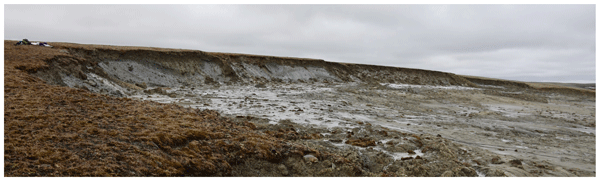
This study examines organic carbon (OC)–mineral interactions in permafrost soils undergoing thermokarst degradation in Cape Bounty (Melville Island, Canada). Chemically stabilized OC accounts for 13 ± 5 % as organo-metallic complexes and 6 ± 2 % as associations with iron oxides. Including physical protection, up to 64 ± 10 % of OC is mineral-protected. Deeper layers show a sharp decline in mineral-bound OC, suggesting increased vulnerability to degradation when exposed by deep thaw features.
Yanfei Li, Maud Henrion, Angus Moore, Sébastien Lambot, Sophie Opfergelt, Veerle Vanacker, François Jonard, and Kristof Van Oost
Biogeosciences, 22, 6369–6392, https://doi.org/10.5194/bg-22-6369-2025, https://doi.org/10.5194/bg-22-6369-2025, 2025
Short summary
Short summary
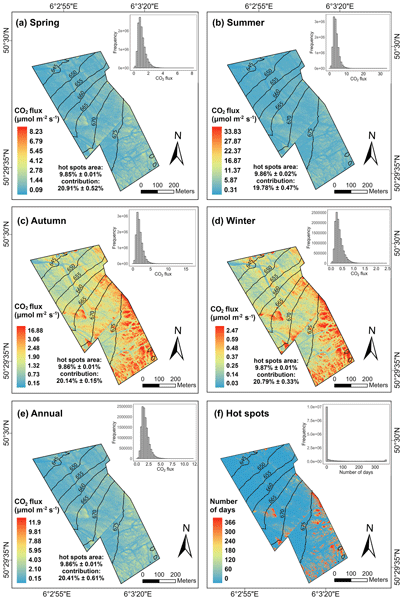
Combining Unmanned Aerial Vehicle (UAV) remote sensing with in-situ monitoring provides high spatial-temporal insights into CO2 fluxes from temperate peatlands. Dynamic factors (soil temperature and moisture) are the primary drivers contributing to 29 % of the spatial and 43 % of the seasonal variation. UAVs are effective tools for mapping daily soil respiration. CO2 fluxes from hot spots & moments contribute 20 % and 30 % of total CO2 fluxes, despite representing only 10 % of the area and time.
Maud Henrion, Sophie Opfergelt, Maëlle Villani, Philippe Roux, Djim Verleene, Eléonore du Bois d'Aische, Maxime Thomas, Gilles Denis, Edward A. G. Schuur, François Jonard, Veerle Vanacker, Kristof Van Oost, and Sébastien Lambot
EGUsphere, https://doi.org/10.5194/egusphere-2025-4667, https://doi.org/10.5194/egusphere-2025-4667, 2025
Preprint archived
Short summary
Short summary
Taliks play an important role in permafrost degradation. This study used Ground-penetrating radar to map taliks in Alaska, focusing on water tracks. The method successfully detected taliks and determined their upper depth. These were more frequent, shallower, and thicker under water tracks. This study showed that water tracks are hotspots for talik formation, with major implications for winter water flow in permafrost landscapes.
Jessica A. Serbu, Suzanne E. Tank, Bernhard Peucker-Ehrenbrink, Xiying Sun, Craig A. Emmerton, and Vincent L. St. Louis
EGUsphere, https://doi.org/10.5194/egusphere-2025-5020, https://doi.org/10.5194/egusphere-2025-5020, 2025
Short summary
Short summary
In water, CO2 can chemically react with (i.e., weather) fine sediment produced as glaciers abrade bedrock. Studying three glacier-fed rivers in the Canadian Rockies across multiple seasons, we found that near glaciers, rivers consumed CO2 mainly via carbonate weathering. Importance of silicate weathering and organic matter decomposition as drivers of CO2 cycling increased downriver. As glaciers retreat, subsequent shifts in river biogeochemistry will affect regional and global carbon budgets.
Mahya Roustaei, Joel Pumple, Jordan Harvey, and Duane Froese
The Cryosphere, 19, 4259–4275, https://doi.org/10.5194/tc-19-4259-2025, https://doi.org/10.5194/tc-19-4259-2025, 2025
Short summary
Short summary
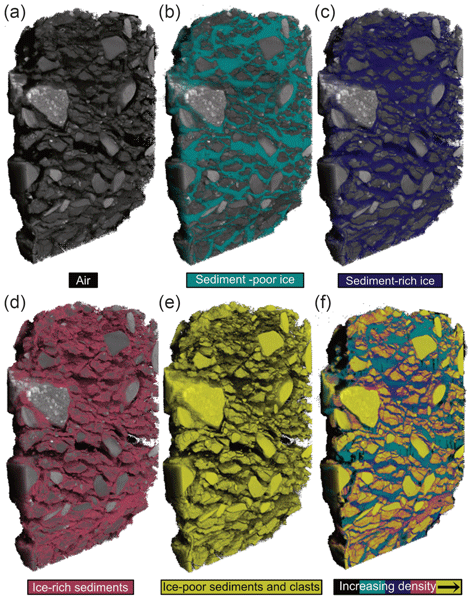
This study investigated the application of CT (computed tomography) scanning to tackle the limitations of traditional destructive methods in characterizing permafrost cores. Five different permafrost cores were scanned at resolutions of 65 and 25 μm with new calibration method. The identification of different materials from CT images showed air (gas), ice (excess and pore), and sediments using an Otsu segmentation method. The results were validated by a destructive (cuboid) and a non-destructive method.
Cécile Osy, Sophie Opfergelt, Arsène Druel, and François Massonnet
EGUsphere, https://doi.org/10.5194/egusphere-2025-3680, https://doi.org/10.5194/egusphere-2025-3680, 2025
Preprint archived
Short summary
Short summary
The refreezing period of the active layer (the layer on top of the permafrost that freezes and thaws each year) is changing, with a delay of about five days over a large area in Siberia from 1950 to 2020 in the ERA5-Land reanalysis data. We investigate the drivers of this delay, and find that 2 m air temperature is the main driver of these changes at the large scale, which contrasts with field results in which snow cover is the main driver of changes in refreezing dynamics.
Hayley F. Drapeau, Suzanne E. Tank, Maria A. Cavaco, Jessica A. Serbu, Vincent L. St. Louis, and Maya P. Bhatia
Biogeosciences, 22, 1369–1391, https://doi.org/10.5194/bg-22-1369-2025, https://doi.org/10.5194/bg-22-1369-2025, 2025
Short summary
Short summary
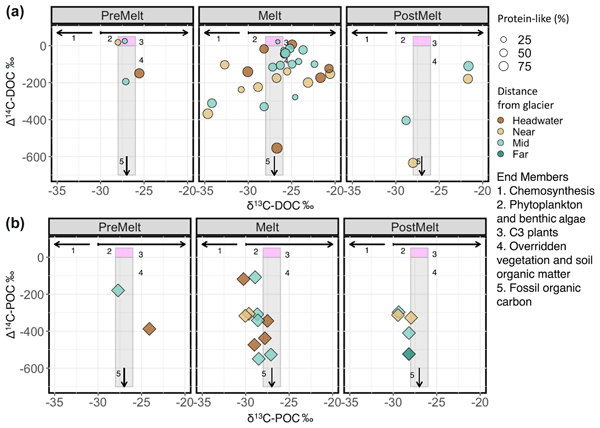
From glacial headwaters to 100 km downstream, we found clear organic matter gradients in Canadian Rocky Mountain rivers. In contrast, microbial communities exhibited overall cohesion, indicating that species dispersal may be an over-riding control on community dynamics in these connected rivers. Identification of glacial-specific microbes suggests that glaciers seed headwater microbial assemblages; these findings show the importance of glacial waters and microbiomes in changing mountain systems.
Benjamin J. Stoker, Helen E. Dulfer, Chris R. Stokes, Victoria H. Brown, Christopher D. Clark, Colm Ó Cofaigh, David J. A. Evans, Duane Froese, Sophie L. Norris, and Martin Margold
The Cryosphere, 19, 869–910, https://doi.org/10.5194/tc-19-869-2025, https://doi.org/10.5194/tc-19-869-2025, 2025
Short summary
Short summary
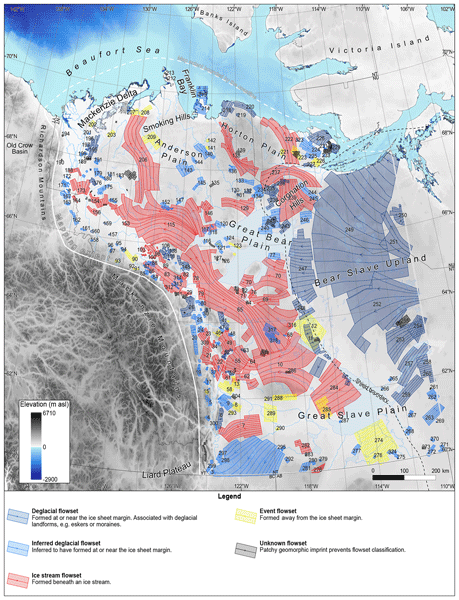
The retreat of the northwestern Laurentide Ice Sheet allows us to investigate how the ice drainage network evolves over millennial timescales and understand the influence of climate forcing, glacial lakes and the underlying geology on the rate of deglaciation. We reconstruct the changes in ice flow at 500-year intervals and identify rapid reorganisations of the drainage network, including variations in ice streaming that we link to climatically driven changes in the ice sheet surface slope.
Bennet Juhls, Anne Morgenstern, Jens Hölemann, Antje Eulenburg, Birgit Heim, Frederieke Miesner, Hendrik Grotheer, Gesine Mollenhauer, Hanno Meyer, Ephraim Erkens, Felica Yara Gehde, Sofia Antonova, Sergey Chalov, Maria Tereshina, Oxana Erina, Evgeniya Fingert, Ekaterina Abramova, Tina Sanders, Liudmila Lebedeva, Nikolai Torgovkin, Georgii Maksimov, Vasily Povazhnyi, Rafael Gonçalves-Araujo, Urban Wünsch, Antonina Chetverova, Sophie Opfergelt, and Pier Paul Overduin
Earth Syst. Sci. Data, 17, 1–28, https://doi.org/10.5194/essd-17-1-2025, https://doi.org/10.5194/essd-17-1-2025, 2025
Short summary
Short summary
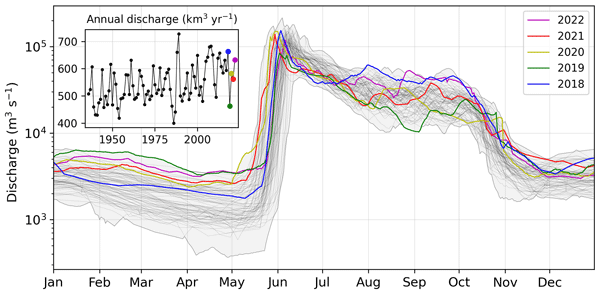
The Siberian Arctic is warming fast: permafrost is thawing, river chemistry is changing, and coastal ecosystems are affected. We aimed to understand changes in the Lena River, a major Arctic river flowing to the Arctic Ocean, by collecting 4.5 years of detailed water data, including temperature and carbon and nutrient contents. This dataset records current conditions and helps us to detect future changes. Explore it at https://doi.org/10.1594/PANGAEA.913197 and https://lena-monitoring.awi.de/.
Sophie L. Norris, Martin Margold, David J. A. Evans, Nigel Atkinson, and Duane G. Froese
The Cryosphere, 18, 1533–1559, https://doi.org/10.5194/tc-18-1533-2024, https://doi.org/10.5194/tc-18-1533-2024, 2024
Short summary
Short summary
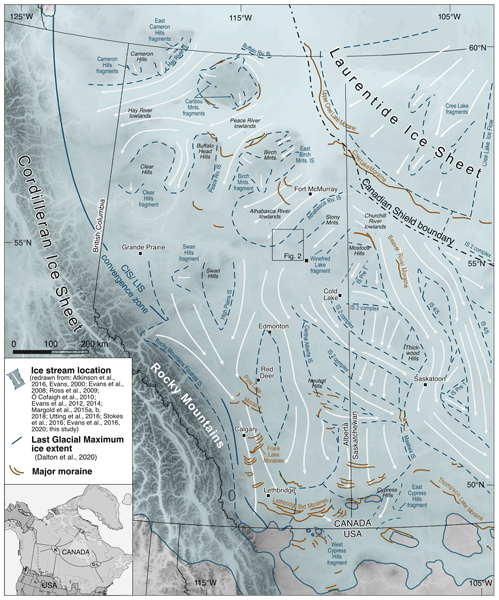
Associated with climate change between the Last Glacial Maximum and the current interglacial period, we reconstruct the behaviour of the southwestern Laurentide Ice Sheet, which covered the Canadian Prairies, using detailed landform mapping. Our reconstruction depicts three shifts in the ice sheet’s dynamics. We suggest these changes resulted from ice sheet thinning triggered by abrupt climatic change. However, we show that regional lithology and topography also play an important role.
Joel Pumple, Alistair Monteath, Jordan Harvey, Mahya Roustaei, Alejandro Alvarez, Casey Buchanan, and Duane Froese
The Cryosphere, 18, 489–503, https://doi.org/10.5194/tc-18-489-2024, https://doi.org/10.5194/tc-18-489-2024, 2024
Short summary
Short summary
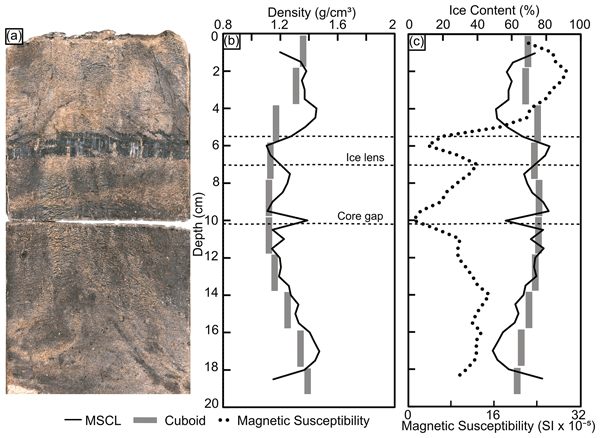
Ice content is a critical variable in the context of thawing permafrost, and permafrost cores provide a means to measure the characteristics of frozen ground; however, these measurements are typically destructive and time intensive. Multi-sensor core logging (MSCL) provides a fast, non-destructive method to image permafrost cores, measure bulk density, and estimate ice content. The use of MSCL will improve existing digital permafrost archives by adding high-quality and reproducible data.
Jennika Hammar, Inge Grünberg, Steven V. Kokelj, Jurjen van der Sluijs, and Julia Boike
The Cryosphere, 17, 5357–5372, https://doi.org/10.5194/tc-17-5357-2023, https://doi.org/10.5194/tc-17-5357-2023, 2023
Short summary
Short summary
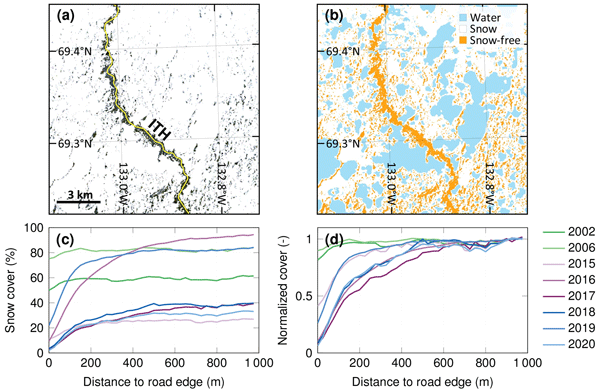
Roads on permafrost have significant environmental effects. This study assessed the Inuvik to Tuktoyaktuk Highway (ITH) in Canada and its impact on snow accumulation, albedo and snowmelt timing. Our findings revealed that snow accumulation increased by up to 36 m from the road, 12-day earlier snowmelt within 100 m due to reduced albedo, and altered snowmelt patterns in seemingly undisturbed areas. Remote sensing aids in understanding road impacts on permafrost.
Jurjen van der Sluijs, Steven V. Kokelj, and Jon F. Tunnicliffe
The Cryosphere, 17, 4511–4533, https://doi.org/10.5194/tc-17-4511-2023, https://doi.org/10.5194/tc-17-4511-2023, 2023
Short summary
Short summary
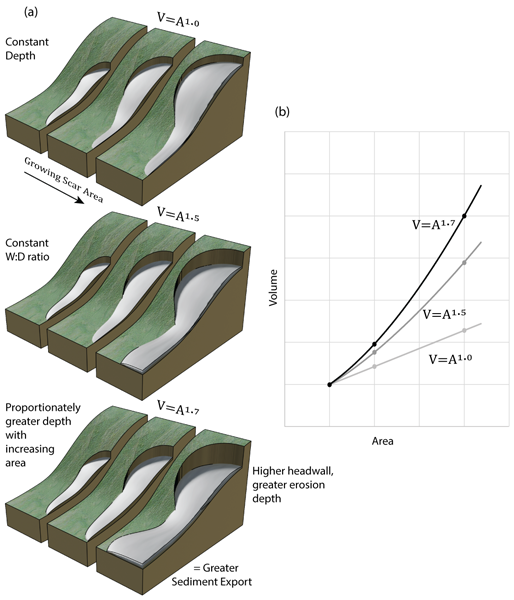
There is an urgent need to obtain size and erosion estimates of climate-driven landslides, such as retrogressive thaw slumps. We evaluated surface interpolation techniques to estimate slump erosional volumes and developed a new inventory method by which the size and activity of these landslides are tracked through time. Models between slump area and volume reveal non-linear intensification, whereby model coefficients improve our understanding of how permafrost landscapes may evolve over time.
Elisabeth Mauclet, Maëlle Villani, Arthur Monhonval, Catherine Hirst, Edward A. G. Schuur, and Sophie Opfergelt
Earth Syst. Sci. Data, 15, 3891–3904, https://doi.org/10.5194/essd-15-3891-2023, https://doi.org/10.5194/essd-15-3891-2023, 2023
Short summary
Short summary
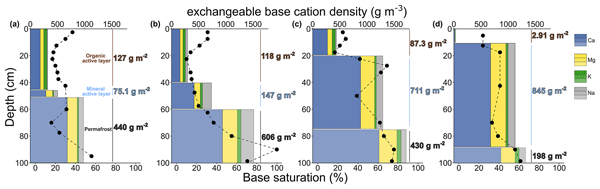
Permafrost ecosystems are limited in nutrients for vegetation development and constrain the biological activity to the active layer. Upon Arctic warming, permafrost degradation exposes organic and mineral soil material that may directly influence the capacity of the soil to retain key nutrients for vegetation growth and development. Here, we demonstrate that the average total exchangeable nutrient density (Ca, K, Mg, and Na) is more than 2 times higher in the permafrost than in the active layer.
Benjamin J. Stoker, Martin Margold, John C. Gosse, Alan J. Hidy, Alistair J. Monteath, Joseph M. Young, Niall Gandy, Lauren J. Gregoire, Sophie L. Norris, and Duane Froese
The Cryosphere, 16, 4865–4886, https://doi.org/10.5194/tc-16-4865-2022, https://doi.org/10.5194/tc-16-4865-2022, 2022
Short summary
Short summary
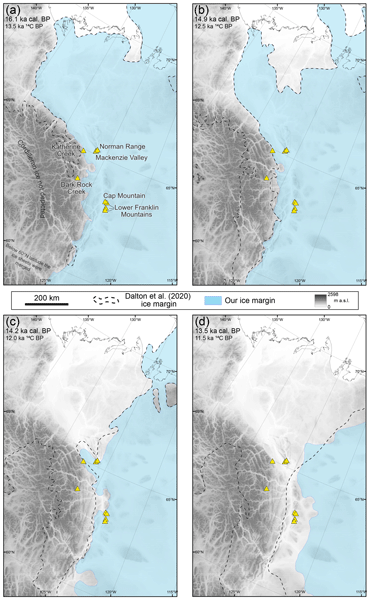
The Laurentide Ice Sheet was the largest ice sheet to grow and disappear in the Northern Hemisphere during the last glaciation. In northwestern Canada, it covered the Mackenzie Valley, blocking the migration of fauna and early humans between North America and Beringia and altering the drainage systems. We reconstruct the timing of ice sheet retreat in this region and the implications for the migration of early humans into North America, the drainage of glacial lakes, and past sea level rise.
Elisabeth Mauclet, Yannick Agnan, Catherine Hirst, Arthur Monhonval, Benoît Pereira, Aubry Vandeuren, Maëlle Villani, Justin Ledman, Meghan Taylor, Briana L. Jasinski, Edward A. G. Schuur, and Sophie Opfergelt
Biogeosciences, 19, 2333–2351, https://doi.org/10.5194/bg-19-2333-2022, https://doi.org/10.5194/bg-19-2333-2022, 2022
Short summary
Short summary
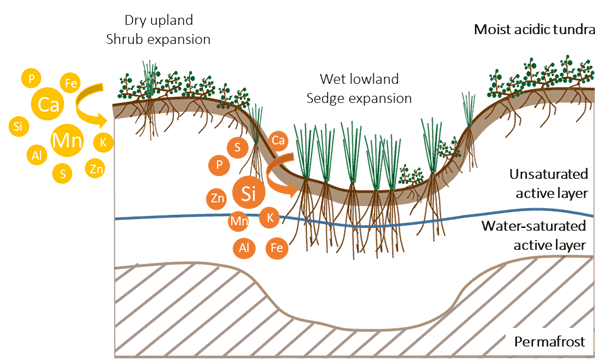
Arctic warming and permafrost degradation largely affect tundra vegetation. Wetter lowlands show an increase in sedges, whereas drier uplands favor shrub expansion. Here, we demonstrate that the difference in the foliar elemental composition of typical tundra vegetation species controls the change in local foliar elemental stock and potential mineral element cycling through litter production upon a shift in tundra vegetation.

Sarah Shakil, Suzanne E. Tank, Jorien E. Vonk, and Scott Zolkos
Biogeosciences, 19, 1871–1890, https://doi.org/10.5194/bg-19-1871-2022, https://doi.org/10.5194/bg-19-1871-2022, 2022
Short summary
Short summary
Permafrost thaw-driven landslides in the western Arctic are increasing organic carbon delivered to headwaters of drainage networks in the western Canadian Arctic by orders of magnitude. Through a series of laboratory experiments, we show that less than 10 % of this organic carbon is likely to be mineralized to greenhouse gases during transport in these networks. Rather most of the organic carbon is likely destined for burial and sequestration for centuries to millennia.
Cited articles
Abbott, B. W., Larouche, J. R., Jones, J. B., Bowden, W. B., and Balser, A. W.: Elevated dissolved organic carbon biodegradability from thawing and collapsing permafrost, J. Geophys. Res.-Biogeo., 119, 2049–2063, https://doi.org/10.1002/2014JG002678, 2014.
Abramoff, R. Z., Georgiou, K., Guenet, B., Torn, M. S., Huang, Y., Zhang, H., Feng, W., Jagadamma, S., Kaiser, K., Kothawala, D., Mayes, M. A., and Ciais, P.: How much carbon can be added to soil by sorption?, Biogeochemistry, 152, 127–142, https://doi.org/10.1007/s10533-021-00759-x, 2021.
Arvola, L. and Tulcnen, T.: Effects of allochthonous dissolved organic matter and inorganic nutrients on the growth of bacteria and algae from a highly humic lake, Environ. Int., 24, 509–520, https://doi.org/10.1016/S0160-4120(98)00045-2, 1998.
Bascomb, C. L.: Distribution of pyrophosphate-extractable iron and organic carbon in soils of various groups, J. Soil. Sci., 19, 251–268, https://doi.org/10.1111/j.1365-2389.1968.tb01538.x, 1968.
Blakemore, L. C., Searle, P. L., and Daly, B. K.: Methods for chemical analysis of soils, Department of Scientific and Industrial Research, 102 pp., https://doi.org/10.7931/DL1-SBSR-10A, 1981.
Bostock, H. S.: Notes on glaciation in central Yukon Territory, Geological Survey of Canada, 65–36, https://doi.org/10.4095/100937, 1966.
Bröder, L., Keskitalo, K., Zolkos, S., Shakil, S., Tank, S. E., Kokelj, S. V., Tesi, T., Van Dongen, B. E., Haghipour, N., Eglinton, T. I., and Vonk, J. E.: Preferential export of permafrost-derived organic matter as retrogressive thaw slumping intensifies, Environ. Res. Lett., 16, 054059, https://doi.org/10.1088/1748-9326/abee4b, 2021.
Brown, J., Ferrians, O., Heginbottom, J. A., and Melnikov, E. S.: Circum-Arctic map of permafrost and ground-ice conditions, Circum-Pacific Map, 45, U.S. Geological Survey, https://doi.org/10.3133/cp45, 1997.
Brown, J., Ferrians, O., Heginbottom, J. A., and Melnikov, E.: Circum-Arctic map of permafrost and ground-ice conditions (GGD318, Version 2), Boulder, Colorado USA. National Snow and Ice Data Center [data set], https://doi.org/10.7265/skbg-kf16, 2002.
Burd, K., Estop-Aragonés, C., Tank, S. E., and Olefeldt, D.: Lability of dissolved organic carbon from boreal peatlands: interactions between permafrost thaw, wildfire, and season, Can. J. Soil. Sci., 100, 503–515, https://doi.org/10.1139/cjss-2019-0154, 2020.
Burke, I. C., Yonker, C. M., Parton, W. J., Cole, C. V., Flach, K., and Schimel, D. S.: Texture, climate, and cultivation effects on soil organic matter content in U.S. grassland soils, Soil Sci. Soc. Am. J., 53, 800–805, https://doi.org/10.2136/sssaj1989.03615995005300030029x, 1989.
Burn, C. R.: Cryostratigraphy, paleogeography, and climate change during the early Holocene warm interval, western Arctic coast, Canada, Can. J. Earth Sci., 34, 912–925, https://doi.org/10.1139/e17-076, 1997.
Calmels, F. and Froese, D. G.: Cryostratigraphic record of permafrost degradation and recovery following historic surface disturbances, Klondike area, Yukon, Yukon Exploration and Geology 2008, Yukon Geological Survey, https://emrlibrary.gov.yk.ca/ygs/yeg/2008/2008_p085-098.pdf (last access: 10 November 2024), 2009.
Calmels, F., Froese, D. G., and Clavano, W. R.: Cryostratigraphic record of permafrost degradation and recovery following historic (1898–1992) surface disturbances in the Klondike region, central Yukon Territory, Can. J. Earth Sci., 49, 938–952, https://doi.org/10.1139/e2012-023, 2012.
Catalán, N., Pastor, A., Borrego, C. M., Casas-Ruiz, J. P., Hawkes, J. A., Gutiérrez, C., Von Schiller, D., and Marcé, R.: The relevance of environment vs. composition on dissolved organic matter degradation in freshwaters, Limnol. Oceanogr., 66, 306–320, https://doi.org/10.1002/lno.11606, 2021.
Churchman, G. J., Singh, M., Schapel, A., Sarkar, B., and Bolan, N.: Clay minerals as the key to the sequestration of carbon in soils, Clay. Clay Miner., 68, 135–143, https://doi.org/10.1007/s42860-020-00071-z, 2020.
Coble, P. G.: Characterization of marine and terrestrial DOM in seawater using excitation-emission matrix spectroscopy, Mar. Chem., 51, 325–346, https://doi.org/10.1016/0304-4203(95)00062-3, 1996.
Coble, P. G., Del Castillo, C. E., and Avril, B.: Distribution and optical properties of CDOM in the Arabian Sea during the 1995 Southwest Monsoon, Deep-Sea Res. Pt. II, 45, 2195–2223, https://doi.org/10.1016/S0967-0645(98)00068-X, 1998.
Cocker, S. L., Francis, E., Wanket, C., Monteath, A. J., Kuzmina, S., Tirlea, D., Jensen, B. J. L., Heintzman, P. D., Shapiro, B., and Froese, D. G.: Latest Pleistocene shrub expansion and steppe-tundra persistence in easternmost Beringia, Quaternary Sci. Rev., 388, 110081, https://doi.org/10.1016/j.quascirev.2026.110081, 2026.
Demuro, M., Roberts, R. G., Froese, D. G., Arnold, L. J., Brock, F., and Ramsey, C. B.: Optically stimulated luminescence dating of single and multiple grains of quartz from perennially frozen loess in western Yukon Territory, Canada: Comparison with radiocarbon chronologies for the late Pleistocene Dawson tephra, Quat. Geochronol., 3, 346–364, https://doi.org/10.1016/j.quageo.2007.12.003, 2008.
Drake, T. W., Raymond, P. A., and Spencer, R. G. M.: Terrestrial carbon inputs to inland waters: A current synthesis of estimates and uncertainty, Limnol. Oceanogr. Lett., 3, 132–142, https://doi.org/10.1002/lol2.10055, 2018.
Duk-Rodkin, A.: Surficial geology, Dahadinni River, Northwest Territories, NTS 95-N northwest, Canadian Geoscience Map 298, Geological Survey of Canada, https://doi.org/10.4095/299113, 2018.
Duk-Rodkin, A. and Hughes, O. L.: Surficial geology, Carcajou Canyon, Northwest Territories, Map 1988A, Geological Survey of Canada, https://doi.org/10.4095/213616, 2002.
Duk-Rodkin, A. and Lemmen, S.: Glacial history of the Mackenzie region, The physical environment of the Mackenzie Valley, Northwest Territories: a base line for the assessment of environmental change, Geological Survey of Canada Bulletin, ISBN 0-660-19564-X, 2000.
Dulfer, H. E., Stoker, B. J., Margold, M., and Stokes, C. R.: Glacial geomorphology of the northwest Laurentide Ice Sheet on the northern Interior Plains and western Canadian Shield, Canada, J. Maps, 19, 2181714, https://doi.org/10.1080/17445647.2023.2181714, 2023.
Dyke, A. S. and Evans, D. J. A.: Ice-marginal terrestrial landsystems: Northern Laurentide and Innuitian ice sheet margins, in: Glacial Landsystems, Routledge, ISBN 9780340806661, 2005.
Dyke, A. S. and Prest, V. K.: Late Wisconsinan and Holocene retreat of the Laurentide Ice Sheet, Geological Survey of Canada, https://doi.org/10.7202/032681ar, 1987.
Ewing, S. A., O'Donnell, J. A., Aiken, G. R., Butler, K., Butman, D., Windham-Myers, L., and Kanevskiy, M. Z.: Long-term anoxia and release of ancient, labile carbon upon thaw of Pleistocene permafrost, Geophys. Res. Lett., 42, https://doi.org/10.1002/2015GL066296, 2015.
Fouché, J., Christiansen, C. T., Lafrenière, M. J., Grogan, P., and Lamoureux, S. F.: Canadian permafrost stores large pools of ammonium and optically distinct dissolved organic matter, Nat. Commun., 11, 4500, https://doi.org/10.1038/s41467-020-18331-w, 2020.
Fraser, T. A. and Burn, C. R.: On the nature and origin of “muck” deposits in the Klondike area, Yukon Territory, Can. J. Earth Sci., 34, 1333–1344, https://doi.org/10.1139/e17-106, 1997.
Froese, D., Westgate, J., Preece, S., and Storer, J.: Age and significance of the Late Pleistocene Dawson tephra in eastern Beringia, Quat. Sci. Rev., 21, 2137–2142, https://doi.org/10.1016/S0277-3791(02)00038-0, 2002.
Froese, D. G., Zazula, G. D., Westgate, J. A., Preece, S. J., Sanborn, P. T., Reyes, A. V., and Pearce, N. J. G.: The Klondike goldfields and Pleistocene environments of Beringia, GSA Today, 19, 4, https://doi.org/10.1130/GSATG54A.1, 2009.
Groeneveld, M., Catalán, N., Attermeyer, K., Hawkes, J., Einarsdóttir, K., Kothawala, D., Bergquist, J., and Tranvik, L.: Selective adsorption of terrestrial dissolved organic matter to inorganic surfaces along a boreal inland water continuum, J. Geophys. Res.-Biogeosci., 125, https://doi.org/10.1029/2019JG005236, 2020.
Groeneveld, M., Kothawala, D. N., and Tranvik, L. J.: Seasonally variable interactions between dissolved organic matter and mineral particles in an agricultural river, Aquat. Sci., 85, 2, https://doi.org/10.1007/s00027-022-00898-9, 2023.
Grosse, G., Romanovsky, V., Jorgenson, T., Anthony, K. W., Brown, J., and Overduin, P. P.: Vulnerability and feedbacks of permafrost to climate change, Eos, Transactions American Geophysical Union, 92, 73–74, https://doi.org/10.1029/2011EO090001, 2011.
Gu, B., Schmitt, J., Chen, Z., Liang, L., and McCarthy, J. F.: Adsorption and desorption of natural organic matter on iron oxide: mechanisms and models, Environ. Sci. Technol., 28, 38–46, https://doi.org/10.1021/es00050a007, 1994.
Guppy, C. N., Menzies, N. W., Moody, P. W., and Blamey, F. P. C.: Competitive sorption reactions between phosphorus and organic matter in soil: a review, Soil Res., 43, 189, https://doi.org/10.1071/SR04049, 2005.
Hanson, P. C., Bade, D. L., Carpenter, S. R., and Kratz, T. K.: Lake metabolism: Relationships with dissolved organic carbon and phosphorus, Limnol. Oceanogr., 48, 1112–1119, https://doi.org/10.4319/lo.2003.48.3.1112, 2003.
Harris, D., Horwáth, W. R., and Van Kessel, C.: Acid fumigation of soils to remove carbonates prior to total organic carbon or carbon-13 isotopic analysis, Soil Sci. Soc. Am. J., 65, 1853–1856, https://doi.org/10.2136/sssaj2001.1853, 2001.
Hassink, J.: The capacity of soils to preserve organic C and N by their association with clay and silt particles, Plant Soil, 191, https://doi.org/10.1023/A:1004213929699, 1997.
Hatten, G. K. F., Kokelj, S. V., Opfergelt, S., Froese, D. G., Alvarez, A., Young, J. M., and Tank, S. E.: Biogeochemical characteristics and organic carbon sorption properties of permafrost-origin sediments from northwestern Canada, V1, Borealis [data set], https://doi.org/10.5683/SP3/NFOPAF, 2026.
Heginbottom, J. A., Dubreuil, M.-A., and Harker, P. T.: Canada, permafrost, MCR Series, Natural Resources Canada, Geomatics Canada, https://doi.org/10.4095/294672, 1995.
Helms, J. R., Stubbins, A., Ritchie, J. D., Minor, E. C., Kieber, D. J., and Mopper, K.: Absorption spectral slopes and slope ratios as indicators of molecular weight, source, and photobleaching of chromophoric dissolved organic matter, Limnol. Oceanogr., 53, 955–969, https://doi.org/10.4319/lo.2008.53.3.0955, 2008.
Herndon, E., AlBashaireh, A., Singer, D., Roy Chowdhury, T., Gu, B., and Graham, D.: Influence of iron redox cycling on organo-mineral associations in Arctic tundra soil, Geochim. Cosmochim. Ac., 207, 210–231, https://doi.org/10.1016/j.gca.2017.02.034, 2017.
Hernes, P. J., Robinson, A. C., and Aufdenkampe, A. K.: Fractionation of lignin during leaching and sorption and implications for organic matter “freshness”, Geophys. Res. Lett., 34, 2007GL031017, https://doi.org/10.1029/2007GL031017, 2007.
Hilton, R. G., Galy, V., Gaillardet, J., Dellinger, M., Bryant, C., O'Regan, M., Gröcke, D. R., Coxall, H., Bouchez, J., and Calmels, D.: Erosion of organic carbon in the Arctic as a geological carbon dioxide sink, Nature, 524, 84–87, https://doi.org/10.1038/nature14653, 2015.
Hirst, C., Mauclet, E., Monhonval, A., Tihon, E., Ledman, J., Schuur, E. A. G., and Opfergelt, S.: Seasonal changes in hydrology and permafrost degradation control mineral element-bound DOC transport from permafrost soils to streams, Global Biogeochem. Cy., 36, e2021GB007105, https://doi.org/10.1029/2021GB007105, 2022.
Hubbard, C. R. and Snyder, R. L.: RIR – Measurement and Use in Quantitative XRD, Powder Diffr., 3, 74–77, https://doi.org/10.1017/S0885715600013257, 1988.
Jastrow, J. D., Boutton, T. W., and Miller, R. M.: Carbon dynamics of aggregate-associated organic matter estimated by Carbon-13 natural abundance, Soil Sci. Soc. Am. J., 60, 801–807, 1996.
Jongejans, L. L., Liebner, S., Knoblauch, C., Mangelsdorf, K., Ulrich, M., Grosse, G., Tanski, G., Fedorov, A. N., Konstantinov, P. Y., Windirsch, T., Wiedmann, J., and Strauss, J.: Greenhouse gas production and lipid biomarker distribution in Yedoma and Alas thermokarst lake sediments in Eastern Siberia, Glob. Change Biol., 27, 2822–2839, https://doi.org/10.1111/gcb.15566, 2021.
Jorgenson, M. T., Kanevskiy, M., Shur, Y., Moskalenko, N., Brown, D. R. N., Wickland, K., Striegl, R., and Koch, J.: Role of ground ice dynamics and ecological feedbacks in recent ice wedge degradation and stabilization, J. Geophys. Res.-Earth, 120, 2280–2297, https://doi.org/10.1002/2015JF003602, 2015.
Kaiser, K. and Guggenberger, G.: The role of DOM sorption to mineral surfaces in the preservation of organic matter in soils, Org. Geochem., 31, 711–725, https://doi.org/10.1016/S0146-6380(00)00046-2, 2000.
Kaiser, K. and Zech, W.: Competitive sorption of dissolved organic matter fractions to soils and related mineral phases, Soil Sci. Soc. Am. J., 61, 64–69, https://doi.org/10.2136/sssaj1997.03615995006100010011x, 1997.
Kaiser, K., Guggenberger, G., and Zech, W.: Sorption of DOM and DOM fractions to forest soils, Geoderma, 74, 281–303, https://doi.org/10.1016/S0016-7061(96)00071-7, 1996.
Kaiser, K., Kaupenjohann, M., and Zech, W.: Sorption of dissolved organic carbon in soils: effects of soil sample storage, soil-to-solution ratio, and temperature, Geoderma, 99, 317–328, https://doi.org/10.1016/S0016-7061(00)00077-X, 2001.
Kalbitz, K., Schmerwitz, J., Schwesig, D., and Matzner, E.: Biodegradation of soil-derived dissolved organic matter as related to its properties, Geoderma, 113, 273–291, https://doi.org/10.1016/S0016-7061(02)00365-8, 2003.
Kalbitz, K., Schwesig, D., Rethemeyer, J., and Matzner, E.: Stabilization of dissolved organic matter by sorption to the mineral soil, Soil Biol. Biochem., 37, 1319–1331, https://doi.org/10.1016/j.soilbio.2004.11.028, 2005.
Kawahigashi, M., Kaiser, K., Rodionov, A., and Guggenberger, G.: Sorption of dissolved organic matter by mineral soils of the Siberian forest tundra: DOM sorption on permafrost-affected soils, Glob. Change Biol., 12, 1868–1877, https://doi.org/10.1111/j.1365-2486.2006.01203.x, 2006.
Keller, K., Blum, J. D., and Kling, G. W.: Stream geochemistry as an indicator of increasing permafrost thaw depth in an arctic watershed, Chem. Geol., 273, 76–81, https://doi.org/10.1016/j.chemgeo.2010.02.013, 2010.
Kennedy, K. E., Froese, D. G., Zazula, G. D., and Lauriol, B.: Last Glacial Maximum age for the northwest Laurentide maximum from the Eagle River spillway and delta complex, northern Yukon, Quat. Sci. Rev., 29, 1288–1300, https://doi.org/10.1016/j.quascirev.2010.02.015, 2010.
Keskitalo, K. H., Bröder, L., Shakil, S., Zolkos, S., Tank, S. E., van Dongen, B. E., Tesi, T., Haghipour, N., Eglinton, T. I., Kokelj, S. V., and Vonk, J. E.: Downstream evolution of particulate organic matter composition from permafrost thaw slumps, Front. Earth Sci., 9, 642675, https://doi.org/10.3389/feart.2021.642675, 2021.
Kleber, M., Nico, P. S., Plante, A., Filley, T., Kramer, M., Swanston, C., and Sollins, P.: Old and stable soil organic matter is not necessarily chemically recalcitrant: implications for modeling concepts and temperature sensitivity, Glob. Change Biol., 17, 1097–1107, https://doi.org/10.1111/j.1365-2486.2010.02278.x, 2011.
Kokelj, S. V., Jenkins, R. E., Milburn, D., Burn, C. R., and Snow, N.: The influence of thermokarst disturbance on the water quality of small upland lakes, Mackenzie Delta region, Northwest Territories, Canada, Permafrost Periglac., 16, 343–353, https://doi.org/10.1002/ppp.536, 2005.
Kokelj, S. V., Lacelle, D., Lantz, T. C., Tunnicliffe, J., Malone, L., Clark, I. D., and Chin, K. S.: Thawing of massive ground ice in mega slumps drives increases in stream sediment and solute flux across a range of watershed scales, J. Geophys. Res.-Earth, 118, 681–692, https://doi.org/10.1002/jgrf.20063, 2013.
Kokelj, S. V., Tunnicliffe, J., Lacelle, D., Lantz, T. C., Chin, K. S., and Fraser, R.: Increased precipitation drives mega slump development and destabilization of ice-rich permafrost terrain, northwestern Canada, Global Planet. Change, 129, 56–68, https://doi.org/10.1016/j.gloplacha.2015.02.008, 2015.
Kokelj, S. V., Lantz, T. C., Tunnicliffe, J., Segal, R., and Lacelle, D.: Climate-driven thaw of permafrost preserved glacial landscapes, northwestern Canada, Geology, 45, 371–374, https://doi.org/10.1130/G38626.1, 2017a.
Kokelj, S. V., Tunnicliffe, J., and Lacelle, D.: The Peel plateau of Northwestern Canada: An ice-rich hummocky moraine landscape in transition, in: Landscapes and Landforms of Western Canada, edited by: Slaymaker, O., Springer International Publishing, Switzerland, 109–122, ISBN 3319445936, 2017b.
Kokelj, S. V., Kokoszka, J., van der Sluijs, J., Rudy, A. C. A., Tunnicliffe, J., Shakil, S., Tank, S. E., and Zolkos, S.: Thaw-driven mass wasting couples slopes with downstream systems, and effects propagate through Arctic drainage networks, The Cryosphere, 15, 3059–3081, https://doi.org/10.5194/tc-15-3059-2021, 2021.
Kokelj, S. V., Gingras-Hill, T., Daly, S. V., Morse, P., Wolfe, S., Rudy, A. C. A., Van Der Sluijs, J., Weiss, N., O'Neill, B., Baltzer, J., Lantz, T. C., Gibson, C., Cazon, D., Fraser, R. H., Froese, D. G., Giff, G., Klengenberg, C., Lamoureux, S. F., Quinton, W., Turetsky, M. R., Chiasson, A., Ferguson, C., Newton, M., Pope, M., Paul, J. A., Wilson, A., and Young, J.: The Northwest Territories Thermokarst Mapping Collective: A northern-driven mapping collaborative toward understanding the effects of permafrost thaw, Arctic Science, 9, 886–918, https://doi.org/10.1139/AS-2023-0009, 2023.
Kokelj, S. V., Wolfe, S. A., Weiss, N., Froese, D., Baltzer, J. L., Lantz, T., O'Neill, B., Morse, P. D., Sniderhan, A., Speetjens, N. J., Van Der Sluijs, J., Alvarez, A., Tank, S. E., and Gruber, S.: Permafrost landsystems define regional variability in climate change effects on northern environments, Nat. Commun., https://doi.org/10.1038/s41467-026-71216-2, 2026.
Kothawala, D. N., Moore, T. R., and Hendershot, W. H.: Adsorption of dissolved organic carbon to mineral soils: A comparison of four isotherm approaches, Geoderma, 148, 43–50, https://doi.org/10.1016/j.geoderma.2008.09.004, 2008.
Kothawala, D. N., Moore, T. R., and Hendershot, W. H.: Soil properties controlling the adsorption of dissolved organic carbon to mineral soils, Soil Sci. Soc. Am. J., 73, 1831–1842, https://doi.org/10.2136/sssaj2008.0254, 2009.
Kothawala, D. N., Stedmon, C. A., Müller, R. A., Weyhenmeyer, G. A., Köhler, S. J., and Tranvik, L. J.: Controls of dissolved organic matter quality: evidence from a large-scale boreal lake survey, Glob. Change Biol., 20, 1101–1114, https://doi.org/10.1111/gcb.12488, 2014.
Kuhry, P., Bárta, J., Blok, D., Elberling, B., Faucherre, S., Hugelius, G., Jørgensen, C. J., Richter, A., Šantrůčková, H., and Weiss, N.: Lability classification of soil organic matter in the northern permafrost region, Biogeosciences, 17, 361–379, https://doi.org/10.5194/bg-17-361-2020, 2020.
Lacelle, D., Bjornson, J., Lauriol, B., Clark, I., and Troutet, Y.: Segregated-intrusive ice of subglacial meltwater origin in retrogressive thaw flow headwalls, Richardson Mountains, NWT, Canada, Quat. Sci. Rev., 23, 681–696, https://doi.org/10.1016/j.quascirev.2003.09.005, 2004.
Lacelle, D., Bjornson, J., and Lauriol, B.: Climatic and geomorphic factors affecting contemporary (1950–2004) activity of retrogressive thaw slumps on the Aklavik Plateau, Richardson Mountains, NWT, Canada, Permafrost Periglac., 21, 1–15, https://doi.org/10.1002/ppp.666, 2010.
Lacelle, D., Lauriol, B., Zazula, G., Ghaleb, B., Utting, N., and Clark, I. D.: Timing of advance and basal condition of the Laurentide Ice Sheet during the last glacial maximum in the Richardson Mountains, NWT, Quaternary Res., 80, 274–283, https://doi.org/10.1016/j.yqres.2013.06.001, 2013.
Lacelle, D., Fontaine, M., Pellerin, A., Kokelj, S. V., and Clark, I. D.: Legacy of Holocene landscape changes on soil biogeochemistry: A perspective from paleo-active layers in Northwestern Canada, J. Geophys. Res.-Biogeosci., 124, 2662–2679, https://doi.org/10.1029/2018JG004916, 2019.
Lau, M. P., Hutchins, R. H. S., Tank, S. E., and A. Del Giorgio, P.: The chemical succession in anoxic lake waters as source of molecular diversity of organic matter, Sci. Rep.-UK, 14, 3831, https://doi.org/10.1038/s41598-024-54387-0, 2024.
Lipovsky, P. S., Coates, J., Lewkowicz, A. G., and Trochim, E.: Active-layer detachments following the summer 2004 forest fires near Dawson City, Yukon, Yukon Exploration and Geology 2005, Yukon Geological Survey, https://www.emrlibrary.gov.yk.ca/emrlibrary/ygs/yeg/2005/2005_p175-194.pdf (last access: 10 November 2024), 2005.
Littlefair, C. A. and Tank, S. E.: Biodegradability of thermokarst carbon in a till-associated, glacial margin landscape: The case of the Peel Plateau, NWT, Canada, J. Geophys. Res.-Biogeosci., 123, 3293–3307, https://doi.org/10.1029/2018JG004461, 2018.
Littlefair, C. A., Tank, S. E., and Kokelj, S. V.: Retrogressive thaw slumps temper dissolved organic carbon delivery to streams of the Peel Plateau, NWT, Canada, Biogeosciences, 14, 5487–5505, https://doi.org/10.5194/bg-14-5487-2017, 2017.
Lu, Y., Wassmann, R., Neue, H.-U., and Huang, C.: Dynamics of dissolved organic carbon and methane emissions in a flooded rice soil, Soil Sci. Soc. Am. J., 64, 2011–2017, https://doi.org/10.2136/sssaj2000.6462011x, 2000.
MacDonald, E. N., Tank, S. E., Kokelj, S. V., Froese, D. G., and Hutchins, R. H. S.: Permafrost-derived dissolved organic matter composition varies across permafrost end-members in the western Canadian Arctic, Environ. Res. Lett., 16, 024036, https://doi.org/10.1088/1748-9326/abd971, 2021.
MacDonald, E. N., Saidi-Mehrabad, A., Lanoil, B., Lech, G., and Tank, S.: Coupled shifts in DOM composition and microbial community structure lead to variable biodegradation rates in thermokarst-affected permafrost stratigraphies, Arctic Science, 11, 1–17, https://doi.org/10.1139/as-2024-0050, 2025.
Mackay, J. R.: The world of underground ice, Ann. Assoc. Am. Geogr., 62, 1–22, https://doi.org/10.1111/j.1467-8306.1972.tb00839.x, 1972.
Mahony, M. E.: 50 000 years of paleoenvironmental change recorded in meteoric waters and coeval paleoecological and cryostratigraphic indicators from the Klondike goldfields, Yukon, Canada, University of Alberta, https://doi.org/10.7939/R34T6FF58, 2015.
Malone, L., Lacelle, D., Kokelj, S., and Clark, I. D.: Impacts of hillslope thaw slumps on the geochemistry of permafrost catchments (Stony Creek watershed, NWT, Canada), Chem. Geol., 356, 38–49, https://doi.org/10.1016/j.chemgeo.2013.07.010, 2013.
Mann, P. J., Eglinton, T. I., McIntyre, C. P., Zimov, N., Davydova, A., Vonk, J. E., Holmes, R. M., and Spencer, R. G. M.: Utilization of ancient permafrost carbon in headwaters of Arctic fluvial networks, Nat. Commun., 6, 7856, https://doi.org/10.1038/ncomms8856, 2015.
Martens, J., Mueller, C. W., Joshi, P., Rosinger, C., Maisch, M., Kappler, A., Bonkowski, M., Schwamborn, G., Schirrmeister, L., and Rethemeyer, J.: Stabilization of mineral-associated organic carbon in Pleistocene permafrost, Nat. Commun., 14, 2120, https://doi.org/10.1038/s41467-023-37766-5, 2023.
Monhonval, A., Strauss, J., Mauclet, E., Hirst, C., Bemelmans, N., Grosse, G., Schirrmeister, L., Fuchs, M., and Opfergelt, S.: Iron redistribution upon thermokarst processes in the Yedoma domain, Front. Earth Sci., 9, 703339, https://doi.org/10.3389/feart.2021.703339, 2021a.
Monhonval, A., Mauclet, E., Pereira, B., Vandeuren, A., Strauss, J., Grosse, G., Schirrmeister, L., Fuchs, M., Kuhry, P., and Opfergelt, S.: Mineral element stocks in the Yedoma domain: A novel method applied to ice-rich permafrost regions, Front. Earth Sci., 9, 703304, https://doi.org/10.3389/feart.2021.703304, 2021b.
Monhonval, A., Strauss, J., Thomas, M., Hirst, C., Titeux, H., Louis, J., Gilliot, A., du Bois d'Aische, E., Pereira, B., Vandeuren, A., Grosse, G., Schirrmeister, L., Jongejans, L. L., Ulrich, M., and Opfergelt, S.: Thermokarst processes increase the supply of stabilizing surfaces and elements (Fe, Mn, Al, and Ca) for mineral–organic carbon interactions, Permafrost Periglac., 33, 452–469, https://doi.org/10.1002/ppp.2162, 2022.
Monteath, A. J., Kuzmina, S., Mahony, M., Calmels, F., Porter, T., Mathewes, R., Sanborn, P., Zazula, G., Shapiro, B., Murchie, T. J., Poinar, H. N., Sadoway, T., Hall, E., Hewitson, S., and Froese, D.: Relict permafrost preserves megafauna, insects, pollen, soils and pore-ice isotopes of the mammoth steppe and its collapse in central Yukon, Quat. Sci. Rev., 299, 107878, https://doi.org/10.1016/j.quascirev.2022.107878, 2023.
Mortensen, J. K.: Geology and U–Pb geochronology of the Klondike District, west-central Yukon Territory, Can. J. Earth Sci., 27, 903–914, https://doi.org/10.1139/e90-093, 1990.
Mu, C. C., Abbott, B. W., Wu, X. D., Zhao, Q., Wang, H. J., Su, H., Wang, S. F., Gao, T. G., Guo, H., Peng, X. Q., and Zhang, T. J.: Thaw depth determines dissolved organic carbon concentration and biodegradability on the Northern Qinghai-Tibetan Plateau, Geophys. Res. Lett., 44, 9389–9399, https://doi.org/10.1002/2017GL075067, 2017.
Murchie, T. J., Monteath, A. J., Mahony, M. E., Long, G. S., Cocker, S., Sadoway, T., Karpinski, E., Zazula, G., MacPhee, R. D. E., Froese, D., and Poinar, H. N.: Collapse of the mammoth-steppe in central Yukon as revealed by ancient environmental DNA, Nat. Commun., 12, 7120, https://doi.org/10.1038/s41467-021-27439-6, 2021.
Murphy, K. R., Stedmon, C. A., Graeber, D., and Bro, R.: Fluorescence spectroscopy and multi-way techniques. PARAFAC, Anal. Methods, 5, 6557, https://doi.org/10.1039/c3ay41160e, 2013.
Nodvin, S., Driscoll, C., and Likens, G.: Simple partitioning of anions and dissolved organic carbon in a forest soil, Soil Sci., 27–35, 1986.
Norris, D. K.: Geology, northern Yukon Territory and northwestern District of Mackenzie, Open File, Geological Survey of Canada, https://doi.org/10.4095/129102, 1980.
Oksanen, J., Simpson, G. L., Blanchet, F. G., Kindt, R., Legendre, P., Minchin, P. R., O'Hara, R. B., Solymos, P., Stevens, M. H. H., Szoecs, E., Wagner, H., Barbour, M., Bedward, M., Bolker, B., Borcard, D., Carvalho, G., Chirico, M., Caceres, M. D., Durand, S., Evangelista, H. B. A., FitzJohn, R., Friendly, M., Furneaux, B., Hannigan, G., Hill, M. O., Lahti, L., McGlinn, D., Ouellette, M.-H., Cunha, E. R., Smith, T., Stier, A., Braak, C. J. F. T., and Weedon, J.: vegan: Community ecology package (2.6-8), CRAN R-Package, https://cran.r-project.org/web/packages/vegan/index.html (last access: 12 November 2024), 2024.
Okulitch, A. V. and Irwin, D.: Geological compilation of the western mainland and Arctic islands of the Northwest Territories, Northwest Territories Geological Survey, https://ntgs-open-data-ntgs.hub.arcgis.com/datasets/369a2fe1a6604ce7b270965fbea1a7e0/about (last access: 8 November 2024), 2017.
O'Neill, H. B., Wolfe, S. A., and Duchesne, C.: New ground ice maps for Canada using a paleogeographic modelling approach, The Cryosphere, 13, 753–773, https://doi.org/10.5194/tc-13-753-2019, 2019.
O'Neill, H. B., Smith, S. L., Burn, C. R., Duchesne, C., and Zhang, Y.: Widespread permafrost degradation and thaw subsidence in northwest Canada, J. Geophys. Res.-Earth, 128, e2023JF007262, https://doi.org/10.1029/2023JF007262, 2023.
Opfergelt, S.: The next generation of climate model should account for the evolution of mineral-organic interactions with permafrost thaw, Environ. Res. Lett., 15, 091003, https://doi.org/10.1088/1748-9326/ab9a6d, 2020.
Opfergelt, S., Herndon, E. M., Bryce, C., Barker, A. J., and Hirst, C.: Iron as a driver of organic carbon fate in permafrost regions, Nat. Geosci., 19, 750–758, https://doi.org/10.1038/s41561-026-02015-z, 2026.
Pansu, M. and Gautheyrou, J.: Handbook of Soil Analysis Mineralogical, Organic and Inorganic Methods, Springer, Berlin, ISBN 3540312102, 2006.
Parfitt, R. and Childs, C.: Estimation of forms of Fe and Al – a review, and analysis of contrasting soils by dissolution and Mossbauer methods, Soil Res., 26, 121, https://doi.org/10.1071/SR9880121, 1988.
Peter, S., Isidorova, A., and Sobek, S.: Enhanced carbon loss from anoxic lake sediment through diffusion of dissolved organic carbon: DOC flux from anoxic lake sediments, J. Geophys. Res.-Biogeosci., 121, 1959–1977, https://doi.org/10.1002/2016JG003425, 2016.
Péwé, T. L.: Quarternary geology of Alaska, Geological Survery Professional Paper 835, United States, https://dggs.alaska.gov/webpubs/usgs/p/text/p0835.pdf (last access: 3 February 2025), 1975.
Ramnarine, R., Voroney, R. P., Wagner-Riddle, C., and Dunfield, K. E.: Carbonate removal by acid fumigation for measuring the δ13C of soil organic carbon, Can. J. Soil. Sci., 91, 247–250, https://doi.org/10.4141/cjss10066, 2011.
Rasmussen, C., Torn, M. S., and Southard, R. J.: Mineral assemblage and aggregates control carbon dynamics in a California conifer forest, Soil Sci. Soc. Am. J., 69, 1711–1721, https://doi.org/10.2136/sssaj2005.0040, 2005.
Rasmussen, C., Heckman, K., Wieder, W. R., Keiluweit, M., Lawrence, C. R., Berhe, A. A., Blankinship, J. C., Crow, S. E., Druhan, J. L., Hicks Pries, C. E., Marin-Spiotta, E., Plante, A. F., Schädel, C., Schimel, J. P., Sierra, C. A., Thompson, A., and Wagai, R.: Beyond clay: Towards an improved set of variables for predicting soil organic matter content, Biogeochemistry, 137, 297–306, https://doi.org/10.1007/s10533-018-0424-3, 2018.
R Core Team: R: A language environment for statistical computing, https://www.R-project.org/ (last access: 12 November 2024), 2024.
Saidy, A. R., Smernik, R. J., Baldock, J. A., Kaiser, K., and Sanderman, J.: The sorption of organic carbon onto differing clay minerals in the presence and absence of hydrous iron oxide, Geoderma, 209–210, 15–21, https://doi.org/10.1016/j.geoderma.2013.05.026, 2013.
Sanborn, P. T., Smith, C. A. S., Froese, D. G., Zazula, G. D., and Westgate, J. A.: Full-glacial paleosols in perennially frozen loess sequences, Klondike goldfields, Yukon Territory, Canada, Quaternary Res., 66, 147–157, https://doi.org/10.1016/j.yqres.2006.02.008, 2006.
Schirrmeister, L., Kunitsky, V., Grosse, G., Wetterich, S., Meyer, H., Schwamborn, G., Babiy, O., Derevyagin, A., and Siegert, C.: Sedimentary characteristics and origin of the Late Pleistocene Ice Complex on north-east Siberian Arctic coastal lowlands and islands – A review, Quatern. Int., 241, 3–25, https://doi.org/10.1016/j.quaint.2010.04.004, 2011.
Schirrmeister, L., Froese, D., Tumskoy, V., Grosse, G., and Wetterich, S.: Permafrost and periglacial features | Yedoma: Late Pleistocene ice-rich syngenetic permafrost of Beringia, in: Encyclopedia of Quaternary Science, Elsevier, 542–552, https://doi.org/10.1016/B978-0-444-53643-3.00106-0, 2013.
Schirrmeister, L., Froese, D., Wetterich, S., Strauss, J., Veremeeva, A., and Grosse, G.: Yedoma: Late Pleistocene ice-rich syngenetic permafrost of Beringia, in: Encyclopedia of Quaternary Science, Elsevier, 296–311, https://doi.org/10.1016/B978-0-323-99931-1.00223-3, 2024.
Shakil, S., Tank, S. E., Kokelj, S. V., Vonk, J. E., and Zolkos, S.: Particulate dominance of organic carbon mobilization from thaw slumps on the Peel Plateau, NT: Quantification and implications for stream systems and permafrost carbon release, Environ. Res. Lett., 15, 114019, https://doi.org/10.1088/1748-9326/abac36, 2020.
Shakil, S., Tank, S. E., Vonk, J. E., and Zolkos, S.: Low biodegradability of particulate organic carbon mobilized from thaw slumps on the Peel Plateau, NT, and possible chemosynthesis and sorption effects, Biogeosciences, 19, 1871–1890, https://doi.org/10.5194/bg-19-1871-2022, 2022.
Speetjens, N. J., Tanski, G., Martin, V., Wagner, J., Richter, A., Hugelius, G., Boucher, C., Lodi, R., Knoblauch, C., Koch, B. P., Wünsch, U., Lantuit, H., and Vonk, J. E.: Dissolved organic matter characterization in soils and streams in a small coastal low-Arctic catchment, Biogeosciences, 19, 3073–3097, https://doi.org/10.5194/bg-19-3073-2022, 2022.
Spencer, R. G. M., Mann, P. J., Dittmar, T., Eglinton, T. I., McIntyre, C., Holmes, R. M., Zimov, N., and Stubbins, A.: Detecting the signature of permafrost thaw in Arctic rivers, Geophys. Res. Lett., 42, 2830–2835, https://doi.org/10.1002/2015GL063498, 2015.
Statistics Canada: Provinces/Territories, Digital Boundary File – 2016 Census, https://open.canada.ca/data/en/dataset/47bd4f2e-1c77-49f8-8406-dc4dca64ee6b (last access: 18 February 2025), 2016.
Strauss, J., Schirrmeister, L., Wetterich, S., Borchers, A., and Davydov, S. P.: Grain-size properties and organic-carbon stock of Yedoma Ice Complex permafrost from the Kolyma lowland, northeastern Siberia, Global Biogeochem. Cy., 26, 2011GB004104, https://doi.org/10.1029/2011GB004104, 2012.
Strauss, J., Schirrmeister, L., Grosse, G., Wetterich, S., Ulrich, M., Herzschuh, U., and Hubberten, H.: The deep permafrost carbon pool of the Yedoma region in Siberia and Alaska, Geophys. Res. Lett., 40, 6165–6170, https://doi.org/10.1002/2013GL058088, 2013.
Szymański, W., Drewnik, M., Stolarczyk, M., Musielok, Ł., Gus-Stolarczyk, M., and Skiba, M.: Occurrence and stability of organic intercalation in clay minerals from permafrost-affected soils in the High Arctic – A case study from Spitsbergen (Svalbard), Geoderma, 408, 115591, https://doi.org/10.1016/j.geoderma.2021.115591, 2022.
Tank, S. E., Vonk, J. E., Walvoord, M. A., McClelland, J. W., Laurion, I., and Abbott, B. W.: Landscape matters: Predicting the biogeochemical effects of permafrost thaw on aquatic networks with a state factor approach, Permafrost Periglac., 31, 358–370, https://doi.org/10.1002/ppp.2057, 2020.
The MathWorks Inc.: MATLAB version: 23.2.0 (R2023b), https://www.mathworks.com (last access: 12 November 2024), 2023.
Thomas, M., Monhonval, A., Hirst, C., Bröder, L., Zolkos, S., Vonk, J. E., Tank, S. E., Keskitalo, K. H., Shakil, S., Kokelj, S. V., Van Der Sluijs, J., and Opfergelt, S.: Evidence for preservation of organic carbon interacting with iron in material displaced from retrogressive thaw slumps: Case study in Peel Plateau, western Canadian Arctic, Geoderma, 433, 116443, https://doi.org/10.1016/j.geoderma.2023.116443, 2023.
Torn, M. S., Trumbore, S. E., Chadwick, O. A., Vitousek, P. M., and Hendricks, D. M.: Mineral control of soil organic carbon storage and turnover, Nature, 389, 170–173, https://doi.org/10.1038/38260, 1997.
Vance, G. F. and David, M. B.: Effect of acid treatment on dissolved organic carbon retention by a spodic horizon, Soil Sci. Soc. Am. J., 53, 1242–1247, https://doi.org/10.2136/sssaj1989.03615995005300040042x, 1989.
Voggenreiter, E., Scmitt-Kopplin, P., ThomasArrigo, L., Bryce, C., Kappler, A., and Joshi, P.: Emerging investigator series: preferential adsorption and coprecipitation of permafrost organic matter with poorly crystalline iron minerals, Environ. Sci.-Proc. Imp., https://doi.org/10.1039/D4EM00241E, 2024.
Vonk, J. E., Mann, P. J., Davydov, S., Davydova, A., Spencer, R. G. M., Schade, J., Sobczak, W. V., Zimov, N., Zimov, S., Bulygina, E., Eglinton, T. I., and Holmes, R. M.: High biolability of ancient permafrost carbon upon thaw, Geophys. Res. Lett., 40, 2689–2693, https://doi.org/10.1002/grl.50348, 2013.
Vonk, J. E., Tank, S. E., and Walvoord, M. A.: Integrating hydrology and biogeochemistry across frozen landscapes, Nat. Commun., 10, 5377, https://doi.org/10.1038/s41467-019-13361-5, 2019.
Vonk, J. E., Fritz, M., Speetjens, N. J., Babin, M., Bartsch, A., Basso, L. S., Bröder, L., Göckede, M., Gustafsson, Ö., Hugelius, G., Irrgang, A. M., Juhls, B., Kuhn, M. A., Lantuit, H., Manizza, M., Martens, J., O'Regan, M., Suslova, A., Tank, S. E., Terhaar, J., and Zolkos, S.: The land–ocean Arctic carbon cycle, Nat. Rev. Earth Environ., 6, 86–105, https://doi.org/10.1038/s43017-024-00627-w, 2025.
von Lützow, M., Kögel-Knabner, I., Ekschmitt, K., Matzner, E., Guggenberger, G., Marschner, B., and Flessa, H.: Stabilization of organic matter in temperate soils: Mechanisms and their relevance under different soil conditions – a review, Eur. J. Soil. Sci., 57, 426–445, https://doi.org/10.1111/j.1365-2389.2006.00809.x, 2006.
Walvoord, M. A. and Kurylyk, B. L.: Hydrologic impacts of thawing permafrost – A Review, Vadose Zone J., 15, 1–20, https://doi.org/10.2136/vzj2016.01.0010, 2016.
Wang, Y., Guo, Y., Wang, X., Song, C., Song, Y., Liu, Z., Wang, S., Gao, S., and Ma, G.: Mineral protection controls soil organic carbon stability in permafrost wetlands, Sci. Total Environ., 869, 161864, https://doi.org/10.1016/j.scitotenv.2023.161864, 2023.
Weishaar, J. L., Aiken, G. R., Bergamaschi, B. A., Fram, M. S., Fujii, R., and Mopper, K.: Evaluation of specific ultraviolet absorbance as an indicator of the chemical composition and reactivity of dissolved organic carbon, Environ. Sci. Technol., 37, 4702–4708, https://doi.org/10.1021/es030360x, 2003.
Wickham, H.: ggplot2: Elegant graphics for data analysis, Springer-Verlag New York, ISBN 978-3-319-24277-4, 2016.
Wickham, H., François, R., Henry, L., Müller, K., and Vaughan, D.: dplyr: A grammar of data manipulation, CRAN, https://doi.org/10.32614/CRAN.package.dplyr, 2023.
Wickland, K. P., Waldrop, M. P., Aiken, G. R., Koch, J. C., Jorgenson, M. T., and Striegl, R. G.: Dissolved organic carbon and nitrogen release from boreal Holocene permafrost and seasonally frozen soils of Alaska, Environ. Res. Lett., 13, 065011, https://doi.org/10.1088/1748-9326/aac4ad, 2018.
Wolfe, S., Murton, J., Bateman, M., and Barlow, J.: Oriented-lake development in the context of late Quaternary landscape evolution, McKinley Bay Coastal Plain, western Arctic Canada, Quat. Sci. Rev., 242, 106414, https://doi.org/10.1016/j.quascirev.2020.106414, 2020.
Yavitt, J. B.: Methane and carbon dioxide dynamics in Typha Latifolia (L.) wetlands in central New York state, Wetlands, 17, 13, https://doi.org/10.1007/BF03161429, 1997.
Young, J. M., Alvarez, A., Van Der Sluijs, J., Kokelj, S. V., Rudy, A., McPhee, A., Stoker, B. J., Margold, M., and Froese, D.: Recent intensification (2004–2020) of permafrost mass-wasting in the central Mackenzie Valley foothills is a legacy of past forest fire disturbances, Geophys. Res. Lett., 49, https://doi.org/10.1029/2022GL100559, 2022.
Young, J. M., van der Sluijs, J., Kokelj, S. V., Gruber, S., Herring, T., Rudy, A. C. A., Alvarez, A., and Froese, D.: Permafrost detachment slides: A distinct high-magnitude permafrost mass wasting process, Geophys. Res. Lett., 53, e2026GL124103, https://doi.org/10.1029/2026GL124103, 2026.
Zolkos, S. and Tank, S. E.: Permafrost geochemistry and retrogressive thaw slump morphology (Peel Plateau, Canada), v.1.0 (2017–2017), Nordicana D45 [data set], https://doi.org/10.5885/45573XD-28DD57D553F14BF0, 2019.
Zolkos, S. and Tank, S. E.: Experimental evidence that permafrost thaw history and mineral composition shape abiotic carbon cycling in thermokarst-affected stream networks, Front. Earth Sci., 8, 152, https://doi.org/10.3389/feart.2020.00152, 2020.
Zolkos, S., Tank, S. E., and Kokelj, S. V.: Mineral weathering and the permafrost carbon-climate feedback, Geophys. Res. Lett., 45, 9623–9632, https://doi.org/10.1029/2018GL078748, 2018.
Zolkos, S., Tank, S. E., Striegl, R. G., and Kokelj, S. V.: Thermokarst effects on carbon dioxide and methane fluxes in streams on the Peel Plateau (NWT, Canada), J. Geophys. Res.-Biogeosci., 124, 1781–1798, https://doi.org/10.1029/2019JG005038, 2019.
Zolkos, S., Tank, S. E., Striegl, R. G., Kokelj, S. V., Kokoszka, J., Estop-Aragonés, C., and Olefeldt, D.: Thermokarst amplifies fluvial inorganic carbon cycling and export across watershed scales on the Peel Plateau, Canada, Biogeosciences, 17, 5163–5182, https://doi.org/10.5194/bg-17-5163-2020, 2020.
Zolkos, S., Tank, S. E., Kokelj, S. V., Striegl, R. G., Shakil, S., Voigt, C., Sonnentag, O., Quinton, W. L., Schuur, E. A. G., Zona, D., Lafleur, P. M., Sullivan, R. C., Ueyama, M., Billesbach, D., Cook, D., Humphreys, E. R., and Marsh, P.: Permafrost landscape history shapes fluvial chemistry, ecosystem carbon balance, and potential trajectories of future change, Global Biogeochem. Cy., 36, https://doi.org/10.1029/2022GB007403, 2022.
Zoltai, S. C.: Cyclic development of permafrost in the peatlands of Northwestern Alberta, Canada, Arctic Alpine Res., 25, 240–246, https://doi.org/10.1080/00040851.1993.12003011, 1993.
Short summary
Sorption of organic matter (OM) to recently thawed permafrost sediments can critically alter OM fate. Using 32 sediment samples from a suite of diverse permafrost landscapes, we show that organo-mineral interactions “sort” dissolved OM, enriching the aquatic matrix in labile compounds and increasing biodegradation via shifts in OM composition and nutrient release. Sorption potential varied across and within regions and was tied to sediment characteristics, dictated by landscape history.
Sorption of organic matter (OM) to recently thawed permafrost sediments can critically alter OM...


Altmetrics
Final-revised paper
Preprint