Articles | Volume 22, issue 7
https://doi.org/10.5194/bg-22-1729-2025
© Author(s) 2025. This work is distributed under
the Creative Commons Attribution 4.0 License.
https://doi.org/10.5194/bg-22-1729-2025
© Author(s) 2025. This work is distributed under
the Creative Commons Attribution 4.0 License.
Technical note: Flow cytometry assays for the detection, counting and cell sorting of polyphosphate-accumulating bacteria
Clémentin Bouquet
Université Clermont Auvergne, CNRS, LMGE, 63000 Clermont-Ferrand, France
Hermine Billard
Université Clermont Auvergne, CNRS, LMGE, 63000 Clermont-Ferrand, France
UCA Partner, Cytometry, Sort and Transmission Electronic Microscopy (CYSTEM) platform, 63000 Clermont-Ferrand, France
Cécile C. Bidaud
Sorbonne Université, Muséum National d'Histoire Naturelle, UMR CNRS 7590, Institut de Minéralogie, de Physique des Matériaux et de Cosmochimie (IMPMC), Paris, France
Jonathan Colombet
Université Clermont Auvergne, CNRS, LMGE, 63000 Clermont-Ferrand, France
UCA Partner, Cytometry, Sort and Transmission Electronic Microscopy (CYSTEM) platform, 63000 Clermont-Ferrand, France
Young-Tae Chang
Department of Chemistry, Pohang University of Science and Technology (POSTECH), Pohang 37673, Republic of Korea
Joan Artigas
Université Clermont Auvergne, CNRS, LMGE, 63000 Clermont-Ferrand, France
Isabelle Batisson
Université Clermont Auvergne, CNRS, LMGE, 63000 Clermont-Ferrand, France
Karim Benzerara
Sorbonne Université, Muséum National d'Histoire Naturelle, UMR CNRS 7590, Institut de Minéralogie, de Physique des Matériaux et de Cosmochimie (IMPMC), Paris, France
Fériel Skouri-Panet
Sorbonne Université, Muséum National d'Histoire Naturelle, UMR CNRS 7590, Institut de Minéralogie, de Physique des Matériaux et de Cosmochimie (IMPMC), Paris, France
Elodie Duprat
Sorbonne Université, Muséum National d'Histoire Naturelle, UMR CNRS 7590, Institut de Minéralogie, de Physique des Matériaux et de Cosmochimie (IMPMC), Paris, France
Anne-Catherine Lehours
CORRESPONDING AUTHOR
Université Clermont Auvergne, CNRS, LMGE, 63000 Clermont-Ferrand, France
Related authors
No articles found.
Karim Benzerara, Agnès Elmaleh, Maria Ciobanu, Alexis De Wever, Paola Bertolino, Miguel Iniesto, Didier Jézéquel, Purificación López-García, Nicolas Menguy, Elodie Muller, Fériel Skouri-Panet, Sufal Swaraj, Rosaluz Tavera, Christophe Thomazo, and David Moreira
Biogeosciences, 20, 4183–4195, https://doi.org/10.5194/bg-20-4183-2023, https://doi.org/10.5194/bg-20-4183-2023, 2023
Short summary
Short summary
Iron and manganese are poorly soluble in oxic and alkaline solutions but much more soluble under anoxic conditions. As a result, authigenic minerals rich in Fe and/or Mn have been viewed as diagnostic of anoxic conditions. However, here we reveal a new case of biomineralization by specific cyanobacteria, forming abundant Fe(III)- and Mn(IV)-rich amorphous phases under oxic conditions in an alkaline lake. This might be an overlooked biotic contribution to the scavenging of Fe from water columns.
Robin Havas, Christophe Thomazo, Miguel Iniesto, Didier Jézéquel, David Moreira, Rosaluz Tavera, Jeanne Caumartin, Elodie Muller, Purificación López-García, and Karim Benzerara
Biogeosciences, 20, 2405–2424, https://doi.org/10.5194/bg-20-2405-2023, https://doi.org/10.5194/bg-20-2405-2023, 2023
Short summary
Short summary
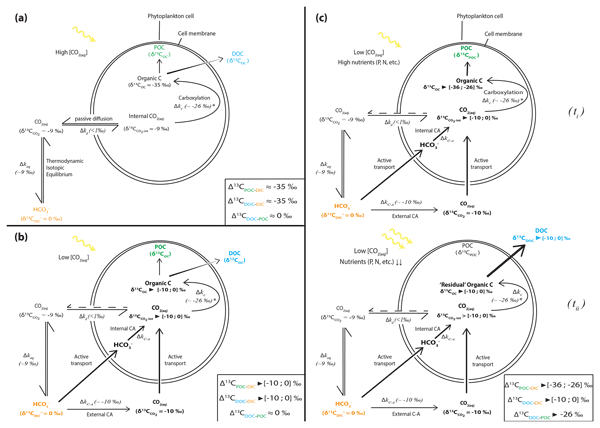
Dissolved organic carbon (DOC) is a reservoir of prime importance in the C cycle of both continental and marine systems. It has also been suggested to influence the past Earth climate but is still poorly characterized in ancient-Earth-like environments. In this paper we show how DOC analyses from modern redox-stratified lakes can evidence specific metabolic reactions and environmental factors and how these can help us to interpret the C cycle of specific periods in the Earth's past.
Robin Havas, Christophe Thomazo, Miguel Iniesto, Didier Jézéquel, David Moreira, Rosaluz Tavera, Jeanne Caumartin, Elodie Muller, Purificación López-García, and Karim Benzerara
Biogeosciences, 20, 2347–2367, https://doi.org/10.5194/bg-20-2347-2023, https://doi.org/10.5194/bg-20-2347-2023, 2023
Short summary
Short summary
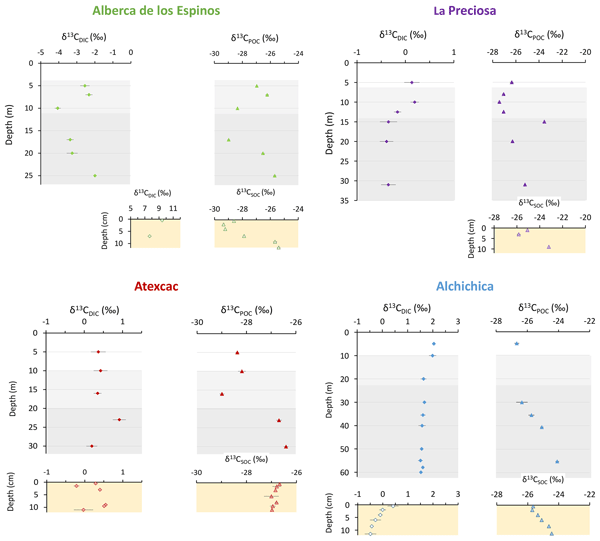
We describe the C cycle of four modern stratified water bodies from Mexico, a necessary step to better understand the C cycle of primitive-Earth-like environments, which were dominated by these kinds of conditions. We highlight the importance of local external factors on the C cycle of these systems. Notably, they influence the sensitivity of the carbonate record to environmental changes. We also show the strong C-cycle variability among these lakes and their organic C sediment record.
Fanny Noirmain, Jean-Luc Baray, Frédéric Tridon, Philippe Cacault, Hermine Billard, Guillaume Voyard, Joël Van Baelen, and Delphine Latour
Biogeosciences, 19, 5729–5749, https://doi.org/10.5194/bg-19-5729-2022, https://doi.org/10.5194/bg-19-5729-2022, 2022
Short summary
Short summary
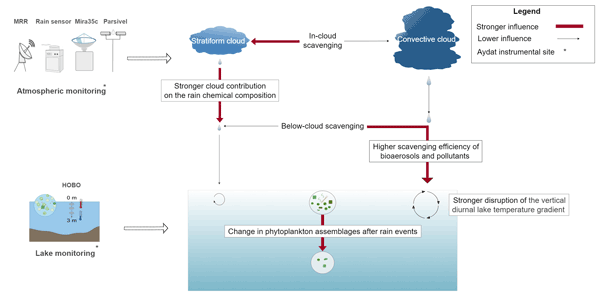
We present a study linking rain, meteorology, and mountain lake phytoplankton dynamics on the basis of a case study at Aydat (France) in September 2020. The air mass origin mainly influences the rain chemical composition, which depends on the type of rain, convective or stratiform. Our results also highlighted a non-negligible presence of photosynthetic cells in rainwater. The impact of the atmospheric forcing on the lake could play a key role in phytoplankton dynamics in the temperate zone.
Cited articles
Akbari, A., Wang, Z., He, P., Wang, D., Lee, J., Han, I. L., Li, G., and Gu, A. Z.: Unrevealed roles of polyphosphate-accumulating microorganisms, Microb. Biotechnol., 14, 82–87, https://doi.org/10.1111/1751-7915.13730, 2021.
Allan, R. A. and Miller, J. J.: Influence of S-adenosylmethionine on DAPI-induced fluorescence of polyphosphate in the yeast vacuole, Can. J. Microbiol., 26, 912–920, https://doi.org/10.1139/m80-158, 1980.
Amini, M., Antelo, J., Fiol, S., and Rahnemaie, R.: Estimation of phosphate extractability in flooded soils: Effect of solid-solution ratio and bicarbonate concentration, Chemosphere, 303, 135188, https://doi.org/10.1016/j.chemosphere.2022.135188, 2022.
Angelova, P. R., Agrawalla, B. K., Elustondo, P. A., Gordon, J., Shiba, T., Abramov, A. Y., Chang, Y.-T., and Pavlov, E. V.: In situ investigation of mammalian inorganic polyphosphate localization using novel selective fluorescent probes JC-D7 and JC-D8, ACS Chem. Biol., 9, 2101–2110, https://doi.org/10.1021/cb5000696, 2014.
Aschar-Sobbi, R., Abramov, A. Y., Diao, C., Kargacin, M. E., Kargacin, G. J., French, R. J., and Pavlov, E.: High sensitivity, quantitative measurements of polyphosphate using a new DAPI-based approach, J. Fluoresc., 18, 859–866, https://doi.org/10.1007/s10895-008-0315-4, 2008.
Bennett, E. M., Carpenter, S. R., and Caraco, N. F.: Human impact on erodable phosphorus and eutrophication: a global perspective: increasing accumulation of phosphorus in soil threatens rivers, lakes, and coastal oceans with eutrophication, BioScience, 51, 227–234, https://doi.org/10.1641/0006-3568(2001)051[0227:HIOEPA]2.0.CO;2, 2001.
Bidaud, C. C., Monteil, C. L., Menguy, N., Busigny, V., Jézéquel, D., Viollier, E., Travert, C., Skouri-Panet, F., Benzerara, K., Lefevre, C. T., and Duprat, E.: Biogeochemical niche of magnetotactic cocci capable of sequestering large polyphosphate inclusions in the anoxic layer of the Lake Pavin Water Column, Front. Microbiol., 12, 789134, https://doi.org/10.3389/fmicb.2021.789134, 2022.
Brown, M. R. W. and Kornberg, A.: Inorganic polyphosphate in the origin and survival of species, P. Natl. Acad. Sci. USA, 101, 16085–16087, https://doi.org/10.1073/pnas.0406909101, 2004.
Button, D. K. and Robertson, B. R.: Determination of DNA content of aquatic bacteria by flow cytometry, Appl. Environ. Microb., 67, 1636–1645, https://doi.org/10.1128/AEM.67.4.1636-1645.2001, 2001.
Čapek, P., Tupá, A., and Choma, M.: Exploring polyphosphates in soil: presence, extractability, and contribution to microbial biomass phosphorus, Biol. Fert. Soils, 60, 667–680, https://doi.org/10.1007/s00374-024-01829-6, 2024.
Cordell, D., Drangert, J.-O., and White, S.: The story of phosphorus: Global food security and food for thought, Global Environ. Chang., 19, 292–305, https://doi.org/10.1016/j.gloenvcha.2008.10.009, 2009.
Cordell, D., Rosemarin, A., Schröder, J. J., and Smit, A. L.: Towards global phosphorus security: A systems framework for phosphorus recovery and reuse options, Chemosphere, 84, 747–758, https://doi.org/10.1016/j.chemosphere.2011.02.032, 2011.
Cosmidis, J., Benzerara, K., Morin, G., Busigny, V., Lebeau, O., Jézéquel, D., Noel, V., Dublet, A. G., and Othmane, G.: Biomineralization of iron-phosphates in the water column of Lake Pavin (Massif Central, France), Geochim. Cosmochim. Ac., 126, 78–96, https://doi.org/10.1016/j.gca.2013.10.037, 2014.
Deitert, A., Fees, J., Mertens, A., Nguyen Van, D., Maares, M., Haase, H., Blank, L. M., and Keil, C.: Rapid fluorescence assay for polyphosphate in yeast extracts using JC-D7, Yeast, 41, 593–604, https://doi.org/10.1002/yea.3979, 2024.
Diaz, J., Ingall, E., Benitez-Nelson, C., Paterson, D., de Jonge, M. D., McNulty, I., and Brandes, J. A.: Marine polyphosphate: a key player in geologic phosphorus sequestration, Science, 320, 652–655, https://doi.org/10.1126/science.1151751, 2008.
Diaz, R. J. and Rosenberg, R.: Spreading dead zones and consequences for marine ecosystems, Science, 321, 926–929, https://doi.org/10.1126/science.1156401, 2008.
Falkowski, P., Scholes, R. J., Boyle, E., Canadell, J., Canfield, D., Elser, J., Gruber, N., Hibbard, K., Högberg, P., Linder, S., Mackenzie, T., Moore III, B., Rosenthal, Y., Seitzinger, S., Smetacek, V., and Steffen, W.: The global carbon cycle: a test of our knowledge of earth as a system, Science, 290, 291–296, https://doi.org/10.1126/science.290.5490.291, 2000.
Fernando, E. Y., McIlroy, S. J., Nierychlo, M., Herbst, F.-A., Petriglieri, F., Schmid, M. C., Wagner, M., Nielsen, J. L., and Nielsen, P. H.: Resolving the individual contribution of key microbial populations to enhanced biological phosphorus removal with Raman–FISH, ISME J., 13, 1933–1946, https://doi.org/10.1038/s41396-019-0399-7, 2019.
Fleming, N. K.: Polyphosphates and microbial uptake of phosphorus: Studies with soil and solution culture, University of Adelaide, Department of Soil Science, Waite Agricultural Research Institute, https://core.ac.uk/download/pdf/130799004.pdf (last access: 20 November 2024), 1992.
Günther, S., Trutnau, M., Kleinsteuber, S., Hause, G., Bley, T., Röske, I., Harms, H., and Müller, S.: Dynamics of polyphosphate-accumulating bacteria in wastewater treatment plant microbial communities detected via DAPI (4′,6′-diamidino-2-phenylindole) and tetracycline labeling, Appl. Environ. Microb., 75, 2111–2121, https://doi.org/10.1128/AEM.01540-08, 2009.
Kamiya, E., Izumiyama, S., Nishimura, M., Mitchell, J. G., and Kogure, K.: Effects of fixation and storage on flow cytometric analysis of marine bacteria, J. Oceanogr., 63, 101–112, https://doi.org/10.1007/s10872-007-0008-7, 2007.
Kepner, R. L. and Pratt, J. R.: Use of fluorochromes for direct enumeration of total bacteria in environmental samples: past and present, Microbiol. Rev., 58, 603–615, https://doi.org/10.1128/mr.58.4.603-615.1994, 1994.
Kirchman, D., Sigda, J., Kapuscinski, R., and Mitchell, R.: Statistical analysis of the direct count method for enumerating bacteria, Appl. Environ. Microb., 44, 376–382, https://doi.org/10.1128/AEM.44.2.376-382.1982, 1982.
Kornberg, A., Rao, N. N., and Ault-Riché, D.: Inorganic polyphosphate: a molecule of many functions, Annu. Rev. Biochem., 68, 89–125, https://doi.org/10.1146/annurev.biochem.68.1.89, 1999.
Kulakova, A. N., Hobbs, D., Smithen, M., Pavlov, E., Gilbert, J. A., Quinn, J. P., and McGrath, J. W.: Direct quantification of inorganic polyphosphate in microbial cells using 4′-6-diamidino-2-phenylindole (DAPI), Environ. Sci. Technol., 45, 7799–7803, https://doi.org/10.1021/es201123r, 2011.
Lavergne, C., Beaugeard, L., Dupuy, C., Courties, C., and Agogué, H.: An efficient and rapid method for the enumeration of heterotrophic prokaryotes in coastal sediments by flow cytometry, J. Microbiol. Meth., 105, 31–38, https://doi.org/10.1016/j.mimet.2014.07.002, 2014.
Liu, B. Y., Zhang, G. M., Li, X. L., and Chen, H.: Effect of glutaraldehyde fixation on bacterial cells observed by atomic force microscopy, Scanning, 34, 6–11, https://doi.org/10.1002/sca.20269, 2012.
Lorenzo-Orts, L., Couto, D., and Hothorn, M.: Identity and functions of inorganic and inositol polyphosphates in plants, New Phytol., 225, 637–652, https://doi.org/10.1111/nph.16129, 2020.
Majed, N., Li, Y., and Gu, A. Z.: Advances in techniques for phosphorus analysis in biological sources, Curr. Opin. Biotech., 23, 852–859, https://doi.org/10.1016/j.copbio.2012.06.002, 2012.
Martin, P. and Van Mooy, B. A. S.: Fluorometric quantification of polyphosphate in environmental plankton samples: extraction protocols, matrix effects, and nucleic acid interference, Appl. Environ. Microb., 79, 273–281, https://doi.org/10.1128/AEM.02592-12, 2013.
Martin, P., Dyhrman, S. T., Lomas, M. W., Poulton, N. J., and van Mooy, B. A. S.: Accumulation and enhanced cycling of polyphosphate by Sargasso Sea plankton in response to low phosphorus, P. Natl. Acad. Sci. USA, 111, 8089–8094, https://doi.org/10.1073/pnas.1321719111, 2014.
Mesquita, D. P., Amaral, A. L., and Ferreira, E. C.: Activated sludge characterization through microscopy: A review on quantitative image analysis and chemometric techniques, Anal. Chim. Acta, 802, 14–28, https://doi.org/10.1016/j.aca.2013.09.016, 2013.
Mukherjee, C. and Ray, K.: An improved DAPI staining procedure for visualization of polyphosphate granules in cyanobacterial and microalgal cells, Protocol Exchange, 10, https://doi.org/10.1038/protex.2015.066, 2015.
Nguyen, H. T., Le, V. Q., Hansen, A. A., Nielsen, J. L., and Nielsen, P. H.: High diversity and abundance of putative polyphosphate-accumulating Tetrasphaera-related bacteria in activated sludge systems, FEMS Microbiol. Ecol., 76, 256–67, https://doi.org/10.1111/j.1574-6941.2011.01049.x, 2011.
Olsen, S. R. and Sommers, L. E.: Phosphorus, in: Methods of soil analysis: Part 2. Chemical and microbiological properties, edited by: Page, A. L., American Society of Agronomy, Soil Science Society of America, Madison, 403–430, https://doi.org/10.2134/agronmonogr9.2.2ed.c24, 1982.
Rao, N. N., Gómez-García, M. R., and Kornberg, A.: Inorganic polyphosphate: essential for growth and survival, Annu. Rev. Biochem., 78, 605–647, https://doi.org/10.1146/annurev.biochem.77.083007.093039, 2009.
Rivas-Lamelo, S., Benzerara, K., Lefèvre, C. T., Monteil, C. L., Jézéquel, D., Menguy, N., Viollier, E., Guyot, F., Férard, C., Poinsot, M., Skouri-Panet, F., Trcera, N., Miot, J., and Duprat, E.: Magnetotactic bacteria as a new model for P sequestration in the ferruginous Lake Pavin, Geochem. Perspect. Lett., 5, 35–41, https://doi.org/10.7185/geochemlet.1743, 2017.
Serafim, L. S., Lemos, P. C., Levantesi, C., Tandoi, V., Santos, H., and, Reis, M. A. M.: Methods for detection and visualization of intracellular polymers stored by polyphosphate-accumulating microorganisms, J. Microbiol. Meth., 51, 1–18, https://doi.org/10.1016/S0167-7012(02)00056-8, 2002.
Tarayre, C., Nguyen, H. T., Brognaux, A., Delepierre, A., De Clercq, L., Charlier, R., Michels, E., Meers, E., and Delvigne, F.: Characterization of phosphate accumulating organisms and techniques for polyphosphate detection: a review, Sensors, 16, 797, https://doi.org/10.3390/s16060797, 2016.
Terashima, M., Kamagata, Y., and Kato, S.: Rapid enrichment and isolation of polyphosphate accumulating organisms through 4′,6-Diamidino-2-Phenylindole (DAPI) staining with fluorescence-activated cell sorting (FACS), Front. Microbiol., 11, 793, https://doi.org/10.3389/fmicb.2020.00793, 2020.
Thompson, A., Bench, S., Carter, B., and Zehr, J.: Coupling FACS and genomic methods for the characterization of uncultivated symbionts, Method. Enzymol., 531, 45–60, https://doi.org/10.1016/B978-0-12-407863-5.00003-4, 2013.
Tijssen, J. P., Beekes, H. W., and Van Steveninck, J.: Localization of polyphosphates in Saccharomyces fragilis, as revealed by 4′,6-diamidino-2-phenylindole fluorescence, Biochim. Biophys. Acta, 721, 394–398, https://doi.org/10.1016/0167-4889(82)90094-5, 1982.
Tomasek, K., Bergmiller, T., and Guet, C. C.: Lack of cations in flow cytometry buffers affect fluorescence signals by reducing membrane stability and viability of Escherichia coli strains, J. Biotechnol., 268, 40–52, https://doi.org/10.1016/j.jbiotec.2018.01.008, 2018.
Troussellier, M., Courties, C., and Vaquer, A.: Recent applications of flow cytometry in aquatic microbial ecology, Biol. Cell, 78, 111–121, https://doi.org/10.1016/0248-4900(93)90121-T, 1993.
Voronkov, A. and Sinetova, M.: Polyphosphate accumulation dynamics in a population of Synechocystis sp. PCC 6803 cells under phosphate overplus, Protoplasma, 256, 1153–1164, https://doi.org/10.1007/s00709-019-01374-2, 2019.
Yang, X., Gao, R., Zhang, Q., Yung, C. C. M., Yin, H., and Li, J.: Quantification of polyphosphate in environmental planktonic samples using a novel fluorescence dye JC-D7, Environ. Sci. Technol., 58, 14249–14259, https://doi.org/10.1021/acs.est.4c04545, 2024.
Zilles, J. L., Peccia, J., Kim, M. W., Hung, C. H., and Noguera, D. R.: Involvement of Rhodocyclus-related organisms in phosphorus removal in full-scale wastewater treatment plants, Appl. Environ. Microb., 68, 2763–2769, https://doi.org/10.1128/AEM.68.6.2763-2769.2002, 2002.
Short summary
In the context of the ecological sustainability of phosphorus, the ubiquitous presence of polyphosphate-accumulating bacteria in natural environments invites efforts to reveal their unknown roles in the biogeochemical cycle of phosphorus. In this study, we evaluated the potential of combining the staining of intracellular polyphosphate granules and their subsequent detection by flow cytometry for the detection, quantification and cell sorting of polyphosphate-accumulating bacteria.
In the context of the ecological sustainability of phosphorus, the ubiquitous presence of...
Altmetrics
Final-revised paper
Preprint