
Articles | Volume 22, issue 23
https://doi.org/10.5194/bg-22-7797-2025
© Author(s) 2025. This work is distributed under
the Creative Commons Attribution 4.0 License.
the Creative Commons Attribution 4.0 License.
https://doi.org/10.5194/bg-22-7797-2025
© Author(s) 2025. This work is distributed under
the Creative Commons Attribution 4.0 License.
the Creative Commons Attribution 4.0 License.
Research article
| 
08 Dec 2025
Research article |
| 08 Dec 2025
| 08 Dec 2025
Biases in estimated vegetation indices from observations under cloudy conditions

Leipzig Institute for Meteorology (LIM), Leipzig University, Leipzig, Germany
Evelyn Jäkel
Leipzig Institute for Meteorology (LIM), Leipzig University, Leipzig, Germany
André Ehrlich
Leipzig Institute for Meteorology (LIM), Leipzig University, Leipzig, Germany
Michael Schäfer
Leipzig Institute for Meteorology (LIM), Leipzig University, Leipzig, Germany
Hannes Feilhauer
Institute for Earth System Science & Remote Sensing, Leipzig University, Leipzig, Germany
Remote Sensing Centre for Earth System Research, Leipzig University, Leipzig, Germany
iDiv German Centre for Integrative Biodiversity Research Halle-Jena-Leipzig, Leipzig, Germany
Andreas Huth
iDiv German Centre for Integrative Biodiversity Research Halle-Jena-Leipzig, Leipzig, Germany
Department of Ecological Modelling, Helmholtz Centre for Environmental Research – UFZ Leipzig, Leipzig, Germany
Institute for Environmental Systems Research, University of Osnabrück, Osnabrück, Germany
Manfred Wendisch
Leipzig Institute for Meteorology (LIM), Leipzig University, Leipzig, Germany
Related authors
Kevin Wolf, Evelyn Jäkel, André Ehrlich, Michael Schäfer, Hannes Feilhauer, Andreas Huth, Alexandra Weigelt, and Manfred Wendisch
Biogeosciences, 22, 2909–2933, https://doi.org/10.5194/bg-22-2909-2025, https://doi.org/10.5194/bg-22-2909-2025, 2025
Short summary
Short summary
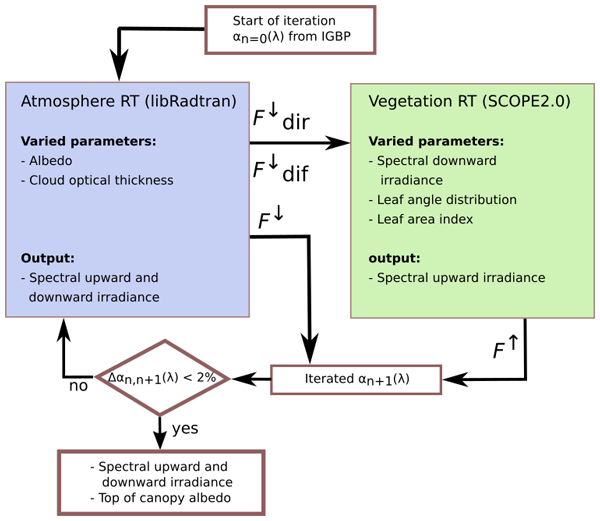
This paper reports an investigation of the influence of clouds on vegetation albedo using a coupled atmosphere–vegetation radiative transfer model. Both models are iteratively linked to simulate cloud–vegetation–radiation interactions over canopies more realistically. Solar, spectral, and broadband irradiances have been simulated under varying cloud conditions. The simulated irradiances were used to investigate the spectral and broadband effect of clouds on vegetation albedo.
Kevin Wolf, Nicolas Bellouin, Olivier Boucher, Susanne Rohs, and Yun Li
Atmos. Chem. Phys., 25, 157–181, https://doi.org/10.5194/acp-25-157-2025, https://doi.org/10.5194/acp-25-157-2025, 2025
Short summary
Short summary
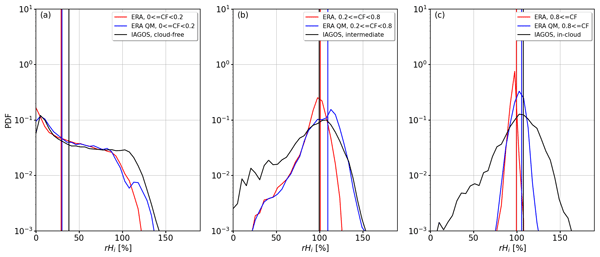
ERA5 atmospheric reanalysis and airborne in situ observations from IAGOS are compared in terms of the representation of the contrail formation potential and the presence of supersaturation. Differences are traced back to biases in ERA5 relative humidity fields. Those biases are addressed by applying a quantile mapping technique that significantly improved contrail estimation based on post-processed ERA5 data.
Sidiki Sanogo, Olivier Boucher, Nicolas Bellouin, Audran Borella, Kevin Wolf, and Susanne Rohs
Atmos. Chem. Phys., 24, 5495–5511, https://doi.org/10.5194/acp-24-5495-2024, https://doi.org/10.5194/acp-24-5495-2024, 2024
Short summary
Short summary
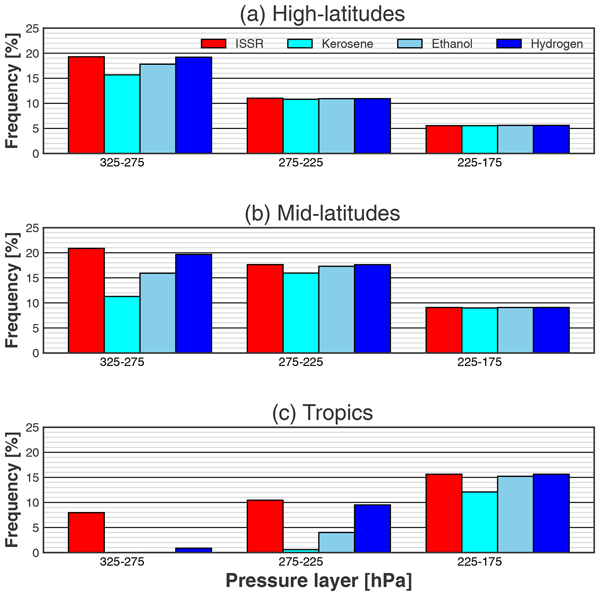
Relative humidity relative to ice (RHi) is a key variable in the formation of cirrus clouds and contrails. This study shows that the properties of the probability density function of RHi differ between the tropics and higher latitudes. In line with RHi and temperature variability, aircraft are likely to produce more contrails with bioethanol and liquid hydrogen as fuel. The impact of this fuel change decreases with decreasing pressure levels but increases from high latitudes to the tropics.
Kevin Wolf, Nicolas Bellouin, and Olivier Boucher
Atmos. Chem. Phys., 24, 5009–5024, https://doi.org/10.5194/acp-24-5009-2024, https://doi.org/10.5194/acp-24-5009-2024, 2024
Short summary
Short summary
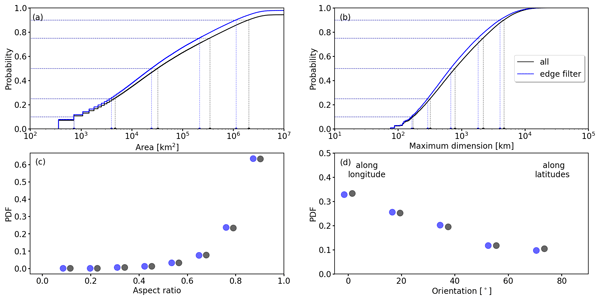
The contrail formation potential and its tempo-spatial distribution are estimated for the North Atlantic flight corridor. Meteorological conditions of temperature and relative humidity are taken from the ERA5 re-analysis and IAGOS. Based on IAGOS flight tracks, crossing length, size, orientation, frequency of occurrence, and overlap of persistent contrail formation areas are determined. The presented conclusions might provide a guide for statistical flight track optimization to reduce contrails.
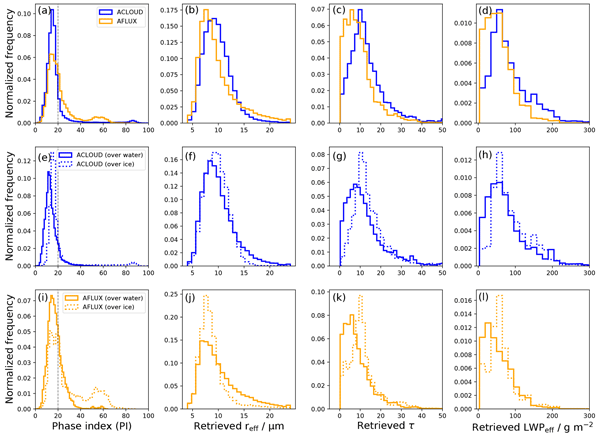
Marcus Klingebiel, André Ehrlich, Elena Ruiz-Donoso, Nils Risse, Imke Schirmacher, Evelyn Jäkel, Michael Schäfer, Kevin Wolf, Mario Mech, Manuel Moser, Christiane Voigt, and Manfred Wendisch
Atmos. Chem. Phys., 23, 15289–15304, https://doi.org/10.5194/acp-23-15289-2023, https://doi.org/10.5194/acp-23-15289-2023, 2023
Short summary
Short summary
In this study we explain how we use aircraft measurements from two Arctic research campaigns to identify cloud properties (like droplet size) over sea-ice and ice-free ocean. To make sure that our measurements make sense, we compare them with other observations. Our results show, e.g., larger cloud droplets in early summer than in spring. Moreover, the cloud droplets are also larger over ice-free ocean than compared to sea ice. In the future, our data can be used to improve climate models.
Kevin Wolf, Nicolas Bellouin, and Olivier Boucher
Atmos. Chem. Phys., 23, 14003–14037, https://doi.org/10.5194/acp-23-14003-2023, https://doi.org/10.5194/acp-23-14003-2023, 2023
Short summary
Short summary
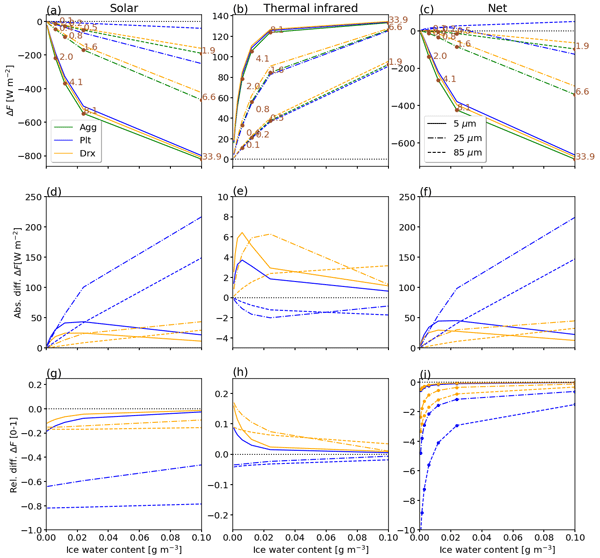
Cirrus and contrails considerably impact Earth's energy budget. Such ice clouds can have a positive (warming) or negative (cooling) net radiative effect (RE), which depends on cloud and ambient properties. The effect of eight parameters on the cloud RE is estimated. In total, 283 500 radiative transfer simulations have been performed, spanning the typical parameter ranges associated with cirrus and contrails. Specific cases are selected and discussed. The data set is publicly available.
André Ehrlich, Martin Zöger, Andreas Giez, Vladyslav Nenakhov, Christian Mallaun, Rolf Maser, Timo Röschenthaler, Anna E. Luebke, Kevin Wolf, Bjorn Stevens, and Manfred Wendisch
Atmos. Meas. Tech., 16, 1563–1581, https://doi.org/10.5194/amt-16-1563-2023, https://doi.org/10.5194/amt-16-1563-2023, 2023
Short summary
Short summary
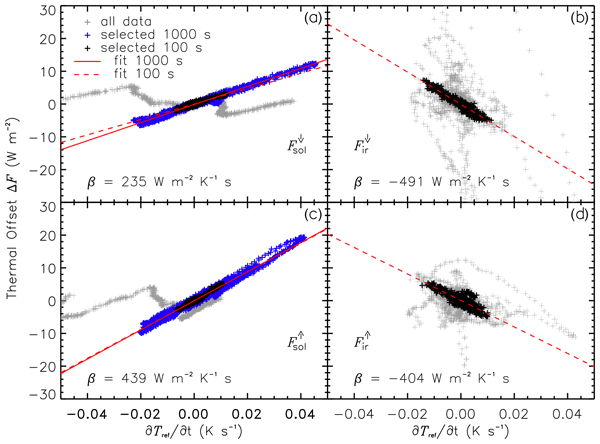
Measurements of the broadband radiative energy budget from aircraft are needed to study the effect of clouds, aerosol particles, and surface conditions on the Earth's energy budget. However, the moving aircraft introduces challenges to the instrument performance and post-processing of the data. This study introduces a new radiometer package, outlines a greatly simplifying method to correct thermal offsets, and provides exemplary measurements of solar and thermal–infrared irradiance.
Kevin Wolf, Nicolas Bellouin, and Olivier Boucher
Atmos. Chem. Phys., 23, 287–309, https://doi.org/10.5194/acp-23-287-2023, https://doi.org/10.5194/acp-23-287-2023, 2023
Short summary
Short summary
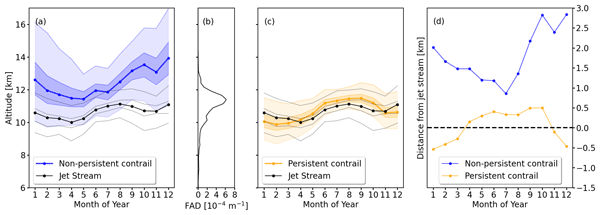
Recent studies estimate the radiative impact of contrails to be similar to or larger than that of emitted CO2; thus, contrail mitigation might be an opportunity to reduce the climate effects of aviation. A radiosonde data set is analyzed in terms of the vertical distribution of potential contrails, contrail mitigation by flight altitude changes, and linkages with the tropopause and jet stream. The effect of prospective jet engine developments and alternative fuels are estimated.

Vikas Nataraja, Sebastian Schmidt, Hong Chen, Takanobu Yamaguchi, Jan Kazil, Graham Feingold, Kevin Wolf, and Hironobu Iwabuchi
Atmos. Meas. Tech., 15, 5181–5205, https://doi.org/10.5194/amt-15-5181-2022, https://doi.org/10.5194/amt-15-5181-2022, 2022
Short summary
Short summary
A convolutional neural network (CNN) is introduced to retrieve cloud optical thickness (COT) from passive cloud imagery. The CNN, trained on large eddy simulations from the Sulu Sea, learns from spatial information at multiple scales to reduce cloud inhomogeneity effects. By considering the spatial context of a pixel, the CNN outperforms the traditional independent pixel approximation (IPA) across several cloud morphology metrics.

Michael Schäfer, Kevin Wolf, André Ehrlich, Christoph Hallbauer, Evelyn Jäkel, Friedhelm Jansen, Anna Elizabeth Luebke, Joshua Müller, Jakob Thoböll, Timo Röschenthaler, Bjorn Stevens, and Manfred Wendisch
Atmos. Meas. Tech., 15, 1491–1509, https://doi.org/10.5194/amt-15-1491-2022, https://doi.org/10.5194/amt-15-1491-2022, 2022
Short summary
Short summary
The new airborne thermal infrared imager VELOX is introduced. It measures two-dimensional fields of spectral thermal infrared radiance or brightness temperature within the large atmospheric window. The technical specifications as well as necessary calibration and correction procedures are presented. Example measurements from the first field deployment are analysed with respect to cloud coverage and cloud top altitude.
Anna E. Luebke, André Ehrlich, Michael Schäfer, Kevin Wolf, and Manfred Wendisch
Atmos. Chem. Phys., 22, 2727–2744, https://doi.org/10.5194/acp-22-2727-2022, https://doi.org/10.5194/acp-22-2727-2022, 2022
Short summary
Short summary
A combination of aircraft and satellite observations is used to show how the characteristics of tropical shallow clouds interact with incoming and outgoing energy. A complete depiction of these clouds is challenging to obtain, but such data are useful for understanding how models can correctly represent them. The amount of cloud is found to be the most important factor, while other cloud characteristics become increasingly impactful when more cloud is present.
Heike Konow, Florian Ewald, Geet George, Marek Jacob, Marcus Klingebiel, Tobias Kölling, Anna E. Luebke, Theresa Mieslinger, Veronika Pörtge, Jule Radtke, Michael Schäfer, Hauke Schulz, Raphaela Vogel, Martin Wirth, Sandrine Bony, Susanne Crewell, André Ehrlich, Linda Forster, Andreas Giez, Felix Gödde, Silke Groß, Manuel Gutleben, Martin Hagen, Lutz Hirsch, Friedhelm Jansen, Theresa Lang, Bernhard Mayer, Mario Mech, Marc Prange, Sabrina Schnitt, Jessica Vial, Andreas Walbröl, Manfred Wendisch, Kevin Wolf, Tobias Zinner, Martin Zöger, Felix Ament, and Bjorn Stevens
Earth Syst. Sci. Data, 13, 5545–5563, https://doi.org/10.5194/essd-13-5545-2021, https://doi.org/10.5194/essd-13-5545-2021, 2021
Short summary
Short summary
The German research aircraft HALO took part in the research campaign EUREC4A in January and February 2020. The focus area was the tropical Atlantic east of the island of Barbados. We describe the characteristics of the 15 research flights, provide auxiliary information, derive combined cloud mask products from all instruments that observe clouds on board the aircraft, and provide code examples that help new users of the data to get started.
Fiona Paulus, Joshua J. Müller, Benjamin Kirbus, Harald Sodemann, Lars van Gelder, Andreas Walbröl, Manfred Wendisch, and Roel A. J. Neggers
Atmos. Chem. Phys., 26, 13983–14014, https://doi.org/10.5194/acp-26-13983-2026, https://doi.org/10.5194/acp-26-13983-2026, 2026
Short summary
Short summary
Cold Arctic air flowing from sea ice onto the warmer ocean waters rapidly warms, moistens, and forms clouds and precipitation. These events shape the Arctic climate but are difficult to observe and model. Particularly the role of large-scale sinking motion during these events is not fully understood. Using rare aircraft data and simulations to track an air mass for two days, we show that strong downward motion suppresses cloud growth, limits and delays precipitation, and reduces cloud lifetimes.
Antonia Dorea Ludwig, Birgit Heim, and Hannes Feilhauer
EGUsphere, https://doi.org/10.5194/egusphere-2026-5451, https://doi.org/10.5194/egusphere-2026-5451, 2026
This preprint is open for discussion and under review for Biogeosciences (BG).
Short summary
Short summary
The Arctic is changing rapidly, and its plants are changing with it. Using satellite images and computer analysis, we studied 20 plant features across Arctic North America and Greenland. We found that these features reveal meaningful patterns across the landscape and even to help tell different vegetation types apart. This offers a new way to track how Arctic plant life responds to a warming climate.
Niklas Bruns, Andreas Huth, Stephan Thober, and Samuel M. Fischer
EGUsphere, https://doi.org/10.5194/egusphere-2026-4918, https://doi.org/10.5194/egusphere-2026-4918, 2026
This preprint is open for discussion and under review for Geoscientific Model Development (GMD).
Short summary
Short summary
Forests and water are tightly linked: trees shape how water moves through landscapes, while water availability controls forest growth. Models of forests and hydrology are typically developed separately. We coupled an individual-based forest model with a distributed hydrological model for a German catchment. Dynamic vegetation substantially altered water partitioning, shifting evapotranspiration towards transpiration, and river discharge was found to carry information about forest productivity.
Patrick C. Taylor, Armin Sorooshian, Rei Ueyama, Sebastian Schmidt, Ihab Abboud, Quincy Allison, Kevin Barry, Sebastian Becker, Holly A. Bender, Joseph R. Bennett, James B. Blair, Niklas Bohn, Linette Boisvert, Matthew D. Brown, Roelof Bruintjes, Anthony Bucholtz, Megan Buzanowicz, Brian Cairns, Filippo Calì Quaglia, Eduard Chemyakin, Bo Chen, Gao Chen, Hong Chen, Yu-Wen Chen, Zezhen Cheng, Swarup China, Dan Chirica, Yonghoon Choi, Peter Colarco, Brian Collister, Ewan Crosbie, Maurice J. Cross, Janet Daniels, Paul DeMott, Joshua P. DiGangi, Alcide Giorgio di Sarra, Glenn S. Diskin, Erica K. Dolinar, Eva-Lou Edwards, Samuel Ephraim, Nikolaos Evangeliou, Romanos Foskinis, Francesca Gallo, Lan Gao, José Luis Gómez-Amo, Daisy Gonzalez, Christine Groot Zwaaftink, Pawan Gupta, Ivan Heckman, Michael Hendrickson, Miguel Ricardo A. Hilario, Ken Hirata, Michelle Hofton, Andrew L. Holen, Ulas Im, Alia L. Khan, Ralph Kahn, Alexei V. Korolev, Sonia Kreidenweis, Thomas Krumpen, Nathan Kurtz, Leslie Lait, Bradley Lamkin, Jack Landy, Nurun Nahar Lata, Paul Lawson, Samuel LeBlanc, Sean Leavor, Jing Li, Thorsten Markus, Hal Maring, Andreas H. Massling, Camille Mavis, Flynn McGinnity, Kerry Meyer, Gabriel Mojica, Richard H. Moore, Parker Morris, Giovanni Muscari, Vikas Nataraja, Amin R. Nehrir, Athanasios Nenes, Edward P. Nowottnick, Matteo Ottaviani, Chelsea Parker, Ryan Patnaude, Michael Perez, Russell J. Perkins, Colten Peterson, Alek Petty, Stevie Phothisane, Chris Polashenski, Kerri A. Pratt, Kayla M. Preisler, John Prytherch, David Rabine, Jens Redemann, Ju-Mee Ryoo, Joseph S. Schlosser, Vanessa Selimovic, Michael A. Shook, Morgan Silverman, Henrik Skov, Alexander Smirnov, Cassidy Soloff, Amy Solomon, Snorre Stamnes, Azusa Takeishi, David R. Thompson, K. Lee Thornhill, Rachel Tilling, Michael Tjernström, Monica Tosco, Pedro C. Valdelomar, David Van Gilst, Jian Wang, Zhien Wang, Andrzej Wasilewski, Manfred Wendisch, Brent Wilder, Edward L. Winstead, Albert Wu, Peng Xian, Lauren M. Zamora, Jiaoshi Zhang, Lei Zhang, Lu Zhang, Luke Ziemba, and Paquita Zuidema
Earth Syst. Sci. Data Discuss., https://doi.org/10.5194/essd-2026-241, https://doi.org/10.5194/essd-2026-241, 2026
Preprint under review for ESSD
Short summary
Short summary
This article summarizes the data sets collected during the Arctic Radiation Cloud aerosol Sea ice Interaction eXperiment (ARCSIX), NASA's most comprehensive Arctic field campaign to date. The overarching goal was to quantify the contributions of surface, clouds, aerosol particles, and precipitation to summer sea ice melt. This paper describes the ARCSIX implementation including the flight strategy, instruments, complementary data sets, access, and usage details.
Samuel M. Fischer, Rico Fischer, and Andreas Huth
Biogeosciences, 23, 4927–4942, https://doi.org/10.5194/bg-23-4927-2026, https://doi.org/10.5194/bg-23-4927-2026, 2026
Short summary
Short summary
We explored how satellite light measurements can reveal forest health and growth more accurately. Using computer models of many forest types, we discovered new ways to combine light wavelengths that strongly relate to forest size and productivity. Our results show that with the right wavelength choices, satellite data could give precise insights into forests, supporting better monitoring and management of these vital ecosystems worldwide.
Aymeric Dziduch, Antoine Baudoux, Guillaume Mioche, Antoine Canzi, Benjamin Doiteau, Manuel Moser, Emma Järvinen, Étienne Vignon, Jean-Christophe Raut, Régis Dupuy, Christophe Gourbeyre, Jean-Luc Baray, Marie Monier, Frédéric Szczap, Guillaume Penide, Julien Delanoë, Odran Sourdeval, Alfons Schwarzenboeck, Stephan Mertes, Franz Martin Schnaiter, Christiane Voigt, Mario Mech, Susanne Crewell, Andreas Herber, Christof Lüpkes, André Ehrlich, Manfred Wendisch, and Olivier Jourdan
EGUsphere, https://doi.org/10.5194/egusphere-2026-3265, https://doi.org/10.5194/egusphere-2026-3265, 2026
This preprint is open for discussion and under review for Atmospheric Chemistry and Physics (ACP).
Short summary
Short summary
This study examines the microphysical properties and ice crystal habits of low-level Arctic mixed-phase clouds around Svalbard. Using airborne in situ observations from four campaigns, we show that cloud microphysical structure and ice crystal habits are influenced by weather conditions and surface type. These results provide quantitative observations to better understand low-level Arctic clouds, their ice formation processes, and their influence on the Arctic atmosphere and climate system.
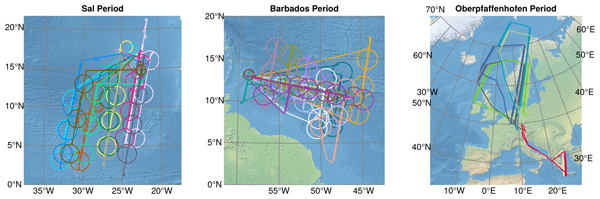
Silke Groß, Florian Ewald, Bjorn Stevens, Martin Wirth, Georgios Dekoutsidis, André Ehrlich, Dimitra Kouklaki, Konstantin Krüger, Sophie Rosenburg, Lea Volkmer, Jonas von Bismark, Lutz Hirsch, Anna E. Luebke, Eleni Marinou, Bernhard Mayer, Montserrat Pinol Sole, Manfred Wendisch, Julia Windmiller, Vassilis Amiridis, Rob Koopman, Takuji Kubota, and Markus Rapp
Atmos. Meas. Tech., 19, 3933–3959, https://doi.org/10.5194/amt-19-3933-2026, https://doi.org/10.5194/amt-19-3933-2026, 2026
Short summary
Short summary
In May 2024 the joint European Space Agency (ESA) and the Japan Aerospace Exploration Agency (JAXA) mission EarthCARE was launched. A similar payload as on the satellite was set up on the German research aircraft HALO, and deployed during an extensive measurement campaign to validated the satellite. We present our instrumentation, the measurements, and its potential for the validation of EarthCARE. We show first validation results and assessments of the EarthCARE data quality.
David J. Simon, Jonas Schaefer, Jörg Hartmann, Benjamin Kirbus, Joshua Müller, Markus Hartmann, Bruno Wetzel, Laura Köhler, Anna-Marie Jörss, Kay Weinhold, Andreas Herber, Zsófia Jurányi, Silvia Henning, Gregory C. Roberts, Manfred Wendisch, Mira L. Pöhlker, and Frank Stratmann
EGUsphere, https://doi.org/10.5194/egusphere-2026-2215, https://doi.org/10.5194/egusphere-2026-2215, 2026
Short summary
Short summary
We investigate the occurrence of newly formed aerosol particles in the Arctic atmosphere by analyzing aerosol particle measurements conducted aboard a research aircraft in April 2024. We frequently detected newly formed particles at altitudes of up to 4 km, while many previous studies had predominantly found such particles close to the surface. Newly formed particles were associated with air mass transport from lower latitudes, the occurrence of clouds, as well as the presence of sea ice.
Sebastian Becker, Konrad Sebastian Schmidt, Hong Chen, Yu-Wen Chen, Kerry G. Meyer, Colten A. Peterson, and Manfred Wendisch
EGUsphere, https://doi.org/10.5194/egusphere-2026-2210, https://doi.org/10.5194/egusphere-2026-2210, 2026
Short summary
Short summary
The melt of Arctic sea ice depends on the radiation budget at the surface, which is largely controlled by the presence of clouds. This cloud radiative effect depends on both cloud properties and surface reflection. Comparing cloud properties from a satellite retrieval and surface reflection data assumed for this retrieval to aircraft measurements, it is found that the assumed surface reflection is too low, leading to a cooling effect of clouds on the surface although a warming effect is present.
Henning Dorff, Holger Siebert, Komal Navale, André Ehrlich, Joshua Müller, Michael Schäfer, Fan Wu, and Manfred Wendisch
Earth Syst. Sci. Data, 18, 2799–2817, https://doi.org/10.5194/essd-18-2799-2026, https://doi.org/10.5194/essd-18-2799-2026, 2026
Short summary
Short summary
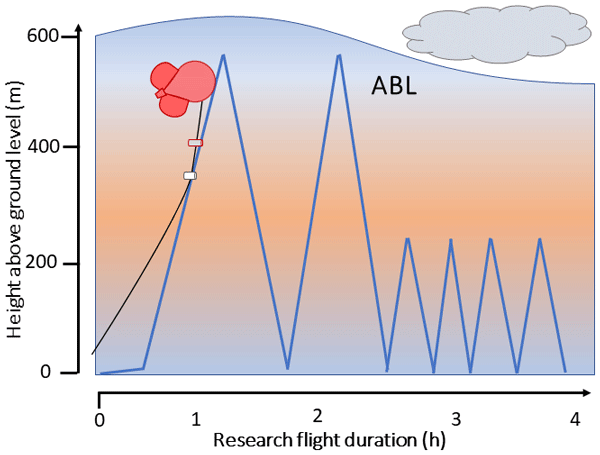
We present tethered-balloon measurements from BELUGA (Balloon-bornE moduLar Utility for profilinG the lower Atmosphere) at Villum Research Station (spring 2024), detailing instrumentation, data processing, and environmental conditions. The data stored in the PANGAEA database include instrument-separated subsets with frequent in situ profiling of thermodynamic, turbulence conditions, and thermal-infrared irradiances across the Arctic atmospheric boundary layer (ABL), supplemented by radiosondes. The data help examine transition events between Arctic ABL states.
Eya Cherif, Teja Kattenborn, Luke A. Brown, Michael Ewald, Katja Berger, Phuong D. Dao, Tobias B. Hank, Etienne Laliberté, Bing Lu, and Hannes Feilhauer
Biogeosciences, 23, 2235–2259, https://doi.org/10.5194/bg-23-2235-2026, https://doi.org/10.5194/bg-23-2235-2026, 2026
Short summary
Short summary
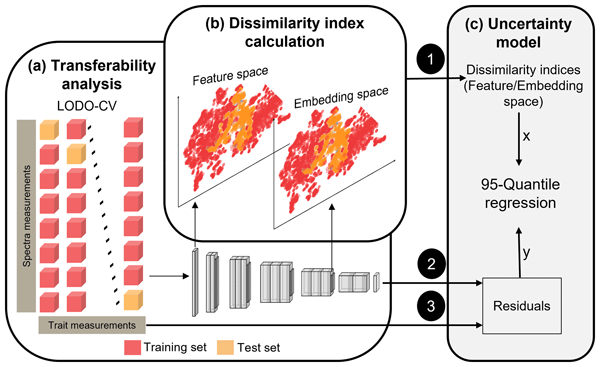
Hyperspectral imagery combined with machine learning enables accurate large-scale mapping of plant traits but struggles with uncertainty when facing unfamiliar environmental conditions. This study introduces a distance-based method that measures dissimilarities between new and training data to reliably quantify uncertainty. Results show it effectively identifies uncertain predictions, greatly improving the reliability of global vegetation monitoring compared to traditional methods.
Leonard Grohmann, Lea Albrecht, Kostas Papathanassiou, and Andreas Huth
EGUsphere, https://doi.org/10.5194/egusphere-2026-613, https://doi.org/10.5194/egusphere-2026-613, 2026
Short summary
Short summary
We developed a new way to better understand forest structure and biomass by linking a detailed forest growth model with a satellite-based radar simulation. By combining ecological processes with radar observations, we show how forest height and biomass can be estimated more reliably across different forest stages. This approach improves the interpretation of satellite data and supports more accurate large-scale forest monitoring and carbon assessment.

Anna Weber, Benjamin Kirbus, Manfred Wendisch, and Bernhard Mayer
Atmos. Chem. Phys., 26, 3521–3540, https://doi.org/10.5194/acp-26-3521-2026, https://doi.org/10.5194/acp-26-3521-2026, 2026
Short summary
Short summary
Macrophysical and microphysical properties of clouds and their evolution during the initial phase of marine cold air outbreaks in the Arctic are studied with a focus on cloud thermodynamic phase partitioning and phase transitions. To this end, high-resolution quasi-Lagrangian observations of the hyperspectral and polarized imaging system specMACS during the HALO-(AC)3 campaign are combined with backward trajectories. Six cold air outbreaks with varying strengths are analyzed and compared.
Ramon Campos Braga, Daniel Harrison, Manfred Wendisch, and Rachel Albrecht
EGUsphere, https://doi.org/10.5194/egusphere-2026-795, https://doi.org/10.5194/egusphere-2026-795, 2026
Short summary
Short summary
We introduce a new thermodynamic method to quantify water vapor supersaturation (Sv) at warm cloud bases by describing the ascent of a cloudy air parcel as a reversible cloud-adiabatic process. This approach enables the calculation of cloud-base droplet number concentration spectra from in situ airborne measurements without reliance on prescribed updraft velocities or empirical parameterizations. The method is validated using CCN measurements from airborne observations over the Amazon Basin.
Manuel Moser, Christiane Voigt, Oliver Eppers, Johannes Lucke, Elena De La Torre Castro, Johanna Mayer, Regis Dupuy, Guillaume Mioche, Olivier Jourdan, Hans-Christian Clemen, Johannes Schneider, Philipp Joppe, Stephan Mertes, Bruno Wetzel, Stephan Borrmann, Marcus Klingebiel, Mario Mech, Christof Lüpkes, Susanne Crewell, André Ehrlich, Andreas Herber, and Manfred Wendisch
Atmos. Chem. Phys., 26, 1867–1887, https://doi.org/10.5194/acp-26-1867-2026, https://doi.org/10.5194/acp-26-1867-2026, 2026
Short summary
Short summary
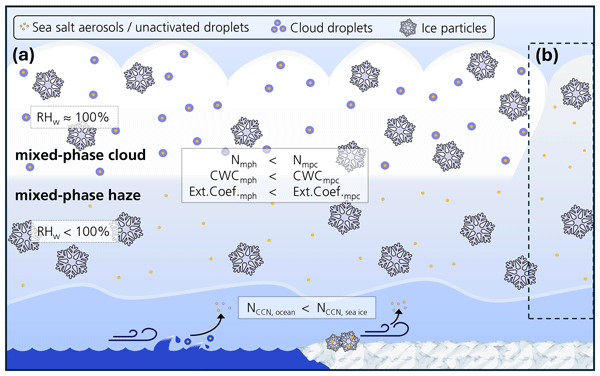
In this study we analyzed Arctic mixed-phase clouds using airborne in-situ measurements in spring 2022. Based on microphysical properties, we show that within these clouds a distinction must be made between classic mixed-phase clouds and a mixed-phase haze regime. Instead of supercooled droplets, the haze regime contains large wet sea salt aerosols. These findings improve our understanding of Arctic low-level cloud processes.
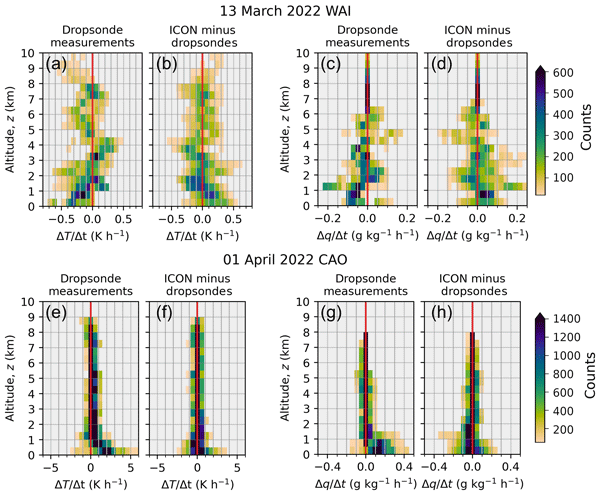
Manfred Wendisch, Benjamin Kirbus, Davide Ori, Matthew D. Shupe, Susanne Crewell, Harald Sodemann, and Vera Schemann
Atmos. Chem. Phys., 25, 15047–15076, https://doi.org/10.5194/acp-25-15047-2025, https://doi.org/10.5194/acp-25-15047-2025, 2025
Short summary
Short summary
Aircraft observations of air parcels moving into and out of the Arctic are reported. From the data, heating and cooling as well as drying and moistening of the air masses along their way into and out of the Arctic could be measured for the first time. These data are used to evaluate if weather prediction models are able to accurately represent these air mass transformations. This work helps to model the future Arctic climate changes, which may have an impact for mid-latitude weather as well.
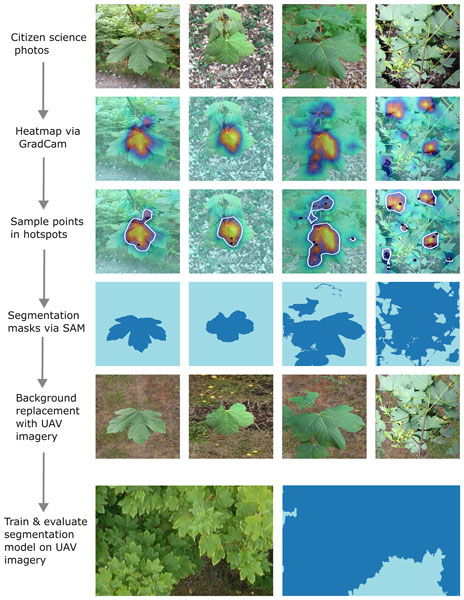
Salim Soltani, Lauren E. Gillespie, Moises Exposito-Alonso, Olga Ferlian, Nico Eisenhauer, Hannes Feilhauer, and Teja Kattenborn
Biogeosciences, 22, 6545–6561, https://doi.org/10.5194/bg-22-6545-2025, https://doi.org/10.5194/bg-22-6545-2025, 2025
Short summary
Short summary
We introduce an automated approach for generating segmentation masks for citizen science plant photos, making them applicable to computer vision models. This framework effectively transforms citizen science data into a data treasure for segmentation models for plant species identification in aerial imagery. Using automatically labeled photos, we train segmentation models for mapping tree species in drone imagery, showcasing their potential for forestry, agriculture, and biodiversity monitoring.
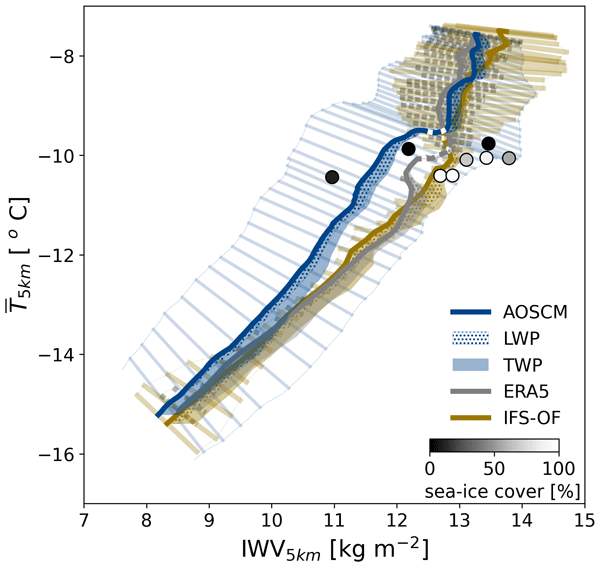
Michail Karalis, Gunilla Svensson, Manfred Wendisch, and Michael Tjernström
Atmos. Chem. Phys., 25, 13177–13198, https://doi.org/10.5194/acp-25-13177-2025, https://doi.org/10.5194/acp-25-13177-2025, 2025
Short summary
Short summary
During the spring warm-air intrusion captured by HALO-(𝒜𝒞)3, the air mass demonstrated a column-like structure. We built a Lagrangian modeling framework using a single-column model (AOSCM) to simulate the air mass transformation. Comparing to observations, reanalysis, and forecast data, we found that the Lagrangian AOSCM can successfully reproduce the main features of the transformation. The Lagrangian AOSCM can be used for future model development to improve Arctic weather and climate prediction.
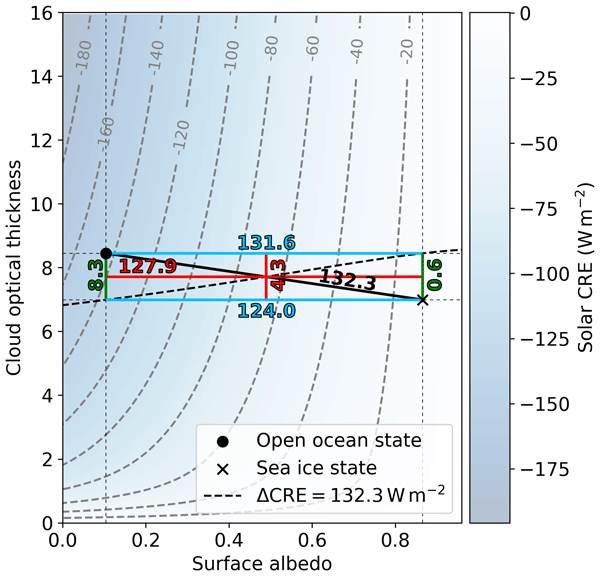
Sebastian Becker, André Ehrlich, Michael Schäfer, and Manfred Wendisch
Atmos. Chem. Phys., 25, 12831–12842, https://doi.org/10.5194/acp-25-12831-2025, https://doi.org/10.5194/acp-25-12831-2025, 2025
Short summary
Short summary
Clouds interact with solar radiation and can alter the surface temperature. The strength of this cloud impact is driven by cloud properties as well as solar elevation and surface reflection. As these dependencies are poorly represented in climate models, cloud, surface, and radiation observations are used to quantify the contributions of the drivers in the Arctic. It is shown that the weaker surface reflection dominates the stronger cooling effect of clouds over open ocean compared to sea ice.
Joshua J. Müller, Michael Schäfer, Sophie Rosenburg, André Ehrlich, and Manfred Wendisch
Atmos. Meas. Tech., 18, 4695–4708, https://doi.org/10.5194/amt-18-4695-2025, https://doi.org/10.5194/amt-18-4695-2025, 2025
Short summary
Short summary
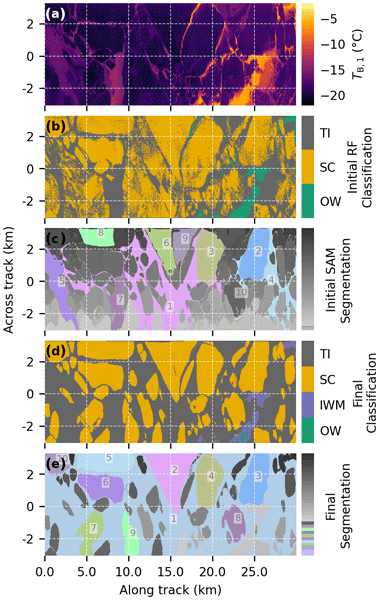
We retrieved high-resolution maps of Arctic surface temperature and type using an airborne thermal infrared imager during an Arctic aircraft campaign. Our study highlights small-scale surface variability, complementing satellite observations. Surface temperature was retrieved via radiative transfer simulations, while surface type was classified using machine learning. Additionally, we analysed segment sizes of each surface type, presenting results based on their distance from the sea-ice edge.
Marcus Klingebiel, André Ehrlich, Micha Gryschka, Nils Risse, Nina Maherndl, Imke Schirmacher, Sophie Rosenburg, Sabine Hörnig, Manuel Moser, Evelyn Jäkel, Michael Schäfer, Hartwig Deneke, Mario Mech, Christiane Voigt, and Manfred Wendisch
Atmos. Chem. Phys., 25, 9787–9801, https://doi.org/10.5194/acp-25-9787-2025, https://doi.org/10.5194/acp-25-9787-2025, 2025
Short summary
Short summary
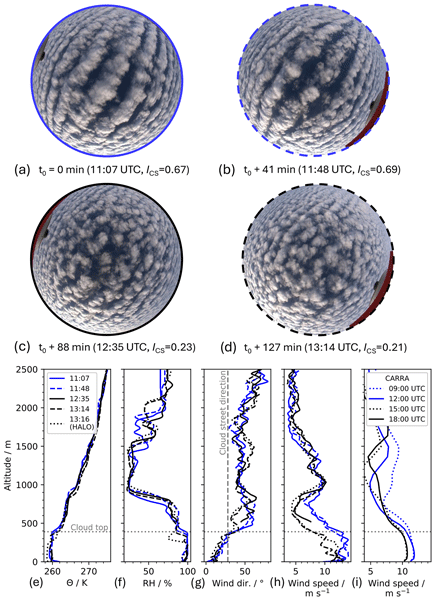
Our study is using aircraft measurements from the HALO-(𝒜𝒞)³ campaign to investigate the transition from organized Arctic cloud street structures to more scattered clouds, which we call isotropic cloud patterns. We show that lower wind speeds cause this transition. In addition, we look at the changes in the cloud coverage, the height of the clouds, the cloud particles, and the radiative properties.
Kevin Wolf, Evelyn Jäkel, André Ehrlich, Michael Schäfer, Hannes Feilhauer, Andreas Huth, Alexandra Weigelt, and Manfred Wendisch
Biogeosciences, 22, 2909–2933, https://doi.org/10.5194/bg-22-2909-2025, https://doi.org/10.5194/bg-22-2909-2025, 2025
Short summary
Short summary
This paper reports an investigation of the influence of clouds on vegetation albedo using a coupled atmosphere–vegetation radiative transfer model. Both models are iteratively linked to simulate cloud–vegetation–radiation interactions over canopies more realistically. Solar, spectral, and broadband irradiances have been simulated under varying cloud conditions. The simulated irradiances were used to investigate the spectral and broadband effect of clouds on vegetation albedo.

André Ehrlich, Susanne Crewell, Andreas Herber, Marcus Klingebiel, Christof Lüpkes, Mario Mech, Sebastian Becker, Stephan Borrmann, Heiko Bozem, Matthias Buschmann, Hans-Christian Clemen, Elena De La Torre Castro, Henning Dorff, Regis Dupuy, Oliver Eppers, Florian Ewald, Geet George, Andreas Giez, Sarah Grawe, Christophe Gourbeyre, Jörg Hartmann, Evelyn Jäkel, Philipp Joppe, Olivier Jourdan, Zsófia Jurányi, Benjamin Kirbus, Johannes Lucke, Anna E. Luebke, Maximilian Maahn, Nina Maherndl, Christian Mallaun, Johanna Mayer, Stephan Mertes, Guillaume Mioche, Manuel Moser, Hanno Müller, Veronika Pörtge, Nils Risse, Greg Roberts, Sophie Rosenburg, Johannes Röttenbacher, Michael Schäfer, Jonas Schaefer, Andreas Schäfler, Imke Schirmacher, Johannes Schneider, Sabrina Schnitt, Frank Stratmann, Christian Tatzelt, Christiane Voigt, Andreas Walbröl, Anna Weber, Bruno Wetzel, Martin Wirth, and Manfred Wendisch
Earth Syst. Sci. Data, 17, 1295–1328, https://doi.org/10.5194/essd-17-1295-2025, https://doi.org/10.5194/essd-17-1295-2025, 2025
Short summary
Short summary
This paper provides an overview of the HALO–(AC)3 aircraft campaign data sets, the campaign-specific instrument operation, data processing, and data quality. The data set comprises in situ and remote sensing observations from three research aircraft: HALO, Polar 5, and Polar 6. All data are published in the PANGAEA database by instrument-separated data subsets. It is highlighted how the scientific analysis of the HALO–(AC)3 data benefits from the coordinated operation of three aircraft.
Kevin Wolf, Nicolas Bellouin, Olivier Boucher, Susanne Rohs, and Yun Li
Atmos. Chem. Phys., 25, 157–181, https://doi.org/10.5194/acp-25-157-2025, https://doi.org/10.5194/acp-25-157-2025, 2025
Short summary
Short summary
ERA5 atmospheric reanalysis and airborne in situ observations from IAGOS are compared in terms of the representation of the contrail formation potential and the presence of supersaturation. Differences are traced back to biases in ERA5 relative humidity fields. Those biases are addressed by applying a quantile mapping technique that significantly improved contrail estimation based on post-processed ERA5 data.
Imke Schirmacher, Sabrina Schnitt, Marcus Klingebiel, Nina Maherndl, Benjamin Kirbus, André Ehrlich, Mario Mech, and Susanne Crewell
Atmos. Chem. Phys., 24, 12823–12842, https://doi.org/10.5194/acp-24-12823-2024, https://doi.org/10.5194/acp-24-12823-2024, 2024
Short summary
Short summary
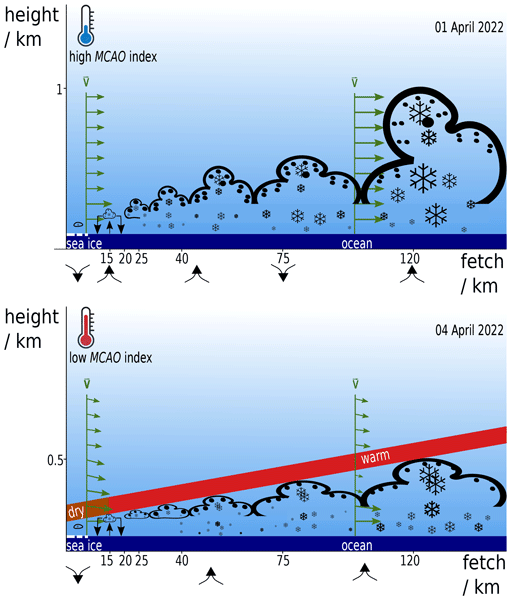
During Arctic marine cold-air outbreaks, cold air flows from sea ice over open water. Roll circulations evolve, forming cloud streets. We investigate the initial circulation and cloud development using high-resolution airborne measurements. We compute the distance an air mass traveled over water (fetch) from back trajectories. Cloud streets form at 15 km fetch, cloud cover strongly increases at around 20 km, and precipitation forms at around 30 km.
Lara Foth, Wolfgang Dorn, Annette Rinke, Evelyn Jäkel, and Hannah Niehaus
The Cryosphere, 18, 4053–4064, https://doi.org/10.5194/tc-18-4053-2024, https://doi.org/10.5194/tc-18-4053-2024, 2024
Short summary
Short summary
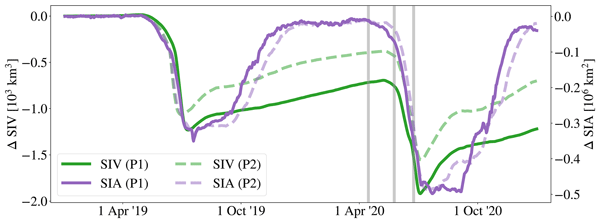
It is demonstrated that the explicit consideration of the cloud dependence of the snow surface albedo in a climate model results in a more realistic simulation of the surface albedo during the snowmelt period in late May and June. Although this improvement appears to be relatively insubstantial, it has significant impact on the simulated sea-ice volume and extent in the model due to an amplification of the snow/sea-ice albedo feedback, one of the main contributors to Arctic amplification.
Manfred Wendisch, Susanne Crewell, André Ehrlich, Andreas Herber, Benjamin Kirbus, Christof Lüpkes, Mario Mech, Steven J. Abel, Elisa F. Akansu, Felix Ament, Clémantyne Aubry, Sebastian Becker, Stephan Borrmann, Heiko Bozem, Marlen Brückner, Hans-Christian Clemen, Sandro Dahlke, Georgios Dekoutsidis, Julien Delanoë, Elena De La Torre Castro, Henning Dorff, Regis Dupuy, Oliver Eppers, Florian Ewald, Geet George, Irina V. Gorodetskaya, Sarah Grawe, Silke Groß, Jörg Hartmann, Silvia Henning, Lutz Hirsch, Evelyn Jäkel, Philipp Joppe, Olivier Jourdan, Zsofia Jurányi, Michail Karalis, Mona Kellermann, Marcus Klingebiel, Michael Lonardi, Johannes Lucke, Anna E. Luebke, Maximilian Maahn, Nina Maherndl, Marion Maturilli, Bernhard Mayer, Johanna Mayer, Stephan Mertes, Janosch Michaelis, Michel Michalkov, Guillaume Mioche, Manuel Moser, Hanno Müller, Roel Neggers, Davide Ori, Daria Paul, Fiona M. Paulus, Christian Pilz, Felix Pithan, Mira Pöhlker, Veronika Pörtge, Maximilian Ringel, Nils Risse, Gregory C. Roberts, Sophie Rosenburg, Johannes Röttenbacher, Janna Rückert, Michael Schäfer, Jonas Schaefer, Vera Schemann, Imke Schirmacher, Jörg Schmidt, Sebastian Schmidt, Johannes Schneider, Sabrina Schnitt, Anja Schwarz, Holger Siebert, Harald Sodemann, Tim Sperzel, Gunnar Spreen, Bjorn Stevens, Frank Stratmann, Gunilla Svensson, Christian Tatzelt, Thomas Tuch, Timo Vihma, Christiane Voigt, Lea Volkmer, Andreas Walbröl, Anna Weber, Birgit Wehner, Bruno Wetzel, Martin Wirth, and Tobias Zinner
Atmos. Chem. Phys., 24, 8865–8892, https://doi.org/10.5194/acp-24-8865-2024, https://doi.org/10.5194/acp-24-8865-2024, 2024
Short summary
Short summary
The Arctic is warming faster than the rest of the globe. Warm-air intrusions (WAIs) into the Arctic may play an important role in explaining this phenomenon. Cold-air outbreaks (CAOs) out of the Arctic may link the Arctic climate changes to mid-latitude weather. In our article, we describe how to observe air mass transformations during CAOs and WAIs using three research aircraft instrumented with state-of-the-art remote-sensing and in situ measurement devices.
Samuel M. Fischer, Xugao Wang, and Andreas Huth
Biogeosciences, 21, 3305–3319, https://doi.org/10.5194/bg-21-3305-2024, https://doi.org/10.5194/bg-21-3305-2024, 2024
Short summary
Short summary
Understanding the drivers of forest productivity is key for accurately assessing forests’ role in the global carbon cycle. Yet, despite significant research effort, it is not fully understood how the productivity of a forest can be deduced from its stand structure. We suggest tackling this problem by identifying the share and structure of immature trees within forests and show that this approach could significantly improve estimates of forests’ net productivity and carbon uptake.
Johannes Röttenbacher, André Ehrlich, Hanno Müller, Florian Ewald, Anna E. Luebke, Benjamin Kirbus, Robin J. Hogan, and Manfred Wendisch
Atmos. Chem. Phys., 24, 8085–8104, https://doi.org/10.5194/acp-24-8085-2024, https://doi.org/10.5194/acp-24-8085-2024, 2024
Short summary
Short summary
Weather prediction models simplify the physical processes related to light scattering by clouds consisting of complex ice crystals. Whether these simplifications are the cause for uncertainties in their prediction can be evaluated by comparing them with measurement data. Here we do this for Arctic ice clouds over sea ice using airborne measurements from two case studies. The model performs well for thick ice clouds but not so well for thin ones. This work can be used to improve the model.
Andreas Walbröl, Janosch Michaelis, Sebastian Becker, Henning Dorff, Kerstin Ebell, Irina Gorodetskaya, Bernd Heinold, Benjamin Kirbus, Melanie Lauer, Nina Maherndl, Marion Maturilli, Johanna Mayer, Hanno Müller, Roel A. J. Neggers, Fiona M. Paulus, Johannes Röttenbacher, Janna E. Rückert, Imke Schirmacher, Nils Slättberg, André Ehrlich, Manfred Wendisch, and Susanne Crewell
Atmos. Chem. Phys., 24, 8007–8029, https://doi.org/10.5194/acp-24-8007-2024, https://doi.org/10.5194/acp-24-8007-2024, 2024
Short summary
Short summary
To support the interpretation of the data collected during the HALO-(AC)3 campaign, which took place in the North Atlantic sector of the Arctic from 7 March to 12 April 2022, we analyze how unusual the weather and sea ice conditions were with respect to the long-term climatology. From observations and ERA5 reanalysis, we found record-breaking warm air intrusions and a large variety of marine cold air outbreaks. Sea ice concentration was mostly within the climatological interquartile range.
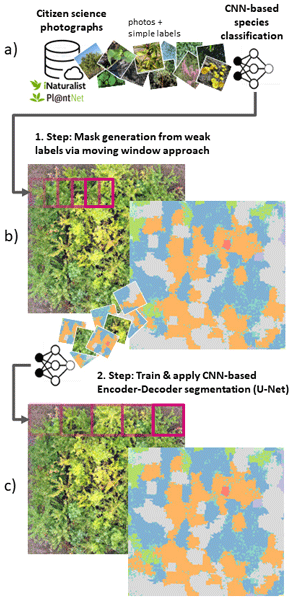
Salim Soltani, Olga Ferlian, Nico Eisenhauer, Hannes Feilhauer, and Teja Kattenborn
Biogeosciences, 21, 2909–2935, https://doi.org/10.5194/bg-21-2909-2024, https://doi.org/10.5194/bg-21-2909-2024, 2024
Short summary
Short summary
In this research, we developed a novel method using citizen science data as alternative training data for computer vision models to map plant species in unoccupied aerial vehicle (UAV) images. We use citizen science plant photographs to train models and apply them to UAV images. We tested our approach on UAV images of a test site with 10 different tree species, yielding accurate results. This research shows the potential of citizen science data to advance our ability to monitor plant species.
Sidiki Sanogo, Olivier Boucher, Nicolas Bellouin, Audran Borella, Kevin Wolf, and Susanne Rohs
Atmos. Chem. Phys., 24, 5495–5511, https://doi.org/10.5194/acp-24-5495-2024, https://doi.org/10.5194/acp-24-5495-2024, 2024
Short summary
Short summary
Relative humidity relative to ice (RHi) is a key variable in the formation of cirrus clouds and contrails. This study shows that the properties of the probability density function of RHi differ between the tropics and higher latitudes. In line with RHi and temperature variability, aircraft are likely to produce more contrails with bioethanol and liquid hydrogen as fuel. The impact of this fuel change decreases with decreasing pressure levels but increases from high latitudes to the tropics.
Kevin Wolf, Nicolas Bellouin, and Olivier Boucher
Atmos. Chem. Phys., 24, 5009–5024, https://doi.org/10.5194/acp-24-5009-2024, https://doi.org/10.5194/acp-24-5009-2024, 2024
Short summary
Short summary
The contrail formation potential and its tempo-spatial distribution are estimated for the North Atlantic flight corridor. Meteorological conditions of temperature and relative humidity are taken from the ERA5 re-analysis and IAGOS. Based on IAGOS flight tracks, crossing length, size, orientation, frequency of occurrence, and overlap of persistent contrail formation areas are determined. The presented conclusions might provide a guide for statistical flight track optimization to reduce contrails.
Hanno Müller, André Ehrlich, Evelyn Jäkel, Johannes Röttenbacher, Benjamin Kirbus, Michael Schäfer, Robin J. Hogan, and Manfred Wendisch
Atmos. Chem. Phys., 24, 4157–4175, https://doi.org/10.5194/acp-24-4157-2024, https://doi.org/10.5194/acp-24-4157-2024, 2024
Short summary
Short summary
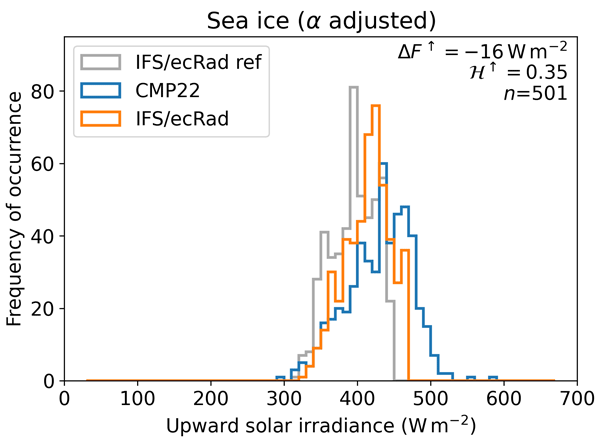
A weather model is used to compare solar radiation with measurements from an aircraft campaign in the Arctic. Model and observations agree on the downward radiation but show differences in the radiation reflected by the surface and the clouds, which in the model is too low above sea ice and too high above open ocean. The model–observation bias is reduced above open ocean by a realistic fraction of clouds and less cloud liquid water and above sea ice by less dark sea ice and more cloud droplets.
Benjamin Kirbus, Imke Schirmacher, Marcus Klingebiel, Michael Schäfer, André Ehrlich, Nils Slättberg, Johannes Lucke, Manuel Moser, Hanno Müller, and Manfred Wendisch
Atmos. Chem. Phys., 24, 3883–3904, https://doi.org/10.5194/acp-24-3883-2024, https://doi.org/10.5194/acp-24-3883-2024, 2024
Short summary
Short summary
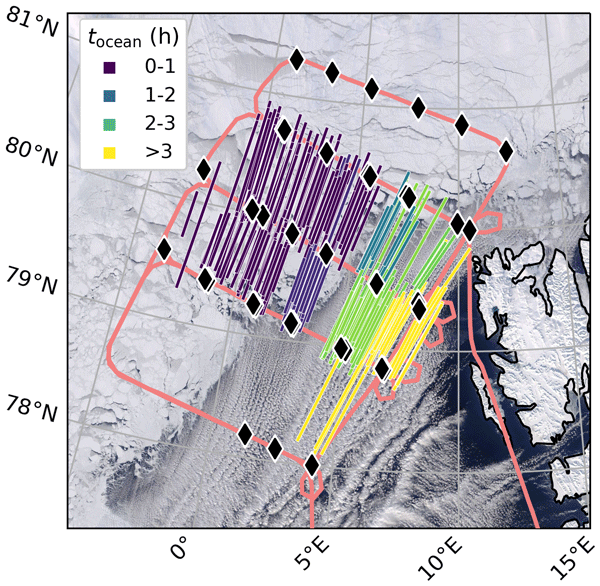
A research aircraft is used to track the changes in air temperature, moisture, and cloud properties for air that moves from cold Arctic sea ice onto warmer oceanic waters. The measurements are compared to two reanalysis models named ERA5 and CARRA. The biggest differences are found for air temperature over the sea ice and moisture over the ocean. CARRA data are more accurate than ERA5 because they better simulate the sea ice, the transition from sea ice to open ocean, and the forming clouds.
Evelyn Jäkel, Sebastian Becker, Tim R. Sperzel, Hannah Niehaus, Gunnar Spreen, Ran Tao, Marcel Nicolaus, Wolfgang Dorn, Annette Rinke, Jörg Brauchle, and Manfred Wendisch
The Cryosphere, 18, 1185–1205, https://doi.org/10.5194/tc-18-1185-2024, https://doi.org/10.5194/tc-18-1185-2024, 2024
Short summary
Short summary
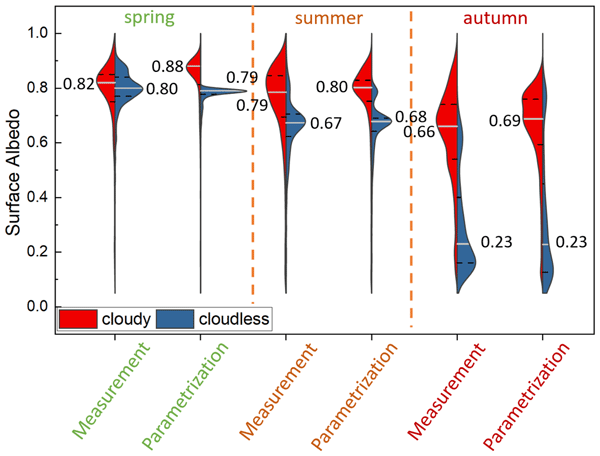
The results of the surface albedo scheme of a coupled regional climate model were evaluated against airborne and ground-based measurements conducted in the European Arctic in different seasons between 2017 and 2022. We found a seasonally dependent bias between measured and modeled surface albedo for cloudless and cloudy situations. The strongest effects of the albedo model bias on the net irradiance were most apparent in the presence of optically thin clouds.
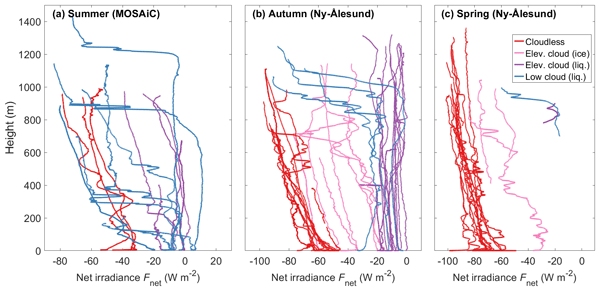
Michael Lonardi, Elisa F. Akansu, André Ehrlich, Mauro Mazzola, Christian Pilz, Matthew D. Shupe, Holger Siebert, and Manfred Wendisch
Atmos. Chem. Phys., 24, 1961–1978, https://doi.org/10.5194/acp-24-1961-2024, https://doi.org/10.5194/acp-24-1961-2024, 2024
Short summary
Short summary
Profiles of thermal-infrared irradiance were measured at two Arctic sites. The presence or lack of clouds influences the vertical structure of these observations. In particular, the cloud top region is a source of radiative energy that can promote cooling and mixing in the cloud layer. Simulations are used to further characterize how the amount of water in the cloud modifies this forcing. A case study additionally showcases the evolution of the radiation profiles in a dynamic atmosphere.
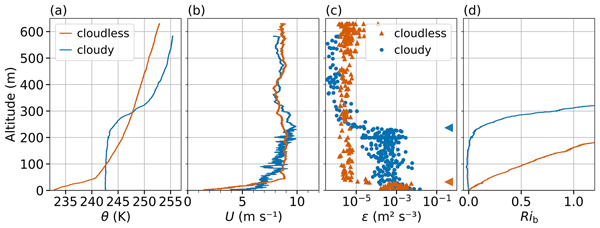
Elisa F. Akansu, Sandro Dahlke, Holger Siebert, and Manfred Wendisch
Atmos. Chem. Phys., 23, 15473–15489, https://doi.org/10.5194/acp-23-15473-2023, https://doi.org/10.5194/acp-23-15473-2023, 2023
Short summary
Short summary
The height of the mixing layer is an important measure of the surface-level distribution of energy or other substances. The experimental determination of this height is associated with large uncertainties, particularly under stable conditions that we often find during the polar night or in the presence of clouds. We present a reference method using turbulence measurements on a tethered balloon, which allows us to evaluate approaches based on radiosondes or surface observations.
Marcus Klingebiel, André Ehrlich, Elena Ruiz-Donoso, Nils Risse, Imke Schirmacher, Evelyn Jäkel, Michael Schäfer, Kevin Wolf, Mario Mech, Manuel Moser, Christiane Voigt, and Manfred Wendisch
Atmos. Chem. Phys., 23, 15289–15304, https://doi.org/10.5194/acp-23-15289-2023, https://doi.org/10.5194/acp-23-15289-2023, 2023
Short summary
Short summary
In this study we explain how we use aircraft measurements from two Arctic research campaigns to identify cloud properties (like droplet size) over sea-ice and ice-free ocean. To make sure that our measurements make sense, we compare them with other observations. Our results show, e.g., larger cloud droplets in early summer than in spring. Moreover, the cloud droplets are also larger over ice-free ocean than compared to sea ice. In the future, our data can be used to improve climate models.
Kevin Wolf, Nicolas Bellouin, and Olivier Boucher
Atmos. Chem. Phys., 23, 14003–14037, https://doi.org/10.5194/acp-23-14003-2023, https://doi.org/10.5194/acp-23-14003-2023, 2023
Short summary
Short summary
Cirrus and contrails considerably impact Earth's energy budget. Such ice clouds can have a positive (warming) or negative (cooling) net radiative effect (RE), which depends on cloud and ambient properties. The effect of eight parameters on the cloud RE is estimated. In total, 283 500 radiative transfer simulations have been performed, spanning the typical parameter ranges associated with cirrus and contrails. Specific cases are selected and discussed. The data set is publicly available.
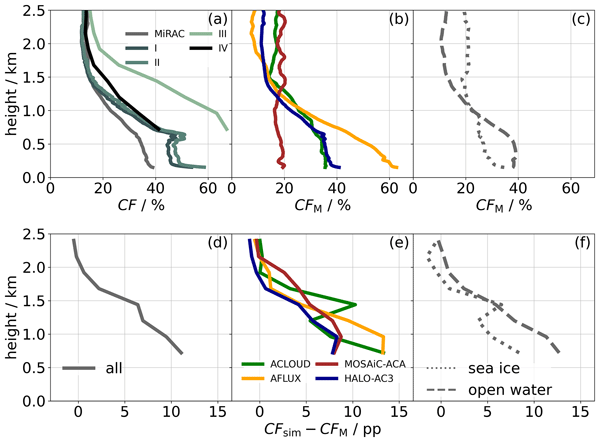
Imke Schirmacher, Pavlos Kollias, Katia Lamer, Mario Mech, Lukas Pfitzenmaier, Manfred Wendisch, and Susanne Crewell
Atmos. Meas. Tech., 16, 4081–4100, https://doi.org/10.5194/amt-16-4081-2023, https://doi.org/10.5194/amt-16-4081-2023, 2023
Short summary
Short summary
CloudSat’s relatively coarse spatial resolution, low sensitivity, and blind zone limit its assessment of Arctic low-level clouds, which affect the surface energy balance. We compare cloud fractions from CloudSat and finely resolved airborne radar observations to determine CloudSat’s limitations. Cloudsat overestimates cloud fractions above its blind zone, especially during cold-air outbreaks over open water, and misses a cloud fraction of 32 % and half of the precipitation inside its blind zone.
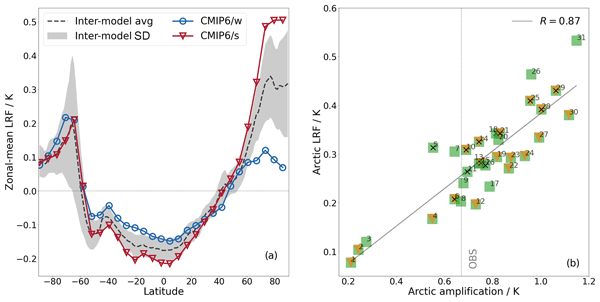
Olivia Linke, Johannes Quaas, Finja Baumer, Sebastian Becker, Jan Chylik, Sandro Dahlke, André Ehrlich, Dörthe Handorf, Christoph Jacobi, Heike Kalesse-Los, Luca Lelli, Sina Mehrdad, Roel A. J. Neggers, Johannes Riebold, Pablo Saavedra Garfias, Niklas Schnierstein, Matthew D. Shupe, Chris Smith, Gunnar Spreen, Baptiste Verneuil, Kameswara S. Vinjamuri, Marco Vountas, and Manfred Wendisch
Atmos. Chem. Phys., 23, 9963–9992, https://doi.org/10.5194/acp-23-9963-2023, https://doi.org/10.5194/acp-23-9963-2023, 2023
Short summary
Short summary
Lapse rate feedback (LRF) is a major driver of the Arctic amplification (AA) of climate change. It arises because the warming is stronger at the surface than aloft. Several processes can affect the LRF in the Arctic, such as the omnipresent temperature inversion. Here, we compare multimodel climate simulations to Arctic-based observations from a large research consortium to broaden our understanding of these processes, find synergy among them, and constrain the Arctic LRF and AA.
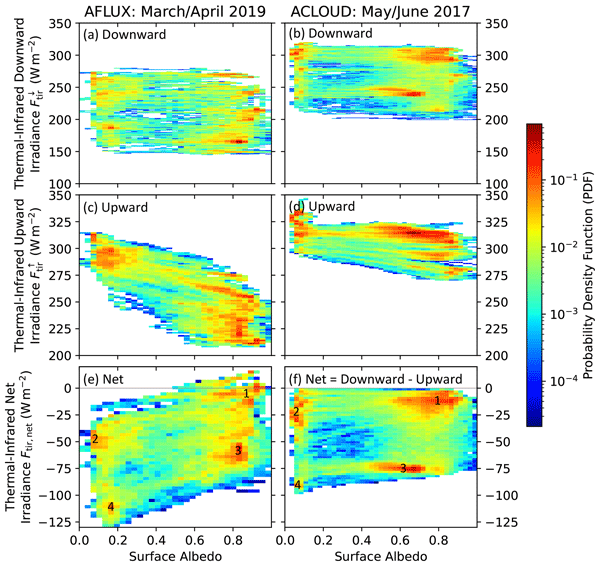
Manfred Wendisch, Johannes Stapf, Sebastian Becker, André Ehrlich, Evelyn Jäkel, Marcus Klingebiel, Christof Lüpkes, Michael Schäfer, and Matthew D. Shupe
Atmos. Chem. Phys., 23, 9647–9667, https://doi.org/10.5194/acp-23-9647-2023, https://doi.org/10.5194/acp-23-9647-2023, 2023
Short summary
Short summary
Atmospheric radiation measurements have been conducted during two field campaigns using research aircraft. The data are analyzed to see if the near-surface air in the Arctic is warmed or cooled if warm–humid air masses from the south enter the Arctic or cold–dry air moves from the north from the Arctic to mid-latitude areas. It is important to study these processes and to check if climate models represent them well. Otherwise it is not possible to reliably forecast the future Arctic climate.
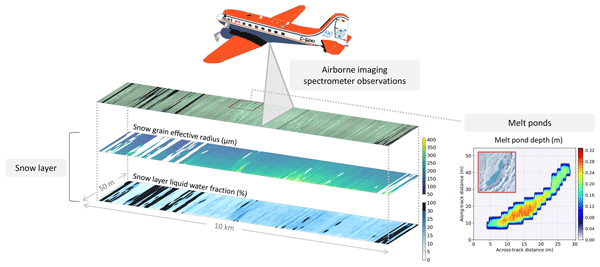
Sophie Rosenburg, Charlotte Lange, Evelyn Jäkel, Michael Schäfer, André Ehrlich, and Manfred Wendisch
Atmos. Meas. Tech., 16, 3915–3930, https://doi.org/10.5194/amt-16-3915-2023, https://doi.org/10.5194/amt-16-3915-2023, 2023
Short summary
Short summary
Snow layer melting and melt pond formation on Arctic sea ice are important seasonal processes affecting the surface reflection and energy budget. Sea ice reflectivity was surveyed by airborne imaging spectrometers in May–June 2017. Adapted retrieval approaches were applied to find snow layer liquid water fraction, snow grain effective radius, and melt pond depth. The retrievals show the potential and limitations of spectral airborne imaging to map melting snow layer and melt pond properties.
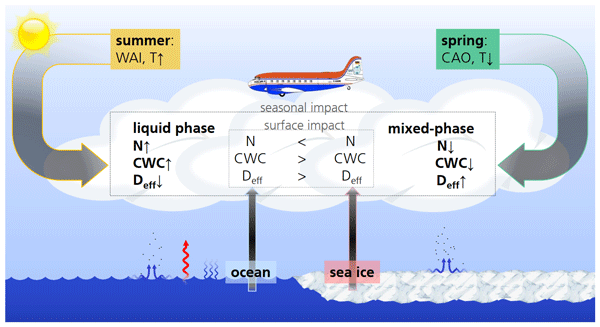
Manuel Moser, Christiane Voigt, Tina Jurkat-Witschas, Valerian Hahn, Guillaume Mioche, Olivier Jourdan, Régis Dupuy, Christophe Gourbeyre, Alfons Schwarzenboeck, Johannes Lucke, Yvonne Boose, Mario Mech, Stephan Borrmann, André Ehrlich, Andreas Herber, Christof Lüpkes, and Manfred Wendisch
Atmos. Chem. Phys., 23, 7257–7280, https://doi.org/10.5194/acp-23-7257-2023, https://doi.org/10.5194/acp-23-7257-2023, 2023
Short summary
Short summary
This study provides a comprehensive microphysical and thermodynamic phase analysis of low-level clouds in the northern Fram Strait, above the sea ice and the open ocean, during spring and summer. Using airborne in situ cloud data, we show that the properties of Arctic low-level clouds vary significantly with seasonal meteorological situations and surface conditions. The observations presented in this study can help one to assess the role of clouds in the Arctic climate system.
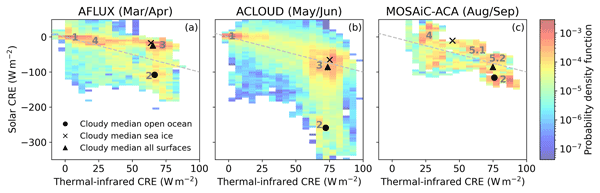
Sebastian Becker, André Ehrlich, Michael Schäfer, and Manfred Wendisch
Atmos. Chem. Phys., 23, 7015–7031, https://doi.org/10.5194/acp-23-7015-2023, https://doi.org/10.5194/acp-23-7015-2023, 2023
Short summary
Short summary
This study analyses the variability of the warming or cooling effect of clouds on the Arctic surface. Therefore, aircraft radiation measurements were performed over sea ice and open ocean during three seasonally different campaigns. It is found that clouds cool the open-ocean surface most strongly in summer. Over sea ice, clouds warm the surface in spring but have a neutral effect in summer. Due to the variable sea ice extent, clouds warm the surface during spring but cool it during late summer.
Dmitry G. Chechin, Christof Lüpkes, Jörg Hartmann, André Ehrlich, and Manfred Wendisch
Atmos. Chem. Phys., 23, 4685–4707, https://doi.org/10.5194/acp-23-4685-2023, https://doi.org/10.5194/acp-23-4685-2023, 2023
Short summary
Short summary
Clouds represent a very important component of the Arctic climate system, as they strongly reduce the amount of heat lost to space from the sea ice surface. Properties of clouds, as well as their persistence, strongly depend on the complex interaction of such small-scale properties as phase transitions, radiative transfer and turbulence. In this study we use airborne observations to learn more about the effect of clouds and radiative cooling on turbulence in comparison with other factors.
André Ehrlich, Martin Zöger, Andreas Giez, Vladyslav Nenakhov, Christian Mallaun, Rolf Maser, Timo Röschenthaler, Anna E. Luebke, Kevin Wolf, Bjorn Stevens, and Manfred Wendisch
Atmos. Meas. Tech., 16, 1563–1581, https://doi.org/10.5194/amt-16-1563-2023, https://doi.org/10.5194/amt-16-1563-2023, 2023
Short summary
Short summary
Measurements of the broadband radiative energy budget from aircraft are needed to study the effect of clouds, aerosol particles, and surface conditions on the Earth's energy budget. However, the moving aircraft introduces challenges to the instrument performance and post-processing of the data. This study introduces a new radiometer package, outlines a greatly simplifying method to correct thermal offsets, and provides exemplary measurements of solar and thermal–infrared irradiance.
Yunfan Liu, Hang Su, Siwen Wang, Chao Wei, Wei Tao, Mira L. Pöhlker, Christopher Pöhlker, Bruna A. Holanda, Ovid O. Krüger, Thorsten Hoffmann, Manfred Wendisch, Paulo Artaxo, Ulrich Pöschl, Meinrat O. Andreae, and Yafang Cheng
Atmos. Chem. Phys., 23, 251–272, https://doi.org/10.5194/acp-23-251-2023, https://doi.org/10.5194/acp-23-251-2023, 2023
Short summary
Short summary
The origins of the abundant cloud condensation nuclei (CCN) in the upper troposphere (UT) of the Amazon remain unclear. With model developments of new secondary organic aerosol schemes and constrained by observation, we show that strong aerosol nucleation and condensation in the UT is triggered by biogenic organics, and organic condensation is key for UT CCN production. This UT CCN-producing mechanism may prevail over broader vegetation canopies and deserves emphasis in aerosol–climate feedback.
Kevin Wolf, Nicolas Bellouin, and Olivier Boucher
Atmos. Chem. Phys., 23, 287–309, https://doi.org/10.5194/acp-23-287-2023, https://doi.org/10.5194/acp-23-287-2023, 2023
Short summary
Short summary
Recent studies estimate the radiative impact of contrails to be similar to or larger than that of emitted CO2; thus, contrail mitigation might be an opportunity to reduce the climate effects of aviation. A radiosonde data set is analyzed in terms of the vertical distribution of potential contrails, contrail mitigation by flight altitude changes, and linkages with the tropopause and jet stream. The effect of prospective jet engine developments and alternative fuels are estimated.
Nikolai Knapp, Sabine Attinger, and Andreas Huth
Biogeosciences, 19, 4929–4944, https://doi.org/10.5194/bg-19-4929-2022, https://doi.org/10.5194/bg-19-4929-2022, 2022
Short summary
Short summary
The biomass of forests is determined by forest growth and mortality. These quantities can be estimated with different methods such as inventories, remote sensing and modeling. These methods are usually being applied at different spatial scales. The scales influence the obtained frequency distributions of biomass, growth and mortality. This study suggests how to transfer between scales, when using forest models of different complexity for a tropical forest.
Vikas Nataraja, Sebastian Schmidt, Hong Chen, Takanobu Yamaguchi, Jan Kazil, Graham Feingold, Kevin Wolf, and Hironobu Iwabuchi
Atmos. Meas. Tech., 15, 5181–5205, https://doi.org/10.5194/amt-15-5181-2022, https://doi.org/10.5194/amt-15-5181-2022, 2022
Short summary
Short summary
A convolutional neural network (CNN) is introduced to retrieve cloud optical thickness (COT) from passive cloud imagery. The CNN, trained on large eddy simulations from the Sulu Sea, learns from spatial information at multiple scales to reduce cloud inhomogeneity effects. By considering the spatial context of a pixel, the CNN outperforms the traditional independent pixel approximation (IPA) across several cloud morphology metrics.
Sebastian Becker, André Ehrlich, Evelyn Jäkel, Tim Carlsen, Michael Schäfer, and Manfred Wendisch
Atmos. Meas. Tech., 15, 2939–2953, https://doi.org/10.5194/amt-15-2939-2022, https://doi.org/10.5194/amt-15-2939-2022, 2022
Short summary
Short summary
Airborne radiation measurements are used to characterize the solar directional reflection of a mixture of Arctic sea ice and open-ocean surfaces in the transition zone between both surface types. The mixture reveals reflection properties of both surface types. It is shown that the directional reflection of the mixture can be reconstructed from the directional reflection of the individual surfaces, accounting for the special conditions present in the transition zone.
Ulrike Hiltner, Andreas Huth, and Rico Fischer
Biogeosciences, 19, 1891–1911, https://doi.org/10.5194/bg-19-1891-2022, https://doi.org/10.5194/bg-19-1891-2022, 2022
Short summary
Short summary
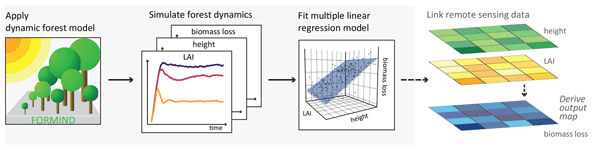
Quantifying biomass loss rates due to stem mortality is important for estimating the role of tropical forests in the global carbon cycle. We analyse the consequences of long-term elevated stem mortality for tropical forest dynamics and biomass loss. Based on simulations, we developed a statistical model to estimate biomass loss rates of forests in different successional states from forest attributes. Assuming a doubling of tree mortality, biomass loss increased from 3.2 % yr-1 to 4.5 % yr-1.
Michael Schäfer, Kevin Wolf, André Ehrlich, Christoph Hallbauer, Evelyn Jäkel, Friedhelm Jansen, Anna Elizabeth Luebke, Joshua Müller, Jakob Thoböll, Timo Röschenthaler, Bjorn Stevens, and Manfred Wendisch
Atmos. Meas. Tech., 15, 1491–1509, https://doi.org/10.5194/amt-15-1491-2022, https://doi.org/10.5194/amt-15-1491-2022, 2022
Short summary
Short summary
The new airborne thermal infrared imager VELOX is introduced. It measures two-dimensional fields of spectral thermal infrared radiance or brightness temperature within the large atmospheric window. The technical specifications as well as necessary calibration and correction procedures are presented. Example measurements from the first field deployment are analysed with respect to cloud coverage and cloud top altitude.
Anna E. Luebke, André Ehrlich, Michael Schäfer, Kevin Wolf, and Manfred Wendisch
Atmos. Chem. Phys., 22, 2727–2744, https://doi.org/10.5194/acp-22-2727-2022, https://doi.org/10.5194/acp-22-2727-2022, 2022
Short summary
Short summary
A combination of aircraft and satellite observations is used to show how the characteristics of tropical shallow clouds interact with incoming and outgoing energy. A complete depiction of these clouds is challenging to obtain, but such data are useful for understanding how models can correctly represent them. The amount of cloud is found to be the most important factor, while other cloud characteristics become increasingly impactful when more cloud is present.
J. Pacheco-Labrador, U. Weber, X. Ma, M. D. Mahecha, N. Carvalhais, C. Wirth, A. Huth, F. J. Bohn, G. Kraemer, U. Heiden, FunDivEUROPE members, and M. Migliavacca
Int. Arch. Photogramm. Remote Sens. Spatial Inf. Sci., XLVI-1-W1-2021, 49–55, https://doi.org/10.5194/isprs-archives-XLVI-1-W1-2021-49-2022, https://doi.org/10.5194/isprs-archives-XLVI-1-W1-2021-49-2022, 2022
Ramon Campos Braga, Barbara Ervens, Daniel Rosenfeld, Meinrat O. Andreae, Jan-David Förster, Daniel Fütterer, Lianet Hernández Pardo, Bruna A. Holanda, Tina Jurkat-Witschas, Ovid O. Krüger, Oliver Lauer, Luiz A. T. Machado, Christopher Pöhlker, Daniel Sauer, Christiane Voigt, Adrian Walser, Manfred Wendisch, Ulrich Pöschl, and Mira L. Pöhlker
Atmos. Chem. Phys., 21, 17513–17528, https://doi.org/10.5194/acp-21-17513-2021, https://doi.org/10.5194/acp-21-17513-2021, 2021
Short summary
Short summary
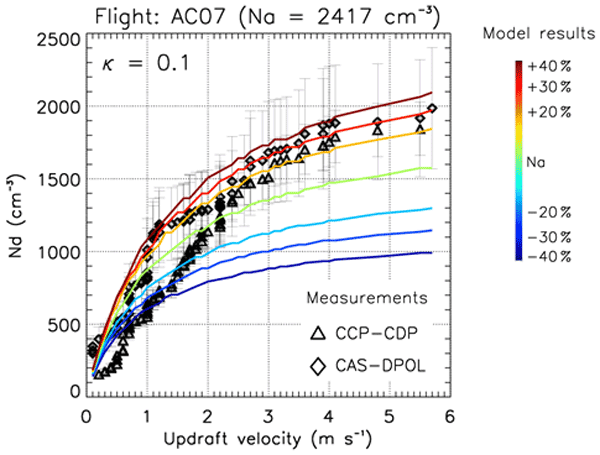
Interactions of aerosol particles with clouds represent a large uncertainty in estimates of climate change. Properties of aerosol particles control their ability to act as cloud condensation nuclei. Using aerosol measurements in the Amazon, we performed model studies to compare predicted and measured cloud droplet number concentrations at cloud bases. Our results confirm previous estimates of particle hygroscopicity in this region.
Heike Konow, Florian Ewald, Geet George, Marek Jacob, Marcus Klingebiel, Tobias Kölling, Anna E. Luebke, Theresa Mieslinger, Veronika Pörtge, Jule Radtke, Michael Schäfer, Hauke Schulz, Raphaela Vogel, Martin Wirth, Sandrine Bony, Susanne Crewell, André Ehrlich, Linda Forster, Andreas Giez, Felix Gödde, Silke Groß, Manuel Gutleben, Martin Hagen, Lutz Hirsch, Friedhelm Jansen, Theresa Lang, Bernhard Mayer, Mario Mech, Marc Prange, Sabrina Schnitt, Jessica Vial, Andreas Walbröl, Manfred Wendisch, Kevin Wolf, Tobias Zinner, Martin Zöger, Felix Ament, and Bjorn Stevens
Earth Syst. Sci. Data, 13, 5545–5563, https://doi.org/10.5194/essd-13-5545-2021, https://doi.org/10.5194/essd-13-5545-2021, 2021
Short summary
Short summary
The German research aircraft HALO took part in the research campaign EUREC4A in January and February 2020. The focus area was the tropical Atlantic east of the island of Barbados. We describe the characteristics of the 15 research flights, provide auxiliary information, derive combined cloud mask products from all instruments that observe clouds on board the aircraft, and provide code examples that help new users of the data to get started.
Cited articles
Aasen, H. and Bolten, A.: Multi-temporal high-resolution imaging spectroscopy with hyperspectral 2D imagers – From theory to application, Remote Sens. Environ., 205, 374–389, https://doi.org/10.1016/j.rse.2017.10.043, 2018. a
Aasen, H., Burkart, A., Bolten, A., and Bareth, G.: Generating 3D hyperspectral information with lightweight UAV snapshot cameras for vegetation monitoring: From camera calibration to quality assurance, ISPRS, 108, 245–259, https://doi.org/10.1016/j.isprsjprs.2015.08.002, 2015. a
Aebi, C., Gröbner, J., Kazadzis, S., Vuilleumier, L., Gkikas, A., and Kämpfer, N.: Estimation of cloud optical thickness, single scattering albedo and effective droplet radius using a shortwave radiative closure study in Payerne, Atmos. Meas. Tech., 13, 907–923, https://doi.org/10.5194/amt-13-907-2020, 2020. a
Ahmadian, N., Ghasemi, S., Wigneron, J.-P., and Zölitz, R.: Comprehensive study of the biophysical parameters of agricultural crops based on assessing Landsat 8 OLI and Landsat 7 ETM+ vegetation indices, GISci. Remote Sens., 53, 337–359, https://doi.org/10.1080/15481603.2016.1155789, 2016. a, b
Asner, G. P.: Biophysical and Biochemical Sources of Variability in Canopy Reflectance, Remote Sens. Environ., 64, 234–253, https://doi.org/10.1016/S0034-4257(98)00014-5, 1998. a, b, c
Baldocchi, D. D., Wilson, K. B., and Gu, L.: How the environment, canopy structure and canopy physiological functioning influence carbon, water and energy fluxes of a temperate broad-leaved deciduous forest – an assessment with the biophysical model CANOAK, Tree Physiol., 22, 1065–1077, https://doi.org/10.1093/treephys/22.15-16.1065, 2002. a
Bausch, W. C.: Soil background effects on reflectance-based crop coefficients for corn, Remote Sens. Environ., 46, 213–222, 1993. a
Behmann, J., Mahlein, A.-K., Paulus, S., Kuhlmann, H., Oerke, E.-C., and Plümer, L.: Calibration of hyperspectral close-range pushbroom cameras for plant phenotyping, ISPRS J. Photogramm. Remote Sens., 106, 172–182, https://doi.org/10.1016/j.isprsjprs.2015.05.010, 2015. a
Boegh, E., Soegaard, H., Broge, N., Hasager, C. B., Jensen, N. O., Schelde, K., and Thomsen, A.: Airborne multispectral data for quantifying leaf area index, nitrogen concentration, and photosynthetic efficiency in agriculture, Remote Sens. Environ., 81, 179–193, https://doi.org/10.1016/S0034-4257(01)00342-X, 2002. a, b
Bowker, D. E.: Spectral reflectances of natural targets for use in remote sensing studies, vol. 1139, NASA, https://ntrs.nasa.gov/citations/19850022138 (last access: 2 December 2025), 1985. a
Buras, R., Dowling, T., and Emde, C.: New secondary-scattering correction in DISORT with increased efficiency for forward scattering, J. Quant. Spectrosc. Radiat. Transfer, 112, 2028–2034, https://doi.org/10.1016/j.jqsrt.2011.03.019, 2011. a
Burkart, A., Cogliati, S., Schickling, A., and Rascher, U.: A novel UAV-based ultra-light weight spectrometer for field spectroscopy, IEEE Sens. J., 14, 62–67, https://doi.org/10.1109/JSEN.2013.2279720, 2014. a, b
Calif, R., Schmitt, F. G., Huang, Y., and Soubdhan, T.: Intermittency study of high frequency global solar radiation sequences under a tropical climate, Sol. Energy, 98, 349–365, https://doi.org/10.1016/j.solener.2013.09.018, 2013. a
Carlson, T. N. and Ripley, D. A.: On the relation between NDVI, fractional vegetation cover, and leaf area index, Remote Sens. Environ., 62, 241–252, https://doi.org/10.1016/S0034-4257(97)00104-1, 1997. a
Chen, D., Huang, J., and Jackson, T. J.: Vegetation water content estimation for corn and soybeans using spectral indices derived from MODIS near- and short-wave infrared bands, Remote Sens. Environ., 98, 225–236, https://doi.org/10.1016/j.rse.2005.07.008, 2005. a, b
Coddington, O. M., Richard, E. C., Harber, D., Pilewskie, P., Woods, T. N., Chance, K., Liu, X., and Sun, K.: The TSIS-1 Hybrid Solar Reference Spectrum, Geophys. Res. Let., 48, e2020GL091709, https://doi.org/10.1029/2020GL091709, 2021. a
Collins, W.: Remote sensing of crop type and maturity, Photogramm. Eng. Remote Sens., 44, 43–55, 1978. a
Drusch, M., Del Bello, U., Carlier, S., Colin, O., Fernandez, V., Gascon, F., Hoersch, B., Isola, C., Laberinti, P., Martimort, P., Meygret, A., Spoto, F., Sy, O., Marchese, F., and Bargellini, P.: Sentinel-2: ESA's optical high-resolution mission for GMES operational services, Remote Sens. Environ., 120, 25–36, https://doi.org/10.1016/j.rse.2011.11.026, 2012. a
Duan, T., Chapman, S. C., Guo, Y., and Zheng, B.: Dynamic monitoring of NDVI in wheat agronomy and breeding trials using an unmanned aerial vehicle, Field Crops Res., 210, 71–80, https://doi.org/10.1016/j.fcr.2017.05.025, 2017. a
Dubovik, O., Holben, B. N., Lapyonok, T., Sinyuk, A., Mishchenko, M. I., Yang, P., and Slutsker, I.: Non-spherical aerosol retrieval method employing light scattering by spheroids, Geophys. Res. Let., 29, 54-1–54-4, https://doi.org/10.1029/2001GL014506, 2002. a
Emde, C., Buras-Schnell, R., Kylling, A., Mayer, B., Gasteiger, J., Hamann, U., Kylling, J., Richter, B., Pause, C., Dowling, T., and Bugliaro, L.: The libRadtran software package for radiative transfer calculations (version 2.0.1), Geosci. Model Dev., 9, 1647–1672, https://doi.org/10.5194/gmd-9-1647-2016, 2016. a, b, c
Fawcett, D., Panigada, C., Tagliabue, G., Boschetti, M., Celesti, M., Evdokimov, A., Biriukova, K., Colombo, R., Miglietta, F., Rascher, U., and Anderson, K.: Multi-scale evaluation of drone-based multispectral surface reflectance and vegetation indices in operational conditions, Remote Sens., 12, https://doi.org/10.3390/rs12030514, 2020. a
Freedman, J. M., Fitzjarrald, D. R., Moore, K. E., and Sakai, R. K.: Boundary layer clouds and vegetation–atmosphere feedbacks, J. Climate, 14, 180 – 197, https://doi.org/10.1175/1520-0442(2001)013<0180:BLCAVA>2.0.CO;2, 2001. a
Freudenthaler, V., Homburg, F., and Jäger, H.: Contrail observations by ground-based scanning lidar: Cross-sectional growth, Geophys. Res. Lett., 22, 3501–3504, https://doi.org/10.1029/95GL03549, 1995. a
Frisch, S., Shupe, M., Djalalova, I., Feingold, G., and Poellot, M.: The retrieval of stratus cloud droplet effective radius with cloud radars, J. Atmos. Oceanic Technol., 19, 835–842, https://doi.org/10.1175/1520-0426(2002)019<0835:TROSCD>2.0.CO;2, 2002. a
Gao, B.-C.: NDWI – A normalized difference water index for remote sensing of vegetation liquid water from space, Remote Sens. Environ., 58, 257–266, https://doi.org/10.1016/S0034-4257(96)00067-3, 1996. a, b
Gardner, A. S. and Sharp, M. J.: A review of snow and ice albedo and the development of a new physically based broadband albedo parameterization, J. Geophys. Res. Earth Surf., 115, F01009, https://doi.org/10.1029/2009JF001444, 2010. a
Gasteiger, J., Emde, C., Mayer, B., Buras, R., Buehler, S., and Lemke, O.: Representative wavelengths absorption parameterization applied to satellite channels and spectral bands, J. Quant. Spectrosc. Radiat. Transfer, 148, 99–115, https://doi.org/10.1016/j.jqsrt.2014.06.024, 2014. a
Gitelson, A. A., Viña, A., Verma, S. B., Rundquist, D. C., Arkebauer, T. J., Keydan, G., Leavitt, B., Ciganda, V., Burba, G. G., and Suyker, A. E.: Relationship between gross primary production and chlorophyll content in crops: Implications for the synoptic monitoring of vegetation productivity, J. Geophys. Res. Atmos., 111, https://doi.org/10.1029/2005JD006017, 2006. a, b
Goel, N. S.: Models of vegetation canopy reflectance and their use in estimation of biophysical parameters from reflectance data, Remote Sens. Rev., 4, 1–212, https://doi.org/10.1080/02757258809532105, 1988. a
Grenfell, T. C. and Perovich, D. K.: Incident spectral irradiance in the Arctic Basin during the summer and fall, J. Geophys. Res. Atmos., 113, https://doi.org/10.1029/2007JD009418, 2008. a
Hakala, T., Honkavaara, E., Saari, H., Mäkynen, J., Kaivosoja, J., Pesonen, L., and Pölönen, I.: Spectral imaging From UAVs under varying illumination conditions, ISPRS, XL-1/W2, 189–194, https://doi.org/10.5194/isprsarchives-XL-1-W2-189-2013, 2013. a
Hakala, T., Markelin, L., Honkavaara, E., Scott, B., Theocharous, T., Nevalainen, O., Näsi, R., Suomalainen, J., Viljanen, N., Greenwell, C., and Fox, N.: Direct reflectance measurements from drones: Sensor absolute radiometric calibration and system tests for forest reflectance characterization, Sensors, 18, https://doi.org/10.3390/s18051417, 2018. a
Hardisky, M. A., Klemas, V., and Smart, R. M.: The influence of soil salinity, growth form, and leaf moisture on the spectral radiance of Spartina alterniflora canopies, Photogramm. Eng. Remote Sens, 49, 77–83, 1983. a
Holz, R. E., Platnick, S., Meyer, K., Vaughan, M., Heidinger, A., Yang, P., Wind, G., Dutcher, S., Ackerman, S., Amarasinghe, N., Nagle, F., and Wang, C.: Resolving ice cloud optical thickness biases between CALIOP and MODIS using infrared retrievals, Atmos. Chem. Phys., 16, 5075–5090, https://doi.org/10.5194/acp-16-5075-2016, 2016. a
Hong, S., Lakshmi, V., and Small, E. E.: Relationship between vegetation biophysical properties and surface temperature using multisensor satellite data, J. Climate, 20, 5593–5606, https://doi.org/10.1175/2007JCLI1294.1, 2007. a, b
Honkavaara, E., Saari, H., Kaivosoja, J., Pölönen, I., Hakala, T., Litkey, P., Mäkynen, J., and Pesonen, L.: Processing and assessment of spectrometric, stereoscopic imagery collected using a lightweight UAV spectral camera for precision agriculture, Remote Sens., 5, 5006–5039, https://doi.org/10.3390/rs5105006, 2013. a
Horler, D. N. H., Dockray, M., and Berber, J.: The red edge of plant leaf reflectance, Int. J. Remote Sens., 4, 273–288, https://doi.org/10.1080/01431168308948546, 1983. a
Huete, A., Justice, C., and Liu, H.: Development of vegetation and soil indices for MODIS-EOS, Remote Sens. Environ., 49, 224–234, https://doi.org/10.1016/0034-4257(94)90018-3, 1994. a, b
Huete, A. R., Jackson, R. D., and Post, D. F.: Spectral response of a plant canopy with different soil backgrounds, Remote Sens. Environ., 17, 37–53, 1985. a
Huete, A. R., Didan, K., Shimabukuro, Y. E., Ratana, P., Saleska, S. R., Hutyra, L. R., Yang, W., Nemani, R. R., and Myneni, R.: Amazon rainforests green-up with sunlight in dry season, Geophys. Res. Lett., 33, https://doi.org/10.1029/2005GL025583, 2006. a
Iwabuchi, H., Yang, P., Liou, K. N., and Minnis, P.: Physical and optical properties of persistent contrails: Climatology and interpretation, J. Geophys. Res. Atmos., 117, D06215, https://doi.org/10.1029/2011JD017020, 2012. a
Järvinen, E., Jourdan, O., Neubauer, D., Yao, B., Liu, C., Andreae, M. O., Lohmann, U., Wendisch, M., McFarquhar, G. M., Leisner, T., and Schnaiter, M.: Additional global climate cooling by clouds due to ice crystal complexity, Atmos. Chem. Phys., 18, 15767–15781, https://doi.org/10.5194/acp-18-15767-2018, 2018. a
Jarvis, P. G., Miranda, H. S., and Muetzelfeldt, R. I.: Modelling canopy exchanges of water vapor and carbon dioxide in coniferous forest plantations, Springer Netherlands, Dordrecht, 521–542, ISBN 978-94-009-5305-5, https://doi.org/10.1007/978-94-009-5305-5_31, 1985. a
Jiang, R., Wang, P., Xu, Y., Zhou, Z., Luo, X., Lan, Y., Zhao, G., Sanchez-Azofeifa, A., and Laakso, K.: Assessing the operation parameters of a low-altitude UAV for the collection of NDVI values over a paddy rice field, Remote Sens., 12, https://doi.org/10.3390/rs12111850, 2020. a
Jiang, Z., Huete, A. R., Didan, K., and Miura, T.: Development of a two-band enhanced vegetation index without a blue band, Remote Sens. Environ., 112, 3833–3845, https://doi.org/10.1016/j.rse.2008.06.006, 2008. a, b
Jones, H. M., Haywood, J., Marenco, F., O'Sullivan, D., Meyer, J., Thorpe, R., Gallagher, M. W., Krämer, M., Bower, K. N., Rädel, G., Rap, A., Woolley, A., Forster, P., and Coe, H.: A methodology for in-situ and remote sensing of microphysical and radiative properties of contrails as they evolve into cirrus, Atmos. Chem. Phys., 12, 8157–8175, https://doi.org/10.5194/acp-12-8157-2012, 2012. a, b
Jurado, M., Caridad, J. M., and Ruiz, V.: Statistical distribution of the clearness index with radiation data integrated over five minute intervals, Sol. Energy, 55, 469–473, https://doi.org/10.1016/0038-092X(95)00067-2, 1995. a
Jurgens, C.: The modified normalized difference vegetation index (mNDVI) a new index to determine frost damages in agriculture based on Landsat TM data, Int. J. Remote Sens., 18, 3583–3594, https://doi.org/10.1080/014311697216810, 1997. a
Kattenborn, T., Richter, R., Guimarães Steinicke, C., Feilhauer, H., and Wirth, C.: AngleCam: Predicting the temporal variation of leaf angle distributions from image series with deep learning, Methods Ecol. Evol., 13, 2531–2545, https://doi.org/10.1111/2041-210X.13968, 2022. a
Kattenborn, T., Wieneke, S., Montero, D., Mahecha, M. D., Richter, R., Guimarães-Steinicke, C., Wirth, C., Ferlian, O., Feilhauer, H., Sachsenmaier, L., Eisenhauer, N., and Dechant, B.: Temporal dynamics in vertical leaf angles can confound vegetation indices widely used in Earth observations, Commun. Earth Environ., 5, 550, https://doi.org/10.1038/s43247-024-01712-0, 2024. a
Kaufman, Y. J. and Tanre, D.: Atmospherically resistant vegetation index (ARVI) for EOS-MODIS, IEEE Trans. Geosci. Remote Sens., 30, 261–270, 1992. a
King, M. D., Radke, L. F., and Hobbs, P. V.: Optical properties of marine stratocumulus clouds modified by ships, J. Geophys. Res. Atmos., 98, 2729–2739, https://doi.org/10.1029/92JD02082, 1993. a
Knyazikhin, Y., Schull, M. A., Stenberg, P., Möttus, M., Rautiainen, M., Yang, Y., Marshak, A., Carmona, P. L., Kaufmann, R. K., Lewis, P., Disney, M. I., Vanderbilt, V., Davis, A. B., Baret, F., Jacquemoud, S., Lyapustin, A., and Myneni, R. B.: Hyperspectral remote sensing of foliar nitrogen content, PNAS, 110, E185–E192, https://doi.org/10.1073/pnas.1210196109, 2013. a
Köppl, C. J., Malureanu, R., Dam-Hansen, C., Wang, S., Jin, H., Barchiesi, S., Serrano Sandí, J. M., Muñoz-Carpena, R., Johnson, M., Durán-Quesada, A. M., Bauer-Gottwein, P., McKnight, U. S., and Garcia, M.: Hyperspectral reflectance measurements from UAS under intermittent clouds: Correcting irradiance measurements for sensor tilt, Remote Sens. Environ., 267, 112719, https://doi.org/10.1016/j.rse.2021.112719, 2021. a, b
Krämer, M., Rolf, C., Luebke, A., Afchine, A., Spelten, N., Costa, A., Meyer, J., Zöger, M., Smith, J., Herman, R. L., Buchholz, B., Ebert, V., Baumgardner, D., Borrmann, S., Klingebiel, M., and Avallone, L.: A microphysics guide to cirrus clouds – Part 1: Cirrus types, Atmos. Chem. Phys., 16, 3463–3483, https://doi.org/10.5194/acp-16-3463-2016, 2016. a
Liu, C., Yang, P., Minnis, P., Loeb, N., Kato, S., Heymsfield, A., and Schmitt, C.: A two-habit model for the microphysical and optical properties of ice clouds, Atmos. Chem. Phys., 14, 13719–13737, https://doi.org/10.5194/acp-14-13719-2014, 2014. a
Liu, H. Q. and Huete, A.: A feedback based modification of the NDVI to minimize canopy background and atmospheric noise, IEEE Trans. Geosci. Remote Sens., 33, 457–465, 1995. a
Lohmann, G. M.: Irradiance variability quantification and small-scale averaging in space and time: A short review, Atmosphere, 9, https://doi.org/10.3390/atmos9070264, 2018. a
Loveland, T. R. and Belward, A. S.: The IGBP-DIS global 1km land cover data set, DISCover: First results, Int. J. Remote Sens., 18, 3289–3295, https://doi.org/10.1080/014311697217099, 1997. a
Lu, M.-L., Feingold, G., Jonsson, H. H., Chuang, P. Y., Gates, H., Flagan, R. C., and Seinfeld, J. H.: Aerosol-cloud relationships in continental shallow cumulus, Journal of Geophysical Research: Atmospheres, 113, https://doi.org/10.1029/2007JD009354, 2008. a
Lucht, W., Schaaf, C., and Strahler, A.: An algorithm for the retrieval of albedo from space using semiempirical BRDF models, IEEE Trans. Geosci. Remote Sens., 38, 977–998, https://doi.org/10.1109/36.841980, 2000. a
Luebke, A. E., Afchine, A., Costa, A., Grooß, J.-U., Meyer, J., Rolf, C., Spelten, N., Avallone, L. M., Baumgardner, D., and Krämer, M.: The origin of midlatitude ice clouds and the resulting influence on their microphysical properties, Atmos. Chem. Phys., 16, 5793–5809, https://doi.org/10.5194/acp-16-5793-2016, 2016. a
Macke, A., Seifert, P., Baars, H., Barthlott, C., Beekmans, C., Behrendt, A., Bohn, B., Brueck, M., Bühl, J., Crewell, S., Damian, T., Deneke, H., Düsing, S., Foth, A., Di Girolamo, P., Hammann, E., Heinze, R., Hirsikko, A., Kalisch, J., Kalthoff, N., Kinne, S., Kohler, M., Löhnert, U., Madhavan, B. L., Maurer, V., Muppa, S. K., Schween, J., Serikov, I., Siebert, H., Simmer, C., Späth, F., Steinke, S., Träumner, K., Trömel, S., Wehner, B., Wieser, A., Wulfmeyer, V., and Xie, X.: The HD(CP)2 Observational Prototype Experiment (HOPE) – an overview, Atmos. Chem. Phys., 17, 4887–4914, https://doi.org/10.5194/acp-17-4887-2017, 2017. a
Madhavan, B. L., Kalisch, J., and Macke, A.: Shortwave surface radiation network for observing small-scale cloud inhomogeneity fields, Atmos. Meas. Tech., 9, 1153–1166, https://doi.org/10.5194/amt-9-1153-2016, 2016. a
Marshak, A., Wen, G., Coakley Jr., J. A., Remer, L. A., Loeb, N. G., and Cahalan, R. F.: A simple model for the cloud adjacency effect and the apparent bluing of aerosols near clouds, J. Geophys. Res. Atmos., 113, https://doi.org/10.1029/2007JD009196, 2008. a
Martonchik, J. V., Bruegge, C. J., and Strahler, A. H.: A review of reflectance nomenclature used in remote sensing, Remote Sensing Reviews, Taylor & Francis, 19, 9–20, https://doi.org/10.1080/02757250009532407, 2009. a
Matese, A., Toscano, P., Di Gennaro, S. F., Genesio, L., Vaccari, F. P., Primicerio, J., Belli, C., Zaldei, A., Bianconi, R., and Gioli, B.: Intercomparison of UAV, Aircraft and Satellite Remote Sensing Platforms for Precision Viticulture, Remote Sens., 7, 2971–2990, https://doi.org/10.3390/rs70302971, 2015. a
Matsushita, B., Yang, W., Chen, J., Onda, Y., and Qiu, G.: Sensitivity of the Enhanced Vegetation Index (EVI) and Normalized Difference Vegetation Index (NDVI) to topographic effects: A case study in high-density cypress forest, Sensors, 7, 2636–2651, https://doi.org/10.3390/s7112636, 2007. a
Mie, G.: Beiträge zur Optik trüber Medien, speziell kolloidaler Metallösungen, Ann. Phys., 330, 377–445, https://doi.org/10.1002/andp.19083300302, 1908. a
Miura, T., Huete, A. R., Van Leeuwen, W. J. D., and Didan, K.: Vegetation detection through smoke-filled AVIRIS images: An assessment using MODIS band passes, J. Geophys. Res. Atmos., 103, 32001–32011, 1998. a
Miyoshi, G. T., Imai, N. N., Tommaselli, A. M. G., Honkavaara, E., Näsi, R., and Moriya, E. A. S.: Radiometric block adjustment of hyperspectral image blocks in the Brazilian environment, Int. J. Remote Sens., 39, 4910–4930, https://doi.org/10.1080/01431161.2018.1425570, 2018. a
Montero, D., Aybar, C., Mahecha, M. D., Martinuzzi, F., Söchting, M., and Wieneke, S.: A standardized catalogue of spectral indices to advance the use of remote sensing in Earth system research, Sci. Data, 10, 197, https://doi.org/10.1038/s41597-023-02096-0, 2023. a, b
Mura, M., Bottalico, F., Giannetti, F., Bertani, R., Giannini, R., Mancini, M., Orlandini, S., Travaglini, D., and Chirici, G.: Exploiting the capabilities of the Sentinel-2 multi spectral instrument for predicting growing stock volume in forest ecosystems, Int. J. Appl. Earth Obs. Geoinf., 66, 126–134, https://doi.org/10.1016/j.jag.2017.11.013, 2018. a, b
Myneni, R. B., Maggion, S., Iaquinta, J., Privette, J. L., Gobron, N., Pinty, B., Kimes, D. S., Verstraete, M. M., and Williams, D. L.: Optical remote sensing of vegetation: Modeling, caveats, and algorithms, Remote Sens. Environ., 51, 169–188, https://doi.org/10.1016/0034-4257(94)00073-V, 1995. a
Myneni, R. B., Keeling, C. D., Tucker, C. J., Asrar, G., and Nemani, R. R.: Increased plant growth in the northern high latitudes from 1981 to 1991, Nature, 386, 698–702, 1997. a
Nicodemus, F. E.: Geometrical considerations and nomenclature for reflectance, vol. 160, US Department of Commerce, National Bureau of Standards Washington, DC, USA, https://graphics.stanford.edu/courses/cs448-05-winter/papers/nicodemus-brdf-nist.pdf (last access: 2 December 2025), 1977. a
Noël, V. and Haeffelin, M.: Midlatitude cirrus clouds and multiple tropopauses from a 2002–2006 climatology over the SIRTA observatory, J. Geophys. Res. Atmos., 112, https://doi.org/10.1029/2006JD007753, 2007. a
Perez, P., Kivalov, S., Schlemmer, J., Hemker, K., and Hoff, T.: Parameterization of site-specific short-term irradiance variability, Sol. Energy, 85, 1343–1353, https://doi.org/10.1016/j.solener.2011.03.016, 2011. a
Pilewskie, P. and Twomey, S.: Discrimination of ice from water in clouds by optical remote sensing, Atmos. Res., 21, 113–122, https://doi.org/10.1016/0169-8095(87)90002-0, 1987. a
Pinty, B., Lattanzio, A., Martonchik, J. V., Verstraete, M. M., Gobron, N., Taberner, M., Widlowski, J.-L., Dickinson, R. E., and Govaerts, Y.: Coupling diffuse sky radiation and surface albedo, J. Atmos. Sci., 62, 2580–2591, https://doi.org/10.1175/JAS3479.1, 2005. a, b, c, d
Rahman, A. F., Sims, D. A., Cordova, V. D., and El-Masri, B. Z.: Potential of MODIS EVI and surface temperature for directly estimating per-pixel ecosystem C fluxes, Geophys. Res. Lett., 32, https://doi.org/10.1029/2005GL024127, 2005. a, b
Richardson, A. D., Aubrecht, D. M., Basler, D., Hufkens, K., Muir, C. D., and Hanssen, L.: Developmental changes in the reflectance spectra of temperate deciduous tree leaves and implications for thermal emissivity and leaf temperature, New Phytol., 229, 791–804, https://doi.org/10.1111/nph.16909, 2021. a
Saleska, S. R., Didan, K., Huete, A. R., and Da Rocha, H. R.: Amazon forests green-up during 2005 drought, Science, 318, 612–612, 2007. a
Salomonson, V., Barnes, W., Maymon, P., Montgomery, H., and Ostrow, H.: MODIS: advanced facility instrument for studies of the Earth as a system, IEEE Trans. Geosci. Remote Sens., 27, 145–153, https://doi.org/10.1109/36.20292, 1989. a
Sassen, K. and Campbell, J. R.: A midlatitude cirrus cloud climatology from the facility for atmospheric remote sensing. Part I: macrophysical and synoptic properties, J. Atmos. Sci., 58, 481–496, https://doi.org/10.1175/1520-0469(2001)058<0481:AMCCCF>2.0.CO;2, 2001. a
Shettle, E.: Models of aerosols, clouds and precipitation for atmospheric propagation studies, in: Atmospheric propagation in the uv, visible, ir and mm-region and related system aspects, no. 454 in Advisory Group for Aerospace Research and DevelopmentARD Conference Proceedings, https://www.researchgate.net/publication/234312286_Models_of_aerosols_clouds_and_precipitation_for_atmospheric_propagation_studies (last access: 2 December 2025), 1989. a
Singh, K. K. and Frazier, A. E.: A meta-analysis and review of unmanned aircraft system (UAS) imagery for terrestrial applications, Int. J. Remote Sens., 39, 5078–5098, https://doi.org/10.1080/01431161.2017.1420941, 2018. a, b
Spoto, F., Sy, O., Laberinti, P., Martimort, P., Fernandez, V., Colin, O., Hoersch, B., and Meygret, A.: Overview Of Sentinel-2, in: 2012 IEEE International Geoscience and Remote Sensing Symposium, 1707–1710, https://doi.org/10.1109/IGARSS.2012.6351195, 2012. a
Stamnes, K., Tsay, S.-C., Wiscombe, W., and Jayaweera, K.: Numerically stable algorithm for discrete-ordinate-method radiative transfer in multiple scattering and emitting layered media, Appl. Opt., 27, 2502–2509, https://doi.org/10.1364/AO.27.002502, 1988. a
Stephens, G. L.: Remote sensing of the lower atmosphere, an introduction, Oxford University Press, New York, ISBN 978-0195081889, 1994. a
Stuckens, J., Somers, B., Delalieux, S., Verstraeten, W. W., and Coppin, P.: The impact of common assumptions on canopy radiative transfer simulations: A case study in Citrus orchards, J. Quant. Spectrosc. Radiat. Transfer, 110, 1–21, https://doi.org/10.1016/j.jqsrt.2008.09.001, 2009. a
Twomey, S. and Cocks, T.: Remote sensing of cloud parameters from spectral reflectance in the near-infrared, Beitr. Phys. Atmos., 62, 172–179, 1989. a
Ünsalan, C. and Boyer, K. L.: Linearized Vegetation Indices, Multispectral satellite image understanding: From land classification to building and road detection, 1st edn., Springer, London, 19–39, ISBN 0-85729-667-1, 2011. a
van de Hulst, H. C.: Light scattering by small particles, Courier Corporation, first edn., 470 pp., https://espy.folk.ntnu.no/Second/Master_Student_Resources/reference_books/van de Hulst_Light scattering/vanDeHulst_Light_scattering_by_small_particles_1981R.pdf (last access: 2 December 2025), 1981. a
van Haaren, R., Morjaria, M., and Fthenakis, V.: Empirical assessment of short-term variability from utility-scale solar PV plants, Prog. Photovoltaics Res. Appl., 22, 548–559, https://doi.org/10.1002/pip.2302, 2014. a
Verhoef, W., van der Tol, C., and Middleton, E. M.: Hyperspectral radiative transfer modeling to explore the combined retrieval of biophysical parameters and canopy fluorescence from FLEX – Sentinel-3 tandem mission multi-sensor data, Remote Sens. Environ., 204, 942–963, https://doi.org/10.1016/j.rse.2017.08.006, 2018. a
Verrelst, J., Rivera, J. P., van der Tol, C., Magnani, F., Mohammed, G., and Moreno, J.: Global sensitivity analysis of the SCOPE model: What drives simulated canopy-leaving sun-induced fluorescence?, Remote Sens. Environ., 166, 8–21, https://doi.org/10.1016/j.rse.2015.06.002, 2015. a
Vicari, M. B., Pisek, J., and Disney, M.: New estimates of leaf angle distribution from terrestrial LiDAR: Comparison with measured and modelled estimates from nine broadleaf tree species, Agric. For. Meteorol., 264, 322–333, https://doi.org/10.1016/j.agrformet.2018.10.021, 2019. a
Watson, D. J.: Comparative physiological studies on the growth of field crops: I. Variation in net assimilation rate and leaf area between species and varieties, and within and between years, Ann. Bot., 11, 41–76, 1947. a
Werner, F., Siebert, H., Pilewskie, P., Schmeissner, T., Shaw, R. A., and Wendisch, M.: New airborne retrieval approach for trade wind cumulus properties under overlying cirrus, J. Geophys. Res. Atmos., 118, 3634–3649, https://doi.org/10.1002/jgrd.50334, 2013. a
Wiscombe, W. J. and Warren, S. G.: A model for the spectral albedo of snow. I: pure snow, J. Atmos. Sci., 37, 2712–2733, https://doi.org/10.1175/1520-0469(1980)037<2712:AMFTSA>2.0.CO;2, 1980. a
Wolf, K., Jäkel, E., Ehrlich, A., Schäfer, M., Feilhauer, H., Huth, A., Weigelt, A., and Wendisch, M.: Impact of stratiform liquid water clouds on vegetation albedo quantified by coupling an atmosphere and a vegetation radiative transfer model, Biogeosciences, 22, 2909–2933, https://doi.org/10.5194/bg-22-2909-2025, 2025a. a, b, c, d, e, f, g, h, i, j
Wolf, K., Jäkel, E., Ehrlich, A., Schäfer, M., Feilhauer, H., Huth, A., and Wendisch, M.: Simulated spectral irradiances, radiances, and vegetation albedo obtained from coupling libRadtran and SCOPE2.0, Zenodo [data set], https://doi.org/10.5281/zenodo.15275610, 2025b. a
Wu, C., Niu, Z., Tang, Q., Huang, W., Rivard, B., and Feng, J.: Remote estimation of gross primary production in wheat using chlorophyll-related vegetation indices, Agric. For. Meteorol., 149, 1015–1021, https://doi.org/10.1016/j.agrformet.2008.12.007, 2009. a
Wulder, M. A., Loveland, T. R., Roy, D. P., Crawford, C. J., Masek, J. G., Woodcock, C. E., Allen, R. G., Anderson, M. C., Belward, A. S., Cohen, W. B., Dwyer, J., Erb, A., Gao, F., Griffiths, P.,Helder, D., Hermosilla, T., Hipple, J. D., Hostert, P., Hughes, M. J., Huntington, J., Johnson, D. M., Kennedy, R., Kilic, A., Li, Z., Lymburner, L., McCorkel, J., Pahlevan, N., Scambos, T. A., Schaaf, C., Schott, J. R., Sheng, Y., Storey, J., Vermote, E., Vogelmann, J., White, J. C., Wynne, R. H., and Zhu, Z.: Current status of Landsat program, science, and applications, Remote Sens Environ, 225, 127–147, ISSN 0034-4257, https://doi.org/10.1016/j.rse.2019.02.015, 2019. a
Xu, H.: Modification of normalised difference water index (NDWI) to enhance open water features in remotely sensed imagery, Int. J. Remote Sens., 27, 3025–3033, https://doi.org/10.1080/01431160600589179, 2006. a
Xue, J. and Su, B.: Significant remote sensing vegetation indices: A review of developments and applications, J. Sens., 2017, 1353691, https://doi.org/10.1155/2017/1353691, 2017. a
Yang, P., Bi, L., Baum, B. A., Liou, K.-N., Kattawar, G. W., Mishchenko, M. I., and Cole, B.: Spectrally consistent scattering, absorption, and polarization properties of atmospheric ice crystals at wavelengths from 0.2 to 100µm, J. Atmos. Sci., 70, 330–347, https://doi.org/10.1175/JAS-D-12-039.1, 2013. a
Yang, P., Verhoef, W., and van der Tol, C.: The mSCOPE model: A simple adaptation to the SCOPE model to describe reflectance, fluorescence and photosynthesis of vertically heterogeneous canopies, Remote Sens. Environ., 201, 1–11, https://doi.org/10.1016/j.rse.2017.08.029, 2017. a
Yang, P., van der Tol, C., Yin, T., and Verhoef, W.: The SPART model: A soil-plant-atmosphere radiative transfer model for satellite measurements in the solar spectrum, Remote Sens. Environ., 247, 111870, https://doi.org/10.1016/j.rse.2020.111870, 2020. a, b
Yang, P., Prikaziuk, E., Verhoef, W., and van der Tol, C.: SCOPE 2.0: a model to simulate vegetated land surface fluxes and satellite signals, Geosci. Model Dev., 14, 4697–4712, https://doi.org/10.5194/gmd-14-4697-2021, 2021. a, b
Yang, X., Li, R., Jablonski, A., Stovall, A., Kim, J., Yi, K., Ma, Y., Beverly, D., Phillips, R., Novick, K., Xu, X., and Lerdau, M.: Leaf angle as a leaf and canopy trait: Rejuvenating its role in ecology with new technology, Ecol. Lett., 26, 1005–1020, https://doi.org/10.1111/ele.14215, 2023. a
Zeng, Y., Hao, D., Huete, A., Dechant, B., Berry, J., Chen, J. M., Joiner, J., Frankenberg, C., Bond-Lamberty, B., Ryu, Y., Xiao, J., Asrar, G. R., and Chen, M.: Optical vegetation indices for monitoring terrestrial ecosystems globally, Nat. Rev. Earth Environ., Nature Publishing Group, UK, London, 3, 477–493, https://doi.org/10.1038/s43017-022-00298-5, 2022. a
Zhou, Y., Zhang, L., Xiao, J., Chen, S., Kato, T., and Zhou, G.: A comparison of satellite-derived vegetation indices for approximating gross primary productivity of grasslands, Rangeland Ecol. Manage., 67, 9–18, https://doi.org/10.2111/REM-D-13-00059.1, 2014. a, b, c
Short summary
This paper presents combined atmosphere-vegetation radiative transfer simulations to systematically investigate cloud-induced biases in remotely sensed vegetation indices (VIs) derived from below-cloud measurements. The biases in VIs have been investigated for the general case of two-band VIs, and for the special cases of the normalized difference vegetation index (NDVI), the normalized difference water index (NDWI), and the enhanced vegetation index (EVI).
This paper presents combined atmosphere-vegetation radiative transfer simulations to...


Altmetrics
Final-revised paper
Preprint