Articles | Volume 22, issue 24
https://doi.org/10.5194/bg-22-8065-2025
© Author(s) 2025. This work is distributed under
the Creative Commons Attribution 4.0 License.
https://doi.org/10.5194/bg-22-8065-2025
© Author(s) 2025. This work is distributed under
the Creative Commons Attribution 4.0 License.
Limited physical protection leads to high organic carbon reactivity in anoxic Baltic Sea sediments

Silvia Placitu
CORRESPONDING AUTHOR
Department of Geosciences, Environment and Society, Université libre de Bruxelles, Brussels, Belgium
Sebastiaan J. van de Velde
Department of Marine Science, University of Otago, Dunedin, New Zealand
National Institute of Water and Atmospheric Research, Wellington, New Zealand
Department of Biology, University of Antwerp, Wilrijk, Belgium
Astrid Hylén
Department of Biology, University of Antwerp, Wilrijk, Belgium
Department of Marine Sciences, University of Gothenburg, Gothenburg, Sweden
Mats Eriksson
Department of Health, Medicine and Caring Sciences, Linköping University, Linköping, Sweden
Per O. J. Hall
Department of Marine Sciences, University of Gothenburg, Gothenburg, Sweden
Steeve Bonneville
Department of Geosciences, Environment and Society, Université libre de Bruxelles, Brussels, Belgium
Related authors
No articles found.
Astrid Hylén, Nils Ekeroth, Hannah Berk, Andy W. Dale, Mikhail Kononets, Wytze K. Lenstra, Aada Palo, Anders Tengberg, Sebastiaan J. van de Velde, Stefan Sommer, Caroline P. Slomp, and Per O. J. Hall
Earth Syst. Sci. Data, 17, 6423–6443, https://doi.org/10.5194/essd-17-6423-2025, https://doi.org/10.5194/essd-17-6423-2025, 2025
Short summary
Short summary
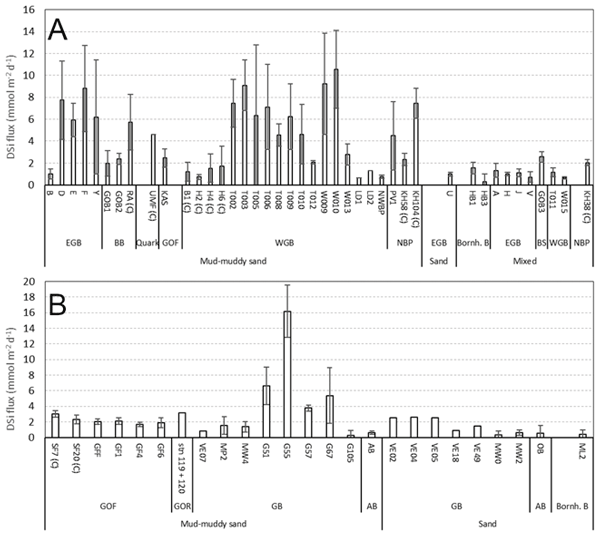
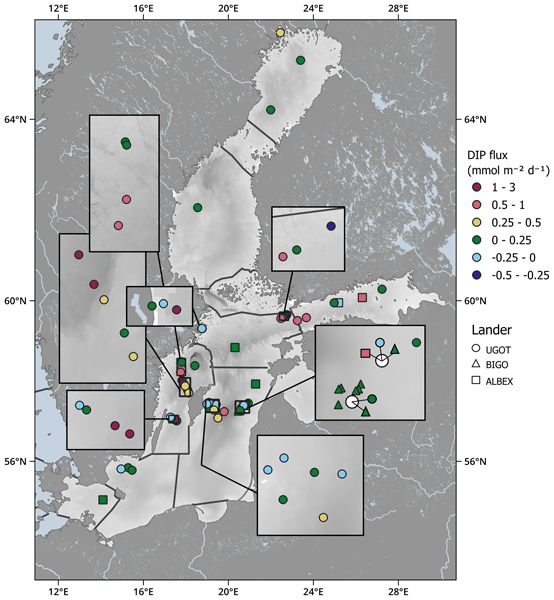
Phosphorus is an essential element for life and its cycling strongly impact primary production. Here, we present a dataset of sediment-water fluxes of dissolved inorganic phosphorus from the Baltic Sea, an area with a long history of eutrophication. The fluxes were measured in situ with three types of benthic chamber landers at 59 stations over 20 years. The data show clear spatial patterns and will be important for marine management and studies on mechanisms in benthic phosphorus cycling.
Pierre Friedlingstein, Michael O'Sullivan, Matthew W. Jones, Robbie M. Andrew, Dorothee C. E. Bakker, Judith Hauck, Peter Landschützer, Corinne Le Quéré, Hongmei Li, Ingrid T. Luijkx, Glen P. Peters, Wouter Peters, Julia Pongratz, Clemens Schwingshackl, Stephen Sitch, Josep G. Canadell, Philippe Ciais, Kjetil Aas, Simone R. Alin, Peter Anthoni, Leticia Barbero, Nicholas R. Bates, Nicolas Bellouin, Alice Benoit-Cattin, Carla F. Berghoff, Raffaele Bernardello, Laurent Bopp, Ida B. M. Brasika, Matthew A. Chamberlain, Naveen Chandra, Frédéric Chevallier, Louise P. Chini, Nathan O. Collier, Thomas H. Colligan, Margot Cronin, Laique Djeutchouang, Xinyu Dou, Matt P. Enright, Kazutaka Enyo, Michael Erb, Wiley Evans, Richard A. Feely, Liang Feng, Daniel J. Ford, Adrianna Foster, Filippa Fransner, Thomas Gasser, Marion Gehlen, Thanos Gkritzalis, Jefferson Goncalves De Souza, Giacomo Grassi, Luke Gregor, Nicolas Gruber, Bertrand Guenet, Özgür Gürses, Kirsty Harrington, Ian Harris, Jens Heinke, George C. Hurtt, Yosuke Iida, Tatiana Ilyina, Akihiko Ito, Andrew R. Jacobson, Atul K. Jain, Tereza Jarníková, Annika Jersild, Fei Jiang, Steve D. Jones, Etsushi Kato, Ralph F. Keeling, Kees Klein Goldewijk, Jürgen Knauer, Yawen Kong, Jan Ivar Korsbakken, Charles Koven, Taro Kunimitsu, Xin Lan, Junjie Liu, Zhiqiang Liu, Zhu Liu, Claire Lo Monaco, Lei Ma, Gregg Marland, Patrick C. McGuire, Galen A. McKinley, Joe Melton, Natalie Monacci, Erwan Monier, Eric J. Morgan, David R. Munro, Jens D. Müller, Shin-Ichiro Nakaoka, Lorna R. Nayagam, Yosuke Niwa, Tobias Nutzel, Are Olsen, Abdirahman M. Omar, Naiqing Pan, Sudhanshu Pandey, Denis Pierrot, Zhangcai Qin, Pierre A. G. Regnier, Gregor Rehder, Laure Resplandy, Alizée Roobaert, Thais M. Rosan, Christian Rödenbeck, Jörg Schwinger, Ingunn Skjelvan, T. Luke Smallman, Victoria Spada, Mohanan G. Sreeush, Qing Sun, Adrienne J. Sutton, Colm Sweeney, Didier Swingedouw, Roland Séférian, Shintaro Takao, Hiroaki Tatebe, Hanqin Tian, Xiangjun Tian, Bronte Tilbrook, Hiroyuki Tsujino, Francesco Tubiello, Erik van Ooijen, Guido van der Werf, Sebastiaan J. van de Velde, Anthony Walker, Rik Wanninkhof, Xiaojuan Yang, Wenping Yuan, Xu Yue, and Jiye Zeng
Earth Syst. Sci. Data Discuss., https://doi.org/10.5194/essd-2025-659, https://doi.org/10.5194/essd-2025-659, 2025
Preprint under review for ESSD
Short summary
Short summary
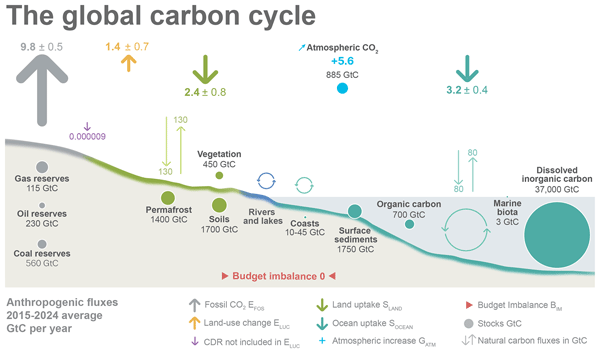
The Global Carbon Budget 2025 describes the methodology, main results, and datasets used to quantify the anthropogenic emissions of carbon dioxide (CO2) and their partitioning among the atmosphere, land ecosystems, and the ocean over the historical period (1750–2025). These living datasets are updated every year to provide the highest transparency and traceability in the reporting of CO2, the key driver of climate change.
Sibylle Boxho, Aubry Vanderstraeten, Nadine Mattielli, Goulven G. Laruelle, Aloys Bory, Paolo Gabrielli, and Steeve Bonneville
EGUsphere, https://doi.org/10.5194/egusphere-2025-5046, https://doi.org/10.5194/egusphere-2025-5046, 2025
This preprint is open for discussion and under review for Climate of the Past (CP).
Short summary
Short summary
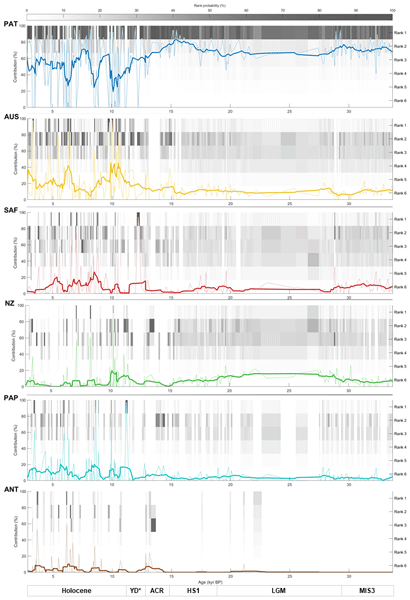
We present the first high-resolution, quantitative reconstruction of dust provenance in the EPICA Dome C ice core (33.7–2.9 ka BP) using rare earth elements. Dust was mainly sourced from Patagonia during glacial periods, shifting toward Australia, southern Africa, and the Puna-Altiplano after 14.5 ka BP due to sea-level rise and hydrological rearrangement in Patagonia. These changes also reflect major reorganizations of Southern Hemisphere atmospheric circulation.
Tom Huysmans, Filip J. R. Meysman, and Sebastiaan J. van de Velde
Biogeosciences, 22, 5557–5572, https://doi.org/10.5194/bg-22-5557-2025, https://doi.org/10.5194/bg-22-5557-2025, 2025
Short summary
Short summary
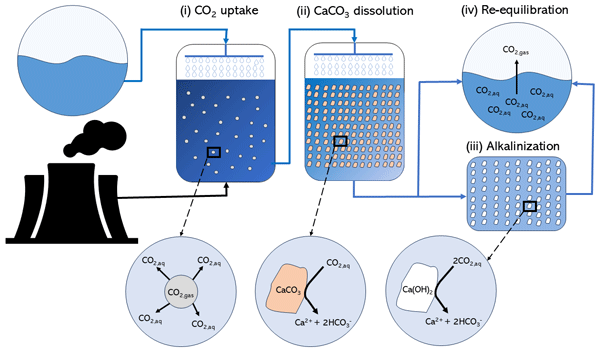
To examine the potential of accelerated weathering of limestone as a CO2 mitigation technique, we describe AWL thermodynamically as a four-step process, thus providing a model framework that allows us to calculate the efficiency of the different steps as well as the overall CO2 sequestration potential. We then review the different reactor designs that have been proposed for the AWL process in recent years and evaluate their efficiency and potential in terms of CO2 emission mitigation capacity.
Luna J. J. Geerts, Astrid Hylén, and Filip J. R. Meysman
Biogeosciences, 22, 355–384, https://doi.org/10.5194/bg-22-355-2025, https://doi.org/10.5194/bg-22-355-2025, 2025
Short summary
Short summary
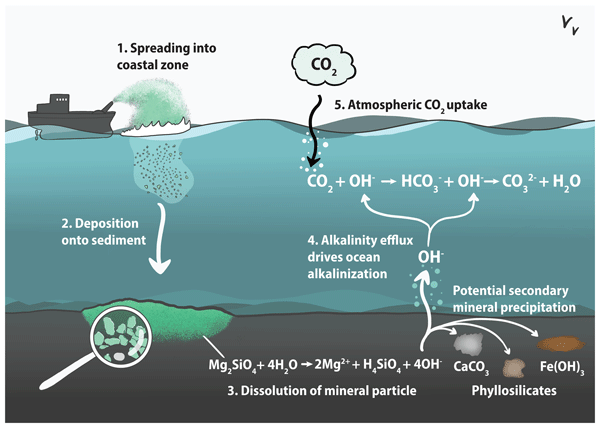
Marine enhanced rock weathering (mERW) with olivine is a promising method for capturing CO2 from the atmosphere, yet studies in field conditions are lacking. We bridge the gap between theoretical studies and the real-world environment by estimating the predictability of mERW parameters and identifying aspects to consider when applying mERW. A major source of uncertainty is the lack of experimental studies with sediment, which can heavily influence the speed and efficiency of CO2 drawdown.
Karol Kuliński, Gregor Rehder, Eero Asmala, Alena Bartosova, Jacob Carstensen, Bo Gustafsson, Per O. J. Hall, Christoph Humborg, Tom Jilbert, Klaus Jürgens, H. E. Markus Meier, Bärbel Müller-Karulis, Michael Naumann, Jørgen E. Olesen, Oleg Savchuk, Andreas Schramm, Caroline P. Slomp, Mikhail Sofiev, Anna Sobek, Beata Szymczycha, and Emma Undeman
Earth Syst. Dynam., 13, 633–685, https://doi.org/10.5194/esd-13-633-2022, https://doi.org/10.5194/esd-13-633-2022, 2022
Short summary
Short summary
The paper covers the aspects related to changes in carbon, nitrogen, and phosphorus (C, N, P) external loads; their transformations in the coastal zone; changes in organic matter production (eutrophication) and remineralization (oxygen availability); and the role of sediments in burial and turnover of C, N, and P. Furthermore, this paper also focuses on changes in the marine CO2 system, the structure of the microbial community, and the role of contaminants for biogeochemical processes.
Sebastiaan J. van de Velde, Dominik Hülse, Christopher T. Reinhard, and Andy Ridgwell
Geosci. Model Dev., 14, 2713–2745, https://doi.org/10.5194/gmd-14-2713-2021, https://doi.org/10.5194/gmd-14-2713-2021, 2021
Short summary
Short summary
Biogeochemical interactions between iron and sulfur are central to the long-term biogeochemical evolution of Earth’s oceans. Here, we introduce an iron–sulphur cycle in a model of Earth's oceans. Our analyses show that the results of the model are robust towards parameter choices and that simulated concentrations and reactions are comparable to those observed in ancient ocean analogues (anoxic lakes). Our model represents an important step forward in the study of iron–sulfur cycling.
Astrid Hylén, Sebastiaan J. van de Velde, Mikhail Kononets, Mingyue Luo, Elin Almroth-Rosell, and Per O. J. Hall
Biogeosciences, 18, 2981–3004, https://doi.org/10.5194/bg-18-2981-2021, https://doi.org/10.5194/bg-18-2981-2021, 2021
Short summary
Short summary
Sediments in oxygen-depleted ocean areas release high amounts of phosphorus, feeding algae that consume oxygen upon degradation, leading to further phosphorus release. Oxygenation is thought to trap phosphorus in the sediment and break this feedback. We studied the sediment phosphorus cycle in a previously anoxic area after an inflow of oxic water. Surprisingly, the sediment phosphorus release increased, showing that feedbacks between phosphorus release and oxygen depletion can be hard to break.
Sebastiaan J. van de Velde, Rebecca K. James, Ine Callebaut, Silvia Hidalgo-Martinez, and Filip J. R. Meysman
Biogeosciences, 18, 1451–1461, https://doi.org/10.5194/bg-18-1451-2021, https://doi.org/10.5194/bg-18-1451-2021, 2021
Short summary
Short summary
Some 540 Myr ago, animal life evolved in the ocean. Previous research suggested that when these early animals started inhabiting the seafloor, they retained phosphorus in the seafloor, thereby limiting photosynthesis in the ocean. We studied salt marsh sediments with and without animals and found that their impact on phosphorus retention is limited, which implies that their impact on the global environment might have been less drastic than previously assumed.
Cited articles
Aller, R. C. and Aller, J. Y.: The effect of biogenic irrigation intensity and solute exchange on diagenetic reaction rates in marine sediments, Journal of Marine Research, 56, 905–936, https://elischolar.library.yale.edu/journal_of_marine_research/2296/ (last access: 15 December 2025), 1998.
Andrén, E., Andrén, T., and Kunzendorf, H.: Holocene history of the Baltic Sea as a background for assessing records of human impact in the sediments of the Gotland Basin, The Holocene, 10, 687–702, https://doi.org/10.1191/09596830094944, 2000.
Arndt, S., Jørgensen, B. B., LaRowe, D. E., Middelburg, J. J., Pancost, R. D., and Regnier, P.: Quantifying the degradation of organic matter in marine sediments: A review and synthesis, Earth-Science Reviews, 123, 53–86, https://doi.org/10.1016/j.earscirev.2013.02.008, 2013.
Barber, A., Lalonde, K., Mucci, A., and Gélinas, Y.: The role of iron in the diagenesis of organic carbon and nitrogen in sediments: A long-term incubation experiment, Marine Chemistry, 162, 1–9, https://doi.org/10.1016/j.marchem.2014.02.007, 2014.
Berner, R. A.: Burial of organic carbon and pyrite sulfur in the modern ocean; its geochemical and environmental significance, American Journal of Science, 282, 451–473, https://doi.org/10.2475/ajs.282.4.451, 1982.
Bianchi, T. S., Cui, X., Blair, N. E., Burdige, D. J., Eglinton, T. I., and Galy, V.: Centers of organic carbon burial and oxidation at the land-ocean interface, Organic Geochemistry, 115, 138–155, https://doi.org/10.1016/j.orggeochem.2017.09.008, 2018.
Björck, S.: A review of the history of the Baltic Sea, 13.0–8.0 ka BP, Quaternary International, 27, 19–40, https://doi.org/10.1016/1040-6182(94)00057-C, 1995.
Blair, N. E. and Aller, R. C.: The Fate of Terrestrial Organic Carbon in the Marine Environment, Annual Review of Marine Science, 4, 401–423, https://doi.org/10.1146/annurev-marine-120709-142717, 2012.
Burdige, D. J.: Preservation of Organic Matter in Marine Sediments: Controls, Mechanisms, and an Imbalance in Sediment Organic Carbon Budgets?, Chem. Rev., 107, 467–485, https://doi.org/10.1021/cr050347q, 2007.
Canfield, D. E.: Factors influencing organic carbon preservation in marine sediments, Chemical Geology, 114, 315–329, https://doi.org/10.1016/0009-2541(94)90061-2, 1994.
Chen, C., Dynes, J. J., Wang, J., and Sparks, D. L.: Properties of Fe-Organic Matter Associations via Coprecipitation versus Adsorption, Environ. Sci. Technol., 48, 13751–13759, https://doi.org/10.1021/es503669u, 2014.
Conley, D. J., Björck, S., Bonsdorff, E., Carstensen, J., Destouni, G., Gustafsson, B. G., Hietanen, S., Kortekaas, M., Kuosa, H., Markus Meier, H. E., Müller-Karulis, B., Nordberg, K., Norkko, A., Nürnberg, G., Pitkänen, H., Rabalais, N. N., Rosenberg, R., Savchuk, O. P., Slomp, C. P., Voss, M., Wulff, F., and Zillén, L.: Hypoxia-Related Processes in the Baltic Sea, Environ. Sci. Technol., 43, 3412–3420, https://doi.org/10.1021/es802762a, 2009.
Cui, X., Mucci, A., Bianchi, T. S., He, D., Vaughn, D., Williams, E. K., Wang, C., Smeaton, C., Koziorowska-Makuch, K., Faust, J. C., Plante, A. F., and Rosenheim, B. E.: Global fjords as transitory reservoirs of labile organic carbon modulated by organo-mineral interactions, Science Advances, 8, eadd0610, https://doi.org/10.1126/sciadv.add0610, 2022.
Dijkstra, N., Hagens, M., Egger, M., and Slomp, C. P.: Post-depositional formation of vivianite-type minerals alters sediment phosphorus records, Biogeosciences, 15, 861–883, https://doi.org/10.5194/bg-15-861-2018, 2018.
Egger, M., Jilbert, T., Behrends, T., Rivard, C., and Slomp, C. P.: Vivianite is a major sink for phosphorus in methanogenic coastal surface sediments, Geochimica et Cosmochimica Acta, 169, 217–235, https://doi.org/10.1016/j.gca.2015.09.012, 2015.
Emeis, K.-C., Struck, U., Leipe, T., Pollehne, F., Kunzendorf, H., and Christiansen, C.: Changes in the C, N, P burial rates in some Baltic Sea sediments over the last 150 years – relevance to P regeneration rates and the phosphorus cycle, Marine Geology, 167, 43–59, https://doi.org/10.1016/S0025-3227(00)00015-3, 2000.
Faust, J. C., Tessin, A., Fisher, B. J., Zindorf, M., Papadaki, S., Hendry, K. R., Doyle, K. A., and März, C.: Millennial scale persistence of organic carbon bound to iron in Arctic marine sediments, Nat. Commun., 12, 275, https://doi.org/10.1038/s41467-020-20550-0, 2021.
Fisher, B. J., Moore, O. W., Faust, J. C., Peacock, C. L., and März, C.: Experimental evaluation of the extractability of iron bound organic carbon in sediments as a function of carboxyl content, Chemical Geology, 556, 119853, https://doi.org/10.1016/j.chemgeo.2020.119853, 2020.
Ghaisas, N. A., Maiti, K., and Roy, A.: Iron-Mediated Organic Matter Preservation in the Mississippi River-Influenced Shelf Sediments, Journal of Geophysical Research: Biogeosciences, 126, e2020JG006089, https://doi.org/10.1029/2020JG006089, 2021.
Goni, M. A., Monacci, N., Gisewhite, R., Crockett, J., Nittrouer, C., Ogston, A., Alin, S. R., and Aalto, R.: Terrigenous organic matter in sediments from the Fly River delta-clinoform system (Papua New Guinea), Journal of Geophysical Research: Earth Surface, 113, https://doi.org/10.1029/2006JF000653, 2008.
Hall, P. O. J., Almroth Rosell, E., Bonaglia, S., Dale, A. W., Hylén, A., Kononets, M., Nilsson, M., Sommer, S., van de Velde, S., and Viktorsson, L.: Influence of Natural Oxygenation of Baltic Proper Deep Water on Benthic Recycling and Removal of Phosphorus, Nitrogen, Silicon and Carbon, Frontiers in Marine Science, 4, https://doi.org/10.3389/fmars.2017.00027, 2017.
Harris, D., Horwáth, W. R., and van Kessel, C.: Acid fumigation of soils to remove carbonates prior to total organic carbon or CARBON-13 isotopic analysis, Soil Science Society of America Journal, 65, 1853–1856, https://doi.org/10.2136/sssaj2001.1853, 2001.
Hartnett, H. E., Keil, R. G., Hedges, J. I., and Devol, A. H.: Influence of oxygen exposure time on organic carbon preservation in continental margin sediments, Nature, 391, 572–575, https://doi.org/10.1038/35351, 1998.
Hedges, J. I. and Keil, R. G.: Sedimentary organic matter preservation: an assessment and speculative synthesis, Marine Chemistry, 49, 81–115, https://doi.org/10.1016/0304-4203(95)00008-F, 1995.
Henrichs, S. M.: Early diagenesis of organic matter in marine sediments: progress and perplexity, Marine Chemistry, 39, 119–149, https://doi.org/10.1016/0304-4203(92)90098-U, 1992.
Hulthe, G., Hulth, S., and Hall, P. O. J.: Effect of oxygen on degradation rate of refractory and labile organic matter in continental margin sediments, Geochimica et Cosmochimica Acta, 62, 1319–1328, https://doi.org/10.1016/S0016-7037(98)00044-1, 1998.
Ingall, E. D. and Cappellen, P. V.: Relation between sedimentation rate and burial of organic phosphorus and organic carbon in marine sediments, Geochimica et Cosmochimica Acta, 54, 373–386, https://doi.org/10.1016/0016-7037(90)90326-G, 1990.
Jørgensen, B.: Bacteria and Marine Biogeochemistry, in: Marine Geochemistry, 169–206, https://doi.org/10.1007/3-540-32144-6_5, 2006.
Jørgensen, B. B.: A comparison of methods for the quantification of bacterial sulfate reduction in coastal marine sediments: I. Measurement with radiotracer techniques, Geomicrobiology Journal, 1, 11–27, https://doi.org/10.1080/01490457809377721, 1978.
Katsev, S. and Crowe, S. A.: Organic carbon burial efficiencies in sediments: The power law of mineralization revisited, Geology, 43, 607–610, https://doi.org/10.1130/G36626.1, 2015.
Keil, R. G., Montluçon, D. B., Prahl, F. G., and Hedges, J. I.: Sorptive preservation of labile organic matter in marine sediments, Nature, 370, 549–552, https://doi.org/10.1038/370549a0, 1994.
Kristensen, E., Andersen, F. Ø., and Blackburn, T. H.: Effects of benthic macrofauna and temperature on degradation of macroalgal detritus: The fate of organic carbon, Limnology and Oceanography, 37, 1404–1419, https://doi.org/10.4319/lo.1992.37.7.1404, 1992.
Kristensen, E., Penha-Lopes, G., Delefosse, M., Valdemarsen, T., Quintana, C., and Banta, G.: What is bioturbation? The need for a precise definition for fauna in aquatic sciences, Marine Ecology Progress Series, 446, 285–302, https://doi.org/10.3354/meps09506, 2012.
Kubeneck, L. J., Lenstra, W. K., Malkin, S. Y., Conley, D. J., and Slomp, C. P.: Phosphorus burial in vivianite-type minerals in methane-rich coastal sediments, Marine Chemistry, 231, 103948, https://doi.org/10.1016/j.marchem.2021.103948, 2021.
Lalonde, K., Mucci, A., Ouellet, A., and Gélinas, Y.: Preservation of organic matter in sediments promoted by iron, Nature, 483, 198–200, https://doi.org/10.1038/nature10855, 2012.
LaRowe, D. E. and Van Cappellen, P.: Degradation of natural organic matter: A thermodynamic analysis, Geochimica et Cosmochimica Acta, 75, 2030–2042, https://doi.org/10.1016/j.gca.2011.01.020, 2011.
LaRowe, D. E., Arndt, S., Bradley, J. A., Estes, E. R., Hoarfrost, A., Lang, S. Q., Lloyd, K. G., Mahmoudi, N., Orsi, W. D., Shah Walter, S. R., Steen, A. D., and Zhao, R.: The fate of organic carbon in marine sediments – New insights from recent data and analysis, Earth-Science Reviews, 204, 103146, https://doi.org/10.1016/j.earscirev.2020.103146, 2020.
Leipe, T., Tauber, F., Vallius, H., Virtasalo, J., Uścinowicz, S., Kowalski, N., Hille, S., Lindgren, S., and Myllyvirta, T.: Particulate organic carbon (POC) in surface sediments of the Baltic Sea, Geo-Mar. Lett., 31, 175–188, https://doi.org/10.1007/s00367-010-0223-x, 2011.
Li, Z., Wang, X., Jin, H., Ji, Z., Bai, Y., and Chen, J.: Variations in organic carbon loading of surface sediments from the shelf to the slope of the Chukchi Sea, Arctic Ocean, Acta Oceanol. Sin., 36, 131–136, https://doi.org/10.1007/s13131-017-1026-y, 2017.
Longman, J., Gernon, T. M., Palmer, M. R., and Manners, H. R.: Tephra Deposition and Bonding With Reactive Oxides Enhances Burial of Organic Carbon in the Bering Sea, Global Biogeochemical Cycles, 35, e2021GB007140, https://doi.org/10.1029/2021GB007140, 2021.
Longman, J., Faust, J. C., Bryce, C., Homoky, W. B., and März, C.: Organic Carbon Burial With Reactive Iron Across Global Environments, Global Biogeochemical Cycles, 36, e2022GB007447, https://doi.org/10.1029/2022GB007447, 2022.
Ma, W.-W., Zhu, M.-X., Yang, G.-P., Li, T., Li, Q.-Q., Liu, S.-H., and Li, J.-L.: Stability and molecular fractionation of ferrihydrite-bound organic carbon during iron reduction by dissolved sulfide, Chemical Geology, 594, 120774, https://doi.org/10.1016/j.chemgeo.2022.120774, 2022.
Mayer, L. M.: Relationships between mineral surfaces and organic carbon concentrations in soils and sediments, Chemical Geology, 114, 347–363, https://doi.org/10.1016/0009-2541(94)90063-9, 1994a.
Mayer, L. M.: Surface area control of organic carbon accumulation in continental shelf sediments, Geochimica et Cosmochimica Acta, 58, 1271–1284, https://doi.org/10.1016/0016-7037(94)90381-6, 1994b.
Megonigal, J. P., Hines, M. E., and Visscher, P. T.: 8.08 – Anaerobic Metabolism: Linkages to Trace Gases and Aerobic Processes, in: Treatise on Geochemistry, edited by: Holland, H. D. and Turekian, K. K., Pergamon, Oxford, 317–424, https://doi.org/10.1016/B0-08-043751-6/08132-9, 2003.
Mehra, O. P. and Jackson, M. L.: Iron Oxide Removal from Soils and Clays by a Dithionite-Citrate System Buffered with Sodium Bicarbonate, Clays Clay Miner., 7, 317–327, https://doi.org/10.1346/CCMN.1958.0070122, 1958.
Middelburg, J. J.: A simple rate model for organic matter decomposition in marine sediments, Geochimica et Cosmochimica Acta, 53, 1577–1581, https://doi.org/10.1016/0016-7037(89)90239-1, 1989.
Middelburg, J. J. and Levin, L. A.: Coastal hypoxia and sediment biogeochemistry, Biogeosciences, 6, 1273–1293, https://doi.org/10.5194/bg-6-1273-2009, 2009.
Middelburg, J. J., Soetaert, K., and Herman, P. M. J.: Empirical relationships for use in global diagenetic models, Deep Sea Research Part I: Oceanographic Research Papers, 44, 327–344, https://doi.org/10.1016/S0967-0637(96)00101-X, 1997.
Nilsson, M. M., Kononets, M., Ekeroth, N., Viktorsson, L., Hylén, A., Sommer, S., Pfannkuche, O., Almroth-Rosell, E., Atamanchuk, D., Andersson, J. H., Roos, P., Tengberg, A., and Hall, P. O. J.: Organic carbon recycling in Baltic Sea sediments – An integrated estimate on the system scale based on in situ measurements, Marine Chemistry, 209, 81–93, https://doi.org/10.1016/j.marchem.2018.11.004, 2019.
Nilsson, M. M., Hylén, A., Ekeroth, N., Kononets, M. Y., Viktorsson, L., Almroth-Rosell, E., Roos, P., Tengberg, A., and Hall, P. O. J.: Particle shuttling and oxidation capacity of sedimentary organic carbon on the Baltic Sea system scale, Marine Chemistry, 232, 103963, https://doi.org/10.1016/j.marchem.2021.103963, 2021.
Papaspyrou, S., Kristensen, E., and Christensen, B.: Arenicola marina (Polychaeta) and organic matter mineralisation in sandy marine sediments: In situ and microcosm comparison, Estuarine, Coastal and Shelf Science, 72, 213–222, https://doi.org/10.1016/j.ecss.2006.10.020, 2007.
Peter, S. and Sobek, S.: High variability in iron-bound organic carbon among five boreal lake sediments, Biogeochemistry, 139, 19–29, https://doi.org/10.1007/s10533-018-0456-8, 2018.
Picard, A., Gartman, A., Cosmidis, J., Obst, M., Vidoudez, C., Clarke, D. R., and Girguis, P. R.: Authigenic metastable iron sulfide minerals preserve microbial organic carbon in anoxic environments, Chemical Geology, 530, 119343, https://doi.org/10.1016/j.chemgeo.2019.119343, 2019.
Placitu, S.: Limited physical protection leads to high organic carbon reactivity in anoxic Baltic Sea sediments, Zenodo [data set], https://doi.org/10.5281/zenodo.17174549, 2025.
Placitu, S., van de Velde, S. J., Hylén, A., Hall, P. O. J., Robertson, E. K., Eriksson, M., Leermakers, M., Mehta, N., and Bonneville, S.: Limited Organic Carbon Burial by the Rusty Carbon Sink in Swedish Fjord Sediments, Journal of Geophysical Research: Biogeosciences, 129, e2024JG008277, https://doi.org/10.1029/2024JG008277, 2024.
Ransom, B., Bennett, R. H., Baerwald, R., and Shea, K.: TEM study of in situ organic matter on continental margins: occurrence and the “monolayer” hypothesis, Marine Geology, 138, 1–9, https://doi.org/10.1016/S0025-3227(97)00012-1, 1997.
Sirois, M., Couturier, M., Barber, A., Gélinas, Y., and Chaillou, G.: Interactions between iron and organic carbon in a sandy beach subterranean estuary, Marine Chemistry, 202, 86–96, https://doi.org/10.1016/j.marchem.2018.02.004, 2018.
Ståhl, H., Tengberg, A., Brunnegård, J., Bjørnbom, E., Forbes, T. L., Josefson, A. B., Kaberi, H. G., Hassellöv, I. M. K., Olsgard, F., Roos, P., and Hall, P. O. J.: Factors influencing organic carbon recycling and burial in Skagerrak sediments, J. Mar. Res., 62, 867–907, https://elischolar.library.yale.edu/journal_of_marine_research/66 (last access: 15 December 2025), 2004.
van de Velde, S. J., Hidalgo-Martinez, S., Callebaut, I., Antler, G., James, R. K., Leermakers, M., and Meysman, F. J. R.: Burrowing fauna mediate alternative stable states in the redox cycling of salt marsh sediments, Geochimica et Cosmochimica Acta, 276, 31–49, https://doi.org/10.1016/j.gca.2020.02.021, 2020.
van de Velde, S. J., Hylén, A., Eriksson, M., James, R. K., Kononets, M. Y., Robertson, E. K., and Hall, P. O. J.: Exceptionally high respiration rates in the reactive surface layer of sediments underlying oxygen-deficient bottom waters, Proceedings of the Royal Society A: Mathematical, Physical and Engineering Sciences, 479, 20230189, https://doi.org/10.1098/rspa.2023.0189, 2023.
van Helmond, N. A. G. M., Robertson, E. K., Conley, D. J., Hermans, M., Humborg, C., Kubeneck, L. J., Lenstra, W. K., and Slomp, C. P.: Removal of phosphorus and nitrogen in sediments of the eutrophic Stockholm archipelago, Baltic Sea, Biogeosciences, 17, 2745–2766, https://doi.org/10.5194/bg-17-2745-2020, 2020.
Yao, Y., Wang, L., Hemamali Peduruhewa, J., Van Zwieten, L., Gong, L., Tan, B., and Zhang, G.: The coupling between iron and carbon and iron reducing bacteria control carbon sequestration in paddy soils, CATENA, 223, 106937, https://doi.org/10.1016/j.catena.2023.106937, 2023.
Zhao, B., Yao, P., Bianchi, T. S., Shields, M. R., Cui, X. Q., Zhang, X. W., Huang, X. Y., Schröder, C., Zhao, J., and Yu, Z. G.: The Role of Reactive Iron in the Preservation of Terrestrial Organic Carbon in Estuarine Sediments, Journal of Geophysical Research: Biogeosciences, 123, 3556–3569, https://doi.org/10.1029/2018JG004649, 2018.
Short summary
Marine sediments store organic carbon and help regulate climate. Oxygen-depleted waters are thought to enhance this, however Western Gotland Basin sediments show low carbon despite such conditions. We studied the role of mineral protection, which can shield carbon from microbes, and found it limited. This suggests that without physical protection, carbon remains accessible and gets degraded, making mineral protection a key factor in carbon preservation.
Marine sediments store organic carbon and help regulate climate. Oxygen-depleted waters are...
Altmetrics
Final-revised paper
Preprint