
Articles | Volume 23, issue 3
https://doi.org/10.5194/bg-23-1013-2026
© Author(s) 2026. This work is distributed under
the Creative Commons Attribution 4.0 License.
the Creative Commons Attribution 4.0 License.
https://doi.org/10.5194/bg-23-1013-2026
© Author(s) 2026. This work is distributed under
the Creative Commons Attribution 4.0 License.
the Creative Commons Attribution 4.0 License.
Research article
| 
04 Feb 2026
Research article |
| 04 Feb 2026
| 04 Feb 2026
BrGDGT-based palaeothermometer in drylands: the necessity to constrain aridity and salinity as confounding factors to ensure the robustness of calibrations
Lucas Dugerdil
CORRESPONDING AUTHOR

ISEM, University of Montpellier, CNRS, IRD, Montpellier, France
ENS de Lyon, Université Lyon 1, CNRS, UMR 5276 LGL-TPE, Lyon, France
Sébastien Joannin
ISEM, University of Montpellier, CNRS, IRD, Montpellier, France
Odile Peyron
ISEM, University of Montpellier, CNRS, IRD, Montpellier, France
Shafag Bayramova
Institute of Geology and Geophysics, Department of modern geodynamics and space geodesy, Baku, Azerbaijan
Xiaozhong Huang
Key Laboratory of Western China's Environmental Systems (Ministry of Education), College of Earth and Environmental Sciences, Lanzhou University, Lanzhou, China
Yunnan Key Laboratory of Plateau Geographical Processes and Environmental Changes, Faculty of Geography, Yunnan Normal University, Kunming, China
Fahu Chen
Key Laboratory of Western China's Environmental Systems (Ministry of Education), College of Earth and Environmental Sciences, Lanzhou University, Lanzhou, China
Alpine Paleoecology and Human Adaptation Group, State Key Laboratory of Tibetan Plateau Earth System, Resources and Environment (TPESRE), Institute of Tibetan Plateau Research, Chinese Academy of Sciences, Beijing, China
College of Resources and Environment, University of Chinese Academy of Sciences, Beijing, China
Dilfuza Egamberdieva
Medical School, Central Asian University, Tashkent 111221, Uzbekistan
Faculty of Biology and Ecology, National University of Uzbekistan, Tashkent 100174, Uzbekistan
Jakhongir Alimov
Faculty of Biology and Ecology, National University of Uzbekistan, Tashkent 100174, Uzbekistan
International Agriculture University, Kibray district, 100164, Tashkent, Uzbekistan
Bazartseren Boldgiv
Ecology Group, Department of Biology, School of Arts and Sciences, National University of Mongolia, Ulaanbaatar 14201, Mongolia
Amy Cromartie
Université Côte d’Azur, CNRS, CEPAM, UMR 7264, 06300, Nice, France
ISEM, University of Montpellier, CNRS, IRD, Montpellier, France
Juzhi Hou
Alpine Paleoecology and Human Adaptation Group, State Key Laboratory of Tibetan Plateau Earth System, Resources and Environment (TPESRE), Institute of Tibetan Plateau Research, Chinese Academy of Sciences, Beijing, China
College of Resources and Environment, University of Chinese Academy of Sciences, Beijing, China
Lilit Sahakyan
Institute of Geological Sciences of Armenia, of the National Academy of Sciences of the Republic of Armenia, ave. M. Baghramyan 24a, Yerevan 0019, Armenia
Khachatur Meliksetian
Institute of Geological Sciences of Armenia, of the National Academy of Sciences of the Republic of Armenia, ave. M. Baghramyan 24a, Yerevan 0019, Armenia
Salomé Ansanay-Alex
ENS de Lyon, Université Lyon 1, CNRS, UMR 5276 LGL-TPE, Lyon, France
Rafig Safarov
Institute of Geology and Geophysics, Science and Education Ministry of Azerbaijan Republic, AZ1073, Baku, Azerbaijan
Imran Muradi
Institute of Geology and Geophysics, Science and Education Ministry of Azerbaijan Republic, AZ1073, Baku, Azerbaijan
Shabnam Isayeva
Institute of Botany, Azerbaijan National Academy of Sciences, Baku, Azerbaijan
Shehla Mirzayeva
Institute of Botany, Azerbaijan National Academy of Sciences, Baku, Azerbaijan
Elshan Abdullayev
Institute of Geography and Geology, University of Greifswald, Friedrich-Ludwig-Jahn Strasse 17A, 17487 Greifswald, Germany
Department of Life Sciences, Khazar University, 41 Mahsati Str., AZ1096 Baku, Azerbaijan
Sayyara Ibadullayeva
Institute of Botany, Azerbaijan National Academy of Sciences, Baku, Azerbaijan
Parvana Garakhani
Institute of Botany, Azerbaijan National Academy of Sciences, Baku, Azerbaijan
Guillemette Ménot
CORRESPONDING AUTHOR
ENS de Lyon, Université Lyon 1, CNRS, UMR 5276 LGL-TPE, Lyon, France
Related authors
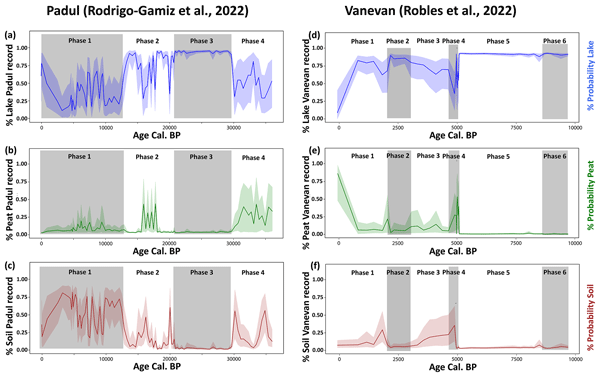
Amy Cromartie, Cindy De Jonge, Guillemette Ménot, Mary Robles, Lucas Dugerdil, Odile Peyron, Marta Rodrigo-Gámiz, Jon Camuera, Maria Jose Ramos-Roman, Gonzalo Jiménez-Moreno, Claude Colombié, Lilit Sahakyan, and Sébastien Joannin
Biogeosciences, 22, 7687–7708, https://doi.org/10.5194/bg-22-7687-2025, https://doi.org/10.5194/bg-22-7687-2025, 2025
Short summary
Short summary
BrGDGT (branched glycerol dialkyl glycerol tetraethers) are a molecular biomarker utilized for paleotemperature reconstructions. One issue, however, with utilizing brGDGTs is that the distribution differs in relation to sediment environments (i.e., peat, lake, soil). We utilize the probability estimate outputs from five machine learning algorithms and a new modern brGDGT database to track provenance change and apply these models to two downcore records utilizing pollen, non-pollen polymorphs, and XRF (X-ray fluorescence) to confirm the models’ accuracy.
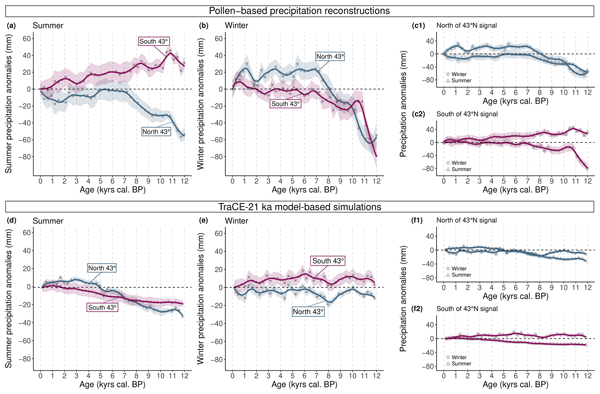
Léa d'Oliveira, Sébastien Joannin, Guillemette Ménot, Nathalie Combourieu-Nebout, Lucas Dugerdil, Marion Blache, Mary Robles, Assunta Florenzano, Alessia Masi, Anna Maria Mercuri, Laura Sadori, Marie Balasse, and Odile Peyron
Clim. Past, 21, 2331–2359, https://doi.org/10.5194/cp-21-2331-2025, https://doi.org/10.5194/cp-21-2331-2025, 2025
Short summary
Short summary
We studied climate change in the central Mediterranean during the Holocene by analysing 38 pollen records. Several methods were used to obtain reliable results on seasonal temperatures and precipitation. Our results show that, during the Holocene, summer temperatures were colder in the south and warmer in the north, with wetter winters and drier summers, especially in the south. Unlike winter conditions, summer ones did not follow variations in insolation, suggesting other factors.
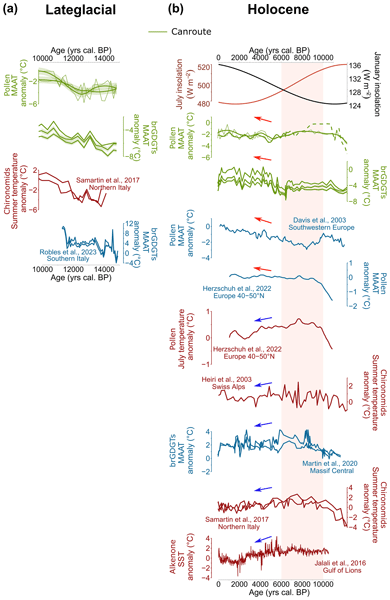
Léa d'Oliveira, Lucas Dugerdil, Guillemette Ménot, Allowen Evin, Serge D. Muller, Salomé Ansanay-Alex, Julien Azuara, Colline Bonnet, Laurent Bremond, Mehmet Shah, and Odile Peyron
Clim. Past, 19, 2127–2156, https://doi.org/10.5194/cp-19-2127-2023, https://doi.org/10.5194/cp-19-2127-2023, 2023
Short summary
Short summary
In southern Europe, Holocene climate variability is characterized by a strong heterogeneity whose patterns are still poorly understood. Here, a multi-proxy approach (pollen and biomarkers) is applied to the Canroute sequence to reconstruct the climatic variation over the last 15 000 years in southern Massif Central, France. Results reveal that reconstructions of regional climate trends notably differ depending on proxies and sites, notably concerning the presence of a Holocene thermal maximum.
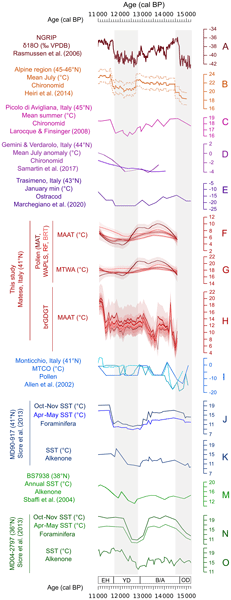
Mary Robles, Odile Peyron, Guillemette Ménot, Elisabetta Brugiapaglia, Sabine Wulf, Oona Appelt, Marion Blache, Boris Vannière, Lucas Dugerdil, Bruno Paura, Salomé Ansanay-Alex, Amy Cromartie, Laurent Charlet, Stephane Guédron, Jacques-Louis de Beaulieu, and Sébastien Joannin
Clim. Past, 19, 493–515, https://doi.org/10.5194/cp-19-493-2023, https://doi.org/10.5194/cp-19-493-2023, 2023
Short summary
Short summary
Quantitative climate reconstructions based on pollen and brGDGTs reveal, for the Late Glacial, a warm Bølling–Allerød and a marked cold Younger Dryas in Italy, showing no latitudinal differences in terms of temperatures across Italy. In terms of precipitation, no latitudinal differences are recorded during the Bølling–Allerød, whereas 40–42° N appears as a key junction point between wetter conditions in southern Italy and drier conditions in northern Italy during the Younger Dryas.
Maé Catrain, Séverine Fauquette, Odile Peyron, Nathalie Combourieu-Nebout, Vincent Lebreton, Morgane Fischer-Fries, Mary Robles, Viviane Bout-Roumazeilles, Patricia Richard, Marion Delattre, Lionel Dubost, Sébastien Joannin, Amandine Viala, Yul Altolaguirre, Jean-Pierre Suc, Jeanne Lepelletier, and Marie-Hélène Moncel
Clim. Past, 22, 1631–1653, https://doi.org/10.5194/cp-22-1631-2026, https://doi.org/10.5194/cp-22-1631-2026, 2026
Short summary
Short summary
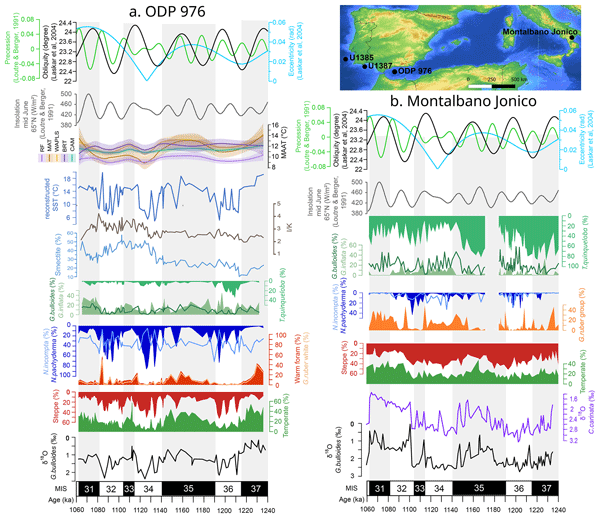
This multiproxy study investigates changes in climate cyclicity at Early-Middle Pleistocene Transition. Clay mineralogy analysis highlights a sudden change in oceanic and atmospheric circulation in the Alboran Basin around 1140 ka. Pollen, foraminifera and faunal data suggest that the climate and vegetation of this region are more likely to be influenced by variations in precipitation, hinting at major differences between the Iberian Peninsula and southern Italy.
Gabriel Fénisse, Manuel Chevalier, Odile Peyron, David Vincent Bekaert, and Pierre-Henri Blard
Clim. Past, 22, 1507–1536, https://doi.org/10.5194/cp-22-1507-2026, https://doi.org/10.5194/cp-22-1507-2026, 2026
Short summary
Short summary
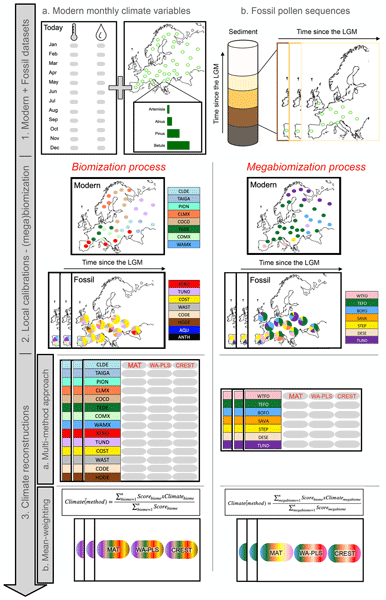
Fossil pollen offers insights into past climates, yet results differ depending on reconstruction methods. By comparing multiple approaches across Europe during the Last Glacial Maximum, we highlight how method choice influences outcomes. Our work introduces a new methodological framework that reduces biases and improves the reliability of climate reconstructions.
Emeline Bellet, Vincent Montade, Christine Piot, Guillemette Menot, Aimée Pellissier-Tanon, Ilham Bentaleb, Hermann Behling, Charline Giguet-Covex, Laurent Bremond, and Fabien Arnaud
EGUsphere, https://doi.org/10.5194/egusphere-2026-3726, https://doi.org/10.5194/egusphere-2026-3726, 2026
Short summary
Short summary
A lacustrine sediment record was used to evaluate the potential of two fire proxies: charcoal subfossil particles and Polycyclic Aromatic Hydrocarbons (PAHs). The PAH signal provides more regional information than the charcoal signal and exhibits a pattern similar to changes in local precipitation. We suggest that precipitation drives the transfer of PAHs from the atmosphere to lake sediments. These results challenge the direct interpretation of PAHs as indicators of fire events.
Liz Charton, Nathalie Combourieu-Nebout, Adele Bertini, Odile Peyron, Mary Robles, Vincent Lebreton, and Marie-Hélène Moncel
Clim. Past, 22, 747–781, https://doi.org/10.5194/cp-22-747-2026, https://doi.org/10.5194/cp-22-747-2026, 2026
Short summary
Short summary
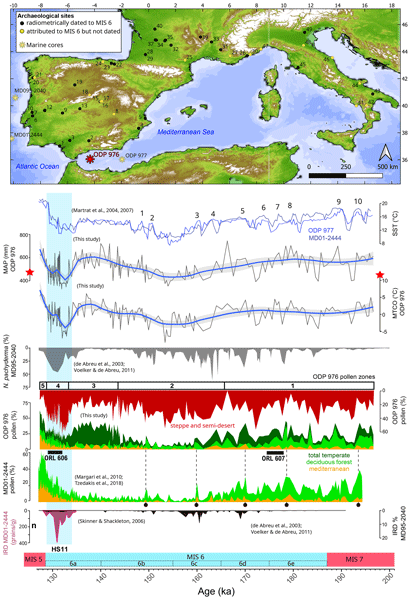
New high-resolution pollen data and pollen-inferred climatic reconstructions from the Alboran Sea reveal rapid climate oscillations during Marine Isotope Stage 6 (187–130 ka BP) in the southwestern Mediterranean. Three main phases show shifts from cool-humid to cold-arid and then wetter conditions, with Heinrich Stadial 11 marking severe cooling and steppe expansion. Neanderthals persisted regionally, though HS11 may have contributed to population decline and the end of the Lower Palaeolithic.
Dongliang Zhang, Blyakharchuk Tatiana, Aizhi Sun, Xiaozhong Huang, and Yuejing Li
Clim. Past, 22, 445–460, https://doi.org/10.5194/cp-22-445-2026, https://doi.org/10.5194/cp-22-445-2026, 2026
Short summary
Short summary
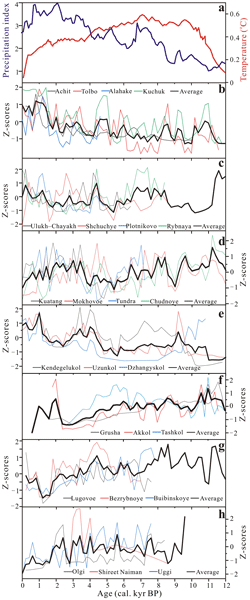
Our work clarifies the long-term feedback mechanisms between biomass burning processes and forest community structure across different vegetation zones in the Altai-Sayan ecoregion. The findings hold significant scientific value for understanding human-fire-ecosystem interactions in the arid Central Asia, while offering historical references for regional sustainable ecological management.
Amy Cromartie, Cindy De Jonge, Guillemette Ménot, Mary Robles, Lucas Dugerdil, Odile Peyron, Marta Rodrigo-Gámiz, Jon Camuera, Maria Jose Ramos-Roman, Gonzalo Jiménez-Moreno, Claude Colombié, Lilit Sahakyan, and Sébastien Joannin
Biogeosciences, 22, 7687–7708, https://doi.org/10.5194/bg-22-7687-2025, https://doi.org/10.5194/bg-22-7687-2025, 2025
Short summary
Short summary
BrGDGT (branched glycerol dialkyl glycerol tetraethers) are a molecular biomarker utilized for paleotemperature reconstructions. One issue, however, with utilizing brGDGTs is that the distribution differs in relation to sediment environments (i.e., peat, lake, soil). We utilize the probability estimate outputs from five machine learning algorithms and a new modern brGDGT database to track provenance change and apply these models to two downcore records utilizing pollen, non-pollen polymorphs, and XRF (X-ray fluorescence) to confirm the models’ accuracy.
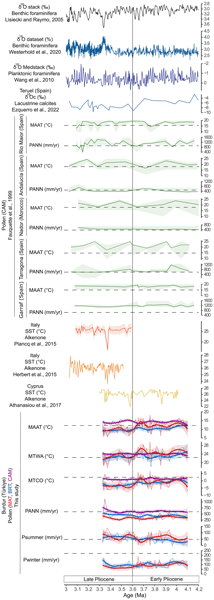
Mary Robles, Valérie Andrieu, Pierre Rochette, Séverine Fauquette, François Demory, Oktay Parlak, Eliane Charrat, Belinda Gambin, and Mehmet Cihat Alçiçek
Clim. Past, 21, 2299–2329, https://doi.org/10.5194/cp-21-2299-2025, https://doi.org/10.5194/cp-21-2299-2025, 2025
Short summary
Short summary
This study aims to characterize the vegetation and lake dynamics based on pollen and Non-Pollen Palynomorph (NPP) proxies, to quantitatively reconstruct climate changes using a multimethod approach and to morphologically characterize the large pollen grains of Poaceae (Cerealia-type).
Léa d'Oliveira, Sébastien Joannin, Guillemette Ménot, Nathalie Combourieu-Nebout, Lucas Dugerdil, Marion Blache, Mary Robles, Assunta Florenzano, Alessia Masi, Anna Maria Mercuri, Laura Sadori, Marie Balasse, and Odile Peyron
Clim. Past, 21, 2331–2359, https://doi.org/10.5194/cp-21-2331-2025, https://doi.org/10.5194/cp-21-2331-2025, 2025
Short summary
Short summary
We studied climate change in the central Mediterranean during the Holocene by analysing 38 pollen records. Several methods were used to obtain reliable results on seasonal temperatures and precipitation. Our results show that, during the Holocene, summer temperatures were colder in the south and warmer in the north, with wetter winters and drier summers, especially in the south. Unlike winter conditions, summer ones did not follow variations in insolation, suggesting other factors.
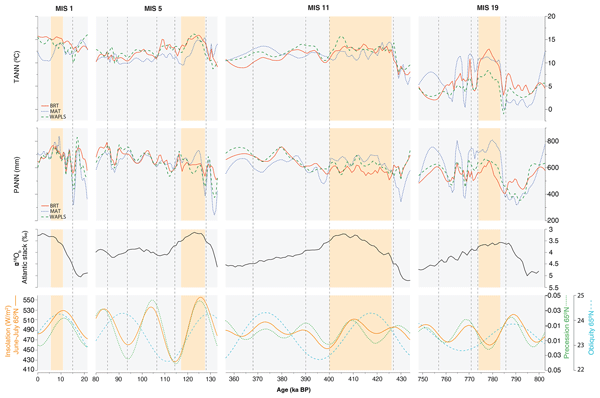
Dael Sassoon, Nathalie Combourieu-Nebout, Odile Peyron, Adele Bertini, Francesco Toti, Vincent Lebreton, and Marie-Hélène Moncel
Clim. Past, 21, 489–515, https://doi.org/10.5194/cp-21-489-2025, https://doi.org/10.5194/cp-21-489-2025, 2025
Short summary
Short summary
Climatic reconstructions of Marine Isotope Stages (MISs) 19, 11, and 5 and the current interglacial (MIS 1) based on pollen data from a marine core (Alboran Sea) show that, compared with MIS 1, MIS 19 was colder and highly variable, MIS 11 was longer and more stable, and MIS 5 was warmer. There is no real equivalent to the current interglacial, but past interglacials give insights into the sensitivity of the southwestern Mediterranean to global climatic changes in conditions similar to MIS 1.
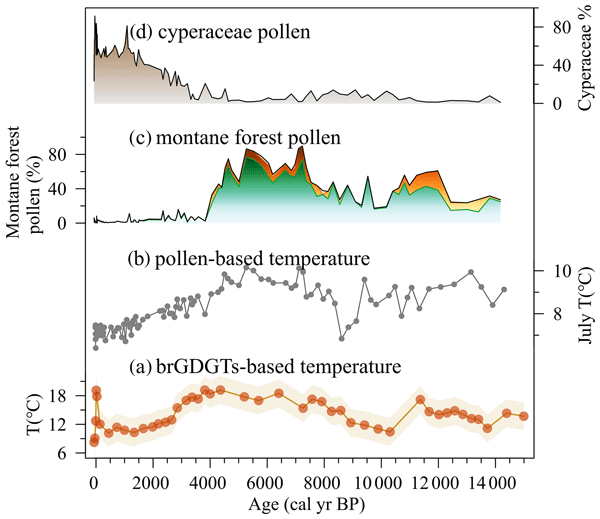
Xiaohuan Hou, Nannan Wang, Zhe Sun, Kan Yuan, Xianyong Cao, and Juzhi Hou
Clim. Past, 20, 335–348, https://doi.org/10.5194/cp-20-335-2024, https://doi.org/10.5194/cp-20-335-2024, 2024
Short summary
Short summary
We present an ice-free season temperature based on brGDGTs over last 15 kyr on the eastern Tibetan Plateau (TP). The result shows that Holocene Thermal Maximum occurred during 8–3.5 ka, which lags behind pollen-based temperature recorded in same core, indicating a significant seasonal bias between different proxies. We also investigated previously published brGDGT-based temperatures on the TP to determine the pattern of Holocene temperature changes and possible reasons for the diverse records.
Léa d'Oliveira, Lucas Dugerdil, Guillemette Ménot, Allowen Evin, Serge D. Muller, Salomé Ansanay-Alex, Julien Azuara, Colline Bonnet, Laurent Bremond, Mehmet Shah, and Odile Peyron
Clim. Past, 19, 2127–2156, https://doi.org/10.5194/cp-19-2127-2023, https://doi.org/10.5194/cp-19-2127-2023, 2023
Short summary
Short summary
In southern Europe, Holocene climate variability is characterized by a strong heterogeneity whose patterns are still poorly understood. Here, a multi-proxy approach (pollen and biomarkers) is applied to the Canroute sequence to reconstruct the climatic variation over the last 15 000 years in southern Massif Central, France. Results reveal that reconstructions of regional climate trends notably differ depending on proxies and sites, notably concerning the presence of a Holocene thermal maximum.
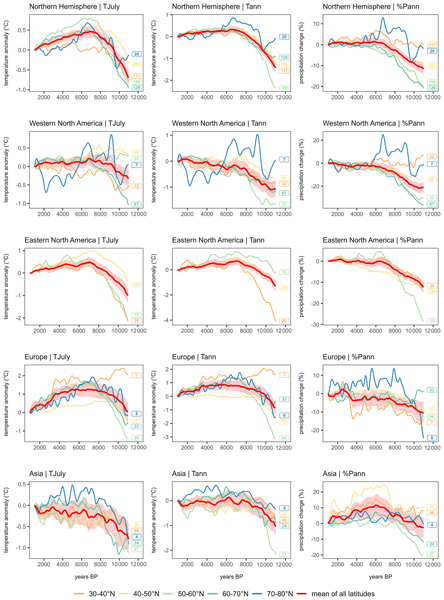
Ulrike Herzschuh, Thomas Böhmer, Manuel Chevalier, Raphaël Hébert, Anne Dallmeyer, Chenzhi Li, Xianyong Cao, Odile Peyron, Larisa Nazarova, Elena Y. Novenko, Jungjae Park, Natalia A. Rudaya, Frank Schlütz, Lyudmila S. Shumilovskikh, Pavel E. Tarasov, Yongbo Wang, Ruilin Wen, Qinghai Xu, and Zhuo Zheng
Clim. Past, 19, 1481–1506, https://doi.org/10.5194/cp-19-1481-2023, https://doi.org/10.5194/cp-19-1481-2023, 2023
Short summary
Short summary
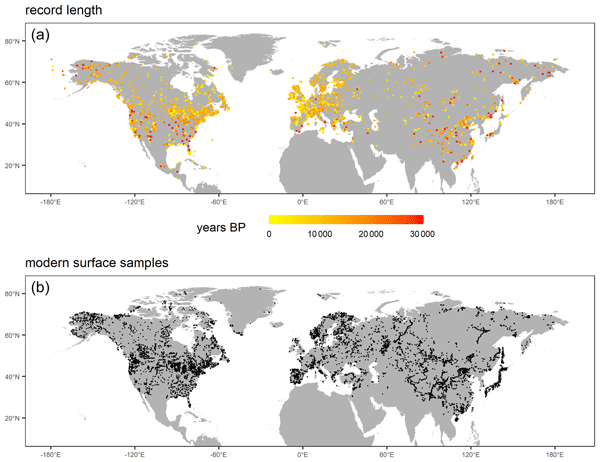
A mismatch between model- and proxy-based Holocene climate change may partially originate from the poor spatial coverage of climate reconstructions. Here we investigate quantitative reconstructions of mean annual temperature and annual precipitation from 1908 pollen records in the Northern Hemisphere. Trends show strong latitudinal patterns and differ between (sub-)continents. Our work contributes to a better understanding of the global mean.
Ulrike Herzschuh, Thomas Böhmer, Chenzhi Li, Manuel Chevalier, Raphaël Hébert, Anne Dallmeyer, Xianyong Cao, Nancy H. Bigelow, Larisa Nazarova, Elena Y. Novenko, Jungjae Park, Odile Peyron, Natalia A. Rudaya, Frank Schlütz, Lyudmila S. Shumilovskikh, Pavel E. Tarasov, Yongbo Wang, Ruilin Wen, Qinghai Xu, and Zhuo Zheng
Earth Syst. Sci. Data, 15, 2235–2258, https://doi.org/10.5194/essd-15-2235-2023, https://doi.org/10.5194/essd-15-2235-2023, 2023
Short summary
Short summary
Climate reconstruction from proxy data can help evaluate climate models. We present pollen-based reconstructions of mean July temperature, mean annual temperature, and annual precipitation from 2594 pollen records from the Northern Hemisphere, using three reconstruction methods (WA-PLS, WA-PLS_tailored, and MAT). Since no global or hemispheric synthesis of quantitative precipitation changes are available for the Holocene so far, this dataset will be of great value to the geoscientific community.
Mary Robles, Odile Peyron, Guillemette Ménot, Elisabetta Brugiapaglia, Sabine Wulf, Oona Appelt, Marion Blache, Boris Vannière, Lucas Dugerdil, Bruno Paura, Salomé Ansanay-Alex, Amy Cromartie, Laurent Charlet, Stephane Guédron, Jacques-Louis de Beaulieu, and Sébastien Joannin
Clim. Past, 19, 493–515, https://doi.org/10.5194/cp-19-493-2023, https://doi.org/10.5194/cp-19-493-2023, 2023
Short summary
Short summary
Quantitative climate reconstructions based on pollen and brGDGTs reveal, for the Late Glacial, a warm Bølling–Allerød and a marked cold Younger Dryas in Italy, showing no latitudinal differences in terms of temperatures across Italy. In terms of precipitation, no latitudinal differences are recorded during the Bølling–Allerød, whereas 40–42° N appears as a key junction point between wetter conditions in southern Italy and drier conditions in northern Italy during the Younger Dryas.
Furong Li, Marie-José Gaillard, Xianyong Cao, Ulrike Herzschuh, Shinya Sugita, Jian Ni, Yan Zhao, Chengbang An, Xiaozhong Huang, Yu Li, Hongyan Liu, Aizhi Sun, and Yifeng Yao
Earth Syst. Sci. Data, 15, 95–112, https://doi.org/10.5194/essd-15-95-2023, https://doi.org/10.5194/essd-15-95-2023, 2023
Short summary
Short summary
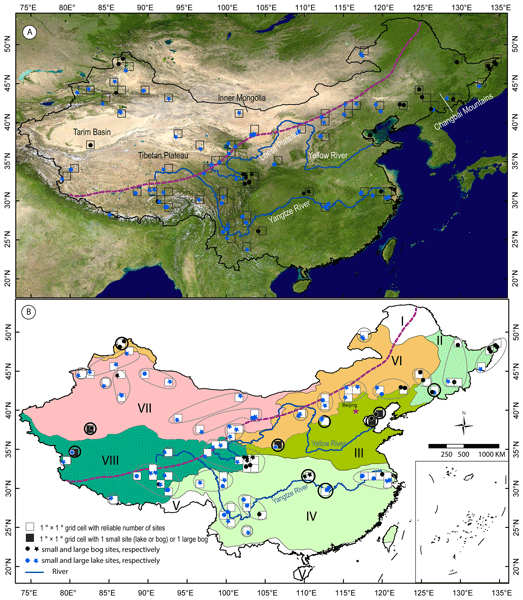
The objective of this study is present the first gridded and temporally continuous quantitative plant-cover reconstruction for temperate and northern subtropical China over the last 12 millennia. The reconstructions are based on 94 pollen records and include estimates for 27 plant taxa, 10 plant functional types, and 3 land-cover types. The dataset is suitable for palaeoclimate modelling and the evaluation of simulated past vegetation cover and anthropogenic land-cover change from models.
Cited articles
Ajallooeian, F., Dubois, N., Ladd, S. N., Lever, M. A., Schubert, C. J., and De Jonge, C.: Controls on brGDGT Production in the Seasonally Anoxic Water Column and Sediments of Rotsee (Lake Rot), J. Geophys. Res.-Biogeo., 130, e2025JG009132, https://doi.org/10.1029/2025JG009132, 2025. a
Baxter, A. J., Hopmans, E. C., Russell, J. M., and Sinninghe Damsté, J. S.: Bacterial GMGTs in East African Lake Sediments: Their Potential as Palaeotemperature Indicators, Geochim. Cosmochim. Ac., 259, 155–169, https://doi.org/10.1016/j.gca.2019.05.039, 2019. a
Bierens, H. J.: Uniform Consistency of Kernel Estimators of a Regression Function under Generalized Conditions, J. Am. Stat. A., 78, 699–707, https://doi.org/10.1080/01621459.1983.10478031, 1983. a
Bivand, R., Keitt, T., Rowlingson, B., Pebesma, E., Sumner, M., Hijmans, R., Rouault, E., and Bivand, M. R.: Package 'Rgdal', Bindings for the Geospatial Data Abstraction Library, https://cran.r-project.org/web/packages/rgdal/index.html (last access: 15 October 2017), 172, 2015. a
Bunting, M., Farrell, M., Broström, A., Hjelle, K., Mazier, F., Middleton, R., Nielsen, A., Rushton, E., Shaw, H., and Twiddle, C.: Palynological Perspectives on Vegetation Survey: A Critical Step for Model-Based Reconstruction of Quaternary Land Cover, Quaternary Sci. Rev., 82, 41–55, https://doi.org/10.1016/j.quascirev.2013.10.006, 2013. a
Cao, M., Rueda, G., Rivas-Ruiz, P., Trapote, M. C., Henriksen, M., Vegas-Vilarrúbia, T., and Rosell-Melé, A.: Branched GDGT Variability in Sediments and Soils from Catchments with Marked Temperature Seasonality, Organic Geochemistry, 122, 98–114, https://doi.org/10.1016/j.orggeochem.2018.05.007, 2018. a
Cao, X.-y., Herzschuh, U., Telford, R. J., and Ni, J.: A Modern Pollen–Climate Dataset from China and Mongolia: Assessing Its Potential for Climate Reconstruction, Review of Palaeobotany and Palynology, 211, 87–96, https://doi.org/10.1016/j.revpalbo.2014.08.007, 2014. a, b
Chen, C., Bai, Y., Fang, X., Zhuang, G., Khodzhiev, A., Bai, X., and Murodov, A.: Evaluating the Potential of Soil Bacterial Tetraether Proxies in Westerlies Dominating Western Pamirs, Tajikistan and Implications for Paleoenvironmental Reconstructions, Chem. Geol., 559, 119908, https://doi.org/10.1016/j.chemgeo.2020.119908, 2021. a, b, c, d, e, f, g, h, i, j, k, l, m, n
Chen, S., Chen, J., Ding, G., Ma, S., Ji, P., Zhou, A., Wu, D., Khormali, F., Hou, J., and Chen, F.: Dipole Pattern of Holocene Hydroclimate Variations across the Asian Drylands: Critical Evidence from West Asia, J. Geophys. Res.-Atmos., 129, e2023JD039413, https://doi.org/10.1029/2023JD039413, 2024. a, b, c
Chen, Y., Zhang, X., Qi, W., Zhang, G., Pei, Y., Fang, X., Xia, Y., and Zhang, S.: Distribution of Glycerol Dialkyl Glycerol Tetraethers (GDGTs) in Carbonate-Type and Sulfate-Type Lacustrine Sediments: Insight into the Influence of Ionic Composition on GDGTs, Minerals, 12, 1233, https://doi.org/10.3390/min12101233, 2022. a, b
Clogg, C. C., Petkova, E., and Haritou, A.: Statistical Methods for Comparing Regression Coefficients between Models, Am. J. Sociol., 100, 1261–1293, https://doi.org/10.1086/230638, 1995. a, b
Cromartie, A., Blanchet, C., Barhoumi, C., Messager, E., Peyron, O., Ollivier, V., Sabatier, P., Etienne, D., Karakhanyan, A., Khatchadourian, L., Smith, A. T., Badalyan, R., Perello, B., Lindsay, I., and Joannin, S.: The Vegetation, Climate, and Fire History of a Mountain Steppe: A Holocene Reconstruction from the South Caucasus, Shenkani, Armenia, Quaternary Sci. Rev., 246, 106485, https://doi.org/10.1016/j.quascirev.2020.106485, 2020. a
Cromartie, A., De Jonge, C., Ménot, G., Robles, M., Dugerdil, L., Peyron, O., Rodrigo-Gámiz, M., Camuera, J., Ramos-Roman, M. J., Jiménez-Moreno, G., Colombié, C., Sahakyan, L., and Joannin, S.: Utilizing probability estimates from machine learning and pollen to understand the depositional influences on branched GDGT in wetlands, peatlands, and lakes, Biogeosciences, 22, 7687–7708, https://doi.org/10.5194/bg-22-7687-2025, 2025. a, b, c, d
Dang, X., Xue, J., Yang, H., and Xie, S.: Environmental Impacts on the Distribution of Microbial Tetraether Lipids in Chinese Lakes with Contrasting pH: Implications for Lacustrine Paleoenvironmental Reconstructions, Science China Earth Sciences, 59, 939–950, https://doi.org/10.1007/s11430-015-5234-z, 2016a. a, b, c
Dang, X., Yang, H., Naafs, B. D. A., Pancost, R. D., and Xie, S.: Evidence of Moisture Control on the Methylation of Branched Glycerol Dialkyl Glycerol Tetraethers in Semi-Arid and Arid Soils, Geochim. Cosmochim. Ac., 189, 24–36, https://doi.org/10.1016/j.gca.2016.06.004, 2016b. a, b, c, d, e, f, g, h, i, j, k
Dang, X., Ding, W., Yang, H., Pancost, R. D., Naafs, B. D. A., Xue, J., Lin, X., Lu, J., and Xie, S.: Different Temperature Dependence of the Bacterial brGDGT Isomers in 35 Chinese Lake Sediments Compared to That in Soils, Organic Geochemistry, 119, 72–79, https://doi.org/10/gdfs3x, 2018. a, b
Davtian, N., Bard, E., Ménot, G., and Fagault, Y.: The Importance of Mass Accuracy in Selected Ion Monitoring Analysis of Branched and Isoprenoid Tetraethers, Organic Geochemistry, 118, 58–62, https://doi.org/10/gdc8rs, 2018. a
Dearing Crampton-Flood, E., Tierney, J. E., Peterse, F., Kirkels, F. M. S. A., and Sinninghe Damsté, J. S.: BayMBT: A Bayesian Calibration Model for Branched Glycerol Dialkyl Glycerol Tetraethers in Soils and Peats, Geochim. Cosmochim. Ac., 268, 142–159, https://doi.org/10/gg9758, 2020. a, b, c, d, e, f, g, h, i, j, k
De Jonge, C., Hopmans, E. C., Zell, C. I., Kim, J.-H., Schouten, S., and Sinninghe Damsté, J. S.: Occurrence and Abundance of 6-Methyl Branched Glycerol Dialkyl Glycerol Tetraethers in Soils: Implications for Palaeoclimate Reconstruction, Geochim. Cosmochim. Ac., 141, 97–112, https://doi.org/10/f6h2xw, 2014. a, b, c, d, e, f, g, h, i, j, k, l, m, n, o, p, q, r, s, t, u, v
De Jonge, C., Radujković, D., Sigurdsson, B. D., Weedon, J. T., Janssens, I., and Peterse, F.: Lipid Biomarker Temperature Proxy Responds to Abrupt Shift in the Bacterial Community Composition in Geothermally Heated Soils, Organic Geochemistry, 137, 103897, https://doi.org/10.1016/j.orggeochem.2019.07.006, 2019. a, b
De Jonge, C., Guo, J., Hällberg, P., Griepentrog, M., Rifai, H., Richter, A., Ramirez, E., Zhang, X., Smittenberg, R. H., and Peterse, F.: The Impact of Soil Chemistry, Moisture and Temperature on Branched and Isoprenoid GDGTs in Soils: A Study Using Six Globally Distributed Elevation Transects, Organic Geochemistry, 187, 104706, https://doi.org/10.1016/j.orggeochem.2023.104706, 2024a. a, b, c
De Jonge, C., Peterse, F., Nierop, K. G. J., Blattmann, T. M., Alexandre, M., Ansanay-Alex, S., Austin, T., Babin, M., Bard, E., Bauersachs, T., Blewett, J., Boehman, B., Castañeda, I. S., Chen, J., Conti, M. L. G., Contreras, S., Cordes, J., Davtian, N., Van Dongen, B., Duncan, B., Elling, F. J., Galy, V., Gao, S., Hefter, J., Hinrichs, K.-U., Helling, M. R., Hoorweg, M., Hopmans, E., Hou, J., Huang, Y., Huguet, A., Jia, G., Karger, C., Keely, B. J., Kusch, S., Li, H., Liang, J., Lipp, J. S., Liu, W., Lu, H., Mangelsdorf, K., Manners, H., Martinez Garcia, A., Menot, G., Mollenhauer, G., Naafs, B. D. A., Naeher, S., O'Connor, L. K., Pearce, E. M., Pearson, A., Rao, Z., Rodrigo-Gámiz, M., Rosendahl, C., Rostek, F., Bao, R., Sanyal, P., Schubotz, F., Scott, W., Sen, R., Sluijs, A., Smittenberg, R., Stefanescu, I., Sun, J., Sutton, P., Tierney, J., Tejos, E., Villanueva, J., Wang, H., Werne, J., Yamamoto, M., Yang, H., and Zhou, A.: Interlaboratory Comparison of Branched GDGT Temperature and pH Proxies Using Soils and Lipid Extracts, Geochem. Geophys. Geosyst., 25, e2024GC011583, https://doi.org/10.1029/2024GC011583, 2024b. a
Ding, S., Schwab, V. F., Ueberschaar, N., Roth, V.-N., Lange, M., Xu, Y., Gleixner, G., and Pohnert, G.: Identification of Novel 7-Methyl and Cyclopentanyl Branched Glycerol Dialkyl Glycerol Tetraethers in Lake Sediments, Organic Geochemistry, 102, 52–58, https://doi.org/10/f9mmqv, 2016. a, b
Dixon, P.: VEGAN, a Package of R Functions for Community Ecology, Journal of Vegetation Science, 14, 927–930, https://doi.org/10/dz9txb, 2003. a, b, c
d'Oliveira, L., Dugerdil, L., Ménot, G., Evin, A., Muller, S. D., Ansanay-Alex, S., Azuara, J., Bonnet, C., Bremond, L., Shah, M., and Peyron, O.: Reconstructing 15 000 years of southern France temperatures from coupled pollen and molecular (branched glycerol dialkyl glycerol tetraether) markers (Canroute, Massif Central), Clim. Past, 19, 2127–2156, https://doi.org/10.5194/cp-19-2127-2023, 2023. a, b, c, d, e, f
Duan, Y., Sun, Q., Werne, J. P., Hou, J., Yang, H., Wang, Q., Khormali, F., and Chen, F.: The Impact of Precipitation on the Distributions of Branched Tetraethers in Alkaline Soils, Organic Geochemistry, 169, 104410, https://doi.org/10.1016/j.orggeochem.2022.104410, 2022. a, b, c, d, e, f, g, h, i, j, k, l
Dugerdil, L.: LucasDugerdil/GDGT_ACADB: v1.0.1 (v1.0.1), Zenodo [code], https://doi.org/10.5281/zenodo.18429660, 2026. a
Dugerdil, L., Joannin, S., Peyron, O., Jouffroy-Bapicot, I., Vannière, B., Boldgiv, B., Unkelbach, J., Behling, H., and Ménot, G.: Climate reconstructions based on GDGT and pollen surface datasets from Mongolia and Baikal area: calibrations and applicability to extremely cold–dry environments over the Late Holocene, Clim. Past, 17, 1199–1226, https://doi.org/10.5194/cp-17-1199-2021, 2021a. a, b, c, d, e, f, g, h, i, j, k, l, m, n
Dugerdil, L., Ménot, G., Peyron, O., Jouffroy-Bapicot, I., Ansanay-Alex, S., Antheaume, I., Behling, H., Boldgiv, B., Develle, A.-L., Grossi, V., Magail, J., Makou, M., Robles, M., Unkelbach, J., Vannière, B., and Joannin, S.: Late Holocene Mongolian Climate and Environment Reconstructions from brGDGTs, NPPs and Pollen Transfer Functions for Lake Ayrag: Paleoclimate Implications for Arid Central Asia, Quaternary Sci. Rev., 273, 107235, https://doi.org/10.1016/j.quascirev.2021.107235, 2021b. a, b, c
Dugerdil, L., Joannin, S., Peyron, O., Bayramova, S., Huang, X., Egamberdieva, D., Alimov, J., Boldgiv, B., Sahakyan, L., and Ménot, G.: Arid Central Asian Data Base (ACADB) for surface brGDGT samples, PANGAEA, https://doi.org/10.1594/PANGAEA.983391 [data set], 2025a. a
Dugerdil, L., Joannin, S., Peyron, O., Cromartie, A., Robles, M., Duan, Y., Huang, X., Chen, F., and Ménot, G.: Boosted Regression Trees Machine Learning Method Improves the brGDGT-based Climate Reconstruction in Drylands, Paleoceanography and Paleoclimatology, 40, e2025PA005214, https://doi.org/10.1029/2025PA005214, 2025b. a, b, c, d, e, f, g, h, i, j
Dugerdil, L., Peyron, O., Ménot, G., Egamberdieva, D., Alimov, J., Leroy, S. A., Garnier, E., Nowak, A., and Joannin, S.: First Paleoenvironmental Calibrations for Modern Pollen Rain of Tajikistan and Uzbekistan: A Case Study of Pollen – Vegetation Functional Biogeography of Arid Central Asia, Global Planet. Change, 252, 104857, https://doi.org/10.1016/j.gloplacha.2025.104857, 2025c. a, b
Fick, S. E. and Hijmans, R. J.: WorldClim 2: New 1-Km Spatial Resolution Climate Surfaces for Global Land Areas, Int. J. Climatol., 37, 4302–4315, https://doi.org/10/gb2jnq, 2017. a, b, c
Gintzburger, G., Makhmudov, G., Mardonov, B. K., and Toderich, K.: Rangelands of the Arid and Semi-Arid Zones in Uzbekistan, Cirad, CIRAD 2-87614-555-3, 2003. a
Guo, J., Ma, T., Liu, N., Zhang, X., Hu, H., Ma, W., Wang, Z., Feng, X., and Peterse, F.: Soil pH and Aridity Influence Distributions of Branched Tetraether Lipids in Grassland Soils along an Aridity Transect, Organic Geochemistry, 164, 104347, https://doi.org/10.1016/j.orggeochem.2021.104347, 2021. a, b, c, d, e, f, g, h, i, j, k, l, m, n, o, p, q
Häggi, C., Naafs, B. D. A., Silvestro, D., Bertassoli, D. J., Akabane, T. K., Mendes, V. R., Sawakuchi, A. O., Chiessi, C. M., Jaramillo, C. A., and Feakins, S. J.: GDGT Distribution in Tropical Soils and Its Potential as a Terrestrial Paleothermometer Revealed by Bayesian Deep-Learning Models, Geochim. Cosmochim. Ac., 362, 41–64, https://doi.org/10.1016/j.gca.2023.09.014, 2023. a, b, c, d, e, f
Halamka, T. A., Raberg, J. H., McFarlin, J. M., Younkin, A. D., Mulligan, C., Liu, X.-L., and Kopf, S. H.: Production of Diverse brGDGTs by Acidobacterium Solibacter Usitatus in Response to Temperature, pH, and O2 Provides a Culturing Perspective on Br GDGT Proxies and Biosynthesis, Geobiology, 21, 102–118, https://doi.org/10.1111/gbi.12525, 2023. a
Hällberg, P. L., Smittenberg, R., Kylander, M. E., Villanueva, J., Davtian, N., Hapsari, A., Sjöström, J. K., Axelsson, J., Jarne-Bueno, G., Yamoah, K., Rifai, H., and Schenk, F.: Disentangling Seasonal and Annual Precipitation Signals in the Tropics over the Holocene: Insights from δD, Alkanes and GDGTs, Quaternary Sci. Rev., 344, 108948, https://doi.org/10.1016/j.quascirev.2024.108948, 2024. a
Hamilton, N. and Ferry, M.: Ggtern : Ternary Diagrams Using Ggplot2, J. Stat. Softw., 87, 1, https://doi.org/10.18637/jss.v087.c03, 2018. a
Hijmans, R. J.: Raster: Geographic Data Analysis and Modeling, CRAN, 734, 473, https://doi.org/10.32614/CRAN.package.raster, 2023. a
Hopmans, E. C., Schouten, S., and Damsté, J. S. S.: The Effect of Improved Chromatography on GDGT-based Palaeoproxies, Organic Geochemistry, 93, 1–6, https://doi.org/10.1016/j.orggeochem.2015.12.006, 2016. a
Huguet, C., Hopmans, E. C., Febo-Ayala, W., Thompson, D. H., Sinninghe Damsté, J. S., and Schouten, S.: An Improved Method to Determine the Absolute Abundance of Glycerol Dibiphytanyl Glycerol Tetraether Lipids, Organic Geochemistry, 37, 1036–1041, https://doi.org/10.1016/j.orggeochem.2006.05.008, 2006. a, b, c
Jarvis, A., Guevara, E., Reuter, H., and Nelson, A.: Hole-Filled SRTM for the Globe : Version 4 : Data Grid, International Centre for Tropical Agriculture (CIAT), https://srtm.csi.cgiar.org/ (last access: 29 January 2025), 2008. a
Kou, Q., Zhu, L., Ju, J., Wang, J., Xu, T., Li, C., and Ma, Q.: Influence of Salinity on Glycerol Dialkyl Glycerol Tetraether-Based Indicators in Tibetan Plateau Lakes: Implications for Paleotemperature and Paleosalinity Reconstructions, Palaeogeogr. Palaeocl., 601, 111127, https://doi.org/10.1016/j.palaeo.2022.111127, 2022. a, b, c, d, e, f, g, h, i, j, k, l, m, n, o
Lei, Y., Yang, H., Dang, X., Zhao, S., and Xie, S.: Absence of a Significant Bias towards Summer Temperature in Branched Tetraether-Based Paleothermometer at Two Soil Sites with Contrasting Temperature Seasonality, Organic Geochemistry, 94, 83–94, https://doi.org/10.1016/j.orggeochem.2016.02.003, 2016. a
Leroy, S. A., Kakroodi, A. A., Kroonenberg, S., Lahijani, H. K., Alimohammadian, H., and Nigarov, A.: Holocene Vegetation History and Sea Level Changes in the SE Corner of the Caspian Sea: Relevance to SW Asia Climate, Quaternary Sci. Rev., 70, 28–47, https://doi.org/10.1016/j.quascirev.2013.03.004, 2013. a
Li, J., Naafs, B. D. A., Pancost, R. D., Yang, H., Liu, D., and Xie, S.: Distribution of Branched Tetraether Lipids in Ponds from Inner Mongolia, NE China: Insight into the Source of brGDGTs, Organic Geochemistry, 112, 127–136, https://doi.org/10.1016/j.orggeochem.2017.07.005, 2017. a
Li, Y., Zhao, S., Pei, H., Qian, S., Zang, J., Dang, X., and Yang, H.: Distribution of Glycerol Dialkyl Glycerol Tetraethers in Surface Soils along an Altitudinal Transect at Cold and Humid Mountain Changbai: Implications for the Reconstruction of Paleoaltimetry and Paleoclimate, Science China Earth Sciences, 61, 925–939, https://doi.org/10.1007/s11430-017-9168-9, 2018. a
Liang, J., Russell, J. M., Xie, H., Lupien, R. L., Si, G., Wang, J., Hou, J., and Zhang, G.: Vegetation Effects on Temperature Calibrations of Branched Glycerol Dialkyl Glycerol Tetraether (brGDGTs) in Soils, Organic Geochemistry, 127, 1–11, https://doi.org/10.1016/j.orggeochem.2018.10.010, 2019. a, b, c
Liang, J., Chevalier, M., Liu, K., Perfumo, A., Wang, M., Xie, H., Hou, J., Herzschuh, U., and Chen, F.: Discrepancies in Lacustrine Bacterial Lipid Temperature Reconstructions Explained by Microbial Ecology, Commun. Earth Environ., 5, 1–14, https://doi.org/10.1038/s43247-024-01925-3, 2024. a, b, c, d, e, f, g
Lin, T., Rao, Z., Zeng, Y., Li, Y., Zhao, L., Liu, L., Xiao, X., Zhang, C., Shen, Z., Cao, J., and Jia, G.: Sedimentary brGDGTs in China: An Overview of Modern Observations and Proposed Land Holocene Paleotemperature Records, Earth-Sci. Rev., 250, 104694, https://doi.org/10.1016/j.earscirev.2024.104694, 2024. a, b, c, d, e
Loomis, S. E., Russell, J. M., and Sinninghe Damsté, J. S.: Distributions of Branched GDGTs in Soils and Lake Sediments from Western Uganda: Implications for a Lacustrine Paleothermometer, Organic Geochemistry, 42, 739–751, https://doi.org/10.1016/j.orggeochem.2011.06.004, 2011. a, b
Maestre, F. T., Le Bagousse-Pinguet, Y., Delgado-Baquerizo, M., Eldridge, D. J., Saiz, H., Berdugo, M., Gozalo, B., Ochoa, V., Guirado, E., García-Gómez, M., Valencia, E., Gaitán, J. J., Asensio, S., Mendoza, B. J., Plaza, C., Díaz-Martínez, P., Rey, A., Hu, H.-W., He, J.-Z., Wang, J.-T., Lehmann, A., Rillig, M. C., Cesarz, S., Eisenhauer, N., Martínez-Valderrama, J., Moreno-Jiménez, E., Sala, O., Abedi, M., Ahmadian, N., Alados, C. L., Aramayo, V., Amghar, F., Arredondo, T., Ahumada, R. J., Bahalkeh, K., Ben Salem, F., Blaum, N., Boldgiv, B., Bowker, M. A., Bran, D., Bu, C., Canessa, R., Castillo-Monroy, A. P., Castro, H., Castro, I., Castro-Quezada, P., Chibani, R., Conceição, A. A., Currier, C. M., Darrouzet-Nardi, A., Deák, B., Donoso, D. A., Dougill, A. J., Durán, J., Erdenetsetseg, B., Espinosa, C. I., Fajardo, A., Farzam, M., Ferrante, D., Frank, A. S. K., Fraser, L. H., Gherardi, L. A., Greenville, A. C., Guerra, C. A., Gusmán-Montalvan, E., Hernández-Hernández, R. M., Hölzel, N., Huber-Sannwald, E., Hughes, F. M., Jadán-Maza, O., Jeltsch, F., Jentsch, A., Kaseke, K. F., Köbel, M., Koopman, J. E., Leder, C. V., Linstädter, A., le Roux, P. C., Li, X., Liancourt, P., Liu, J., Louw, M. A., Maggs-Kölling, G., Makhalanyane, T. P., Issa, O. M., Manzaneda, A. J., Marais, E., Mora, J. P., Moreno, G., Munson, S. M., Nunes, A., Oliva, G., Oñatibia, G. R., Peter, G., Pivari, M. O. D., Pueyo, Y., Quiroga, R. E., Rahmanian, S., Reed, S. C., Rey, P. J., Richard, B., Rodríguez, A., Rolo, V., Rubalcaba, J. G., Ruppert, J. C., Salah, A., Schuchardt, M. A., Spann, S., Stavi, I., Stephens, C. R. A., Swemmer, A. M., Teixido, A. L., Thomas, A. D., Throop, H. L., Tielbörger, K., Travers, S., Val, J., Valkó, O., van den Brink, L., Ayuso, S. V., Velbert, F., Wamiti, W., Wang, D., Wang, L., Wardle, G. M., Yahdjian, L., Zaady, E., Zhang, Y., Zhou, X., Singh, B. K., and Gross, N.: Grazing and Ecosystem Service Delivery in Global Drylands, Science, 378, 915–920, https://doi.org/10.1126/science.abq4062, 2022. a
Mardia, K. V.: Measures of Multivariate Skewness and Kurtosis with Applications, Biometrika, 57, 519–530, https://doi.org/10.1093/biomet/57.3.519, 1970. a
Martin, C., Ménot, G., Thouveny, N., Davtian, N., Andrieu-Ponel, V., Reille, M., and Bard, E.: Impact of Human Activities and Vegetation Changes on the Tetraether Sources in Lake St Front (Massif Central, France), Organic Geochemistry, 135, 38–52, https://doi.org/10.1016/j.orggeochem.2019.06.005, 2019. a, b, c, d
Martínez-Sosa, P., Tierney, J. E., Stefanescu, I. C., Crampton-Flood, E. D., Shuman, B. N., and Routson, C.: A Global Bayesian Temperature Calibration for Lacustrine brGDGTs, Geochim. Cosmochim. Ac., 305, 87–105, https://doi.org/10.1016/j.gca.2021.04.038, 2021. a, b, c
Martínez-Sosa, P., Tierney, J. E., Pérez-Angel, L. C., Stefanescu, I. C., Guo, J., Kirkels, F., Sepúlveda, J., Peterse, F., Shuman, B. N., and Reyes, A. V.: Development and Application of the Branched and Isoprenoid GDGT Machine Learning Classification Algorithm (BIGMaC) for Paleoenvironmental Reconstruction, Paleoceanography and Paleoclimatology, 38, e2023PA004611, https://doi.org/10.1029/2023PA004611, 2023. a, b, c
Moore, D. S., McCabe, G. P., and Craig, B. A.: Introduction to the Practice of Statistics, vol. 4, WH Freeman New York, 2009. a
Moreno-Jiménez, E., Plaza, C., Saiz, H., Manzano, R., Flagmeier, M., and Maestre, F. T.: Aridity and Reduced Soil Micronutrient Availability in Global Drylands, Nature Sustainability, 2, 371–377, https://doi.org/10.1038/s41893-019-0262-x, 2019. a
Muhammad, S., Müller, T., and Joergensen, R. G.: Relationships between Soil Biological and Other Soil Properties in Saline and Alkaline Arable Soils from the Pakistani Punjab, J. Arid Environ., 72, 448–457, https://doi.org/10.1016/j.jaridenv.2007.06.016, 2008. a, b, c, d
Naafs, B. D. A., Inglis, G. N., Zheng, Y., Amesbury, M. J., Biester, H., Bindler, R., Blewett, J., Burrows, M. A., Del Castillo Torres, D., and Chambers, F. M.: Introducing Global Peat-Specific Temperature and pH Calibrations Based on brGDGT Bacterial Lipids, Geochim. Cosmochim. Ac., 208, 285–301, https://doi.org/10/f99n9b, 2017b. a, b, c, d, e
Naafs, B. D. A., Oliveira, A. S. F., and Mulholland, A. J.: Molecular Dynamics Simulations Support the Hypothesis That the brGDGT Paleothermometer Is Based on Homeoviscous Adaptation, Geochim. Cosmochim. Ac., 312, 44–56, https://doi.org/10.1016/j.gca.2021.07.034, 2021. a
Novak, J. B., Russell, J. M., Lindemuth, E. R., Prokopenko, A. A., Pérez, L., Zhao, B., Swann, G. E. A., and Polissar, P. J.: The Branched GDGT Isomer Ratio Refines Lacustrine Paleotemperature Estimates, Geochem. Geophys. Geosyst., 26, e2024GC012069, https://doi.org/10.1029/2024gc012069, 2025. a
Pérez-Angel, L. C., Sepúlveda, J., Molnar, P., Montes, C., Rajagopalan, B., Snell, K., Gonzalez-Arango, C., and Dildar, N.: Soil and Air Temperature Calibrations Using Branched GDGTs for the Tropical Andes of Colombia: Toward a Pan-Tropical Calibration, Geochem. Geophys. Geosyst., 21, e2020GC008941, https://doi.org/10.1029/2020GC008941, 2020. a, b, c
Peterse, F., van der Meer, J., Schouten, S., Weijers, J. W., Fierer, N., Jackson, R. B., Kim, J.-H., and Damsté, J. S. S.: Revised Calibration of the MBT–CBT Paleotemperature Proxy Based on Branched Tetraether Membrane Lipids in Surface Soils, Geochim. Cosmochim. Ac., 96, 215–229, https://doi.org/10/f4db3v, 2012. a, b, c, d, e
Plaza, C., Zaccone, C., Sawicka, K., Méndez, A. M., Tarquis, A., Gascó, G., Heuvelink, G. B., Schuur, E. A., and Maestre, F. T.: Soil Resources and Element Stocks in Drylands to Face Global Issues, Sci. Rep., 8, 13788, https://doi.org/10.1038/s41598-018-32229-0, 2018. a
Raberg, J. H., Harning, D. J., Crump, S. E., de Wet, G., Blumm, A., Kopf, S., Geirsdóttir, Á., Miller, G. H., and Sepúlveda, J.: Revised fractional abundances and warm-season temperatures substantially improve brGDGT calibrations in lake sediments, Biogeosciences, 18, 3579–3603, https://doi.org/10.5194/bg-18-3579-2021, 2021. a, b, c, d, e, f
Raberg, J. H., Flores, E., Crump, S. E., de Wet, G., Dildar, N., Miller, G. H., Geirsdóttir, Á., and Sepúlveda, J.: Intact Polar brGDGTs in Arctic Lake Catchments: Implications for Lipid Sources and Paleoclimate Applications, J. Geophys. Res.-Biogeo., 127, e2022JG006969, https://doi.org/10.1029/2022JG006969, 2022a. a, b, c, d, e, f
Robles, M., Peyron, O., Brugiapaglia, E., Ménot, G., Dugerdil, L., Ollivier, V., Ansanay-Alex, S., Develle, A.-L., Tozalakyan, P., and Meliksetian, K.: Impact of Climate Changes on Vegetation and Human Societies during the Holocene in the South Caucasus (Vanevan, Armenia): A Multiproxy Approach Including Pollen, NPPs and brGDGTs, Quaternary Sci. Rev., 277, 107297, https://doi.org/10.1016/j.quascirev.2021.107297, 2022. a, b, c, d, e, f, g
Rusydi, A. F.: Correlation between Conductivity and Total Dissolved Solid in Various Type of Water: A Review, IOP Conference Series: Earth and Environmental Science, 118, 012019, https://doi.org/10.1088/1755-1315/118/1/012019, 2018. a, b, c, d
Salonen, J. S., Korpela, M., Williams, J. W., and Luoto, M.: Machine-Learning Based Reconstructions of Primary and Secondary Climate Variables from North American and European Fossil Pollen Data, Sci. Rep., 9, 1–13, https://doi.org/10/gg978t, 2019. a
Sinninghe Damsté, J. S., Ossebaar, J., Abbas, B., Schouten, S., and Verschuren, D.: Fluxes and Distribution of Tetraether Lipids in an Equatorial African Lake: Constraints on the Application of the TEX86 Palaeothermometer and BIT Index in Lacustrine Settings, Geochim. Cosmochim. Ac., 73, 4232–4249, https://doi.org/10.1016/j.gca.2009.04.022, 2009. a
So, R. T., Lowenstein, T. K., Jagniecki, E., Tierney, J. E., and Feakins, S. J.: Holocene Water Balance Variations in Great Salt Lake, Utah: Application of GDGT Indices and the ACE Salinity Proxy, Paleoceanography and Paleoclimatology, 38, e2022PA004558, https://doi.org/10.1029/2022PA004558, 2023. a, b, c, d, e, f, g, h
Sun, Q., Chu, G., Liu, M., Xie, M., Li, S., Ling, Y., Wang, X., Shi, L., Jia, G., and Lü, H.: Distributions and Temperature Dependence of Branched Glycerol Dialkyl Glycerol Tetraethers in Recent Lacustrine Sediments from China and Nepal, J. Geophys. Res.-Biogeo., 116, G01008, https://doi.org/10.1029/2010JG001365, 2011. a, b, c, d, e, f
Sun, W., Zhao, S., Pei, H., and Yang, H.: The Coupled Evolution of Mid- to Late Holocene Temperature and Moisture in the Southeast Qaidam Basin, Chem. Geol., 528, 119282, https://doi.org/10.1016/j.chemgeo.2019.119282, 2019. a, b
Thomas, E. K., Clemens, S. C., Sun, Y., Huang, Y., Prell, W., Chen, G., Liu, Z., and Loomis, S.: Midlatitude Land Surface Temperature Impacts the Timing and Structure of Glacial Maxima, Geophys. Res. Lett., 44, 984–992, https://doi.org/10.1002/2016gl071882, 2017. a, b
Tierney, J. E., Poulsen, C. J., Montañez, I. P., Bhattacharya, T., Feng, R., Ford, H. L., Hönisch, B., Inglis, G. N., Petersen, S. V., Sagoo, N., Tabor, C. R., Thirumalai, K., Zhu, J., Burls, N. J., Foster, G. L., Goddéris, Y., Huber, B. T., Ivany, L. C., Kirtland Turner, S., Lunt, D. J., McElwain, J. C., Mills, B. J. W., Otto-Bliesner, B. L., Ridgwell, A., and Zhang, Y. G.: Past Climates Inform Our Future, Science, 370, eaay3701, https://doi.org/10.1126/science.aay3701, 2020. a, b
Unkelbach, J., Kashima, K., Punsalpaamuu, G., Shumilovskikh, L., and Behling, H.: Decadal High-Resolution Multi-Proxy Analysis to Reconstruct Natural and Human-Induced Environmental Changes over the Last 1350 Cal. Yr BP in the Altai Tavan Bogd National Park, Western Mongolia, The Holocene, 30, 1016–1028, https://doi.org/10.1177/0959683620908662, 2020. a
Véquaud, P., Thibault, A., Derenne, S., Anquetil, C., Collin, S., Contreras, S., Nottingham, A. T., Sabatier, P., Werne, J. P., and Huguet, A.: FROG: A Global Machine-Learning Temperature Calibration for Branched GDGTs in Soils and Peats, Geochim. Cosmochim. Ac., 318, 468–494, https://doi.org/10.1016/j.gca.2021.12.007, 2022. a, b, c, d
Wang, H. and Liu, W.: Soil Temperature and brGDGTs along an Elevation Gradient on the Northeastern Tibetan Plateau: A Test of Soil brGDGTs as a Proxy for Paleoelevation, Chem. Geol., 566, 120079, https://doi.org/10.1016/j.chemgeo.2021.120079, 2021. a, b
Wang, H., Liu, W., and Lu, H.: Appraisal of Branched Glycerol Dialkyl Glycerol Tetraether-Based Indices for North China, Organic Geochemistry, 98, 118–130, https://doi.org/10.1016/j.orggeochem.2016.05.013, 2016. a, b, c
Wang, H., An, Z., Lu, H., Zhao, Z., and Liu, W.: Calibrating Bacterial Tetraether Distributions towards in Situ Soil Temperature and Application to a Loess-Paleosol Sequence, Quaternary Sci. Rev., 231, 106172, https://doi.org/10.1016/j.quascirev.2020.106172, 2020. a
Wang, H., Liu, W., He, Y., Zhou, A., Zhao, H., Liu, H., Cao, Y., Hu, J., Meng, B., Jiang, J., Kolpakova, M., Krivonogov, S., and Liu, Z.: Salinity-Controlled Isomerization of Lacustrine brGDGTs Impacts the Associated MBT5ME' Terrestrial Temperature Index, Geochim. Cosmochim. Ac., 305, 33–48, https://doi.org/10.1016/j.gca.2021.05.004, 2021. a, b, c, d, e, f, g, h, i, j, k, l, m, n, o, p, q, r, s
Wang, H., Liu, Z., Zhao, H., Cao, Y., Hu, J., Lu, H., Zhao, Z., Cai, Z., Liu, X., and Liu, W.: New Calibration of Terrestrial brGDGT Paleothermometer Deconvolves Distinct Temperature Responses of Two Isomer Sets, Earth Planet. Sc. Lett., 626, 118497, https://doi.org/10.1016/j.epsl.2023.118497, 2024. a
Weijers, J. W., Schouten, S., van den Donker, J. C., Hopmans, E. C., and Damsté, J. S. S.: Environmental Controls on Bacterial Tetraether Membrane Lipid Distribution in Soils, Geochim. Cosmochim. Ac., 71, 703–713, https://doi.org/10/c5w8hf, 2007. a, b, c
Weijers, J. W., Steinmann, P., Hopmans, E. C., Schouten, S., and Damsté, J. S. S.: Bacterial Tetraether Membrane Lipids in Peat and Coal: Testing the MBT–CBT Temperature Proxy for Climate Reconstruction, Organic Geochemistry, 42, 477–486, https://doi.org/10.1016/j.orggeochem.2011.03.013, 2011. a
Wickham, H.: Ggplot2: Elegant Graphics for Data Analysis, Springer, ISBN 978-3-319-24277-4, 2016. a
Williams, W. D.: Salinisation: A Major Threat to Water Resources in the Arid and Semi-arid Regions of the World, Lakes & Reservoirs: Science, Policy and Management for Sustainable Use, 4, 85–91, https://doi.org/10.1046/j.1440-1770.1999.00089.x, 1999. a
Yang, H., Pancost, R. D., Dang, X., Zhou, X., Evershed, R. P., Xiao, G., Tang, C., Gao, L., Guo, Z., and Xie, S.: Correlations between Microbial Tetraether Lipids and Environmental Variables in Chinese Soils: Optimizing the Paleo-Reconstructions in Semi-Arid and Arid Regions, Geochim. Cosmochim. Ac., 126, 49–69, https://doi.org/10/f5n3gh, 2014. a, b, c, d, e, f, g, h, i
Yang, H., Lü, X., Ding, W., Lei, Y., Dang, X., and Xie, S.: The 6-Methyl Branched Tetraethers Significantly Affect the Performance of the Methylation Index (MBT′) in Soils from an Altitudinal Transect at Mount Shennongjia, Organic Geochemistry, 82, 42–53, https://doi.org/10.1016/j.orggeochem.2015.02.003, 2015. a
Zang, J., Lei, Y., and Yang, H.: Distribution of Glycerol Ethers in Turpan Soils: Implications for Use of GDGT-based Proxies in Hot and Dry Regions, Front. Earth Sci., 12, 862–876, https://doi.org/10/gfb6xq, 2018. a
Zhao, B., Castañeda, I. S., Bradley, R. S., Salacup, J. M., de Wet, G. A., Daniels, W. C., and Schneider, T.: Development of an in Situ Branched GDGT Calibration in Lake 578, Southern Greenland, Organic Geochemistry, 152, 104168, https://doi.org/10.1016/j.orggeochem.2020.104168, 2021. a, b, c
Short summary
Branched glycerol dialkyl glycerol tetraethers (brGDGTs) are bacterial lipids preserved in soils and sediments, used as climate proxies. This study presents the Arid Central Asian brGDGT surface database to assess their reliability in drylands. Results show that salinity, sample type, pH, and aridity strongly influence brGDGT signals, limiting temperature reconstructions. Refined calibrations improve reconstruction accuracy, and methylation index differences may indicate aridity variations.
Branched glycerol dialkyl glycerol tetraethers (brGDGTs) are bacterial lipids preserved in soils...


Altmetrics
Final-revised paper
Preprint