
Articles | Volume 23, issue 4
https://doi.org/10.5194/bg-23-1423-2026
© Author(s) 2026. This work is distributed under
the Creative Commons Attribution 4.0 License.
the Creative Commons Attribution 4.0 License.
https://doi.org/10.5194/bg-23-1423-2026
© Author(s) 2026. This work is distributed under
the Creative Commons Attribution 4.0 License.
the Creative Commons Attribution 4.0 License.
Research article
| 
24 Feb 2026
Research article |
| 24 Feb 2026
| 24 Feb 2026
Multi-stress interaction effects on BVOC emission fingerprints from Oak and Beech: A cross-investigation using Machine Learning and Positive Matrix Factorization
Biplob Dey
Institute of Climate and Energy Systems: Troposphere (ICE-3), Forschungszentrum Jülich, Jülich, Germany
Bioclimatology, Faculty of Forest Sciences and Forest Ecology, University of Göttingen, Göttingen, Germany
Toke Due Sjøgren
Department of Biology, Center for Volatile Interactions (VOLT), University of Copenhagen, Copenhagen, Denmark
Peeyush Khare
Institute of Climate and Energy Systems: Troposphere (ICE-3), Forschungszentrum Jülich, Jülich, Germany
Georgios I. Gkatzelis
Institute of Climate and Energy Systems: Troposphere (ICE-3), Forschungszentrum Jülich, Jülich, Germany
Yizhen Wu
Institute of Climate and Energy Systems: Troposphere (ICE-3), Forschungszentrum Jülich, Jülich, Germany
Sindhu Vasireddy
Jülich Supercomputing Centre, Forschungszentrum Jülich, Jülich, Germany
Martin Schultz
Jülich Supercomputing Centre, Forschungszentrum Jülich, Jülich, Germany
Alexander Knohl
Bioclimatology, Faculty of Forest Sciences and Forest Ecology, University of Göttingen, Göttingen, Germany
Centre of Biodiversity and Sustainable Land Use (CBL), University of Göttingen, Göttingen, Germany
Riikka Rinnan
Department of Biology, Center for Volatile Interactions (VOLT), University of Copenhagen, Copenhagen, Denmark
Thorsten Hohaus
Institute of Climate and Energy Systems: Troposphere (ICE-3), Forschungszentrum Jülich, Jülich, Germany
Eva Y. Pfannerstill
CORRESPONDING AUTHOR

Institute of Climate and Energy Systems: Troposphere (ICE-3), Forschungszentrum Jülich, Jülich, Germany
Institute of Geophysics and Meteorology, University of Cologne, Cologne, Germany
Related authors
No articles found.
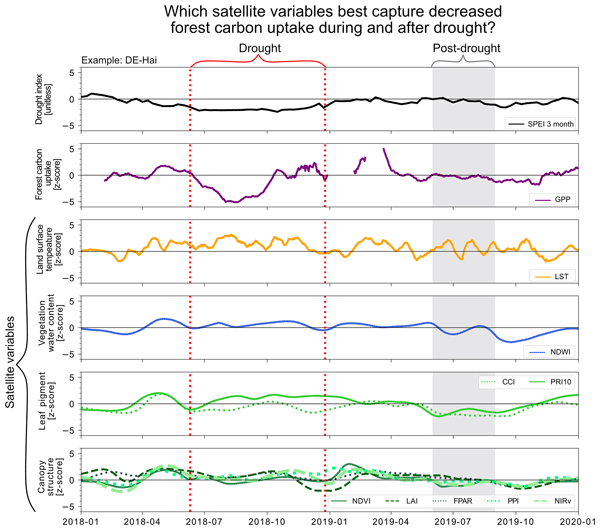
Julia Kelly, Tim Schacherl, Lars Eklundh, Hongxiao Jin, Anne Klosterhalfen, Alexander Knohl, and Natascha Kljun
Biogeosciences, 23, 6557–6582, https://doi.org/10.5194/bg-23-6557-2026, https://doi.org/10.5194/bg-23-6557-2026, 2026
Short summary
Short summary
It is vital to monitor drought-related reductions in forest productivity over large areas. We tested the ability of 12 satellite variables to capture negative drought impacts on forest productivity across 18 European forest sites. Surface temperature worked best across all forest sites and droughts. After drought, forest productivity recovered faster than some commonly-used satellite variables, meaning use of these variables may underestimate forests’ resilience to drought.
José Ángel Callejas-Rodelas, Justus G. V. van Ramshorst, Alexander Knohl, Sarah Choe, Maren Langhof, and Christian Markwitz
EGUsphere, https://doi.org/10.5194/egusphere-2026-4973, https://doi.org/10.5194/egusphere-2026-4973, 2026
This preprint is open for discussion and under review for Biogeosciences (BG).
Short summary
Short summary
Temperate agroforestry systems took up more carbon dioxide than reference, conventional open cropland or grassland systems, without consuming more water from the soil. These findings are promising because they promote the implementation of agroforestry as a nature-based strategy to mitigate greenhouse gas emissions, and therefore climate change, in agricultural systems.
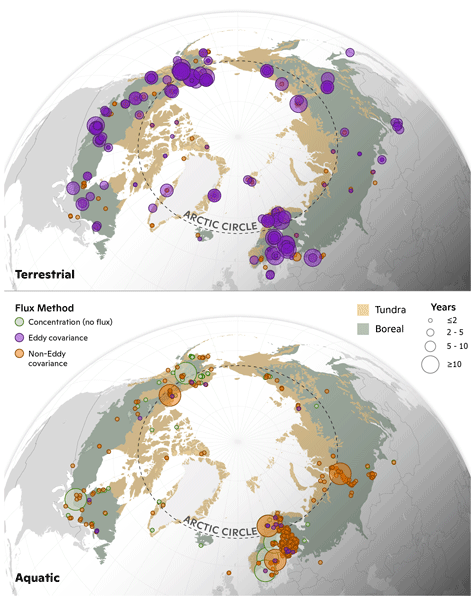
Anna-Maria Virkkala, Isabel Wargowsky, Judith Vogt, McKenzie A. Kuhn, Simran Madaan, Tiffany Windholz, Kyle A. Arndt, Gerard Rocher-Ros, Mathias Göckede, David Olefeldt, Edward A. G. Schuur, David Bastviken, Richard O'Keefe, Brendan M. Rogers, Jennifer D. Watts, Kelcy Kent, Kristoffer Aalstad, Kelly Aho, Joonatan Ala-Könni, Haley Alcock, Inge Althuizen, Christopher D. Arp, Jun Asanuma, Mika Aurela, Sivakiruthika Balathandayuthabani, Katrin Attermeyer, Alan Barr, Maialen Barret, Ochirbat Batkhishig, Christina Biasi, Mats P. Björkman, Andrew Black, Elena Blanc-Betes, Pascal Bodmer, Julia Boike, Abdullah Bolek, Frédéric Bouchard, Ingeborg Bussmann, Lea Cabrol, Eleonora Canfora, Sean Carey, Karel Castro-Morales, Namyi Chae, Andreas Christen, Torben R. Christensen, Casper T. Christiansen, Housen Chu, Graham Clark, Francois Clayer, Patrick Crill, Christopher Cunada, Scott J. Davidson, Joshua F. Dean, Sigrid Dengel, Matteo Detto, Catherine Dieleman, Florent Domine, Egor Dyukarev, Colin Edgar, Bo Elberling, Craig A. Emmerton, Eugenie Euskirchen, Grant Falvo, Thomas Friborg, Michelle Garneau, Mariasilvia Giamberini, Mikhail V. Glagolev, Miquel A. Gonzalez-Meler, Gustaf Granath, Jón Guðmundsson, Konsta Happonen, Yoshinobu Harazono, Lorna Harris, Josh Hashemi, Nicholas Hasson, Janna Heerah, Liam Heffernan, Manuel Helbig, Warren Helgason, Michal Heliasz, Greg Henry, Geert Hensgens, Tetsuya Hiyama, Beth Holmes, Macall Hock, David Holl, Jutta Holst, Thomas Holst, Gabriel Hould-Gosselin, Elyn Humphreys, Jacqueline Hung, Jussi Huotari, Hiroki Ikawa, Danil V. Ilyasov, Mamoru Ishikawa, Go Iwahana, Hiroki Iwata, Marcin Antoni Jackowicz-Korczynski, Joachim Jansen, Järvi Järveoja, Vincent E. J. Jassey, Rasmus Jensen, Katharina Jentzsch, Robert G. Jespersen, Carl-Fredrik Johannesson, Cheristy P. Jones, Anders Jonsson, Ji Young Jung, Sari Juutinen, Evan Kane, Jan Karlsson, Sergey Karsanaev, Kuno Kasak, Julia Kelly, Kasha Kempton, Marcus Klaus, George W. Kling, Natascha Kljun, Jacqueline Knutson, Hideki Kobayashi, John Kochendorfer, Kukka-Maaria Kohonen, Pasi Kolari, Mika Korkiakoski, Aino Korrensalo, Pirkko Kortelainen, Egle Koster, Kajar Koster, Ayumi Kotani, Praveena Krishnan, Juliya Kurbatova, Lars Kutzbach, Min Jung Kwon, Ethan D. Kyzivat, Jessica Lagroix, Theodore Langhorst, Elena Lapshina, Tuula Larmola, Klaus S. Larsen, Isabelle Laurion, Justin Ledman, Hanna Lee, A. Joshua Leffler, Lance Lesack, Anders Lindroth, David Lipson, Annalea Lohila, Efrén López-Blanco, Vincent L. St. Louis, Erik Lundin, Miska Luoto, Takashi Machimura, Marta Magnani, Avni Malhotra, Marja Maljanen, Ivan Mammarella, Elisa Männistö, Luca Belelli Marchesini, Phil Marsh, Pertti J. Martikainen, Maija E. Marushchak, Mikhail Mastepanov, Alex Mavrovic, Trofim Maximov, Christina Minions, Daniel F. Nadeau, Marco Montemayor, Tomoaki Morishita, Patrick Murphy, Erin Nicholls, Mats B. Nilsson, Anastasia Niyazova, Jenni Nordén, Koffi Dodji Noumonvi, Hannu Nykänen, Walter Oechel, Anne Ojala, Tomohiro Okadera, Sujan Pal, Alexey V. Panov, Tim Papakyriakou, Dario Papale, Sang-Jong Park, Frans-Jan W. Parmentier, Gilberto Pastorello, Mike Peacock, Matthias Peichl, Roman Petrov, Kyra St. Pierre, Norbert Pirk, Jessica Plein, Vilmantas Preskienis, Anatoly Prokushkin, Jukka Pumpanen, Hilary A. Rains, Niklas Rakos, Aleksi Räsänen, Helena Rautakoski, Riikka Rinnan, Janne Rinne, Adrian Rocha, Nigel Roulet, Alexandre Roy, Anna Rutgersson, Aleksandr F. Sabrekov, Torsten Sachs, Erik Sahlée, Alejandro Salazar, Henrique Oliveira Sawakuchi, Christopher Schulze, Roger Seco, Armando Sepulveda-Jauregui, Svetlana Serikova, Abbey Serrone, Hanna M. Silvennoinen, Sofie Sjogersten, June Skeeter, Jo Snöälv, Sebastian Sobek, Oliver Sonnentag, Emily H. Stanley, Maria Strack, Lena Strom, Patrick Sullivan, Ryan Sullivan, Anna Sytiuk, Torbern Tagesson, Pierre Taillardat, Julie Talbot, Suzanne E. Tank, Mario Tenuta, Irina Terenteva, Frederic Thalasso, Antoine Thiboult, Halldor Thorgeirsson, Fenix Garcia Tigreros, Margaret Torn, Amy Townsend-Small, Claire Treat, Alain Tremblay, Carlo Trotta, Eeva-Stiina Tuittila, Merritt Turetsky, Masahito Ueyama, Muhammad Umair, Aki Vähä, Lona van Delden, Maarten van Hardenbroek, Andrej Varlagin, Ruth K. Varner, Tarmo Virtanen, Elena Veretennikova, Timo Vesala, Carolina Voigt, Jorien E. Vonk, Robert Wagner, Katey Walter Anthony, Qinxue Wang, Masataka Watanabe, Hailey Webb, Jeffrey M. Welker, Andreas Westergaard-Nielsen, Sebastian Westermann, Jeffrey R. White, Christian Wille, Scott N. Williamson, Scott Zolkos, Donatella Zona, and Susan M. Natali
Earth Syst. Sci. Data, 18, 6357–6409, https://doi.org/10.5194/essd-18-6357-2026, https://doi.org/10.5194/essd-18-6357-2026, 2026
Short summary
Short summary
This dataset includes monthly measurements of carbon dioxide and methane exchange between land, water, and the atmosphere from over 1000 sites in Arctic and boreal regions. It combines measurements from a variety of ecosystems, including wetlands, forests, tundra, lakes, and rivers, gathered by over 260 researchers from 1984–2024. This dataset can be used to improve and reduce uncertainty in carbon budgets in order to strengthen our understanding of climate feedbacks in a warming world.
Yarê Baker, Veronica Geretti, Sungah Kang, Rongrong Wu, Hui Wang, Quanfu He, Thorsten Hohaus, Annika Zanders, Mathias Bachner, Cheng Wu, Thomas J. Bannan, Simon P. O'Meara, Aristeides Voliotis, Mattias Hallquist, Gordon McFiggans, Sören R. Zorn, and Thomas F. Mentel
EGUsphere, https://doi.org/10.5194/egusphere-2026-4788, https://doi.org/10.5194/egusphere-2026-4788, 2026
Short summary
Short summary
Highly oxygenated molecules (HOMs) are important contributors to global organic aerosol production. The production of HOMs is based on the reaction pathways of peroxy radicals (RO2). In this work we systematically varied available RO2 reaction partners in a-pinene photooxidation experiments in an atmospheric simulation chamber. The results show which factors impact HOM formation and volatility and offer a mechanistic framework for interpreting laboratory and atmospheric observations.
Duong H. Do, Astrid Kerkweg, Yarê Baker, Birger Bohn, Hendrik Fuchs, Quanfu He, Thorsten Hohaus, Sungah Kang, Timo Kirfel, Finja Löher, Niklas Diepenthal, Anke C. Nölscher, Anna Novelli, Alexander Pschera, Felix Wieser, Sören R. Zorn, Andreas Wahner, and Domenico Taraborrelli
EGUsphere, https://doi.org/10.5194/egusphere-2026-4522, https://doi.org/10.5194/egusphere-2026-4522, 2026
This preprint is open for discussion and under review for Geoscientific Model Development (GMD).
Short summary
Short summary
This work builds a chamber simulation tool that mimics how air chemistry changes inside laboratory reactors, including injected gases, changing light, gas and liquid reactions, wall effects, and dilution. Tests in several chambers reproduced measured changes in reactive species, nitrogen compounds, and ozone, and helped capture how organic particles form. The same chemistry can be reused in larger, global air simulations to assess real-world impact.
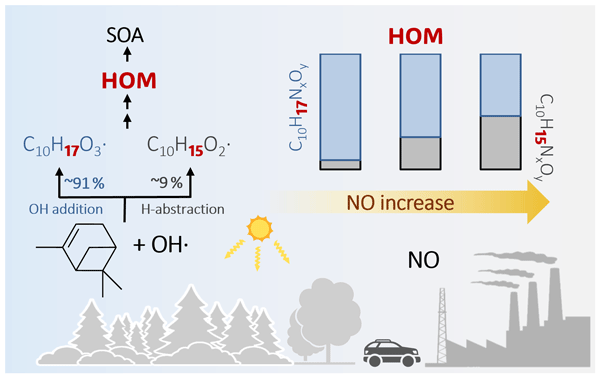
Hui Wang, Hongru Shen, Defeng Zhao, Sungah Kang, Rongrong Wu, Yarê Baker, Quanfu He, Annika Zanders, Mathias Bachner, Douglas R. Worsnop, Thorsten Hohaus, Thomas F. Mentel, and Sören R. Zorn
Atmos. Chem. Phys., 26, 11153–11169, https://doi.org/10.5194/acp-26-11153-2026, https://doi.org/10.5194/acp-26-11153-2026, 2026
Short summary
Short summary
Chamber simulations were conducted to investigate formation of highly oxygenated organic molecules (HOM) from OH-initiated α-pinene oxidation under varying NO levels, with emphasis on the hydrogen-abstraction pathway. Without NO, C10H17Oₓ· species dominated. With NO, C10H15Oₓ· products became more abundant, accounting for ~34 % at high NO levels. Clustering results and comparison with α-pinene and pinonaldehyde systems show that hydrogen-abstraction is likely the source of C10H15Oₓ·-related HOM.
Ida Bagus Mandhara Brasika, Pierre Friedlingstein, Stephen Sitch, Michael O'Sullivan, Maria Carolina Duran-Rojas, Emma W. Littleton, Toby R. Marthews, Timothy Hill, Wei Li, Yidi Xu, Jiaxin Zhou, Xiangzhong Luo, Ruiying Zhao, Yuanchao Fan, Dedy Sukmara, Timer Manurung, Masayuki Kondo, Alexander Knohl, Tejaswini Jaajpera, and Lisma Safitri
EGUsphere, https://doi.org/10.5194/egusphere-2026-3689, https://doi.org/10.5194/egusphere-2026-3689, 2026
This preprint is open for discussion and under review for Geoscientific Model Development (GMD).
Short summary
Short summary
Oil palm is a major crop in Indonesia, but climate models often treat it as generic cropland. We developed a new way to represent oil palm in the Joint UK Land Environment Simulator. This improved how the model captures carbon stored and released by oil-palm plantations. The work helps estimate emissions from land-use change more realistically, supporting better understanding of tropical agriculture, deforestation and climate impacts.
Erin F. Katz, Caleb M. Arata, Eva Y. Pfannerstill, Robert J. Weber, Haley Byrne, Michael J. Milazzo, Samuel J. Cliff, Joshua Apte, and Allen H. Goldstein
EGUsphere, https://doi.org/10.5194/egusphere-2026-4147, https://doi.org/10.5194/egusphere-2026-4147, 2026
Short summary
Short summary
Volatile organic compounds (VOCs) are precursors to urban air pollution. We measured VOC emissions in a major North American urban area and identified the dominant sources of four abundant compounds: ethanol, methanol, acetaldehyde, and acetone. Cooking and consumer products (e.g., solvents) were the primary sources, showing that these emissions play a larger role in urban air quality than previously thought.
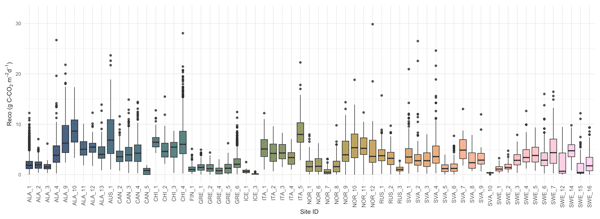
Sarah Schwieger, Jan Dietrich, Mats P. Björkman, Judith M. Sarneel, Bowen Li, Joel White, Inge H. J. Althuizen, Christina Biasi, Robert G. Björk, Hanna Böhner, Brage Bremset Hansen, Michele Carbognani, Giorgio Chiari, Casper T. Christiansen, Elisabeth J. Cooper, Hans Cornelissen, Ludovica D'Imperio, Ellen Dorrepaal, Bo Elberling, Patrick Faubert, Ned Fetcher, T'ai G. W. Forte, Joseph Gaudard, Konstantin Gavazov, Zhen-Huan Guan, Jón Guðmundsson, Siri V. Haugum, Jin-Sheng He, Caitlin Hicks Pries, Mark Hovenden, Simone I. Lang, Gus Jespersen, Ingibjörg S. Jónsdóttir, Ji Young Jung, Olga Khitun, Birgitte Kortegaard Danielsen, Richard Lamprecht, Mathilde Le Moullec, Hanna Lee, Maija E. Marushchak, Anders Michelsen, Tariq Munir, Eero Myrsky, Kevin K. Newsham, Marion Nyberg, Steven F. Oberbauer, Paulo Olivas, Johan Olofsson, Hlynur Óskarsson, Thomas C. Parker, Matteo Petit Bon, Alessandro Petraglia, Emily Pickering Pedersen, Katrine Raundrup, Nynne R. Ravn, Riikka Rinnan, Heidi Rodenhizer, Ingvild Ryde, Alejandro Salazar, Niels M. Schmidt, Ted Schuur, Sofie Sjögersten, Cecilie Skov Nielsen, Sari Stark, Maria Strack, Jianwu Tang, Sylvia Toet, Anne Tolvanen, Maria Väisänen, Richard Van Logtestijn, Vigdis Vandvik, Carolina Voigt, Josefine Walz, Jeffrey M. Welker, Yuanhe Yang, Henni Ylänne, and Sybryn L. Maes
Earth Syst. Sci. Data, 18, 4965–4982, https://doi.org/10.5194/essd-18-4965-2026, https://doi.org/10.5194/essd-18-4965-2026, 2026
Short summary
Short summary
Arctic and alpine tundra ecosystems are warming rapidly, yet measurements of ecosystem CO₂ respiration remain limited. We compile in situ respiration measurements from warming experiments across 64 Arctic and alpine tundra sites. By integrating fluxes with climate, vegetation, and soil data, this database improves understanding and prediction of how tundra carbon cycling responds to climate warming and feeds back to the climate system.
Yuwei Wang, Aristeidis Voliotis, Emily Matthews, Rongrong Wu, Milan Roska, Max Gerrit Adam, René Dubus, Lukas Kesper, Franz Rohrer, Robert Wegener, Benjamin Winter, Kelvin H. Bates, Quanfu He, Thorsten Hohaus, Achim Grasse, Ralf Tillmann, Andreas Wahner, Hui Wang, Christian Wesolek, Sergej Wedel, Yizhen Wu, Sören R. Zorn, Manjula Canagaratna, Douglas Worsnop, Felipe Lopez-Hilfiker, Georgios I. Gkatzelis, Hugh Coe, and Thomas J. Bannan
Atmos. Meas. Tech., 19, 4583–4599, https://doi.org/10.5194/amt-19-4583-2026, https://doi.org/10.5194/amt-19-4583-2026, 2026
Short summary
Short summary
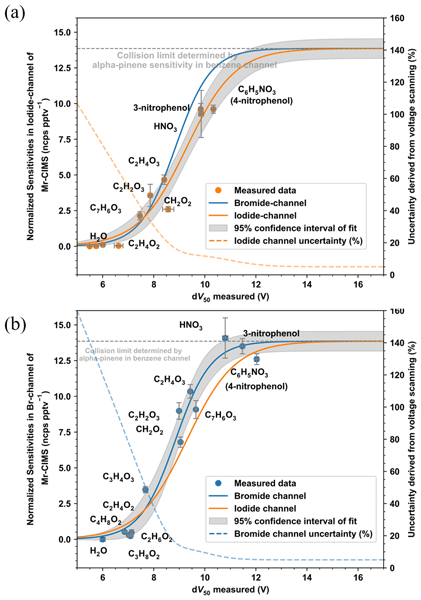
This work developed voltage scanning based calibration approach for a multi-reagent chemical ionization mass spectrometry. This approach improves sensitivity determination for gas-phase compounds. It does not require a calibrant for the target analyte and can estimate sensitivity with acceptable uncertainty based on the experimentally established relationship between binding energies and measured sensitivities. This work is broadly relevant to mass-spectrometric calibration strategies.
Julian Weng, Yufang Hao, Benjamin T. Brem, Tianqu Cui, Peeyush Khare, Lubna Dada, Kaspar R. Daellenbach, Sophie Darfeuil, Gaëlle Uzu, Jean-Luc Jaffrezo, Martin Steinbacher, Stefan Reimann, Thaleia Gkraikou, Konstantina Oikonomou, Jean Sciare, Martine Collaud Coen, Claudia Mohr, Andre S. H. Prévôt, Martin Gysel-Beer, Imad El Haddad, and Patrik Winiger
EGUsphere, https://doi.org/10.5194/egusphere-2026-3660, https://doi.org/10.5194/egusphere-2026-3660, 2026
Short summary
Short summary
Long-term observations at the Jungfraujoch High Altitude Research Station show that, alongside air mass transport, sustained oxidative processing shaped by atmospheric water vapor plays a central role in driving aerosol loading and composition. Combining detailed aerosol chemical characterization with process-level insights, we provide important observational benchmarks for improving atmospheric model performance in the remote free troposphere, where uncertainties remain particularly high.
Ramiyou Karim Mache, Sabine Schröder, Michael Langguth, Ankit Patnala, and Martin G. Schultz
Geosci. Model Dev., 19, 5765–5779, https://doi.org/10.5194/gmd-19-5765-2026, https://doi.org/10.5194/gmd-19-5765-2026, 2026
Short summary
Short summary
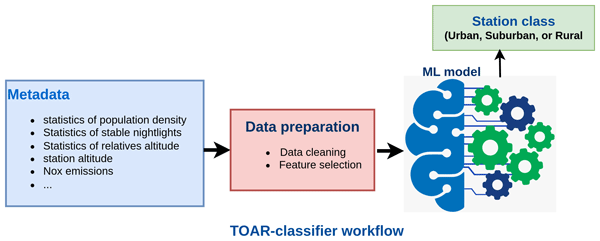
The TOAR-classifier model is a data-driven tool that allows for an objective classification of air quality measuring stations as urban, rural, or suburban. Such classification is important in the analysis of air pollutant trends and regional signatures. The model is employed in the second Tropospheric Ozone Assessment Report but can also be used in other research work.
Hendrik Fuchs, Niklas Illmann, Amalia Muñoz, Mila Ródenas, Bénédicte Picquet-Varrault, M. Rami Alfarra, Cecilia Arsene, Iustinian G. Bejan, David M. Bell, Merete Bilde, Alexander Böhmländer, Mixtli Campos-Pineda, Mathieu Cazaunau, Patrice Coll, Véronique Daële, Claudia Di Biagio, Michael Flynn, Paola Formenti, Hartmut Herrmann, Kristina Höhler, Thorsten Hohaus, Matthew S. Johnson, Eija Juurola, Niku Kivekäs, Jan Kaiser, Christos Kaltsonoudis, Paolo Laj, Dario Massabò, Federico Mazzei, Gordon McFiggans, Max R. McGillen, Abdelwahid Mellouki, Peter Mettke, Ottmar Möhler, Falk Mothes, Dennis Niedermeier, Anna Novelli, Romeo I. Olariu, Spyros N. Pandis, Iulia Patroescu-Klotz, Rosa Maria Petracca Altieri, Paolo Prati, Claudiu Roman, Albert A. Ruth, Harald Saathoff, Silvio Schmalfuß, Frank Stratmann, Virginia Vernocchi, Aristeidis Voliotis, Jens Voigtländer, Annele Virtanen, Andreas Wahner, Robert Wagner, John Wenger, Sören Zorn, Peter Wiesen, and Jean-Francois Doussin
Atmos. Meas. Tech., 19, 4165–4199, https://doi.org/10.5194/amt-19-4165-2026, https://doi.org/10.5194/amt-19-4165-2026, 2026
Short summary
Short summary
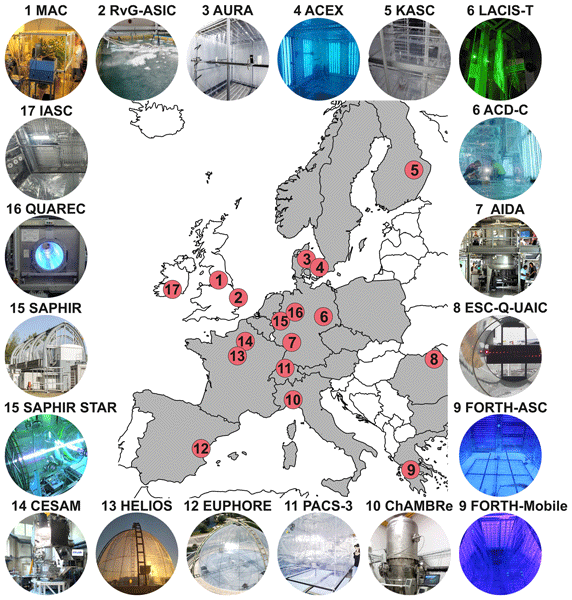
Atmospheric simulation chambers enable experiments to be conducted under controlled conditions, improving our understanding of, and ability to predict, changes in the composition of the atmosphere. This is important for assessing air quality and its effects on human health, climate, the environment, and the economy. This paper describes the chambers of the European ACTRIS research infrastructure and discusses topics and directions that can be addressed in future chamber experiments.
Farhan R. Nursanto, Quanfu He, Sophia van de Wouw, Annika Zanders, Thorsten Hohaus, Willem S. J. Kroese, Robert Wegener, Max Gerrit Adam, Benjamin Winter, René Dubus, Lukas Kesper, Franz Rohrer, Yuwei Wang, Emily Matthews, Aristeidis Voliotis, Thomas J. Bannan, Gordon McFiggans, Hugh Coe, Yizhen Wu, Milan Roska, Manjula Canagaratna, Mitch Alton, Matthew M. Coggon, Chelsea E. Stockwell, Kelvin H. Bates, Eva Y. Pfannerstill, Sören R. Zorn, Hui Wang, Matthieu Riva, Sebastien Perrier, Boxing Yang, Lu Liu, Anna Novelli, Michelle Färber, Hendrik Fuchs, Andrea Carolina Marcillo Lara, Achim Grasse, Christian Wesolek, Ralf Tillmann, Rupert Holzinger, Maarten C. Krol, Georgios I. Gkatzelis, and Juliane L. Fry
Atmos. Chem. Phys., 26, 8425–8453, https://doi.org/10.5194/acp-26-8425-2026, https://doi.org/10.5194/acp-26-8425-2026, 2026
Short summary
Short summary
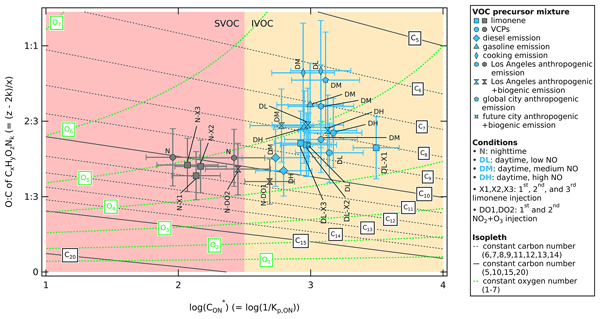
Urban air contains reactive gases that can form organic nitrate particles and carry nitrogen oxides pollution far from cities. We recreated urban emissions in a large atmospheric chamber and observed their reactions under day and night conditions. We found that these emissions form organic nitrate particles similar to those from natural sources, with higher amounts and heavier particles at night, making nitrogen pollution longer lived and likely to travel further before depositing on ecosystems.
Julieta F. Juncosa Calahorrano, Dylan B. Millet, Kelley C. Wells, Chengyuan Hu, Jared F. Brewer, Vivienne H. Payne, Wade Permar, Lu Hu, Amy P. Sullivan, I.-Ting Ku, Emily V. Fischer, Vanessa Selimovic, Kanako Sekimoto, Aaron Lamplugh, Georgios Gkatzelis, Jessica B. Gilman, Matthew Coggon, and Carsten Warneke
EGUsphere, https://doi.org/10.5194/egusphere-2026-1669, https://doi.org/10.5194/egusphere-2026-1669, 2026
Short summary
Short summary
We use thermal infrared satellite observations to study trace gases emitted by fires. We observe large enhancements in smoke and strong relationships among key species. These relationships are consistent with aircraft observations but show greater variability than models predict. This variability is linked to pyrolysis temperatures within fires. Our results show satellite data can improve understanding of fire processes and help refine emission parameterizations in models.
Sindhu Vasireddy, Michael Langguth, and Martin Schultz
EGUsphere, https://doi.org/10.5194/egusphere-2026-1562, https://doi.org/10.5194/egusphere-2026-1562, 2026
Short summary
Short summary
This study evaluates a transformer model for hourly air quality forecasting using past pollution, weather, and anthropogenic metadata (emissions, land use). It outperforms Copernicus Atmosphere Monitoring Service forecasts, especially in urban regions, with lower bias and improved stability. Trained in Germany, it transfers to South Korea with minimal adaptation, preserving geochemical relationships and showing strong cross-regional generalization.
Beatriz P. Cazorla, Ana Meijide, Javier Cabello, Julio Peñas, Javier Martínez-López, Rodrigo Vargas, Leonardo Montagnani, Alexander Knohl, Lukas Siebicke, Benimiano Gioli, Jiří Dušek, Ladislav Šigut, Andreas Ibrom, Georg Wohlfahrt, Eugénie Paul-Limoges, Kathrin Fuchs, Antonio Manco, Marian Pavelka, Lutz Merbold, Lukas Hörtnagl, Pierpaolo Duce, Ignacio Goded, Kim Pilegaard, and Domingo Alcaraz-Segura
Biogeosciences, 23, 1223–1243, https://doi.org/10.5194/bg-23-1223-2026, https://doi.org/10.5194/bg-23-1223-2026, 2026
Short summary
Short summary
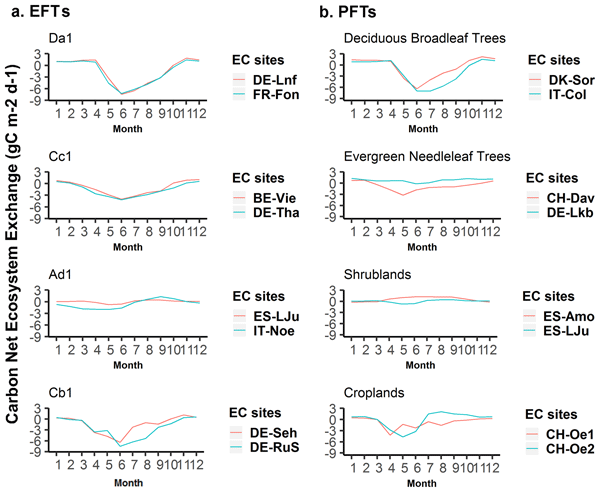
We assess whether satellite-derived Ecosystem Functional Types (EFTs) reflect spatial heterogeneity in carbon fluxes across Europe. Using Eddy Covariance data from 50 sites, we show that EFTs capture distinct Net Ecosystem Exchange dynamics and perform slightly better than Plant Functional Types (PFTs). EFTs offer a scalable, annually updatable approach to monitor ecosystem functioning and its interannual variability.
José Ángel Callejas-Rodelas, Justus van Ramshorst, Alexander Knohl, Lukas Siebicke, Dietmar Fellert, Marek Peksa, Dirk Böttger, and Christian Markwitz
Earth Syst. Sci. Data, 18, 845–874, https://doi.org/10.5194/essd-18-845-2026, https://doi.org/10.5194/essd-18-845-2026, 2026
Short summary
Short summary
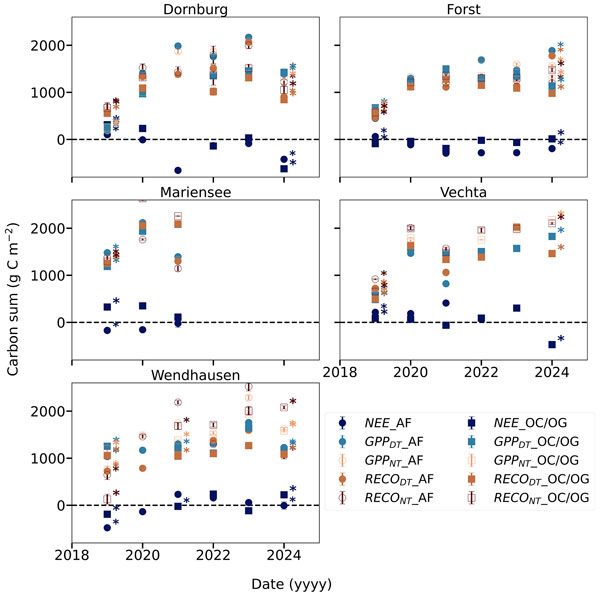
A dataset expanding around seventy eight site-years was compiled, harmonized and presented. The dataset consisted in eddy covariance and meteorological measurements over four pairs of agroforestry and open cropland systems, and one pair of agroforestry and open grassland system. This is the first ever dataset compiling this type of data over temperate agroforestry systems.
Susanne M. C. Scholz, Vlassis A. Karydis, Georgios I. Gkatzelis, Hendrik Fuchs, Spyros N. Pandis, and Alexandra P. Tsimpidi
Geosci. Model Dev., 18, 10119–10142, https://doi.org/10.5194/gmd-18-10119-2025, https://doi.org/10.5194/gmd-18-10119-2025, 2025
Short summary
Short summary
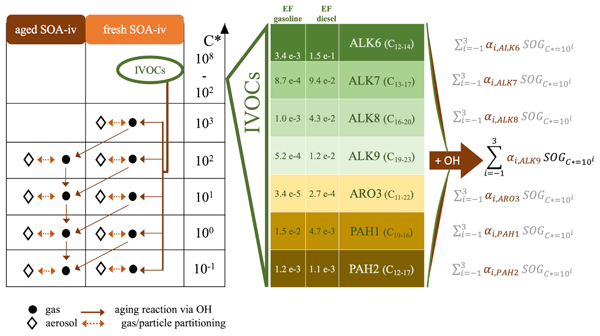
We studied how pollution from cars and trucks contributes to tiny airborne particles that affect air quality and climate. These particles, called secondary organic aerosols, were often underestimated in global models. By improving how certain overlooked emissions from fuel use are represented in our model, we found that their impact is much larger than previously thought. Our results suggest that road traffic plays a far greater role in global air pollution than earlier estimates showed.
Joseph O. Palmo, Colette L. Heald, Donald R. Blake, Ilann Bourgeois, Matthew Coggon, Jeff Collett, Frank Flocke, Alan Fried, Georgios Gkatzelis, Samuel Hall, Lu Hu, Jose L. Jimenez, Pedro Campuzano-Jost, I-Ting Ku, Benjamin Nault, Brett Palm, Jeff Peischl, Ilana Pollack, Amy Sullivan, Joel Thornton, Carsten Warneke, Armin Wisthaler, and Lu Xu
Atmos. Chem. Phys., 25, 17107–17124, https://doi.org/10.5194/acp-25-17107-2025, https://doi.org/10.5194/acp-25-17107-2025, 2025
Short summary
Short summary
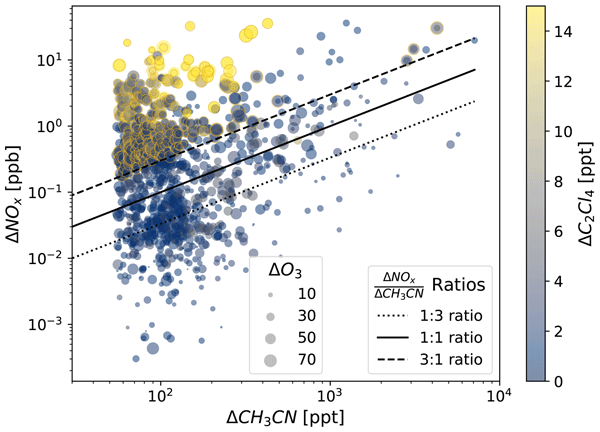
This study investigates ozone production within wildfire smoke plumes as they age, using both aircraft observations and models. We find that the chemical environment and resulting ozone production within smoke changes as plumes evolve, with implications for climate and public health.
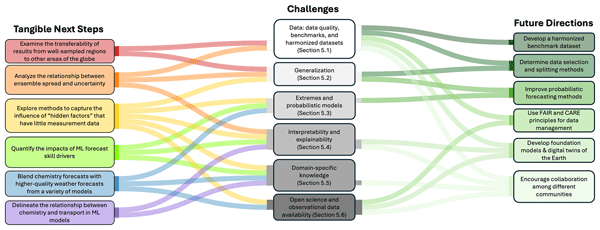
Sebastian H. M. Hickman, Makoto M. Kelp, Paul T. Griffiths, Kelsey Doerksen, Kazuyuki Miyazaki, Elyse A. Pennington, Gerbrand Koren, Fernando Iglesias-Suarez, Martin G. Schultz, Kai-Lan Chang, Owen R. Cooper, Alex Archibald, Roberto Sommariva, David Carlson, Hantao Wang, J. Jason West, and Zhenze Liu
Geosci. Model Dev., 18, 8777–8800, https://doi.org/10.5194/gmd-18-8777-2025, https://doi.org/10.5194/gmd-18-8777-2025, 2025
Short summary
Short summary
Machine learning is being more widely used across environmental and climate science. This work reviews the use of machine learning in tropospheric ozone research, focusing on three main application areas in which significant progress has been made. Common challenges in using machine learning across the three areas are highlighted, and future directions for the field are indicated.
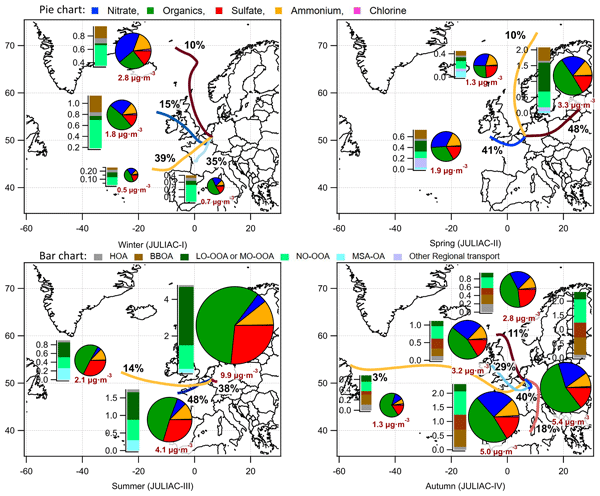
Lu Liu, Thorsten Hohaus, Andreas Hofzumahaus, Frank Holland, Hendrik Fuchs, Ralf Tillmann, Birger Bohn, Stefanie Andres, Zhaofeng Tan, Franz Rohrer, Vlassis A. Karydis, Vaishali Vardhan, Philipp Franke, Anne C. Lange, Anna Novelli, Benjamin Winter, Changmin Cho, Iulia Gensch, Sergej Wedel, Andreas Wahner, and Astrid Kiendler-Scharr
Atmos. Chem. Phys., 25, 16189–16213, https://doi.org/10.5194/acp-25-16189-2025, https://doi.org/10.5194/acp-25-16189-2025, 2025
Short summary
Short summary
We measured air particles at a rural site in Germany over a year to understand how their sources and properties change with the seasons. Particles from natural sources peaked in summer, especially during heatwaves, while those from burning activities like residential heating and wildfires dominated in colder months. Winds carrying air from other regions also influenced particle levels. These findings link air quality to climate change and energy transitions.
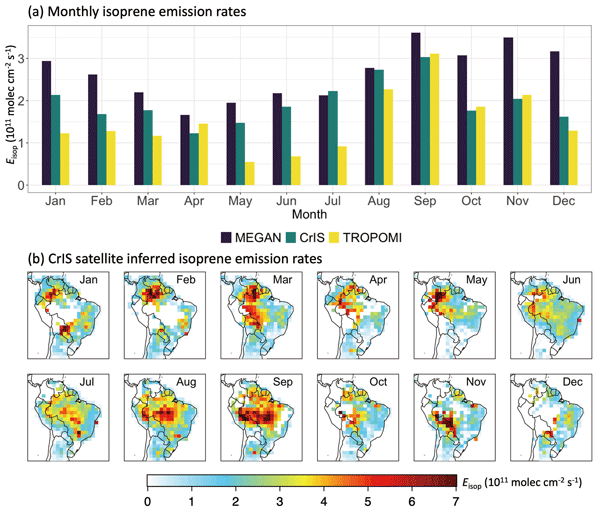
Shihan Sun, Paul I. Palmer, Richard Siddans, Brian J. Kerridge, Lucy Ventress, Achim Edtbauer, Akima Ringsdorf, Eva Y. Pfannerstill, and Jonathan Williams
Atmos. Chem. Phys., 25, 15801–15818, https://doi.org/10.5194/acp-25-15801-2025, https://doi.org/10.5194/acp-25-15801-2025, 2025
Short summary
Short summary
Isoprene released by plants can impact atmospheric chemistry and climate. The Amazon rainforest is a major source of isoprene. We derived isoprene emissions using satellite retrievals of isoprene columns and a chemical transport model. We evaluated our isoprene emission estimates using ground-based isoprene observations and satellite retrievals of formaldehyde. We found that using satellite retrievals of isoprene can help us better understand isoprene emissions over the Amazon.
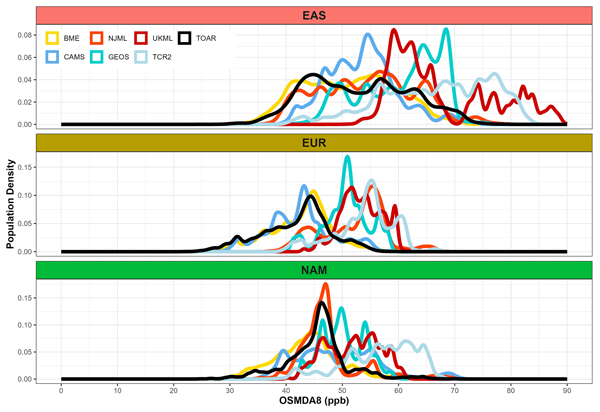
Hantao Wang, Kazuyuki Miyazaki, Haitong Zhe Sun, Zhen Qu, Xiang Liu, Antje Inness, Martin Schultz, Sabine Schröder, Marc Serre, and J. Jason West
Atmos. Chem. Phys., 25, 15969–15990, https://doi.org/10.5194/acp-25-15969-2025, https://doi.org/10.5194/acp-25-15969-2025, 2025
Short summary
Short summary
We compare six datasets of global ground-level ozone, developed using geostatistical, machine learning, or reanalysis methods. The datasets show important differences from one another in ozone magnitude, greater than 5 ppb, and trends, globally and regionally. Compared with measurements, performance varies among datasets, and most overestimate ozone, particularly at lower concentrations. These differences among datasets highlight uncertainties for applications to health and other impacts.
Erin F. Katz, Caleb M. Arata, Eva Y. Pfannerstill, Robert J. Weber, Darian Ng, Michael J. Milazzo, Haley Byrne, Hui Wang, Alex B. Guenther, Camilo Rey-Sanchez, Joshua Apte, Dennis D. Baldocchi, and Allen H. Goldstein
Atmos. Chem. Phys., 25, 15281–15299, https://doi.org/10.5194/acp-25-15281-2025, https://doi.org/10.5194/acp-25-15281-2025, 2025
Short summary
Short summary
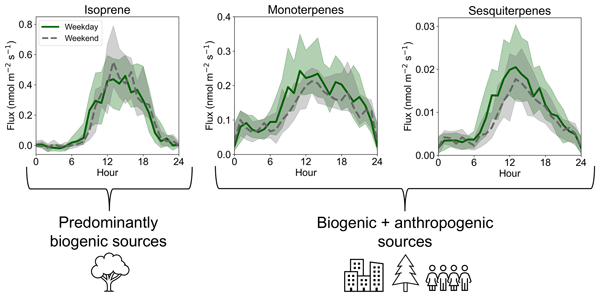
Terpenoids are organic gases that can originate from natural and human-caused sources, and their reactions in the atmosphere can cause air pollution. In this study, emissions of organic gases in an urban environment were measured. For some terpenoids, human-caused sources were responsible for about a quarter of the emissions, while others were predominantly from vegetation. This study contributes to a better understanding of urban emission sources and causes of air pollution.
Yugo Kanaya, Roberto Sommariva, Alfonso Saiz-Lopez, Andrea Mazzeo, Theodore K. Koenig, Kaori Kawana, James E. Johnson, Aurélie Colomb, Pierre Tulet, Suzie Molloy, Ian E. Galbally, Rainer Volkamer, Anoop Mahajan, John W. Halfacre, Paul B. Shepson, Julia Schmale, Hélène Angot, Byron Blomquist, Matthew D. Shupe, Detlev Helmig, Junsu Gil, Meehye Lee, Sean C. Coburn, Ivan Ortega, Gao Chen, James Lee, Kenneth C. Aikin, David D. Parrish, John S. Holloway, Thomas B. Ryerson, Ilana B. Pollack, Eric J. Williams, Brian M. Lerner, Andrew J. Weinheimer, Teresa Campos, Frank M. Flocke, J. Ryan Spackman, Ilann Bourgeois, Jeff Peischl, Chelsea R. Thompson, Ralf M. Staebler, Amir A. Aliabadi, Wanmin Gong, Roeland Van Malderen, Anne M. Thompson, Ryan M. Stauffer, Debra E. Kollonige, Juan Carlos Gómez Martin, Masatomo Fujiwara, Katie Read, Matthew Rowlinson, Keiichi Sato, Junichi Kurokawa, Yoko Iwamoto, Fumikazu Taketani, Hisahiro Takashima, Mónica Navarro-Comas, Marios Panagi, and Martin G. Schultz
Earth Syst. Sci. Data, 17, 4901–4932, https://doi.org/10.5194/essd-17-4901-2025, https://doi.org/10.5194/essd-17-4901-2025, 2025
Short summary
Short summary
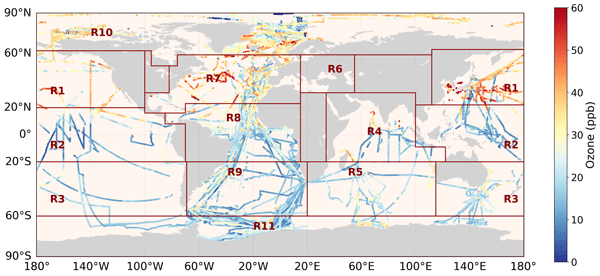
The first comprehensive dataset of tropospheric ozone over oceans/polar regions is presented, including 77 ship/buoy and 48 aircraft campaign observations (1977–2022, 0–5000 m altitude), supplemented by ozonesonde and surface data. Air masses isolated from land for 72+ hours are systematically selected as essentially oceanic. Among the 11 global regions, they show daytime decreases of 11–16 % in the tropics, while near-zero depletions are rare, unlike in the Arctic, implying different mechanisms.
José Ángel Callejas-Rodelas, Alexander Knohl, Ivan Mammarella, Timo Vesala, Olli Peltola, and Christian Markwitz
Biogeosciences, 22, 4507–4529, https://doi.org/10.5194/bg-22-4507-2025, https://doi.org/10.5194/bg-22-4507-2025, 2025
Short summary
Short summary
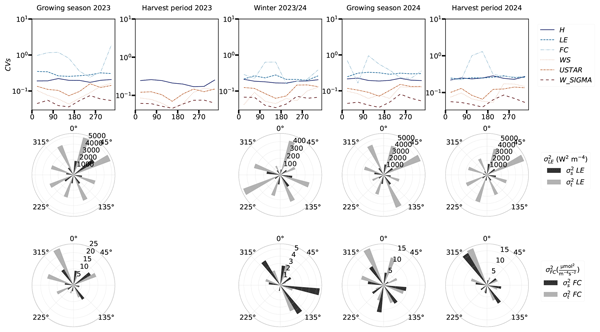
The spatial variability of CO2 and water vapour exchanges with the atmosphere was quantified above an agroforestry system and further compared to a monocropping system using a total of four eddy covariance stations. The variability of fluxes within the agroforestry site was found to be as large as the variability between agroforestry and monocropping site, induced by the heterogeneity of the site, which highlights the need for replicated measurements above such ecosystems.
Anni Hartikainen, Mika Ihalainen, Deeksha Shukla, Marius Rohkamp, Arya Mukherjee, Quanfu He, Sandra Piel, Aki Virkkula, Delun Li, Tuukka Kokkola, Seongho Jeong, Hanna Koponen, Uwe Etzien, Anusmita Das, Krista Luoma, Lukas Schwalb, Thomas Gröger, Alexandre Barth, Martin Sklorz, Thorsten Streibel, Hendryk Czech, Benedikt Gündling, Markus Kalberer, Bert Buchholz, Andreas Hupfer, Thomas Adam, Thorsten Hohaus, Johan Øvrevik, Ralf Zimmermann, and Olli Sippula
Atmos. Chem. Phys., 25, 9275–9294, https://doi.org/10.5194/acp-25-9275-2025, https://doi.org/10.5194/acp-25-9275-2025, 2025
Short summary
Short summary
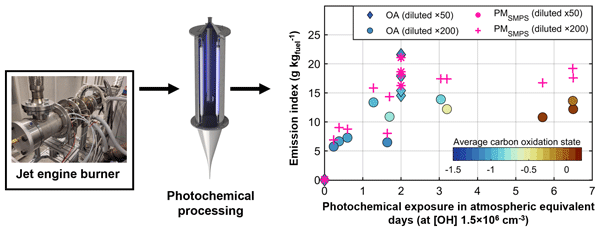
Photochemical reactions altered the properties of kerosene-operated jet engine burner exhaust emissions, which were studied in a laboratory using an oxidation flow reactor. Particle mass increased 300-fold as particles and gases became more oxidized. Light absorption increased, but the total direct radiative forcing efficiency was estimated to have shifted from positive to negative. The results highlight the importance of considering secondary aerosol formation when assessing the impacts of aviation.
Thorge Wintz, Alexander Röll, Gustavo Brant Paterno, Florian Ellsäßer, Delphine Clara Zemp, Hendrayanto, Bambang Irawan, Alexander Knohl, Holger Kreft, and Dirk Hölscher
EGUsphere, https://doi.org/10.5194/egusphere-2025-2596, https://doi.org/10.5194/egusphere-2025-2596, 2025
Short summary
Short summary
We investigated how the size and diversity of tree patches in Indonesian oil palm landscapes influence the movement of water to the atmosphere and local cooling. Our study shows that larger tree patches increase cooling mainly by supporting greater plant diversity and more complex vegetation structure. These findings suggest that expanding and diversifying tree patches can help manage microclimate and water cycling in agricultural areas.
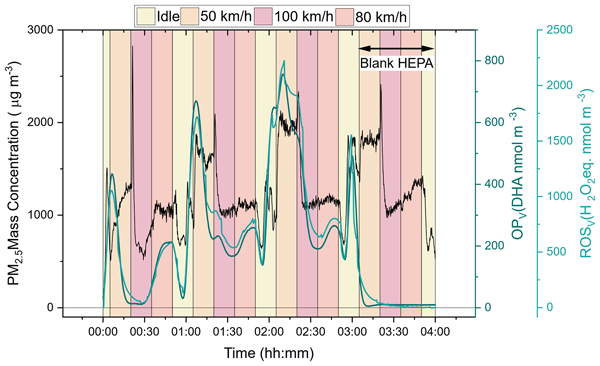
Battist Utinger, Alexandre Barth, Andreas Paul, Arya Mukherjee, Steven John Campbell, Christa-Maria Müller, Mika Ihalainen, Pasi Yli-Pirilä, Miika Kortelainen, Zheng Fang, Patrick Martens, Markus Somero, Juho Louhisalmi, Thorsten Hohaus, Hendryk Czech, Olli Sippula, Yinon Rudich, Ralf Zimmermann, and Markus Kalberer
Aerosol Research, 3, 205–218, https://doi.org/10.5194/ar-3-205-2025, https://doi.org/10.5194/ar-3-205-2025, 2025
Short summary
Short summary
The oxidative potential (OP) of air pollution particles might be a metric explaining particle toxicity. This study quantifies the OP of fresh and aged car and wood burning emission particles and explores how the OP changes over time, using novel high-temporal-resolution instruments. We show that emissions from wood burning are more toxic than car exhaust per unit particle mass, especially as they age in the atmosphere. We also calculate emission factors for the OP, which could help to improve air pollution policies.
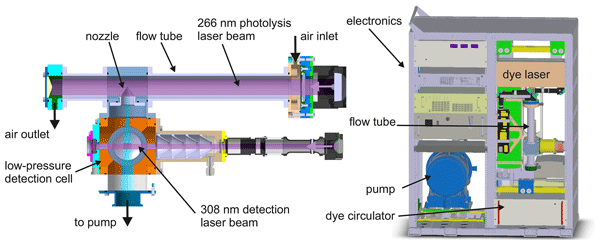
Hendrik Fuchs, Aaron Stainsby, Florian Berg, René Dubus, Michelle Färber, Andreas Hofzumahaus, Frank Holland, Kelvin H. Bates, Steven S. Brown, Matthew M. Coggon, Glenn S. Diskin, Georgios I. Gkatzelis, Christopher M. Jernigan, Jeff Peischl, Michael A. Robinson, Andrew W. Rollins, Nell B. Schafer, Rebecca H. Schwantes, Chelsea E. Stockwell, Patrick R. Veres, Carsten Warneke, Eleanor M. Waxman, Lu Xu, Kristen Zuraski, Andreas Wahner, and Anna Novelli
Atmos. Meas. Tech., 18, 881–895, https://doi.org/10.5194/amt-18-881-2025, https://doi.org/10.5194/amt-18-881-2025, 2025
Short summary
Short summary
Significant improvements have been made to the instruments used to measure OH reactivity, which is equivalent to the sum of air pollutant concentrations. Accurate and precise measurements with a high time resolution have been achieved, allowing use on aircraft, as demonstrated during flights in the USA.
Junwei Song, Georgios I. Gkatzelis, Ralf Tillmann, Nicolas Brüggemann, Thomas Leisner, and Harald Saathoff
Atmos. Chem. Phys., 24, 13199–13217, https://doi.org/10.5194/acp-24-13199-2024, https://doi.org/10.5194/acp-24-13199-2024, 2024
Short summary
Short summary
Biogenic volatile organic compounds (BVOCs) and organic aerosol (OA) particles were measured online in a stressed spruce-dominated forest. OA was mainly attributed to the monoterpene oxidation products. The mixing ratios of BVOCs were higher than the values previously measured in other temperate forests. The results demonstrate that BVOCs are influenced not only by meteorology and biogenic emissions but also by local anthropogenic emissions and subsequent chemical transformation processes.
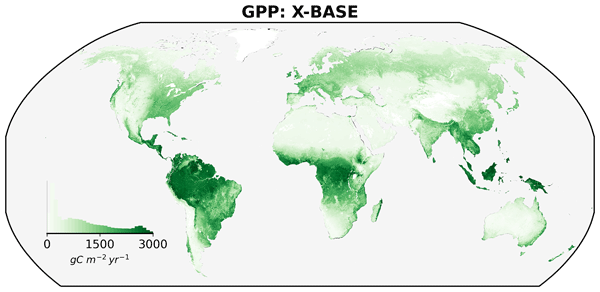
Jacob A. Nelson, Sophia Walther, Fabian Gans, Basil Kraft, Ulrich Weber, Kimberly Novick, Nina Buchmann, Mirco Migliavacca, Georg Wohlfahrt, Ladislav Šigut, Andreas Ibrom, Dario Papale, Mathias Göckede, Gregory Duveiller, Alexander Knohl, Lukas Hörtnagl, Russell L. Scott, Jiří Dušek, Weijie Zhang, Zayd Mahmoud Hamdi, Markus Reichstein, Sergio Aranda-Barranco, Jonas Ardö, Maarten Op de Beeck, Dave Billesbach, David Bowling, Rosvel Bracho, Christian Brümmer, Gustau Camps-Valls, Shiping Chen, Jamie Rose Cleverly, Ankur Desai, Gang Dong, Tarek S. El-Madany, Eugenie Susanne Euskirchen, Iris Feigenwinter, Marta Galvagno, Giacomo A. Gerosa, Bert Gielen, Ignacio Goded, Sarah Goslee, Christopher Michael Gough, Bernard Heinesch, Kazuhito Ichii, Marcin Antoni Jackowicz-Korczynski, Anne Klosterhalfen, Sara Knox, Hideki Kobayashi, Kukka-Maaria Kohonen, Mika Korkiakoski, Ivan Mammarella, Mana Gharun, Riccardo Marzuoli, Roser Matamala, Stefan Metzger, Leonardo Montagnani, Giacomo Nicolini, Thomas O'Halloran, Jean-Marc Ourcival, Matthias Peichl, Elise Pendall, Borja Ruiz Reverter, Marilyn Roland, Simone Sabbatini, Torsten Sachs, Marius Schmidt, Christopher R. Schwalm, Ankit Shekhar, Richard Silberstein, Maria Lucia Silveira, Donatella Spano, Torbern Tagesson, Gianluca Tramontana, Carlo Trotta, Fabio Turco, Timo Vesala, Caroline Vincke, Domenico Vitale, Enrique R. Vivoni, Yi Wang, William Woodgate, Enrico A. Yepez, Junhui Zhang, Donatella Zona, and Martin Jung
Biogeosciences, 21, 5079–5115, https://doi.org/10.5194/bg-21-5079-2024, https://doi.org/10.5194/bg-21-5079-2024, 2024
Short summary
Short summary
The movement of water, carbon, and energy from the Earth's surface to the atmosphere, or flux, is an important process to understand because it impacts our lives. Here, we outline a method called FLUXCOM-X to estimate global water and CO2 fluxes based on direct measurements from sites around the world. We go on to demonstrate how these new estimates of net CO2 uptake/loss, gross CO2 uptake, total water evaporation, and transpiration from plants compare to previous and independent estimates.
Justus G. V. van Ramshorst, Alexander Knohl, José Ángel Callejas-Rodelas, Robert Clement, Timothy C. Hill, Lukas Siebicke, and Christian Markwitz
Atmos. Meas. Tech., 17, 6047–6071, https://doi.org/10.5194/amt-17-6047-2024, https://doi.org/10.5194/amt-17-6047-2024, 2024
Short summary
Short summary
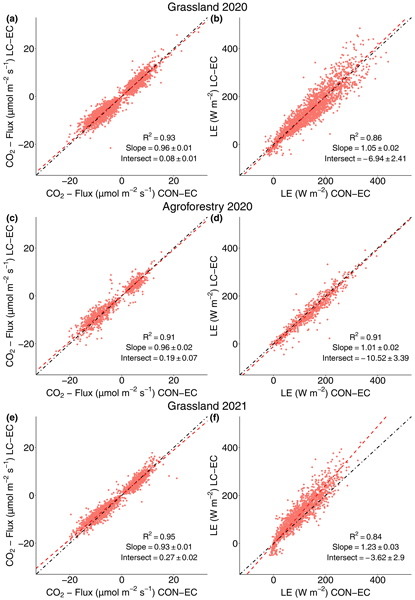
In this work we present experimental field results of a lower-cost eddy covariance (LC-EC) system, which can measure the ecosystem exchange of carbon dioxide and water vapour with the atmosphere. During three field campaigns on a grassland and agroforestry grassland, we compared the LC-EC with a conventional eddy covariance (CON-EC) system. Our results show that LC-EC has the potential to measure EC fluxes at only approximately 25 % of the cost of a CON-EC system.
Andrew O. Langford, Raul J. Alvarez II, Kenneth C. Aikin, Sunil Baidar, W. Alan Brewer, Steven S. Brown, Matthew M. Coggan, Patrick D. Cullis, Jessica Gilman, Georgios I. Gkatzelis, Detlev Helmig, Bryan J. Johnson, K. Emma Knowland, Rajesh Kumar, Aaron D. Lamplugh, Audra McClure-Begley, Brandi J. McCarty, Ann M. Middlebrook, Gabriele Pfister, Jeff Peischl, Irina Petropavlovskikh, Pamela S. Rickley, Andrew W. Rollins, Scott P. Sandberg, Christoph J. Senff, and Carsten Warneke
EGUsphere, https://doi.org/10.5194/egusphere-2024-1938, https://doi.org/10.5194/egusphere-2024-1938, 2024
Preprint withdrawn
Short summary
Short summary
High ozone (O3) formed by reactions of nitrogen oxides (NOx) and volatile organic compounds (VOCs) can harm human health and welfare. High O3 is usually associated with hot summer days, but under certain conditions, high O3 can also form under winter conditions. In this study, we describe a high O3 event that occurred in Colorado during the COVID-19 quarantine that was caused in part by the decrease in traffic, and in part by a shallow inversion created by descent of stratospheric air.
Luiz A. T. Machado, Jürgen Kesselmeier, Santiago Botía, Hella van Asperen, Meinrat O. Andreae, Alessandro C. de Araújo, Paulo Artaxo, Achim Edtbauer, Rosaria R. Ferreira, Marco A. Franco, Hartwig Harder, Sam P. Jones, Cléo Q. Dias-Júnior, Guido G. Haytzmann, Carlos A. Quesada, Shujiro Komiya, Jost Lavric, Jos Lelieveld, Ingeborg Levin, Anke Nölscher, Eva Pfannerstill, Mira L. Pöhlker, Ulrich Pöschl, Akima Ringsdorf, Luciana Rizzo, Ana M. Yáñez-Serrano, Susan Trumbore, Wanda I. D. Valenti, Jordi Vila-Guerau de Arellano, David Walter, Jonathan Williams, Stefan Wolff, and Christopher Pöhlker
Atmos. Chem. Phys., 24, 8893–8910, https://doi.org/10.5194/acp-24-8893-2024, https://doi.org/10.5194/acp-24-8893-2024, 2024
Short summary
Short summary
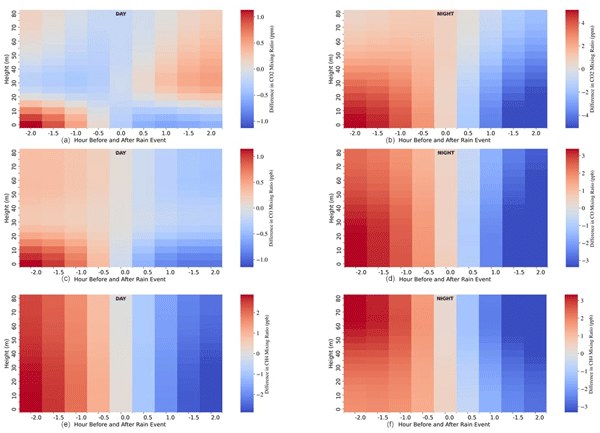
Composite analysis of gas concentration before and after rainfall, during the day and night, gives insight into the complex relationship between trace gas variability and precipitation. The analysis helps us to understand the sources and sinks of trace gases within a forest ecosystem. It elucidates processes that are not discernible under undisturbed conditions and contributes to a deeper understanding of the trace gas life cycle and its intricate interactions with cloud dynamics in the Amazon.
Felix Wieser, Rolf Sander, Changmin Cho, Hendrik Fuchs, Thorsten Hohaus, Anna Novelli, Ralf Tillmann, and Domenico Taraborrelli
Geosci. Model Dev., 17, 4311–4330, https://doi.org/10.5194/gmd-17-4311-2024, https://doi.org/10.5194/gmd-17-4311-2024, 2024
Short summary
Short summary
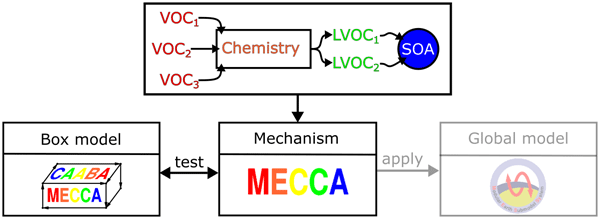
The chemistry scheme of the atmospheric box model CAABA/MECCA is expanded to achieve an improved aerosol formation from emitted organic compounds. In addition to newly added reactions, temperature-dependent partitioning of all new species between the gas and aqueous phases is estimated and included in the pre-existing scheme. Sensitivity runs show an overestimation of key compounds from isoprene, which can be explained by a lack of aqueous-phase degradation reactions and box model limitations.
Qindan Zhu, Rebecca H. Schwantes, Matthew Coggon, Colin Harkins, Jordan Schnell, Jian He, Havala O. T. Pye, Meng Li, Barry Baker, Zachary Moon, Ravan Ahmadov, Eva Y. Pfannerstill, Bryan Place, Paul Wooldridge, Benjamin C. Schulze, Caleb Arata, Anthony Bucholtz, John H. Seinfeld, Carsten Warneke, Chelsea E. Stockwell, Lu Xu, Kristen Zuraski, Michael A. Robinson, J. Andrew Neuman, Patrick R. Veres, Jeff Peischl, Steven S. Brown, Allen H. Goldstein, Ronald C. Cohen, and Brian C. McDonald
Atmos. Chem. Phys., 24, 5265–5286, https://doi.org/10.5194/acp-24-5265-2024, https://doi.org/10.5194/acp-24-5265-2024, 2024
Short summary
Short summary
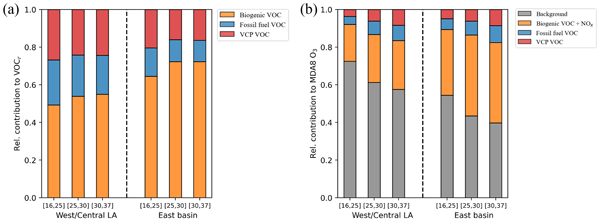
Volatile organic compounds (VOCs) fuel the production of air pollutants like ozone and particulate matter. The representation of VOC chemistry remains challenging due to its complexity in speciation and reactions. Here, we develop a chemical mechanism, RACM2B-VCP, that better represents VOC chemistry in urban areas such as Los Angeles. We also discuss the contribution of VOCs emitted from volatile chemical products and other anthropogenic sources to total VOC reactivity and O3.
Yarê Baker, Sungah Kang, Hui Wang, Rongrong Wu, Jian Xu, Annika Zanders, Quanfu He, Thorsten Hohaus, Till Ziehm, Veronica Geretti, Thomas J. Bannan, Simon P. O'Meara, Aristeidis Voliotis, Mattias Hallquist, Gordon McFiggans, Sören R. Zorn, Andreas Wahner, and Thomas F. Mentel
Atmos. Chem. Phys., 24, 4789–4807, https://doi.org/10.5194/acp-24-4789-2024, https://doi.org/10.5194/acp-24-4789-2024, 2024
Short summary
Short summary
Highly oxygenated organic molecules are important contributors to secondary organic aerosol. Their yield depends on detailed atmospheric chemical composition. One important parameter is the ratio of hydroperoxy radicals to organic peroxy radicals (HO2/RO2), and we show that higher HO2/RO2 ratios lower the secondary organic aerosol yield. This is of importance as laboratory studies are often biased towards organic peroxy radicals.
Matthew M. Coggon, Chelsea E. Stockwell, Megan S. Claflin, Eva Y. Pfannerstill, Lu Xu, Jessica B. Gilman, Julia Marcantonio, Cong Cao, Kelvin Bates, Georgios I. Gkatzelis, Aaron Lamplugh, Erin F. Katz, Caleb Arata, Eric C. Apel, Rebecca S. Hornbrook, Felix Piel, Francesca Majluf, Donald R. Blake, Armin Wisthaler, Manjula Canagaratna, Brian M. Lerner, Allen H. Goldstein, John E. Mak, and Carsten Warneke
Atmos. Meas. Tech., 17, 801–825, https://doi.org/10.5194/amt-17-801-2024, https://doi.org/10.5194/amt-17-801-2024, 2024
Short summary
Short summary
Mass spectrometry is a tool commonly used to measure air pollutants. This study evaluates measurement artifacts produced in the proton-transfer-reaction mass spectrometer. We provide methods to correct these biases and better measure compounds that degrade air quality.
Georgios I. Gkatzelis, Matthew M. Coggon, Chelsea E. Stockwell, Rebecca S. Hornbrook, Hannah Allen, Eric C. Apel, Megan M. Bela, Donald R. Blake, Ilann Bourgeois, Steven S. Brown, Pedro Campuzano-Jost, Jason M. St. Clair, James H. Crawford, John D. Crounse, Douglas A. Day, Joshua P. DiGangi, Glenn S. Diskin, Alan Fried, Jessica B. Gilman, Hongyu Guo, Johnathan W. Hair, Hannah S. Halliday, Thomas F. Hanisco, Reem Hannun, Alan Hills, L. Gregory Huey, Jose L. Jimenez, Joseph M. Katich, Aaron Lamplugh, Young Ro Lee, Jin Liao, Jakob Lindaas, Stuart A. McKeen, Tomas Mikoviny, Benjamin A. Nault, J. Andrew Neuman, John B. Nowak, Demetrios Pagonis, Jeff Peischl, Anne E. Perring, Felix Piel, Pamela S. Rickly, Michael A. Robinson, Andrew W. Rollins, Thomas B. Ryerson, Melinda K. Schueneman, Rebecca H. Schwantes, Joshua P. Schwarz, Kanako Sekimoto, Vanessa Selimovic, Taylor Shingler, David J. Tanner, Laura Tomsche, Krystal T. Vasquez, Patrick R. Veres, Rebecca Washenfelder, Petter Weibring, Paul O. Wennberg, Armin Wisthaler, Glenn M. Wolfe, Caroline C. Womack, Lu Xu, Katherine Ball, Robert J. Yokelson, and Carsten Warneke
Atmos. Chem. Phys., 24, 929–956, https://doi.org/10.5194/acp-24-929-2024, https://doi.org/10.5194/acp-24-929-2024, 2024
Short summary
Short summary
This study reports emissions of gases and particles from wildfires. These emissions are related to chemical proxies that can be measured by satellite and incorporated into models to improve predictions of wildfire impacts on air quality and climate.
Clara M. Nussbaumer, Bryan K. Place, Qindan Zhu, Eva Y. Pfannerstill, Paul Wooldridge, Benjamin C. Schulze, Caleb Arata, Ryan Ward, Anthony Bucholtz, John H. Seinfeld, Allen H. Goldstein, and Ronald C. Cohen
Atmos. Chem. Phys., 23, 13015–13028, https://doi.org/10.5194/acp-23-13015-2023, https://doi.org/10.5194/acp-23-13015-2023, 2023
Short summary
Short summary
NOx is a precursor to hazardous tropospheric ozone and can be emitted from various anthropogenic sources. It is important to quantify NOx emissions in urban environments to improve the local air quality, which still remains a challenge, as sources are heterogeneous in space and time. In this study, we calculate NOx emissions over Los Angeles, based on aircraft measurements in June 2021, and compare them to a local emission inventory, which we find mostly overpredicts the measured values.
Eva Y. Pfannerstill, Caleb Arata, Qindan Zhu, Benjamin C. Schulze, Roy Woods, John H. Seinfeld, Anthony Bucholtz, Ronald C. Cohen, and Allen H. Goldstein
Atmos. Chem. Phys., 23, 12753–12780, https://doi.org/10.5194/acp-23-12753-2023, https://doi.org/10.5194/acp-23-12753-2023, 2023
Short summary
Short summary
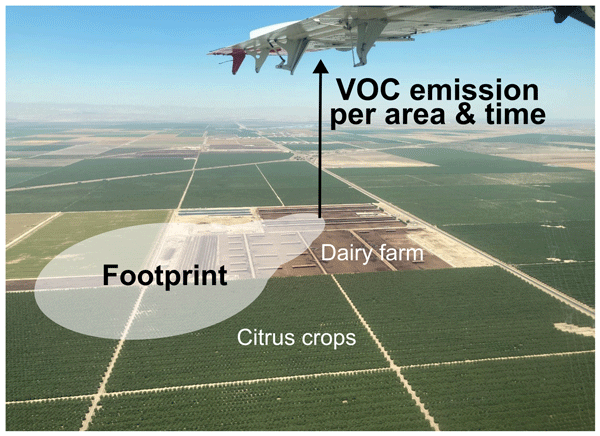
The San Joaquin Valley is an agricultural area with poor air quality. Organic gases drive the formation of hazardous air pollutants. Agricultural emissions of these gases are not well understood and have rarely been quantified at landscape scale. By combining aircraft-based emission measurements with land cover information, we found mis- or unrepresented emission sources. Our results help in understanding of pollution sources and in improving predictions of air quality in agricultural regions.
Jacky Y. S. Pang, Florian Berg, Anna Novelli, Birger Bohn, Michelle Färber, Philip T. M. Carlsson, René Dubus, Georgios I. Gkatzelis, Franz Rohrer, Sergej Wedel, Andreas Wahner, and Hendrik Fuchs
Atmos. Chem. Phys., 23, 12631–12649, https://doi.org/10.5194/acp-23-12631-2023, https://doi.org/10.5194/acp-23-12631-2023, 2023
Short summary
Short summary
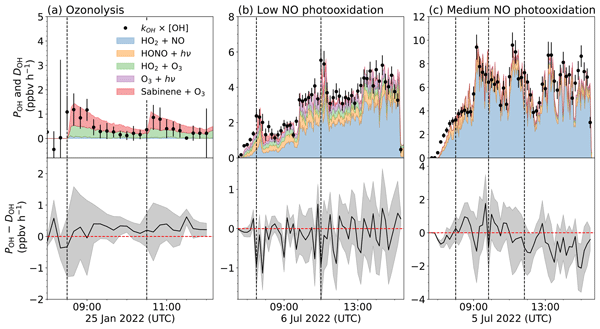
In this study, the oxidations of sabinene by OH radicals and ozone were investigated with an atmospheric simulation chamber. Reaction rate coefficients of the OH-oxidation reaction at temperatures between 284 to 340 K were determined for the first time in the laboratory by measuring the OH reactivity. Product yields determined in chamber experiments had good agreement with literature values, but discrepancies were found between experimental yields and expected yields from oxidation mechanisms.
Yuan Yan, Anne Klosterhalfen, Fernando Moyano, Matthias Cuntz, Andrew C. Manning, and Alexander Knohl
Biogeosciences, 20, 4087–4107, https://doi.org/10.5194/bg-20-4087-2023, https://doi.org/10.5194/bg-20-4087-2023, 2023
Short summary
Short summary
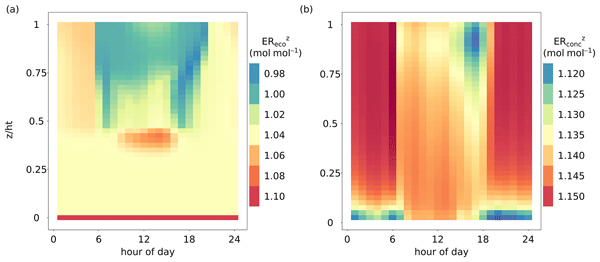
A better understanding of O2 fluxes, their exchange ratios with CO2 and their interrelations with environmental conditions would provide further insights into biogeochemical ecosystem processes. We, therefore, used the multilayer canopy model CANVEG to simulate and analyze the flux exchange for our forest study site for 2012–2016. Based on these simulations, we further successfully tested the application of various micrometeorological methods and the prospects of real O2 flux measurements.
Cole G. Brachmann, Tage Vowles, Riikka Rinnan, Mats P. Björkman, Anna Ekberg, and Robert G. Björk
Biogeosciences, 20, 4069–4086, https://doi.org/10.5194/bg-20-4069-2023, https://doi.org/10.5194/bg-20-4069-2023, 2023
Short summary
Short summary
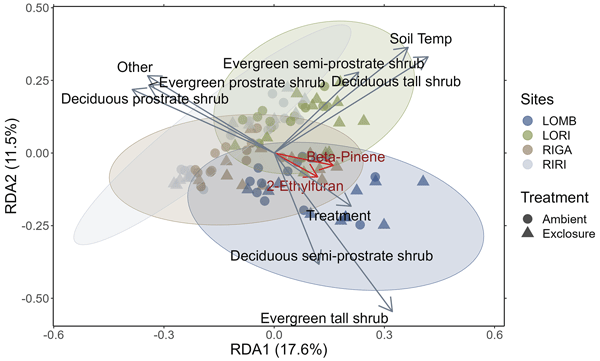
Herbivores change plant communities through grazing, altering the amount of CO2 and plant-specific chemicals (termed VOCs) emitted. We tested this effect by excluding herbivores and studying the CO2 and VOC emissions. Herbivores reduced CO2 emissions from a meadow community and altered VOC composition; however, community type had the strongest effect on the amount of CO2 and VOCs released. Herbivores can mediate greenhouse gas emissions, but the effect is marginal and community dependent.
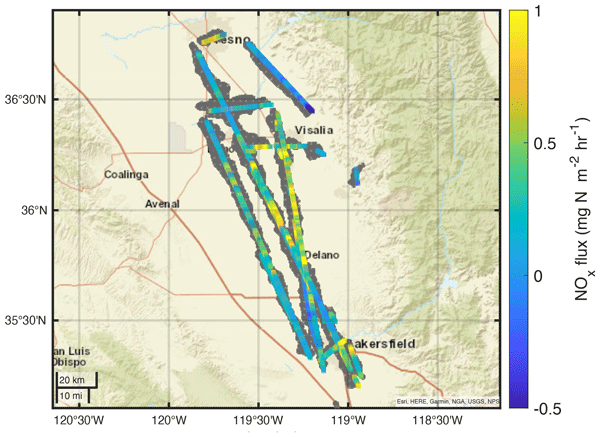
Qindan Zhu, Bryan Place, Eva Y. Pfannerstill, Sha Tong, Huanxin Zhang, Jun Wang, Clara M. Nussbaumer, Paul Wooldridge, Benjamin C. Schulze, Caleb Arata, Anthony Bucholtz, John H. Seinfeld, Allen H. Goldstein, and Ronald C. Cohen
Atmos. Chem. Phys., 23, 9669–9683, https://doi.org/10.5194/acp-23-9669-2023, https://doi.org/10.5194/acp-23-9669-2023, 2023
Short summary
Short summary
Nitrogen oxide (NOx) is a hazardous air pollutant, and it is the precursor of short-lived climate forcers like tropospheric ozone and aerosol particles. While NOx emissions from transportation has been strictly regulated, soil NOx emissions are overlooked. We use the airborne flux measurements to observe NOx emissions from highways and urban and cultivated soil land cover types. We show non-negligible soil NOx emissions, which are significantly underestimated in current model simulations.
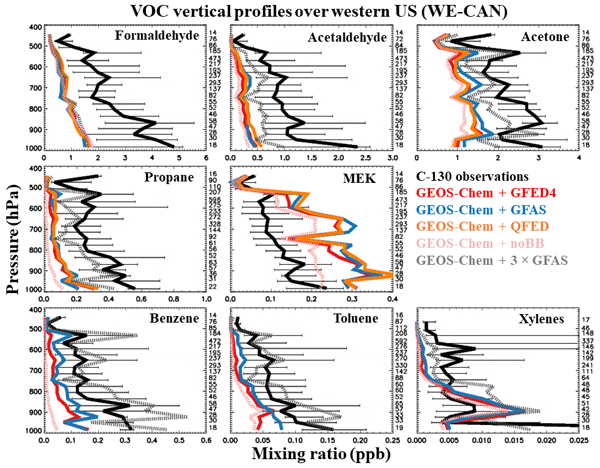
Lixu Jin, Wade Permar, Vanessa Selimovic, Damien Ketcherside, Robert J. Yokelson, Rebecca S. Hornbrook, Eric C. Apel, I-Ting Ku, Jeffrey L. Collett Jr., Amy P. Sullivan, Daniel A. Jaffe, Jeffrey R. Pierce, Alan Fried, Matthew M. Coggon, Georgios I. Gkatzelis, Carsten Warneke, Emily V. Fischer, and Lu Hu
Atmos. Chem. Phys., 23, 5969–5991, https://doi.org/10.5194/acp-23-5969-2023, https://doi.org/10.5194/acp-23-5969-2023, 2023
Short summary
Short summary
Air quality in the USA has been improving since 1970 due to anthropogenic emission reduction. Those gains have been partly offset by increased wildfire pollution in the western USA in the past 20 years. Still, we do not understand wildfire emissions well due to limited measurements. Here, we used a global transport model to evaluate and constrain current knowledge of wildfire emissions with recent observational constraints, showing the underestimation of wildfire emissions in the western USA.
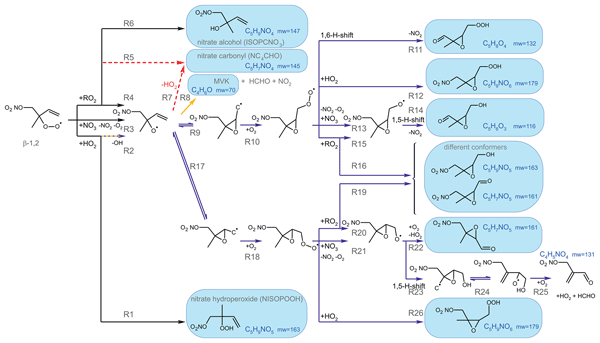
Philip T. M. Carlsson, Luc Vereecken, Anna Novelli, François Bernard, Steven S. Brown, Bellamy Brownwood, Changmin Cho, John N. Crowley, Patrick Dewald, Peter M. Edwards, Nils Friedrich, Juliane L. Fry, Mattias Hallquist, Luisa Hantschke, Thorsten Hohaus, Sungah Kang, Jonathan Liebmann, Alfred W. Mayhew, Thomas Mentel, David Reimer, Franz Rohrer, Justin Shenolikar, Ralf Tillmann, Epameinondas Tsiligiannis, Rongrong Wu, Andreas Wahner, Astrid Kiendler-Scharr, and Hendrik Fuchs
Atmos. Chem. Phys., 23, 3147–3180, https://doi.org/10.5194/acp-23-3147-2023, https://doi.org/10.5194/acp-23-3147-2023, 2023
Short summary
Short summary
The investigation of the night-time oxidation of the most abundant hydrocarbon, isoprene, in chamber experiments shows the importance of reaction pathways leading to epoxy products, which could enhance particle formation, that have so far not been accounted for. The chemical lifetime of organic nitrates from isoprene is long enough for the majority to be further oxidized the next day by daytime oxidants.
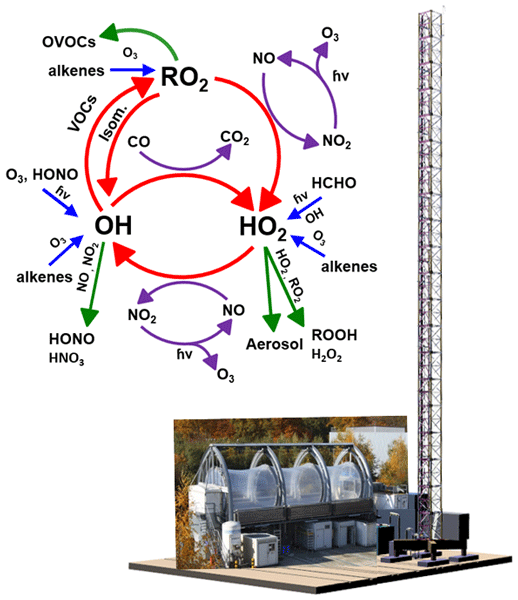
Changmin Cho, Hendrik Fuchs, Andreas Hofzumahaus, Frank Holland, William J. Bloss, Birger Bohn, Hans-Peter Dorn, Marvin Glowania, Thorsten Hohaus, Lu Liu, Paul S. Monks, Doreen Niether, Franz Rohrer, Roberto Sommariva, Zhaofeng Tan, Ralf Tillmann, Astrid Kiendler-Scharr, Andreas Wahner, and Anna Novelli
Atmos. Chem. Phys., 23, 2003–2033, https://doi.org/10.5194/acp-23-2003-2023, https://doi.org/10.5194/acp-23-2003-2023, 2023
Short summary
Short summary
With this study, we investigated the processes leading to the formation, destruction, and recycling of radicals for four seasons in a rural environment. Complete knowledge of their chemistry is needed if we are to predict the formation of secondary pollutants from primary emissions. The results highlight a still incomplete understanding of the paths leading to the formation of the OH radical, which has been observed in several other environments as well and needs to be further investigated.

Tobias Schuldt, Georgios I. Gkatzelis, Christian Wesolek, Franz Rohrer, Benjamin Winter, Thomas A. J. Kuhlbusch, Astrid Kiendler-Scharr, and Ralf Tillmann
Atmos. Meas. Tech., 16, 373–386, https://doi.org/10.5194/amt-16-373-2023, https://doi.org/10.5194/amt-16-373-2023, 2023
Short summary
Short summary
We report in situ measurements of air pollutant concentrations within the planetary boundary layer on board a Zeppelin NT in Germany. We highlight the in-flight evaluation of electrochemical sensors that were installed inside a hatch box located on the bottom of the Zeppelin. Results from this work emphasize the potential of these sensors for other in situ airborne applications, e.g., on board unmanned aerial vehicles (UAVs).
Felix Kleinert, Lukas H. Leufen, Aurelia Lupascu, Tim Butler, and Martin G. Schultz
Geosci. Model Dev., 15, 8913–8930, https://doi.org/10.5194/gmd-15-8913-2022, https://doi.org/10.5194/gmd-15-8913-2022, 2022
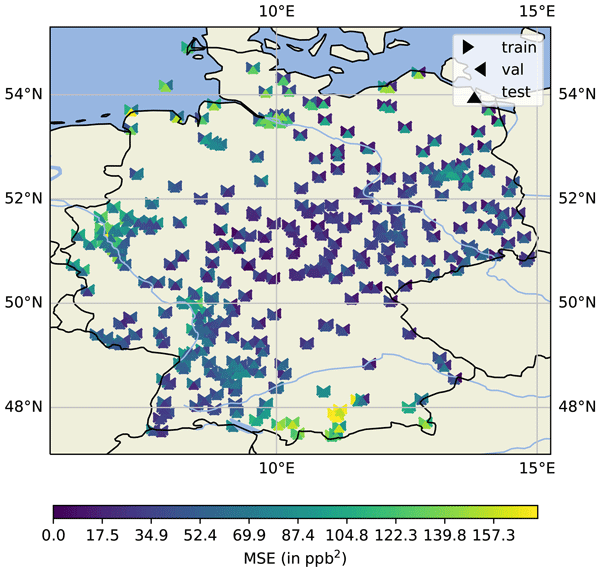
Short summary
Short summary
We examine the effects of spatially aggregated upstream information as input for a deep learning model forecasting near-surface ozone levels. Using aggregated data from one upstream sector (45°) improves the forecast by ~ 10 % for 4 prediction days. Three upstream sectors improve the forecasts by ~ 14 % on the first 2 d only. Our results serve as an orientation for other researchers or environmental agencies focusing on pointwise time-series predictions, for example, due to regulatory purposes.
Bing Gong, Michael Langguth, Yan Ji, Amirpasha Mozaffari, Scarlet Stadtler, Karim Mache, and Martin G. Schultz
Geosci. Model Dev., 15, 8931–8956, https://doi.org/10.5194/gmd-15-8931-2022, https://doi.org/10.5194/gmd-15-8931-2022, 2022
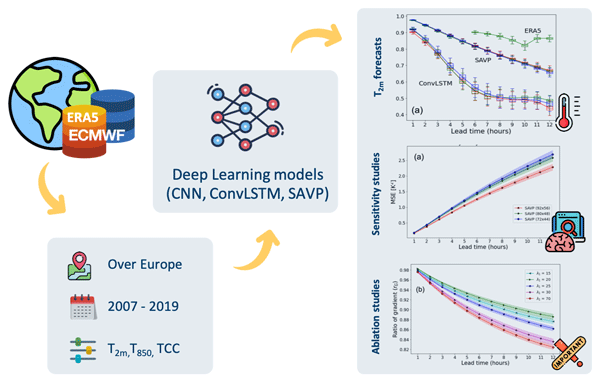
Short summary
Short summary
Inspired by the success of deep learning in various domains, we test the applicability of video prediction methods by generative adversarial network (GAN)-based deep learning to predict the 2 m temperature over Europe. Our video prediction models have skill in predicting the diurnal cycle of 2 m temperature up to 12 h ahead. Complemented by probing the relevance of several model parameters, this study confirms the potential of deep learning in meteorological forecasting applications.
Peeyush Khare, Jordan E. Krechmer, Jo E. Machesky, Tori Hass-Mitchell, Cong Cao, Junqi Wang, Francesca Majluf, Felipe Lopez-Hilfiker, Sonja Malek, Will Wang, Karl Seltzer, Havala O. T. Pye, Roisin Commane, Brian C. McDonald, Ricardo Toledo-Crow, John E. Mak, and Drew R. Gentner
Atmos. Chem. Phys., 22, 14377–14399, https://doi.org/10.5194/acp-22-14377-2022, https://doi.org/10.5194/acp-22-14377-2022, 2022
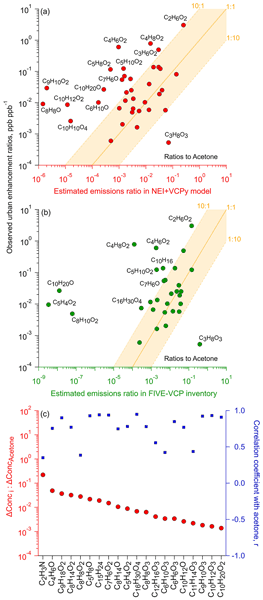
Short summary
Short summary
Ammonium adduct chemical ionization is used to examine the atmospheric abundances of oxygenated volatile organic compounds associated with emissions from volatile chemical products, which are now key contributors of reactive precursors to ozone and secondary organic aerosols in urban areas. The application of this valuable measurement approach in densely populated New York City enables the evaluation of emissions inventories and thus the role these oxygenated compounds play in urban air quality.

Zhaofeng Tan, Hendrik Fuchs, Andreas Hofzumahaus, William J. Bloss, Birger Bohn, Changmin Cho, Thorsten Hohaus, Frank Holland, Chandrakiran Lakshmisha, Lu Liu, Paul S. Monks, Anna Novelli, Doreen Niether, Franz Rohrer, Ralf Tillmann, Thalassa S. E. Valkenburg, Vaishali Vardhan, Astrid Kiendler-Scharr, Andreas Wahner, and Roberto Sommariva
Atmos. Chem. Phys., 22, 13137–13152, https://doi.org/10.5194/acp-22-13137-2022, https://doi.org/10.5194/acp-22-13137-2022, 2022
Short summary
Short summary
During the 2019 JULIAC campaign, ClNO2 was measured at a rural site in Germany in different seasons. The highest ClNO2 level was 1.6 ppbv in September. ClNO2 production was more sensitive to the availability of NO2 than O3. The average ClNO2 production efficiency was up to 18 % in February and September and down to 3 % in December. These numbers are at the high end of the values reported in the literature, indicating the importance of ClNO2 chemistry in rural environments in midwestern Europe.
Therese S. Carter, Colette L. Heald, Jesse H. Kroll, Eric C. Apel, Donald Blake, Matthew Coggon, Achim Edtbauer, Georgios Gkatzelis, Rebecca S. Hornbrook, Jeff Peischl, Eva Y. Pfannerstill, Felix Piel, Nina G. Reijrink, Akima Ringsdorf, Carsten Warneke, Jonathan Williams, Armin Wisthaler, and Lu Xu
Atmos. Chem. Phys., 22, 12093–12111, https://doi.org/10.5194/acp-22-12093-2022, https://doi.org/10.5194/acp-22-12093-2022, 2022
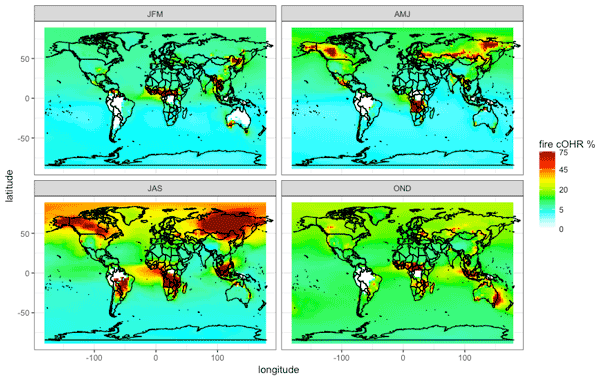
Short summary
Short summary
Fires emit many gases which can contribute to smog and air pollution. However, the amount and properties of these chemicals are not well understood, so this work updates and expands their representation in a global atmospheric model, including by adding new chemicals. We confirm that this updated representation generally matches measurements taken in several fire regions. We then show that fires provide ~15 % of atmospheric reactivity globally and more than 75 % over fire source regions.
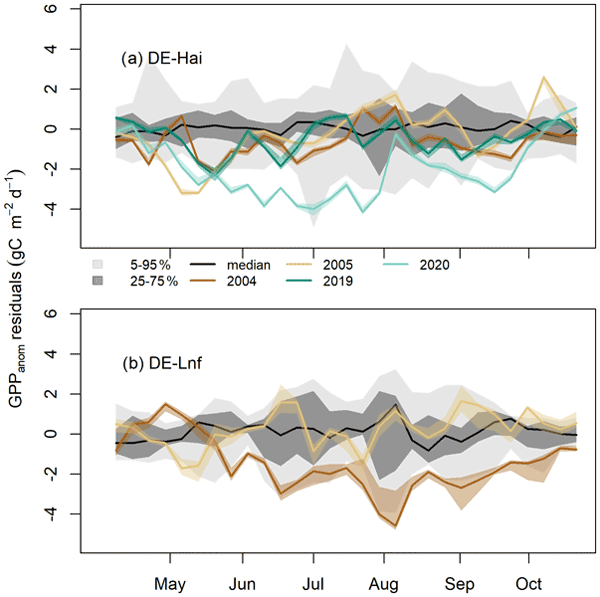
Xin Yu, René Orth, Markus Reichstein, Michael Bahn, Anne Klosterhalfen, Alexander Knohl, Franziska Koebsch, Mirco Migliavacca, Martina Mund, Jacob A. Nelson, Benjamin D. Stocker, Sophia Walther, and Ana Bastos
Biogeosciences, 19, 4315–4329, https://doi.org/10.5194/bg-19-4315-2022, https://doi.org/10.5194/bg-19-4315-2022, 2022
Short summary
Short summary
Identifying drought legacy effects is challenging because they are superimposed on variability driven by climate conditions in the recovery period. We develop a residual-based approach to quantify legacies on gross primary productivity (GPP) from eddy covariance data. The GPP reduction due to legacy effects is comparable to the concurrent effects at two sites in Germany, which reveals the importance of legacy effects. Our novel methodology can be used to quantify drought legacies elsewhere.
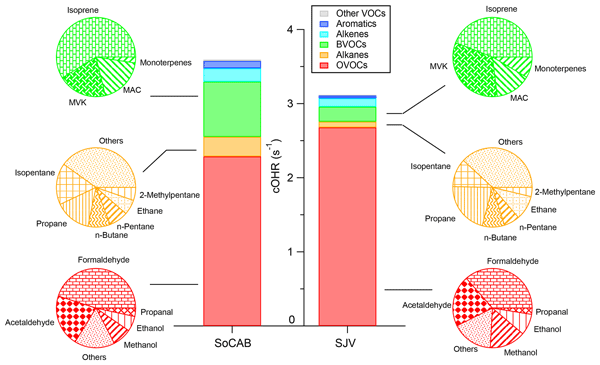
Shang Liu, Barbara Barletta, Rebecca S. Hornbrook, Alan Fried, Jeff Peischl, Simone Meinardi, Matthew Coggon, Aaron Lamplugh, Jessica B. Gilman, Georgios I. Gkatzelis, Carsten Warneke, Eric C. Apel, Alan J. Hills, Ilann Bourgeois, James Walega, Petter Weibring, Dirk Richter, Toshihiro Kuwayama, Michael FitzGibbon, and Donald Blake
Atmos. Chem. Phys., 22, 10937–10954, https://doi.org/10.5194/acp-22-10937-2022, https://doi.org/10.5194/acp-22-10937-2022, 2022
Short summary
Short summary
California’s ozone persistently exceeds the air quality standards. We studied the spatial distribution of volatile organic compounds (VOCs) that produce ozone over the most polluted regions in California using aircraft measurements. We find that the oxygenated VOCs have the highest ozone formation potential. Spatially, biogenic VOCs are important during high ozone episodes in the South Coast Air Basin, while dairy emissions may be critical for ozone production in San Joaquin Valley.
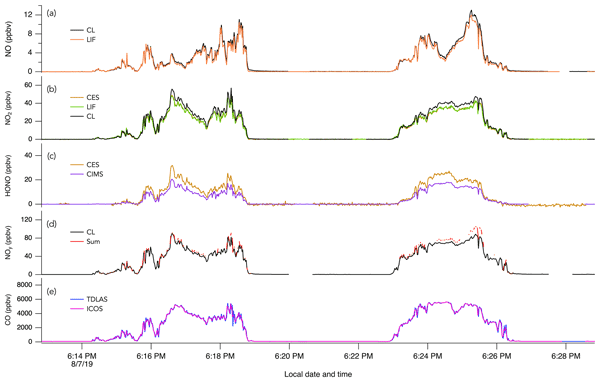
Ilann Bourgeois, Jeff Peischl, J. Andrew Neuman, Steven S. Brown, Hannah M. Allen, Pedro Campuzano-Jost, Matthew M. Coggon, Joshua P. DiGangi, Glenn S. Diskin, Jessica B. Gilman, Georgios I. Gkatzelis, Hongyu Guo, Hannah A. Halliday, Thomas F. Hanisco, Christopher D. Holmes, L. Gregory Huey, Jose L. Jimenez, Aaron D. Lamplugh, Young Ro Lee, Jakob Lindaas, Richard H. Moore, Benjamin A. Nault, John B. Nowak, Demetrios Pagonis, Pamela S. Rickly, Michael A. Robinson, Andrew W. Rollins, Vanessa Selimovic, Jason M. St. Clair, David Tanner, Krystal T. Vasquez, Patrick R. Veres, Carsten Warneke, Paul O. Wennberg, Rebecca A. Washenfelder, Elizabeth B. Wiggins, Caroline C. Womack, Lu Xu, Kyle J. Zarzana, and Thomas B. Ryerson
Atmos. Meas. Tech., 15, 4901–4930, https://doi.org/10.5194/amt-15-4901-2022, https://doi.org/10.5194/amt-15-4901-2022, 2022
Short summary
Short summary
Understanding fire emission impacts on the atmosphere is key to effective air quality management and requires accurate measurements. We present a comparison of airborne measurements of key atmospheric species in ambient air and in fire smoke. We show that most instruments performed within instrument uncertainties. In some cases, further work is needed to fully characterize instrument performance. Comparing independent measurements using different techniques is important to assess their accuracy.
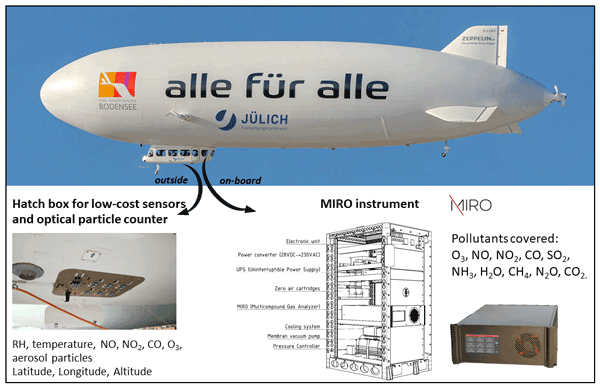
Ralf Tillmann, Georgios I. Gkatzelis, Franz Rohrer, Benjamin Winter, Christian Wesolek, Tobias Schuldt, Anne C. Lange, Philipp Franke, Elmar Friese, Michael Decker, Robert Wegener, Morten Hundt, Oleg Aseev, and Astrid Kiendler-Scharr
Atmos. Meas. Tech., 15, 3827–3842, https://doi.org/10.5194/amt-15-3827-2022, https://doi.org/10.5194/amt-15-3827-2022, 2022
Short summary
Short summary
We report in situ measurements of air pollutant concentrations within the planetary boundary layer on board a Zeppelin in Germany. The low costs of commercial flights provide an affordable and efficient method to improve our understanding of changes in emissions in space and time. The experimental setup expands the capabilities of this platform and provides insights into primary and secondary pollution observations and planetary boundary layer dynamics which determine air quality significantly.

Swantje Preuschmann, Tanja Blome, Knut Görl, Fiona Köhnke, Bettina Steuri, Juliane El Zohbi, Diana Rechid, Martin Schultz, Jianing Sun, and Daniela Jacob
Adv. Sci. Res., 19, 51–71, https://doi.org/10.5194/asr-19-51-2022, https://doi.org/10.5194/asr-19-51-2022, 2022
Short summary
Short summary
The main aspect of the paper is to obtain transferable principles for the development of digital knowledge transfer products. As such products are still unstandardised, the authors explored challenges and approaches for product developments. The authors report what they see as useful principles for developing digital knowledge transfer products, by describing the experience of developing the Net-Zero-2050 Web-Atlas and the "Bodenkohlenstoff-App".
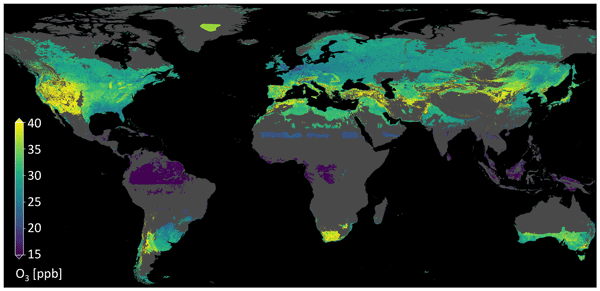
Clara Betancourt, Timo T. Stomberg, Ann-Kathrin Edrich, Ankit Patnala, Martin G. Schultz, Ribana Roscher, Julia Kowalski, and Scarlet Stadtler
Geosci. Model Dev., 15, 4331–4354, https://doi.org/10.5194/gmd-15-4331-2022, https://doi.org/10.5194/gmd-15-4331-2022, 2022
Short summary
Short summary
Ozone is a toxic greenhouse gas with high spatial variability. We present a machine-learning-based ozone-mapping workflow generating a transparent and reliable product. Going beyond standard mapping methods, this work combines explainable machine learning with uncertainty assessment to increase the integrity of the produced map.
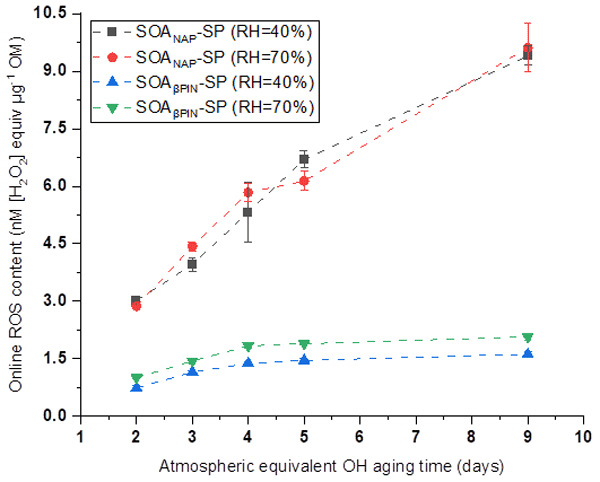
Zhi-Hui Zhang, Elena Hartner, Battist Utinger, Benjamin Gfeller, Andreas Paul, Martin Sklorz, Hendryk Czech, Bin Xia Yang, Xin Yi Su, Gert Jakobi, Jürgen Orasche, Jürgen Schnelle-Kreis, Seongho Jeong, Thomas Gröger, Michal Pardo, Thorsten Hohaus, Thomas Adam, Astrid Kiendler-Scharr, Yinon Rudich, Ralf Zimmermann, and Markus Kalberer
Atmos. Chem. Phys., 22, 1793–1809, https://doi.org/10.5194/acp-22-1793-2022, https://doi.org/10.5194/acp-22-1793-2022, 2022
Short summary
Short summary
Using a novel setup, we comprehensively characterized the formation of particle-bound reactive oxygen species (ROS) in anthropogenic and biogenic secondary organic aerosols (SOAs). We found that more than 90 % of all ROS components in both SOA types have a short lifetime. Our results also show that photochemical aging promotes particle-bound ROS production and enhances the oxidative potential of the aerosols. We found consistent results between chemical-based and biological-based ROS analyses.
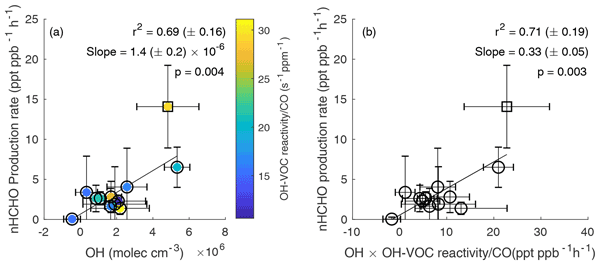
Jin Liao, Glenn M. Wolfe, Reem A. Hannun, Jason M. St. Clair, Thomas F. Hanisco, Jessica B. Gilman, Aaron Lamplugh, Vanessa Selimovic, Glenn S. Diskin, John B. Nowak, Hannah S. Halliday, Joshua P. DiGangi, Samuel R. Hall, Kirk Ullmann, Christopher D. Holmes, Charles H. Fite, Anxhelo Agastra, Thomas B. Ryerson, Jeff Peischl, Ilann Bourgeois, Carsten Warneke, Matthew M. Coggon, Georgios I. Gkatzelis, Kanako Sekimoto, Alan Fried, Dirk Richter, Petter Weibring, Eric C. Apel, Rebecca S. Hornbrook, Steven S. Brown, Caroline C. Womack, Michael A. Robinson, Rebecca A. Washenfelder, Patrick R. Veres, and J. Andrew Neuman
Atmos. Chem. Phys., 21, 18319–18331, https://doi.org/10.5194/acp-21-18319-2021, https://doi.org/10.5194/acp-21-18319-2021, 2021
Short summary
Short summary
Formaldehyde (HCHO) is an important oxidant precursor and affects the formation of O3 and other secondary pollutants in wildfire plumes. We disentangle the processes controlling HCHO evolution from wildfire plumes sampled by NASA DC-8 during FIREX-AQ. We find that OH abundance rather than normalized OH reactivity is the main driver of fire-to-fire variability in HCHO secondary production and estimate an effective HCHO yield per volatile organic compound molecule oxidized in wildfire plumes.
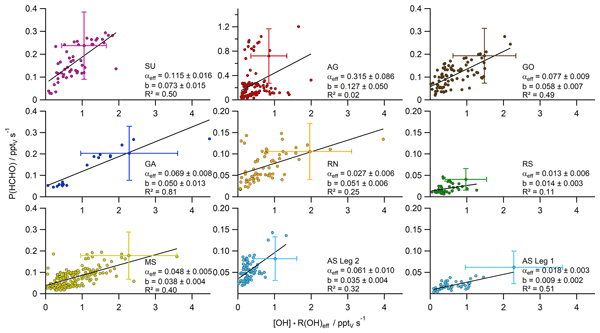
Dirk Dienhart, John N. Crowley, Efstratios Bourtsoukidis, Achim Edtbauer, Philipp G. Eger, Lisa Ernle, Hartwig Harder, Bettina Hottmann, Monica Martinez, Uwe Parchatka, Jean-Daniel Paris, Eva Y. Pfannerstill, Roland Rohloff, Jan Schuladen, Christof Stönner, Ivan Tadic, Sebastian Tauer, Nijing Wang, Jonathan Williams, Jos Lelieveld, and Horst Fischer
Atmos. Chem. Phys., 21, 17373–17388, https://doi.org/10.5194/acp-21-17373-2021, https://doi.org/10.5194/acp-21-17373-2021, 2021
Short summary
Short summary
We present the first ship-based in situ measurements of formaldehyde (HCHO), hydroxyl radicals (OH) and the OH reactivity around the Arabian Peninsula. Regression analysis of the HCHO production rate and the related OH chemistry revealed the regional HCHO yield αeff, which represents the different chemical regimes encountered. Highest values were found for the Arabian Gulf (also known as the Persian Gulf), which highlights this region as a hotspot of photochemical air pollution.
Zachary C. J. Decker, Michael A. Robinson, Kelley C. Barsanti, Ilann Bourgeois, Matthew M. Coggon, Joshua P. DiGangi, Glenn S. Diskin, Frank M. Flocke, Alessandro Franchin, Carley D. Fredrickson, Georgios I. Gkatzelis, Samuel R. Hall, Hannah Halliday, Christopher D. Holmes, L. Gregory Huey, Young Ro Lee, Jakob Lindaas, Ann M. Middlebrook, Denise D. Montzka, Richard Moore, J. Andrew Neuman, John B. Nowak, Brett B. Palm, Jeff Peischl, Felix Piel, Pamela S. Rickly, Andrew W. Rollins, Thomas B. Ryerson, Rebecca H. Schwantes, Kanako Sekimoto, Lee Thornhill, Joel A. Thornton, Geoffrey S. Tyndall, Kirk Ullmann, Paul Van Rooy, Patrick R. Veres, Carsten Warneke, Rebecca A. Washenfelder, Andrew J. Weinheimer, Elizabeth Wiggins, Edward Winstead, Armin Wisthaler, Caroline Womack, and Steven S. Brown
Atmos. Chem. Phys., 21, 16293–16317, https://doi.org/10.5194/acp-21-16293-2021, https://doi.org/10.5194/acp-21-16293-2021, 2021
Short summary
Short summary
To understand air quality impacts from wildfires, we need an accurate picture of how wildfire smoke changes chemically both day and night as sunlight changes the chemistry of smoke. We present a chemical analysis of wildfire smoke as it changes from midday through the night. We use aircraft observations from the FIREX-AQ field campaign with a chemical box model. We find that even under sunlight typical
nighttimechemistry thrives and controls the fate of key smoke plume chemical processes.
Cited articles
An, C., Li, H., Ji, Y., Chu, W., Yan, X., and Chai, F.: A review on nocturnal surface ozone enhancement: Characterization, formation causes, and atmospheric chemical effects, Science of The Total Environment, 921, 170731, https://doi.org/10.1016/J.SCITOTENV.2024.170731, 2024.
Arneth, A., Harrison, S. P., Zaehle, S., Tsigaridis, K., Menon, S., Bartlein, P. J., Feichter, J., Korhola, A., Kulmala, M., O'Donnell, D., Schurgers, G., Sorvari, S., and Vesala, T.: Terrestrial biogeochemical feedbacks in the climate system, Nat. Geosci., 3, 525–532, https://doi.org/10.1038/ngeo905, 2010.
Baier, M., Kandlbinder, A., Golldack, D., and Dietz, K. J.: Oxidative stress and ozone: perception, signalling and response, Plant. Cell Environ., 28, 1012–1020, https://doi.org/10.1111/J.1365-3040.2005.01326.X, 2005.
Bao, X., Zhou, W., Xu, L., and Zheng, Z.: A meta-analysis on plant volatile organic compound emissions of different plant species and responses to environmental stress, Environ. Pollut., 318, 120886, https://doi.org/10.1016/J.ENVPOL.2022.120886, 2023.
Basile, A., Badalamenti, N., Postiglione, A., Shan, Y., and Jin, S.: Biosynthetic Machinery to Abiotic Stress-Driven Emission: Decoding Multilayer Regulation of Volatile Terpenoids in Plants, Antioxidants, 14, 673, https://doi.org/10.3390/ANTIOX14060673, 2025.
Bergman, M. E., Kortbeek, R. W. J., Gutensohn, M., and Dudareva, N.: Plant terpenoid biosynthetic network and its multiple layers of regulation, Prog. Lipid Res., 95, 101287, https://doi.org/10.1016/J.PLIPRES.2024.101287, 2024.
Bhattu, D., Tripathi, S. N., Bhowmik, H. S., Moschos, V., Lee, C. P., Rauber, M., Salazar, G., Abbaszade, G., Cui, T., Slowik, J. G., Vats, P., Mishra, S., Lalchandani, V., Satish, R., Rai, P., Casotto, R., Tobler, A., Kumar, V., Hao, Y., Qi, L., Khare, P., Manousakas, M. I., Wang, Q., Han, Y., Tian, J., Darfeuil, S., Minguillon, M. C., Hueglin, C., Conil, S., Rastogi, N., Srivastava, A. K., Ganguly, D., Bjelic, S., Canonaco, F., Schnelle-Kreis, J., Dominutti, P. A., Jaffrezo, J. L., Szidat, S., Chen, Y., Cao, J., Baltensperger, U., Uzu, G., Daellenbach, K. R., El Haddad, I., and Prévôt, A. S. H.: Local incomplete combustion emissions define the PM2.5 oxidative potential in Northern India, Nat. Commun., 15, 1–13, https://doi.org/10.1038/S41467-024-47785-5, 2024.
Birami, B., Bamberger, I., Ghirardo, A., Grote, R., Arneth, A., Gaona-Colmán, E., Nadal-Sala, D., and Ruehr, N. K.: Heatwave frequency and seedling death alter stress-specific emissions of volatile organic compounds in Aleppo pine, Oecologia, 197, 939–956, https://doi.org/10.1007/S00442-021-04905-Y, 2021.
Bourtsoukidis, E., Bonn, B., Dittmann, A., Hakola, H., Hellén, H., and Jacobi, S.: Ozone stress as a driving force of sesquiterpene emissions: a suggested parameterisation, Biogeosciences, 9, 4337–4352, https://doi.org/10.5194/bg-9-4337-2012, 2012.
Blande, J. D., Holopainen, J. K., and Niinemets, Ü.: Plant volatiles in polluted atmospheres: Stress responses and signal degradation, Plant, Cell and Environment, 37, 1892–1904, https://doi.org/10.1111/pce.12352, 2014.
Brilli, F., Ruuskanen, T. M., Schnitzhofer, R., Müller, M., Breitenlechner, M., Bittner, V., Wohlfahrt, G., Loreto, F., and Hansel, A.: Detection of Plant Volatiles after Leaf Wounding and Darkening by Proton Transfer Reaction “Time-of-Flight” Mass Spectrometry (PTR-TOF), PLoS One, 6, e20419, https://doi.org/10.1371/JOURNAL.PONE.0020419, 2011.
Cappellin, L., Karl, T., Probst, M., Ismailova, O., Winkler, P. M., Soukoulis, C., Aprea, E., Märk, T. D., Gasperi, F., and Biasioli, F.: On quantitative determination of volatile organic compound concentrations using proton transfer reaction time-of-flight mass spectrometry, Environ. Sci. Technol., 46, 2283–2290, https://doi.org/10.1021/ES203985T, 2012.
Caird, M. A., Richards, J. H., and Donovan, L. A.: Nighttime Stomatal Conductance and Transpiration in C3 and C4 Plants, Plant Physiology, 143, 4–10, https://doi.org/10.1104/PP.106.092940, 2007.
Cappellin, L., Loreto, F., Biasioli, F., Pastore, P., and McKinney, K.: A mechanism for biogenic production and emission of MEK from MVK decoupled from isoprene biosynthesis, Atmos. Chem. Phys., 19, 3125–3135, https://doi.org/10.5194/acp-19-3125-2019, 2019.
Churkina, G., Kuik, F., Bonn, B., Lauer, A., Grote, R., Tomiak, K., and Butler, T. M.: Effect of VOC Emissions from Vegetation on Air Quality in Berlin during a Heatwave, Environ. Sci. Technol., 51, 6120–6130, https://doi.org/10.1021/ACS.EST.6B06514, 2017.
Cofer, T. M., Engelberth, M., and Engelberth, J.: Green leaf volatiles protect maize (Zea mays) seedlings against damage from cold stress, Plant. Cell Environ., 41, 1673–1682, https://doi.org/10.1111/PCE.13204, 2018.
Cook, B. I., Mankin, J. S., and Anchukaitis, K. J.: Climate Change and Drought: From Past to Future, Curr. Clim. Chang. Reports, 4, 164–179, https://doi.org/10.1007/S40641-018-0093-2, 2018.
Darbah, J. N. T., Sharkey, T. D., Calfapietra, C., and Karnosky, D. F.: Differential response of aspen and birch trees to heat stress under elevated carbon dioxide, Environmental Pollution, 158, 1008–1014, https://doi.org/10.1016/J.ENVPOL.2009.10.019, 2010.
Daussy, J. and Staudt, M.: Do future climate conditions change volatile organic compound emissions from Artemisia annua? Elevated CO2 and temperature modulate actual VOC emission rate but not its emission capacity, Atmos. Environ. X, 7, 100082, https://doi.org/10.1016/j.aeaoa.2020.100082, 2020.
Davison, B., Brunner, A., Ammann, C., Spirig, C., Jocher, M., and Neftel, A.: Cut-induced VOC emissions from agricultural grasslands, Plant Biol., 10, 76–85, https://doi.org/10.1055/S-2007-965043, 2008.
Dey, B., Sjøgren, T. D., Wu, Y., Rinnan, R., and Pfannerstill, E. Y.: Data for: Multi-stress Interaction Effects on BVOC Eemission Fingerprints from Oak and Beech, V1, Jülich DATA [data set], https://doi.org/10.26165/JUELICH-DATA/WG2981, 2025.
Di Carlo, P., Brune, W. H., Martinez, M., Harder, H., Lesher, R., Ren, X., Thornberry, T., Carroll, M. A., Young, V., Shepson, P. B., Riemer, D., Apel, E., and Campbell, C.: Missing OH Reactivity in a Forest: Evidence for Unknown Reactive Biogenic VOCs, Science, 304, 722–725, https://doi.org/10.1126/SCIENCE.1094392, 2004.
Dicke, M. and Baldwin, I. T.: The evolutionary context for herbivore-induced plant volatiles: beyond the `cry for help,' Trends Plant Sci., 15, 167–175, https://doi.org/10.1016/J.TPLANTS.2009.12.002, 2010.
Ding, Y., Fromm, M., and Avramova, Z.: Multiple exposures to drought “train” transcriptional responses in Arabidopsis, Nature Communications, 3, 1–9, https://doi.org/10.1038/NCOMMS1732, 2012.
Dizengremel, P., Le Thiec, D., Bagard, M., and Jolivet, Y.: Ozone risk assessment for plants: Central role of metabolism-dependent changes in reducing power, Environ. Pollut., 156, 11–15, https://doi.org/10.1016/J.ENVPOL.2007.12.024, 2008.
Edtbauer, A., Pfannerstill, E. Y., Pires Florentino, A. P., Barbosa, C. G. G., Rodriguez-Caballero, E., Zannoni, N., Alves, R. P., Wolff, S., Tsokankunku, A., Aptroot, A., de Oliveira Sá, M., de Araújo, A. C., Sörgel, M., de Oliveira, S. M., Weber, B., and Williams, J.: Cryptogamic organisms are a substantial source and sink for volatile organic compounds in the Amazon region, Commun. Earth Environ., 2, 1–14, https://doi.org/10.1038/s43247-021-00328-y, 2021.
Feng, Z., Yuan, X., Fares, S., Loreto, F., Li, P., Hoshika, Y., and Paoletti, E.: Isoprene is more affected by climate drivers than monoterpenes: A meta-analytic review on plant isoprenoid emissions, Plant. Cell Environ., 42, 1939–1949, https://doi.org/10.1111/PCE.13535, 2019.
Feng, Z., Agathokleous, E., Yue, X., Oksanen, E., Paoletti, E., Sase, H., Gandin, A., Koike, T., Calatayud, V., Yuan, X., Liu, X., De Marco, A., Jolivet, Y., Kontunen-Soppela, S., Hoshika, Y., Saji, H., Li, P., Li, Z., Watanabe, M., and Kobayashi, K.: Emerging challenges of ozone impacts on asian plants: actions are needed to protect ecosystem health, Ecosyst. Heal. Sustain., 7, https://doi.org/10.1080/20964129.2021.1911602, 2021.
Fineschi, S., Loreto, F., Staudt, M., and Peñuelas, J.: Diversification of Volatile Isoprenoid Emissions from Trees: Evolutionary and Ecological Perspectives, 1–20, https://doi.org/10.1007/978-94-007-6606-8_1, 2013.
Finlayson-Pitts, B. J. and Pitts, J. N.: Tropospheric Air Pollution: Ozone, Airborne Toxics, Polycyclic Aromatic Hydrocarbons, and Particles, Science, 276, 1045–1052, https://doi.org/10.1126/SCIENCE.276.5315.1045, 1997.
Fitzky, A. C., Sandén, H., Karl, T., Fares, S., Calfapietra, C., Grote, R., Saunier, A., and Rewald, B.: The Interplay Between Ozone and Urban Vegetation – BVOC Emissions, Ozone Deposition, and Tree Ecophysiology, Front. For. Glob. Chang., 2, 476346, https://doi.org/10.3389/FFGC.2019.00050, 2019.
Fitzky, A. C., Kaser, L., Peron, A., Karl, T., Graus, M., Tholen, D., Halbwirth, H., Trimmel, H., Pesendorfer, M., Rewald, B., and Sandén, H.: Same, same, but different: Drought and salinity affect BVOC emission rate and alter blend composition of urban trees, Urban For. Urban Green., 80, 127842, https://doi.org/10.1016/j.ufug.2023.127842, 2023.
Fleta-Soriano, E. and Munné-Bosch, S.: Stress memory and the inevitable effects of drought: A physiological perspective, Frontiers in Plant Science, 7, 171549, https://doi.org/10.3389/FPLS.2016.00143, 2016.
Gaucher, C., Costanzo, N., Widden, P., Renaud, J. P., Dizengremel, P., Mauffette, Y., and Chevrier, N.: Response to an ozone gradient of growth and enzymes implicated in tolerance to oxidative stress in Acer saccharum (Marsh.) seedlings, Ann. For. Sci., 63, 387–397, https://doi.org/10.1051/forest:2006019, 2006.
Genard-Zielinski, A.-C., Boissard, C., Ormeño, E., Lathière, J., Reiter, I. M., Wortham, H., Orts, J.-P., Temime-Roussel, B., Guenet, B., Bartsch, S., Gauquelin, T., and Fernandez, C.: Seasonal variations of Quercus pubescens isoprene emissions from an in natura forest under drought stress and sensitivity to future climate change in the Mediterranean area, Biogeosciences, 15, 4711–4730, https://doi.org/10.5194/bg-15-4711-2018, 2018.
Gkatzelis, G. I., Coggon, M. M., McDonald, B. C., Peischl, J., Gilman, J. B., Aikin, K. C., Robinson, M. A., Canonaco, F., Prevot, A. S. H., Trainer, M., and Warneke, C.: Observations Confirm that Volatile Chemical Products Are a Major Source of Petrochemical Emissions in U.S. Cities, Environ. Sci. Technol., 55, 4332–4343, https://doi.org/10.1021/ACS.EST.0C05471, 2021.
Graham, J. L., Staudt, M., Buatois, B., and Caro, S. P.: Developing Oak Buds Produce Volatile Emissions in Response to Herbivory by Freshly Hatched Caterpillars, J. Chem. Ecol., 50, 503–514, https://doi.org/10.1007/S10886-024-01520-Y, 2024.
Guenther, A., Hewitt, C. N., Erickson, D., Fall, R., Geron, C., Graedel, T., Harley, P., Klinger, L., Lerdau, M., Mckay, W. A., Pierce, T., Scholes, B., Steinbrecher, R., Tallamraju, R., Taylor, J., and Zimmerman, P.: A global model of natural volatile organic compound emissions, J. Geophys. Res., 8873–8892, https://doi.org/10.1029/94JD02950, 1995.
Guenther, A. B., Zimmerman, P. R., Harley, P. C., Monson, R. K., and Fall, R.: Isoprene and monoterpene emission rate variability: Model evaluations and sensitivity analyses, J. Geophys. Res. Atmos., 98, 12609–12617, https://doi.org/10.1029/93JD00527, 1993.
Guenther, A. B., Jiang, X., Heald, C. L., Sakulyanontvittaya, T., Duhl, T., Emmons, L. K., and Wang, X.: The Model of Emissions of Gases and Aerosols from Nature version 2.1 (MEGAN2.1): an extended and updated framework for modeling biogenic emissions, Geosci. Model Dev., 5, 1471–1492, https://doi.org/10.5194/gmd-5-1471-2012, 2012.
Guo, C., Wang, X., Wang, Q., Zhao, Z., Xie, B., Xu, L., and Zhang, R.: Plant defense mechanisms against ozone stress: Insights from secondary metabolism, Environ. Exp. Bot., 217, 105553, https://doi.org/10.1016/J.ENVEXPBOT.2023.105553, 2024.
Harvey, C. M., Li, Z., Tjellström, H., Blanchard, G. J., and Sharkey, T. D.: Concentration of isoprene in artificial and thylakoid membranes, Journal of Bioenergetics and Biomembranes, 47, 419–429, https://doi.org/10.1007/S10863-015-9625-9, 2015.
He, C., Lu, X., Wang, H., Wang, H., Li, Y., He, G., He, Y., Wang, Y., Zhang, Y., Liu, Y., Fan, Q., and Fan, S.: The unexpected high frequency of nocturnal surface ozone enhancement events over China: characteristics and mechanisms, Atmos. Chem. Phys., 22, 15243–15261, https://doi.org/10.5194/acp-22-15243-2022, 2022.
Heil, M. and Karban, R.: Explaining evolution of plant communication by airborne signals., Trends Ecol. Evol., 25, 137–144, https://doi.org/10.1016/j.tree.2009.09.010, 2010.
Hertig, E., Russo, A., and Trigo, R. M.: Heat and Ozone Pollution Waves in Central and South Europe – Characteristics, Weather Types, and Association with Mortality, Atmos. 2020, 11, 1271, https://doi.org/10.3390/ATMOS11121271, 2020.
Hohaus, T., Kuhn, U., Andres, S., Kaminski, M., Rohrer, F., Tillmann, R., Wahner, A., Wegener, R., Yu, Z., and Kiendler-Scharr, A.: A new plant chamber facility, PLUS, coupled to the atmosphere simulation chamber SAPHIR, Atmos. Meas. Tech., 9, 1247–1259, https://doi.org/10.5194/amt-9-1247-2016, 2016.
Holopainen, J. K., Virjamo, V., Ghimire, R. P., Blande, J. D., Julkunen-Tiitto, R., and Kivimäenpää, M.: Climate Change Effects on Secondary Compounds of Forest Trees in the Northern Hemisphere, Front. Plant Sci., 9, 1–10, https://doi.org/10.3389/fpls.2018.01445, 2018.
IPCC: Climate Change 2021: The Physical Science Basis. Contribution of Working Group I to the Sixth Assessment Report of the Intergovernmental Panel on Climate Change, edited by: Masson-Delmotte, V., Zhai, P., Pirani, A., Connors, S. L., Péan, C., Berger, S., Caud, N., Chen, Y., Goldfarb, L., Gomis, M. I., Huang, M., Leitzell, K., Lonnoy, E., Matthews, J., Maycock, T. K., Waterfield, T., Yelekçi, O., Yu, R., and Zhou, B., Cambridge University Press, Cambridge, United Kingdom and New York, NY, USA, 1363–1512, https://doi.org/10.1017/9781009157896.012, 2021.
IPCC: Summary for Policymakers: Synthesis Report., Clim. Chang. 2023 Synth. Report. Contrib. Work. Groups I, II III to Sixth Assess. Rep. Intergov. Panel Clim. Chang., 1–34, https://doi.org/10.59327/IPCC/AR6-9789291691647.001, 2023.
Iwasa, Y., Hayashi, R., and Satake, A.: Optimal seasonal schedule for the production of isoprene, a highly volatile biogenic VOC, Sci. Rep., 14, 1–10, https://doi.org/10.1038/S41598-024-62975-3, 2024.
Jandl, R., Kirchmeir, H., Liepin, K., and Bleive, A.: The Potential of European Beech (Fagus sylvatica L.) in the Hemiboreal Baltic Region: A Review, Forests, 16, 109, https://doi.org/10.3390/F16010109, 2025.
Jardine, K. J., Chambers, J. Q., Holm, J., Jardine, A. B., Fontes, C. G., Zorzanelli, R. F., Meyers, K. T., de Souza, V. F., Garcia, S., Gimenez, B. O., Piva, L. R. d. O., Higuchi, N., Artaxo, P., Martin, S., and Manzi, A. O.: Green Leaf Volatile Emissions during High Temperature and Drought Stress in a Central Amazon Rainforest, Plants, 4, 678, https://doi.org/10.3390/PLANTS4030678, 2015.
Jardine, K. J., Jardine, A. B., Holm, J. A., Lombardozzi, D. L., Negron-Juarez, R. I., Martin, S. T., Beller, H. R., Gimenez, B. O., Higuchi, N., and Chambers, J. Q.: Monoterpene `thermometer' of tropical forest-atmosphere response to climate warming, Plant. Cell Environ., 40, 441–452, https://doi.org/10.1111/PCE.12879, 2017.
Jensen, A. R., Koss, A. R., Hales, R. B., and de Gouw, J. A.: Measurements of volatile organic compounds in ambient air by gas-chromatography and real-time Vocus PTR-TOF-MS: calibrations, instrument background corrections, and introducing a PTR Data Toolkit, Atmos. Meas. Tech., 16, 5261–5285, https://doi.org/10.5194/amt-16-5261-2023, 2023.
Jiang, J., Aksoyoglu, S., Ciarelli, G., Oikonomakis, E., El-Haddad, I., Canonaco, F., O'Dowd, C., Ovadnevaite, J., Minguillón, M. C., Baltensperger, U., and Prévôt, A. S. H.: Effects of two different biogenic emission models on modelled ozone and aerosol concentrations in Europe, Atmos. Chem. Phys., 19, 3747–3768, https://doi.org/10.5194/acp-19-3747-2019, 2019.
Jud, W., Vanzo, E., Li, Z., Ghirardo, A., Zimmer, I., Sharkey, T. D., Hansel, A., and Schnitzler, J. P.: Effects of heat and drought stress on post-illumination bursts of volatile organic compounds in isoprene-emitting and non-emitting poplar, Plant, Cell & Environment, 39, 1204–1215, https://doi.org/10.1111/PCE.12643, 2016.
Kanagendran, A., Pazouki, L., and Niinemets, Ü.: Differential regulation of volatile emission from Eucalyptus globulus leaves upon single and combined ozone and wounding treatments through recovery and relationships with ozone uptake, Environmental and Experimental Botany, 145, 21–38, https://doi.org/10.1016/J.ENVEXPBOT.2017.10.012, 2018.
Kangasjärvi, J., Jaspers, P., and Kollist, H.: Signalling and cell death in ozone-exposed plants, Plant. Cell Environ., 28, 1021–1036, https://doi.org/10.1111/J.1365-3040.2005.01325.X, 2005.
Karl, M., Guenther, A., Köble, R., Leip, A., and Seufert, G.: A new European plant-specific emission inventory of biogenic volatile organic compounds for use in atmospheric transport models, Biogeosciences, 6, 1059–1087, https://doi.org/10.5194/bg-6-1059-2009, 2009.
Karnosky, D. F., Skelly, J. M., Percy, K. E., and Chappelka, A. H.: Perspectives regarding 50 years of research on effects of tropospheric ozone air pollution on US forests, Environ. Pollut., 147, 489–506, https://doi.org/10.1016/J.ENVPOL.2006.08.043, 2007.
Khalaj, F., Rivas-Ubach, A., Anderton, C. R., China, S., Mooney, K., and Faiola, C. L.: Acyclic Terpenes Reduce Secondary Organic Aerosol Formation from Emissions of a Riparian Shrub, ACS Earth Sp. Chem., 5, 1242–1253, https://doi.org/10.1021/ACSEARTHSPACECHEM.0C00300, 2021.
Khedive, E., Shirvany, A., Assareh, M. H., and Sharkey, T. D.: In situ emission of BVOCs by three urban woody species, Urban Forestry & Urban Greening, 21, 153–157, https://doi.org/10.1016/J.UFUG.2016.11.018, 2017.
Kivimäenpää, M., Riikonen, J., Ahonen, V., Tervahauta, A., and Holopainen, T.: Sensitivity of Norway spruce physiology and terpenoid emission dynamics to elevated ozone and elevated temperature under open-field exposure, Environ. Exp. Bot., 90, 32–42, https://doi.org/10.1016/J.ENVEXPBOT.2012.11.004, 2013.
Kivimäenpää, M., Ghimire, R. P., Sutinen, S., Häikiö, E., Kasurinen, A., Holopainen, T., and Holopainen, J. K.: Increases in volatile organic compound emissions of Scots pine in response to elevated ozone and warming are modified by herbivory and soil nitrogen availability, Eur. J. For. Res., 135, 343–360, https://doi.org/10.1007/s10342-016-0939-x, 2016.
Kleist, E., Mentel, T. F., Andres, S., Bohne, A., Folkers, A., Kiendler-Scharr, A., Rudich, Y., Springer, M., Tillmann, R., and Wildt, J.: Irreversible impacts of heat on the emissions of monoterpenes, sesquiterpenes, phenolic BVOC and green leaf volatiles from several tree species, Biogeosciences, 9, 5111–5123, https://doi.org/10.5194/bg-9-5111-2012, 2012.
Knudsen, J. T. and Gershenzon, J.: The chemistry diversity of floral scent, in: Biology ofFloral Scent, edited by: Dudareva, N. and Pichersky, E., CRC Press, Boca Raton, FL, 27–52, ISBN 0-8493-2283-9, 2006.
Krechmer, J., Lopez-Hilfiker, F., Koss, A., Hutterli, M., Stoermer, C., Deming, B., Kimmel, J., Warneke, C., Holzinger, R., Jayne, J., Worsnop, D., Fuhrer, K., Gonin, M., and De Gouw, J.: Evaluation of a New Reagent-Ion Source and Focusing Ion-Molecule Reactor for Use in Proton-Transfer-Reaction Mass Spectrometry, Anal. Chem., 90, 12011–12018, https://doi.org/10.1021/ACS.ANALCHEM.8B02641, 2018.
Kutty, N. N. and Mishra, M.: Dynamic distress calls: volatile info chemicals induce and regulate defense responses during herbivory, Front. Plant Sci., 14, 1–16, https://doi.org/10.3389/fpls.2023.1135000, 2023.
Lantz, A. T., Solomon, C., Gog, L., McClain, A. M., Weraduwage, S. M., Cruz, J. A., and Sharkey, T. D.: Isoprene Suppression by CO2 Is Not Due to Triose Phosphate Utilization (TPU) Limitation, Frontiers in Forests and Global Change, 2, 448750, https://doi.org/10.3389/FFGC.2019.00008, 2019.
Li, Z. and Sharkey, T. D.: Molecular and Pathway Controls on Biogenic Volatile Organic Compound Emissions, Springer Nature, 119–151, https://doi.org/10.1007/978-94-007-6606-8_5, 2013.
Li, Z., Ratliff, E. A., and Sharkey, T. D.: Effect of Temperature on Postillumination Isoprene Emission in Oak and Poplar, Plant Physiol., 155, 1037, https://doi.org/10.1104/PP.110.167551, 2010.
Liu, B., Kaurilind, E., Zhang, L., Okereke, C. N., Remmel, T., and Niinemets, Ü.: Improved plant heat shock resistance is introduced differently by heat and insect infestation: the role of volatile emission traits, Oecologia, 199, 53–68, https://doi.org/10.1007/S00442-022-05168-X, 2022a.
Liu, H., Able, A. J., and Able, J. A.: Priming crops for the future: rewiring stress memory, Trends in Plant Science, 27, 699–716, https://doi.org/10.1016/j.tplants.2021.11.015, 2022b.
Lõpez, M. A., Vicente, J., Kulasekaran, S., Vellosillo, T., Martínez, M., Irigoyen, M. L., Cascõn, T., Bannenberg, G., Hamberg, M., and Castresana, C.: Antagonistic role of 9-lipoxygenase-derived oxylipins and ethylene in the control of oxidative stress, lipid peroxidation and plant defence, Plant J., 67, 447–458, https://doi.org/10.1111/J.1365-313X.2011.04608.X, 2011.
Loreto, F. and Schnitzler, J. P.: Abiotic stresses and induced BVOCs, Trends Plant Sci., 15, 154–166, https://doi.org/10.1016/J.TPLANTS.2009.12.006, 2010.
Loreto, F., Pinelli, P., Manes, F., and Kollist, H.: Impact of ozone on monoterpene emissions and evidence for an isoprene-like antioxidant action of monoterpenes emitted by Quercus ilex leaves, Tree Physiol., 24, 361–367, https://doi.org/10.1093/TREEPHYS/24.4.361, 2004.
Loubet, B., Buysse, P., Gonzaga-Gomez, L., Lafouge, F., Ciuraru, R., Decuq, C., Kammer, J., Bsaibes, S., Boissard, C., Durand, B., Gueudet, J.-C., Fanucci, O., Zurfluh, O., Abis, L., Zannoni, N., Truong, F., Baisnée, D., Sarda-Estève, R., Staudt, M., and Gros, V.: Volatile organic compound fluxes over a winter wheat field by PTR-Qi-TOF-MS and eddy covariance, Atmos. Chem. Phys., 22, 2817–2842, https://doi.org/10.5194/acp-22-2817-2022, 2022.
Lundberg, S. M. and Lee, S. I.: A Unified Approach to Interpreting Model Predictions, arXiv [preprint], https://doi.org/10.48550/arXiv.1705.07874, 25 November 2017.
Maison, A., Lugon, L., Park, S.-J., Baudic, A., Cantrell, C., Couvidat, F., D'Anna, B., Di Biagio, C., Gratien, A., Gros, V., Kalalian, C., Kammer, J., Michoud, V., Petit, J.-E., Shahin, M., Simon, L., Valari, M., Vigneron, J., Tuzet, A., and Sartelet, K.: Significant impact of urban tree biogenic emissions on air quality estimated by a bottom-up inventory and chemistry transport modeling, Atmos. Chem. Phys., 24, 6011–6046, https://doi.org/10.5194/acp-24-6011-2024, 2024.
Moukhtar, S., Bessagnet, B., Rouil, L., and Simon, V.: Monoterpene emissions from Beech (Fagus sylvatica) in a French forest and impact on secondary pollutants formation at regional scale, Atmos. Environ., 39, 3535–3547, https://doi.org/10.1016/j.atmosenv.2005.02.031, 2005.
Musselman, R. C. and Minnick, T. J.: Nocturnal stomatal conductance and ambient air quality standards for ozone, Atmospheric Environment, 34, 719–733, https://doi.org/10.1016/S1352-2310(99)00355-6, 2000.
Nagalingam, S., Seco, R., Kim, S., and Guenther, A.: Heat stress strongly induces monoterpene emissions in some plants with specialized terpenoid storage structures, Agric. For. Meteorol., 333, 109400, https://doi.org/10.1016/J.AGRFORMET.2023.109400, 2023.
Niinemets, Ü., Arneth, A., Kuhn, U., Monson, R. K., Peñuelas, J., and Staudt, M.: The emission factor of volatile isoprenoids: stress, acclimation, and developmental responses, Biogeosciences, 7, 2203–2223, https://doi.org/10.5194/bg-7-2203-2010, 2010.
Nogués, I., Brilli, F., and Loreto, F.: Dimethylallyl Diphosphate and Geranyl Diphosphate Pools of Plant Species Characterized by Different Isoprenoid Emissions, Plant Physiol., 141, 721–730, https://doi.org/10.1104/PP.105.073213, 2006.
Palm, B. B., de Sá, S. S., Day, D. A., Campuzano-Jost, P., Hu, W., Seco, R., Sjostedt, S. J., Park, J.-H., Guenther, A. B., Kim, S., Brito, J., Wurm, F., Artaxo, P., Thalman, R., Wang, J., Yee, L. D., Wernis, R., Isaacman-VanWertz, G., Goldstein, A. H., Liu, Y., Springston, S. R., Souza, R., Newburn, M. K., Alexander, M. L., Martin, S. T., and Jimenez, J. L.: Secondary organic aerosol formation from ambient air in an oxidation flow reactor in central Amazonia, Atmos. Chem. Phys., 18, 467–493, https://doi.org/10.5194/acp-18-467-2018, 2018.
Paoletti, E.: Ozone and urban forests in Italy, Environ. Pollut., 157, 1506–1512, https://doi.org/10.1016/j.envpol.2008.09.019, 2009.
Papazian, S. and Blande, J. D.: Dynamics of plant responses to combinations of air pollutants, Plant Biology, 22, 68–83, https://doi.org/10.1111/PLB.12953, 2020.
Pastor, F., Paredes-Fortuny, L., and Khodayar, S.: Mediterranean marine heatwaves intensify in the presence of concurrent atmospheric heatwaves, Communications Earth and Environment, 5, 1–13, https://doi.org/10.1038/S43247-024-01982-8, 2024.
Pecl, G. T., Araújo, M. B., Bell, J. D., Blanchard, J., Bonebrake, T. C., Chen, I.-C., Clark, T. D., Colwell, R. K., Danielsen, F., Evengård, B., Falconi, L., Ferrier, S., Frusher, S., Garcia, R. A., Griffis, R. B., Hobday, A. J., Janion-Scheepers, C., Jarzyna, M. A., Jennings, S., Lenoir, J., Linnetved, H. I., Martin, V. Y., McCormack, P. C., McDonald, J., Mitchell, N. J., Mustonen, T., Pandolfi, J. M., Pettorelli, N., Popova, E., Robinson, S. A., Scheffers, B. R., Shaw, J. D., Sorte, C. J. B., Strugnell, J. M., Sunday, J. M., Tuanmu, M.-N., Vergés, A., Villanueva, C., Wernberg, T., Wapstra, E., and Williams, S. E.: Biodiversity redistribution under climate change: Impacts on ecosystems and human well-being, Science, 355, eaai9214, https://doi.org/10.1126/science.aai9214, 2017.
Pedregosa, F., Varoquaux, G., Gramfort, A., Michel, V., Thirion, B., Grisel, O., Blondel, M., Prettenhofer, P., Weiss, R., Dubourg, V., Vanderplas, J., Passos, A., Cournapeau, D., Brucher, M., Perrot, M., and Duchesnay, É.: Scikit-learn: Machine Learning in Python, J. Mach. Learn. Res., 12, 2825–2830, 2012.
Pelloux, J., Jolivet, Y., Fontaine, V., Banvoy, J., and Dizengremel, P.: Changes in Rubisco and Rubisco activase gene expression and polypeptide content in Pinus halepensis M. subjected to ozone and drought, Plant. Cell Environ., 24, 123–131, https://doi.org/10.1046/J.1365-3040.2001.00665.X, 2001.
Peñuelas, J. and Munné-Bosch, S.: Isoprenoids: An evolutionary pool for photoprotection, Trends Plant Sci., 10, 166–169, https://doi.org/10.1016/j.tplants.2005.02.005, 2005.
Perkins-Kirkpatrick, S. E. and Lewis, S. C.: Increasing trends in regional heatwaves, Nature Communications, 11, 1–8, https://doi.org/10.1038/S41467-020-16970-7, 2020.
Peron, A., Kaser, L., Fitzky, A. C., Graus, M., Halbwirth, H., Greiner, J., Wohlfahrt, G., Rewald, B., Sandén, H., and Karl, T.: Combined effects of ozone and drought stress on the emission of biogenic volatile organic compounds from Quercus robur L., Biogeosciences, 18, 535–556, https://doi.org/10.5194/bg-18-535-2021, 2021.
Pfannerstill, E. Y., Arata, C., Zhu, Q., Schulze, B. C., Woods, R., Seinfeld, J. H., Bucholtz, A., Cohen, R. C., and Goldstein, A. H.: Volatile organic compound fluxes in the agricultural San Joaquin Valley – spatial distribution, source attribution, and inventory comparison, Atmos. Chem. Phys., 23, 12753–12780, https://doi.org/10.5194/acp-23-12753-2023, 2023.
Pfannerstill, E. Y., Arata, C., Zhu, Q., Schulze, B. C., Ward, R., Woods, R., Harkins, C., Schwantes, R. H., Seinfeld, J. H., Bucholtz, A., Cohen, R. C., and Goldstein, A. H.: Temperature-dependent emissions dominate aerosol and ozone formation in Los Angeles, Science, 384, 1324–1329, https://doi.org/10.1126/SCIENCE.ADG8204, 2024.
Pikkarainen, L., Nissinen, K., Ghimire, R. P., Kivimäenpää, M., Ikonen, V.-P., Kilpeläinen, A., Virjamo, V., Yu, H., Kirsikka-Aho, S., Salminen, T., Hirvonen, J., Vahimaa, T., Luoranen, J., and Peltola, H.: Responses in growth and emissions of biogenic volatile organic compounds in Scots pine, Norway spruce and silver birch seedlings to different warming treatments in a controlled field experiment, Sci. Total Environ., 821, 153277, https://doi.org/10.1016/j.scitotenv.2022.153277, 2022.
Pinto, D. M., Blande, J. D., Souza, S. R., Nerg, A. M., and Holopainen, J. K.: Plant volatile organic compounds (VOCs) in ozone (O3) polluted atmospheres: the ecological effects, J. Chem. Ecol., 36, 22–34, https://doi.org/10.1007/S10886-009-9732-3, 2010.
Pugliese, G., Ingrisch, J., Meredith, L. K., Pfannerstill, E. Y., Klüpfel, T., Meeran, K., Byron, J., Purser, G., Gil-Loaiza, J., van Haren, J., Dontsova, K., Kreuzwieser, J., Ladd, S. N., Werner, C., and Williams, J.: Effects of drought and recovery on soil volatile organic compound fluxes in an experimental rainforest, Nat. Commun., 14, 5064, https://doi.org/10.1038/s41467-023-40661-8, 2023.
Quintanilla-Casas, B., Bro, R., Hinrich, J. L., and Davie-Martin, C. L.: Tutorial on PARADISe: PARAFAC2-based Deconvolution and Identification System for processing GC–MS data, Protocols.io, https://doi.org/10.21203/RS.3.PEX-2143/V1, 2023.
Raftoyannis, Y. and Radoglou, K.: Physiological Responses of Beech and Sessile Oak in a Natural Mixed Stand During a Dry Summer, Ann. Bot., 89, 723, https://doi.org/10.1093/AOB/MCF133, 2002.
Renaut, J., Bohler, S., Hausman, J. F., Hoffmann, L., Sergeant, K., Ahsan, N., Jolivet, Y., and Dizengremel, P.: The impact of atmospheric composition on plants: A case study of ozone and poplar, Mass Spectrom. Rev., 28, 495–516, https://doi.org/10.1002/MAS.20202, 2009.
Rieksta, J., Li, T., Davie-Martin, C. L., Aeppli, L. C. B., Høye, T. T., and Rinnan, R.: Volatile responses of dwarf birch to mimicked insect herbivory and experimental warming at two elevations in Greenlandic tundra, Plant-Environment Interact, 4, 23–35, https://doi.org/10.1002/PEI3.10100, 2023.
Rinnan, R., Iversen, L. L., Tang, J., Vedel-Petersen, I., Schollert, M., and Schurgers, G.: Separating direct and indirect effects of rising temperatures on biogenic volatile emissions in the Arctic, Proc. Natl. Acad. Sci. USA, 117, 32476–32483, https://doi.org/10.1073/PNAS.2008901117, 2020.
Rousi, E., Kornhuber, K., Beobide-Arsuaga, G., Luo, F., and Coumou, D.: Accelerated western European heatwave trends linked to more-persistent double jets over Eurasia, Nature Communications, 13, 1–11, https://doi.org/10.1038/S41467-022-31432-Y, 2022.
Roy, S., Kapoor, R., and Mathur, P.: Revisiting Changes in Growth, Physiology and Stress Responses of Plants under the Effect of Enhanced CO2 and Temperature, Plant Cell Physiol., 65, 4–19, https://doi.org/10.1093/PCP/PCAD121, 2024.
Royal Society: Ground-level ozone in the 21st century: future trends, impacts and policy implications, The Royal Society, 2008, 134 pp., ISBN 978-0-85403-713-1, 2008.
Schneider, C. A., Rasband, W. S., and Eliceiri, K. W.: NIH Image to ImageJ: 25 years of image analysis, Nat. Methods, 9, 671–675, https://doi.org/10.1038/nmeth.2089, 2012.
Schuldt, B., Buras, A., Arend, M., Vitasse, Y., Beierkuhnlein, C., Damm, A., Gharun, M., Grams, T. E. E., Hauck, M., Hajek, P., Hartmann, H., Hiltbrunner, E., Hoch, G., Holloway-Phillips, M., Körner, C., Larysch, E., Lübbe, T., Nelson, D. B., Rammig, A., Rigling, A., Rose, L., Ruehr, N. K., Schumann, K., Weiser, F., Werner, C., Wohlgemuth, T., Zang, C. S., and Kahmen, A.: A first assessment of the impact of the extreme 2018 summer drought on Central European forests, Basic and Applied Ecology, 45, 86–103, https://doi.org/10.1016/J.BAAE.2020.04.003, 2020.
Sharkey, T. D.: Effects of moderate heat stress on photosynthesis: importance of thylakoid reactions, rubisco deactivation, reactive oxygen species, and thermotolerance provided by isoprene, Plant. Cell Environ., 28, 269–277, https://doi.org/10.1111/J.1365-3040.2005.01324.X, 2005.
Sharkey, T. D., Chen, X., and Yeh, S.: Isoprene Increases Thermotolerance of Fosmidomycin-Fed Leaves, Plant Physiol., 125, https://doi.org/10.1104/PP.125.4.2001, 2001.
Sindelarova, K., Granier, C., Bouarar, I., Guenther, A., Tilmes, S., Stavrakou, T., Müller, J.-F., Kuhn, U., Stefani, P., and Knorr, W.: Global data set of biogenic VOC emissions calculated by the MEGAN model over the last 30 years, Atmos. Chem. Phys., 14, 9317–9341, https://doi.org/10.5194/acp-14-9317-2014, 2014.
Singsaas, E. L.: Terpenes and the thermotolerance of photosynthesis, New Phytol., 146, 1–4, https://doi.org/10.1046/J.1469-8137.2000.00626.X, 2000.
Song, J., Gkatzelis, G. I., Tillmann, R., Brüggemann, N., Leisner, T., and Saathoff, H.: Characterization of biogenic volatile organic compounds and their oxidation products in a stressed spruce-dominated forest close to a biogas power plant, Atmos. Chem. Phys., 24, 13199–13217, https://doi.org/10.5194/acp-24-13199-2024, 2024.
Szopa, S., Naik, V., Adhikary, B., Artaxo, P., Berntsen, T., Collins, W. D., Fuzzi, S., Gallardo, L., Kiendler-Scharr, A., Klimont, Z., Liao, H., Unger, N., and Zanis, P.: Short-Lived Climate Forcers, in: Climate Change 2021: The Physical Science Basis. Contribution of Working Group I to the Sixth Assessment Report of the Intergovernmental Panel on Climate Change, edited by: Masson-Delmotte, V., Zhai, P., Pirani, A., Connors, S. L., Péan, C., Berger, S., Caud, N., Chen, Y., Goldfarb, L., Gomis, M. I., Huang, M., Leitzell, K., Lonnoy, E., Matthews, J., Maycock, T. K., Waterfield, T., Yelekçi, O., Yu, R., and Zhou, B., Cambridge University Press, Cambridge, United Kingdom and New York, NY, USA, 817–922, https://doi.org/10.1017/9781009157896.008, 2021.
Turan, S., Kask, K., Kanagendran, A., Li, S., Anni, R., Talts, E., Rasulov, B., Kännaste, A., and Niinemets, U.: Lethal heat stress-dependent volatile emissions from tobacco leaves: what happens beyond the thermal edge?, J. Exp. Bot., 70, 5017–5030, https://doi.org/10.1093/JXB/ERZ255, 2019.
van Meeningen, Y., Schurgers, G., Rinnan, R., and Holst, T.: BVOC emissions from English oak (Quercus robur) and European beech (Fagus sylvatica) along a latitudinal gradient, Biogeosciences, 13, 6067–6080, https://doi.org/10.5194/bg-13-6067-2016, 2016.
van Meeningen, Y., Schurgers, G., Rinnan, R., and Holst, T.: Isoprenoid emission response to changing light conditions of English oak, European beech and Norway spruce, Biogeosciences, 14, 4045–4060, https://doi.org/10.5194/bg-14-4045-2017, 2017.
Velikova, V., Tsonev, T., Pinelli, P., Alessio, G. A., and Loreto, F.: Localized ozone fumigation system for studying ozone effects on photosynthesis, respiration, electron transport rate and isoprene emission in field-grown Mediterranean oak species, Tree Physiology, 25, 1523–1532, https://doi.org/10.1093/TREEPHYS/25.12.1523, 2005.
Vella, R., Pozzer, A., Forrest, M., Lelieveld, J., Hickler, T., and Tost, H.: Changes in biogenic volatile organic compound emissions in response to the El Niño–Southern Oscillation, Biogeosciences, 20, 4391–4412, https://doi.org/10.5194/bg-20-4391-2023, 2023.
Vo, T. and Faiola, C. L.: Acute ozone exposure decreases terpene emissions from Canary Island pines, Agric. For. Meteorol., 333, 109416, https://doi.org/10.1016/j.agrformet.2023.109416, 2023.
Weraduwage, S. M., Whitten, D., Kulke, M., Sahu, A., Vermaas, J. V., and Sharkey, T. D.: The isoprene-responsive phosphoproteome provides new insights into the putative signalling pathways and novel roles of isoprene, Plant, Cell & Environment, 47, 1099–1117, https://doi.org/10.1111/PCE.14776, 2024.
Werner, C., Fasbender, L., Romek, K. M., Yáñez-Serrano, A. M., and Kreuzwieser, J.: Heat Waves Change Plant Carbon Allocation Among Primary and Secondary Metabolism Altering CO2 Assimilation, Respiration, and VOC Emissions, Front. Plant Sci., 11, 512788, https://doi.org/10.3389/fpls.2020.01242, 2020.
Wu, Q., Zhang, Z., Zhu, H., Li, T., Zhu, X., Gao, H., Yun, Z., and Jiang, Y.: Comparative volatile compounds and primary metabolites profiling of pitaya fruit peel after ozone treatment, J. Sci. Food Agric., 99, 2610–2621, https://doi.org/10.1002/JSFA.9479, 2019.
Xu, S., Chen, W., Huang, Y., and He, X.: Responses of growth, photosynthesis and VOC emissions of Pinus tabulaeformis Carr. Exposure to elevated CO2 and/or elevated O3 in an urban area, Bull. Environ. Contam. Toxicol., 88, 443–448, https://doi.org/10.1007/S00128-011-0462-1, 2012.
Xin, Z. and Browse, J.: Cold comfort farm: the acclimation of plants to freezing temperatures, Plant, Cell & Environment, 23, 893–902, https://doi.org/10.1046/J.1365-3040.2000.00611.X, 2000.
Yang, X., Zeng, G., Iyakaremye, V., and Zhu, B.: Effects of different types of heat wave days on ozone pollution over Beijing-Tianjin-Hebei and its future projection, Sci. Total Environ., 837, 155762, https://doi.org/10.1016/j.scitotenv.2022.155762, 2022.
Yang, Y., Sun, F., Hu, C., Gao, J., Wang, W., Chen, Q., and Ye, J.: Emissions of Biogenic Volatile Organic Compounds from Plants: Impacts of Air Pollutants and Environmental Variables, Curr. Pollut. Reports, 11, 1–18, https://doi.org/10.1007/S40726-024-00339-1, 2025.
Yu, H., Kivimäenpää, M., and Blande, J. D.: Volatile-mediated between-plant communication in Scots pine and the effects of elevated ozone, Proceedings of the Royal Society B, 289, https://doi.org/10.1098/RSPB.2022.0963, 2022.
Zhu, Q., Schwantes, R. H., Coggon, M., Harkins, C., Schnell, J., He, J., Pye, H. O. T., Li, M., Baker, B., Moon, Z., Ahmadov, R., Pfannerstill, E. Y., Place, B., Wooldridge, P., Schulze, B. C., Arata, C., Bucholtz, A., Seinfeld, J. H., Warneke, C., Stockwell, C. E., Xu, L., Zuraski, K., Robinson, M. A., Neuman, J. A., Veres, P. R., Peischl, J., Brown, S. S., Goldstein, A. H., Cohen, R. C., and McDonald, B. C.: A better representation of volatile organic compound chemistry in WRF-Chem and its impact on ozone over Los Angeles, Atmos. Chem. Phys., 24, 5265–5286, https://doi.org/10.5194/acp-24-5265-2024, 2024.
Zuo, Z., Weraduwage, S. M., Huang, T., and Sharkey, T. D.: How volatile isoprenoids improve plant thermotolerance, Trends in Plant Science, 30, https://doi.org/10.1016/J.TPLANTS.2025.05.004, 2025.
Short summary
Trees release reactive gases that affect air quality and climate. We studied how these emissions from European beech and English oak change under realistic scenarios of combined and single heat and ozone stress. Heat increased emissions, while ozone reduced most of them. When stressors were combined, the effects were complex and varied by species. Machine learning identified key stress-related compounds. Our findings show that future tree stress may alter air quality and climate interactions.
Trees release reactive gases that affect air quality and climate. We studied how these emissions...


Altmetrics
Final-revised paper
Preprint