Articles | Volume 23, issue 5
https://doi.org/10.5194/bg-23-2045-2026
© Author(s) 2026. This work is distributed under
the Creative Commons Attribution 4.0 License.
https://doi.org/10.5194/bg-23-2045-2026
© Author(s) 2026. This work is distributed under
the Creative Commons Attribution 4.0 License.
Hydraulic Redistribution Decreases with Precipitation Magnitude and Frequency in a Dryland Ecosystem: A Data-Model Fusion Approach
School of Integrative Plant Science, Cornell University, Ithaca, NY, USA
Mitra Cattry
Department of Earth and Environmental Engineering, Columbia University, USA
Department of Environmental Systems Science, ETH Zurich, Switzerland
Hang Duong
Biology Department, University of New Mexico, Albuquerque, NM, USA
Vietnam National University of Agriculture, Hanoi, Vietnam
Marcy E. Litvak
Biology Department, University of New Mexico, Albuquerque, NM, USA
William T. Pockman
Biology Department, University of New Mexico, Albuquerque, NM, USA
Yiqi Luo
CORRESPONDING AUTHOR
School of Integrative Plant Science, Cornell University, Ithaca, NY, USA
Related authors
No articles found.
Fangxiu Wan, Chenyu Bian, Ensheng Weng, Yiqi Luo, Kun Huang, and Jianyang Xia
Geosci. Model Dev., 18, 7545–7573, https://doi.org/10.5194/gmd-18-7545-2025, https://doi.org/10.5194/gmd-18-7545-2025, 2025
Short summary
Short summary
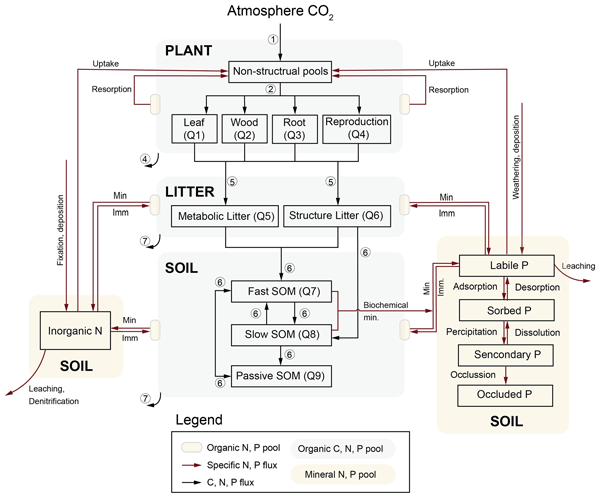
We developed TECO-CNP Sv1.0, a coupled carbon-nitrogen-phosphorus model with data assimilation for subtropical forests. The model effectively captures observed carbon, nitrogen, and phosphorus pools and fluxes, and significantly improves carbon flux estimates through data assimilation. TECO-CNP provides enhanced biogeochemical cycle representations, enabling more reliable predictions of ecosystem carbon cycle responses to global change through efficient parameter optimization.
Haodi Xu, Joshua Fan, Feng Tao, Lifen Jiang, Fengqi You, Benjamin Z. Houlton, Ying Sun, Carla P. Gomes, and Yiqi Luo
EGUsphere, https://doi.org/10.48550/arXiv.2502.00672, https://doi.org/10.48550/arXiv.2502.00672, 2025
Short summary
Short summary
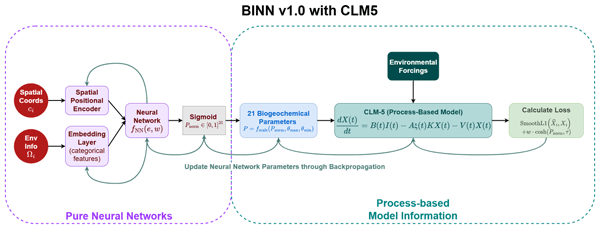
We developed the Biogeochemistry-Informed Neural Network (BINN) which embeds a process-based model inside an AI framework so the model’s parameters can be learned from big data. BINN recovered known parameters in synthetic tests and revealed key controls when applied to about 25 000 soil profiles across the contiguous US. It operates more than 50 times faster than Bayesian approaches while reproducing similar key processes governing SOC stocks.
Mitra Cattry, Wenli Zhao, Juan Nathaniel, Jinghao Qiu, Yao Zhang, and Pierre Gentine
EGUsphere, https://doi.org/10.5194/egusphere-2024-3726, https://doi.org/10.5194/egusphere-2024-3726, 2025
Short summary
Short summary
Climate change alters Mediterranean biota, affecting how they absorb and store carbon. These associated impacts arise from short- and long-term effects of rainfall, temperature, and other atmospheric forcings, which existing tools struggle to capture. This study presents a memory-integrated model combining high- and low-resolution data to track daily ecosystem responses. By analyzing past conditions, we show how earlier conditions shape plant carbon uptake and improve predictions.
Kevin R. Wilcox, Scott L. Collins, Alan K. Knapp, William Pockman, Zheng Shi, Melinda D. Smith, and Yiqi Luo
Biogeosciences, 20, 2707–2725, https://doi.org/10.5194/bg-20-2707-2023, https://doi.org/10.5194/bg-20-2707-2023, 2023
Short summary
Short summary
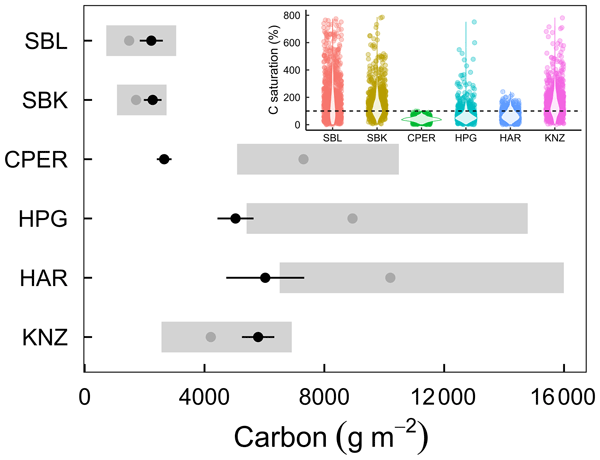
The capacity for carbon storage (C capacity) is an attribute that determines how ecosystems store carbon in the future. Here, we employ novel data–model integration techniques to identify the carbon capacity of six grassland sites spanning the US Great Plains. Hot and dry sites had low C capacity due to less plant growth and high turnover of soil C, so they may be a C source in the future. Alternately, cooler and wetter ecosystems had high C capacity, so these systems may be a future C sink.
Jennifer A. Holm, David M. Medvigy, Benjamin Smith, Jeffrey S. Dukes, Claus Beier, Mikhail Mishurov, Xiangtao Xu, Jeremy W. Lichstein, Craig D. Allen, Klaus S. Larsen, Yiqi Luo, Cari Ficken, William T. Pockman, William R. L. Anderegg, and Anja Rammig
Biogeosciences, 20, 2117–2142, https://doi.org/10.5194/bg-20-2117-2023, https://doi.org/10.5194/bg-20-2117-2023, 2023
Short summary
Short summary
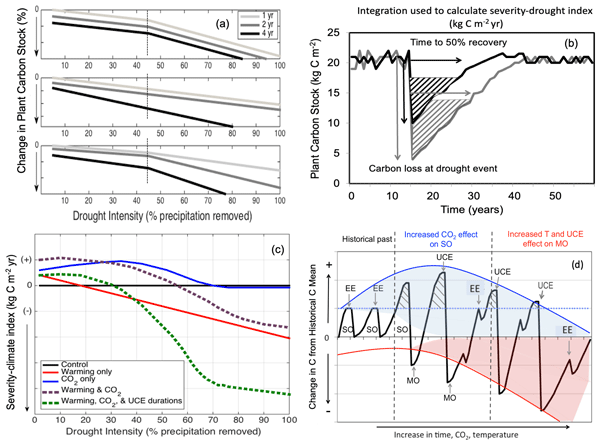
Unprecedented climate extremes (UCEs) are expected to have dramatic impacts on ecosystems. We present a road map of how dynamic vegetation models can explore extreme drought and climate change and assess ecological processes to measure and reduce model uncertainties. The models predict strong nonlinear responses to UCEs. Due to different model representations, the models differ in magnitude and trajectory of forest loss. Therefore, we explore specific plant responses that reflect knowledge gaps.
Song Wang, Carlos Sierra, Yiqi Luo, Jinsong Wang, Weinan Chen, Yahai Zhang, Aizhong Ye, and Shuli Niu
Biogeosciences Discuss., https://doi.org/10.5194/bg-2023-33, https://doi.org/10.5194/bg-2023-33, 2023
Manuscript not accepted for further review
Short summary
Short summary
Nitrogen is important for plant growth and carbon uptake, which is uaually limited in nature and can constrain carbon storage and impact efforts to combat climate change. We developed a new method of combining data and models to determine if and how much an ecosystem is nitrogen limited. This new method can help determine if and to what extent an ecosystem is nitrogen-limited, providing insight into nutrient limitations on a global scale and guiding ecosystem management decisions.
Rafael Poyatos, Víctor Granda, Víctor Flo, Mark A. Adams, Balázs Adorján, David Aguadé, Marcos P. M. Aidar, Scott Allen, M. Susana Alvarado-Barrientos, Kristina J. Anderson-Teixeira, Luiza Maria Aparecido, M. Altaf Arain, Ismael Aranda, Heidi Asbjornsen, Robert Baxter, Eric Beamesderfer, Z. Carter Berry, Daniel Berveiller, Bethany Blakely, Johnny Boggs, Gil Bohrer, Paul V. Bolstad, Damien Bonal, Rosvel Bracho, Patricia Brito, Jason Brodeur, Fernando Casanoves, Jérôme Chave, Hui Chen, Cesar Cisneros, Kenneth Clark, Edoardo Cremonese, Hongzhong Dang, Jorge S. David, Teresa S. David, Nicolas Delpierre, Ankur R. Desai, Frederic C. Do, Michal Dohnal, Jean-Christophe Domec, Sebinasi Dzikiti, Colin Edgar, Rebekka Eichstaedt, Tarek S. El-Madany, Jan Elbers, Cleiton B. Eller, Eugénie S. Euskirchen, Brent Ewers, Patrick Fonti, Alicia Forner, David I. Forrester, Helber C. Freitas, Marta Galvagno, Omar Garcia-Tejera, Chandra Prasad Ghimire, Teresa E. Gimeno, John Grace, André Granier, Anne Griebel, Yan Guangyu, Mark B. Gush, Paul J. Hanson, Niles J. Hasselquist, Ingo Heinrich, Virginia Hernandez-Santana, Valentine Herrmann, Teemu Hölttä, Friso Holwerda, James Irvine, Supat Isarangkool Na Ayutthaya, Paul G. Jarvis, Hubert Jochheim, Carlos A. Joly, Julia Kaplick, Hyun Seok Kim, Leif Klemedtsson, Heather Kropp, Fredrik Lagergren, Patrick Lane, Petra Lang, Andrei Lapenas, Víctor Lechuga, Minsu Lee, Christoph Leuschner, Jean-Marc Limousin, Juan Carlos Linares, Maj-Lena Linderson, Anders Lindroth, Pilar Llorens, Álvaro López-Bernal, Michael M. Loranty, Dietmar Lüttschwager, Cate Macinnis-Ng, Isabelle Maréchaux, Timothy A. Martin, Ashley Matheny, Nate McDowell, Sean McMahon, Patrick Meir, Ilona Mészáros, Mirco Migliavacca, Patrick Mitchell, Meelis Mölder, Leonardo Montagnani, Georgianne W. Moore, Ryogo Nakada, Furong Niu, Rachael H. Nolan, Richard Norby, Kimberly Novick, Walter Oberhuber, Nikolaus Obojes, A. Christopher Oishi, Rafael S. Oliveira, Ram Oren, Jean-Marc Ourcival, Teemu Paljakka, Oscar Perez-Priego, Pablo L. Peri, Richard L. Peters, Sebastian Pfautsch, William T. Pockman, Yakir Preisler, Katherine Rascher, George Robinson, Humberto Rocha, Alain Rocheteau, Alexander Röll, Bruno H. P. Rosado, Lucy Rowland, Alexey V. Rubtsov, Santiago Sabaté, Yann Salmon, Roberto L. Salomón, Elisenda Sánchez-Costa, Karina V. R. Schäfer, Bernhard Schuldt, Alexandr Shashkin, Clément Stahl, Marko Stojanović, Juan Carlos Suárez, Ge Sun, Justyna Szatniewska, Fyodor Tatarinov, Miroslav Tesař, Frank M. Thomas, Pantana Tor-ngern, Josef Urban, Fernando Valladares, Christiaan van der Tol, Ilja van Meerveld, Andrej Varlagin, Holm Voigt, Jeffrey Warren, Christiane Werner, Willy Werner, Gerhard Wieser, Lisa Wingate, Stan Wullschleger, Koong Yi, Roman Zweifel, Kathy Steppe, Maurizio Mencuccini, and Jordi Martínez-Vilalta
Earth Syst. Sci. Data, 13, 2607–2649, https://doi.org/10.5194/essd-13-2607-2021, https://doi.org/10.5194/essd-13-2607-2021, 2021
Short summary
Short summary
Transpiration is a key component of global water balance, but it is poorly constrained from available observations. We present SAPFLUXNET, the first global database of tree-level transpiration from sap flow measurements, containing 202 datasets and covering a wide range of ecological conditions. SAPFLUXNET and its accompanying R software package
sapfluxnetrwill facilitate new data syntheses on the ecological factors driving water use and drought responses of trees and forests.
William R. Wieder, Derek Pierson, Stevan Earl, Kate Lajtha, Sara G. Baer, Ford Ballantyne, Asmeret Asefaw Berhe, Sharon A. Billings, Laurel M. Brigham, Stephany S. Chacon, Jennifer Fraterrigo, Serita D. Frey, Katerina Georgiou, Marie-Anne de Graaff, A. Stuart Grandy, Melannie D. Hartman, Sarah E. Hobbie, Chris Johnson, Jason Kaye, Emily Kyker-Snowman, Marcy E. Litvak, Michelle C. Mack, Avni Malhotra, Jessica A. M. Moore, Knute Nadelhoffer, Craig Rasmussen, Whendee L. Silver, Benjamin N. Sulman, Xanthe Walker, and Samantha Weintraub
Earth Syst. Sci. Data, 13, 1843–1854, https://doi.org/10.5194/essd-13-1843-2021, https://doi.org/10.5194/essd-13-1843-2021, 2021
Short summary
Short summary
Data collected from research networks present opportunities to test theories and develop models about factors responsible for the long-term persistence and vulnerability of soil organic matter (SOM). Here we present the SOils DAta Harmonization database (SoDaH), a flexible database designed to harmonize diverse SOM datasets from multiple research networks.
Cited articles
Alfieri, J. G., Anderson, M. C., Kustas, W. P., and Cammalleri, C.: Effect of the revisit interval and temporal upscaling methods on the accuracy of remotely sensed evapotranspiration estimates, Hydrol. Earth Syst. Sci., 21, 83–98, https://doi.org/10.5194/hess-21-83-2017, 2017.
Amenu, G. G. and Kumar, P.: A model for hydraulic redistribution incorporating coupled soil-root moisture transport, Hydrol. Earth Syst. Sci., 12, 55–74, https://doi.org/10.5194/hess-12-55-2008, 2008.
Asadollahi, M., Nehemy, M. F., McDonnell, J. J., Rinaldo, A., and Benettin, P.: Toward a closure of catchment mass balance: Insight on the missing link from a vegetated lysimeter, Water Resour. Res., 58, e2021WR030698, https://doi.org/10.1029/2021WR030698, 2022.
Barron-Gafford, G. A., Sanchez-Cañete, E. P., Minor, R. L., Hendryx, S. M., Lee, E., Sutter, L. F., Tran, N., Parra, E., Colella, T., Murphy, P. C., Hamerlynck, E. P., Kumar, P., and Scott, R. L.: Impacts of hydraulic redistribution on grass–tree competition vs facilitation in a semi and arid savanna, New Phytol., 215, 1451–1461, https://doi.org/10.1111/nph.14693, 2017.
Barron-Gafford, G. A., Knowles, J. F., Sanchez-Cañete, E. P., Minor, R. L., Lee, E., Sutter, L., Tran, N., Murphy, P., Hamerlynck, E. P., Kumar, P., and Scott, R. L.: Hydraulic redistribution buffers climate variability and regulates grass-tree interactions in a semiarid riparian savanna, Ecohydrology, 14, e2271, https://doi.org/10.1002/eco.2271, 2021.
Beer, C., Reichstein, M., Tomelleri, E., Ciais, P., Jung, M., Carvalhais, N., Rödenbeck, C., Arain, M. A., Baldocchi, D., and Bonan, G. B.: Terrestrial gross carbon dioxide uptake: global distribution and covariation with climate, Science, 329, 834–838, 2010.
Bleby, T. M., Mcelrone, A. J., and Jackson, R. B.: Water uptake and hydraulic redistribution across large woody root systems to 20 m depth, Plant Cell Environ., 33, 2132–2148, 2010.
Brooks, R. H. and Corey, A. T.: Hydraulic properties of porous media, Hydrology Paper No. 3, Colorado State University, Fort Collins, Colorado, https://hdl.handle.net/10217/61288 (last access: 10 March 2026), 1965.
Caldwell, M. M., Dawson, T. E., and Richards, J. H.: Hydraulic lift: consequences of water efflux from the roots of plants, Oecologia, 113, 151–161, https://doi.org/10.1007/s004420050363, 1998.
Campbell, G. S.: Soil physics with BASIC: transport models for soil-plant systems, Vol. 14, Elsevier, Amsterdam, ISBN 0-444-42557-8, 1985.
Cattry, M., Miele, F., Wang, S., Frutschi, M., and Rinaldo, A.: Evaluating nitrate removal and travel times in a bare deciduous forest soil through a column tracer experiment, Catena, 258, 109204, https://doi.org/10.1016/j.catena.2025.109204, 2025.
Chandel, A.: Terrestrial ECOsystem (TECO) with hydraulic redistribution process, Zenodo [code and data set], https://doi.org/10.5281/zenodo.18868950, 2026.
Clapp, R. B. and Hornberger, G. M.: Empirical equations for some soil hydraulic properties, Water Resour. Res., 14, 601–604, 1978.
Domec, J. C., King, J. S., Noormets, A., Treasure, E., Gavazzi, M. J., Sun, G., and McNulty, S. G.: Hydraulic redistribution of soil water by roots affects whole-stand evapotranspiration and net ecosystem carbon exchange, New Phytol., 187, 171–183, https://doi.org/10.1111/j.1469-8137.2010.03245.x, 2010.
Eastburn, J. F., Campbell, M. J., Dennison, P. E., Anderegg, W. R., Barrett, K. J., Fekety, P. A., Flake, S. W., Huffman, D. W., Kannenberg, S. A., and Kerr, K. L.: Ecological and climatic transferability of airborne lidar-driven aboveground biomass models in Piñon-Juniper woodlands, GISci. Remote Sens., 61, 2363577, https://doi.org/10.1080/15481603.2024.2363577, 2024.
Fabian, G. S., Sandra, J. B., William, A. H., Frederick, C. M., and Guillermo, G.: Hydraulic lift in a Neotropical savanna: Experimental manipulation and model simulations, Agr. Forest Meteorol., 150, 629–639, https://doi.org/10.1016/j.agrformet.2010.02.001, 2010.
Fu, C., Wang, G., Goulden, M. L., Scott, R. L., Bible, K., and G. Cardon, Z.: Combined measurement and modeling of the hydrological impact of hydraulic redistribution using CLM4.5 at eight AmeriFlux sites, Hydrol. Earth Syst. Sci., 20, 2001–2018, https://doi.org/10.5194/hess-20-2001-2016, 2016.
Fu, C. S., Wang, G. L., Bible, K., Goulden, M. L., Saleska, S. R., Scott, R. L., and Cardon, Z. G.: Hydraulic redistribution affects modeled carbon cycling via soil microbial activity and suppressed fire, Glob. Change Biol., 24, 3472–3485, https://doi.org/10.1111/gcb.14164, 2018.
Grünzweig, J. M., De Boeck, H. J., Rey, A., Santos, M. J., Adam, O., Bahn, M., Belnap, J., Deckmyn, G., Dekker, S. C., and Flores, O.: Dryland mechanisms could widely control ecosystem functioning in a drier and warmer world, Nature Ecology & Evolution, 6, 1064–1076, 2022.
Hafner, B. D., Hesse, B. D., Bauerle, T. L., and Grams, T. E.: Water potential gradient, root conduit size and root xylem hydraulic conductivity determine the extent of hydraulic redistribution in temperate trees, Funct. Ecol., 34, 561–574, 2020.
Hao, X. M., Chen, Y. N., Guo, B., and Ma, J. X.: Hydraulic redistribution of soil water in Populus euphratica Oliv. in a central Asian desert riparian forest, Ecohydrology, 6, 974–983, https://doi.org/10.1002/eco.1338, 2013a.
Hao, X. M., Li, W. H., Guo, B., and Ma, J. X.: Simulation of the effect of root distribution on hydraulic redistribution in a desert riparian forest, Ecol. Res., 28, 653–662, 2013b.
Hastings, W. K.: Monte Carlo sampling methods using Markov chains and their applications, Biometrika, 57, 97–109, https://doi.org/10.1093/biomet/57.1.97, 1970.
Hillel, D.: Introduction to environmental soil physics, Elsevier Academic Press, Amsterdam, ISBN 0-12-348655-6, 2003.
Hou, E., Litvak, M. E., Rudgers, J. A., Jiang, L., Collins, S. L., Pockman, W. T., Hui, D., Niu, S., and Luo, Y.: Divergent responses of primary production to increasing precipitation variability in global drylands, Glob. Change Biol., 27, 5225–5237, https://doi.org/10.1111/gcb.15801, 2021.
Howard, A. R., Van Iersel, M. W., Richards, J. H., and Donovan, L. A.: Night and time transpiration can decrease hydraulic redistribution, Plant, Cell Environ., 32, 1060–1070, 2009.
Hultine, K. R., Cable, W. L., Burgess, S. S. O., and Williams, D. G.: Hydraulic redistribution by deep roots of a Chihuahuan Desert phreatophyte, Tree Physiol., 23, 353–360, https://doi.org/10.1093/treephys/23.5.353, 2003.
Jiang, J., Huang, Y., Ma, S., Stacy, M., Shi, Z., Ricciuto, D. M., Hanson, P. J., and Luo, Y.: Forecasting responses of a northern peatland carbon cycle to elevated CO2 and a gradient of experimental warming, J. Geophys. Res.-Biogeo., 123, 1057–1071, https://doi.org/10.1002/2017jg004040, 2018.
Katul, G. G. and Siqueira, M. B.: Biotic and abiotic factors act in coordination to amplify hydraulic redistribution and lift, New Phytol., 187, 3–6, 2010.
Kohler, M. A. and Linsley, R. K.: Predicting the runoff from storm rainfall, US Department of Commerce, Weather Bureau, Washington D.C., https://library.oarcloud.noaa.gov/noaa_documents.lib/NOAA_historic_documents/WB/Research_papers/WB_Research_Paper_34.pdf (last access: 10 March 2026), 1951.
Lee, E., Kumar, P., Barron-Gafford, G. A., Hendryx, S. M., Sanchez-Cañete, E. P., Minor, R. L., Colella, T., and Scott, R. L.: Impact of hydraulic redistribution on multispecies vegetation water use in a semiarid savanna ecosystem: An experimental and modeling synthesis, Water Resour. Res., 54, 4009–4027, https://doi.org/10.1029/2017wr021006, 2018.
Li, X., Wei, Y., and Li, F.: Optimality of antecedent precipitation index and its application, J. Hydrol., 595, 126027, https://doi.org/10.1016/j.jhydrol.2021.126027, 2021.
Luo, Y. and Reynolds, J. F.: Validity of extrapolating field CO2 experiments to predict carbon sequestration in natural ecosystems, Ecology, 80, 1568–1583, https://doi.org/10.1890/0012-9658(1999)080[1568:Voefce]2.0.Co;2, 1999.
Luo, Y. and Schuur, E. A. G.: Model parameterization to represent processes at unresolved scales and changing properties of evolving systems, Glob. Change Biol., 26, 1109–1117, https://doi.org/10.1111/gcb.14939, 2020.
Marshall, L., Nott, D., and Sharma, A.: A comparative study of Markov chain Monte Carlo methods for conceptual rainfall and runoff modeling, Water Resour. Res., 40, https://doi.org/10.1029/2003wr002378, 2004.
Meinzer, F. C., Brooks, J. R., Bucci, S., Goldstein, G., Scholz, F. G., and Warren, J. M.: Converging patterns of uptake and hydraulic redistribution of soil water in contrasting woody vegetation types, Tree Physiol., 24, 919–928, https://doi.org/10.1093/treephys/24.8.919, 2004.
Metropolis, N., Rosenbluth, A. W., Rosenbluth, M. N., Teller, A. H., and Teller, E.: Equation of state calculations by fast computing machines, J. Chem. Phys., 21, 1087–1092, 1953.
Miele, F., Benettin, P., Wang, S., Retti, I., Asadollahi, M., Frutschi, M., Mohanty, B., Bernier-Latmani, R., and Rinaldo, A.: Spatially explicit linkages between redox potential cycles and soil moisture fluctuations, Water Resour. Res., 59, e2022WR032 328, https://doi.org/10.1029/2022WR032328, 2023.
Mosegaard, K. and Sambridge, M.: Monte Carlo analysis of inverse problems, Inverse Probl., 18, R29, https://doi.org/10.1088/0266-5611/18/3/201, 2002.
Nadezhdina, N., Ferreira, M. I., Conceição, N., Pacheco, C. A., Häusler, M., and David, T. S.: Water uptake and hydraulic redistribution under a seasonal climate: long and term study in a rainfed olive orchard, Ecohydrology, 8, 387–397, 2015.
Nadezhdina, N., David, T. S., David, J. S., Ferreira, M. I., Dohnal, M., Tesař, M., Gartner, K., Leitgeb, E., Nadezhdin, V., and Cermak, J.: Trees never rest: the multiple facets of hydraulic redistribution, Ecohydrology, 3, 431–444, 2010.
Neumann, R. B. and Cardon, Z. G.: The magnitude of hydraulic redistribution by plant roots: a review and synthesis of empirical and modeling studies, New Phytol., 194, 337–352, https://doi.org/10.1111/j.1469-8137.2012.04088.x, 2012.
Neumann, R. B., Cardon, Z. G., Teshera-levye, J., Rockwell, F. E., Zwieniecki, M. A., and Holbrook, N. M.: Modelled hydraulic redistribution by sunflower (H elianthus annuus L.) matches observed data only after including night-time transpiration, Plant Cell Environ., 37, 899–910, https://doi.org/10.1111/pce.12206, 2014.
Nicola, M. and Ram, O.: Rhizosphere water content drives hydraulic redistribution: Implications of pore-scale heterogeneity to modeling diurnal transpiration in water-limited ecosystems, Agr. Forest Meteorol., 312, https://doi.org/10.1016/j.agrformet.2021.108720, 2022.
Novick, K. A., Ficklin, D. L., Baldocchi, D., Davis, K. J., Ghezzehei, T. A., Konings, A. G., MacBean, N., Raoult, N., Scott, R. L., and Shi, Y.: Confronting the water potential information gap, Nat. Geosci., 15, 158–164, 2022.
Prăvălie, R.: Drylands extent and environmental issues. A global approach, Earth-Sci. Rev., 161, 259–278, 2016.
Prieto, I., Armas, C., and Pugnaire, F. I.: Water release through plant roots: new insights into its consequences at the plant and ecosystem level, New Phytol., 193, 830–841, https://doi.org/10.1111/j.1469-8137.2011.04039.x, 2012.
Priyadarshini, K. V. R., Prins, H. H. T., de Bie, S., Heitkönig, I. M. A., Woodborne, S., Gort, G., Kirkman, K., Ludwig, F., Dawson, T. E., and de Kroon, H.: Seasonality of hydraulic redistribution by trees to grasses and changes in their water and source use that change tree–grass interactions, Ecohydrology, 9, 218–228, https://doi.org/10.1002/eco.1624, 2016.
Quijano, J. C. and Kumar, P.: Numerical simulations of hydraulic redistribution across climates: The role of the root hydraulic conductivities, Water Resour. Res., 51, 8529–8550, https://doi.org/10.1002/2014wr016509, 2015.
Rawls, W. J., Brakensiek, D. L., and Saxtonn, K.: Estimation of soil water properties, T. ASAE, 25, 1316–1320, 1982.
Romme, W. H., Allen, C. D., Bailey, J. D., Baker, W. L., Bestelmeyer, B. T., Brown, P. M., Eisenhart, K. S., Floyd, M. L., Huffman, D. W., and Jacobs, B. F.: Historical and modern disturbance regimes, stand structures, and landscape dynamics in pinon–juniper vegetation of the western United States, Rangeland Ecol. Manag., 62, 203–222, 2009.
Ryel, R., Caldwell, M., Yoder, C., Or, D., and Leffler, A.: Hydraulic redistribution in a stand of Artemisia tridentata: evaluation of benefits to transpiration assessed with a simulation model, Oecologia, 130, 173–184, https://doi.org/10.1007/s004420100794, 2002.
Saito, T., Fujimaki, H., Yasuda, H., and Inoue, M.: Empirical temperature calibration of capacitance probes to measure soil water, Soil Sci. Soc. Am. J., 73, 1931–1937, 2009.
Sardans, J. and Peñuelas, J.: Hydraulic redistribution by plants and nutrient stoichiometry: Shifts under global change, Ecohydrology, 7, 1–20, 2014.
Schwinning, S., Litvak, M. E., Pockman, W. T., Pangle, R. E., Fox, A. M., Huang, C. W., and McIntire, C. D.: A 3-dimensional model of Pinus edulis and Juniperus monosperma root distributions in New Mexico: implications for soil water dynamics, Plant Soil, 450, 337–355, https://doi.org/10.1007/s11104-020-04446-y, 2020.
Scott, R. L., Cable, W. L., and Hultine, K. R.: The ecohydrologic significance of hydraulic redistribution in a semiarid savanna, Water Resour. Res., 44, https://doi.org/10.1029/2007wr006149, 2008.
Seneviratne, S. I., Corti, T., Davin, E. L., Hirschi, M., Jaeger, E. B., Lehner, I., Orlowsky, B., and Teuling, A. J.: Investigating soil moisture–climate interactions in a changing climate: A review, Earth-Sci. Rev., 99, 125–161, 2010.
Tang, J., Riley, W. J., and Niu, J.: Incorporating root hydraulic redistribution in CLM 4.5: Effects on predicted site and global evapotranspiration, soil moisture, and water storage, J. Adv. Model. Earth Sy., 7, 1828–1848, 2015.
Ukkola, A. M., De Kauwe, M. G., Roderick, M. L., Burrell, A., Lehmann, P., and Pitman, A. J.: Annual precipitation explains variability in dryland vegetation greenness globally but not locally, Glob. Change Biol., 27, 4367–4380, 2021.
Wei, L., Qiu, Z., Zhou, G., Zuecco, G., Liu, Y., and Wen, Y.: Soil water hydraulic redistribution in a subtropical monsoon evergreen forest, Sci. Total Environ., 835, 155437, https://doi.org/10.1016/j.scitotenv.2022.155437, 2022.
Weng, E. and Luo, Y.: Soil hydrological properties regulate grassland ecosystem responses to multifactor global change: A modeling analysis, J. Geophys. Res.-Biogeo., 113, https://doi.org/10.1029/2007jg000539, 2008.
Williams, M., Rastetter, E., Fernandes, D., Goulden, M., Wofsy, S., Shaver, G., Melillo, J., Munger, J., Fan, S. M., and Nadelhoffer, K.: Modelling the soil and plant and atmosphere continuum in a Quercus–Acer stand at Harvard Forest: The regulation of stomatal conductance by light, nitrogen and soil/plant hydraulic properties, Plant Cell Environ., 19, 911–927, 1996.
Willmott, C. J. and Matsuura, K.: Advantages of the mean absolute error (MAE) over the root mean square error (RMSE) in assessing average model performance, Clim. Res., 30, 79–82, 2005.
Wu, H., Fu, C., Wu, H., and Zhang, L.: Influence of the dry event induced hydraulic redistribution on water and carbon cycles at five AsiaFlux forest sites: A site study combining measurements and modeling, J. Hydrol., 587, 124979, https://doi.org/10.1016/j.jhydrol.2020.124979, 2020.
Xu, T., White, L., Hui, D., and Luo, Y.: Probabilistic inversion of a terrestrial ecosystem model: Analysis of uncertainty in parameter estimation and model prediction, Global Biogeochem. Cy., 20, https://doi.org/10.1029/2005gb002468, 2006.
Yan, B. and Dickinson, R. E.: Modeling hydraulic redistribution and ecosystem response to droughts over the Amazon basin using Community Land Model 4.0 (CLM4), J. Geophys. Res.-Biogeo., 119, 2130–2143, https://doi.org/10.1002/2014jg002694, 2014.
Yang, G., Huang, L., and Shi, Y.: Magnitude and determinants of plant root hydraulic redistribution: A global synthesis analysis, Front. Plant Sci., 13, 918585, https://doi.org/10.3389/fpls.2022.918585, 2022.
Yu, K. L. and D'Odorico, P.: Climate, vegetation, and soil controls on hydraulic redistribution in shallow tree roots, Adv. Water Resour., 66, 70–80, https://doi.org/10.1016/j.advwatres.2014.02.003, 2014.
Yu, T., Feng, Q., Si, J., Xi, H., Li, Z., and Chen, A.: Hydraulic redistribution of soil water by roots of two desert riparian phreatophytes in northwest China's extremely arid region, Plant Soil, 372, 297–308, https://doi.org/10.1007/s11104-013-1727-8, 2013.
Zhang, D., Madsen, H., Ridler, M. E., Kidmose, J., Jensen, K. H., and Refsgaard, J. C.: Multivariate hydrological data assimilation of soil moisture and groundwater head, Hydrol. Earth Syst. Sci., 20, 4341–4357, https://doi.org/10.5194/hess-20-4341-2016, 2016.
Zheng, Z. and Wang, G.: Modeling the dynamic root water uptake and its hydrological impact at the Reserva Jaru site in Amazonia, J. Geophys. Res.-Biogeo., 112, https://doi.org/10.1029/2007JG000413, 2007.
Zhu, S., Chen, H., Zhang, X., Wei, N., Shangguan, W., Yuan, H., Zhang, S., Wang, L., Zhou, L., and Dai, Y.: Incorporating root hydraulic redistribution and compensatory water uptake in the Common Land Model: Effects on site level and global land modeling, J. Geophys. Res.-Atmos., 122, 7308-7322, 2017.
Short summary
Hydraulic redistribution (HR) is a passive process in which water can move between wet and dry regions in the root zone by flowing through plant root systems. In this modeling study, we showed that adding HR to a process-based model improved soil moisture predictions, particularly in the top 30 cm. HR rates declined with increasing rainfall magnitude and frequency, but HR rates were also influenced by the length of dry spells between rainfall events.
Hydraulic redistribution (HR) is a passive process in which water can move between wet and dry...
Altmetrics
Final-revised paper
Preprint