
Articles | Volume 23, issue 7
https://doi.org/10.5194/bg-23-2413-2026
© Author(s) 2026. This work is distributed under
the Creative Commons Attribution 4.0 License.
the Creative Commons Attribution 4.0 License.
https://doi.org/10.5194/bg-23-2413-2026
© Author(s) 2026. This work is distributed under
the Creative Commons Attribution 4.0 License.
the Creative Commons Attribution 4.0 License.
Research article
| 
13 Apr 2026
Research article |
| 13 Apr 2026
| 13 Apr 2026
Pb and Fe flow through the mire-lake complex of Skogaryd catchment – a system under anthropogenic influence

Department of Geosciences and Natural Resource Management, University of Copenhagen, 1958 Frederiksberg, Denmark
Signe Lett
Department of Geosciences and Natural Resource Management, University of Copenhagen, 1958 Frederiksberg, Denmark
Leif Klemedtsson
Department of Earth Sciences, University of Gothenburg, 40530 Gothenburg, Sweden
Delia Rösel
Department of Earth Sciences, University of Gothenburg, 40530 Gothenburg, Sweden
Louise Rütting
Chair of Soil and Plant Systems, Brandenburg University of Technology Cottbus-Senftenberg, 03046 Cottbus, Germany
Katja Salomon Johansen
Department of Biochemistry, University of Cambridge, Cambridge, United Kingdom
Tobias Rütting
Department of Earth Sciences, University of Gothenburg, 40530 Gothenburg, Sweden
Related authors
No articles found.
David Bastviken, Blaize A Denfeld, Holger Villwock, Jonathan Schenk, Leif Klemedtsson, Hjalmar Laudon, Niels Aagard Jakobsen, Stefan Bertilsson, Kevin Bishop, William Colom Montero, Silke Langenheder, Amelie Lindgren, Erik Lundin, Niklas Rakos, Johannes Tiwari, Per Weslien, and Marcus B. Wallin
Earth Syst. Sci. Data Discuss., https://doi.org/10.5194/essd-2026-141, https://doi.org/10.5194/essd-2026-141, 2026
Preprint under review for ESSD
Short summary
Short summary
Lakes are significant methane sources, a powerful greenhouse gas, but long-term, consistent measurements are rare. Five lakes within Swedish Infrastructure of Ecosystem Science were monitored during 2016–2022 to better understand how methane emissions vary across space and time. Ebullition was a major flux pathway, and emissions rise with temperature in ways that differed within and between lakes, highlighting the need for coordinated monitoring and temperature-adjusted comparisons.
Aurora Patchett, Louise Rütting, Tobias Rütting, Samuel Bodé, Sara Hallin, Jaanis Juhanson, C. Florian Stange, Mats P. Björkman, Pascal Boeckx, Gunhild Rosqvist, and Robert G. Björk
Biogeosciences, 22, 6841–6860, https://doi.org/10.5194/bg-22-6841-2025, https://doi.org/10.5194/bg-22-6841-2025, 2025
Short summary
Short summary
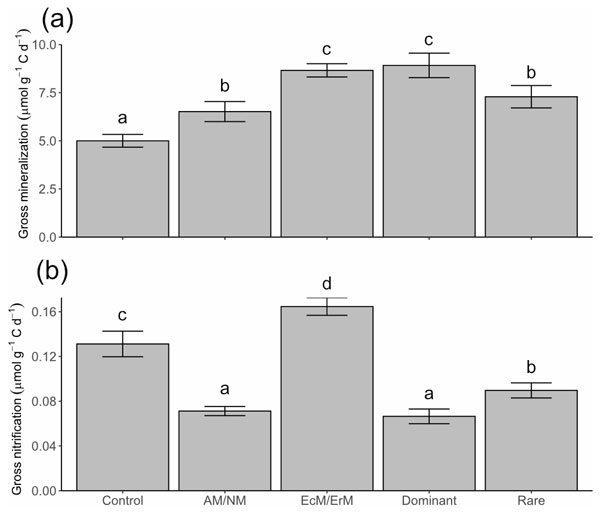
This study explores how different types of fungi and plant species affect nitrogen cycling in Arctic soils. By removing certain plants, we found that fungi associated with shrubs speed up nitrogen processes more than those with grasses. Dominant plant species enhance nitrogen recycling, while rare species increase nitrogen loss. These findings help predict how Arctic ecosystems respond to climate change, highlighting the importance of fungi and plant diversity in regulating ecosystem processes.
Irina Polovodova Asteman, Emilie Jaffré, Agata Olejnik, Maria Holzmann, Mary McGann, Kjell Nordberg, Jean-Charles Pavard, Delia Rösel, and Magali Schweizer
J. Micropalaeontol., 44, 119–143, https://doi.org/10.5194/jm-44-119-2025, https://doi.org/10.5194/jm-44-119-2025, 2025
Short summary
Short summary
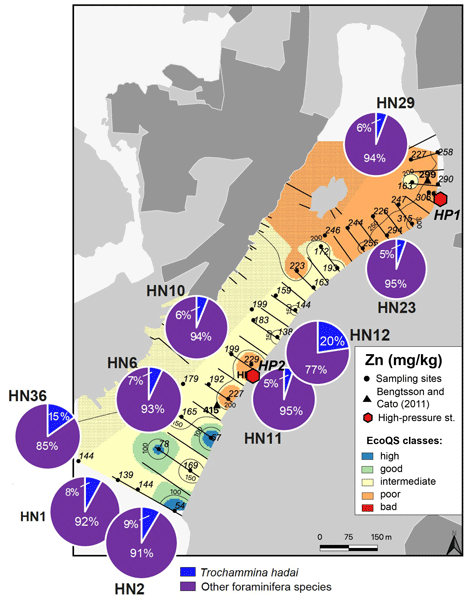
Small boat harbours are suggested to cause pollution and alien species introductions. Here we analysed surface sediments in Hinsholmskilen harbour (Sweden) for benthic foraminifera and potentially toxic elements. Molecular and morphological analyses of foraminifera show the presence of two alien species, Trochammina hadai and Ammonia confertitesta, whilst pollution is mostly low for Cd, Co, Ni, and Pb. In contrast, As, Zn, Cu, Hg, and Cr have high levels due to the use of these elements in boat paints.
Johanna Pihlblad, Louise C. Andresen, Catriona A. Macdonald, David S. Ellsworth, and Yolima Carrillo
Biogeosciences, 20, 505–521, https://doi.org/10.5194/bg-20-505-2023, https://doi.org/10.5194/bg-20-505-2023, 2023
Short summary
Short summary
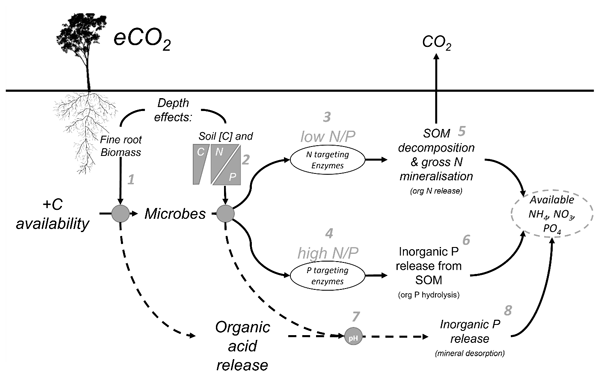
Elevated CO2 in the atmosphere increases forest biomass productivity when growth is not limited by soil nutrients. This study explores how mature trees stimulate soil availability of nitrogen and phosphorus with free-air carbon dioxide enrichment after 5 years of fumigation. We found that both nutrient availability and processes feeding available pools increased in the rhizosphere, and phosphorus increased at depth. This appears to not be by decomposition but by faster recycling of nutrients.
Janne Rinne, Patryk Łakomiec, Patrik Vestin, Joel D. White, Per Weslien, Julia Kelly, Natascha Kljun, Lena Ström, and Leif Klemedtsson
Biogeosciences, 19, 4331–4349, https://doi.org/10.5194/bg-19-4331-2022, https://doi.org/10.5194/bg-19-4331-2022, 2022
Short summary
Short summary
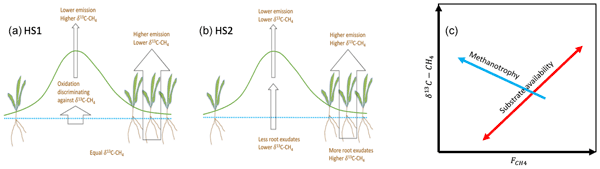
The study uses the stable isotope 13C of carbon in methane to investigate the origins of spatial and temporal variation in methane emitted by a temperate wetland ecosystem. The results indicate that methane production is more important for spatial variation than methane consumption by micro-organisms. Temporal variation on a seasonal timescale is most likely affected by more than one driver simultaneously.
Anders Lindroth, Norbert Pirk, Ingibjörg S. Jónsdóttir, Christian Stiegler, Leif Klemedtsson, and Mats B. Nilsson
Biogeosciences, 19, 3921–3934, https://doi.org/10.5194/bg-19-3921-2022, https://doi.org/10.5194/bg-19-3921-2022, 2022
Short summary
Short summary
We measured the fluxes of carbon dioxide and methane between a moist moss tundra and the atmosphere on Svalbard in order to better understand how such ecosystems are affecting the climate and vice versa. We found that the system was a small sink of carbon dioxide and a small source of methane. These fluxes are small in comparison with other tundra ecosystems in the high Arctic. Analysis of temperature sensitivity showed that respiration was more sensitive than photosynthesis above about 6 ℃.
Jenie Gil, Maija E. Marushchak, Tobias Rütting, Elizabeth M. Baggs, Tibisay Pérez, Alexander Novakovskiy, Tatiana Trubnikova, Dmitry Kaverin, Pertti J. Martikainen, and Christina Biasi
Biogeosciences, 19, 2683–2698, https://doi.org/10.5194/bg-19-2683-2022, https://doi.org/10.5194/bg-19-2683-2022, 2022
Short summary
Short summary
N2O emissions from permafrost soils represent up to 11.6 % of total N2O emissions from natural soils, and their contribution to the global N2O budget will likely increase due to climate change. A better understanding of N2O production from permafrost soil is needed to evaluate the role of arctic ecosystems in the global N2O budget. By studying microbial N2O production processes in N2O hotspots in permafrost peatlands, we identified denitrification as the dominant source of N2O in these surfaces.
Cited articles
Aerts, R., Wallen, B., and Malmer, N.: Growth-limiting nutrients in Sphagnum-dominated bogs subject to low and high atmospheric nitrogen supply, J. Ecol., 80, 131–140, https://doi.org/10.2307/2261070, 1992.
Aleshina, A., Rusakova, M.-A., Drozdova, O. Y., Pokrovsky, O. S., and Lapitskiy, S. A.: Dissolved Iron and Organic Matter in Boreal Rivers across a South–North Transect, Environments, 11, 65, https://doi.org/10.3390/environments11040065, 2024.
Andersson, S. and Schoning, K.: Surface wetness and mire development during the late Holocene in central Sweden, Boreas, 39, 749–760, https://doi.org/10.1111/j.1502-3885.2010.00157.x, 2010.
Bååth, E.: Effects of heavy metals in soil on microbial processes and populations (a review), Water Air Soil Poll., 47, 335–379, https://doi.org/10.1007/BF00279331, 1989.
Bengtsson, F., Granath, G., and Rydin, H.: Photosynthesis, growth, and decay traits in Sphagnum – a multispecies comparison, Ecol. Evol., 6, 3325–3341, https://doi.org/10.1002/ece3.2119, 2016.
Bhattacharyya, A., Schmidt, M. P., Stavitski, E., and Martínez, C. E.: Iron speciation in peats: Chemical and spectroscopic evidence for the co-occurrence of ferric and ferrous iron in organic complexes and mineral precipitates, Org. Geochem., 115, 124–137, https://doi.org/10.1016/j.orggeochem.2017.10.012, 2018.
Biester, H., Knorr, K.-H., Schellekens, J., Basler, A., and Hermanns, Y.-M.: Comparison of different methods to determine the degree of peat decomposition in peat bogs, Biogeosciences, 11, 2691–2707, https://doi.org/10.5194/bg-11-2691-2014, 2014.
Bindler, R., Brännvall, M.-L., Renberg, I., Emteryd, O., and Grip, H.: Natural Lead Concentrations in Pristine Boreal Forest Soils and Past Pollution Trends: A Reference for Critical Load Models, Environ. Sci. Technol., 33, 3362–3367, https://doi.org/10.1021/es9809307, 1999.
Björnerås, C., Persson, P., Weyhenmeyer, G. A., Hammarlund, D., and Kritzberg, E. S.: The lake as an iron sink – new insights on the role of iron speciation, Chem. Geol., 584, 120529, https://doi.org/10.1016/j.chemgeo.2021.120529, 2021.
Brännvall, M.-L., Kurkkio, H., Bindler, R., Emteryd, O., and Renberg, I.: The role of pollution versus natural geological sources for lead enrichment in recent lake sediments and surface forest soils, Environ. Geol., 40, 1057–1065, https://doi.org/10.1007/s002540100260, 2001.
Bränvall, M.-L., Bindler, R., Emteryd, O., and Renberg, I.: Four thousand years of atmospheric lead pollution in northern Europe: a summary from Swedish lake sediments, J. Paleolimnol., 25, 421–435, https://doi.org/10.1023/A:1011186100081, 2001.
Broder, T. and Biester, H.: Hydrologic controls on DOC, As and Pb export from a polluted peatland – the importance of heavy rain events, antecedent moisture conditions and hydrological connectivity, Biogeosciences, 12, 4651–4664, https://doi.org/10.5194/bg-12-4651-2015, 2015.
Broder, T. and Biester, H.: Linking major and trace element concentrations in a headwater stream to DOC release and hydrologic conditions in a bog and peaty riparian zone, Appl. Geochem., 87, 188–201, https://doi.org/10.1016/j.apgeochem.2017.11.003, 2017.
Brouns, K., Verhoeven, J. T. A., and Hefting, M. M.: Short period of oxygenation releases latch on peat decomposition, Sci. Total Environ., 481, 61–68, https://doi.org/10.1016/j.scitotenv.2014.02.030, 2014.
Catanzaro, E. J., Murphy, T. J., Shields, W. R., and Garner, E. L.: Absolute Isotopic Abundance Ratios of Common, Equal-Atom, and Radiogenic Lead Isotopic Standards, J. Res. Natl. Bur. Stand. A Phys. Chem., 72A, 261–267, https://doi.org/10.6028/jres.072A.025, 1968.
Chen, C., Hall, S. J., Coward, E., and Thompson, A.: Iron-mediated organic matter decomposition in humid soils can counteract protection, Nat. Commun., 11, 2255, https://doi.org/10.1038/s41467-020-16071-5, 2020.
Choudhury, S. and Panda, S. K.: Toxic Effects, Oxidative Stress and Ultrastructural Changes in Moss Taxithelium Nepalense (Schwaegr.) Broth. Under Chromium and Lead Phytotoxicity, Water Air Soil Poll., 167, 73–90, https://doi.org/10.1007/s11270-005-8682-9, 2005.
Clark, J. M., Lane, S. N., Chapman, P. J., and Adamson, J. K.: Export of dissolved organic carbon from an upland peatland during storm events: Implications for flux estimates, J. Hydrol., 347, 438–447, https://doi.org/10.1016/j.jhydrol.2007.09.030, 2007.
Clymo, R. S.: Ion Exchange in Sphagnum and its Relation to Bog Ecology, Ann. Bot.-London, 27, 309–324, https://doi.org/10.1093/oxfordjournals.aob.a083847, 1963.
Collin, M. S., Venkatraman, S. K., Vijayakumar, N., Kanimozhi, V., Arbaaz, S. M., Stacey, R. G. S., Anusha, J., Choudhary, R., Lvov, V., Tovar, G. I., Senatov, F., Koppala, S., and Swamiappan, S.: Bioaccumulation of lead (Pb) and its effects on human: A review, Journal of Hazardous Materials Advances, 7, 100094, https://doi.org/10.1016/j.hazadv.2022.100094, 2022.
Connell, D. W., Yu, Q. J., and Verma, V.: Influence of exposure time on toxicity – An overview, Toxicology, 355–356, 49–53, https://doi.org/10.1016/j.tox.2016.05.015, 2016.
Curtinrich, H. J., Sebestyen, S. D., and Hall, S. J.: Metal-bound carbon and nutrients across hydrologically diverse boreal peatlands, Biogeochemistry, 168, 7, https://doi.org/10.1007/s10533-024-01199-z, 2024.
Doelman, P. and Haanstra, L.: Effects of lead on the decomposition of organic matter, Soil Biol. Biochem., 11, 481–485, https://doi.org/10.1016/0038-0717(79)90006-3, 1979.
Dore, M. H. I.: Climate change and changes in global precipitation patterns: What do we know?, Environ. Int., 31, 1167–1181, https://doi.org/10.1016/j.envint.2005.03.004, 2005.
Drollinger, S., Kuzyakov, Y., and Glatzel, S.: Effects of peat decomposition on δ13C and δ15N depth profiles of Alpine bogs, Catena, 178, 1–10, https://doi.org/10.1016/j.catena.2019.02.027, 2019.
Ehnvall, B., Ratcliffe, J. L., Nilsson, M. B., Öquist, M. G., Sponseller, R. A., and Grabs, T.: Topography and Time Shape Mire Morphometry and Large-Scale Mire Distribution Patterns in the Northern Boreal Landscape, J. Geophys. Res.-Earth, 129, e2023JF007324, https://doi.org/10.1029/2023JF007324, 2024.
Esmeijer-Liu, A. J., Kürschner, W. M., Lotter, A. F., Verhoeven, J. T. A., and Goslar, T.: Stable Carbon and Nitrogen Isotopes in a Peat Profile Are Influenced by Early Stage Diagenesis and Changes in Atmospheric CO2 and N Deposition, Water Air Soil Poll., 223, 2007–2022, https://doi.org/10.1007/s11270-011-1001-8, 2012.
EU directive: Directive 2013/39/EU of the European Parliament and of the Council of 12 August 2013 amending Directives 2000/60/EC and 2008/105/EC as regards priority substances in the field of water policy Text with EEA relevance, https://eur-lex.europa.eu/eli/dir/2013/39/oj/eng (last access: 9 April 2026), 2013.
Fenner, N. and Freeman, C.: Drought-induced carbon loss in peatlands, Nat. Geosci., 4, 895–900, https://doi.org/10.1038/ngeo1323, 2011.
Fleming, M., Tai, Y., Zhuang, P., and McBride, M. B.: Extractability and bioavailability of Pb and As in historically contaminated orchard soil: Effects of compost amendments, Environ. Pollut., 177, 90–97, https://doi.org/10.1016/j.envpol.2013.02.013, 2013.
Freeman, C., Ostle, N., and Kang, H.: An enzymic “latch” on a global carbon store, Nature, 409, 149–149, https://doi.org/10.1038/35051650, 2001.
Gmochowska, W., Pietranik, A., Tyszka, R., Ettler, V., Mihaljevič, M., Długosz, M., and Walenczak, K.: Sources of pollution and distribution of Pb, Cd and Hg in Wrocław soils: Insight from chemical and Pb isotope composition, Geochemistry, 79, 434–445, https://doi.org/10.1016/j.chemer.2019.07.002, 2019.
Gorham, E.: Northern Peatlands: Role in the Carbon Cycle and Probable Responses to Climatic Warming, Ecol. Appl., 1, 182–195, https://doi.org/10.2307/1941811, 1991.
Hansson, A., Kjällquist, M., and Boethius, A.: Caring for preservation – coring for prehistoric life. Revisiting 15 000 years of sedimentation at the Ageröd peatland, Southern Sweden, Quaternary Environments and Humans, 2, 100039, https://doi.org/10.1016/j.qeh.2024.100039, 2024.
Heikkinen, K., Saari, M., Heino, J., Ronkanen, A.-K., Kortelainen, P., Joensuu, S., Vilmi, A., Karjalainen, S.-M., Hellsten, S., Visuri, M., and Marttila, H.: Iron in boreal river catchments: Biogeochemical, ecological and management implications, Sci. Total Environ., 805, 150256, https://doi.org/10.1016/j.scitotenv.2021.150256, 2022.
Helbig, M., Waddington, J. M., Alekseychik, P., Amiro, B. D., Aurela, M., Barr, A. G., Black, T. A., Blanken, P. D., Carey, S. K., Chen, J., Chi, J., Desai, A. R., Dunn, A., Euskirchen, E. S., Flanagan, L. B., Forbrich, I., Friborg, T., Grelle, A., Harder, S., Heliasz, M., Humphreys, E. R., Ikawa, H., Isabelle, P.-E., Iwata, H., Jassal, R., Korkiakoski, M., Kurbatova, J., Kutzbach, L., Lindroth, A., Löfvenius, M. O., Lohila, A., Mammarella, I., Marsh, P., Maximov, T., Melton, J. R., Moore, P. A., Nadeau, D. F., Nicholls, E. M., Nilsson, M. B., Ohta, T., Peichl, M., Petrone, R. M., Petrov, R., Prokushkin, A., Quinton, W. L., Reed, D. E., Roulet, N. T., Runkle, B. R. K., Sonnentag, O., Strachan, I. B., Taillardat, P., Tuittila, E.-S., Tuovinen, J.-P., Turner, J., Ueyama, M., Varlagin, A., Wilmking, M., Wofsy, S. C., and Zyrianov, V.: Increasing contribution of peatlands to boreal evapotranspiration in a warming climate, Nat. Clim. Change, 10, 555–560, https://doi.org/10.1038/s41558-020-0763-7, 2020.
Hoang, H. G., Hadi, M., Nguyen, M. K., Hai Nguyen, N. S., Huy Le, P. Q., Nguyen, K. N., Tran, H.-T., and Mishra, U.: Assessing heavy metal pollution levels and associated ecological risks in peatland areas in the Mekong Delta region, Environ. Res., 274, 121319, https://doi.org/10.1016/j.envres.2025.121319, 2025.
Hou, S., Zheng, N., Tang, L., Ji, X., and Li, Y.: Effect of soil pH and organic matter content on heavy metals availability in maize (Zea mays L.) rhizospheric soil of non-ferrous metals smelting area, Environ. Monit. Assess., 191, 634, https://doi.org/10.1007/s10661-019-7793-5, 2019.
IPCC: Climate Change 2021: The Physical Science Basis. Contribution of Working Group I to the Sixth Assessment Report of the Intergovernmental Panel on Climate Change, edited by: Masson-Delmotte, V., Zhai, P., Pirani, A., Connors, S. L., Péan, C., Berger, S., Caud, N., Chen, Y., Goldfarb, L., Gomis, M. I., Huang, M., Leitzell, K., Lonnoy, E., Matthews, J. B. R., Maycock, T. K., Waterfield, T., Yelekçi, O., R. Yu, and Zhou, B., Cambridge, United Kingdom and New York, NY, USA, 2391 pp., https://doi.org/10.1017/9781009157896, 2021.
Jeong, H., Araújo, D. F., Knœry, J., Briant, N., and Ra, K.: Isotopic (Cu, Zn, and Pb) and elemental fingerprints of antifouling paints and their potential use for environmental forensic investigations, Environ. Pollut., 322, 121176, https://doi.org/10.1016/j.envpol.2023.121176, 2023.
Johnson, L. C. and Damman, A. W. H.: Species-Controlled Sphagnum Decay on a South Swedish Raised Bog, Oikos, 61, 234–242, https://doi.org/10.2307/3545341, 1991.
Johnson, L. C., Damman, A. W. H., and Malmer, N.: Sphagnum Macrostructure as an Indicator of Decay and Compaction in Peat Cores from an Ombrotrophic South Swedish Peat-Bog, J. Ecol., 78, 633–647, https://doi.org/10.2307/2260889, 1990.
Kaal, J., Cortizas, A. M., and Biester, H.: Downstream changes in molecular composition of DOM along a headwater stream in the Harz mountains (Central Germany) as determined by FTIR, Pyrolysis-GC–MS and THM-GC–MS, J. Anal. Appl. Pyrol., 126, 50–61, https://doi.org/10.1016/j.jaap.2017.06.025, 2017.
Keane, J. B., Toet, S., Ineson, P., Weslien, P., Stockdale, J. E., and Klemedtsson, L.: Carbon Dioxide and Methane Flux Response and Recovery From Drought in a Hemiboreal Ombrotrophic Fen, Front. Earth Sci., 8, https://doi.org/10.3389/feart.2020.562401, 2021.
Kelly, J., Kljun, N., Eklundh, L., Klemedtsson, L., Liljebladh, B., Olsson, P.-O., Weslien, P., and Xie, X.: Modelling and upscaling ecosystem respiration using thermal cameras and UAVs: Application to a peatland during and after a hot drought, Agr. Forest Meteorol., 300, 108330, https://doi.org/10.1016/j.agrformet.2021.108330, 2021.
Kharanzhevskaya, Y., Gashkova, L., Sinyutkina, A., and Kvasnikova, Z.: Assessment of Present-Day Heavy Metals Pollution and Factors Controlling Surface Water Chemistry of Three Western Siberian Sphagnum-Dominated Raised Bogs, Water, 15, 1869, https://doi.org/10.3390/w15101869, 2023.
Klaminder, J., Bindler, R., Laudon, H., Bishop, K., Emteryd, O., and Renberg, I.: Flux Rates of Atmospheric Lead Pollution within Soils of a Small Catchment in Northern Sweden and Their Implications for Future Stream Water Quality, Environ. Sci. Technol., 40, 4639–4645, https://doi.org/10.1021/es0520666, 2006.
Knorr, K.-H.: DOC-dynamics in a small headwater catchment as driven by redox fluctuations and hydrological flow paths – are DOC exports mediated by iron reduction/oxidation cycles?, Biogeosciences, 10, 891–904, https://doi.org/10.5194/bg-10-891-2013, 2013.
Komárek, M., Ettler, V., Chrastný, V., and Mihaljevič, M.: Lead isotopes in environmental sciences: A review, Environ. Int., 34, 562–577, https://doi.org/10.1016/j.envint.2007.10.005, 2008.
Koppenol, W. H. and Hider, R. H.: Iron and redox cycling. Do's and don'ts, Free Radical Bio. Med., 133, 3–10, https://doi.org/10.1016/j.freeradbiomed.2018.09.022, 2019.
Krull, E. S. and Retallack, G. J.: δ13C depth profiles from paleosols across the Permian-Triassic boundary: Evidence for methane release, GSA Bulletin, 112, 1459–1472, https://doi.org/10.1130/0016-7606(2000)112%3C1459:CDPFPA%3E2.0.CO;2, 2000.
Kumar Das, S., Ekblad, A., Stojanović, K., Mikusinska, A., Gaillard, M.-J., Mitrović, D., and Cui, Q.-Y.: Holocene Stable Isotope (δ13C and δ15N) record of peatland development in Stavsåkra, southern Sweden, Catena, 247, 108510, https://doi.org/10.1016/j.catena.2024.108510, 2024.
Kylander, M. E., Bindler, R., Cortizas, A. M., Gallagher, K., Mörth, C.-M., and Rauch, S.: A novel geochemical approach to paleorecords of dust deposition and effective humidity: 8500 years of peat accumulation at Store Mosse (the “Great Bog”), Sweden, Quaternary Sci. Rev., 69, 69–82, https://doi.org/10.1016/j.quascirev.2013.02.010, 2013.
Limpens, J., Bohlin, E., and Nilsson, M. B.: Phylogenetic or environmental control on the elemental and organo-chemical composition of Sphagnum mosses?, Plant Soil, 417, 69–85, https://doi.org/10.1007/s11104-017-3239-4, 2017.
Lu, Z., Ning, Y., Liu, C., Song, X., Pang, Y., Li, Q., Yang, M., and Zeng, L.: Geochemical Regulation of Heavy Metal Speciation in Subtropical Peatlands: A Case Study in Dajiuhu Peatland, Land, 14, 1256, https://doi.org/10.3390/land14061256, 2025.
Mäkilä, M., Säävuori, H., Grundström, A., and Suomi, T.: Sphagnum decay patterns and bog microtopography in south-eastern Finland, Mires Peat, 1–12, https://doi.org/10.19189/MaP.2017.OMB.283, 2018.
Malmer, N. and Wallén, B.: The dynamics of peat accumulation on bogs: mass balance of hummocks and hollows and its variation throughout a millennium, Ecography, 22, 736–750, https://doi.org/10.1111/j.1600-0587.1999.tb00523.x, 1999.
Marcantonio, F., Flowers, G. C., and Templin, N.: Lead contamination in a wetland watershed: isotopes as fingerprints of pollution, Environ. Geol., 39, 1070–1076, https://doi.org/10.1007/s002549900093, 2000.
Mariussen, E., Johnsen, I. V., and Strømseng, A. E.: Distribution and mobility of lead (Pb), copper (Cu), zinc (Zn), and antimony (Sb) from ammunition residues on shooting ranges for small arms located on mires, Environ. Sci. Pollut. R., 24, 10182–10196, https://doi.org/10.1007/s11356-017-8647-8, 2017.
McCarter, C. P. R., Clay, G. D., Wilkinson, S. L., Sigmund, G., Davidson, S. J., Taufik, M., Page, S., Shuttleworth, E. L., McLagan, D., Chenier, G., Clark, A., and Waddington, J. M.: Peat fires and legacy toxic metal release: An integrative biogeochemical and ecohydrological conceptual framework, Earth-Sci. Rev., 256, 104867, https://doi.org/10.1016/j.earscirev.2024.104867, 2024.
Milberg, P., Törnqvist, L., Westerberg, L. M., and Bastviken, D.: Temporal variations in methane emissions from emergent aquatic macrophytes in two boreonemoral lakes, AoB Plants, 9, plx029, https://doi.org/10.1093/aobpla/plx029, 2017.
Miles, C. J. and Brezonik, P. L.: Oxygen consumption in humic-colored waters by a photochemical ferrous-ferric catalytic cycle, Environ. Sci. Technol., 15, 1089–1095, https://doi.org/10.1021/es00091a010, 1981.
Moore, T. and Basiliko, N.: Decomposition in Boreal Peatlands, in: Boreal Peatland Ecosystems, vol. 188, edited by: Wieder, R. K. and Vitt, D. H., Springer, Berlin, Heidelberg, 125–143, https://doi.org/10.1007/978-3-540-31913-9_7, 2006.
Neubauer, E., Köhler, S. J., von der Kammer, F., Laudon, H., and Hofmann, T.: Effect of pH and stream order on iron and arsenic speciation in boreal catchments, Environ. Sci. Technol., 47, 7120–7128, https://doi.org/10.1021/es401193j, 2013.
Nguyen-Viet, H., Gilbert, D., Mitchell, E. A. D., Badot, P.-M., and Bernard, N.: Effects of Experimental Lead Pollution on the Microbial Communities Associated with Sphagnum fallax (Bryophyta), Microb. Ecol., 54, 232–241, https://doi.org/10.1007/s00248-006-9192-z, 2007.
Nieminen, T. M., Ukonmaanaho, L., and Shotyk, W.: Enrichment of Cu, Ni, Zn, Pb and As in an ombrotrophic peat bog near a Cu-Ni smelter in Southwest Finland, Sci. Total Environ., 292, 81–89, https://doi.org/10.1016/S0048-9697(02)00028-1, 2002.
Novak, M., Zemanova, L., Voldrichiva, P., Stepanova, M., Adamova, M., Pacherova, P., Komarek, A., Krachler, M., and Prechova, E.: Experimental Evidence for Mobility/Immobility of Metals in Peat, Environ. Sci. Technol., https://doi.org/10.1021/es201086v, 2011.
Nungesser, M. K.: Modelling microtopography in boreal peatlands: hummocks and hollows, Ecol. Model., 165, 175–207, https://doi.org/10.1016/S0304-3800(03)00067-X, 2003.
Nykänen, H., Rissanen, A. J., Turunen, J., Tahvanainen, T., and Simola, H.: Carbon storage change and δ13C transitions of peat columns in a partially forestry-drained boreal bog, Plant Soil, 447, 365–378, https://doi.org/10.1007/s11104-019-04375-5, 2020.
Okkenhaug, G., Smebye, A. B., Pabst, T., Amundsen, C. E., Sævarsson, H., and Breedveld, G. D.: Shooting range contamination: mobility and transport of lead (Pb), copper (Cu) and antimony (Sb) in contaminated peatland, J. Soils Sediments, 18, 3310–3323, https://doi.org/10.1007/s11368-017-1739-8, 2018.
Osborne, C., Gilbert-Parkes, S., Spiers, G., Lamit, L. J., Lilleskov, E. A., Basiliko, N., Watmough, S., Andersen, R., Artz, R. E., Benscoter, B. W., Bragazza, L., Bräuer, S. L., Carson, M. A., Chen, X., Chimner, R. A., Clarkson, B. R., Enriquez, A. S., Grover, S. P., Harris, L. I., Hazard, C., Hribljan, J., Juutinen, S., Kane, E. S., Knorr, K.-H., Kolka, R., Laine, A. M., Larmola, T., McCalley, C. K., McLaughlin, J., Moore, T. R., Mykytczuk, N., Normand, A. E., Olefeldt, D., Rich, V., Roulet, N., Rupp, D. L., Rutherford, J., Schadt, C. W., Sonnentag, O., Tedersoo, L., Trettin, C. C., Tuittila, E.-S., Turetsky, M., Urbanová, Z., Varner, R. K., Waldrop, M. P., Wang, M., Wang, Z., Wiedermann, M. M., Williams, S. T., Yavitt, J. B., Yu, Z.-G., and Global Peatland Microbiome Project: Global Patterns of Metal and Other Element Enrichment in Bog and Fen Peatlands, Arch. Environ. Con. Tox., 86, 125–139, https://doi.org/10.1007/s00244-024-01051-3, 2024.
Page, S. E., Logan, J. R., Cory, R. M., and McNeill, K.: Evidence for dissolved organic matter as the primary source and sink of photochemically produced hydroxyl radical in arctic surface waters, Environ. Sci.-Proc. Imp., 16, 807–822, https://doi.org/10.1039/C3EM00596H, 2014.
Peciulyte, A., Samuelsson, L., Olsson, L., McFarland, K. C., Frickmann, J., Østergård, L., Halvorsen, R., Scott, B. R., and Johansen, K. S.: Redox processes acidify and decarboxylate steam-pretreated lignocellulosic biomass and are modulated by LPMO and catalase, Biotechnol. Biofuels, 11, 165, https://doi.org/10.1186/s13068-018-1159-z, 2018.
Phillips, D. L. and Gregg, J. W.: Uncertainty in source partitioning using stable isotopes, Oecologia, 127, 171–179, https://doi.org/10.1007/s004420000578, 2001.
Pinheiro, J., Bates, D., and R Core Team: Linear and Nonlinear Mixed Effects Models, https://doi.org/10.32614/CRAN.package.nlme, 2023.
Prijac, A., Gandois, L., Taillardat, P., Bourgault, M.-A., Riahi, K., Ponçot, A., Tremblay, A., and Garneau, M.: Hydrological connectivity controls dissolved organic carbon exports in a peatland-dominated boreal catchment stream, Hydrol. Earth Syst. Sci., 27, 3935–3955, https://doi.org/10.5194/hess-27-3935-2023, 2023.
Qin, L., Freeman, C., Zou, Y., Wang, G., Fenner, N., Yang, L., Otte, M. L., and Jiang, M.: An iron-reduction-mediated cascade mechanism increases the risk of carbon loss from mineral-rich peatlands, Appl. Soil Ecol., 172, 104361, https://doi.org/10.1016/j.apsoil.2021.104361, 2022.
R Core Team: R: A Language and Environment for Statistical Computing, 2024.
Reimann, C., Flem, B., Fabian, K., Birke, M., Ladenberger, A., Négrel, P., Demetriades, A., and Hoogewerff, J.: Lead and lead isotopes in agricultural soils of Europe – The continental perspective, Appl. Geochem., 27, 532–542, https://doi.org/10.1016/j.apgeochem.2011.12.012, 2012.
Renberg, I., Brännvall, M.-L., Bindler, R., and Emteryd, O.: Atmospheric Lead Pollution History during Four Millennia (2000 BC to 2000 AD) in Sweden, ambi, 29, 150–156, https://doi.org/10.1579/0044-7447-29.3.150, 2000.
Riedel, T., Zak, D., Biester, H., and Dittmar, T.: Iron traps terrestrially derived dissolved organic matter at redox interfaces, P. Natl. Acad. Sci. USA, 110, 10101–10105, https://doi.org/10.1073/pnas.1221487110, 2013.
Rinne, J., Łakomiec, P., Vestin, P., White, J. D., Weslien, P., Kelly, J., Kljun, N., Ström, L., and Klemedtsson, L.: Spatial and temporal variation in δ13C values of methane emitted from a hemiboreal mire: methanogenesis, methanotrophy, and hysteresis, Biogeosciences, 19, 4331–4349, https://doi.org/10.5194/bg-19-4331-2022, 2022.
Rosset, T., Binet, S., Rigal, F., and Gandois, L.: Peatland Dissolved Organic Carbon Export to Surface Waters: Global Significance and Effects of Anthropogenic Disturbance, Geophys. Res. Lett., 49, e2021GL096616, https://doi.org/10.1029/2021GL096616, 2022.
Rothwell, J. J., Robinson, S. G., Evans, M. G., Yang, J., and Allott, T. E. H.: Heavy metal release by peat erosion in the Peak District, southern Pennines, UK, Hydrol. Process., 19, 2973–2989, https://doi.org/10.1002/hyp.5811, 2005.
Roux, G. L., Weiss, D., Grattan, J., Givelet, N., Krachler, M., Cheburkin, A., Rausch, N., Kober, B., and Shotyk, W.: Identifying the sources and timing of ancient and medieval atmospheric lead pollution in England using a peat profile from Lindow bog, Manchester, J. Environ. Monitor., 6, 502–510, https://doi.org/10.1039/B401500B, 2004.
Salehpour, M., Håkansson, K., Westermark, P., Antoni, G., Wikström, G., and Possnert, G.: Life Science Applications Utilizing Radiocarbon Tracing, Radiocarbon, 55, 865–873, https://doi.org/10.1017/S0033822200058021, 2013.
Shakya, K., Chettri, M. K., and Sawidis, T.: Impact of Heavy Metals (Copper, Zinc, and Lead) on the Chlorophyll Content of Some Mosses, Arch. Environ. Con. Tox., 54, 412–421, https://doi.org/10.1007/s00244-007-9060-y, 2008.
Shotyk, W., Cheburkin, A. K., Appleby, P. G., Fankhauser, A., and Kramers, J. D.: Two thousand years of atmospheric arsenic, antimony, and lead deposition recorded in an ombrotrophic peat bog profile, Jura Mountains, Switzerland, Earth Planet. Sc. Lett., 145, E1–E7, https://doi.org/10.1016/S0012-821X(96)00197-5, 1996.
Smeds, J., Ehnvall, B., Liu, T., Bertilsson, S., Björn, E., Nilsson, M. B., Bishop, K., Skyllberg, U., and Öquist, M.: Effect of Restoration on Physical and Chemical Peat Properties in Previously Drained Boreal Peatlands, Ecosystems, 28, 45, https://doi.org/10.1007/s10021-025-00991-8, 2025.
Song, X., Wang, P., Van Zwieten, L., Bolan, N., Wang, H., Li, X., Cheng, K., Yang, Y., Wang, M., Liu, T., and Li, F.: Towards a better understanding of the role of Fe cycling in soil for carbon stabilization and degradation, Carbon Res., 1, 5, https://doi.org/10.1007/s44246-022-00008-2, 2022.
Steinnes, E., Hvatum, O. Ø., Bølviken, B., and Varskog, P.: Atmospheric supply of trace elements studied by peat samples from ombrotrophic bogs, J. Environ. Qual., 34, 192–197, https://doi.org/10.2134/jeq2005.0192, 2005.
Strack, M., Waddington, J. M., Bourbonniere, R. A., Buckton, E. L., Shaw, K., Whittington, P., and Price, J. S.: Effect of water table drawdown on peatland dissolved organic carbon export and dynamics, Hydrol. Process., 22, 3373–3385, https://doi.org/10.1002/hyp.6931, 2008.
Szkokan-Emilson, E. J., Kielstra, B., Watmough, S., and Gunn, J.: Drought-induced release of metals from peatlands in watersheds recovering from historical metal and sulphur deposition, Biogeochemistry, 116, 131–145, https://doi.org/10.1007/s10533-013-9919-0, 2013.
Tchounwou, P. B., Yedjou, C. G., Patlolla, A. K., and Sutton, D. J.: Heavy Metals Toxicity and the Environment, EXS, 101, 133–164, https://doi.org/10.1007/978-3-7643-8340-4_6, 2012.
Thomsen, J., Lett, S., Martens, H. J., Sørensen, H., Kelleher, D., Tryfona, T., Dupree, P., and Johansen, K. S.: Enzymatic saccharification of peat polysaccharides is limited by accessibility, PLoS One, 20, e0312219, https://doi.org/10.1371/journal.pone.0312219, 2025.
Tipping, E., Smith, E. J., Lawlor, A. J., Hughes, S., and Stevens, P. A.: Predicting the release of metals from ombrotrophic peat due to drought-induced acidification, Environ. Pollut., 123, 239–253, https://doi.org/10.1016/S0269-7491(02)00375-5, 2003.
Trusiak, A., Treibergs, L. A., Kling, G. W., and Cory, R. M.: The role of iron and reactive oxygen species in the production of CO2 in arctic soil waters, Geochim. Cosmochim. Ac., 224, 80–95, https://doi.org/10.1016/j.gca.2017.12.022, 2018.
Turetsky, M. R., Crow, S. E., Evans, R. J., Vitt, D. H., and Wieder, R. K.: Trade-Offs in Resource Allocation among Moss Species Control Decomposition in Boreal Peatlands, J. Ecol., 96, 1297–1305, 2008.
Van Sprang, P. A., Nys, C., Blust, R. J. P., Chowdhury, J., Gustafsson, J. P., Janssen, C. J., and De Schamphelaere, K. A. C.: The derivation of effects threshold concentrations of lead for European freshwater ecosystems, Environ. Toxicol. Chem., 35, 1310–1320, https://doi.org/10.1002/etc.3262, 2016.
Verhoeven, J. T. A. and Liefveld, W. M.: The ecological significance of organochemical compounds in Sphagnum, Acta Bot. Neerl., 46, 117–130, 1997.
Vile, M. A., Wieder, R. K., and Novák, M.: Mobility of Pb in Sphagnum-derived peat, Biogeochemistry, 45, 35–52, https://doi.org/10.1023/A:1006085410886, 1999.
Wang, Y., Wang, H., He, J.-S., and Feng, X.: Iron-mediated soil carbon response to water-table decline in an alpine wetland, Nat. Commun., 8, 15972, https://doi.org/10.1038/ncomms15972, 2017.
Wang, Y., Liu, X., Zhang, X., Dai, G., Wang, Z., and Feng, X.: Evaluating wetland soil carbon stability related to iron transformation during redox oscillations, Geoderma, 428, 116222, https://doi.org/10.1016/j.geoderma.2022.116222, 2022.
Weng, J.-K. and Chapple, C.: The origin and evolution of lignin biosynthesis, New Phytol., 187, 273–285, https://doi.org/10.1111/j.1469-8137.2010.03327.x, 2010.
Weyhenmeyer, G. A., Prairie, Y. T., and Tranvik, L. J.: Browning of boreal freshwaters coupled to carbon-iron interactions along the aquatic continuum, PLoS One, 9, e88104, https://doi.org/10.1371/journal.pone.0088104, 2014.
Wilson, R., Hopple, A., Tfaily, M., Sebestyen, S., Schadt, C., Pfeifer-Meister, L., Zalman, C., Mcfarlane, K., Kostka, J., Kolton, M., Kolka, R., Kluber, L., Keller, J., Guilderson, T., Griffiths, N., Chanton, J., Bridgham, S., and Hanson, P.: Stability of Peatland Carbon to Rising Temperatures, Nat. Commun., 7, https://doi.org/10.1038/ncomms13723, 2016.
Yu, G.-H. and Kuzyakov, Y.: Fenton chemistry and reactive oxygen species in soil: Abiotic mechanisms of biotic processes, controls and consequences for carbon and nutrient cycling, Earth-Sci. Rev., 214, 103525, https://doi.org/10.1016/j.earscirev.2021.103525, 2021.
Zeh, L., Igel, M. T., Schellekens, J., Limpens, J., Bragazza, L., and Kalbitz, K.: Vascular plants affect properties and decomposition of moss-dominated peat, particularly at elevated temperatures, Biogeosciences, 17, 4797–4813, https://doi.org/10.5194/bg-17-4797-2020, 2020.
Zhang, H., Piilo, S., Aquino-López, M. A., Guo, Z., Zhao, Y., Laine, A. M., Korrensalo, A., Tuittila, E.-S., and Väliranta, M.: Drivers on Carbon Accumulation Vary Along the Hydrological Gradient of a Subarctic Patterned Peatland, J. Geophys. Res.-Biogeo., 130, e2024JG008677, https://doi.org/10.1029/2024JG008677, 2025.
Zhao, Y., Liu, C., Li, X., Ma, L., Zhai, G., and Feng, X.: Sphagnum increases soil's sequestration capacity of mineral-associated organic carbon via activating metal oxides, Nat. Commun., 14, 5052, https://doi.org/10.1038/s41467-023-40863-0, 2023.
Zheng, H., Chen, L., Li, N., Liu, B., Meng, N., Wang, M., and Chen, S.: Toxicity threshold of lead (Pb) to nitrifying microorganisms in soils determined by substrate-induced nitrification assay and prediction model, J. Integr. Agr., 16, 1832–1840, https://doi.org/10.1016/S2095-3119(16)61586-1, 2017.
Zhong, Y., Jiang, M., and Middleton, B. A.: Effects of water level alteration on carbon cycling in peatlands, Ecosystem Health and Sustainability, 6, 1806113, https://doi.org/10.1080/20964129.2020.1806113, 2020.
Short summary
Peatlands not only store large amounts of carbon but also harmful metals. In a Swedish wetland, we sampled and analysed peat and water samples and found that iron, lead and carbon are released together, especially after dry periods. Lead levels were often toxic and mostly came from past gasoline pollution. The lake trap some of this released lead down stream of the wetland. We showed that climate change may cause peat to break down, releasing carbon and harmful metals into nearby water systems.
Peatlands not only store large amounts of carbon but also harmful metals. In a Swedish wetland,...


Altmetrics
Final-revised paper
Preprint