
Articles | Volume 23, issue 10
https://doi.org/10.5194/bg-23-3407-2026
© Author(s) 2026. This work is distributed under
the Creative Commons Attribution 4.0 License.
the Creative Commons Attribution 4.0 License.
https://doi.org/10.5194/bg-23-3407-2026
© Author(s) 2026. This work is distributed under
the Creative Commons Attribution 4.0 License.
the Creative Commons Attribution 4.0 License.
Research article
| 
20 May 2026
Research article |
| 20 May 2026
| 20 May 2026
Sphagnum and herbaceous net ecosystem exchanges in a Pyrenean peatland: a long-term study using the ISBA model
Raphael Garisoain
CORRESPONDING AUTHOR

Météo-France, CNRS, Univ. Toulouse, CNRM, Toulouse, France
CRBE, Universite de Toulouse, CNRS, Toulouse, France
Christine Delire
Météo-France, CNRS, Univ. Toulouse, CNRM, Toulouse, France
Bertrand Decharme
Météo-France, CNRS, Univ. Toulouse, CNRM, Toulouse, France
Laure Gandois
CRBE, Universite de Toulouse, CNRS, Toulouse, France
Related authors
No articles found.
Jeanne Decayeux, Bertrand Decharme, Romain Darnajoux, and Christine Delire
Geosci. Model Dev., 19, 7787–7815, https://doi.org/10.5194/gmd-19-7787-2026, https://doi.org/10.5194/gmd-19-7787-2026, 2026
Short summary
Short summary
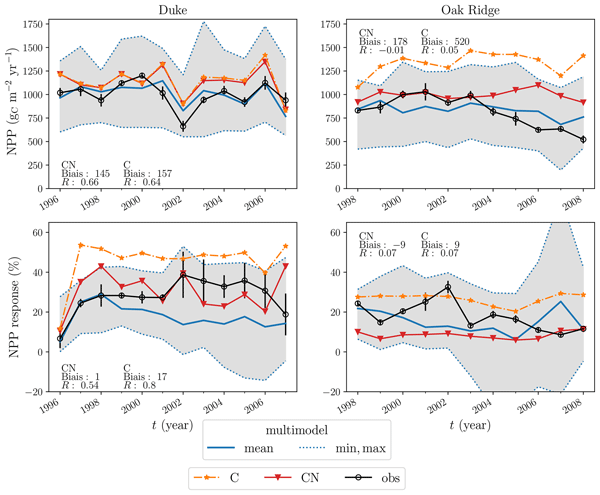
The article describes the implementation of the nitrogen cycle in the land surface model ISBA (Interaction-Soil-Biosphere-Atmosphere). The model is evaluated using Free Air CO2 Enrichment experiments. A comparison with a multi-model analysis shows that the nitrogen model version performs better than the carbon-only version, notably a reduced sensitivity to elevated CO2, and smaller C stocks. We also present a detailed analysis of the simulated N dynamics in the soil.
Bertrand Decharme, Diane Tzanos, Lucas Hardouin, Aaron Boone, Marie Minvielle, Patrick Le Moigne, and Rémi Gaillard
Geosci. Model Dev., 19, 7239–7277, https://doi.org/10.5194/gmd-19-7239-2026, https://doi.org/10.5194/gmd-19-7239-2026, 2026
Short summary
Short summary
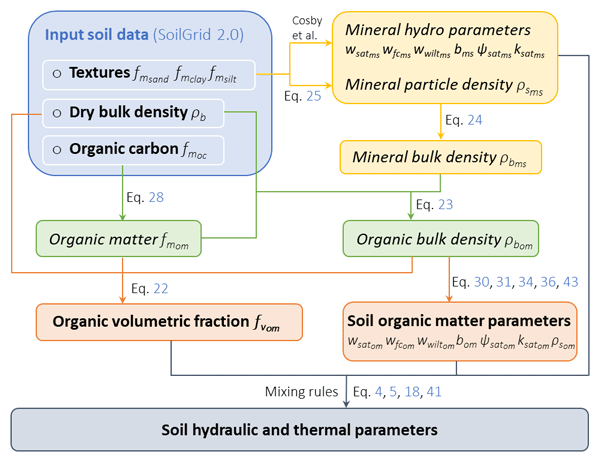
We developed a new method to represent how organic matter in soils, together with a mineral soil compactness adjustment, influences the movement of water and heat in land models. We implemented this approach in a global model and performed long-term simulations driven by weather data and global soil maps. Compared with an older empirical method, it produces more consistent soil moisture, runoff, evaporation, and ground temperature and shows closer agreement with observations.
Lucia Pérez-Serrano, Sergey V. Loiko, Artem Lim, Laure Gandois, Christine Hatté, Jean-Luc Rols, and Oleg S. Pokrovsky
EGUsphere, https://doi.org/10.5194/egusphere-2026-3058, https://doi.org/10.5194/egusphere-2026-3058, 2026
Short summary
Short summary
Permafrost peatlands under climate change are likely to release elements trapped in frozen layers. We sampled a highly ice-enriched thaw gradient in the arctic tundra. Frozen layers are characterized by a labile, microbial signature opposed to active layer porewaters homogenized through the freeze-thaw seasonal cycles. Permafrost degradation may result into the mobilization of carbon and nutrients through phosphorous consumption before hydrological export.
Konstantin Gregor, Benjamin F. Meyer, Tillmann Gaida, Victor Justo Vasquez, Karina Bett-Williams, Matthew Forrest, João P. Darela-Filho, Sam Rabin, Marcos Longo, Joe R. Melton, Johan Nord, Peter Anthoni, Vladislav Bastrikov, Thomas Colligan, Christine Delire, Michael C. Dietze, George Hurtt, Akihiko Ito, Lasse T. Keetz, Jürgen Knauer, Johannes Köster, Tzu-Shun Lin, Lei Ma, Marie Minvielle, Stefan Olin, Sebastian Ostberg, Hao Shi, Reiner Schnur, Qing Sun, Peter E. Thornton, and Anja Rammig
Geosci. Model Dev., 19, 2407–2436, https://doi.org/10.5194/gmd-19-2407-2026, https://doi.org/10.5194/gmd-19-2407-2026, 2026
Short summary
Short summary
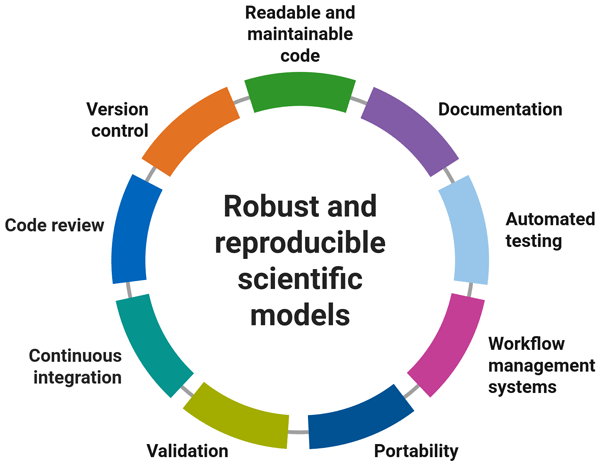
Geoscientific models are crucial for understanding Earth’s processes. However, they sometimes do not adhere to highest software quality standards, and scientific results are often hard to reproduce due to the complexity of the workflows. Here we gather the expertise of 20 modeling groups and software engineers to define best practices for making geoscientific models maintainable, usable, and reproducible. We conclude with an open-source example serving as a reference for modeling communities.
Silvana Ramos Buarque, Bertrand Decharme, Alina L. Barbu, and Laurent Franchisteguy
Earth Syst. Sci. Data, 17, 7227–7249, https://doi.org/10.5194/essd-17-7227-2025, https://doi.org/10.5194/essd-17-7227-2025, 2025
Short summary
Short summary
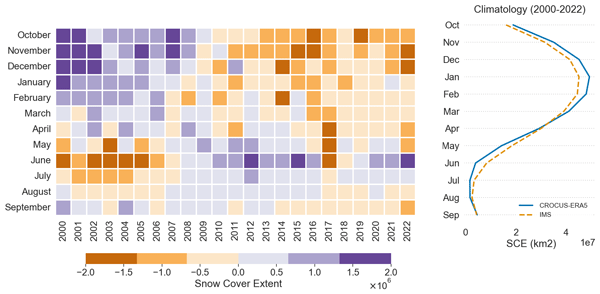
The Crocus-ERA5 snow dataset supports Arctic snow monitoring and contributes to the Arctic Report Card. It improves on its predecessor with higher spatial resolution (0.25° vs. 0.75°), enhancing topographic and land cover detail. The product’s performance is assessed in terms of snow depth and cover compared to in situ observations and satellite data. The findings show a notable improvement, though remaining biases appear in boreal forests, where snow–forest interactions are not captured.
Bertrand Decharme
Geosci. Model Dev., 18, 9349–9384, https://doi.org/10.5194/gmd-18-9349-2025, https://doi.org/10.5194/gmd-18-9349-2025, 2025
Short summary
Short summary
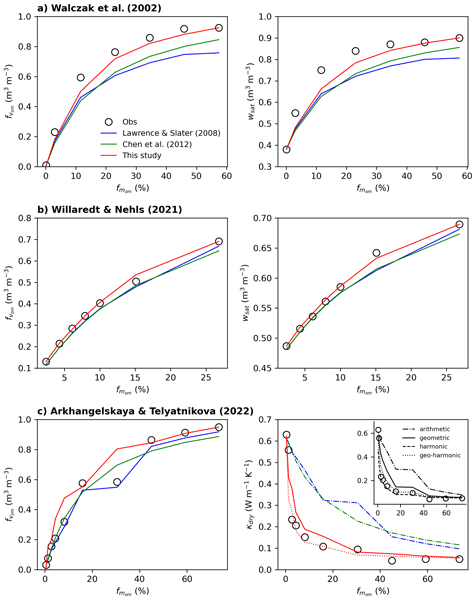
This study resolves a key inconsistency in how Earth system models represent the physical properties of soil organic matter in land surface models. It introduces a new method to compute its volumetric fraction and physical effects using standard input data and soil mixture theory. Validated with experimental mixtures and field observations, the proposed framework improves the physical realism of soil property estimates.
Daniele Peano, Deborah Hemming, Christine Delire, Yuanchao Fan, Hanna Lee, Stefano Materia, Julia E. M. S. Nabel, Taejin Park, David Wårlind, Andy Wiltshire, and Sönke Zaehle
Biogeosciences, 22, 7117–7135, https://doi.org/10.5194/bg-22-7117-2025, https://doi.org/10.5194/bg-22-7117-2025, 2025
Short summary
Short summary
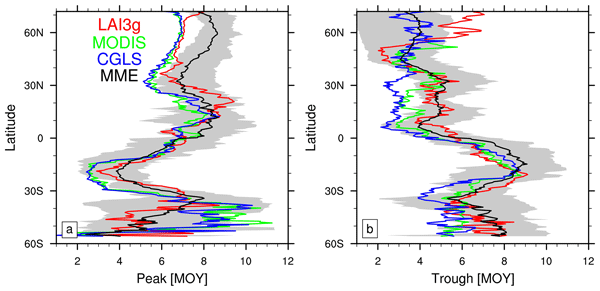
Earth System Models are the principal tools for scientists to study past, present, and future climate changes. This work investigates the ability of a set of them to represent the observed changes in vegetation, which are vital to estimating the impact of future climate mitigation and adaptation strategies. This study highlights the main limitations in correctly representing vegetation variability. These tools still need further development to improve our understanding of future changes.
Théo Brivoal, Virginie Guemas, Martin Vancoppenolle, Clément Rousset, and Bertrand Decharme
Geosci. Model Dev., 18, 6885–6902, https://doi.org/10.5194/gmd-18-6885-2025, https://doi.org/10.5194/gmd-18-6885-2025, 2025
Short summary
Short summary
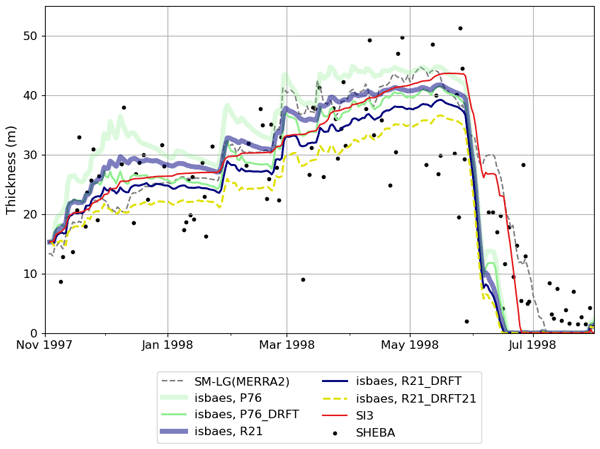
Snow in polar regions is key to sea ice formation and the Earth's climate, but current climate models simplify snow cover on sea ice. This study integrates an intermediate-complexity snow-physics scheme into a sea ice model designed for climate applications. We show that modeling the temporal changes in properties such as the density and thermal conductivity of the snow layers leads to a more accurate representation of heat transfer between the underlying sea ice and the atmosphere.
Aurélien Mirebeau, Cécile de Munck, Bertrand Bonan, Christine Delire, Aude Lemonsu, Valéry Masson, and Stephan Weber
Geosci. Model Dev., 18, 5329–5349, https://doi.org/10.5194/gmd-18-5329-2025, https://doi.org/10.5194/gmd-18-5329-2025, 2025
Short summary
Short summary
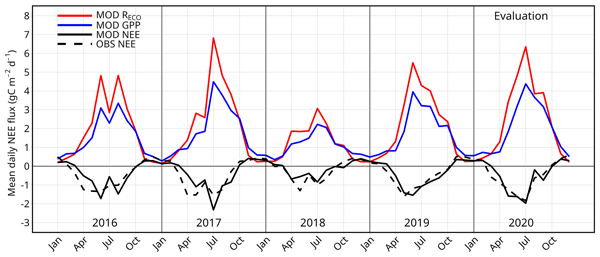
The greening of cities is recommended to limit the effects of climate change. In particular, green roofs can provide numerous environmental benefits, such as urban cooling, water retention, and carbon sequestration. The aim of this research is to develop a new module for calculating green roof CO2 fluxes within a model that can already simulate hydrological and thermal processes of such roofs. The calibration and evaluation of this module take advantage of long-term experimental data.
Rubaya Pervin, Scott Robeson, Mallory Barnes, Stephen Sitch, Anthony Walker, Ben Poulter, Fabienne Maignan, Qing Sun, Thomas Colligan, Sönke Zaehle, Kashif Mahmud, Peter Anthoni, Almut Arneth, Vivek Arora, Vladislav Bastrikov, Liam Bogucki, Bertrand Decharme, Christine Delire, Stefanie Falk, Akihiko Ito, Etsushi Kato, Daniel Kennedy, Jürgen Knauer, Michael O’Sullivan, Wenping Yuan, and Natasha MacBean
EGUsphere, https://doi.org/10.5194/egusphere-2025-2841, https://doi.org/10.5194/egusphere-2025-2841, 2025
Short summary
Short summary
Drylands contribute more than a third of the global vegetation productivity. Yet, these regions are not well represented in global vegetation models. Here, we tested how well 15 global models capture annual changes in dryland vegetation productivity. Models that didn’t have vegetation change over time or fire have lower variability in vegetation productivity. Models need better representation of grass cover types and their coverage. Our work highlights where and how these models need to improve.
Amali A. Amali, Clemens Schwingshackl, Akihiko Ito, Alina Barbu, Christine Delire, Daniele Peano, David M. Lawrence, David Wårlind, Eddy Robertson, Edouard L. Davin, Elena Shevliakova, Ian N. Harman, Nicolas Vuichard, Paul A. Miller, Peter J. Lawrence, Tilo Ziehn, Tomohiro Hajima, Victor Brovkin, Yanwu Zhang, Vivek K. Arora, and Julia Pongratz
Earth Syst. Dynam., 16, 803–840, https://doi.org/10.5194/esd-16-803-2025, https://doi.org/10.5194/esd-16-803-2025, 2025
Short summary
Short summary
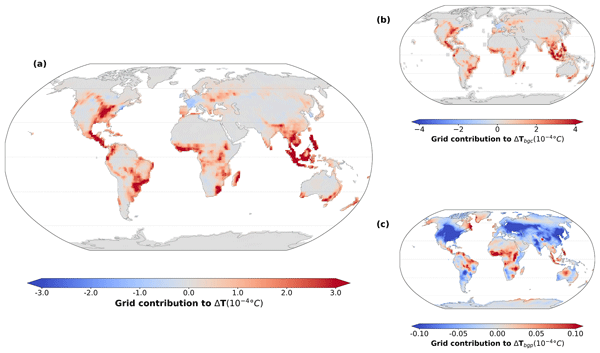
Our study explored the impact of anthropogenic land-use change (LUC) on climate dynamics, focusing on biogeophysical (BGP) and biogeochemical (BGC) effects using data from the Land Use Model Intercomparison Project (LUMIP) and the Coupled Model Intercomparison Project Phase 6 (CMIP6). We found that LUC-induced carbon emissions contribute to a BGC warming of 0.21 °C, with BGC effects dominating globally over BGP effects, which show regional variability. Our findings highlight discrepancies in model simulations and emphasize the need for improved representations of LUC processes.
Bertrand Decharme and Jeanne Colin
Earth Syst. Dynam., 16, 729–752, https://doi.org/10.5194/esd-16-729-2025, https://doi.org/10.5194/esd-16-729-2025, 2025
Short summary
Short summary
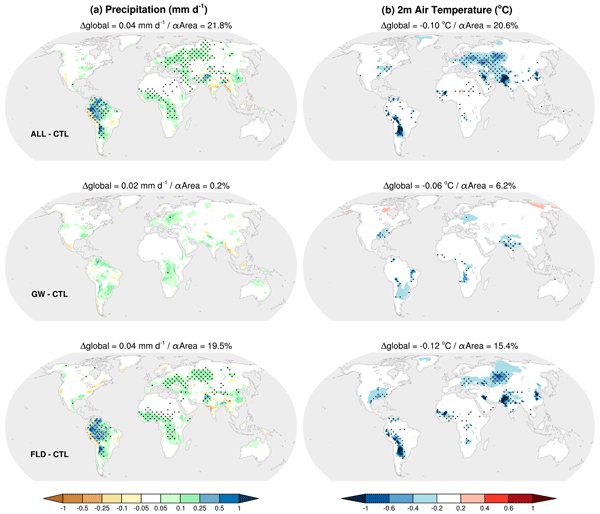
Our study uses a global climate model to investigate how groundwater and floodplains influence today's climate. We found that these continental water sources, often overlooked in climate models, can influence precipitation, temperature, and land surface hydrology. This research contributes to a better understanding of the dynamics of the Earth system and highlights the importance of considering interactions between hydrology and the atmosphere.
Pierre Friedlingstein, Michael O'Sullivan, Matthew W. Jones, Robbie M. Andrew, Dorothee C. E. Bakker, Judith Hauck, Peter Landschützer, Corinne Le Quéré, Ingrid T. Luijkx, Glen P. Peters, Wouter Peters, Julia Pongratz, Clemens Schwingshackl, Stephen Sitch, Josep G. Canadell, Philippe Ciais, Robert B. Jackson, Simone R. Alin, Peter Anthoni, Leticia Barbero, Nicholas R. Bates, Meike Becker, Nicolas Bellouin, Bertrand Decharme, Laurent Bopp, Ida Bagus Mandhara Brasika, Patricia Cadule, Matthew A. Chamberlain, Naveen Chandra, Thi-Tuyet-Trang Chau, Frédéric Chevallier, Louise P. Chini, Margot Cronin, Xinyu Dou, Kazutaka Enyo, Wiley Evans, Stefanie Falk, Richard A. Feely, Liang Feng, Daniel J. Ford, Thomas Gasser, Josefine Ghattas, Thanos Gkritzalis, Giacomo Grassi, Luke Gregor, Nicolas Gruber, Özgür Gürses, Ian Harris, Matthew Hefner, Jens Heinke, Richard A. Houghton, George C. Hurtt, Yosuke Iida, Tatiana Ilyina, Andrew R. Jacobson, Atul Jain, Tereza Jarníková, Annika Jersild, Fei Jiang, Zhe Jin, Fortunat Joos, Etsushi Kato, Ralph F. Keeling, Daniel Kennedy, Kees Klein Goldewijk, Jürgen Knauer, Jan Ivar Korsbakken, Arne Körtzinger, Xin Lan, Nathalie Lefèvre, Hongmei Li, Junjie Liu, Zhiqiang Liu, Lei Ma, Greg Marland, Nicolas Mayot, Patrick C. McGuire, Galen A. McKinley, Gesa Meyer, Eric J. Morgan, David R. Munro, Shin-Ichiro Nakaoka, Yosuke Niwa, Kevin M. O'Brien, Are Olsen, Abdirahman M. Omar, Tsuneo Ono, Melf Paulsen, Denis Pierrot, Katie Pocock, Benjamin Poulter, Carter M. Powis, Gregor Rehder, Laure Resplandy, Eddy Robertson, Christian Rödenbeck, Thais M. Rosan, Jörg Schwinger, Roland Séférian, T. Luke Smallman, Stephen M. Smith, Reinel Sospedra-Alfonso, Qing Sun, Adrienne J. Sutton, Colm Sweeney, Shintaro Takao, Pieter P. Tans, Hanqin Tian, Bronte Tilbrook, Hiroyuki Tsujino, Francesco Tubiello, Guido R. van der Werf, Erik van Ooijen, Rik Wanninkhof, Michio Watanabe, Cathy Wimart-Rousseau, Dongxu Yang, Xiaojuan Yang, Wenping Yuan, Xu Yue, Sönke Zaehle, Jiye Zeng, and Bo Zheng
Earth Syst. Sci. Data, 15, 5301–5369, https://doi.org/10.5194/essd-15-5301-2023, https://doi.org/10.5194/essd-15-5301-2023, 2023
Short summary
Short summary
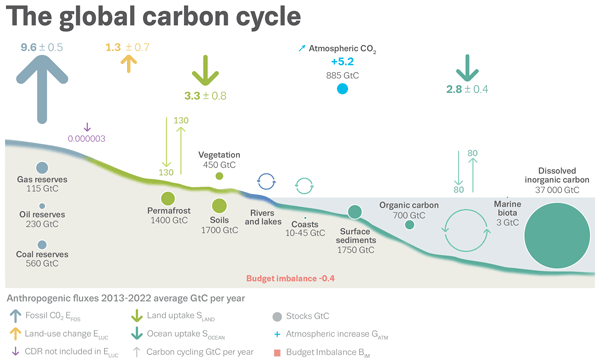
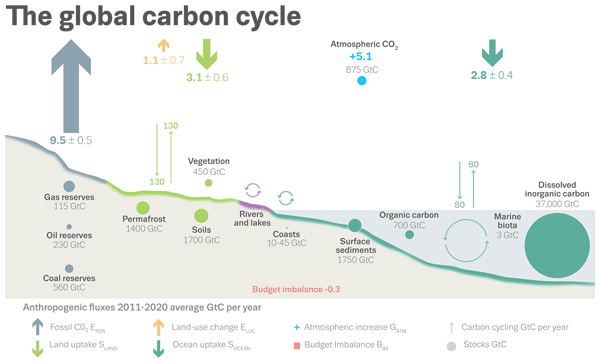
The Global Carbon Budget 2023 describes the methodology, main results, and data sets used to quantify the anthropogenic emissions of carbon dioxide (CO2) and their partitioning among the atmosphere, land ecosystems, and the ocean over the historical period (1750–2023). These living datasets are updated every year to provide the highest transparency and traceability in the reporting of CO2, the key driver of climate change.
Antonin Prijac, Laure Gandois, Pierre Taillardat, Marc-André Bourgault, Khawla Riahi, Alex Ponçot, Alain Tremblay, and Michelle Garneau
Hydrol. Earth Syst. Sci., 27, 3935–3955, https://doi.org/10.5194/hess-27-3935-2023, https://doi.org/10.5194/hess-27-3935-2023, 2023
Short summary
Short summary
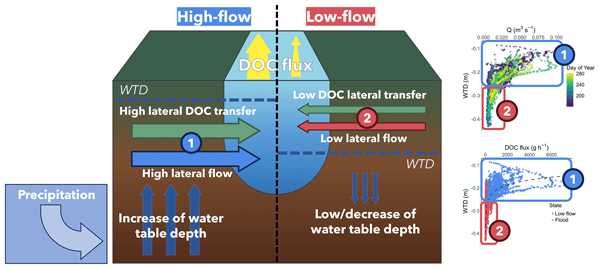
The peatland dissolved organic carbon (DOC) lost through aquatic exports can offset a significant proportion of the ecosystem carbon balance. Hence, we propose a new approach to better estimate the DOC exports based on the specific contribution of a boreal peatland (Canada) during periods of high flow. In addition, we studied the relations between DOC concentrations and stream discharge in order to better understand the DOC export mechanisms under contrasted hydrometeorological conditions.
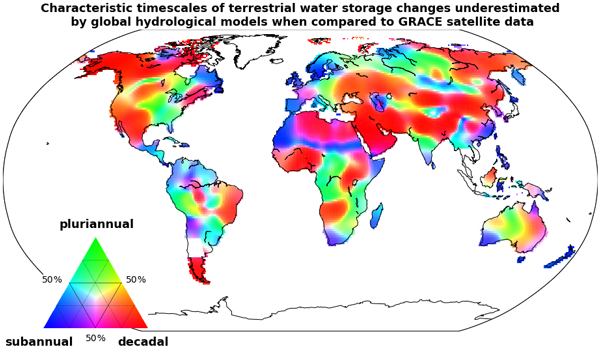
Julia Pfeffer, Anny Cazenave, Alejandro Blazquez, Bertrand Decharme, Simon Munier, and Anne Barnoud
Hydrol. Earth Syst. Sci., 27, 3743–3768, https://doi.org/10.5194/hess-27-3743-2023, https://doi.org/10.5194/hess-27-3743-2023, 2023
Short summary
Short summary
The GRACE (Gravity Recovery And Climate Experiment) satellite mission enabled the quantification of water mass redistributions from 2002 to 2017. The analysis of GRACE satellite data shows here that slow changes in terrestrial water storage occurring over a few years to a decade are severely underestimated by global hydrological models. Several sources of errors may explain such biases, likely including the inaccurate representation of groundwater storage changes.
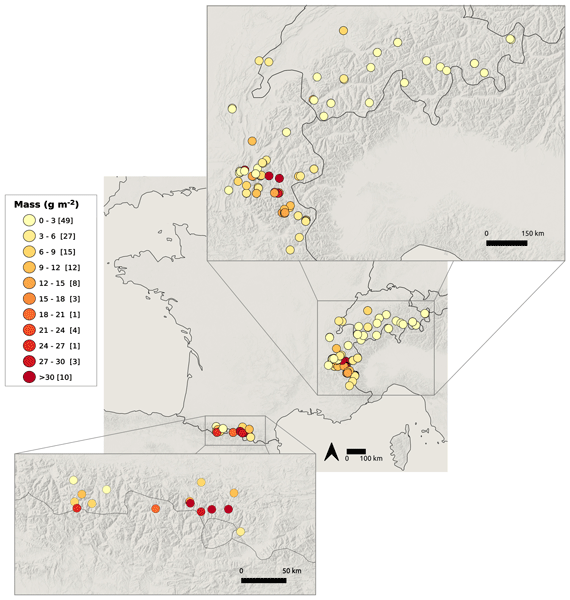
Marie Dumont, Simon Gascoin, Marion Réveillet, Didier Voisin, François Tuzet, Laurent Arnaud, Mylène Bonnefoy, Montse Bacardit Peñarroya, Carlo Carmagnola, Alexandre Deguine, Aurélie Diacre, Lukas Dürr, Olivier Evrard, Firmin Fontaine, Amaury Frankl, Mathieu Fructus, Laure Gandois, Isabelle Gouttevin, Abdelfateh Gherab, Pascal Hagenmuller, Sophia Hansson, Hervé Herbin, Béatrice Josse, Bruno Jourdain, Irene Lefevre, Gaël Le Roux, Quentin Libois, Lucie Liger, Samuel Morin, Denis Petitprez, Alvaro Robledano, Martin Schneebeli, Pascal Salze, Delphine Six, Emmanuel Thibert, Jürg Trachsel, Matthieu Vernay, Léo Viallon-Galinier, and Céline Voiron
Earth Syst. Sci. Data, 15, 3075–3094, https://doi.org/10.5194/essd-15-3075-2023, https://doi.org/10.5194/essd-15-3075-2023, 2023
Short summary
Short summary
Saharan dust outbreaks have profound effects on ecosystems, climate, health, and the cryosphere, but the spatial deposition pattern of Saharan dust is poorly known. Following the extreme dust deposition event of February 2021 across Europe, a citizen science campaign was launched to sample dust on snow over the Pyrenees and the European Alps. This campaign triggered wide interest and over 100 samples. The samples revealed the high variability of the dust properties within a single event.
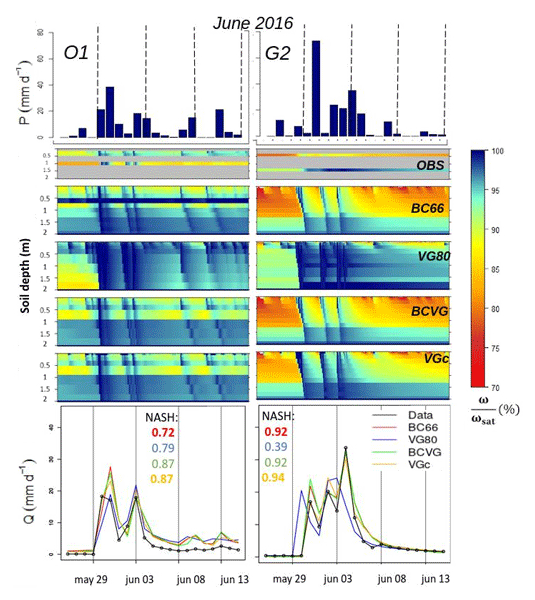
Antoine Sobaga, Bertrand Decharme, Florence Habets, Christine Delire, Noële Enjelvin, Paul-Olivier Redon, Pierre Faure-Catteloin, and Patrick Le Moigne
Hydrol. Earth Syst. Sci., 27, 2437–2461, https://doi.org/10.5194/hess-27-2437-2023, https://doi.org/10.5194/hess-27-2437-2023, 2023
Short summary
Short summary
Seven instrumented lysimeters are used to assess the simulation of the soil water dynamic in one land surface model. Four water potential and hydraulic conductivity closed-form equations, including one mixed form, are evaluated. One form is more relevant for simulating drainage, especially during intense drainage events. The soil profile heterogeneity of one parameter of the closed-form equations is shown to be important.
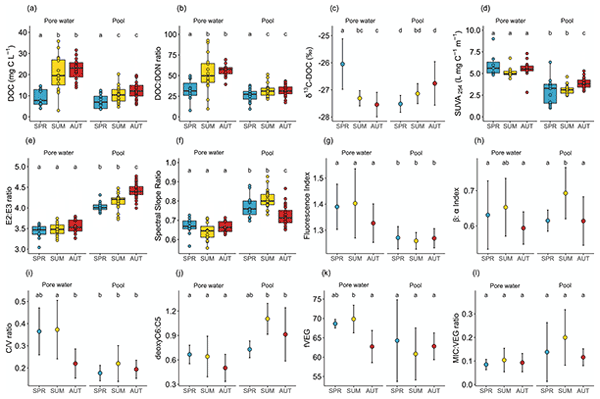
Antonin Prijac, Laure Gandois, Laurent Jeanneau, Pierre Taillardat, and Michelle Garneau
Biogeosciences, 19, 4571–4588, https://doi.org/10.5194/bg-19-4571-2022, https://doi.org/10.5194/bg-19-4571-2022, 2022
Short summary
Short summary
Pools are common features of peatlands. We documented dissolved organic matter (DOM) composition in pools and peat of an ombrotrophic boreal peatland to understand its origin and potential role in the peatland carbon budget. The survey reveals that DOM composition differs between pools and peat, although it is derived from the peat vegetation. We investigated which processes are involved and estimated that the contribution of carbon emissions from DOM processing in pools could be substantial.
Antoine Sobaga, Bertrand Decharme, Florence Habets, Christine Delire, Noële Enjelvin, Paul-Olivier Redon, Pierre Faure-Catteloin, and Patrick Le Moigne
EGUsphere, https://doi.org/10.5194/egusphere-2022-274, https://doi.org/10.5194/egusphere-2022-274, 2022
Preprint archived
Short summary
Short summary
Seven instrumented lysimeters are used to assess the simulation of the soil water dynamic in one land surface model. Three water potential and hydraulic conductivity closed-form equations including one mixed form are evaluated. The mixed form is more relevant to simulate drainage especially during intense drainage events. Soil profile heterogeneity of one parameter of the closed-form equations is shown to be important.

Simon Munier and Bertrand Decharme
Earth Syst. Sci. Data, 14, 2239–2258, https://doi.org/10.5194/essd-14-2239-2022, https://doi.org/10.5194/essd-14-2239-2022, 2022
Short summary
Short summary
This paper presents a new global-scale river network at 1/12°, generated automatically and assessed over the 69 largest basins of the world. A set of hydro-geomorphological parameters are derived at the same spatial resolution, including a description of river stretches (length, slope, width, roughness, bankfull depth), floodplains (roughness, sub-grid topography) and aquifers (transmissivity, porosity, sub-grid topography). The dataset may be useful for hydrology modelling or climate studies.
Pierre Friedlingstein, Matthew W. Jones, Michael O'Sullivan, Robbie M. Andrew, Dorothee C. E. Bakker, Judith Hauck, Corinne Le Quéré, Glen P. Peters, Wouter Peters, Julia Pongratz, Stephen Sitch, Josep G. Canadell, Philippe Ciais, Rob B. Jackson, Simone R. Alin, Peter Anthoni, Nicholas R. Bates, Meike Becker, Nicolas Bellouin, Laurent Bopp, Thi Tuyet Trang Chau, Frédéric Chevallier, Louise P. Chini, Margot Cronin, Kim I. Currie, Bertrand Decharme, Laique M. Djeutchouang, Xinyu Dou, Wiley Evans, Richard A. Feely, Liang Feng, Thomas Gasser, Dennis Gilfillan, Thanos Gkritzalis, Giacomo Grassi, Luke Gregor, Nicolas Gruber, Özgür Gürses, Ian Harris, Richard A. Houghton, George C. Hurtt, Yosuke Iida, Tatiana Ilyina, Ingrid T. Luijkx, Atul Jain, Steve D. Jones, Etsushi Kato, Daniel Kennedy, Kees Klein Goldewijk, Jürgen Knauer, Jan Ivar Korsbakken, Arne Körtzinger, Peter Landschützer, Siv K. Lauvset, Nathalie Lefèvre, Sebastian Lienert, Junjie Liu, Gregg Marland, Patrick C. McGuire, Joe R. Melton, David R. Munro, Julia E. M. S. Nabel, Shin-Ichiro Nakaoka, Yosuke Niwa, Tsuneo Ono, Denis Pierrot, Benjamin Poulter, Gregor Rehder, Laure Resplandy, Eddy Robertson, Christian Rödenbeck, Thais M. Rosan, Jörg Schwinger, Clemens Schwingshackl, Roland Séférian, Adrienne J. Sutton, Colm Sweeney, Toste Tanhua, Pieter P. Tans, Hanqin Tian, Bronte Tilbrook, Francesco Tubiello, Guido R. van der Werf, Nicolas Vuichard, Chisato Wada, Rik Wanninkhof, Andrew J. Watson, David Willis, Andrew J. Wiltshire, Wenping Yuan, Chao Yue, Xu Yue, Sönke Zaehle, and Jiye Zeng
Earth Syst. Sci. Data, 14, 1917–2005, https://doi.org/10.5194/essd-14-1917-2022, https://doi.org/10.5194/essd-14-1917-2022, 2022
Short summary
Short summary
The Global Carbon Budget 2021 describes the data sets and methodology used to quantify the emissions of carbon dioxide and their partitioning among the atmosphere, land, and ocean. These living data are updated every year to provide the highest transparency and traceability in the reporting of CO2, the key driver of climate change.
Cited articles
Antala, M., Juszczak, R., van der Tol, C., and Rastogi, A.: Impact of climate change-induced alterations in peatland vegetation phenology and composition on carbon balance, Sci. Total Environ., 827, 154294, https://doi.org/10.1016/j.scitotenv.2022.154294, 2022. a
Bond-Lamberty, B., Gower, S. T., Amiro, B., and Ewers, B. E.: Measurement and modelling of bryophyte evaporation in a boreal forest chronosequence, Ecohydrology, 4, 26–35, https://doi.org/10.1002/eco.118, 2011. a, b
Boone, A. and Etchevers, P.: An Intercomparison of Three Snow Schemes of Varying Complexity Coupled to the Same Land Surface Model: Local-Scale Evaluation at an Alpine Site, J. Hydrometeorol., 2, 374–394, https://doi.org/10.1175/1525-7541(2001)002<0374:AIOTSS>2.0.CO;2, 2001. a
Bunsen, M. S. and Loisel, J.: Carbon storage dynamics in peatlands: Comparing recent- and long-term accumulation histories in southern Patagonia, Glob. Change Biol., 26, 5778–5795, https://doi.org/10.1111/gcb.15262, 2020. a
Calvet, J.-C. and Soussana, J.-F.: Modelling CO2-enrichment effects using an interactive vegetation SVAT scheme, Agr. Forest Meteorol., 108, 129–152, https://doi.org/10.1016/S0168-1923(01)00235-0, 2001. a
Carrer, D., Roujean, J.-L., Lafont, S., Calvet, J.-C., Boone, A., Decharme, B., Delire, C., and Gastellu-Etchegorry, J.-P.: A canopy radiative transfer scheme with explicit FAPAR for the interactive vegetation model ISBA-A-gs: Impact on carbon fluxes, J. Geophys. Res.-Biogeo., 118, 888–903, https://doi.org/10.1002/jgrg.20070, 2013. a
Carter, M. S., Larsen, K. S., Emmett, B., Estiarte, M., Field, C., Leith, I. D., Lund, M., Meijide, A., Mills, R. T. E., Niinemets, Ü., Peñuelas, J., Portillo-Estrada, M., Schmidt, I. K., Selsted, M. B., Sheppard, L. J., Sowerby, A., Tietema, A., and Beier, C.: Synthesizing greenhouse gas fluxes across nine European peatlands and shrublands – responses to climatic and environmental changes, Biogeosciences, 9, 3739–3755, https://doi.org/10.5194/bg-9-3739-2012, 2012. a
Chadburn, S., Burke, E., Essery, R., Boike, J., Langer, M., Heikenfeld, M., Cox, P., and Friedlingstein, P.: An improved representation of physical permafrost dynamics in the JULES land-surface model, Geosci. Model Dev., 8, 1493–1508, https://doi.org/10.5194/gmd-8-1493-2015, 2015. a
Chaudhary, N., Miller, P. A., and Smith, B.: Modelling past, present and future peatland carbon accumulation across the pan-Arctic region, Biogeosciences, 14, 4023–4044, https://doi.org/10.5194/bg-14-4023-2017, 2017. a
Chen, N., Zhang, Y., Yuan, F., Song, C., Xu, M., Wang, Q., Hao, G., Bao, T., Zuo, Y., Liu, J., Zhang, T., Song, Y., Sun, L., Guo, Y., Zhang, H., Ma, G., Du, Y., Xu, X., and Wang, X.: Warming-Induced Vapor Pressure Deficit Suppression of Vegetation Growth Diminished in Northern Peatlands, Nat. Commun.,14, 7885, https://doi.org/10.1038/s41467-023-42932-w, 2023. a
Clymo, R. S. and Hayward, P. M.: The Ecology of Sphagnum, in: Bryophyte Ecology, edited by: Smith, A. J. E., 229–289, Springer Netherlands, https://doi.org/10.1007/978-94-009-5891-3_8, 1982. a
Collatz, G. J., Ribas-Carbo, M., and Berry, J. A.: Coupled Photosynthesis-Stomatal Conductance Model for Leaves of C4 Plants, Functional Plant Biology, 19, 519–538, https://doi.org/10.1071/pp9920519, 1992. a
Decharme, B., Brun, E., Boone, A., Delire, C., Le Moigne, P., and Morin, S.: Impacts of snow and organic soils parameterization on northern Eurasian soil temperature profiles simulated by the ISBA land surface model, The Cryosphere, 10, 853–877, https://doi.org/10.5194/tc-10-853-2016, 2016. a, b, c
Delire, C., Séférian, R., Decharme, B., Alkama, R., Calvet, J.-C., Carrer, D., Gibelin, A.-L., Joetzjer, E., Morel, X., Rocher, M., and Tzanos, D.: The Global Land Carbon Cycle Simulated With ISBA-CTRIP: Improvements Over the Last Decade, J. Adv. Model. Earth Sy., 12, e2019MS001886, https://doi.org/10.1029/2019MS001886, 2020. a, b
Dieleman, C. M., Branfireun, B. A., McLaughlin, J. W., and Lindo, Z.: Climate change drives a shift in peatland ecosystem plant community: Implications for ecosystem function and stability, Glob. Change Biol., 21, 388–395, https://doi.org/10.1111/gcb.12643, 2015. a
Druel, A., Peylin, P., Krinner, G., Ciais, P., Viovy, N., Peregon, A., Bastrikov, V., Kosykh, N., and Mironycheva-Tokareva, N.: Towards a more detailed representation of high-latitude vegetation in the global land surface model ORCHIDEE (ORC-HL-VEGv1.0), Geosci. Model Dev., 10, 4693–4722, https://doi.org/10.5194/gmd-10-4693-2017, 2017. a
Faranda, D., Pascale, S., and Bulut, B.: Persistent anticyclonic conditions and climate change exacerbated the exceptional 2022 European-Mediterranean drought, Environ. Res. Lett., 18, https://doi.org/10.1088/1748-9326/acbc37, 2023. a
Frolking, S., Roulet, N. T., Tuittila, E., Bubier, J. L., Quillet, A., Talbot, J., and Richard, P. J. H.: A new model of Holocene peatland net primary production, decomposition, water balance, and peat accumulation, Earth Syst. Dynam., 1, 1–21, https://doi.org/10.5194/esd-1-1-2010, 2010. a, b
Frolking, S., Talbot, J., and Subin, Z. M.: Exploring the relationship between peatland net carbon balance and apparent carbon accumulation rate at century to millennial time scales, The Holocene, 24, 1167–1173, 2014. a
Fu, Z., Ciais, P., Prentice, I. C., Gentine, P., Makowski, D., Bastos, A., Luo, X., Green, J. K., Stoy, P. C., Yang, H., and Hajima, T.: Atmospheric Dryness Reduces Photosynthesis along a Large Range of Soil Water Deficits, Nat. Commun., 13, 989, https://doi.org/10.1038/s41467-022-28652-7, 2022. a
Garisoain, R., Delire, C., Decharme, B., Ferrant, S., Granouillac, F., Payre-Suc, V., and Gandois, L.: A Study of Dominant Vegetation Phenology in a Sphagnum Mountain Peatland Using In Situ and Sentinel-2 Observations, J. Geophys. Res.-Biogeo., 128, e2023JG007403, https://doi.org/10.1029/2023JG007403, 2023. a, b
Garisoain, R., Jacotot, A., Delire, C., Binet, S., Le Roux, G., Gascoin, S., Rosset, T., Gogo, S., Granouillac, F., Payre-Suc, V., and Gandois, L.: Mountain Peatlands and Drought: Carbon Cycling in the Pyrenees Amidst Global Climate Change, J. Geophys. Res.-Biogeo., 129, e2024JG008041, https://doi.org/10.1029/2024JG008041, 2024. a, b, c, d, e, f, g
Garisoain, R., Delire, C., Decharme, B., and gandois, l.: Sphagnum and Herbaceous Net Ecosystem Exchanges in a Pyrenean Peatland: A Long-Term Study Using the ISBA Model, Zenodo [dat aset], https://doi.org/10.5281/zenodo.16984992, 2025. a
Gibelin, A.-L., Calvet, J.-C., and Viovy, N.: Modelling energy and CO2 fluxes with an interactive vegetation land surface model-Evaluation at high and middle latitudes, Agr. Forest Meteorol., 148, 1611–1628, https://doi.org/10.1016/j.agrformet.2008.05.013, 2008. a, b, c, d
Gong, J., Roulet, N., Frolking, S., Peltola, H., Laine, A. M., Kokkonen, N., and Tuittila, E.-S.: Modelling the habitat preference of two key Sphagnum species in a poor fen as controlled by capitulum water content, Biogeosciences, 17, 5693–5719, https://doi.org/10.5194/bg-17-5693-2020, 2020. a, b, c, d
Gorham, E., Lehman, C., Dyke, A., Clymo, D., and Janssens, J.: Long-term carbon sequestration in North American peatlands, Quaternary Sci. Rev., 58, 77–82, https://doi.org/10.1016/j.quascirev.2012.09.018, 2012. a
Goudriaan, J.: A simple and fast numerical method for the computation of daily totals of crop photosynthesis, Agr. Forest Meteorol., 38, 249–254, https://doi.org/10.1016/0168-1923(86)90063-8, 1986. a
Grant, R. F., Desai, A. R., and Sulman, B. N.: Modelling contrasting responses of wetland productivity to changes in water table depth, Biogeosciences, 9, 4215–4231, https://doi.org/10.5194/bg-9-4215-2012, 2012. a
Guenet, B., Eglin, T., Vasilyeva, N., Peylin, P., Ciais, P., and Chenu, C.: The relative importance of decomposition and transport mechanisms in accounting for soil organic carbon profiles, Biogeosciences, 10, 2379–2392, https://doi.org/10.5194/bg-10-2379-2013, 2013. a
Guenet, B., Orliac, J., Cécillon, L., Torres, O., Sereni, L., Martin, P. A., Barré, P., and Bopp, L.: Spatial biases reduce the ability of Earth system models to simulate soil heterotrophic respiration fluxes, Biogeosciences, 21, 657–669, https://doi.org/10.5194/bg-21-657-2024, 2024. a
Helbig, M., Živković, T., Alekseychik, P., Aurela, M., El-Madany, T. S., Euskirchen, E. S., Flanagan, L. B., Griffis, T. J., Hanson, P. J., Hattakka, J., Helfter, C., Hirano, T., Humphreys, E. R., Kiely, G., Kolka, R. K., Laurila, T., Leahy, P. G., Lohila, A., Mammarella, I., Nilsson, M. B., Panov, A., Parmentier, F. J. W., Peichl, M., Rinne, J., Roman, D. T., Sonnentag, O., Tuittila, E.-S., Ueyama, M., Vesala, T., Vestin, P., Weldon, S., Weslien, P., and Zaehle, S.: Warming Response of Peatland CO2 Sink Is Sensitive to Seasonality in Warming Trends, Nat. Clim. Change, 12, 743–749, https://doi.org/10.1038/s41558-022-01428-z, 2022. a, b
Jacobs, C. M. J., van den Hurk, B. M. M., and de Bruin, H. A. R.: Stomatal behaviour and photosynthetic rate of unstressed grapevines in semi-arid conditions, Agr. Forest Meteorol., 80, 111–134, https://doi.org/10.1016/0168-1923(95)02295-3, 1996. a
Kim, J. and Verma, S. B.: Surface Exchange of Water Vapour between an Open Sphagnum Fen and the Atmosphere, Bound.-Lay. Meteorol., 79, 243–264, https://doi.org/10.1007/BF00119440, 1996. a
Koven, C., Friedlingstein, P., Ciais, P., Khvorostyanov, D., Krinner, G., and Tarnocai, C.: On the formation of high-latitude soil carbon stocks: Effects of cryoturbation and insulation by organic matter in a land surface model, Geophys. Res. Lett., 36, https://doi.org/10.1029/2009GL040150, 2009. a
Laine, A. M., Mäkiranta, P., Laiho, R., Mehtätalo, L., Penttilä, T., Korrensalo, A., Minkkinen, K., Fritze, H., and Tuittila, E.-S.: Warming impacts on boreal fen CO2 exchange under wet and dry conditions, Glob. Change Biol., 25, 1995–2008, https://doi.org/10.1111/gcb.14617, 2019. a
Lang, S. I., Cornelissen, J. H. C., Klahn, T., Van Logtestijn, R. S. P., Broekman, R., Schweikert, W., and Aerts, R.: An Experimental Comparison of Chemical Traits and Litter Decomposition Rates in a Diverse Range of Subarctic Bryophyte, Lichen and Vascular Plant Species, J. Ecol., 97, 886–900, https://doi.org/10.1111/j.1365-2745.2009.01538.x, 2009. a
Loisel, J. and Yu, Z.: Recent acceleration of carbon accumulation in a boreal peatland, south central Alaska, J. Geophys. Res.-Biogeo., 118, 41–53, https://doi.org/10.1029/2012JG001978, 2013. a
Loisel, J., Gallego-Sala, A. V., Amesbury, M. J., Magnan, G., Anshari, G., Beilman, D. W., Benavides, J. C., Blewett, J., Camill, P., Charman, D. J., Chawchai, S., Hedgpeth, A., Kleinen, T., Korhola, A., Large, D., Mansilla, C. A., Muller, J., van Bellen, S., West, J. B., Yu, Z., Bubier, J. L., Garneau, M., Moore, T., Sannel, A. B. K., Page, S., Valiranta, M., Bechtold, M., Brovkin, V., Cole, L. E. S., Chanton, J. P., Christensen, T. R., Davies, M. A., De Vleeschouwer, F., Finkelstein, S. A., Frolking, S., Galka, M., Gandois, L., Girkin, N., Harris, L. I., Heinemeyer, A., Hoyt, A. M., Jones, M. C., Joos, F., Juutinen, S., Kaiser, K., Lacourse, T., Lamentowicz, M., Larmola, T., Leifeld, J., Lohila, A., Milner, A. M., Minkkinen, K., Moss, P., Naafs, B. D. A., Nichols, J., O’Donnell, J., Payne, R., Philben, M., Piilo, S., Quillet, A., Ratnayake, A. S., Roland, T. P., Sjogersten, S., Sonnentag, O., Swindles, G. T., Swinnen, W., Talbot, J., Treat, C., Valach, A. C., and Wu, J.: Expert assessment of future vulnerability of the global peatland carbon sink, Nat. Clim. Change, 11, 70–77, https://doi.org/10.1038/s41558-020-00944-0, 2021. a
Metzger, C., Nilsson, M. B., Peichl, M., and Jansson, P.-E.: Parameter interactions and sensitivity analysis for modelling carbon heat and water fluxes in a natural peatland, using CoupModel v5, Geosci. Model Dev., 9, 4313–4338, https://doi.org/10.5194/gmd-9-4313-2016, 2016. a
Morel, X., Decharme, B., Delire, C., Krinner, G., Lund, M., Hansen, B. U., and Mastepanov, M.: A New Process-Based Soil Methane Scheme: Evaluation Over Arctic Field Sites With the ISBA Land Surface Model, J. Adv. Model. Earth Sy., 11, 293–326, https://doi.org/10.1029/2018MS001329, 2019. a, b
Packalen, M. S. and Finkelstein, S. A.: Quantifying Holocene variability in carbon uptake and release since peat initiation in the Hudson Bay Lowlands, Canada, The Holocene, 24, 1063–1074, https://doi.org/10.1177/0959683614540728, 2014. a
Page, S. and Baird, A.: Peatlands and Global Change: Response and Resilience, Annu. Rev. Env. Resour., 41, 35–57, https://doi.org/10.1146/annurev-environ-110615-085520, 2016. a
Park, H., Launiainen, S., Konstantinov, P. Y., Iijima, Y., and Fedorov, A. N.: Modeling the Effect of Moss Cover on Soil Temperature and Carbon Fluxes at a Tundra Site in Northeastern Siberia, J. Geophys. Res.-Biogeo., 123, 3028–3044, https://doi.org/10.1029/2018JG004491, 2018. a
Parton, W. J., Scurlock, J. M. O., Ojima, D. S., Gilmanov, T. G., Scholes, R. J., Schimel, D. S., Kirchner, T., Menaut, J.-C., Seastedt, T., Garcia Moya, E., Kamnalrut, A., and Kinyamario, J. I.: Observations and Modeling of Biomass and Soil Organic Matter Dynamics for the Grassland Biome Worldwide, Glob. Biogeochem. Cycles, 7, 785–809, https://doi.org/10.1029/93GB02042, 1993. a
Porada, P., Ekici, A., and Beer, C.: Effects of bryophyte and lichen cover on permafrost soil temperature at large scale, The Cryosphere, 10, 2291–2315, https://doi.org/10.5194/tc-10-2291-2016, 2016. a
Qiu, C., Zhu, D., Ciais, P., Guenet, B., Peng, S., Krinner, G., Tootchi, A., Ducharne, A., and Hastie, A.: Modelling northern peatland area and carbon dynamics since the Holocene with the ORCHIDEE-PEAT land surface model (SVN r5488), Geosci. Model Dev., 12, 2961–2982, https://doi.org/10.5194/gmd-12-2961-2019, 2019. a, b
Robroek, B. J. M., Devilee, G., Telgenkamp, Y., Härlin, C., Steele, M. N., Barel, J. M., and Lamers, L. P. M.: More is not always better: peat moss mixtures slightly enhance peatland stability, P. R. Soc. B, 291, 20232622, https://doi.org/10.1098/rspb.2023.2622, 2024. a
Rogora, M., Frate, L., Carranza, M. L., Freppaz, M., Stanisci, A., Bertani, I., Bottarin, R., Brambilla, A., Canullo, R., Carbognani, M., Cerrato, C., Chelli, S., Cremonese, E., Cutini, M., Di Musciano, M., Erschbamer, B., Godone, D., Iocchi, M., Isabellon, M., Magnani, A., Mazzola, L., Morra di Cella, U., Pauli, H., Petey, M., Petriccione, B., Porro, F., Psenner, R., Rossetti, G., Scotti, A., Sommaruga, R., Tappeiner, U., Theurillat, J. P., Tomaselli, M., Viglietti, D., Viterbi, R., Vittoz, P., Winkler, M., and Matteucci, G.: Assessment of climate change effects on mountain ecosystems through a cross-site analysis in the Alps and Apennines, Sci. Total Environ., 624, 1429–1442, https://doi.org/10.1016/j.scitotenv.2017.12.155, 2018. a
Scheffer, R. A., Van Logtestijn, R. S. P., and Verhoeven, J. T. A.: Decomposition of Carex and Sphagnum Litter in Two Mesotrophic Fens Differing in Dominant Plant Species, Oikos, 92, 44–54, https://doi.org/10.1034/j.1600-0706.2001.920106.x, 2001. a
Shi, X., Thornton, P. E., Ricciuto, D. M., Hanson, P. J., Mao, J., Sebestyen, S. D., Griffiths, N. A., and Bisht, G.: Representing northern peatland microtopography and hydrology within the Community Land Model, Biogeosciences, 12, 6463–6477, https://doi.org/10.5194/bg-12-6463-2015, 2015. a
Shi, X., Ricciuto, D. M., Thornton, P. E., Xu, X., Yuan, F., Norby, R. J., Walker, A. P., Warren, J. M., Mao, J., Hanson, P. J., Meng, L., Weston, D., and Griffiths, N. A.: Extending a land-surface model with Sphagnum moss to simulate responses of a northern temperate bog to whole ecosystem warming and elevated CO2, Biogeosciences, 18, 467–486, https://doi.org/10.5194/bg-18-467-2021, 2021. a, b
Sterk, H. P., Marshall, C., Cowie, N. R., Clutterbuck, B., McIlvenny, J., and Andersen, R.: Blanket bog CO2 flux driven by plant functional type during summer drought, Ecohydrology, 16, e2503, https://doi.org/10.1002/eco.2503, 2023. a
St-Hilaire, F., Wu, J., Roulet, N. T., Frolking, S., Lafleur, P. M., Humphreys, E. R., and Arora, V.: McGill wetland model: evaluation of a peatland carbon simulator developed for global assessments, Biogeosciences, 7, 3517–3530, https://doi.org/10.5194/bg-7-3517-2010, 2010. a, b
Turetsky, M. R.: The Role of Bryophytes in Carbon and Nitrogen Cycling, The Bryologist, 106, 395–409, https://doi.org/10.1639/05, 2003. a
Turunen, J.: Past and present carbon accumulation in undisturbed boreal and subarctic mires: A review, Suo, 54, 15–28, 2003. a
van der Woude, A. M., Peters, W., Joetzjer, E., Lafont, S., Koren, G., Ciais, P., Ramonet, M., Xu, Y., Bastos, A., Botia, S., Sitch, S., de Kok, R., Kneuer, T., Kubistin, D., Jacotot, A., Loubet, B., Herig-Coimbra, P.-H., Loustau, D., and Luijkx, I. T.: Temperature extremes of 2022 reduced carbon uptake by forests in Europe, Nat. Commun., 14, 6218, https://doi.org/10.1038/s41467-023-41851-0, 2023. a
Vautard, R., Yiou, P., D'Andrea, F., de Noblet, N., Viovy, N., Cassou, C., Polcher, J., Ciais, P., Kageyama, M., and Fan, Y.: Summertime European heat and drought waves induced by wintertime Mediterranean rainfall deficit, Geophys. Res. Lett., 34, https://doi.org/10.1029/2006GL028001, 2007. a
Vernay, M., Lafaysse, M., Monteiro, D., Hagenmuller, P., Nheili, R., Samacoïts, R., Verfaillie, D., and Morin, S.: The S2M meteorological and snow cover reanalysis over the French mountainous areas: description and evaluation (1958–2021), Earth Syst. Sci. Data, 14, 1707–1733, https://doi.org/10.5194/essd-14-1707-2022, 2022. a
Vernay, M., Lafaysse, M., and Hagenmuller, P.: The S2M meteorological and snow cover reanalysis in the French mountainous areas (1958–present), AERIS [data set], https://doi.org/10.25326/37#v2020.2, 2023. a
Vidal, J.-P., Martin, E., Franchistéguy, L., Habets, F., Soubeyroux, J.-M., Blanchard, M., and Baillon, M.: Multilevel and multiscale drought reanalysis over France with the Safran-Isba-Modcou hydrometeorological suite, Hydrol. Earth Syst. Sci., 14, 459–478, https://doi.org/10.5194/hess-14-459-2010, 2010. a
Walker, A. P., Carter, K. R., Gu, L., Hanson, P. J., Malhotra, A., Norby, R. J., Sebestyen, S. D., Wullschleger, S. D., and Weston, D. J.: Biophysical drivers of seasonal variability in Sphagnum gross primary production in a northern temperate bog, J. Geophys. Res.-Biogeo., 122, 1078–1097, https://doi.org/10.1002/2016JG003711, 2017. a, b
Wania, R., Ross, I., and Prentice, I. C.: Integrating peatlands and permafrost into a dynamic global vegetation model: 2. Evaluation and sensitivity of vegetation and carbon cycle processes, Glob. Biogeochem. Cycles, 23, https://doi.org/10.1029/2008GB003413, 2009. a
Wania, R., Melton, J. R., Hodson, E. L., Poulter, B., Ringeval, B., Spahni, R., Bohn, T., Avis, C. A., Chen, G., Eliseev, A. V., Hopcroft, P. O., Riley, W. J., Subin, Z. M., Tian, H., van Bodegom, P. M., Kleinen, T., Yu, Z. C., Singarayer, J. S., Zürcher, S., Lettenmaier, D. P., Beerling, D. J., Denisov, S. N., Prigent, C., Papa, F., and Kaplan, J. O.: Present state of global wetland extent and wetland methane modelling: methodology of a model inter-comparison project (WETCHIMP), Geosci. Model Dev., 6, 617–641, https://doi.org/10.5194/gmd-6-617-2013, 2013. a
Weston, D. J., Timm, C. M., Walker, A. P., Gu, L., Muchero, W., Schmutz, J., Shaw, A. J., Tuskan, G. A., Warren, J. M., and Wullschleger, S. D.: Sphagnum physiology in the context of changing climate: emergent influences of genomics, modelling and host–microbiome interactions on understanding ecosystem function, Plant Cell Environ., 38, 1737–1751, https://doi.org/10.1111/pce.12458, 2015. a
Williams, T. G. and Flanagan, L. B.: Measuring and modelling environmental influences on photosynthetic gas exchange in Sphagnum and Pleurozium, Plant Cell Environ., 21, 555–564, https://doi.org/10.1046/j.1365-3040.1998.00292.x, 1998. a, b
World Meteorological Organization: WMO Guidelines on the Calculation of Climate Normals, Wmo-no. 1203, World Meteorological Organization, Geneva, Switzerland, https://library.wmo.int (last access: 11 May 2026), 2017. a
Wu, Y. and Blodau, C.: PEATBOG: a biogeochemical model for analyzing coupled carbon and nitrogen dynamics in northern peatlands, Geosci. Model Dev., 6, 1173–1207, https://doi.org/10.5194/gmd-6-1173-2013, 2013. a
Wu, Y., Verseghy, D. L., and Melton, J. R.: Integrating peatlands into the coupled Canadian Land Surface Scheme (CLASS) v3.6 and the Canadian Terrestrial Ecosystem Model (CTEM) v2.0, Geosci. Model Dev., 9, 2639–2663, https://doi.org/10.5194/gmd-9-2639-2016, 2016. a
Young, D. M., Baird, A. J., Gallego-Sala, A. V., and Loisel, J.: A cautionary tale about using the apparent carbon accumulation rate (aCAR) obtained from peat cores, Sci. Rep., 11, 9547, https://doi.org/10.1038/s41598-021-88766-8, 2021. a, b
Yu, Z.: Holocene carbon flux histories of the world’s peatlands: Global carbon-cycle implications, The Holocene, 21, 761–774, https://doi.org/10.1177/0959683610386982, 2011. a
Yurova, A., Wolf, A., Sagerfors, J., and Nilsson, M.: Variations in net ecosystem exchange of carbon dioxide in a boreal mire: Modeling mechanisms linked to water table position, J. Geophys. Res.-Biogeo., 112, https://doi.org/10.1029/2006JG000342, 2007. a
Short summary
Peatlands store vast amounts of carbon, helping to slow climate change. We studied a mountain peatland in the Pyrenees to understand how warming and drought affect its ability to retain carbon. Using land surface modeling and field data from the past 64 years, we found that higher temperatures increase plant growth, but frequent and intense droughts cause large carbon losses, threatening peatlands' role as long-term carbon sinks.
Peatlands store vast amounts of carbon, helping to slow climate change. We studied a mountain...


Altmetrics
Final-revised paper
Preprint