
Articles | Volume 23, issue 10
https://doi.org/10.5194/bg-23-3655-2026
© Author(s) 2026. This work is distributed under
the Creative Commons Attribution 4.0 License.
the Creative Commons Attribution 4.0 License.
https://doi.org/10.5194/bg-23-3655-2026
© Author(s) 2026. This work is distributed under
the Creative Commons Attribution 4.0 License.
the Creative Commons Attribution 4.0 License.
Research article
| 
29 May 2026
Research article |
| 29 May 2026
| 29 May 2026
The impact of essential climate variables on respiration rates in subpolar and polar planktonic foraminifera
Diane V. Armitage
CORRESPONDING AUTHOR

School of Geography, Archaeology, and Irish Studies, and Ryan Institute, University of Galway, Galway, Ireland
Nicolaas Glock
Institute for Geology, University of Hamburg, Hamburg, Germany
Thomas L. Weiss
School of Geography, Archaeology, and Irish Studies, and Ryan Institute, University of Galway, Galway, Ireland
iCRAG – Irish Centre for Research in Applied Geosciences, Belfield, Dublin, Ireland
Georgia Institute of Technology, Atlanta, Georgia, USA
Mohamed M. Ezat
iC3: Centre for ice, Cryosphere, Carbon and Climate, Department of Geosciences, UiT, The Arctic University of Norway, Tromsø, Norway
Adele Westgård
iC3: Centre for ice, Cryosphere, Carbon and Climate, Department of Geosciences, UiT, The Arctic University of Norway, Tromsø, Norway
Freya E. Sykes
iC3: Centre for ice, Cryosphere, Carbon and Climate, Department of Geosciences, UiT, The Arctic University of Norway, Tromsø, Norway
Julie Meilland
CEREGE, Aix-Marseille Université, CNRS, IRD, INRAE, CEREGE, Aix-en-Provence, France
Elwyn de la Vega
School of Geography, Archaeology, and Irish Studies, and Ryan Institute, University of Galway, Galway, Ireland
Alessio Fabbrini
School of Geography, Archaeology, and Irish Studies, and Ryan Institute, University of Galway, Galway, Ireland
Tali L. Babila
Department of Earth, Environmental and Planetary Sciences, Case Western Reserve University, Cleveland, OH, USA
Audrey Morley
CORRESPONDING AUTHOR
School of Geography, Archaeology, and Irish Studies, and Ryan Institute, University of Galway, Galway, Ireland
iCRAG – Irish Centre for Research in Applied Geosciences, Belfield, Dublin, Ireland
Related authors
No articles found.
Valerie Ledwith and Aundrey Morley
EGUsphere, https://doi.org/10.5194/egusphere-2026-3113, https://doi.org/10.5194/egusphere-2026-3113, 2026
Short summary
Short summary
This study explores whether academic careers in the geosciences are attractive to women. Drawing on focus groups with female academics in Ireland and Germany, it finds that job insecurity, expectations of mobility, caregiving responsibilities, and persistent gender bias reduce the appeal of academic careers. The findings suggest that improving gender equality requires addressing structural barriers to create more sustainable and attractive models of academic success.
Thomas L. Weiss, Alessio Fabbrini, Jerry F. McManus, Elwyn de la Vega, Hridya Krishnakumar, and Audrey Morley
EGUsphere, https://doi.org/10.5194/egusphere-2026-3333, https://doi.org/10.5194/egusphere-2026-3333, 2026
Short summary
Short summary
Microscopic fossil shells preserved in the seabed serve as a vital window into Earth's climate history. Using advanced three-dimensional X-ray imaging, we discovered that these shells dissolve from the inside out immediately after burial. This process introduces difficult to detect errors that can bias historical climate records up to two degrees Celsius. Our new method allows for detection of these errors, improving the accuracy of our reconstructions and our understanding of Earth history.
Adele Westgård, Mohamed M. Ezat, Freya E. Sykes, Julie Meilland, Thomas B. Chalk, J. Andy Milton, Melissa Chierici, and Gavin L. Foster
EGUsphere, https://doi.org/10.5194/egusphere-2026-2415, https://doi.org/10.5194/egusphere-2026-2415, 2026
Short summary
Short summary
We present a novel approach to reconstructing past temperatures in the polar oceans using Mg/Ca in planktic foraminifera which accounts for their geochemically distinct shell components. We extend the lab-based temperature calibration from 9 to 2 °C and show that also pH and [CO32-] influence Mg/Ca. These results may improve polar paleoclimate reconstructions. Additionally, our study shows that water conditions influence shell growth which has implications for ongoing climate change.
Sonia Chaabane, Ralf Schiebel, Julie Meilland, Geert-Jan A. Brummer, P. Graham Mortyn, Olivier Sulpis, Thomas B. Chalk, Xavier Giraud, Helene Howa, Azumi Kuroyanagi, Gregory Beaugrand, and Thibault de Garidel-Thoron
J. Micropalaeontol., 45, 195–217, https://doi.org/10.5194/jm-45-195-2026, https://doi.org/10.5194/jm-45-195-2026, 2026
Short summary
Short summary
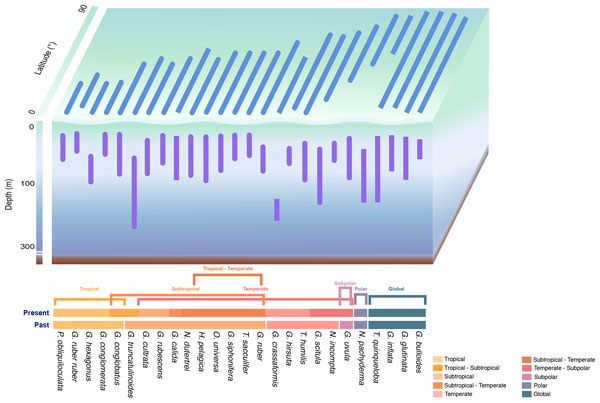
Using the FORCIS database, we mapped the distribution of planktonic goraminifera that record past ocean conditions. Our study reveals that these species mostly inhabit the upper ocean and thrive in waters ranging from −2 °C to over 31 °C. Their range is shifting, with species once limited to warm regions now appearing in cooler areas and smaller species increasing in number. This work refines our view of their biogeography and how climate change is reshaping ocean life.
Mohamed M. Ezat and Pepijn P. Bakker
EGUsphere, https://doi.org/10.5194/egusphere-2026-732, https://doi.org/10.5194/egusphere-2026-732, 2026
Preprint archived
Short summary
Short summary
We studied a past warm period about 125,000 years ago to understand how Arctic ice responds to and affects ocean warming and climate. By combining several existing climate records, we found that warming in the Norwegian Sea was delayed in two separate stages, driven first by melting ice sheets and later by melting Arctic sea ice. This shows how Arctic ice can influence ocean circulation and regional climate during warm periods, offering insight into future climate change.
Anna Sancho Vaquer, Erika Griesshaber, Julie Meilland, Xiaofei Yin, Michael Siccha, Michal Kucera, and Wolfgang W. Schmahl
EGUsphere, https://doi.org/10.5194/egusphere-2025-6224, https://doi.org/10.5194/egusphere-2025-6224, 2025
Preprint archived
Short summary
Short summary
Microscopic features in shells of marine organisms store crucial information about past environments, which can be altered after burial. This study uses a shell crystal structure measurement method to explore shell crystal change by comparing modern and fossil shells. A characteristic structural signal in the shells decreases as alteration increases. Even very small changes can be measured. This proves that this method can reliably identify such changes.
Elwyn de la Vega, Markus Raitzsch, Gavin L. Foster, Jelle Bijma, Ulysses S. Ninnemann, Michal Kucera, Tali Lea Babila, Jessica Crumpton Banks, Mohamed M. Ezat, and Audrey Morley
Biogeosciences, 22, 6765–6785, https://doi.org/10.5194/bg-22-6765-2025, https://doi.org/10.5194/bg-22-6765-2025, 2025
Short summary
Short summary
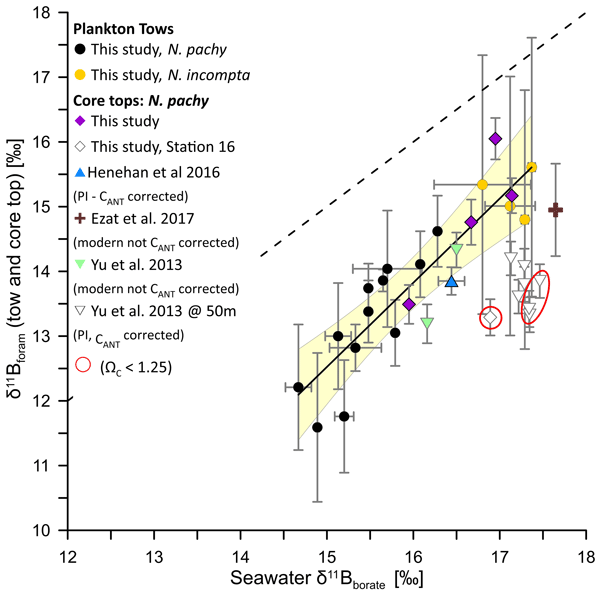
The boron isotopic composition (δ11B) of foraminifera shells is an established proxy for the reconstruction of ocean pH. Applications to the Arctic oceans are however limited as robust calibrations in these regions are lacking. Here, we present a new calibration linking δ11B measured in two high-latitude foraminifera species to seawater pH. We show that the δ11B of the species analysed is well correlated with seawater pH and that this calibration can be applied to the paleorecord.
Anjaly Govindankutty Menon, Aaron L. Bieler, Hanna Firrincieli, Rachel Alcorn, Niko Lahajnar, Catherine V. Davis, Ralf Schiebel, Dirk Nürnberg, Gerhard Schmiedl, and Nicolaas Glock
Clim. Past, 21, 1853–1869, https://doi.org/10.5194/cp-21-1853-2025, https://doi.org/10.5194/cp-21-1853-2025, 2025
Short summary
Short summary
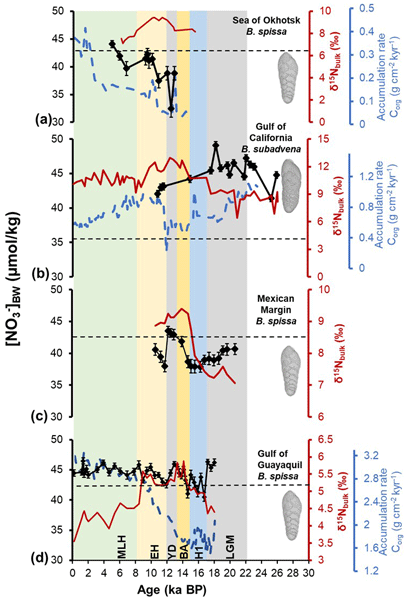
The pore density (number of pores per unit area) of unicellular eukaryotes is used to reconstruct past bottom-water nitrate at the Sea of Okhotsk, the Gulf of California, the Mexican Margin and the Gulf of Guayaquil. The reconstructed bottom-water nitrate at the Sea of Okhotsk, the Gulf of California and the Gulf of Guayaquil are influenced by the intermediate water masses, while the nitrate at the Mexican Margin is related to the deglacial NO3− variability in the Pacific Deep Water.
Alessio Fabbrini, Paul N. Pearson, Anieke Brombacher, Francesco Iacoviello, Thomas H. G. Ezard, and Bridget S. Wade
J. Micropalaeontol., 44, 213–235, https://doi.org/10.5194/jm-44-213-2025, https://doi.org/10.5194/jm-44-213-2025, 2025
Short summary
Short summary
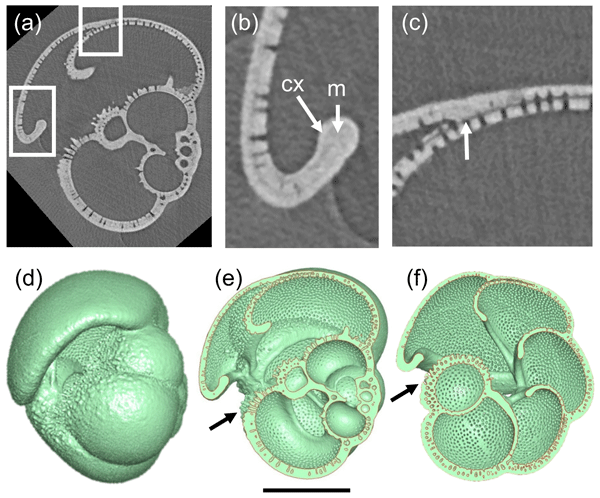
Pulleniatina is a genus of planktonic foraminifera used in biostratigraphy. Here, we illustrate typical specimens of Pulleniatina and the likely ancestor Neogloboquadrina acostaensis from International Ocean Discovery Program Site U1488. We present a novel integration of high-definition light microscopy images, X-ray microcomputed tomography data, and scanning electron microscope images to compare the six Pulleniatina species, supporting an evolutionary model with two diverging lineages.
Hannah Krüger, Gerhard Schmiedl, Zvi Steiner, Zhouling Zhang, Eric P. Achterberg, and Nicolaas Glock
J. Micropalaeontol., 44, 193–211, https://doi.org/10.5194/jm-44-193-2025, https://doi.org/10.5194/jm-44-193-2025, 2025
Short summary
Short summary
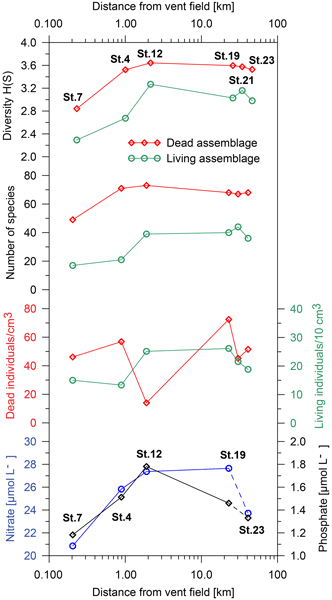
The biodiversity and abundance of benthic foraminifera tend to increase with distance within a transect from the Rainbow hydrothermal vent field. Miliolids dominate closer to the vents and may be better adapted to the potentially hydrothermal conditions than hyaline and agglutinated species. The reason for this remains unclear, but there are indications that elevated trace-metal concentrations in the porewater and intrusion of acidic hydrothermal fluids could have an influence on the foraminifera.
Lukas Jonkers, Tonke Strack, Montserrat Alonso-Garcia, Simon D'haenens, Robert Huber, Michal Kucera, Iván Hernández-Almeida, Chloe L. C. Jones, Brett Metcalfe, Rajeev Saraswat, Lóránd Silye, Sanjay K. Verma, Muhamad Naim Abd Malek, Gerald Auer, Cátia F. Barbosa, Maria A. Barcena, Karl-Heinz Baumann, Flavia Boscolo-Galazzo, Joeven Austine S. Calvelo, Lucilla Capotondi, Martina Caratelli, Jorge Cardich, Humberto Carvajal-Chitty, Markéta Chroustová, Helen K. Coxall, Renata M. de Mello, Anne de Vernal, Paula Diz, Kirsty M. Edgar, Helena L. Filipsson, Ángela Fraguas, Heather L. Furlong, Giacomo Galli, Natalia L. García Chapori, Robyn Granger, Jeroen Groeneveld, Adil Imam, Rebecca Jackson, David Lazarus, Julie Meilland, Marína Molčan Matejová, Raphael Morard, Caterina Morigi, Sven N. Nielsen, Diana Ochoa, Maria Rose Petrizzo, Andrés S. Rigual-Hernández, Marina C. Rillo, Matthew L. Staitis, Gamze Tanık, Raúl Tapia, Nishant Vats, Bridget S. Wade, and Anna E. Weinmann
J. Micropalaeontol., 44, 145–168, https://doi.org/10.5194/jm-44-145-2025, https://doi.org/10.5194/jm-44-145-2025, 2025
Short summary
Short summary
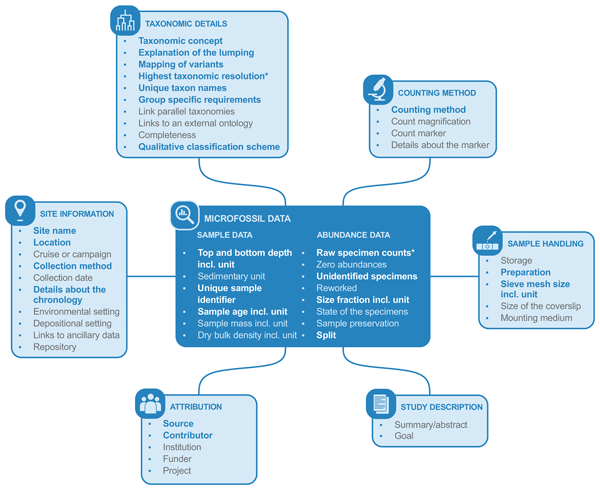
Our study provides guidelines improving the reuse of marine microfossil assemblage data, which are valuable for understanding past ecosystems and environmental change. Based on a survey of 113 researchers, we identified key data attributes required for effective reuse. Analysis of a selection of datasets available online reveals a gap between the attributes scientists consider essential and the data currently available, highlighting the need for clearer data documentation and sharing practices.
Babette A.A. Hoogakker, Catherine Davis, Yi Wang, Stephanie Kusch, Katrina Nilsson-Kerr, Dalton S. Hardisty, Allison Jacobel, Dharma Reyes Macaya, Nicolaas Glock, Sha Ni, Julio Sepúlveda, Abby Ren, Alexandra Auderset, Anya V. Hess, Katrin J. Meissner, Jorge Cardich, Robert Anderson, Christine Barras, Chandranath Basak, Harold J. Bradbury, Inda Brinkmann, Alexis Castillo, Madelyn Cook, Kassandra Costa, Constance Choquel, Paula Diz, Jonas Donnenfield, Felix J. Elling, Zeynep Erdem, Helena L. Filipsson, Sebastián Garrido, Julia Gottschalk, Anjaly Govindankutty Menon, Jeroen Groeneveld, Christian Hallmann, Ingrid Hendy, Rick Hennekam, Wanyi Lu, Jean Lynch-Stieglitz, Lélia Matos, Alfredo Martínez-García, Giulia Molina, Práxedes Muñoz, Simone Moretti, Jennifer Morford, Sophie Nuber, Svetlana Radionovskaya, Morgan Reed Raven, Christopher J. Somes, Anja S. Studer, Kazuyo Tachikawa, Raúl Tapia, Martin Tetard, Tyler Vollmer, Xingchen Wang, Shuzhuang Wu, Yan Zhang, Xin-Yuan Zheng, and Yuxin Zhou
Biogeosciences, 22, 863–957, https://doi.org/10.5194/bg-22-863-2025, https://doi.org/10.5194/bg-22-863-2025, 2025
Short summary
Short summary
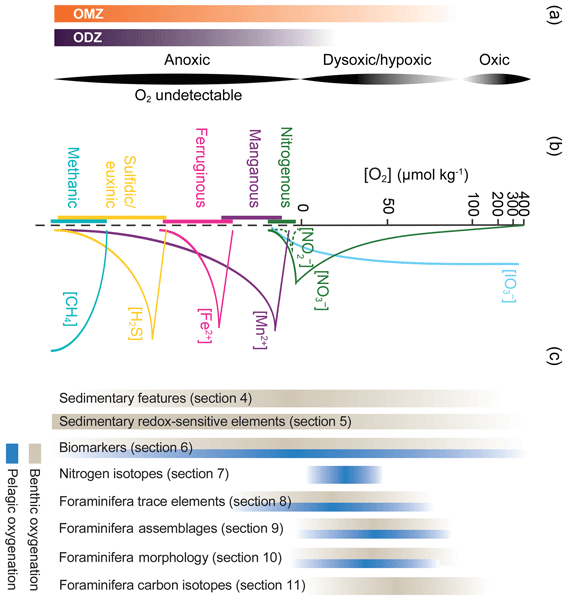
Paleo-oxygen proxies can extend current records, constrain pre-anthropogenic baselines, provide datasets necessary to test climate models under different boundary conditions, and ultimately understand how ocean oxygenation responds on longer timescales. Here we summarize current proxies used for the reconstruction of Cenozoic seawater oxygen levels. This includes an overview of the proxy's history, how it works, resources required, limitations, and future recommendations.
Alessio Fabbrini, Maria Rose Petrizzo, Isabella Premoli Silva, Luca M. Foresi, and Bridget S. Wade
J. Micropalaeontol., 43, 121–138, https://doi.org/10.5194/jm-43-121-2024, https://doi.org/10.5194/jm-43-121-2024, 2024
Short summary
Short summary
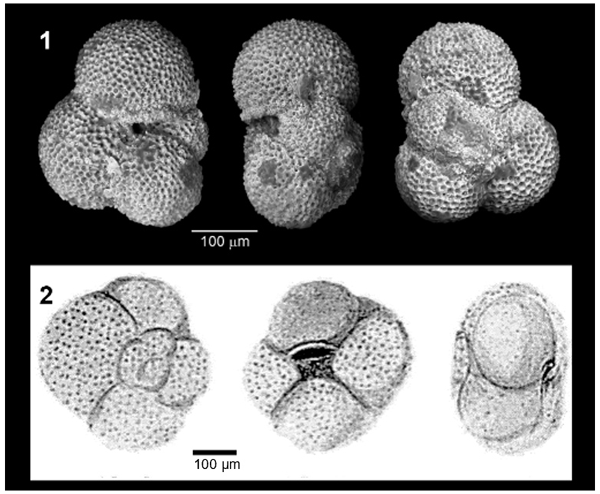
We report on the rediscovery of Globigerina bollii, a planktonic foraminifer described by Cita and Premoli Silva (1960) in the Mediterranean Basin. We redescribe G. bollii as a valid species belonging to the genus Globoturborotalita. We report and summarise all the recordings of the taxon in the scientific literature. Then we discuss how the taxon might be a palaeogeographical indicator of the intermittent gateways between the Mediterranean Sea, Paratethys, and Indian Ocean.
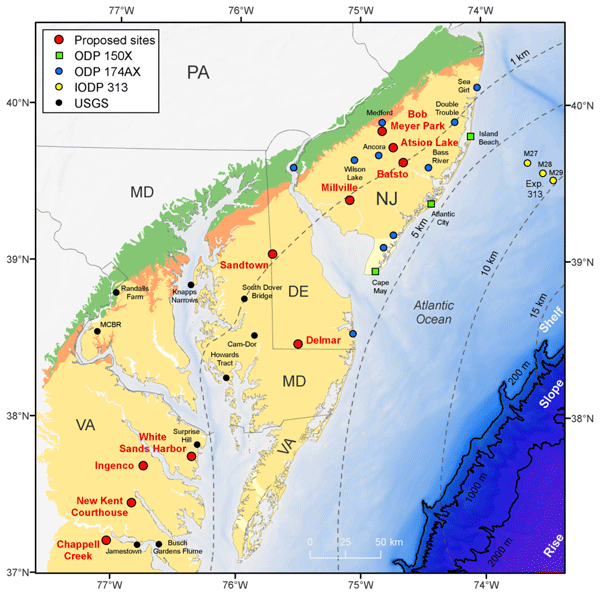
Marci M. Robinson, Kenneth G. Miller, Tali L. Babila, Timothy J. Bralower, James V. Browning, Marlow J. Cramwinckel, Monika Doubrawa, Gavin L. Foster, Megan K. Fung, Sean Kinney, Maria Makarova, Peter P. McLaughlin, Paul N. Pearson, Ursula Röhl, Morgan F. Schaller, Jean M. Self-Trail, Appy Sluijs, Thomas Westerhold, James D. Wright, and James C. Zachos
Sci. Dril., 33, 47–65, https://doi.org/10.5194/sd-33-47-2024, https://doi.org/10.5194/sd-33-47-2024, 2024
Short summary
Short summary
The Paleocene–Eocene Thermal Maximum (PETM) is the closest geological analog to modern anthropogenic CO2 emissions, but its causes and the responses remain enigmatic. Coastal plain sediments can resolve this uncertainty, but their discontinuous nature requires numerous sites to constrain events. Workshop participants identified 10 drill sites that target the PETM and other interesting intervals. Our post-drilling research will provide valuable insights into Earth system responses.
Michelle J. Curran, Christophe Colin, Megan Murphy O’Connor, Ulysses S. Ninnemann, and Audrey Morley
Clim. Past Discuss., https://doi.org/10.5194/cp-2023-101, https://doi.org/10.5194/cp-2023-101, 2024
Revised manuscript not accepted
Short summary
Short summary
Our multi-proxy examination of an abrupt climate event during peak MIS11 reveals new evidence that the reorganisation of Polar and Atlantic Waters at subpolar latitudes is central mechanistically for the stability of North Atlantic Deep Water formation. We conclude that high-magnitude AMOC variability is possible without the addition of freshwater or Icebergs to deep water formation regions challenging established knowledge of AMOC sensitivity and stability during warm climates.
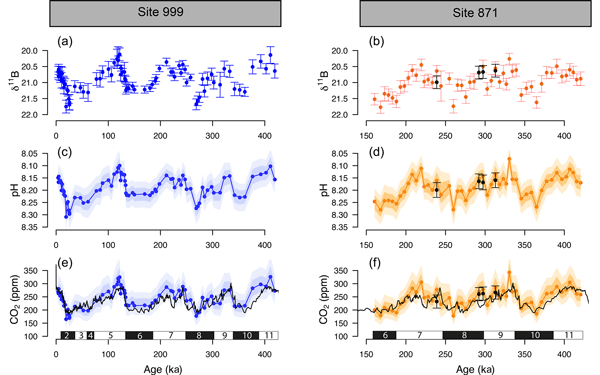
Elwyn de la Vega, Thomas B. Chalk, Mathis P. Hain, Megan R. Wilding, Daniel Casey, Robin Gledhill, Chongguang Luo, Paul A. Wilson, and Gavin L. Foster
Clim. Past, 19, 2493–2510, https://doi.org/10.5194/cp-19-2493-2023, https://doi.org/10.5194/cp-19-2493-2023, 2023
Short summary
Short summary
We evaluate how faithfully the boron isotope composition of foraminifera records atmospheric CO2 by comparing it to the high-fidelity CO2 record from the Antarctic ice cores. We evaluate potential factors and find that partial dissolution of foraminifera shells, assumptions of seawater chemistry, and the biology of foraminifera all have a negligible effect on reconstructed CO2. This gives confidence in the use of boron isotopes beyond the interval when ice core CO2 is available.
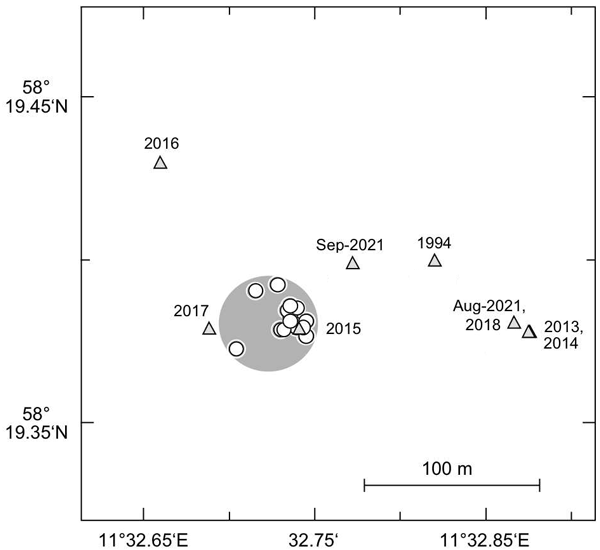
Joachim Schönfeld, Nicolaas Glock, Irina Polovodova Asteman, Alexandra-Sophie Roy, Marié Warren, Julia Weissenbach, and Julia Wukovits
J. Micropalaeontol., 42, 171–192, https://doi.org/10.5194/jm-42-171-2023, https://doi.org/10.5194/jm-42-171-2023, 2023
Short summary
Short summary
Benthic organisms show aggregated distributions due to the spatial heterogeneity of niches or food. We analysed the distribution of Globobulimina turgida in the Gullmar Fjord, Sweden, with a data–model approach. The population densities did not show any underlying spatial structure but a random log-normal distribution. A temporal data series from the same site depicted two cohorts of samples with high or low densities, which represent hypoxic or well-ventilated conditions in the fjord.
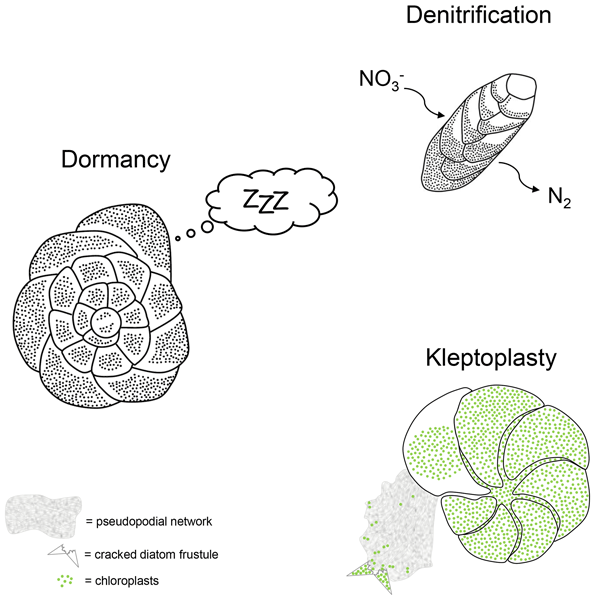
Nicolaas Glock
Biogeosciences, 20, 3423–3447, https://doi.org/10.5194/bg-20-3423-2023, https://doi.org/10.5194/bg-20-3423-2023, 2023
Short summary
Short summary
Ocean deoxygenation due to climate warming is an evolving threat for organisms that are not well adapted to O2 depletion, such as many pelagic fish species. Other better-adapted organisms, such as some benthic foraminifera species, might benefit from ocean deoxygenation. Benthic foraminifera are a group of marine protists and can have specific adaptations to O2 depletion such as the ability to respire nitrate instead of O2. This paper reviews the current state of knowledge about these organisms.
Marcin Latas, Paul N. Pearson, Christopher R. Poole, Alessio Fabbrini, and Bridget S. Wade
J. Micropalaeontol., 42, 57–81, https://doi.org/10.5194/jm-42-57-2023, https://doi.org/10.5194/jm-42-57-2023, 2023
Short summary
Short summary
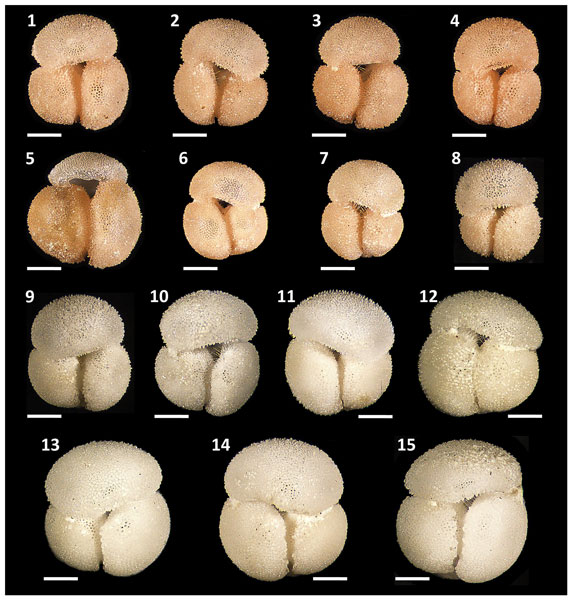
Planktonic foraminifera are microscopic single-celled organisms populating world oceans. They have one of the most complete fossil records; thanks to their great abundance, they are widely used to study past marine environments. We analysed and measured series of foraminifera shells from Indo-Pacific sites, which led to the description of a new species of fossil planktonic foraminifera. Part of its population exhibits pink pigmentation, which is only the third such case among known species.
Franziska Tell, Lukas Jonkers, Julie Meilland, and Michal Kucera
Biogeosciences, 19, 4903–4927, https://doi.org/10.5194/bg-19-4903-2022, https://doi.org/10.5194/bg-19-4903-2022, 2022
Short summary
Short summary
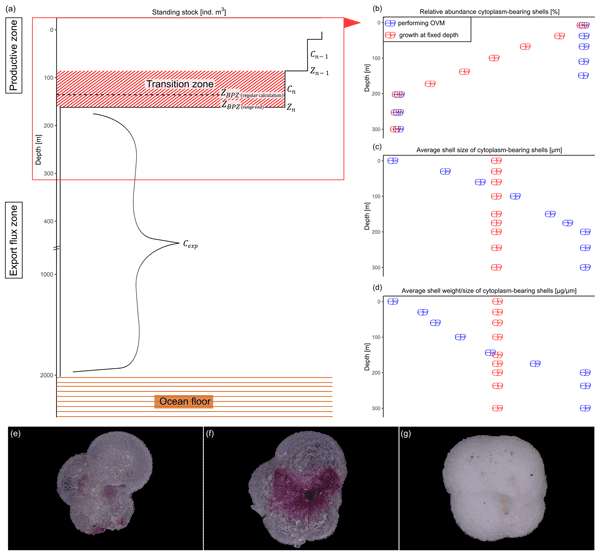
This study analyses the production of calcite shells formed by one of the main Arctic pelagic calcifiers, the foraminifera N. pachyderma. Using vertically resolved profiles of shell concentration, size and weight, we show that calcification occurs throughout the upper 300 m with an average production flux below the calcification zone of 8 mg CaCO3 m−2 d−1 representing 23 % of the total pelagic biogenic carbonate production. The production flux is attenuated in the twilight zone by dissolution.

Dakota E. Holmes, Tali L. Babila, Ulysses Ninnemann, Gordon Bromley, Shane Tyrrell, Greig A. Paterson, Michelle J. Curran, and Audrey Morley
Clim. Past, 18, 989–1009, https://doi.org/10.5194/cp-18-989-2022, https://doi.org/10.5194/cp-18-989-2022, 2022
Short summary
Short summary
Our proxy-based observations of the glacial inception following MIS 11 advance our mechanistic understanding of (and elucidates antecedent conditions that can lead to) high-magnitude climate instability during low- and intermediate-ice boundary conditions. We find that irrespective of the magnitude of climate variability or boundary conditions, the reorganization between Polar Water and Atlantic Water at subpolar latitudes appears to influence deep-water flow in the Nordic Seas.
Lukas Jonkers, Geert-Jan A. Brummer, Julie Meilland, Jeroen Groeneveld, and Michal Kucera
Clim. Past, 18, 89–101, https://doi.org/10.5194/cp-18-89-2022, https://doi.org/10.5194/cp-18-89-2022, 2022
Short summary
Short summary
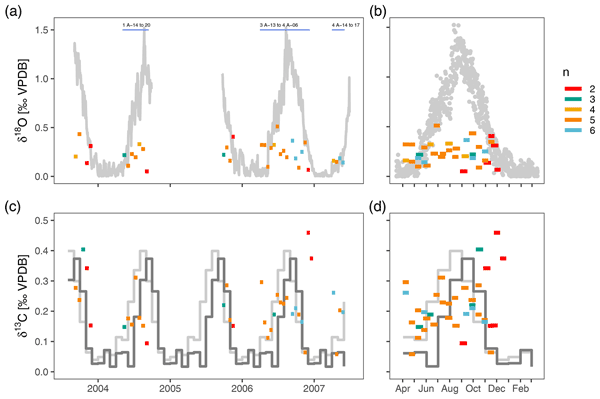
The variability in the geochemistry among individual foraminifera is used to reconstruct seasonal to interannual climate variability. This method requires that each foraminifera shell accurately records environmental conditions, which we test here using a sediment trap time series. Even in the absence of environmental variability, planktonic foraminifera display variability in their stable isotope ratios that needs to be considered in the interpretation of individual foraminifera data.
Julie Meilland, Michael Siccha, Maike Kaffenberger, Jelle Bijma, and Michal Kucera
Biogeosciences, 18, 5789–5809, https://doi.org/10.5194/bg-18-5789-2021, https://doi.org/10.5194/bg-18-5789-2021, 2021
Short summary
Short summary
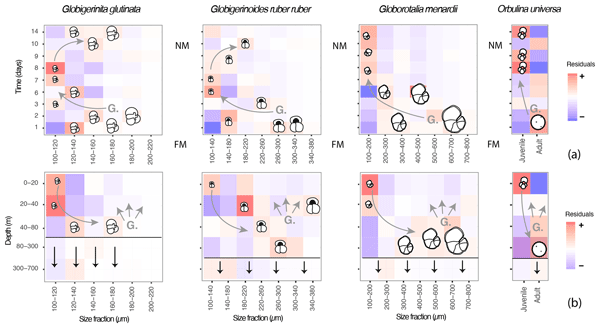
Planktonic foraminifera population dynamics has long been assumed to be controlled by synchronous reproduction and ontogenetic vertical migration (OVM). Due to contradictory observations, this concept became controversial. We here test it in the Atlantic ocean for four species of foraminifera representing the main clades. Our observations support the existence of synchronised reproduction and OVM but show that more than half of the population does not follow the canonical trajectory.
Cited articles
Al-Sabouni, N., Kucera, M., and Schmidt, D. N.: Vertical niche separation control of diversity and size disparity in planktonic foraminifera, Mar. Micropaleontol., 63, 75–90, https://doi.org/10.1016/j.marmicro.2006.11.002, 2007.
Altenbach, A. V.: The measurement of organic carbon in foraminifera, J. Foramin. Res., 17, 106–109, https://doi.org/10.2113/gsjfr.17.2.106, 1987.
Anglada-Ortiz, G., Rasmussen, T. L., Chierici, M., Fransson, A., Ziveri, P., Thomsen, E., Zamelczyk, K., Meilland, J., Ezat, M. M., and Garcia-Orellana, J.: Changes in Planktic Foraminiferal Distribution, Productivity, and Preservation in the Barents Sea During the Last Three Millennia, Paleoceanography and Paleoclimatology, 40, e2024PA004989, https://doi.org/10.1029/2024PA004989, 2025.
Baum, D. and Titschack, J.: Cavity and Pore Segmentation in 3D Images with Ambient Occlusion, EuroVis '16: Proceedings of the Eurographics/IEEE VGTC Conference on Visualization: Short Papers, 113–117, https://dl.acm.org/doi/abs/10.5555/3058878.3058902 (last access: 22 May 2026), 2016
Bé, A. W. and Hutson, W. H.: Ecology of planktonic foraminifera and biogeographic patterns of life and fossil assemblages in the Indian Ocean, Micropaleontology, 23, 369–414, https://doi.org/10.2307/1485406, 1977.
Bé, A. W. and Tolderlund, D. S.: Distribution and ecology of living planktonic foraminifera in surface waters of the Atlantic and Indian Oceans, in: The Micropalentology of the Oceans, edited by: Funnel, B. M. and Riedel, W. R., Cambridge University Press, London, 105–149, ISBN 0521076420, 1971.
Bertlich, J., Gussone, N., Berndt, J., Arlinghaus, H. F., and Dieckmann, G. S.: Salinity effects on cultured Neogloboquadrina pachyderma (sinistral) from high latitudes: new paleoenvironmental insights, Geo-Mar. Lett., 41, 2, https://doi.org/10.1007/s00367-020-00677-1, 2021.
Bird, C., Darling, K., Thiessen, R., and Pieńkowski, A. J.: The microbiome of the Arctic planktonic foraminifera Neogloboquadrina pachyderma is composed of fermenting and carbohydrate-degrading bacteria and an intracellular diatom chloroplast store, Biogeosciences, 22, 4545–4577, https://doi.org/10.5194/bg-22-4545-2025, 2025.
Bradshaw, J. S.: Laboratory experiments on the ecology of foraminifera, Cushman Found Foram. Res., Contr., 12, 87–106, 1961.
Broecker, W. S. and Peng, T.-H.: Gas exchange rates between air and sea, Tellus A, 26, 21–35, https://doi.org/10.3402/tellusa.v26i1-2.9733, 1974.
Burke, J. E., Renema, W., Schiebel, R., and Hull, P. M.: Three-dimensional analysis of inter-and intraspecific variation in ontogenetic growth trajectories of planktonic foraminifera, Mar. Micropaleontol., 155, 101794, https://doi.org/10.1016/j.marmicro.2019.101794, 2020.
Burke, J. E., Elder, L. E., Maas, A. E., Gaskell, D. E., Clark, E. G., Hsiang, A. Y., Foster, G. L., and Hull, P. M.: Physiological and morphological scaling enables gigantism in pelagic protists, Limnol. Oceanogr., 70, 461–476, https://doi.org/10.1002/lno.12770, 2025.
Cesbron, F., Geslin, E., Jorissen, F. J., Delgard, M. L., Charrieau, L., Deflandre, B., Jézéquel, D., Anschutz, P., and Metzger, E.: Vertical distribution and respiration rates of benthic foraminifera: Contribution to aerobic remineralization in intertidal mudflats covered by Zostera noltei meadows, Estuar. Coast. Shelf S., 179, 23–38, https://doi.org/10.1016/j.ecss.2015.12.005, 2016.
Chaabane, S., de Garidel-Thoron, T., Meilland, J., Sulpis, O., Chalk, T. B., Brummer, G.-J. A., Mortyn, P. G., Giraud, X., Howa, H., Casajus, N., Kuroyanagi, A., Beaugrand, G., and Schiebel, R.: Migrating is not enough for modern planktonic foraminifera in a changing ocean, Nature, 636, 390–396, https://doi.org/10.1038/s41586-024-08191-5, 2024.
Coletti, G., Stainbank, S., Fabbrini, A., Spezzaferri, S., Foubert, A., Kroon, D., and Betzler, C.: Biostratigraphy of large benthic foraminifera from Hole U1468A (Maldives): a CT-scan taxonomic approach, Swiss J. Geosci., 111, 523–536, https://doi.org/10.1007/s00015-018-0306-7, 2018.
Darling, K. F., Wade, C. M., Stewart, I. A., Kroon, D., Dingle, R., and Brown, A. J. L.: Molecular evidence for genetic mixing of Arctic and Antarctic subpolar populations of planktonic foraminifers, Nature, 405, 43–47, https://doi.org/10.1038/35011002, 2000.
Darling, K. F., Kucera, M., Pudsey, C. J., and Wade, C. M.: Molecular evidence links cryptic diversification in polar planktonic protists to Quaternary climate dynamics, P. Natl. Acad. Sci. USA, 101, 7657–7662, https://doi.org/10.1073/pnas.0402401101, 2004.
Darling, K. F., Kucera, M., Kroon, D., and Wade, C. M.: A resolution for the coiling direction paradox in Neogloboquadrina pachyderma, Paleoceanography, 21, PA2011, https://doi.org/10.1029/2005PA001189, 2006.
Darling, K. F., Kucera, M., and Wade, C. M.: Global molecular phylogeography reveals persistent Arctic circumpolar isolation in a marine planktonic protist, P. Natl. Acad. Sci. USA, 104, 5002–5007, https://doi.org/10.1073/pnas.0700520104, 2007.
Davis, C. V., Rivest, E. B., Hill, T. M., Gaylord, B., Russell, A. D., and Sanford, E.: Ocean acidification compromises a planktic calcifier with implications for global carbon cycling, Scientific reports, 7, 2225, https://doi.org/10.1038/s41598-017-01530-9, 2017.
de la Vega, E., Raitzsch, M., Foster, G. L., Bijma, J., Ninnemann, U. S., Kucera, M., Babila, T. L., Crumpton Banks, J., Ezat, M. M., and Morley, A.: A δ11B-pH calibration for the high-latitude foraminifera species Neogloboquadrina pachyderma and Neogloboquadrina incompta, Biogeosciences, 22, 6765–6785, https://doi.org/10.5194/bg-22-6765-2025, 2025.
DeLong, J. P., Okie, J. G., Moses, M. E., Sibly, R. M., and Brown, J. H.: Shifts in metabolic scaling, production, and efficiency across major evolutionary transitions of life, P. Natl. Acad. Sci. USA, 107, 12941–12945, https://doi.org/10.1073/pnas.1007783107, 2010.
de Nooijer, L. J., Spero, H. J., Erez, J., Bijma, J., and Reichart, G. J.: Biomineralization in perforate foraminifera, Earth-Sci. Rev., 135, 48–58, https://doi.org/10.1016/j.earscirev.2014.03.013, 2014.
Dickson, A. G. and Riley, J. P.: The estimation of acid dissociation constants in seawater media from potentiometric titrations with strong base. I. The ionic product of water – Kw, Mar. Chem., 7, 89–99, https://doi.org/10.1016/0304-4203(79)90001-X, 1979.
Eggins, S. M., Sadekov, A., and De Deckker, P.: Modulation and daily banding of
El Bani Altuna, N., Pieńkowski, A. J., Eynaud, F., and Thiessen, R.: The morphotypes of Neogloboquadrina pachyderma: Isotopic signature and distribution patterns in the Canadian Arctic Archipelago and adjacent regions, Mar. Micropaleontol., 142, 13–24, https://doi.org/10.1016/j.marmicro.2018.05.004, 2018.
Fabbrini, A., Pearson, P. N., Brombacher, A., Iacoviello, F., Ezard, T. H. G., and Wade, B. S.: Morphology of Pulleniatina (planktonic foraminifera) from optical microscopy, micro-CT, and SEM investigations, J. Micropalaeontol., 44, 213–235, https://doi.org/10.5194/jm-44-213-2025, 2025.
Fenchel, T. and Finlay, B. J.: Respiration rates in heterotrophic, free-living protozoa, Microb. Ecol., 9, 99–122, https://doi.org/10.1007/BF02015125, 1983.
Gaskell, D. E., Ohman, M. D., and Hull, P. M.: Zooglider-based measurements of planktonic foraminifera in the California Current System, J. Foramin. Res., 49, 390–404, https://doi.org/10.2113/gsjfr.49.4.390, 2019
Gerlach, S. A., Hahn, A. E., and Schrage, M.: Size spectra of benthic biomass and metabolism, Mar. Ecol. Prog. Ser., 26, 161–173, http://www.jstor.org/stable/24817617 (last access: 22 May 2026), 1985.
Geslin, E., Risgaard-Petersen, N., Lombard, F., Metzger, E., Langlet, D., and Jorissen, F.: Oxygen respiration rates of benthic foraminifera as measured with oxygen microsensors, J. Exp. Mar. Biol. Ecol., 396, 108–114, https://doi.org/10.1016/j.jembe.2010.10.011, 2011.
Glock, N., Romero, D., Roy, A. S., Woehle, C., Dale, A. W., Schönfeld, J., Wein, T., Weissenbach, J., and Dagan, T.: A hidden sedimentary phosphate pool inside benthic foraminifera from the Peruvian upwelling region might nucleate phosphogenesis, Geochim. Cosmochim. Ac., 289, 14–32, https://doi.org/10.1016/j.gca.2020.08.002, 2020.
Glock, N., Richirt, J., Woehle, C., Algar, C., Armstrong, M., Eichner, D., Firrincieli, H., Makabe, A., Govindankutty Menon, A., Ishitani, Y., Hackl, T., Hubert-Huard, R., Kienast, M., Milker, Y., Mutzberg, A., Ni, S., Okada, S., Rakshit, S., Schmiedl, G., Steiner, Z., Tame, A., Zhang, Z., and Nomaki, H.: Widespread occurrence and relevance of phosphate storage in foraminifera, Nature, 638, 1000–1006, https://doi.org/10.1038/s41586-024-08431-8, 2025.
Greco, M., Jonkers, L., Kretschmer, K., Bijma, J., and Kucera, M.: Depth habitat of the planktonic foraminifera Neogloboquadrina pachyderma in the northern high latitudes explained by sea-ice and chlorophyll concentrations, Biogeosciences, 16, 3425–3437, https://doi.org/10.5194/bg-16-3425-2019, 2019.
Greco, M., Meilland, J., Zamelczyk, K., Rasmussen, T. L., and Kučera, M.: The effect of an experimental decrease in salinity on the viability of the Subarctic planktonic foraminifera Neogloboquadrina incompta, Polar Res., 39, https://doi.org/10.33265/polar.v39.3842, 2020.
Hannah, F., Rogerson, R., and Laybourn-Parry, J.: Respiration rates and biovolumes of common benthic Foraminifera (Protozoa), J. Mar. Biol. Ass., 74, 301–312, https://doi.org/10.1017/S0025315400039345, 1994.
Hemleben, C., Spindler, M., and Anderson, O. R.: Taxonomy and Species Features, in: Modern Planktonic Foraminifera, edited by: Hemleben, C., Spindler, M., and Anderson, O. R., Springer, New York, NY, 8–32, https://doi.org/10.1007/978-1-4612-3544-6_2, 1989.
Hoogakker, B. A. A., Anderson, C., Paoloni, T., Stott, A., Grant, H., Keenan, P., Mahaffey, C., Blackbird, S., McClymont, E. L., Rickaby, R., Poulton, A., and Peck, V. L.: Planktonic foraminifera organic carbon isotopes as archives of upper ocean carbon cycling, Nat. Commun., 13, 4841, https://doi.org/10.1038/s41467-022-32480-0, 2022.
Huber, R., Meggers, H., Baumann, K.-H., Raymo, M. E., and Henrich, R.: Shell size variation of the planktonic foraminifer Neogloboquadrina pachyderma sin. in the Norwegian–Greenland Sea during the last 1.3 Myrs: implications for paleoceanographic reconstructions, Palaeogeogr. Palaeocl., 160, 193–212, https://doi.org/10.1016/S0031-0182(00)00066-3, 2000.
Husum, K. and Hald, M.: Arctic planktic foraminiferal assemblages: Implications for subsurface temperature reconstructions, Mar. Micropaleontol., 96–97, 38–47, https://doi.org/10.1016/j.marmicro.2012.07.001, 2012.
Kanbur, S.: Neglected small foraminifers of the Eastern Mediterranean and their paleoecological importance, J. Foramin. Res., 55, 218–232, https://doi.org/10.61551/gsjfr.55.2.218, 2025.
Kiss, P., Hudáčková, N., Titschack, J., Siccha, M. G. R., Heřmanová, Z., Silye, L., Ruman, A., Rybár, S., and Kučera, M.: Convergent evolution of spherical shells in Miocene planktonic foraminifera documents the parallel emergence of a complex character in response to environmental forcing, Paleobiology, 49, 454–470, https://doi.org/10.1017/pab.2022.48, 2023.
Kleiber, M.: Body size and metabolism, Hilgardia, 6, 315, https://ageconsearch.umn.edu/record/381981/files/v06n11p315.pdf (last access: 22 May 2026), 1932.
Köhler-Rink, S. and Kühl, M.: Microsensor studies of photosynthesis and respiration in the larger symbiont bearing foraminifera Amphistegina lobifera, and Amphisorus hemprichii, Ophelia, 55, 111–122, https://doi.org/10.1080/00785236.2001.10409478, 2001.
Kucera, M. and Kennett, J. P.: Causes and consequences of a middle Pleistocene origin of the modern planktonic foraminifer Neogloboquadrina pachyderma sinistral, Geology, 30, 539–542, https://doi.org/10.1130/0091-7613(2002)030<0539:CACOAM>2.0.CO;2. 2002.
Lewis, E. R. and Wallace, D. W. R.: Program developed for CO2 system calculations, Environmental System Science Data Infrastructure for a Virtual Ecosystem, ESS-Dive [software], https://doi.org/10.15485/1464255, 1998.
Lombard, F., Erez, J., Michel, E., and Labeyrie, L.: Temperature effect on respiration and photosynthesis of the symbiont-bearing planktonic foraminifera Globigerinoides ruber, Orbulina universa, and Globigerinella siphonifera, Limnology and Oceanography, 54, 210–218, https://doi.org/10.4319/lo.2009.54.1.0210, 2009.
Lopes, A. S., Larsen, L. H., Ramsing, N., Løvendahl, P., Raty, M., Peippo, J., Greve, T., and Callesen, H.: Respiration rates of individual bovine in vitro-produced embryos measured with a novel, non-invasive and highly sensitive microsensor system, Reproduction, 130, 669–679, https://doi.org/10.1530/rep.1.00703, 2005.
Lueker, T. J., Dickson, A. G., and Keeling, C. D.: Ocean pCO2 calculated from dissolved inorganic carbon, alkalinity, and equations for K1 and K2: validation based on laboratory measurements of CO2 in gas and seawater at equilibrium, Mar. Chem., 70, 105–119, https://doi.org/10.1016/S0304-4203(00)00022-0, 2000.
Maciute, A., Holovachov, O., Glud, R. N., Broman, E., Berg, P., Nascimento, F. J. A., and Bonaglia, S.: Reconciling the importance of meiofauna respiration for oxygen demand in muddy coastal sediments, Limnol. Oceanogr., 68, 1895–1905, https://doi.org/10.1002/lno.12393, 2023.
Manno, C., Morata, N., and Bellerby, R.: Effect of ocean acidification and temperature increase on the planktonic foraminifer Neogloboquadrina pachyderma (sinistral), Polar Biol., 35, 1311–1319, https://doi.org/10.1007/s00300-012-1174-7, 2012.
Meilland, J., Howa, H., Hulot, V., Demangel, I., Salaün, J., and Garlan, T.: Population dynamics of modern planktonic foraminifera in the western Barents Sea, Biogeosciences, 17, 1437–1450, https://doi.org/10.5194/bg-17-1437-2020, 2020.
Moens, T., Verbeeck, L., and Vincx, M.: Feeding biology of a predatory and a facultatively predatory nematode (Enoploides longispiculosus and Adoncholaimus fuscus), Mar. Biol., 134, 585–593, https://doi.org/10.1007/s002270050573, 1999.
Moodley, L., Steyaert, M., Epping, E., Middelburg, J.J., Vincx, M., van Avesaath, P., Moens, T., and Soetaert, K.: Biomass-specific respiration rates of benthic meiofauna: Demonstrating a novel oxygen micro-respiration system, J. Exp. Mar. Biol. Ecol., 357, 41–47, https://doi.org/10.1016/j.jembe.2007.12.025, 2008.
Motic Instruments Inc.: Moticam X5 Plus, https://moticeurope.com/en/moticam-x5-plus.html (last access: 22 May 2026), 2024.
Mundim, K. C., Baraldi, S., Machado, H. G., and Vieira, F. M.: Temperature coefficient (Q10) and its applications in biological systems: Beyond the Arrhenius theory, Ecol Model., 431, 109127, https://doi.org/10.1016/j.ecolmodel.2020.109127, 2020.
Natland, M. L.: New species of Foraminifera from off the West Coast of North America and from the later Tertiary of the Los Angeles basin. Bulletin of the Scripps Institution of Oceanography, Technical Series, 4, 137–164, https://babel.hathitrust.org/cgi/pt?id=coo.31924065366894&seq=5 (last access: 22 May 2026), 1938.
Nielsen, P., Larsen, L. H., Ramløv, H., and Hansen, B. W.: Respiration rates of subitaneous eggs from a marine calanoid copepod: monitored by nanorespirometry, J. Comp. Physiol. B, 177, 287–296, https://doi.org/10.1007/s00360-006-0128-1, 2007.
Nomaki, H., Yamaoka, A., Shirayama, Y., and Kitazato, H.: Deep-sea benthic foraminiferal respiration rates measured under laboratory conditions, J. Foramin. Res., 37, 281–286, https://doi.org/10.2113/gsjfr.37.4.281, 2007.
Pearson, P. N. and Kucera, M.: Taxonomy, biostratigraphy, and phylogeny of Oligocene Turborotalita, edited by: Wade, B. S., Olsson, R. K., Pearson, P. N., Huber, B. T., and Berggren, W. A., in: Atlas of Oligocene Planktonic Foraminifera, Cushman Foundation of Foraminiferal Research, Special Publication, No. 46, https://www.ucl.ac.uk/earth-sciences/sites/earth_sciences/files/Chapter_12.pdf (last access: 22 May 2026), 2018.
Pérez-Huerta, A. and Andrus, C. F. T.: Vital effects in the context of biomineralization, Seminarios de la Sociedad de Española de Mineralogía, 7, 35–45, https://www.semineral.es/websem/PdfServlet?mod=archivos&subMod=publicaciones&archivo=SEMINARIO_SEM_7_035.pdf (last access: 22 May 2026), 2010.
Rantanen, M., Karpechko, A. Y., Lipponen, A., Nordling, K., Hyvärinen, O., Ruosteenoja, K., Vihma, T., and Laaksonen, A.: The Arctic has warmed nearly four times faster than the globe since 1979, Commun. Earth Environ., 3, 168, https://doi.org/10.1038/s43247-022-00498-3, 2022.
Revsbech, N. P.: An oxygen microsensor with a guard cathode, Limnol. Oceanogr., 34, 474–478, https://doi.org/10.4319/lo.1989.34.2.0474, 1989.
Rink, S., Kühl, M., Bijma, J., and Spero, H. J.: Microsensor studies of photosynthesis and respiration in the symbiotic foraminifer Orbulina universa, Mar. Biol., 131, 583–595, https://doi.org/10.1007/s002270050350, 1998.
Schiebel, R. and Hemleben, C.: Planktic Foraminifers in the Modern Ocean, Springer Berlin/Heidelberg, Berlin, Heidelberg, Germany, https://doi.org/10.1007/978-3-662-50297-6, 2017.
Schiebel, R., Waniek, J., Bork, M., and Hemleben, C.: Planktic foraminiferal production stimulated by chlorophyll redistribution and entrainment of nutrients, Deep-Sea Res. Pt. I, 48, 721–740, https://doi.org/10.1016/S0967-0637(00)00065-0, 2001.
Schlitzer, R.: Ocean data view, https://odv.awi.de (last access: 1 September 2025), 2022.
Schmidt-Nielsen, K.: Animal Physiology: Adaptation and Environment, Cambridge University Press, 630 pp., ISBN 9780521570985, 1997.
Seears, H. A., Darling, K. F., and Wade, C. M.: Ecological partitioning and diversity in tropical planktonic foraminifera, BMC Evol. Biol., 12, 54, https://doi.org/10.1186/1471-2148-12-54, 2012.
Serreze, M. C. and Barry, R. G.: Processes and impacts of Arctic amplification: A research synthesis, Global Planet. Change, 77, 85–96, https://doi.org/10.1016/j.gloplacha.2011.03.004, 2011.
Siccha, M., Morard, R., Meilland, J., Iwasaki, S., Kucera, M., and Kimoto, K.: Collection of X-ray micro computed tomography images of shells of planktic foraminifera with curated taxonomy, Sci. Data, 10, 679, https://doi.org/10.1038/s41597-023-02498-0, 2023.
Spero, H. J. and Lea, D. W.: Intraspecific stable isotope variability in the planktic foraminifera Globigerinoides sacculifer: Results from laboratory experiments, Mar. Micropaleontol., 22, 221–234, https://doi.org/10.1016/0377-8398(93)90045-Y, 1993.
Spero, H. J. and Lea, D. W.: Experimental determination of stable isotope variability in Globigerina bulloides: implications for paleoceanographic reconstructions, Mar. Micropaleontol., 28, 231–246, https://doi.org/10.1016/0377-8398(96)00003-5, 1996.
Spindler, M.: On the salinity tolerance of the planktonic foraminifer Neogloboquadrina pachyderma from the Antarctic Sea Ice (17th Symposium on Polar Biology), Proceedings of the NIPR Symposium on Polar Biology, 9, 85–91, https://doi.org/10.15094/00005306, 1996.
Spindler, M. and Dieckmann, G. S.: Distribution and abundance of the planktic foraminifer Neogloboquadrina pachyderma in sea ice of the Weddell Sea (Antarctica), Polar Biol., 5, 185–191, https://doi.org/10.1007/BF00441699, 1986.
Stalling, D., Westerhoff, M., and Hege, H.-C.: Amira: A Highly Interactive System for Visual Data Analysis, in: Visualization Handbook, Elsevier, 749–767, https://doi.org/10.1016/B978-012387582-2/50040-X, 2005.
Stangeew, E.: Distribution and Isotopic Composition of Living Planktonic Foraminifera N. pachyderma (sinistral) and T. quinqueloba in the High Latitude North Atlantic, Kiel, University, Diss., https://macau.uni-kiel.de/servlets/MCRFileNodeServlet/dissertation_derivate_00000464/d464.pdf (last access: 22 May 2026), 2001.
Takagi, H., Kimoto, K., Fujiki, T., Saito, H., Schmidt, C., Kucera, M., and Moriya, K.: Characterizing photosymbiosis in modern planktonic foraminifera, Biogeosciences, 16, 3377–3396, https://doi.org/10.5194/bg-16-3377-2019, 2019.
Tell, F., Jonkers, L., Meilland, J., and Kucera, M.: Upper-ocean flux of biogenic calcite produced by the Arctic planktonic foraminifera Neogloboquadrina pachyderma, Biogeosciences, 19, 4903–4927, https://doi.org/10.5194/bg-19-4903-2022, 2022.
Titschack, J., Baum, D., Matsuyama, K., Boos, K., Färber, C., Kahl, W.-A., Ehrig, K., Meinel, D., Soriano, C., and Stock, S. R.: Ambient occlusion – A powerful algorithm to segment shell and skeletal intrapores in computed tomography data, Comput. Geosci., 115, 75–87, https://doi.org/10.1016/j.cageo.2018.03.007, 2018.
Unisense: Nanorespiration system manual, https://unisense.com/products/nanorespiration-system/ (last access: 22 May 2026), 2025.
Uppström, L. R.: The boron/chlorinity ratio of deep-sea water from the Pacific Ocean, Deep Sea Research A, 21, 161–162, https://doi.org/10.1016/0011-7471(74)90074-6, 1974.
Volkmann, R.: Planktic foraminifers in the outer Laptev Sea and the Fram Strait- Modern distribution and ecology, J. Foramin. Res., 30, 157–176, https://doi.org/10.2113/0300157, 2000.
Westgård, A., Ezat, M. M., Chalk, T. B., Chierici, M., Foster, G. L., and Meilland, J.: Large-scale culturing of Neogloboquadrina pachyderma, its growth in, and tolerance of, variable environmental conditions, J. Plankton Res., 45, 732–745, https://doi.org/10.1093/plankt/fbad034, 2023.
Wieser, W.: Temperature Relations of Ectotherms: A Speculative Review, in: Effects of Temperature on Ectothermic Organisms, edited by: Wieser, W., Springer Berlin Heidelberg, Berlin, Heidelberg, 1–23, https://doi.org/10.1007/978-3-642-65703-0_1, 1973.
Woelfel, J., Sørensen, K., Warkentin, M., Forster, S., Oren, A., and Schumann, R.: Oxygen evolution in a hypersaline crust: in situ photosynthesis quantification by microelectrode profiling and use of planar optode spots in incubation chambers, Aquat. Microb. Ecol., 56, 263–273, https://doi.org/10.3354/ame01326, 2009.
Wolf-Gladrow, D. A., Bijma, J., and Zeebe, R. E.: Model simulation of the carbonate chemistry in the microenvironment of symbiont bearing foraminifera, Mar. Chem., 64, 181–198, https://doi.org/10.1016/S0304-4203(98)00074-7, 1999.
Ying, R., Monteiro, F. M., Wilson, J. D., and Schmidt, D. N.: ForamEcoGEnIE 2.0: incorporating symbiosis and spine traits into a trait-based global planktic foraminiferal model, Geosci. Model Dev., 16, 813–832, https://doi.org/10.5194/gmd-16-813-2023, 2023.
Zamelczyk, K., Fransson, A., Chierici, M., Jones, E., Meilland, J., Anglada-Ortiz, G., and Lødemel, H. H.: Distribution and Abundances of Planktic Foraminifera and Shelled Pteropods During the Polar Night in the Sea-Ice Covered Northern Barents Sea, Front. Mar. Sci., 8, https://doi.org/10.3389/fmars.2021.644094, 2021.
Zeebe, R. E. and Sanyal, A.: Comparison of two potential strategies of planktonic foraminifera for house building: Mg2+ or H+ removal?, Geochim. Cosmochim. Ac., 66, 1159–1169, https://doi.org/10.1016/S0016-7037(01)00852-3, 2002.
ZEISS: Xradia VERSA 620 User Manual, https://www.zeiss.com (last access: 22 May 2026), 2024.
Short summary
Here we studied how tiny polar ocean plankton (foraminifera) breathe, using micro-sensors and 3D imaging to see if their respiration changes in responds to climate and environmental change. We found that the dominant polar species, Neogloboquadrina pachyderma, exhibits metabolic stability across large changes in temperature and ocean chemistry. This suggests its shell chemistry is not strongly affected by metabolism, supporting its use for reconstructing past polar ocean climates.
Here we studied how tiny polar ocean plankton (foraminifera) breathe, using micro-sensors and 3D...


Altmetrics
Final-revised paper
Preprint