
Articles | Volume 23, issue 11
https://doi.org/10.5194/bg-23-3855-2026
© Author(s) 2026. This work is distributed under
the Creative Commons Attribution 4.0 License.
the Creative Commons Attribution 4.0 License.
https://doi.org/10.5194/bg-23-3855-2026
© Author(s) 2026. This work is distributed under
the Creative Commons Attribution 4.0 License.
the Creative Commons Attribution 4.0 License.
Research article
| 
11 Jun 2026
Research article |
| 11 Jun 2026
| 11 Jun 2026
Bomb-radiocarbon signal suggests that soil carbon contributes to chlorophyll a in archival oak leaves
Naoto F. Ishikawa
CORRESPONDING AUTHOR

Japan Agency for Marine-Earth Science and Technology, Yokosuka 237-0061, Japan
Department of Earth Sciences, ETH Zürich, 8092 Zürich, Switzerland
Hisami Suga
Japan Agency for Marine-Earth Science and Technology, Yokosuka 237-0061, Japan
Tessa S. van der Voort
Department of Earth Sciences, ETH Zürich, 8092 Zürich, Switzerland
Reto Nyffeler
Department of Systematic and Evolutionary Botany, University of Zürich, 8008 Zürich, Switzerland
Nanako O. Ogawa
Japan Agency for Marine-Earth Science and Technology, Yokosuka 237-0061, Japan
Negar Haghipour
Department of Earth Sciences, ETH Zürich, 8092 Zürich, Switzerland
Laboratory for Ion Beam Physics, ETH Zürich, 8093 Zürich, Switzerland
Lukas Wacker
Laboratory for Ion Beam Physics, ETH Zürich, 8093 Zürich, Switzerland
Timothy I. Eglinton
Department of Earth Sciences, ETH Zürich, 8092 Zürich, Switzerland
Naohiko Ohkouchi
Japan Agency for Marine-Earth Science and Technology, Yokosuka 237-0061, Japan
Related authors
No articles found.
Thomas Laemmel, Dylan Geissbühler, Stephan Henne, Ryo Fujita, Heather Graven, Christophe Espic, Matthias Bantle, Negar Haghipour, Franz Conen, Dominik Brunner, Martin Steinbacher, Giulia Zazzeri, Samuel Hammer, Markus Leuenberger, and Sönke Szidat
Atmos. Chem. Phys., 26, 12019–12036, https://doi.org/10.5194/acp-26-12019-2026, https://doi.org/10.5194/acp-26-12019-2026, 2026
Short summary
Short summary
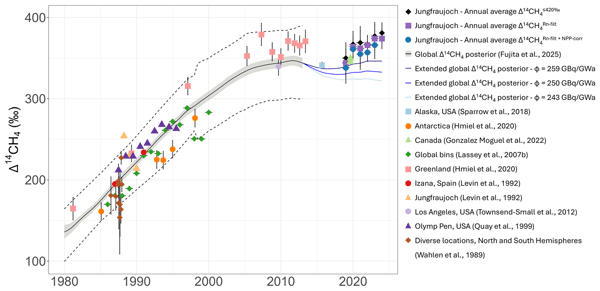
Carbon dioxide and methane are the two main anthropogenic greenhouse gases responsible for current climate change. Beside the measurement of their atmospheric concentration, the analysis of the abundance of their isotope carbon-14 (14C) gives hints about their origin, either biogenic or fossil. Here we present six years of atmospheric 14CH4 and 14CO2 measurements at a high-elevation alpine site in Switzerland (Jungfraujoch) and discuss the observed trends in both local and global views.
Marco A. Bolandini, Jordon D. Hemingway, Negar Haghipour, Kirsi H. Keskitalo, Jorien E. Vonk, Timothy I. Eglinton, and Lisa Bröder
Biogeosciences, 23, 4447–4462, https://doi.org/10.5194/bg-23-4447-2026, https://doi.org/10.5194/bg-23-4447-2026, 2026
Short summary
Short summary
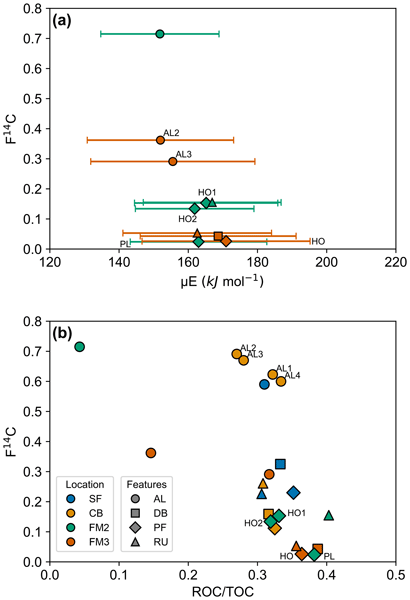
Abrupt permafrost thaw mobilizes ancient organic matter, which could fuel further warming, yet its fate remains uncertain. We studied thaw slumps in Arctic Canada using thermal, radiocarbon, and molecular analyses. Recently thawed debris and runoff exiting the slumps contained old, thermally stable organic matter, compositionally similar to surrounding permafrost. This suggests that much of the thaw-mobilised carbon survives initial transport and may be processed or sequestered downstream.
Laura Summerauer, Fernando Bamba, Bendicto Akoraebirungi, Ahurra Wobusobozi, Marijn Bauters, Travis William Drake, Negar Haghipour, Clovis Kabaseke, Daniel Muhindo, Landry Cizungu Ntaboba, Leonardo Ramirez-Lopez, Johan Six, Daniel Wasner, and Sebastian Doetterl
Biogeosciences, 23, 3907–3938, https://doi.org/10.5194/bg-23-3907-2026, https://doi.org/10.5194/bg-23-3907-2026, 2026
Short summary
Short summary
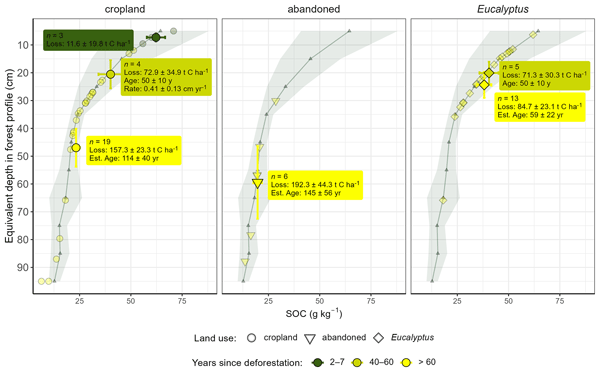
Deforestation for croplands on tropical hillslopes causes severe soil degradation and loss of fertile topsoil. We found that this leads to a steep decline in soil fertility, including organic carbon, nitrogen, and phosphorus. This makes the land unproductive, often leading farmers to abandon it. Replanting with Eucalyptus trees doesn't restore fertility. This degradation leads to cropland lifespans of only 145±56 years and poses a serious threat to future food production.
Thibault Sutre, Johan Etourneau, Xavier Crosta, Nanako O. Ogawa, Robert McKay, Hisami Suga, Naohiko Ohkouchi, and Carlota Escutia
EGUsphere, https://doi.org/10.5194/egusphere-2026-1897, https://doi.org/10.5194/egusphere-2026-1897, 2026
Short summary
Short summary
Antarctic coastal waters are highly productive, but long-term changes in nutrient supply remain poorly understood. We present the first 2,000-year record of nitrogen isotopes in chlorophyll from Adélie Land, East Antarctica, to reconstruct this part of the nutrient cycle. The results suggest that changes in sea ice and climate influenced the supply of nitrate-rich deep waters and marine phytoplankton productivity.

Luisa I. Minich, Dylan Geissbühler, Stefan Tobler, Annegret Udke, Alexander S. Brunmayr, Margaux Moreno Duborgel, Ciriaco McMackin, Lukas Wacker, Philip Gautschi, Negar Haghipour, Markus Egli, Ansgar Kahmen, Jens Leifeld, Timothy I. Eglinton, and Frank Hagedorn
Biogeosciences, 23, 811–829, https://doi.org/10.5194/bg-23-811-2026, https://doi.org/10.5194/bg-23-811-2026, 2026
Short summary
Short summary
We developed a conceptual framework using rates and 14C-derived ages of soil-respired CO2 and its sources (autotrophic, heterotrophic) to identify carbon cycling pathways in different land-use types. Rates, ages and sources of respired CO2 varied across forests, grasslands, croplands, and managed peatlands. Our results suggest that the relationship between rates and ages of respired CO2 serves as a robust indicator of carbon retention and loss from natural to disturbed systems.
Aymeric P. M. Servettaz, Yuta Isaji, Chisato Yoshikawa, Yanghee Jang, Boo-Keun Khim, Yeongjun Ryu, Daniel M. Sigman, Nanako O. Ogawa, Francisco J. Jiménez-Espejo, and Naohiko Ohkouchi
Biogeosciences, 22, 2239–2260, https://doi.org/10.5194/bg-22-2239-2025, https://doi.org/10.5194/bg-22-2239-2025, 2025
Short summary
Short summary
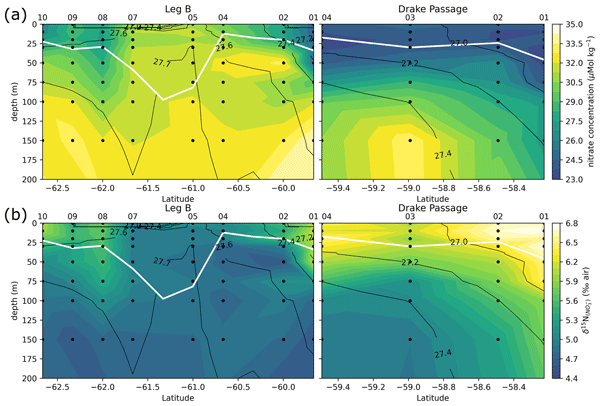
Phytoplankton blooms occur after sea ice retreats in the Southern Ocean. In this study we investigate the influence of seasonal cycle of sea ice concentration on nitrate depletion, testing the hypothesis that meltwater release stabilizes the water column and favors nutrient utilization. We find that, at a regional scale, nitrate depletion and vertical mixing are weakly correlated with sea ice cycle. Nitrate depletion is rather linked to other oceanographic processes controlling mixing depth.
Szabina Karancz, Lennart J. de Nooijer, Bas van der Wagt, Marcel T. J. van der Meer, Sambuddha Misra, Rick Hennekam, Zeynep Erdem, Julie Lattaud, Negar Haghipour, Stefan Schouten, and Gert-Jan Reichart
Clim. Past, 21, 679–704, https://doi.org/10.5194/cp-21-679-2025, https://doi.org/10.5194/cp-21-679-2025, 2025
Short summary
Short summary
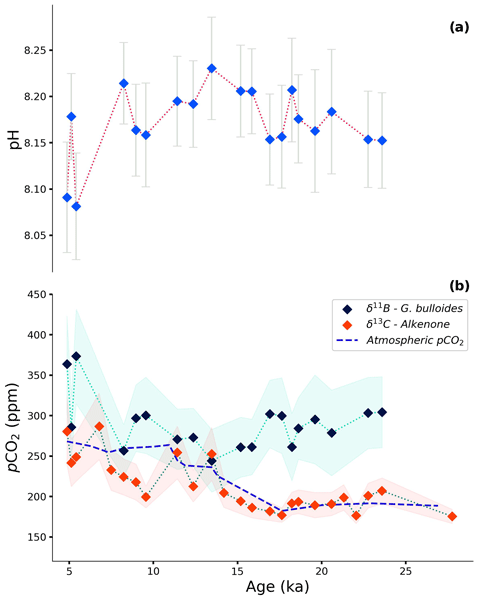
Changes in upwelling intensity of the Benguela upwelling region during the last glacial motivated us to investigate the local CO2 history during the last glacial-to-interglacial transition. Using various geochemical tracers on archives from both subsurface and surface waters reveals enhanced storage of carbon at depth during the Last Glacial Maximum. An efficient biological pump likely prevented outgassing of CO2 from intermediate depth to the atmosphere.
Giulia Zazzeri, Lukas Wacker, Negar Haghipour, Philip Gautschi, Thomas Laemmel, Sönke Szidat, and Heather Graven
Atmos. Meas. Tech., 18, 319–325, https://doi.org/10.5194/amt-18-319-2025, https://doi.org/10.5194/amt-18-319-2025, 2025
Short summary
Short summary
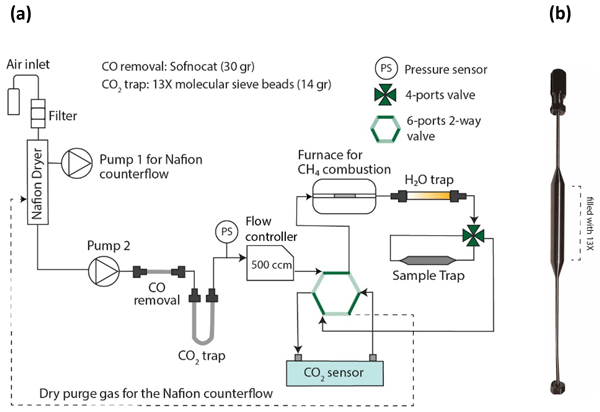
Radiocarbon (14C) is an optimal tracer of methane (CH4) emissions, as 14C measurements enable distinguishing between fossil methane and biogenic methane. However, these measurements are particularly challenging, mainly due to technical difficulties in the sampling procedure. We made the sample extraction much simpler and time efficient, providing a new technology that can be used by any research group, with the goal of expanding 14C measurements for an improved understanding of methane sources.
Miguel Bartolomé, Ana Moreno, Carlos Sancho, Isabel Cacho, Heather Stoll, Negar Haghipour, Ánchel Belmonte, Christoph Spötl, John Hellstrom, R. Lawrence Edwards, and Hai Cheng
Clim. Past, 20, 467–494, https://doi.org/10.5194/cp-20-467-2024, https://doi.org/10.5194/cp-20-467-2024, 2024
Short summary
Short summary
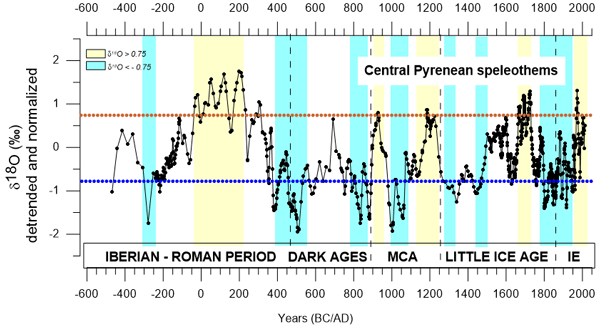
Reconstructing past temperatures at regional scales during the Common Era is necessary to place the current warming in the context of natural climate variability. We present a climate reconstruction based on eight stalagmites from four caves in the Pyrenees, NE Spain. These stalagmites were dated precisely and analysed for their oxygen isotopes, which appear dominated by temperature changes. Solar variability and major volcanic eruptions are the two main drivers of observed climate variability.
Kirsi H. Keskitalo, Lisa Bröder, Tommaso Tesi, Paul J. Mann, Dirk J. Jong, Sergio Bulte Garcia, Anna Davydova, Sergei Davydov, Nikita Zimov, Negar Haghipour, Timothy I. Eglinton, and Jorien E. Vonk
Biogeosciences, 21, 357–379, https://doi.org/10.5194/bg-21-357-2024, https://doi.org/10.5194/bg-21-357-2024, 2024
Short summary
Short summary
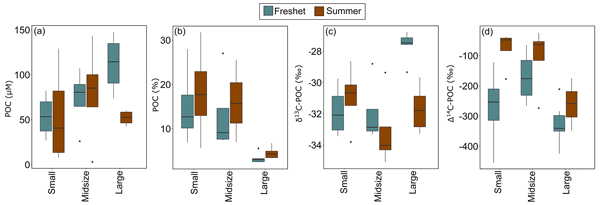
Permafrost thaw releases organic carbon into waterways. Decomposition of this carbon pool emits greenhouse gases into the atmosphere, enhancing climate warming. We show that Arctic river carbon and water chemistry are different between the spring ice breakup and summer and that primary production is initiated in small Arctic rivers right after ice breakup, in contrast to in large rivers. This may have implications for fluvial carbon dynamics and greenhouse gas uptake and emission balance.
Sarah Paradis, Kai Nakajima, Tessa S. Van der Voort, Hannah Gies, Aline Wildberger, Thomas M. Blattmann, Lisa Bröder, and Timothy I. Eglinton
Earth Syst. Sci. Data, 15, 4105–4125, https://doi.org/10.5194/essd-15-4105-2023, https://doi.org/10.5194/essd-15-4105-2023, 2023
Short summary
Short summary
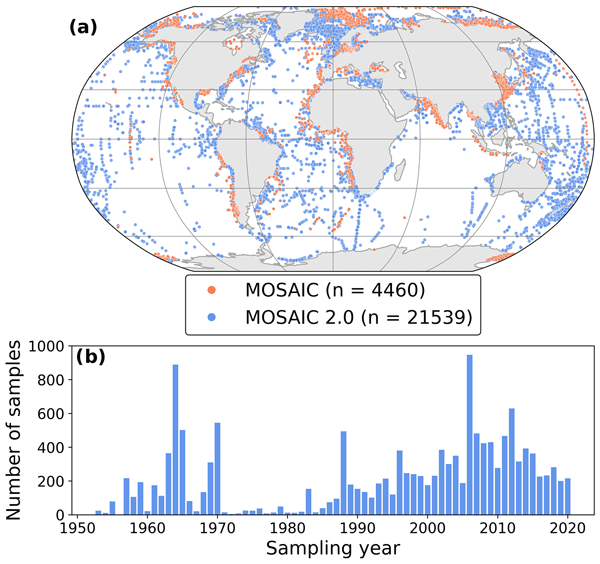
MOSAIC is a database of global organic carbon in marine sediments. This new version holds more than 21 000 sediment cores and includes new variables to interpret organic carbon distribution, such as sedimentological parameters and biomarker signatures. MOSAIC also stores data from specific sediment and molecular fractions to better understand organic carbon degradation and ageing. This database is continuously expanding, and version control will allow reproducible research outputs.
Oliver Kost, Saúl González-Lemos, Laura Rodríguez-Rodríguez, Jakub Sliwinski, Laura Endres, Negar Haghipour, and Heather Stoll
Hydrol. Earth Syst. Sci., 27, 2227–2255, https://doi.org/10.5194/hess-27-2227-2023, https://doi.org/10.5194/hess-27-2227-2023, 2023
Short summary
Short summary
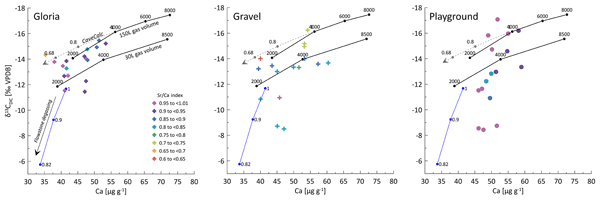
Cave monitoring studies including cave drip water are unique opportunities to sample water which has percolated through the soil and rock. The change in drip water chemistry is resolved over the course of 16 months, inferring seasonal and hydrological variations in soil and karst processes at the water–air and water–rock interface. Such data sets improve the understanding of hydrological and hydrochemical processes and ultimately advance the interpretation of geochemical stalagmite records.
Thibauld M. Béjard, Andrés S. Rigual-Hernández, José A. Flores, Javier P. Tarruella, Xavier Durrieu de Madron, Isabel Cacho, Neghar Haghipour, Aidan Hunter, and Francisco J. Sierro
Biogeosciences, 20, 1505–1528, https://doi.org/10.5194/bg-20-1505-2023, https://doi.org/10.5194/bg-20-1505-2023, 2023
Short summary
Short summary
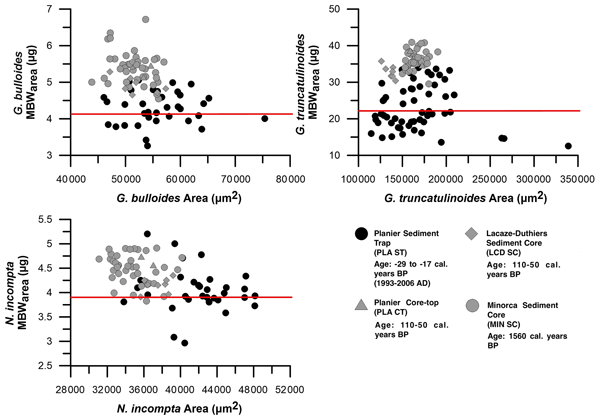
The Mediterranean Sea is undergoing a rapid and unprecedented environmental change. Planktic foraminifera calcification is affected on different timescales. On seasonal and interannual scales, calcification trends differ according to the species and are linked mainly to sea surface temperatures and carbonate system parameters, while comparison with pre/post-industrial assemblages shows that all three species have reduced their calcification between 10 % to 35 % according to the species.
Dirk Jong, Lisa Bröder, Tommaso Tesi, Kirsi H. Keskitalo, Nikita Zimov, Anna Davydova, Philip Pika, Negar Haghipour, Timothy I. Eglinton, and Jorien E. Vonk
Biogeosciences, 20, 271–294, https://doi.org/10.5194/bg-20-271-2023, https://doi.org/10.5194/bg-20-271-2023, 2023
Short summary
Short summary
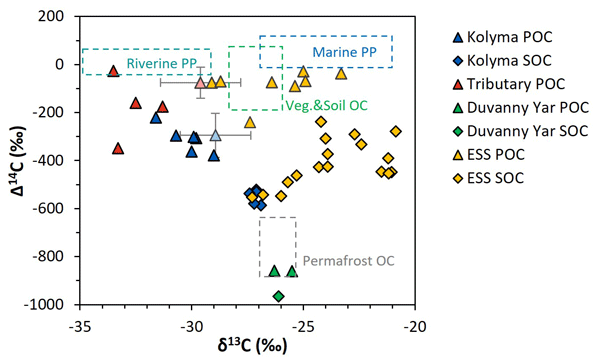
With this study, we want to highlight the importance of studying both land and ocean together, and water and sediment together, as these systems function as a continuum, and determine how organic carbon derived from permafrost is broken down and its effect on global warming. Although on the one hand it appears that organic carbon is removed from sediments along the pathway of transport from river to ocean, it also appears to remain relatively ‘fresh’, despite this removal and its very old age.

Melissa Sophia Schwab, Hannah Gies, Chantal Valérie Freymond, Maarten Lupker, Negar Haghipour, and Timothy Ian Eglinton
Biogeosciences, 19, 5591–5616, https://doi.org/10.5194/bg-19-5591-2022, https://doi.org/10.5194/bg-19-5591-2022, 2022
Short summary
Short summary
The majority of river studies focus on headwater or floodplain systems, while often neglecting intermediate river segments. Our study on the subalpine Sihl River bridges the gap between streams and lowlands and demonstrates that moderately steep river segments are areas of significant instream alterations, modulating the export of organic carbon over short distances.
Frédérique M. S. A. Kirkels, Huub M. Zwart, Muhammed O. Usman, Suning Hou, Camilo Ponton, Liviu Giosan, Timothy I. Eglinton, and Francien Peterse
Biogeosciences, 19, 3979–4010, https://doi.org/10.5194/bg-19-3979-2022, https://doi.org/10.5194/bg-19-3979-2022, 2022
Short summary
Short summary
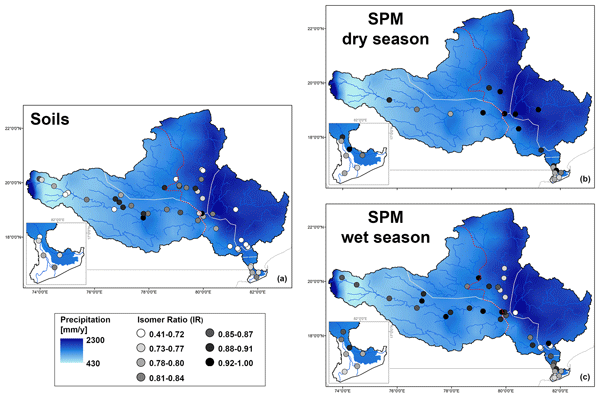
Soil organic carbon (SOC) that is transferred to the ocean by rivers forms a long-term sink of atmospheric CO2 upon burial on the ocean floor. We here test if certain bacterial membrane lipids can be used to trace SOC through the monsoon-fed Godavari River basin in India. We find that these lipids trace the mobilisation and transport of SOC in the wet season but that these lipids are not transferred far into the sea. This suggests that the burial of SOC on the sea floor is limited here.

Gabriella M. Weiss, Julie Lattaud, Marcel T. J. van der Meer, and Timothy I. Eglinton
Clim. Past, 18, 233–248, https://doi.org/10.5194/cp-18-233-2022, https://doi.org/10.5194/cp-18-233-2022, 2022
Short summary
Short summary
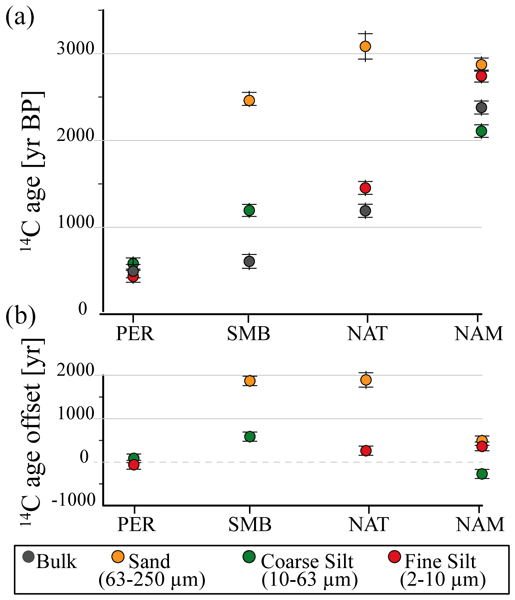
Here we study the elemental signatures of plant wax compounds as well as molecules from algae and bacteria to understand how water sources changed over the last 11 000 years in the northeastern part of Europe surrounding the Baltic Sea. Our results show diversity in plant and aquatic microorganisms following the melting of the large ice sheet that covered northern Europe as the regional climate continued to warm. A shift in water source from ice melt to rain also occurred around the same time.
Blanca Ausín, Negar Haghipour, Elena Bruni, and Timothy Eglinton
Biogeosciences, 19, 613–627, https://doi.org/10.5194/bg-19-613-2022, https://doi.org/10.5194/bg-19-613-2022, 2022
Short summary
Short summary
The preservation and distribution of alkenones – organic molecules produced by marine algae – in marine sediments allows us to reconstruct past variations in sea surface temperature, primary productivity and CO2. Here, we explore the impact of remobilization and lateral transport of sedimentary alkenones on their fate in marine sediments. We demonstrate the pervasive influence of these processes on alkenone-derived environmental signals, compromising the reliability of related paleorecords.
Caroline Welte, Jens Fohlmeister, Melina Wertnik, Lukas Wacker, Bodo Hattendorf, Timothy I. Eglinton, and Christoph Spötl
Clim. Past, 17, 2165–2177, https://doi.org/10.5194/cp-17-2165-2021, https://doi.org/10.5194/cp-17-2165-2021, 2021
Short summary
Short summary
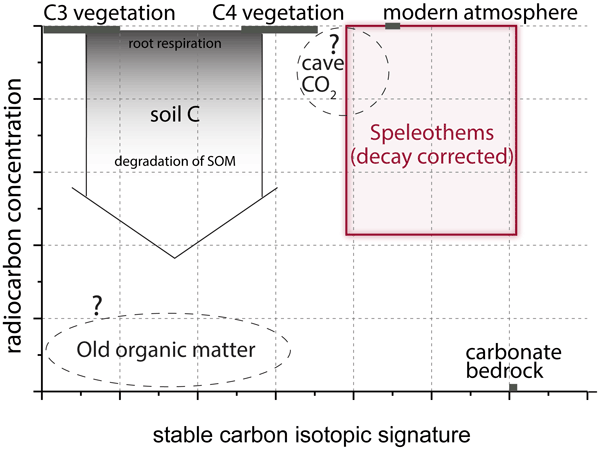
Stalagmites are valuable climate archives, but unlike other proxies the use of stable carbon isotopes (δ13C) is still difficult. A stalagmite from the Austrian Alps was analyzed using a new laser ablation method for fast radiocarbon (14C) analysis. This allowed 14C and δ13C to be combined, showing that besides soil and bedrock a third source is contributing during periods of warm, wet climate: old organic matter.

Franziska A. Lechleitner, Christopher C. Day, Oliver Kost, Micah Wilhelm, Negar Haghipour, Gideon M. Henderson, and Heather M. Stoll
Clim. Past, 17, 1903–1918, https://doi.org/10.5194/cp-17-1903-2021, https://doi.org/10.5194/cp-17-1903-2021, 2021
Short summary
Short summary
Soil respiration is a critical but poorly constrained component of the global carbon cycle. We analyse the effect of changing soil respiration rates on the stable carbon isotope ratio of speleothems from northern Spain covering the last deglaciation. Using geochemical analysis and forward modelling we quantify the processes affecting speleothem stable carbon isotope ratios and extract a signature of increasing soil respiration synchronous with deglacial warming.
Cited articles
Burchuladze, A. A., Chudý, M., Eristavi, I. V., Pagava, S. V., Povinec, P., Šivo, A., and Togonidze, G. I.: Anthropogenic 14C variations in atmospheric CO2 and wines, Radiocarbon, 31, 771–776, https://doi.org/10.1017/S0033822200012388, 1989.
Cahanovitc, R., Livne-Luzon, S., Angel, R., and Klein, T.: Ectomycorrhizal fungi mediate belowground carbon transfer between pines and oaks, ISME J., 16, 1420–1429, https://doi.org/10.1038/s41396-022-01193-z, 2022.
Carbone, M. S., Czimczik, C. I., Keenan, T. F., Murakami, P. F., Pederson, N., Schaberg, P. G., Xu, X., and Richardson, A. D.: Age, allocation and availability of nonstructural carbon in mature red maple trees, New Phytol., 200, 1145–1155, https://doi.org/10.1111/nph.12448, 2013.
Clemmensen, K. E., Bahr, A., Ovaskainen, O., Dahlberg, A., Ekblad, A., Wallander, H., Stenlid, J., Finlay, R. D., Wardle, D. A., and Lindahl, B. D.: Roots and associated fungi drive long-term carbon sequestration in boreal forest, Science, 340, 1615–1618, https://doi.org/10.1126/science.1231923, 2013.
David, T. S., Pinto, C. A., Nadezhdina, N., Kurz-Besson, C., Henriques, M. O., Quilhó, T., Cermak, J., Chaves, M. M., Pereira, J. S., and David, J. S.: Root functioning, tree water use and hydraulic redistribution in Quercus suber trees: A modeling approach based on root sap flow, Forest Ecol. Manag., 307, 136–146, https://doi.org/10.1016/j.foreco.2013.07.012, 2013.
Eglinton, T. I., Aluwihare, L. I., Bauer, J. E., Druffel, E. R. M., and McNichol, A. P.: Gas chromatographic isolation of individual compounds from complex matrices for radiocarbon dating, Anal. Chem., 68, 904–912, https://doi.org/10.1021/ac9508513, 1996.
Eglinton, T. I., Benitez-Nelson, B. C., Pearson, A., McNichol, A. P., Bauer, J. E., and Druffel, E. R. M.: Variability in radiocarbon ages of individual organic compounds from marine sediments, Science, 277, 796–799, https://doi.org/10.1126/science.277.5327.796, 1997.
Farzadfar, S., Knight, J. D., and Congreves, K. A: Soil organic nitrogen: an overlooked but potentially significant contribution to crop nutrition, Plant Soil, 462, 7–23, https://doi.org/10.1007/s11104-021-04860-w, 2021.
Gaudinski, J. B., Trumbore, S. E., Davidson, E. A., and Zheng, S.: Soil carbon cycling in a temperate forest: Radiocarbon-based estimates of residence times, sequestration rates and partitioning of fluxes, Biogeochemistry, 51, 33–69, https://doi.org/10.1023/A:1006301010014, 2000.
Haghipour, N., Ausin, B., Usman, M. O., Ishikawa, N., Wacker, L., Welte, C., Ueda, K., and Eglinton, T. I.: Compound-specific radiocarbon analysis by Elemental Analyzer–Accelerator Mass Spectrometry: precision and limitations, Anal. Chem., 91, 2042–2049, https://doi.org/10.1021/acs.analchem.8b04491, 2019.
Hamady, L. L., Natanson, L. J., Skomal, G. B., and Thorrold, S. R.: Vertebral bomb radiocarbon suggests extreme longevity in white sharks, PLoS ONE, 9, 1–8, https://doi.org/10.1371/journal.pone.0084006, 2014.
Hua, Q., Barbetti, M., Zoppi, U., Fink, D., Watanasak, M., and Jacobsen, G. E.: Radiocarbon in tropical tree rings during the Little Ice Age, Nucl. Instrum. Meth. B., 223, 489–494, https://doi.org/10.1016/j.nimb.2004.04.092, 2014.
Hua, Q., Turnbull, J. C., Santos, G. M., Rakowski, A. Z., Ancapichún, S., De Pol-Holz, R., Hammer, S., Lehman, S. J., Levin, I., Miller, J. B., Palmer, J. G., and Turney, C. S. M.: Atmospheric radiocarbon for the period 1950–2019, Radiocarbon, 64, 723–745, https://doi.org/10.1017/RDC.2021.95, 2022.
Ichie, T., Igarashi, S., Yoshida, S., Kenzo, T., Masaki, T., and Tayasu, I.: Are stored carbohydrates necessary for seed production in temperate deciduous trees?, J. Ecol., 101, 525–531, https://doi.org/10.1111/1365-2745.12038, 2013.
Ingalls, A. and Pearson, A.: Ten years of compound-specific radiocarbon analysis, Oceanography, 18, 18–31, https://doi.org/10.5670/oceanog.2005.22, 2005.
Isaji, Y., Ogawa, N. O., Boreham, C. J., Kashiyama, Y., and Ohkouchi, N.: Evaluation of δ13C and δ15N uncertainties associated with the compound-specific isotope analysis of geoporphyrins, Anal. Chem., 92, 3152–3160, https://doi.org/10.1021/acs.analchem.9b04843, 2020.
Ischebeck, T., Zbierzak, A. M., Kanwischer, M., and Dörmann, P.: A salvage pathway for phytol metabolism in Arabidopsis, J. Biol. Chem., 281, 2470–2477, https://doi.org/10.1074/jbc.M509222200, 2006.
Ishikawa, N. F., Yamane, M., Suga, H., Ogawa, N. O., Yokoyama, Y., and Ohkouchi, N.: Chlorophyll a-specific Δ14C, δ13C and δ15N values in stream periphyton: implications for aquatic food web studies, Biogeosciences, 12, 6781–6789, https://doi.org/10.5194/bg-12-6781-2015, 2015.
Ishikawa, N. F., Itahashi, Y., Blattmann, T. M., Takano, Y., Ogawa, N. O., Yamane, M., Yokoyama, Y., Nagata, T., Yoneda, M., Haghipour, N., Eglinton, T. I., and Ohkouchi, N.: Improved method for isolation and purification of underivatized amino acids for radiocarbon analysis, Anal. Chem., 90, 12035–12041, https://doi.org/10.1021/acs.analchem.8b02693, 2018.
Jones, D. L., Healey, J. R., Willett, V. B., Farrar, J. F., and Hodge, A.: Dissolved organic nitrogen uptake by plants – An important N uptake pathway?, Soil Biol. Biochem., 37, 413–423, https://doi.org/10.1016/j.soilbio.2004.08.008, 2005.
Jones, D. L., Nguyen, C., and Finlay, R. D.: Carbon flow in the rhizosphere: Carbon trading at the soil-root interface, Plant Soil, 321, 5–33, https://doi.org/10.1007/s11104-009-9925-0, 2009.
Klein, T., Siegwolf, R. T. W., and Körner, C.: Belowground carbon trade among tall trees in a temperate forest, Science, 352, 342–344, https://doi.org/10.1126/science.aad6188, 2016.
Koarashi, J., Hockaday, W. C., Masiello, C. A., and Trumbore, S. E.: Dynamics of decadally cycling carbon in subsurface soils, J. Geophys. Res.-Biogeo., 117, 1–13, https://doi.org/10.1029/2012JG002034, 2012.
Kruger, B. R., Werne, J. P., and Minor, E. C.: Sediment organic matter compositional changes in a tropical rift lake as a function of water depth and distance from shore, Org. Geochem., 175, 104527, https://doi.org/10.1016/j.orggeochem.2022.104527, 2023.
Kubota, K., Shirai, K., Murakami-Sugihara, N., Seike, K., Minami, M., Nakamura, T., and Tanabe, K.: Bomb-14C peak in the North Pacific recorded in long-lived bivalve shells (Mercenaria stimpsoni), J. Geophys. Res.-Oceans, 123, 2867–2881, https://doi.org/10.1002/2017JC013678, 2018.
Kusch, S., Kashiyama, Y., Ogawa, N. O., Altabet, M., Butzin, M., Friedrich, J., Ohkouchi, N., and Mollenhauer, G.: Implications for chloro- and pheopigment synthesis and preservation from combined compound-specific δ13C, δ15N, and Δ14C analysis, Biogeosciences, 7, 4105–4118, https://doi.org/10.5194/bg-7-4105-2010, 2010.
Landeweert, R., Hoffland, E., Finlay, R. D., Kuyper, T. W., and van Breemen, N.: Linking plants to rocks: ectomycorrhizal fungi mobilize nutrients from minerals, Trends Ecol. Evol., 16, 248–254, https://doi.org/10.1016/S0169-5347(01)02122-X, 2001.
Levin, I. and Kromer, B.: The tropospheric 14CO2 level in mid-latitudes of the Northern Hemisphere (1959–2003), Radiocarbon, 46, 1261–1272, https://doi.org/10.1017/S0033822200033130, 2004.
Martin, D., Tholl, D., Gershenzon, J., and Bohlmann, J.: Methyl jasmonate induces traumatic resin ducts, terpenoid resin biosynthesis, and terpenoid accumulation in developing xylem of Norway spruce stems, Plant Physiol., 129, 1003–1018, https://doi.org/10.1104/pp.011001, 2002.
Martin-Benito, D., Pederson, N., Férriz, M., and Gea-Izquierdo, G.: Old forests and old carbon: A case study on the stand dynamics and longevity of aboveground carbon, Sci. Total Environ., 765, 142737, https://doi.org/10.1016/j.scitotenv.2020.142737, 2021.
Masuda, T. and Fujita, Y.: Regulation and evolution of chlorophyll metabolism, Photoch. Photobio. Sci., 7, 1131–1149, https://doi.org/10.1039/b807210h, 2008.
Matile, P., Stefan, H., and Thomas, H.: Chlorophyll degradation, Annu. Rev. Plant Phys., 50, 67–95, https://doi.org/10.1146/annurev.arplant.50.1.67, 1999.
Mészáros, I., Veres, S., Kanalas, P., Oláh, V., Szőllősi, E., Sárvári, É., Lévai, L., and Lakatos, G.: Leaf growth and photosynthetic performance of two co-existing oak species in contrasting growing seasons, Acta Silvatica et Lignaria Hungarica, 3, 7–20, https://doi.org/10.37045/aslh-2007-0001, 2007.
Mollenhauer, G., Inthorn, M., Vogt, T., Zabel, M., Sinninghe Damsté, J. S., and Eglinton, T. I.: Aging of marine organic matter during cross-shelf lateral transport in the Benguela upwelling system revealed by compound-specific radiocarbon dating, Geochem. Geophys. Geosy., 8, Q09004, https://doi.org/10.1029/2007GC001603, 2007.
Moran-Zuloaga, D., Dippold, M., Glaser, B., and Kuzyakov, Y.: Organic nitrogen uptake by plants: reevaluation by position-specific labeling of amino acids: Reevaluation of organic N uptake by plants by position-specific labeling, Biogeochemistry, 125, 359–374, https://doi.org/10.1007/s10533-015-0130-3, 2015.
Muhr, J., Messier, C., Delagrange, S., Trumbore, S., Xu, X., and Hartmann, H.: How fresh is maple syrup? Sugar maple trees mobilize carbon stored several years previously during early springtime sap-ascent, New Phytol., 209, 1410–1416, https://doi.org/10.1111/nph.13782, 2016.
Nabais, C., Hagemeyer, J., and Freitas, H.: Nitrogen transport in the xylem sap of Quercus ilex: the role of ornithine, J. Plant Physiol., 162, 603–606, https://doi.org/10.1016/j.jplph.2004.11.004, 2005.
Näsholm, T., Ekblad, A., Nordin, A., Giesler, R., Högberg, M., and Högberg, P.: Boreal forest plants take up organic nitrogen, Nature, 392, 914–916, https://doi.org/10.1038/31921, 1998.
Nydal, R. and Lövseth, K.: Distribution of radiocarbon from nuclear tests, Nature, 206, 1029–1031, https://doi.org/10.1038/2061029a0, 1965.
Oeschger, H., Siegenthaler, U., Schotterer, U., and Gugelmann, A.: A box diffusion model to study the carbon dioxide exchange in nature, Tellus A, 27, 168–192, https://doi.org/10.3402/tellusa.v27i2.9900, 1975.
Ogawa, N. O., Nagata, T., Kitazato, H., and Ohkouchi, N.: Ultra-sensitive elemental analyzer/isotope ratio mass spectrometer for stable nitrogen and carbon isotope analyses, in: Earth, Life, and Isotopes, edited by: Ohkouchi, N., Tayasu, I., and Koba, K., Kyoto University Press, Kyoto, Japan, 339–353, ISBN: 9784876989607, 2010.
Ohkouchi, N., Eglinton, T. I., Keigwin, L. D., and Hayes, J. M.: Spatial and temporal offsets between proxy records in a sediment drift, Science, 298, 1224–1227, https://doi.org/10.1126/science.1075287, 2002.
Randerson, J. T., Enting, I. G., Schuur, E. A. G., Caldeira, K., and Fung, I. Y.: Seasonal and latitudinal variability of troposphere Δ14CO2: Post bomb contributions from fossil fuels, oceans, the stratosphere, and the terrestrial biosphere, Global Biogeochem. Cy., 16, 59-1–59-19, https://doi.org/10.1029/2002gb001876, 2002.
Rasmussen, J., Sauheitl, L., Eriksen, J., and Kuzyakov, Y.: Plant uptake of dual-labeled organic N biased by inorganic C uptake: Results of a triple labeling study, Soil Biol. Biochem., 42, 524–527, https://doi.org/10.1016/j.soilbio.2009.11.032, 2010.
Reimer, P. J., Brown, T. A., and Reimer, R. W.: Discussion; reporting and calibration of post-bomb 14C data, Radiocarbon, 46, 1299–1304, https://doi.org/10.1017/S0033822200033154, 2004.
Richardson, A. D., Carbone, M. S., Huggett, B. A., Furze, M. E., Czimczik, C. I., Walker, J. C., Xu, X., Schaberg, P. G., and Murakami, P.: Distribution and mixing of old and new nonstructural carbon in two temperate trees, New Phytol., 206, 590–597, https://doi.org/10.1111/nph.13273, 2015.
Rodríguez-Calcerrada, J., Pardos, J. A., Gil, L., Reich, P. B., and Aranda, I.: Light response in seedlings of a temperate (Quercus petraea) and a sub-Mediterranean species (Quercus pyrenaica): Contrasting ecological strategies as potential keys to regeneration performance in mixed marginal populations, Plant Ecol., 195, 273–285, https://doi.org/10.1007/s11258-007-9329-2, 2008.
Simard, S. W., Perry, D. A., Jones, M. D., Myrold, D. D., Durall, D. M., and Molina, R.: Net transfer of carbon between ectomycorrhizal tree species in the field, Nature, 388, 579–582, https://doi.org/10.1038/41557, 1997.
Smith, S. E. and Read, D.: Structure and development of ectomycorrhizal roots, in: Mycorrhizal Symbiosis, Academic Press, 191–268, https://doi.org/10.1016/B978-012370526-6.50008-8, 2008.
Stuiver, M. and Polach, H. A.: Discussion reporting of 14C data, Radiocarbon, 19, 355–363, https://doi.org/10.1017/S0033822200003672, 1977.
Suetsugu, K., Matsubayashi, J., and Tayasu, I.: Some mycoheterotrophic orchids depend on carbon from dead wood: novel evidence from a radiocarbon approach, New Phytol., 227, 1519–1529, https://doi.org/10.1111/nph.16409, 2020.
Taiz, L., Møller, I. M., Murphy, A., and Zeiger, E.: Plant Physiology and Development, Oxford University Press, https://doi.org/10.1093/hesc/9780197614204.001.0001, 2023.
Tayasu, I., Hirasawa, R., Ogawa, N. O., Ohkouchi, N., and Yamada, K.: New organic reference materials for carbon- and nitrogen-stable isotope ratio measurements provided by Center for Ecological Research, Kyoto University, and Institute of Biogeosciences, Japan Agency for Marine-Earth Science and Technology, Limnology, 12, 261–266, https://doi.org/10.1007/s10201-011-0345-5, 2011.
Trumbore, S.: Age of soil organic matter and soil respiration: Radiocarbon constraints on belowground C dynamics, Ecol. Appl., 10, 399–411, https://doi.org/10.1890/1051-0761(2000)010[0399:AOSOMA]2.0.CO;2, 2000.
van der Voort, T. S., Mannu, U., Hagedorn, F., McIntyre, C., Walthert, L., Schleppi, P., Haghipour, N., and Eglinton, T. I.: Dynamics of deep soil carbon – insights from 14C time series across a climatic gradient, Biogeosciences, 16, 3233–3246, https://doi.org/10.5194/bg-16-3233-2019, 2019.
Vavilin, D. and Vermaas, W.: Continuous chlorophyll degradation accompanied by chlorophyllide and phytol reutilization for chlorophyll synthesis in Synechocystis sp. PCC 6803, BBA-Bioenergetics, 1767, 920–929, https://doi.org/10.1016/j.bbabio.2007.03.010, 2007.
Von Wettstein, D., Gough, S., and Kannangara, C. G.: Chlorophyll biosynthesis, Plant Cell, 7, 1039–1057, https://doi.org/10.2307/3870056, 1995.
Yamamoto, S., Miyairi, Y., Yokoyama, Y., Suga, H., Ogawa, N. O., and Ohkouchi, N.: Compound-specific radiocarbon analysis of organic compounds from Mount Fuji proximal lake (Lake Kawaguchi) sediment, central Japan, Radiocarbon, 62, 439–451, https://doi.org/10.1017/RDC.2019.158, 2020.
Short summary
The main finding of this work is that chlorophyll a in plant leaves is made from atmospheric CO2 (83 ± 2 %) as well as soil carbon (17 ± 2 %), the latter of which is older than 1000 years. The results suggest that radiocarbon age and provenance within a single tree are more diverse than previously thought.
The main finding of this work is that chlorophyll a in plant leaves is made from atmospheric CO2...


Altmetrics
Final-revised paper
Preprint