
Articles | Volume 23, issue 11
https://doi.org/10.5194/bg-23-3887-2026
© Author(s) 2026. This work is distributed under
the Creative Commons Attribution 4.0 License.
the Creative Commons Attribution 4.0 License.
https://doi.org/10.5194/bg-23-3887-2026
© Author(s) 2026. This work is distributed under
the Creative Commons Attribution 4.0 License.
the Creative Commons Attribution 4.0 License.
Research article
| Highlight paper
| 
12 Jun 2026
Research article | Highlight paper |
| 12 Jun 2026
| 12 Jun 2026
Denitrification as the dominant process in nitrous oxide production in the water column of two eutrophic reservoirs
Elizabeth Leon-Palmero
CORRESPONDING AUTHOR

Departamento de Ecología and Instituto del Agua, Universidad de Granada, Granada, 18071, Spain
Department of Geosciences, Princeton University, Princeton, NJ, 08544, USA
current address: Department of Geosciences, Princeton University, Princeton, NJ, 08544, USA
Claudia Frey
Department of Environmental Science, University of Basel, Basel, 4056, Switzerland
Bess B. Ward
Department of Geosciences, Princeton University, Princeton, NJ, 08544, USA
Rafael Morales-Baquero
Departamento de Ecología and Instituto del Agua, Universidad de Granada, Granada, 18071, Spain
Isabel Reche
Departamento de Ecología and Instituto del Agua, Universidad de Granada, Granada, 18071, Spain
Research Unit Modeling Nature (MNat), Universidad de Granada, Granada, 18071, Spain
Related authors
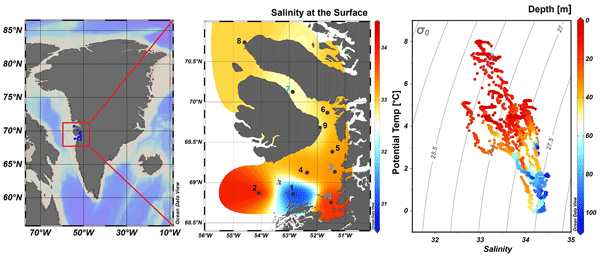
Isabell Schlangen, Elizabeth Leon-Palmero, Annabell Moser, Peihang Xu, Erik Laursen, and Carolin R. Löscher
Biogeosciences, 23, 1–19, https://doi.org/10.5194/bg-23-1-2026, https://doi.org/10.5194/bg-23-1-2026, 2026
Short summary
Short summary
We explored nitrogen fixation in the Arctic Ocean, revealing its key role in supporting coastal productivity, especially near melting glaciers. By combining molecular data, rate measurements, and environmental analysis, we identified dominant microbes like symbiotic unicellular cyanobacteria and linked high nitrogen fixation to glacial melt. Our findings suggest that climate-driven changes may expand niches for these microbes, reshaping nitrogen cycles and Arctic productivity in the future.
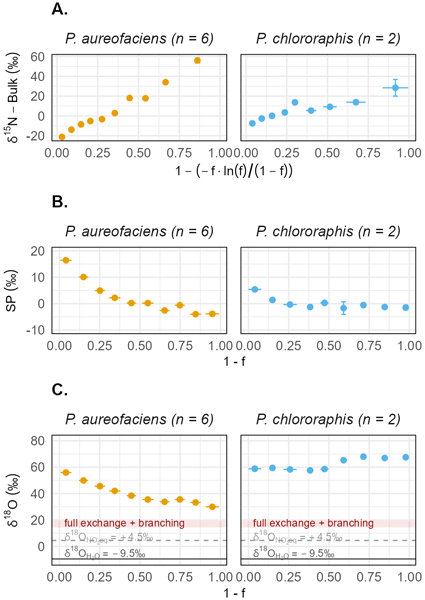
Noémy Chénier, Paul M. Magyar, Jakob Zopfi, Claudia Frey, Thomas Kuhn, Moritz F. Lehmann, and Joachim Mohn
Biogeosciences, 23, 6705–6724, https://doi.org/10.5194/bg-23-6705-2026, https://doi.org/10.5194/bg-23-6705-2026, 2026
Short summary
Short summary
N₂O is a greenhouse gas produced by microbes during nitrogen cycling. We studied two bacterial species and found that the isotope signatures of the N₂O they produced changed strongly depending on growth conditions and cell activity. Early during growth, the distribution of N isotopes within the N₂O molecule also changed unexpectedly. These results show that N₂O isotope signatures are more variable than previously assumed and depend strongly on physiology.
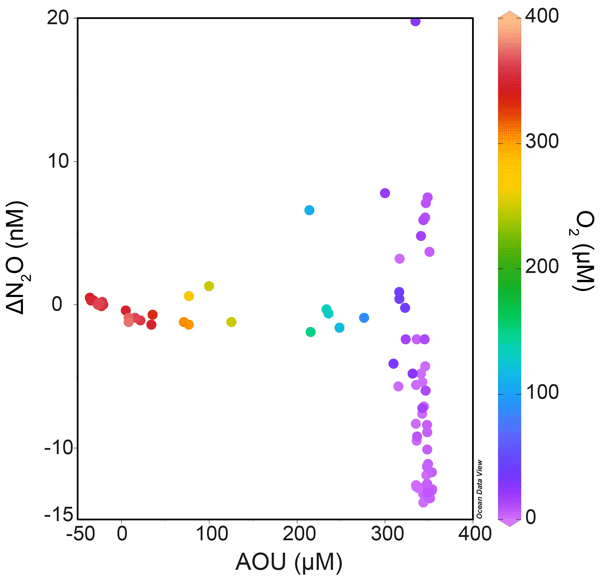
Pratirupa Bardhan, Claudia Frey, Gregor Rehder, and Hermann W. Bange
Biogeosciences, 23, 1987–2002, https://doi.org/10.5194/bg-23-1987-2026, https://doi.org/10.5194/bg-23-1987-2026, 2026
Short summary
Short summary
Nitrous oxide (N2O), a potent greenhouse gas, is released from coastal seas & estuaries, yet we don't fully understand how it is formed and consumed. In this study we collected water from several sites in the central Baltic Sea. N2O came from ammonia in oxic waters. Deep waters with low to no oxygen noted more active N2O cycling. The seafloor was a source in some areas. Typically N2O is produced by bacteria, but our results indicate possibility of other players like fungi or chemical reactions.
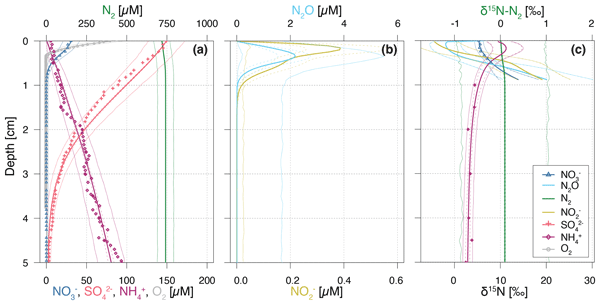
Alessandra Mazzoli, Peter Reichert, Claudia Frey, Cameron M. Callbeck, Tim J. Paulus, Jakob Zopfi, and Moritz F. Lehmann
Biogeosciences, 23, 283–314, https://doi.org/10.5194/bg-23-283-2026, https://doi.org/10.5194/bg-23-283-2026, 2026
Short summary
Short summary
Nitrogen (re-)cycling in sediments plays a key role in aquatic environments, but involves many overlapping biogeochemical processes that are hard to separate. We developed a new comprehensive sedimentary nitrogen isotope model to disentangle these reactions. Using field data from a Swiss lake and statistical tools, we demonstrated the robustness and validity of our modelling framework for a broad range of applications.
Isabell Schlangen, Elizabeth Leon-Palmero, Annabell Moser, Peihang Xu, Erik Laursen, and Carolin R. Löscher
Biogeosciences, 23, 1–19, https://doi.org/10.5194/bg-23-1-2026, https://doi.org/10.5194/bg-23-1-2026, 2026
Short summary
Short summary
We explored nitrogen fixation in the Arctic Ocean, revealing its key role in supporting coastal productivity, especially near melting glaciers. By combining molecular data, rate measurements, and environmental analysis, we identified dominant microbes like symbiotic unicellular cyanobacteria and linked high nitrogen fixation to glacial melt. Our findings suggest that climate-driven changes may expand niches for these microbes, reshaping nitrogen cycles and Arctic productivity in the future.
Jenna A. Lee, Joseph H. Vineis, Mathieu A. Poupon, Laure Resplandy, and Bess B. Ward
Biogeosciences, 22, 4743–4761, https://doi.org/10.5194/bg-22-4743-2025, https://doi.org/10.5194/bg-22-4743-2025, 2025
Short summary
Short summary
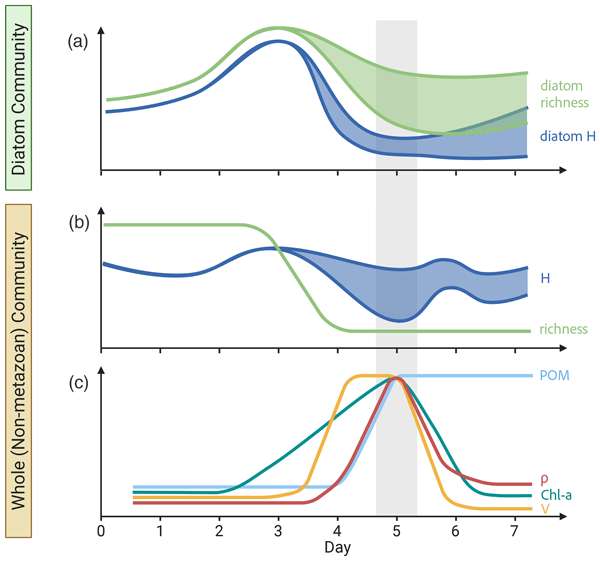
Concurrent sampling of environmental parameters, productivity rates, photopigments, and DNA was used to analyze 24 L estuarine diatom bloom microcosms. Biogeochemical data and an ecological model indicated that the bloom was terminated by grazing. Comparisons to previous studies revealed (1) additional community and diversity complexity using 18S amplicon vs. traditional pigment–based analyses and (2) a potential global productivity–diversity relationship using 18S and carbon transport rates.
Ihab Alfadhel, Ignacio Peralta-Maraver, Isabel Reche, Enrique P. Sánchez-Cañete, Sergio Aranda-Barranco, Eva Rodríguez-Velasco, Andrew S. Kowalski, and Penélope Serrano-Ortiz
Biogeosciences, 21, 5117–5129, https://doi.org/10.5194/bg-21-5117-2024, https://doi.org/10.5194/bg-21-5117-2024, 2024
Short summary
Short summary
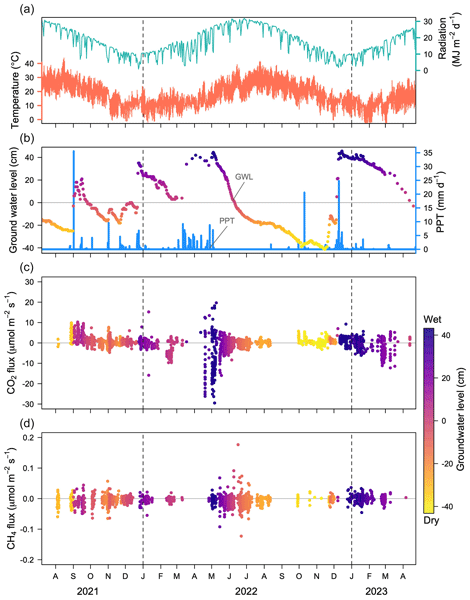
Inland saline lakes are crucial in the global carbon cycle, but increased droughts may alter their carbon exchange capacity. We measured CO2 and CH4 fluxes in a Mediterranean saline lake using the eddy covariance method under dry and wet conditions. We found the lake acts as a carbon sink during wet periods but not during droughts. These results highlight the importance of saline lakes in carbon sequestration and their vulnerability to climate-change-induced droughts.
Colette L. Kelly, Nicole M. Travis, Pascale Anabelle Baya, Claudia Frey, Xin Sun, Bess B. Ward, and Karen L. Casciotti
Biogeosciences, 21, 3215–3238, https://doi.org/10.5194/bg-21-3215-2024, https://doi.org/10.5194/bg-21-3215-2024, 2024
Short summary
Short summary
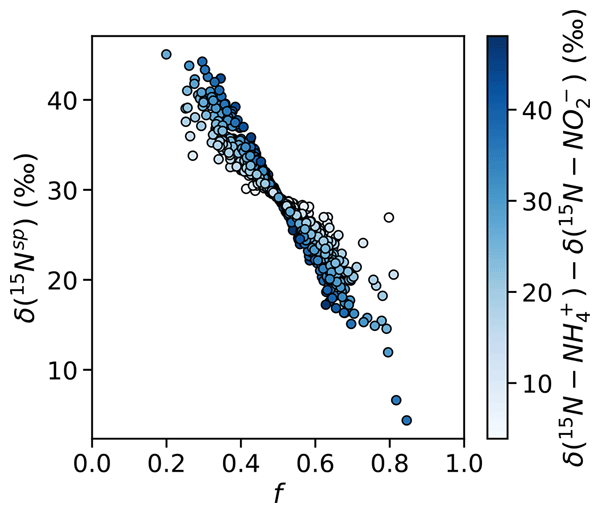
Nitrous oxide, a potent greenhouse gas, accumulates in regions of the ocean that are low in dissolved oxygen. We used a novel combination of chemical tracers to determine how nitrous oxide is produced in one of these regions, the eastern tropical North Pacific Ocean. Our experiments showed that the two most important sources of nitrous oxide under low-oxygen conditions are denitrification, an anaerobic process, and a novel “hybrid” process performed by ammonia-oxidizing archaea.
Weiyi Tang, Jeff Talbott, Timothy Jones, and Bess B. Ward
Biogeosciences, 21, 3239–3250, https://doi.org/10.5194/bg-21-3239-2024, https://doi.org/10.5194/bg-21-3239-2024, 2024
Short summary
Short summary
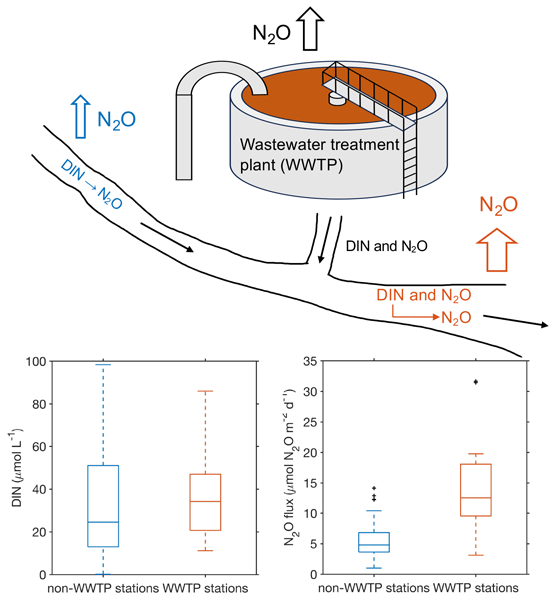
Wastewater treatment plants (WWTPs) are known to be hotspots of greenhouse gas emissions. However, the impact of WWTPs on the emission of the greenhouse gas N2O in downstream aquatic environments is less constrained. We found spatially and temporally variable but overall higher N2O concentrations and fluxes in waters downstream of WWTPs, pointing to the need for efficient N2O removal in addition to the treatment of nitrogen in WWTPs.
Weiyi Tang, Bess B. Ward, Michael Beman, Laura Bristow, Darren Clark, Sarah Fawcett, Claudia Frey, François Fripiat, Gerhard J. Herndl, Mhlangabezi Mdutyana, Fabien Paulot, Xuefeng Peng, Alyson E. Santoro, Takuhei Shiozaki, Eva Sintes, Charles Stock, Xin Sun, Xianhui S. Wan, Min N. Xu, and Yao Zhang
Earth Syst. Sci. Data, 15, 5039–5077, https://doi.org/10.5194/essd-15-5039-2023, https://doi.org/10.5194/essd-15-5039-2023, 2023
Short summary
Short summary
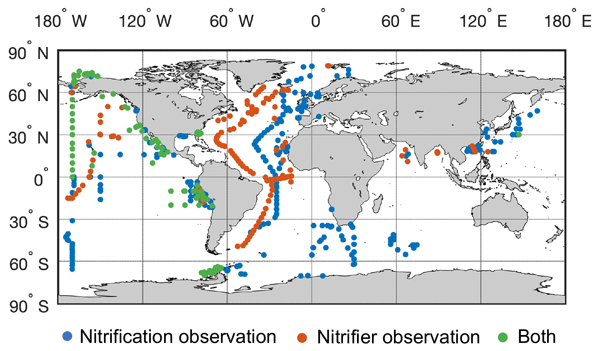
Nitrification and nitrifiers play an important role in marine nitrogen and carbon cycles by converting ammonium to nitrite and nitrate. Nitrification could affect microbial community structure, marine productivity, and the production of nitrous oxide – a powerful greenhouse gas. We introduce the newly constructed database of nitrification and nitrifiers in the marine water column and guide future research efforts in field observations and model development of nitrification.
John C. Tracey, Andrew R. Babbin, Elizabeth Wallace, Xin Sun, Katherine L. DuRussel, Claudia Frey, Donald E. Martocello III, Tyler Tamasi, Sergey Oleynik, and Bess B. Ward
Biogeosciences, 20, 2499–2523, https://doi.org/10.5194/bg-20-2499-2023, https://doi.org/10.5194/bg-20-2499-2023, 2023
Short summary
Short summary
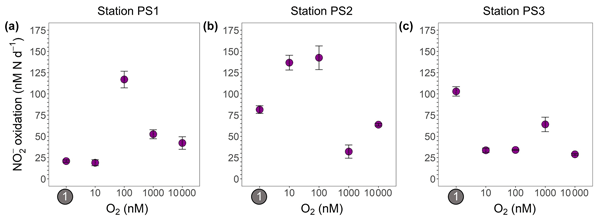
Nitrogen (N) is essential for life; thus, its availability plays a key role in determining marine productivity. Using incubations of seawater spiked with a rare form of N measurable on a mass spectrometer, we quantified microbial pathways that determine marine N availability. The results show that pathways that recycle N have higher rates than those that result in its loss from biomass and present new evidence for anaerobic nitrite oxidation, a process long thought to be strictly aerobic.

Mhlangabezi Mdutyana, Tanya Marshall, Xin Sun, Jessica M. Burger, Sandy J. Thomalla, Bess B. Ward, and Sarah E. Fawcett
Biogeosciences, 19, 3425–3444, https://doi.org/10.5194/bg-19-3425-2022, https://doi.org/10.5194/bg-19-3425-2022, 2022
Short summary
Short summary
Nitrite-oxidizing bacteria in the winter Southern Ocean show a high affinity for nitrite but require a minimum (i.e., "threshold") concentration before they increase their rates of nitrite oxidation significantly. The classic Michaelis–Menten model thus cannot be used to derive the kinetic parameters, so a modified equation was employed that also yields the threshold nitrite concentration. Dissolved iron availability may play an important role in limiting nitrite oxidation.
Cited articles
Álvarez-Salgado, X. A. and Miller, A. E. J.: Simultaneous determination of dissolved organic carbon and total dissolved nitrogen in seawater by high temperature catalytic oxidation: conditions for precise shipboard measurements, Mar. Chem., 62, 325–333, https://doi.org/10.1016/S0304-4203(98)00037-1, 1998.
American Public Health Association (APHA): Standard methods for the examination of water and wastewater, 18th edn., edited by: Greenberg, A. E., Clesceri, L. S., and Eaton, A. D., American Public Health Association, Washington, DC, USA, 1100 pp., ISBN 978-0-87553-207-3, 1992.
Babbin, A. R., Keil, R. G., Devol, A. H., and Ward, B. B.: Organic matter stoichiometry, flux, and oxygen control nitrogen loss in the ocean, Science, 344, 406–408, https://doi.org/10.1126/science.1248364, 2014.
Beaulieu, J. J., Tank, J. L., Hamilton, S. K., Wollheim, W. M., Hall, R. O., Mulholland, P. J., Peterson, B. J., Ashkenas, L. R., Cooper, L. W., Dahm, C. N., Dodds, W. K., Grimm, N. B., Johnson, S. L., McDowell, W. H., Poole, G. C., Valett, H. M., Arango, C. P., Bernot, M. J., Burgin, A. J., Crenshaw, C. L., Helton, A. M., Johnson, L. T., O'Brien, J. M., Potter, J. D., Sheibley, R. W., Sobota, D. J., and Thomas, S. M.: Nitrous oxide emission from denitrification in stream and river networks, P. Natl. Acad. Sci. USA, 108, 214–219, https://doi.org/10.1073/pnas.1011464108, 2011.
Beaulieu, J. J., Nietch, C. T., and Young, J. L.: Controls on nitrous oxide production and consumption in reservoirs of the Ohio River Basin, J. Geophys. Res.-Biogeosci., 120, 1995–2010, https://doi.org/10.1002/2015JG002941, 2015.
Bonin, P., Gilewicz, M., and Bertrand, J. C.: Effects of oxygen on each step of denitrification on Pseudomonas nautica, Can. J. Microbiol., 35, 1061–1064, https://doi.org/10.1139/m89-177, 1989.
Boström, K. H., Simu, K., Hagström, Å., and Riemann, L.: Optimization of DNA extraction for quantitative marine bacterioplankton community analysis, Limnol. Oceanogr. Methods, 2, 365–373, https://doi.org/10.4319/lom.2004.2.365, 2004.
Brezonik, P. L. and Lee, G. F.: Denitrification as a nitrogen sink in Lake Mendota, Wisconsin, Environ. Sci. Technol., 2, 120–125, 1968.
Chen, H., Pan, H., Xiao, S., and Deng, S.: Nitrous oxide dominates greenhouse gas emissions from hydropower's reservoirs in China from 2020 to 2060, Water Res., 279, 123420, https://doi.org/10.1016/j.watres.2025.123420, 2025.
Codispoti, L. A.: Interesting times for marine N2O, Science, 327, 1339–1340, https://doi.org/10.1126/science.1184945, 2010.
Dalsgaard, T., Thamdrup, B., Farías, L., and Revsbech, N. P.: Anammox and denitrification in the oxygen minimum zone of the eastern South Pacific, Limnol. Oceanogr., 57, 1331–1346, https://doi.org/10.4319/lo.2012.57.5.1331, 2012.
Frame, C. H., Lau, E., Nolan, E. J., Goepfert, T. J., and Lehmann, M. F.: Acidification enhances hybrid N2O production associated with aquatic ammonia-oxidizing microorganisms, Front. Microbiol., 7, 2104, https://doi.org/10.3389/fmicb.2016.02104, 2017.
Frey, C., Bange, H. W., Achterberg, E. P., Jayakumar, A., Löscher, C. R., Arévalo-Martínez, D. L., León-Palmero, E., Sun, M., Sun, X., Xie, R. C., Oleynik, S., and Ward, B. B.: Regulation of nitrous oxide production in low-oxygen waters off the coast of Peru, Biogeosciences, 17, 2263–2287, https://doi.org/10.5194/bg-17-2263-2020, 2020.
Füssel, J., Lam, P., Lavik, G., Jensen, M. M., Holtappels, M., Günter, M., and Kuypers, M. M.: Nitrite oxidation in the Namibian oxygen minimum zone, The ISME Journal, 6, 1200–1209, https://doi.org/10.1038/ismej.2011.178, 2012.
Granger, J. and Sigman, D. M.: Removal of nitrite with sulfamic acid for nitrate N and O isotope analysis with the denitrifier method, Rapid Commun. Mass Spectrom., 23, 3753–3762, https://doi.org/10.1002/rcm.4307, 2009.
Hall, G. H.: Nitrification in lakes, in: Nitrification, edited by: Prosser, J. I., IRL Press, Oxford, United Kingdom, 127–156, ISBN 978-1-85221-001-4, 1986.
Harrison, J. A., Maranger, R. J., Alexander, R. B., Giblin, A. E., Jacinthe, P.-A., Mayorga, E., Seitzinger, S. P., Sobota, D. J., and Wollheim, W. M.: The regional and global significance of nitrogen removal in lakes and reservoirs, Biogeochemistry, 93, 143–157, https://doi.org/10.1007/s10533-008-9272-x, 2009.
Hayes, N. M., Deemer, B. R., Corman, J. R., Razavi, N. R., and Strock, K. E.: Key differences between lakes and reservoirs modify climate signals: A case for a new conceptual model, Limnol. Oceanogr., 2, 47–62, https://doi.org/10.1002/lol2.10036, 2017.
Hochstein, L. I., Betlach, M., and Kritikos, G.: The effect of oxygen on denitrification during steady-state growth of Paracoccus halodenitrificans, Arch. Microbiol., 137, 74–78, https://doi.org/10.1007/BF00425811, 1984.
Inkscape Project: Inkscape: Open Source Scalable Vector Graphics Editor, Inkscape Project (Software Freedom Conservancy), RRID:SCR_014479, https://inkscape.org (last access: 15 May 2026), 2017.
IPCC: Climate Change 2021: The Physical Science Basis. Contribution of Working Group I to the Sixth Assessment Report of the Intergovernmental Panel on Climate Change, edited by: Masson-Delmotte, V., Zhai, P., Pirani, A., Connors, S. L., Péan, C., Berger, S., Caud, N., Chen, Y., Goldfarb, L., Gomis, M. I., Huang, M., Leitzell, K., Lonnoy, E., Matthews, J. B. R., Maycock, T. K., Waterfield, T., Yelekçi, O., Yu, R., and Zhou, B., Cambridge University Press, Cambridge, UK & New York, USA, https://doi.org/10.1017/9781009157896, 2021.
Ji, Q., Babbin, A. R., Jayakumar, A., Oleynik, S., and Ward, B. B.: Nitrous oxide production by nitrification and denitrification in the Eastern Tropical South Pacific oxygen minimum zone, Geophys. Res. Lett., 42, 10755–10764, https://doi.org/10.1002/2015GL066853, 2015.
Ji, Q., Frey, C., Sun, X., Jackson, M., Lee, Y.-S., Jayakumar, A., Cornwell, J. C., and Ward, B. B.: Nitrogen and oxygen availabilities control water column nitrous oxide production during seasonal anoxia in the Chesapeake Bay, Biogeosciences, 15, 6127–6138, https://doi.org/10.5194/bg-15-6127-2018, 2018.
Junier, P., Kim, O.-S., Witzel, K.-P., Imhoff, J. F., and Hadas, O.: Habitat partitioning of denitrifying bacterial communities carrying nirS or nirK genes in the stratified water column of Lake Kinneret, Israel, Aquat. Microb. Ecol., 51, 129–140, https://doi.org/10.3354/ame01186, 2008.
Kim, O.-S., Imhoff, J. F., Witzel, K.-P., and Junier, P.: Distribution of denitrifying bacterial communities in the stratified water column and sediment–water interface in two freshwater lakes and the Baltic Sea, Aquat. Ecol., 45, 99–112, https://doi.org/10.1007/s10452-010-9335-7, 2011.
Könneke, M., Bernhard, A. E., de la Torre, J. R., Walker, C. B., Waterbury, J. B., and Stahl, D. A.: Isolation of an autotrophic ammonia-oxidizing marine archaeon, Nature, 437, 543–546, https://doi.org/10.1038/nature03911, 2005.
Kowalchuk, G. A. and Stephen, J. R.: Ammonia-oxidizing bacteria: A model for molecular microbial ecology, Annu. Rev. Microbiol., 55, 485–529, https://doi.org/10.1146/annurev.micro.55.1.485, 2001.
Lehner, B., Liermann, C. R., Revenga, C., Vörösmarty, C., Fekete, B., Crouzet, P., Döll, P., Endejan, M., Frenken, K., Magome, J., Nilsson, C., Robertson, J. C., Rödel, R., Sindorf, N., and Wisser, D.: High-resolution mapping of the world's reservoirs and dams for sustainable river-flow management, Front. Ecol. Environ., 9, 494–502, https://doi.org/10.1890/100125, 2011.
León-Palmero, E.: Understanding the fluxes of greenhouse gases in reservoirs under the inspiration of Margalef, Limnetica, 42, 1, https://doi.org/10.23818/limn.42.22, 2023.
León-Palmero, E., Contreras-Ruiz, A., Sierra, A., Morales-Baquero, R., and Reche, I.: Dissolved CH4 coupled to photosynthetic picoeukaryotes in oxic waters and to cumulative chlorophyll a in anoxic waters of reservoirs, Biogeosciences, 17, 3223–3245, https://doi.org/10.5194/bg-17-3223-2020, 2020a.
León-Palmero, E., Morales-Baquero, R., and Reche, I.: Greenhouse gas fluxes from reservoirs determined by watershed lithology, morphometry, and anthropogenic pressure, Environ. Res. Lett., 15, 044012, https://doi.org/10.1088/1748-9326/ab7467, 2020b.
León-Palmero, E., Morales-Baquero, R., and Reche, I.: P inputs determine denitrifier abundance explaining dissolved nitrous oxide in reservoirs, Limnol. Oceanogr., 68, 1734–1749, https://doi.org/10.1002/lno.12381, 2023.
Leon-Palmero, E., Morales-Baquero, R., Thamdrup, B., Löscher, C., and Reche, I.: Sunlight drives the abiotic formation of nitrous oxide in fresh and marine waters, Science, 387, 1198–1203, https://doi.org/10.1126/science.adq0302, 2025.
Li, Y., Tian, H., Yao, Y., Shi, H., Bian, Z., Shi, Y., Wang, S., Maavara, T., Lauerwald, R., and Pan, S.: Increased nitrous oxide emissions from global lakes and reservoirs since the pre-industrial era, Nat. Commun., 15, 942, https://doi.org/10.1038/s41467-024-45061-0, 2024.
Liang, X., Xing, T., Li, J., Wang, B., Wang, F., He, C., Hou, L., and Li, S.: Control of the hydraulic load on nitrous oxide emissions from cascade reservoirs, Environ. Sci. Technol., 53, 11745–11754, https://doi.org/10.1021/acs.est.9b03438, 2019.
Liu, T., Xia, X., Liu, S., Mou, X., and Qiu, Y.: Acceleration of denitrification in turbid rivers due to denitrification occurring on suspended sediment in oxic waters, Environ. Sci. Technol., 47, 4053–4061, https://doi.org/10.1021/es304504m, 2013.
Lloyd, D., Boddy, L., and Davies, K. J. P.: Persistence of bacterial denitrification capacity under aerobic conditions: The rule rather than the exception, FEMS Microbiol. Ecol., 3, 185–190, https://doi.org/10.1111/j.1574-6968.1987.tb02354.x, 1987.
McIlvin, M. R. and Altabet, M. A.: Chemical conversion of nitrate and nitrite to nitrous oxide for nitrogen and oxygen isotopic analysis in freshwater and seawater, Anal. Chem., 77, 5589–5595, https://doi.org/10.1021/ac050528s, 2005.
Ostrom, N. E., Pitt, A., Sutka, R., Ostrom, P. H., Grandy, A. S., Huizinga, K. M., and Robertson, G. P.: Isotopologue effects during N2O reduction in soils and in pure cultures of denitrifiers, J. Geophys. Res.-Biogeo., 112, https://doi.org/10.1029/2006JG000287, 2007.
Pajares, S., Merino-Ibarra, M., Macek, M., and Alcocer, J.: Vertical and seasonal distribution of picoplankton and functional nitrogen genes in a high-altitude warm-monomictic tropical lake, Freshwater Biol., 62, 1180–1193, https://doi.org/10.1111/fwb.12935, 2017.
Pinti, D. L.: Suboxic, in: Encyclopedia of Astrobiology, edited by: Gargaud, M., Amils, R., Quintanilla, J. C., Cleaves, H. J., Irvine, W. M., Pinti, D. L., and Viso, J. V., Springer, Berlin, Heidelberg, https://doi.org/10.1007/978-3-642-27833-4_5236-2, 2014.
Pjevac, P., Schauberger, C., Poghosyan, L., Herbold, C. W., van Kessel, M. A. H. J., Daebeler, A., Steinberger, M., Jetten, M. S. M., Lücker, S., Wagner, M., and Daims, H.: amoA-targeted polymerase chain reaction primers for the specific detection and quantification of comammox Nitrospira in the Environment, Front. Microbiol., 8, https://doi.org/10.3389/fmicb.2017.01508, 2017.
Rasmussen, A. N. and Francis, C. A.: Genome-Resolved Metagenomic Insights into Massive Seasonal Ammonia-Oxidizing Archaea Blooms in San Francisco Bay, mSystems, 7, e01270-21, https://doi.org/10.1128/msystems.01270-21, 2022.
Ravishankara, A. R., Daniel, J. S., and Portmann, R. W.: Nitrous oxide (N2O): The dominant ozone-depleting substance emitted in the 21st century, Science, 326, 123–125, https://doi.org/10.1126/science.1176985, 2009.
R Core Team: R: A Language and Environment for Statistical Computing, R Foundation for Statistical Computing, Vienna, Austria, http://www.R-project.org/ (last access: 28 March 2026), 2014.
Rodríguez-Velasco, E., Peralta-Maraver, I., Martínez-García, A., García-Alguacil, M., Picazo, F., Gonçalves, R. J., Ramón, C. L., Morales-Baquero, R., Rueda, F. J., and Reche, I.: Idiosyncratic phenology of greenhouse gas emissions in a Mediterranean reservoir, Limnol. Oceanogr. Lett., 9, 364–375, https://doi.org/10.1002/lol2.10409, 2024.
Santoro, A. E., Buchwald, C., McIlvin, M. R., and Casciotti, K. L.: Isotopic signature of N2O produced by marine ammonia-oxidizing archaea, Science, 333, 1282–1285, https://doi.org/10.1126/science.1208239, 2011.
Santoro, A. E., Buchwald, C., Knapp, A. N., Berelson, W. M., Capone, D. G., and Casciotti, K. L.: Nitrification and Nitrous Oxide Production in the Offshore Waters of the Eastern Tropical South Pacific, Glob. Biogeochem. Cycles, 35, e2020GB006716, https://doi.org/10.1029/2020GB006716, 2020.
Seitzinger, S. P.: Denitrification in freshwater and coastal marine ecosystems: Ecological and geochemical significance, Limnol. Oceanogr., 33, 702–724, https://doi.org/10.4319/lo.1988.33.4part2.0702, 1988.
Sigman, D. M., Casciotti, K. L., Andreani, M., Barford, C., Galanter, M., and Böhlke, J. K.: A bacterial method for the nitrogen isotopic analysis of nitrate in seawater and freshwater, Anal. Chem., 73, 4145–4153, https://doi.org/10.1021/ac010088e, 2001.
Small, G. E., Bullerjahn, G. S., Sterner, R. W., Beall, B. F. N., Brovold, S., Finlay, J. C., McKay, R. M. L., and Mukherjee, M.: Rates and controls of nitrification in a large oligotrophic lake, Limnol. Oceanogr., 58, 276–286, https://doi.org/10.4319/lo.2013.58.1.0276, 2013.
Stein, L. Y.: Insights into the physiology of ammonia-oxidizing microorganisms, Current Opinion in Chemical Biology, 49, 9–15, https://doi.org/10.1016/j.cbpa.2018.09.003, 2019.
Stieglmeier, M., Mooshammer, M., Kitzler, B., Wanek, W., Zechmeister-Boltenstern, S., Richter, A., and Schleper, C.: Aerobic nitrous oxide production through N-nitrosating hybrid formation in ammonia-oxidizing archaea, ISME J., 8, 1135–1146, https://doi.org/10.1038/ismej.2013.220, 2014.
Tang, W., Tracey, J. C., Carroll, J., Wallace, E., Lee, J. A., Nathan, L., Sun, X., Jayakumar, A., and Ward, B. B.: Nitrous oxide production in the Chesapeake Bay, Limnol. Oceanogr., 67, 2101–2116, https://doi.org/10.1002/lno.12191, 2022.
Wan, X. S., Hou, L., Kao, S.-J., Zhang, Y., Sheng, H.-X., Shen, H., Tong, S., Qin, W., and Ward, B. B.: Pathways of N2O production by marine ammonia-oxidizing archaea determined from dual-isotope labeling, P. Natl. Acad. Sci. USA, 120, e2220697120, https://doi.org/10.1073/pnas.2220697120, 2023.
Wang, J., Vilmin, L., Mogollón, J. M., Beusen, A. H. W., van Hoek, W. J., Liu, X., Pika, P. A., Middelburg, J. J., and Bouwman, A. F.: Inland Waters Increasingly Produce and Emit Nitrous Oxide, Environ. Sci. Technol., 57, 13506–13519, https://doi.org/10.1021/acs.est.3c04230, 2023.
Ward, B. B.: Nitrification, in: Encyclopedia of Ecology (Second Edition), vol. 2, edited by: Fath, B., Elsevier, Oxford, 351–358, https://doi.org/10.1016/B978-0-12-409548-9.00697-7, 2013.
Ward, B. B., Tuit, C. B., Jayakumar, A., Rich, J. J., Moffett, J., and Naqvi, S. W. A.: Organic carbon, and not copper, controls denitrification in oxygen minimum zones of the ocean, Deep-Sea Res. Pt. I, 55, 1672–1683, https://doi.org/10.1016/j.dsr.2008.07.005, 2008.
Weigand, M. A., Foriel, J., Barnett, B., Oleynik, S., and Sigman, D. M.: Updates to instrumentation and protocols for isotopic analysis of nitrate by the denitrifier method, Rapid Commun. Mass Spectrom., 30, 1365–1383, https://doi.org/10.1002/rcm.7570, 2016.
Wenk, C. B., Blees, J., Zopfi, J., Veronesi, M., Bourbonnais, A., Schubert, C. J., Niemann, H., and Lehmann, M. F.: Anaerobic ammonium oxidation (anammox) bacteria and sulfide-dependent denitrifiers coexist in the water column of a meromictic south-alpine lake, Limnol. Oceanogr., 58, 1–12, https://doi.org/10.4319/lo.2013.58.1.0001, 2013.
Wenk, C. B., Frame, C. H., Koba, K., Casciotti, K. L., Veronesi, M., Niemann, H., Schubert, C. J., Yoshida, N., Toyoda, S., Makabe, A., Zopfi, J., and Lehmann, M. F.: Differential N2O dynamics in two oxygen-deficient lake basins revealed by stable isotope and isotopomer distributions, Limnol. Oceanogr., 61, 1735–1749, https://doi.org/10.1002/lno.10329, 2016.
Xia, X., Jia, Z., Liu, T., Zhang, S., and Zhang, L.: Coupled nitrification-denitrification caused by suspended sediment (SPS) in rivers: Importance of SPS size and composition, Environ. Sci. Technol., 51, 212–221, https://doi.org/10.1021/acs.est.6b03886, 2017.
Zarfl, C., Lumsdon, A. E., Berlekamp, J., Tydecks, L., and Tockner, K.: A global boom in hydropower dam construction, Aquat. Sci., 77, 161–170, https://doi.org/10.1007/s00027-014-0377-0, 2015.
Zhou, S., Zhang, Y., Huang, T., Liu, Y., Fang, K., and Zhang, C.: Microbial aerobic denitrification dominates nitrogen losses from reservoir ecosystem in the spring of Zhoucun reservoir, Sci. Total Environ., 651, 998–1010, https://doi.org/10.1016/j.scitotenv.2018.09.160, 2019.
Zumft, W. G.: Cell biology and molecular basis of denitrification, Microbiol. Mol. Biol. R., 61, 533–616, 1997.
Editorial statement
This study highlights reservoirs, which are widespread and expanding human made systems, as significant sources of nitrous oxide, with important implications for climate policy and water management. It provides a major advance by directly quantifying nitrous oxide production pathways in eutrophic reservoirs. Addressing key issues of climate change, water quality, and greenhouse gas emissions, the work is both timely and highly relevant. Conducted in Mediterranean systems, it also offers valuable insights for regional and global understanding of human impacts on biogeochemical cycles.
This study highlights reservoirs, which are widespread and expanding human made systems, as...
Short summary
Reservoirs act as nitrogen sinks and emit nitrous oxide, a potent greenhouse gas and major ozone-depleting substance. We studied two reservoirs and found that nitrification and denitrification produce nitrous oxide in the water column, but denitrification is the main source, fueled by fresh organic matter from phytoplankton. Our results also suggest that nitrous oxide is actively consumed. This study highlights the need to include reservoirs in global nitrous oxide budgets.
Reservoirs act as nitrogen sinks and emit nitrous oxide, a potent greenhouse gas and major...


Altmetrics
Final-revised paper
Preprint