
Articles | Volume 23, issue 12
https://doi.org/10.5194/bg-23-3995-2026
© Author(s) 2026. This work is distributed under
the Creative Commons Attribution 4.0 License.
the Creative Commons Attribution 4.0 License.
https://doi.org/10.5194/bg-23-3995-2026
© Author(s) 2026. This work is distributed under
the Creative Commons Attribution 4.0 License.
the Creative Commons Attribution 4.0 License.
Research article
| 
19 Jun 2026
Research article |
| 19 Jun 2026
| 19 Jun 2026
Divergent carbon use efficiency-growth rate tradeoff in popular biological growth models
Jinyun Tang
CORRESPONDING AUTHOR

Department of Molecular Ecology and Biogeochemistry, Climate and Ecosystem Sciences Division, Lawrence Berkeley National Laboratory, Berkeley, CA, USA
William J. Riley
Department of Molecular Ecology and Biogeochemistry, Climate and Ecosystem Sciences Division, Lawrence Berkeley National Laboratory, Berkeley, CA, USA
Gianna L. Marschmann
Department of Molecular Ecology and Biogeochemistry, Climate and Ecosystem Sciences Division, Lawrence Berkeley National Laboratory, Berkeley, CA, USA
Eoin L. Brodie
Department of Molecular Ecology and Biogeochemistry, Climate and Ecosystem Sciences Division, Lawrence Berkeley National Laboratory, Berkeley, CA, USA
Department of Environmental Science, Policy and Management, University of California, Berkeley, CA, USA
Related authors
Sagar Gautam, Chang Gyo Jung, Rattan Lal, Klaus Lorenz, Jinyun Tang, DeAnn Ricks Presley, Alan J. Franzluebbers, and Umakant Mishra
SOIL, 12, 821–833, https://doi.org/10.5194/soil-12-821-2026, https://doi.org/10.5194/soil-12-821-2026, 2026
Short summary
Short summary
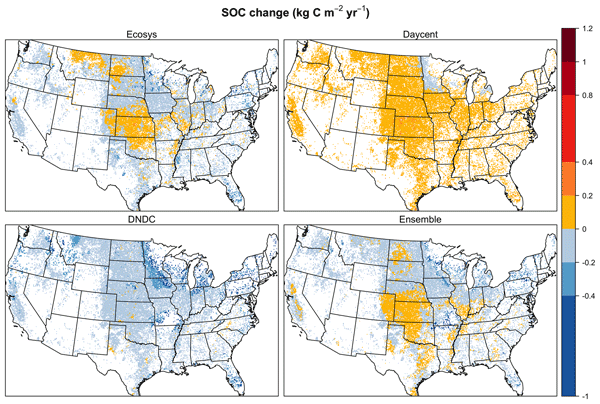
We developed an ensemble approach that combines three agroecosystem models to predict crop yields and changes in soil carbon across the United States. The ensemble results were more accurate and consistent compared to individual model. Ensemble result matched closely the observed yield data and soil carbon measurements while reducing the uncertainty from the individual models. This work improves our ability to track carbon change and supports carbon farming, climate action, and land management.
Zewei Ma, Kaiyu Guan, Bin Peng, Wang Zhou, Robert Grant, Jinyun Tang, Murugesu Sivapalan, Ming Pan, Li Li, and Zhenong Jin
Hydrol. Earth Syst. Sci., 29, 6393–6417, https://doi.org/10.5194/hess-29-6393-2025, https://doi.org/10.5194/hess-29-6393-2025, 2025
Short summary
Short summary
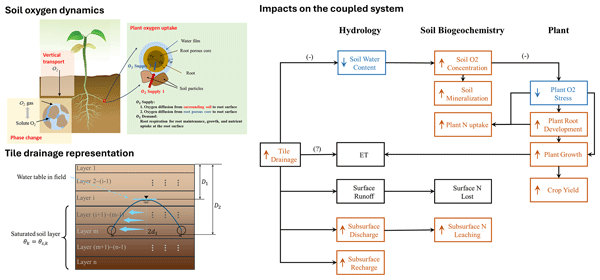
By involving soil oxygen dynamics, we explore tile drainage impacts on the coupled hydrology–biogeochemistry–crop system. We find that soil oxygen dynamics is the key mediator of tile–system dynamics. Tile drainage lowers soil water content and improves soil oxygen levels, helping crops grow during wet springs. The developed roots also help mitigate drought stress in dry summers. Overall, tile drainage increases crop resilience to climate change, making it a valuable future agricultural practice.
Lingbo Li, Hong-Yi Li, Guta Abeshu, Jinyun Tang, L. Ruby Leung, Chang Liao, Zeli Tan, Hanqin Tian, Peter Thornton, and Xiaojuan Yang
Earth Syst. Sci. Data, 17, 2713–2733, https://doi.org/10.5194/essd-17-2713-2025, https://doi.org/10.5194/essd-17-2713-2025, 2025
Short summary
Short summary
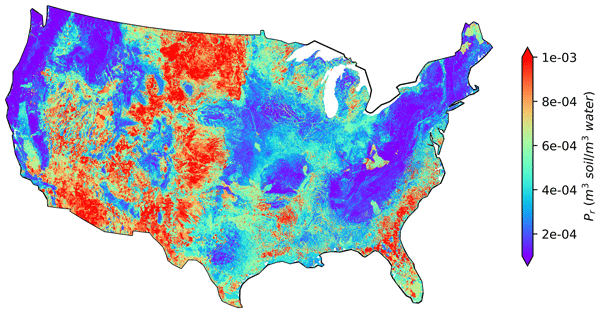
We have developed new maps that reveal how organic carbon from soil leaches into headwater streams over the contiguous United States. We use advanced artificial intelligence techniques and a massive amount of data, including observations at over 2500 gauges and a wealth of climate and environmental information. The maps are a critical step in understanding and predicting how carbon moves through our environment, hence making them a useful tool for tackling climate challenges.
Jinyun Tang and William J. Riley
Biogeosciences, 22, 1809–1819, https://doi.org/10.5194/bg-22-1809-2025, https://doi.org/10.5194/bg-22-1809-2025, 2025
Short summary
Short summary
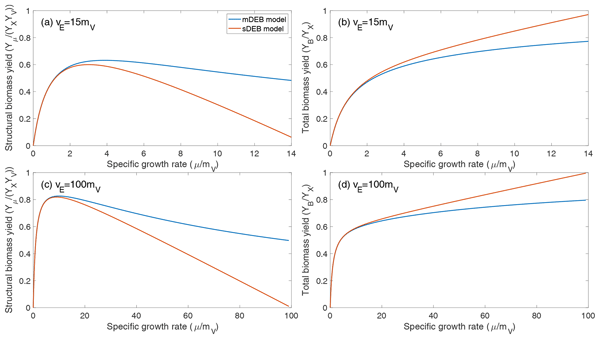
A new mathematical formulation of the dynamic energy budget model is presented for the growth of biological organisms. This new formulation combines mass conservation law and chemical kinetics theory and is computationally faster than the standard formulation of dynamic energy budget models. In simulating the growth of Thalassiosira weissflogii in a nitrogen-limiting chemostat, the new model is as good as the standard dynamic energy budget model using almost the same parameter values.
Jinyun Tang and William J. Riley
Biogeosciences, 21, 1061–1070, https://doi.org/10.5194/bg-21-1061-2024, https://doi.org/10.5194/bg-21-1061-2024, 2024
Short summary
Short summary
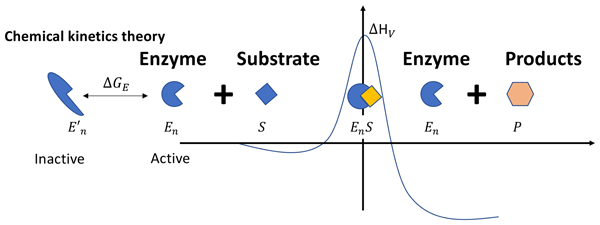
A chemical kinetics theory is proposed to explain the non-monotonic relationship between temperature and biochemical rates. It incorporates the observed thermally reversible enzyme denaturation that is ensured by the ceaseless thermal motion of molecules and ions in an enzyme solution and three well-established theories: (1) law of mass action, (2) diffusion-limited chemical reaction theory, and (3) transition state theory.
Licheng Liu, Shaoming Xu, Jinyun Tang, Kaiyu Guan, Timothy J. Griffis, Matthew D. Erickson, Alexander L. Frie, Xiaowei Jia, Taegon Kim, Lee T. Miller, Bin Peng, Shaowei Wu, Yufeng Yang, Wang Zhou, Vipin Kumar, and Zhenong Jin
Geosci. Model Dev., 15, 2839–2858, https://doi.org/10.5194/gmd-15-2839-2022, https://doi.org/10.5194/gmd-15-2839-2022, 2022
Short summary
Short summary
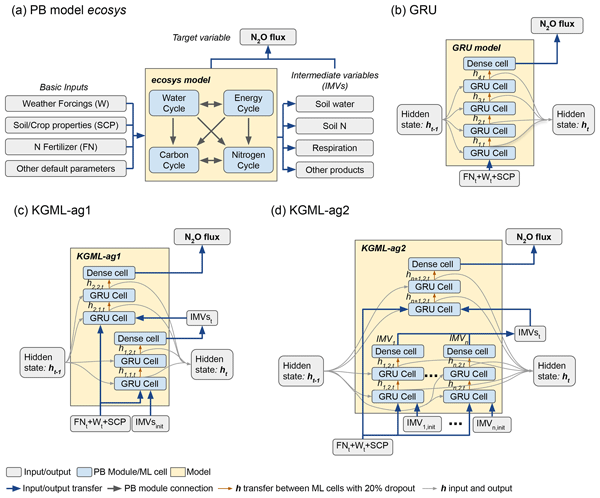
By incorporating the domain knowledge into a machine learning model, KGML-ag overcomes the well-known limitations of process-based models due to insufficient representations and constraints, and unlocks the “black box” of machine learning models. Therefore, KGML-ag can outperform existing approaches on capturing the hot moment and complex dynamics of N2O flux. This study will be a critical reference for the new generation of modeling paradigm for biogeochemistry and other geoscience processes.
Jinyun Tang, William J. Riley, and Qing Zhu
Geosci. Model Dev., 15, 1619–1632, https://doi.org/10.5194/gmd-15-1619-2022, https://doi.org/10.5194/gmd-15-1619-2022, 2022
Short summary
Short summary
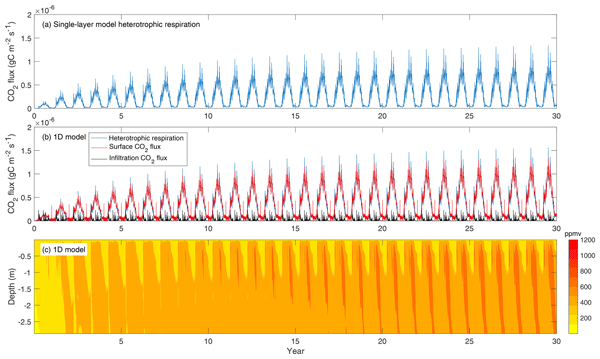
We here describe version 2 of BeTR, a reactive transport model created to help ease the development of biogeochemical capability in Earth system models that are used for quantifying ecosystem–climate feedbacks. We then coupled BeTR-v2 to the Energy Exascale Earth System Model to quantify how different numerical couplings of plants and soils affect simulated ecosystem biogeochemistry. We found that different couplings lead to significant uncertainty that is not correctable by tuning parameters.
Li Xu, Qi Tang, Qing Zhu, William J. Riley, Guido R. van der Werf, Yang Chen, Michael J. Prather, and James T. Randerson
EGUsphere, https://doi.org/10.5194/egusphere-2026-4288, https://doi.org/10.5194/egusphere-2026-4288, 2026
This preprint is open for discussion and under review for Atmospheric Chemistry and Physics (ACP).
Short summary
Short summary
Using the E3SM version 3 model with interactive chemistry, this study shows that wildfires substantially perturb global and regional tropospheric chemistry and modify radiative effects through aerosol and ozone interactions, with particularly strong impacts in tropical fire regions. By connecting wildfire emissions with changes in atmospheric composition, radiation, and climate, this study provides important insights on how the atmosphere responds to changing fire activities.
Sagar Gautam, Chang Gyo Jung, Rattan Lal, Klaus Lorenz, Jinyun Tang, DeAnn Ricks Presley, Alan J. Franzluebbers, and Umakant Mishra
SOIL, 12, 821–833, https://doi.org/10.5194/soil-12-821-2026, https://doi.org/10.5194/soil-12-821-2026, 2026
Short summary
Short summary
We developed an ensemble approach that combines three agroecosystem models to predict crop yields and changes in soil carbon across the United States. The ensemble results were more accurate and consistent compared to individual model. Ensemble result matched closely the observed yield data and soil carbon measurements while reducing the uncertainty from the individual models. This work improves our ability to track carbon change and supports carbon farming, climate action, and land management.
Elsa Abs, Christoph Keuschnig, Pierre Amato, Chris Bowler, Eric Capo, Alexander B. Chase, Luciana Chavez Rodriguez, Abraham N. Dabengwa, Thomas Dussarrat, Thomas Guzman, Linnea K. Hernandez, Jenni Hultman, Kirsten Küsel, Zhen Li, Anna Mankowski, William J. Riley, Scott R. Saleska, and Lisa Wingate
Biogeosciences, 23, 5205–5237, https://doi.org/10.5194/bg-23-5205-2026, https://doi.org/10.5194/bg-23-5205-2026, 2026
Short summary
Short summary
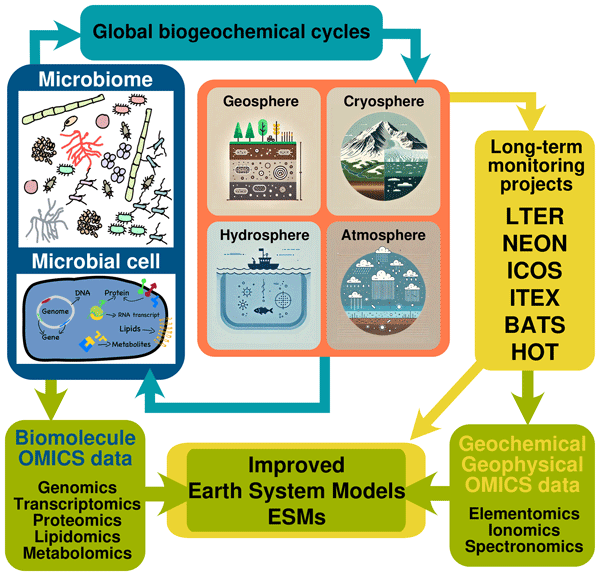
Meta-omics technologies offer new tools to understand how microbial and plant functional diversity shape biogeochemical cycles across ecosystems. This perspective explores how integrating omics data with ecological and modeling approaches can improve our understanding of greenhouse gas fluxes and nutrient dynamics, from soils to clouds, and from the past to the future. We highlight challenges and opportunities for scaling omics insights from local processes to Earth system models.
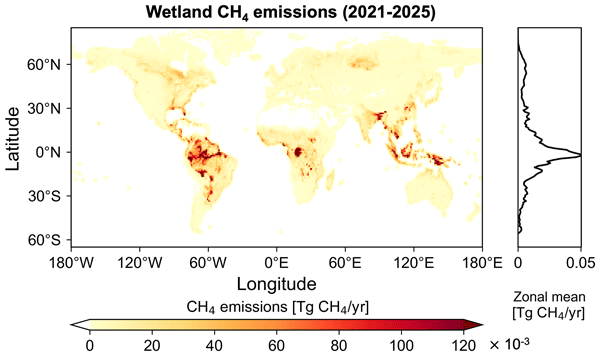
Mengze Li, Robert B. Jackson, Marielle Saunois, Philippe Ciais, Ben Poulter, Josep G. Canadell, Prabir K. Patra, Hanqin Tian, Zhen Zhang, Etienne Fluet-Chouinard, Zutao Ouyang, Ting Zhang, David J. Beerling, Dmitry A. Belikov, Philippe Bousquet, Danilo Custodio, Naveen Chandra, Xinyu Dou, Nicola Gedney, Peter O. Hopcroft, Alison M. Hoyt, Kazuhito Ichii, Akihito Ito, Atul K. Jain, Katherine Jensen, Fortunat Joos, Thomas Kleinen, Masayuki Kondo, Fa Li, Tingting Li, Xiangyu Liu, Shamil Maksyutov, Avni Malhotra, Adrien Martinez, Kyle McDonald, Joe R. Melton, Jurek Müller, Yosuke Niwa, Shufen Pan, Shushi Peng, Changhui Peng, Zhangcai Qin, Peter Raymond, William Riley, Arjo Segers, Rona L. Thompson, Aki Tsuruta, Yi Xi, Kunxiaojia Yuan, Wenxin Zhang, Bo Zheng, Qing Zhu, Qiuan Zhu, and Qianlai Zhuang
Earth Syst. Sci. Data, 18, 3507–3524, https://doi.org/10.5194/essd-18-3507-2026, https://doi.org/10.5194/essd-18-3507-2026, 2026
Short summary
Short summary
We proposed a framework that combines machine-learning and climate data to predict global natural vegetated wetland methane emissions for 2000–2025. We found that although total global emissions remained stable in the post-2020s, Northern Hemisphere emissions surged whilst tropical emissions fell. This approach allows us to rapidly monitor emissions and provides early warnings for climate impacts.
Jeffrey Beem-Miller, William J. Riley, Peter B. Reich, Michael W. I. Schmidt, Yuxuan Bai, Raimundo Bermudez Villanueva, Zach Brown, Abad Chabbi, Susan E. Crow, Wenxu Dong, Serita D. Frey, Paul J. Hanson, Kai Jensen, Melissa A. Knorr, Emma Lathrop, Avni Malhotra, Patrick Megonigal, Adrienne Nicotra, Andrew Nottingham, Genevieve L. Noyce, Roy L. Rich, Heidi Rodenhizer, Agustín Sarquis, Andreas Schindlbacher, Edward A. G. Schuur, Zheng Shi, Artur Stefanski, Viktoria Unger, Tana E. Wood, Yuanhe Yang, Zhijie Yang, Jizhong Zhou, Biao Zhu, and Margaret S. Torn
Earth Syst. Sci. Data Discuss., https://doi.org/10.5194/essd-2026-23, https://doi.org/10.5194/essd-2026-23, 2026
Revised manuscript accepted for ESSD
Short summary
Short summary
The Soil Warming to Depth Data Integration Effort (SWEDDIE) synthesizes data from deep soil warming experiments around the world (n = 23), offering new insight into warming responses of both surface and subsoils. We demonstrate that variation in soil warming with depth is driven largely by warming methodology, while soil moisture changes due to warming differ by ecosystem. This work serves a foundation for future syntheses with SWEDDIE.
Zewei Ma, Kaiyu Guan, Bin Peng, Wang Zhou, Robert Grant, Jinyun Tang, Murugesu Sivapalan, Ming Pan, Li Li, and Zhenong Jin
Hydrol. Earth Syst. Sci., 29, 6393–6417, https://doi.org/10.5194/hess-29-6393-2025, https://doi.org/10.5194/hess-29-6393-2025, 2025
Short summary
Short summary
By involving soil oxygen dynamics, we explore tile drainage impacts on the coupled hydrology–biogeochemistry–crop system. We find that soil oxygen dynamics is the key mediator of tile–system dynamics. Tile drainage lowers soil water content and improves soil oxygen levels, helping crops grow during wet springs. The developed roots also help mitigate drought stress in dry summers. Overall, tile drainage increases crop resilience to climate change, making it a valuable future agricultural practice.
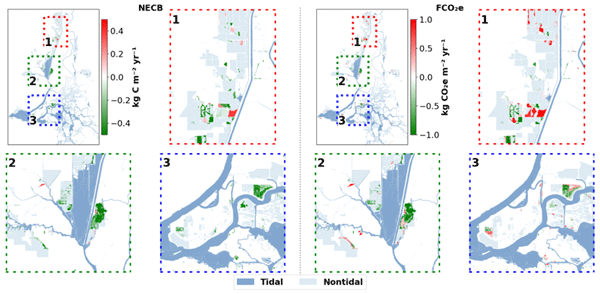
Ashley Brereton, Zelalem A. Mekonnen, Bhavna Arora, William J. Riley, Kunxiaojia Yuan, Yi Xu, Yu Zhang, Qing Zhu, Tyler L. Anthony, and Adina Paytan
Geosci. Model Dev., 18, 8157–8173, https://doi.org/10.5194/gmd-18-8157-2025, https://doi.org/10.5194/gmd-18-8157-2025, 2025
Short summary
Short summary
Wetlands absorb carbon dioxide (CO2), helping slow climate change, but they also release methane, a potent warming gas. We developed a collection of AI-based models to estimate magnitudes of CO2 and methane exchanged between the land and the atmosphere, for wetlands on a regional scale. This approach helps to inform land-use planning, restoration, and greenhouse gas accounting, while also creating a foundation for future advancements in prediction accuracy.
Lingbo Li, Hong-Yi Li, Guta Abeshu, Jinyun Tang, L. Ruby Leung, Chang Liao, Zeli Tan, Hanqin Tian, Peter Thornton, and Xiaojuan Yang
Earth Syst. Sci. Data, 17, 2713–2733, https://doi.org/10.5194/essd-17-2713-2025, https://doi.org/10.5194/essd-17-2713-2025, 2025
Short summary
Short summary
We have developed new maps that reveal how organic carbon from soil leaches into headwater streams over the contiguous United States. We use advanced artificial intelligence techniques and a massive amount of data, including observations at over 2500 gauges and a wealth of climate and environmental information. The maps are a critical step in understanding and predicting how carbon moves through our environment, hence making them a useful tool for tackling climate challenges.
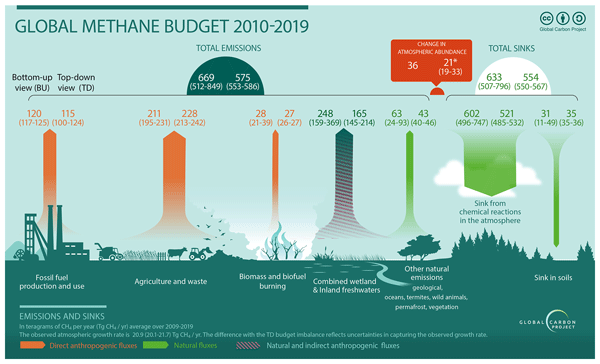
Marielle Saunois, Adrien Martinez, Benjamin Poulter, Zhen Zhang, Peter A. Raymond, Pierre Regnier, Josep G. Canadell, Robert B. Jackson, Prabir K. Patra, Philippe Bousquet, Philippe Ciais, Edward J. Dlugokencky, Xin Lan, George H. Allen, David Bastviken, David J. Beerling, Dmitry A. Belikov, Donald R. Blake, Simona Castaldi, Monica Crippa, Bridget R. Deemer, Fraser Dennison, Giuseppe Etiope, Nicola Gedney, Lena Höglund-Isaksson, Meredith A. Holgerson, Peter O. Hopcroft, Gustaf Hugelius, Akihiko Ito, Atul K. Jain, Rajesh Janardanan, Matthew S. Johnson, Thomas Kleinen, Paul B. Krummel, Ronny Lauerwald, Tingting Li, Xiangyu Liu, Kyle C. McDonald, Joe R. Melton, Jens Mühle, Jurek Müller, Fabiola Murguia-Flores, Yosuke Niwa, Sergio Noce, Shufen Pan, Robert J. Parker, Changhui Peng, Michel Ramonet, William J. Riley, Gerard Rocher-Ros, Judith A. Rosentreter, Motoki Sasakawa, Arjo Segers, Steven J. Smith, Emily H. Stanley, Joël Thanwerdas, Hanqin Tian, Aki Tsuruta, Francesco N. Tubiello, Thomas S. Weber, Guido R. van der Werf, Douglas E. J. Worthy, Yi Xi, Yukio Yoshida, Wenxin Zhang, Bo Zheng, Qing Zhu, Qiuan Zhu, and Qianlai Zhuang
Earth Syst. Sci. Data, 17, 1873–1958, https://doi.org/10.5194/essd-17-1873-2025, https://doi.org/10.5194/essd-17-1873-2025, 2025
Short summary
Short summary
Methane (CH4) is the second most important human-influenced greenhouse gas in terms of climate forcing after carbon dioxide (CO2). A consortium of multi-disciplinary scientists synthesise and update the budget of the sources and sinks of CH4. This edition benefits from important progress in estimating emissions from lakes and ponds, reservoirs, and streams and rivers. For the 2010s decade, global CH4 emissions are estimated at 575 Tg CH4 yr-1, including ~65 % from anthropogenic sources.
Jinyun Tang and William J. Riley
Biogeosciences, 22, 1809–1819, https://doi.org/10.5194/bg-22-1809-2025, https://doi.org/10.5194/bg-22-1809-2025, 2025
Short summary
Short summary
A new mathematical formulation of the dynamic energy budget model is presented for the growth of biological organisms. This new formulation combines mass conservation law and chemical kinetics theory and is computationally faster than the standard formulation of dynamic energy budget models. In simulating the growth of Thalassiosira weissflogii in a nitrogen-limiting chemostat, the new model is as good as the standard dynamic energy budget model using almost the same parameter values.
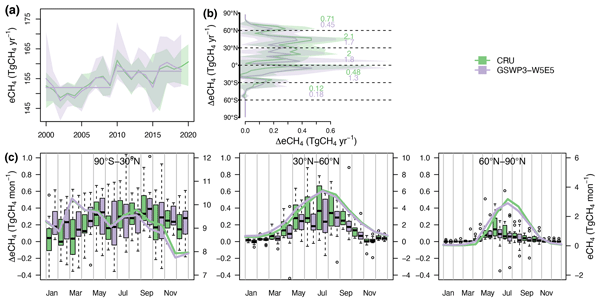
Zhen Zhang, Benjamin Poulter, Joe R. Melton, William J. Riley, George H. Allen, David J. Beerling, Philippe Bousquet, Josep G. Canadell, Etienne Fluet-Chouinard, Philippe Ciais, Nicola Gedney, Peter O. Hopcroft, Akihiko Ito, Robert B. Jackson, Atul K. Jain, Katherine Jensen, Fortunat Joos, Thomas Kleinen, Sara H. Knox, Tingting Li, Xin Li, Xiangyu Liu, Kyle McDonald, Gavin McNicol, Paul A. Miller, Jurek Müller, Prabir K. Patra, Changhui Peng, Shushi Peng, Zhangcai Qin, Ryan M. Riggs, Marielle Saunois, Qing Sun, Hanqin Tian, Xiaoming Xu, Yuanzhi Yao, Yi Xi, Wenxin Zhang, Qing Zhu, Qiuan Zhu, and Qianlai Zhuang
Biogeosciences, 22, 305–321, https://doi.org/10.5194/bg-22-305-2025, https://doi.org/10.5194/bg-22-305-2025, 2025
Short summary
Short summary
This study assesses global methane emissions from wetlands between 2000 and 2020 using multiple models. We found that wetland emissions increased by 6–7 Tg CH4 yr-1 in the 2010s compared to the 2000s. Rising temperatures primarily drove this increase, while changes in precipitation and CO2 levels also played roles. Our findings highlight the importance of wetlands in the global methane budget and the need for continuous monitoring to understand their impact on climate change.
Kamal Nyaupane, Umakant Mishra, Feng Tao, Kyongmin Yeo, William J. Riley, Forrest M. Hoffman, and Sagar Gautam
Biogeosciences, 21, 5173–5183, https://doi.org/10.5194/bg-21-5173-2024, https://doi.org/10.5194/bg-21-5173-2024, 2024
Short summary
Short summary
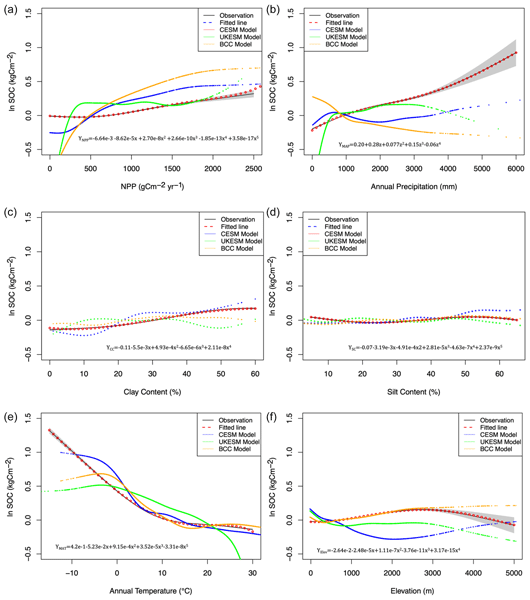
Representing soil organic carbon (SOC) dynamics in Earth system models (ESMs) is a key source of uncertainty in predicting carbon–climate feedbacks. Using machine learning, we develop and compare predictive relationships in observations (Obs) and ESMs. We find different relationships between environmental factors and SOC stocks in Obs and ESMs. SOC prediction in ESMs may be improved by representing the functional relationships of environmental controllers in a way consistent with observations.
Jinyun Tang and William J. Riley
Biogeosciences, 21, 1061–1070, https://doi.org/10.5194/bg-21-1061-2024, https://doi.org/10.5194/bg-21-1061-2024, 2024
Short summary
Short summary
A chemical kinetics theory is proposed to explain the non-monotonic relationship between temperature and biochemical rates. It incorporates the observed thermally reversible enzyme denaturation that is ensured by the ceaseless thermal motion of molecules and ions in an enzyme solution and three well-established theories: (1) law of mass action, (2) diffusion-limited chemical reaction theory, and (3) transition state theory.
Fa Li, Qing Zhu, William J. Riley, Lei Zhao, Li Xu, Kunxiaojia Yuan, Min Chen, Huayi Wu, Zhipeng Gui, Jianya Gong, and James T. Randerson
Geosci. Model Dev., 16, 869–884, https://doi.org/10.5194/gmd-16-869-2023, https://doi.org/10.5194/gmd-16-869-2023, 2023
Short summary
Short summary
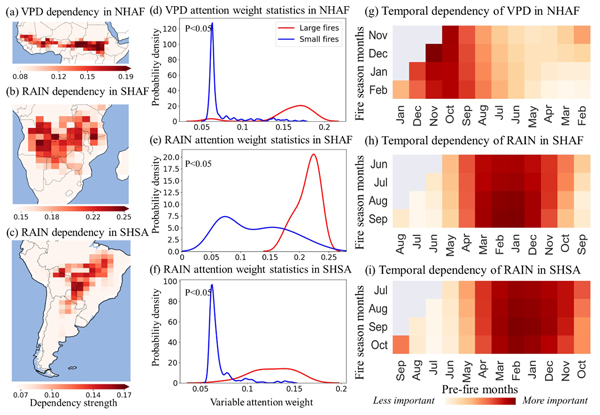
We developed an interpretable machine learning model to predict sub-seasonal and near-future wildfire-burned area over African and South American regions. We found strong time-lagged controls (up to 6–8 months) of local climate wetness on burned areas. A skillful use of such time-lagged controls in machine learning models results in highly accurate predictions of wildfire-burned areas; this will also help develop relevant early-warning and management systems for tropical wildfires.
Licheng Liu, Shaoming Xu, Jinyun Tang, Kaiyu Guan, Timothy J. Griffis, Matthew D. Erickson, Alexander L. Frie, Xiaowei Jia, Taegon Kim, Lee T. Miller, Bin Peng, Shaowei Wu, Yufeng Yang, Wang Zhou, Vipin Kumar, and Zhenong Jin
Geosci. Model Dev., 15, 2839–2858, https://doi.org/10.5194/gmd-15-2839-2022, https://doi.org/10.5194/gmd-15-2839-2022, 2022
Short summary
Short summary
By incorporating the domain knowledge into a machine learning model, KGML-ag overcomes the well-known limitations of process-based models due to insufficient representations and constraints, and unlocks the “black box” of machine learning models. Therefore, KGML-ag can outperform existing approaches on capturing the hot moment and complex dynamics of N2O flux. This study will be a critical reference for the new generation of modeling paradigm for biogeochemistry and other geoscience processes.
Qing Zhu, Fa Li, William J. Riley, Li Xu, Lei Zhao, Kunxiaojia Yuan, Huayi Wu, Jianya Gong, and James Randerson
Geosci. Model Dev., 15, 1899–1911, https://doi.org/10.5194/gmd-15-1899-2022, https://doi.org/10.5194/gmd-15-1899-2022, 2022
Short summary
Short summary
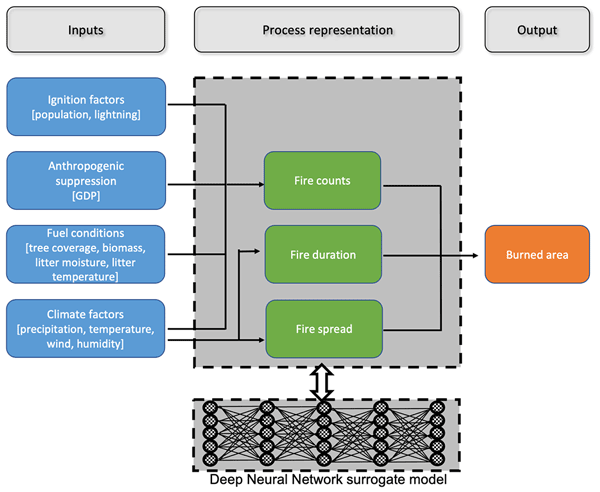
Wildfire is a devastating Earth system process that burns about 500 million hectares of land each year. It wipes out vegetation including trees, shrubs, and grasses and causes large losses of economic assets. However, modeling the spatial distribution and temporal changes of wildfire activities at a global scale is challenging. This study built a machine-learning-based wildfire surrogate model within an existing Earth system model and achieved high accuracy.
Jinyun Tang, William J. Riley, and Qing Zhu
Geosci. Model Dev., 15, 1619–1632, https://doi.org/10.5194/gmd-15-1619-2022, https://doi.org/10.5194/gmd-15-1619-2022, 2022
Short summary
Short summary
We here describe version 2 of BeTR, a reactive transport model created to help ease the development of biogeochemical capability in Earth system models that are used for quantifying ecosystem–climate feedbacks. We then coupled BeTR-v2 to the Energy Exascale Earth System Model to quantify how different numerical couplings of plants and soils affect simulated ecosystem biogeochemistry. We found that different couplings lead to significant uncertainty that is not correctable by tuning parameters.
Jing Tao, Qing Zhu, William J. Riley, and Rebecca B. Neumann
The Cryosphere, 15, 5281–5307, https://doi.org/10.5194/tc-15-5281-2021, https://doi.org/10.5194/tc-15-5281-2021, 2021
Short summary
Short summary
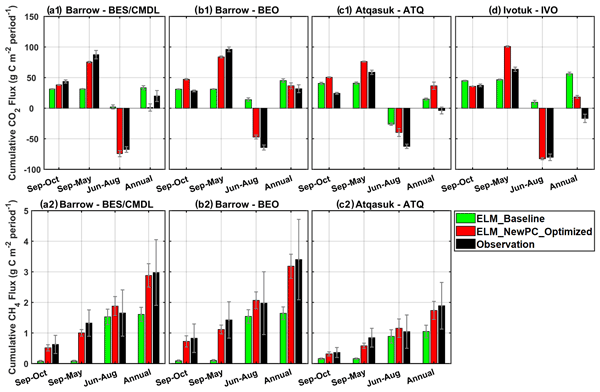
We improved the DOE's E3SM land model (ELMv1-ECA) simulations of soil temperature, zero-curtain period durations, cold-season CH4, and CO2 emissions at several Alaskan Arctic tundra sites. We demonstrated that simulated CH4 emissions during zero-curtain periods accounted for more than 50 % of total emissions throughout the entire cold season (Sep to May). We also found that cold-season CO2 emissions largely offset warm-season net uptake currently and showed increasing trends from 1950 to 2017.
Cited articles
Abramoff, R., Xu, X. F., Hartman, M., O'Brien, S., Feng, W. T., Davidson, E., Finzi, A. C., Moorhead, D., Schimel, J., Torn, M., and Mayes, M. A.: The Millennial model: in search of measurable pools and transformations for modeling soil carbon in the new century, Biogeochemistry, 137, 51–71, https://doi.org/10.1007/s10533-017-0409-7, 2018.
Allison, S. D.: Rethinking microbial carbon use efficiency in soil models, Nat. Clim. Change, 15, 10–12, https://doi.org/10.1038/s41558-024-02217-6, 2025.
Allison, S. D., Wallenstein, M. D., and Bradford, M. A.: Soil-carbon response to warming dependent on microbial physiology, Nat. Geosci., 3, 336–340, https://doi.org/10.1038/Ngeo846, 2010.
Andresen, B., Salamon, P., and Berry, R. S.: Thermodynamics in finite-time, Phys. Today, 37, 62–70, https://doi.org/10.1063/1.2916405, 1984.
Andresen, B., Berry, R. S., Nitzan, A., and Salamon, P.: Thermodynamics in finite time. I. The step-Carnot cycle, Phys. Rev. A, 15, 2086–2093, https://doi.org/10.1103/PhysRevA.15.2086, 1977.
Beeftink, H. H., Vanderheijden, R. T. J. M., and Heijnen, J. J.: Maintenance requirements – energy supply from simultaneous endogenous respiration and substrate consumption, Fems. Microbiol. Ecol., 73, 203–209, https://doi.org/10.1016/0378-1097(90)90731-5, 1990.
Bejan, A.: Entropy generation minimization: The new thermodynamics of finite-size devices and finite-time processes, J. Appl. Phys., 79, 1191–1218, https://doi.org/10.1063/1.362674, 1996.
Bloom, A. A., Exbrayat, J. F., van der Velde, I. R., Feng, L., and Williams, M.: The decadal state of the terrestrial carbon cycle: Global retrievals of terrestrial carbon allocation, pools, and residence times, P. Natl. Acad. Sci. USA, 113, 1285–1290, https://doi.org/10.1073/pnas.1515160113, 2016.
Boland, B. and Schreyer, S.: The Relationship Between Horsepower & Fuel Efficiency, https://scholars.fhsu.edu/sacad/vol2024/iss2024/106 (last access: 10 June 2026), 2024.
Boussadia, O., Steppe, K., Zgallai, H., El Hadj, S. B., Braham, M., Lemeur, R., and Van Labeke, M. C.: Effects of nitrogen deficiency on leaf photosynthesis, carbohydrate status and biomass production in two olive cultivars 'Meski' and 'Koroneiki', Sci. Hortic. Amsterdam, 123, 336–342, https://doi.org/10.1016/j.scienta.2009.09.023, 2010.
Burrows, S. M., Maltrud, M., Yang, X., Zhu, Q., Jeffery, N., Shi, X., Ricciuto, D., Wang, S., Bisht, G., Tang, J., Wolfe, J., Harrop, B. E., Singh, B., Brent, L., Baldwin, S., Zhou, T., Cameron-Smith, P., Keen, N., Collier, N., Xu, M., Hunke, E. C., Elliott, S. M., Turner, A. K., Li, H., Wang, H., Golaz, J. C., Bond-Lamberty, B., Hoffman, F. M., Riley, W. J., Thornton, P. E., Calvin, K., and Leung, L. R.: The DOE E3SM v1.1 Biogeochemistry configuration: description and simulated ecosystem-climate responses to historical changes in forcing, J. Adv. Model. Earth Sy., 12, e2019MS001766, https://doi.org/10.1029/2019MS001766, 2020.
Collado, S., Rosas, I., González, E., Gutierrez-Lavin, A., and Diaz, M.: response in membrane bioreactors under salicylic acid-induced stress conditions, J. Hazard. Mater., 267, 9–16, https://doi.org/10.1016/j.jhazmat.2013.12.034, 2014.
Dawes, E. A. and Ribbons, D. W.: Some aspects of endogenous metabolism of bacteria, Bacteriol. Rev., 28, 126–149, https://doi.org/10.1128/Mmbr.28.2.126-149.1964, 1964.
Fatichi, S., Leuzinger, S., and Körner, C.: Moving beyond photosynthesis: from carbon source to sink-driven vegetation modeling, New Phytol., 201, 1086–1095, https://doi.org/10.1111/nph.12614, 2014.
Fay, P. A., Prober, S. M., Harpole, W. S., Knops, J. M. H., Bakker, J. D., Borer, E. T., Lind, E. M., MacDougall, A. S., Seabloom, E. W., Wragg, P. D., Adler, P. B., Blumenthal, D. M., Buckley, Y., Chu, C. J., Cleland, E. E., Collins, S. L., Davies, K. F., Du, G. Z., Feng, X. H., Firn, J., Gruner, D. S., Hagenah, N., Hautier, Y., Heckman, R. W., Jin, V. L., Kirkman, K. P., Klein, J., Ladwig, L. M., Li, Q., McCulley, R. L., Melbourne, B. A., Mitchell, C. E., Moore, J. L., Morgan, J. W., Risch, A. C., Schütz, M., Stevens, C. J., Wedin, D. A., and Yang, L. H.: Grassland productivity limited by multiple nutrients, Nat. Plants, 1, 15080, https://doi.org/10.1038/Nplants.2015.80, 2015.
Feynman, R. P., Leighton, R. B., and Sands, M.: The Feynman Lectures on Physics, Vol. I: The New Millennium Edition: Mainly Mechanics, Radiation, and Heat, Basic Books, ISBN: 978-0465024933, 2011.
Fourcaud, T., Zhang, X., Stokes, A., Lambers, H., and Körner, C.: Plant growth modelling and applications:: The increasing importance of plant architecture in growth models, Ann. Bot. London, 101, 1053–1063, https://doi.org/10.1093/aob/mcn050, 2008.
Geyer, K. M., Dijkstra, P., Sinsabaugh, R., and Frey, S. D.: Clarifying the interpretation of carbon use efficiency in soil through methods comparison, Soil Biol. Biochem., 128, 79–88, https://doi.org/10.1016/j.soilbio.2018.09.036, 2019.
Graham, D. W., Knapp, C. W., Van Vleck, E. S., Bloor, K., Lane, T. B., and Graham, C. E.: Experimental demonstration of chaotic instability in biological nitrification, Isme. J., 1, 385–393, https://doi.org/10.1038/ismej.2007.45, 2007.
Hagerty, S. B., Allison, S. D., and Schimel, J. P.: Testing microbial models with data from a C glucose tracer experiment, Soil Biol. Biochem., 172, 108781, https://doi.org/10.1016/j.soilbio.2022.108781, 2022.
He, X. J., Abs, E., Allison, S. D., Tao, F., Huang, Y. Y., Manzoni, S., Abramoff, R., Bruni, E., Bowring, S. P. K., Chakrawal, A., Ciais, P., Elsgaard, L., Friedlingstein, P., Georgiou, K., Hugelius, G., Holm, L. B., Li, W., Luo, Y. Q., Marmasse, G., Nunan, N., Qiu, C. J., Sitch, S., Wang, Y. P., and Goll, D. S.: Emerging multiscale insights on microbial carbon use efficiency in the land carbon cycle, Nat. Commun., 15, 8010, https://doi.org/10.1038/s41467-024-52160-5, 2024.
He, Y. J., Yang, J. Y., Zhuang, Q. L., Harden, J. W., McGuire, A. D., Liu, Y. L., Wang, G. S., and Gu, L. H.: Incorporating microbial dormancy dynamics into soil decomposition models to improve quantification of soil carbon dynamics of northern temperate forests, J. Geophys. Res. Biogeo., 120, 2596–2611, https://doi.org/10.1002/2015jg003130, 2015.
Hu, J. X., Cui, Y. X., Manzoni, S., Zhou, S. X., Cornelissen, J. H. C., Huang, C. D., Schimel, J., and Kuzyakov, Y.: Microbial carbon use efficiency and growth rates in soil: global patterns and drivers, Glob. Change Biol., 31, e70036, https://doi.org/10.1111/gcb.70036, 2025.
Ibekwe, A. M. and Kennedy, A. C.: Phospholipid fatty acid profiles and carbon utilization patterns for analysis of microbial community structure under field and greenhouse conditions, Fems. Microbiol. Ecol., 26, 151–163, https://doi.org/10.1111/j.1574-6941.1998.tb00501.x, 1998.
Jarrell, W. M. and Beverly, R. B.: The Dilution Effect in Plant Nutrition Studies, Adv. Agron., 34, 197–224, https://doi.org/10.1016/S0065-2113(08)60887-1, 1981.
Jenkinson, D. S.: The turnover of organic-carbon and nitrogen in soil, Philos. T. R. Soc. B., 329, 361–368, https://doi.org/10.1098/rstb.1990.0177, 1990.
Knox, R. G., Koven, C. D., Riley, W. J., Walker, A. P., Wright, S. J., Holm, J. A., Wei, X. Y., Fisher, R. A., Zhu, Q., Tang, J. Y., Ricciuto, D. M., Shuman, J. K., Yang, X. J., Kueppers, L. M., and Chambers, J. Q.: Nutrient dynamics in a coupled terrestrial biosphere and land model (ELM-FATES-CNP), J. Adv. Model. Earth Sy., 16, e2023MS003689, https://doi.org/10.1029/2023MS003689, 2024.
Kooijman, S. A. L. M.: Dynamic Energy Budget Theory for Metabolic Organisation, Cambridge University Press, Cambridge, https://doi.org/10.1017/CBO9780511805400, 2009.
Koven, C. D., Riley, W. J., Subin, Z. M., Tang, J. Y., Torn, M. S., Collins, W. D., Bonan, G. B., Lawrence, D. M., and Swenson, S. C.: The effect of vertically resolved soil biogeochemistry and alternate soil C and N models on C dynamics of CLM4, Biogeosciences, 10, 7109–7131, https://doi.org/10.5194/bg-10-7109-2013, 2013.
Li, J. M., Du, A. P., Liu, P. H., Tian, X. P., Jin, Y. L., Yi, Z. L., He, K. Z., Fang, Y., and Zhao, H.: High starch accumulation mechanism and phosphorus utilization efficiency of duckweed under phosphate starvation, Ind. Crops Prod., 167, 113529, https://doi.org/10.1016/j.indcrop.2021.113529, 2021.
Lipson, D. A.: The complex relationship between microbial growth rate and yield and its implications for ecosystem processes, Front. Microbiol., 6, 615, https://doi.org/10.3389/fmicb.2015.00615, 2015.
Liu, Z. G., Chen, Z., Yu, G. R., Yang, M., Zhang, W. K., Zhang, T. Y., and Han, L.: Ecosystem carbon use efficiency in ecologically vulnerable areas in China: Variation and influencing factors, Front. Plant Sci., 13, 1062055, https://doi.org/10.3389/fpls.2022.1062055, 2022.
Liu, Z. W., Wu, X. L., Liu, W., Bian, R. J., Ge, T. D., Zhang, W., Zheng, J. F., Drosos, M., Liu, X. Y., Zhang, X. H., Cheng, K., Li, L. Q., and Pan, G. X.: Greater microbial carbon use efficiency and carbon sequestration in soils: Amendment of biochar versus crop straws, GCB Bioenergy, 12, 1092–1103, https://doi.org/10.1111/gcbb.12763, 2020.
Manzoni, S., Čapek, P., Porada, P., Thurner, M., Winterdahl, M., Beer, C., Brüchert, V., Frouz, J., Herrmann, A. M., Lindahl, B. D., Lyon, S. W., Šantrůčková, H., Vico, G., and Way, D.: Reviews and syntheses: Carbon use efficiency from organisms to ecosystems – definitions, theories, and empirical evidence, Biogeosciences, 15, 5929–5949, https://doi.org/10.5194/bg-15-5929-2018, 2018.
Marchand, L. J., Gricar, J., Zuccarini, P., Dox, I., Marien, B., Verlinden, M., Heinecke, T., Prislan, P., Marie, G., Lange, H., van den Bulcke, J., Penuelas, J., Fonti, P., and Campioli, M.: No winter halt in below-ground wood growth of four angiosperm deciduous tree species, Nat. Ecol. Evol., 9, https://doi.org/10.1038/s41559-024-02602-6, 2025.
Monteiro, M., Stari, C., Cabeza, C., and Marti, A. C.: The Atwood machine revisited using smartphones, Phys. Teach., 53, 373–374, https://doi.org/10.1119/1.4928357, 2015.
Nev, O. A. and van den Berg, H. A.: Variable-Internal-Stores models of microbial growth and metabolism with dynamic allocation of cellular resources, J. Math Biol., 74, 409–445, https://doi.org/10.1007/s00285-016-1030-4, 2017.
Odum, H. T. and Pinkerton, R. C.: Times speed regulator – the optimum efficiency for maximum power output in physical and biological systems, Am. Sci., 43, 331–343, 1955.
Onsager, L.: Reciprocal relations in irreversible processes. II., Phys. Rev., 38, 2265–2279, https://doi.org/10.1103/PhysRev.38.2265, 1931a.
Onsager, L.: Reciprocal relations in irreversible processes. I., Phys. Rev., 37, 405–426, https://doi.org/10.1103/PhysRev.37.405, 1931b.
Orecchini, F., Santiangeli, A., Zuccari, F., Ortenzi, F., Genovese, A., Spazzafumo, G., and Nardone, L.: Energy consumption of a last generation full hybrid vehicle compared with a conventional vehicle in real drive conditions, Energy Procedia, 148, 289–296, https://doi.org/10.1016/j.egypro.2018.08.080, 2018.
Parton, W. J., Stewart, J. W. B., and Cole, C. V.: Dynamics of C, N, P and S in grassland soils – a model, Biogeochemistry, 5, 109–131, https://doi.org/10.1007/Bf02180320, 1988.
Pirt, S. J.: Maintenance energy of bacteria in growing cultures, Proc. R. Soc. Ser. B Bio., 163, 224–231, https://doi.org/10.1098/rspb.1965.0069, 1965.
Pirt, S. J.: Maintenance energy – a general-model for energy-limited and energy-sufficient growth, Arch.. Microbiol, 133, 300–302, https://doi.org/10.1007/Bf00521294, 1982.
Roach, T. N. F., Salamon, P., Nulton, J., Andresen, B., Felts, B., Haas, A., Calhoun, S., Robinett, N., and Rohwer, F.: Application of finite-time and control thermodynamics to biological processes at multiple scales, J. Non-Equil. Thermody., 43, 193–210, https://doi.org/10.1515/jnet-2018-0008, 2018.
Russo, S. E., Ledder, G., Muller, E. B., and Nisbet, R. M.: Dynamic Energy Budget models: fertile ground for understanding resource allocation in plants in a changing world, Conserv. Physiol., 10, coac061, https://doi.org/10.1093/conphys/coac061, 2022.
Sayre, J. M., Wang, D. Y., Erikson, C., Gontijo, J. B., Scow, K., and Rodrigues, J. L. M.: Increased microbial carbon use efficiency and metabolic capacity in manure amended soils: A 665-day field experiment, Biol. Fert. Soils, https://doi.org/10.1007/s00374-026-01986-w, 2026.
Sierra, C. A., Ceballos-Núñez, V., Hartmann, H., Herrera-Ramírez, D., and Metzler, H.: Ideas and perspectives: Allocation of carbon from net primary production in models is inconsistent with observations of the age of respired carbon, Biogeosciences, 19, 3727–3738, https://doi.org/10.5194/bg-19-3727-2022, 2022.
Sinsabaugh, R. L., Moorhead, D. L., Xu, X. F., and Litvak, M. E.: Plant, microbial and ecosystem carbon use efficiencies interact to stabilize microbial growth as a fraction of gross primary production, New Phytol., 214, 1518–1526, https://doi.org/10.1111/nph.14485, 2017.
Tang, J.: jinyun1tang/cue_paper: BG_CUE_paper_code, Version v1.0.1, Zenodo [code], https://doi.org/10.5281/zenodo.20629498, 2026.
Tang, J. Y. and Riley, W. J.: A total quasi-steady-state formulation of substrate uptake kinetics in complex networks and an example application to microbial litter decomposition, Biogeosciences, 10, 8329–8351, https://doi.org/10.5194/bg-10-8329-2013, 2013.
Tang, J. Y. and Riley, W. J.: Weaker soil carbon-climate feedbacks resulting from microbial and abiotic interactions, Nat. Clim. Change, 5, 56–60, https://doi.org/10.1038/Nclimate2438, 2015.
Tang, J. Y. and Riley, W. J.: Revising the dynamic energy budget theory with a new reserve mobilization rule and three example applications to bacterial growth, Soil Biol. Biochem., 178, 108954, https://doi.org/10.1016/j.soilbio.2023.108954, 2023.
Tang, J. and Riley, W. J.: Technical note: A modified formulation of dynamic energy budget theory for faster computation of biological growth, Biogeosciences, 22, 1809–1819, https://doi.org/10.5194/bg-22-1809-2025, 2025.
Tang, J. Y., Riley, W. J., Manzoni, S., and Maggi, F.: Feasibility of Formulating Ecosystem Biogeochemical Models From Established Physical Rules, J. Geophys. Res. Biogeo., 129, e2023JG007674, https://doi.org/10.1029/2023JG007674, 2024.
Tao, F., Huang, Y. Y., Hungate, B. A., Manzoni, S., Frey, S. D., Schmidt, M. W. I., Reichstein, M., Carvalhais, N., Ciais, P., Jiang, L. F., Lehmann, J., Wang, Y. P., Houlton, B. Z., Ahrens, B., Mishra, U., Hugelius, G., Hocking, T. D., Lu, X. J., Shi, Z., Viatkin, K., Vargas, R., Yigini, Y., Omuto, C., Malik, A. A., Peralta, G., Cuevas-Corona, R., Di Paolo, L. E., Luotto, I., Liao, C. J., Liang, Y. S., Saynes, V. S., Huang, X. M., and Luo, Y. Q.: Microbial carbon use efficiency promotes global soil carbon storage, Nature, 618, 981–985, https://doi.org/10.1038/s41586-023-06042-3, 2023.
Thingstad, T. F.: Utilization of N, P, and organic C by heterotrophic bacteria .1. Outline of a chemostat theory with a consistent concept of maintenance metabolism, Mar. Ecol. Prog. Ser., 35, 99–109, https://doi.org/10.3354/meps035099, 1987.
Thornley, J. H. M.: A balanced quantitative model for root: shoot ratios in vegetative plants, Ann. Bot., 36, 431–441, https://doi.org/10.1093/oxfordjournals.aob.a084602, 1972.
Thornley, J. H. M.: Plant growth and respiration re-visited: maintenance respiration defined – it is an emergent property of, not a separate process within, the system – and why the respiration: photosynthesis ratio is conservative, Ann. Bot. London, 108, 1365–1380, https://doi.org/10.1093/aob/mcr238, 2011.
Wang, G. S. and Post, W. M.: A theoretical reassessment of microbial maintenance and implications for microbial ecology modeling, Fems. Microbiol. Ecol., 81, 610–617, https://doi.org/10.1111/j.1574-6941.2012.01389.x, 2012.
Wang, Y. P., Zhang, H. C., Ciais, P., Goll, D., Huang, Y. Y., Wood, J. D., Ollinger, S. V., Tang, X. L., and Prescher, A. K.: Microbial activity and root carbon Inputs are more important than soil carbon diffusion in simulating soil carbon profiles, J. Geophys. Res. Biogeo., 126, e2020JG006205, https://doi.org/10.1029/2020JG006205, 2021.
Weng, E., Dybzinski, R., Farrior, C. E., and Pacala, S. W.: Competition alters predicted forest carbon cycle responses to nitrogen availability and elevated CO2: simulations using an explicitly competitive, game-theoretic vegetation demographic model, Biogeosciences, 16, 4577–4599, https://doi.org/10.5194/bg-16-4577-2019, 2019.
Wieder, W. R., Grandy, A. S., Kallenbach, C. M., and Bonan, G. B.: Integrating microbial physiology and physio-chemical principles in soils with the MIcrobial-MIneral Carbon Stabilization (MIMICS) model, Biogeosciences, 11, 3899–3917, https://doi.org/10.5194/bg-11-3899-2014, 2014.
Wieder, W. R., Grandy, A. S., Kallenbach, C. M., Taylor, P. G., and Bonan, G. B.: Representing life in the Earth system with soil microbial functional traits in the MIMICS model, Geosci. Model Dev., 8, 1789–1808, https://doi.org/10.5194/gmd-8-1789-2015, 2015.
Williams, F. M.: A model of cell growth dynamics, J. Theor. Biol., 15, 190–207, https://doi.org/10.1016/0022-5193(67)90200-7, 1967.
Xu, Q. C., Li, L., Guo, J. J., Guo, H. Y., Liu, M. Q., Guo, S. W., Kuzyakov, Y., Ling, N., and Shen, Q. R.: Active microbial population dynamics and life strategies drive the enhanced carbon use efficiency in high-organic matter soils, Mbio, 15, https://doi.org/10.1128/mbio.00177-24, 2024.
Yang, X., Thornton, P. E., Ricciuto, D. M., and Post, W. M.: The role of phosphorus dynamics in tropical forests – a modeling study using CLM-CNP, Biogeosciences, 11, 1667–1681, https://doi.org/10.5194/bg-11-1667-2014, 2014.
Yuan, H., Ma, Y. H., and Sun, C. P.: Optimizing thermodynamic cycles with two finite-sized reservoirs, Phys. Rev. E., 105, L022101, https://doi.org/10.1103/PhysRevE.105.L022101, 2022.
Zhang, Y. J., Xu, M., Chen, H., and Adams, J.: Global pattern of NPP to GPP ratio derived from MODIS data: effects of ecosystem type, geographical location and climate, Global. Ecol. Biogeogr., 18, 280–290, https://doi.org/10.1111/j.1466-8238.2008.00442.x, 2009.
Zheng, Q., Hu, Y. T., Zhang, S. S., Noll, L., Böckle, T., Richter, A., and Wanek, W.: Growth explains microbial carbon use efficiency across soils differing in land use and geology, Soil Biol. Biochem., 128, 45–55, https://doi.org/10.1016/j.soilbio.2018.10.006, 2019.
Zhu, Q., Riley, W. J., Tang, J. Y., Collier, N., Hoffman, F. M., Yang, X. J., and Bisht, G.: Representing nitrogen, phosphorus, and carbon interactions in the E3SM land model: development and global benchmarking, J. Adv. Model. Earth Sy., 11, 2238–2258, https://doi.org/10.1029/2018ms001571, 2019.
Short summary
Carbon Use Efficiency (CUE) measures how biological organisms use carbon to synthesize new biomass, inferred to first increase and then decrease with specific growth rate. Our analysis of six biological growth models reveals that source-driven models fail to capture this relationship, while sink-driven models, using a reserve biomass pool, succeed. Existing biogeochemical models often depict a deterministic CUE-controlling factor relationship, which we find should be modeled dynamically instead.
Carbon Use Efficiency (CUE) measures how biological organisms use carbon to synthesize new...


Altmetrics
Final-revised paper
Preprint