
Articles | Volume 23, issue 12
https://doi.org/10.5194/bg-23-4083-2026
© Author(s) 2026. This work is distributed under
the Creative Commons Attribution 4.0 License.
the Creative Commons Attribution 4.0 License.
https://doi.org/10.5194/bg-23-4083-2026
© Author(s) 2026. This work is distributed under
the Creative Commons Attribution 4.0 License.
the Creative Commons Attribution 4.0 License.
Research article
| 
22 Jun 2026
Research article |
| 22 Jun 2026
| 22 Jun 2026
Dissecting mesopelagic particulate organic carbon budgets in the North Atlantic: A mechanistic diagnosis and evaluation of PISCESv2_RC
M. Andrea Orihuela-García
CORRESPONDING AUTHOR

Barcelona Supercomputing Center (BSC), Plaça d'Eusebi Güell, 1–3, 08034 Barcelona, Catalonia, Spain
Universitat Politècnica de Catalunya (UPC), UPC Campus Nord, Carrer de Jordi Girona, 1–3, Les Corts, 08034 Barcelona, Catalonia, Spain
Institut de Ciències del Mar (ICM), Pg. Marítim de la Barceloneta, 37, Ciutat Vella, 08003 Barcelona, Catalonia, Spain
Yohan Ruprich-Robert
Barcelona Supercomputing Center (BSC), Plaça d'Eusebi Güell, 1–3, 08034 Barcelona, Catalonia, Spain
Vladimir Lapin
Barcelona Supercomputing Center (BSC), Plaça d'Eusebi Güell, 1–3, 08034 Barcelona, Catalonia, Spain
Saskia Loosveldt Tomas
Barcelona Supercomputing Center (BSC), Plaça d'Eusebi Güell, 1–3, 08034 Barcelona, Catalonia, Spain
Raffaele Bernardello
Barcelona Supercomputing Center (BSC), Plaça d'Eusebi Güell, 1–3, 08034 Barcelona, Catalonia, Spain
Margarida Samsó-Cabré
Barcelona Supercomputing Center (BSC), Plaça d'Eusebi Güell, 1–3, 08034 Barcelona, Catalonia, Spain
Pierre-Antoine Bretonnière
Barcelona Supercomputing Center (BSC), Plaça d'Eusebi Güell, 1–3, 08034 Barcelona, Catalonia, Spain
Miguel Castrillo
Barcelona Supercomputing Center (BSC), Plaça d'Eusebi Güell, 1–3, 08034 Barcelona, Catalonia, Spain
Institut de Ciències del Mar (ICM), Pg. Marítim de la Barceloneta, 37, Ciutat Vella, 08003 Barcelona, Catalonia, Spain
Related authors
No articles found.
Tabea Unser, Rumeng Li, Peter Knippertz, Francesco Benincasa, Miguel Castrillo, Oriol Jorba, Carlos Pérez García-Pando, and Martina Klose
EGUsphere, https://doi.org/10.5194/egusphere-2026-5004, https://doi.org/10.5194/egusphere-2026-5004, 2026
This preprint is open for discussion and under review for Geoscientific Model Development (GMD).
Short summary
Short summary
Haboobs are dust storms formed when cold air from thunderstorms spreads outward near the surface, but their characteristics and contribution to dust emissions are poorly quantified. We developed an automated algorithm to identify and track haboobs in a high-resolution model with an interactive dust cycle. Applied over North Africa and the Middle East, the algorithm enables estimates of when and where haboobs occur and how much dust they emit, with the model reproducing their key characteristics.
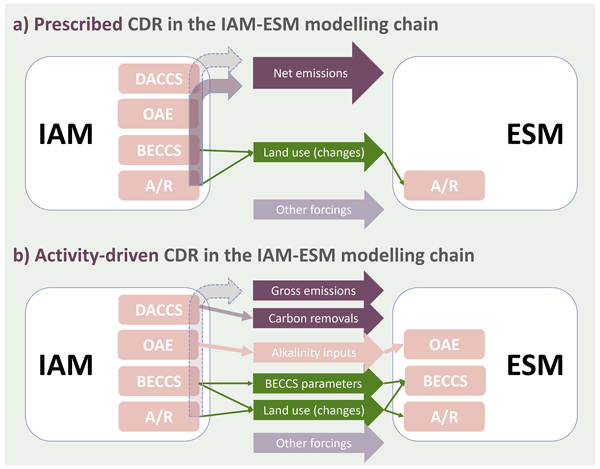
Jörg Schwinger, Leon Merfort, Nico Bauer, Raffaele Bernardello, Momme Butenschön, Timothée Bourgeois, Matthew J. Gidden, Shraddha Gupta, Hanna Lee, Nadine Mengis, Yiannis Moustakis, Helene Muri, Lars Nieradzik, Daniele Peano, Julia Pongratz, Pascal Sauer, Etienne Tourigny, and David Wårlind
Earth Syst. Dynam., 17, 1341–1363, https://doi.org/10.5194/esd-17-1341-2026, https://doi.org/10.5194/esd-17-1341-2026, 2026
Short summary
Short summary
Earth system models can simulate CO2 removal by representing the activity that draws down atmospheric CO2, e.g. growing bioenergy crops for energy production with carbon capture and storage or enhancing the oceans’ alkalinity. We describe a simulation framework, spanning the modeling chain from integrated assessment to Earth system models, that allows separating the intrinsic efficiency of CO2 removal and the overall atmospheric CO2 reduction, the latter being affected by Earth system feedbacks.

Pablo Goitia, Manuel G. Marciani, Miguel Castrillo, and Mario C. Acosta
Geosci. Model Dev., 19, 8501–8514, https://doi.org/10.5194/gmd-19-8501-2026, https://doi.org/10.5194/gmd-19-8501-2026, 2026
Short summary
Short summary
Earth System Model workflows commonly run on highly congested high-performance computing platforms, meaning that each individual workflow task potentially faces lengthy waiting times in the queues of the schedulers. In this work, we evaluate the task aggregation approach in EC-Earth3 workflows to reduce the queue times and, consequently, the total execution time. The results show up to 23% more simulated years over the same time span, with queuing times reduced by up to a factor of 12.33.
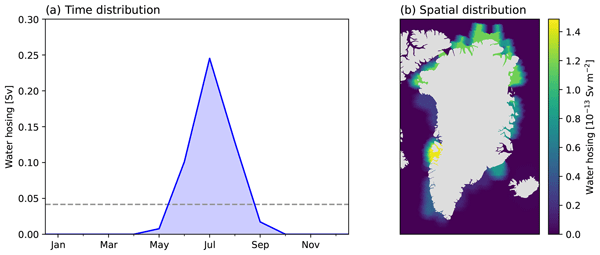
Eneko Martin-Martinez, Eduardo Moreno-Chamarro, Fraser William Goldsworth, Jin-Song von Storch, Cristina Arumi, Daria Kuznetsova, Saskia Loosveldt-Tomas, Pierre-Antoine Bretonnière, and Pablo Ortega
Ocean Sci., 22, 2307–2331, https://doi.org/10.5194/os-22-2307-2026, https://doi.org/10.5194/os-22-2307-2026, 2026
Short summary
Short summary
We investigate the impact of Greenland meltwaters on the ocean circulation and the North Atlantic region. To this end, we impose a quasi-realistic distribution of freshwater fluxes in a global climate model with 8-km horizontal resolution, much finer than the standard 100-km scale. The study reveals that the meltwaters disperse unevenly across the North Atlantic, guided by boundary currents and modulated by gradual changes in the large-scale circulation, which undergoes a progressive weakening.
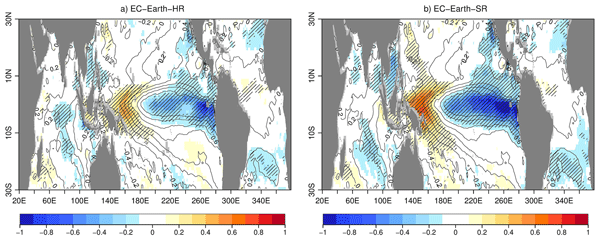
Aude Carréric, Pablo Ortega, Roberto Bilbao, Carlos Delgado-Torres, Vladimir Lapin, Ferran Lopez-Marti, Markus Donat, and Francisco Doblas-Reyes
Earth Syst. Dynam., 17, 717–737, https://doi.org/10.5194/esd-17-717-2026, https://doi.org/10.5194/esd-17-717-2026, 2026
Short summary
Short summary
The paper assesses the impact of horizontal resolution of the EC-Earth climate model on its ability to predict El Nino Southern Oscillation (ENSO). The high-resolution simulations show better forecast skill linked to improved simulation of ENSO-related variability and ENSO teleconnections with the equatorial Atlantic. However, the remaining poor skill in the western Pacific highlights the importance of better understanding ENSO simulation errors and mean state biases to improve forecasts.
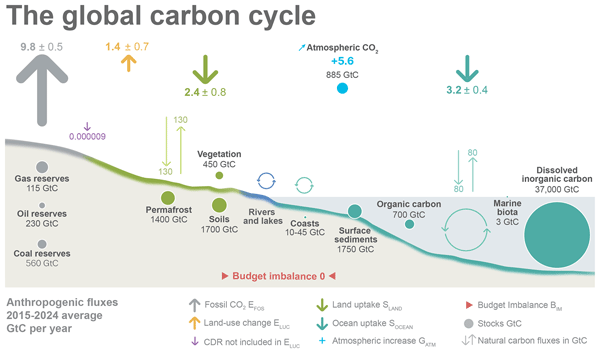
Pierre Friedlingstein, Michael O'Sullivan, Matthew W. Jones, Robbie M. Andrew, Dorothee C. E. Bakker, Judith Hauck, Peter Landschützer, Corinne Le Quéré, Hongmei Li, Ingrid T. Luijkx, Glen P. Peters, Wouter Peters, Julia Pongratz, Clemens Schwingshackl, Stephen Sitch, Josep G. Canadell, Philippe Ciais, Kjetil Aas, Simone R. Alin, Peter Anthoni, Leticia Barbero, Nicholas R. Bates, Nicolas Bellouin, Alice Benoit-Cattin, Carla F. Berghoff, Raffaele Bernardello, Laurent Bopp, Ida Bagus Mandhara Brasika, Matthew A. Chamberlain, Naveen Chandra, Frédéric Chevallier, Louise P. Chini, Nathan O. Collier, Thomas H. Colligan, Margot Cronin, Laique M. Djeutchouang, Xinyu Dou, Matt P. Enright, Kazutaka Enyo, Michael Erb, Wiley Evans, Richard A. Feely, Liang Feng, Daniel J. Ford, Adrianna Foster, Filippa Fransner, Thomas Gasser, Marion Gehlen, Thanos Gkritzalis, Jefferson Goncalves De Souza, Giacomo Grassi, Luke Gregor, Nicolas Gruber, Bertrand Guenet, Özgür Gürses, Kirsty Harrington, Ian Harris, Jens Heinke, George C. Hurtt, Yosuke Iida, Tatiana Ilyina, Akihiko Ito, Andrew R. Jacobson, Atul K. Jain, Tereza Jarníková, Annika Jersild, Fei Jiang, Steve D. Jones, Etsushi Kato, Ralph F. Keeling, Kees Klein Goldewijk, Jürgen Knauer, Yawen Kong, Jan Ivar Korsbakken, Charles Koven, Taro Kunimitsu, Xin Lan, Junjie Liu, Zhiqiang Liu, Zhu Liu, Claire Lo Monaco, Lei Ma, Gregg Marland, Patrick C. McGuire, Galen A. McKinley, Joe R. Melton, Natalie Monacci, Erwan Monier, Eric J. Morgan, David R. Munro, Jens D. Müller, Shin-Ichiro Nakaoka, Lorna R. Nayagam, Yosuke Niwa, Tobias Nutzel, Are Olsen, Abdirahman M. Omar, Naiqing Pan, Sudhanshu Pandey, Denis Pierrot, Zhangcai Qin, Pierre Regnier, Gregor Rehder, Laure Resplandy, Alizée Roobaert, Thais M. Rosan, Christian Rödenbeck, Jörg Schwinger, Ingunn Skjelvan, T. Luke Smallman, Victoria Spada, Mohanan G. Sreeush, Qing Sun, Adrienne J. Sutton, Colm Sweeney, Didier Swingedouw, Roland Séférian, Shintaro Takao, Hiroaki Tatebe, Hanqin Tian, Xiangjun Tian, Bronte Tilbrook, Hiroyuki Tsujino, Francesco Tubiello, Erik van Ooijen, Guido R. van der Werf, Sebastiaan J. van de Velde, Anthony P. Walker, Rik Wanninkhof, Xiaojuan Yang, Wenping Yuan, Xu Yue, and Jiye Zeng
Earth Syst. Sci. Data, 18, 3211–3288, https://doi.org/10.5194/essd-18-3211-2026, https://doi.org/10.5194/essd-18-3211-2026, 2026
Short summary
Short summary
The Global Carbon Budget 2025 describes the methodology, main results, and datasets used to quantify the anthropogenic emissions of carbon dioxide (CO2) and their partitioning among the atmosphere, land ecosystems, and the ocean over the historical period (1750–2025). These living datasets are updated every year to provide the highest transparency and traceability in the reporting of CO2, the key driver of climate change.
Francisco J. Doblas-Reyes, Jenni Kontkanen, Irina Sandu, Mario Acosta, Mohammed Hussam Al Turjmam, Ivan Alsina-Ferrer, Miguel Andrés-Martínez, Costanza Anerdi, Leo Arriola, Marvin Axness, Marc Batlle Martín, Peter Bauer, Tobias Becker, Daniel Beltrán, Sebastian Beyer, Hendryk Bockelmann, Pierre-Antoine Bretonnière, Sebastien Cabaniols, Silvia Caprioli, Miguel Castrillo, Aparna Chandrasekar, Suvarchal Cheedela, Victor Correal, Emanuele Danovaro, Paolo Davini, Jussi Enkovaara, Claudia Frauen, Barbara Früh, Aina Gaya Àvila, Paolo Ghinassi, Rohit Ghosh, Supriyo Ghosh, Iker González, Katherine Grayson, Matthew Griffith, Ioan Hadade, Christopher Haine, Carl Hartick, Utz-Uwe Haus, Shane Hearne, Heikki Järvinen, Bernat Jiménez, Amal John, Marlin Juchem, Thomas Jung, Jessica Kegel, Matthias Kelbling, Kai Keller, Bruno Kinoshita, Theresa Kiszler, Daniel Klocke, Lukas Kluft, Nikolay Koldunov, Tobias Kölling, Joonas Kolstela, Luis Kornblueh, Sergey Kosukhin, Aleksander Lacima-Nadolnik, Jeisson Javier Leal Rojas, Jonni Lehtiranta, Tuomas Lunttila, Anna Luoma, Pekka Manninen, Alexey Medvedev, Sebastian Milinski, Ali Mohammed, Sebastian Müller, Devaraju Naryanappa, Natalia Nazarova, Sami Niemelä, Bimochan Niraula, Henrik Nortamo, Aleksi Nummelin, Matteo Nurisso, Pablo Ortega, Stella Paronuzzi, Xabier Pedruzo-Bagazgoitia, Charles Pelletier, Carlos Peña, Suraj Polade, Himansu Kesari Pradhan, Rommel Quintanilla, Tiago Quintino, Thomas Rackow, Jouni Räisänen, Maqsood Mubarak Rajput, René Redler, Balthasar Reuter, Nuno Rocha Monteiro, Francesc Roura-Adserias, Silva Ruppert, Susan Sayed, Reiner Schnur, Tanvi Sharma, Dmitry Sidorenko, Outi Sievi-Korte, Albert Soret, Christian Steger, Bjorn Stevens, Jan Streffing, Jaleena Sunny, Luiggi Tenorio, Stephan Thober, Ulf Tigerstedt, Oriol Tinto, Juha Tonttila, Heikki Tuomenvirta, Lauri Tuppi, Ginka Van Thielen, Emanuele Vitali, Jost von Hardenberg, Ingo Wagner, Nils Wedi, Jan Wehner, Sven Willner, Xavier Yepes-Arbós, Florian Ziemen, and Janos Zimmermann
Geosci. Model Dev., 19, 2821–2848, https://doi.org/10.5194/gmd-19-2821-2026, https://doi.org/10.5194/gmd-19-2821-2026, 2026
Short summary
Short summary
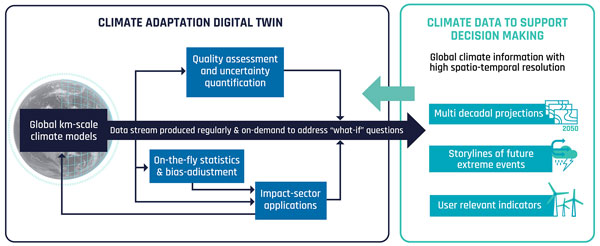
The Climate Change Adaptation Digital Twin (Climate DT) pioneers the operationalisation of global climate projections. It produces global simulations with local granularity for adaptation decision-making. Applications are embedded to generate tailored indicators. A unified workflow orchestrates all components in several supercomputers. Data management ensures consistency and streaming enables real-time use. It is a complementary innovation to initiatives like CMIP, CORDEX, and climate services.
Carlos Delgado-Torres, Markus G. Donat, Núria Pérez-Zanón, Verónica Torralba, Roberto Bilbao, Pierre-Antoine Bretonnière, Margarida Samsó-Cabré, Albert Soret, and Francisco J. Doblas-Reyes
Earth Syst. Dynam., 17, 41–56, https://doi.org/10.5194/esd-17-41-2026, https://doi.org/10.5194/esd-17-41-2026, 2026
Short summary
Short summary
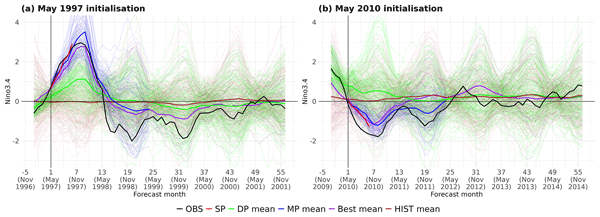
Many decisions require consistent climate information from seasonal to multi-year timescales. We assess seamless forecasts created by constraining seasonal and decadal predictions and compare them with initialised multi-annual forecasts. Multi-annual predictions provide the highest skill, but constrained forecasts still perform well and offer a low-cost, regularly updatable solution for delivering coherent climate information.
Alvise Aranyossy, Paolo De Luca, Carlos Delgado-Torres, Balakrishnan Solaraju-Murali, Margarida Samso Cabre, and Markus G. Donat
Earth Syst. Dynam., 16, 2225–2251, https://doi.org/10.5194/esd-16-2225-2025, https://doi.org/10.5194/esd-16-2225-2025, 2025
Short summary
Short summary
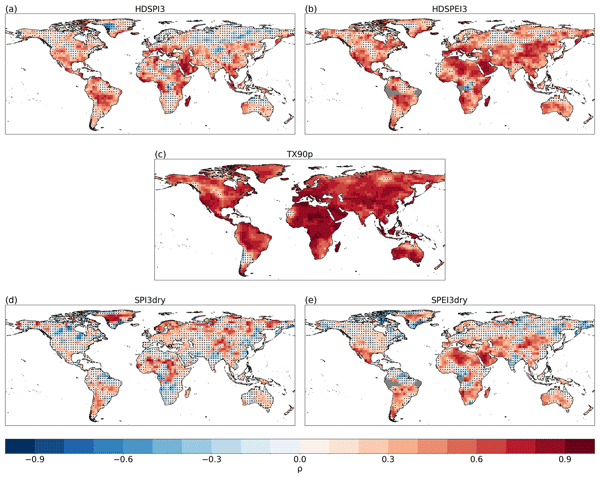
We investigate multi-year predictability of hot, dry and hot-dry compound events, using the Coupled Model Intercomparison Project Phase 6 decadal hindcast experiments, focusing on the forecast years 2–5. We find that hot-dry compound and hot extremes are skillfully predicted in many regions, but lower skill is found for dry extremes. The skill is largely due to long-term trends in response to external forcing, while added skill from initialisation is limited to a few regions.
Amanda Frigola, Eneko Martin-Martinez, Eduardo Moreno-Chamarro, Margarida Samsó, Saskia Loosvelt-Tomas, Pierre-Antoine Bretonnière, Daria Kuznetsova, Xia Lin, and Pablo Ortega
Ocean Sci., 21, 3507–3540, https://doi.org/10.5194/os-21-3507-2025, https://doi.org/10.5194/os-21-3507-2025, 2025
Short summary
Short summary
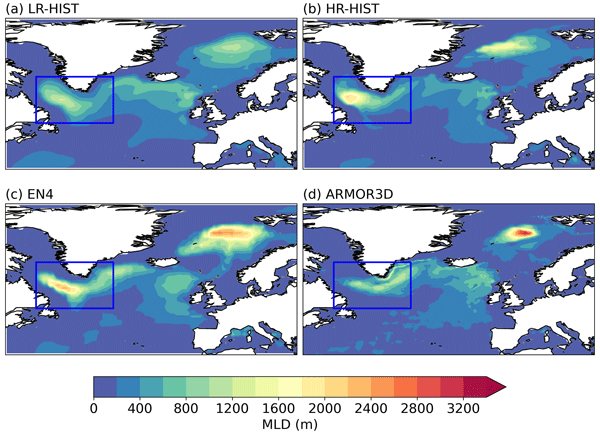
Compared to standard resolution models, mesoscale eddy-resolving models present a more realistic stratification in the subpolar North Atlantic, an Atlantic overturning profile closer to RAPID observations, and an improved structure of the subpolar gyre and Gulf Stream. Although surface biases in the Central North Atlantic are reduced, the representation of the North Atlantic Current path and strength in mesoscale-resolving models requires further improvement.
Alba Santos-Espeso, María Gonçalves Ageitos, Pablo Ortega, Carlos Pérez García-Pando, Markus G. Donat, Margarida Samso Cabré, and Saskia Loosveldt Tomas
Earth Syst. Dynam., 16, 2161–2186, https://doi.org/10.5194/esd-16-2161-2025, https://doi.org/10.5194/esd-16-2161-2025, 2025
Short summary
Short summary
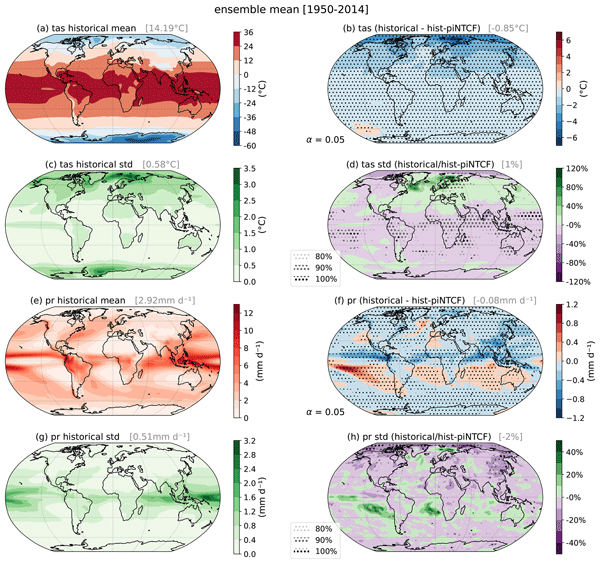
Short-lived air pollutants (e.g., aerosols and ozone) affect climate differently than greenhouse gases. Using climate models, we found that during 1950–2014, these pollutants caused global cooling, stronger in the Arctic, increased vertical mixing in the Labrador Sea, and southward displacement of the tropical rain belt. These regional impacts oppose those of greenhouse gases. Hence, future reductions in pollution for better air quality must be accompanied by stricter greenhouse gas mitigation.
Manuel G. Marciani, Miguel Castrillo, Gladys Utrera, Mario C. Acosta, Bruno P. Kinoshita, and Francisco Doblas-Reyes
Geosci. Model Dev., 18, 9709–9721, https://doi.org/10.5194/gmd-18-9709-2025, https://doi.org/10.5194/gmd-18-9709-2025, 2025
Short summary
Short summary
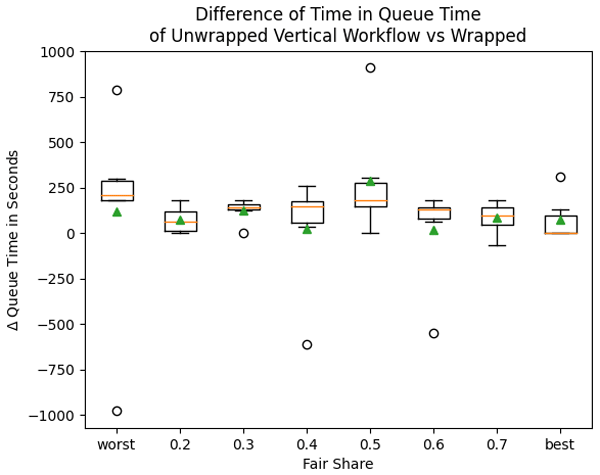
Earth System Model simulations are typically run on large, highly congested flagship computers using workflows. These workflows can consist of thousands of tasks. If these tasks are queued individually, the wait time can add up, resulting in a long response time. In this paper, we explore a technique for aggregating tasks into a single submission. We found that this simple technique reduced the time spent in the queue by up to 7 %.
Rashed Mahmood, Markus G. Donat, Roberto Bilbao, Pablo Ortega, Vladimir Lapin, Etienne Tourigny, and Francisco Doblas-Reyes
Earth Syst. Dynam., 16, 1923–1934, https://doi.org/10.5194/esd-16-1923-2025, https://doi.org/10.5194/esd-16-1923-2025, 2025
Short summary
Short summary
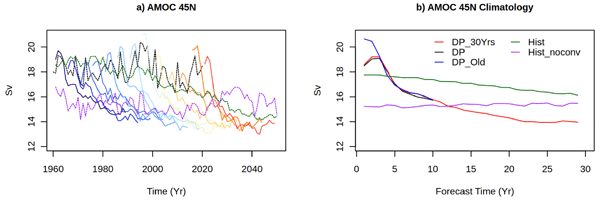
We present 30 year long initialized climate predictions run with the EC-Earth3 model. The predictions show high skill in most regions for near-surface temperatures, with some added skill from initialization for the first decade, but only very limited added skill beyond. The predictions exhibit drift associated with a persistent slowdown in Atlantic Meridonial Overturning Circulation , leaving the initialised predictions in a different climate state than the historical climate simulations.
Roberto Bilbao, Thomas J. Aubry, Matthew Toohey, Pablo Ortega, Vladimir Lapin, and Etienne Tourigny
Geosci. Model Dev., 18, 6239–6254, https://doi.org/10.5194/gmd-18-6239-2025, https://doi.org/10.5194/gmd-18-6239-2025, 2025
Short summary
Short summary
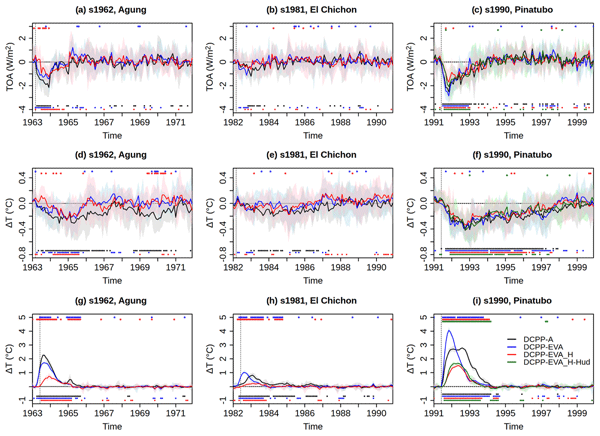
Large volcanic eruptions are unpredictable and can have significant climatic impacts. If one occurs, operational decadal forecasts will become invalid and must be rerun including the volcanic forcing. By analyzing the climate response in EC-Earth3 retrospective predictions, we show that idealised forcings produced with two simple models could be used in operational decadal forecasts to account for the radiative impacts of the next major volcanic eruption.
Eneko Martin-Martinez, Amanda Frigola, Eduardo Moreno-Chamarro, Daria Kuznetsova, Saskia Loosveldt-Tomas, Margarida Samsó Cabré, Pierre-Antoine Bretonnière, and Pablo Ortega
Earth Syst. Dynam., 16, 1343–1364, https://doi.org/10.5194/esd-16-1343-2025, https://doi.org/10.5194/esd-16-1343-2025, 2025
Short summary
Short summary
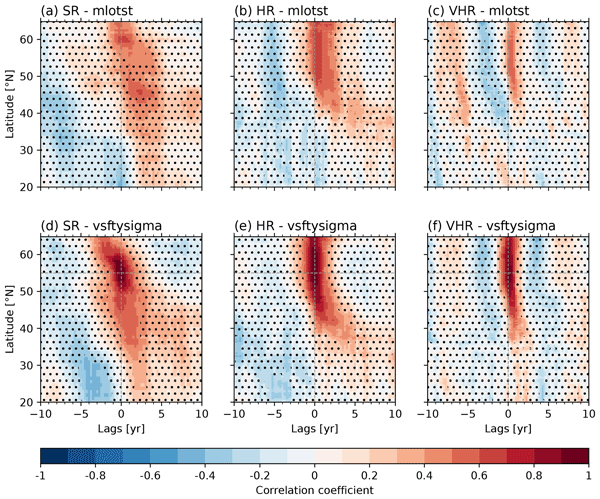
We investigate the impact of model resolution on different processes in the North Atlantic using three different resolutions of the same climate model. The higher resolutions allow for the explicit simulation of smaller-scale processes. We found differences across resolutions in how denser waters are formed and transported southward, impacting the large-scale circulation of the Atlantic Ocean.
Manuel Schlund, Bouwe Andela, Jörg Benke, Ruth Comer, Birgit Hassler, Emma Hogan, Peter Kalverla, Axel Lauer, Bill Little, Saskia Loosveldt Tomas, Francesco Nattino, Patrick Peglar, Valeriu Predoi, Stef Smeets, Stephen Worsley, Martin Yeo, and Klaus Zimmermann
Geosci. Model Dev., 18, 4009–4021, https://doi.org/10.5194/gmd-18-4009-2025, https://doi.org/10.5194/gmd-18-4009-2025, 2025
Short summary
Short summary
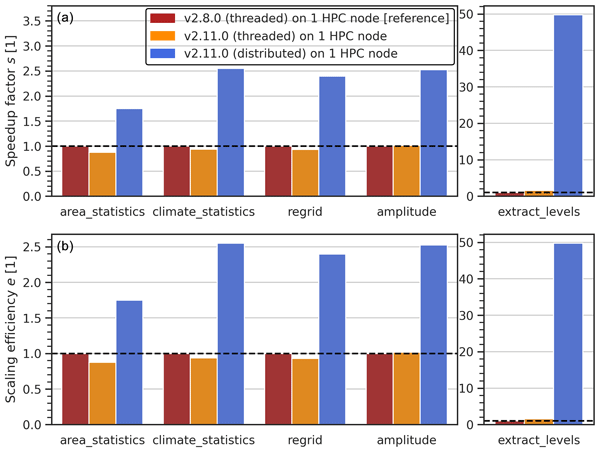
The Earth System Model Evaluation Tool (ESMValTool) is a community diagnostics and performance metrics tool for the evaluation of Earth system models. Here, we describe recent significant improvements of ESMValTool’s computational efficiency including parallel, out-of-core, and distributed computing. Evaluations with the enhanced version of ESMValTool are faster, use less computational resources, and can handle input data larger than the available memory.
Eduardo Moreno-Chamarro, Thomas Arsouze, Mario Acosta, Pierre-Antoine Bretonnière, Miguel Castrillo, Eric Ferrer, Amanda Frigola, Daria Kuznetsova, Eneko Martin-Martinez, Pablo Ortega, and Sergi Palomas
Geosci. Model Dev., 18, 461–482, https://doi.org/10.5194/gmd-18-461-2025, https://doi.org/10.5194/gmd-18-461-2025, 2025
Short summary
Short summary
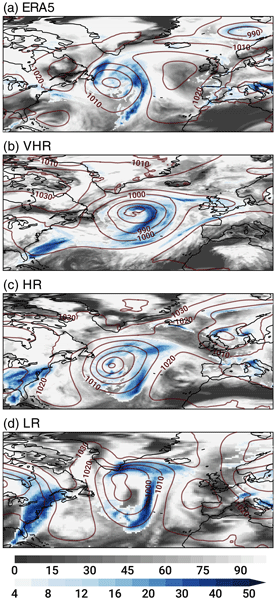
We present the high-resolution model version of the EC-Earth global climate model to contribute to HighResMIP. The combined model resolution is about 10–15 km in both the ocean and atmosphere, which makes it one of the finest ever used to complete historical and scenario simulations. This model is compared with two lower-resolution versions, with a 100 km and a 25 km grid. The three models are compared with observations to study the improvements thanks to the increased resolution.
Pedro José Roldán-Gómez, Paolo De Luca, Raffaele Bernardello, and Markus G. Donat
Earth Syst. Dynam., 16, 1–27, https://doi.org/10.5194/esd-16-1-2025, https://doi.org/10.5194/esd-16-1-2025, 2025
Short summary
Short summary
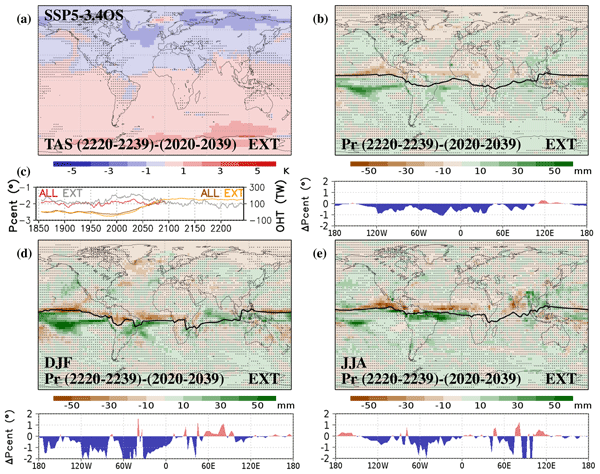
Current trends in CO2 emissions increase the probability of an overshoot scenario in which temperatures exceed the targets of the Paris Agreement and are brought back afterwards with a net-negative emission strategy. This work analyses how the climate after the overshoot would differ from the climate before, linking large scale non-reversibility mechanisms to changes in regional climates and identifying those regions more impacted by changes in temperature and precipitation extremes.
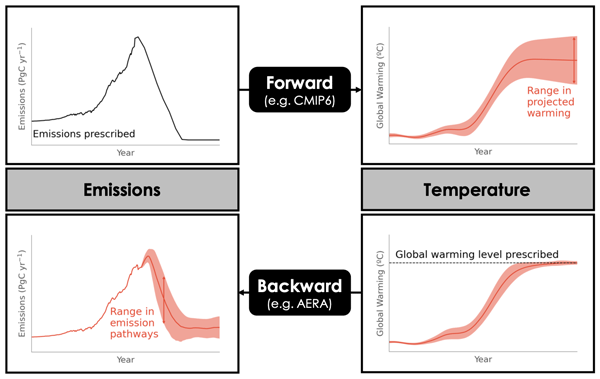
Yona Silvy, Thomas L. Frölicher, Jens Terhaar, Fortunat Joos, Friedrich A. Burger, Fabrice Lacroix, Myles Allen, Raffaele Bernardello, Laurent Bopp, Victor Brovkin, Jonathan R. Buzan, Patricia Cadule, Martin Dix, John Dunne, Pierre Friedlingstein, Goran Georgievski, Tomohiro Hajima, Stuart Jenkins, Michio Kawamiya, Nancy Y. Kiang, Vladimir Lapin, Donghyun Lee, Paul Lerner, Nadine Mengis, Estela A. Monteiro, David Paynter, Glen P. Peters, Anastasia Romanou, Jörg Schwinger, Sarah Sparrow, Eric Stofferahn, Jerry Tjiputra, Etienne Tourigny, and Tilo Ziehn
Earth Syst. Dynam., 15, 1591–1628, https://doi.org/10.5194/esd-15-1591-2024, https://doi.org/10.5194/esd-15-1591-2024, 2024
Short summary
Short summary
The adaptive emission reduction approach is applied with Earth system models to generate temperature stabilization simulations. These simulations provide compatible emission pathways and budgets for a given warming level, uncovering uncertainty ranges previously missing in the Coupled Model Intercomparison Project scenarios. These target-based emission-driven simulations offer a more coherent assessment across models for studying both the carbon cycle and its impacts under climate stabilization.

Colin G. Jones, Fanny Adloff, Ben B. B. Booth, Peter M. Cox, Veronika Eyring, Pierre Friedlingstein, Katja Frieler, Helene T. Hewitt, Hazel A. Jeffery, Sylvie Joussaume, Torben Koenigk, Bryan N. Lawrence, Eleanor O'Rourke, Malcolm J. Roberts, Benjamin M. Sanderson, Roland Séférian, Samuel Somot, Pier Luigi Vidale, Detlef van Vuuren, Mario Acosta, Mats Bentsen, Raffaele Bernardello, Richard Betts, Ed Blockley, Julien Boé, Tom Bracegirdle, Pascale Braconnot, Victor Brovkin, Carlo Buontempo, Francisco Doblas-Reyes, Markus Donat, Italo Epicoco, Pete Falloon, Sandro Fiore, Thomas Frölicher, Neven S. Fučkar, Matthew J. Gidden, Helge F. Goessling, Rune Grand Graversen, Silvio Gualdi, José M. Gutiérrez, Tatiana Ilyina, Daniela Jacob, Chris D. Jones, Martin Juckes, Elizabeth Kendon, Erik Kjellström, Reto Knutti, Jason Lowe, Matthew Mizielinski, Paola Nassisi, Michael Obersteiner, Pierre Regnier, Romain Roehrig, David Salas y Mélia, Carl-Friedrich Schleussner, Michael Schulz, Enrico Scoccimarro, Laurent Terray, Hannes Thiemann, Richard A. Wood, Shuting Yang, and Sönke Zaehle
Earth Syst. Dynam., 15, 1319–1351, https://doi.org/10.5194/esd-15-1319-2024, https://doi.org/10.5194/esd-15-1319-2024, 2024
Short summary
Short summary
We propose a number of priority areas for the international climate research community to address over the coming decade. Advances in these areas will both increase our understanding of past and future Earth system change, including the societal and environmental impacts of this change, and deliver significantly improved scientific support to international climate policy, such as future IPCC assessments and the UNFCCC Global Stocktake.
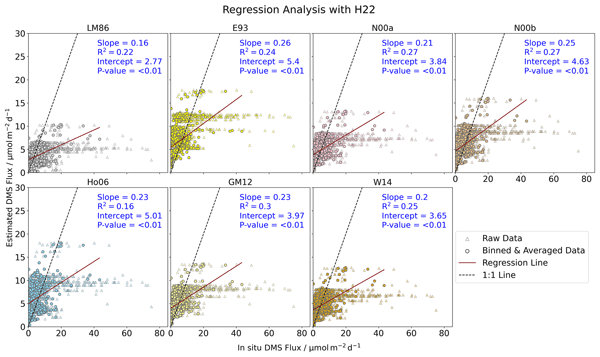
Sankirna D. Joge, Anoop S. Mahajan, Shrivardhan Hulswar, Christa A. Marandino, Martí Galí, Thomas G. Bell, Mingxi Yang, and Rafel Simó
Biogeosciences, 21, 4453–4467, https://doi.org/10.5194/bg-21-4453-2024, https://doi.org/10.5194/bg-21-4453-2024, 2024
Short summary
Short summary
Dimethyl sulfide (DMS) is the largest natural source of sulfur in the atmosphere and leads to the formation of cloud condensation nuclei. DMS emissions and quantification of their impacts have large uncertainties, but a detailed study on the range of emissions and drivers of their uncertainty is missing to date. The emissions are calculated from the seawater DMS concentrations and a flux parameterization. Here we quantify the differences in the effect of flux parameterizations used in models.
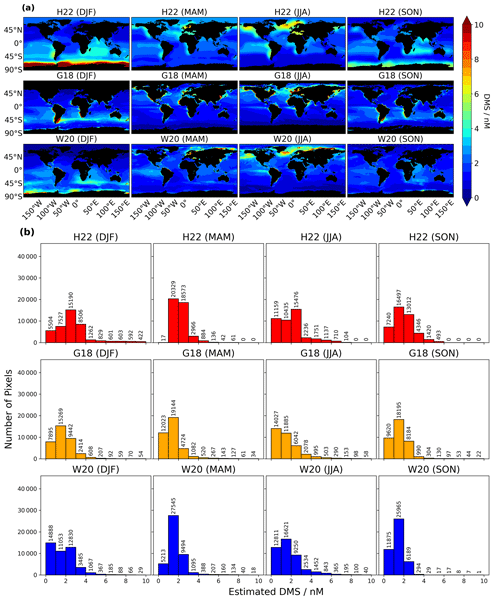
Sankirna D. Joge, Anoop S. Mahajan, Shrivardhan Hulswar, Christa A. Marandino, Martí Galí, Thomas G. Bell, and Rafel Simó
Biogeosciences, 21, 4439–4452, https://doi.org/10.5194/bg-21-4439-2024, https://doi.org/10.5194/bg-21-4439-2024, 2024
Short summary
Short summary
Dimethyl sulfide (DMS) is the largest natural source of sulfur in the atmosphere and leads to the formation of cloud condensation nuclei. DMS emission and quantification of its impacts have large uncertainties, but a detailed study on the emissions and drivers of their uncertainty is missing to date. The emissions are usually calculated from the seawater DMS concentrations and a flux parameterization. Here we quantify the differences in DMS seawater products, which can affect DMS fluxes.
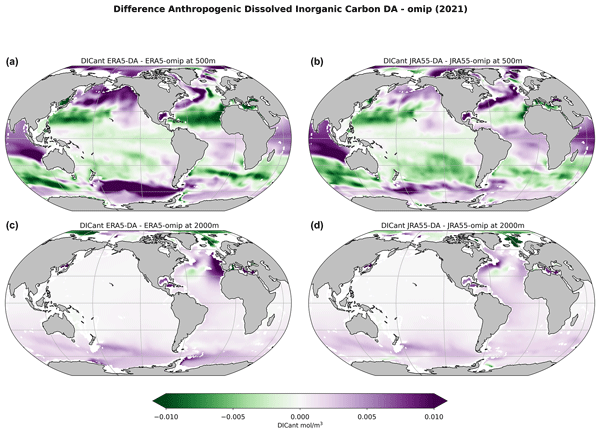
Raffaele Bernardello, Valentina Sicardi, Vladimir Lapin, Pablo Ortega, Yohan Ruprich-Robert, Etienne Tourigny, and Eric Ferrer
Earth Syst. Dynam., 15, 1255–1275, https://doi.org/10.5194/esd-15-1255-2024, https://doi.org/10.5194/esd-15-1255-2024, 2024
Short summary
Short summary
The ocean mitigates climate change by absorbing about 25 % of the carbon that is emitted to the atmosphere. However, ocean CO2 uptake is not constant in time, and improving our understanding of the mechanisms regulating this variability can potentially lead to a better predictive capability of its future behavior. In this study, we compare two ocean modeling practices that are used to reconstruct the historical ocean carbon uptake, demonstrating the abilities of one over the other.
Jenny Hieronymus, Magnus Hieronymus, Matthias Gröger, Jörg Schwinger, Raffaele Bernadello, Etienne Tourigny, Valentina Sicardi, Itzel Ruvalcaba Baroni, and Klaus Wyser
Biogeosciences, 21, 2189–2206, https://doi.org/10.5194/bg-21-2189-2024, https://doi.org/10.5194/bg-21-2189-2024, 2024
Short summary
Short summary
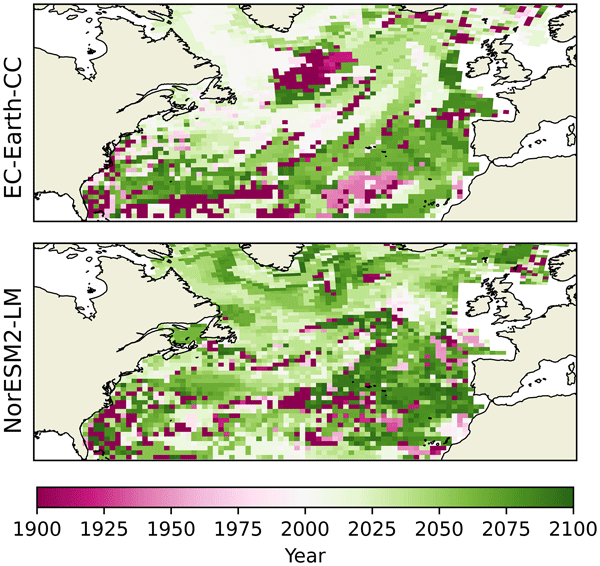
The timing of the net primary production annual maxima in the North Atlantic in the period 1750–2100 is investigated using two Earth system models and the high-emissions scenario SSP5-8.5. It is found that, for most of the region, the annual maxima occur progressively earlier, with the most change occurring after the year 2000. Shifts in the seasonality of the primary production may impact the entire ecosystem, which highlights the need for long-term monitoring campaigns in this area.
Roberto Bilbao, Pablo Ortega, Didier Swingedouw, Leon Hermanson, Panos Athanasiadis, Rosie Eade, Marion Devilliers, Francisco Doblas-Reyes, Nick Dunstone, An-Chi Ho, William Merryfield, Juliette Mignot, Dario Nicolì, Margarida Samsó, Reinel Sospedra-Alfonso, Xian Wu, and Stephen Yeager
Earth Syst. Dynam., 15, 501–525, https://doi.org/10.5194/esd-15-501-2024, https://doi.org/10.5194/esd-15-501-2024, 2024
Short summary
Short summary
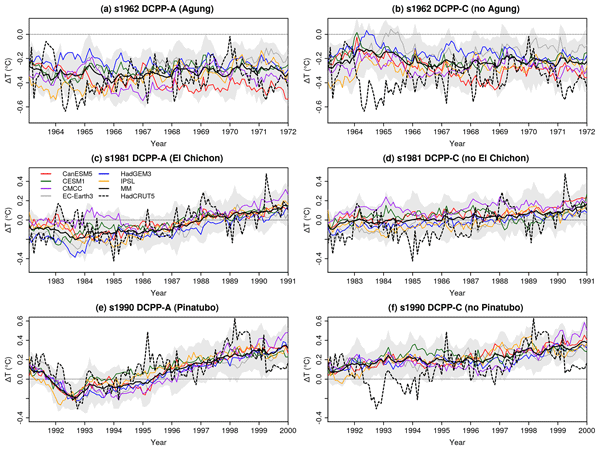
In recent decades three major volcanic eruptions have occurred: Mount Agung in 1963, El Chichón in 1982 and Mount Pinatubo in 1991. In this article we explore the climatic impacts of these volcanic eruptions with a purposefully designed set of simulations from six CMIP6 decadal prediction systems. We analyse the radiative and dynamical responses and show that including the volcanic forcing in these predictions is important to reproduce the observed surface temperature variations.
Mario C. Acosta, Sergi Palomas, Stella V. Paronuzzi Ticco, Gladys Utrera, Joachim Biercamp, Pierre-Antoine Bretonniere, Reinhard Budich, Miguel Castrillo, Arnaud Caubel, Francisco Doblas-Reyes, Italo Epicoco, Uwe Fladrich, Sylvie Joussaume, Alok Kumar Gupta, Bryan Lawrence, Philippe Le Sager, Grenville Lister, Marie-Pierre Moine, Jean-Christophe Rioual, Sophie Valcke, Niki Zadeh, and Venkatramani Balaji
Geosci. Model Dev., 17, 3081–3098, https://doi.org/10.5194/gmd-17-3081-2024, https://doi.org/10.5194/gmd-17-3081-2024, 2024
Short summary
Short summary
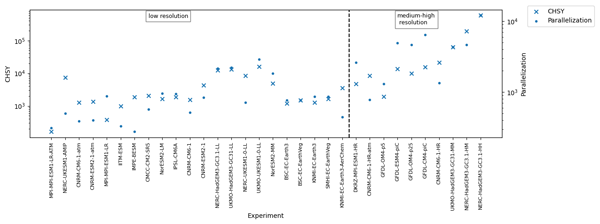
We present a collection of performance metrics gathered during the Coupled Model Intercomparison Project Phase 6 (CMIP6), a worldwide initiative to study climate change. We analyse the metrics that resulted from collaboration efforts among many partners and models and describe our findings to demonstrate the utility of our study for the scientific community. The research contributes to understanding climate modelling performance on the current high-performance computing (HPC) architectures.
George Manville, Thomas G. Bell, Jane P. Mulcahy, Rafel Simó, Martí Galí, Anoop S. Mahajan, Shrivardhan Hulswar, and Paul R. Halloran
Biogeosciences, 20, 1813–1828, https://doi.org/10.5194/bg-20-1813-2023, https://doi.org/10.5194/bg-20-1813-2023, 2023
Short summary
Short summary
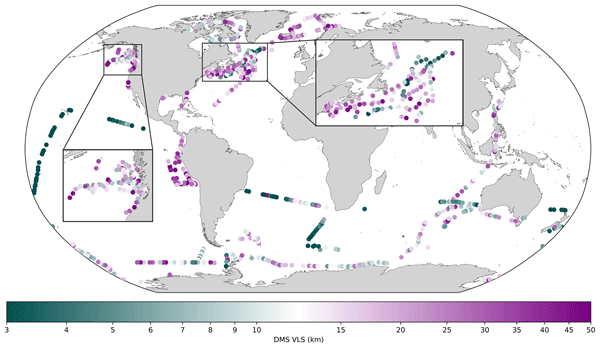
We present the first global investigation of controls on seawater dimethylsulfide (DMS) spatial variability over scales of up to 100 km. Sea surface height anomalies, density, and chlorophyll a help explain almost 80 % of DMS variability. The results suggest that physical and biogeochemical processes play an equally important role in controlling DMS variability. These data provide independent confirmation that existing parameterisations of seawater DMS concentration use appropriate variables.

Hervé Petetin, Marc Guevara, Steven Compernolle, Dene Bowdalo, Pierre-Antoine Bretonnière, Santiago Enciso, Oriol Jorba, Franco Lopez, Albert Soret, and Carlos Pérez García-Pando
Atmos. Chem. Phys., 23, 3905–3935, https://doi.org/10.5194/acp-23-3905-2023, https://doi.org/10.5194/acp-23-3905-2023, 2023
Short summary
Short summary
This study analyses the potential of the TROPOMI space sensor for monitoring the variability of NO2 pollution over the Iberian Peninsula. A reduction of NO2 levels is observed during the weekend and in summer, especially over most urbanized areas, in agreement with surface observations. An enhancement of NO2 is found during summer with TROPOMI over croplands, potentially related to natural soil NO emissions, which illustrates the outstanding value of TROPOMI for complementing surface networks.
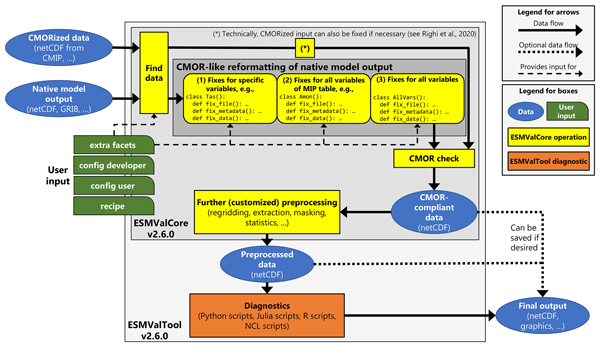
Manuel Schlund, Birgit Hassler, Axel Lauer, Bouwe Andela, Patrick Jöckel, Rémi Kazeroni, Saskia Loosveldt Tomas, Brian Medeiros, Valeriu Predoi, Stéphane Sénési, Jérôme Servonnat, Tobias Stacke, Javier Vegas-Regidor, Klaus Zimmermann, and Veronika Eyring
Geosci. Model Dev., 16, 315–333, https://doi.org/10.5194/gmd-16-315-2023, https://doi.org/10.5194/gmd-16-315-2023, 2023
Short summary
Short summary
The Earth System Model Evaluation Tool (ESMValTool) is a community diagnostics and performance metrics tool for routine evaluation of Earth system models. Originally, ESMValTool was designed to process reformatted output provided by large model intercomparison projects like the Coupled Model Intercomparison Project (CMIP). Here, we describe a new extension of ESMValTool that allows for reading and processing native climate model output, i.e., data that have not been reformatted before.
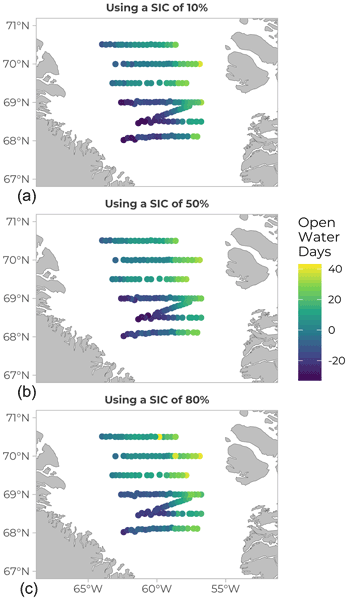
Flavienne Bruyant, Rémi Amiraux, Marie-Pier Amyot, Philippe Archambault, Lise Artigue, Lucas Barbedo de Freitas, Guislain Bécu, Simon Bélanger, Pascaline Bourgain, Annick Bricaud, Etienne Brouard, Camille Brunet, Tonya Burgers, Danielle Caleb, Katrine Chalut, Hervé Claustre, Véronique Cornet-Barthaux, Pierre Coupel, Marine Cusa, Fanny Cusset, Laeticia Dadaglio, Marty Davelaar, Gabrièle Deslongchamps, Céline Dimier, Julie Dinasquet, Dany Dumont, Brent Else, Igor Eulaers, Joannie Ferland, Gabrielle Filteau, Marie-Hélène Forget, Jérome Fort, Louis Fortier, Martí Galí, Morgane Gallinari, Svend-Erik Garbus, Nicole Garcia, Catherine Gérikas Ribeiro, Colline Gombault, Priscilla Gourvil, Clémence Goyens, Cindy Grant, Pierre-Luc Grondin, Pascal Guillot, Sandrine Hillion, Rachel Hussherr, Fabien Joux, Hannah Joy-Warren, Gabriel Joyal, David Kieber, Augustin Lafond, José Lagunas, Patrick Lajeunesse, Catherine Lalande, Jade Larivière, Florence Le Gall, Karine Leblanc, Mathieu Leblanc, Justine Legras, Keith Lévesque, Kate-M. Lewis, Edouard Leymarie, Aude Leynaert, Thomas Linkowski, Martine Lizotte, Adriana Lopes dos Santos, Claudie Marec, Dominique Marie, Guillaume Massé, Philippe Massicotte, Atsushi Matsuoka, Lisa A. Miller, Sharif Mirshak, Nathalie Morata, Brivaela Moriceau, Philippe-Israël Morin, Simon Morisset, Anders Mosbech, Alfonso Mucci, Gabrielle Nadaï, Christian Nozais, Ingrid Obernosterer, Thimoté Paire, Christos Panagiotopoulos, Marie Parenteau, Noémie Pelletier, Marc Picheral, Bernard Quéguiner, Patrick Raimbault, Joséphine Ras, Eric Rehm, Llúcia Ribot Lacosta, Jean-François Rontani, Blanche Saint-Béat, Julie Sansoulet, Noé Sardet, Catherine Schmechtig, Antoine Sciandra, Richard Sempéré, Caroline Sévigny, Jordan Toullec, Margot Tragin, Jean-Éric Tremblay, Annie-Pier Trottier, Daniel Vaulot, Anda Vladoiu, Lei Xue, Gustavo Yunda-Guarin, and Marcel Babin
Earth Syst. Sci. Data, 14, 4607–4642, https://doi.org/10.5194/essd-14-4607-2022, https://doi.org/10.5194/essd-14-4607-2022, 2022
Short summary
Short summary
This paper presents a dataset acquired during a research cruise held in Baffin Bay in 2016. We observed that the disappearance of sea ice in the Arctic Ocean increases both the length and spatial extent of the phytoplankton growth season. In the future, this will impact the food webs on which the local populations depend for their food supply and fisheries. This dataset will provide insight into quantifying these impacts and help the decision-making process for policymakers.
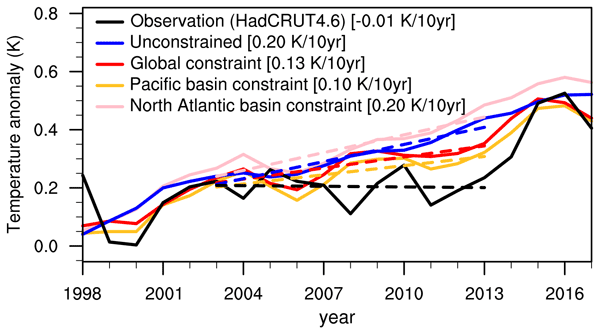
Rashed Mahmood, Markus G. Donat, Pablo Ortega, Francisco J. Doblas-Reyes, Carlos Delgado-Torres, Margarida Samsó, and Pierre-Antoine Bretonnière
Earth Syst. Dynam., 13, 1437–1450, https://doi.org/10.5194/esd-13-1437-2022, https://doi.org/10.5194/esd-13-1437-2022, 2022
Short summary
Short summary
Near-term climate change projections are strongly affected by the uncertainty from internal climate variability. Here we present a novel approach to reduce such uncertainty by constraining decadal-scale variability in the projections using observations. The constrained ensembles show significant added value over the unconstrained ensemble in predicting global climate 2 decades ahead. We also show the applicability of regional constraints for attributing predictability to certain ocean regions.
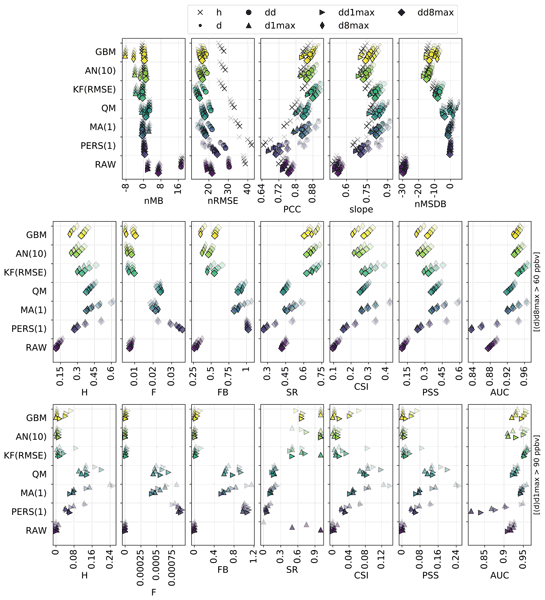
Hervé Petetin, Dene Bowdalo, Pierre-Antoine Bretonnière, Marc Guevara, Oriol Jorba, Jan Mateu Armengol, Margarida Samso Cabre, Kim Serradell, Albert Soret, and Carlos Pérez Garcia-Pando
Atmos. Chem. Phys., 22, 11603–11630, https://doi.org/10.5194/acp-22-11603-2022, https://doi.org/10.5194/acp-22-11603-2022, 2022
Short summary
Short summary
This study investigates the extent to which ozone forecasts provided by the Copernicus Atmospheric Monitoring Service (CAMS) can be improved using surface observations and state-of-the-art statistical methods. Through a case study over the Iberian Peninsula in 2018–2019, it unambiguously demonstrates the value of these methods for improving the raw CAMS O3 forecasts while at the same time highlighting the complexity of improving the detection of the highest O3 concentrations.
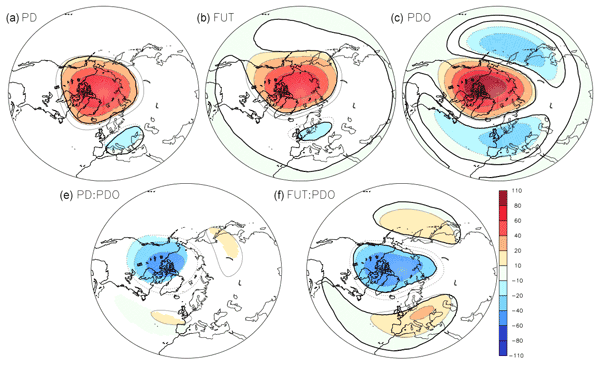
Amélie Simon, Guillaume Gastineau, Claude Frankignoul, Vladimir Lapin, and Pablo Ortega
Weather Clim. Dynam., 3, 845–861, https://doi.org/10.5194/wcd-3-845-2022, https://doi.org/10.5194/wcd-3-845-2022, 2022
Short summary
Short summary
The influence of the Arctic sea-ice loss on atmospheric circulation in midlatitudes depends on persistent sea surface temperatures in the North Pacific. In winter, Arctic sea-ice loss and a warm North Pacific Ocean both induce depressions over the North Pacific and North Atlantic, an anticyclone over Greenland, and a stratospheric anticyclone over the Arctic. However, the effects are not additive as the interaction between both signals is slightly destructive.
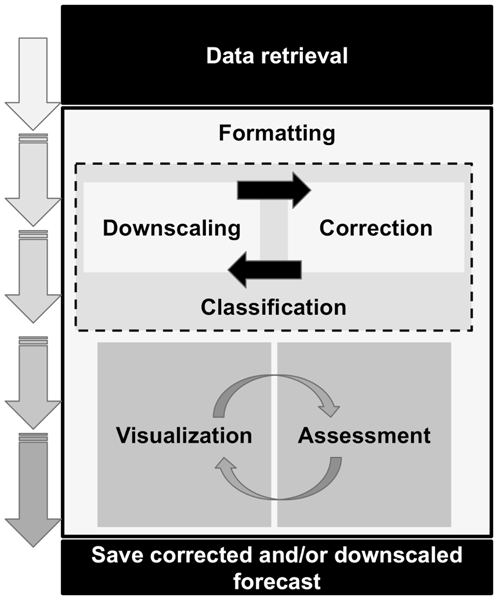
Núria Pérez-Zanón, Louis-Philippe Caron, Silvia Terzago, Bert Van Schaeybroeck, Llorenç Lledó, Nicolau Manubens, Emmanuel Roulin, M. Carmen Alvarez-Castro, Lauriane Batté, Pierre-Antoine Bretonnière, Susana Corti, Carlos Delgado-Torres, Marta Domínguez, Federico Fabiano, Ignazio Giuntoli, Jost von Hardenberg, Eroteida Sánchez-García, Verónica Torralba, and Deborah Verfaillie
Geosci. Model Dev., 15, 6115–6142, https://doi.org/10.5194/gmd-15-6115-2022, https://doi.org/10.5194/gmd-15-6115-2022, 2022
Short summary
Short summary
CSTools (short for Climate Service Tools) is an R package that contains process-based methods for climate forecast calibration, bias correction, statistical and stochastic downscaling, optimal forecast combination, and multivariate verification, as well as basic and advanced tools to obtain tailored products. In addition to describing the structure and methods in the package, we also present three use cases to illustrate the seasonal climate forecast post-processing for specific purposes.
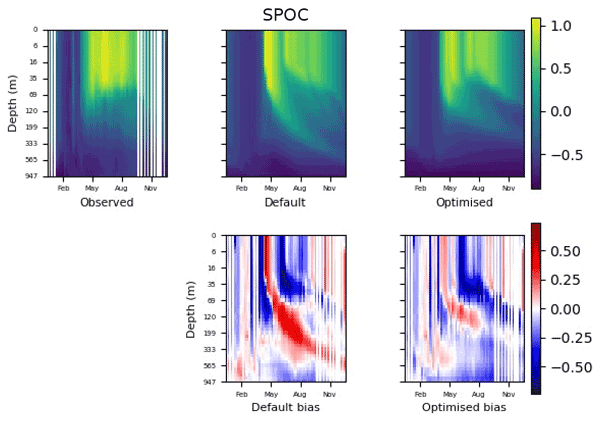
Marcus Falls, Raffaele Bernardello, Miguel Castrillo, Mario Acosta, Joan Llort, and Martí Galí
Geosci. Model Dev., 15, 5713–5737, https://doi.org/10.5194/gmd-15-5713-2022, https://doi.org/10.5194/gmd-15-5713-2022, 2022
Short summary
Short summary
This paper describes and tests a method which uses a genetic algorithm (GA), a type of optimisation algorithm, on an ocean biogeochemical model. The aim is to produce a set of numerical parameters that best reflect the observed data of particulate organic carbon in a specific region of the ocean. We show that the GA can provide optimised model parameters in a robust and efficient manner and can also help detect model limitations, ultimately leading to a reduction in the model uncertainties.

Shrivardhan Hulswar, Rafel Simó, Martí Galí, Thomas G. Bell, Arancha Lana, Swaleha Inamdar, Paul R. Halloran, George Manville, and Anoop Sharad Mahajan
Earth Syst. Sci. Data, 14, 2963–2987, https://doi.org/10.5194/essd-14-2963-2022, https://doi.org/10.5194/essd-14-2963-2022, 2022
Short summary
Short summary
The third climatological estimation of sea surface dimethyl sulfide (DMS) concentrations based on in situ measurements was created (DMS-Rev3). The update includes a much larger input dataset and includes improvements in the data unification, filtering, and smoothing algorithm. The DMS-Rev3 climatology provides more realistic monthly estimates of DMS, and shows significant regional differences compared to past climatologies.
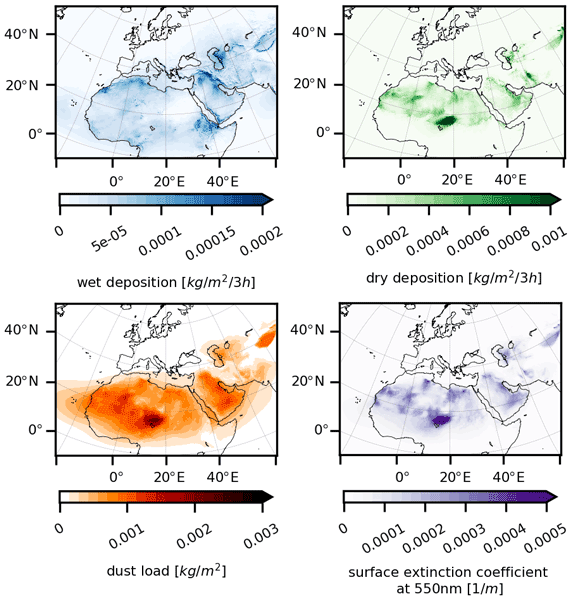
Enza Di Tomaso, Jerónimo Escribano, Sara Basart, Paul Ginoux, Francesca Macchia, Francesca Barnaba, Francesco Benincasa, Pierre-Antoine Bretonnière, Arnau Buñuel, Miguel Castrillo, Emilio Cuevas, Paola Formenti, María Gonçalves, Oriol Jorba, Martina Klose, Lucia Mona, Gilbert Montané Pinto, Michail Mytilinaios, Vincenzo Obiso, Miriam Olid, Nick Schutgens, Athanasios Votsis, Ernest Werner, and Carlos Pérez García-Pando
Earth Syst. Sci. Data, 14, 2785–2816, https://doi.org/10.5194/essd-14-2785-2022, https://doi.org/10.5194/essd-14-2785-2022, 2022
Short summary
Short summary
MONARCH reanalysis of desert dust aerosols extends the existing observation-based information for mineral dust monitoring by providing 3-hourly upper-air, surface and total column key geophysical variables of the dust cycle over Northern Africa, the Middle East and Europe, at a 0.1° horizontal resolution in a rotated grid, from 2007 to 2016. This work provides evidence of the high accuracy of this data set and its suitability for air quality and health and climate service applications.
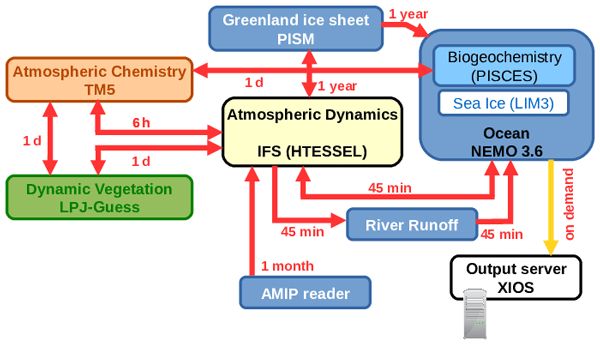
Ralf Döscher, Mario Acosta, Andrea Alessandri, Peter Anthoni, Thomas Arsouze, Tommi Bergman, Raffaele Bernardello, Souhail Boussetta, Louis-Philippe Caron, Glenn Carver, Miguel Castrillo, Franco Catalano, Ivana Cvijanovic, Paolo Davini, Evelien Dekker, Francisco J. Doblas-Reyes, David Docquier, Pablo Echevarria, Uwe Fladrich, Ramon Fuentes-Franco, Matthias Gröger, Jost v. Hardenberg, Jenny Hieronymus, M. Pasha Karami, Jukka-Pekka Keskinen, Torben Koenigk, Risto Makkonen, François Massonnet, Martin Ménégoz, Paul A. Miller, Eduardo Moreno-Chamarro, Lars Nieradzik, Twan van Noije, Paul Nolan, Declan O'Donnell, Pirkka Ollinaho, Gijs van den Oord, Pablo Ortega, Oriol Tintó Prims, Arthur Ramos, Thomas Reerink, Clement Rousset, Yohan Ruprich-Robert, Philippe Le Sager, Torben Schmith, Roland Schrödner, Federico Serva, Valentina Sicardi, Marianne Sloth Madsen, Benjamin Smith, Tian Tian, Etienne Tourigny, Petteri Uotila, Martin Vancoppenolle, Shiyu Wang, David Wårlind, Ulrika Willén, Klaus Wyser, Shuting Yang, Xavier Yepes-Arbós, and Qiong Zhang
Geosci. Model Dev., 15, 2973–3020, https://doi.org/10.5194/gmd-15-2973-2022, https://doi.org/10.5194/gmd-15-2973-2022, 2022
Short summary
Short summary
The Earth system model EC-Earth3 is documented here. Key performance metrics show physical behavior and biases well within the frame known from recent models. With improved physical and dynamic features, new ESM components, community tools, and largely improved physical performance compared to the CMIP5 version, EC-Earth3 represents a clear step forward for the only European community ESM. We demonstrate here that EC-Earth3 is suited for a range of tasks in CMIP6 and beyond.
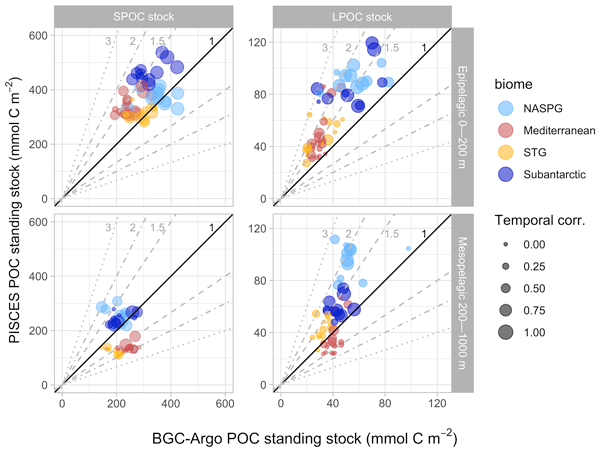
Martí Galí, Marcus Falls, Hervé Claustre, Olivier Aumont, and Raffaele Bernardello
Biogeosciences, 19, 1245–1275, https://doi.org/10.5194/bg-19-1245-2022, https://doi.org/10.5194/bg-19-1245-2022, 2022
Short summary
Short summary
Part of the organic matter produced by plankton in the upper ocean is exported to the deep ocean. This process, known as the biological carbon pump, is key for the regulation of atmospheric carbon dioxide and global climate. However, the dynamics of organic particles below the upper ocean layer are not well understood. Here we compared the measurements acquired by autonomous robots in the top 1000 m of the ocean to a numerical model, which can help improve future climate projections.
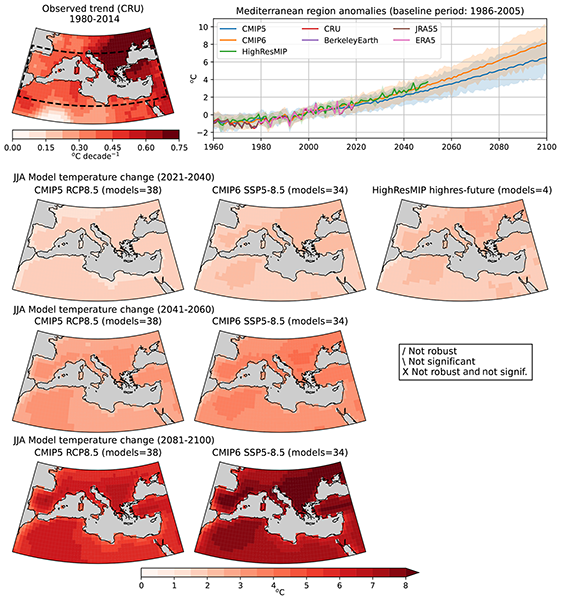
Josep Cos, Francisco Doblas-Reyes, Martin Jury, Raül Marcos, Pierre-Antoine Bretonnière, and Margarida Samsó
Earth Syst. Dynam., 13, 321–340, https://doi.org/10.5194/esd-13-321-2022, https://doi.org/10.5194/esd-13-321-2022, 2022
Short summary
Short summary
The Mediterranean has been identified as being more affected by climate change than other regions. We find that amplified warming during summer and annual precipitation declines are expected for the 21st century and that the magnitude of the changes will mainly depend on greenhouse gas emissions. By applying a method giving more importance to models with greater performance and independence, we find that the differences between the last two community modelling efforts are reduced in the region.
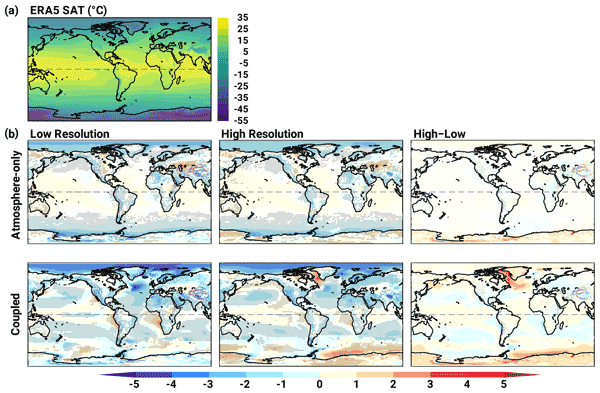
Eduardo Moreno-Chamarro, Louis-Philippe Caron, Saskia Loosveldt Tomas, Javier Vegas-Regidor, Oliver Gutjahr, Marie-Pierre Moine, Dian Putrasahan, Christopher D. Roberts, Malcolm J. Roberts, Retish Senan, Laurent Terray, Etienne Tourigny, and Pier Luigi Vidale
Geosci. Model Dev., 15, 269–289, https://doi.org/10.5194/gmd-15-269-2022, https://doi.org/10.5194/gmd-15-269-2022, 2022
Short summary
Short summary
Climate models do not fully reproduce observations: they show differences (biases) in regional temperature, precipitation, or cloud cover. Reducing model biases is important to increase our confidence in their ability to reproduce present and future climate changes. Model realism is set by its resolution: the finer it is, the more physical processes and interactions it can resolve. We here show that increasing resolution of up to ~ 25 km can help reduce model biases but not remove them entirely.
Cited articles
Alonso-González, I. J., Arístegui, J., Vilas, J. C., and Hernández-Guerra, A.: Lateral POC transport and consumption in surface and deep waters of the Canary Current region: A box model study, Global Biogeochem. Cy., 23, GB2007, https://doi.org/10.1029/2008GB003185, 2009.
Alonso-González, I. J., Arístegui, J., Lee, C., Sanchez-Vidal, A., Calafat, A., Fabrés, J., Sangrá, P., Masqué, P., Hernández-Guerra, A., and Benítez-Barrios, V.: Role of slowly settling particles in the ocean carbon cycle, Geophys. Res. Lett., 37, L13608, https://doi.org/10.1029/2010GL043827, 2010.
Andela, B., Broetz, B., de Mora, L., Drost, N., Eyring, V., Koldunov, N., Lauer, A., Predoi, V., Righi, M., Schlund, M., Vegas-Regidor, J., Zimmermann, K., Bock, L., Diblen, F., Dreyer, L., Earnshaw, P., Hassler, B., Little, B., Loosveldt-Tomas, S., and Lenhardt, J.: ESMValCore (v2.14.0), Zenodo [data set], https://doi.org/10.5281/zenodo.18941253, 2026.
Arístegui, J., Gasol, J. M., Duarte, C. M., and Herndld, G. J.: Microbial oceanography of the dark ocean's pelagic realm, Limnol. Oceanogr., 54, 1501–1529, https://doi.org/10.4319/lo.2009.54.5.1501, 2009.
Aumont, O., Ethé, C., Tagliabue, A., Bopp, L., and Gehlen, M.: PISCES-v2: an ocean biogeochemical model for carbon and ecosystem studies, Geosci. Model Dev., 8, 2465–2513, https://doi.org/10.5194/gmd-8-2465-2015, 2015.
Aumont, O., Van Hulten, M., Roy-Barman, M., Dutay, J.-C., Éthé, C., and Gehlen, M.: Variable reactivity of particulate organic matter in a global ocean biogeochemical model, Biogeosciences, 14, 2321–2341, https://doi.org/10.5194/bg-14-2321-2017, 2017.
Aumont, O., Maury, O., Lefort, S., and Bopp, L.: Evaluating the Potential Impacts of the Diurnal Vertical Migration by Marine Organisms on Marine Biogeochemistry, Global Biogeochem. Cy., 32, 1622–1643, https://doi.org/10.1029/2018GB005886, 2018.
Baker, C. A., Henson, S. A., Cavan, E. L., Giering, S. L. C., Yool, A., Gehlen, M., Belcher, A., Riley, J. S., Smith, H. E. K., and Sanders, R.: Slow-sinking particulate organic carbon in the Atlantic Ocean: Magnitude, flux, and potential controls, Global Biogeochem. Cy., 31, 1051–1065, https://doi.org/10.1002/2017GB005638, 2017.
Baumas, C. and Bizic, M.: A focus on different types of organic matter particles and their significance in the open ocean carbon cycle, Prog. Oceanogr., 224, 103233, https://doi.org/10.1016/j.pocean.2024.103233, 2024.
Belcher, A., Iversen, M., Giering, S., Riou, V., Henson, S. A., Berline, L., Guilloux, L., and Sanders, R.: Depth-resolved particle-associated microbial respiration in the northeastAtlantic, Biogeosciences, 13, 4927–4943, https://doi.org/10.5194/bg-13-4927-2016, 2016.
Bellacicco, M., Marullo, S., Dall'Olmo, G., Iudicone, D., and Buongiorno Nardelli, B.: The oceanic physical injection pump of organic carbon, Nat. Commun., 16, 7100, https://doi.org/10.1038/s41467-025-62363-z, 2025.
Benner, R. and Amon, R. M. W.: The Size-Reactivity Continuum of Major Bioelements in the Ocean, Annu. Rev. Mar. Sci., 7, 185–205, https://doi.org/10.1146/annurev-marine-010213-135126, 2015.
Berger, W. H. and Wefer, G.: Export production: seasonality and intermittency, and paleoceanographic implications, Palaeogeogr. Palaeocl., 89, 245–254, https://doi.org/10.1016/0921-8181(90)90020-D, 1990.
Bishop, J. K. B., Lam, P. J., and Wood, T. J.: Getting good particles: Accurate sampling of particles by large volume in-situ filtration, Limnol. Oceanogr. Method., 10, 681–710, https://doi.org/10.4319/lom.2012.10.681, 2012.
Bol, R., Henson, S. A., Rumyantseva, A., and Briggs, N.: High-Frequency Variability of Small-Particle Carbon Export Flux in the Northeast Atlantic, Global Biogeochem. Cy., 32, 1803–1814, https://doi.org/10.1029/2018GB005963, 2018.
Boudreau, B. P. and Ruddick, B. R.: On a reactive continuum representation of organic matter diagenesis, Am. J. Sci., 291, 507–538, https://doi.org/10.2475/ajs.291.5.507, 1991.
Boyd, P. W., Claustre, H., Levy, M., Siegel, D. A., and Weber, T.: Multi-faceted particle pumps drive carbon sequestration in the ocean, Nature, 568, 327–335, https://doi.org/10.1038/s41586-019-1098-2, 2019.
Brabson, E. K., Doyle, L. F., Acosta, R. P., Fedorov, A. V., Hull, P. M., and Burls, N. J.: A Revised Temperature-Dependent Remineralization Scheme for the Community Earth System Model (v1.2.2), EGUsphere [preprint], https://doi.org/10.5194/egusphere-2025-3808, 2025.
Bressac, M., Laurenceau-Cornec, E. C., Kennedy, F., Santoro, A. E., Paul, N. L., Briggs, N., Carvalho, F., and Boyd, P. W.: Decoding drivers of carbon flux attenuation in the oceanic biological pump, Nature, 633, 587–593, https://doi.org/10.1038/s41586-024-07850-x, 2024.
Briggs, N., Dall'Olmo, G., and Claustre, H.: Major role of particle fragmentation in regulating biological sequestration of CO2 by the oceans, Science, 367, 791–793, https://doi.org/10.1126/science.aay1790, 2020.
Brun, P., Stamieszkin, K., Visser, A. W., Licandro, P., Payne, M. R., and Kiørboe, T.: Climate change has altered zooplankton-fuelled carbon export in the North Atlantic, Nat. Ecol. Evol., 3, 416–423, https://doi.org/10.1038/s41559-018-0780-3, 2019.
Buesseler, K. O.: The decoupling of production and particulate export in the surface ocean, Global Biogeochem. Cy., 12, 297–310, https://doi.org/10.1029/97GB03366, 1998.
Buesseler, K. O., and Boyd, P. W.: Shedding light on processes that control particle export and flux attenuation in the twilight zone of the open ocean, Limnol. Oceanogr., 54, 1210–1232, https://doi.org/10.4319/lo.2009.54.4.1210, 2009.
Buesseler, K. O., Lamborg, C. H., Boyd, P. W., Lam, P. J., Trull, T. W., Bidigare, R. R., Bishop, J. K. B., Casciotti, K. L., Dehairs, F., Elskens, M., Honda, M., Karl, D. M., Siegel, D. A., Silver, M. W., Steinberg, D. K., Valdes, J., Van Mooy, B., and Wilson, S.: Revisiting Carbon Flux Through the Ocean's Twilight Zone, Science, 316, 567–570, https://doi.org/10.1126/science.1137959, 2007.
Buesseler, K. O., Boyd, P. W., Black, E. E., and Siegel, D. A.: Metrics that matter for assessing the ocean biological carbon pump, P. Natl. Acad. Sci. USA, 117, 9679–9687, https://doi.org/10.1073/pnas.1918114117, 2020.
Buesseler, K. O., Lamborg, C. H., Boyd, P. W., Lam, P. J., Trull, T. W., Bidigare, R. R., Bishop, J. K. B., Casciotti, K. L., Dehairs, F., Elskens, M., Honda, M., Karl, D. M., Siegel, D. A., Silver, M. W., Steinberg, D. K., Valdes, J., Van Mooy, B., and Wilson, S.: Revisiting Carbon Flux Through the Ocean's Twilight Zone, Science, 316, 567–570, https://doi.org/10.1126/science.1137959, 2007b-04-27.
Burd, A. B., Hansell, D. A., Steinberg, D. K., Anderson, T. R., Arístegui, J., Baltar, F., Beaupré, S. R., Buesseler, K. O., DeHairs, F., Jackson, G. A., Kadko, D. C., Koppelmann, R., Lampitt, R. S., Nagata, T., Reinthaler, T., Robinson, C., Robison, B. H., Tamburini, C., and Tanaka, T.: Assessing the apparent imbalance between geochemical and biochemical indicators of meso- and bathypelagic biological activity: What the @$?! is wrong with present calculations of carbon budgets?, Deep-Sea Res. Pt. II, 57, 1557–1571, https://doi.org/10.1016/j.dsr2.2010.02.022, 2010.
Cael, B. B. and Follows, M. J.: On the temperature dependence of oceanic export efficiency, Geophys. Res. Lett., 43, 5170–5175, https://doi.org/10.1002/2016GL068877, 2016.
Cael, B. B., Cavan, E. L., and Britten, G. L.: Reconciling the Size-Dependence of Marine Particle Sinking Speed, Geophys. Res. Lett., 48, e2020GL091771, https://doi.org/10.1029/2020GL091771, 2021.
Carr, S. D., Capet, X. J., Mcwilliams, J. C., Pennington, J. T., and Chavez, F. P.: The influence of diel vertical migration on zooplankton transport and recruitment in an upwelling region: estimates from a coupled behavioral-physical model, Fish. Oceanogr., 17, 1–15, https://doi.org/10.1111/j.1365-2419.2007.00447.x, 2008.
Ceballos-Romero, E., Le Moigne, F. A. C., Henson, S., Marsay, C. M., Sanders, R. J., García-Tenorio, R., and Villa-Alfageme, M.: Influence of bloom dynamics on Particle Export Efficiency in the North Atlantic: a comparative study of radioanalytical techniques and sediment traps, Mar. Chem., 186, 198–210, https://doi.org/10.1016/j.marchem.2016.10.001, 2016.
Claustre, H., Legendre, L., Boyd, P. W., and Levy, M.: The Oceans' Biological Carbon Pumps: Framework for a Research Observational Community Approach, Front. Mar. Sci., 8, 780052, https://doi.org/10.3389/fmars.2021.780052, 2021.
Clerc, C., Bopp, L., Benedetti, F., Knecht, N., Vogt, M., and Aumont, O.: Effects of Mesozooplankton Growth and Reproduction on Plankton and Organic Carbon Dynamics in a Marine Biogeochemical Model, Glob. Biogeochem. Cycles, 38, e2024GB008153, https://doi.org/10.1029/2024GB008153, 2024.
Dall'Olmo, G., Dingle, J., Polimene, L., Brewin, R. J. W., and Claustre, H.: Substantial energy input to the mesopelagic ecosystem from the seasonal mixed-layer pump, Nat. Geosci., 9, 820–823, https://doi.org/10.1038/ngeo2818, 2016.
de Boyer Montégut, C.: Mixed layer depth climatology computed with a density threshold criterion of 0.03 kg/m3 from 10 m depth value, https://doi.org/10.17882/91774, 2023.
de Melo Viríssimo, F., Martin, A. P., and Henson, S. A.: Influence of Seasonal Variability in Flux Attenuation on Global Organic Carbon Fluxes and Nutrient Distributions, Global Biogeochem. Cy., 36, e2021GB007101, https://doi.org/10.1029/2021GB007101, 2022.
de Melo Viríssimo, F., Martin, A. P., Henson, S. A., and Wilson, J. D.: Seasonality in Carbon Flux Attenuation Explains Spatial Variability in Transfer Efficiency, Geophys. Res. Lett., 51, e2023GL107050, https://doi.org/10.1029/2023GL107050, 2024.
DeVries, T. and Weber, T.: The export and fate of organic matter in the ocean: New constraints from combining satellite and oceanographic tracer observations, Global Biogeochem. Cy., 31, 535–555, https://doi.org/10.1002/2016GB005551, 2017.
Doléac, S., Lévy, M., El Hourany, R., and Bopp, L.: Toward more robust net primary production projections in the North Atlantic Ocean, Biogeosciences, 22, 841–862, https://doi.org/10.5194/bg-22-841-2025, 2025.
Doney, S. C., Mitchell, K. A., Henson, S. A., Cavan, E., DeVries, T., Gruber, N., Hauck, J., Mouw, C. B., Müller, J. D., and Primeau, F. W.: Observational and Numerical Modeling Constraints on the Global Ocean Biological Carbon Pump, Global Biogeochem. Cy., 38, e2024GB008156, https://doi.org/10.1029/2024GB008156, 2024.
Eppley, R. W. and Peterson, B. J.: Particulate organic matter flux and planktonic new production in the deep ocean, Nature, 282, 677–680, https://doi.org/10.1038/282677a0, 1979.
Fennel, K., Mattern, J. P., Doney, S. C., Bopp, L., Moore, A. M., Wang, B., and Yu, L.: Ocean biogeochemical modelling, Nat. Rev. Methods Primer, 2, 76, https://doi.org/10.1038/s43586-022-00154-2, 2022.
François, R., Honjo, S., Krishfield, R., and Manganini, S.: Factors controlling the flux of organic carbon to the bathypelagic zone of the ocean, Global Biogeochem. Cy., 16, https://doi.org/10.1029/2001GB001722, 2002.
Frenger, I., Landolfi, A., Kvale, K., Somes, C. J., Oschlies, A., Yao, W., and Koeve, W.: Misconceptions of the marine biological carbon pump in a changing climate: Thinking outside the “export” box, Glob. Change Biol., 30, e17124, https://doi.org/10.1111/gcb.17124, 2024.
Galí, M., Falls, M., Claustre, H., Aumont, O., and Bernardello, R.: Bridging the gaps between particulate backscattering measurements and modeled particulate organic carbon in the ocean, Biogeosciences, 19, 1245–1275, https://doi.org/10.5194/bg-19-1245-2022, 2022.
Galí, M., Orihuela-García, M. A., Ruprich-Robert, Y., Lapin, V., Sánchez-Urrea, M., Fontela, M., Llort, J., Sicardi, V., and Bernardello, R.: Convection injects labile particulate organic carbon to the deep ocean, Science Advances, in press, 2026.
García‐Martín, E. E., Davidson, K., Davis, C. E., Mahaffey, C., McNeill, S., Purdie, D. A., and Robinson, C.: Low Contribution of the Fast‐Sinking Particle Fraction to Total Plankton Metabolism in a Temperate Shelf Sea, Global Biogeochem. Cy., 35, e2021GB007015, https://doi.org/10.1029/2021GB007015, 2021.
Gardner, W. D., Chung, S. P., Richardson, M. J., and Walsh, I. D.: The oceanic mixed-layer pump, Deep-Sea Res. Pt. II, 42, 757–775, https://doi.org/10.1016/0967-0645(95)00037-Q, 1995.
Gasol, J. M., Del Giorgio, P. A., and Duarte, C. M.: Biomass distribution in marine planktonic communities, Limnol. Oceanogr., 42, 1353–1363, https://doi.org/10.4319/lo.1997.42.6.1353, 1997.
Gehlen, M., Bopp, L., Emprin, N., Aumont, O., Heinze, C., and Ragueneau, O.: Reconciling surface ocean productivity, export fluxes and sediment composition in a global biogeochemical ocean model, Biogeosciences, 3, 521–537, https://doi.org/10.5194/bg-3-521-2006, 2006.
Giering, S. L. C., Sanders, R., Lampitt, R. S., Anderson, T. R., Tamburini, C., Boutrif, M., Zubkov, M. V., Marsay, C. M., Henson, S. A., Saw, K., Cook, K., and Mayor, D. J.: Reconciliation of the carbon budget in the ocean's twilight zone, Nature, 507, 480–483, https://doi.org/10.1038/nature13123, 2014.
Giering, S. L. C., Sanders, R., Martin, A. P., Lindemann, C., Möller, K. O., Daniels, C. J., Mayor, D. J., and St. John, M. A.: High export via small particles before the onset of the N orth A tlantic spring bloom, J. Geophys. Res.-Ocean., 121, 6929–6945, https://doi.org/10.1002/2016JC012048, 2016.
Giering, S. L., Sanders, R., Martin, A. P., Henson, S. A., Riley, J. S., Marsay, C. M., and Johns, D. G.: Particle flux in the oceans: Challenging the steady state assumption, Global Biogeochem. Cy., 31, 159–171, https://doi.org/10.1002/2016GB005424, 2017.
Gorgues, T., Aumont, O., and Memery, L.: Simulated Changes in the Particulate Carbon Export Efficiency due to Diel Vertical Migration of Zooplankton in the North Atlantic, Geophys. Res. Lett., 46, 5387–5395, https://doi.org/10.1029/2018GL081748, 2019.
Guidi, L., Legendre, L., Reygondeau, G., Uitz, J., Stemmann, L., and Henson, S. A.: A new look at ocean carbon remineralization for estimating deepwater sequestration, Global Biogeochem. Cy., 29, 1044–1059, https://doi.org/10.1002/2014GB005063, 2015.
Henson, S., Bisson, K., Hammond, M. L., Martin, A., Mouw, C., and Yool, A.: Effect of sampling bias on global estimates of ocean carbon export, Environ. Res. Lett., 19, 024009, https://doi.org/10.1088/1748-9326/ad1e7f, 2024.
Henson, S. A., Sanders, R., and Madsen, E.: Global patterns in efficiency of particulate organic carbon export and transfer to the deep ocean, Global Biogeochem. Cy., 26, GB1028, https://doi.org/10.1029/2011GB004099, 2012.
Henson, S. A., Yool, A., and Sanders, R.: Variability in efficiency of particulate organic carbon export: A model study, Global Biogeochem. Cy., 29, 33–45, https://doi.org/10.1002/2014GB004965, 2015.
Henson, S. A., Laufkötter, C., Leung, S., Giering, S. L. C., Palevsky, H. I., and Cavan, E. L.: Uncertain response of ocean biological carbon export in a changing world, Nat. Geosci., 15, 248–254, https://doi.org/10.1038/s41561-022-00927-0, 2022.
Hernández-León, S., Calles, S., and Fernández De Puelles, M. L.: The estimation of metabolism in the mesopelagic zone: Disentangling deep-sea zooplankton respiration, Prog. Oceanogr., 178, 102163, https://doi.org/10.1016/j.pocean.2019.102163, 2019.
Herndl, G. J., Bayer, B., Baltar, F., and Reinthaler, T.: Prokaryotic Life in the Deep Ocean's Water Column, Annu. Rev. Mar. Sci., 15, 461–483, https://doi.org/10.1146/annurev-marine-032122-115655, 2023.
Honjo, S.: Material fluxes and modes of sedimentation in the mesopelagic and bathypelagic zones, J. Mar. Res., 38, https://elischolar.library.yale.edu/journal_of_marine_research/1499 (last access: 16 February 2026), 1980.
Iversen, M. H. and Lampitt, R. S.: Size does not matter after all: No evidence for a size-sinking relationship for marine snow, Prog. Oceanogr., 189, 102445, https://doi.org/10.1016/j.pocean.2020.102445, 2020.
Jackson, G. A.: Flux feeding as a mechanism for zooplankton grazing and its implications for vertical particulate flux 1, Limnol. Oceanogr., 38, 1328–1331, https://doi.org/10.4319/lo.1993.38.6.1328, 1993.
Jackson, G. A. and Burd, A. B.: Simulating aggregate dynamics in ocean biogeochemical models, Prog. Oceanogr., 133, 55–65, https://doi.org/10.1016/j.pocean.2014.08.014, 2015.
Jiao, N., Herndl, G. J., Hansell, D. A., Benner, R., Kattner, G., Wilhelm, S. W., Kirchman, D. L., Weinbauer, M. G., Luo, T., Chen, F., and Azam, F.: Microbial production of recalcitrant dissolved organic matter: long-term carbon storage in the global ocean, Nat. Rev. Microbiol., 8, 593–599, https://doi.org/10.1038/nrmicro2386, 2010.
Johnson, W. M., Longnecker, K., Kido Soule, M. C., Arnold, W. A., Bhatia, M. P., Hallam, S. J., Van Mooy, B. A. S., and Kujawinski, E. B.: Metabolite composition of sinking particles differs from surface suspended particles across a latitudinal transect in the South Atlantic, Limnol. Oceanogr., 65, 111–127, https://doi.org/10.1002/lno.11255, 2020.
Jónasdóttir, S. H., Visser, A. W., Richardson, K., and Heath, M. R.: Seasonal copepod lipid pump promotes carbon sequestration in the deep North Atlantic, P. Natl. Acad. Sci. USA, 112, 12122–12126, https://doi.org/10.1073/pnas.1512110112, 2015.
Kharbush, J. J., Close, H. G., Van Mooy, B. A. S., Arnosti, C., Smittenberg, R. H., Le Moigne, F. A. C., Mollenhauer, G., Scholz-Böttcher, B., Obreht, I., Koch, B. P., Becker, K. W., Iversen, M. H., and Mohr, W.: Particulate Organic Carbon Deconstructed: Molecular and Chemical Composition of Particulate Organic Carbon in the Ocean, Front. Mar. Sci., 7, 518, https://doi.org/10.3389/fmars.2020.00518, 2020.
Kiørboe, T.: How zooplankton feed: mechanisms, traits and trade-offs, Biol. Rev., 86, 311–339, https://doi.org/10.1111/j.1469-185X.2010.00148.x, 2011.
Kiørboe, T., Tang, K., Grossart, H.-P., and Ploug, H.: Dynamics of Microbial Communities on Marine Snow Aggregates: Colonization, Growth, Detachment, and Grazing Mortality of Attached Bacteria, Appl. Environ. Microbiol., 69, 3036–3047, https://doi.org/10.1128/AEM.69.6.3036-3047.2003, 2003.
Kobayashi, S., Ota, Y., Harada, Y., Ebita, A., Moriya, M., Onoda, H., Onogi, K., Kamahori, H., Kobayashi, C., Endo, H., Miyaoka, K., and Takahashi, K.: The JRA-55 Reanalysis: General Specifications and Basic Characteristics, J. Meteorol. Soc. Jpn. Ser II, 93, 5–48, https://doi.org/10.2151/jmsj.2015-001, 2015.
Koestner, D., Stramski, D., and Reynolds, R. A.: Improved multivariable algorithms for estimating oceanic particulate organic carbon concentration from optical backscattering and chlorophyll-a measurements, Front. Mar. Sci., 10, 1197953, https://doi.org/10.3389/fmars.2023.1197953, 2024.
Kulk, G., Platt, T., Dingle, J., Jackson, T., Jönsson, B., Bouman, H., Babin, M., Brewin, R., Doblin, M., Estrada, M., Figueiras, F., Furuya, K., González-Benítez, N., Gudfinnsson, H., Gudmundsson, K., Huang, B., Isada, T., Kovač, Ž., Lutz, V., Marañón, E., Raman, M., Richardson, K., Rozema, P., Poll, W., Segura, V., Tilstone, G., Uitz, J., Dongen-Vogels, V., Yoshikawa, T., and Sathyendranath, S.: Primary Production, an Index of Climate Change in the Ocean: Satellite-Based Estimates over Two Decades, Remote Sens., 12, 826, https://doi.org/10.3390/rs12050826, 2020.
Kwon, E. Y., Primeau, F., and Sarmiento, J. L.: The impact of remineralization depth on the air–sea carbon balance, Nat. Geosci., 2, 630–635, https://doi.org/10.1038/ngeo612, 2009.
Lacour, L., Briggs, N., Claustre, H., Ardyna, M., and Dall'Olmo, G.: The Intraseasonal Dynamics of the Mixed Layer Pump in the Subpolar North Atlantic Ocean: A Biogeochemical-Argo Float Approach, Global Biogeochem. Cy., 33, 266–281, https://doi.org/10.1029/2018GB005997, 2019.
Lacour, L., Llort, J., Briggs, N., Strutton, P. G., and Boyd, P. W.: Seasonality of downward carbon export in the Pacific Southern Ocean revealed by multi-year robotic observations, Nat. Commun., 14, 1278, https://doi.org/10.1038/s41467-023-36954-7, 2023.
Laget, M., Drago, L., Panaïotis, T., Kiko, R., Stemmann, L., Rogge, A., Llopis-Monferrer, N., Leynaert, A., Irisson, J.-O., and Biard, T.: Global census of the significance of giant mesopelagic protists to the marine carbon and silicon cycles, Nat. Commun., 15, 3341, https://doi.org/10.1038/s41467-024-47651-4, 2024.
Lampitt, R. S., Briggs, N., Cael, B. B., Espinola, B., Hélaouët, P., Henson, S. A., Norrbin, F., Pebody, C. A., and Smeed, D.: Deep ocean particle flux in the Northeast Atlantic over the past 30 years: carbon sequestration is controlled by ecosystem structure in the upper ocean, Front. Earth Sci., 11, 1176196, https://doi.org/10.3389/feart.2023.1176196, 2023.
Le Moigne, F. A. C., Villa-Alfageme, M., Sanders, R. J., Marsay, C., Henson, S., and García-Tenorio, R.: Export of organic carbon and biominerals derived from 234Th and 210Po at the Porcupine Abyssal Plain, Deep Sea Res. Part Oceanogr. Res. Pap., 72, 88–101, https://doi.org/10.1016/j.dsr.2012.10.010, 2013.
Le Quéré, C., Andrew, R. M., Canadell, J. G., Sitch, S., Korsbakken, J. I., Peters, G. P., Manning, A. C., Boden, T. A., Tans, P. P., Houghton, R. A., Keeling, R. F., Alin, S., Andrews, O. D., Anthoni, P., Barbero, L., Bopp, L., Chevallier, F., Chini, L. P., Ciais, P., Currie, K., Delire, C., Doney, S. C., Friedlingstein, P., Gkritzalis, T., Harris, I., Hauck, J., Haverd, V., Hoppema, M., Klein Goldewijk, K., Jain, A. K., Kato, E., Körtzinger, A., Landschützer, P., Lefèvre, N., Lenton, A., Lienert, S., Lombardozzi, D., Melton, J. R., Metzl, N., Millero, F., Monteiro, P. M. S., Munro, D. R., Nabel, J. E. M. S., Nakaoka, S., O'Brien, K., Olsen, A., Omar, A. M., Ono, T., Pierrot, D., Poulter, B., Rödenbeck, C., Salisbury, J., Schuster, U., Schwinger, J., Séférian, R., Skjelvan, I., Stocker, B. D., Sutton, A. J., Takahashi, T., Tian, H., Tilbrook, B., Van Der Laan-Luijkx, I. T., Van Der Werf, G. R., Viovy, N., Walker, A. P., Wiltshire, A. J., and Zaehle, S.: Global Carbon Budget 2016, Earth Syst. Sci. Data, 8, 605–649, https://doi.org/10.5194/essd-8-605-2016, 2016.
Legendre, L.: Jigsaw puzzle of the interwoven biologically-driven ocean carbon pumps, Prog. Oceanogr., 229, 103338, https://doi.org/10.1016/j.pocean.2024.103338, 2024.
Lemaitre, N., Planquette, H., Planchon, F., Sarthou, G., Jacquet, S., García-Ibáñez, M. I., Gourain, A., Cheize, M., Monin, L., André, L., Laha, P., Terryn, H., and Dehairs, F.: Particulate barium tracing of significant mesopelagic carbon remineralisation in the North Atlantic, Biogeosciences, 15, 2289–2307, https://doi.org/10.5194/bg-15-2289-2018, 2018.
Levy, M., Bopp, L., Karleskind, P., Resplandy, L., Ethe, C., and Pinsard, F.: Physical pathways for carbon transfers between the surface mixed layer and the ocean interior, Global Biogeochem. Cy., 27, 1001–1012, https://doi.org/10.1002/gbc.20092, 2013.
Lindeman, R. L.: The Trophic-Dynamic Aspect of Ecology, Bull. Math. Biol., 53, 167–191, https://doi.org/10.1007/BF02464428, 1942.
Lomas, M. W., Steinberg, D. K., Dickey, T., Carlson, C. A., Nelson, N. B., Condon, R. H., and Bates, N. R.: Increased ocean carbon export in the Sargasso Sea linked to climate variability is countered by its enhanced mesopelagic attenuation, Biogeosciences, 7, 57–70, https://doi.org/10.5194/bg-7-57-2010, 2010.
Madec, G.: NEMO ocean engine, Institut Pierre-Simon Laplace (IPSL), France, Institut Pierre-Simon Laplace (IPSL), Note du Pole de Modélisation 27, 300 pp., https://nora.nerc.ac.uk/id/eprint/164324 (last access: 16 February 2026), 2008.
Margalef, R.: Life-forms of phytoplankton as survival alternatives in an unstable environment, Oceanol. Acta, 1, 493–509, 1978.
Marinov, I., Gnanadesikan, A., Sarmiento, J. L., Toggweiler, J. R., Follows, M., and Mignone, B. K.: Impact of oceanic circulation on biological carbon storage in the ocean and atmospheric pCO2, Global Biogeochem. Cy., 22, GB3007, https://doi.org/10.1029/2007GB002958, 2008b.
Marsay, C. M., Sanders, R. J., Henson, S. A., Pabortsava, K., Achterberg, E. P., and Lampitt, R. S.: Attenuation of sinking particulate organic carbon flux through the mesopelagic ocean, P. Natl. Acad. Sci. USA, 112, 1089–1094, https://doi.org/10.1073/pnas.1415311112, 2015.
Martin, J. H., Knauer, G. A., Karl, D. M., and Broenkow, W. W.: VERTEX: carbon cycling in the northeast Pacific, Deep-Sea Res. Pt. A, 34, 267–285, https://doi.org/10.1016/0198-0149(87)90086-0, 1987.
Mayor, D. J., Sanders, R., Giering, S. L. C., and Anderson, T. R.: Microbial gardening in the ocean's twilight zone: Detritivorous metazoans benefit from fragmenting, rather than ingesting, sinking detritus: Fragmentation of refractory detritus by zooplankton beneath the euphotic zone stimulates the harvestable production of labile and nutritious microbial biomass, BioEssays, 36, 1132–1137, https://doi.org/10.1002/bies.201400100, 2014.
Mayor, D. J., Gentleman, W. C., and Anderson, T. R.: Ocean carbon sequestration: Particle fragmentation by copepods as a significant unrecognised factor?: Explicitly representing the role of copepods in biogeochemical models may fundamentally improve understanding of future ocean carbon storage, BioEssays, 42, 2000149, https://doi.org/10.1002/bies.202000149, 2020.
Mouw, C. B., Barnett, A., McKinley, G. A., Gloege, L., and Pilcher, D.: Phytoplankton size impact on export flux in the global ocean, Global Biogeochem. Cy., 30, 1542–1562, https://doi.org/10.1002/2015GB005355, 2016.
NEMO TOP Working: TOP – Tracers in Ocean Paradigm – The NEMO Tracers engine, Zenodo, https://doi.org/10.5281/ZENODO.1471700, 2018.
Neukermans, G., Bach, L. T., Butterley, A., Sun, Q., Claustre, H., and Fournier, G. R.: Quantitative and mechanistic understanding of the open ocean carbonate pump – perspectives for remote sensing and autonomous in situ observation, Earth-Sci. Rev., 239, 104359, https://doi.org/10.1016/j.earscirev.2023.104359, 2023.
Oliver, S., Yool, A., Henson, S. A., and Martin, A. P.: Where and When the Mesopelagic Carbon Budget Balances, if at All, Geophys. Res. Lett., 52, e2024GL111667, https://doi.org/10.1029/2024GL111667, 2025.
Ono, S., Ennyu, A., Najjar, R. G., and Bates, N. R.: Shallow remineralization in the Sargasso Sea estimated from seasonal variations in oxygen, dissolved inorganic carbon and nitrate, Deep-Sea Res. Pt. II, 48, 1567–1582, https://doi.org/10.1016/S0967-0645(00)00154-5, 2001.
Palevsky, H. I. and Doney, S. C.: How Choice of Depth Horizon Influences the Estimated Spatial Patterns and Global Magnitude of Ocean Carbon Export Flux, Geophys. Res. Lett., 45, 4171–4179, https://doi.org/10.1029/2017GL076498, 2018.
Palevsky, H. I. and Doney, S. C.: Sensitivity of 21st Century Ocean Carbon Export Flux Projections to the Choice of Export Depth Horizon, Global Biogeochem. Cy., 35, e2020GB006790, https://doi.org/10.1029/2020GB006790, 2021.
Pomeroy, L. R.: The Ocean's Food Web, A Changing Paradigm, BioScience, 24, 499–504, https://doi.org/10.2307/1296885, 1974.
Ricour, F., Guidi, L., Gehlen, M., DeVries, T., and Legendre, L.: Century-scale carbon sequestration flux throughout the ocean by the biological pump, Nat. Geosci., 16, 1105–1113, https://doi.org/10.1038/s41561-023-01318-9, 2023.
Rodgers, K. B., Aumont, O., Toyama, K., Resplandy, L., Ishii, M., Nakano, T., Sasano, D., Bianchi, D., and Yamaguchi, R.: Low-latitude mesopelagic nutrient recycling controls productivity and export, Nature, 632, 802–807, https://doi.org/10.1038/s41586-024-07779-1, 2024.
Sathyendranath, S., Brewin, R., Brockmann, C., Brotas, V., Calton, B., Chuprin, A., Cipollini, P., Couto, A., Dingle, J., Doerffer, R., Donlon, C., Dowell, M., Farman, A., Grant, M., Groom, S., Horseman, A., Jackson, T., Krasemann, H., Lavender, S., Martinez-Vicente, V., Mazeran, C., Mélin, F., Moore, T., Müller, D., Regner, P., Roy, S., Steele, C., Steinmetz, F., Swinton, J., Taberner, M., Thompson, A., Valente, A., Zühlke, M., Brando, V., Feng, H., Feldman, G., Franz, B., Frouin, R., Gould, R., Hooker, S., Kahru, M., Kratzer, S., Mitchell, B., Muller-Karger, F., Sosik, H., Voss, K., Werdell, J., and Platt, T.: An Ocean-Colour Time Series for Use in Climate Studies: The Experience of the Ocean-Colour Climate Change Initiative (OC-CCI), Sensors, 19, 4285, https://doi.org/10.3390/s19194285, 2019.
Sauzède, R., Claustre, H., Uitz, J., Jamet, C., Dall'Olmo, G., D'Ortenzio, F., Gentili, B., Poteau, A., and Schmechtig, C.: A neural network-based method for merging ocean color and Argo data to extend surface bio-optical properties to depth: Retrieval of the particulate backscattering coefficient, J. Geophys. Res.-Ocean., 121, 2552–2571, https://doi.org/10.1002/2015JC011408, 2016.
Siegel, D. A., DeVries, T., Cetinić, I., and Bisson, K. M.: Quantifying the Ocean's Biological Pump and Its Carbon Cycle Impacts on Global Scales, Annu. Rev. Mar. Sci., 15, 329–356, https://doi.org/10.1146/annurev-marine-040722-115226, 2023.
Steinberg, D. K. and Landry, M. R.: Zooplankton and the Ocean Carbon Cycle, Annu. Rev. Mar. Sci., 9, 413–444, https://doi.org/10.1146/annurev-marine-010814-015924, 2016.
Stemmann, L. and Boss, E.: Plankton and Particle Size and Packaging: From Determining Optical Properties to Driving the Biological Pump, Annu. Rev. Mar. Sci., 4, 263–290, https://doi.org/10.1146/annurev-marine-120710-100853, 2012.
Stemmann, L., Jackson, G. A., and Ianson, D.: A vertical model of particle size distributions and fluxes in the midwater column that includes biological and physical processes – Part I: model formulation, Deep-Sea Res. Pt. A, 51, 865–884, https://doi.org/10.1016/j.dsr.2004.03.001, 7/2004b.
Stemmann, L., Jackson, G. A., and Gorsky, G.: A vertical model of particle size distributions and fluxes in the midwater column that includes biological and physical processes – Part II: application to a three year survey in the NW Mediterranean Sea, Deep-Sea Res. Pt. A, 51, 885–908, https://doi.org/10.1016/j.dsr.2004.03.002, 7/2004a.
Stukel, M. R., Ohman, M. D., Kelly, T. B., and Biard, T.: The Roles of Suspension-Feeding and Flux-Feeding Zooplankton as Gatekeepers of Particle Flux Into the Mesopelagic Ocean in the Northeast Pacific, Front. Mar. Sci., 6, 397, https://doi.org/10.3389/fmars.2019.00397, 2019.
Sverdrup, H. U.: On Conditions for the Vernal Blooming of Phytoplankton, ICES J. Mar. Sci., 18, 287–295, https://doi.org/10.1093/icesjms/18.3.287, 1953.
Takeuchi, M., Doubell, M. J., Jackson, G. A., Yukawa, M., Sagara, Y., and Yamazaki, H.: Turbulence mediates marine aggregate formation and destruction in the upper ocean, Sci. Rep., 9, 16280, https://doi.org/10.1038/s41598-019-52470-5, 2019.
Tsujino, H., Urakawa, S., Nakano, H., Small, R. J., Kim, W. M., Yeager, S. G., Danabasoglu, G., Suzuki, T., Bamber, J. L., Bentsen, M., Böning, C. W., Bozec, A., Chassignet, E. P., Curchitser, E., Boeira Dias, F., Durack, P. J., Griffies, S. M., Harada, Y., Ilicak, M., Josey, S. A., Kobayashi, C., Kobayashi, S., Komuro, Y., Large, W. G., Le Sommer, J., Marsland, S. J., Masina, S., Scheinert, M., Tomita, H., Valdivieso, M., and Yamazaki, D.: JRA-55 based surface dataset for driving ocean–sea-ice models (JRA55-do), Ocean Model., 130, 79–139, https://doi.org/10.1016/j.ocemod.2018.07.002, 2018.
Uchimiya, M., Fukuda, H., Wakita, M., Kitamura, M., Kawakami, H., Honda, M. C., Ogawa, H., and Nagata, T.: Balancing organic carbon supply and consumption in the ocean's interior: Evidence from repeated biogeochemical observations conducted in the subarctic and subtropical western North Pacific, Limnol. Oceanogr., 63, 2015–2027, https://doi.org/10.1002/lno.10821, 2018.
Uitz, J., Claustre, H., Morel, A., and Hooker, S. B.: Vertical distribution of phytoplankton communities in open ocean: An assessment based on surface chlorophyll, J. Geophys. Res.-Ocean., 111, 2005JC003207, https://doi.org/10.1029/2005JC003207, 2006.
Uitz, J. U., Huot, Y., Bruyant, F., Babin, M., and Claustre, H.: Relating phytoplankton photophysiological properties to community structure on large scales, Limnol. Oceanogr., 53, 614–630, https://doi.org/10.4319/lo.2008.53.2.0614, 2008.
Vancoppenolle, M., Fichefet, T., Goosse, H., Bouillon, S., Madec, G., and Maqueda, M. A. M.: Simulating the mass balance and salinity of Arctic and Antarctic sea ice. 1. Model description and validation, Ocean Model., 27, 33–53, https://doi.org/10.1016/j.ocemod.2008.10.005, 2009.
Villa-Alfageme, M., De Soto, F. C., Ceballos, E., Giering, S. L. C., Le Moigne, F. A. C., Henson, S., Mas, J. L., and Sanders, R. J.: Geographical, seasonal, and depth variation in sinking particle speeds in the North Atlantic, Geophys. Res. Lett., 43, 8609–8616, https://doi.org/10.1002/2016GL069233, 2016.
Volk, T. and Hoffert, M. I.: Ocean Carbon Pumps: Analysis of Relative Strengths and Efficiencies in Ocean-Driven Atmospheric CO2 Changes, in: Geophysical Monograph Series, edited by: Sundquist, E. T. and Broecker, W. S., American Geophysical Union, Washington, DC, 99–110, https://doi.org/10.1029/GM032p0099, 1985.
Walker, B. D., Beaupré, S. R., Guilderson, T. P., McCarthy, M. D., and Druffel, E. R. M.: Pacific carbon cycling constrained by organic matter size, age and composition relationships, Nat. Geosci., 9, 888–891, https://doi.org/10.1038/ngeo2830, 2016.
Walker, S. L. and Palevsky, H. I.: Ocean carbon export flux projections in CMIP6 Earth System Models across multiple export depth horizons, Global Biogeochem. Cycles, 39, e2024GB008329, https://doi.org/10.1029/2024GB008329, 2025.
Wang, B. and Fennel, K.: Biogeochemical-Argo data suggest significant contributions of small particles to the vertical carbon flux in the subpolar North Atlantic, Limnol. Oceanogr., 67, 2405–2417, https://doi.org/10.1002/lno.12209, 2022.
Wang, B. and Fennel, K.: Distinct sources of uncertainty in simulations of the ocean biological carbon pump at different depths, Commun. Earth Environ., 5, 395, https://doi.org/10.1038/s43247-024-01561-x, 2024.
Weber, T., Cram, J. A., Leung, S. W., DeVries, T., and Deutsch, C.: Deep ocean nutrients imply large latitudinal variation in particle transfer efficiency, P. Natl. Acad. Sci. USA, 113, 8606–8611, https://doi.org/10.1073/pnas.1604414113, 2016.
Wilson, J. D., Andrews, O., Katavouta, A., de Melo Viríssimo, F., Death, R. M., Adloff, M., Baker, C. A., Blackledge, B., Goldsworth, F. W., Kennedy-Asser, A. T., Liu, Q., Sieradzan, K. R., Vosper, E., and Ying, R.: The biological carbon pump in CMIP6 models: 21st century trends and uncertainties, P. Natl. Acad. Sci. USA, 119, e2204369119, https://doi.org/10.1073/pnas.2204369119, 2022.
Short summary
We use a biogeochemical model to examine how particulate organic carbon (POC) is produced, transformed and transported to the deep ocean. Vertical flux attenuation arises from several interacting processes: export pathways, particle lability, temperature-dependent degradation, and zooplankton transformations, leading to strongest attenuation in the most productive region. Together with extensive comparison to observations, such a budgeting approach can help constrain model projections.
We use a biogeochemical model to examine how particulate organic carbon (POC) is produced,...


Altmetrics
Final-revised paper
Preprint