
Articles | Volume 23, issue 12
https://doi.org/10.5194/bg-23-4145-2026
© Author(s) 2026. This work is distributed under
the Creative Commons Attribution 4.0 License.
the Creative Commons Attribution 4.0 License.
Special issue:
https://doi.org/10.5194/bg-23-4145-2026
© Author(s) 2026. This work is distributed under
the Creative Commons Attribution 4.0 License.
the Creative Commons Attribution 4.0 License.
Research article
| 
23 Jun 2026
Research article |
| 23 Jun 2026
| 23 Jun 2026
Biochemical characteristics of the sea surface microlayer in the central Baltic Sea and potential signatures of cyanobacterial blooms

Marine Biogeochemistry, GEOMAR Helmholtz Centre for Ocean Research Kiel, Kiel, 24148, Germany
Theresa Barthelmeß
Marine Biogeochemistry, GEOMAR Helmholtz Centre for Ocean Research Kiel, Kiel, 24148, Germany
Bita Sabbaghzadeh
Leibniz Institute for Baltic Sea Research, Warnemünde, Germany
Anja Engel
Marine Biogeochemistry, GEOMAR Helmholtz Centre for Ocean Research Kiel, Kiel, 24148, Germany
Christian Albrechts University of Kiel, Kiel, Germany
Related authors
Lea Lange, Dennis Booge, Hendrik Feil, Josefine Karnatz, Ina Stoltenberg, Hermann W. Bange, and Christa A. Marandino
Biogeosciences, 23, 3517–3539, https://doi.org/10.5194/bg-23-3517-2026, https://doi.org/10.5194/bg-23-3517-2026, 2026
Short summary
Short summary
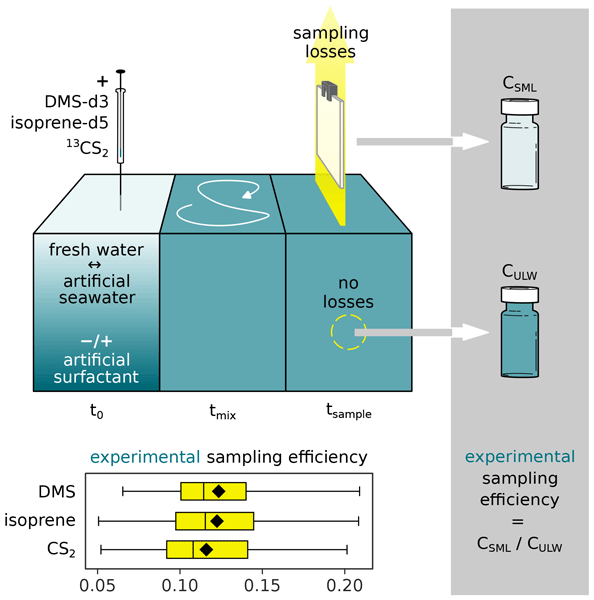
Many gases formed and destroyed in the ocean influence climate and air quality, with evidence that these processes also happen in the skin of the ocean. Studies of this thin upper layer use specialized sampling equipment, which is known to cause losses of the gases. We performed lab experiments to quantify these losses for three gases and found that 13 % remain after sampling. With further tests, our results can be used to obtain reliable gas measurements in the field, which have been elusive.
Yuanxu Dong, Christa A. Marandino, Ryo Dobashi, David T. Ho, Gregor Rehder, Henry C. Bittig, Josefine Karnatz, Bita Sabbaghzadeh, Helen Czerski, and Anja Engel
Atmos. Chem. Phys., 26, 5567–5587, https://doi.org/10.5194/acp-26-5567-2026, https://doi.org/10.5194/acp-26-5567-2026, 2026
Short summary
Short summary
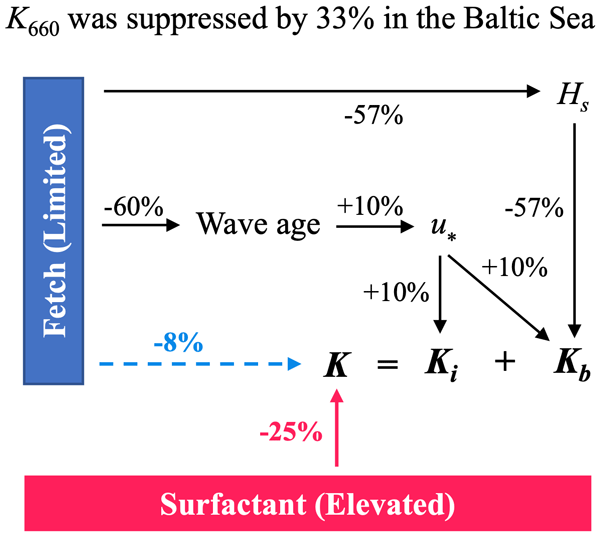
Air-sea gas exchange regulates the Earth’s climate. However, the description of the kinetic exchange process only uses wind speed, neglecting other drivers. In this study, we investigate how fetch and natural surfactants modulate air-sea carbon dioxide exchange. Measurements from the central Baltic Sea show that limited fetch and elevated surfactants significantly suppress this exchange. A new parameterisation is provided, improving regional carbon budgets and evaluations of climate solutions.

Carsten Rauch, Lisa Deyle, Leonie Jaeger, Edgar Fernando Cortés-Espinoza, Mariana Ribas-Ribas, Josefine Karnatz, Anja Engel, and Oliver Wurl
Ocean Sci., 22, 403–426, https://doi.org/10.5194/os-22-403-2026, https://doi.org/10.5194/os-22-403-2026, 2026
Short summary
Short summary
Microsensors measuring oxygen and temperature were used to gain high-resolution profiles across the surface of a water basin, in which an algal bloom was induced. These novel data show that the oxygen at the sea surface is highly influenced by algal blooms, while the temperature is only indirectly affected by them. Since algal blooms occur globally, this has considerable implications for calculating global air-sea exchanges of gases or heat, especially under low-wind conditions.
Riaz Bibi, Mariana Ribas-Ribas, Leonie Jaeger, Carola Lehners, Lisa Gassen, Edgar Fernando Cortés-Espinoza, Jochen Wollschläger, Claudia Thölen, Hannelore Waska, Jasper Zöbelein, Thorsten Brinkhoff, Isha Athale, Rüdiger Röttgers, Michael Novak, Anja Engel, Theresa Barthelmeß, Josefine Karnatz, Thomas Reinthaler, Dmytro Spriahailo, Gernot Friedrichs, Falko Asmussen Schäfer, and Oliver Wurl
Biogeosciences, 22, 7563–7589, https://doi.org/10.5194/bg-22-7563-2025, https://doi.org/10.5194/bg-22-7563-2025, 2025
Short summary
Short summary
A multidisciplinary mesocosm study was conducted to investigate biogeochemical processes and their relationships in the sea-surface microlayer and underlying water during an induced phytoplankton bloom. Phytoplankton-derived organic matter, fuelled microbial activity and biofilm formation, supporting high bacterial abundance. Distinct temporal patterns in biogeochemical parameters and greater variability in the sea-surface microlayer highlight its influence on air–sea interactions.
Sophia Hirschmann, Anabel von Jackowski, Benjamin Pontiller, Katja Metfies, Vasily Povazhnyi, Stefan Neuhaus, Eva-Maria Nöthig, and Anja Engel
EGUsphere, https://doi.org/10.5194/egusphere-2026-4192, https://doi.org/10.5194/egusphere-2026-4192, 2026
This preprint is open for discussion and under review for Biogeosciences (BG).
Short summary
Short summary
Phytoplankton release dissolved organic carbon, including carbohydrates, which are either recycled by microbes or form sticky, sugar-containing gels that may contribute to carbon export via aggregation. By studying phytoplankton communities, dissolved carbohydrate composition and gel formation in the Fram Strait and Kara Sea, we show that blooms dominated by different phytoplankton groups leave distinct organic signatures, suggesting that community shifts could alter carbon processing pathways.
Lea Lange, Dennis Booge, Hendrik Feil, Josefine Karnatz, Ina Stoltenberg, Hermann W. Bange, and Christa A. Marandino
Biogeosciences, 23, 3517–3539, https://doi.org/10.5194/bg-23-3517-2026, https://doi.org/10.5194/bg-23-3517-2026, 2026
Short summary
Short summary
Many gases formed and destroyed in the ocean influence climate and air quality, with evidence that these processes also happen in the skin of the ocean. Studies of this thin upper layer use specialized sampling equipment, which is known to cause losses of the gases. We performed lab experiments to quantify these losses for three gases and found that 13 % remain after sampling. With further tests, our results can be used to obtain reliable gas measurements in the field, which have been elusive.
Yuanxu Dong, Christa A. Marandino, Ryo Dobashi, David T. Ho, Gregor Rehder, Henry C. Bittig, Josefine Karnatz, Bita Sabbaghzadeh, Helen Czerski, and Anja Engel
Atmos. Chem. Phys., 26, 5567–5587, https://doi.org/10.5194/acp-26-5567-2026, https://doi.org/10.5194/acp-26-5567-2026, 2026
Short summary
Short summary
Air-sea gas exchange regulates the Earth’s climate. However, the description of the kinetic exchange process only uses wind speed, neglecting other drivers. In this study, we investigate how fetch and natural surfactants modulate air-sea carbon dioxide exchange. Measurements from the central Baltic Sea show that limited fetch and elevated surfactants significantly suppress this exchange. A new parameterisation is provided, improving regional carbon budgets and evaluations of climate solutions.
Theresa Barthelmeß, Karine Sellegri, Benjamin Pontiller, Lindsay Scheidemann, Karl Safi, and Anja Engel
EGUsphere, https://doi.org/10.5194/egusphere-2026-1873, https://doi.org/10.5194/egusphere-2026-1873, 2026
Short summary
Short summary
Sea spray transports marine organic particles into the atmosphere where they contribute to climate-relevant processes such as cloud formation. We investigated small biogenic gels which were enriched in sea spray aerosols in dependence on the surface sea water conditions as e.g. defined by phytoplankton composition and different organic matter pools. Moreover, the composition of these gels was size-dependent and did not directly mirror the composition of their marine precursors.
Anja Engel, Gernot Friedrichs, Kerstin E. Krall, and Bernd Jähne
Biogeosciences, 23, 2101–2117, https://doi.org/10.5194/bg-23-2101-2026, https://doi.org/10.5194/bg-23-2101-2026, 2026
Short summary
Short summary
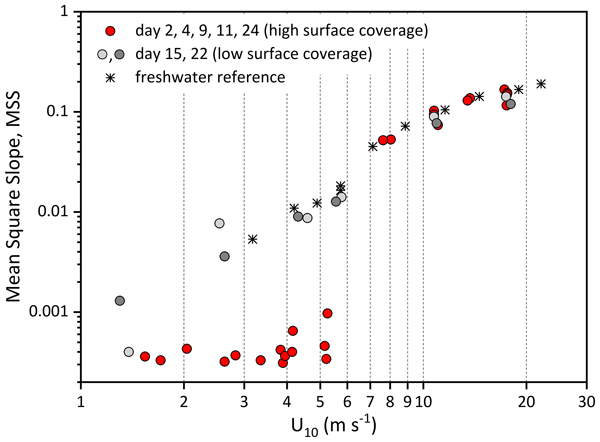
We investigated how organic molecules in the ocean's surface layer accumulate and respond to wind. Using a large wind-wave tank filled with seawater, we found that natural molecules produced by marine microbes gather at the surface under light winds, slowing the exchange of gases such as carbon dioxide. When winds increase, this layer rapidly breaks down. These findings suggest that marine life can influence how the ocean and atmosphere interact, particularly in calm conditions.
Evelyn Freney, Karine Sellegri, Therese Barthelmeß, Anja Engel, Darrel Baumgardner, and Dagen Hughes
EGUsphere, https://doi.org/10.5194/egusphere-2026-87, https://doi.org/10.5194/egusphere-2026-87, 2026
Short summary
Short summary
The exchange of material between the ocean and atmosphere plays an important role in regulating Earth’s climate. Through wave action, the ocean releases tiny airborne particles that influence atmospheric processes. This study examines how biological and chemical processes in seawater affect the properties of particles emitted from the ocean, highlighting the complex links between ocean biology and marine aerosols.

Amavi Silva, Surandokht Nikzad, Theresa Barthelmeß, Anja Engel, Hartmut Herrmann, Manuela van Pinxteren, Kai Wirtz, Oliver Wurl, and Markus Schartau
Biogeosciences, 23, 1697–1718, https://doi.org/10.5194/bg-23-1697-2026, https://doi.org/10.5194/bg-23-1697-2026, 2026
Short summary
Short summary
We conducted the first meta-analysis combining marine and freshwater studies to understand organic matter enrichment in the surface microlayer. Nitrogen-rich, particulate compounds are often enriched, with patterns varying by multiple factors. We recommend tracking both absolute concentrations and normalized enrichment patterns to better assess ecological conditions. Our study also introduces improved statistical methods for analyzing and comparing surface microlayer data.
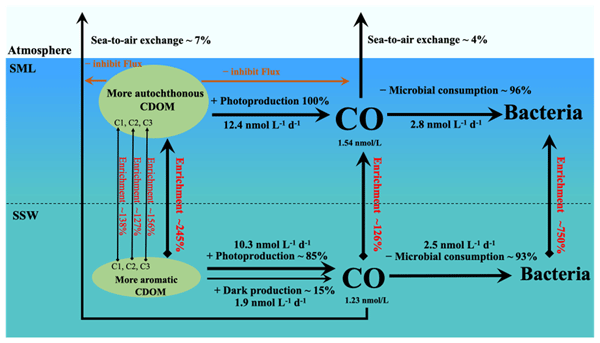
Lin Yang, Bin Yang, Jing Zhang, Anja Engel, and Gui-Peng Yang
Biogeosciences, 23, 1261–1278, https://doi.org/10.5194/bg-23-1261-2026, https://doi.org/10.5194/bg-23-1261-2026, 2026
Short summary
Short summary
Carbon monoxide (CO), chromophoric dissolved organic matter (CDOM), and fluorescent dissolved organic matter (FDOM) were more frequently enriched in the higher temperature and salinity off-shore regions. Marine-humic like CDOM tends to inhibit the sea-to-air flux of CO in the sea-surface microlayer (SML). The enrichment and photochemical process of CO in the SML were more active during the daytime. The photochemical production and microbial consumption rates of CO in the SML were more active than in the subsurface layer (SSW).
Carsten Rauch, Lisa Deyle, Leonie Jaeger, Edgar Fernando Cortés-Espinoza, Mariana Ribas-Ribas, Josefine Karnatz, Anja Engel, and Oliver Wurl
Ocean Sci., 22, 403–426, https://doi.org/10.5194/os-22-403-2026, https://doi.org/10.5194/os-22-403-2026, 2026
Short summary
Short summary
Microsensors measuring oxygen and temperature were used to gain high-resolution profiles across the surface of a water basin, in which an algal bloom was induced. These novel data show that the oxygen at the sea surface is highly influenced by algal blooms, while the temperature is only indirectly affected by them. Since algal blooms occur globally, this has considerable implications for calculating global air-sea exchanges of gases or heat, especially under low-wind conditions.
Riaz Bibi, Mariana Ribas-Ribas, Leonie Jaeger, Carola Lehners, Lisa Gassen, Edgar Fernando Cortés-Espinoza, Jochen Wollschläger, Claudia Thölen, Hannelore Waska, Jasper Zöbelein, Thorsten Brinkhoff, Isha Athale, Rüdiger Röttgers, Michael Novak, Anja Engel, Theresa Barthelmeß, Josefine Karnatz, Thomas Reinthaler, Dmytro Spriahailo, Gernot Friedrichs, Falko Asmussen Schäfer, and Oliver Wurl
Biogeosciences, 22, 7563–7589, https://doi.org/10.5194/bg-22-7563-2025, https://doi.org/10.5194/bg-22-7563-2025, 2025
Short summary
Short summary
A multidisciplinary mesocosm study was conducted to investigate biogeochemical processes and their relationships in the sea-surface microlayer and underlying water during an induced phytoplankton bloom. Phytoplankton-derived organic matter, fuelled microbial activity and biofilm formation, supporting high bacterial abundance. Distinct temporal patterns in biogeochemical parameters and greater variability in the sea-surface microlayer highlight its influence on air–sea interactions.
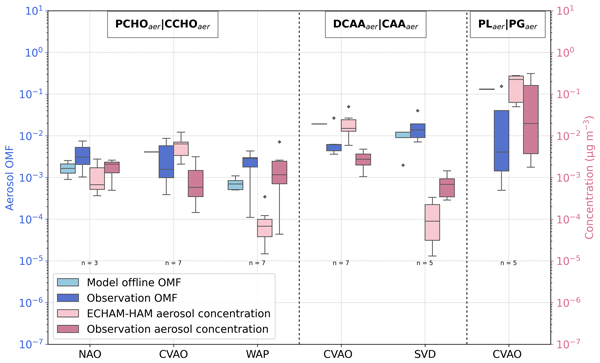
Anisbel Leon-Marcos, Moritz Zeising, Manuela van Pinxteren, Sebastian Zeppenfeld, Astrid Bracher, Elena Barbaro, Anja Engel, Matteo Feltracco, Ina Tegen, and Bernd Heinold
Geosci. Model Dev., 18, 4183–4213, https://doi.org/10.5194/gmd-18-4183-2025, https://doi.org/10.5194/gmd-18-4183-2025, 2025
Short summary
Short summary
This study represents the primary marine organic aerosol (PMOA) emissions, focusing on their sea–atmosphere transfer. Using the FESOM2.1–REcoM3 model, concentrations of key organic biomolecules were estimated and integrated into the ECHAM6.3–HAM2.3 aerosol–climate model. Results highlight the influence of marine biological activity and surface winds on PMOA emissions, with reasonably good agreement with observations improving aerosol representation in the southern oceans.
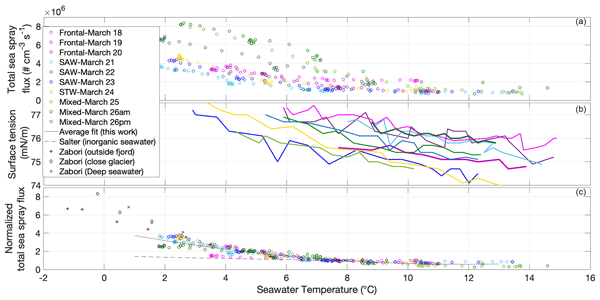
Karine Sellegri, Theresa Barthelmeß, Jonathan Trueblood, Antonia Cristi, Evelyn Freney, Clémence Rose, Neill Barr, Mike Harvey, Karl Safi, Stacy Deppeler, Karen Thompson, Wayne Dillon, Anja Engel, and Cliff Law
Atmos. Chem. Phys., 23, 12949–12964, https://doi.org/10.5194/acp-23-12949-2023, https://doi.org/10.5194/acp-23-12949-2023, 2023
Short summary
Short summary
The amount of sea spray emitted to the atmosphere depends on the ocean temperature, but this dependency is not well understood, especially when ocean biology is involved. In this study, we show that sea spray emissions are increased by up to a factor of 4 at low seawater temperatures compared to moderate temperatures, and we quantify the temperature dependence as a function of the ocean biogeochemistry.
Manon Rocco, Erin Dunne, Alexia Saint-Macary, Maija Peltola, Theresa Barthelmeß, Neill Barr, Karl Safi, Andrew Marriner, Stacy Deppeler, James Harnwell, Anja Engel, Aurélie Colomb, Alfonso Saiz-Lopez, Mike Harvey, Cliff S. Law, and Karine Sellegri
EGUsphere, https://doi.org/10.5194/egusphere-2023-516, https://doi.org/10.5194/egusphere-2023-516, 2023
Preprint archived
Short summary
Short summary
During the Sea2cloud campaign in the Southern Pacific Ocean, we measured air-sea emissions from phytopankton of two key atmospheric compounds: DMS and MeSH. These compounds are well-known to play a great role in atmospheric chemistry and climate. We see in this paper that these compounds are most emited by the nanophytoplankton population. We provide here parameters for climate models to predict future trends of the emissions of these compounds and their roles and impacts on the global warming.

Alexia D. Saint-Macary, Andrew Marriner, Theresa Barthelmeß, Stacy Deppeler, Karl Safi, Rafael Costa Santana, Mike Harvey, and Cliff S. Law
Ocean Sci., 19, 1–15, https://doi.org/10.5194/os-19-1-2023, https://doi.org/10.5194/os-19-1-2023, 2023
Short summary
Short summary
The uppermost oceanic layer was sampled to determine what can explain a potential dimethyl sulfide (DMS) enrichment in this environment. A novel sampling method was used, and the results showed that DMS was not as enriched as expected. Our results showed that the phytoplanktonic composition influenced the DMS concentration, confirming results from another study in this oceanic region. However, additional factors are required to observe a DMS enrichment in the uppermost oceanic layer.

Lin Yang, Jing Zhang, Anja Engel, and Gui-Peng Yang
Biogeosciences, 19, 5251–5268, https://doi.org/10.5194/bg-19-5251-2022, https://doi.org/10.5194/bg-19-5251-2022, 2022
Short summary
Short summary
Enrichment factors of dissolved organic matter (DOM) in the eastern marginal seas of China exhibited a significant spatio-temporal variation. Photochemical and enrichment processes co-regulated DOM enrichment in the sea-surface microlayer (SML). Autochthonous DOM was more frequently enriched in the SML than terrestrial DOM. DOM in the sub-surface water exhibited higher aromaticity than that in the SML.
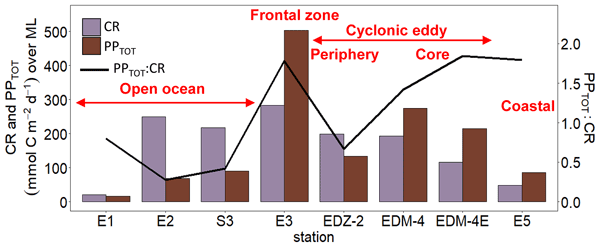
Quentin Devresse, Kevin W. Becker, Arne Bendinger, Johannes Hahn, and Anja Engel
Biogeosciences, 19, 5199–5219, https://doi.org/10.5194/bg-19-5199-2022, https://doi.org/10.5194/bg-19-5199-2022, 2022
Short summary
Short summary
Eddies are ubiquitous in the ocean and alter physical, chemical, and biological processes. However, how they affect organic carbon production and consumption is largely unknown. Here we show how an eddy triggers a cascade effect on biomass production and metabolic activities of phyto- and bacterioplankton. Our results may contribute to the improvement of biogeochemical models used to estimate carbon fluxes in the ocean.

Theresa Barthelmeß and Anja Engel
Biogeosciences, 19, 4965–4992, https://doi.org/10.5194/bg-19-4965-2022, https://doi.org/10.5194/bg-19-4965-2022, 2022
Short summary
Short summary
Greenhouse gases released by human activity cause a global rise in mean temperatures. While scientists can predict how much of these gases accumulate in the atmosphere based on not only human-derived sources but also oceanic sinks, it is rather difficult to predict the major influence of coastal ecosystems. We provide a detailed study on the occurrence, composition, and controls of substances that suppress gas exchange. We thus help to determine what controls coastal greenhouse gas fluxes.
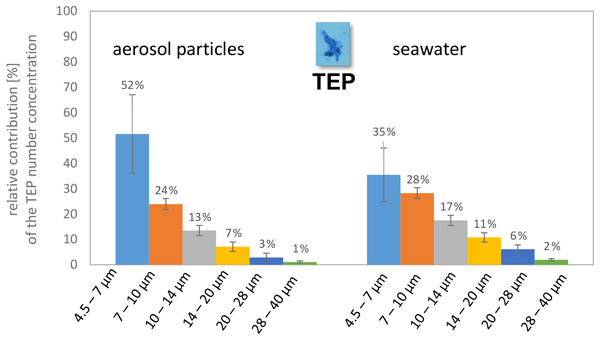
Manuela van Pinxteren, Tiera-Brandy Robinson, Sebastian Zeppenfeld, Xianda Gong, Enno Bahlmann, Khanneh Wadinga Fomba, Nadja Triesch, Frank Stratmann, Oliver Wurl, Anja Engel, Heike Wex, and Hartmut Herrmann
Atmos. Chem. Phys., 22, 5725–5742, https://doi.org/10.5194/acp-22-5725-2022, https://doi.org/10.5194/acp-22-5725-2022, 2022
Short summary
Short summary
A class of marine particles (transparent exopolymer particles, TEPs) that is ubiquitously found in the world oceans was measured for the first time in ambient marine aerosol particles and marine cloud waters in the tropical Atlantic Ocean. TEPs are likely to have good properties for influencing clouds. We show that TEPs are transferred from the ocean to the marine atmosphere via sea-spray formation and our results suggest that they can also form directly in aerosol particles and in cloud water.
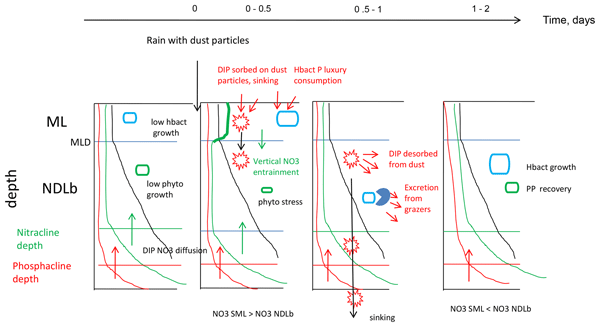
France Van Wambeke, Vincent Taillandier, Karine Desboeufs, Elvira Pulido-Villena, Julie Dinasquet, Anja Engel, Emilio Marañón, Céline Ridame, and Cécile Guieu
Biogeosciences, 18, 5699–5717, https://doi.org/10.5194/bg-18-5699-2021, https://doi.org/10.5194/bg-18-5699-2021, 2021
Short summary
Short summary
Simultaneous in situ measurements of (dry and wet) atmospheric deposition and biogeochemical stocks and fluxes in the sunlit waters of the open Mediterranean Sea revealed complex physical and biological processes occurring within the mixed layer. Nitrogen (N) budgets were computed to compare the sources and sinks of N in the mixed layer. The transitory effect observed after a wet dust deposition impacted the microbial food web down to the deep chlorophyll maximum.

Frédéric Gazeau, France Van Wambeke, Emilio Marañón, Maria Pérez-Lorenzo, Samir Alliouane, Christian Stolpe, Thierry Blasco, Nathalie Leblond, Birthe Zäncker, Anja Engel, Barbara Marie, Julie Dinasquet, and Cécile Guieu
Biogeosciences, 18, 5423–5446, https://doi.org/10.5194/bg-18-5423-2021, https://doi.org/10.5194/bg-18-5423-2021, 2021
Short summary
Short summary
Our study shows that the impact of dust deposition on primary production depends on the initial composition and metabolic state of the tested community and is constrained by the amount of nutrients added, to sustain both the fast response of heterotrophic prokaryotes and the delayed one of phytoplankton. Under future environmental conditions, heterotrophic metabolism will be more impacted than primary production, therefore reducing the capacity of surface waters to sequester anthropogenic CO2.
Cited articles
Abraham, W. R., Meyer, H., and Yakimov, M.: Novel glycine containing glucolipids from the alkane using bacterium Alcanivorax borkumensis, Biochim. Biophys. Ac., 1393, 57–62, https://doi.org/10.1016/S0005-2760(98)00058-7, 1998.
Albertano, P., Somma, D. Di, and Capucci, E.: Cyanobacterial picoplankton from the Central Baltic Sea: cell size classification by image-analyzed fluorescence microscopy, J. Plankton Res., 19, 1405–1416, https://doi.org/10.1093/plankt/19.10.1405, 1997.
Andersson, A., Hajdu, S., Haecky, P., Kuparinen, J., and Wikner, J.: Succession and growth limitation of phytoplankton in the Gulf of Bothnia (Baltic Sea), Marine Biol., 126, 791–801, https://doi.org/10.1007/BF00351346, 1996.
Arteaga, L., Pahlow, M., and Oschlies, A.: Modeled Chl:C ratio and derived estimates of phytoplankton carbon biomass and its contribution to total particulate organic carbon in the global surface ocean, Global Biogeochem. Cy., 30, 1791–1810, https://doi.org/10.1002/2016GB005458, 2016.
Barreiro Felpeto, A., Śliwińska-Wilczewska, S., Złoch, I., and Vasconcelos, V.: Light-dependent cytolysis in the allelopathic interaction between picoplanktic and filamentous cyanobacteria, J. Plankton Res., 40, 165–177, https://doi.org/10.1093/plankt/fby004, 2018.
Barthelmeß, T. and Engel, A.: How biogenic polymers control surfactant dynamics in the surface microlayer: insights from a coastal Baltic Sea study, Biogeosciences, 19, 4965–4992, https://doi.org/10.5194/bg-19-4965-2022, 2022.
Barthelmeß, T., Schütte, F., and Engel, A.: Variability of the Sea Surface Microlayer Across a Filament's Edge and Potential Influences on Gas Exchange, Front. Mar. Sci., 8, https://doi.org/10.3389/fmars.2021.718384, 2021.
Berg, C., Dupont, C., Asplund-Samuelsson, J., Celepli, N. A., Eiler, A., Allen, A. E., Ekman, M., Bergmann, B., and Ininbergs, K.: Dissection of Microbial Community Functions during a Cyanobacterial Bloom in the Baltic Sea via Metatranscriptomics, Front. Mar. Sci., 5, 55, https://doi.org/10.3389/fmars.2018.00055, 2018.
Bibi, R., Ribas-Ribas, M., Jaeger, L., Lehners, C., Gassen, L., Cortés-Espinoza, E. F., Wollschläger, J., Thölen, C., Waska, H., Zöbelein, J., Brinkhoff, T., Athale, I., Röttgers, R., Novak, M., Engel, A., Barthelmeß, T., Karnatz, J., Reinthaler, T., Spriahailo, D., Friedrichs, G., Schäfer, F. A., and Wurl, O.: Biogeochemical dynamics of the sea-surface microlayer in a multidisciplinary mesocosm study, Biogeosciences, 22, 7563–7589, https://doi.org/10.5194/bg-22-7563-2025, 2025.
Buitenhuis, E. T., Li, W. K. W., Vaulot, D., Lomas, M. W., Landry, M. R., Partensky, F., Karl, D. M., Ulloa, O., Campbell, L., Jacquet, S., Lantoine, F., Chavez, F., Macias, D., Gosselin, M., and McManus, G. B.: Picophytoplankton biomass distribution in the global ocean, Earth Syst. Sci. Data, 4, 37–46, https://doi.org/10.5194/essd-4-37-2012, 2012.
Bunse, C., Israelsson, S., Baltar, F., Bertos-Fortis, M., Fridolfsson, E., Legrand, C., Lindehoff, E., Lindh, M. V., Martínez-García, S., and Pinhassi, J.: High frequency multi-year variability in baltic sea microbial plankton stocks and activities, Front. Microbiol., 10, https://doi.org/10.3389/fmicb.2018.03296, 2019.
Chen, Y. L. L., Tuo, S., and Chen, H. Y.: Co-occurrence and transfer of fixed nitrogen from Trichodesmium spp. to diatoms in the low-latitude Kuroshio Current in the NW Pacific, Mar. Ecol. Prog. Ser., 421, 25–38, https://doi.org/10.3354/meps08908, 2011.
Cisternas-Novoa, C., Le Moigne, F. A. C., and Engel, A.: Composition and vertical flux of particulate organic matter to the oxygen minimum zone of the central Baltic Sea: impact of a sporadic North Sea inflow, Biogeosciences, 16, 927–947, https://doi.org/10.5194/bg-16-927-2019, 2019.
Cosović, B. and Vojvodić, V.: The application of ac polarography to the determination of surface-active substances in seawater, Limnol. Oceanogr., 27, 361–369, https://doi.org/10.4319/lo.1982.27.2.0361, 1982.
Ćosović, B. and Vojvodić, V.: Voltammetric analysis of surface active substances in natural seawater, Electroanalysis, 10, 429–434, https://doi.org/10.1002/(SICI)1521-4109(199805)10:6<429::AID-ELAN429>3.0.CO;2-7, 1998.
Cunliffe, M. and Murrell, J. C.: The sea-surface microlayer is a gelatinous biofilm, ISME J., 3, 1001–1003, https://doi.org/10.1038/ismej.2009.69, 2009.
Cunliffe, M. and Wurl, O.: Guide to best practices to study the ocean's surface, Occas. Publ. Mar. Biol. Assoc. UK, https://doi.org/10.25607/OBP-1512, 2014.
Cunliffe, M., Engel, A., Frka, S., Gašparović, B. Ž., Guitart, C., Murrell, J. C., Salter, M., Stolle, C., Upstill-Goddard, R., and Wurl, O.: Sea surface microlayers: A unified physicochemical and biological perspective of the air–ocean interface, Prog. Oceanogr., 109, 104–116, https://doi.org/10.1016/J.POCEAN.2012.08.004, 2013.
Dauwe, B., Middelburg, J. J., Herman, P. M. J., and Heip, C. H. R.: Linking diagenetic alteration of amino acids and bulk organic matter reactivity, Limnol. Oceanogr., 44, 1809–1814, https://doi.org/10.4319/lo.1999.44.7.1809, 1999.
Davis, J., Kaiser, K., and Benner, R.: Amino acid and amino sugar yields and compositions as indicators of dissolved organic matter diagenesis, Org. Geochem., 40, 343–352, https://doi.org/10.1016/J.ORGGEOCHEM.2008.12.003, 2009.
De Philippis, R. and Vincenzini, M.: Exocellular polysaccharides from cyanobacteria and their possible applications, FEMS Microbiol. Rev., 22, 151–175, https://doi.org/10.1111/j.1574-6976.1998.tb00365.x, 1998.
Dickson, A. G., Sabine, C. L., and Christian, J. Robert.: Guide to best practices for ocean CO2 measurements, North Pacific Marine Science Organization, https://doi.org/10.25607/OBP-1342, 2007.
DIN EN 15972: Wasserbeschaffenheit – Anleitung für die quantitative und qualitative Untersuchung von marinem Phytoplankton, Beuth Verlag, 34 pp., https://doi.org/10.31030/1756505, 2011.
DIN EN 16695: Wasserbeschaffenheit – Anleitung zur Abschätzung des Phytoplankton-Biovolumens. Beuth Verlag, 101 pp., https://doi.org/10.31030/2303923, 2015.
Dittmar, T., Cherrier, J., and Ludwichowski, K.-U.: The Analysis of Amino Acids in Seawater, in: Practical Guidelines for the Analysis of Seawater, edited by: Wurl, O., CRC Press, 67–77, https://doi.org/10.1201/9781420073072, 2009.
Dreshchinskii, A. and Engel, A.: Seasonal variations of the sea surface microlayer at the Boknis Eck Times Series Station (Baltic Sea), J. Plankton Res., 39, 943–961, https://doi.org/10.1093/plankt/fbx055, 2017.
Endres, S., Unger, J., Wannicke, N., Nausch, M., Voss, M., and Engel, A.: Response of Nodularia spumigena to pCO2 – Part 2: Exudation and extracellular enzyme activities, Biogeosciences, 10, 567–582, https://doi.org/10.5194/bg-10-567-2013, 2013.
Engel, A. and Galgani, L.: The organic sea-surface microlayer in the upwelling region off the coast of Peru and potential implications for air–sea exchange processes, Biogeosciences, 13, 989–1007, https://doi.org/10.5194/bg-13-989-2016, 2016.
Engel, A. and Händel, N.: A novel protocol for determining the concentration and composition of sugars in particulate and in high molecular weight dissolved organic matter (HMW-DOM) in seawater, Mar. Chem., 127, 180–191, https://doi.org/10.1016/J.MARCHEM.2011.09.004, 2011.
Engel, A., Delille, B., Jacquet, S., Riebesell, U., Rochelle-Newall, E., Terbrüggen, A., and Zondervan, I.: Transparent exopolymer particles and dissolved organic carbon production by Emiliania huxleyi exposed to different CO2 concentrations: a mesocosm experiment, Aquat. Microb. Ecol., 34, 93–104, 2004.
Engel, A., Harlay, J., Piontek, J., and Chou, L.: Contribution of combined carbohydrates to dissolved and particulate organic carbon after the spring bloom in the northern Bay of Biscay (North-Eastern Atlantic Ocean), Cont. Shelf Res., 45, 42–53, https://doi.org/10.1016/j.csr.2012.05.016, 2012.
Engel, A., Bange, H. W., Cunliffe, M., Burrows, S. M., Friedrichs, G., Galgani, L., Herrmann, H., Hertkorn, N., Johnson, M., Liss, P. S., Quinn, P. K., Schartau, M., Soloviev, A., Stolle, C., Upstill-Goddard, R. C., van Pinxteren, M., and Zäncker, B.: The ocean's vital skin: Toward an integrated understanding of the sea surface microlayer, Front. Mar. Sci., 4, 165, https://doi.org/10.3389/fmars.2017.00165, 2017.
Engel, A., Sperling, M., Sun, C., Grosse, J., and Friedrichs, G.: Organic matter in the surface microlayer: Insights from a wind wave channel experiment, Front. Mar. Sci., 5, 182, https://doi.org/10.3389/fmars.2018.00182, 2018.
Engel, A., Endres, S., Galgani, L., and Schartau, M.: Marvelous Marine Microgels: On the Distribution and Impact of Gel-Like Particles in the Oceanic Water-Column, Front. Mar. Sci., 7, https://doi.org/10.3389/fmars.2020.00405, 2020.
Flores, E., Arévalo, S., and Burnat, M.: Cyanophycin and arginine metabolism in cyanobacteria, Algal Res., 42, 101577, https://doi.org/10.1016/J.ALGAL.2019.101577, 2019.
Frew, N. M., Bock, E. J., Schimpf, U., Hara, T., Haußecker, H., Edson, J. B., McGillis, W. R., Nelson, R. K., McKenna, S. P., Uz, B. M., and Jähne, B.: Air-sea gas transfer: Its dependence on wind stress, small-scale roughness, and surface films, J. Geophys. Res.-Oceans, 109, https://doi.org/10.1029/2003JC002131, 2004.
Galgani, L. and Engel, A.: Accumulation of Gel Particles in the Sea-Surface Microlayer during an Experimental Study with the Diatom Thalassiosira weissflogii, Int. J. Geosci., 4, 129–145, https://doi.org/10.4236/ijg.2013.41013, 2013.
Galgani, L. and Engel, A.: Changes in optical characteristics of surface microlayers hint to photochemically and microbially mediated DOM turnover in the upwelling region off the coast of Peru, Biogeosciences, 13, 2453–2473, https://doi.org/10.5194/bg-13-2453-2016, 2016.
Garrett, W. D.: Collection of slick-forming materials from the sea surface microlayer, Limnol. Oceanogr., 10, 602–605, https://doi.org/10.4319/lo.1965.10.4.0602, 1965.
Gašparović, B. and Ćosović, B.: Surface-active properties of organic matter in the North Adriatic Sea, Estuar. Coast Shelf S., 58, 555–566, https://doi.org/10.1016/S0272-7714(03)00133-1, 2003.
Hajdu, S., Höglander, H., and Larsson, U.: Phytoplankton vertical distributions and composition in Baltic Sea cyanobacterial blooms, Harmful Algae, 6, 189–205, https://doi.org/10.1016/j.hal.2006.07.006, 2007.
Harvey, G. W. and Burzell, L. A.: A simple microlayer method for small samples, Limnol. Oceanogr., 17, 156–157, https://doi.org/10.4319/lo.1972.17.1.0156, 1972.
Helsinki Commission (HELCOM): Manual for Marine Monitoring in the COMBINE Programme of HELCOM, https://helcom.fi/publications/manual-for-marine-monitoring-in-the-combine-programme-of-helcom/ (last access: 12 June 2026), 2000.
Helsinki Commission (HELCOM): Baltic Sea Environment Fact Sheets, Cyanobacteria biomass 2000–2023, HELCOM, https://helcom.fi/helcom-at-work/publications/baltic-sea-environment-fact-sheets-bsefs/ (last access: 12 June 2026), 2025.
Hepach, H., Hughes, C., Hogg, K., Collings, S., and Chance, R.: Senescence as the main driver of iodide release from a diverse range of marine phytoplankton, Biogeosciences, 17, 2453–2471, https://doi.org/10.5194/bg-17-2453-2020, 2020.
Hoikkala, L., Tammert, H., Lignell, R., Eronen-Rasimus, E., Spilling, K., and Kisand, V.: Autochthonous dissolved organic matter drives bacterial community composition during a bloom of filamentous cyanobacteria, Front. Mar. Sci., 3, 111, https://doi.org/10.3389/fmars.2016.00111, 2016.
Jenkinson, I. R., Seuront, L., Ding, H., and Elias, F.: Biological modification of mechanical properties of the sea surface microlayer, influencing waves, ripples, foam and air-sea fluxes, Elem. Sci. Anth., 6, 26, https://doi.org/10.1525/elementa.283, 2018.
Kahru, M. and Elmgren, R.: Multidecadal time series of satellite-detected accumulations of cyanobacteria in the Baltic Sea, Biogeosciences, 11, 3619–3633, https://doi.org/10.5194/bg-11-3619-2014, 2014.
Kahru, M., Horstmann, U., and Rud, O.: Satellite Detection of Increased Cyanobacteria Blooms in the Baltic Sea: Natural Fluctuation or Ecosystem Change?, Ambio, 23, 469–472, 1994.
Kahru, M., Cahill, B., Elmgren, R., and Rehder, G.: What initiates cyanobacterial blooms in the Baltic Sea?, Harmful Algae, 148, https://doi.org/10.1016/j.hal.2025.102924, 2025.
Kaiser, K. and Benner, R.: Biochemical composition and size distribution of organic matter at the Pacific and Atlantic time-series stations, Mar. Chem., 113, 63–77, https://doi.org/10.1016/J.MARCHEM.2008.12.004, 2009.
Karlson, A. M. L., Duberg, J., Motwani, N. H., Hogfors, H., Klawonn, I., Ploug, H., Barthel Svedén, J., Garbaras, A., Sundelin, B., Hajdu, S., Larsson, U., Elmgren, R., and Gorokhova, E.: Nitrogen fixation by cyanobacteria stimulates production in Baltic food webs, Ambio, 44, 413–426, https://doi.org/10.1007/s13280-015-0660-x, 2015.
Karlson, B., Arneborg, L., Johansson, J., Linders, J., Liu, Y., and Olofsson, M.: A suggested climate service for cyanobacteria blooms in the Baltic Sea – Comparing three monitoring methods, Harmful Algae, 118, https://doi.org/10.1016/j.hal.2022.102291, 2022.
Karnatz, J., Barthelmeß, T., Sabbaghzadeh, B., and Engel, A.: Biochemical composition and phytoplankton community of the sea surface microlayer and underlying water during ELISABETH MANN BORGESE cruise EMB295 (CenBASE) in 2022, PANGAEA [data set], https://doi.org/10.1594/PANGAEA.993574, 2026.
Komárek, J.: Coccoid and Colonial Cyanobacteria, Freshwater Algae of North America: Ecology and Classification, 59–116, https://doi.org/10.1016/B978-012741550-5/50004-0, 2003.
Komárek, J. and Komárková, J.: Diversity of Aphanizomenon-like cyanobacteria, Fottea, 6, 1–32, 2006.
Kujawinski, E. B., Farrington, J. W., and Moffett, J. W.: Evidence for grazing-mediated production of dissolved surface-active material by marine protists, Mar. Chem. 77, 133–142, https://doi.org/10.1016/S0304-4203(01)00082-2, 2002.
Kurata, N., Vella, K., Hamilton, B., Shivji, M., Soloviev, A., Matt, S., Tartar, A., and Perrie, W.: Surfactant-associated bacteria in the near-surface layer of the ocean, Sci. Rep., 6, https://doi.org/10.1038/srep19123, 2016.
Kutser, T.: Quantitative detection of chlorophyll in cyanobacterial blooms by satellite remote sensing, Limnol. Oceanogr., 49, 2179–2189, https://doi.org/10.4319/lo.2004.49.6.2179, 2004.
Lage, S., Mazur-Marzec, H., and Gorokhova, E.: Interspecific Interactions Drive Nonribosomal Peptide Production in Nodularia spumigena, Appl. Environ. Microb., 88, https://doi.org/10.1128/aem.00966-22, 2022.
Larsson, J., Celepli, N., Ininbergs, K., Dupont, C. L., Yooseph, S., Bergman, B., and Ekman, M.: Picocyanobacteria containing a novel pigment gene cluster dominate the brackish water Baltic Sea, ISME J., 8, 1892–1903, https://doi.org/10.1038/ismej.2014.35, 2014.
Laß, K. and Friedrichs, G.: Revealing structural properties of the marine nanolayer from vibrational sum frequency generation spectra, J. Geophys. Res., 116, C08042, https://doi.org/10.1029/2010JC006609, 2011.
Laß, K., Bange, H. W., and Friedrichs, G.: Seasonal signatures in SFG vibrational spectra of the sea surface nanolayer at Boknis Eck Time Series Station (SW Baltic Sea), Biogeosciences, 10, 5325–5334, https://doi.org/10.5194/bg-10-5325-2013, 2013.
Lennartz, S. T., Lehmann, A., Herrford, J., Malien, F., Hansen, H.-P., Biester, H., and Bange, H. W.: Long-term trends at the Boknis Eck time series station (Baltic Sea), 1957–2013: does climate change counteract the decline in eutrophication?, Biogeosciences, 11, 6323–6339, https://doi.org/10.5194/bg-11-6323-2014, 2014.
Lindroth, P. and Mopper, K.: High Performance Liquid Chromatographic Determination of Subpicomole Amounts of Amino Acids by Precolumn Fluorescence Derivatization with o-Phthaldialdehyde, Anal. Chem., 51, 1667–1674, https://doi.org/10.1021/ac50047a019, 1979.
Marie, D., Partensky, F., Jacquet, S., and Vaulot, D.: Enumeration and Cell Cycle Analysis of Natural Populations of Marine Picoplankton by Flow Cytometry Using the Nucleic Acid Stain SYBR Green I, Appl. Environ. Microb., 63, 186–193, https://doi.org/10.1128/aem.63.1.186-193.1997, 1997.
Mari, X. and Kiørboe, T.: Abundance, size distribution and bacterial colonization of transparent exopolymeric particles (TEP) during spring in the Kattegat, J. Plankton Res., 18, 969–986, https://doi.org/10.1093/plankt/18.6.969, 1996.
Mazur-Marzec, H., Sutryk, K., Kobos, J., Hebel, A., Hohlfeld, N., Błaszczyk, A., Toruńska, A., Kaczkowska, M. J., Łysiak-Pastuszak, E., Kraśniewski, W., and Jasser, I.: Occurrence of cyanobacteria and cyanotoxin in the Southern Baltic Proper. Filamentous cyanobacteria versus single-celled picocyanobacteria, Hydrobiologia, 701, 235–252, https://doi.org/10.1007/s10750-012-1278-7, 2013.
Moisan, T. A., Blattner, K. L., and Makinen, C. P.: Influences of temperature and nutrients on Synechococcus abundance and biomass in the southern Mid-Atlantic Bight, Cont. Shelf Res., 30, 1275–1282, https://doi.org/10.1016/j.csr.2010.04.005, 2010.
Munkes, B., Löptien, U., and Dietze, H.: Cyanobacteria blooms in the Baltic Sea: a review of models and facts, Biogeosciences, 18, 2347–2378, https://doi.org/10.5194/bg-18-2347-2021, 2021.
Murray, C. J., Müller-Karulis, B., Carstensen, J., Conley, D. J., Gustafsson, B. G., and Andersen, J. H.: Past, present and future eutrophication status of the Baltic Sea, Front. Mar. Sci., 6, https://doi.org/10.3389/fmars.2019.00002, 2019.
Mustaffa, N. I. H., Ribas-Ribas, M., Banko-Kubis, H. M., and Wurl, O.: Global reduction of in situ CO2 transfer velocity by natural surfactants in the sea-surface microlayer, Philos. T. R. Soc. A, 476, https://doi.org/10.1098/rspa.2019.0763, 2020.
Nausch, G., Feistel, R., Lass, H. U., Nagel, K., and Siegel, H.: Hydrographisch-chemische Zustandseinschätzung der Ostsee 2001, Meereswiss. Ber., 49, https://www.iow.de/files/forschung/meereswissenschaftliche-berichte/mebe49_2002-zustand-hc.pdf (last access: 12 June 2026), 2002.
Nürnberg, D. J., Mariscal, V., Bornikoel, J., Nieves-Morión, M., Krauß, N., Herrero, A., Maldener, I., Flores, E., and Mullineaux, C. W.: Intercellular diffusion of a fluorescent sucrose analog via the septal junctions in a filamentous cyanobacterium, MBio, 6, e02109-14, https://doi.org/10.1128/mBio.02109-14, 2015.
Ohlendieck, U., Stuhr, A., and Siegmund, H.: Nitrogen fixation by diazotrophic cyanobacteria in the Baltic Sea and transfer of the newly fixed nitrogen to picoplankton organisms, J. Marine Syst., 25, 213–219, https://doi.org/10.1016/S0924-7963(00)00016-6, 2000.
Paczkowska, J., Rowe, O. F., Schlüter, L., Legrand, C., Karlson, B., and Andersson, A.: Allochthonous matter: An important factor shaping the phytoplankton community in the Baltic Sea, J. Plankton Res., 39, 23–34, https://doi.org/10.1093/plankt/fbw081, 2017.
Paerl, H. W. and Paul, V. J.: Climate change: Links to global expansion of harmful cyanobacteria, Water Res., 46, 1349–1363, https://doi.org/10.1016/j.watres.2011.08.002, 2012.
Pannard, A., Pédrono, J., Bormans, M., Briand, E., Claquin, P., and Lagadeuc, Y.: Production of exopolymers (EPS) by cyanobacteria: impact on the carbon-to-nutrient ratio of the particulate organic matter, Aquat. Ecol., 50, 29–44, https://doi.org/10.1007/s10452-015-9550-3, 2016.
Parrish, C. C.: Lipid biogeochemistry of plankton, settling matter and sediments in Trinity Bay, Newfoundland. I. Lipid classes, Org. Geochem., 29, 1531–1545, 1998.
Pereira, R., Schneider-Zapp, K., and Upstill-Goddard, R. C.: Surfactant control of gas transfer velocity along an offshore coastal transect: results from a laboratory gas exchange tank, Biogeosciences, 13, 3981–3989, https://doi.org/10.5194/bg-13-3981-2016, 2016.
Pereira, R., Ashton, I., Sabbaghzadeh, B., Shutler, J. D., and Upstill-Goddard, R. C.: Reduced air-sea CO2 exchange in the Atlantic Ocean due to biological surfactants, Nat. Geosci., 11, 492–496, https://doi.org/10.1038/s41561-018-0136-2, 2018.
Ploug, H.: Cyanobacterial surface blooms formed by Aphanizomenon sp. and Nodularia spumigena in the Baltic Sea: Small-scale fluxes, pH, and oxygen microenvironments, Limnol. Oceanogr., 53, 914–921, https://doi.org/10.4319/lo.2008.53.3.0914, 2008.
Rickard, P. C., Uher, G., and Upstill-Goddard, R. C.: Photo-Reactivity of Surfactants in the Sea-Surface Microlayer and Subsurface Water of the Tyne Estuary, UK, Geophys. Res. Lett., 49, https://doi.org/10.1029/2021GL095469, 2022.
Rolff, C., Almesjö, L., & Elmgren, R.: Nitrogen fixation and abundance of the diazotrophic cyanobacterium Aphanizomenon sp. in the Baltic Proper. Mar. Ecol. Prog. Ser, 332, 107–118, https://doi.org/10.3354/meps332107, 2007.
Sabbaghzadeh, B., Upstill-Goddard, R. C., Beale, R., Pereira, R., and Nightingale, P. D.: The Atlantic Ocean surface microlayer from 50° N to 50° S is ubiquitously enriched in surfactants at wind speeds up to 13 m s−1, Geophys. Res. Lett., 44, 2852–2858, https://doi.org/10.1002/2017GL072988, 2017.
Satpute, S. K., Banat, I. M., Dhakephalkar, P. K., Banpurkar, A. G., and Chopade, B. A.: Biosurfactants, bioemulsifiers and exopolysaccharides from marine microorganisms, Biotechnol. Adv., 28, 436–450, https://doi.org/10.1016/j.biotechadv.2010.02.006, 2010.
Schmidt, R. and Schneider, B.: The effect of surface films on the air-sea gas exchange in the Baltic Sea, Mar. Chem., 126, 56–62, https://doi.org/10.1016/j.marchem.2011.03.007, 2011.
Scholz, F.: Voltammetric techniques of analysis: the essentials, Chem. Texts, 1, https://doi.org/10.1007/s40828-015-0016-y, 2015.
Seidel, M., Manecki, M., Herlemann, D. P. R., Deutsch, B., Schulz-Bull, D., Jürgens, K., and Dittmar, T.: Composition and Transformation of Dissolved Organic Matter in the Baltic Sea, Front. Earth Sci., 5, 31, https://doi.org/10.3389/feart.2017.00031, 2017.
Seppälä, J., Ylöstalo, P., Kaitala, S., Hällfors, S., Raateoja, M., and Maunula, P.: Ship-of-opportunity based phycocyanin fluorescence monitoring of the filamentous cyanobacteria bloom dynamics in the Baltic Sea, Estuar. Coast. Shelf S., 73, 489–500, https://doi.org/10.1016/J.ECSS.2007.02.015, 2007.
Sharp, J. H.: Improved analysis for “particulate” organic carbon and nitrogen from seawater, Limnol. Oceanogr. 19.6, 984–989, https://doi.org/10.4319/lo.1974.19.6.0984, 1974.
Silva, A., Nikzad, S., Barthelmeß, T., Engel, A., Herrmann, H., van Pinxteren, M., Wirtz, K., Wurl, O., and Schartau, M.: Meta-analytical insights into organic matter enrichment in the surface microlayer, Biogeosciences, 23, 1697–1718, https://doi.org/10.5194/bg-23-1697-2026, 2026.
Śliwińska-Wilczewska, S., Felpeto, A. B., Mozdzeń, K., Vasconcelos, V., and Latała, A.: Physiological effects on coexisting microalgae of the allelochemicals produced by the bloom-forming cyanobacteria synechococcus sp. And nodularia spumigena, Toxins, 11, 712, https://doi.org/10.3390/toxins11120712, 2019.
Sondergaard, M.: Phototrophic Picoplankton in Temperate Lakes: Seasonal Abundance and Importance along a Trophic Gradient, Int. Rev. Ges. Hydrobio., 76, 505–522, https://doi.org/10.1002/iroh.19910760404, 1991.
Springstein, B. L., Weissenbach, J., Koch, R., Stücker, F., and Stucken, K.: The role of the cytoskeletal proteins MreB and FtsZ in multicellular cyanobacteria, FEBS Open Bio., 10, 2510–2531, https://doi.org/10.1002/2211-5463.13016, 2020.
Stal, L. J.: Microphytobenthos, their Extracellular Polymeric Substances, and the Morphogenesis of Intertidal Sediments, Geomicrobiol. J., 20, 463–478, https://doi.org/10.1080/713851126, 2003.
Stal, L. J., Staal, M., and Villbrandt, M.: Nutrient control of cyanobacterial blooms in the Baltic Sea, Aquat. Microb. Ecol., 18, 165–173, https://doi.org/10.3354/ame018165, 1999.
Stolle, C., Nagel, K., Labrenz, M., and Jürgens, K.: Succession of the sea-surface microlayer in the coastal Baltic Sea under natural and experimentally induced low-wind conditions, Biogeosciences, 7, 2975–2988, https://doi.org/10.5194/bg-7-2975-2010, 2010.
Stolle, C., Ribas-Ribas, M., Badewien, T. H., Barnes, J., Carpenter, L. J., Chance, R., Damgaard, L. R., Durán Quesada, A. M., Engel, A., Frka, S., Galgani, L., Gašparović, B., Gerriets, M., Hamizah Mustaffa, N. I., Herrmann, H., Kallajoki, L., Pereira, R., Radach, F., Revsbech, N. P., Rickard, P., Saint, A., Salter, M., Striebel, M., Triesch, N., Uher, G., Upstill-Goddard, R. C., van Pinxteren, M., Zäncker, B., Zieger, P., and Wurl, O.: The MILAN Campaign: Studying Diel Light Effects on the Air–Sea Interface, B. Am. Meteorol. Soc., 101, E146–E166, https://doi.org/10.1175/BAMS-D-17-0329.1, 2020.
Strååt, K. D., C. M. Mörth, A. Sobek, Smedberg, E., and Undeman, E.: Modeling total particulate organic carbon (POC) flows in the Baltic Sea catchment, Biogeochemistry, 128, 51–65, https://doi.org/10.1007/s10533-016-0194-8, 2016.
Stuart, R. K., Mayali, X., Lee, J. Z., Craig Everroad, R., Hwang, M., Bebout, B. M., Weber, P. K., Pett-Ridge, J., and Thelen, M. P.: Cyanobacterial reuse of extracellular organic carbon in microbial mats, ISME J., 10, 1240–1251, https://doi.org/10.1038/ismej.2015.180, 2016.
Tamm, M., Laas, P., Freiberg, R., Nõges, P., and Nõges, T.: Parallel assessment of marine autotrophic picoplankton using flow cytometry and chemotaxonomy, Sci. Total Environ., 625, 185–193, https://doi.org/10.1016/j.scitotenv.2017.12.234, 2018.
Taylor, J. D., Cottingham, S. D., Billinge, J., and Cunliffe, M.: Seasonal microbial community dynamics correlate with phytoplankton-derived polysaccharides in surface coastal waters, ISME J., 8, 245–248, https://doi.org/10.1038/ismej.2013.178, 2014.
Thornton, D. C. O.: Dissolved organic matter (DOM) release by phytoplankton in the contemporary and future ocean, Eur. J. Phycol., 49, 20–46, https://doi.org/10.1080/09670262.2013.875596, 2014.
Thornton, D. C. O.: Coomassie Stainable Particles (CSP): Protein containing exopolymer particles in the ocean, Front. Mar. Sci., 5, 206, https://doi.org/10.3389/fmars.2018.00206, 2018.
Tomitani, A., Knoll, A. H., Cavanaugh, C. M., and Ohno, T.: The evolutionary diversification of cyanobacteria: Molecular-phylogenetic and paleontological perspectives, P. Natl. Acad. Sci. USA, 103, 5442–5447, 2006.
Tsai, W. ting and Liu, K. K.: An assessment of the effect of sea surface surfactant on global atmosphere-ocean CO2 flux, J. Geophys. Res.-Oceans, 108, https://doi.org/10.1029/2000jc000740, 2003.
Utermöhl, H.: Zur Vervollkommnung der quantitativen Phytoplankton-Methodik, Int. Ver. The., 9, 1–38, https://doi.org/10.1080/05384680.1958.11904091, 1958.
Van Pinxteren, M., Müller, C., Iinuma, Y., Stolle, C., and Herrmann, H.: Chemical characterization of dissolved organic compounds from coastal sea surface microlayers (Baltic Sea, Germany), Environ. Sci. Technol., 46, 10455–10462, https://doi.org/10.1021/es204492b, 2012.
Wasmund, N.: Occurrence of cyanobacterial blooms in the baltic sea in relation to environmental conditions, Int. Rev. Ges. Hydrobio., 82, 169–184, https://doi.org/10.1002/iroh.19970820205, 1997.
Wurl, O. and Obbard, J. P.: A review of pollutants in the sea-surface microlayer (SML): a unique habitat for marine organisms, Mar. Pollut. Bull., 48, 1016–1030, https://doi.org/10.1016/J.MARPOLBUL.2004.03.016, 2004.
Wurl, O., Wurl, E., Miller, L., Johnson, K., and Vagle, S.: Formation and global distribution of sea-surface microlayers, Biogeosciences, 8, 121–135, https://doi.org/10.5194/bg-8-121-2011, 2011.
Wurl, O., Stolle, C., Van Thuoc, C., The Thu, P., and Mari, X.: Biofilm-like properties of the sea surface and predicted effects on air–sea CO2 exchange, Prog. Oceanogr., 144, 15–24, https://doi.org/10.1016/J.POCEAN.2016.03.002, 2016.
Wurl, O., Ekau, W., Landing, W. M., and Zappa, C. J.: Sea surface microlayer in a changing ocean – A perspective, Elem. Sci. Anth., 5, 31, https://doi.org/10.1525/elementa.228, 2017.
Wurl, O., Bird, K., Cunliffe, M., Landing, W. M., Miller, U., Mustaffa, N. I. H., Ribas-Ribas, M., Witte, C., and Zappa, C. J.: Warming and Inhibition of Salinization at the Ocean's Surface by Cyanobacteria, Geophys. Res. Lett., 45, 4230–4237, https://doi.org/10.1029/2018GL077946, 2018.
Zäncker, B., Bracher, A., Röttgers, R., and Engel, A.: Variations of the organic matter composition in the sea surface microlayer: A comparison between open ocean, coastal, and upwelling sites off the Peruvian coast, Front. Microbiol., 8, https://doi.org/10.3389/fmicb.2017.02369, 2017.
Zettler, M. L., Kremp, A., and Dutz, J.: Biological assessment of the Baltic Sea 2022, Meereswissenschaftliche Berichte, 125, https://doi.iow.de/10.12754/msr-2024-0125, 2024.
Zhang, Z., Liu, L., Liu, C., and Cai, W.: Studies on the sea surface microlayer: II. The layer of sudden change of physical and chemical properties, J. Colloid. Interf. Sci., 264, 148–159, https://doi.org/10.1016/S0021-9797(03)00390-4, 2003.
Zhi, W., Klingler, C., Liu, J., and Li, L.: Widespread deoxygenation in warming rivers, Nat. Clim. Change, 13, 1105–1113, https://doi.org/10.1038/s41558-023-01793-3, 2023.
Zufia, J. A., Farnelid, H., and Legrand, C.: Seasonality of Coastal Picophytoplankton Growth, Nutrient Limitation, and Biomass Contribution, Front. Microbiol., 12, https://doi.org/10.3389/fmicb.2021.786590, 2021.
Zutić, V., Ćosović, B., Marčenko, E., Bihari, N., and Kršinić, F.: Surfactant production by marine phytoplankton, Mar. Chem., 10, 505–520, https://doi.org/10.1016/0304-4203(81)90004-9, 1981.
Short summary
Cyanobacteria form massive summer blooms in the Baltic Sea that release organic compounds to the ocean’s surface. By analyzing the thin boundary layer between ocean and atmosphere, this study shows that cyanobacteria influence the molecular composition and surface properties of the sea surface, increasing surfactants that may reduce gas exchange. The findings provide new insight into how future cyanobacteria blooms could affect air-sea interactions and climate-related processes.
Cyanobacteria form massive summer blooms in the Baltic Sea that release organic compounds to the...


Special issue
Altmetrics
Final-revised paper
Preprint