
Articles | Volume 23, issue 12
https://doi.org/10.5194/bg-23-4243-2026
© Author(s) 2026. This work is distributed under
the Creative Commons Attribution 4.0 License.
the Creative Commons Attribution 4.0 License.
https://doi.org/10.5194/bg-23-4243-2026
© Author(s) 2026. This work is distributed under
the Creative Commons Attribution 4.0 License.
the Creative Commons Attribution 4.0 License.
Research article
| 
29 Jun 2026
Research article |
| 29 Jun 2026
| 29 Jun 2026
Resolving distribution and controls of terrigenous and marine particulate organic matter across an energetic shelf
Yu-Shih Lin
Department of Oceanography, National Sun Yat-sen University, Kaohsiung, 804201, Taiwan
Marine-Science-Oriented Ocean Technology Implementation Center, National Sun Yat-sen University, Kaohsiung, 804201, Taiwan
Shu-Ying Chuang
Department of Oceanography, National Sun Yat-sen University, Kaohsiung, 804201, Taiwan
Yuan-Pin Chang
Department of Oceanography, National Sun Yat-sen University, Kaohsiung, 804201, Taiwan
Chieh-Wei Hsu
Cross College Elite Tech Program, National Kaohsiung University of Science and Technology, Kaohsiung, 811532, Taiwan
Hui-Ling Lin
Department of Oceanography, National Sun Yat-sen University, Kaohsiung, 804201, Taiwan
James T. Liu
Department of Oceanography, National Sun Yat-sen University, Kaohsiung, 804201, Taiwan
Wei-Jen Huang
CORRESPONDING AUTHOR

Department of Oceanography, National Sun Yat-sen University, Kaohsiung, 804201, Taiwan
Marine-Science-Oriented Ocean Technology Implementation Center, National Sun Yat-sen University, Kaohsiung, 804201, Taiwan
Related authors
Jay Lee, James T. Liu, Yu-Shih Lin, Tung-Yuan Ho, Chen-Tung Arthur Chen, Wenping Gong, and Chau-Ron Wu
EGUsphere, https://doi.org/10.5194/egusphere-2025-2502, https://doi.org/10.5194/egusphere-2025-2502, 2025
Preprint archived
Short summary
Short summary
This study explored how freshwater from the river and rainfall, modulated by contrasting wind regimes, influences the distribution of particles on the northern South China Sea shelf. Using biogeochemical signals as tracers, we tracked particles in different water masses across this dynamic region. The results show how natural forces shape particle transport and help explain how land-derived materials travel through coastal waters and potentially influence the seafloor environment.
Joely M. Maak, Yu-Shih Lin, Enno Schefuß, Rebecca F. Aepfler, Li-Lian Liu, Marcus Elvert, and Solveig I. Bühring
Biogeosciences, 22, 1853–1863, https://doi.org/10.5194/bg-22-1853-2025, https://doi.org/10.5194/bg-22-1853-2025, 2025
Short summary
Short summary
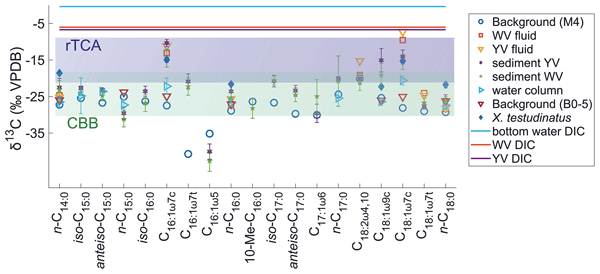
In acidic hot springs off Kueishantao, Campylobacteria fix CO2 by using the reductive tricarboxylic acid (rTCA) cycle, causing them to have an isotopically heavier biomass. Here, we report extremely low isotopic fractionation (of almost 0 ‰), which has never been reported in environmental samples. Moreover, the crab Xenograpsus testudinatus relies up to 34 % on campylobacterial biomass, highlighting the dependency of complex life on microscopic Bacteria in harsh environments.
Chueh-Chen Tung, Yu-Shih Lin, Jian-Xiang Liao, Tzu-Hsuan Tu, James T. Liu, Li-Hung Lin, Pei-Ling Wang, and Chih-Lin Wei
Biogeosciences, 21, 1729–1756, https://doi.org/10.5194/bg-21-1729-2024, https://doi.org/10.5194/bg-21-1729-2024, 2024
Short summary
Short summary
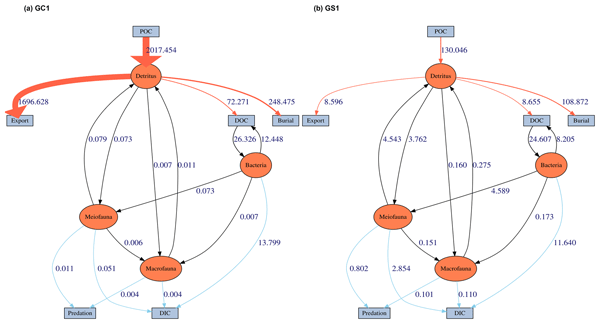
This study contrasts seabed food webs between a river-fed, high-energy canyon and the nearby slope. We show higher organic carbon (OC) flows through the canyon than the slope. Bacteria dominated the canyon, while seabed fauna contributed more to the slope food web. Due to frequent perturbation, the canyon had a lower faunal stock and OC recycling. Only 4 % of the seabed OC flux enters the canyon food web, suggesting a significant role of the river-fed canyon in transporting OC to the deep sea.
Jay Lee, James T. Liu, Yu-Shih Lin, Tung-Yuan Ho, Chen-Tung Arthur Chen, Wenping Gong, and Chau-Ron Wu
EGUsphere, https://doi.org/10.5194/egusphere-2025-2502, https://doi.org/10.5194/egusphere-2025-2502, 2025
Preprint archived
Short summary
Short summary
This study explored how freshwater from the river and rainfall, modulated by contrasting wind regimes, influences the distribution of particles on the northern South China Sea shelf. Using biogeochemical signals as tracers, we tracked particles in different water masses across this dynamic region. The results show how natural forces shape particle transport and help explain how land-derived materials travel through coastal waters and potentially influence the seafloor environment.
Joely M. Maak, Yu-Shih Lin, Enno Schefuß, Rebecca F. Aepfler, Li-Lian Liu, Marcus Elvert, and Solveig I. Bühring
Biogeosciences, 22, 1853–1863, https://doi.org/10.5194/bg-22-1853-2025, https://doi.org/10.5194/bg-22-1853-2025, 2025
Short summary
Short summary
In acidic hot springs off Kueishantao, Campylobacteria fix CO2 by using the reductive tricarboxylic acid (rTCA) cycle, causing them to have an isotopically heavier biomass. Here, we report extremely low isotopic fractionation (of almost 0 ‰), which has never been reported in environmental samples. Moreover, the crab Xenograpsus testudinatus relies up to 34 % on campylobacterial biomass, highlighting the dependency of complex life on microscopic Bacteria in harsh environments.
Chueh-Chen Tung, Yu-Shih Lin, Jian-Xiang Liao, Tzu-Hsuan Tu, James T. Liu, Li-Hung Lin, Pei-Ling Wang, and Chih-Lin Wei
Biogeosciences, 21, 1729–1756, https://doi.org/10.5194/bg-21-1729-2024, https://doi.org/10.5194/bg-21-1729-2024, 2024
Short summary
Short summary
This study contrasts seabed food webs between a river-fed, high-energy canyon and the nearby slope. We show higher organic carbon (OC) flows through the canyon than the slope. Bacteria dominated the canyon, while seabed fauna contributed more to the slope food web. Due to frequent perturbation, the canyon had a lower faunal stock and OC recycling. Only 4 % of the seabed OC flux enters the canyon food web, suggesting a significant role of the river-fed canyon in transporting OC to the deep sea.
Cited articles
Aminot, A. and Rey, F.: Chlorophyll a: Determination by spectroscopic methods, ICES Techniques in Marine Environmental Sciences, 30, 17 pp., https://doi.org/10.25607/OBP-278, 2001.
Andrade, J. M. and Estévez-Pérez, M. G.: Statistical comparison of the slopes of two regression lines: A tutorial, Anal. Chim. Acta, 838, 1-12, https://doi.org/10.1016/j.aca.2014.04.057, 2014.
Arteage, L., Phalow, M., and Oschlies, A.: Global patterns of phytoplankton nutrient and light colimitation inferred from an optimality-based model, Global Biogeochem. Cy., 28, 648–661, https://doi.org/10.1002/2013GB004668, 2014.
Bai, Y., Huang, T. H., He, X., Wang, S. L., Hsin, Y. C., Wu, C. R., Zhai, W., Lui, H. K., and Chen, C. T. A.: Intrusion of the Pearl River plume into the main channel of the Taiwan Strait in summer, J. Sea Res., 95, 1–15, https://doi.org/10.1016/j.seares.2014.10.003, 2015.
Bao, R., van der Voort, T., Zhao, M., Guo, X., Montluçon, D. B., McIntyre, C., and Eglinton, T.: Influence of hydrodynamic processes on the fate of sedimentary organic matter on continental margins, Global Biogeochem. Cy., 32, 1420–1432, https://doi.org/10.1029/2018GB005921, 2018.
Benner, R., Fogel, M. L., Sprague, E. K., and Hodson, R. E.: Depletion of 13C in lignin and its implications for stable carbon isotope studies, Nature, 329, 708–710, https://doi.org/10.1038/329708a0, 1987.
Berger, W. H. and Wefer, G.: Export production: seasonality and intermittency, and paleoceanographic implications, Palaeogeogr. Palaeocl., 89, 245–254, https://doi.org/10.1016/0031-0182(90)90065-F, 1990.
Bianchi, T. S.: The role of terrestrially derived organic carbon in the coastal ocean: A changing paradigm and the priming effect, P. Natl. Acad. Sci. USA, 108, 19473–19481, https://doi.org/10.1073/pnas.1017982108, 2011.
Bianchi, T. S., Cui, X., Blair, N. E., Burdige, D. J., Eglinton, T. I., and Galy, V.: Centers of organic carbon burial and oxidation at the land-ocean interface, Org. Geochem., 115, 138–155, https://doi.org/10.1016/j.orggeochem.2017.09.008, 2018.
Bianchi, T. S., Lambert, C. D., Santschi, P. H., and Guo, L.: Sources and transport of land-derived particulate and dissolved organic matter in the Gulf of Mexico (Texas shelf/slope): The use of lignin-phenols and loliolides as biomarkers, Org. Geochem., 27, 65–78, https://doi.org/10.1016/S0146-6380(97)00040-5, 1997.
Brown, S. L., Landry, M. R., Neveux, J., and Dupouy, C.: Microbial community abundance and biomass along a 180° transect in the equatorial Pacific during an El Niño-Southern Oscillation cold phase, J. Geophys. Res., 108, C12, 8319, https://doi.org/10.1029/2001JC000817, 2003.
Burdige, D. J.: Burial of terrestrial organic matter in marine sediments: A re-assessment, Global Biogeochem. Cy., 19, GB4011, https://doi.org/10.1029/2004GB002368, 2005.
Burdige, D. J.: Preservation of organic matter in marine sediments: Controls, Mechanisms, and an imbalance in sediment organic carbon budgets? Chem. Rev., 107, 467–485, https://doi.org/10.1021/cr050347q, 2007.
Burkhardt, S., Riebesell, U., and Zondervan, I.: Effects of growth rate, CO2 concentration, and cell size on the stable carbon isotope fractionation in marine phytoplankton, Geochim. Cosmochim. Ac., 63, 3729-3741, https://doi.org/10.1016/S0016-7037(99)00217-3, 1999.
Carr, M.-E., Friedrichs, M. A. M., Schmeltz, M., Aita, M. N., Antoine, D., Arrigo, K. R., Asanuma, I., Aumont, O., Barber, R., Behrenfeld, M., Bidigare, R., Buitenhuis, E. T., Campbell, J., Ciotti, A., Dierssen, H., Dowell, M., Dunne, J., Esaias, W., Gentili, B., Gregg, W., Groom, S., Hoepffner, N., Ishizaka, J., Kameda, T., Le Quéré, C., Lohrenz, S., Marra, J., Mélin, F., Moore, K., Morel, A., Reddy, T. E., Ryan, J., Scardi, M., Smyth, T., Turpie, K., Tilstone, G., Waters, K., and Yamanaka, Y.: A comparison of global estimates of marine primary production from ocean color, Deep-Sea Res. Pr. II, 53, 741–770, https://doi.org/10.1016/j.dsr2.2006.01.028, 2006.
Clayton, T. D. and Byrne, R. H.: Spectrophotometric seawater pH measurements: Total hydrogen ion concentration scale calibration of m-cresol purple and at-sea results, Deep-Sea Res. Pt. I, 40, 2115–2129, https://doi.org/10.1016/0967-0637(93)90048-8, 1993.
Close, H. G. and Henderson, L. C.: Open-ocean minima in δ13C values of particulate organic carbon in the lower euphotic zone, Front. Mar. Sci., 7, 540165, https://doi.org/10.3389/fmars.2020.540165, 2020.
Dickson, A. G.: Standard potential of the reaction AgCl(s) + 12H2(g) = Ag(s) + HCl(aq), and the standard acidity constant of the ion HSO
Dunne, J. P., Sarmiento, J. L., and Gnanadesikan, A.: A synthesis of global particle export from the surface ocean and cycling through the ocean interior and on the seafloor, Global Biogeochem. Cy., 21, GB4006, https://doi.org/10.1029/2006GB002907, 2007.
Eppley, R. W.: An incubation method for estimating the carbon content of phytoplankton in natural samples, Limnol. Oceanogr., 13, 574–582, https://doi.org/10.4319/lo.1968.13.4.0574, 1968.
Fielding, A. S., Turpin, D. H., Guy, R. D., Calvert, S. E., Crawford, D. W., and Harrison, P. J.: Influence of the carbon concentrating mechanism on carbon stable isotope discrimination by the marine diatom Thalassiosira pseudonana, Can. J. Bot., 76, 1098-1103, https://doi.org/10.1139/b98-069, 1998.
Fry, B.: 13C
Galy, V., Peucker-Ehrenbrink, B., and Eglinton, T.: Global carbon export from the terrestrial biosphere controlled by erosion, Nature, 521, 204–207, https://doi.org/10.1038/nature14400, 2015.
Gao, L., Li, D., and Ishizaka, J.: Stable isotope ratios of carbon and nitrogen in suspended organic matter: Seasonal and spatial dynamics along the Changjiang (Yangtze River) transport pathway, J. Geophys. Res.-Biogeo., 119, 1717–1737, https://doi.org/10.1002/2013JG002487, 2014.
Geider, R. J.: Light and temperature dependence of the carbon to chlorophyll a ratio in microalgae and cyanobacteria: Implications for physiology and growth of phytoplankton, New Phytol., 106, 1–34, https://doi.org/10.1111/j.1469-8137.1987.tb04788.x, 1987.
Giordano, M., Beardall, J., and Raven, J. A.: CO2 concentrating mechanisms in algae: Mechanisms, environmental modulation, and evolution, Annu. Rev. Plant Biol., 56, 99–131, https://doi.org/10.1146/annurev.arplant.56.032604.144052, 2005.
Gui, J. and Sun, J.: Phytoplankton carbon to chlorophyll a model development: a review, Front. Mar. Sci., 11, 1466072, https://doi.org/10.3389/fmars.2024.1466072, 2024.
Guo, W., Ye, F., Xu, S., and Jia, G.: Seasonal variation in sources and processing of particulate organic carbon in the Pearl River estuary, South China, Estuar. Coast. Shelf S., 167, 540–548, https://doi.org/10.1016/j.ecss.2015.11.004, 2015.
Hayes, J. M., Strauss, H., and Kaufman, A. J.: The abundance of 13C in marine organic matter and isotopic fractionation in the global biogeochemical cycle of carbon during the past 800 Ma, Chem. Geol., 161, 103–125, https://doi.org/10.1016/S0009-2541(99)00083-2, 1999.
Hedges, J. I. and Ertel, J. R.: Characterization of lignin by gas capillary chromatography of cupric oxide oxidation products, Anal. Chem., 54, 174–178, https://doi.org/10.1021/ac00239a007, 1982.
Hedges, J. I., Keil, R. G., and Benner, R.: What happens to terrestrial organic matter in the ocean? Org. Geochem., 27, 195–212, https://doi.org/10.1016/S0146-6380(97)00066-1, 1997.
Hernes, P. J. and Benner, R.: Terrigenous organic matter sources and reactivity in the North Atlantic Ocean and a comparison to the Arctic and Pacific Oceans, Mar. Chem., 100, 66–79, https://doi.org/10.1016/j.marchem.2005.11.003, 2006.
Ho, P. C., Okuda, N., Yeh, C. F., Wang, P. L., Gong, G. C., and Hsieh, C. H.: Carbon and nitrogen isoscape of particulate organic matter in the East China Sea, Prog. Oceanogr., 197, 102667, https://doi.org/10.1016/j.pocean.2021.102667, 2021.
Horng, C. S. and Huh, C. A.: Magnetic properties as tracers for source-to-sink dispersal of sediments: A case study in the Taiwan Strait, Earth Planet. Sc. Lett., 309, 141–152, https://doi.org/10.1016/j.epsl.2011.07.002, 2011.
Huang, C., Chen, F., Zhang, S., Chen, C., Meng, Y., Zhu, Q., and Song, Z.: Carbon and nitrogen isotopic composition of particulate organic matter in the Pearl River Estuary and the adjacent shelf, Estuar. Coast. Shelf S., 246, 107003, https://doi.org/10.1016/j.ecss.2020.107003, 2020a.
Huang, T. H., Chen, C. T. A., Lee, J., Wu, C. R., Wang, Y. L., Bai, Y., He, X., Wang, S. L., Kandasamy, S., Lou, J. Y., Tsuang, B. J., Chen, H. W., Tseng, R. S., and Yang, Y. J.: East China Sea increasingly gains limiting nutrient P from South China Sea, Sci. Rep., 9, 5648, https://doi.org/10.1038/s41598-019-42020-4, 2019.
Huang, W. J., Kao, K. J., Lin, Y. S., Chen, C. T. A., and Liu, J. T.: Daily to weekly impacts of mixing and biological activity on carbonate dynamics in a large river-dominated shelf, Estuar. Coast. Shelf S., 245, 106914, https://doi.org/10.1016/j.ecss.2020.106914, 2020b.
Huang, W. J., Wang, Y., and Cai, W. J.: Assessment of sample storage techniques for total alkalinity and dissolved inorganic carbon in seawater, Limnol. Oceanogr.-Methods, 10, 711–717, https://doi.org/10.4319/lom.2012.10.711, 2012.
Huang, Y. N.: Variability of hydrochemical parameters and dissolved trace element (Cd, Cu, Fe, Mn, Ni, Pb, Zn) concentrations in nearshore coastal waters off Taiwan, MS thesis, National Sun Yat-sen University, Taiwan, 196 pp., https://ethesys.lis.nsysu.edu.tw/ETD-db/ETD-search-c/view_etd?URN=etd-0614122-150716 (last access: 26 June 2026), 2022.
Huh, C. A., Chen, W., Hsu, F. H., Su, C. C., Chiu, J. K., Lin, S., Liu, C. S., and Huang, B. J.: Modern (<100 years) sedimentation in the Taiwan Strait: Rates and source-to-sink pathways elucidated from radionuclides and particle size distribution, Cont. Shelf Res., 31, 47–63, https://doi.org/10.1016/j.csr.2010.11.002, 2011.
Jan, S., Sheu, D. D., and Kuo, H. M.: Water mass and throughflow transport variability in the Taiwan Strait, J. Geophys. Res., 111, C12012, https://doi.org/10.1029/2006JC003656, 2006.
Jan, S., Tseng, Y. H., and Dietrich, D. E.: Sources of water in the Taiwan Strait, J. Oceanogr., 66, 211–221, https://doi.org/10.1007/s10872-010-0019-7, 2010.
Jan, S., Wang, J., Chern, C. S., and Chao, S. Y.: Seasonal variation of the circulation in the Taiwan Strait, J. Marine Syst., 35, 249–268, https://doi.org/10.1016/S0924-7963(02)00130-6, 2002.
Kroopnick, P. M.: The distribution of 13C of ΣCO2 in the world oceans, Deep-Sea Res., 32, 57–84, https://doi.org/10.1016/0198-0149(85)90017-2, 1985.
Kukert, H. and Riebesell, U.: Phytoplankton carbon isotope fractionation during a diatom spring bloom in a Norwegian fjord, Mar. Ecol. Prog. Ser., 173, 127–137, https://doi.org/10.3354/meps173127, 1998.
Laws, E. A., Popp, B. N., Bidigare, R. R., Kennicutt, M. C., and Macko, S. A.: Dependence of phytoplankton carbon isotopic composition on growth rate and [CO2]aq: Theoretical considerations and experimental results, Geochim. Cosmochim. Ac., 59, 1131–1138, https://doi.org/10.1016/0016-7037(95)00030-4, 1995.
Lee, J., Liu, J. T., Lin, Y. S., Chen, C. T. A., and Wang, B. S.: The contrast in suspended particle dynamics at surface and near-bottom on the river-dominated northern South China Sea shelf in summer: implication on physics and biogeochemistry coupling, Front. Mar. Sci., 10, 1156915, https://doi.org/10.3389/fmars.2023.1156915, 2023.
Lueker, T. J., Dickson, A. G., and Keeling, C. D.: Ocean pCO2 calculated from dissolved inorganic carbon, alkalinity, and equations for K1 and K2: validation based on laboratory measurements of CO2 in gas and seawater at equilibrium, Mar. Chem., 70, 105–119, https://doi.org/10.1016/S0304-4203(00)00022-0, 2000.
Li, Q. P., Franks, P. J. S., Landry, M. R., Goericke, R., and Taylor, A. G.: Modeling phytoplankton growth rates and chlorophyll to carbon ratios in California coastal and pelagic ecosystems, J. Geophys. Res., 115, G04003, https://doi.org/10.1029/2009JG001111, 2010.
Lin, B., Liu, Z., Eglington, T. I., Kandasamy, S., Blattmann, T. M., Haghipour, N., Huang, K. F., and You, C. F.: Island-wide variation in provenance of riverine sedimentary organic carbon: A case study from Taiwan, Earth Planet. Sci. Lett., 539, 116238, https://doi.org/10.1016/j.epsl.2020.116238, 2020b.
Lin, Y. S., Chuang, S. Y., Chang, Y. P., Hsu, C. W., Lin, H. L., Liu, J. T., and Huang, W. J.: Hydrographic, particulate organic matter, and carbonate chemistry data of the northeastern Taiwan Strait, Zenodo [data set], https://doi.org/10.5281/zenodo.18066734, 2025b.
Lin, Y. S., Lee, J., Lin, L. H., Fu, K. H., Chen, C. T. A., Wang, Y. H., and Lee, I. H.: Biogeochemistry and dynamics of particulate organic matter in a shallow-water hydrothermal field (Kueishantao Islet, NE Taiwan), Mar. Geol., 422, 106121, https://doi.org/10.1016/j.margeo.2020.106121, 2020a.
Lin, Y. S., Wei, C. L., Chang, Y. P., Wang, J. T., Chuang, S. Y., Wang, L. C., Liu, J. T., Li, H. C., and Hsu, C. W.: Hydrographic and sediment geochemical data of the northeastern Taiwan Strait, Zenodo [data set], https://doi.org/10.5281/zenodo.13336522, 2024.
Lin, Y. S., Wei, C. L., Chang, Y. P., Wang, J. T., Chuang, S. Y., Wang, L. C., Liu, J. T., Li, H. C., and Hsu, C. W.: Linking source-to-sink processes, organic matter composition, and oxygen consumption on a shallow passive margin shelf sustained by small mountainous rivers, Geochim. Cosmochim. Ac., 408, 40–55, https://doi.org/10.1016/j.gca.2025.09.031, 2025a.
Liu, J. T., Hsu, R. T., Yang, R. J., Wang, Y. P., Wu, H., Du, X., Li, A., Chien, S. C., Lee, J., Yang, S., Zhu, J., Su, C. C., Chang, Y., and Huh, C. A.: A comprehensive sediment dynamics study of a major mud belt system on the inner shelf along an energetic coast, Sci. Rep., 8, 4229, https://doi.org/10.1038/s41598-018-22696-w, 2018b.
Liu, K. K., Kao, S. J., Hu, H. C., Chou, W. C., Hung, G. W., and Tseng, C. M.: Carbon isotopic composition of suspended and sinking particulate organic matter in the northern South China Sea – From production to deposition, Deep-Sea Res., 54, 1504–1527, https://doi.org/10.1016/j.dsr2.2007.05.010, 2007.
Liu, Q., Kandasamy, S., Lin, B., Wang, H., and Chen, C.-T. A.: Biogeochemical characteristics of suspended particulate matter in deep chlorophyll maximum layers in the southern East China Sea, Biogeosciences, 15, 2091–2109, https://doi.org/10.5194/bg-15-2091-2018, 2018a.
Liu, Q., Kandasamy, S., Zhai, W., Wang, H., Veeran, Y., Gao, A., and Chen, C. T. A.: Temperature is a better predictor of stable carbon isotopic compositions in marine particulates than dissolved CO2 concentration, Commun. Earth Environ., 3, 303, https://doi.org/10.1038/s43247-022-00627-y, 2022.
Martiny, A. C., Vrugt, J. A., Primeau, F. W., and Lomas, M. W.: Regional variation in the particulate organic carbon to nitrogen ratio in the surface ocean, Global Biogeochem. Cy., 27, 723–731, https://doi.org/10.1002/gbc.20061, 2013.
Mook, W. G., Bommerson, J. C., and Staverman, W. H.: Carbon isotope fractionation between dissolved bicarbonate and gaseous carbon dioxide, Earth Planet. Sc. Lett., 22, 169–176, https://doi.org/10.1016/0012-821X(74)90078-8, 1974.
Moreno, A. R. and Martiny, A. C.: Ecological stoichiometry of ocean plankton, Annu. Rev. Mar. Sci., 10, 43-69, https://doi.org/10.1146/annurev-marine-121916-063126, 2018.
Nan, F., Xue, H., and Yu, F.: Kuroshio intrusion into the South China Sea: A review, Prog. Oceanogr., 137, 314–333, https://doi.org/10.1016/j.pocean.2014.05.012, 2015.
Ocean Data Bank: Ocean data bank/data-policy: v1.1.0, Zenodo [data set], https://doi.org/10.5281/zenodo.15515930, 2025.
Perez, F. and Fraga, F.: Association constant of fluoride and hydrogen ions in seawater, Mar. Chem., 21, 161–168, https://doi.org/10.1016/0304-4203(87)90036-3, 1987.
Pierrot, D., Epitalon, J. M., Orr, J. C., Lewis, E., and Wallace, D. W. R.: MS Excel program developed for CO2 system calculations – version 3.0, GitHub [code], https://github.com/dpierrot/co2sys_xl (last access: 26 June 2026), 2021.
Popp, B. N., Laws, E. A., Bidigare, R. R., Dore, J. E., Hanson, K. L., and Wakeham, S. G.: Effect of phytoplankton cell geometry on carbon isotopic fractionation, Geochim. Cosmochim. Ac., 62, 69–77, https://doi.org/10.1016/S0016-7037(97)00333-5, 1998.
Rau, G. H., Chavez, F. P., and Friederich, G. E.: Plankton 13C/12C variations in Monterey Bay, California: evidence of non-diffusive inorganic carbon uptake by phytoplankton in an upwelling environment, Deep-Sea Res. Pr. I, 48, 79–94, https://doi.org/10.1016/S0967-0637(00)00039-X, 2001.
Rau, G. H., Takahashi, T., and Des Marais, D. J.: Latitudinal variations in plankton δ13C: implications for CO2 and productivity in past oceans, Nature, 341, 516–518, https://doi.org/10.1038/341516a0, 1989.
Reeves, A. D. and Preston, M. R.: The composition and lignin in estuarine suspended particulates and the distribution of particulate lignin in estuaries as determined by capillary gas chromatography of cupric oxide oxidation products, Estuar. Coast. Shelf S., 29, 583–5599, https://doi.org/10.1016/0272-7714(89)90012-7, 1989.
Riebesell, U., Burkhardt, S., Dauelsberg, A., and Kroon, B.: Carbon isotope fractionation by a marine diatom: dependence on the growth-rate-limiting resource, Mar. Ecol. Prog. Ser., 193, 295–303, https://doi.org/10.3354/meps193295, 2000.
Schlitzer, R.: Ocean Data View, https://odv.awi.de, last access 27 December 2025.
Sharkey, T. D. and Berry, J. A.: Carbon isotope fractionation of algae as influenced by an inducible CO2 concentrating mechanism, in: Inorganic Carbon Uptake by Aquatic Photosynthetic Organisms, edited by: Lucas, W. J. and Berry, J. A., American Society of Plant Physiologists, Rockville, Md., 389–407, ISBN 0943088054, 1985.
Stephens, M. P., Kadko, D. C., Smith, C. R., and Latasa, M.: Chlorophyll-a and pheopigments as tracers of labile organic carbon at the central equatorial Pacific seafloor, Geochim. Cosmochim. Ac., 61, 4605–4619, https://doi.org/10.1016/S0016-7037(97)00358-X, 1997.
Sun, M. Y., Lee, C., and Aller, R. C.: Anoxic and oxic degradation of 14C-labeled chloropigments and a 14C-labeled diatom in Long Island Soind sediments, Limnol. Oceanogr., 38. 1438–1451, https://doi.org/10.4319/lo.1993.38.7.1438, 1993.
Sun, X., Hu, L., Fan, D., Wang, H., Yang, Z., and Guo, Z.: Sediment resuspension accelerates the recycling of terrestrial organic carbon at a large river-coastal ocean interface, Global Biogeochem. Cy., 38, e2024GB008213, https://doi.org/10.1029/2024GB008213, 2024.
Talling, P. J., Hage, S., Baker, M. L., Bianchi, T. S. Hilton, R. G., and Maier, K. L.: The global turbidity current pump and its implications for organic carbon cycling, Annu. Rev. Mar. Sci., 16, 105–133, https://doi.org/10.1146/annurev-marine-032223-103626, 2024.
Tanioka, T. and Matsumoto, K.: A meta-analysis on environmental drivers of marine phytoplankton C : N : P, Biogeosciences, 17, 2939–2954, https://doi.org/10.5194/bg-17-2939-2020, 2020.
Tao, S., Wang, A., Liu, J. T., Ye, X., Blattmann, T. M., Ran, C., Liu, Z., Wang, L., Yin, X., Zhang, H., Li, L., Ning, X., Hung, C. C., and Haghipour, N.: Characteristics of sedimentary organic carbon burial in the shallow conduit portion of source-to-sink sedimentary systems in marginal seas, Geochim. Cosmochim. Ac., 353, 92–111, https://doi.org/10.1016/j.gca.2023.05.006, 2023.
Tong, Z., Wang, C., Lin, L., Ma, L., and Huang, B.: Nutrient depletion and phytoplankton shifts driven by the Pearl River plume in the Taiwan Strait, Front. Mar. Sci., 11, 1485670, https://doi.org/10.3389/fmars.2024.1485670, 2024.
Tseng, H. C., You, W. L., Huang, W., Chung, C. C., Tsai, A. Y., Chen, T. Y., Lan, K. W., and Gong, G. C.: Seasonal variations of marine environment and primary production in the Taiwan Strait, Front. Mar. Sci., 7, 38, https://doi.org/10.3389/fmars.2020.00038, 2020.
Uppström, L. R.: The boron/chlorinity ratio of deep-sea water from the Pacific Ocean. Deep Sea Res. Oceanogr. Abstr., 21, 161–162, https://doi.org/10.1016/0011-7471(74)90074-6, 1974.
Wakeham, S. G., Canuel, E. A., Lerberg, E. J., Mason, P., Sampere, T. P., and Bianchi, T. S.: Partitioning of organic matter in continental margin sediments among density fractions, Mar. Chem., 115, 211–225, https://doi.org/10.1016/j.marchem.2009.08.005, 2009.
Wakeham, S. G. and McNichol, A. P.: Transfer of organic carbon through marine water columns to sediments – insights from stable and radiocarbon isotopes of lipid biomarkers, Biogeosciences, 11, 6895–6914, https://doi.org/10.5194/bg-11-6895-2014, 2014.
Wang, A., Ye, X., Liu, J. T., Xu, Y., Yin, X., and Xu, X.: Sources of settling particulate organic carbon during summer in the northern Taiwan Strait, Estuar. Coast. Shelf S., 198, 487–496, https://doi.org/10.1016/j.ecss.2016.10.008, 2017.
Wang, X. J., Behrenfeld, M., Le Borgne, R., Murtugudde, R., and Boss, E.: Regulation of phytoplankton carbon to chlorophyll ratio by light, nutrients and temperature in the Equatorial Pacific Ocean: a basin-scale model, Biogeosciences, 6, 391–404, https://doi.org/10.5194/bg-6-391-2009, 2009.
Wang, Y. H., Jan, S., and Wang, D. P.: Transports and tidal current estimates in the Taiwan Strait from shipboard ADCP observations (1999-2001), Estuar. Coast. Shelf S., 57, 193–199, https://doi.org/10.1016/S0272-7714(02)00344-X, 2003.
Wei, B., Mollenhauer, G., Hefter, J., Grotheer, H., and Jia, G.: Dispersal and aging of terrigenous organic matter in the Pearl River Estuary and the northern South China Sea Shelf, Geochim. Cosmochim. Ac., 282, 324–339, https://doi.org/10.1016/j.gca.2020.04.032, 2020.
Wong, G. T. F., Pan, X., Li, K. Y., Shiah, F. K., Ho, T. Y., and Guo, X.: Hydrography and nutrient dynamics in the northern South China Sea Shelf-sea (NoSoCS), Deep-Sea Res. Pt. II, 117, 23–40, https://doi.org/10.1016/j.dsr2.2015.02.023, 2015.
Wu, Y., Zhang, J., Li, D. J., Wei, H., and Lu, R. X.: Isotope variability of particulate organic matter at the PN section in the East China Sea, Biogeochemistry, 65, 31–49, https://doi.org/10.1023/A:1026044324643, 2003.
You, Y., Chern, C. S., Yang, Y., Liu, C. T., Liu, K. K., and Pai, S. C.: The South China Sea, a cul-de-sac of North Pacific Intermediate Water, J. Oceanogr., 61, 509–527, https://doi.org/10.1007/s10872-005-0059-6, 2005.
Zhang, Y., Kaiser, K., Li, L., Zhang, D., Ran, Y., and Benner, R.: Sources, distributions, and early diagenesis of sedimentary organic matter in the Pearl River region on the South China Sea, Mar. Chem., 158, 39–48, https://doi.org/10.1016/j.marchem.2013.11.003, 2014.
Zhong, X., Liu, J., Shi, M., Liu, X., Lv, Z., and Ran, X.: Nutrient dynamics in the East China Sea: Seasonal changes, budget, and ecological impacts, Prog. Oceanogr., 234, 103463, https://doi.org/10.1016/j.pocean.2025.103463, 2025.
Zhong, Y., Liu, X., Xiao, W., Laws, E. A., Chen, J., Wang, L., Liu, S., Zhang, F., and Huang, B.: Phytoplankton community patterns in the Taiwan Strait match the characteristics of their realized niches, Prog. Oceanogr., 186, 102366, https://doi.org/10.1016/j.pocean.2020.102366, 2020.
Short summary
Rivers and ocean currents mix organic particles from land and sea on shallow shelves, but their shares are uncertain. We measured plant-based chemical markers, carbon fingerprints, and water properties in the northeastern Taiwan Strait to track these particles from surface to seabed. Land-derived carbon is usually minor but becomes important near the seabed and is efficiently exported offshore. Our results help connect present-day particle transport with long-term carbon burial on the seafloor.
Rivers and ocean currents mix organic particles from land and sea on shallow shelves, but their...


Altmetrics
Final-revised paper
Preprint