
Articles | Volume 23, issue 14
https://doi.org/10.5194/bg-23-4943-2026
© Author(s) 2026. This work is distributed under
the Creative Commons Attribution 4.0 License.
the Creative Commons Attribution 4.0 License.
https://doi.org/10.5194/bg-23-4943-2026
© Author(s) 2026. This work is distributed under
the Creative Commons Attribution 4.0 License.
the Creative Commons Attribution 4.0 License.
Research article
| 
21 Jul 2026
Research article |
| 21 Jul 2026
| 21 Jul 2026
Substantial inter-model variation in OAE efficiency between the CESM2/MARBL and ECCO-Darwin ocean biogeochemistry models

Google Inc., Seattle, WA 98103, USA
Mengyang Zhou
Department of Earth and Planetary Sciences, Yale University, New Haven, CT 06511, USA
Yale Center for Natural Carbon Capture, New Haven, CT 06511, USA
Elizabeth Yankovsky
Department of Earth and Planetary Sciences, Yale University, New Haven, CT 06511, USA
Yale Center for Natural Carbon Capture, New Haven, CT 06511, USA
[C]Worthy, LLC, Boulder, CO 80302, USA
Dustin Carroll
Moss Landing Marine Laboratories, San José State University, Moss Landing, CA 95039, USA
Jet Propulsion Laboratory, California Institute of Technology, La Cañada Flintridge, CA 91011, USA
Related authors
Michael D. Tyka
Biogeosciences, 22, 341–353, https://doi.org/10.5194/bg-22-341-2025, https://doi.org/10.5194/bg-22-341-2025, 2025
Short summary
Short summary
Marine CO2 removal (mCDR) is a promising technology for removing legacy emissions from the atmosphere. Its indirect nature makes it difficult to assess experimentally; instead one relies heavily on simulation. Many past papers have treated the atmosphere as non-responsive to the intervention studied. We show that even under these simplified assumptions, the increase in ocean CO2 inventory is equal to the equivalent quantity of direct CO2 removals occurring over time, in a realistic atmosphere.
Jing He and Michael D. Tyka
Biogeosciences, 20, 27–43, https://doi.org/10.5194/bg-20-27-2023, https://doi.org/10.5194/bg-20-27-2023, 2023
Short summary
Short summary
Recently, ocean alkalinity enhancement (OAE) has gained interest as a scalable way to address the urgent need for negative CO2 emissions. In this paper we examine the capacity of different coastlines to tolerate alkalinity enhancement and the time scale of CO2 uptake following the addition of a given quantity of alkalinity. The results suggest that OAE has significant potential and identify specific favorable and unfavorable coastlines for its deployment.
Mark J. Hopwood, Raphaël Savelli, Martha Gledhill, Dustin Carroll, Laramie Jensen, and Stephanie Dutkiewicz
EGUsphere, https://doi.org/10.5194/egusphere-2026-5351, https://doi.org/10.5194/egusphere-2026-5351, 2026
This preprint is open for discussion and under review for Biogeosciences (BG).
Short summary
Short summary
A long-standing hypothesis is that rivers have little direct relevance to the biogeochemistry of dissolved Fe in the ocean. Efficient removal of Fe in estuaries is thought to limit transfer of riverine Fe to offshore ecosystems. However, recent observations in the Arctic and South Atlantic suggest rivers are dominant Fe sources to these ocean regions. The observed Fe-rich river plumes are absent in biogeochemical models, indicating a refinement of budget and model representations is needed.
Amanda R. Fay, Dustin Carroll, Galen A. McKinley, Nicole S. Lovenduski, Dimitris Menemenlis, and Hong Zhang
EGUsphere, https://doi.org/10.5194/egusphere-2026-2870, https://doi.org/10.5194/egusphere-2026-2870, 2026
Short summary
Short summary
The ocean helps slow climate change by absorbing carbon dioxide, but our research shows this process weakens quickly when we reduce emissions. Using a sophisticated model, we found that the ocean’s carbon uptake drops within just a few years of mitigation. This change is most visible in the North Atlantic and Southern Ocean. To accurately track our progress in addressing climate change, we must focus global monitoring efforts on these specific, sensitive regions of the open sea.

Hinne F. van der Zant, Olivier Sulpis, Jack J. Middelburg, Matthew P. Humphreys, Raphaël Savelli, Dustin Carroll, Dimitris Menemenlis, Kay Sušelj, and Vincent Le Fouest
Geosci. Model Dev., 19, 1965–1989, https://doi.org/10.5194/gmd-19-1965-2026, https://doi.org/10.5194/gmd-19-1965-2026, 2026
Short summary
Short summary
We developed a model to simulate seafloor biogeochemical processes across a wide range of marine environments, from shallow coastal zones to deep-sea sediments. From this model, we derived a set of simple equations that predict how carbon, oxygen, and alkalinity are exchanged between sediments and overlying waters. These equations provide an efficient way to improve how ocean models represent seafloor interactions, which are often missing or overly simplified.
Li-Qing Jiang, Amanda Fay, Jens Daniel Müller, Luke Gregor, Alizée Roobaert, Lydia Keppler, Dustin Carroll, Siv K. Lauvset, Tim DeVries, Judith Hauck, Christian Rödenbeck, Nicolas Metzl, Andrea J. Fassbender, Jean-Pierre Gattuso, Peter Landschützer, Rik Wanninkhof, Christopher Sabine, Simone R. Alin, Mario Hoppema, Are Olsen, Matthew P. Humphreys, Kunal Chakraborty, Ana C. Franco, Kumiko Azetsu-Scott, Dorothee C. E. Bakker, Leticia Barbero, Nicholas R. Bates, Nicole Besemer, Henry C. Bittig, Albert E. Boyd, Daniel Broullón, Wei-Jun Cai, Brendan R. Carter, Thi-Tuyet-Trang Chau, Chen-Tung Arthur Chen, Frédéric Cyr, John E. Dore, Ian Enochs, Richard A. Feely, Hernan E. Garcia, Marion Gehlen, Prasanna Kanti Ghoshal, Lucas Gloege, Melchor González-Dávila, Nicolas Gruber, Debby Ianson, Yosuke Iida, Masao Ishii, Apurva Padamnabh Joshi, Esther Kennedy, Alex Kozyr, Nico Lange, Claire Lo Monaco, Derek P. Manzello, Galen A. McKinley, Natalie M. Monacci, Xose A. Padin, Ana M. Palacio-Castro, Fiz F. Pérez, J. Magdalena Santana-Casiano, Jonathan Sharp, Adrienne Sutton, Jim Swift, Toste Tanhua, Maciej Telszewski, Jens Terhaar, Ruben van Hooidonk, Anton Velo, Andrew J. Watson, Angelicque E. White, Zelun Wu, Liang Xue, Hyelim Yoo, Jiye Zeng, and Guorong Zhong
Earth Syst. Sci. Data, 18, 1405–1462, https://doi.org/10.5194/essd-18-1405-2026, https://doi.org/10.5194/essd-18-1405-2026, 2026
Short summary
Short summary
This review article provides an overview of 68 existing ocean carbonate chemistry data products and data product sets, encompassing a broad range of types, including compilations of cruise datasets, gap-filled observational products, model simulations, and more. It is designed to help researchers identify and access the data products that best support their scientific objectives, thereby facilitating progress in understanding the ocean's changing carbonate chemistry.

Raphaël Savelli, Dustin Carroll, Dimitris Menemenlis, Jonathan M. Lauderdale, Clément Bertin, Stephanie Dutkiewicz, Manfredi Manizza, A. Anthony Bloom, Karel Castro-Morales, Charles E. Miller, Marc Simard, Kevin W. Bowman, and Hong Zhang
Geosci. Model Dev., 19, 867–885, https://doi.org/10.5194/gmd-19-867-2026, https://doi.org/10.5194/gmd-19-867-2026, 2026
Short summary
Short summary
Accounting for carbon and nutrients in rivers is essential for resolving carbon dioxide (CO2) exchanges between the ocean and the atmosphere. In this study, we add the effect of present-day rivers to a pioneering global-ocean biogeochemistry model. This study highlights the challenge for global ocean numerical models to cover the complexity of the flow of water and carbon across the Land-to-Ocean Aquatic Continuum.
Clément Bertin, Vincent Le Fouest, Dustin Carroll, Stephanie Dutkiewicz, Dimitris Menemenlis, Atsushi Matsuoka, Manfredi Manizza, and Charles E. Miller
Biogeosciences, 22, 6607–6629, https://doi.org/10.5194/bg-22-6607-2025, https://doi.org/10.5194/bg-22-6607-2025, 2025
Short summary
Short summary
We adjusted a model of the Mackenzie River region to account for the riverine export of organic matter that affects light in the water. We show that such export causes a delay in the phytoplankton growth by two weeks and raises the water surface temperature by 1.7 °C. We found that temperature increase turns this coastal region from a sink of carbon dioxide to an emitter. Our findings suggest that rising exports of organic matter can significantly affect the carbon cycle in Arctic coastal areas.
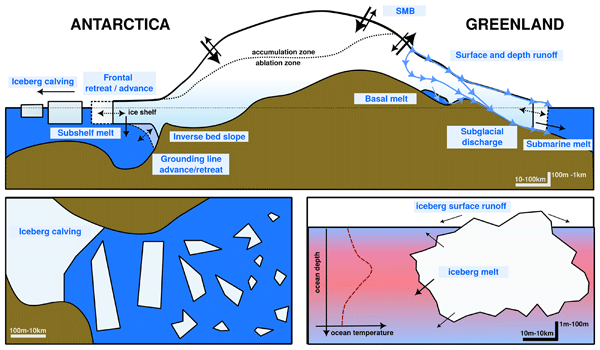
Gavin A. Schmidt, Kenneth D. Mankoff, Jonathan L. Bamber, Clara Burgard, Dustin Carroll, David M. Chandler, Violaine Coulon, Benjamin J. Davison, Matthew H. England, Paul R. Holland, Nicolas C. Jourdain, Qian Li, Juliana M. Marson, Pierre Mathiot, Clive R. McMahon, Twila A. Moon, Ruth Mottram, Sophie Nowicki, Anna Olivé Abelló, Andrew G. Pauling, Thomas Rackow, and Damien Ringeisen
Geosci. Model Dev., 18, 8333–8361, https://doi.org/10.5194/gmd-18-8333-2025, https://doi.org/10.5194/gmd-18-8333-2025, 2025
Short summary
Short summary
The impact of increasing mass loss from the Greenland and Antarctic ice sheets has not so far been included in historical climate model simulations. This paper describes the protocols and data available for modeling groups to add this anomalous freshwater to their ocean modules to better represent the impacts of these fluxes on ocean circulation, sea ice, salinity and sea level.
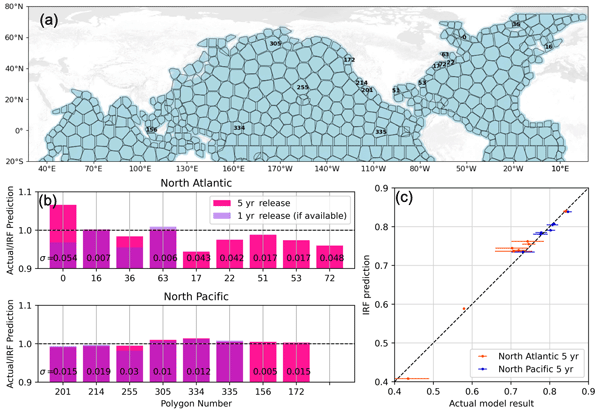
Elizabeth Yankovsky, Mengyang Zhou, Michael Tyka, Scott Bachman, David T. Ho, Alicia Karspeck, and Matthew C. Long
Biogeosciences, 22, 5723–5739, https://doi.org/10.5194/bg-22-5723-2025, https://doi.org/10.5194/bg-22-5723-2025, 2025
Short summary
Short summary
Ocean alkalinity enhancement (OAE) is a promising strategy for ocean-based carbon dioxide removal, as it attempts to accelerate a natural process operating on Earth and may have climatically significant scalability. However, our best strategy for assessing OAE effects involves running computationally expensive climate models. We develop a powerful statistical technique that is able to encapsulate the climatic response to OAE interventions, thus simplifying the OAE carbon accounting problem.
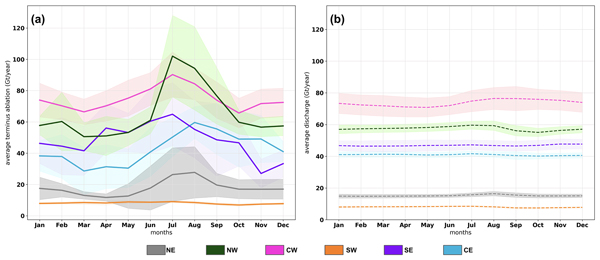
Aman KC, Ellyn M. Enderlin, Dominik Fahrner, Twila Moon, and Dustin Carroll
The Cryosphere, 19, 3089–3106, https://doi.org/10.5194/tc-19-3089-2025, https://doi.org/10.5194/tc-19-3089-2025, 2025
Short summary
Short summary
The sum of ice flowing towards a glacier’s terminus and changes in the position of the terminus over time collectively makes up terminus ablation. We found that terminus ablation has more seasonal variability than previously concluded from flux-based estimates of ice discharge. The findings are of importance in understanding the timing and location of the freshwater input to the fjords and surrounding ocean basins affecting local and regional ecosystems and ocean properties.
Michael D. Tyka
Biogeosciences, 22, 341–353, https://doi.org/10.5194/bg-22-341-2025, https://doi.org/10.5194/bg-22-341-2025, 2025
Short summary
Short summary
Marine CO2 removal (mCDR) is a promising technology for removing legacy emissions from the atmosphere. Its indirect nature makes it difficult to assess experimentally; instead one relies heavily on simulation. Many past papers have treated the atmosphere as non-responsive to the intervention studied. We show that even under these simplified assumptions, the increase in ocean CO2 inventory is equal to the equivalent quantity of direct CO2 removals occurring over time, in a realistic atmosphere.
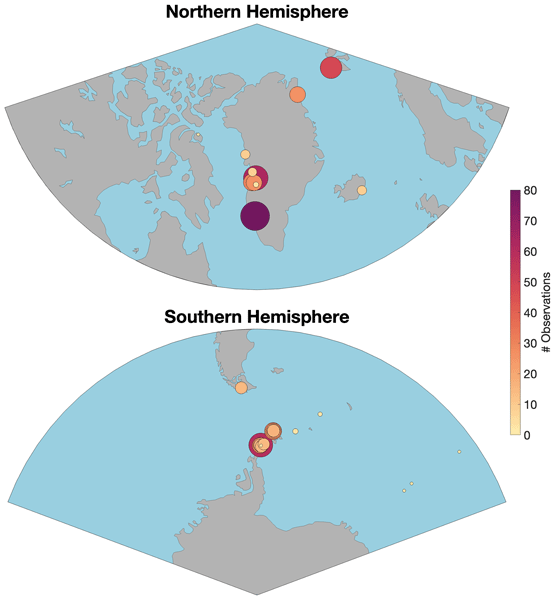
Jana Krause, Dustin Carroll, Juan Höfer, Jeremy Donaire, Eric P. Achterberg, Emilio Alarcón, Te Liu, Lorenz Meire, Kechen Zhu, and Mark J. Hopwood
The Cryosphere, 18, 5735–5752, https://doi.org/10.5194/tc-18-5735-2024, https://doi.org/10.5194/tc-18-5735-2024, 2024
Short summary
Short summary
Here we analysed calved ice samples from both the Arctic and Antarctic to assess the variability in the composition of iceberg meltwater. Our results suggest that low concentrations of nitrate and phosphate in ice are primarily from the ice matrix, whereas sediment-rich layers impart a low concentration of silica and modest concentrations of iron and manganese. At a global scale, there are very limited differences in the nutrient composition of ice.
Jing He and Michael D. Tyka
Biogeosciences, 20, 27–43, https://doi.org/10.5194/bg-20-27-2023, https://doi.org/10.5194/bg-20-27-2023, 2023
Short summary
Short summary
Recently, ocean alkalinity enhancement (OAE) has gained interest as a scalable way to address the urgent need for negative CO2 emissions. In this paper we examine the capacity of different coastlines to tolerate alkalinity enhancement and the time scale of CO2 uptake following the addition of a given quantity of alkalinity. The results suggest that OAE has significant potential and identify specific favorable and unfavorable coastlines for its deployment.
Cited articles
Anderson, H., Mongin, M., and Matear, R.: Ocean alkalinity enhancement in a coastal channel: simulating localised dispersion, carbon sequestration and ecosystem impact, Environmental Research Communications, 7, 041012, https://doi.org/10.1088/2515-7620/adce5a, 2025. a
Andrews, A. E., Kofler, J. D., Trudeau, M. E., Williams, J. C., Neff, D. H., Masarie, K. A., Chao, D. Y., Kitzis, D. R., Novelli, P. C., Zhao, C. L., Dlugokencky, E. J., Lang, P. M., Crotwell, M. J., Fischer, M. L., Parker, M. J., Lee, J. T., Baumann, D. D., Desai, A. R., Stanier, C. O., De Wekker, S. F. J., Wolfe, D. E., Munger, J. W., and Tans, P. P.: CO2, CO, and CH4 measurements from tall towers in the NOAA Earth System Research Laboratory's Global Greenhouse Gas Reference Network: instrumentation, uncertainty analysis, and recommendations for future high-accuracy greenhouse gas monitoring efforts, Atmos. Meas. Tech., 7, 647–687, https://doi.org/10.5194/amt-7-647-2014, 2014. a, b
Bach, L. T.: The additionality problem of ocean alkalinity enhancement, Biogeosciences, 21, 261–277, https://doi.org/10.5194/bg-21-261-2024, 2024. a
Bach, L. T., Gill, S. J., Rickaby, R. E. M., Gore, S., and Renforth, P.: CO2 Removal With Enhanced Weathering and Ocean Alkalinity Enhancement: Potential Risks and Co-benefits for Marine Pelagic Ecosystems, Frontiers in Climate, 1, 7, https://doi.org/10.3389/fclim.2019.00007, 2019. a
Bach, L. T., Ho, D. T., Boyd, P. W., and Tyka, M. D.: Toward a consensus framework to evaluate air-sea CO2 equilibration for marine CO2 removal, Limnology and Oceanography Letters, 8, 685–691, https://doi.org/10.1002/lol2.10330, 2023. a
Brix, H., Menemenlis, D., Hill, C., Dutkiewicz, S., Jahn, O., Wang, D., Bowman, K., and Zhang, H.: Using Green's Functions to initialize and adjust a global, eddying ocean biogeochemistry general circulation model, Ocean Model., 95, 1–14, https://doi.org/10.1016/j.ocemod.2015.07.008, 2015. a
Broecker, W. and Peng, T.: Tracers in the Sea, Eldigio Press/Columbia University, New York, ISBN 978-9993186724, 1982. a
Carroll, D., Menemenlis, D., Adkins, J. F., Bowman, K. W., Brix, H., Dutkiewicz, S., Fenty, I., Gierach, M. M., Hill, C., Jahn, O., Landschützer, P., Lauderdale, J. M., Liu, J., Manizza, M., Naviaux, J. D., Rödenbeck, C., Schimel, D. S., Van der Stocken, T., and Zhang, H.: The ECCO-Darwin Data-Assimilative Global Ocean Biogeochemistry Model: Estimates of Seasonal to Multidecadal Surface Ocean pCO2 and Air-Sea CO2 Flux, J. Adv. Model. Earth Sy., 12, e2019MS001888, https://doi.org/10.1029/2019MS001888, 2020. a, b, c
Carroll, D., Menemenlis, D., Dutkiewicz, S., Lauderdale, J. M., Adkins, J. F., Bowman, K. W., Brix, H., Fenty, I., Gierach, M. M., Hill, C., Jahn, O., Landschützer, P., Manizza, M., Mazloff, M. R., Miller, C. E., Schimel, D. S., Verdy, A., Whitt, D. B., and Zhang, H.: Attribution of Space-Time Variability in Global-Ocean Dissolved Inorganic Carbon, Global Biogeochem. Cy., 36, e2021GB007162, https://doi.org/10.1029/2021GB007162, 2022. a, b
Carroll, D., Menemenlis, D., Zhang, H., Mazloff, M., McKinley, G., Fay, A., Dutkiewicz, S., Lauderdale, J., and Fenty, I.: Evaluation of the ECCO-Darwin Ocean Biogeochemistry State Estimate vs. In-situ Observations, Zenodo [data set], https://doi.org/10.5281/zenodo.10627664, 2024. a, b, c
Danabasoglu, G., Yeager, S. G., Bailey, D., Behrens, E., Bentsen, M., Bi, D., Biastoch, A., Böning, C., Bozec, A., Canuto, V. M., Cassou, C., Chassignet, E., Coward, A. C., Danilov, S., Diansky, N., Drange, H., Farneti, R., Fernandez, E., Fogli, P. G., Forget, G., Fujii, Y., Griffies, S. M., Gusev, A., Heimbach, P., Howard, A., Jung, T., Kelley, M., Large, W. G., Leboissetier, A., Lu, J., Madec, G., Marsland, S. J., Masina, S., Navarra, A., Nurser, A. J. G., Pirani, A., Salas y Mélia, D., Samuels, B. L., Scheinert, M., Sidorenko, D., Treguier, A.-M., Tsujino, H., Uotila, P., Valcke, S., Voldoire, A., and Wangi, Q.: North Atlantic simulations in Coordinated Ocean-ice Reference Experiments phase II (CORE-II). Part I: Mean states, Ocean Modeling, 73, 76–107, https://doi.org/10.1016/j.ocemod.2013.10.005, 2014. a
Danabasoglu, G., Lamarque, J.-F., Bacmeister, J., Bailey, D. A., DuVivier, A. K., Edwards, J., Emmons, L. K., Fasullo, J., Garcia, R., Gettelman, A., Hannay, C., Holland, M. M., Large, W. G., Lauritzen, P. H., Lawrence, D. M., Lenaerts, J. T. M., Lindsay, K., Lipscomb, W. H., Mills, M. J., Neale, R., Oleson, K. W., Otto-Bliesner, B., Phillips, A. S., Sacks, W., Tilmes, S., van Kampenhout, L., Vertenstein, M., Bertini, A., Dennis, J., Deser, C., Fischer, C., Fox-Kemper, B., Kay, J. E., Kinnison, D., Kushner, P. J., Larson, V. E., Long, M. C., Mickelson, S., Moore, J. K., Nienhouse, E., Polvani, L., Rasch, P. J., and Strand, W. G.: The Community Earth System Model Version 2 (CESM2), J. Adv. Model. Earth Sy., 12, e2019MS001916, https://doi.org/10.1029/2019MS001916, 2020. a
de Boyer Montégut, C., Madec, G., Fischer, A. S., Lazar, A., and Iudicone, D.: Mixed layer depth over the global ocean: An examination of profile data and a profile-based climatology, J. Geophys. Res.-Oceans, 109, https://doi.org/10.1029/2004JC002378, 2004. a, b
Dietze, H. and Oschlies, A.: On the correlation between air-sea heat flux and abiotically induced oxygen gas exchange in a circulation model of the North Atlantic, J. Geophys. Res.-Oceans, 110, https://doi.org/10.1029/2004JC002453, 2005. a
Dutkiewicz, S., Hickman, A. E., Jahn, O., Gregg, W. W., Mouw, C. B., and Follows, M. J.: Capturing optically important constituents and properties in a marine biogeochemical and ecosystem model, Biogeosciences, 12, 4447–4481, https://doi.org/10.5194/bg-12-4447-2015, 2015. a
Eyring, V., Bony, S., Meehl, G. A., Senior, C. A., Stevens, B., Stouffer, R. J., and Taylor, K. E.: Overview of the Coupled Model Intercomparison Project Phase 6 (CMIP6) experimental design and organization, Geosci. Model Dev., 9, 1937–1958, https://doi.org/10.5194/gmd-9-1937-2016, 2016. a
Fekete, B. M., Vörösmarty, C. J., and Grabs, W.: High-resolution fields of global runoff combining observed river discharge and simulated water balances, Global Biogeochem. Cy., 16, 15-1–15-10, https://doi.org/10.1029/1999GB001254, 2002. a
Fennel, K.: The Verification Challenge of Marine Carbon Dioxide Removal, Annu. Rev. Mar. Sci., 18, 141–164, https://doi.org/10.1146/annurev-marine-032123-025717, 2025. a
Fennel, K., Long, M. C., Algar, C., Carter, B., Keller, D., Laurent, A., Mattern, J. P., Musgrave, R., Oschlies, A., Ostiguy, J., Palter, J. B., and Whitt, D. B.: Modelling considerations for research on ocean alkalinity enhancement (OAE), in: Guide to Best Practices in Ocean Alkalinity Enhancement Research, edited by: Oschlies, A., Stevenson, A., Bach, L. T., Fennel, K., Rickaby, R. E. M., Satterfield, T., Webb, R., and Gattuso, J.-P., Copernicus Publications, State Planet, 2-oae2023, 9, https://doi.org/10.5194/sp-2-oae2023-9-2023, 2023. a
Forget, G., Campin, J.-M., Heimbach, P., Hill, C. N., Ponte, R. M., and Wunsch, C.: ECCO version 4: an integrated framework for non-linear inverse modeling and global ocean state estimation, Geosci. Model Dev., 8, 3071–3104, https://doi.org/10.5194/gmd-8-3071-2015, 2015. a, b
Gaspar, P., Grégoris, Y., and Lefevre, J.-M.: A simple eddy kinetic energy model for simulations of the oceanic vertical mixing: Tests at station Papa and long-term upper ocean study site, J. Geophys. Res.-Oceans, 95, 16179–16193, 1990. a
Gregor, L. and Gruber, N.: OceanSODA-ETHZ: a global gridded data set of the surface ocean carbonate system for seasonal to decadal studies of ocean acidification, Earth Syst. Sci. Data, 13, 777–808, https://doi.org/10.5194/essd-13-777-2021, 2021. a, b, c, d
Griffies, S. M., Biastoch, A., Böning, C., Bryan, F., Danabasoglu, G., Chassignet, E. P., England, M. H., Gerdes, R., Haak, H., Hallberg, R. W., Hazeleger, W., Jungclaus, J., Large, W. G., Madec, G., Pirani, A., Samuels, B. L., Scheinert, M., Sen Gupta, A., Severijns, C. A., Simmons, H. L., Treguier, A. M., Winton, M., and Yeager, S.: Coordinated ocean-ice reference experiments (COREs), Ocean Model., 26, 1–46, https://experts.arizona.edu/en/publications/coordinated-ocean-ice-reference-experiments-cores/ (last access: 27 August 2025), 2009. a
He, J. and Tyka, M. D.: Limits and CO2 equilibration of near-coast alkalinity enhancement, Biogeosciences, 20, 27–43, https://doi.org/10.5194/bg-20-27-2023, 2023. a, b, c
Ho, D. T., Law, C. S., Smith, M. J., Schlosser, P., Harvey, M., and Hill, P.: Measurements of air-sea gas exchange at high wind speeds in the Southern Ocean: Implications for global parameterizations, Geophys. Res. Lett., 33, https://doi.org/10.1029/2006GL026817, 2006. a
Holte, J., Talley, L. D., Gilson, J., and Roemmich, D.: An Argo mixed layer climatology and database, Geophys. Res. Lett., 44, 5618–5626, https://doi.org/10.1002/2017GL073426, 2017. a
Humphreys, M. P., Daniels, C. J., Wolf-Gladrow, D. A., Tyrrell, T., and Achterberg, E. P.: On the influence of marine biogeochemical processes over CO2 exchange between the atmosphere and ocean, Mar. Chem., 199, 1–11, https://doi.org/10.1016/j.marchem.2017.12.006, 2018. a
Humphreys, M. P., Gregor, L., Pierrot, D., van Heuven, S. M. A. C., Lewis, E. R., and Wallace, D. W. R.: PyCO2SYS: marine carbonate system calculations in Python, Zenodo [data set], https://doi.org/10.5281/ZENODO.3744275, 2020. a
IPCC: Climate Change 2021: The Physical Science Basis, Contribution of Working Group I to the Sixth Assessment Report of the Intergovernmental Panel on Climate Change, edited by: Masson-Delmotte, V., Zhai, P., Pirani, A., Connors, S. L., Péan, C., Berger, S., Caud, N., Chen, Y., Goldfarb, L., Gomis, M. I., Huang, M., Leitzell, K., Lonnoy, E., Matthews, J. B. R., Maycock, T. K., Waterfield, T., Yelekçi, O., Yu, R., and Zhou, B., Cambridge University Press, Cambridge, United Kingdom and New York, NY, USA, 2391 pp., https://doi.org/10.1017/9781009157896, 2021. a
Jones, D. C., Ito, T., Takano, Y., and Hsu, W.-C.: Spatial and seasonal variability of the air-sea equilibration timescale of carbon dioxide, Global Biogeochem. Cy., 28, 1163–1178, https://doi.org/10.1002/2014GB004813, 2014. a, b
Keller, D. P., Lenton, A., Scott, V., Vaughan, N. E., Bauer, N., Ji, D., Jones, C. D., Kravitz, B., Muri, H., and Zickfeld, K.: The Carbon Dioxide Removal Model Intercomparison Project (CDRMIP): rationale and experimental protocol for CMIP6, Geosci. Model Dev., 11, 1133–1160, https://doi.org/10.5194/gmd-11-1133-2018, 2018. a
Kobayashi, S., Ota, Y., Harada, Y., Ebita, A., Moriya, M., Onoda, H., Onogi, K., Kamahori, H., Kobayashi, C., Endo, H., Miyoka, K., and Takahashi, K.: The JRA-55 Reanalysis: General Specifications and Basic Characteristics, J. Meteorol. Soc. Jpn. Ser. II, 93, 5–48, https://doi.org/10.2151/jmsj.2015-001, 2015. a
Large, W. G., McWilliams, J. C., and Doney, S. C.: Oceanic vertical mixing: A review and a model with a nonlocal boundary layer parameterization, Rev. Geophys., 32, 363–403, https://doi.org/10.1029/94RG01872, 1994. a
Long, M. C., Moore, J. K., Lindsay, K., Levy, M., Doney, S. C., Luo, J. Y., Krumhardt, K. M., Letscher, R. T., Grover, M., and Sylvester, Z. T.: Simulations With the Marine Biogeochemistry Library (MARBL), J. Adv. Model. Earth Sy., 13, e2021MS002647, https://doi.org/10.1029/2021MS002647, e2021MS002647 2021MS002647, 2021. a, b
Mace, M., Fyson, C. L., Schaeffer, M., and Hare, W. L.: Large-Scale Carbon Dioxide Removal to Meet the 1.5 °C Limit: Key Governance Gaps, Challenges and Priority Responses, Glob. Policy, 12, 67–81, https://doi.org/10.1111/1758-5899.12921, 2021. a
Marshall, J., Adcroft, A., Hill, C., Perelman, L., and Heisey, C.: A finite-volume, incompressible Navier Stokes model for studies of the ocean on parallel computers, J. Geophys. Res.-Oceans, 102, 5753–5766, 1997. a
Metz, B. and Intergovernmental Panel on Climate Change, eds.: IPCC special report on carbon dioxide capture and storage, Cambridge University Press, for the Intergovernmental Panel on Climate Change, Cambridge, ISBN 9780521866439 9780521685511, 2005. a
Meyer, M., Pätsch, J., Geyer, B., and Thomas, H.: Revisiting the Estimate of the North Sea Air-Sea Flux of CO2 in 2001/2002: The Dominant Role of Different Wind Data Products, J. Geophys. Res.-Biogeo., 123, 1511–1525, https://doi.org/10.1029/2017JG004281, 2018. a
Middelburg, J. J., Soetaert, K., and Hagens, M.: Ocean Alkalinity, Buffering and Biogeochemical Processes, Rev. Geophys., 58, https://doi.org/10.1029/2019rg000681, 2020. a
Oschlies, A.: Impact of atmospheric and terrestrial CO2 feedbacks on fertilization-induced marine carbon uptake, Biogeosciences, 6, 1603–1613, https://doi.org/10.5194/bg-6-1603-2009, 2009. a
Oschlies, A., Stevenson, A., Bach, L., Fennel, K., Rickaby, R. E. M., Satterfield, T., Webb, R., and Gattuso, J.: Guide to Best Practices in Ocean Alkalinity Enhancement Research, State Planet, 2-oae2023, 3, https://doi.org/10.5194/sp-2-oae2023-3-2023, 2023. a, b
Press, N. A.: A Research Strategy for Ocean-based Carbon Dioxide Removal and Sequestration, National Academies Press, https://doi.org/10.17226/26278, 2022. a
Renforth, P.: The potential of enhanced weathering in the UK, International Journal of Greenhouse Gas Control, 10, 229–243, https://doi.org/10.1016/j.ijggc.2012.06.011, 2012. a, b
Renforth, P. and Henderson, G.: Assessing ocean alkalinity for carbon sequestration, Rev. Geophys., 55, 636–674, https://doi.org/10.1002/2016rg000533, 2017. a, b
Rickels, W., Reith, F., Keller, D., Oschlies, A., and Quaas, M. F.: Integrated Assessment of Carbon Dioxide Removal, Earth's Future, 6, 565–582, https://doi.org/10.1002/2017EF000724, 2018. a
Rogelj, J., Popp, A., Calvin, K. V., Luderer, G., Emmerling, J., Gernaat, D., Fujimori, S., Strefler, J., Hasegawa, T., Marangoni, G., Krey, V., Kriegler, E., Riahi, K., van Vuuren, D. P., Doelman, J., Drouet, L., Edmonds, J., Fricko, O., Harmsen, M., Havlík, P., Humpenöder, F., Stehfest, E., and Tavoni, M.: Scenarios towards limiting global mean temperature increase below 1.5 °C, Nat. Clim. Change, 8, 325–332, https://doi.org/10.1038/s41558-018-0091-3, 2018. a
Subhas, A. V., Rheuban, J. E., Wang, Z. A., McCorkle, D. C., Michel, A. P. M., Marx, L., Dean, C. L., Morkeski, K., Hayden, M. G., Burkitt-Gray, M., Elder, F., Guo, Y., Kim, H. H., and Chen, K.: A tracer study for the development of in-water monitoring, reporting, and verification (MRV) of ship-based ocean alkalinity enhancement, Biogeosciences, 22, 5511–5534, https://doi.org/10.5194/bg-22-5511-2025, 2025. a
Suselj, K., Carroll, D., Whitt, D., Samuels, B., Menemenlis, D., Zhang, H., Beatty, N., and Savage, A.: Quantifying marine carbon dioxide removal via alkalinity enhancement across circulation regimes using ECCO-Darwin and 1D models, J. Adv. Model. Earth Sy., 17, e2024MS004847, https://doi.org/10.1029/2024MS004847, 2025. a, b, c, d
Tsujino, H., Urakawa, S., Nakano, H., Small, R. J., Kim, W. M., Yeager, S. G., Danabasoglu, G., Suzuki, T., Bamber, J. L., Bentsen, M., Böning, C. W., Bozec, A., Chassignet, E. P., Curchitser, E., Boeira Dias, F., Durack, P. J., Griffies, S. M., Harada, Y., Ilicak, M., Josey, S. A., Kobayashi, C., Kobayashi, S., Komuro, Y., Large, W. G., Le Sommer, J., Marsland, S. J., Masina, S., Scheinert, M., Tomita, H., Valdivieso, M., and Yamazaki, D.: JRA-55 based surface dataset for driving ocean–sea-ice models (JRA55-do), Ocean Model., 130, 79–139, https://doi.org/10.1016/j.ocemod.2018.07.002, 2018. a
Tyka, M. D.: Efficiency metrics for ocean alkalinity enhancements under responsive and prescribed atmospheric pCO2 conditions, Biogeosciences, 22, 341–353, https://doi.org/10.5194/bg-22-341-2025, 2025. a
Tyka, M., Zhou, M., Yankovsky, E., and Dustin, C.: Substantial inter-model variation in OAE efficiency between the CESM2/MARBL and ECCO-Darwin ocean biogeochemistry models, Zenodo [code and data set], https://doi.org/10.5281/zenodo.20436524, 2026. a
Wang, H., Pilcher, D. J., Kearney, K. A., Cross, J. N., Shugart, O. M., Eisaman, M. D., and Carter, B. R.: Simulated Impact of Ocean Alkalinity Enhancement on Atmospheric CO2 Removal in the Bering Sea, Earth's Future, 11, e2022EF002816, https://doi.org/10.1029/2022EF002816, 2023. a
Wanninkhof, R.: Relationship between wind speed and gas exchange over the ocean, J. Geophys. Res.-Oceans, 97, 7373–7382, https://doi.org/10.1029/92JC00188, 1992. a, b
Wanninkhof, R.: Relationship between wind speed and gas exchange over the ocean revisited, Limnol. Oceanogr.-Meth., 12, https://doi.org/10.4319/lom.2014.12.351, 2014. a, b, c, d
Wanninkhof, R., Park, G.-H., Takahashi, T., Feely, R. A., Bullister, J. L., and Doney, S. C.: Changes in deep-water CO2 concentrations over the last several decades determined from discrete pCO2measurements, Deep-Sea Res. Pt. I, 74, 48–63, https://doi.org/10.1016/j.dsr.2012.12.005, 2013. a
Ward, N. D., Megonigal, J. P., Bond-Lamberty, B., Bailey, V. L., Butman, D., Canuel, E. A., Diefenderfer, H., Ganju, N. K., Goñi, M. A., Graham, E. B., Hopkinson, C. S., Khangaonkar, T., Langley, J. A., McDowell, N. G., Myers-Pigg, A. N., Neumann, R. B., Osburn, C. L., Price, R. M., Rowland, J., Sengupta, A., Simard, M., Thornton, P. E., Tzortziou, M., Vargas, R., Weisenhorn, P. B., and Windham-Myers, L.: Representing the function and sensitivity of coastal interfaces in Earth system models, Nat. Commun., 11, 2458, https://doi.org/10.1038/s41467-020-16236-2, 2020. a
Yeager, S. G., Rosenbloom, N., Glanville, A. A., Wu, X., Simpson, I., Li, H., Molina, M. J., Krumhardt, K., Mogen, S., Lindsay, K., Lombardozzi, D., Wieder, W., Kim, W. M., Richter, J. H., Long, M., Danabasoglu, G., Bailey, D., Holland, M., Lovenduski, N., Strand, W. G., and King, T.: The Seasonal-to-Multiyear Large Ensemble (SMYLE) prediction system using the Community Earth System Model version 2, Geosci. Model Dev., 15, 6451–6493, https://doi.org/10.5194/gmd-15-6451-2022, 2022. a, b, c
Zhou, M., Tyka, M. D., Ho, D. T., Yankovsky, E., Bachman, S., Nicholas, T., Karspeck, A. R., and Long, M. C.: Mapping the global variation in the efficiency of ocean alkalinity enhancement for carbon dioxide removal, Nat. Clim. Change, 15, 59–65, https://doi.org/10.1038/s41558-024-02179-9, 2025. a, b, c, d, e, f, g, h, i, j, k, l, m, n, o, p, q, r, s, t, u, v
Zhou, M., Timmermans, M.-L., Yankovsky, E., Tyka, M. D., and Long, M. C.: Global intercomparison of ocean-based geochemical CO2 removal efficiencies, in review, 2026. a
Short summary
Quantification of the kinetics of the induced ocean CO2 uptake following application of marine carbon dioxide removal technologies (mCDR) is crucial for such technologies to gain scientific and social acceptance. Here, we compare two circulation models commonly used for this purpose and find substantial differences in their predictions. We analyze which physical aspects of the models contribute the most to the inter-model discrepancies, and thus require future research.
Quantification of the kinetics of the induced ocean CO2 uptake following application of marine...


Altmetrics
Final-revised paper
Preprint