
Articles | Volume 23, issue 14
https://doi.org/10.5194/bg-23-5281-2026
© Author(s) 2026. This work is distributed under
the Creative Commons Attribution 4.0 License.
the Creative Commons Attribution 4.0 License.
https://doi.org/10.5194/bg-23-5281-2026
© Author(s) 2026. This work is distributed under
the Creative Commons Attribution 4.0 License.
the Creative Commons Attribution 4.0 License.
Research article
| 
31 Jul 2026
Research article |
| 31 Jul 2026
| 31 Jul 2026
A high-resolution perspective on climate drivers of lake stratification and phototrophic community dynamics in Late Glacial Central Europe

Institute of Geography & Oeschger Centre for Climate Change Research, University of Bern, Bern, Switzerland
Institute of Geology and Paleontology, Faculty of Science, Charles University, Albertov 6, Prague, 12843, Czechia
María Luján García
Institute of Geography, University of Bremen, Bremen, Germany
Stella Birlo
Institute of Geography, University of Bremen, Bremen, Germany
Andrea Lami
Water Research Institute, IRSA, CNR, Verbania, Italy
Martina Stebich
Senckenberg – Leibniz Institution for Biodiversity and Earth System Research, Senckenberg Research Institute and Natural History Museum Frankfurt, Research Station of Quaternary Palaeontology, Am Jakobskirchhof 4, 99423 Weimar, Germany
Stan J. Schouten
Institute of Geography & Oeschger Centre for Climate Change Research, University of Bern, Bern, Switzerland
Noé R. M. M. Schmidhauser
Institute of Geography & Oeschger Centre for Climate Change Research, University of Bern, Bern, Switzerland
Bernd Zolitschka
Institute of Geography, University of Bremen, Bremen, Germany
Hendrik Vogel
Institute of Geological Sciences & Oeschger Centre for Climate Change Research, University of Bern, Bern, Switzerland
Martin Grosjean
Institute of Geography & Oeschger Centre for Climate Change Research, University of Bern, Bern, Switzerland
Related authors
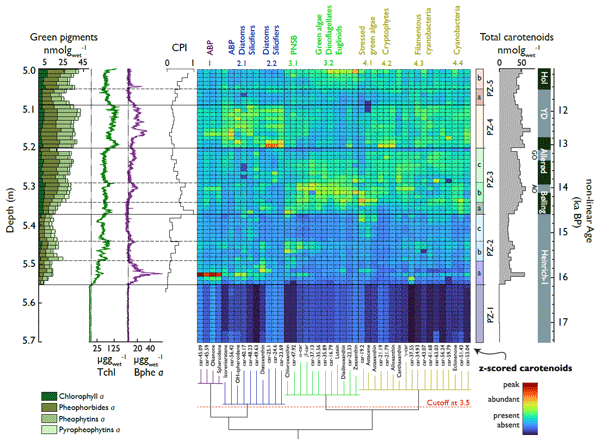
Stan J. Schouten, Noé R. M. M. Schmidhauser, Martin Grosjean, Andrea Lami, Petra Boltshauser-Kaltenrieder, Jacqueline F. N. van Leeuwen, Hendrik Vogel, and Petra Zahajská
Biogeosciences, 22, 3821–3842, https://doi.org/10.5194/bg-22-3821-2025, https://doi.org/10.5194/bg-22-3821-2025, 2025
Short summary
Short summary
Climate warming speeds up lake eutrophication, creating “dead zones” where aquatic life suffocates due to oxygen depletion. The sediments of Amsoldingersee, a Swiss lake, revealed how climate shifts impacted the lake around 10 000–18 000 years ago. (1) Algal composition differed between both cold and warm periods. (2) Nutrient additions from dust controlled algal growth more than temperature. (3) Cold periods with ice cover led to oxygen depletion. (4) Algal communities recovered after anoxic phases.
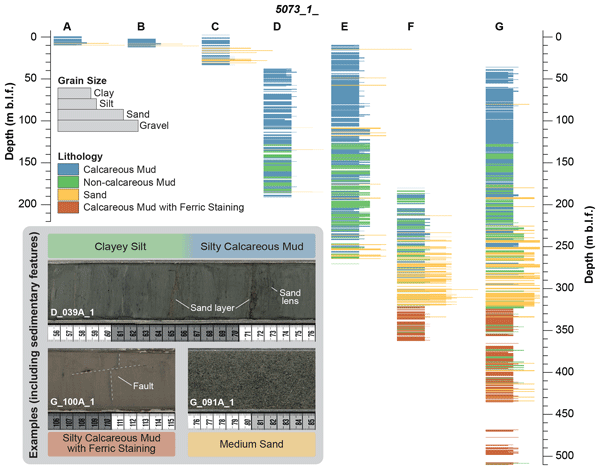
Marie-Luise Adolph, Junbo Wang, Liping Zhu, Leon J. Clarke, Andrew C. G. Henderson, Hendrik Vogel, Gerhard Daut, Peter Frenzel, Jianting Ju, Qiangqiang Kou, Dierk Michaelis, Olga Schmitz, Anja Schwarz, Volkhard Spiess, Arne Ulfers, Cidan Zhaxi, Daniel Ariztegui, Natasha Barbolini, Thorsten Bauersachs, Erwin Braun, Giulia Ceriotti, Brian Grivna, Marlene Hoehle, Rolf Kipfer, Wilhelmine Klamt, Cindy Kunkel, Aliisa Laakkonen, Minghui Li, Qingfeng Ma, Paul Moser Röggla, Kaja Müller, Anders Noren, Ryan O'Grady, Santiago Otero, Maïlys Picard, Anna Pint, Camille Thomas, Jerome Van der Woerd, Mathias Vinnepand, Claudia Wrozyna, Christian Zeeden, Xinghuan Zhu, and Torsten Haberzettl
Sci. Dril., 35, 99–117, https://doi.org/10.5194/sd-35-99-2026, https://doi.org/10.5194/sd-35-99-2026, 2026
Short summary
Short summary
We drilled deep into sediments beneath a large lake on the Tibetan Plateau, Nam Co, to learn how climate and environments have changed over multiple ice age cycles. The recovered sediments show repeated shifts between major changes in lake conditions, water chemistry, and ecosystems. These findings help clarify how wind systems responded to natural climate cycles and improve understanding of how high mountain regions may react to future climate change and environmental stress.
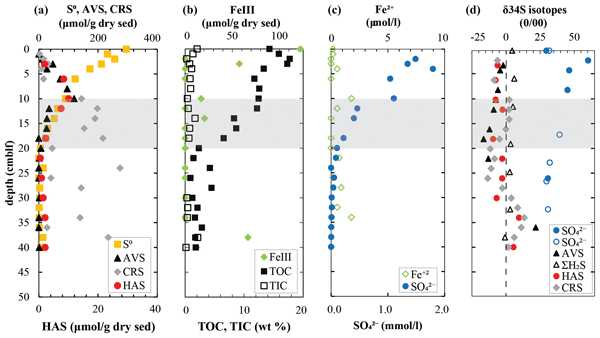
Jasmine S. Berg, Paula C. Rodriguez, Cara Magnabosco, Longhui Deng, Stefano M. Bernasconi, Hendrik Vogel, Marina Morlock, and Mark A. Lever
Biogeosciences, 22, 5483–5496, https://doi.org/10.5194/bg-22-5483-2025, https://doi.org/10.5194/bg-22-5483-2025, 2025
Short summary
Short summary
Our research explores microbial sulfur cycling in the 13 500-year-old sediment record of a sulfate-rich alpine lake. We present evidence for active sulfur cycling across sediment layers, even in sulfate-depleted zones, driven by uncultivated microorganisms. In addition, rapid organic matter sulfurization could contribute to its preservation. These findings enhance our understanding of the role of sulfur in organic matter preservation and deep biosphere processes.
Stan J. Schouten, Noé R. M. M. Schmidhauser, Martin Grosjean, Andrea Lami, Petra Boltshauser-Kaltenrieder, Jacqueline F. N. van Leeuwen, Hendrik Vogel, and Petra Zahajská
Biogeosciences, 22, 3821–3842, https://doi.org/10.5194/bg-22-3821-2025, https://doi.org/10.5194/bg-22-3821-2025, 2025
Short summary
Short summary
Climate warming speeds up lake eutrophication, creating “dead zones” where aquatic life suffocates due to oxygen depletion. The sediments of Amsoldingersee, a Swiss lake, revealed how climate shifts impacted the lake around 10 000–18 000 years ago. (1) Algal composition differed between both cold and warm periods. (2) Nutrient additions from dust controlled algal growth more than temperature. (3) Cold periods with ice cover led to oxygen depletion. (4) Algal communities recovered after anoxic phases.
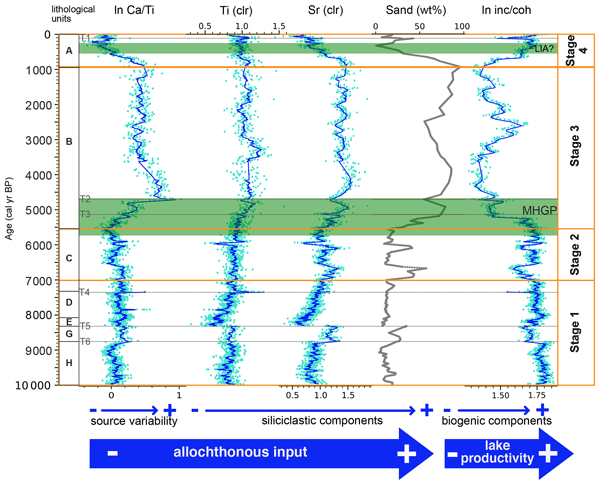
Carolina Franco, Antonio Maldonado, Christian Ohlendorf, A. Catalina Gebhardt, María Eugenia de Porras, Amalia Nuevo-Delaunay, César Méndez, and Bernd Zolitschka
Clim. Past, 20, 817–839, https://doi.org/10.5194/cp-20-817-2024, https://doi.org/10.5194/cp-20-817-2024, 2024
Short summary
Short summary
We present a continuous record of lake sediments spanning the Holocene from central west Patagonia. By examining various indicators like elemental composition and grain size data, we found that, around ~5500 years ago, the way sediments settled in the lake changed. On a regional scale, our results suggest that rainfall, influenced by changes in the Southern Hemisphere Westerly Winds, played a key role in shaping the environment of the region for the past ~10 000 years.
Jasmine S. Berg, Paula C. Rodriguez, Cara Magnabosco, Longhui Deng, Stefano M. Bernasconi, Hendrik Vogel, Marina Morlock, and Mark A. Lever
EGUsphere, https://doi.org/10.5194/egusphere-2023-2102, https://doi.org/10.5194/egusphere-2023-2102, 2023
Preprint archived
Short summary
Short summary
The addition of sulfur to organic matter is generally thought to protect it from microbial degradation. We analyzed buried sulfur compounds in a 10-m sediment core representing the entire ~13,500 year history of an alpine lake. Surprisingly, organic sulfur and pyrite formed very rapidly and were characterized by very light isotope signatures that suggest active microbial sulfur cycling in the deep subsurface.
Paul D. Zander, Stefanie B. Wirth, Adrian Gilli, Sandro Peduzzi, and Martin Grosjean
Biogeosciences, 20, 2221–2235, https://doi.org/10.5194/bg-20-2221-2023, https://doi.org/10.5194/bg-20-2221-2023, 2023
Short summary
Short summary
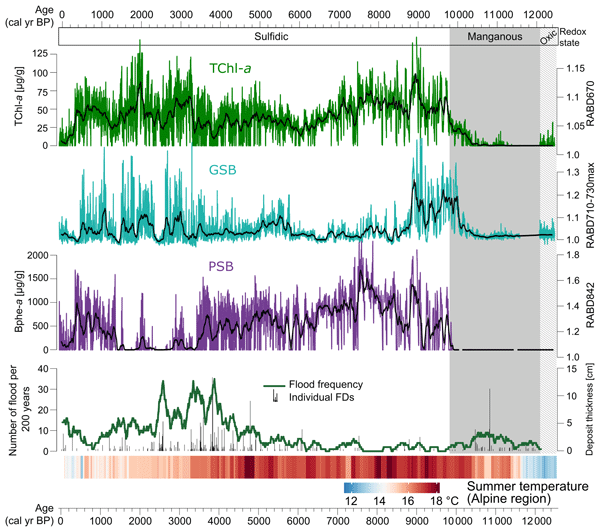
This study shows, for the first time, that hyperspectral imaging can detect bacteriochlorophyll pigments produced by green sulfur bacteria in sediment cores. We tested our method on cores from Lake Cadagno, Switzerland, and were able to reconstruct high-resolution variations in the abundance of green and purple sulfur bacteria over the past 12 700 years. Climate conditions, flood events, and land use had major impacts on the lake’s biogeochemical conditions over short and long timescales.
Stella Birlo, Wojciech Tylmann, and Bernd Zolitschka
Geochronology, 5, 65–90, https://doi.org/10.5194/gchron-5-65-2023, https://doi.org/10.5194/gchron-5-65-2023, 2023
Short summary
Short summary
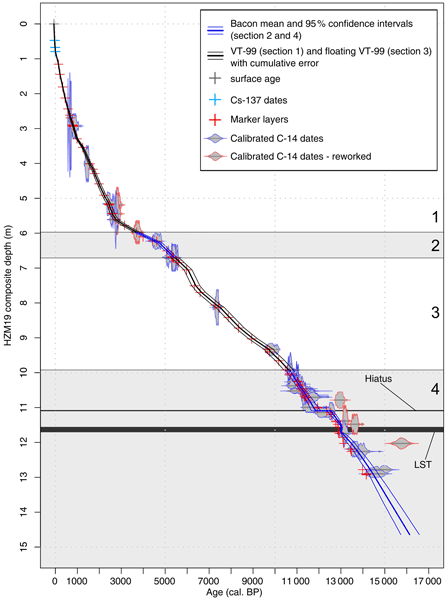
Sediment cores from the volcanic lake Holzmaar provide a very precise chronology based on tree-ring-like annual laminations or varves. We statistically combine this varve chronology with radiometric dating and tested three different methods to upgrade the age–depth model. However, only one of the three methods tested improved the dating accuracy considerably. With this work, an overview of different age integration methods is discussed and made available for increased future demands.
Lilian Reiss, Christian Stüwe, Thomas Einwögerer, Marc Händel, Andreas Maier, Stefan Meng, Kerstin Pasda, Ulrich Simon, Bernd Zolitschka, and Christoph Mayr
E&G Quaternary Sci. J., 71, 23–43, https://doi.org/10.5194/egqsj-71-23-2022, https://doi.org/10.5194/egqsj-71-23-2022, 2022
Short summary
Short summary
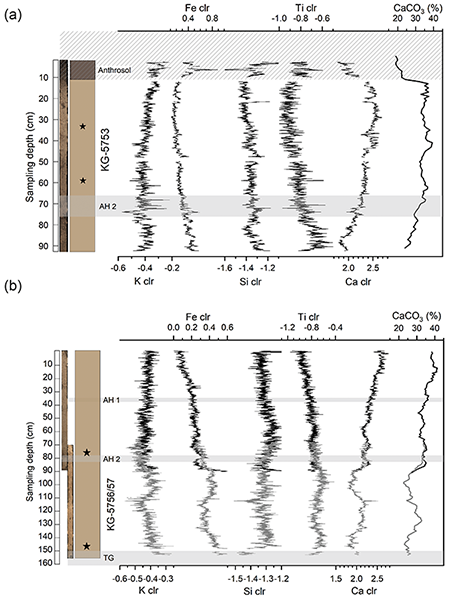
We aim at testing and evaluating geochemical proxies and material for radiocarbon dating for their reliability and consistency at the Palaeolithic site Kammern-Grubgraben (Lower Austria). While carbonate and organic carbon contents are interpreted in terms of palaeoclimate variability, pedogenic carbonates turned out to be of Holocene age. As a consequence, the proxy data assessed here are differentially suitable for environmental reconstructions.

Paul D. Zander, Maurycy Żarczyński, Wojciech Tylmann, Shauna-kay Rainford, and Martin Grosjean
Clim. Past, 17, 2055–2071, https://doi.org/10.5194/cp-17-2055-2021, https://doi.org/10.5194/cp-17-2055-2021, 2021
Short summary
Short summary
High-resolution geochemical imaging techniques provide new opportunities to investigate the biogeochemical composition of sediments at micrometer scale. Here, we compare biogeochemical data from biochemical varves with meteorological data to understand how seasonal meteorological variations are recorded in varve composition. We find that these scanning techniques help to clarify climate–proxy relationships in biochemical varves and show great potential for high-resolution climate reconstruction.
Cited articles
Aitchison, J.: The Statistical Analysis of Compositional Data, J. R. Stat. Soc. B, 44, 139–160, https://doi.org/10.1111/j.2517-6161.1982.tb01195.x, 1982. a
Albrecht, M., Ruther, A., and Sandmann, G.: Purification and biochemical characterization of a hydroxyneurosporene desaturase involved in the biosynthetic pathway of the carotenoid spheroidene in Rhodobacter sphaeroides, J. Bacteriol., 179, 7462–7467, https://doi.org/10.1128/jb.179.23.7462-7467.1997, 1997. a
Antoniades, D., Veillette, J., Martineau, M.-J., Belzile, C., Tomkins, J., Pienitz, R., Lamoureux, S., and Vincent, W. F.: Bacterial dominance of phototrophic communities in a High Arctic lake and its implications for paleoclimate analysis, Polar Sci., 3, 147–161, https://doi.org/10.1016/j.polar.2009.05.002, 2009. a
Bekaert, D., Blard, P.-H., Raoult, Y., Pik, R., Kipfer, R., Seltzer, A., Legrain, E., and Marty, B.: Last glacial maximum cooling of 9 °C in continental Europe from a 40 kyr-long noble gas paleothermometry record, Quaternary Sci. Rev., 310, 108123, https://doi.org/10.1016/j.quascirev.2023.108123, 2023. a
Bertrand, M.: Carotenoid biosynthesis in diatoms, Photosynth. Res., 106, 89–102, https://doi.org/10.1007/s11120-010-9589-x, 2010. a, b
Bertrand, S., Tjallingii, R., Kylander, M. E., Wilhelm, B., Roberts, S. J., Arnaud, F., Brown, E., and Bindler, R.: Inorganic geochemistry of lake sediments: A review of analytical techniques and guidelines for data interpretation, Earth-Sci. Rev., 249, 104639, https://doi.org/10.1016/j.earscirev.2023.104639, 2024. a
Bianchi, T. S. and Canuel, E. A.: Chemical Biomarkers in Aquatic Ecosystems, Princeton University Press, ISBN 9781400839100, https://doi.org/10.1515/9781400839100, 2011. a
Biebl, H. and Pfennig, N.: Growth yields of green sulfur bacteria in mixed cultures with sulfur and sulfate reducing bacteria, Arch. Microbiol., 117, 9–16, https://doi.org/10.1007/BF00689344, 1978. a
Birlo, S., Tylmann, W., and Zolitschka, B.: Bayesian age–depth modelling applied to varve and radiometric dating to optimize the transfer of an existing high-resolution chronology to a new composite sediment profile from Holzmaar (West Eifel Volcanic Field, Germany), Geochronology, 5, 65–90, https://doi.org/10.5194/gchron-5-65-2023, 2023. a, b, c, d, e, f, g, h
Blanchet, F. G., Legendre, P., and Borcard, D.: Forward Selection of Explanatory Variables, Ecology, 89, 2623–2632, https://doi.org/10.1890/07-0986.1, 2008. a
Boussiba, S.: Carotenogenesis in the green alga Haematococcus pluvialis: Cellular physiology and stress response, Physiol. Plantarum, 108, 111–117, https://doi.org/10.1034/j.1399-3054.2000.108002111.x, 2000. a
Bradbury, J. P. and Dieterich-Rurup, K. V.: Holocene diatom paleolimnology of Elk Lake, Minnesota, Geological Society of America, 215–238, https://doi.org/10.1130/spe276-p215, 1993. a
Brauer, A., Endres, C., and Negendank, J. F.: Lateglacial calendar year chronology based on annually laminated sediments from Lake Meerfelder Maar, Germany, Quatern. Int., 61, 17–25, https://doi.org/10.1016/S1040-6182(99)00014-2, 1999. a
Brauer, A., Litt, T., Negendank, J. F., and Zolitschka, B.: Lateglacial varve chronology and biostratigraphy of lakes Holzmaar and Meerfelder Maar, Germany, Boreas, 30, 83–88, https://doi.org/10.1111/j.1502-3885.2001.tb00991.x, 2001. a, b
Butz, C., Grosjean, M., Goslar, T., and Tylmann, W.: Hyperspectral imaging of sedimentary bacterial pigments: a 1700-year history of meromixis from varved Lake Jaczno, northeast Poland, J. Paleolimnol., 58, 57–72, https://doi.org/10.1007/s10933-017-9955-1, 2017. a
Carpenter, S. R.: Eutrophication of aquatic ecosystems: Bistability and soil phosphorus, P. Natl. Acad. Sci. USA, 102, 10002–10005, https://doi.org/10.1073/pnas.0503959102, 2005. a
Celewicz, S. and Gołdyn, B.: Phytoplankton communities in temporary ponds under different climate scenarios, Scientific Reports, 11, https://doi.org/10.1038/s41598-021-97516-9, 2021. a
Chen, N., Bianchi, T. S., McKee, B. A., and Bland, J. M.: Historical trends of hypoxia on the Louisiana shelf: application of pigments as biomarkers, Org. Geochem., 32, 543–561, https://doi.org/10.1016/S0146-6380(00)00194-7, 2001. a
Coolen, M. J. L. and Overmann, J.: Analysis of Subfossil Molecular Remains of Purple Sulfur Bacteria in a Lake Sediment, Appl. Environ. Microb., 64, 4513–4521, https://doi.org/10.1128/aem.64.11.4513-4521.1998, 1998. a, b
Davies, B. H., Holmes, E. A., Loeber, D. E., Toube, T. P., and Weedon, B. C. L.: Carotenoids and related compounds. Part XXIII. Occurrence of 7,8,11,12-tetrahydrolycopene, spheroidene, 3,4,11′,12′-tetrahydrospheroidene, and 11′,12′-dihydrospheroidene in Rhodospirillum rubrum, J. Chem. Soc. C, 0, 1266–1268, https://doi.org/10.1039/J39690001266, 1969. a
Demers, E. and Kalff, J.: A simple model for predicting the date of spring stratification in temperate and subtropical lakes, Limnol. Oceanogr., 38, 1077–1081, https://doi.org/10.4319/lo.1993.38.5.1077, 1993. a
Deshpande, B. N., Tremblay, R., Pienitz, R., and Vincent, W. F.: Sedimentary pigments as indicators of cyanobacterial dynamics in a hypereutrophic lake, J. Paleolimnol., 52, 171–184, https://doi.org/10.1007/s10933-014-9785-3, 2014. a, b, c
Dietrich, S. and Seelos, K.: The reconstruction of easterly wind directions for the Eifel region (Central Europe) during the period 40.3–12.9 ka BP, Clim. Past, 6, 145–154, https://doi.org/10.5194/cp-6-145-2010, 2010. a
Engstrom, D. R., Fritz, S. C., Almendinger, J. E., and Juggins, S.: Chemical and biological trends during lake evolution in recently deglaciated terrain, Nature, 408, 161–166, https://doi.org/10.1038/35041500, 2000. a
Estepp, L. R. and Reavie, E. D.: The ecological history of Lake Ontario according to phytoplankton, J. Great Lakes Res., 41, 669–687, https://doi.org/10.1016/j.jglr.2015.06.005, 2015. a
Fick, S. E. and Hijmans, R. J.: WorldClim 2: new 1‐km spatial resolution climate surfaces for global land areas, Int. J. Climatol., 37, 4302–4315, https://doi.org/10.1002/joc.5086, 2017. a
Fiedor, J., Fiedor, L., Kammhuber, N., Scherz, A., and Scheer, H.: Photodynamics of the Bacteriochlorophyll–Carotenoid System. 2. Influence of Central Metal, Solvent and β-Carotene on Photobleaching of Bacteriochlorophyll Derivatives, Photochem. Photobiol., 76, 145, https://doi.org/10.1562/0031-8655(2002)0760145potbcs2.0.co2, 2002. a
Fietz, S. and Nicklisch, A.: Acclimation of the diatom Stephanodiscus neoastraea and the cyanobacterium Planktothrix agardhii to simulated natural light fluctuations, Photosynth. Res., 72, 95–106, https://doi.org/10.1023/A:1016052726149, 2002. a
Förster, M. W., Zemlitskaya, A., Otter, L. M., Buhre, S., and Sirocko, F.: Late Pleistocene Eifel eruptions: insights from clinopyroxene and glass geochemistry of tephra layers from Eifel Laminated Sediment Archive sediment cores, J. Quaternary Sci., 35, 186–198, https://doi.org/10.1002/jqs.3134, 2019. a
García, M. L., Birlo, S., and Zolitschka, B.: Paleoenvironmental changes of the last 16,000 years based on diatom and geochemical stratigraphies from the varved sediment of Holzmaar (West-Eifel Volcanic Field, Germany), Quaternary Sci. Rev., 293, 107691, https://doi.org/10.1016/j.quascirev.2022.107691, 2022. a, b, c, d, e, f, g
Gkinis, V., Simonsen, S., Buchardt, S., White, J., and Vinther, B.: Water isotope diffusion rates from the NorthGRIP ice core for the last 16,000 years – Glaciological and paleoclimatic implications, Earth Planet. Sc. Lett., 405, 132–141, https://doi.org/10.1016/j.epsl.2014.08.022, 2014. a
Gladyshev, M. I., Sushchik, N. N., Makhutova, O. N., Dubovskaya, O. P., Kravchuk, E. S., Kalachova, G. S., and Khromechek, E. B.: Correlations between fatty acid composition of seston and zooplankton and effects of environmental parameters in a eutrophic Siberian reservoir, Limnologica, 40, 343–357, https://doi.org/10.1016/j.limno.2009.12.004, 2010. a
Glaeser, J., Bañeras, L., Rütters, H., and Overmann, J.: Novel bacteriochlorophyll e structures and species-specific variability of pigment composition in green sulfur bacteria, Arch. Microbiol., 177, 475–485, https://doi.org/10.1007/s00203-002-0416-4, 2002. a
Guasch, H. and Subater, S.: Seasonal Variations in Photosynthesis‐Irradiance Responses by Biofilms in Mediterranean Streams, J. Phycol., 31, 727–735, https://doi.org/10.1111/j.0022-3646.1995.00727.x, 1995. a
Guildford, S. J. and Hecky, R. E.: Total nitrogen, total phosphorus, and nutrient limitation in lakes and oceans: Is there a common relationship?, Limnol. Oceanogr., 45, 1213–1223, https://doi.org/10.4319/lo.2000.45.6.1213, 2000. a
Guilizzoni, P. and Lami, A.: Paleolimnology: Use of Algal Pigments as Indicators, in: Encyclopedia of Environmental Microbiology, edited by: Bitton, G., Wiley, ISBN 9780471263395, https://doi.org/10.1002/0471263397.env313, 2003. a
Gushulak, C. A. and Cumming, B. F.: Diatom assemblages are controlled by light attenuation in oligotrophic and mesotrophic lakes in northern Ontario (Canada), J. Paleolimnol., 64, 419–433, https://doi.org/10.1007/s10933-020-00146-w, 2020. a
Gächter, R. and Müller, B.: Why the phosphorus retention of lakes does not necessarily depend on the oxygen supply to their sediment surface, Limnol. Oceanogr., 48, 929–933, https://doi.org/10.4319/lo.2003.48.2.0929, 2003. a
Heiri, O., Ilyashuk, B., Millet, L., Samartin, S., and Lotter, A. F.: Stacking of discontinuous regional palaeoclimate records: Chironomid-based summer temperatures from the Alpine region, Holocene, 25, 137–149, https://doi.org/10.1177/0959683614556382, 2014. a
Huisman, J., Arrayás, M., Ebert, U., and Sommeijer, B.: How Do Sinking Phytoplankton Species Manage to Persist?, Am. Nat., 159, 245–254, https://doi.org/10.1086/338511, 2002. a
Isarin, R. F. B.: The climate in north-western Europe during the Younger Dryas; a comparison of multi-proxy climate reconstructions with simulation experiments, Quaternary Newsletter, 4, 52–54, 1998. a
Iversen, J.: The late-glacial flora of Denmark and its relation to climate and soil, Danm. Geol. Unders. II Rk, 80, 87–119, 1954. a
Jeffrey, S. t. and Humphrey, G.: New spectrophotometric equations for determining chlorophylls a, b, c1 and c2 in higher plants, algae and natural phytoplankton, Biochem. Physiol. Pfl., 167, 191–194, https://doi.org/10.1016/s0015-3796(17)30778-3, 1975. a
Jenny, J., Francus, P., Normandeau, A., Lapointe, F., Perga, M., Ojala, A., Schimmelmann, A., and Zolitschka, B.: Global spread of hypoxia in freshwater ecosystems during the last three centuries is caused by rising local human pressure, Glob. Change Biol., 22, 1481–1489, https://doi.org/10.1111/gcb.13193, 2016. a
Jensen, H. S., Kristensen, P., Jeppesen, E., and Skytthe, A.: Iron:phosphorus ratio in surface sediment as an indicator of phosphate release from aerobic sediments in shallow lakes, Hydrobiologia, 235, 731–743, https://doi.org/10.1007/978-94-011-2783-7_66, 1992. a
Kaufman, D., McKay, N., Routson, C., Erb, M., Davis, B., Heiri, O., Jaccard, S., Tierney, J., Dätwyler, C., Axford, Y., Brussel, T., Cartapanis, O., Chase, B., Dawson, A., de Vernal, A., Engels, S., Jonkers, L., Marsicek, J., Moffa-Sánchez, P., Morrill, C., Orsi, A., Rehfeld, K., Saunders, K., Sommer, P. S., Thomas, E., Tonello, M., Tóth, M., Vachula, R., Andreev, A., Bertrand, S., Biskaborn, B., Bringué, M., Brooks, S., Caniupán, M., Chevalier, M., Cwynar, L., Emile-Geay, J., Fegyveresi, J., Feurdean, A., Finsinger, W., Fortin, M.-C., Foster, L., Fox, M., Gajewski, K., Grosjean, M., Hausmann, S., Heinrichs, M., Holmes, N., Ilyashuk, B., Ilyashuk, E., Juggins, S., Khider, D., Koinig, K., Langdon, P., Larocque-Tobler, I., Li, J., Lotter, A., Luoto, T., Mackay, A., Magyari, E., Malevich, S., Mark, B., Massaferro, J., Montade, V., Nazarova, L., Novenko, E., Pařil, P., Pearson, E., Peros, M., Pienitz, R., Płóciennik, M., Porinchu, D., Potito, A., Rees, A., Reinemann, S., Roberts, S., Rolland, N., Salonen, S., Self, A., Seppä, H., Shala, S., St-Jacques, J.-M., Stenni, B., Syrykh, L., Tarrats, P., Taylor, K., van den Bos, V., Velle, G., Wahl, E., Walker, I., Wilmshurst, J., Zhang, E., and Zhilich, S.: A global database of Holocene paleotemperature records, Scientific Data, 7, https://doi.org/10.1038/s41597-020-0445-3, 2020. a
Kienel, U., Kirillin, G., Brademann, B., Plessen, B., Lampe, R., and Brauer, A.: Effects of spring warming and mixing duration on diatom deposition in deep Tiefer See, NE Germany, J. Paleolimnol., 57, 37–49, https://doi.org/10.1007/s10933-016-9925-z, 2017. a, b
Kingsbury, M. V., Laird, K. R., and Cumming, B. F.: Consistent patterns in diatom assemblages and diversity measures across water‐depth gradients from eight Boreal lakes from north‐western Ontario (Canada), Freshwater Biol., 57, 1151–1165, https://doi.org/10.1111/j.1365-2427.2012.02781.x, 2012. a
Kleeberg, A., Herzog, C., and Hupfer, M.: Redox sensitivity of iron in phosphorus binding does not impede lake restoration, Water Res., 47, 1491–1502, https://doi.org/10.1016/j.watres.2012.12.014, 2013. a
Kuczynska, P., Jemiola-Rzeminska, M., and Strzalka, K.: Photosynthetic Pigments in Diatoms, Mar. Drugs, 13, 5847–5881, https://doi.org/10.3390/md13095847, 2015. a
Köhler, J., Wang, L., Guislain, A., and Shatwell, T.: Influence of vertical mixing on light‐dependency of phytoplankton growth, Limnol. Oceanogr., 63, 1156–1167, https://doi.org/10.1002/lno.10761, 2017. a
Lami, A., Niessen, F., Guilizzoni, P., Masaferro, J., and Belis, C. A.: Palaeolimnological studies of the eutrophication of volcanic Lake Albano (Central Italy), J. Paleolimnol., 10, 181–197, https://doi.org/10.1007/BF00684032, 1994. a, b, c, d
Lami, A., Guilizzoni, P., and Marchetto, A.: High resolution analysis of fossil pigments, carbon, nitrogen and sulphur in the sediment of eight European Alpine lakes: the MOLAR project, J. Limnol., 59, https://doi.org/10.4081/jlimnol.2000.s1.15, 2000. a
Lang, G.: Quartare Vegetationsgeschichte Europas: Methoden und Ergebnisse, vol. 27, Gustav Fischer Verlag, Jena, ISBN 978-3334604052, 1994. a
Larocque-Tobler, I., Heiri, O., and Wehrli, M.: Late Glacial and Holocene temperature changes at Egelsee, Switzerland, reconstructed using subfossil chironomids, J. Paleolimnol., 43, 649–666, https://doi.org/10.1007/s10933-009-9358-z, 2009. a, b
Laskar, J., Robutel, P., Joutel, F., Gastineau, M., Correia, A. C., and Levrard, B.: A long-term numerical solution for the insolation quantities of the Earth, Astron. Astrophys., 428, 261–285, https://doi.org/10.1051/0004-6361:20041335, 2004. a
Leavitt, P. R. and Hodgson, D. A.: Sedimentary Pigments, Springer Netherlands, Dordrecht, 295–325, ISBN 9780306476686, https://doi.org/10.1007/0-306-47668-1_15, 2002. a, b, c
Lehner, B.: Rivers and Lakes – Their Distribution, Origins, and Forms, in: Wetzel's Limnology, 3rd edn., Academic Press, San Diego, 25–56, ISBN 9780128227015, https://doi.org/10.1016/b978-0-12-822701-5.00004-5, 2024. a
Lemoine, Y. and Schoefs, B.: Secondary ketocarotenoid astaxanthin biosynthesis in algae: a multifunctional response to stress, Photosynth. Res., 106, 155–177, https://doi.org/10.1007/s11120-010-9583-3, 2010. a, b
Levkov, Z.: Amphora sensu lato, in: Diatoms of Europe, vol. 5, A.R.G. Gantner Verlag K.G., Ruggell, ISBN 978-3-906166-70-4, 2009. a
Litt, T.: Pollen profile THZM4AB, Holzmaar, Germany, PANGAEA [data set], https://doi.org/10.1594/PANGAEA.739893, 2010. a, b, c, d
Litt, T.: Holzmaar pollen dataset, Neotoma Paleoecology Database [data set], https://doi.org/10.21233/8zpk-nz51, 2019. a, b, c, d
Litt, T. and Stebich, M.: Pollen counts of sediment core MFM6, PANGAEA [data set], https://doi.org/10.1594/PANGAEA.59877, 2001. a, b, c
Litt, T., Schölzel, C., Kühl, N., and Brauer, A.: Vegetation and climate history in the Westeifel Volcanic Field (Germany) during the past 11 000 years based on annually laminated lacustrine maar sediments, Boreas, 38, 679–690, https://doi.org/10.1111/j.1502-3885.2009.00096.x, 2009. a, b, c, d, e, f
Lone, A. M. and Balakrishna, K.: Deep and Frozen: High‐Mountain Lakes as Sentinels of Regional Limnology and Global Environmental Changes, Limnology and Oceanography Bulletin, 32, 98–101, https://doi.org/10.1002/lob.10559, 2023. a
Lotter, A. F.: The recent eutrophication of Baldeggersee (Switzerland) as assessed by fossil diatom assemblages, Holocene, 8, 395–405, https://doi.org/10.1191/095968398674589725, 1998. a, b
Lotter, A. F.: The palaeolimnology of Soppensee (Central Switzerlabnd), as evidenced by diatom, pollen, and fossil-pigment analyses, J. Paleolimnol., 25, 65–79, https://doi.org/10.1023/a:1008140122230, 2001. a
Lotter, A. F. and Bigler, C.: Do diatoms in the Swiss Alps reflect the length of ice-cover?, Aquat. Sci., 62, 125, https://doi.org/10.1007/s000270050002, 2000. a
Lotter, A. F. and Kienast, F.: Validation of a forest succession model by means of annually laminated sediments, Geological Survey of Finland, ISSN 0782-8535, 1992. a
Lotter, A. F., Heiri, O., Brooks, S., van Leeuwen, J. F., Eicher, U., and Ammann, B.: Rapid summer temperature changes during Termination 1a: high-resolution multi-proxy climate reconstructions from Gerzensee (Switzerland), Quaternary Sci. Rev., 36, 103–113, https://doi.org/10.1016/j.quascirev.2010.06.022, 2012. a, b, c
Lottermoser, B., Schütz, U., Boenecke, J., Oberhänsli, R., Zolitschka, B., and Negendank, J. F.: Natural and anthropogenic influences on the geochemistry of Quaternary lake sediments from Holzmaar, Germany, Environ. Geol., 31, 236–247, https://doi.org/10.1007/s002540050185, 1997. a
Lücke, A., Schleser, G. H., Zolitschka, B., and Negendank, J. F.: A Lateglacial and Holocene organic carbon isotope record of lacustrine palaeoproductivity and climatic change derived from varved lake sediments of Lake Holzmaar, Germany, Quaternary Sci. Rev., 22, 569–580, https://doi.org/10.1016/s0277-3791(02)00187-7, 2003. a
Lukkari, K., Hartikainen, H., and Leivuori, M.: Fractionation of sediment phosphorus revisited. I: Fractionation steps and their biogeochemical basis, Limnol. Oceanogr.-Meth., 5, 433–444, https://doi.org/10.4319/lom.2007.5.433, 2007. a
Magee, M. R. and Wu, C. H.: Response of water temperatures and stratification to changing climate in three lakes with different morphometry, Hydrol. Earth Syst. Sci., 21, 6253–6274, https://doi.org/10.5194/hess-21-6253-2017, 2017. a
Magny, M.: Palaeohydrological changes as reflected by lake-level fluctuations in the Swiss Plateau, the Jura Mountains and the northern French Pre-Alps during the Last Glacial–Holocene transition: a regional synthesis, Global Planet. Change, 30, 85–101, https://doi.org/10.1016/s0921-8181(01)00080-7, 2001. a
Makri, S., Lami, A., Lods-Crozet, B., and Loizeau, J.-L.: Reconstruction of trophic state shifts over the past 90 years in a eutrophicated lake in western Switzerland, inferred from the sedimentary record of photosynthetic pigments, J. Paleolimnol., 61, 129–145, https://doi.org/10.1007/s10933-018-0049-5, 2018. a
Makri, S., Rey, F., Gobet, E., Gilli, A., Tinner, W., and Grosjean, M.: Early human impact in a 15,000-year high-resolution hyperspectral imaging record of paleoproduction and anoxia from a varved lake in Switzerland, Quaternary Sci. Rev., 239, 106335, https://doi.org/10.1016/j.quascirev.2020.106335, 2020. a, b, c, d
Makri, S., Lami, A., Tu, L., Tylmann, W., Vogel, H., and Grosjean, M.: Holocene phototrophic community and anoxia dynamics in meromictic Lake Jaczno (NE Poland) using high-resolution hyperspectral imaging and HPLC data, Biogeosciences, 18, 1839–1856, https://doi.org/10.5194/bg-18-1839-2021, 2021. a
Matthews, J. A.: The ecology of recently-deglaciated terrain: a geoecological approach to glacier forelands, Cambridge University Press, ISBN 0521361095, 1992. a
Messyasz, B., Czerwik-Marcinkowska, J., Lücke, A., and Uher, B.: Differences in the ultrastructure of two selected taxa of phytoplankton in a thermally stratified Lake Holzmaar (Germany), Biodiversity: Research and Conservation, 28, 55–62, https://doi.org/10.2478/v10119-012-0029-y, 2012. a, b
Moschen, R., Lücke, A., Parplies, J., and Schleser, G. H.: Controls on the seasonal and interannual dynamics of organic matter stable carbon isotopes in mesotrophic Lake Holzmaar, Germany, Limnol. Oceanogr., 54, 194–209, https://doi.org/10.4319/lo.2009.54.1.0194, 2009. a
NGRIP Members: High-resolution record of Northern Hemisphere climate extending into the last interglacial period, Nature, 431, 147–151, https://doi.org/10.1038/nature02805, 2004. a, b
Nriagu, J. O.: Stability of vivianite and ion-pair formation in the system Fe3 (PO4)2-H3PO4-H2O, Geochim. Cosmochim. Ac., 36, 459–470, https://doi.org/10.1016/0016-7037(72)90035-x, 1972. a, b
O’Connell, D. W., Mark Jensen, M., Jakobsen, R., Thamdrup, B., Joest Andersen, T., Kovacs, A., and Bruun Hansen, H. C.: Vivianite formation and its role in phosphorus retention in Lake Ørn, Denmark, Chem. Geol., 409, 42–53, https://doi.org/10.1016/j.chemgeo.2015.05.002, 2015. a, b
Oelze, J.: 9 Analysis of Bacteriochlorophylls, vol. 18, Elsevier, London, 257–284, ISBN 978-0-12-521518-9, https://doi.org/10.1016/s0580-9517(08)70478-1, 1985. a
Orosa, M., Torres, E., Fidalgo, P., and Abalde, J.: Production and analysis of secondary carotenoids in green algae, J. Appl. Phycol., 12, 553–556, https://doi.org/10.1023/a:1008173807143, 2000. a, b, c
Pennington, F., Haxo, F., Borch, G., and Liaaen-Jensen, S.: Carotenoids of cryptophyceae, Biochem. Syst. Ecol., 13, 215–219, https://doi.org/10.1016/0305-1978(85)90029-8, 1985. a
Pestryakova, L. A., Herzschuh, U., Gorodnichev, R., and Wetterich, S.: The sensitivity of diatom taxa from Yakutian lakes (north-eastern Siberia) to electrical conductivity and other environmental variables, Polar Res., 37, 1485625, https://doi.org/10.1080/17518369.2018.1485625, 2018. a
Pniewski, F.: HPLC separation of cyanobacterial and algal photosynthetic pigments, Biologia, 75, 223–233, https://doi.org/10.2478/s11756-019-00407-8, 2020. a
Puddick, J., Naeher, S., Pearman, J. K., Page, C. D., Romanazzi, D., Schallenberg, L. A., Howarth, J. D., Vandergoes, M. J., and Wood, S. A.: Characterizing carotenoids in cyanobacterial cultures – Opportunities and implications for paleolimnological studies, Harmful Algae, 127, 102481, https://doi.org/10.1016/j.hal.2023.102481, 2023. a, b, c
Raubitschek, S., Lücke, A., and Schleser, G. H.: Sedimentation patterns of diatoms in Lake Holzmaar, Germany-(on the transfer of climate signals to biogenic silica oxygen isotope proxies), J. Paleolimnol., 21, 437–448, https://doi.org/10.1023/a:1008022532458, 1999. a
Rein, B. and Sirocko, F.: In-situ reflectance spectroscopy – analysing techniques for high-resolution pigment logging in sediment cores, Int. J. Earth Sci., 91, 950–954, https://doi.org/10.1007/s00531-002-0264-0, 2002. a
Reinig, F., Wacker, L., Jöris, O., Oppenheimer, C., Guidobaldi, G., Nievergelt, D., Adolphi, F., Cherubini, P., Engels, S., Esper, J., Land, A., Lane, C., Pfanz, H., Remmele, S., Sigl, M., Sookdeo, A., and Büntgen, U.: Precise date for the Laacher See eruption synchronizes the Younger Dryas, Nature, 595, 66–69, https://doi.org/10.1038/s41586-021-03608-x, 2021. a
Renssen, H., Isarin, R., Jacob, D., Podzun, R., and Vandenberghe, J.: Simulation of the Younger Dryas climate in Europe using a regional climate model nested in an AGCM: preliminary results, Global Planet. Change, 30, 41–57, https://doi.org/10.1016/S0921-8181(01)00076-5, 2001. a
Rothe, M., Kleeberg, A., and Hupfer, M.: The occurrence, identification and environmental relevance of vivianite in waterlogged soils and aquatic sediments, Earth-Sci. Rev., 158, 51–64, https://doi.org/10.1016/j.earscirev.2016.04.008, 2016. a, b
Roy, S., Llewellyn, C. A., Egeland, E. S., and Johnsen, G. (Eds.): Phytoplankton Pigments: Characterization, Chemotaxonomy and Applications in Oceanography, Cambridge Environmental Chemistry Series, Cambridge University Press, Cambridge, ISBN 978-1-107-00066-7, https://doi.org/10.1017/cbo9780511732263, 2011. a, b, c, d, e, f, g, h, i, j
Ruth, U., Wagenbach, D., Steffensen, J. P., and Bigler, M.: Continuous record of microparticle concentration and size distribution in the central Greenland NGRIP ice core during the last glacial period, J. Geophys. Res.-Atmos., 108, https://doi.org/10.1029/2002JD002376, 2003. a
Schmidt, R., Psenner, R., Müller, J., Indinger, P., and Kamenik, C.: Impact of late glacial climate variations on stratification and trophic state of the meromictic lake Längsee (Austria): validation of a conceptual model by multi proxy studies, J. Limnol., 61, 49, https://doi.org/10.4081/jlimnol.2002.49, 2002. a
Schmincke, H.-U.: Vulkane der Eifel: Aufbau, Entstehung und heutige Bedeutung, Spektrum Akademischer Verlag, Heidelberg, ISBN 978-3827423665, 2007. a
Schmitt, L., Kirnbauer, T., Angerer, T., Volkmann, R., Roddatis, V., Wirth, R., and Klein, S.: Genesis of Devonian volcanic-associated Lahn-Dill-type iron ores – part I: iron mobilisation and mineralisation style, Miner. Deposita, 59, 1777–1801, https://doi.org/10.1007/s00126-023-01218-3, 2023. a
Schneider, T., Rimer, D., Butz, C., and Grosjean, M.: A high-resolution pigment and productivity record from the varved Ponte Tresa basin (Lake Lugano, Switzerland) since 1919: insight from an approach that combines hyperspectral imaging and high-performance liquid chromatography, J. Paleolimnol., 60, 381–398, https://doi.org/10.1007/s10933-018-0028-x, 2018. a
Scholtysik, G., Goldhammer, T., Arz, H. W., Moros, M., Littke, R., and Hupfer, M.: Geochemical focusing and burial of sedimentary iron, manganese, and phosphorus during lake eutrophication, Limnol. Oceanogr., 67, 768–783, https://doi.org/10.1002/lno.12019, 2022. a
Schouten, S. J., Schmidhauser, N. R. M. M., Grosjean, M., Lami, A., Boltshauser-Kaltenrieder, P., van Leeuwen, J. F. N., Vogel, H., and Zahajská, P.: Lake anoxia, primary production, and algal community shifts in response to rapid climate changes during the Late Glacial, Biogeosciences, 22, 3821–3842, https://doi.org/10.5194/bg-22-3821-2025, 2025. a, b
Schouten, S. J., Grosjean, M., Zander, P. D., Schmidhauser, N. R., Tu, L., Lami, A., Vogel, H., van Leeuwen, J., and Zahajská, P.: Climate-eutrophication-anoxia interactions in Late Glacial Soppensee, Switzerland: Forcings, non-linear responses and recovery, Quaternary Sci. Rev., 375, 109804, https://doi.org/10.1016/j.quascirev.2026.109804, 2026. a, b, c, d
Schwefel, R., Gaudard, A., Wüest, A., and Bouffard, D.: Effects of climate change on deepwater oxygen and winter mixing in a deep lake (Lake Geneva): Comparing observational findings and modeling, Water Resour. Res., 52, 8811–8826, https://doi.org/10.1002/2016wr019194, 2016. a
Senger, H., Wagner, C., Hermsmeier, D., Hohl, N., Urbig, T., and Bishop, N. I.: The influence of light intensity and wavelength on the contents of α- and β-carotene and their xanthophylls in green algae, J. Photoch. Photobio. B, 18, 273–279, https://doi.org/10.1016/1011-1344(93)80075-k, 1993. a, b, c, d
Shah, M. M. R., Liang, Y., Cheng, J. J., and Daroch, M.: Astaxanthin-Producing Green Microalga Haematococcus pluvialis: From Single Cell to High Value Commercial Products, Frontiers in Plant Science, 7, https://doi.org/10.3389/fpls.2016.00531, 2016. a, b
Simpson, D. J. and Smith, K. M.: Structures and transformations of the bacteriochlorophylls e and their bacteriopheophorbides, J. Am. Chem. Soc., 110, 1753–1758, https://doi.org/10.1021/ja00214a016, 1988. a
Slomp, C. P., Epping, E. H. G., Helder, W., and Raaphorst, W. V.: A key role for iron-bound phosphorus in authigenic apatite formation in North Atlantic continental platform sediments, J. Mar. Res., 54, 1179–1205, https://elischolar.library.yale.edu/cgi/viewcontent.cgi?article=3213&context=journal_of_marine_research (last access: July 2026), 1996. a
Smith, D., Scott, J., Steele, A., Cody, G., Ohara, S., and Fogel, M.: Effects of Metabolism and Physiology on the Production of Okenone and Bacteriochlorophyllain Purple Sulfur Bacteria, Geomicrobiol. J., 31, 128–137, https://doi.org/10.1080/01490451.2013.815293, 2013. a
Søndergaard, M., Jensen, J. P., and Jeppesen, E.: Role of sediment and internal loading of phosphorus in shallow lakes, Hydrobiologia, 506–509, 135–145, https://doi.org/10.1023/b:hydr.0000008611.12704.dd, 2003. a, b, c
Spanbauer, T. L., Allen, C. R., Angeler, D. G., Eason, T., Fritz, S. C., Garmestani, A. S., Nash, K. L., and Stone, J. R.: Prolonged instability prior to a regime shift in a shallow lake, PLoS ONE, 9, e108936, https://doi.org/10.1371/journal.pone.0108936, 2014. a
Strickland, J. and Parsons, T.: A Practical Handbook of Seawater Analysis, 2nd edn., Fisheries Research Board of Canada, https://doi.org/10.25607/OBP-1791, 1972. a
Sugita, S., Gaillard, M.-J., and Broström, A.: Landscape openness and pollen records: a simulation approach, Holocene, 9, 409–421, https://doi.org/10.1191/095968399666429937, 1999. a
Takaichi, S. and Mochimaru, M.: Carotenoids and carotenogenesis in cyanobacteria: unique ketocarotenoids and carotenoid glycosides, Cell. Mol. Life Sci., 64, 2607–2619, https://doi.org/10.1007/s00018-007-7190-z, 2007. a
Tonolla, M., Peduzzi, R., and Hahn, D.: Long-Term Population Dynamics of Phototrophic Sulfur Bacteria in the Chemocline of Lake Cadagno, Switzerland, Appl. Environ. Microb., 71, 3544–3550, https://doi.org/10.1128/aem.71.7.3544-3550.2005, 2005. a
Tu, L., Zander, P., Szidat, S., Lloren, R., and Grosjean, M.: The influences of historic lake trophy and mixing regime changes on long-term phosphorus fraction retention in sediments of deep eutrophic lakes: a case study from Lake Burgäschi, Switzerland, Biogeosciences, 17, 2715–2729, https://doi.org/10.5194/bg-17-2715-2020, 2020. a, b, c, d
Tu, L., Gilli, A., Lotter, A. F., Vogel, H., Moyle, M., Boyle, J. F., and Grosjean, M.: The nexus among long-term changes in lake primary productivity, deep-water anoxia, and internal phosphorus loading, explored through analysis of a 15,000-year varved sediment record, Global and Planet. Change, 207, 103643, https://doi.org/10.1016/j.gloplacha.2021.103643, 2021. a, b
Vila, X., Abella, C., Figueras, J., and Hurley, J.: Vertical models of phototrophic bacterial distribution in the metalimnetic microbial communities of several freshwater North-American kettle lakes, FEMS Microbiol. Ecol., 25, 287–299, https://doi.org/10.1111/j.1574-6941.1998.tb00481.x, 1998. a
Vossel, H., Reed, J. M., Houk, V., Cvetkoska, A., and Van de Vijver, B.: Cyclotella paleo-ocellata, a new centric diatom (Bacillariophyta) from Lake Kinneret (Israel), Fottea, 15, 63–75, https://doi.org/10.5507/FOT.2015.006, 2015. a
Weltje, G. J. and Tjallingii, R.: Calibration of XRF core scanners for quantitative geochemical logging of sediment cores: Theory and application, Earth Planet. Sc. Lett., 274, 423–438, https://doi.org/10.1016/j.epsl.2008.07.054, 2008. a
Wienhues, G., Zahajská, P., Fischer, D., Schneider, T., and Grosjean, M.: Direct detection of phycocyanin in sediments by hyperspectral imaging, J. Paleolimnol., 73, 73–87, https://doi.org/10.1007/s10933-024-00350-y, 2025. a
Wienhues, G., Vogel, H., Tylmann, W., and Grosjean, M.: Late Holocene deforestation and reforestation controls lake mixing regimes and aquatic ecology: Lessons from anthropogenic disturbances in NE Poland, Anthropocene, 53, 100517, https://doi.org/10.1016/j.ancene.2025.100517, 2026. a
Witz, G. and michaelh00: guiwitz/napari-sediment: v0.4.0, Zenodo [code], https://doi.org/10.5281/zenodo.14932597, 2025. a
Woolway, R. I. and Merchant, C. J.: Worldwide alteration of lake mixing regimes in response to climate change, Nat. Geosci., 12, 271–276, https://doi.org/10.1038/s41561-019-0322-x, 2019. a
Zahajská, P., García, M. L., Birlo, S., Lami, A., Stebich, M., Zolitschka, B., Grosjean, M., Schouten, S., Schmidhauser, N., and Vogel, H.: Data accompanying Holzmaar (HZM) Paleoenvironmental Reconstruction Pipeline, Zenodo [data set], https://doi.org/10.5281/zenodo.18429717, 2026. a, b
Zander, P. D., Żarczyński, M., Tylmann, W., Rainford, S., and Grosjean, M.: Seasonal climate signals preserved in biochemical varves: insights from novel high-resolution sediment scanning techniques, Clim. Past, 17, 2055–2071, https://doi.org/10.5194/cp-17-2055-2021, 2021a. a
Zander, P. D., Żarczyński, M., Vogel, H., Tylmann, W., Wacnik, A., Sanchini, A., and Grosjean, M.: A high-resolution record of Holocene primary productivity and water-column mixing from the varved sediments of Lake Żabińskie, Poland, Sci. Total Environ., 755, 143713, https://doi.org/10.1016/j.scitotenv.2020.143713, 2021b. a, b
Zander, P. D., Wienhues, G., and Grosjean, M.: Scanning hyperspectral imaging for in situ biogeochemical analysis of lake sediment cores: Review of recent developments, Journal of Imaging, 8, 58, https://doi.org/10.3390/jimaging8030058, 2022. a
Zander, P. D., Wirth, S. B., Gilli, A., Peduzzi, S., and Grosjean, M.: Hyperspectral imaging sediment core scanning tracks high-resolution Holocene variations in (an)oxygenic phototrophic communities at Lake Cadagno, Swiss Alps, Biogeosciences, 20, 2221–2235, https://doi.org/10.5194/bg-20-2221-2023, 2023. a, b, c
Zander, P. D., Böhl, D., Sirocko, F., Auderset, A., Haug, G. H., and Martínez-García, A.: Reconstruction of warm-season temperatures in central Europe during the past 60 000 years from lacustrine branched glycerol dialkyl glycerol tetraethers (brGDGTs), Clim. Past, 20, 841–864, https://doi.org/10.5194/cp-20-841-2024, 2024. a, b, c, d, e, f, g, h, i
Żarczyński, M., Wacnik, A., and Tylmann, W.: Tracing lake mixing and oxygenation regime using the Fe/Mn ratio in varved sediments: 2000 year-long record of human-induced changes from Lake Żabińskie (NE Poland), Sci. Total Environ., 657, 585–596, https://doi.org/10.1016/j.scitotenv.2018.12.078, 2019. a
Zolitschka, B.: A 14,000 year sediment yield record from western Germany based on annually laminated lake sediments, Geomorphology, 22, 1–17, https://doi.org/10.1016/S0169-555X(97)00051-2, 1998. a, b, c, d
Zolitschka, B., Brauer, A., Negendank, J. F., Stockhausen, H., and Lang, A.: Annually dated late Weichselian continental paleoclimate record from the Eifel, Germany, Geology, 28, 783–786, https://doi.org/10.1130/0091-7613(2000)028<0783:adlwcp>2.3.co;2, 2000. a, b, c
Züllig, H.: Untersuchungen über die Stratigraphie von Carotinoiden im geschichteten Sediment von 10 Schweizer Seen zur Erkundung früherer Phytoplankton-entfaltungen, Schweiz. Z. Hydrol., 44, 1–98, https://doi.org/10.1007/BF02502191, 1982. a
Züllig, H.: Carotenoids from plankton and photosynthetic bacteria in sediments as indicators of trophic changes in Lake Lobsigen during the last 14000 years, Hydrobiologia, 143, 315–319, https://doi.org/10.1007/bf00026676, 1986. a, b
Züllig, H.: Role of carotenoids in lake sediments for reconstructing trophic history during the late Quaternary, vol. 2, Springer Netherlands, 191–208, ISBN 9789400926554, https://doi.org/10.1007/978-94-009-2655-4_12, 1989. a
Short summary
We analyzed sediments from Holzmaar using hyperspectral imaging and geochemistry to track ecosystem responses to rapid warming. We found that while rising temperatures enabled stratification, forest expansion was the decisive trigger for deep-water anoxia by shielding the lake from wind. Holzmaar’s iron-rich geology prevented internal nutrient recycling, allowing immediate recovery once the climate cooled. This proves catchment traits and lithology can override direct climate impacts.
We analyzed sediments from Holzmaar using hyperspectral imaging and geochemistry to track...


Altmetrics
Final-revised paper
Preprint