
the Creative Commons Attribution 4.0 License.
the Creative Commons Attribution 4.0 License.
 | 10 Aug 2026
Spatially contrasting CO2 dynamics driven by green manure intercropping in subtropical tea plantations
Shuo Liu
Zeping Jin
Ziyi Chen
Haolin Li
Zihan Fan
Shaohui Li
Haiwang Fu
Wei He
Kunpeng Zang
Shuangxi Fang
Peng Yan
Tea plantations are important contributors to greenhouse gas emissions due to intensive fertilization and continuous cultivation. However, the mechanisms by which green manure intercropping regulates soil CO2 dynamics in these systems remain poorly understood. We employed the static chamber method over a 2-year period, with sampling conducted weekly, to investigate how intercropping with Vulpia myuros C. (SM) and a legume–nonlegume mixture of Lolium perenne L. and Trifolium repens L. (HM) influenced spatial soil CO2 flux dynamics compared with a no-intercropping control (CK) from tea rows and inter-row zones in a subtropical tea plantation. Distinct seasonal variations were observed, with soil CO2 fluxes peaking in summer and autumn and declining in spring and winter. Diurnal patterns generally exhibited midday peaks (12:00–14:00, local time), especially in summer and autumn across all tea-rows, and short-term CO2 pulses were triggered by field operations such as fertilization and pruning. Notably, HM effectively suppressed fertilization-induced CO2 pulses, revealing the mitigation potential of legume–nonlegume mixtures. Green manure increased soil organic carbon (6.4 %), lowered soil temperature (4.5 %), and enhanced porosity (4.2 %), collectively shaping soil CO2 dynamics. Multivariate analysis identified soil organic carbon (SOC) and temperature as dominant flux drivers, hinting at a possible SOC threshold that warrants further validation. Compared to CK, intercropping reduced tea-row emissions by 7.1 %–7.9 % but increased inter-row emissions by 12.7 %–28.9 % based on the two years cumulative emissions, continuous intercropping exhibited a trend of reducing inter-row CO2 emissions, indicating its potential mitigation value. These results highlight spatially heterogeneous soil CO2 flux and suggest that green manure intercropping has long-term potential as a climate-smart practice for soil carbon management in tea plantations.
- Article
(5448 KB) - Full-text XML
-
Supplement
(717 KB) - BibTeX
- EndNote


Mitigating greenhouse gas (GHG) emissions to address global warming and associated climate challenges remains a priority in global environmental research. Among long-lived GHGs, carbon dioxide (CO2) plays the most prominent role, contributing approximately 66 % to the increase in global radiative forcing (IPCC, 2022). In 2023, the global average atmospheric CO2 concentration reached 420.0 ± 0.1 ppm, representing a 151 % increase compared to pre-industrial levels (prior to 1750) (WMO, 2024). Agriculture is a major emission sector, accounting for about 14 % of total anthropogenic CO2 emissions (Wang et al., 2025). In China, this share is even higher, with agricultural activities accounting for up to 17 % of national CO2 emissions (Xu and Lin, 2017). Therefore, accurately characterizing CO2 emission dynamics in agricultural systems and scientifically informed mitigation strategies are critical for advancing global GHG reduction efforts and promoting sustainable, low-carbon agricultural development (Xu et al., 2024).
Tea (Camellia sinensis L.) is an important economic crop in tropical and subtropical regions. Over recent decades, global tea cultivation area has expanded rapidly, reaching 4.70 million ha in 2022. China has led the most significant growth, with 3.35 million ha of tea plantations and an annual production of 2.82 million t, ranking first worldwide in both area and output (FAO, 2025). To maximize yield and improve tea quality, fertilizer inputs to tea cultivation area can be up to 4 times higher than those applied to staple crops during a single growing season (Zou et al., 2009; Han et al., 2013; Yao et al., 2015). In China, average annual fertilizer use in tea plantations reaches 678 kg ha−1, with more than 30 % of plantations experiencing over-application (Ni et al., 2019). Such intensive fertilization not only accelerates soil acidification but also significantly increases GHGs emissions from tea plantations (Liu et al., 2016; Yan et al., 2020). However, most existing studies on agricultural CO2 emissions have focused on staple cropping systems such as wheat (Song et al., 2024), rice (Qian et al., 2023), and maize (Zhang et al., 2020), while studies on soil CO2 emissions from tea plantations remain limited.
For instance, Lang et al. (2017) reported that intercropping rubber trees with tea in the tropical forests of Xishuangbanna, China, reduced CO2 emissions, although it simultaneously weakened the soil's methane (CH4) uptake capacity. Wanyama et al. (2019) found that converting tropical montane forests into tea plantations in Africa decreased annual soil CO2 emissions to 5.6 t ha−1, with emissions positively correlated with soil pH and negatively correlated with the soil ratio. Pang et al. (2019) quantitatively assessed the net ecosystem exchange (NEE) of tea plantations in southeastern China from 2014 to 2017, reporting values ranging from −182.40 to −301.51 g C m−2, indicating that tea plantations act as net carbon sinks. However, their carbon sequestration potential was lower than that of other subtropical ecosystems, with temperature identified as the primary factor influencing ecosystem respiration. These findings suggest that soil CO2 emissions from tea plantations play a non-negligible role inthe carbon exchange between atmosphere and tea plantations. However, the limited number of studies has led to substantial uncertainty on estimating tea plantation soil CO2 emissions, restricting our understanding of their contribution to regional and global agricultural GHG budgets (Li et al., 2016; Ji et al., 2020) and hindering the development of low-carbon tea plantations.
In response, there is a growing emphasis on the development of eco-friendly and low-carbon tea plantations (Wang et al., 2022). Toward reduction of fertilizer usage and higher economic efficiency, various management practices were incorporated, including by using green manure. As a modernized agricultural practice, green manure has been widely adopted in farming systems and serves as an important measure for improving soil quality, playing a vital role in sustainable agriculture. Within the context of GHGs mitigation, green manure is recognized as an effective solution for improving soil quality and enhancing CO2 sequestration in agroecosystems (Forte et al., 2017). However, most studies examining the relationship between green manure and carbon emissions have focused on conventional croplands such as rice and wheat. Comprehensive studies have shown that appropriate green manure management can significantly reduce the global warming potential (GWP) associated with fertilization (Zhang et al., 2024). For instance, Gong et al. (2021) demonstrated that long-term ryegrass cover in organic soybean fields effectively reduced net GWP. In contrast, other studies have reported that green manure application may increase CO2 emissions. Kim et al. (2013) found that the application of Chinese milk vetch and ryegrass increased winter CO2 fluxes in paddy fields by approximately 197 % and 266 %, respectively. Large-scale assessments have further revealed that green manure tends to increase CO2 emissions, primarily due to differences in plant species and biomass inputs. Biomass alone explained 63 % of the variation in CO2 emission increases, with emissions declining as the ratio of cover crop biomass increased. Notably, mixed sowing of leguminous and non-leguminous green manures has been shown to improve residue ratios and reduce GHGs emissions (Muhammad et al., 2019).
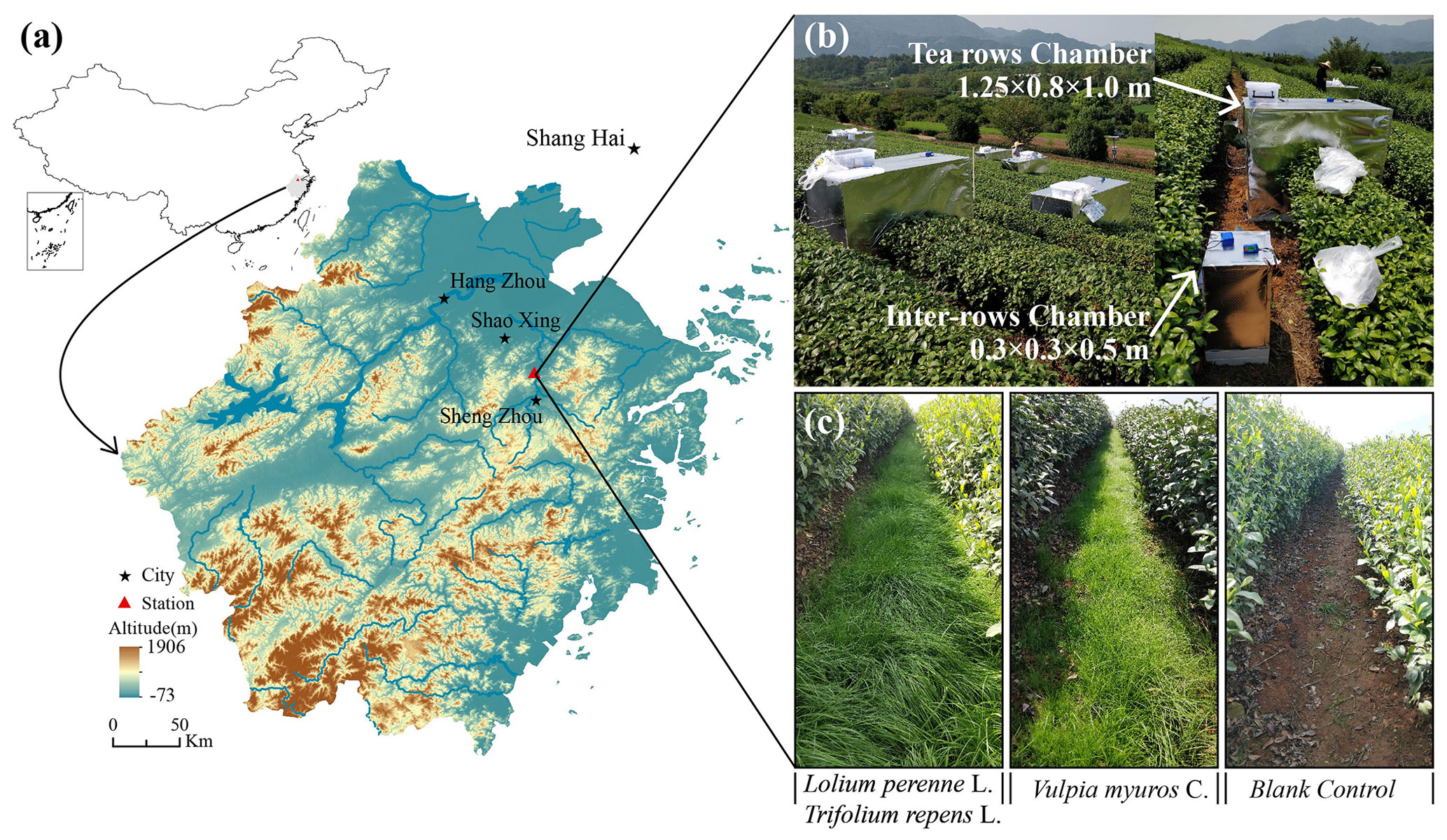
Figure 1(a) Geographic location of the study area in Shengzhou City, Zhejiang Province, China; (b) field layout of the tea plantation experiment; (c) photos of Lolium perenne L., Trifolium repens L. and Vulpia myuros C. plot, and the blank control plot, respectively.
Existing studies on GHG mitigation in tea systems have predominantly focused on fertilizer reduction and substitution strategies. Organic amendments, such as compost or manure, have been shown to improve soil fertility, enhance soil structure, porosity, and pH, and promote carbon sequestration in tea plantation soils (Han et al., 2013; Wu et al., 2021). Biochar application has also been identified as an effective strategy for improving soil quality while simultaneously enhancing soil carbon storage and reducing emissions (Wu et al., 2021). The effect of green manure intercropping on tea plantations was mainly focused on improvements in tea plant growth and soil nutrient dynamics. For example, intercropping with green manure species has been shown to enhance nitrogen use efficiency and increase soil microbial diversity (Huang et al., 2023). The potential role of green manure intercropping in mitigating GHGs emissions in tea ecosystems remains poorly understood, and its interactions with key environmental factors have not been fully clarified (Zhu et al., 2018). Previous studies have shown that green manure can alter soil organic carbon turnover by inputting plant residue carbon sources into the soil (Li et al., 2024), and may comprehensively influence carbon cycling and CO2 emissions in agricultural ecosystems through pathways such as regulating the microbial carbon pump function and reducing the carbon priming effect (Gui et al., 2024; Zhou et al., 2025). Green manure may influence CO2 emissions by altering carbon input levels and inducing soil disturbances, but the specific emission characteristics and driving factors require further investigation.
To address these gaps, this study selected cultivated tea plantations region located in the east of China, where is recognized as a very important tea cultivation area famous by the tea name of Longjing. Commonly used green manure species in tea systems (Vulpia myuros C., Lolium perenne L., and Trifolium repens L.) were selected for intercropping, covering both leguminous and non-leguminous species, under monoculture and mixed-sowing configurations. We propose the following hypotheses: intercropping tea plantations with green manure will alter the spatiotemporal pattern of soil CO2 emissions by regulating the soil microenvironment and carbon input dynamics, thereby driving the the tea plantation soil system from an initial disturbance phase towards a long-term phase of reduced soil CO2 release. This study quantifies the dynamics of soil CO2 fluxes in tea rows and inter-row areas under different green manure intercropping patterns, analyzes their key influencing factors, and aims to reveal how the green manure system transitions from an initial disturbance phase to a long-term stable phase of reduced soil CO2 emissions, thereby elucidating the underlying mechanisms by which green manure intercropping regulates soil carbon fluxes in tea plantations and providing support for the development of low-carbon tea plantations and sustainable regional agriculture.
2.1 Monitoring Site
This study was conducted at the Comprehensive Experimental Tea Plantation Base of the Tea Research Institute, Chinese Academy of Agricultural Sciences, located in Shengzhou, Zhejiang Province, China (29°75′ N, 120°83′ E; elevation 30 ) (Fig. 1a). The site is situated in a low mountainous and hilly region of southeastern China and is characterized by a subtropical monsoon climate. During the experimental period (August 2022 to August 2024), the average annual temperature was approximately 16 °C, with an average annual precipitation of about 1400 mm. The region experiences a concentrated rainy season from April to June and has a frost-free period of around 240 d. The tea cultivated at the site is Jinmudan, an elite cultivar derived from the hybridization of Tieguanyin and Huangdan, and is widely planted across China. The tea plantation was established in 2015; the tea plants are 8–10 years old and arranged in a single-row planting pattern with a row spacing of 150 cm and a plant spacing of 40 cm. The soil type of the tea plantation is classified as red soil (Ultisol), a typical soil type in this region.
2.2 Experimental Setup
Three green manure intercropping treatments were established in this study: Vulpia myuros C. (SM), a mixture of Lolium perenne L. and Trifolium repens L. (HM), and a control treatment without intercropping (CK). The experimental tea plantation covered an area of approximately 1000 m2. For each treatment, three representative tea rows were selected as three replicates. The experiment followed a completely randomized block design, with individual treatment plots measuring 20 m in length and 3 m in width. Adjacent treatments were separated by two tea rows (∼ 3 m), and replicate areas within the same treatment were spaced approximately 5 m apart. Gas fluxes were measured in both tea rows (T) and inter-row zones (G), resulting in six treatments: SMT, SMG, HMT, HMG, CKT, and CKG, with a total of 18 representative sampling points (Fig. 1b and c). Tea plantation followed standard management practices, including fertilization, pruning, and tillage. Every late October, after trenching and soil turning between the tea rows, rapeseed cake (975 kg ha−1) and compound fertilizer (375 kg ha−1) were applied as basal fertilizer. Green manure sowing was carried out in early November: Vulpia myuros C. (SM) was sown at a seeding rate of 6 kg ha−1; Lolium perenne L. and Trifolium repens L. (HM) were sown as a mixed culture at seeding rates of 18 and 4 kg ha−1, respectively. As intercropped cover crops, both green manure treatments were allowed to grow naturally, lodge, and cover the soil surface without artificial incorporation. Topdressing was applied in late February of the following year, with urea used at a rate of 300 kg ha−1. Tea leaves were harvested at the end of March, and pruning was normally conducted in May and July.
Gas sampling was performed using the static chamber–gas chromatography method. The dimensions of the static chambers were 1.25 m × 0.8 m × 1.0 m for tea rows and 0.3 m × 0.3 m × 0.5 m for inter-row zones (Fig. 1b). Each chamber was equipped with an internal fan to ensure uniform gas mixing. To avoid rapid heating due to sunlight, the chambers were wrapped with aluminum foil and sponge, functioning as dark chambers. To minimize disturbance, chamber bases with water grooves were installed one month in advance at each sampling point, inserted 15 cm into the soil. During sampling, water was added to the grooves, and the chamber was securely sealed onto the base to create a closed environment. Four gas samples were collected at 7 min intervals using gas sampling bags, which were pre-purged with nitrogen and maintained under vacuum to prevent background gas interference.
For seasonal monitoring, sampling was conducted once per week between 09:00 and 11:00 a.m. (all times are local time). Intensive sampling was also carried out following key management events such as fertilization and pruning. Diurnal variation was monitored over three consecutive days in January, April, July, and October, representing winter, spring, summer, and autumn, respectively. During these campaigns, gas samples were collected every 2 h over a 24 h period. After collection, samples were immediately placed in light-proof black bags, transported to the laboratory, and analyzed within 24 h using a gas chromatograph (Agilent 7890B, Agilent Inc., USA). CO2 concentrations were measured using a flame ionization detector (FID) at a working temperature of 175 °C. Carrier gas was high-purity nitrogen (purity 99.999 %), and valve injection was employed with a single injection volume of 30 mL and an injection flow rate of 250 mL min−1. During the tests, the deviation between the calculated regression values of CO2 and the nominal mole fractions was 0.37 µmol mol−1. The linear fit between the instrument response values and the nominal mole fractions achieved a correlation coefficient (R2) of 0.9999. Furthermore, the standard gases used were calibrated in multiple rounds by the Greenhouse Gas Laboratory of the Atmospheric Observation Center of the China Meteorological Administration using primary standard gases, ensuring traceability to the World Meteorological Organization primary standards.
Meteorological data, including precipitation, atmospheric pressure, and air temperature (AT), were obtained from an automatic weather station installed within the tea plantation. Soil samples were recorded using an automatic weather station installed within the tea plantation. Soil samples were collected monthly using a five-point composite method within a 1 m radius of each sampling point. After passing through a 2 mm sieve, the samples were divided into three portions:
- i.
One fresh portion was analyzed for microbial biomass carbon (MBC) and microbial biomass nitrogen (MBN) using the chloroform fumigation-extraction method and a TOC analyzer.
- ii.
A second portion was air-dried and ground for analysis of soil pH.
- iii.
The third portion was stored at 4 °C for analysis of nitrate nitrogen () and ammonium nitrogen () by spectrophotometry. Prior to the analysis of total carbon (TC) and total nitrogen (TN) by elemental analysis, and soil organic carbon (SOC) by the dichromate oxidation–spectrophotometry method, the stored samples were freeze-dried, ground, and sieved through a 100-mesh sieve to remove impurities and moisture.
Soil temperature (ST) and volumetric water content (VWC) were measured in-situ using a portable soil sensor (TDR-315H, Acclima). Soil bulk density (BD) and water-filled pore space (WFPS) were determined using the core ring method.
2.3 Data Processing
Static chambers were placed to cover tea plants, green manure plants, and the topsoil (0–15 cm). The monitored CO2 fluxes represent the total ecosystem soil respiration of the tea plantation, including autotrophic respiration from plant roots and heterotrophic respiration from soil microorganisms. The flux refers to the amount of gas exchanged per unit time and unit area. A positive value indicates net emission to the atmosphere, while a negative value indicates net uptake from the atmosphere (Yao et al., 2015; Zhang et al., 2020). Based on the flux measurements, cumulative soil CO2 emissions under different green manure intercropping treatments were also estimated. All data analyses and visualizations were performed using R software. Multifactor analysis of variance (multifactor ANOVA) was employed to assess the effects of treatment type, observation period and spatial position on soil CO2 fluxes and soil physicochemical properties. Spearman correlation analysis and Mantel tests were used to examine the relationships between soil CO2 flux and environmental variables under different green manure intercropping treatments. Canonical correspondence analysis (CCA) was applied to comprehensively evaluate the influence of soil physicochemical properties on soil CO2 emissions. Data shown are means ± standard error (SE). In all statistical tests, the level of significant differences and correlations was set at p < 0.05.
3.1 Long-term Variation of Soil CO2 Fluxes under Green Manure Intercropping
Figure 2 illustrates the long-term trends of key environmental variables and soil CO2 fluxes in the tea plantation throughout the observation period. Overall, soil CO2 fluxes from both tea-row and inter-row zones displayed distinct seasonal patterns: higher in summer and autumn, and lower in spring and winter. The seasonal differences between the warm (summer and autumn) and cool (spring and winter) periods were statistically significant (Table 1). The temporal dynamics of soil CO2 fluxes closely tracked the trends in air temperature (Fig. 2a), suggesting that temperature is a key driver of soil respiration in tea plantations. Annual fluctuations in soil CO2 fluxes were also strongly influenced by field management activities. For example, a sharp increase in soil CO2 emissions was observed following basal fertilization in October, and another rise occurred in March of the following year after topdressing and with the onset of warmer temperatures, ultimately peaking in summer (Fig. 2b and c). The effects of management activities are further detailed in Sect. 3.3.
Table 1Seasonal variation in soil CO2 fluxes from tea rows and inter-row zones under different green manure intercropping treatments.
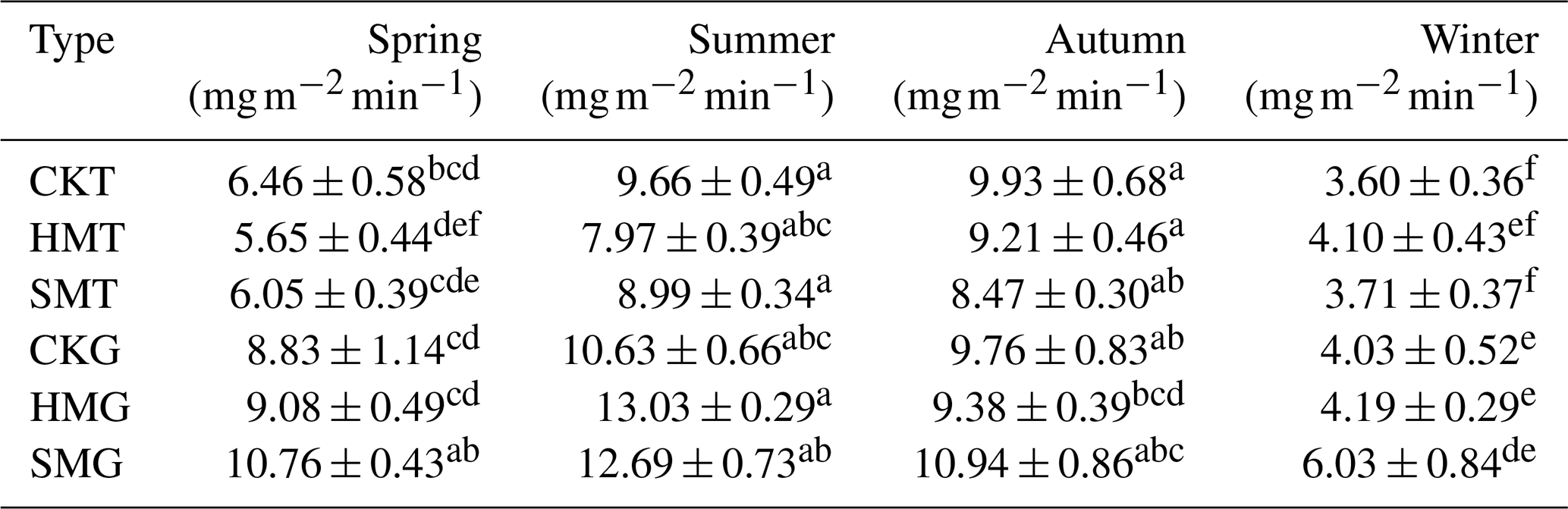
∗ Different superscript letters indicate significant differences among treatments and seasons (p < 0.05). Data shown are means ± SE. CK for control; SM and HM for intercropping types, T for tea row, G for inter-row.
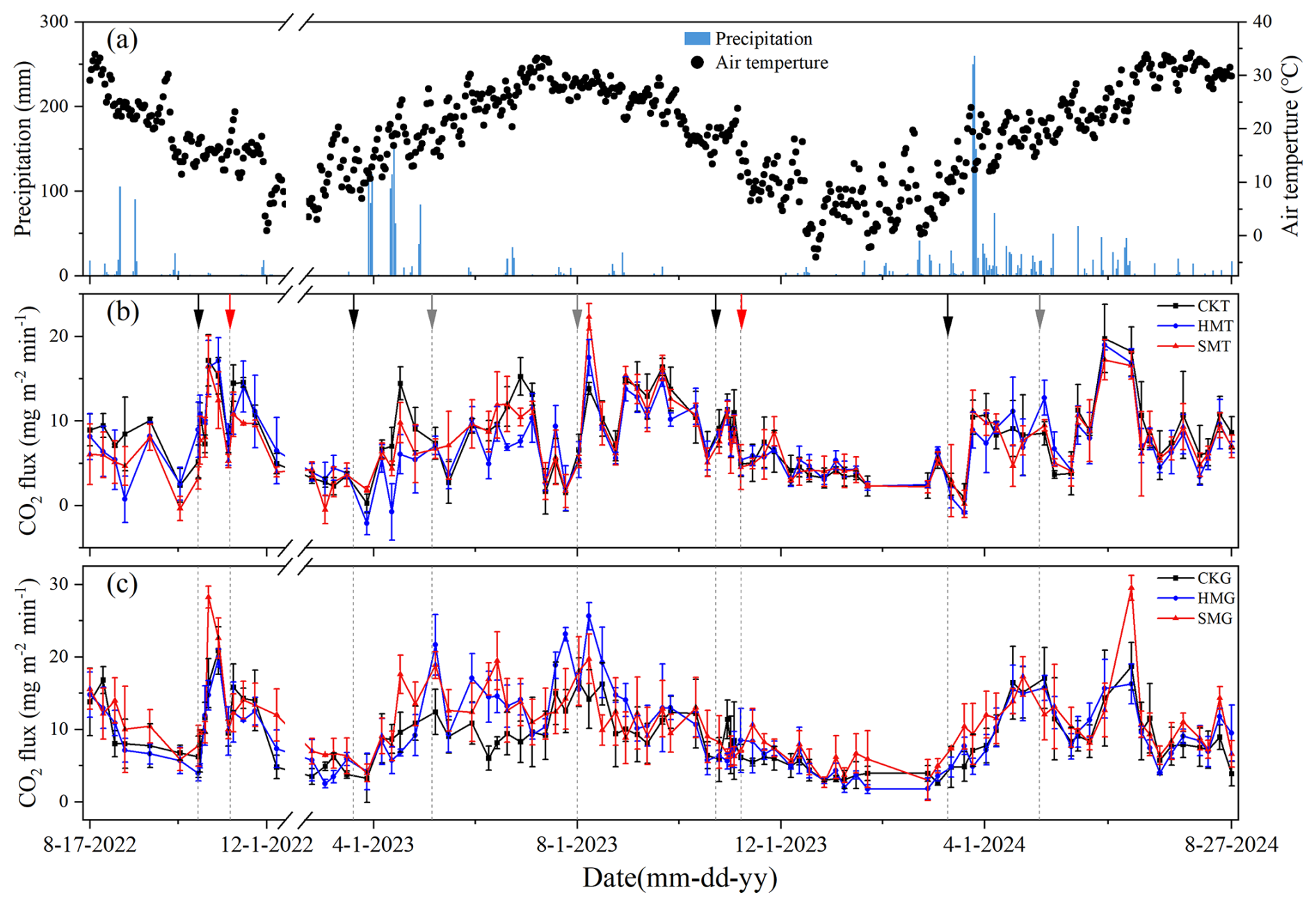
Figure 2Dynamics of (a) air temperature and precipitation, (b) soil CO2 fluxes from tea rows, and (c) soil CO2 fluxes from inter-rows during the observation period (2022–2024). Black, red and grey arrows represent the timings of fertilization, grass planting and tea pruning, respectively. Flux data are presented as mean ± SE. CK for control; SM and HM for intercropping types, T for tea row, G for inter-row.
In tea rows, the annual mean soil CO2 fluxes under HMT and SMT treatments were 7.35 ± 0.44 and 7.41 ± 0.45 , respectively, both lower than that of the control (CKT: 8.12 ± 0.46 ) (Fig. 2b). In contrast, in inter-row zones, the annual mean soil CO2 fluxes were higher under HMG (9.77 ± 0.54 ) and SMG (10.83 ± 0.52 ) compared to the control (CKG: 9.07 ± 0.44 ) (Fig. 2c). Across seasons, CKT generally exhibited higher soil CO2 fluxes than HMT and SMT, except during winter. In the inter-row zones, both HMG and SMG showed significantly higher fluxes than CKG in summer, while SMG consistently had significantly higher soil CO2 emissions than both CKG and HMG during the remaining seasons (p < 0.05) (Table 1).
Overall, green manure intercropping significantly increased soil CO2 emissions from inter-rows, but reduced emissions in tea rows. In terms of cumulative annual emissions, HMT and SMT resulted in 3.69 and 3.66 kg m−2 of soil CO2 emissions, respectively, both lower than the 3.97 kg m−2 under CKT (Fig. 3). Similarly, cumulative soil CO2 emissions under HMG and SMG remained consistently higher than under CKG, but they declined from 5.76 and 6.43 kg m−2 in the first year to 4.16 and 4.92 kg m−2 in the second year, respectively (Fig. 3). Two consecutive years of green manure intercropping led to a gradual reduction in soil CO2 emissions from inter-rows, indicating its potential role in long-term emission mitigation in tea plantations. Soil CO2 emissions from inter-rows were substantially higher than those from tea rows. Compared with the control, HM and SM intercropping increased inter-row cumulative soil CO2 emissions by 12.7 % and 28.9 %, respectively, while reducing tea-row emissions by 7.1 % and 7.9 % (Fig. 3a and b). Inter-row zones accounted for 52.6 %, 57.3 %, and 60.8 % of the total annual soil CO2 emissions in the CK, HM, and SM treatments, respectively (Fig. 3c and d), indicating that the inter-row emissions cannot be ignored.
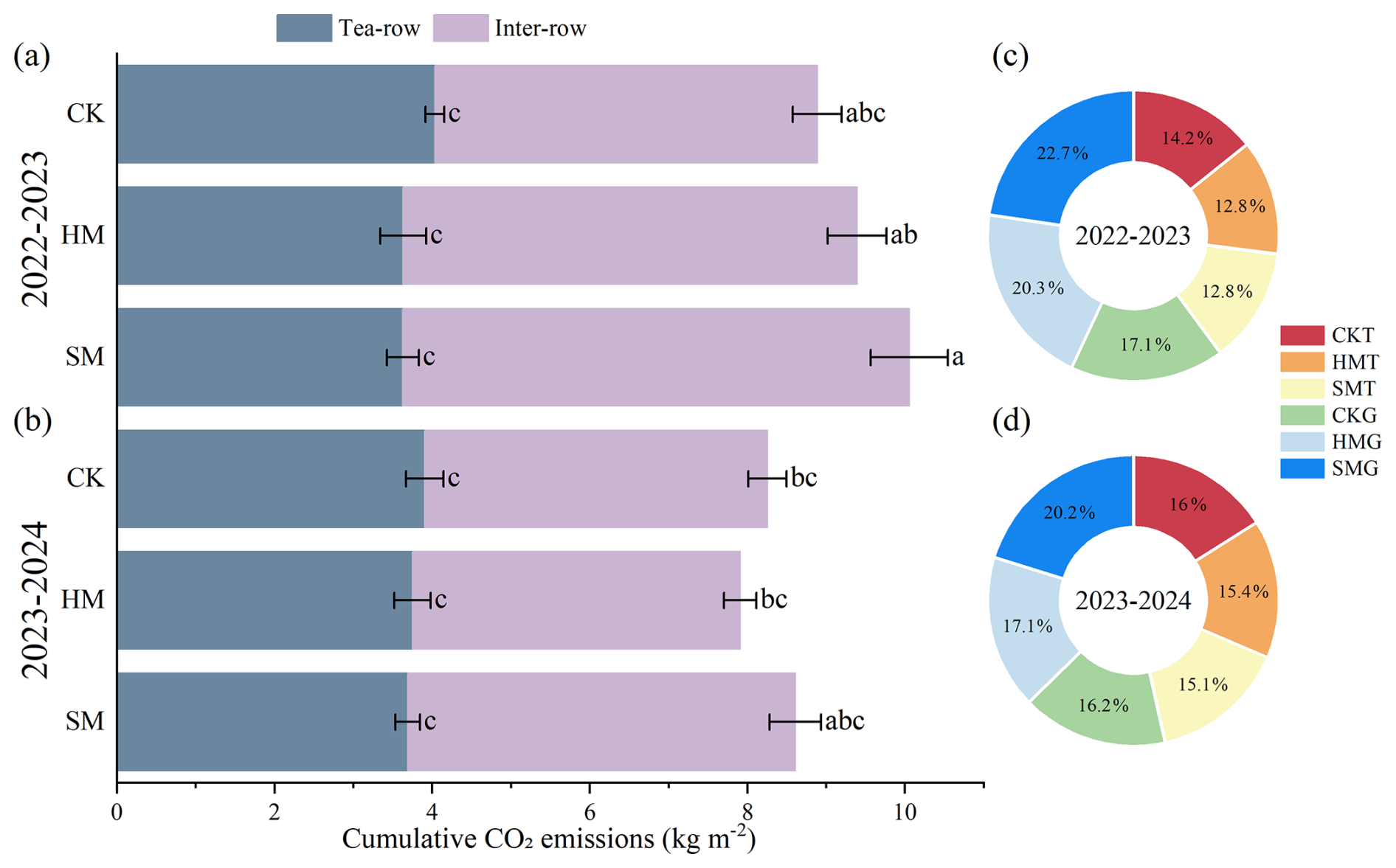
Figure 3(a, b) Annual cumulative soil CO2 emissions from tea rows and inter-rows under different green manure intercropping treatments; (c, d) contribution of tea rows and inter-rows to total annual soil CO2 emissions under each treatment. Data shown are means ± SE. Different lowercase letters indicate significant differences (p < 0.05) among all treatment combinations (type × spatial position × year) based on three-way ANOVA. CK for control; SM and HM for intercropping types, T for tea row, G for inter-row.
3.2 Diurnal Soil CO2 Variations
Soil CO2 fluxes in the tea plantation exhibited pronounced diurnal variations across all seasons, particularly in spring and summer (Fig. 4), likely influenced by the growth stages of green manure species. In spring, soil CO2 fluxes in tea rows under all treatments showed a similar diurnal trend: an initial decline followed by a rapid increase. HMT and SMT reached their minimum fluxes at 08:00 (local time), with values of −3.74 and −3.80 , respectively, then rose sharply and stabilized in the afternoon. The diurnal amplitudes under HMT and SMT were notably greater than that of the control (CKT) (Fig. 4a). In the inter-row zones, the diurnal patterns under green manure treatments differed notably from the control (Fig. 4b). CKG displayed a unimodal pattern with a peak at 12:00 (12.74 ) and a trough at 08:00 (5.45 ), resulting in an amplitude of 7.29 . In contrast, HMG and SMG exhibited later peaks at 16:00 (23.26 ) and 14:00 (24.17 ), respectively, with troughs also at 08:00 (HMG: 12.28 ; SMG: 12.43 ). Both treatments showed substantially higher amplitudes than CKG.
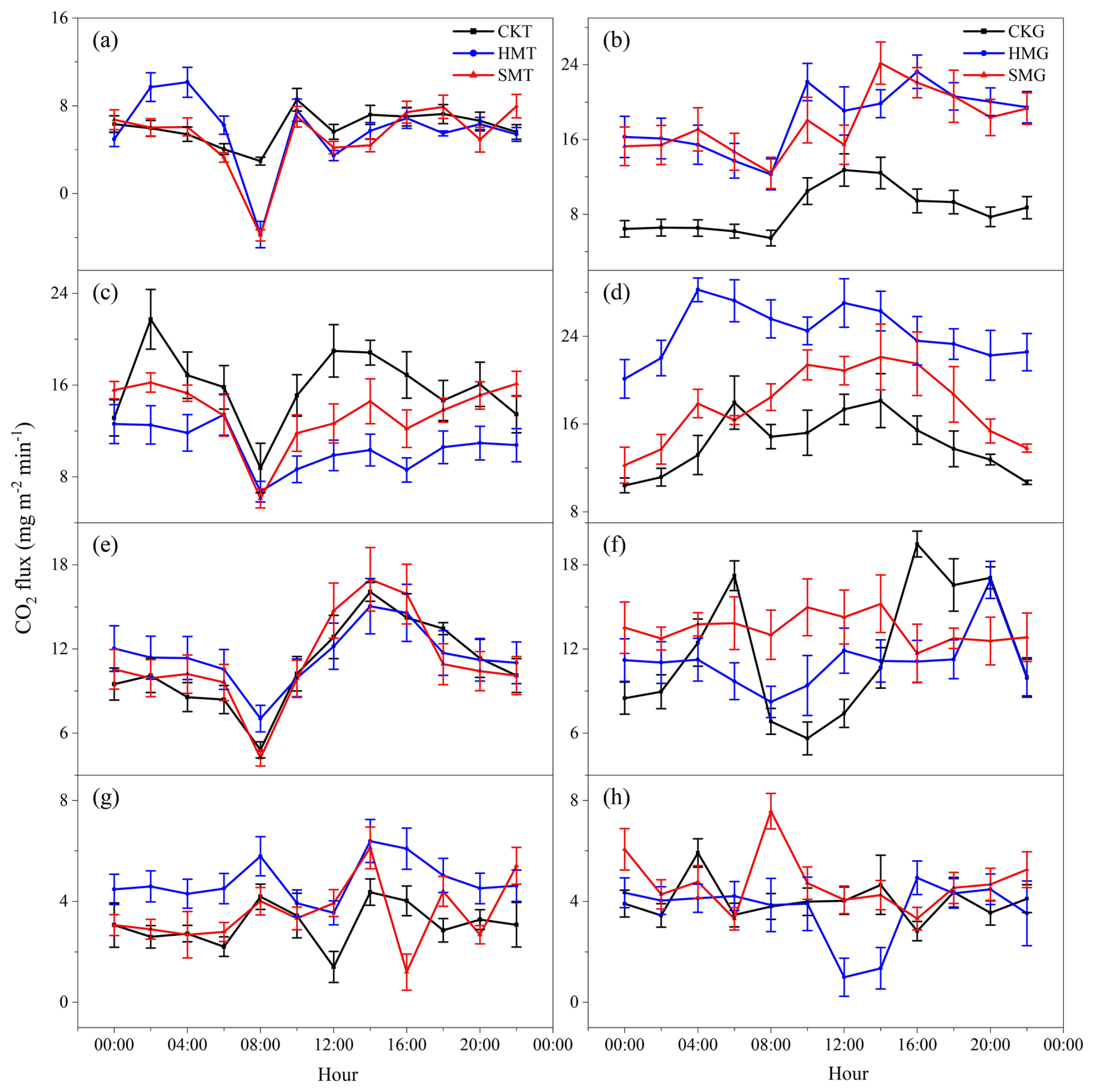
Figure 4Diurnal variation in soil CO2 fluxes from (a, c, e, g) tea rows and (b, d, f, h)inter-row zones under different green manure intercropping treatments across seasons: (a, b) spring, (c, d) summer, (e, f) autumn, and (g, h) winter. CK for control; SM and HM for intercropping types, T for tea row, G for inter-row.
Summer exhibited the most pronounced diurnal variation of soil CO2 fluxes across all seasons. In tea rows, CKT, HMT, and SMT followed a bimodal pattern, with peaks at 02:00 and 12:00, and a trough at 08:00. Their respective diurnal amplitudes were 12.96, 6.70, and 10.10 (Fig. 4c). In the inter-rows, the amplitudes were relatively lower, 7.72, 8.12, and 7.79 for CKG, HMG, and SMG, respectively, indicating smaller fluctuations compared to tea rows (Fig. 4d). Notably, summer also showed the most distinct contrast between tea rows and inter-rows: CKT recorded the highest average flux in the tea rows, while CKG had the lowest in the inter-rows.
In autumn, tea-row fluxes under all treatments exhibited a unimodal pattern, with minima at 08:00 and peaks at 14:00. The diurnal amplitudes were 11.27, 8.02, and 12.75 for CKT, HMT, and SMT, respectively (Fig. 4e). In the inter-rows, HMG and SMG displayed relatively stable diurnal trends, whereas CKG showed a bimodal pattern with peaks at 06:00 and 16:00, and a greater amplitude than both HMG and SMG (Fig. 4f).
In winter, soil CO2 fluxes showed the most stable diurnal variation of the year. In tea rows, amplitudes were only 2.96, 2.84, and 4.92 for CKT, HMT, and SMT, respectively (Fig. 4g). Unlike other seasons, 08:00 no longer corresponded to the daily minimum but rather to a relative maximum, with daily peaks generally occurring at 14:00. In inter-rows, diurnal patterns were less defined. SMG exhibited the highest flux at 08:00 (7.57 ), while HMG showed the lowest at 14:00 (0.99 ) (Fig. 4h).
3.3 Effect of Human Management on Soil CO2 Fluxes
Soil CO2 fluxes from the tea plantation varied significantly across different growth stages of green manure, exhibiting a general increasing trend from the early growth stage to the vigorous, wilting, and decomposition stages (Fig. 5a). In the tea rows, the lowest fluxes were observed during the early growth stage, while the highest occurred during the decomposition stage. Differences among the three treatments (CKT, HMT, and SMT) were minimal during the early growth but became more apparent in the subsequent stages. Notably, during the vigorous stage, both HMT and SMT treatments reduced soil CO2 emissions compared to CKT. In contrast, the impact of green manure growth on soil CO2 fluxes was more pronounced in the inter-row zones (Fig. 5b). At all growth stages, soil CO2 fluxes under the HMG and SMG treatments were significantly higher than those under CKG, with the largest differences observed during the wilting stage (p < 0.05). Peak emissions occurred during the decomposition stage for HMG and during the wilting stage for SMG.
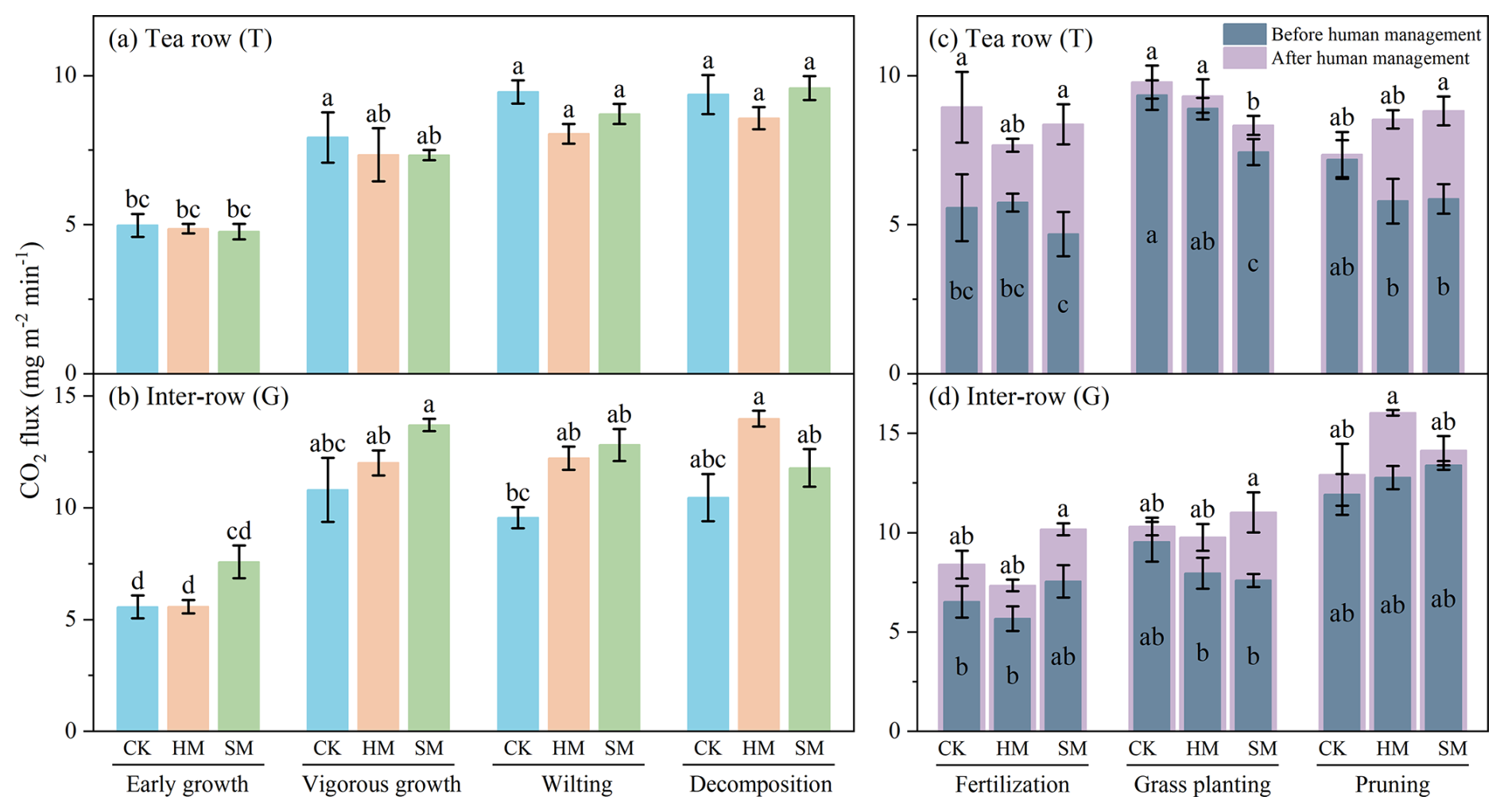
Figure 5Temporal dynamics of soil CO2 fluxes under green manure (a, b) growth stages and (c, d) management events in tea plantations. Growth stages include: early growth (mid-November to early April), vigorous growth (mid-April to late May), wilting (early June to late July), and decomposition (August). CK for control; SM and HM for intercropping types, T for tea row, G for inter-row.
We conducted a comparison of the differences in soil CO2 emissions before and after the implementation of different human management measures. Fertilization substantially increased soil CO2 emissions across the tea plantation (Fig. 5c and d). In tea rows, the post-fertilization increase in soil CO2 flux under HMT was 43.1 % lower than that under CKT, whereas SMT showed a 9.2 % higher increase. In the inter-row zones, HMG reduced the fertilization-induced increase by 10.4 % compared to CKG, while SMG amplified it by 40.1 %. These findings indicate that the HM treatment can effectively mitigated soil CO2 emissions triggered by fertilization, while SM treatment may intensify them, revealing the potential of legume-based mixed green manure to reduce soil CO2 emissions in tea plantations. It is worth noting that the mitigation effect in the inter-row zones was weaker than in the tea rows, possibly due to differences in root distribution or organic matter inputs.
The effects of grass planting and tea pruning on soil CO2 fluxes varied by treatment type and location (tea row or inter-row) (Fig. 5c and d). In the CK treatment, grass planting had no significant impact on soil CO2 fluxes. However, the HM treatment led to a marked increase after grass planting, with inter-row fluxes rising by 1.81 . Similarly, the SM treatment showed significant increases in both zones, with an increase of 0.90 in tea rows and an inter-row increase that was 3.8 times greater. These increases can be attribute to soil disturbance during sowing.
After tea pruning, no significant changes in soil CO2 flux were observed in the CK treatment. However, both HMT and SMT significantly increased soil CO2 emissions in tea row, with increments of 2.74 and 2.94 , respectively. In the inter-row zones, only the HMG treatment exhibited a significant post-pruning increase of 3.25 . These increases may be attributed to pruning residues covering the green manure surface, which could elevate soil temperature and moisture, thereby enhancing soil respiration and soil CO2 emissions.
3.4 Effects of Environmental Factors on Soil CO2 Fluxes
Significant differences in soil nutrient parameters were observed between tea rows and inter-row zones under various green manure intercropping treatments (Fig. 6). Green manure treatments generally increased soil total carbon (TC) and total nitrogen (TN), with consistently higher TC and TN levels in the inter-row zones than in the tea rows (Fig. 6a and b), resulting in significantly higher ratios in the tea rows (Fig. 6c). Soil ammonium nitrogen () and nitrate nitrogen () concentrations were also significantly greater in the inter-row zones, with the highest found in CKG (71.20 mg kg−1) and the highest in SMG (14.56 mg kg−1). All green manure treatments significantly increased soil organic carbon (SOC), the average SOC contents under HM and SM were 3.6 % and 9.3 % higher than under CK, respectively (Fig. 6f). Microbial biomass carbon (MBC) and microbial biomass nitrogen (MBN) showed no significant differences between tea rows and inter-row zones, but both were slightly elevated under green manure treatments (Fig. 6g and h). The pH of the CKG treatment was 3.98, which was significantly lower than that of the other treatments, although green manure application slightly increased soil pH (Fig. 6i).
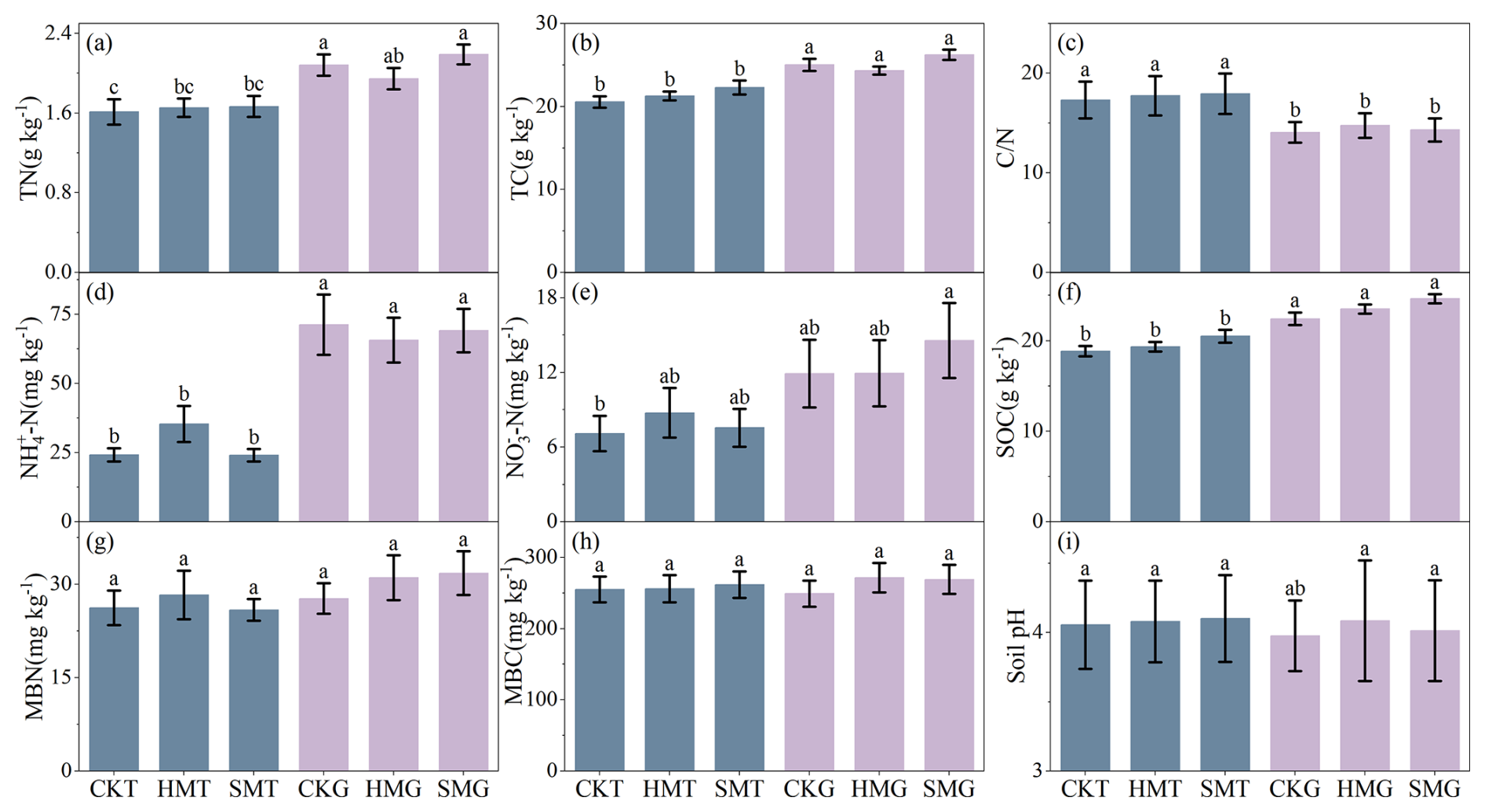
Figure 6Basic physicochemical properties of soil in tea rows and inter-rows under different green manure intercropping treatments. Each bar is the average of soil sampling data from 21 sampling occasions across the 2-year study period. CK for control; SM and HM for intercropping types, T for tea row, G for inter-row.
During the monitoring, soil temperature ranged from 2.3–41.8 °C in CK, 3.0–37.6 °C in HM, and 3.5–36.6 °C in SM. Average soil temperatures in HM and SM were 4.5 % and 3.9 % lower than in CK, indicating a cooling effect of green manure. Additionally, bulk density was reduced by 8.9 % and 5.0 % in HM and SM compared to CK, while total porosity increased by 5.3 % and 3.0 %, and WFPS decreased by 29.1 % and 11.1 %, respectively. These results suggest that green manure intercropping effectively reduces soil compaction and improves soil aeration. The combined effect of these factors is the key to the changes in CO2 emissions.
To further clarify these relationships, we examined the correlations between soil CO2 fluxes and environmental factors under different green manure treatments (Fig. 7). CO2 fluxes across nearly all treatments were significantly positively correlated with air temperature (AT) and soil temperature (ST) (r > 0.5, p < 0.05), suggesting temperature as a major driver of soil CO2 emissions in tea plantations. Treatment-specific differences were also apparent: in green manure treatments (HM and SM), both TC and SOC in tea rows and inter-row zones showed negative correlations with CO2 flux, whereas volumetric water content (VWC) showed significant positive correlation (r > 0.5, p < 0.05). In contrast, VWC was negatively correlated with CO2 flux under CK treatment. These findings suggest that green manure intercropping alters soil pore structure and moisture regimes, thereby modifying CO2 emission dynamics compared to bare soil conditions. Additionally, environmental controls on CO2 fluxes differed between tea rows and inter-row zones. Emissions in tea rows appeared less sensitive to environmental fluctuations, likely due to the moderating effects of tea canopy coverage and root systems.
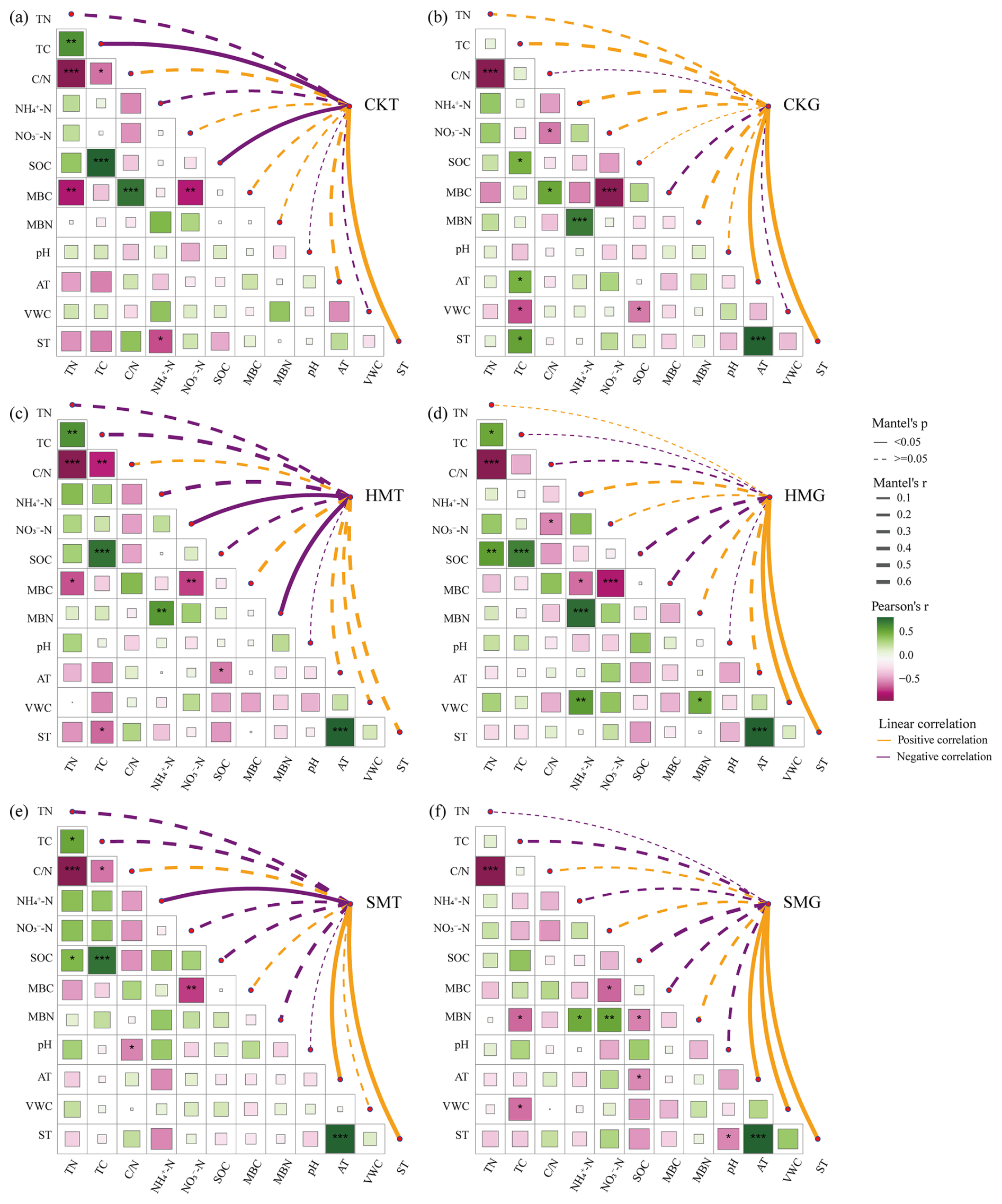
Figure 7Pairwise correlations between environmental factors and their relationships with soil CO2 fluxes under different green manure treatments (∗ p < 0.05, p < 0.01, p < 0.001). CK for control; SM and HM for intercropping types, T for tea row, G for inter-row.
Canonical correspondence analysis (CCA) was further performed to examine the effect of green manure intercropping patterns and soil properties on soil CO2 emissions in tea rows and inter-row zones (Fig. 8). The first two CCA axes explained 52.79 % and 11.15 % of the total variance, respectively. CCA1 was primarily associated with , , SOC, and the ratio, while CCA2 was mainly linked to TN, TC, MBN, MBC, and pH. These results indicate distinct environmental drivers of CO2 emissions between the two spatial zones. In tea rows, CO2 flux was positively associated with and the ratio, with relatively minor influence from pH. The influencing soil factors were similar for CKT and SMT, whereas HMT displayed a distinct pattern, likely attributable to the presence of leguminous green manure. In inter-row zones, SOC emerged as the dominant factor controlling CO2 fluxes in HMG and SMG treatments, whereas was the key driver in CKG. Moreover, TC, TN, MBC, and MBN all showed positive associations with inter-row CO2 fluxes, with consistent soil drivers under HMG and SMG that differed from CKG, indicating that green manure markedly affects soil–CO2 interactions.
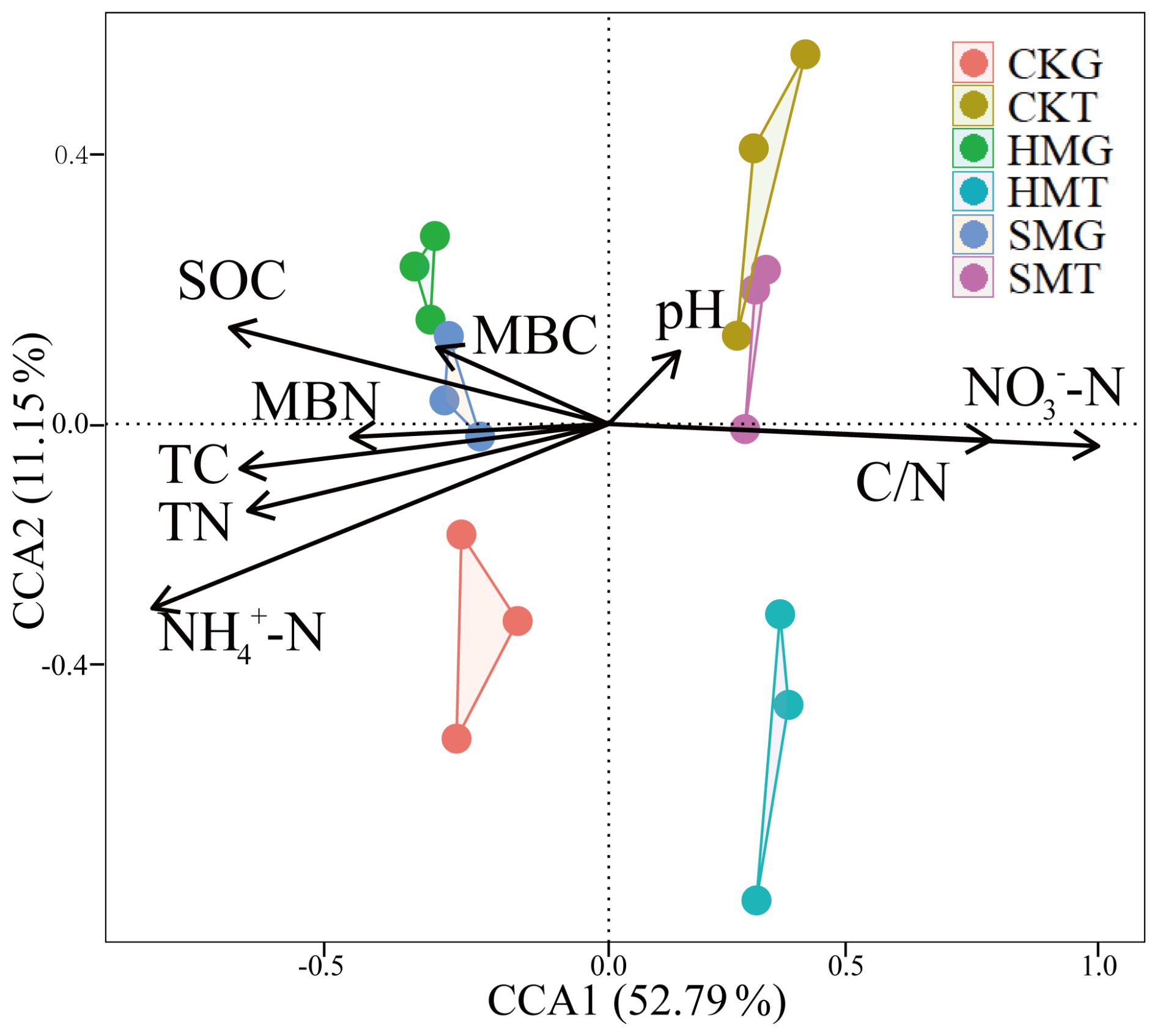
Figure 8Canonical correspondence analysis (CCA) showing the influence of soil physicochemical properties on soil CO2 emissions from tea rows and inter-rows under different green manure treatments. CK for control; SM and HM for intercropping types, T for tea row, G for inter-row.
4.1 Soil CO2 Flux Dynamics under Green Manure Intercropping
This study revealed pronounced seasonal variations in soil CO2 fluxes from tea plantations, which were closely aligned with fluctuations in air temperature (Fig. 2a–c). In spring, rising temperatures enhanced both plant and microbial respiration, leading to a sharp increase in soil CO2 emissions (Yan et al., 2022). During summer, when temperatures reached their annual peak, intensified microbial activity accelerated the decomposition of soil organic matter, resulting in the highest soil CO2 fluxes of the year (Allison et al., 2010). In autumn, declining temperatures and light availability reduced microbial activity and soil respiration, thereby lowering soil CO2 emissions (Liu et al., 2020). In winter, low temperatures significantly inhibited both plant and microbial respiration, causing average soil CO2 fluxes to drop to their annual minimum (Schnecker et al., 2023). These seasonal flux patterns were consistent throughout the 2-year observation period, indicating the pivotal role of temperature in regulating soil CO2 emissions in tea plantations (Chen et al., 2021).
Compared with the CK treatment, HM and SM increased annual cumulative soil CO2 emissions by 3.3 % and 7.9 %, respectively, revealing that green manure intercropping significantly elevated total soil CO2 emissions. Similar findings have been reported in previous studies. For example, Lee et al. (2021) observed consistently higher cumulative soil CO2 emissions in cropland soils under green manure treatments than under fallow conditions. A meta-analysis by Muhammad et al. (2019) also showed that the use of cover crops generally increases soil CO2 emissions compared with bare soil. This effect can be attributed to two possible mechanisms: (1) green manure crops introduce exogenous carbon inputs into the soil, which stimulates soil CO2 release (Lee et al., 2021); and (2) green manure intercropping reduces soil bulk density and increases total porosity (Song et al., 2016), thereby improving soil aeration and promoting aerobic microbial activity. The enhanced microbial activity accelerates the decomposition and mineralization of soil organic matter, consequently increasing soil CO2 emissions (Chen et al., 2019). By contrast, under the CK treatment, higher WFPS and greater soil compaction may have inhibited gas diffusion and limited soil CO2 release into the atmosphere (Lang et al., 2017).
Diurnal variations of soil CO2 fluxes were influenced by both seasonal dynamics and the growth stages of green manure crops. Soil CO2 fluxes fluctuated most sharply during spring and summer, with temperature identified as the primary driver of daily flux patterns (Pang et al., 2019). In spring, negative soil CO2 flux peaks were observed in tea rows under HMT and SMT around 08:00, due to low morning temperatures suppressing microbial respiration. In this study, the occasional negative CO2 fluxes may be attributed to the combined effects of low soil respiration rates under low-temperature conditions in spring, microbial fixation of CO2, and CO2 dissolution effects caused by changes in temperature and humidity inside the chamber. These negative values are within the measurement error range and represent small fluctuations that do not affect the assessment of the overall emission magnitude. Moreover, the presence of easily degradable organic matter from green manure may have diverted microbial metabolism toward biomass accumulation rather than complete mineralization to CO2. In summer, distinct spatial differences appeared between tea rows and inter-row zones. In tea rows, soil CO2 fluxes under the CKT treatment were significantly higher than those under HMT and SMT, while in the inter-row zones, fluxes under HMG and SMG were higher than those under CKG. This spatial heterogeneity highlights the dual role of green manure: in tea rows, the shading effect of green manure canopy reduced soil temperatures, thereby inhibiting microbial respiration; in contrast, inter-row zones were exposed to direct sunlight, root exudates and decomposing plant residues provided additional carbon sources. Under favorable thermal conditions, this stimulated microbial activity and thus increased soil CO2 emissions (Gui et al., 2024). In autumn and winter, soil CO2 flux peaks were mostly recorded in the afternoon, possibly due to rising temperatures reaching a threshold that accelerated enzymatic reactions and microbial metabolism, enhancing root and soil respiration and thus elevating soil CO2 emissions (Dove et al., 2021).
4.2 Influence of Cultivation Management on Soil CO2 Fluxes
Fertilization, pruning, and soil tillage with cover cropping are critical anthropogenic management practices in tea plantations that significantly affect soil CO2 flux dynamics. Fertilizer application, in particular, is a major contributor to agricultural greenhouse gas emissions, with emission strength influenced by the type, amount, and method of application (Wang et al., 2024). In this study, the application of rapeseed cake and compound fertilizers significantly increased soil CO2 fluxes, especially within tea rows. This increase can be attributed to two main factors: (1) the input of exogenous organic matter enriched soil organic carbon content; and (2) trench fertilization caused physical disturbance, disrupting soil aggregates and accelerating the decomposition of soil organic carbon. These disturbances stimulated the abundance and metabolic activity of aerobic heterotrophic microbes, promoting organic matter mineralization and resulting in elevated soil CO2 emissions (Chappell et al., 2015; Struck et al., 2020). Intensive pruning conducted in May and August further contributed to increased soil CO2 fluxes. Pruning substantially reduces the photosynthetic biomass of tea plants, diminishing their carbon sequestration capacity. Simultaneously, the resulting litterfall provides abundant substrates for microbial respiration (Pang et al., 2019). The combined effect of reduced carbon uptake and increased decomposition substrates leads to a rapid short-term increase in soil CO2 emissions after pruning.
Previous studies have demonstrated that intercropping systems introduce readily decomposable carbon through root exudates, while green manure decomposition increases organic matter inputs and improves soil organic carbon storage (Gui et al., 2024). In this study, soil CO2 fluxes in inter-row zones were significantly higher than CK during the wilting and decomposition stages of green manure, suggesting that microbial activity was enhanced during these periods, thereby accelerating the decomposition and transformation of organic matter and intensifying soil respiration. Additionally, soils under green manure treatments exhibited lower annual average temperatures compared to the control, indicating that intercropping with green manure moderated surface soil temperatures and reduced daily temperature fluctuations. This effect was particularly pronounced in vigorous growth, when green manure not only reduced inter-row soil CO2 emissions but also improved the microclimatic conditions of the tea plantation.
Traditional soil CO2 flux measurements in tea plantations have mostly focused only on tea rows, often neglecting inter-row soil emissions (Yao et al., 2015; Chen et al., 2021). In this study, static chambers were parallelly employed to measure soil CO2 fluxes in tea rows and inter-row areas, enabling a more accurate understanding of soil CO2 emissions. Results showed that inter-row soil CO2 fluxes were significantly higher than those in tea rows (p < 0.05), accounting for 52.6 %, 57.3 %, and 60.8 % of the annual cumulative soil CO2 emissions under CK, HM, and SM treatments, respectively. These findings emphasize the substantial contribution of inter-row zones to overall soil CO2 emissions. This discrepancy is due to differences in management intensity: fertilization and tillage are commonly performed in inter-row areas, while the soil beneath tea canopies experiences minimal disturbance (Hirono and Nonaka, 2012). Moreover, pruning residues often accumulate in inter-row zones, further intensifying microbial activity and soil CO2 emissions in these areas. The cumulative soil CO2 emissions under HMG and SMG treatments were significantly lower in the second year. The decrease in emissions can be attributed to the gradual attenuation of the carbon priming effect induced by soil disturbance during the initial experimental phase (Zhou et al., 2025), coupled with the long-term positive effects of green manure on enhancing soil physical structure and ecosystem stability (Gui et al., 2024). The increase in green manure biomass in the following year indicates that the green manure system is transitioning from an initially disturbed and unstable state toward a more productive and carbon-sequestration-enhanced stable state (Fig. S1 in the Supplement). This trend not only reflects the improved functioning of the soil ecosystem and drives further carbon sequestration in the tea plantation, but also provides crucial support for the significant reduction in inter-row soil CO2 emissions observed in the following year, which closely aligns with the hypothesis that green manure intercropping promotes the ecosystem from an initial disturbance phase towards a long-term stable emission reduction phase. Therefore, long-term and systematic monitoring of inter-row soil CO2 emissions is essential for accurately assessing the carbon dynamics and mitigation potential of tea plantation ecosystems.
4.3 Differences in Environmental Drivers
Soil CO2 fluxes are regulated by multiple environmental factors, including photosynthetic activity or vegetation productivity (Tang et al., 2005), and soil properties such as temperature and moisture (Liu et al., 2023; Widanagamage et al., 2025). Among them, temperature is widely recognized as a primary driver of seasonal variation in soil respiration (Lang et al., 2017). Our results showed that soil CO2 fluxes in both tea rows and inter-row areas were significantly correlated with soil and air temperatures under different green manure treatments (Fig. 7). In addition, carbon and nitrogen transformation processes driven by microorganisms are closely coupled. Nitrification and denitrification alter ) and levels, thereby influencing soil physicochemical properties and microbial activity. As a result, soil CO2 emissions exhibit significant positive correlations with nitrogen mineralization, denitrification, and N2O emissions (Dai et al., 2020). This carbon–nitrogen coupling may interact with the distinctive nutrient uptake characteristics of tea plants, which are ammonium-preferring species with rapid assimilation (Xin et al., 2024). In our study, soil CO2 fluxes under the CKG treatment were positively correlated with content (Fig. 7). levels under this treatment (71.20 mg kg−1) were significantly higher than in the SMG and HMG treatments, whereas the corresponding soil pH value (3.97) was significantly lower (p < 0.05). This concurrent high level and strong acidification is due to ammonium accumulation under conventional fertilization and subsequent H+ release during nitrification (Chen et al., 2021). By contrast, the soil pH under green manure intercropping treatments increased by 0.02–0.11 units compared to the CK treatment (Fig. 6i), suggesting that root exudates and organic matter inputs from green manure buffered soil acidification by reducing H+ release during nitrification. Moreover, the ) concentration in the SMG treatment was 14.56 mg kg−1, which was significantly higher than that in other treatments (Fig. 6e). This was because the organic nitrogen input by the high biomass of Vulpia myuros C. increased nitrate nitrogen production through mineralization, and its well-developed root system improved soil aeration and inhibited denitrification.
SOC content reflects the dynamic balance between organic matter inputs and decomposition (Mo et al., 2024). In our study, SOC levels in the HMT and SMT treatments were higher than those in the CKT treatment, while their cumulative annual CO2 emissions were lower. This indicates that increasing SOC storage can help mitigate greenhouse gas emissions, consistent with findings by Han et al. (2022). However, the HMG and SMG treatments exhibited much higher SOC levels than CKG, while their cumulative soil CO2 emissions exceeded those of CKG. This implies that once SOC accumulation surpasses a certain threshold, the excess carbon supply may stimulate microbial activity and subsequently increase soil CO2 emissions (Lim and Choi, 2014). Interestingly, recent studies reveal that SOC thresholds can modulate the impact of nitrogen fertilization on carbon sequestration. In SOC-poor soils, nitrogen inputs tend to promote carbon accumulation and soil aggregation, enhancing SOC storage. Conversely, in SOC-rich soils, nitrogen fertilization may enhance microbial metabolic efficiency and increase microbial residue production (Ling et al., 2025). Studies in different climatic zones of China have revealed that SOC thresholds are influenced by factors such as climate and soil type. In the maritime monsoon climate zone, dual thresholds for and extractable iron (Fe) have been identified, beyond which their marginal effects on SOC shift significantly. In the continental monsoon climate zone, SOC content increases markedly once a critical threshold of TN is exceeded (Cui et al., 2025). Additionally, research in alpine ecosystems has shown that SOC components vary along elevation gradients and exhibit distinct thresholds (Zhang et al., 2025). These insights provide a new perspective for interpreting our results and highlight the importance of identifying threshold values under multifactorial interactions to better assess their effects on soil CO2 emissions.
In tea rows, excessively high soil ratios may result in nitrogen limitation, thereby inhibiting rapid decomposition of organic matter and reducing soil CO2 fluxes. Green manure, as a fresh plant residue with a relatively low ratio, can be rapidly decomposed by soil microbes after incorporation, thus maintaining or enhancing SOC levels (Li et al., 2024), which aligns with our observations (Fig. 7d). MBC and MBN are generally considered closely linked to SOC (Gao et al., 2022). However, in our study, a significant positive correlation between MBC and SOC was only observed in the CKT treatment. The lack of correlation under green manure treatments may be due to the rapid and excessive input of exogenous carbon, which complicates the relationship between these variables. No significant differences in MBC and MBN levels were found among green manure treatments, and both showed weak correlations with soil CO2 fluxes (Fig. 8), suggesting that MBC and MBN are not key drivers of soil CO2 emissions in tea plantations.
5.1 Conclusion
This study revealed the regulation of soil CO2 fluxes in tea plantations under different green manure intercropping treatments. Green manure significantly influenced soil CO2 flux dynamics, with pronounced seasonal variations, higher fluxes in summer and autumn and lower fluxes in spring and winter. Soil CO2 fluxes in the SM and HM treatments were significantly lower than in the CK treatment within tea rows, while the opposite trend was observed in inter-row areas, suggesting distinct spatial responses to green manure intercropping. Over the observation period, the HM and SM treatments reduced soil CO2 emissions from tea rows by 7.1 %–7.9 % compared to the CK, while increasing inter-row emissions by 12.7 %–28.9 %. The net increase in soil CO2 emissions under the HM treatment was smaller than that under the SM treatment, which may be attributed to the more effective suppression of fertilization-induced emission peaks by the HM treatment. Furthermore, inter-row soil CO2 emissions under green manure treatments decreased significantly in the second year compared to the first year, whereas no significant inter-annual differences were observed in the tea row areas. Soil CO2 emissions from inter-row areas were consistently higher than those from tea rows, inter-row soil CO2 emissions accounted for 52.6 %, 57.3 %, and 60.8 % of the annual cumulative CO2 fluxes under the CK, HM, and SM treatments, respectively. Our findings suggest a potential SOC threshold that may influence whether soil CO2 emissions increase or decrease, though this requires further validation. Overall, green manure intercropping (particularly the mixed intercropping of legumes and grasses) can significantly alter the spatial pattern of soil CO2 emissions in tea plantations, achieving emission reductions in tea row areas while increasing emissions in inter-row areas. This underscores the importance of incorporating spatial emission weights into carbon accounting for tea plantation ecosystems. Meanwhile, the co-benefits of green manure intercropping, such as soil improvement, reduced fertilizer application, and weed suppression, make it a practical and multifunctional strategy for low-carbon tea plantation management.
5.2 Limitations and Future Directions
This study focused on the effects of different green manure treatments on soil CO2 emissions in tea plantations, specifically monitoring soil respiratory CO2 fluxes under different treatments. However, this approach cannot represent the whole-tea-plantation CO2 balance. Soil respiration accounts for only a portion of the CO2 exchange in tea plantation ecosystems; thus, CO2 budgets from processes such as photosynthesis and litter decomposition also need to be monitored. Therefore, to address greenhouse gas emissions from the entire tea plantation ecosystem under different green manure management practices, more in-depth long-term field monitoring is required in the future. Observations should encompass multiple ecosystem scales (e.g., atmosphere, vegetation, and soil) and a broader range of greenhouse gases (e.g., CO2, N2O, and CH4), so as to more comprehensively reveal the carbon mitigation effects.
First, coordinated monitoring of the whole-ecosystem carbon budget including soil respiration, photosynthesis, vegetation carbon pools, green manure biomass, and litter decomposition is needed to establish a complete carbon accounting framework for tea plantations. Second, long-term fixed-site observations of key greenhouse gases (CO2, N2O, and CH4) should be conducted across diverse ecological backgrounds to assess the adaptability and mitigation potential of green manure intercropping. Third, future field experiments should integrate tea yield, quality, and economic indicators alongside greenhouse gas measurements. This will enable the development of a comprehensive carbon balance evaluation system that quantifies the contribution of green manure intercropping to net ecosystem carbon exchange, thereby providing scientific evidence and practical guidance for establishing low-carbon tea plantations.
Datasets have been made available via Zenodo: https://doi.org/10.5281/zenodo.20739676 (Liu, 2026).
The supplement related to this article is available online at https://doi.org/10.5194/bg-23-5497-2026-supplement.
S. Liu conceived and designed the study, performed the data analysis, and drafted the manuscript. S. Liu, Z. Jin, and Z. Chen contributed to data visualization. H. Li, Z. Fan, S. Li, H. Fu, K. Zang, W. He, and P. Yan conducted field and laboratory work. S. Fang supervised the research, provided funding, and contributed to manuscript review and editing.
The contact author has declared that none of the authors has any competing interests.
Publisher's note: Copernicus Publications remains neutral with regard to jurisdictional claims made in the text, published maps, institutional affiliations, or any other geographical representation in this paper. The authors bear the ultimate responsibility for providing appropriate place names. Views expressed in the text are those of the authors and do not necessarily reflect the views of the publisher.
We thank the staff who have contributed to the flux measurements at Shengzhou.
This research has been supported by the National Natural Science Foundation of China (grant no. 42307126), the National Key Research and Development Program of China (grant no. 2023YFC3705205), Key Scientific Research Project of Tea Research Institute, Chinese Academy of Agricultural Sciences (grant no. TRI-ZDRW-01-04), Open Fund Project of Key Open Laboratory of Ecosystem Carbon Sources and Sinks (grant no. ECSS-CMA202309), and the Zhejiang Provincial Research Development Program (grant no. 2024C03246).
This paper was edited by Paul Stoy and reviewed by three anonymous referees.
Allison, S. D., Wallenstein, M. D., and Bradford, M. A.: Soil-carbon response to warming dependent on microbial physiology, Nat. Geosci., 3, 336–340, https://doi.org/10.1038/ngeo846, 2010.
Chappell, A., Baldock, J., and Sanderman, J.: The global significance of omitting soil erosion from soil organic carbon cycling schemes, Nat. Clim. Change, 6, 187–191, https://doi.org/10.1038/nclimate2829, 2015.
Chen, D., Li, Y., Wang, C., Liu, X., Wang, Y., Shen, J., Qin, J., and Wu, J.: Dynamics and underlying mechanisms of N2O and NO emissions in response to a transient land-use conversion of Masson pine forest to tea field, Sci. Total Environ., 693, 133549, https://doi.org/10.1016/j.scitotenv.2019.07.355, 2019.
Chen, D., Wang, C., Li, Y., Liu, X., Qin, J., and Wu, J.: Effects of land-use conversion from Masson pine forests to tea plantations on net ecosystem carbon and greenhouse gas budgets, Agr. Ecosyst. Environ., 320, 107578, https://doi.org/10.1016/j.agee.2021.107578, 2021.
Cui, J., Xu, Y., Wang, M., Liu, A., Sun, L., Feng, X., Yang, Q., Wang, S., Liu, H., Lv, Y., and Liu, K.: Nonlinear threshold responses and spatial heterogeneity of soil organic carbon under contrasting pedoclimatic regimes, Front. Plant Sci., 16, 1703663, https://doi.org/10.3389/fpls.2025.1703663, 2025.
Dai, Z., Yu, M., Chen, H., Zhao, H., Huang, Y., Su, W., Xia, F., Chang, S., Brookes, P., Dahlgren, R., and Xu, J.: Elevated temperature shifts soil N cycling from microbial immobilization to enhanced mineralization, nitrification and denitrification across global terrestrial ecosystems, Glob. Change Biol., 26, 5267–5276, https://doi.org/10.1111/gcb.15211, 2020.
Dove, N., Torn, M. S., Hart, S. C., and Tas, N.: Metabolic capabilities mute positive response to direct and indirect impacts of warming throughout the soil profile, Nat. Commun., 12, 2089, https://doi.org/10.1038/s41467-021-22408-5, 2021.
FAO: Statistical databases, https://www.fao.org/faostat/en/#data/, last access: 11 June 2025.
Forte, A., Fagnano, M., and Fierro, A.: Potential role of compost and green manure amendment to mitigate soil GHGs emissions in Mediterranean drip irrigated maize production systems, J. Environ. Manage., 192, 68–78, https://doi.org/10.1016/j.jenvman.2017.01.037, 2017.
Gao, D., Bai, E., Wang, S., Zong, S., Liu, Z., Fan, X., Zhao, C., and Hagedorn, F.: Three-dimensional mapping of carbon, nitrogen, and phosphorus in soil microbial biomass and their stoichiometry at the global scale, Glob. Change Biol., 28, 6728–6740, https://doi.org/10.1111/gcb.16374, 2022.
Gong, Y., Li, P., Sakagami, N., and Komatsuzaki, M.: No-tillage with rye cover crop can reduce net global warming potential and yield-scaled global warming potential in the long-term organic soybean field, Soil Tillage Res., 205, 104747, https://doi.org/10.1016/j.still.2020.104747, 2021.
Gui, D., Zhang, Y., Lv, J., Guo, J., and Sha, Z.: Effects of intercropping on soil greenhouse gas emissions - A global meta-analysis, Sci. Total Environ., 918, 170632, https://doi.org/10.1016/j.scitotenv.2024.170632, 2024.
Han, W., Xu, J., Wei, K., Shi, Y., and Ma, L.: Estimation of N2O emission from tea garden soils, their adjacent vegetable garden and forest soils in eastern China, Environ. Earth Sci., 70, 2495–2500, https://doi.org/10.1007/s12665-013-2292-4, 2013.
Han, Z., Lin, H., Xu, P., Li, Z., Wang, J., and Zou, J.: Impact of organic fertilizer substitution and biochar amendment on net greenhouse gas budget in a tea plantation, Agr. Ecosyst. Environ., 326, 107779, https://doi.org/10.1016/j.agee.2021.107779, 2022.
Hirono, Y. and Nonaka, K.: Nitrous oxide emissions from green tea fields in Japan: contribution of emissions from soil between rows and soil under the canopy of tea plants, Soil Sci. Plant Nutr., 58, 384–392, https://doi.org/10.1080/00380768.2012.686434, 2012.
Huang, X., Zheng, Y., Li, P., Cui, J., Sui, P., Chen, Y., and Gao, W.: Organic management increases beneficial microorganisms and promotes the stability of microecological networks in tea plantation soil, Front. Microbiol., 14, 1237842, https://doi.org/10.3389/fmicb.2023.1237842, 2023.
IPCC: Climate Change 2022: Impacts, Adaptation, and Vulnerability, Contribution of Working Group II to the Sixth Assessment Report of the Intergovernmental Panel on Climate Change, Cambridge University Press, Cambridge, https://doi.org/10.1017/9781009325844, 2022.
Ji, C., Li, S., Geng, Y., Yuan, Y., Zhi, J., Yu, K., Han, Z., Wu, S., Liu, S., and Zou, J.: Decreased N2O and NO emissions associated with stimulated denitrification following biochar amendment in subtropical tea plantations, Geoderma, 365, 114223, https://doi.org/10.1016/j.geoderma.2020.114223, 2020.
Kim, S. Y., Lee, C. H., Gutierrez, J., and Kim, P. J.: Contribution of winter cover crop amendments on global warming potential in rice paddy soil during cultivation, Plant Soil, 366, 273–286, https://doi.org/10.1007/s11104-012-1403-4, 2013.
Lang, R., Blagodatsky, S., Xu, J., and Cadisc, G.: Seasonal differences in soil respiration and methane uptake in rubber plantation and rainforest, Agr. Ecosyst. Environ., 240, 314–328, https://doi.org/10.1016/j.agee.2017.02.032, 2017.
Lee, L. H., Kim, S. U., Han, H. R., Hur, D., Owens, V. N., Kumar, S., and Hong, C. O.: Mitigation of global warming potential and greenhouse gas intensity in arable soil with green manure as source of nitrogen, Environ. Pollut., 288, 117724, https://doi.org/10.1016/j.envpol.2021.117724, 2021.
Li, B., Gasser, T., Ciais, P., Piao, S., Tao, S., Balkanski, Y., Hauglustaine, D., Boisier, J. P., Chen, Z., Huang, M., Li, L., Li, Y., Liu, H., Liu, J., Peng, S., Shen, Z., Sun, Z., Wang, R., Wang, T.,Yin, G., Yin, Y., Zeng, H., Zeng, Z., and Zhou, F.: The contribution of China's emissions to global climate forcing, Nature, 531, 357–361, https://doi.org/10.1038/nature17165, 2016.
Li, P., Jia, L., Chen, Q., Zhang, H., Deng, J., Lu, J., Xu, L., Li, H., Hu, F., and Jiao, J.: Adaptive evaluation for agricultural sustainability of different fertilizer management options for a green manure-maize rotation system: Impacts on crop yield, soil biochemical properties and organic carbon fractions, Sci. Total Environ., 908, 168170, https://doi.org/10.1016/j.scitotenv.2023.168170, 2024.
Lim, S. S. and Choi, W. J.: Changes in microbial biomass, CH4 and CO2 emissions, and soil carbon content by fly ash co-applied with organic inputs with contrasting substrate quality under changing water regimes, Soil Biol. Biochem., 68, 494–502, https://doi.org/10.1016/j.soilbio.2013.10.027, 2014.
Ling, J., Dungait, J. A. J., Delgado, B. M., Cui, Z., Zhou, R., Zhang, W., Gao, Q., Chen, Y., Yue, S., Kuzyakov, Y., Zhang, F., Chen, X., and Tian, J.: Soil organic carbon thresholds control fertilizer effects on carbon accrual in croplands worldwide, Nat. Commun., 16, 3009–3009, https://doi.org/10.1038/s41467-025-57981-6, 2025.
Liu, S.: CO2 Fluxes Driven by Green Manure Intercropping, Zenodo [data set], https://doi.org/10.5281/zenodo.20739676, 2026.
Liu, S., Lin, F., Wu, S., Ji, C., Sun, Y., Jin, Y., Li, S., Li, Z., and Zou, J.: A meta-analysis of fertilizer-induced soil NO and combined NO + N2O emissions. Glob. Change Biol., 23, 2520–2532, https://doi.org/10.1111/gcb.13485, 2016.
Liu, C., Bol, R., Ju, X., Ju, X., Tian, J., and Wu, D.: Trade-offs on carbon and nitrogen availability lead to only a minor effect of elevated CO2 on potential denitrification in soil, Soil Biol. Biochem., 176, 108888, https://doi.org/10.1016/j.soilbio.2022.108888, 2023.
Liu, Z., Liu, W., Liu, H., Gao, T., Zhao, H., Li, G., Han, H., Li, Z., Lal, R., and Ning, T.: Capture of soil respiration for higher photosynthesis with lower CO2 emission, J. Clean Prod., 246, 119029, https://doi.org/10.1016/j.jclepro.2019.119029, 2020.
Mo, F., Yang, D., Wang, X., Crowther, T. W., Vinay, N., Luo, Z., Yu, K., Sun, S., Zhang, F., Xiong, Y., and Liao, Y.: Nutrient limitation of soil organic carbon stocks under straw return, Soil Biol. Biochem., 192, 109360, https://doi.org/10.1016/j.soilbio.2024.109360, 2024.
Muhammad, I., Sainju, U. M., Zhao, F., Khan, A., Ghimire, R., Fu, X., and Wang, J.: Regulation of soil CO2 and N2O emissions by cover crops: A meta-analysis, Soil Till. Res., 192, 103–112, https://doi.org/10.1016/j.still.2019.04.020, 2019.
Ni, K., Liao, W., Yi, X., Niu, S., Ma, L., Shi, Y., Zhang, Q., Liu, M., and Ruan, J.: Fertilization status and reduction potential in tea gardens of China, J. Plant Nutr. Fert., 25, 421–432, 2019.
Pang, J., Li, H., Tang, X., and Geng, J.: Carbon dynamics and environmental controls of a hilly tea plantation in Southeast China, Ecol. Evol., 9, 9723–9735, https://doi.org/10.1002/ece3.5504, 2019.
Qian, H., Zhu, X., Huang, S., Linquist, B., Kuzyakov, Y., Wassmann, R., Minamikawa, K., Martinez, E. M., Yan, X., Zhou, F., Sander, B. O., Zhang, W., Shang, Z., Zou, J., Zheng, X., Li, G., Liu, Z., Wang, S., Ding, Y., van Groenigen, K. J., and Jiang, Y.: Greenhouse gas emissions and mitigation in rice agriculture, Nat. Rev. Earth Environ., 4, 716–732, https://doi.org/10.1038/s43017-023-00482-1, 2023.
Schnecker, J., Baldaszti, L., Gündler, P., Pleitner, M., Sandén, T., Simon, E., Spiegel, F., Spiegel, H., Urbina Malo, C., Zechmeister-Boltenstern, S., and Richter, A.: Seasonal dynamics of soil microbial growth, respiration, biomass, and carbon use efficiency in temperate soils, Geoderma 440, 116693, https://doi.org/10.1016/j.geoderma.2023.116693, 2023.
Song, J., Song, J., Xu, W., Gao, G., Bai, J., Zhang, Z., Yu, Q., Hao, J., Yang, G., Ren, G., Feng, Y., and Wang, X.: Straw return with fertilizer improves soil CO2 emissions by mitigating microbial nitrogen limitation during the winter wheat season, Catena, 241, 108050, https://doi.org/10.1016/j.catena.2024.108050, 2024.
Song, L., Liao, W., Wang, Y., Su, Y., Zhang, Y., Luo, Y., and Sun, L.: Effects of Interplanting Green Manure on Soil Physico-chemical Characters in Tea Plantation, Soils, 48, 675–679, 2016.
Struck, I. J. A., Taube, F., Hoffmann, M., Kluß, C., Herrmann, A., Loges, R., and Reinsch, T.: Full greenhouse gas balance of silage maize cultivation following grassland: Are no-tillage practices favorable under highly productive soil conditions?, Soil Till. Res., 200, 104615, https://doi.org/10.1016/j.still.2020.104615, 2020.
Tang, J., Baldocchi, D. D., and Xu, L.: Tree photosynthesis modulates soil respiration on a diurnal time scale, Glob. Change Biol., 11, 1298–1304, https://doi.org/10.1111/j.1365-2486.2005.00978.x, 2005.
Wang, B., Wang, S., Li, G., Fu, L., Chen, H., Yin, M., and Chen, J.: Reducing nitrogen fertilizer usage coupled with organic substitution improves soil quality and boosts tea yield and quality in tea plantations, J. Sci. Food Agr., 105, 1228–1238, https://doi.org/10.1002/jsfa.13913, 2024.
Wang, G., Zhao, M., Zhao, B., Liu, X., and Wang, Y.: Reshaping Agriculture Eco-efficiency in China: From Greenhouse Gas Perspective, Ecol. Indic., 172, 113268, https://doi.org/10.1016/j.ecolind.2025.113268, 2025.
Wang, J., Smith, P., Hergoualc'h, K., and Zou, J.: Direct N2O emissions from global tea plantations and mitigation potential by climate-smart practices, Resour. Conserv. Recycl., 185, 106501, https://doi.org/10.1016/j.resconrec.2022.106501, 2022.
Wanyama, I., Pelster, D. E., Butterbach-Bahl, K., Verchot, L. V., Martius, C., and Rufino, M. C.: Soil carbon dioxide and methane fluxes from forests and other land use types in an African tropical montane region, Biogeochemistry, 143, 171–190, https://doi.org/10.1007/s10533-019-00555-8, 2019.
Widanagamage, N., Santos, E., Rice, C. W., and Patrignani, A.: Study of soil heterotrophic respiration as a function of soil moisture under different land covers, Soil Biol. Biochem., 200, 109593, https://doi.org/10.1016/j.soilbio.2024.109593, 2025.
WMO: Greenhouse Gas Bulletin-No. 20: The state of greenhouse gases in the atmosphere based on global observations through 2023, WMO Greenhouse Gas Bulletin, Switzerland, 2024.
Wu, Y., Li, Y., Wang, H., Wang, Z., Fu, X., Shen, J., Wang, Y., Liu, X., Meng, L., and Wu, J.: Response of N2O emissions to biochar amendment on a tea field soil in subtropical central China: A three-year field experiment, Agr. Ecosyst. Environ., 318, 107473, https://doi.org/10.1016/j.agee.2021.107473, 2021.
Xin, W., Zhang, J., Yu, Y., Tian, Y., Li, H., Chen, X., Li, W., Liu, Y., Lu, T., He, B., Xiong, Y., Yang, Z., Xu, T., and Tang, W.: Root microbiota of tea plants regulate nitrogen homeostasis and theanine synthesis to influence tea quality, Curr. Biol., 34, 868–880, https://doi.org/10.1016/j.cub.2024.01.044, 2024.
Xu, B. and Lin, B.: Factors affecting CO2 emissions in China's agriculture sector: Evidence from geographically weighted regression model, Energy Policy, 104, 404–414. https://doi.org/10.1016/j.enpol.2017.02.011, 2017.
Xu, X., Zhao, Q., Guo, J., Li, C., Li, J., Niu, K., Jin, S., Fu, C., Gaffney, P. P. J., Xu, Y., Sun, M., Xue, Y., Chang, D., Zhang, Y., Si, W., Fan, S., and Zhang, L.: Inequality in agricultural greenhouse gas emissions intensity has risen in rural China from 1993 to 2020, Nat. Food, 5, 916–928, https://doi.org/10.1038/s43016-024-01071-1, 2024.
Yan, P., Wu, L., Wang, D., Fu, J., Shen, C., Li, X., Zhang, L., Zhang, L., Fan, L., and Han W.: Soil acidification in Chinese tea plantations, Sci. Total Environ., 715, 136963, https://doi.org/10.1016/j.scitotenv.2020.136963, 2020.
Yan, W., Zhong, Y., Yang, J., and Torn, M. S.: Response of soil greenhouse gas fluxes to warming: A global meta-analysis of field studies, Geoderma, 419, 115865, https://doi.org/10.1016/j.geoderma.2022.115865, 2022.
Yao, Z., Wei, Y., Liu, C., Zheng, X., and Xie, B.: Organically fertilized tea plantation stimulates N2O emissions and lowers NO fluxes in subtropical China, Biogeosciences, 12, 5915–5928, https://doi.org/10.5194/bg-12-5915-2015, 2015.
Zhang, Q., Lei, H., Yang, D., Xiong, L., Liu, P., and Fang, B.: Decadal variation in CO2 fluxes and its budget in a wheat and maize rotation cropland over the North China Plain, Biogeosciences, 17, 2245–2262, https://doi.org/10.5194/bg-17-2245-2020, 2020.
Zhang, S., Huang, F., Guo, S., Luo, Y., Zhang, L., Zhang, L., Li, Z., Ge, S., Wang, H., Fu, J., Li, X., and Yan, P.: Mitigation of soil organic carbon mineralization in tea plantations through replacement of pruning litter additions with pruning litter derived biochar and organic fertilizer, Ind. Crops Prod., 225, 120518, https://doi.org/10.1016/j.indcrop.2025.120518, 2025.
Zhang, W., Lu, J., Bai, J., Khan, A., Liu, S., Zhao, L., Wang, W., Zhu, S., Li, X., Tian, X., Li, S., and Xiong, Y.: Introduction of soybean into maize field reduces N2O emission intensity via optimizing nitrogen source utilization, J. Clean Prod., 442, 141052, https://doi.org/10.1016/j.jclepro.2024.141052, 2024.
Zhu, Z., Ge, T., Luo, Y., Liu, S., Xu, X., Tong, C., and Shibistova, O., Guggenberger, G., Wu, J.: Microbial stoichiometric flexibility regulates rice straw mineralization and its priming effect in paddy soil, Soil Biol. Biochem., 121, 67–76, https://doi.org/10.1016/j.soilbio.2018.03.003, 2018.
Zhou, G., Li, G., Liang, H., Liu, R., Ma, Z., Gao, S., Chang, D., Liu, J., Chadwick, D. R., Jones, D. L., and Cao, W.: Green Manure Coupled With Straw Returning Increases Soil Organic Carbon via Decreased Priming Effect and Enhanced Microbial Carbon Pump, Glob. Change Biol., 31, e70232, https://doi.org/10.1111/gcb.70232, 2025.
Zou, J., Huang, Y., Qin, Y., Shen, Q., Pan, G., Lu, Y., and Liu, Q.: Changes in fertilizer-induced direct N2O emissions from paddy fields during rice-growing season in China between 1950s and 1990s, Glob. Change Biol., 15, 229–242, https://doi.org/10.1111/j.1365-2486.2008.01775.x, 2009.