
Articles | Volume 23, issue 17
https://doi.org/10.5194/bg-23-5983-2026
© Author(s) 2026. This work is distributed under
the Creative Commons Attribution 4.0 License.
the Creative Commons Attribution 4.0 License.
https://doi.org/10.5194/bg-23-5983-2026
© Author(s) 2026. This work is distributed under
the Creative Commons Attribution 4.0 License.
the Creative Commons Attribution 4.0 License.
Research article
| Highlight paper
| 
31 Aug 2026
Research article | Highlight paper |
| 31 Aug 2026
| 31 Aug 2026
Natural disturbances from bark beetle outbreaks and windthrow increasingly affect Europe's most mature and carbon-rich forests

GFZ Helmholtz Centre for Geosciences, Telegrafenberg, 14473 Potsdam, Germany
Alba Viana-Soto
Technical University of Munich, School of Life Sciences, Earth Observation for Ecosystem Management, Freising, Germany
Henrik Hartmann
Julius Kühn Institute (JKI) – Federal Research Centre for Cultivated Plants, Institute for Forest Protection, Quedlinburg, Germany
Faculty of Forest Sciences and Forest Ecology, Georg-August-University, Büsgenweg 5, 37077 Göttingen, Germany
Department of Biogeochemical Processes, Max Planck Institute for Biogeochemistry, Hans Knoell Str. 10, 07745 Jena, Germany
Marco Patacca
Sustainable Forest Ecosystems, Wageningen Environmental Research, Wageningen, the Netherlands
Forest Ecology and Forest Management Group, Wageningen University and Research, Wageningen, the Netherlands
Technical University of Munich, School of Life Sciences, Ecosystem Dynamics and Forest Management in Mountain Landscapes, Freising, Germany
Viola H. A. Heinrich
GFZ Helmholtz Centre for Geosciences, Telegrafenberg, 14473 Potsdam, Germany
School of Geographical Sciences, University of Bristol, Bristol, United Kingdom
Katja Kowalski
Technical University of Munich, School of Life Sciences, Earth Observation for Ecosystem Management, Freising, Germany
Maurizio Santoro
Gamma Remote Sensing, 3073 Gümligen, Switzerland
Wanda De Keersmaecker
Environmental Intelligence, Flemish Institute for Technological Research (VITO), Mol, Belgium
Ruben Van De Kerchove
Environmental Intelligence, Flemish Institute for Technological Research (VITO), Mol, Belgium
Martin Herold
GFZ Helmholtz Centre for Geosciences, Telegrafenberg, 14473 Potsdam, Germany
Cornelius Senf
Technical University of Munich, School of Life Sciences, Earth Observation for Ecosystem Management, Freising, Germany
Related authors
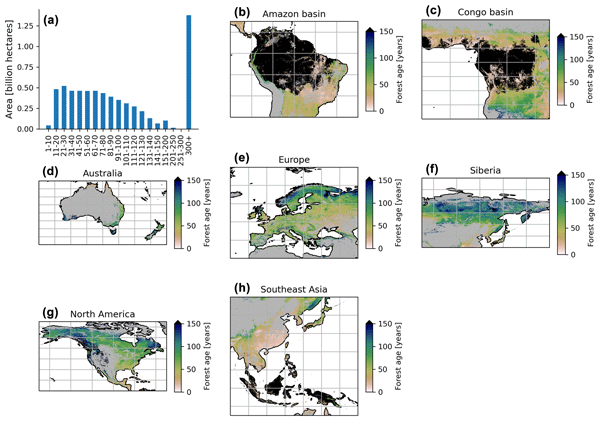
Simon Besnard, Sujan Koirala, Maurizio Santoro, Ulrich Weber, Jacob Nelson, Jonas Gütter, Bruno Herault, Justin Kassi, Anny N'Guessan, Christopher Neigh, Benjamin Poulter, Tao Zhang, and Nuno Carvalhais
Earth Syst. Sci. Data, 13, 4881–4896, https://doi.org/10.5194/essd-13-4881-2021, https://doi.org/10.5194/essd-13-4881-2021, 2021
Short summary
Short summary
Forest age can determine the capacity of a forest to uptake carbon from the atmosphere. Yet, a lack of global diagnostics that reflect the forest stage and associated disturbance regimes hampers the quantification of age-related differences in forest carbon dynamics. In this paper, we introduced a new global distribution of forest age inferred from forest inventory, remote sensing and climate data in support of a better understanding of the global dynamics in the forest water and carbon cycles.
Cornelius Senf, Felix Wieland-Glasmann, Katja Kowalski, Benjamin Jakimow, Anne-Katrin Behrens, Veronika Egger, Pia Emmert, Jonas Hänle, Marleen Hanzig, Jana Heinrich, Antonia Hostlowsky, Noah B. Maurer, Anabel Onay, Moritz Rachfahl, Klara Voggeneder, and Alba Viana-Soto
Earth Syst. Sci. Data Discuss., https://doi.org/10.5194/essd-2026-422, https://doi.org/10.5194/essd-2026-422, 2026
Preprint under review for ESSD
Short summary
Short summary
We provide a European database on forest disturbances, estimated from manual interpretation of satellite data. The database covers 35,000 sites and the years 1985-2023, resulting in 1,365,000 site-year combinations. We exemplify the use of our database by estimating disturbance rates and trends, and by comparing estimates against remote sensing products. Our database will help in better understanding forest change in Europe, and to decrease uncertainties in remote sensing-based assessments.
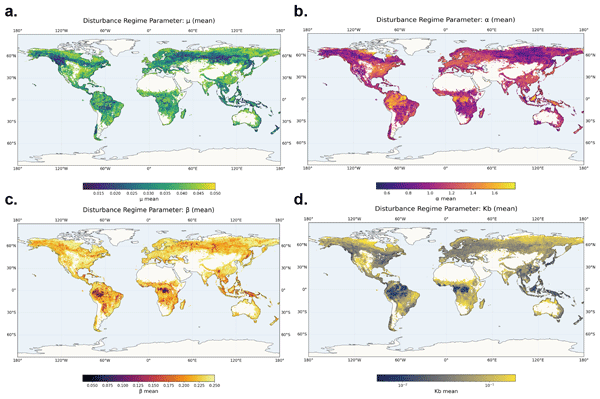
Siyuan Wang, Hui Yang, Sujan Koirala, Maurizio Santoro, Anna Candotti, Ulrich Weber, Ranit De, Claire Robin, Felix Cremer, Matthias Forkel, Markus Reichstein, and Nuno Carvalhais
Earth Syst. Sci. Data, 18, 5895–5913, https://doi.org/10.5194/essd-18-5895-2026, https://doi.org/10.5194/essd-18-5895-2026, 2026
Short summary
Short summary
Forest disturbances are difficult to predict in models because they occur randomly. We discovered that the long-term rules of disturbance known as
regimeleave a unique footprint in a forest's spatial biomass patterns. We trained a model on millions of computer simulations to learn this link. By applying this model to detailed satellite biomass, we could read these patterns to infer the disturbance regime globally, helping make climate projections more accurate.
Wanda De Keersmaecker, Astrid Verhegghen, Luc Bertels, Cornelius Senf, Alba Viana-Soto, Pieter Johannes Verkerk, Daniele Zanaga, and Ruben Van De Kerchove
Earth Syst. Sci. Data Discuss., https://doi.org/10.5194/essd-2026-329, https://doi.org/10.5194/essd-2026-329, 2026
Preprint under review for ESSD
Short summary
Short summary
In this study, we model the canopy height of woody vegetation across Europe at a spatial resolution of 10 m for the year 2020, using Copernicus Sentinel-1 and Sentinel-2 data. In addition, an independent validation dataset based on airborne LiDAR data — comprising about 3,700 patches of 640 × 640 m distributed across Europe — has been prepared. Comparisons with existing publicly available canopy height products indicate that our estimates are competitive with other canopy height datasets.
Konstantin Schellenberg, Sinikka J. Paulus, Ronald Queck, David Chaparro, Oliver Binks, Maurizio Mencuccini, Sharath S. Paligi, Henrik Hartmann, Christiane Schmullius, Clémence Dubois, and Thomas Jagdhuber
EGUsphere, https://doi.org/10.5194/egusphere-2026-1751, https://doi.org/10.5194/egusphere-2026-1751, 2026
Short summary
Short summary
We evaluated Global Navigation Satellite System (GNSS) signals to monitor forest water storage, helping to close an important observational gap in plant hydraulics and micrometeorology at stand-scale. We show that signal losses in the canopy are strongly linked to three-dimensionally modeled rainfall interception. However, detecting subtle fluxes, such as internal water dynamics, dew and intercepted light rain is inhibited by signal noise, and the hydraulics properties of the ecosystem.
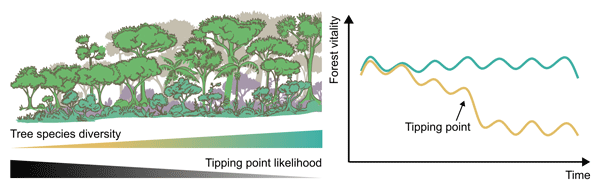
Johanna Van Passel, Koenraad Van Meerbeek, Paulo Negri Bernardino, Wanda De Keersmaecker, Stef Lhermitte, Bianca Fazio Rius, and Ben Somers
Biogeosciences, 23, 2545–2567, https://doi.org/10.5194/bg-23-2545-2026, https://doi.org/10.5194/bg-23-2545-2026, 2026
Short summary
Short summary
The Amazon forest is important for carbon storage, but climate change might push parts of it towards a tipping point into a degraded state. By studying satellite trends and tree diversity across different spatial scales, we found a larger tipping risk at smaller spatial scales than for the whole region. We also found that higher tree diversity makes the forest more stable and thus less likely to tip, although the effect is relatively weak, highlighting the importance of protecting biodiversity.
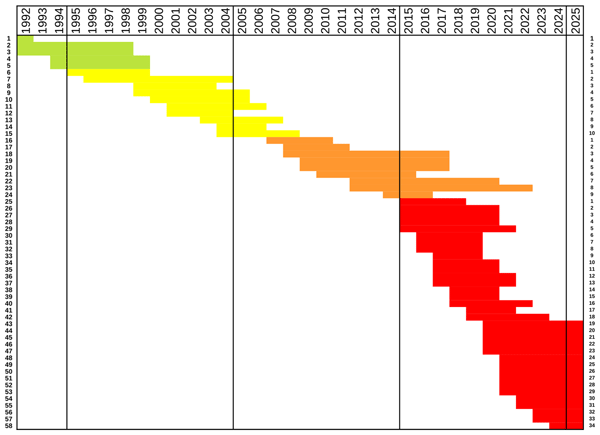
Tazio Strozzi, Erik Schytt Mannerfelt, Oliver Cartus, Maurizio Santoro, Thomas Schellenberger, and Andreas Kääb
The Cryosphere, 20, 1679–1697, https://doi.org/10.5194/tc-20-1679-2026, https://doi.org/10.5194/tc-20-1679-2026, 2026
Short summary
Short summary
By analysing 30 years of satellite SAR (Synthetic Aperture Radar) data, we have found that the number of glacier surges over Svalbard has tripled since 2015. We show that this increase is unlikely to be explained solely by improvements in data quality or by random fluctuations in surge frequency, suggesting that this trend is caused by an external forcing mechanism. Given our incomplete understanding of surge initiation, the cause of the observed threefold increase remains however uncertain.
Joana Melo, Simone Rossi, Frédéric Achard, Ramdane Alkama, Josep G. Canadell, Sandro Federici, Pierre Friedlingstein, David Gibbs, Nancy Harris, Viola Heinrich, Michael O’Sullivan, Glen P. Peters, Julia Pongratz, Melissa Rose, Rosa Roman-Cuesta, María J. Sanz, Clemens Schwingshackl, Stephen Sitch, and Giacomo Grassi
Earth Syst. Sci. Data Discuss., https://doi.org/10.5194/essd-2025-631, https://doi.org/10.5194/essd-2025-631, 2026
Preprint under review for ESSD
Short summary
Short summary
We created the LULUCF Data Hub to make information on how land use affects carbon dioxide emissions and removals more transparent and comparable among datasets. We show country-level data from national reports and global sources, allowing users to explore differences and similarities in land-based carbon fluxes. It helps identify where data agree, where they differ, and where more research is needed.
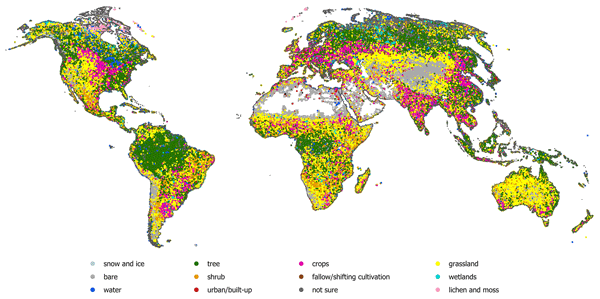
Myroslava Lesiv, Steffen Fritz, Martina Dürauer, Ivelina Georgieva, Marcel Buchhorn, Luc Bertels, Nandika Tsendbazar, Ruben Van De Kerchove, Daniele Zanaga, Dmitry Schepaschenko, Linda See, Martin Herold, Bruno Smets, Michael Cherlet, Andreas Brink, and Ian McCallum
Earth Syst. Sci. Data, 17, 6149–6155, https://doi.org/10.5194/essd-17-6149-2025, https://doi.org/10.5194/essd-17-6149-2025, 2025
Short summary
Short summary
This paper presents a unique global reference data set for land cover mapping at a 10 m resolution, aligned with Sentinel-2 imagery for the year 2015. It contains more than 16.5 million data records at a 10 m resolution (or 165 K data records at 100 m) and information on 12 different land cover classes. The data set was collected by a group of experts through visual interpretation of very high resolution imagery, along with other sources of information provided in the Geo-Wiki platform.
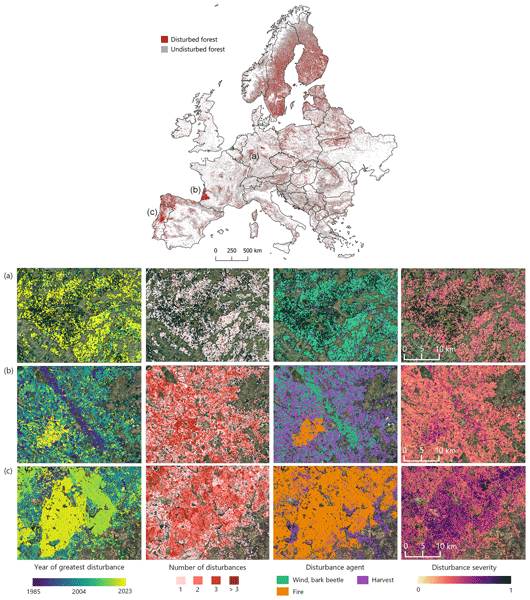
Alba Viana-Soto and Cornelius Senf
Earth Syst. Sci. Data, 17, 2373–2404, https://doi.org/10.5194/essd-17-2373-2025, https://doi.org/10.5194/essd-17-2373-2025, 2025
Short summary
Short summary
Europe's forests are undergoing complex changes in response to increasing disturbances driven by climate and land use changes. Here, we present the European Forest Disturbance Atlas, a satellite-based approach for mapping annual forest disturbances across continental Europe from 1985 onwards. Maps provide insights into the year of disturbance occurrence, the actual frequency of disturbances, severity and the underlying causal agent, thus contributing to a future monitoring system envisioned for Europe.
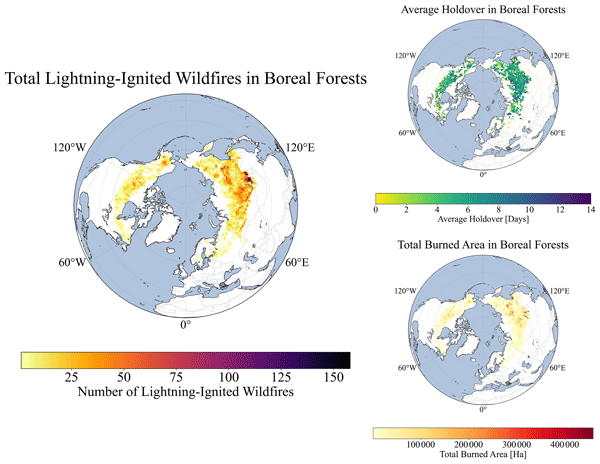
Brittany Engle, Ivan Bratoev, Morgan A. Crowley, Yanan Zhu, and Cornelius Senf
Earth Syst. Sci. Data, 17, 2249–2276, https://doi.org/10.5194/essd-17-2249-2025, https://doi.org/10.5194/essd-17-2249-2025, 2025
Short summary
Short summary
The pan-boreal lightning-ignited wildfire (BoLtFire) dataset spans the entire boreal forest from 2012 to 2022, focusing on fires of at least 200 ha. Developed using a new methodology to match lightning to wildfires in the boreal region, it includes 6902 fires – 4201 in Eurasia and 2701 in North America. BoLtFire provides new opportunities to model the ignition and spread dynamics of boreal wildfires and offers deeper insights into lightning-driven fire activity globally.
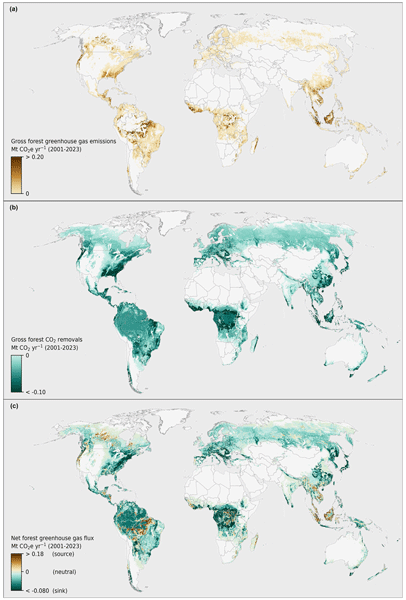
David A. Gibbs, Melissa Rose, Giacomo Grassi, Joana Melo, Simone Rossi, Viola Heinrich, and Nancy L. Harris
Earth Syst. Sci. Data, 17, 1217–1243, https://doi.org/10.5194/essd-17-1217-2025, https://doi.org/10.5194/essd-17-1217-2025, 2025
Short summary
Short summary
Updated global maps of greenhouse gas (GHG) emissions and sequestration by forests from 2001 onwards using satellite-derived data show that forests are strong net carbon sinks, capturing about as much CO2 each year on average as the USA emitted from fossil fuels in 2019. After reclassifying fluxes to countries’ reporting categories for national GHG inventories, we found that roughly two-thirds of the net CO2 flux from forests is anthropogenic and one-third is non-anthropogenic.
Mauro Hermann, Matthias Röthlisberger, Arthur Gessler, Andreas Rigling, Cornelius Senf, Thomas Wohlgemuth, and Heini Wernli
Biogeosciences, 20, 1155–1180, https://doi.org/10.5194/bg-20-1155-2023, https://doi.org/10.5194/bg-20-1155-2023, 2023
Short summary
Short summary
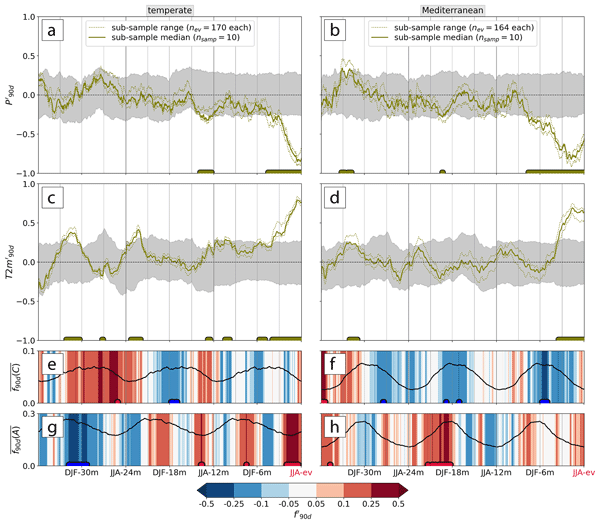
This study examines the multi-annual meteorological history of low-forest-greenness events in Europe's temperate and Mediterranean biome in 2002–2022. We systematically identify anomalies in temperature, precipitation, and weather systems as event precursors, with noteworthy differences between the two biomes. We also quantify the impact of the most extensive event in 2022 (37 % coverage), underlining the importance of understanding the forest–meteorology interaction in a changing climate.
Simon Besnard, Sujan Koirala, Maurizio Santoro, Ulrich Weber, Jacob Nelson, Jonas Gütter, Bruno Herault, Justin Kassi, Anny N'Guessan, Christopher Neigh, Benjamin Poulter, Tao Zhang, and Nuno Carvalhais
Earth Syst. Sci. Data, 13, 4881–4896, https://doi.org/10.5194/essd-13-4881-2021, https://doi.org/10.5194/essd-13-4881-2021, 2021
Short summary
Short summary
Forest age can determine the capacity of a forest to uptake carbon from the atmosphere. Yet, a lack of global diagnostics that reflect the forest stage and associated disturbance regimes hampers the quantification of age-related differences in forest carbon dynamics. In this paper, we introduced a new global distribution of forest age inferred from forest inventory, remote sensing and climate data in support of a better understanding of the global dynamics in the forest water and carbon cycles.
Cited articles
Bergkvist, J., Lagergren, F., Islam, M. R., Wårlind, D., Miller, P. A., Finnander Linderson, M.-L., Lindeskog, M., and Jönsson, A. M.: Quantifying the impact of climate change and forest management on Swedish forest ecosystems using the dynamic vegetation model LPJ-GUESS, Earth's Future, 13, e2024EF004662, https://doi.org/10.1029/2024EF004662, 2025.
Berthelot, S., Frühbrodt, T., Hajek, P., Nock, C. A., Dormann, C. F., Bauhus, J., and Fründ, J.: Tree diversity reduces the risk of bark beetle infestation for preferred conifer species, but increases the risk for less preferred hosts, J. Ecol., 109, 2649–2661, https://doi.org/10.1111/1365-2745.13672, 2021.
Besnard, S.: simonbesnard1/structshift: first release (Version v202608), Zenodo [software], https://doi.org/10.5281/zenodo.22115851, 2026.
Besnard, S., Koirala, S., Santoro, M., Weber, U., Nelson, J., Gütter, J., Herault, B., Kassi, J., N'Guessan, A., Neigh, C., Poulter, B., Zhang, T., and Carvalhais, N.: Mapping global forest age from forest inventories, biomass and climate data, Earth Syst. Sci. Data, 13, 4881–4896, https://doi.org/10.5194/essd-13-4881-2021, 2021.
Besnard, S., Santoro, M., Herold, M., Cartus, O., Gütter, J., Heinrich, V. H. A., Herault, B., Kassi, J., Koirala, S., N'Guessan, A., Neigh, C., Nelson, J. A., Poulter, B., Weber, U., Zhang, T., and Carvalhais, N.: Global Age Mapping Integration (GAMI), V.2.0, GFZ Data Services [data set], https://doi.org/10.5880/GFZ.1.4.2023.006, 2024.
Besnard, S., Heinrich, V. H. A., Carvalhais, N., Ciais, P., Herold, M., Luijkx, I., Peters, W., Requena Suarez, D., Santoro, M., and Yang, H.: Global covariation of forest age transitions with the net carbon balance, Nat. Ecol. Evol., 9, 1848–1860, https://doi.org/10.1038/s41559-025-02821-5, 2025a.
Besnard, S., Viana-Soto, A., Hartmann, H., Patacca, M., Heinrich, V. H. A., Kowalski, K., Santoro, M., De Keersmaecker, W., Van De Kerchove, R., Herold, M., and Senf, C.: Natural disturbances increasingly affect Europe's most mature and carbon-rich forests, Version 2025.11.1, Zenodo [data set], https://doi.org/10.5281/zenodo.17977435, 2025b.
Brockerhoff, E. G., Jactel, H., Parrotta, J. A., Quine, C. P., and Sayer, J.: Plantation forests and biodiversity: oxymoron or opportunity?, Biodivers. Conserv., 17, 925–951, https://doi.org/10.1007/s10531-008-9380-x, 2008.
Brzeziecki, B., Woods, K., Bolibok, L., Zajączkowski, J., Drozdowski, S., Bielak, K., and Żybura, H.: Over 80 years without major disturbance, late-successional Białowieża woodlands exhibit complex dynamism, with coherent compositional shifts towards true old-growth conditions, J. Ecol., 108, 1138–1154, https://doi.org/10.1111/1365-2745.13367, 2020.
Calle, L. and Poulter, B.: Ecosystem age-class dynamics and distribution in the LPJ-wsl v2.0 global ecosystem model, Geosci. Model Dev., 14, 2575–2601, https://doi.org/10.5194/gmd-14-2575-2021, 2021.
Ceccherini, G., Duveiller, G., Grassi, G., Lemoine, G., Avitabile, V., Pilli, R., and Cescatti, A.: Abrupt increase in harvested forest area over Europe after 2015, Nature, 583, 72–77, https://doi.org/10.1038/s41586-020-2438-y, 2020.
Davydenko, K., Vasaitis, R., Elfstrand, M., Baturkin, D., Meshkova, V., and Menkis, A.: Fungal communities vectored by Ips sexdentatus in declining Pinus sylvestris in Ukraine: focus on occurrence and pathogenicity of Ophiostomatoid species, Insects, 12, 1119, https://doi.org/10.3390/insects12121119, 2021.
De Keersmaecker, W., Zanaga, D., Senf, C., Viana-Soto, A., Klapper, J., Blickensdörfer, L., Govaere, L., Lerink, B., Leyman, A., Schelhaas, M.-J., Teeuwen, S., Verkerk, P. J., and Van De Kerchove, R.: ForestPaths: European tree genus map (Version v0.0.1), Zenodo [data set], https://doi.org/10.5281/zenodo.13341104, 2024.
European Commission: Communication: New EU Forest Strategy for 2030, European Commission, https://commission.europa.eu/document/cf3294e1-8358-4c93-8de4-3e1503b95201_en (last access: 30 July 2025), 2021.
European Forest Institute: Living with bark beetles: impacts, outlook and management options, European Forest Institute, https://efi.int/publication/living-bark-beetles-impacts-outlook-and-management-options (last access: 8 July 2025), 2019.
European Union: Regulation (EU) 2023/839, EUR-Lex, https://eur-lex.europa.eu/eli/reg/2023/839/oj/eng (last access: 8 July 2025), 2023.
European Union: Regulation (EU) 2024/1991, EUR-Lex, https://eur-lex.europa.eu/legal-content/EN/TXT/?uri=CELEX:32024R1991&qid=1722240349976 (last access: 28 July 2025), 2024.
Forzieri, G., Dakos, V., McDowell, N. G., Ramdane, A., and Cescatti, A.: Emerging signals of declining forest resilience under climate change, Nature, 608, 534–539, https://doi.org/10.1038/s41586-022-04959-9, 2022.
Grünig, M., Rammer, W., Senf, C., Albrich, K., André, F., Augustynczik, A. L. D., Baumann, M., Bohn, F. J., Bouwman, M., Bugmann, H., Collalti, A., Cristal, I., Dalmonech, D., De Coligny, F., Dobor, L., Dollinger, C., Espelta, J. M., Forrester, D. I., Garcia-Gonzalo, J., González-Olabarria, J. R., Hiltner, U., Hlásny, T., Honkaniemi, J., Huber, N., Jonard, M., Jönsson, A. M., Kunstler, G., Lagergren, F., Lindner, M., Mina, M., Moos, C., Morin, X., Muys, B., Nabuurs, G.-J., Nieberg, M., Patacca, M., Peltoniemi, M., Reyer, C. P. O., Schelhaas, M.-J., Storms, I., Thom, D., Toïgo, M., and Seidl, R.: Climate change will increase forest disturbances in Europe throughout the 21st century, Science, 391, eadx6329, https://doi.org/10.1126/science.adx6329, 2026.
Hansen, M. C., Potapov, P. V., Moore, R., Hancher, M., Turubanova, S. A., Tyukavina, A., Thau, D., Stehman, S. V., Goetz, S. J., Loveland, T. R., Kommareddy, A., Egorov, A., Chini, L., Justice, C. O., and Townshend, J. R. G.: High-resolution global maps of 21st-century forest cover change, Science, 342, 850–853, https://doi.org/10.1126/science.1244693, 2013.
Hartmann, H., Battisti, A., Brockerhoff, E., Bełka, M., Hurling, R., Jactel, H., Oliva, J., Rousselet, J., Terhonen, E., Ylioja, T., Melin, M., Olson, Å., De Prins, F., Zhang, K., Stein Åslund, M., Davydenko, K., Menkis, A., Elfstrand, M., Zúbrik, M., Kunca, A., Galko, J., Paulin, M., Csóka, G., Hoch, G., Pernek, M., Preidl, S., and Fischer, R.: European forests are under increasing pressure from global change-driven invasions and accelerating epidemics by insects and diseases, Themenh. Waldschutz Im Klimawandel, 77, 6–24, https://doi.org/10.5073/JfK.2025.02.02, 2025.
Hermann, M., Röthlisberger, M., Gessler, A., Rigling, A., Senf, C., Wohlgemuth, T., and Wernli, H.: Meteorological history of low-forest-greenness events in Europe in 2002–2022, Biogeosciences, 20, 1155–1180, https://doi.org/10.5194/bg-20-1155-2023, 2023.
Hlásny, T., König, L., Krokene, P., Lindner, M., Montagné-Huck, C., Müller, J., Qin, H., Raffa, K. F., Schelhaas, M.-J., Svoboda, M., Viiri, H., and Seidl, R.: Bark beetle outbreaks in Europe: state of knowledge and ways forward for management, Curr. For. Rep., 7, 138–165, https://doi.org/10.1007/s40725-021-00142-x, 2021.
International Tree Mortality Network: Towards a global understanding of tree mortality, New Phytol., 245, 2377–2392, https://doi.org/10.1111/nph.20407, 2025.
Jaime, L., Batllori, E., Ferretti, M., and Lloret, F.: Climatic and stand drivers of forest resistance to recent bark beetle disturbance in European coniferous forests, Glob. Change Biol., 28, 2830–2841, https://doi.org/10.1111/gcb.16106, 2022.
Jakoby, O., Lischke, H., and Wermelinger, B.: Climate change alters elevational phenology patterns of the European spruce bark beetle (Ips typographus), Glob. Change Biol., 25, 4048–4063, https://doi.org/10.1111/gcb.14766, 2019.
Junttila, S., Blomqvist, M., Laukkanen, V., Heinaro, E., Polvivaara, A., O'Sullivan, H., Yrttimaa, T., Vastaranta, M., and Peltola, H.: Significant increase in forest canopy mortality in boreal forests in Southeast Finland, For. Ecol. Manag., 565, 122020, https://doi.org/10.1016/j.foreco.2024.122020, 2024.
Kärvemo, S., Huo, L., Öhrn, P., Lindberg, E., and Persson, H. J.: Different triggers, different stories: bark-beetle infestation patterns after storm and drought-induced outbreaks, For. Ecol. Manag., 545, 121255, https://doi.org/10.1016/j.foreco.2023.121255, 2023.
Korhonen, K. T., Ahola, A., Heikkinen, J., Henttonen, H. M., Hotanen, J.-P., Ihalainen, A., Melin, M., Pitkänen, J., Räty, M., Sirviö, M., and Strandström, M.: Forests of Finland 2014–2018 and their development 1921–2018, Silva Fenn., 55, 10662, https://doi.org/10.14214/sf.10662, 2021.
Kowalski, K., Viana-Soto, A., Brandt, M., Ciais, P., De Keersmaecker, W., Fensholt, R., Pugh, T. A. M., Xu, Y., and Senf, C.: Accelerating biomass loss from forest disturbances across Europe, Nat. Geosci., https://doi.org/10.1038/s41561-026-02032-y, 2026.
Lindegaard, K. N., Adams, P. W. R., Holley, M., Lamley, A., Henriksson, A., Larsson, S., Lopez, G. E., and Pisarek, M.: Short rotation plantations policy history in Europe: lessons from the past and recommendations for the future, Food Energy Secur., 5, 125–152, https://doi.org/10.1002/fes3.86, 2016.
Migliavacca, M., Grassi, G., Bastos, A., Ceccherini, G., Ciais, P., Janssens-Maenhout, G., Lugato, E., Mahecha, M. D., Novick, K. A., Peñuelas, J., Pilli, R., Reichstein, M., Avitabile, V., Beck, P. S. A., Barredo, J. I., Forzieri, G., Herold, M., Korosuo, A., Mansuy, N., Mubareka, S., Orth, R., Rougieux, P., and Cescatti, A.: Securing the forest carbon sink for the European Union's climate ambition, Nature, 643, 1203–1213, https://doi.org/10.1038/s41586-025-08967-3, 2025.
Moomaw, W. R., Masino, S. A., and Faison, E. K.: Intact forests in the United States: proforestation mitigates climate change and serves the greatest good, Front. For. Glob. Change, 2, 27, https://doi.org/10.3389/ffgc.2019.00027, 2019.
Mosig, C., Vajna-Jehle, J., Mahecha, M. D., Cheng, Y., Hartmann, H., Montero, D., Junttila, S., Horion, S., Schwenke, M. B., Adu-Bredu, S., Al-Halbouni, D., Allen, M., Altman, J., Angiolini, C., Astrup, R., Barrasso, C., Bartholomeus, H., Brede, B., Buras, A., Carrieri, E., Chirici, G., Cloutier, M., Cushman, K. C., Dalling, J. W., Dempewolf, J., Denter, M., Ecke, S., Eichel, J., Eltner, A., Fabi, M., Fassnacht, F., Feirreira, M. P., Frey, J., Frick, A., Ganz, S., Garbarino, M., García, M., Gassilloud, M., Ghasemi, M., Giannetti, F., Gonzalez, R., Gosper, C., Greinwald, K., Grieve, S., Gutierrez, J. A., Göritz, A., Hajek, P., Hedding, D., Hempel, J., Hernández, M., Heurich, M., Honkavaara, E., Jucker, T., Kalwij, J. M., Khatri-Chhetri, P., Klemmt, H.-J., Koivumäki, N., Korznikov, K., Kruse, S., Krüger, R., Laliberté, E., Langan, L., Latifi, H., Lehmann, J., Li, L., Lines, E., Lopatin, J., Lucieer, A., Ludwig, M., Ludwig, A., Lyytikäinen-Saarenmaa, P., Ma, Q., Marino, G., Maroschek, M., Meloni, F., Menzel, A., Meyer, H., Miraki, M., Moreno-Fernández, D., Muller-Landau, H. C., Mälicke, M., Möhring, J., Müllerova, J., Neumeier, P., Näsi, R., Oppgenoorth, L., Palmer, M., Paul, T., Potts, A., Prober, S., Puliti, S., Pérez-Priego, O., Reudenbach, C., Rossi, C., Ruehr, N. K., Ruiz-Benito, P., Runge, C. M., Scherer-Lorenzen, M., Schiefer, F., Schladebach, J., Schmehl, M.-T., Schwarz, S., Seidl, R., Shafeian, E., Simone, L. de, Sohrabi, H., Sotomayor, L., Sparrow, B., Steer, B. S. C., Stenson, M., Stöckigt, B., Su, Y., Suomalainen, J., Torresani, M., Umlauft, J., Vargas-Ramírez, N., Volpi, M., Vásquez, V., Weinstein, B., Ximena, T. C., Zdunic, K., Zielewska-Büttner, K., Oliveira, R. A. de, Wagtendonk, L. van, Dosky, V. von, and Kattenborn, T.: deadtrees.earth – an open-access and interactive database for centimeter-scale aerial imagery to uncover global tree mortality dynamics, Remote Sens. Environ., 332, 115027, https://doi.org/10.1016/j.rse.2025.115027, 2026.
Nabuurs, G.-J., Lindner, M., Verkerk, P. J., Gunia, K., Deda, P., Michalak, R., and Grassi, G.: First signs of carbon sink saturation in European forest biomass, Nat. Clim. Change, 3, 792–796, https://doi.org/10.1038/nclimate1853, 2013.
Neuner, S., Albrecht, A., Cullmann, D., Engels, F., Griess, V. C., Hahn, W. A., Hanewinkel, M., Härtl, F., Kölling, C., Staupendahl, K., and Knoke, T.: Survival of Norway spruce remains higher in mixed stands under a dryer and warmer climate, Glob. Change Biol., 21, 935–946, https://doi.org/10.1111/gcb.12751, 2015.
O'Sullivan, M., Sitch, S., Friedlingstein, P., Luijkx, I. T., Peters, W., Rosan, T. M., Arneth, A., Arora, V. K., Chandra, N., Chevallier, F., Ciais, P., Falk, S., Feng, L., Gasser, T., Houghton, R. A., Jain, A. K., Kato, E., Kennedy, D., Knauer, J., McGrath, M. J., Niwa, Y., Palmer, P. I., Patra, P. K., Pongratz, J., Poulter, B., Rödenbeck, C., Schwingshackl, C., Sun, Q., Tian, H., Walker, A. P., Yang, D., Yuan, W., Yue, X., and Zaehle, S.: The key role of forest disturbance in reconciling estimates of the northern carbon sink, Commun. Earth Environ., 5, 1–10, https://doi.org/10.1038/s43247-024-01827-4, 2024.
Pan, Y., Birdsey, R. A., Phillips, O. L., Houghton, R. A., Fang, J., Kauppi, P. E., Keith, H., Kurz, W. A., Ito, A., Lewis, S. L., Nabuurs, G.-J., Shvidenko, A., Hashimoto, S., Lerink, B., Schepaschenko, D., Castanho, A., and Murdiyarso, D.: The enduring world forest carbon sink, Nature, 631, 563–569, https://doi.org/10.1038/s41586-024-07602-x, 2024.
Patacca, M., Lindner, M., Lucas-Borja, M. E., Cordonnier, T., Fidej, G., Gardiner, B., Hauf, Y., Jasinevičius, G., Labonne, S., Linkevičius, E., Mahnken, M., Milanovic, S., Nabuurs, G.-J., Nagel, T. A., Nikinmaa, L., Panyatov, M., Bercak, R., Seidl, R., Ostrogović Sever, M. Z., Socha, J., Thom, D., Vuletic, D., Zudin, S., and Schelhaas, M.-J.: Significant increase in natural disturbance impacts on European forests since 1950, Glob. Change Biol., 29, 1359–1376, https://doi.org/10.1111/gcb.16531, 2023.
Pulgarin Diaz, J. A., Melin, M., Ylioja, T., Lyytikäinen-Saarenmaa, P., Peltola, H., and Tikkanen, O.-P.: Relationship between stand and landscape attributes and Ips typographus salvage loggings in Finland, Silva Fenn., 58, 23069, https://doi.org/10.14214/sf.23069, 2024.
Raffa, K. F., Aukema, B. H., Bentz, B. J., Carroll, A. L., Hicke, J. A., Turner, M. G., and Romme, W. H.: Cross-scale drivers of natural disturbances prone to anthropogenic amplification: the dynamics of bark beetle eruptions, BioScience, 58, 501–517, https://doi.org/10.1641/B580607, 2008.
Ritter, F., Ciais, P., Senf, C., Santoro, M., Xu, Y., Pelissier-Tanon, A., Schwartz, M., Fayad, I., Carvalhais, N., Brandt, M., Fensholt, R., Besnard, S., and Avitabile, V.: Alarming decline in the carbon sink of European forests driven by disturbances, Natl. Sci. Rev., nwag354, https://doi.org/10.1093/nsr/nwag354, 2026.
Rizzo, M. L. and Székely, G. J.: Energy distance, WIREs Comput. Stat., 8, 27–38, https://doi.org/10.1002/wics.1375, 2016.
Santoro, M. and Cartus, O.: ESA Biomass Climate Change Initiative (Biomass_cci): global datasets of forest above-ground biomass for the years 2007, 2010, 2015, 2016, 2017, 2018, 2019, 2020, 2021 and 2022, v6.0, NERC EDS Centre for Environmental Data Analysis [data set], https://doi.org/10.5285/95913ffb6467447ca72c4e9d8cf30501, 2025.
Santoro, M., Cartus, O., Quegan, S., Kay, H., Lucas, R. M., Araza, A., Herold, M., Labrière, N., Chave, J., Rosenqvist, Å., and Tadono, T.: Design and performance of the Climate Change Initiative Biomass global retrieval algorithm, Sci. Remote Sens., 10, 100169, https://doi.org/10.1016/j.srs.2024.100169, 2024.
Schelhaas, M. J., Nabuurs, G. J., and Schuck, A.: Natural disturbances in the European forests in the 19th and 20th centuries, Glob. Change Biol., 9, 1620–1633, https://doi.org/10.1046/j.1365-2486.2003.00684.x, 2003.
Schütz, J. P.: Silvicultural tools to develop irregular and diverse forest structures, Forestry, 75, 329–337, https://doi.org/10.1093/forestry/75.4.329, 2002.
Seidl, R. and Senf, C.: Changes in planned and unplanned canopy openings are linked in Europe's forests, Nat. Commun., 15, 4741, https://doi.org/10.1038/s41467-024-49116-0, 2024.
Seidl, R., Schelhaas, M. J., Rammer, W., and Verkerk, P. J.: Increasing forest disturbances in Europe and their impact on carbon storage, Nat. Clim. Change, 4, 806–810, https://doi.org/10.1038/nclimate2318, 2014.
Seidl, R., Donato, D. C., Raffa, K. F., and Turner, M. G.: Spatial variability in tree regeneration after wildfire delays and dampens future bark beetle outbreaks, P. Natl. Acad. Sci. USA, 113, 13075–13080, https://doi.org/10.1073/pnas.1615263113, 2016a.
Seidl, R., Müller, J., Hothorn, T., Bässler, C., Heurich, M., and Kautz, M.: Small beetle, large-scale drivers: how regional and landscape factors affect outbreaks of the European spruce bark beetle, J. Appl. Ecol., 53, 530–540, https://doi.org/10.1111/1365-2664.12540, 2016b.
Senf, C. and Seidl, R.: Natural disturbances are spatially diverse but temporally synchronized across temperate forest landscapes in Europe, Glob. Change Biol., 24, 1201–1211, https://doi.org/10.1111/gcb.13897, 2018.
Senf, C. and Seidl, R.: Persistent impacts of the 2018 drought on forest disturbance regimes in Europe, Biogeosciences, 18, 5223–5230, https://doi.org/10.5194/bg-18-5223-2021, 2021.
Senf, C. and Seidl, R.: Post-disturbance canopy recovery and the resilience of Europe's forests, Glob. Ecol. Biogeogr., 31, 25–36, https://doi.org/10.1111/geb.13406, 2022.
Senf, C., Seidl, R., Knoke, T., and Jucker, T.: Taylor's law predicts unprecedented pulses of forest disturbance under global change, Nat. Commun., 16, 6133, https://doi.org/10.1038/s41467-025-61585-5, 2025.
Siitonen, J.: Ips acuminatus kills pines in southern Finland, Silva Fenn., 48, 1145, https://doi.org/10.14214/sf.1145, 2014.
Sommerfeld, A., Rammer, W., Heurich, M., Hilmers, T., Müller, J., and Seidl, R.: Do bark beetle outbreaks amplify or dampen future bark beetle disturbances in Central Europe?, J. Ecol., 109, 737–749, https://doi.org/10.1111/1365-2745.13502, 2021.
Suvanto, S., Esquivel-Muelbert, A., Schelhaas, M. J., Astigarraga, J., Astrup, R., Cienciala, E., Fridman, J., Henttonen, H. M., Kunstler, G., Kändler, G., König, L. A., Ruiz-Benito, P., Senf, C., Stadelmann, G., Starcevic, A., Talarczyk, A., Zavala, M. A., and Pugh, T. A. M.: Understanding Europe's forest harvesting regimes, Earth's Future, 13, e2024EF005225, https://doi.org/10.1029/2024EF005225, 2025.
Taylor, L. R.: Aggregation, variance and the mean, Nature, 189, 732–735, https://doi.org/10.1038/189732a0, 1961.
Turubanova, S., Potapov, P., Hansen, M. C., Li, X., Tyukavina, A., Pickens, A. H., Hernandez-Serna, A., Arranz, A. P., Guerra-Hernandez, J., Senf, C., Häme, T., Valbuena, R., Eklundh, L., Brovkina, O., Navrátilová, B., Novotný, J., Harris, N., and Stolle, F.: Tree canopy extent and height change in Europe, 2001–2021, quantified using Landsat data archive, Remote Sens. Environ., 298, 113797, https://doi.org/10.1016/j.rse.2023.113797, 2023.
Viana-Soto, A. and Senf, C.: The European Forest Disturbance Atlas: a forest disturbance monitoring system using the Landsat archive, Earth Syst. Sci. Data, 17, 2373–2404, https://doi.org/10.5194/essd-17-2373-2025, 2025.
Wermelinger, B. and Seifert, M.: Temperature-dependent reproduction of the spruce bark beetle Ips typographus, and analysis of the potential population growth, Ecol. Entomol., 24, 103–110, https://doi.org/10.1046/j.1365-2311.1999.00175.x, 1999.
Weynants, M., Ji, C., Linscheid, N., Weber, U., Mahecha, M. D., and Gans, F.: Dheed: an ERA5 based global database of compound dry and hot extreme events from 1950 to 2023, Earth Syst. Sci. Data, 17, 6621–6645, https://doi.org/10.5194/essd-17-6621-2025, 2025.
Zweifel, R., Pappas, C., Peters, R. L., Babst, F., Balanzategui, D., Basler, D., Bastos, A., Beloiu, M., Buchmann, N., Bose, A. K., Braun, S., Damm, A., D'Odorico, P., Eitel, J. U. H., Etzold, S., Fonti, P., Rouholahnejad Freund, E., Gessler, A., Haeni, M., Hoch, G., Kahmen, A., Körner, C., Krejza, J., Krumm, F., Leuchner, M., Leuschner, C., Lukovic, M., Martínez-Vilalta, J., Matula, R., Meesenburg, H., Meir, P., Plichta, R., Poyatos, R., Rohner, B., Ruehr, N., Salomón, R. L., Scharnweber, T., Schaub, M., Steger, D. N., Steppe, K., Still, C., Stojanović, M., Trotsiuk, V., Vitasse, Y., von Arx, G., Wilmking, M., Zahnd, C., and Sterck, F.: Networking the forest infrastructure towards near real-time monitoring – a white paper, Sci. Total Environ., 872, 162167, https://doi.org/10.1016/j.scitotenv.2023.162167, 2023.
Editorial statement
European forests are an important carbon sink, but this sink and the carbon stocks that these forests contain are at risk from biotic disturbances and extreme events. Besnard and others use observations of forest changes to show that older and more carbon rich forests are disproportionately impacted by these events and are projected to become even more susceptible, emphasizing the role of proactive management to ensure forest resilience and diversity.
European forests are an important carbon sink, but this sink and the carbon stocks that these...
Short summary
Europe’s forests store vast amounts of carbon, but climate-driven disturbances are becoming more frequent. By combining satellite records with information on forest age and structure, we show that recent disturbances increasingly affect the oldest and most carbon-rich forests, particularly spruce forests in Central Europe. This emerging pattern puts long-accumulated carbon at risk and may reduce the long-term climate benefits provided by Europe’s forests.
Europe’s forests store vast amounts of carbon, but climate-driven disturbances are becoming more...


Altmetrics
Final-revised paper
Preprint