
Articles | Volume 23, issue 17
https://doi.org/10.5194/bg-23-6287-2026
© Author(s) 2026. This work is distributed under
the Creative Commons Attribution 4.0 License.
the Creative Commons Attribution 4.0 License.
https://doi.org/10.5194/bg-23-6287-2026
© Author(s) 2026. This work is distributed under
the Creative Commons Attribution 4.0 License.
the Creative Commons Attribution 4.0 License.
Research article
| Highlight paper
| 
11 Sep 2026
Research article | Highlight paper |
| 11 Sep 2026
| 11 Sep 2026
Imaging deep carbon stocks with complex electrical conductivity
Adrián Flores Orozco
CORRESPONDING AUTHOR

Department of Geodesy and Geoinformation, TU Wien, Vienna, 1040, Austria
Jakob Gallistl
Department of Geodesy and Geoinformation, TU Wien, Vienna, 1040, Austria
Near Surface Geophysics, GeoSphere Austria, Vienna, 1190, Austria
Benjamin S. Gilfedder
Chair of Hydrology, Faculty of Regional and Environmental Sciences, University of Trier, Trier, Germany
Timea Katona
Department of Geodesy and Geoinformation, TU Wien, Vienna, 1040, Austria
Sven Frei
Department of Environmental Science, Wageningen University & Research, Wageningen, 9101, the Netherlands
Peter Strauss
Institute for Land and Water Management Research, Federal Agency for Water Management, Scharfling, 5310, Austria
Gunter Blöschl
Institute of Hydraulic Engineering and Water Resources Management, TU Wien, Vienna, 1040, Austria
Related authors
Clemens Moser, Umberto Morra di Cella, Christian Hauck, and Adrián Flores Orozco
The Cryosphere, 19, 143–171, https://doi.org/10.5194/tc-19-143-2025, https://doi.org/10.5194/tc-19-143-2025, 2025
Short summary
Short summary
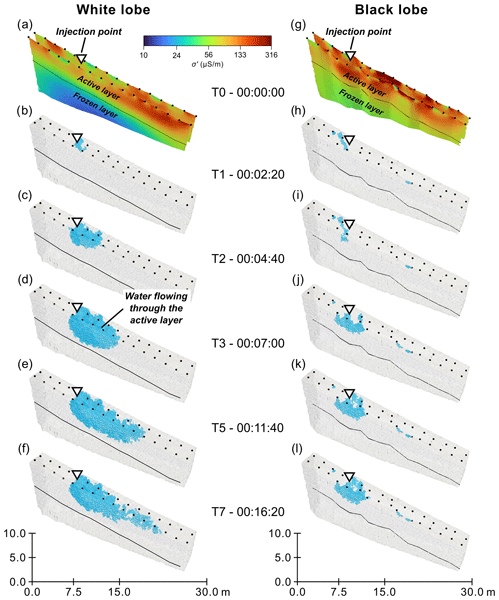
We use electrical conductivity and induced polarization in an imaging framework to quantify hydrogeological parameters in the active Gran Sometta rock glacier. The results show high spatial variability in the hydrogeological parameters across the rock glacier and are validated by saltwater tracer tests coupled with 3D electrical conductivity imaging. Hydrogeological information was linked to kinematic data to further investigate its role in rock glacier movement.
Theresa Maierhofer, Adrian Flores Orozco, Nathalie Roser, Jonas K. Limbrock, Christin Hilbich, Clemens Moser, Andreas Kemna, Elisabetta Drigo, Umberto Morra di Cella, and Christian Hauck
The Cryosphere, 18, 3383–3414, https://doi.org/10.5194/tc-18-3383-2024, https://doi.org/10.5194/tc-18-3383-2024, 2024
Short summary
Short summary
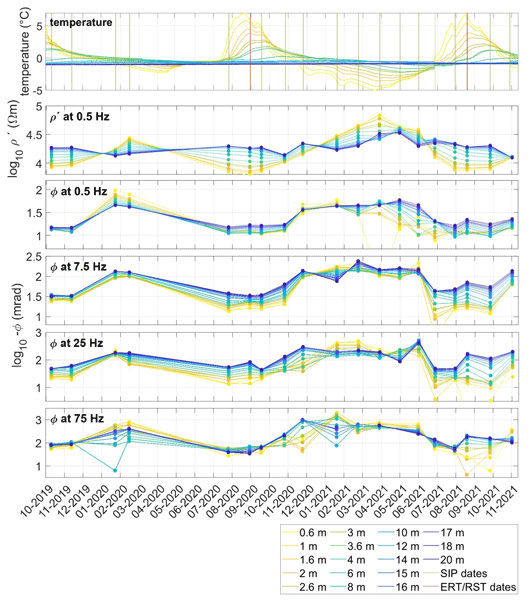
In this study, we apply an electrical method in a high-mountain permafrost terrain in the Italian Alps, where long-term borehole temperature data are available for validation. In particular, we investigate the frequency dependence of the electrical properties for seasonal and annual variations along a 3-year monitoring period. We demonstrate that our method is capable of resolving temporal changes in the thermal state and the ice / water ratio associated with seasonal freeze–thaw processes.
Theresa Maierhofer, Christian Hauck, Christin Hilbich, Andreas Kemna, and Adrián Flores-Orozco
The Cryosphere, 16, 1903–1925, https://doi.org/10.5194/tc-16-1903-2022, https://doi.org/10.5194/tc-16-1903-2022, 2022
Short summary
Short summary
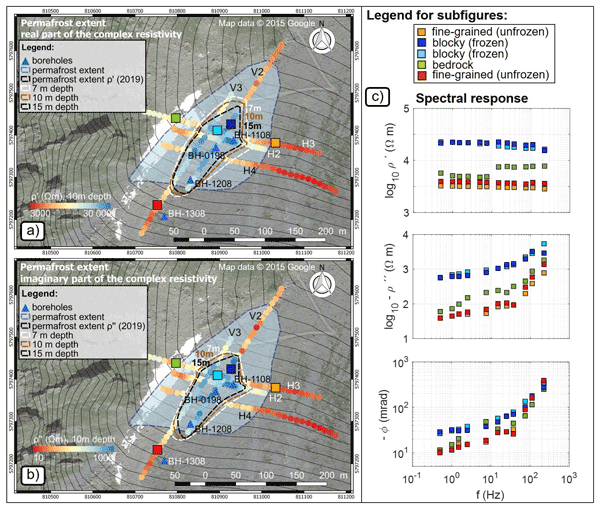
We extend the application of electrical methods to characterize alpine permafrost using the so-called induced polarization (IP) effect associated with the storage of charges at the interface between liquid and solid phases. We investigate different field protocols to enhance data quality and conclude that with appropriate measurement and processing procedures, the characteristic dependence of the IP response of frozen rocks improves the assessment of thermal state and ice content in permafrost.
Songkun Yan, Mengye Chen, Jonathan J. Gourley, Jian Zhang, Günter Blöschl, Paul Bates, Zhi Li, Siyu Zhu, Abigail Snooks, Yixin Wen, Xiaodong Chen, Chengbin Deng, Juan Camilo Parra Toro, Meihong Ma, and Yang Hong
Earth Syst. Sci. Data Discuss., https://doi.org/10.5194/essd-2026-695, https://doi.org/10.5194/essd-2026-695, 2026
Preprint under review for ESSD
Short summary
Short summary
Flash floods develop quickly, but the records needed to study them are scattered across many sources. We created TORRENT by linking flood reports, rainfall, river flow, drainage-area information, and field measurements across the contiguous United States. It contains 42 466 reported events and 806 ready-to-use case packages, including 21 carefully checked cases. Its open, machine-readable design will help people and artificial intelligence tools study floods and compare prediction methods.
Yuanqi Hong, Guta Wakbulcho Abeshu, Hong-Yi Li, Dingbao Wang, Mengqi Zhao, Thomas Wild, Günter Blöschl, and L. Ruby Leung
Hydrol. Earth Syst. Sci., 30, 4293–4303, https://doi.org/10.5194/hess-30-4293-2026, https://doi.org/10.5194/hess-30-4293-2026, 2026
Short summary
Short summary
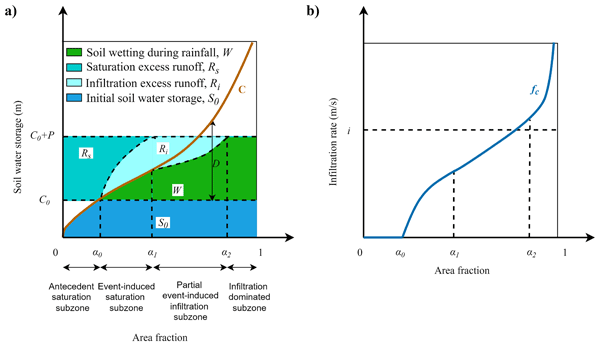
Rain runs off in two main ways: saturation excess when soil is full, and infiltration excess when rain exceeds infiltration. They often occur simultaneously in a watershed, but most models treat them separately. We introduce a new theory that captures both processes within a single framework, tracking their shift over space and time. Tested over 181 U.S. watersheds, the theory well predicts streamflow in most watersheds and improves understanding of runoff under diverse climates.
Jürgen Komma, Peter Valent, Miriam Bertola, Juraj Parajka, Klaus Haslinger, Benedikt Bica, Georg Pistotnik, Korbinian Breinl, Gabriele Müller, Lovrenc Pavlin, Bianca Kahl, Achim Naderer, and Günter Blöschl
Hydrol. Earth Syst. Sci., 30, 4075–4093, https://doi.org/10.5194/hess-30-4075-2026, https://doi.org/10.5194/hess-30-4075-2026, 2026
Short summary
Short summary
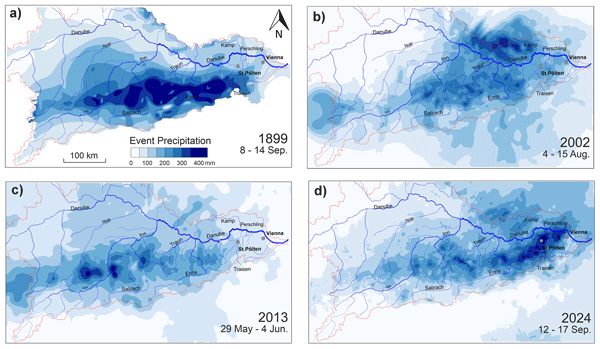
In September 2024 an exceptional flood hit the Austrian Danube Basin, the largest in parts of Lower Austria since records began. Using weather and river data, we compare this event with historic floods from 1899, 2002 and 2013. The 2024 flood was driven by a slow-moving rainstorm and saturated soils, causing record flows at smaller rivers. The study shows a shift toward more localized, intense floods, highlighting the need for adaptive flood-risk management in a warming climate.
Fuqiang Tian, Murugesu Sivapalan, Sondoss El Sawah, Melissa Haeffner, Anthony Jakeman, Heidi Kreibich, Leyang Liu, Haoyang Lyu, Ana Mijic, Jiale Wang, Jing Wei, and Günter Blöschl
EGUsphere, https://doi.org/10.5194/egusphere-2026-1727, https://doi.org/10.5194/egusphere-2026-1727, 2026
Short summary
Short summary
This opinion paper shows how sociohydrology can better support water management by moving from understanding systems to guiding action. Drawing on ten years of work in the Panta Rhei initiative, it offers a simple way to compare cases, trace how actions lead to intended and unintended outcomes, and improve monitoring, learning, fairness, and legitimacy in decision-making.
Hatice Türk, Christine Stumpp, Markus Hrachowitz, Peter Strauss, Günter Blöschl, and Michael Stockinger
Hydrol. Earth Syst. Sci., 30, 1053–1076, https://doi.org/10.5194/hess-30-1053-2026, https://doi.org/10.5194/hess-30-1053-2026, 2026
Short summary
Short summary
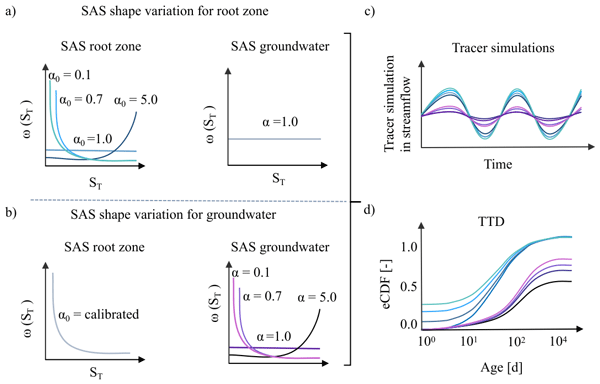
This study shows that streamflow isotope data in a catchment-scale isotope-based transport model were sufficient to isolate preferential flow in the unsaturated zone but insufficient to isolate the preferential release of young groundwater, as isotope signals were strongly damped by large passive groundwater storage. As a result, groundwater age-selection assumptions affected estimates of long transit times, making it difficult to quantify the fraction of stream water older than 100 days.
Hatice Türk, Christine Stumpp, Markus Hrachowitz, Karsten Schulz, Peter Strauss, Günter Blöschl, and Michael Stockinger
Hydrol. Earth Syst. Sci., 29, 3935–3956, https://doi.org/10.5194/hess-29-3935-2025, https://doi.org/10.5194/hess-29-3935-2025, 2025
Short summary
Short summary
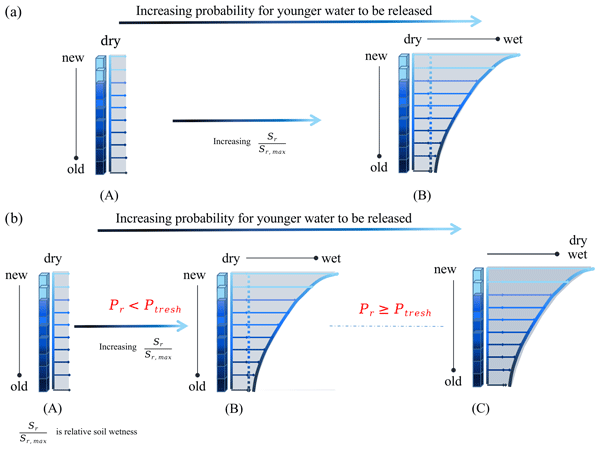
Using advances in transit time estimation and tracer data, we tested if fast-flow transit times are controlled solely by soil moisture or if they are also controlled by precipitation intensity. We used soil-moisture-dependent and precipitation-intensity-conditional transfer functions. We showed that a significant portion of event water bypasses the soil matrix through fast flow paths (overland flow, tile drains, preferential-flow paths) in dry soil conditions for both low- and high-intensity precipitation.
Christopher Thoma, Borbala Szeles, Miriam Bertola, Elmar Schmaltz, Carmen Krammer, Peter Strauss, and Günter Blöschl
EGUsphere, https://doi.org/10.5194/egusphere-2025-2541, https://doi.org/10.5194/egusphere-2025-2541, 2025
Preprint archived
Short summary
Short summary
We studied how farming practices affect soil and sediment movement in a small Austrian catchment. By monitoring water and sediment during 55 rain events, we found that erosion control worked well in flat fields near the stream, but not in steep or distant fields. Our results show that reducing soil loss requires strategies that consider slope, distance to streams, and how water flows through the landscape.
Paolo Nasta, Günter Blöschl, Heye R. Bogena, Steffen Zacharias, Roland Baatz, Gabriëlle De Lannoy, Karsten H. Jensen, Salvatore Manfreda, Laurent Pfister, Ana M. Tarquis, Ilja van Meerveld, Marc Voltz, Yijian Zeng, William Kustas, Xin Li, Harry Vereecken, and Nunzio Romano
Hydrol. Earth Syst. Sci., 29, 465–483, https://doi.org/10.5194/hess-29-465-2025, https://doi.org/10.5194/hess-29-465-2025, 2025
Short summary
Short summary
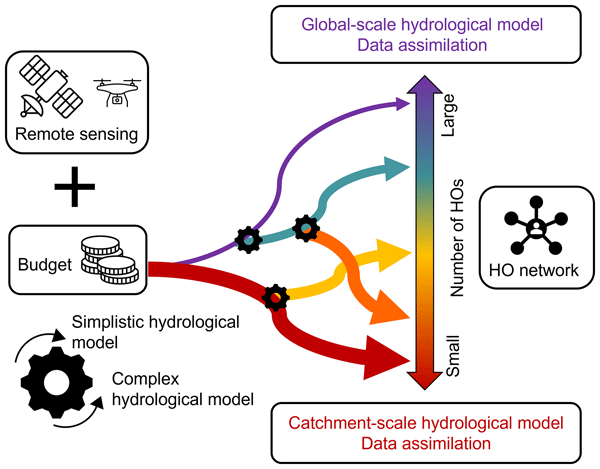
The Unsolved Problems in Hydrology (UPH) initiative has emphasized the need to establish networks of multi-decadal hydrological observatories to tackle catchment-scale challenges on a global scale. This opinion paper provocatively discusses two endmembers of possible future hydrological observatory (HO) networks for a given hypothesized community budget: a comprehensive set of moderately instrumented observatories or, alternatively, a small number of highly instrumented supersites.
Clemens Moser, Umberto Morra di Cella, Christian Hauck, and Adrián Flores Orozco
The Cryosphere, 19, 143–171, https://doi.org/10.5194/tc-19-143-2025, https://doi.org/10.5194/tc-19-143-2025, 2025
Short summary
Short summary
We use electrical conductivity and induced polarization in an imaging framework to quantify hydrogeological parameters in the active Gran Sometta rock glacier. The results show high spatial variability in the hydrogeological parameters across the rock glacier and are validated by saltwater tracer tests coupled with 3D electrical conductivity imaging. Hydrogeological information was linked to kinematic data to further investigate its role in rock glacier movement.
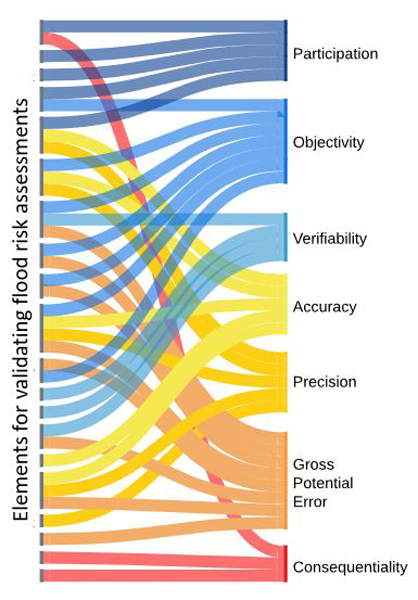
Bruno Merz, Günter Blöschl, Robert Jüpner, Heidi Kreibich, Kai Schröter, and Sergiy Vorogushyn
Nat. Hazards Earth Syst. Sci., 24, 4015–4030, https://doi.org/10.5194/nhess-24-4015-2024, https://doi.org/10.5194/nhess-24-4015-2024, 2024
Short summary
Short summary
Flood risk assessments help us decide how to reduce the risk of flooding. Since these assessments are based on probabilities, it is hard to check their accuracy by comparing them to past data. We suggest a new way to validate these assessments, making sure they are practical for real-life decisions. This approach looks at both the technical details and the real-world situations where decisions are made. We demonstrate its practicality by applying it to flood emergency planning.
Theresa Maierhofer, Adrian Flores Orozco, Nathalie Roser, Jonas K. Limbrock, Christin Hilbich, Clemens Moser, Andreas Kemna, Elisabetta Drigo, Umberto Morra di Cella, and Christian Hauck
The Cryosphere, 18, 3383–3414, https://doi.org/10.5194/tc-18-3383-2024, https://doi.org/10.5194/tc-18-3383-2024, 2024
Short summary
Short summary
In this study, we apply an electrical method in a high-mountain permafrost terrain in the Italian Alps, where long-term borehole temperature data are available for validation. In particular, we investigate the frequency dependence of the electrical properties for seasonal and annual variations along a 3-year monitoring period. We demonstrate that our method is capable of resolving temporal changes in the thermal state and the ice / water ratio associated with seasonal freeze–thaw processes.
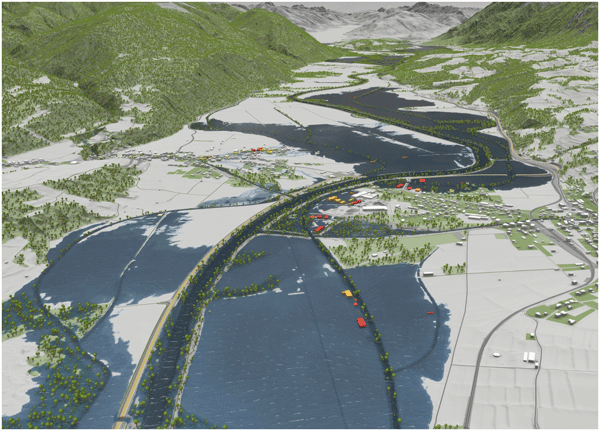
Günter Blöschl, Andreas Buttinger-Kreuzhuber, Daniel Cornel, Julia Eisl, Michael Hofer, Markus Hollaus, Zsolt Horváth, Jürgen Komma, Artem Konev, Juraj Parajka, Norbert Pfeifer, Andreas Reithofer, José Salinas, Peter Valent, Roman Výleta, Jürgen Waser, Michael H. Wimmer, and Heinz Stiefelmeyer
Nat. Hazards Earth Syst. Sci., 24, 2071–2091, https://doi.org/10.5194/nhess-24-2071-2024, https://doi.org/10.5194/nhess-24-2071-2024, 2024
Short summary
Short summary
A methodology of regional flood hazard mapping is proposed, based on data in Austria, which combines automatic methods with manual interventions to maximise efficiency and to obtain estimation accuracy similar to that of local studies. Flood discharge records from 781 stations are used to estimate flood hazard patterns of a given return period at a resolution of 2 m over a total stream length of 38 000 km. The hazard maps are used for civil protection, risk awareness and insurance purposes.
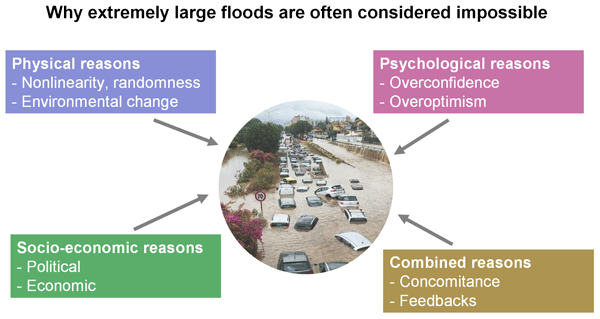
Alberto Montanari, Bruno Merz, and Günter Blöschl
Hydrol. Earth Syst. Sci., 28, 2603–2615, https://doi.org/10.5194/hess-28-2603-2024, https://doi.org/10.5194/hess-28-2603-2024, 2024
Short summary
Short summary
Floods often take communities by surprise, as they are often considered virtually
impossibleyet are an ever-present threat similar to the sword suspended over the head of Damocles in the classical Greek anecdote. We discuss four reasons why extremely large floods carry a risk that is often larger than expected. We provide suggestions for managing the risk of megafloods by calling for a creative exploration of hazard scenarios and communicating the unknown corners of the reality of floods.
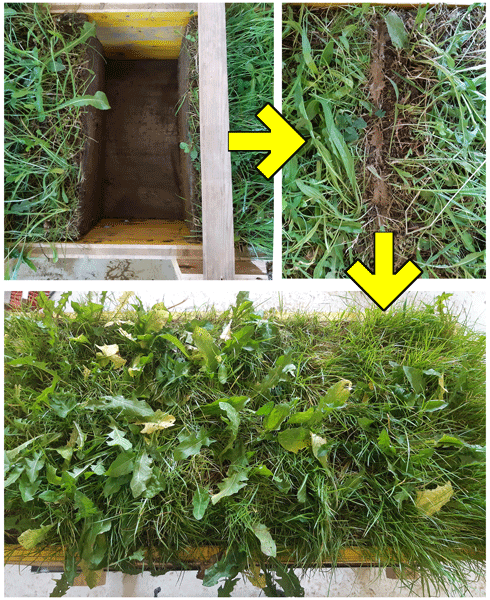
David Ramler and Peter Strauss
Hydrol. Earth Syst. Sci., 27, 1745–1754, https://doi.org/10.5194/hess-27-1745-2023, https://doi.org/10.5194/hess-27-1745-2023, 2023
Short summary
Short summary
Undisturbed soil monoliths combine advantages of outdoor and indoor experiments; however, there are often size limitations. A promising approach is the combination of smaller blocks to form a single large monolith. We compared the runoff properties of monoliths cut in half and recombined with uncut blocks. The effect of the combination procedure was negligible compared to the inherent soil heterogeneity, and we conclude that advantages outweigh possible adverse effects.
Michael Rode, Jörg Tittel, Frido Reinstorf, Michael Schubert, Kay Knöller, Benjamin Gilfedder, Florian Merensky-Pöhlein, and Andreas Musolff
Hydrol. Earth Syst. Sci., 27, 1261–1277, https://doi.org/10.5194/hess-27-1261-2023, https://doi.org/10.5194/hess-27-1261-2023, 2023
Short summary
Short summary
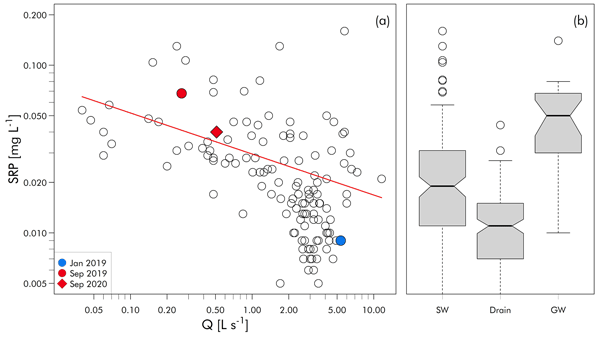
Agricultural catchments show elevated phosphorus (P) concentrations during summer low flow. In an agricultural stream, we found that phosphorus in groundwater was a major source of stream water phosphorus during low flow, and stream sediments derived from farmland are unlikely to have increased stream phosphorus concentrations during low water. We found no evidence that riparian wetlands contributed to soluble reactive (SR) P loads. Agricultural phosphorus was largely buffered in the soil zone.
Mohammad Ghoreishi, Amin Elshorbagy, Saman Razavi, Günter Blöschl, Murugesu Sivapalan, and Ahmed Abdelkader
Hydrol. Earth Syst. Sci., 27, 1201–1219, https://doi.org/10.5194/hess-27-1201-2023, https://doi.org/10.5194/hess-27-1201-2023, 2023
Short summary
Short summary
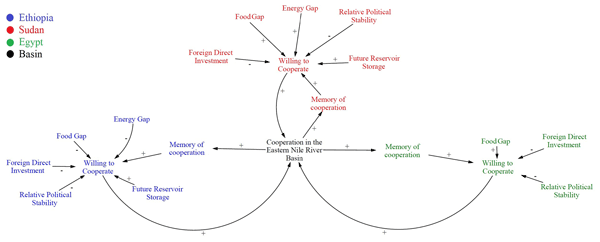
The study proposes a quantitative model of the willingness to cooperate in the Eastern Nile River basin. Our results suggest that the 2008 food crisis may account for Sudan recovering its willingness to cooperate with Ethiopia. Long-term lack of trust among the riparian countries may have reduced basin-wide cooperation. The model can be used to explore the effects of changes in future dam operations and other management decisions on the emergence of basin cooperation.
Enrico Bonanno, Günter Blöschl, and Julian Klaus
Hydrol. Earth Syst. Sci., 26, 6003–6028, https://doi.org/10.5194/hess-26-6003-2022, https://doi.org/10.5194/hess-26-6003-2022, 2022
Short summary
Short summary
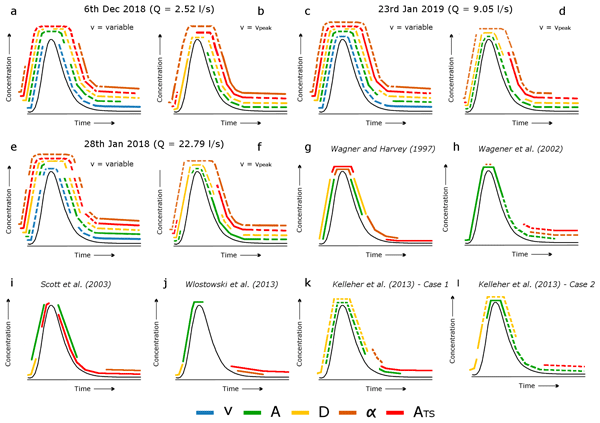
There is an unclear understanding of which processes regulate the transport of water, solutes, and pollutants in streams. This is crucial since these processes control water quality in river networks. Compared to other approaches, we obtained clearer insights into the processes controlling solute transport in the investigated reach. This work highlights the risks of using uncertain results for interpreting the processes controlling water movement in streams.
Günter Blöschl
Hydrol. Earth Syst. Sci., 26, 5015–5033, https://doi.org/10.5194/hess-26-5015-2022, https://doi.org/10.5194/hess-26-5015-2022, 2022
Short summary
Short summary
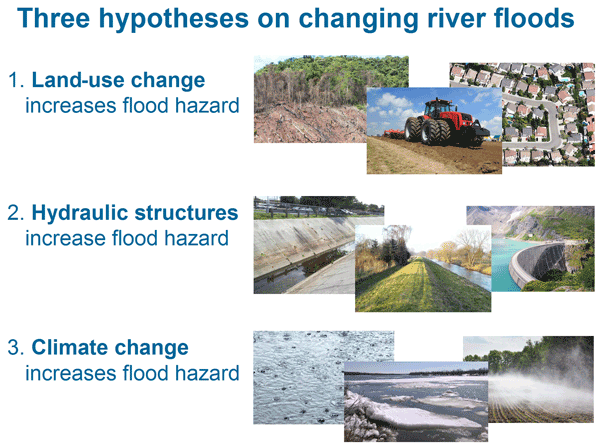
There is serious concern that river floods are increasing. Starting from explanations discussed in public, the article addresses three hypotheses: land-use change, hydraulic structures, and climate change increase floods. This review finds that all three changes have the potential to not only increase floods, but also to reduce them. It is crucial to consider all three factors of change in flood risk management and communicate them to the general public in a nuanced way.
Shengping Wang, Borbala Szeles, Carmen Krammer, Elmar Schmaltz, Kepeng Song, Yifan Li, Zhiqiang Zhang, Günter Blöschl, and Peter Strauss
Hydrol. Earth Syst. Sci., 26, 3021–3036, https://doi.org/10.5194/hess-26-3021-2022, https://doi.org/10.5194/hess-26-3021-2022, 2022
Short summary
Short summary
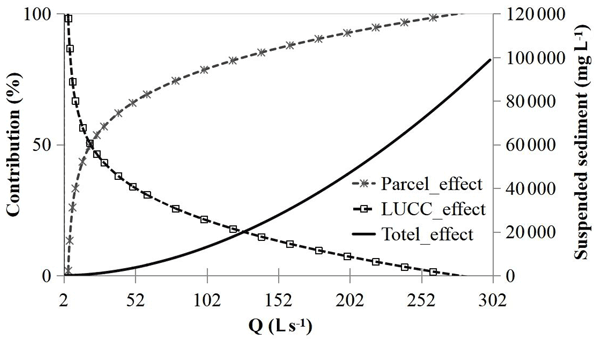
This study explored the quantitative contribution of agricultural intensification and climate change to the sediment load of a small agricultural watershed. Rather than a change in climatic conditions, changes in the land structure notably altered sediment concentrations under high-flow conditions, thereby contributing most to the increase in annual sediment loads. More consideration of land structure improvement is required when combating the transfer of soil from land to water.
Theresa Maierhofer, Christian Hauck, Christin Hilbich, Andreas Kemna, and Adrián Flores-Orozco
The Cryosphere, 16, 1903–1925, https://doi.org/10.5194/tc-16-1903-2022, https://doi.org/10.5194/tc-16-1903-2022, 2022
Short summary
Short summary
We extend the application of electrical methods to characterize alpine permafrost using the so-called induced polarization (IP) effect associated with the storage of charges at the interface between liquid and solid phases. We investigate different field protocols to enhance data quality and conclude that with appropriate measurement and processing procedures, the characteristic dependence of the IP response of frozen rocks improves the assessment of thermal state and ice content in permafrost.

Günter Blöschl
Hydrol. Earth Syst. Sci., 26, 2469–2480, https://doi.org/10.5194/hess-26-2469-2022, https://doi.org/10.5194/hess-26-2469-2022, 2022
Short summary
Short summary
Sound understanding of how floods come about allows for the development of more reliable flood management tools that assist in mitigating their negative impacts. This article reviews river flood generation processes and flow paths across space scales, starting from water movement in the soil pores and moving up to hillslopes, catchments, regions and entire continents. To assist model development, there is a need to learn from observed patterns of flood generation processes at all spatial scales.
Rui Tong, Juraj Parajka, Borbála Széles, Isabella Greimeister-Pfeil, Mariette Vreugdenhil, Jürgen Komma, Peter Valent, and Günter Blöschl
Hydrol. Earth Syst. Sci., 26, 1779–1799, https://doi.org/10.5194/hess-26-1779-2022, https://doi.org/10.5194/hess-26-1779-2022, 2022
Short summary
Short summary
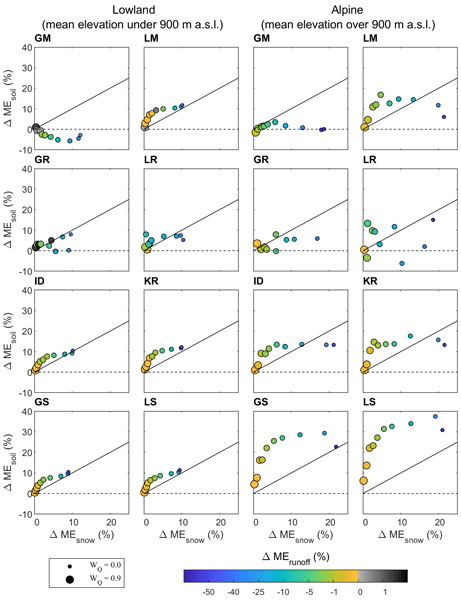
The role and impact of using additional data (other than runoff) for the prediction of daily hydrographs in ungauged basins are not well understood. In this study, we assessed the model performance in terms of runoff, soil moisture, and snow cover predictions with the existing regionalization approaches. Results show that the best transfer methods are the similarity and the kriging approaches. The performance of the transfer methods differs between lowland and alpine catchments.
Wouter Dorigo, Irene Himmelbauer, Daniel Aberer, Lukas Schremmer, Ivana Petrakovic, Luca Zappa, Wolfgang Preimesberger, Angelika Xaver, Frank Annor, Jonas Ardö, Dennis Baldocchi, Marco Bitelli, Günter Blöschl, Heye Bogena, Luca Brocca, Jean-Christophe Calvet, J. Julio Camarero, Giorgio Capello, Minha Choi, Michael C. Cosh, Nick van de Giesen, Istvan Hajdu, Jaakko Ikonen, Karsten H. Jensen, Kasturi Devi Kanniah, Ileen de Kat, Gottfried Kirchengast, Pankaj Kumar Rai, Jenni Kyrouac, Kristine Larson, Suxia Liu, Alexander Loew, Mahta Moghaddam, José Martínez Fernández, Cristian Mattar Bader, Renato Morbidelli, Jan P. Musial, Elise Osenga, Michael A. Palecki, Thierry Pellarin, George P. Petropoulos, Isabella Pfeil, Jarrett Powers, Alan Robock, Christoph Rüdiger, Udo Rummel, Michael Strobel, Zhongbo Su, Ryan Sullivan, Torbern Tagesson, Andrej Varlagin, Mariette Vreugdenhil, Jeffrey Walker, Jun Wen, Fred Wenger, Jean Pierre Wigneron, Mel Woods, Kun Yang, Yijian Zeng, Xiang Zhang, Marek Zreda, Stephan Dietrich, Alexander Gruber, Peter van Oevelen, Wolfgang Wagner, Klaus Scipal, Matthias Drusch, and Roberto Sabia
Hydrol. Earth Syst. Sci., 25, 5749–5804, https://doi.org/10.5194/hess-25-5749-2021, https://doi.org/10.5194/hess-25-5749-2021, 2021
Short summary
Short summary
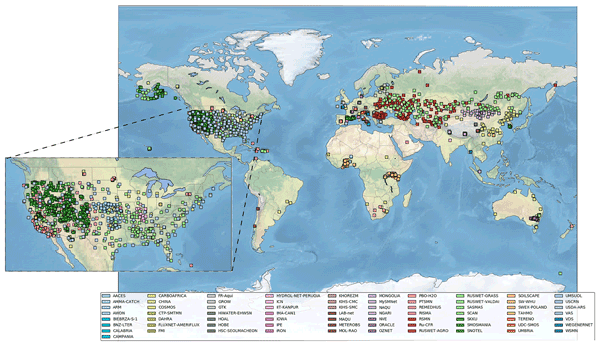
The International Soil Moisture Network (ISMN) is a community-based open-access data portal for soil water measurements taken at the ground and is accessible at https://ismn.earth. Over 1000 scientific publications and thousands of users have made use of the ISMN. The scope of this paper is to inform readers about the data and functionality of the ISMN and to provide a review of the scientific progress facilitated through the ISMN with the scope to shape future research and operations.
David Lun, Alberto Viglione, Miriam Bertola, Jürgen Komma, Juraj Parajka, Peter Valent, and Günter Blöschl
Hydrol. Earth Syst. Sci., 25, 5535–5560, https://doi.org/10.5194/hess-25-5535-2021, https://doi.org/10.5194/hess-25-5535-2021, 2021
Short summary
Short summary
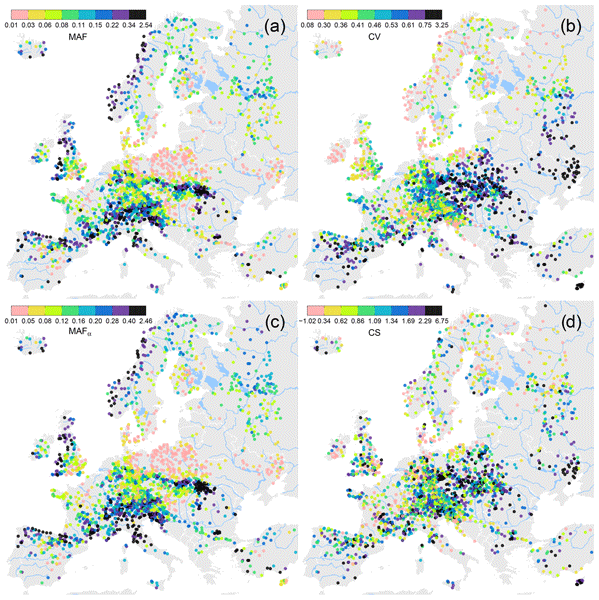
We investigate statistical properties of observed flood series on a European scale. There are pronounced regional patterns, for instance: regions with strong Atlantic influence show less year-to-year variability in the magnitude of observed floods when compared with more arid regions of Europe. The hydrological controls on the patterns are quantified and discussed. On the European scale, climate seems to be the dominant driver for the observed patterns.
Cited articles
Abdel Aal, G. Z., Atekwana, E. A., and Revil, A.: Geophysical signatures of disseminated iron minerals: A proxy for understanding subsurface biophysicochemical processes, J. Geophys. Res.-Biogeo., 119, 1831–1849, https://doi.org/10.1002/2014JG002659, 2014.
Atekwana, E. A. and Slater, L. D.: Biogeophysics: A new frontier in Earth science research, Rev. Geophys., 47, https://doi.org/10.1029/2009RG000285, 2009.
Binley, A. and Kemna, A.: DC resistivity and induced polarization methods, in: Hydrogeophysics, edited by: Rubin, Y. and Hubbard, S. S., Springer, Dordrecht, Netherlands, 129–156, https://doi.org/10.1007/1-4020-3102-5_5, 2005.
Binley, A. and Slater, L.: Resistivity and induced polarization: Theory and applications to the near-surface earth, Cambridge University Press, Cambridge, UK, ISBN-10: 1108492746, 2020.
Binley, A., Hubbard, S. S., Huisman, J. A., Revil, A., Robinson, D. A., Singha, K., and Slater, L. D.: The emergence of hydrogeophysics for improved understanding of subsurface processes over multiple scales, Water Resour. Res., 51, 3837–3866, https://doi.org/10.1002/2015WR017016, 2015.
Blöschl, G., Blaschke, A. P., Broer, M., Bucher, C., Carr, G., Chen, X., Eder, A., Exner-Kittridge, M., Farnleitner, A., Flores-Orozco, A., Haas, P., Hogan, P., Kazemi Amiri, A., Oismüller, M., Parajka, R., Silasari, R., Stadler, P., Strauß, P., Vreugdenhil, M., Wagner, W., and Zessner, M.: The Hydrological Open Air Laboratory (HOAL) in Petzenkirchen: a hypothesis-driven observatory, Hydrol. Earth Syst. Sci., 20, 227–255, https://doi.org/10.5194/hess-20-227-2016, 2016.
Bücker, M., Flores Orozco, A., Undorf, S., and Kemna, A.: On the role of Stern‐and diffuse‐layer polarization mechanisms in porous media, J. Geophys. Res.-Sol. Ea., 124, 5656–5677, 2019.
Button, E. S., Pett-Ridge, J., Murphy, D. V., Kuzyakov, Y., Chadwick, D. R., and Jones, D. L.: Deep-C storage: Biological, chemical and physical strategies to enhance carbon stocks in agricultural subsoils, Soil Biol. Biochem., 170, 108697, https://doi.org/10.1016/j.soilbio.2022.108697, 2022.
Elliott, E. T.: Aggregate structure and carbon, nitrogen, and phosphorus in native and cultivated soils, Soil Sci. Soc. Am. J., 50, 627–633, https://doi.org/10.2136/sssaj1986.03615995005000030017x, 1986.
Flores-Orozco, A.: Imaging deep carbon stocks with complex electrical conductivity, TU Wien [data set], https://doi.org/10.48436/5h7jb-26w42, 2025.
Flores Orozco, A., Williams, K. H., Long, P. E., Hubbard, S. S., and Kemna, A.: Using complex resistivity imaging to infer biogeochemical processes associated with bioremediation of an uranium-contaminated aquifer, J. Geophys. Res.-Biogeo., 116, G00G08, https://doi.org/10.1029/2010JG001591, 2011.
Flores Orozco, A., Kemna, A., Oberdörster, C., Zschornack, L., Leven, C., Dietrich, P., and Weiss, H.: Delineation of subsurface hydrocarbon contamination at a former hydrogenation plant using spectral induced polarization imaging, J. Contamin. Hydrol., 136, 131–144, 2012a.
Flores Orozco, A., Kemna, A., and Zimmermann, E.: Data error quantification in spectral induced polarization imaging, Geophysics, 77, E227–E237, 2012b.
Flores Orozco, A., Williams, K. H., and Kemna, A.: Time-lapse spectral induced polarization imaging of stimulated uranium bioremediation, Near Surf. Geophys., 11, 531–544, https://doi.org/10.3997/1873-0604.2013020, 2013.
Flores-Orozco, A., Gallistl, J., Steiner, M., Brandstätter, C., and Fellner, J.: Mapping biogeochemically active zones in landfills with induced polarization imaging: The Heferlbach landfill, Waste Manag., 107, 121–132, https://doi.org/10.1016/j.wasman.2020.04.001, 2020.
Flores Orozco, A., Aigner, L., and Gallistl, J.: Investigation of cable effects in spectral induced polarization imaging at the field scale using multicore and coaxial cables, Geophysics, 86, E59–E75, 2021.
Friedel, S.: Resolution, stability and efficiency of resistivity tomography estimated from a generalized inverse approach, Geophys. J. Int., 153, 305–316, https://doi.org/10.1046/j.1365-246X.2003.01890.x, 2003.
Ganzenmüller, R., Obermeier, W. A., Bultan, S., Spawn-Lee, S. A., Zabel, F., and Pongratz, J.: Humans have depleted global terrestrial carbon stocks by a quarter, One Earth, 8, 101392, https://doi.org/10.1016/j.oneear.2025.101392, 2025.
Gao, Z., Haegel, F.-H., Huisman, J. A., Esser, O., Zimmermann, E., and Vereecken, H.: Spectral induced polarization for the characterisation of biochar in sand, Near Surf. Geophys., 15, 645–656, https://doi.org/10.3997/1873-0604.2017045, 2017.
Gao, Z., Haegel, F.-H., Esser, O., Zimmermann, E., Vereecken, H., and Huisman, J. A.: Spectral induced polarization of biochar in variably saturated soil, Vadose Zone J., 18, 1–13, https://doi.org/10.2136/vzj2018.12.0213, 2019.
Harper, R. J. and Tibbett, M.: The hidden organic carbon in deep mineral soils, Plant Soil, 368, 641–648, https://doi.org/10.1007/s11104-013-1600-9, 2013.
Harrison, R. B., Footen, P. W., and Strahm, B. D.: Deep soil horizons: contribution and importance to soil carbon pools and in assessing whole-ecosystem response to management and global change, Forest Sci., 57, 67–76, https://doi.org/10.1093/forestscience/57.1.67, 2011.
Hassink, J.: Effects of soil texture and structure on carbon and nitrogen mineralization in grassland soils, Biol. Fertil. Soils, 14, 126–134, https://doi.org/10.1007/BF00336262, 1992.
Horváth, B., Opara-Nadi, O., and Beese, F.: A simple method for measuring the carbonate content of soils, Soil Sci. Soc. Am. J., 69, 1066–1068, https://doi.org/10.2136/sssaj2004.0010, 2005.
Hubbard, C. G., West, L. J., Rodriguez-Blanco, J. D., and Shaw, S.: Laboratory study of spectral induced polarization responses of magnetite – Fe
Johansson, S., Fiandaca, G., and Dahlin, T.: Influence of non-aqueous phase liquid configuration on induced polarization parameters: Conceptual models applied to a time-domain field case study, J. Appl. Geophys., 123, 295–309, https://doi.org/10.1016/j.jappgeo.2015.08.010, 2015.
Katona, T., Gilfedder, B. S., Frei, S., Bücker, M., and Flores-Orozco, A.: High-resolution induced polarization imaging of biogeochemical carbon turnover hotspots in a peatland, Biogeosciences, 18, 4039–4058, https://doi.org/10.5194/bg-18-4039-2021, 2021.
Kemna, A.: Tomographic inversion of complex resistivity: Theory and application, Der Andere Verlag, Osnabrück, Germany, ISBN: 3-934366-92-9, 2000.
Kemna, A., Vanderborght, J., Kulessa, B., and Vereecken, H.: Imaging and characterisation of subsurface solute transport using electrical resistivity tomography (ERT) and equivalent transport models, J. Hydrol., 267, 125–146, https://doi.org/10.1016/S0022-1694(02)00145-2, 2002.
Kemna, A., Binley, A., Cassiani, G., Niederleithinger, E., Revil, A., Slater, L., Williams, K.H., Flores Orozco, A., Haegel, F.H., Hördt, A. and Kruschwitz, S.: An overview of the spectral induced polarization method for near‐surface applications, Near Surf. Geophys., 10, 453–468, 2012.
Kessouri, P., Furman, A., Huisman, J. A., Martin, T., Mellage, A., Ntarlagiannis, D., Bücker, M., Ehosioke, S., Fernandez, P., Flores-Orozco, A., Kemna, A., Nguyen, F., Pilawski, T., Saneiyan, S., Schmutz, M., Schwartz, N., Weigand, M., Wu, Y., Zhang, C., and Placencia-Gomez, E.: Induced polarization applied to biogeophysics: recent advances and future prospects, Near Surf. Geophys., 17, 595–621, https://doi.org/10.1002/nsg.12072, 2019.
Matschonat, G. and Matzner, E.: Quantification of ammonium sorption in acid forest soils by sorption isotherms, Plant Soil, 168, 95–101, https://doi.org/10.1007/BF00029318, 1995.
McAnallen, L., Doherty, R., Donohue, S., Kirmizakis, P., and Mendonça, C.: Combined use of geophysical and geochemical methods to assess areas of active, degrading and restored blanket bog, Sci. Total Environ., 621, 762–771, https://doi.org/10.1016/j.scitotenv.2017.11.300, 2018.
Mellage, A., Zakai, G., Efrati, B., Pagel, H., and Schwartz, N.: Paraquat sorption- and organic matter-induced modifications of soil spectral induced polarization (SIP) signals, Geophys. J. Int., 229, 1422–1433, https://doi.org/10.1093/gji/ggab531, 2022.
Mendieta, A., Jougnot, D., Leroy, P., and Maineult, A.: Spectral induced polarization characterization of non-consolidated clays for varying salinities – An experimental study, J. Geophys. Res.-Sol. Ea., 126, e2020JB021125, https://doi.org/10.1029/2020JB021125, 2021.
Ntarlagiannis, D., Williams, K. H., Slater, L. D., and Hubbard, S.: Low-frequency electrical response to microbial induced sulfide precipitation, J. Geophys. Res.-Biogeo., 110, G02009, https://doi.org/10.1029/2005JG000024, 2005.
Okpoli, C. C.: Sensitivity and resolution capacity of electrode configurations, Int. J. Geophys., 2013, 608037, https://doi.org/10.1155/2013/608037, 2013.
Panagos, P., Hiederer, R., Van Liedekerke, M., and Bampa, F.: Estimating soil organic carbon in Europe based on data collected through an European network, Ecol. Indic., 24, 439–450, https://doi.org/10.1016/j.ecolind.2012.07.020, 2013.
Peshtani, K., Robinson, J., Torgeson, J., Rabideaux, N., Slater, L., and Qafoku, N. P.: Investigating soil organic matter complexation in natural analog systems using geoelectrical methods, Environ. Sci. Technol., 59, 18203–18212, https://doi.org/10.1021/acs.est.5c08323, 2025.
Ponziani, M., Slob, E. C., Vanhala, H., and Ngan-Tillard, D. J. M.: Influence of physical and chemical properties on the low-frequency complex conductivity of peat, Near Surf. Geophys., 10, 491–501, https://doi.org/10.3997/1873-0604.2011037, 2012.
Sasaki, Y.: Resolution of resistivity tomography inferred from numerical simulation, Geophys. Prospect., 40, 453–463, https://doi.org/10.1111/j.1365-2478.1992.tb00536.x, 1992.
Schwartz, N. and Furman, A.: Spectral induced polarization signature of soil contaminated by organic pollutant: Experiment and modeling, J. Geophys. Res.-Sol. Ea., 117, B10204, https://doi.org/10.1029/2012JB009543, 2012.
Seigel, H., Nabighian, M., Parasnis, D. S., and Vozoff, K.: The early history of the induced polarization method, Leading Edge, 26, 312–321, https://doi.org/10.1190/1.2715054, 2007.
Shao, Z., Revil, A., Mao, D., and Wang, D.: Induced polarization signature of coal seam fires, Geophys. J. Int., 208, 1313–1331, https://doi.org/10.1093/gji/ggw452, 2017.
Singh, M., Sarkar, B., Sarkar, S., Churchman, J., Bolan, N., Mandal, S., Menon, M., Purakayastha, T. J., and Beerling, D. J.: Stabilization of soil organic carbon as influenced by clay mineralogy, Adv. Agron., 148, 33–84, https://doi.org/10.1016/bs.agron.2017.11.001, 2018.
Strobel, C., Dörrich, M., Stieff, E.-H., Huisman, J. A., Cirpka, O. A., and Mellage, A.: Organic matter matters – The imaginary conductivity of sediments rich in solid organic carbon, Geophys. Res. Lett., 50, e2023GL104630, https://doi.org/10.1029/2023GL104630, 2023.
Strauss, J., Schirrmeister, L., Grosse, G., Wetterich, S., Ulrich, M., Herzschuh, U., and Hubberten, H.-W.: The deep permafrost carbon pool of the Yedoma region in Siberia and Alaska, Geophys. Res. Lett., 40, 6165–6170, https://doi.org/10.1002/2013GL058088, 2013.
Sumner, J. S.: Principles of induced polarization for geophysical exploration, Elsevier, Amsterdam, Netherlands, ISBN-10: 0444414819, 2012.
Tamura, H., Goto, K., Yotsuyanagi, T., and Nagayama, M.: Spectrophotometric determination of iron(II) with 1,10-phenanthroline in the presence of large amounts of iron(III), Talanta, 21, 314–318, https://doi.org/10.1016/0039-9140(74)80012-3, 1974.
Tarnocai, C., Canadell, J. G., Schuur, E. A. G., Kuhry, P., Mazhitova, G., and Zimov, S.: Soil organic carbon pools in the northern circumpolar permafrost region, Global Biogeochem. Cy., 23, GB2023, https://doi.org/10.1029/2008GB003327, 2009.
Walter Anthony, K., Schneider von Deimling, T., Nitze, I., Frolking, S., Emond, A., Daanen, R., Anthony, P., Lindgren, P., Jones, B., and Grosse, G.: 21st-century modeled permafrost carbon emissions accelerated by abrupt thaw beneath lakes, Nat. Commun., 9, 3262, https://doi.org/10.1038/s41467-018-05738-9, 2018.
Wallmann, K., Hennies, K., König, I., Petersen, W., and Knauth, H.-D.: New procedure for determining reactive Fe(III) and Fe(II) minerals in sediments, Limnol. Oceanogr., 38, 1803–1812, https://doi.org/10.4319/lo.1993.38.8.1803, 1993.
Wainwright, H. M., Flores Orozco, A., Bücker, M., Dafflon, B., Chen, J., Hubbard, S. S., and Williams, K. H.: Hierarchical Bayesian method for mapping biogeochemical hot spots using induced polarization imaging, Water Resour. Res., 52, 533–551, https://doi.org/10.1002/2015WR017763, 2016.
Ward, S. H.: Electrical, electromagnetic, and magnetotelluric methods, Geophysics, 45, 1659–1666, https://doi.org/10.1190/1.1441056, 1980.
Weigand, M., Orozco, A. F., and Kemna, A.: Reconstruction quality of SIP parameters in multi-frequency complex resistivity imaging, Near Surf. Geophys., 15, 187–199, https://doi.org/10.3997/1873-0604.2016050, 2017.
Williams, K. H., Ntarlagiannis, D., Slater, L. D., Dohnalkova, A., Hubbard, S. S., and Banfield, J. F.: Geophysical imaging of stimulated microbial biomineralization, Environ. Sci. Technol., 39, 7592–7600, https://doi.org/10.1021/es0504035, 2005.
Yost, J. L. and Hartemink, A. E.: How deep is the soil studied – An analysis of four soil science journals, Plant Soil, 452, 5–18, https://doi.org/10.1007/s11104-020-04550-z, 2020.
Editorial statement
Soil organic carbon stocks at depth are poorly known despite their central importance to the global carbon cycle. Florez Orosco and others demonstrate a novel method for estimating these carbon stocks using complex electrical conductivity. Increases in low frequency polarization are linearly related to soil organic carbon, which was used to discover soil organic carbon at 4-6 m depth in a catchment dominated by silty loam soils. Their findings present a path forward for quantifying deep soil organic carbon stocks across different terrestrial ecosystems.
Soil organic carbon stocks at depth are poorly known despite their central importance to the...
Short summary
Understanding the role of soil in the storage of organic carbon is critical for a large number of environmental processes. Current practices rely on the drilling and analysis of samples, which is expensive, time consuming and destructive. Here we present a technique able to map soil organic carbon variability using measurements of the electrical properties of the subsurface without drilling. Our results advance soil management strategies to enhance carbon sequestration and storage.
Understanding the role of soil in the storage of organic carbon is critical for a large number...


Altmetrics
Final-revised paper
Preprint