
the Creative Commons Attribution 4.0 License.
the Creative Commons Attribution 4.0 License.
 | 19 Oct 2026
Linking sea–air and benthic methane fluxes across seasons in a tropical seagrass meadow of Taiwan
Hsiao-Chun Tseng

Agnes Sonya Meilani Lumban Gaol
Fu-Hsuen Lin
Jian-Jhih Chen
Wen-Chen Chou
Seagrass meadows are important blue carbon ecosystems that sequester large amounts of organic carbon but can also emit methane (CH4), potentially offsetting part of their climate mitigation benefits. However, the seasonal and diurnal dynamics of CH4 production and emissions in tropical seagrass ecosystems remain poorly understood. This study presents the first integrated assessment of CH4 cycling in the Haikou seagrass meadow, southern Taiwan. Field campaigns conducted between May 2022 and June 2023 combined surface water sampling, in situ benthic chamber incubations, and porewater profiling in a Thalassia hemprichii–Halophila pinifolia seagrass meadow to quantify CH4 dynamics at both the sediment-to-water and sea-to-air interfaces. The seagrass meadow exhibited higher dissolved CH4 concentrations and sea-to-air CH4 fluxes than adjacent coastal waters, confirming that it functions as a localized atmospheric CH4 hotspot. Nighttime dissolved CH4 concentrations generally exceeded daytime values, reflecting diurnal variations in oxygen availability, whereas seasonal variability in sea-to-air CH4 fluxes was primarily driven by wind speed. Mean sediment-to-water and sea-to-air CH4 fluxes were 88.2±41.2 and 4.9±2.2µmol m−2 d−1, respectively. Despite substantial benthic CH4 production, atmospheric emissions remained comparatively low, indicating a marked decoupling between sediment-to-water and sea-to-air CH4 fluxes. This decoupling suggests that much of the sediment-derived CH4 was transported laterally by tidal exchange and coastal circulation before atmospheric release, with microbial oxidation acting as an additional sink. Compared with adjacent bare sand sediments, seagrass sediments maintained higher baseline CH4 production rates and benthic fluxes owing to greater organic matter availability and favorable microbial conditions, whereas unvegetated sandy sediments generally exhibited low CH4 production but produced episodic CH4 pulses following storm-induced sediment disturbance. Elevated porewater CH4 concentrations during summer and autumn further indicated enhanced methanogenesis associated with organic matter accumulation under calmer hydrodynamic conditions. Overall, these findings demonstrate that CH4 cycling in tropical seagrass meadows is jointly regulated by biological processes and hydrodynamic conditions, highlighting the need to consider both CH4 emissions and carbon sequestration when evaluating the climate benefits of blue carbon ecosystems.
- Article
(4171 KB) - Full-text XML
- BibTeX
- EndNote


Human activities, including fossil fuel combustion, industrial processes, land-use change, and deforestation, have rapidly increased greenhouse gas (GHG) emissions over recent decades, driving global warming and ongoing climate change (IPCC, 2021). Achieving climate neutrality requires not only reducing GHG emissions but also protecting and enhancing natural carbon sinks. Preserving and restoring these sinks is therefore recognized as an effective strategy for climate change mitigation (Howard et al., 2023). Among them, coastal blue carbon ecosystems, including mangroves, seagrasses, and salt marshes, play a critical role by sequestering large amounts of organic carbon in their sediments.
Seagrass meadows are among the most efficient natural carbon sinks in coastal environments because they sequester carbon through photosynthesis and store it in sediments for centuries to millennia (Lovelock and Duarte, 2019; Mcleod et al., 2011; Rosentreter et al., 2021; Yau et al., 2023). In addition to long-term carbon storage, seagrasses influence seawater carbonate chemistry through calcium carbonate formation and dissolution (Natividad et al., 2026) and contribute substantially to coastal carbon cycling by exporting dissolved organic carbon and functioning as net trophic habitats (Chen et al., 2024, 2026). Together, these processes enhance the climate mitigation potential of seagrass ecosystems.
Despite these benefits, seagrass meadows are also recognized as sources of methane (CH4), a potent GHG with a sustained-flux global warming potential 96 times greater than carbon dioxide (CO2) over a 20-year time horizon on a mass basis (Neubauer and Megonigal, 2015). Depending on seagrass species, geographic setting, and environmental conditions, CH4 emissions may offset up to 33.4 % of the blue carbon sequestered in sediments (Rosentreter et al., 2021; Yau et al., 2023; Eyre et al., 2023). More broadly, the coastal ocean represents a major hotspot of marine CH4 emissions, with continental shelf sediments estimated to release 18–48 Tg CH4 yr−1 through ebullition alone (Weber et al., 2019).
In coastal waters, CH4 is primarily produced in sediments through the anaerobic microbial degradation of organic carbon via methanogenesis (Arndt et al., 2013). Although sulfate reduction generally suppresses methanogenesis in marine sediments, both processes can coexist because methanogens utilize non-competitive substrates, such as methylamines and methanol, that are not consumed by sulfate-reducing bacteria (Lyimo et al., 2018; Reeburgh, 2007). CH4 production within sediments can subsequently be transported to the overlying water column by diffusion, advective exchange, or ebullition and may ultimately be emitted to the atmosphere (Saunois et al., 2020). Although aerobic CH4 production has also been reported in seagrass meadows, it is generally considered a minor pathway (Schorn et al., 2022).
The magnitude of CH4 emissions from seagrass meadows varies considerably among regions and habitats because methanogenesis is regulated by organic matter availability, microbial community composition, sediment characteristics, hydrodynamic conditions, and plant-mediated processes (Saunois et al., 2020; Schorn et al., 2022; Sogin et al., 2022; Arndt et al., 2013; Oreska et al., 2020). Consequently, although seagrass meadows generally emit less CH4 than mangroves and salt marshes (Yau et al., 2023), their net climate benefit remains uncertain and depends on the balance between carbon sequestration and GHG emissions. Quantifying CH4 production, transport, and emission is therefore essential for accurately evaluating the climate mitigation potential of seagrass ecosystems and for incorporating blue carbon habitats into carbon accounting frameworks, voluntary carbon markets, and international climate strategies such as the Paris Agreement (Kuwae et al., 2022; Howard et al., 2023).
Despite growing recognition of seagrass-associated CH4 emissions, studies of CH4 cycling in tropical seagrass ecosystems remain scarce. This study provides the first comprehensive assessment of CH4 dynamics in the Haikou seagrass meadow, southern Taiwan. Through three intensive field campaigns combining surface water sampling, in situ benthic chamber incubations, and porewater profiling, we quantified CH4 fluxes in both seagrass and adjacent bare sandy sediments across the sediment-to-water and sea-to-air interfaces. This integrated approach provides new insights into the temporal variability and environmental controls of CH4 cycling in tropical seagrass ecosystems and improves our understanding of their role in coastal carbon cycling and climate regulation.
2.1 Study area and sampling periods
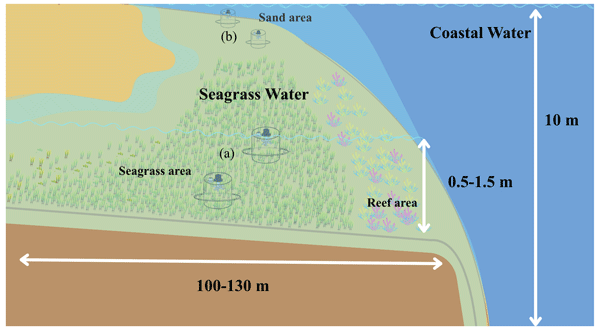
The study site is located at Haikou, Checheng Township, Pingtung County, southern Taiwan (22°5′21.830′′ N, 120°42′42.408′′ E; Fig. 1). Haikou has a tropical climate. According to observations from the Checheng Weather Station (120.7162° E, 22.0744° N; Fig. 1c), mean monthly air temperatures during 2022–2023 ranged from 21.0 to 29.2 °C, monthly total precipitation ranged from 0.5 to 318.8 mm, and mean monthly wind speeds ranged from 1.5 to 5.9 m s−1 (Fig. 2). The study was conducted in a natural subtidal seagrass meadow covering approximately 4.38 ha and dominated by Thalassia hemprichii and Halophila pinifolia. According to the seagrass survey reported by Lin et al. (2023), the meadow had a mean seagrass cover of approximately 66 %, with seasonal estimates ranging from approximately 45 % to 90 %. Water depth at the seagrass and bare sand sites varied with the tidal cycle, ranging from approximately 0.5 m at low tide to 1.5 m at high tide. Figure 3 presents a conceptual diagram of the study area, in which the seagrass meadow is bordered seaward by a reef platform, beyond which the water depth increases sharply to approximately 10 m, forming the adjacent offshore coastal waters, hereafter referred to as the coastal water site.
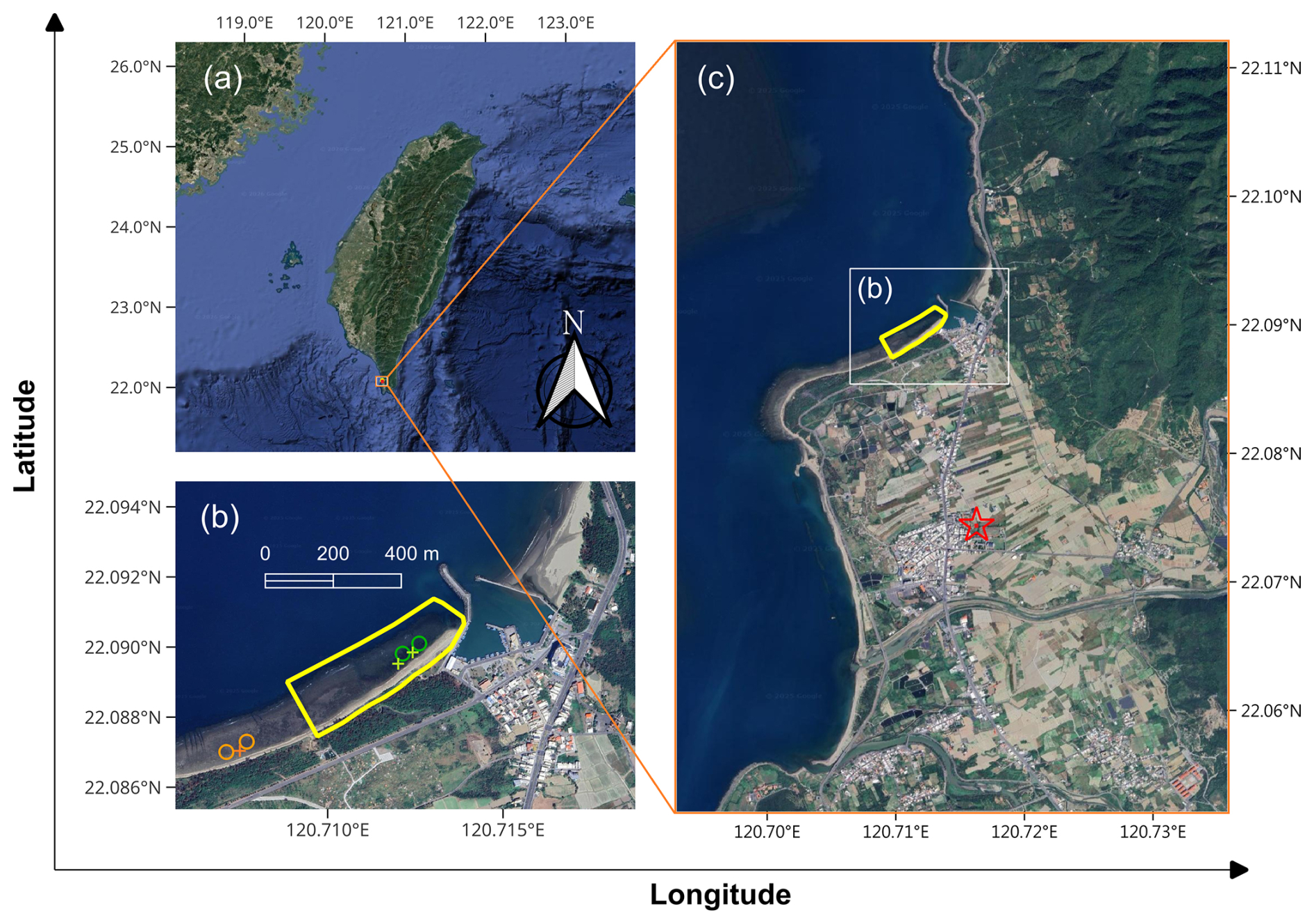
Figure 1Study area. (a) Regional map showing the location of the study area. (b) Close-up view of the benthic chamber incubation sites. The yellow rectangle outlines the Haikou seagrass meadow and the red star indicates the location of the Checheng Weather Station. (c) Zoomed-in map of the study area. Green circles ( ) indicate chamber incubation sites in the seagrass area, while orange circles (
 ) indicate chamber incubation sites in the bare sand area. Green crosses (
 ) indicate porewater sampling sites in the seagrass area, while orange cross (
 ) indicates porewater sampling sites in the bare-sand area (Map data © Google).
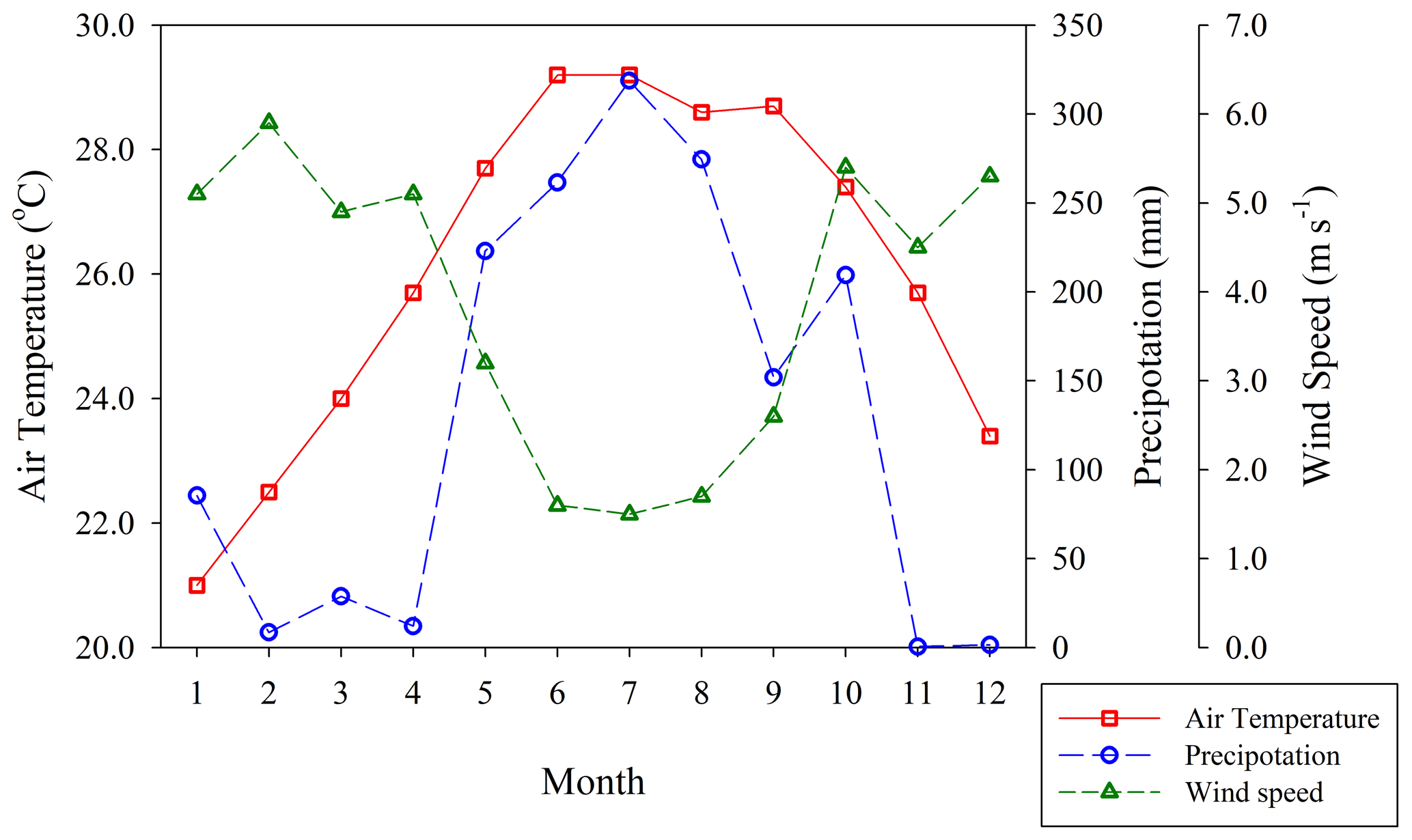
Figure 2Monthly mean air temperature, total precipitation, and mean wind speed recorded at the Checheng Weather Station (see Fig. 1 for location) during 2022–2023.
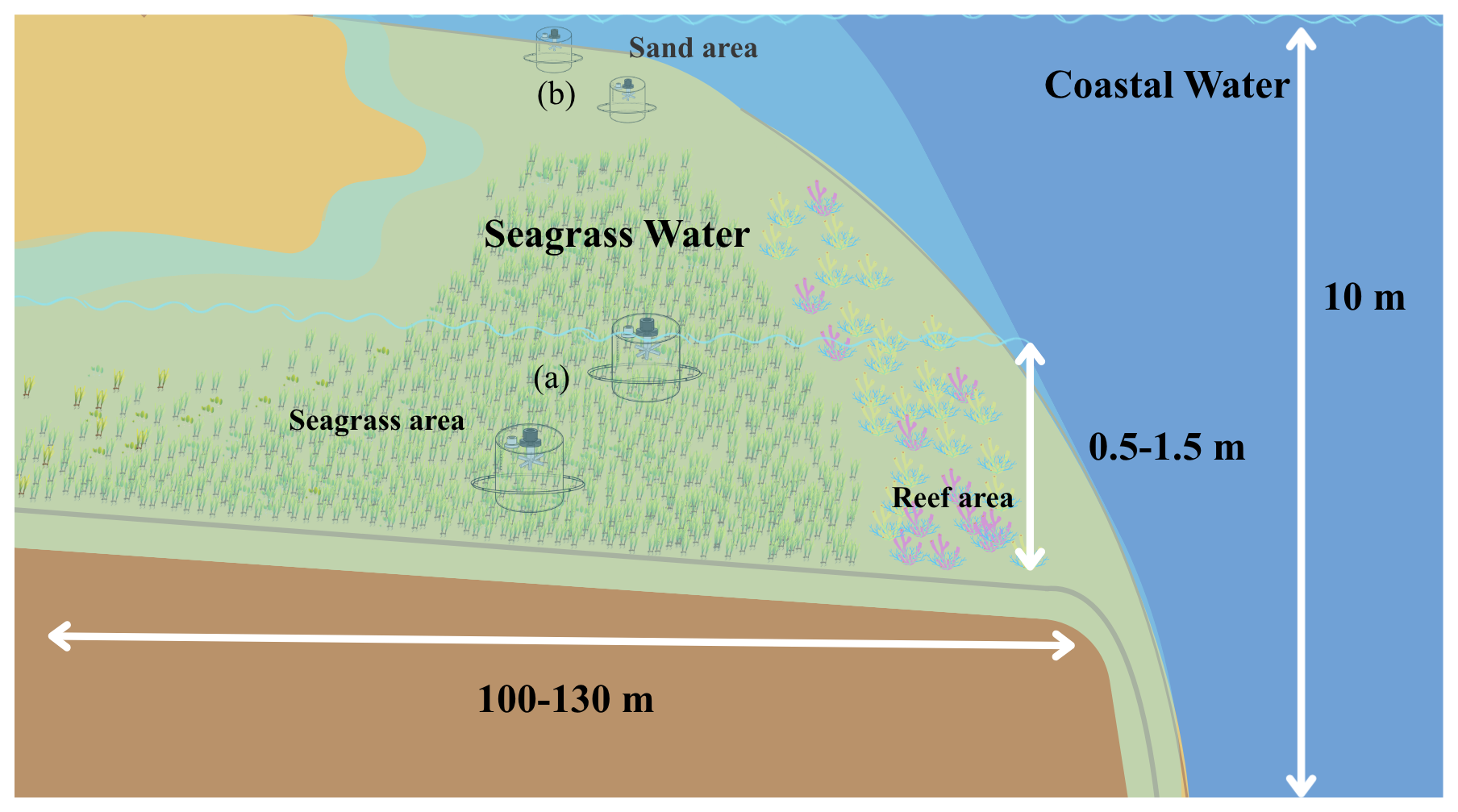
Figure 3Conceptual diagram illustrating the geographic setting of the study area, including the seagrass meadow, adjacent bare sand area, reef platform, and coastal water site. The dark blue shaded area represents the adjacent coastal waters, where the water depth was approximately 10 m, whereas the light blue shaded area represents the shallow seagrass and bare-sand areas, where the water depth was approximately 0.5–1.5 m. Labels (a) and (b) indicate the benthic chamber incubation sites in the seagrass and bare sand areas, respectively; photographs of the corresponding chamber deployments are shown in Fig. 4a and b.
Field investigations were conducted from 19 to 23 May (spring) and 26 September to 4 October (autumn) in 2022, and from 13 to 17 June (summer) in 2023. Winter fieldwork could not be conducted because of severe weather conditions. Surface water samples were collected at both the coastal water site and within the Haikou seagrass meadow during both daytime and nighttime across different seasons to examine the diurnal and seasonal variability of sea-to-air CH4 fluxes. In situ benthic chamber incubations were conducted simultaneously in the Haikou seagrass meadow and adjacent unvegetated bare sand areas during both daytime and nighttime to investigate the diurnal and seasonal variability of sediment-to-water CH4 fluxes under changing environmental conditions. Both incubation sites were located in the subtidal zone and experienced similar tidal depth variations. During each field campaign, porewater samples were also collected from the seagrass meadow and adjacent unvegetated bare sand sediments.
2.2 In situ chamber incubation system
In situ benthic incubation experiments were conducted at four sites, including two seagrass meadow sites and two bare sand sites (Fig. 1b), to quantify changes in seawater chemical parameters influenced by sediments and benthic organisms in areas with and without seagrass. The closed chambers prevented interference from water exchange and water-air interactions. Designed to preserve the natural structure of aquatic plants and sediment surfaces, the chambers also ensured proper fluid dynamics without altering flow patterns when the lid was closed (Webb and Eyre, 2004). Each benthic chamber measured 40 cm in height and 32 cm in diameter (Fig. 4c). Its transparent structure allowed sunlight to penetrate, ensuring that the organisms and plants inside were not affected by shading. Before incubation, all chambers were left open for at least two hours to facilitate water exchange.
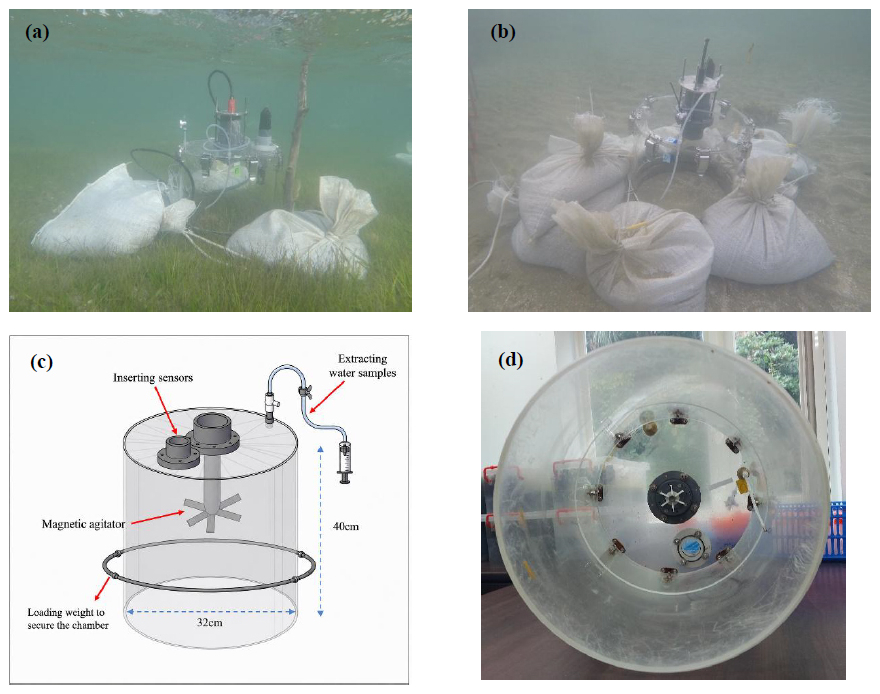
Figure 4In situ benthic chamber incubation system deployed in (a) the seagrass meadow and (b) adjacent bare sediment, with (c) a schematic illustration of the chamber design and (d) an upward view from inside the chamber.
The in situ benthic incubation experiments were conducted during both day and night, with incubation durations adjusted according to seasonal weather and sea conditions. In spring, nighttime incubations were conducted for 5 h, whereas daytime incubations were limited to 3 h due to unfavorable conditions during the rainy season. In summer, both daytime and nighttime incubations were conducted for 5 h. In autumn, unstable storm conditions restricted the incubation period to 2 h. A magnetic agitator was placed inside each chamber to maintain continuous water circulation during incubation (Fig. 4d).
2.3 Samples collection and chemical analysis
Incubation water was collected through a three-way valve installed on each chamber at the beginning and end of each incubation for benthic flux calculations. Ambient surface seawater surrounding the incubation setups in the seagrass bed was collected seven times a day at 06:00, 09:00, 12:00, 15:00, 18:00, 21:00, and 24:00. Surface seawater samples were also collected from the coastal water site outside the reef platform at the same times, except at 21:00 and 24:00 due to safety concerns.
Surface and chamber water samples for CH4 analysis were collected in duplicate using 120 mL brown serum bottles. Bottles were rinsed twice with sample water, filled to slight overflow, and preserved with 200 µL of saturated mercuric chloride (HgCl2) to inhibit microbial activity. After sealing with a butyl rubber stopper and aluminum cap, the bottles were shaken to mix, placed in an ice-filled cooler, transported to the laboratory, and stored at 4 °C in the dark.
Porewater samples were collected using porewater wells and a Luer-Lok syringe at sediment depths of 0, 2, 4, 6, 8, 12, 16, and 20 cm following the method of Falter and Sansone (2000). Samples were immediately transferred into 30 mL brown serum bottles, preserved with 50 µL HgCl2, sealed with butyl rubber stoppers and aluminum caps, placed on ice in a dark cooler during transport, and stored at 4 °C in dark until analysis. Porewater samples were collected from both the seagrass meadow and bare sand sediments at locations separate from the chamber incubation sites to avoid disturbing the ongoing benthic chamber incubations. All seawater and porewater samples were analyzed within two months of collection.
At each water-sampling, water temperature, salinity, and dissolved oxygen (DO) were measured on-site using a portable multiparameter water quality meter (YSI ProDSS, USA), concurrently with the collection of discrete water samples for CH4 analysis. Dissolved CH4 concentrations were determined in the laboratory using the headspace technique (Weiss, 1981) and analyzed with a gas chromatograph (GC; Agilent 7890, USA) equipped with a flame ionization detector (FID). Detailed information on column configurations and calibration procedures can be found in Tseng et al. (2022).
2.4 The CH4 sea-to-air fluxes
CH4 fluxes at the sea–air interface was calculated using the equation:
where Cobs represents the observed concentration of dissolved CH4 in seawater, Ceq denotes the expected equilibrium concentration and k is the gas exchange coefficient. The equilibrium CH4 concentration was estimated using the solubility equation of Wiesenburg and Guinasso (1979), incorporating in-situ temperature, salinity, and atmospheric CH4 molar fractions. Atmospheric CH4 data for May, September, and October 2022, along with June 2023, were sourced from the NOAA Global Monitoring Laboratory (Lan et al., 2026).
The gas exchange coefficient was determined following Wanninkhof (2014):
Here, Sc is the Schmidt number for CH4, and u represents wind speed (m s−1). Monthly wind speed data were obtained from the Checheng Weather Station (120.7162° E, 22.0744° N), operated by Taiwan's Central Weather Administration.
2.5 The benthic CH4 production rates and sediment-to-water fluxes
Benthic CH4 production rates and sediment-to-water fluxes were measured with chambers inserted 10–15 cm into the sediment (Roth et al., 2019). Seawater samples from the chambers were taken at 2 to 5 h depending on seasonal weather and sea conditions, as described in Sect. 2.2. Benthic CH4 production rates and sediment-to-water fluxes were calculated from the change in CH4 concentration in the overlying chamber water during the incubation period using the following equations:
where Fsediment-water is sediment-to-water flux (µmol m−2 h−1 or µmol m−2 d−1); ΔC represent the differences in CH4 concentration (nmol L−1), during the incubation period Δt (h); Vchamber is the volume of overlying water in the chamber (m3); Achamber is the area of the chamber (m2). Here, benthic CH4 production rate refers to the net accumulation rate of CH4 concentration in the overlying chamber water during incubation and does not represent gross CH4 production within the sediment.
3.1 Seasonal and diurnal variability in surface water conditions
Surface water temperatures ranged from 24.6 to 32.0 °C. Daytime and nighttime mean temperatures ranged from 28.3–30.0 °C and 26.1–28.5 °C, respectively, in the seagrass meadow, and from 28.7–29.6 °C and 26.3–29.2 °C, respectively, in the coastal water. Seasonal mean temperatures ranged from 27.2 to 29.1 °C in the seagrass meadow and from 27.5 to 29.4 °C in the coastal water (Table 1). Daytime surface water temperatures were higher than nighttime temperatures (Fig. 5a). Salinity ranged from 30.21 to 33.73, with seasonal mean values slightly lower in the seagrass meadow (31.94–32.88) than in the adjacent coastal waters (32.12–33.06; Fig. 5b). This difference may reflect the influence of rainfall, with average monthly precipitation ranging from 156 to 261 mm during the study period (Fig. 2). DO saturation in the seagrass meadow exhibited pronounced diurnal variation (Fig. 5c), increasing from nighttime averages of 87.0 %–94.5 % to daytime averages of 109.3 %–124.4 % (Table 1), likely driven by seagrass photosynthesis. In contrast, DO saturation in the coastal water was relatively stable, ranging from nighttime averages of 97.0 %–99.3 % to daytime averages of 100.5 %–107.5 % (Table 1). Seasonal mean DO saturation ranged from 98.9 % to 109.4 % in the seagrass meadow, slightly higher than that in the coastal water (99.9 %–102.8 %; Table 1).
Table 1Diurnal and seasonal variations in marine environmental conditions, surface CH4 concentrations, and sea-to-air fluxes.
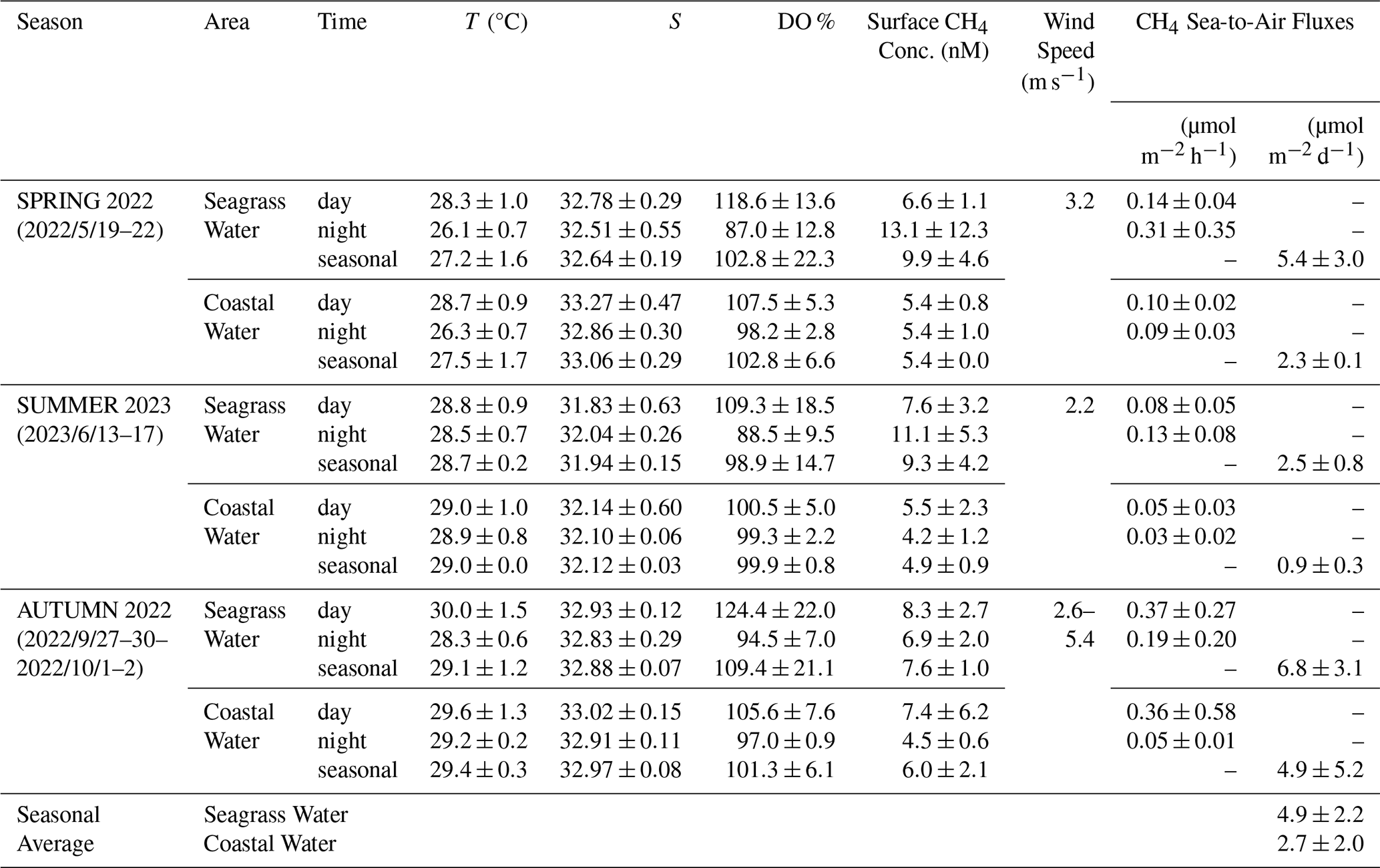
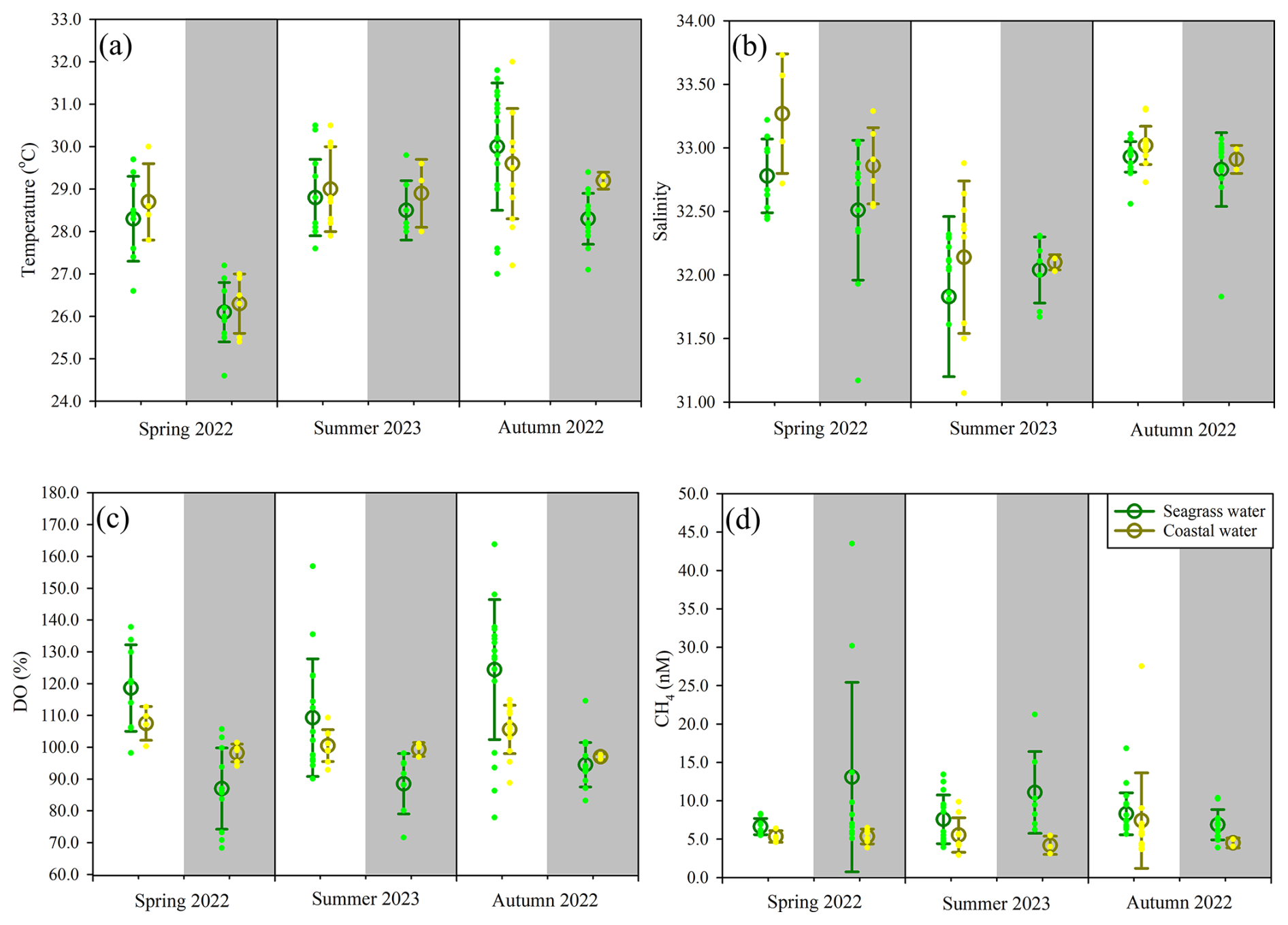
Figure 5Seasonal environmental conditions of (a) temperature, (b) salinity, (c) DO %, and (d) CH4 concentrations in surface seagrass water and coastal water. Bright areas indicate daytime, and grey areas indicate nighttime.
3.2 Seasonal and diurnal variability in surface CH4 concentrations and sea-to-air fluxes
Mean surface CH4 concentrations were higher in the seagrass meadow than in the adjacent coastal water (Fig. 5d). Concentrations in the seagrass meadow ranged from 6.6 to 8.3 nM during the daytime and from 6.9 to 13.1 nM at night, whereas those in the coastal water ranged from 5.4 to 7.4 nM and from 4.2 to 5.4 nM, respectively. Seasonal mean CH4 concentrations were also higher in the seagrass meadow (7.6–9.9 nM) than in the coastal water (4.9–6.0 nM; Table 1).
Sea-to-air CH4 fluxes exhibited distinct spatial and seasonal patterns, influenced by both surface CH4 concentrations and wind speed. Monthly mean wind speeds recorded at the Checheng Weather Station were 3.2 m s−1 in spring 2022, 2.2 m s−1 in summer 2023 and 2.6–5.4 m s−1 in autumn 2022 (Table 1). Correspondingly, CH4 sea-to-air fluxes were higher in the seagrass meadow than in the coastal water across all seasons and times of day (Figs. 6a and 7a). In both habitats, the highest sea-to-air CH4 fluxes occurred in autumn 2022, averaging 6.8±3.1 µmol m−2 d−1 in the seagrass meadow and 4.9±5.2 µmol m−2 d−1 in the coastal water (Fig. 7a). In spring 2022, mean CH4 fluxes decreased to 5.4±3.0 µmol m−2 d−1 in the seagrass meadow and 2.3±0.1 µmol m−2 d−1 in the coastal water (Fig. 7a). The lowest fluxes were observed in summer 2023, averaging 2.5±0.8 µmol m−2 d−1 in the seagrass meadow and 0.9±0.3 µmol m−2 d−1 in the coastal water (Fig. 7a). This seasonal pattern was consistent with the observed variation in wind speed (Table 1).
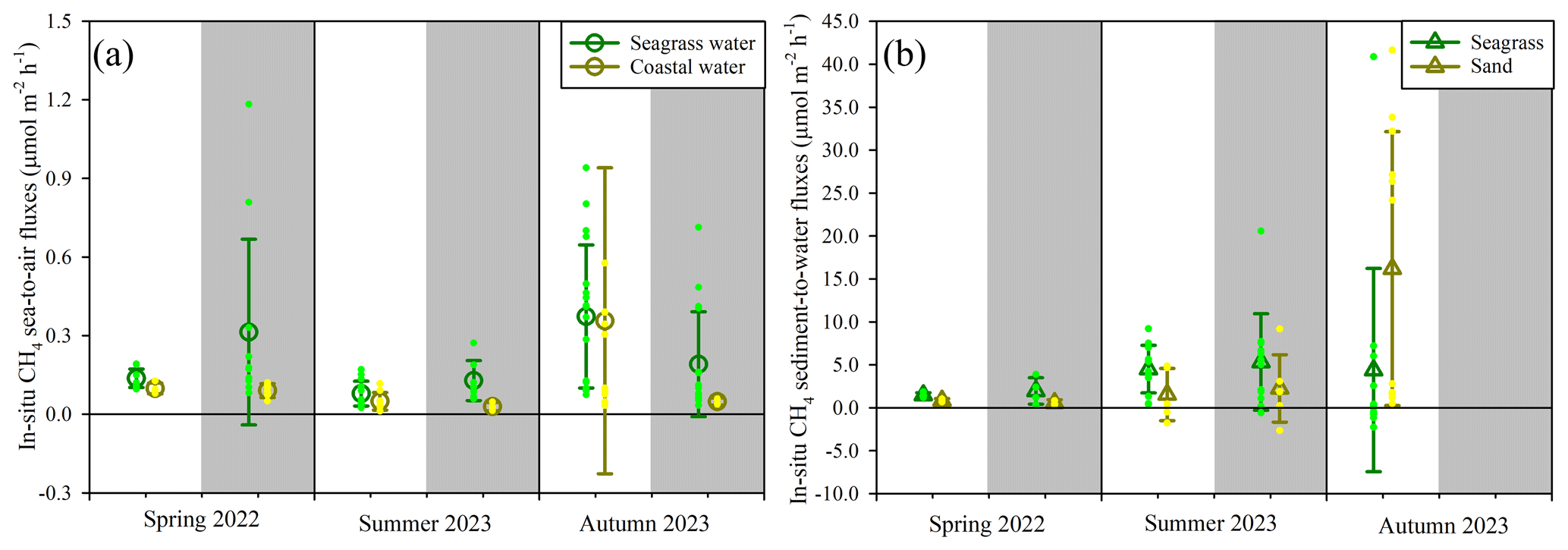
Figure 6Diurnal variation of CH4 (a) sea-to-air fluxes (µmol m−2 h−1; n=226) in surface water of the seagrass meadow and adjacent coastal water, and (b) sediment-to-water fluxes (µmol m−2 h−1; n=284) from seagrass and bare sand sediments. Bright areas indicate daytime, and grey areas indicate nighttime.
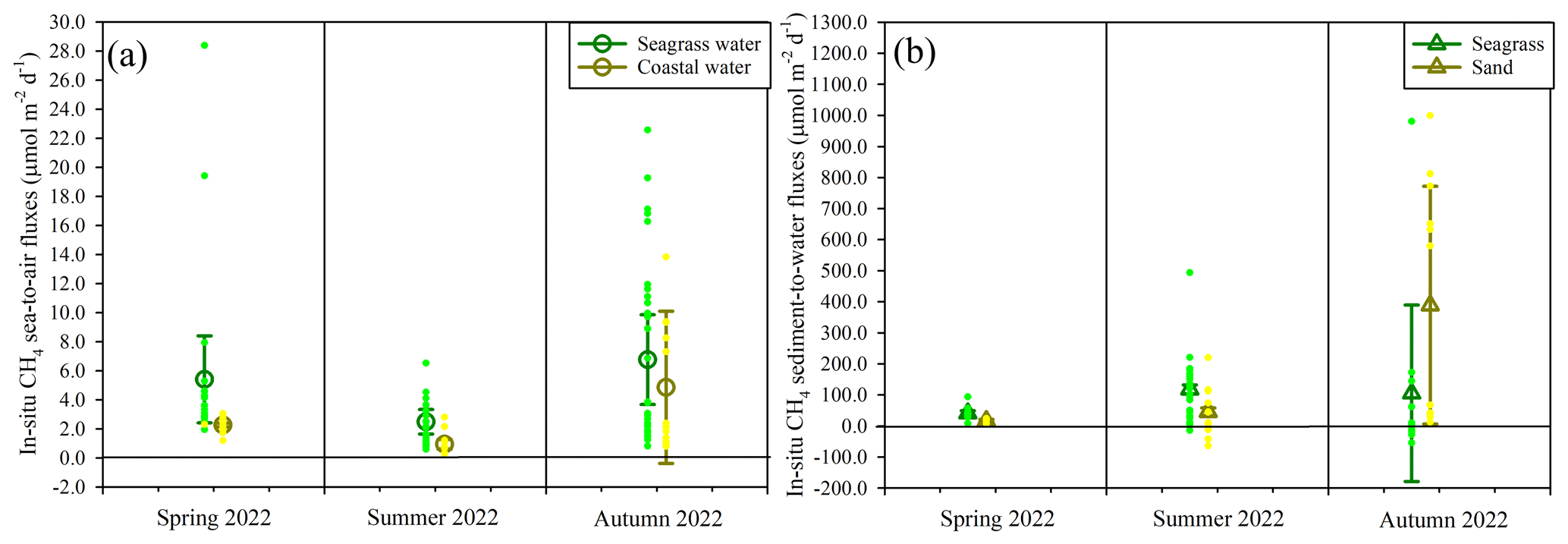
Figure 7Seasonal variation of CH4 (a) sea-to-air fluxes (µmol m−2 d−1; n=226) in surface water of the seagrass meadow and adjacent coastal water, and (b) sediment-to-water fluxes (µmol m−2 d−1; n=284) from seagrass and bare sand sediments.
3.3 Seasonal and diurnal variability in benthic CH4 dynamics and sediment-to-water fluxes
For the sediment-to-water CH4 flux measurements, incubations were conducted at four sites, including two seagrass sites and two adjacent unvegetated bare sand sites. Incubation chambers were deployed at each site, and duplicate water samples were collected from each chamber at the beginning and end of each incubation for CH4 analysis. Across the incubation experiments conducted in spring, summer, and autumn, a total of 284 water samples were collected and used to calculate sediment-to-water CH4 fluxes.
CH4 benthic fluxes were slightly higher at night than during the day in the seagrass meadow during spring and summer (Fig. 6b). Nighttime sediment incubations were not performed during autumn 2022 because storm event prevented field measurements. In the seagrass meadow, CH4 production rates and sediment-to-water fluxes were 102.9±20.2 µmol m−3 d−1 and 41.2±8.2 µmol m−2 d−1 in spring, 295.0±35.1 µmol m−3 d−1 and 118.0±14.0 µmol m−2 d−1 in summer, and 263.3±710.4 µmol m−3 d−1 and 105.3±284.2 µmol m−2 d−1 in autumn, respectively (Table 2). Overall, CH4 production rates and sediment-to-water fluxes in the seagrass meadow remained relatively consistent seasonal patterns, although greater variability was observed in autumn (Fig. 7b). In contrast, bare sand sediments maintained relatively low CH4 production rates and sediment-to-water fluxes during spring and summer but exhibited a marked increase in autumn (Fig. 7b). In spring, the CH4 production rate was 42.1±11.1 µmol m−3 d−1, with a sediment-to-water flux of 16.9±4.5 µmol m−2 d−1. In summer, the CH4 production rate was 114.0±30.6 µmol m−3 d−1, with a sediment-to-water flux of 45.6±12.2 µmol m−2 d−1. In autumn, the CH4 production rate was substantially higher, reaching 972.2±957.1 µmol m−3 d−1, accompanied by a sediment-to-water flux of 388.9±382.8 µmol m−2 d−1 (Table 2).
Table 2Seasonal variations in-situ benthic chamber incubations of CH4 production rates and sediment-to-water fluxes.
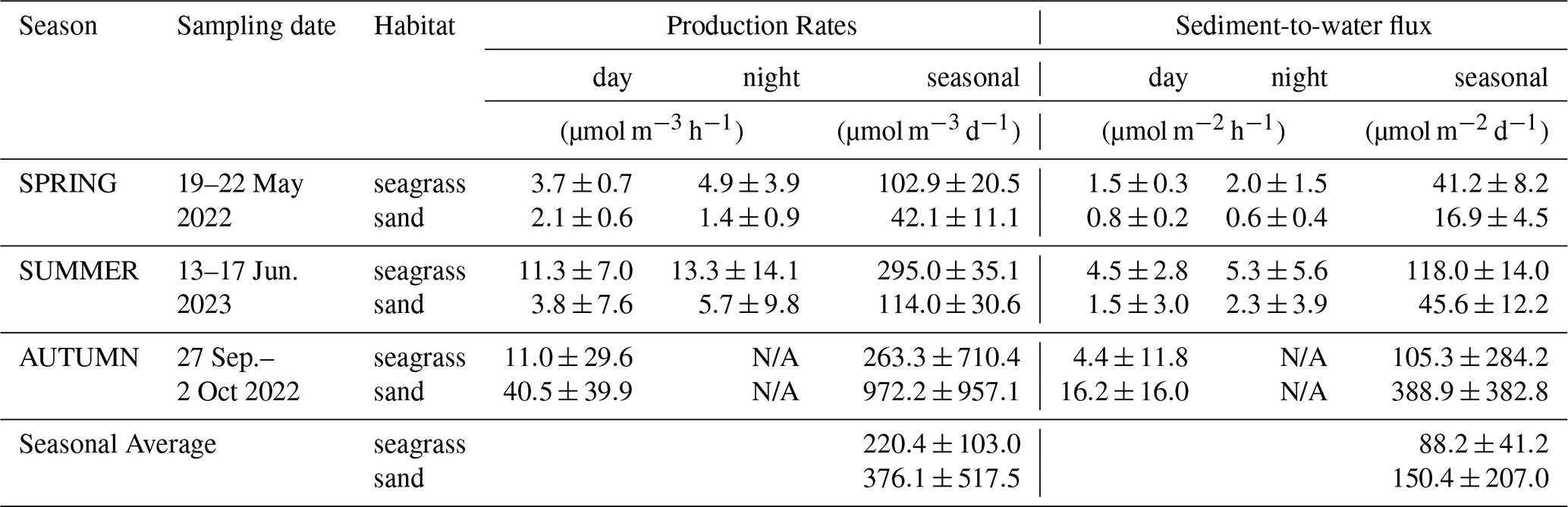
N/A: Data unavailable because fieldwork could not be conducted due to a storm.
3.4 Seasonal porewater CH4 profiles
Porewater CH4 concentrations ranged from 9.3–282.0 nM in spring 2022, 6.1–256.0 nM in summer 2023, and 9.1–190.3 nM in autumn 2022 in sandy sediments. In seagrass sediments, mean porewater CH4 concentrations ranged from 8.1–92.0 nM in spring 2022, 11.8–364.8 nM in summer 2023 and 6.7–262.1 nM in autumn 2022 (Fig. 8). These patterns broadly corresponding to the observed benthic CH4 production rates and sediment-to-water fluxes (Table 2). In seagrass sediments, porewater CH4 concentrations varied with depth, with mean concentrations generally highest within the upper 0–12 cm across all sampling campaigns, before declining below 12 cm depth. Seasonal differences were also evident, with the highest porewater CH4 concentration recorded during autumn 2022 (423.2 nM), followed by summer 2023 (364.8 nM), whereas spring 2022 exhibited comparatively lower concentrations throughout most of the sediment profile (Fig. 8). Seagrass sediments exhibited higher porewater CH4 concentrations than bare sand sediments in summer 2023 and autumn 2022, particularly within the upper 12 cm of the sediment column (Fig. 8b and c). However, this pattern was reversed in spring 2022, when bare sand sediments exhibited higher porewater CH4 concentrations than seagrass sediments below 10 cm depth (Fig. 8a). In bare sand sediments, porewater CH4 concentrations also varied with depth, although vertical gradients were less consistent among seasons than those observed in seagrass sediments. Concentrations generally remained within a narrower range across the sediment profile (Fig. 8).
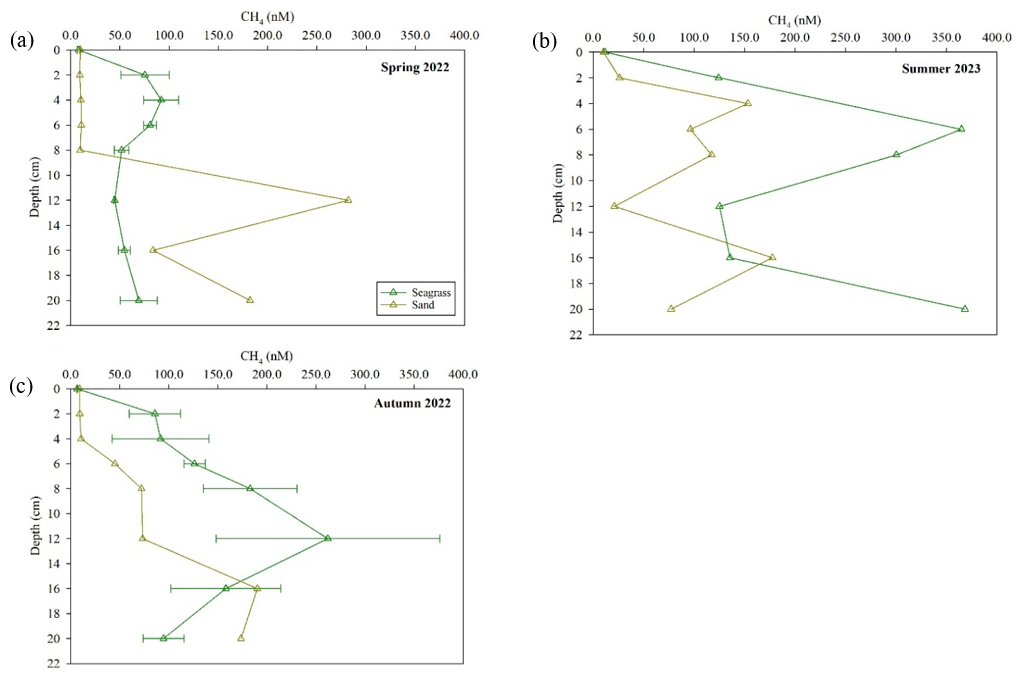
Figure 8CH4 concentration profiles in porewater: (a) spring 2022 (n=32), (b) summer 2023 (n=15), and (c) autumn 2022 (n=32). Error bars represent the range of duplicate samples; error bars are absent for depth intervals where only single sample was available.
4.1 Controls on dissolved CH4 dynamics and sea-to-air fluxes in a tropical seagrass meadow
Dissolved CH4 concentrations in the seagrass meadow exhibited diurnal variability, with surface waters peaking at night in spring 2022 and summer 2023 (Fig. 5d). This pattern likely reflects the influence of daytime photosynthesis, which increased DO saturation and may have suppressed CH4 production or enhanced aerobic CH4 oxidation, thereby limiting CH4 accumulation in the water column. In contrast, lower nighttime DO saturation reduced oxidation potential and allowed sediment-derived CH4 to accumulate in the shallow water column. However, the exception occurred during autumn 2022, when the typical diurnal pattern was disrupted by a nighttime storm event characterized by heavy rainfall and strong winds. Elevated wind speeds likely enhanced turbulence, vertical mixing, and air–water gas exchange, promoting rapid physical degassing of dissolved CH4 and resulting in substantially lower nighttime concentrations than those observed during the other sampling periods. This finding highlights the importance of episodic weather events in regulating short-term CH4 dynamics in shallow coastal ecosystems.
Compared with the seagrass meadow, the adjacent coastal waters exhibited lower and less variable dissolved CH4 concentrations in the surface water. This contrast is likely attributable to the substantially greater water depth (approximately 10 m) at the adjacent coastal water site, which reduces the influence of sediment-derived CH4 on surface waters. In contrast, the shallow water depth (0.5–1.5 m) within the seagrass meadow facilitates the transport of benthic CH4 to the surface, resulting in higher dissolved CH4 concentrations in the surface water. Although no significant seasonal differences in surface CH4 concentrations were observed in either sampling sites, both the seagrass meadow and adjacent coastal waters acted as net sources of atmospheric CH4 throughout the study period. Mean sea-to-air CH4 fluxes were higher in the seagrass meadow (4.9±2.2 µmol m−2 d−1) than in the adjacent coastal waters (2.7±2.0 µmol m−2 d−1; Table 1), indicating that seagrass habitats function as localized CH4 emission hotspots. These estimates, however, should be interpreted as seasonal baseline fluxes rather than annual budgets because winter sampling could not be conducted due to severe weather conditions, and the autumn observations were strongly influenced by an extreme storm event. The absence of significant seasonal changes in dissolved CH4 concentrations further suggests that seasonal variability in sea-to-air CH4 fluxes was primarily governed by changes in wind speed rather than by variations in dissolved CH4 concentrations, highlighting the dominant role of physical gas transfer in regulating atmospheric CH4 emissions. Although seagrass meadows are widely recognized for their capacity to sequester carbon over long timescales (Duarte et al., 2013; Fourqurean et al., 2012; Mcleod et al., 2011), our findings demonstrate that they also function as localized atmospheric CH4 sources. These results emphasize that evaluations of the climate benefits of seagrass ecosystems should consider both their carbon sequestration capacity and their CH4 emissions, particularly as changes in hydrodynamic conditions and extreme weather events may alter CH4 exchange between sediment, water and the atmosphere.
4.2 Drivers of seasonal benthic CH4 production and sediment-to-water fluxes in a tropical seagrass meadow
CH4 production and benthic fluxes in the seagrass meadow exhibited seasonal variability, with the lowest rates occurring in spring and substantially higher rates during summer and autumn (Fig. 7b). This seasonal pattern is likely driven by changes in hydrodynamic conditions that regulate organic matter accumulation within the meadow. At Haikou, strong winds and wave action prevail from October to April (Fig. 2), limiting the deposition and retention of organic particles within the seagrass bed. Consequently, the availability of organic substrates for methanogenesis is reduced, resulting in relatively low benthic CH4 production and sediment-to-water fluxes during spring. In contrast, calmer conditions beginning in late spring and early summer favor the deposition and accumulation of organic matter, including seagrass detritus and epiphytic material, within the sediment. The enhanced availability of labile organic carbon likely stimulates microbial decomposition and methanogenesis, leading to the elevated benthic CH4 production rates and sediment-to-water fluxes observed during summer and autumn.
The seasonal increase in benthic CH4 production is supported by the porewater CH4 profiles, which showed higher concentrations during summer and autumn (Fig. 8). According to Tang et al. (2025), sediments in the Haikou seagrass meadow contain an average total organic carbon content of approximately 0.40 %, with organic matter derived predominantly from marine sources, including aquatic plant material and microbial processing. The accumulation of this organic substrate provides the fuel required for microbial methanogenesis and likely explains the elevated porewater CH4 concentrations observed during the warmer seasons.
Porewater CH4 concentrations were consistently higher than those in the overlying water, indicating that sediment diffusion represented the primary pathway supplying CH4 to the water column (Yu et al., 2024). However, only a fraction of the CH4 produced in sediments is ultimately emitted to the atmosphere because substantial oxidation can occur before reaching the water surface. In addition, the decline in porewater CH4 concentrations with sediment depth observed in this study is consistent with previous findings that sulfate-dependent anaerobic oxidation of CH4 and competition for electron acceptors can limit CH4 accumulation in deeper anoxic sediments (Rissanen et al., 2017). Although diffusion was the dominant transport pathway quantified in this study, ebullition may also contribute to CH4 release when porewater CH4 partial pressure exceeds hydrostatic pressure, allowing CH4 bubbles to bypass oxidation within the sediment and water column (Sun et al., 2022). Therefore, the observed porewater CH4 distributions likely reflect a dynamic balance among organic matter availability, microbial methanogenesis, aerobic and anaerobic CH4 oxidation, and multiple transport pathways from sediment to the overlying water (Henriksson et al., 2024; Yau et al., 2023).
Overall, these findings indicate that seasonal hydrodynamic conditions indirectly regulate CH4 emissions from the seagrass meadow by controlling the accumulation of organic matter available for methanogenesis. The combination of enhanced organic carbon deposition during calm periods, active microbial CH4 production, and sediment-to-water transport explains the elevated sediment-to-water CH4 fluxes observed during summer and autumn, while subsequent oxidation within the sediment and water column moderates the fraction of CH4 ultimately released to the atmosphere.
4.3 Contrasting benthic CH4 dynamics between seagrass and sandy sediments
In situ benthic chamber incubations demonstrated differences in CH4 dynamics between seagrass and adjacent bare sand sediments. During both daytime and nighttime in spring 2022 and summer 2023, benthic CH4 production rates and sediment-to-water fluxes were higher in seagrass sediments than in adjacent bare sand sediments (Figs. 6b and 7b). These differences reflect fundamental ecological and microbial contrasts between vegetated and unvegetated habitats. Seagrass meadows are highly productive ecosystems that contribute substantial quantities of organic matter to the sediments, providing abundant substrates for microbial decomposition and methanogenesis (Yau et al., 2023). In addition, seagrass roots modify sediment biogeochemistry by regulating oxygen availability and shaping microbial community composition, thereby influencing the balance between methanogenic archaea and methanotrophic bacteria (George et al., 2020). Liang et al. (2025) further demonstrated that seagrass sediments harbor a higher abundance of methanogenic archaea than adjacent unvegetated sediments, providing a microbial basis for the elevated CH4 production observed in this study. Reduced oxygen penetration within the rhizosphere, together with active microbial communities, further promotes methanogenesis (Henriksson et al., 2024). Moreover, seagrass plants possess specialized gas-conducting tissues (aerenchyma) that facilitate internal gas transport. While these tissues primarily transport oxygen to belowground tissues, they can also provide pathways for sediment-derived CH4 to diffuse or escape into the overlying water column, thereby enhancing CH4 emissions from seagrass habitats (Yau et al., 2023; Li et al., 2021). Collectively, these biological and biogeochemical processes explain why seagrass sediments generally support higher CH4 production and more sustained sediment-to-water fluxes than adjacent bare sand sediments (George et al., 2020; Schorn et al., 2022).
An exception to this general pattern occurred during the autumn 2022 sampling, when daytime benthic CH4 production rates and sediment-to-water fluxes in bare sand sediments exceeded those in the seagrass meadow, while nighttime incubations could not be conducted because of the storm event (Fig. 6b). This anomaly was likely caused by heavy rainfall and strong winds that disturbed the unvegetated sandy sediments, promoting sediment resuspension and the rapid release of porewater CH4. In contrast, the dense root and rhizome network of seagrasses stabilizes sediments and buffers against physical disturbance, making vegetated sediments less susceptible to storm-induced CH4 pulses despite their generally higher background CH4 production.
These contrasting responses were also reflected in the seasonal averages. Mean sediment-to-water CH4 fluxes were 88.2±41.2 µmol m−2 d−1 in the seagrass meadow and 150.4±207.0 µmol m−2 d−1 in the adjacent bare sand sediments (Table 2). However, the higher seasonal mean for bare sand sediments was largely driven by the exceptionally high emissions recorded during the storm-affected autumn sampling. Excluding this episodic event, seagrass sediments exhibited higher baseline CH4 production and sediment-to-water fluxes, whereas bare sand sediments generally maintained much lower emissions. These findings indicate that seagrass sediments function as persistent CH4 sources sustained by continuous organic matter decomposition and microbial methanogenesis, whereas unvegetated bare sand sediments are characterized by relatively low background emissions punctuated by irregular, disturbance-driven CH4 pulses. As climate change is projected to increase the intensity and frequency of typhoons and other extreme weather events (IPCC, 2021), episodic CH4 release from unvegetated coastal sediments may become an increasingly important component of coastal GHG budgets, even though seagrass meadows remain the dominant long-term hotspots for benthic CH4 production.
4.4 The fate of sediment-derived CH4 in a tropical seagrass meadow
Despite acting as a net atmospheric CH4 source, sediment-to-water CH4 fluxes in the seagrass meadow were one to two orders of magnitude greater than the corresponding sea-to-air fluxes, indicating a substantial decoupling between benthic CH4 production and atmospheric emissions. A simple mass-balance comparison further demonstrates that only a small fraction of sediment-derived CH4 ultimately escaped to the atmosphere. Based on the estimated meadow area (4.38 ha) and an average water depth of 1 m, sediments released approximately 162, 465, and 415 mol CH4 into the overlying water column during spring, summer, and autumn, respectively. In comparison, only 21, 10, and 27 mol CH4 were emitted to the atmosphere during the corresponding sampling periods. Consequently, approximately 87 % of sediment-derived CH4 in spring, 98 % in summer, and 94 % in autumn did not reach the atmosphere directly. Instead, much of this CH4 was likely transported laterally by tidal exchange and coastal circulation, while a smaller fraction was consumed through microbial oxidation within the sediment and water column before atmospheric release. The relatively small standing stock of dissolved CH4 in the water column (0.33–0.43 mol across seasons), despite substantial benthic inputs, further supports the rapid turnover and efficient redistribution of CH4 within this shallow, hydrodynamically active seagrass ecosystem.
These findings demonstrate that benthic CH4 production cannot be directly translated into atmospheric emissions. Rather, the fate of sediment-derived CH4 is primarily governed by lateral transport driven by tidal exchange and coastal circulation, together with microbial oxidation and physical gas exchange, all of which regulate the fraction ultimately released to the atmosphere. However, this interpretation should be considered in light of several methodological limitations. Although in situ benthic chamber incubations are among the most representative approaches for quantifying sediment-to-water fluxes because they preserve the natural sediment-water interface while maintaining ambient light conditions, hydrodynamics, and biological interactions (Mallon et al., 2022), the chamber environment may still influence measured fluxes. Over the incubation period, changes in oxygen availability and microbial activity can alter CH4 production and oxidation rates, particularly during longer deployments (Villnas et al., 2012). In addition, environmental conditions within the chamber may become more stable than in the surrounding environment, potentially enhancing photosynthetic activity and metabolic rates (Olivé et al., 2016). Conversely, shading by the chamber and suspended particles may reduce light penetration and photosynthetic efficiency, thereby affecting oxygen production and CH4 oxidation (Mallon et al., 2022). Although these factors are unlikely to alter the observed habitat-specific and seasonal patterns, they may influence the absolute magnitude of the measured benthic fluxes.
Furthermore, the relative contributions of lateral transport and microbial oxidation could not be quantified directly in this study. Given the shallow water depth (0.5–1.5 m) and frequent tidal exchange within the Haikou seagrass meadow, lateral transport is likely to represent the dominant pathway for removing sediment-derived CH4 from the meadow before atmospheric emission. Future studies integrating hydrodynamic observations, direct measurements of CH4 oxidation rates, and continuous flux measurements across tidal cycles will help better constrain the fate of sediment-derived CH4 and improve GHG budgets for blue carbon ecosystems.
4.5 Regional and global context of CH4 fluxes in seagrass ecosystems
In a broader geographic context, the sea-to-air CH4 fluxes measured at Haikou were comparable to those reported for seagrass meadows at Koh Mook, Thailand (Halim et al., 2024), and Swan Lake, China (Tan et al., 2025), suggesting similar CH4 emission characteristics among several Southeast Asian seagrass ecosystems (Table 3). However, the fluxes were substantially lower than those reported from the Chilika Lagoon, India (Banerjee et al., 2018), where tropical seagrass meadows exhibited considerably higher CH4 emissions that were further enhanced under warming conditions through methylotrophic methanogenesis (Dai et al., 2025). Likewise, studies from the Caribbean have reported elevated CH4 emissions from organic-rich, anoxic seagrass sediments, although seasonal variability and oxygen transport by seagrass plants can moderate net emissions (Saderne et al., 2023). Globally, seagrass ecosystems are generally recognized as net CH4 sources, with a mean sea-to-air flux of 79.0 µmol m−2 d−1 (Eyre et al., 2023), substantially higher than the fluxes observed at Haikou. According to Eyre et al. (2023), the highest CH4 emissions are typically associated with lagoons and salt marshes, where abundant plant-derived methylated compounds promote methylotrophic methanogenesis.
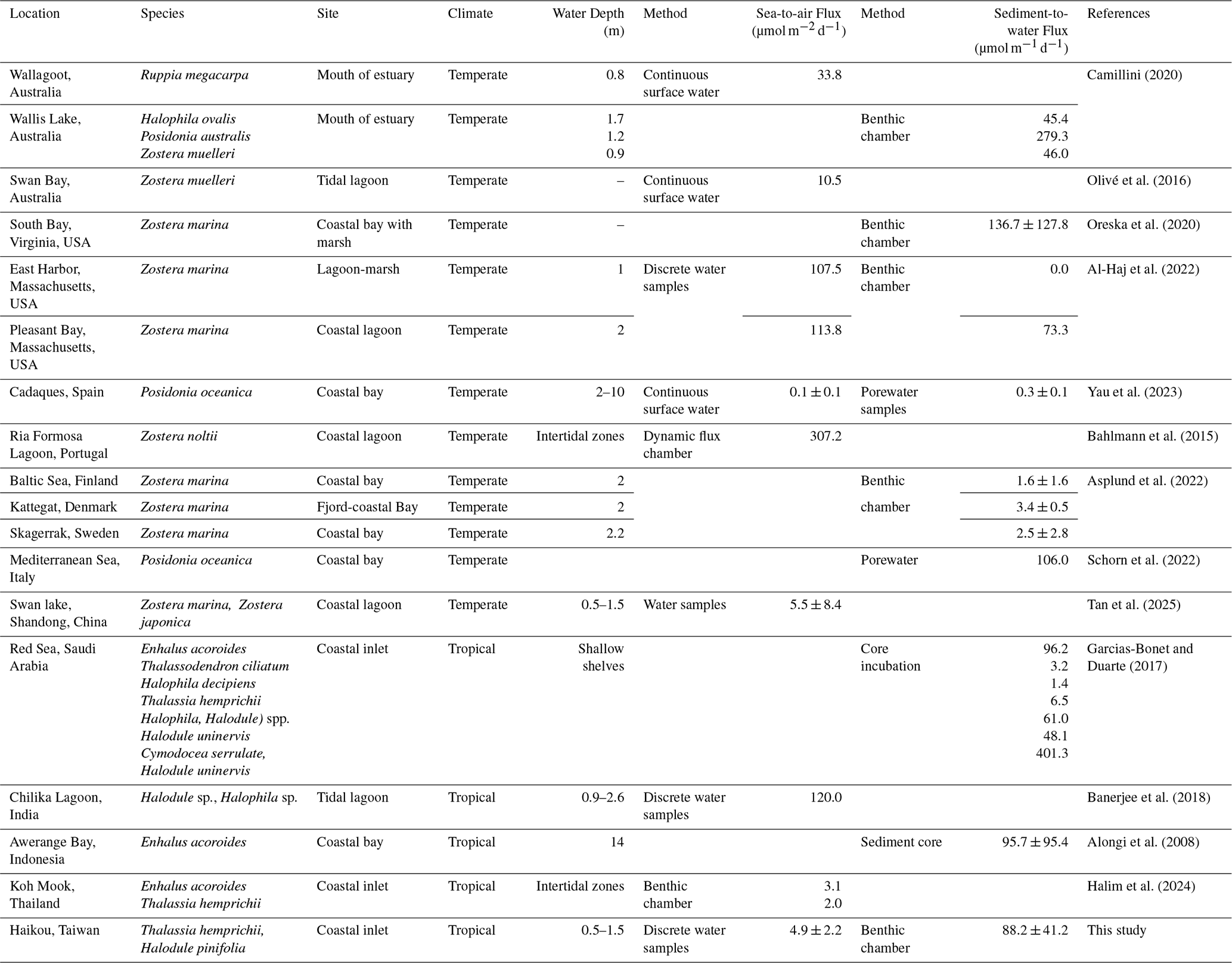
The sediment-to-water CH4 fluxes measured in this study also fell within the range reported for other seagrass ecosystems (Table 3). The observed fluxes were comparable to those measured in Enhalus acoroides meadows in Awerange Bay, Indonesia (Alongi et al., 2008), exceeded those reported for Halophila ovalis and Zostera muelleri meadows in Wallis Lake, Australia (Camillini, 2020), but remained lower than fluxes measured in Posidonia australis meadows in Wallis Lake (Camillini, 2020) and seagrass habitats in South Bay, Virginia (Oreska et al., 2020). These differences underscore the importance of local environmental conditions, including sediment organic matter content, redox conditions, hydrodynamics, and nutrient availability, in regulating sediment methanogenesis and CH4 transport. In addition, species-specific traits, such as belowground biomass, root oxygen release, and organic matter inputs, are likely to contribute to differences in sediment-to-water CH4 fluxes among seagrass meadows (Garcias-Bonet and Duarte, 2017).
Taken together, these findings highlight the importance of region- and species-specific assessments when evaluating the contribution of seagrass ecosystems to GHG budgets. Tropical seagrass meadows differ fundamentally from temperate systems in their biogeochemical characteristics, microbial processes, and exposure to environmental disturbances, all of which influence CH4 production and emissions (Pajares et al., 2017). Future studies should integrate microbial community analyses, porewater geochemistry, isotopic tracers, and trait-based approaches to better resolve the mechanisms controlling CH4 cycling across different seagrass ecosystems. Such efforts are particularly important in tropical regions, where CH4 emissions have the potential to offset a substantial proportion of the climate mitigation benefits associated with blue carbon storage. Although the sea-to-air CH4 fluxes measured at Haikou were relatively low compared with the global average, the elevated benthic CH4 production within the seagrass meadow and the potential for episodic, weather-driven CH4 release underscore the need for habitat-specific assessments that consider both carbon sequestration and GHG emissions. These findings are consistent with the global synthesis of Eyre et al. (2023), which demonstrated that CH4 emissions can partially offset the climate mitigation benefits of seagrass ecosystems and therefore should be incorporated into comprehensive blue carbon assessments.
This study provides the first integrated assessment of seasonal and diurnal CH4 dynamics linking benthic CH4 production, sediment-to-water fluxes, and sea-to-air emissions in a tropical Thalassia hemprichii and Halophila pinifolia seagrass meadow in Haikou, Taiwan. The seagrass meadow exhibited higher dissolved CH4 concentrations and sea-to-air CH4 fluxes than adjacent coastal waters, confirming that it functions as a localized atmospheric CH4 hotspot. Seasonal variability in atmospheric CH4 emissions was primarily controlled by wind-driven gas exchange rather than changes in dissolved CH4 concentrations in the surface water, while benthic CH4 production and sediment-to-water fluxes were strongly influenced by seasonal hydrodynamic conditions that regulated organic matter accumulation and microbial methanogenesis. Compared with adjacent bare sand sediments, seagrass sediments maintained higher baseline benthic CH4 production and sediment-to-water fluxes owing to greater organic matter availability and favorable microbial conditions, although storm-induced sediment disturbance generated episodic CH4 release from unvegetated bare sand sediments.
Despite substantial benthic CH4 production, only a small proportion of sediment-derived CH4 was emitted directly to the atmosphere, indicating a pronounced decoupling between sediment production and atmospheric emissions. The majority of CH4 was likely transported laterally by tidal exchange and coastal circulation before atmospheric release, with microbial oxidation providing an additional sink within the sediment and water column. Although the sea-to-air CH4 fluxes measured at Haikou were lower than the global average for seagrass ecosystems, the benthic CH4 fluxes fell within the range reported worldwide, emphasizing the importance of local environmental conditions and species-specific characteristics in regulating CH4 cycling. These findings demonstrate that evaluating the climate benefits of blue carbon ecosystems requires consideration of both carbon sequestration and GHG emissions. Future studies integrating hydrodynamic measurements, microbial community analyses, CH4 oxidation rates, and continuous observations across tidal and seasonal cycles will improve our understanding of the fate of sediment-derived CH4 and reduce uncertainties in blue carbon GHG budgets under future environmental change.
Raw data are available on Zenodo (https://doi.org/10.5281/zenodo.19079212, Tseng, 2026).
The supplement related to this article is available online at https://doi.org/10.5194/bg-23-7309-2026-supplement.
Hsiao-Chun Tseng: Writing – original draft, Supervision, Methodology, Investigation, Funding acquisition, Formal analysis, Data curation, Conceptualization. Agnes Sonya Meilani Lumban Gaol: Writing – original draft, Investigation, Formal analysis, Data curation. Fu-Hsuen Lin: Investigation, Project administration, Data curation. Jian-Jhih Chen: Writing – review and editing, Methodology, Investigation, Conceptualization. Wen-Chen Chou: Writing – review and editing, Methodology, Investigation, Resources, Funding acquisition, Conceptualization.
The contact author has declared that none of the authors has any competing interests.
Publisher's note: Copernicus Publications remains neutral with regard to jurisdictional claims made in the text, published maps, institutional affiliations, or any other geographical representation in this paper. The authors bear the ultimate responsibility for providing appropriate place names. Views expressed in the text are those of the authors and do not necessarily reflect the views of the publisher.
We thank Yokie Tai, Yuh Han, Qiao-Fang Cheng, and Stefanny Rebeca Alvarado for their assistance with field sampling and laboratory analyses. Artificial intelligence tools were used solely to improve the grammar and spelling of the manuscript. We also sincerely thank Professor Knut Ola Dølven and two anonymous reviewers for their constructive comments, which substantially improved the quality of this manuscript.
This research has been supported by the National Science and Technology Council of the ROC, Taiwan (grant nos. NSTC 112-2611-M-019-012, NSTC 113-2611-M-019-012, and NSTC 114-2119-M-019-002).
This paper was edited by Helge Niemann and reviewed by Knut Ola Dølven and two anonymous referees.
Al-Haj, A. N., Chidsey, T., and Fulweiler, R. W.: Two temperate seagrass meadows are negligible sources of methane and nitrous oxide, Limnol. Oceanogr., 67, https://doi.org/10.1002/lno.12250, 2022.
Alongi, D. M., Trott, L. A., Undu, M. C., and Tirendi, F.: Benthic microbial metabolism in seagrass meadows along a carbonate gradient in Sulawesi, Indonesia, Aquat. Microb. Ecol., 51, 141–152, https://doi.org/10.3354/ame01191, 2008.
Arndt, S., Jørgensen, B. B., LaRowe, D. E., Middelburg, J. J., Pancost, R. D., and Regnier, P.: Quantifying the degradation of organic matter in marine sediments: A review and synthesis, Earth-Sci. Rev., 123, 53–86, https://doi.org/10.1016/j.earscirev.2013.02.008, 2013.
Asplund, M. E., Bonaglia, S., Boström, C., Dahl, M., Deyanova, D., Gagnon, K., Gullström, M., Holmer, M., and Björk, M.: Methane Emissions From Nordic Seagrass Meadow Sediments, Frontiers in Marine Science, 8, https://doi.org/10.3389/fmars.2021.811533, 2022.
Bahlmann, E., Weinberg, I., Lavrič, J. V., Eckhardt, T., Michaelis, W., Santos, R., and Seifert, R.: Tidal controls on trace gas dynamics in a seagrass meadow of the Ria Formosa lagoon (southern Portugal), Biogeosciences, 12, 1683–1696, https://doi.org/10.5194/bg-12-1683-2015, 2015.
Banerjee, K., Paneerselvam, A., Ramachandran, P., Ganguly, D., Singh, G., and Ramesh, R.: Seagrass and macrophyte mediated CO2 and CH4 dynamics in shallow coastal waters, PLoS One, 13, e0203922, https://doi.org/10.1371/journal.pone.0203922, 2018.
Camillini, N.: Carbon and Nitrogen Cycling in Seagrass Ecosystems, PhD thesis, Southern Cross University and University of Southern Denmark, https://doi.org/10.25918/thesis.152, 2020.
Chen, J.-J., Wang, S.-L., Chou, W.-C., Shiu, R.-F., Tseng, H.-C., Chen, T.-Y., and Natividad, M. B.: Habitat-specific metabolism, dissolved organic carbon fluxes, and composition in a tropical seagrass meadow, Estuar. Coast. Shelf S., 336, https://doi.org/10.1016/j.ecss.2026.109864, 2026.
Chen, T.-Y., Chen, J.-J., and Chou, W.-C.: Rethinking blue carbon: unlocking invisible carbon sinks, Environ. Res. Lett., 19, https://doi.org/10.1088/1748-9326/ad7044, 2024.
Dai, G., Chen, X., Zhuang, G., Zhang, Y., Zhu, P., Ju, F., and Li, L.: High Methane Production and Emission From Tropical Seagrasses Through Methylotrophic Methanogenesis, Geophys. Res. Lett., 52, e2024GL113824, https://doi.org/10.1029/2024GL113824, 2025.
Duarte, C. M., Kennedy, H., Marbà, N., and Hendriks, I.: Assessing the capacity of seagrass meadows for carbon burial: Current limitations and future strategies, Ocean Coast. Manage., 83, 32–38, https://doi.org/10.1016/j.ocecoaman.2011.09.001, 2013.
Eyre, B. D., Camillini, N., Glud, R. N., and Rosentreter, J. A.: The climate benefit of seagrass blue carbon is reduced by methane fluxes and enhanced by nitrous oxide fluxes, Communications Earth & Environment, 4, https://doi.org/10.1038/s43247-023-01022-x, 2023.
Falter, J. L. and Sansone, F. J.: Shallow pore water sampling in reef sediments, Coral Reefs, 19, 93–97, https://doi.org/10.1007/s003380050233, 2000.
Fourqurean, J. W., Duarte, C. M., Kennedy, H., Marbà, N., Holmer, M., Mateo, M. A., Apostolaki, E. T., Kendrick, G. A., Krause-Jensen, D., McGlathery, K. J., and Serrano, O.: Seagrass ecosystems as a globally significant carbon stock, Nat. Geosci., 5, 505–509, https://doi.org/10.1038/ngeo1477, 2012.
Garcias-Bonet, N. and Duarte, C. M.: Methane Production by Seagrass Ecosystems in the Red Sea, Frontiers in Marine Science, 4, https://doi.org/10.3389/fmars.2017.00340, 2017.
George, R., Gullstrom, M., Mtolera, M. S. P., Lyimo, T. J., and Bjork, M.: Methane emission and sulfide levels increase in tropical seagrass sediments during temperature stress: A mesocosm experiment, Ecol. Evol., 10, 1917–1928, https://doi.org/10.1002/ece3.6009, 2020.
Halim, M., Stankovic, M., and Prathep, A.: A preliminary study of carbon dioxide and methane emissions from patchy tropical seagrass meadows in Thailand, PeerJ, 12, e18087, https://doi.org/10.7717/peerj.18087, 2024.
Henriksson, L., Yau, Y. Y. Y., Majtényi-Hill, C., Ljungberg, W., Tomer, A. S., Zhao, S., Wang, F., Cabral, A., Asplund, M., and Santos, I. R.: Drivers of Seasonal and Diel Methane Emissions From a Seagrass Ecosystem, J. Geophys. Res.-Biogeo., 129, https://doi.org/10.1029/2024jg008079, 2024.
Howard, J., Sutton-Grier, A. E., Smart, L. S., Lopes, C. C., Hamilton, J., Kleypas, J., Simpson, S., McGowan, J., Pessarrodona, A., Alleway, H. K., and Landis, E.: Blue carbon pathways for climate mitigation: Known, emerging and unlikely, Mar. Policy, 156, https://doi.org/10.1016/j.marpol.2023.105788, 2023.
IPCC: Changing State of the Climate System, in: Climate Change 2021: The Physical Science Basis. Contribution of Working Group I to the Sixth Assessment Report of the Intergovernmental Panel on Climate Change, Cambridge University Press, Cambridge, United Kingdom and New York, NY, USA, 287–422, https://doi.org/10.1017/9781009157896.004, 2021.
Kuwae, T., Watanabe, A., Yoshihara, S., Suehiro, F., and Sugimura, Y.: Implementation of blue carbon offset crediting for seagrass meadows, macroalgal beds, and macroalgae farming in Japan, Mar. Policy, 138, https://doi.org/10.1016/j.marpol.2022.104996, 2022.
Lan, X., Thoning, K. W., and Dlugokencky, E. J.: Trends in globally-averaged CH4, N2O, and SF6, NOAA Global Monitoring Laboratory measurements, Version 2026–07, https://doi.org/10.15138/P8XG-AA10, 2026.
Li, L., Jiang, Z., Wu, Y., He, J., Fang, Y., Lin, J., Liu, S., and Huang, X.: Interspecific differences in root exudation for three tropical seagrasses and sediment pore-water dissolved organic carbon beneath them, Mar. Pollut. Bull., 173, 113059, https://doi.org/10.1016/j.marpolbul.2021.113059, 2021.
Lin, H. J., Chen, K. Y., Kao, Y. C., Lin, W. J., Lin, C. W., and Ho, C. W.: Assessing Coastal Blue Carbon Sinks in Taiwan, Marine Research, 3, https://doi.org/10.29677/MR.202312_3(2).0001, 2023.
Liang, T., Dong, J., Zhou, W., Huang, X., Liu, H., Zhang, Y., Yang, Q., Ahmad, M., Chen, L., and Ling, J.: Investigation on the aerobic methanotrophic community and the dominant taxon Methylomarinum in seagrass ecosystem, Environmental Microbiome, 20, 67, https://doi.org/10.1186/s40793-025-00736-z, 2025.
Lovelock, C. E. and Duarte, C. M.: Dimensions of Blue Carbon and emerging perspectives, Biol. Lett., 15, 20180781, https://doi.org/10.1098/rsbl.2018.0781, 2019.
Lyimo, L. D., Gullström, M., Lyimo, T. J., Deyanova, D., Dahl, M., Hamisi, M. I., and Björk, M.: Shading and simulated grazing increase the sulphide pool and methane emission in a tropical seagrass meadow, Mar. Pollut. Bull., 134, 89–93, https://doi.org/10.1016/j.marpolbul.2017.09.005, 2018.
Mallon, J., Banaszak, A. T., Donachie, L., Exton, D., Cyronak, T., Balke, T., and Bass, A. M.: A low-cost benthic incubation chamber for in-situ community metabolism measurements, PeerJ, 10, e13116, https://doi.org/10.7717/peerj.13116, 2022.
Mcleod, E., Chmura, G. L., Bouillon, S., Salm, R., Björk, M., Duarte, C. M., Lovelock, C. E., Schlesinger, W. H., and Silliman, B. R.: A blueprint for blue carbon: toward an improved understanding of the role of vegetated coastal habitats in sequestering CO2, Front. Ecol. Environ., 9, 552–560, https://doi.org/10.1890/110004, 2011.
Natividad, M. B., Cai, W.-J., Bednaršek, N., Chen, J.-J., and Chou, W.-C.: Organic–inorganic carbon coupling shapes carbon dioxide fluxes in seagrass ecosystems, Communications Earth & Environment, 7, https://doi.org/10.1038/s43247-026-03805-4, 2026.
Neubauer, S. C. and Megonigal, J. P.: Moving Beyond Global Warming Potentials to Quantify the Climatic Role of Ecosystems, Ecosystems, 18, 1000–1013, https://doi.org/10.1007/s10021-015-9879-4, 2015.
Olivé, I., Silva, J., Costa, M. M., and Santos, R.: Estimating Seagrass Community Metabolism Using Benthic Chambers: The Effect of Incubation Time, Estuar. Coast., 39, 138–144, https://doi.org/10.1007/s12237-015-9973-z, 2016.
Oreska, M. P. J., McGlathery, K. J., Aoki, L. R., Berger, A. C., Berg, P., and Mullins, L.: The greenhouse gas offset potential from seagrass restoration, Sci. Rep., 10, 7325, https://doi.org/10.1038/s41598-020-64094-1, 2020.
Pajares, S., Bohannan, B. J. M., and Souza, V.: The Role of Microbial Communities in Tropical Ecosystems, Front. Microbiol. https://doi.org/10.3389/978-2-88945-067-1, 2017.
Reeburgh, W. S.: Oceanic Methane Biogeochemistry, Chem. Rev., 107, 486–513, https://doi.org/10.1021/cr050362v, 2007.
Rissanen, A. J., Karvinen, A., Nykanen, H., Peura, S., Tiirola, M., Maki, A., and Kankaala, P.: Effects of alternative electron acceptors on the activity and community structure of methane-producing and consuming microbes in the sediments of two shallow boreal lakes, FEMS Microbiol. Ecol., 93, https://doi.org/10.1093/femsec/fix078, 2017.
Rosentreter, J. A., Borges, A. V., Deemer, B. R., Holgerson, M. A., Liu, S., Song, C., Melack, J., Raymond, P. A., Duarte, C. M., Allen, G. H., Olefeldt, D., Poulter, B., Battin, T. I., and Eyre, B. D.: Half of global methane emissions come from highly variable aquatic ecosystem sources, Nat. Geosci., 14, 225–230, https://doi.org/10.1038/s41561-021-00715-2, 2021.
Roth, F., Wild, C., Carvalho, S., Rädecker, N., Voolstra, C. R., Kürten, B., Anlauf, H., El-Khaled, Y. C., Carolan, R., Jones, B. H., and Trueman, C.: An in situ approach for measuring biogeochemical fluxes in structurally complex benthic communities, Methods Ecol. Evol., 10, 712–725, https://doi.org/10.1111/2041-210x.13151, 2019.
Saderne, V., Dunne, A. F., Rich, W. A., Cadiz, R., Carvalho, S., Cúrdia, J., and Kattan, A.: Seasonality of methane and carbon dioxide emissions in tropical seagrass and unvegetated ecosystems, Communications Earth & Environment, 4, https://doi.org/10.1038/s43247-023-00759-9, 2023.
Saunois, M., Stavert, A. R., Poulter, B., Bousquet, P., Canadell, J. G., Jackson, R. B., Raymond, P. A., Dlugokencky, E. J., Houweling, S., Patra, P. K., Ciais, P., Arora, V. K., Bastviken, D., Bergamaschi, P., Blake, D. R., Brailsford, G., Bruhwiler, L., Carlson, K. M., Carrol, M., Castaldi, S., Chandra, N., Crevoisier, C., Crill, P. M., Covey, K., Curry, C. L., Etiope, G., Frankenberg, C., Gedney, N., Hegglin, M. I., Höglund-Isaksson, L., Hugelius, G., Ishizawa, M., Ito, A., Janssens-Maenhout, G., Jensen, K. M., Joos, F., Kleinen, T., Krummel, P. B., Langenfelds, R. L., Laruelle, G. G., Liu, L., Machida, T., Maksyutov, S., McDonald, K. C., McNorton, J., Miller, P. A., Melton, J. R., Morino, I., Müller, J., Murguia-Flores, F., Naik, V., Niwa, Y., Noce, S., O'Doherty, S., Parker, R. J., Peng, C., Peng, S., Peters, G. P., Prigent, C., Prinn, R., Ramonet, M., Regnier, P., Riley, W. J., Rosentreter, J. A., Segers, A., Simpson, I. J., Shi, H., Smith, S. J., Steele, L. P., Thornton, B. F., Tian, H., Tohjima, Y., Tubiello, F. N., Tsuruta, A., Viovy, N., Voulgarakis, A., Weber, T. S., van Weele, M., van der Werf, G. R., Weiss, R. F., Worthy, D., Wunch, D., Yin, Y., Yoshida, Y., Zhang, W., Zhang, Z., Zhao, Y., Zheng, B., Zhu, Q., Zhu, Q., and Zhuang, Q.: The Global Methane Budget 2000–2017, Earth Syst. Sci. Data, 12, 1561–1623, https://doi.org/10.5194/essd-12-1561-2020, 2020.
Schorn, S., Ahmerkamp, S., Bullock, E., Weber, M., Lott, C., Liebeke, M., Lavik, G., Kuypers, M. M. M., Graf, J. S., and Milucka, J.: Diverse methylotrophic methanogenic archaea cause high methane emissions from seagrass meadows, P. Natl. Acad. Sci. USA, 119, https://doi.org/10.1073/pnas.2106628119, 2022.
Sogin, E. M., Michellod, D., Gruber-Vodicka, H. R., Bourceau, P., Geier, B., Meier, D. V., Seidel, M., Ahmerkamp, S., Schorn, S., D'Angelo, G., Procaccini, G., Dubilier, N., and Liebeke, M.: Sugars dominate the seagrass rhizosphere, Nat. Ecol. Evol., https://doi.org/10.1038/s41559-022-01740-z, 2022.
Sun, H., Yu, R., Liu, X., Cao, Z., Li, X., Zhang, Z., Wang, J., Zhuang, S., Ge, Z., Zhang, L., Sun, L., Lorke, A., Yang, J., Lu, C., and Lu, X.: Drivers of spatial and seasonal variations of CO2 and CH4 fluxes at the sediment water interface in a shallow eutrophic lake, Water Res., 222, 118916, https://doi.org/10.1016/j.watres.2022.118916, 2022.
Tan, W., Zhong, Z., He, Q., Yun, X., Yang, L., Wang, X., Ji, D., Wang, G., Zhao, J., and Zhang, X.: Methane emission fluxes and associated microbial community characteristics in a temperate seagrass meadow, Sci. Total Environ., 958, 177991, https://doi.org/10.1016/j.scitotenv.2024.177991, 2025.
Tang, Z.-W., Chen, H.-F., Puntu, J. M., Chang, P.-Y., Lo, L., Chen, J.-J., Chou, W.-C., Fan, L.-F., and Chang, Y.-J.: Evaluation of Carbon Sequestration in Seagrass Meadows of Kenting: A Comparative Study with Penghu and Dongsha Island, J. Mar. Sci. Technol., 33, https://doi.org/10.51400/2709-6998.2775, 2025.
Tseng, H.-C.: Data from: Linking Sea–Air and Benthic Methane Fluxes Across Seasons in a Tropical Seagrass Meadow of Taiwan, Zenodo [data set], https://doi.org/10.5281/zenodo.19079212, 2026.
Tseng, H.-C., Lin, C.-C., Pan, H.-J., Han, Y. T. Y., and Gong, G.-C.: Seasonal Distributions of Methane in a Populous Urban Coastal Sea Area, Frontiers in Marine Science, 9, https://doi.org/10.3389/fmars.2022.843549, 2022.
Villnas, A., Norkko, J., Lukkari, K., Hewitt, J., and Norkko, A.: Consequences of increasing hypoxic disturbance on benthic communities and ecosystem functioning, PLoS One, 7, e44920, https://doi.org/10.1371/journal.pone.0044920, 2012.
Wanninkhof, R.: Relationship between wind speed and gas exchange over the ocean revisited, Limnol. Oceanogr.-Meth., 12, 351–362, https://doi.org/10.4319/lom.2014.12.351, 2014.
Webb, A. P. and Eyre, B. D.: Effect of natural populations of burrowing thalassinidean shrimp on sediment irrigation, benthic metabolism, nutrient fluxes and denitrification, Mar. Ecol. Prog. Ser., 268, 205–220, https://doi.org/10.3354/meps268205, 2004.
Weber, T., Wiseman, N. A., and Kock, A.: Global ocean methane emissions dominated by shallow coastal waters, Nat. Commun., 10, 4584, https://doi.org/10.1038/s41467-019-12541-7, 2019.
Weiss, R. F.: Determinations of Carbon Dioxide and Methane by Dual Catalyst Flame lonization Chromatography and Nitrous Oxide by Electron Capture Chromatography, J. Chromatogr. Sci., 19, 611–616, https://doi.org/10.1093/chromsci/19.12.611, 1981.
Wiesenburg, D. A. and Guinasso Jr., N. L.: Equilibrium Solubilities of Methane,Carbon Monoxide, and Hydrogen in Water and Sea Water, J. Chem. Eng. Data, 24, 356–360, https://doi.org/10.1021/je60083a006, 1979.
Yau, Y. Y. Y., Reithmaier, G., Majtényi-Hill, C., Serrano, O., Piñeiro-Juncal, N., Dahl, M., Mateo, M. A., Bonaglia, S., and Santos, I. R.: Methane Emissions in Seagrass Meadows as a Small Offset to Carbon Sequestration, J. Geophys. Res.-Biogeo., 128, https://doi.org/10.1029/2022jg007295, 2023.
Yu, H., Coffin, R., and Organ, H.: Dynamics of methane emissions from northwestern Gulf of Mexico subtropical seagrass meadows, Biogeochemistry, 167, 723–741, https://doi.org/10.1007/s10533-024-01138-y, 2024.