
Articles | Volume 23, issue 20
https://doi.org/10.5194/bg-23-7591-2026
© Author(s) 2026. This work is distributed under
the Creative Commons Attribution 4.0 License.
the Creative Commons Attribution 4.0 License.
https://doi.org/10.5194/bg-23-7591-2026
© Author(s) 2026. This work is distributed under
the Creative Commons Attribution 4.0 License.
the Creative Commons Attribution 4.0 License.
Research article
| 
29 Oct 2026
Research article |
| 29 Oct 2026
| 29 Oct 2026
Contribution of fine roots on carbon allocation patterns in Norwegian forests
Andreas Hagenbo
CORRESPONDING AUTHOR

Norwegian Institute of Bioeconomy Research (NIBIO), Postboks 115, 1431 Ås, Norway
Ryan M. Bright
Norwegian Institute of Bioeconomy Research (NIBIO), Postboks 115, 1431 Ås, Norway
Christian Wilhelm Mohr
Norwegian Institute of Bioeconomy Research (NIBIO), Postboks 115, 1431 Ås, Norway
Marius Hauglin
Norwegian Institute of Bioeconomy Research (NIBIO), Postboks 115, 1431 Ås, Norway
Simon Weldon
Norwegian Institute of Bioeconomy Research (NIBIO), Postboks 115, 1431 Ås, Norway
Lise Dalsgaard
Norwegian Institute of Bioeconomy Research (NIBIO), Postboks 115, 1431 Ås, Norway
Related authors
No articles found.
Thiago M. Inagaki, Simon Weldon, Franziska B. Bucka, Eva Farkas, and Daniel P. Rasse
SOIL, 11, 141–147, https://doi.org/10.5194/soil-11-141-2025, https://doi.org/10.5194/soil-11-141-2025, 2025
Short summary
Short summary
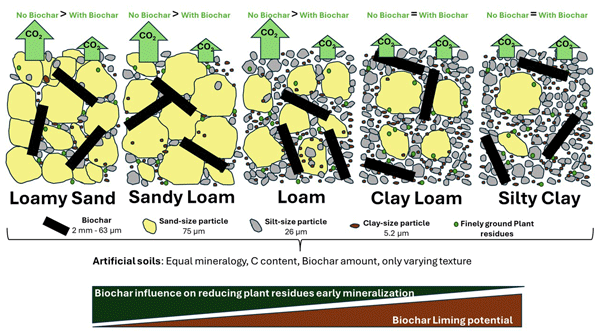
Here, we investigated how biochar, a potential C sequestration tool, affects early carbon storage in different soils. We created artificial soils to isolate the impact of soil texture. We found that biochar significantly reduces plant residue’s breakdown in all soil textures but mainly in sandy soils, which naturally hold less carbon. This suggests that biochar could be a valuable tool for improving soil health, especially in sandy soils.
Jyrki Jauhiainen, Juha Heikkinen, Nicholas Clarke, Hongxing He, Lise Dalsgaard, Kari Minkkinen, Paavo Ojanen, Lars Vesterdal, Jukka Alm, Aldis Butlers, Ingeborg Callesen, Sabine Jordan, Annalea Lohila, Ülo Mander, Hlynur Óskarsson, Bjarni D. Sigurdsson, Gunnhild Søgaard, Kaido Soosaar, Åsa Kasimir, Brynhildur Bjarnadottir, Andis Lazdins, and Raija Laiho
Biogeosciences, 20, 4819–4839, https://doi.org/10.5194/bg-20-4819-2023, https://doi.org/10.5194/bg-20-4819-2023, 2023
Short summary
Short summary
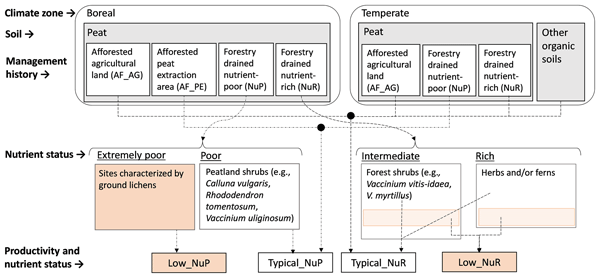
The study looked at published data on drained organic forest soils in boreal and temperate zones to revisit current Tier 1 default emission factors (EFs) provided by the IPCC Wetlands Supplement. We examined the possibilities of forming more site-type specific EFs and inspected the potential relevance of environmental variables for predicting annual soil greenhouse gas balances by statistical models. The results have important implications for EF revisions and national emission reporting.
Cited articles
Amthor, J. S.: The McCree–de Wit–Penning de Vries–Thornley respiration paradigms: 30 years later, Ann. Bot., 86, 1–20, https://doi.org/10.1006/anbo.2000.1175, 2000.
Anderson-Teixeira, K. J., Herrmann, V., Morgan, R. B., Bond-Lamberty, B., Cook-Patton, S. C., Ferson, A. E., Muller-Landau, H. C., and Wang, M. M. H.: Carbon cycling in mature and regrowth forests globally, Environ. Res. Lett., 16, 053009, https://doi.org/10.1088/1748-9326/abed01, 2021.
Badgley, G., Anderegg, L. D. L., Berry, J. A., and Field, C. B.: Terrestrial gross primary production: Using NIRV to scale from site to globe, Glob. Change Biol., 25, 3731–3740, https://doi.org/10.1111/gcb.14729, 2019.
Batjes, N. H.: Total carbon and nitrogen in the soils of the world, Eur. J. Soil Sci., 47, 151–163, https://doi.org/10.1111/j.1365-2389.1996.tb01386.x, 1996.
Bradford, M. A. and Crowther, T. W.: Carbon use efficiency and storage in terrestrial ecosystems, New Phytol., 199, 7–9, https://doi.org/10.1111/nph.12334, 2013.
Cajander, A. K.: The theory of forest types, Acta Forestalia Fennica, 29, 7193, https://doi.org/10.14214/aff.7193, 1926.
Campioli, M., Vicca, S., Luyssaert, S., Bilcke, J., Ceschia, E., Chapin III, F. S., Ciais, P., Fernández-Martínez, M., Malhi, Y., Obersteiner, M., Olefeldt, D., Papale, D., Piao, S. L., Peñuelas, J., Sullivan, P. F., Wang, X., Zenone, T., and Janssens, I. A.: Biomass production efficiency controlled by management in temperate and boreal ecosystems, Nat. Geosci., 8, 843–846, https://doi.org/10.1038/ngeo2553, 2015.
Cannell, M. G. R. and Thornley, J. H. M.: Modelling the components of plant respiration: some guiding principles, Ann. Bot., 85, 45–54, https://doi.org/10.1006/anbo.1999.0996, 2000.
Chapin, F. S., Matson, P. A., and Mooney, H. A.: Principles of terrestrial ecosystem ecology, Springer, New York, NY, https://doi.org/10.1007/b97397, 2002.
Chen, W., Chen, J. M., Price, D. T., and Cihlar, J.: Effects of stand age on net primary productivity of boreal black spruce forests in Ontario, Canada, Can. J. For. Res., 32, 833–842, https://doi.org/10.1139/x01-165, 2002.
Chen, Z. and Yu, G.: Spatial variations and controls of carbon use efficiency in China's terrestrial ecosystems, Sci. Rep., 9, 19516, https://doi.org/10.1038/s41598-019-56115-5, 2019.
Clemmensen, K. E., Bahr, A., Ovaskainen, O., Dahlberg, A., Ekblad, A., Wallander, H., Stenlid, J., Finlay, R. D., Wardle, D. A., and Lindahl, B. D.: Roots and associated fungi drive long-term carbon sequestration in boreal forest, Science, 339, 1615–1618, https://doi.org/10.1126/science.1231923, 2013.
Collalti, A., Ibrom, A., Stockmarr, A., Cescatti, A., Alkama, R., Fernández-Martínez, M., Matteucci, G., Sitch, S., Friedlingstein, P., Ciais, P., Goll, D. S., Nabel, J. E. M. S., Pongratz, J., Arneth, A., Haverd, V., and Prentice, I. C.: Forest production efficiency increases with growth temperature, Nat. Commun., 11, 5322, https://doi.org/10.1038/s41467-020-19187-w, 2020.
Dalsgaard, L., Astrup, R., Antón-Fernández, C., Borgen, S. K., Breidenbach, J., Lange, H., Lehtonen, A., and Liski, J.: Modeling soil carbon dynamics in northern forests: effects of spatial and temporal aggregation of climatic input data, PLOS ONE, 11, e0149902, https://doi.org/10.1371/journal.pone.0149902, 2016.
De Lucia, E. H., Drake, J. E., Thomas, R. B., and Gonzalez-Meler, M.: Forest carbon use efficiency: is respiration a constant fraction of gross primary production?, Glob. Change Biol., 13, 1157–1167, https://doi.org/10.1111/j.1365-2486.2007.01365.x, 2007.
Ding, Y., Leppälammi-Kujansuu, J., and Helmisaari, H.-S.: Fine root longevity and below- and aboveground litter production in a boreal Betula pendula forest, Forest Ecol. Manag., 431, 17–25, https://doi.org/10.1016/j.foreco.2018.02.039, 2019.
Eid, T., Viken, K. O., and Astrup, R.: Models predicting stand level biomass for Norway spruce (Picea spp.), Scots pine (Pinus spp.) and broadleaf dominated forest in Norway, INA fagrapport 37, Norwegian University of Life Sciences, Department of Ecology and Natural Resource Management, Ås, Norway, 31 pp., 2016.
Finér, L., Ohashi, M., Noguchi, K., and Hirano, Y.: Fine root production and turnover in forest ecosystems in relation to stand and environmental characteristics, Forest Ecol. Manag., 262, 2008–2023, https://doi.org/10.1016/j.foreco.2011.08.042, 2011.
Gifford, R. M.: Plant respiration in productivity models: conceptualisation, representation and issues for global terrestrial carbon-cycle research, Funct. Plant Biol., 30, 171–186, https://doi.org/10.1071/FP02083, 2003.
Gill, A. L. and Finzi, A. C.: Belowground carbon flux links biogeochemical cycles and resource-use efficiency at the global scale, Ecol. Lett., 19, 1419–1428, https://doi.org/10.1111/ele.12690, 2016.
Gill, R. A. and Jackson, R. B.: Global patterns of root turnover for terrestrial ecosystems, New Phytol., 147, 13–31, https://doi.org/10.1046/j.1469-8137.2000.00681.x, 2000.
Gower, S. T., McMurtrie, R. E., and Murty, D.: Aboveground net primary production decline with stand age: potential causes, Trends Ecol. Evol., 11, 378–382, https://doi.org/10.1016/0169-5347(96)10042-2, 1996.
Gower, S. T., Krankina, O., Olson, R. J., Apps, M., Linder, S., and Wang, C.: Net primary production and carbon allocation patterns of boreal forest ecosystems, Ecol. Appl., 11, 1395–1411, https://doi.org/10.2307/3060928, 2001.
Gudmundsson, L.: qmap: Statistical transformations for post processing climate model output (R package version 1.0 4), https://cran.r-project.org/web/packages/qmap (last access: 15 November 2024), 2016.
Hagenbo, A., Clemmensen, K. E., Finlay, R. D., Kyaschenko, J., Lindahl, B. D., Fransson, P., and Ekblad, A.: Changes in turnover rather than production regulate biomass of ectomycorrhizal fungal mycelium across a Pinus sylvestris chronosequence, New Phytol., 214, 424–431, https://doi.org/10.1111/nph.14379, 2017.
Hansson, K., Helmisaari, H.-S., Sah, S. P., and Lange, H.: Fine root production and turnover of tree and understorey vegetation in Scots pine, silver birch and Norway spruce stands in SW Sweden, Forest Ecol. Manag., 309, 58–65, https://doi.org/10.1016/j.foreco.2013.01.022, 2013.
Härkönen, S., Lehtonen, A., Eerikäinen, K., Peltoniemi, M., and Mäkelä, A.: Estimating forest carbon fluxes for large regions based on process-based modelling, NFI data and Landsat satellite images, Forest Ecol. Manag., 262, 2364–2377, https://doi.org/10.1016/j.foreco.2011.08.035, 2011.
Hauglin, M., Rahlf, J., Schumacher, J., Astrup, R., and Breidenbach, J.: Large scale mapping of forest attributes using heterogeneous sets of airborne laser scanning and National Forest Inventory data, For. Ecosyst., 8, 65, https://doi.org/10.1186/s40663-021-00338-4, 2021.
He, Y., Piao, S., Li, X., Chen, A., and Qin, D.: Global patterns of vegetation carbon use efficiency and their climate drivers deduced from MODIS satellite data and process-based models, Agric. For. Meteorol., 256–257, 150–158, https://doi.org/10.1016/j.agrformet.2018.03.009, 2018.
Helmisaari, H.-S., Makkonen, K., Kellomäki, S., Valtonen, E., and Mälkönen, E.: Below- and above-ground biomass, production and nitrogen use in Scots pine stands in eastern Finland, Forest Ecol. Manag., 165, 317–326, https://doi.org/10.1016/S0378-1127(01)00648-X, 2002.
Helmisaari, H.-S., Derome, J., Nöjd, P., and Kukkola, M.: Fine root biomass in relation to site and stand characteristics in Norway spruce and Scots pine stands, Tree Physiol., 27, 1493–1504, https://doi.org/10.1093/treephys/27.10.1493, 2007.
Jackson, R. B., Mooney, H. A., and Schulze, E.-D.: A global budget for fine root biomass, surface area, and nutrient contents, P. Natl. Acad. Sci. USA, 94, 7362–7366, https://doi.org/10.1073/pnas.94.14.7362, 1997.
Jin, C., Zha, T., Bourque, C. P.-A., Fan, Z., Zhang, W., Di, K., Jiao, Y., Ma, Q., Yuan, D., Zhao, H., Hao, S., Lu, Y., and Hu, Z.: Spatiotemporal variation in carbon use efficiency derived from eddy-covariance measurement of global terrestrial biomes, Agric. For. Meteorol., 361, 110318, https://doi.org/10.1016/j.agrformet.2024.110318, 2025.
Justice, C. O., Townshend, J. R. G., Vermote, E. F., Masuoka, E., Wolfe, R. E., Saleous, N., Roy, D. P., and Morisette, J. T.: An overview of MODIS Land data processing and product status, Remote Sens. Environ., 83, 3–15, https://doi.org/10.1016/S0034-4257(02)00084-6, 2002.
Kriiska, K., Frey, J., Asi, E., Kabral, N., Uri, V., Aosaar, J., Varik, M., Napa, Ü., Apuhtin, V., Timmusk, T., and Ostonen, I.: Variation in annual carbon fluxes affecting the SOC pool in hemiboreal coniferous forests in Estonia, Forest Ecol. Manag., 433, 419–430, https://doi.org/10.1016/j.foreco.2018.11.026, 2019.
Kyaschenko, J., Ovaskainen, O., Ekblad, A., Hagenbo, A., Karltun, E., Clemmensen, K. E., and Lindahl, B. D.: Soil fertility in boreal forest relates to root-driven nitrogen retention and carbon sequestration in the mor layer, New Phytol., 221, 1492–1502, https://doi.org/10.1111/nph.15454, 2019.
Lazdiņš, A., Petaja, G., Bārdule, A., Polmanis, K., Kalēja, S., Maliarenko, O., and Melnik, N.: Fine roots in hemiboreal forest stands and clearcut areas with nutrient-rich organic soils in Latvia: morphological traits, production and carbon input, Forests, 15, 1500, https://doi.org/10.3390/f15091500, 2024.
Li, X. and Xiao, J.: Mapping photosynthesis solely from solar-induced chlorophyll fluorescence: A global, fine-resolution dataset of gross primary production derived from OCO-2, Remote Sens., 11, 2563, https://doi.org/10.3390/rs11212563, 2019.
Lintunen, A., Sievänen, R., Kaitaniemi, P., and Perttunen, J.: Models of 3D crown structure for Scots pine (Pinus sylvestris) and silver birch (Betula pendula) grown in mixed forest, Can. J. For. Res., 41, 1779–1794, https://doi.org/10.1139/x11-092, 2011.
Litton, C. M., Raich, J. W., and Ryan, M. G.: Carbon allocation in forest ecosystems, Glob. Change Biol., 13, 2089–2109, https://doi.org/10.1111/j.1365-2486.2007.01420.x, 2007.
Liu, C., Westman, C. J., Berg, B., Kutsch, W., Wang, G. Z., Man, R., and Ilvesniemi, H.: Variation in litterfall-climate relationships between coniferous and broadleaf forests in Eurasia, Glob. Ecol. Biogeogr., 13, 105–114, https://doi.org/10.1111/j.1466-882X.2004.00072.x, 2004.
Majasalmi, T., Eisner, S., Astrup, R., Fridman, J., and Bright, R. M.: An enhanced forest classification scheme for modeling vegetation–climate interactions based on national forest inventory data, Biogeosciences, 15, 399–412, https://doi.org/10.5194/bg-15-399-2018, 2018.
Maleki, K., Astrup, R., Kuehne, C., McLean, J. P., and Antón-Fernández, C.: Stand-level growth models for long-term projections of the main species groups in Norway, Scand. J. For. Res., 37, 130–143, https://doi.org/10.1080/02827581.2022.2056632, 2022.
Malhi, Y., Baldocchi, D. D., and Jarvis, P. G.: The carbon balance of tropical, temperate and boreal forests, Plant Cell Environ., 22, 715–740, https://doi.org/10.1046/j.1365-3040.1999.00453.x, 1999.
Marklund, L. G.: Biomass functions for pine, spruce and birch in Sweden, Swed. Univ. Agric. Sci. Dep. For. Surv. Rep., 45, 1988.
Marsh, H. and Zhang, W.: Direct and legacy effects of spring temperature anomalies on seasonal productivity in northern ecosystems, Remote Sens., 14, 2007, https://doi.org/10.3390/rs14092007, 2022.
McCormack, M. L., Dickie, I. A., Eissenstat, D. M., Fahey, T. J., Fernandez, C. W., Guo, D., Helmisaari, H.-S., Hobbie, E. A., Iversen, C. M., Jackson, R. B., Leppälammi-Kujansuu, J., Norby, R. J., Phillips, R. P., Pregitzer, K. S., Pritchard, S. G., Rewald, B., and Zadworny, M.: Redefining fine roots improves understanding of below-ground contributions to terrestrial biosphere processes, New Phytol., 207, 505–518, https://doi.org/10.1111/nph.13363, 2015.
Moreno, A. and Hasenauer, H.: Spatial downscaling of European climate data, Int. J. Climatol., 36, 1444–1458, https://doi.org/10.1002/joc.4436, 2016.
Myneni, R. B., Knyazikhin, Y., and Park, T.: MODIS/Terra Leaf Area Index/FPAR 8-Day L4 Global 500 m SIN Grid V061 (MCD15A2H), NASA Earthdata LP DAAC [data set], https://doi.org/10.5067/MODIS/MCD15A2H.061, 2021.
Neumann, M., Moreno, A., Thurnher, C., Mues, V., Härkönen, S., Mura, M., Bouriaud, O., Lang, M., Cardellini, G., Thivolle-Cazat, A., Bronisz, K., Merganic, J., Alberdi, I., Astrup, R., Mohren, F., Zhao, M., and Hasenauer, H.: Creating a regional MODIS satellite-driven net primary production dataset for European forests, Remote Sens., 8, 554, https://doi.org/10.3390/rs8070554, 2016.
Neumann, M., Godbold, D. L., Hirano, Y., and Finér, L.: Improving models of fine root carbon stocks and fluxes in European forests, J. Ecol., 108, 496–514, https://doi.org/10.1111/1365-2745.13328, 2020.
Ostonen, I., Lõhmus, K., and Pajuste, K.: Fine root biomass, production and its proportion of NPP in a fertile middle-aged Norway spruce forest: Comparison of soil core and ingrowth core methods, Forest Ecol. Manag., 212, 264–277, https://doi.org/10.1016/j.foreco.2005.03.064, 2005.
Ostonen, I., Truu, M., Helmisaari, H.-S., Lukac, M., Borken, W., Vanguelova, E., Godbold, D. L., Lõhmus, K., Zang, U., Tedersoo, L., Preem, J.-K., Rosenvald, K., Aosaar, J., Armolaitis, K., Frey, J., Kabral, N., Kukumägi, M., Leppälammi-Kujansuu, J., Lindroos, A.-J., Merilä, P., Napa, Ü., Nöjd, P., Parts, K., Uri, V., Varik, M., and Truu, J.: Adaptive root foraging strategies along a boreal–temperate forest gradient, New Phytol., 215, 977–991, https://doi.org/10.1111/nph.14643, 2017.
Palmroth, S. and Hari, P.: Evaluation of the importance of acclimation of needle structure, photosynthesis, and respiration to available photosynthetically active radiation in a Scots pine canopy, Can. J. For. Res., 31, 1235–1243, https://doi.org/10.1139/x01-051, 2001.
Pan, Y., Birdsey, R. A., Fang, J., Houghton, R., Kauppi, P. E., Kurz, W. A., Phillips, O. L., Shvidenko, A., Lewis, S. L., Canadell, J. G., Ciais, P., Jackson, R. B., Pacala, S. W., McGuire, A. D., Piao, S., Rautiainen, A., Sitch, S., and Hayes, D.: A large and persistent carbon sink in the world's forests, Science, 333, 988–993, https://doi.org/10.1126/science.1201609, 2011.
Persson, H. Å.: The distribution and productivity of fine roots in boreal forests, Plant Soil, 71, 87–101, https://doi.org/10.1007/BF02182644, 1983.
Piao, S., Luyssaert, S., Ciais, P., Janssens, I. A., Chen, A., Cao, C., Fang, J., Friedlingstein, P., Luo, Y., and Wang, S.: Forest annual carbon cost: a global-scale analysis of autotrophic respiration, Ecology, 91, 652–661, https://doi.org/10.1890/08-2176.1, 2010.
Reich, P. B., Sendall, K. M., Stefanski, A., Wei, X., Rich, R. L., and Montgomery, R. A.: Boreal and temperate trees show strong acclimation of respiration to warming, Nature, 531, 633–636, https://doi.org/10.1038/nature17142, 2016.
Running, S. W. and Zhao, M.: User's guide: Daily GPP and annual NPP (MOD17A2H/A3H) and year-end gap-filled (MOD17A2HGF/A3HGF) products, NASA Earth Observing System MODIS Land Algorithm (for Collection 6), Version 4.2, 2019.
Running, S. W., Nemani, R. R., Heinsch, F. A., Zhao, M., Reeves, M., and Hashimoto, H.: A continuous satellite-derived measure of global terrestrial primary production, BioScience, 54, 547–560, https://doi.org/10.1641/0006-3568(2004)054[0547:ACSMOG]2.0.CO;2, 2004.
Ryan, M. G.: A simple method for estimating gross carbon budgets for vegetation in forest ecosystems, Tree Physiol., 9, 255–266, https://doi.org/10.1093/treephys/9.1-2.255, 1991.
Ryan, M. G., Binkley, D., and Fownes, J. H.: Age-related decline in forest productivity: pattern and process, in: Advances in ecological research, edited by: Begon, M. and Fitter, A. H., Academic Press, 27, 213–262, 1997a.
Ryan, M. G., Lavigne, M. B., and Gower, S. T.: Annual carbon cost of autotrophic respiration in boreal forest ecosystems in relation to species and climate, J. Geophys. Res.-Atmos., 102, 28871–28883, https://doi.org/10.1029/97JD01236, 1997b.
Stenberg, P., Kangas, T., Smolander, H., and Linder, S.: Shoot structure, canopy openness, and light interception in Norway spruce, Plant Cell Environ., 22, 1133–1142, https://doi.org/10.1046/j.1365-3040.1999.00484.x, 1999.
Tang, J., Luyssaert, S., Richardson, A. D., Kutsch, W., and Janssens, I. A.: Steeper declines in forest photosynthesis than respiration explain age-driven decreases in forest growth, P. Natl. Acad. Sci. USA, 111, 8856–8860, https://doi.org/10.1073/pnas.1320761111, 2014.
Tjoelker, M. G., Oleksyn, J., and Reich, P. B.: Modelling respiration of vegetation: evidence for a general temperature-dependent Q10, Glob. Change Biol., 7, 223–230, https://doi.org/10.1046/j.1365-2486.2001.00397.x, 2001.
Turner, D. P., Ritts, W. D., Cohen, W. B., Gower, S. T., Zhao, M., Running, S. W., Wofsy, S. C., Urbanski, S., Dunn, A. L., and Munger, J. W.: Scaling Gross Primary Production (GPP) over boreal and deciduous forest landscapes in support of MODIS GPP product validation, Remote Sens. Environ., 88, 256–270, https://doi.org/10.1016/j.rse.2003.06.005, 2003.
Vanninen, P. and Mäkelä, A.: Carbon budget for Scots pine trees: effects of size, competition and site fertility on growth allocation and production, Tree Physiol., 25, 17–30, https://doi.org/10.1093/treephys/25.1.17, 2005.
Varik, M., Kukumägi, M., Aosaar, J., Becker, H., Ostonen, I., Lõhmus, K., and Uri, V.: Carbon budgets in fertile silver birch (Betula pendula Roth) chronosequence stands, Ecol. Eng., 77, 284–296, https://doi.org/10.1016/j.ecoleng.2015.01.041, 2015.
Vicca, S., Luyssaert, S., Penuelas, J., Campioli, M., Chapin, F. S., Ciais, P., Heinemeyer, A., Hogberg, P., Kutsch, W. L., Law, B. E., Malhi, Y., Papale, D., Piao, S. L., Reichstein, M., Schulze, E. D., and Janssens, I. A.: Fertile forests produce biomass more efficiently, Ecol. Lett., 15, 520–526, https://doi.org/10.1111/j.1461-0248.2012.01775.x, 2012.
Wang, S., Ryu, Y., Dechant, B., Zhang, H., Feng, H., Lee, J., and Choi, C.: GPP-net: a robust high-resolution GPP estimation network for Sentinel-2 using only surface reflectance and photosynthetically active radiation, Remote Sens. Environ., 334, 115198, https://doi.org/10.1016/j.rse.2025.115198, 2026.
Yan, E.-R., Wang, X.-H., and Huang, J.-J.: Shifts in plant nutrient use strategies under secondary forest succession, Plant Soil, 289, 187–197, https://doi.org/10.1007/s11104-006-9128-x, 2006.
Yuan, Z. Y. and Chen, H. Y. H.: Fine root biomass, production, turnover rates, and nutrient contents in boreal forest ecosystems in relation to species, climate, fertility, and stand age: literature review and meta-analyses, Crit. Rev. Plant Sci., 29, 204–221, https://doi.org/10.1080/07352689.2010.483579, 2010.
Yuan, Z. Y. and Chen, H. Y. H.: Fine root dynamics with stand development in the boreal forest, Funct. Ecol., 26, 991–998, https://doi.org/10.1111/j.1365-2435.2012.02007.x, 2012.
Zhang, Y., Xu, M., Chen, H., and Adams, J.: Global pattern of NPP to GPP ratio derived from MODIS data: effects of ecosystem type, geographical location and climate, Glob. Ecol. Biogeogr., 18, 280–290, https://doi.org/10.1111/j.1466-8238.2008.00442.x, 2009.
Zhang, Y., Yu, G., Yang, J., Wimberly, M. C., Zhang, X., Tao, J., Jiang, Y., and Zhu, J.: Climate-driven global changes in carbon use efficiency, Glob. Ecol. Biogeogr., 23, 144–155, https://doi.org/10.1111/geb.12086, 2014.
Zhang, Y., Huang, K., Zhang, T., Zhu, J., and Di, Y.: Soil nutrient availability regulated global carbon use efficiency, Glob. Planet. Change, 173, 47–52, https://doi.org/10.1016/j.gloplacha.2018.12.001, 2019.
Short summary
Boreal forests are a major global carbon (C) sink, yet much productivity occurs belowground in fine roots, which are hard to measure and introduce uncertainty in regional C estimates. Using Norwegian forest maps and satellite data, we show that including fine root and understory production increases net primary production 3 to 5-fold relative to tree growth, with major implications on forest’s carbon use efficiency, highlighting the role of fine root dynamics for regional C accounting methods.
Boreal forests are a major global carbon (C) sink, yet much productivity occurs belowground in...


Altmetrics
Final-revised paper
Preprint