
Articles | Volume 23, issue 21
https://doi.org/10.5194/bg-23-7993-2026
© Author(s) 2026. This work is distributed under
the Creative Commons Attribution 4.0 License.
the Creative Commons Attribution 4.0 License.
https://doi.org/10.5194/bg-23-7993-2026
© Author(s) 2026. This work is distributed under
the Creative Commons Attribution 4.0 License.
the Creative Commons Attribution 4.0 License.
Research article
| 
09 Nov 2026
Research article |
| 09 Nov 2026
| 09 Nov 2026
Fate of legacy ammonium in the coastal Baltic Sea

Department of Environmental Sciences, University of Helsinki, 00014 Helsinki, Finland
Tvärminne Zoological Station, University of Helsinki, 10900 Hanko, Finland
Marine- and Freshwater Solutions, Finnish Environment Institute, 00790 Helsinki, Finland
Xiaole Sun
CORRESPONDING AUTHOR
School of Marine Sciences, Sun Yat-sen University, 519082 Zhuhai, China
Baltic Sea Centre, Stockholm University, 10691 Stockholm, Sweden
Tom Jilbert
Tvärminne Zoological Station, University of Helsinki, 10900 Hanko, Finland
Department of Geosciences and Geography, University of Helsinki, 00014 Helsinki, Finland
Eva Ehrnsten
Baltic Sea Centre, Stockholm University, 10691 Stockholm, Sweden
Zoological Institute and Museum, University of Greifswald, 17489 Greifswald, Germany
now at: Baltic Sea Centre, Stockholm University, 10691 Stockholm, Sweden
Bo Gustafsson
Baltic Sea Centre, Stockholm University, 10691 Stockholm, Sweden
Lora Harris
Chesapeake Biological Laboratory, University of Maryland Center for Environmental Science, 20688 Solomons, MD, USA
Christoph Humborg
Baltic Sea Centre, Stockholm University, 10691 Stockholm, Sweden
Bärbel Müller-Karulis
Baltic Sea Centre, Stockholm University, 10691 Stockholm, Sweden
Alf Norkko
Tvärminne Zoological Station, University of Helsinki, 10900 Hanko, Finland
Related authors
Hermann Bange, Carolin Löscher, Damian Arévalo-Martínez, Stefano Bonaglia, Hanna Farnelid, Bo Gustafsson, Dana Hellemann, Jenny Hieronymus, Peeter Laas, Christian Lønborg, Natalie Loick-Wilde, Volker Matthias, Joseph Montoya, Sofia Saraiva, Vibe Schourup-Kristensen, Beata Szymczycha, Germo Väli, Maren Voss, Mindaugas Zilius, and Malin Olofsson
EGUsphere, https://doi.org/10.5194/egusphere-2026-5940, https://doi.org/10.5194/egusphere-2026-5940, 2026
This preprint is open for discussion and under review for Biogeosciences (BG).
Short summary
Short summary
The nitrogen cycle of the Baltic Sea has received considerable attention over the past five decades mainly due to the ongoing expansion of oxygen-free zones. Here we present a summary of the present state of the nitrogen cycle in the Baltic Sea, identify open research questions and suggest a way forward to address the open questions with the aim to reduce uncertainties in projections of the future nitrogen cycle which, in turn, can advance and help management measures for ecosystem restoration.
Nishant Nishant, Janina Pykäri, Roel Lammerant, Anna Villnäs, Camilla Gustafsson, Alf Norkko, Gregory Cowie, and Tom Jilbert
EGUsphere, https://doi.org/10.5194/egusphere-2026-4456, https://doi.org/10.5194/egusphere-2026-4456, 2026
This preprint is open for discussion and under review for Biogeosciences (BG).
Short summary
Short summary
Carbon storage in shallow coastal sediments varies strongly with wave exposure and local environmental conditions. Across 20 shallow brackish-water coastal sites in Southern Finland, sheltered sediments held much more carbon than wave-exposed sediments. The carbon-rich sediments further showed more active ongoing carbon breakdown. Our approach highlights the diversity of shallow coastal seafloor environments in terms of sediment carbon storage and recycling.
Max Oliver Aleksi Kankainen, Ana Lúcia Lindroth Dauner, Tuomas Junna, Asko Simojoki, Karoliina Koho, and Tom Jilbert
EGUsphere, https://doi.org/10.5194/egusphere-2026-3899, https://doi.org/10.5194/egusphere-2026-3899, 2026
Short summary
Short summary
Lakes are important for the global carbon cycle, yet the variability in carbon burial and degradation, especially in vegetated shorelines, is not well understood. We found that vegetated shorelines can accumulate sediment carbon over long periods with low degradation or over short periods with high degradation, depending on hydrodynamic energy. In contrast, open water sediments accumulate less carbon but do so more reliably over time, with degradation influenced by the source of organic matter.
Aki Vähä, Joachim Jansen, Kurt Spence, Joanna Norkko, Alf Norkko, and Ivan Mammarella
EGUsphere, https://doi.org/10.5194/egusphere-2026-3945, https://doi.org/10.5194/egusphere-2026-3945, 2026
Short summary
Short summary
Coasts are globally identified as sinks of carbon. We found that a coastal site in northern Baltic Sea acted as a small source of carbon dioxide into the atmosphere during 2022–2024. There was a seasonal pattern of carbon dioxide exchange: a sink during spring, a variable sink and source during summer, and a source during autumn and winter. Our gap-filling model identified wind speed and sea salinity as the most important environmental co-variates of the carbon dioxide exchange.
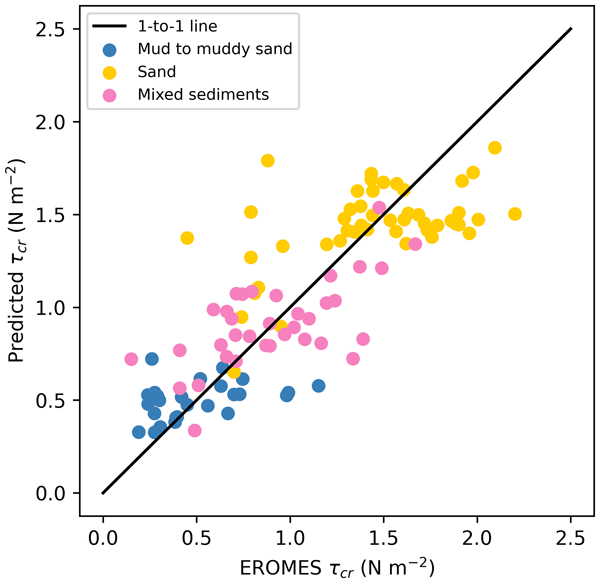
Jan-Victor Björkqvist, Mari Savela, Heidi Pettersson, Victor Alari, and Alf Norkko
Ocean Sci., 22, 2123–2141, https://doi.org/10.5194/os-22-2123-2026, https://doi.org/10.5194/os-22-2123-2026, 2026
Short summary
Short summary
Strong motions caused by surface waves can set the material at the bottom in motion. How strong the wave motions need to be depends on the bottom type, for example mud or sand. We estimated how often waves can lift particles from the bottom by comparing wave model results to sea floor samples in the laboratory. We included the effect of seasonal biological activity, which was found to be significant.
Felix Strobel, Gregor Hillers, Tom Jilbert, John Loehr, Christian Stranne, Tahvo Oksanen, Jonathan Vänskä, Roméo Courbis, Annukka Rintamäki, Amir Sadeghi-Bagherabadi, Lasse Weißgräber, Yinshuai Ding, Marc de Langenhagen, Eduardo Valero Cano, Kwabena Atobra, Vicent Doñate Felip, Valtteri Hopiavuori, Max Kankainen, Mohammad Alem Khodadadi, Kauri Kolehmainen, Emma Makkonen, Liisa Nygrén, Eero Purhonen, Niklas Rolleberg, Jasmiina Tuomiranta, Tommi Vuorinen, Aurélien Mordret, Cédric Schmelzbach, Ludovic Moreau, Olivier Coutant, and Céline Hadziioannou
EGUsphere, https://doi.org/10.5194/egusphere-2026-2106, https://doi.org/10.5194/egusphere-2026-2106, 2026
Short summary
Short summary
We describe an experiment to investigate variations of lake ice properties. We put a large number of seismic instruments on a frozen lake to record the ambient ice vibrations and make a range of supporting measurements. The initial results show that environmental effects can be resolved from the vibrations. This includes meteorological changes but also the trapping of methane or other gas bubbles during ice formation, which can help quantify the release of greenhouse gases from lakes.
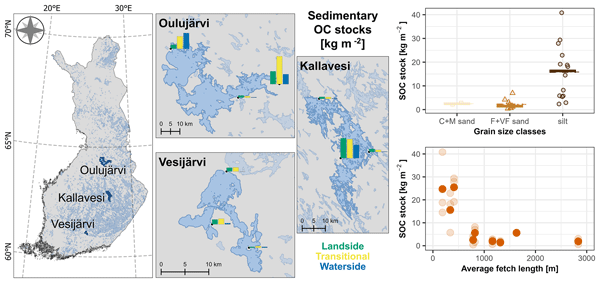
Ana Lúcia Lindroth Dauner, Max O. A. Kankainen, Sakari Väkevä, Eero Asmala, Marko Järvinen, Karoliina Koho, and Tom Jilbert
Biogeosciences, 23, 3637–3653, https://doi.org/10.5194/bg-23-3637-2026, https://doi.org/10.5194/bg-23-3637-2026, 2026
Short summary
Short summary
Aquatic vegetated ecosystems are important for global carbon storage, but freshwater shorelines remain understudied. We found that the sedimentary organic carbon (SOC) stocks ranged from 0 to 40.8 kg m−2, with a large spatial variability. Large SOC stocks were found in sheltered areas, with the predominance of fine-grained sediments. In exposed areas, vegetation might also impact SOC accumulation. Accounting for shoreline exposure is crucial for improving regional carbon budget estimates.
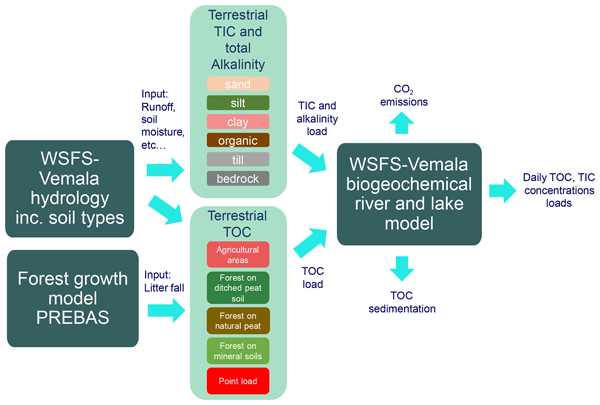
Marie Korppoo, Inese Huttunen, Markus Huttunen, Maiju Narikka, Jari Silander, Tom Jilbert, Martin Forsius, Pirkko Kortelainen, Niina Kotamäki, Cintia Uvo, and Anna-Kaisa Ronkanen
Hydrol. Earth Syst. Sci., 30, 3095–3119, https://doi.org/10.5194/hess-30-3095-2026, https://doi.org/10.5194/hess-30-3095-2026, 2026
Short summary
Short summary
The development of carbon processes in the water quality model WSFS (Watershed Simulation and Forecasting System)-Vemala presents a significant advancement in simulating both total organic and inorganic carbon dynamics, burial and emissions through a river/lake network. The addition of organic acids to the total alkalinity definition improved pH simulations and thus the simulation of CO2 emissions in the acidic and organic rich waters of Finland. The new Vemala model provides a robust foundation to support water management in the future.

Nicolas-Xavier Geilfus, Bruno Delille, Anna Villnäs, and Alf Norkko
Biogeosciences, 23, 1931–1948, https://doi.org/10.5194/bg-23-1931-2026, https://doi.org/10.5194/bg-23-1931-2026, 2026
Short summary
Short summary
Coastal ecosystems strongly influence the global carbon cycle but remain poorly quantified. We measured surface pCO₂, CH₄, and N₂O concentrations in southwest Finland across an estuarine ecosystem. Greenhouse gases concentrations varied with salinity and habitat type. Riverine inputs and mixing with seawater, and primary production shaped greenhouse gases dynamics, emphasizing benthic control as a key yet uncertain driver of coastal carbon fluxes.

Julika Zinke, Joakim P. Hansen, Martijn Hermans, Alexis Fonseca, Sofia A. Wikström, Linda Kumblad, Emil Rydin, Marc Geibel, Matthew E. Salter, and Christoph Humborg
Biogeosciences, 23, 1653–1680, https://doi.org/10.5194/bg-23-1653-2026, https://doi.org/10.5194/bg-23-1653-2026, 2026
Short summary
Short summary
This study presents one of the few studies to simultaneously measure all three major greenhouse gases across multiple shallow coastal bays in the Baltic Sea. Our findings reveal that these bays are highly variable and significant sources of greenhouse gases, with fluxes strongly influenced by bay characteristics and seasonal variation. By linking concentrations to environmental drivers, our work provides novel insights into overlooked but important components of coastal greenhouse gas budgets.

Margaret F. Williamson, Tom Jilbert, Alf Norkko, and Camilla Gustafsson
Biogeosciences, 23, 1327–1340, https://doi.org/10.5194/bg-23-1327-2026, https://doi.org/10.5194/bg-23-1327-2026, 2026
Short summary
Short summary
Reed bed carbon (C) storage is a topic of interest due to increased global distribution of reeds. C budgets to combat climate change often catalog reed beds as saltmarshes. Our findings show that reed beds are unique from saltmarshes, C storage is highest in reed bed sediments, and that reed bed zones may impact C storage. Further research into reed bed C is needed to better combat climate change and to ensure reeds are managed in a way that does not release excess C.
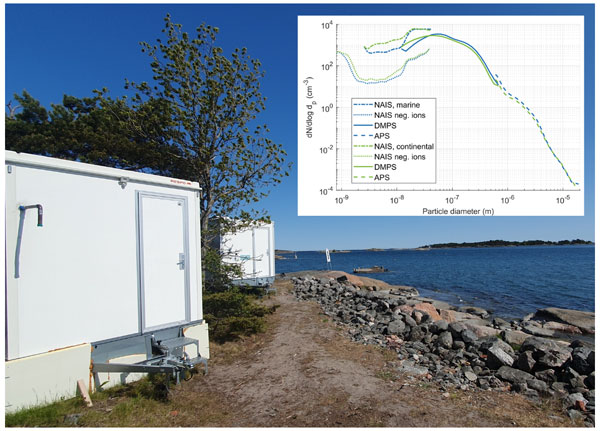
Maija Peltola, Roseline Thakur, Kurt Spence, Janne Lampilahti, Ronja Mäkelä, Sasu Karttunen, Ekaterina Ezhova, Sami Haapanala, Aki Vähä, Juha Kangasluoma, Tommy Chan, Pauli Paasonen, Joanna Norkko, Alf Norkko, Markku Kulmala, and Mikael Ehn
Atmos. Chem. Phys., 26, 489–513, https://doi.org/10.5194/acp-26-489-2026, https://doi.org/10.5194/acp-26-489-2026, 2026
Short summary
Short summary
Here, we report aerosol properties from a new atmospheric observatory established at the Finnish Baltic Sea Coast. Aerosol formation was observed when air masses crossed over the continent whereas less newly formed particles were observed when the winds were from the sea. Aerosol formation was favoured by low condensation sink and sunny dry conditions.
Abigail E. Robinson, Anna Scaini, Francisco J. Peña, Peter A. Hambäck, Christoph Humborg, and Fernando Jaramillo
Hydrol. Earth Syst. Sci., 29, 5975–6001, https://doi.org/10.5194/hess-29-5975-2025, https://doi.org/10.5194/hess-29-5975-2025, 2025
Short summary
Short summary
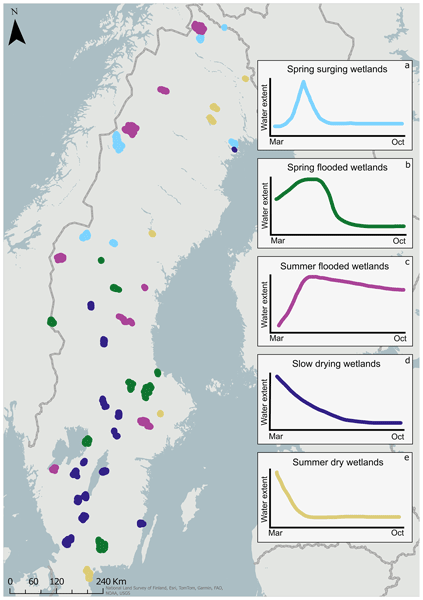
Wetlands provide vital benefits like flood control, drought resilience, and carbon storage, but these depend on how water moves and is stored within the wetland. Using satellite imagery and AI, we mapped water patterns in 43 Swedish wetlands, identifying five hydrological types. This approach reveals differences in flooding and drying, linking wetland water behaviour to the benefits they provide, offering a practical way to understand wetland functions.
Erik Gustafsson, Bo G. Gustafsson, Martijn Hermans, Christoph Humborg, and Christian Stranne
Geosci. Model Dev., 17, 7157–7179, https://doi.org/10.5194/gmd-17-7157-2024, https://doi.org/10.5194/gmd-17-7157-2024, 2024
Short summary
Short summary
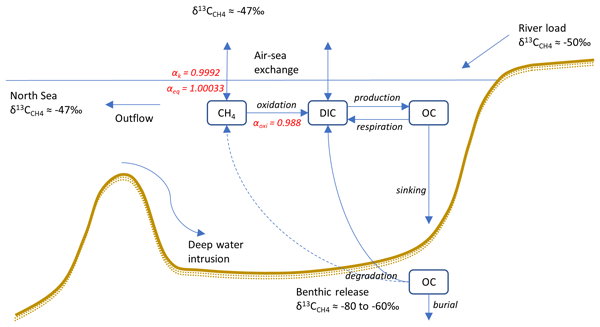
Methane (CH4) cycling in the Baltic Proper is studied through model simulations, enabling a first estimate of key CH4 fluxes. A preliminary budget identifies benthic CH4 release as the dominant source and two main sinks: CH4 oxidation in the water (92 % of sinks) and outgassing to the atmosphere (8 % of sinks). This study addresses CH4 emissions from coastal seas and is a first step toward understanding the relative importance of open-water outgassing compared with local coastal hotspots.
Julia Muchowski, Martin Jakobsson, Lars Umlauf, Lars Arneborg, Bo Gustafsson, Peter Holtermann, Christoph Humborg, and Christian Stranne
Ocean Sci., 19, 1809–1825, https://doi.org/10.5194/os-19-1809-2023, https://doi.org/10.5194/os-19-1809-2023, 2023
Short summary
Short summary
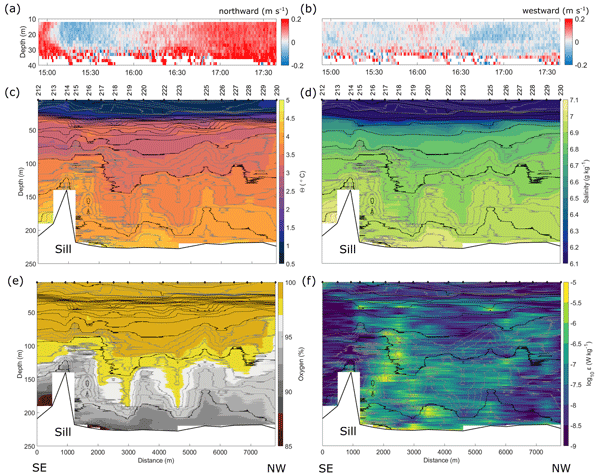
We show observational data of highly increased mixing and vertical salt flux rates in a sparsely sampled region of the northern Baltic Sea. Co-located acoustic observations complement our in situ measurements and visualize turbulent mixing with high spatial resolution. The observed mixing is generally not resolved in numerical models of the area but likely impacts the exchange of water between the adjacent basins as well as nutrient and oxygen conditions in the Bothnian Sea.
K. Mareike Paul, Martijn Hermans, Sami A. Jokinen, Inda Brinkmann, Helena L. Filipsson, and Tom Jilbert
Biogeosciences, 20, 5003–5028, https://doi.org/10.5194/bg-20-5003-2023, https://doi.org/10.5194/bg-20-5003-2023, 2023
Short summary
Short summary
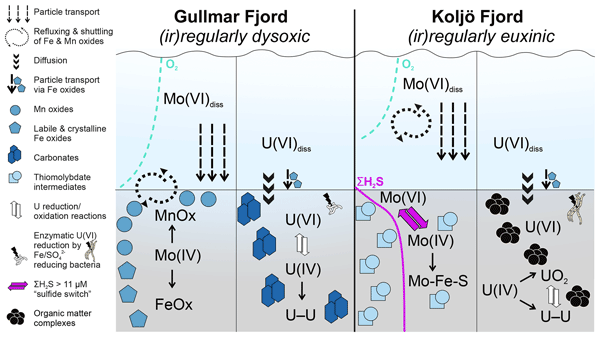
Seawater naturally contains trace metals such as Mo and U, which accumulate under low oxygen conditions on the seafloor. Previous studies have used sediment Mo and U contents as an archive of changing oxygen concentrations in coastal waters. Here we show that in fjords the use of Mo and U for this purpose may be impaired by additional processes. Our findings have implications for the reliable use of Mo and U to reconstruct oxygen changes in fjords.

Eva Ehrnsten, Oleg Pavlovitch Savchuk, and Bo Gustav Gustafsson
Biogeosciences, 19, 3337–3367, https://doi.org/10.5194/bg-19-3337-2022, https://doi.org/10.5194/bg-19-3337-2022, 2022
Short summary
Short summary
We studied the effects of benthic fauna, animals living on or in the seafloor, on the biogeochemical cycles of carbon, nitrogen and phosphorus using a model of the Baltic Sea ecosystem. By eating and excreting, the animals transform a large part of organic matter sinking to the seafloor into inorganic forms, which fuel plankton blooms. Simultaneously, when they move around (bioturbate), phosphorus is bound in the sediments. This reduces nitrogen-fixing plankton blooms and oxygen depletion.
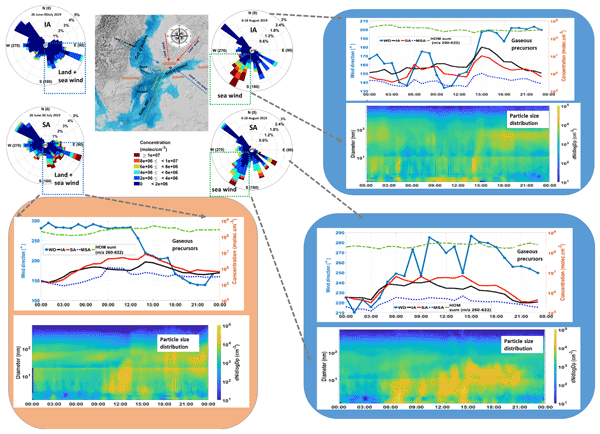
Roseline C. Thakur, Lubna Dada, Lisa J. Beck, Lauriane L. J. Quéléver, Tommy Chan, Marjan Marbouti, Xu-Cheng He, Carlton Xavier, Juha Sulo, Janne Lampilahti, Markus Lampimäki, Yee Jun Tham, Nina Sarnela, Katrianne Lehtipalo, Alf Norkko, Markku Kulmala, Mikko Sipilä, and Tuija Jokinen
Atmos. Chem. Phys., 22, 6365–6391, https://doi.org/10.5194/acp-22-6365-2022, https://doi.org/10.5194/acp-22-6365-2022, 2022
Short summary
Short summary
Every year intense cyanobacterial and macroalgal blooms occur in the Baltic Sea and in the coastal areas surrounding Helsinki, yet no studies have addressed the impact of biogenic emissions from these blooms on gas vapor concentrations, which in turn could influence new particle formation. This is the first study of its kind to address the chemistry driving new particle formation (NPF) during a bloom period in this region, highlighting the role of biogenic sulfuric acid and iodic acid.
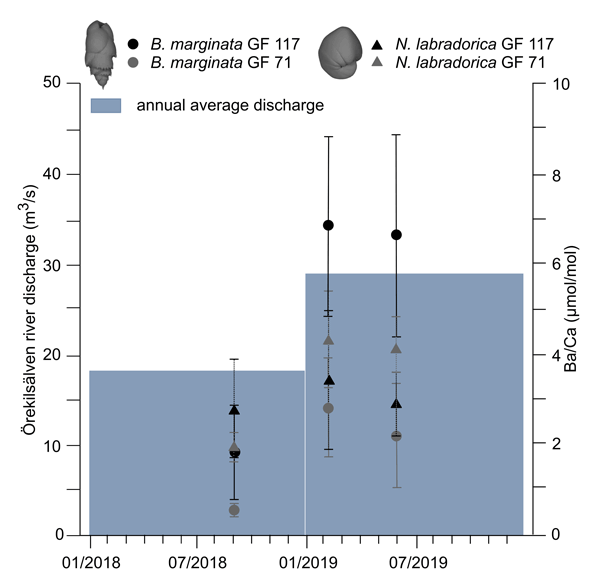
Inda Brinkmann, Christine Barras, Tom Jilbert, Tomas Næraa, K. Mareike Paul, Magali Schweizer, and Helena L. Filipsson
Biogeosciences, 19, 2523–2535, https://doi.org/10.5194/bg-19-2523-2022, https://doi.org/10.5194/bg-19-2523-2022, 2022
Short summary
Short summary
The concentration of the trace metal barium (Ba) in coastal seawater is a function of continental input, such as riverine discharge. Our geochemical records of the severely hot and dry year 2018, and following wet year 2019, reveal that prolonged drought imprints with exceptionally low Ba concentrations in benthic foraminiferal calcium carbonates of coastal sediments. This highlights the potential of benthic Ba / Ca to trace past climate extremes and variability in coastal marine records.
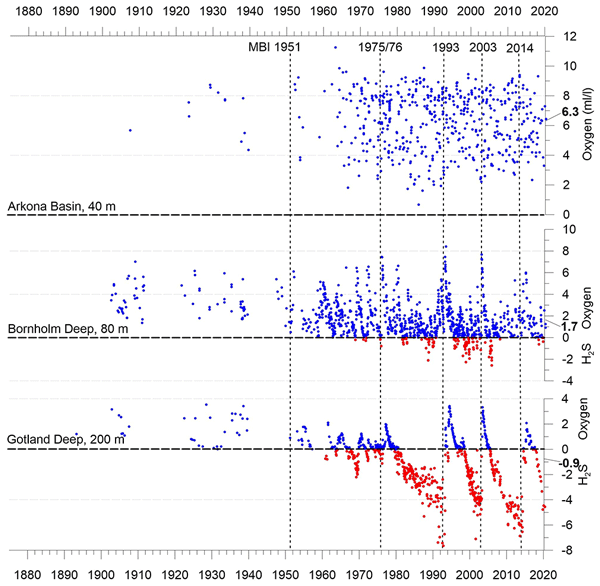
Karol Kuliński, Gregor Rehder, Eero Asmala, Alena Bartosova, Jacob Carstensen, Bo Gustafsson, Per O. J. Hall, Christoph Humborg, Tom Jilbert, Klaus Jürgens, H. E. Markus Meier, Bärbel Müller-Karulis, Michael Naumann, Jørgen E. Olesen, Oleg Savchuk, Andreas Schramm, Caroline P. Slomp, Mikhail Sofiev, Anna Sobek, Beata Szymczycha, and Emma Undeman
Earth Syst. Dynam., 13, 633–685, https://doi.org/10.5194/esd-13-633-2022, https://doi.org/10.5194/esd-13-633-2022, 2022
Short summary
Short summary
The paper covers the aspects related to changes in carbon, nitrogen, and phosphorus (C, N, P) external loads; their transformations in the coastal zone; changes in organic matter production (eutrophication) and remineralization (oxygen availability); and the role of sediments in burial and turnover of C, N, and P. Furthermore, this paper also focuses on changes in the marine CO2 system, the structure of the microbial community, and the role of contaminants for biogeochemical processes.
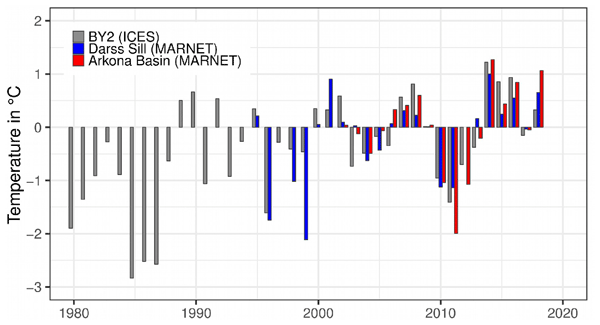
H. E. Markus Meier, Madline Kniebusch, Christian Dieterich, Matthias Gröger, Eduardo Zorita, Ragnar Elmgren, Kai Myrberg, Markus P. Ahola, Alena Bartosova, Erik Bonsdorff, Florian Börgel, Rene Capell, Ida Carlén, Thomas Carlund, Jacob Carstensen, Ole B. Christensen, Volker Dierschke, Claudia Frauen, Morten Frederiksen, Elie Gaget, Anders Galatius, Jari J. Haapala, Antti Halkka, Gustaf Hugelius, Birgit Hünicke, Jaak Jaagus, Mart Jüssi, Jukka Käyhkö, Nina Kirchner, Erik Kjellström, Karol Kulinski, Andreas Lehmann, Göran Lindström, Wilhelm May, Paul A. Miller, Volker Mohrholz, Bärbel Müller-Karulis, Diego Pavón-Jordán, Markus Quante, Marcus Reckermann, Anna Rutgersson, Oleg P. Savchuk, Martin Stendel, Laura Tuomi, Markku Viitasalo, Ralf Weisse, and Wenyan Zhang
Earth Syst. Dynam., 13, 457–593, https://doi.org/10.5194/esd-13-457-2022, https://doi.org/10.5194/esd-13-457-2022, 2022
Short summary
Short summary
Based on the Baltic Earth Assessment Reports of this thematic issue in Earth System Dynamics and recent peer-reviewed literature, current knowledge about the effects of global warming on past and future changes in the climate of the Baltic Sea region is summarised and assessed. The study is an update of the Second Assessment of Climate Change (BACC II) published in 2015 and focuses on the atmosphere, land, cryosphere, ocean, sediments, and the terrestrial and marine biosphere.
Cited articles
Akçay, İ., Tuğrul, S., Örek, H., Tezcan, D., Özhan, K., Salihoğlu, B., and Yücel, M.: Impacts of eutrophication and deoxygenation on the sediment biogeochemistry in the Sea of Marmara, Biogeosciences, 22, 4953–4968, https://doi.org/10.5194/bg-22-4953-2025, 2025.
Al-Hamdani, Z. and Reker, J. (Eds.): Towards marine landscapes in the Baltic Sea, BALANCE interim report no. 10, Danish Forest and Nature Agency, Copenhagen, https://balance-eu.org/xpdf/balance-interim-report-no-10.pdf (last access: 5 November 2026), 2007.
Aller, R. C.: Sedimentary diagenesis, depositional environments, and benthic fluxes, in: Treatise on Geochemistry, edited by: Holland, H. D. and Turekian, K. K., 2nd edn., Elsevier, 8, 293–334, https://doi.org/10.1016/B978-0-08-095975-7.00611-2, 2014.
Andersen, F. O. and Kristensen, E.: Effects of burrowing macrofauna on organic matter decomposition in coastal marine sediments, Zool. Symp., 63, 69–88, https://doi.org/10.1093/oso/9780198546801.003.0005, 1991.
Banks, J. L., Ross, D. J., Keough, M. J., Macleod, C. K., and Eyre, B. D.: Influence of small-scale patchiness on resilience of nutrient cycling to extended hypoxia in estuarine sediments, Mar. Ecol. Prog. Ser., 453, 49–62, https://doi.org/10.3354/meps09686, 2012.
Bonaglia, S., Deutsch, B., Bartoli, M., Marchant, H. K., and Brüchert. V.: Seasonal oxygen, nitrogen and phosphorus benthic cycling along an impacted Baltic Sea estuary: regulation and spatial patterns, Biogeochemistry, 119, 139–160, https://doi.org/10.1007/s10533-014-9953-6, 2014.
Boudreau, B. P.: A method-of-lines code for Carbon and nutrient diagenesis, Comput. Geosci., 22, 479–496, https://doi.org/10.1016/0098-3004(95)00115-8, 1996.
Boudreau, B. P.: Diagenetic models and their implementation: modelling transport and reactions in aquatic sediments, Springer, ISBN 3540611258, 1997.
Boynton, W. R., Ceballos, M. A. C., Bailey, E. M., Hodgkins, C. L. S., Humphrey, J. L., and Testa, J. M.: Oxygen and Nutrient Exchanges at the Sediment-Water Interface: a Global Synthesis and Critique of Estuarine and Coastal Data, Estuaries Coasts, 41, 301–333, https://doi.org/10.1007/s12237-017-0275-5, 2017.
Breitburg, D., Levin, L. A., Oschlies, A., Grégoire, M., Chavez, F. P., Conley, D. J., Garçon, V., Gilbert, D., Gutiérrez, D., Isensee, K., Jacinto, G. S., Limburg, K. E., Montes, I., Naqvi, S. W. A., Pitcher, G. C., Rabalais, N. N., Roman, M. R., Rose, K. A., Seibel, B. A., Telszewski, M., Yasuhara, M., and Zhang, J. : Declining oxygen in the global ocean and coastal waters, Science, 359, eaam7240, https://doi.org/10.1126/science.aam7240, 2018.
BSC: State of the Environment of the Black Sea (2009–2014/5), edited by: Krutov, A., Publications of the Commission on the Protection of the Black Sea Against Pollution, ISBN: 978-605-84837-0-5, 2019.
Caballero-Alfonso, A. M., Carstensen, J., and Conley, D. J.: Biogeochemical and environmental drivers of coastal hypoxia, J. Marine Syst., 141, 190–199, https://doi.org/10.1016/j.jmarsys.2014.04.008, 2015.
Childs, C. R., Rabalais, N. N., Turner, R. E., and Proctor, L. M.: Sediment denitrification in the Gulf of Mexico zone of hypoxia, Mar. Ecol. Prog. Ser., 240, 285–290, https://doi.org/10.3354/meps240285, 2002.
Conley, D. J., Humborg, C., Rahm, L., Savchuk, O. P., and Wulff, F.: Hypoxia in the Baltic Sea and basin-scale changes in phosphorus biogeochemistry, Environ. Sci. Technol., 36, 5315–5320, https://doi.org/10.1021/es025763w, 2002.
Conley, D. J., Carstensen, J., Ærtebjerg, G., Christensen, P. B., Dalsgaard, T., Hansen, J. L. S., and Josefson, A. B.: Long-term changes and impacts of hypoxia in Danish coastal waters, Ecol. Appl., 17, S165–S184, https://doi.org/10.1890/05-0766.1, 2007.
Conley, D. J., Carstensen, J., Aigars, J., Axe, P., Bonsdorff, E., Eremina, T., Haahti, B.-M., Humborg, C., Jonsson, P., Kotta, J., Lännegren, C., Larsson, U, Maximov, A., Medina, M. R., Lysiak-Pastuszak, E., Remeikaitė-Nikienė, N., Walve, J., Wilhelms, S., and Zillén, L.: Hypoxia is increasing in the coastal zone of the Baltic Sea, Environ. Sci. Technol., 45, 6777–6783, https://doi.org/10.1021/es201212r, 2011.
Cowan, W. and Boynton, E. R.: Sediment-water oxygen and nutrient exchanges along the longitudinal axis of Chesapeake Bay: seasonal patterns, controlling factors and ecological significance, Estuaries, 19, 562–580, https://doi.org/10.2307/1352518, 1996.
Dalsgaard, T., Thamdrup, B, and Canfield, D. E.: Anaerobic ammonium oxidation (anammox) in the marine environment, Res. Microbiol., 156, 457–464, https://doi.org/10.1016/j.resmic.2005.01.011, 2005.
Dalsgaard, T., De Brabandere, L., and Hall, P. O. J.: Denitrification in the water column of the central Baltic Sea, Geochim. Cosmochim. Ac., 106, 247–260, https://doi.org/10.1016/j.gca.2012.12.038, 2013.
De Brabandere, L., Bonaglia, S., Kononets, M. Y., Viktorsson, L.. Stigebrandt, A.. Thamdrup, B., and Hall, P. O. J.: Oxygenation of an anoxic fjord basin strongly stimulates benthic denitrification and DNRA, Biogeochemistry, 126, 131–152, https://doi.org/10.1007/s10533-015-0148-6, 2015.
Demirel, N., Akoglu, E., Ulman, A., Ertor-Akyazi, P., Gül, G., Bedikoğlu, D., Yıldız, T., and Yilmaz, I. N.: Uncovering ecological regime shifts in the Sea of Marmara and reconsidering management strategies, Mar. Environ. Res., 183, 105794, https://doi.org/10.1016/j.marenvres.2022.105794, 2023.
Ekeroth, N., Kononets, M., Walve, J., Blomqvist, S., and Hall, P. O., J.: Effects of oxygen on recycling of biogenic elements from sediments of a stratified coastal Baltic Sea basin, J. Marine Syst., 154, 206–219, https://doi.org/10.1016/j.jmarsys.2015.10.005, 2016.
European Communities: Common implementation strategy for the water framework directive (2000/60/EC), guidance document no 5, transitional and coastal waters – typology, reference conditions and classification systems, working group 2.4 – COAST, Office for official publications of the European Communities, ISBN: 92-894-5125-4, 2003.
Falk, S., Hannig, M., Gliesche, C., Wardenga, R., Köster, M., Jürgens, K., and Braker, G.: nirSi-containing denitrifier communities in the water column and sediment of the Baltic Sea, Biogeosciences, 4, 255–268, https://doi.org/10.5194/bg-4-255-2007, 2007.
Foster, S. Q. and Fulweiler, R. W.: Estuarine sediments exhibit dynamic and variable biogeochemical responses to hypoxia, J. Geophys. Res.-Biogeo., 124, 737–758, https://doi.org/10.1029/2018JG004663, 2019.
Fuchsman, C. A., Devol, A. H., Chase, Z, Reimers, C. E., and Hales, B.: Benthic fluxes on the Oregon shelf, Estuar. Coast. Shelf S., 163, 156–166, https://doi.org/10.1016/j.ecss.2015.06.001, 2015.
Gammal, J., Norkko, J., Pilditch, C. A., and Norkko, A.: Coastal hypoxia and the importance of benthic macrofauna communities for ecosystem functioning, Estuaries Coasts, 40, 457–468, https://doi.org/10.1007/s12237-016-0152-7, 2017.
Gogina, M., Lipka, M., Woelfel, J., Liu, B., Morys, C., Böttcher, M. E., and Zettler, M. L.: In search of a field-based relationship between benthic macrofauna and biogeochemistry in a modern brackish coastal sea, Front. Mar. Sci., 5, 489, https://doi.org/10.3389/fmars.2018.00489, 2018.
Gudasz, C., Sobek, S., Bastviken, D., Koehler, B., and Tranvik, L. J.: Temperature sensitivity of organic carbon mineralization in contrasting lake sediments, J. Geophys. Res.-Biogeo., 120, 1215–1225, https://doi.org/10.1002/2015JG002928, 2015.
Gustafsson, B. G., Schenk, F., Blenckner, T., Eilola, K., Meier, M. H. E., Müller-Karulis, B., Neumann, T., Ruoho-Airola, T., Savchuk, O. P., and Zorita, E.: Reconstructing the development of Baltic Sea eutrophication 1850–2006, Ambio, 41, 534–548, https://doi.org/10.1007/s13280-012-0318-x, 2012.
Harris, L. A., Duarte, C. M., and Nixon, S. W.: Allometric laws and prediction in estuarine and coastal ecology, Estuaries Coasts, 29, 340–344, https://doi.org/10.1007/BF02782002, 2006.
Harris, L. A., Hodgkins, C. L. S., Daya, M. C., Austin, D., Testa, J. M., Boynton, W., Van Der Tak, L., and Chenc, N. W.: Optimizing recovery of eutrophic estuaries: Impact of destratification and re-aeration on nutrient and dissolved oxygen dynamics, Ecol. Eng., 75, 470–483, https://doi.org/10.1016/j.ecoleng.2014.11.028, 2015.
HELCOM: HELCOM Baltic Sea Action Plan, https://www.helcom.fi/wp-content/uploads/2019/08/BSAP_Final.pdf (last access: 5 November 2026), 2007.
HELCOM: HELCOM Baltic Sea Action Plan – 2021 update, https://helcom.fi/wp-content/uploads/2021/10/Baltic-Sea-Action-Plan-2021-update.pdf (last access: 5 November 2026), 2021.
Hietanen, S., Jäntti, H., Buizert, C., Jürgens, K., Labrenz, M., Voss, M., and Kuparinen, J.: Hypoxia and nitrogen processing in the Baltic Sea water column, Limnol. Oceanogr., 57, 325–337, https://doi.org/10.4319/lo.2012.57.1.0325, 2012.
Huang, Y. and An, S.: Weak hypoxia enhanced denitrification in a dissimilatory nitrate reduction to ammonium (DNRA)-dominated shallow and eutrophic coastal waterbody, Jinhae Bay, South Korea, Front. Mar. Sci., 9, 897474, https://doi.org/10.3389/fmars.2022.897474, 2022.
Jäntti, H. and Hietanen, S.: The effects of hypoxia on sediment nitrogen cycling in the Baltic Sea, Ambio, 41, 161–169, https://doi.org/10.1007/s13280-011-0233-6, 2012.
Jäntti, H., Aalto, S. L., and Paerl, H. W.: Effects of ferrous iron and hydrogen sulfide on nitrate reduction in the sediments of an estuary experiencing hypoxia, Estuaries Coasts, 44, 1–12, https://doi.org/10.1007/s12237-020-00783-4, 2021.
Jensen, M. H., Lomstein, E., and Sørensen, J.: Benthic
Jilbert, T., Cowie, G., Lintumäki, L., Jokinen, S., Asmala, E., Sun, X., Mörth, C.-M., Norkko, A., and Humborg, C.: Anthropogenic inputs of terrestrial organic matter influence carbon loading and methanogenesis in coastal Baltic Sea sediments, Front. Earth Sci., 9, 716416, https://doi.org/10.3389/feart.2021.716416, 2021.
Karlson, K., Bonsdorff, E., and Rosenberg, R.: The impact of benthic macrofauna for nutrient fluxes from Baltic Sea sediments, Ambio, 36, 161–167, https://doi.org/10.1579/0044-7447(2007)36[161:tiobmf]2.0.co;2, 2007.
Kemp, W. M., Sampou, P., Caffrey, J., Mayer, M., Henriksen, K., and Boynton, W. R.: Ammonium recycling versus denitrification in Chesapeake Bay sediments, Limnol. Oceanogr., 35, 1545–1563, https://doi.org/10.4319/lo.1990.35.7.1545, 1990.
Kim, O. S., Imhoff, J. F., Witzel, K. P., and Junier, P.: Distribution of denitrifying bacterial communities in the stratified water column and sediment-water interface in two freshwater lakes and the Baltic Sea, Aquat. Ecol., 45, 99–112, https://doi.org/10.1007/s10452-010-9335-7, 2011.
Koop, K., Boynton, W. R., Wulff, F., and Carman, R.: Sediment-water oxygen and nutrient exchanges along a depth gradient in the Baltic Sea, Mar. Ecol. Prog. Ser., 63, 65–77, https://doi.org/10.3354/meps063065, 1990.
Lapham, L. L., Hobbs, E. A., Testa, J. M., Heyes, A., Forsyth, M. K., Hodgkins, C., Szewczyk, C., and Harris, L. A.: The effects of engineered aeration on atmospheric methane flux from a Chesapeake Bay tidal tributary, Front. Environ. Sci., 10, 866152, https://doi.org/10.3389/fenvs.2022.866152, 2022.
Lehtoranta, J., Bendtsen, J., Lännergren, C., Saarijärvi, E., Lindström, M., and Pitkänen, H.: Different responses to artificial ventilation in two stratified coastal basins, Ecol. Eng., 179, 106611, https://doi.org/10.1016/j.ecoleng.2022.106611, 2022.
Leppäranta, M. and Myrberg., K.: Physical oceanography of the Baltic Sea, 1st edn., Springer Praxis Books, https://doi.org/10.1007/978-3-540-79703-6, 2009.
Lønborg, C. and Markager, S.: Nitrogen in the Baltic Sea: long-term trends, a budget and decadal time lags in responses to declining inputs, Estuar. Coast. Shelf S., 261, 107529, https://doi.org/10.1016/j.ecss.2021.107529, 2021.
Matisoff, G., Kaltenberg, E. M., Steely, R. L., Hummel, S. K., Seo, J., Gibbons, K. J., Bridgeman, T. B., Seo, Y., Behbahani, M., James, W. F., Johnson, L. T., Doan, P., Dittrich, M., Evans, M. A., and Chaffin, J. D.: Internal loading of phosphorus in western Lake Erie, J. Great Lakes Res., 42, 775–788, https://doi.org/10.1016/j.jglr.2016.04.004, 2016.
McCarthy, M. J., McNeal, K. S., Morse, J. W., and Gardner, W. S.: Bottom-water hypoxia effects on sediment-water interface nitrogen transformations in a seasonally hypoxic, shallow bay (Corpus Christi Bay, TX, USA), Estuaries Coasts, 31, 521–531, https://doi.org/10.1007/s12237-008-9041-z, 2008.
Middelburg, J. J. and Levin, L. A.: Coastal hypoxia and sediment biogeochemistry, Biogeosciences, 6, 1273–1293, https://doi.org/10.5194/bg-6-1273-2009, 2009.
Mu, D., Yuan, D., Feng, H., Xing, F., Teo, F. Y., and Li, S.: Nutrient fluxes across sediment-water interface in Bohai Bay coastal zone, China, Mar. Pollut. Bull., 114, 705–714, https://doi.org/10.1016/j.marpolbul.2016.10.056, 2017.
Murray, C. J., Müller-Karulis, B., Carstensen, J., Conley, D. J., Gustafsson, B. G., and Andersen, J.: Past, present and future eutrophication status of the Baltic Sea, Front. Mar. Sci. 6, 1–12, https://doi.org/10.3389/fmars.2019.00002, 2019.
Norkko, J., Gammal, J., Hewitt, J. E., Josefson, A. B., Carstensen, J., and Norkko, A.: Seafloor ecosystem function relationships: in situ patterns of change across gradients of increasing hypoxic stress, Ecosystems, 18, 1424–1439, https://doi.org/10.1007/s10021-015-9909-2, 2015.
Norkko, J., Pilditch, C. A., Gammal, J., Rosenberg, R., Enemar, A., Magnusson, M., Granberg, M. E., Lindgren, J. F., Agrenius, S., and Norkko, A.: Ecosystem functioning along gradients of increasing hypoxia and changing soft-sediment community types, J. Sea Res., 153, 101781, https://doi.org/10.1016/j.seares.2019.101781, 2019.
Nunnally, C. C., Quigg, A., DiMarco, S., Chapman, P., and Rowe, G. T.: Benthic-pelagic coupling in the Gulf of Mexico hypoxic area: sedimentary enhancement of hypoxic conditions and near bottom primary production, Cont. Shelf Res., 85, 143–152, https://doi.org/10.1016/j.csr.2014.06.006, 2014.
Pitkänen, H., Lehtoranta, J., and Räike, A.: Internal nutrient fluxes counteract decreases in external load: the case of the estuarial eastern Gulf of Finland, Baltic Sea, Ambio, 30, 195–201, https://doi.org/10.1579/0044-7447-30.4.195, 2001.
Pratihary, A. K., Naqvi, S. W. A., Naik, H., Thorat, B. R., Narvenkar, G., Manjunatha, B. R., and Rao, V. P.: Benthic fluxes in a tropical estuary and their role in the ecosystem, Estuar. Coast. Shelf S., 85, 387–398, https://doi.org/10.1016/j.ecss.2009.08.012, 2009.
Radtke, H., Neumann, T., Voss, M., and Fennel, W.: Modeling pathways of riverine nitrogen and phosphorus in the Baltic Sea, J. Geophys. Res., 117, C09024, https://doi.org/10.1029/2012JC008119, 2012.
Reed, D. C., Slomp, C. P., and Gustafsson, B. G.: Sedimentary phosphorus dynamics and the evolution of bottom-water hypoxia: A coupled benthic–pelagic model of a coastal system, Limnol. Oceanogr., 56, 1075–1092, https://doi.org/10.4319/lo.2011.56.3.1075, 2011.
Reusch, T. B. H., Dierking, J., Andersson, H. C., Bonsdorff, E., Carstensen, J., Casini, M., Czajkowski, M., Hasler, B., Hinsby, K., Hyytiäinen, K., Johannesson, K., Jomaa, S., Jormalainen, V., Kuosa, H., Kurland, S., Laikre, L., MacKenzie, B. R., Margonski, P., Melzner, F., Oesterwind, D., Ojaveer, H., Refsgaard, J. C., Sandström, A., Schwarz, G., Tonderski, K., Winder, M., and Zandersen, M.: The Baltic Sea as a time machine for the future coastal ocean, Sci. Adv., 4, eaar8195, https://doi.org/10.1126/sciadv.aar8195, 2018.
Roberts, B. J. and Doty, S. M.: Spatial and temporal patterns of benthic respiration and net nutrient fluxes in the Atchafalaya river delta estuary, Estuaries Coasts, 38, 1918–1936, https://doi.org/10.1007/s12237-015-9965-z, 2015.
Ryther, J. H. and Dunstan, W. M.: Nitrogen, phosphorus, and eutrophication in the coastal marine environment, Science, 171, 1008–1013, https://doi.org/10.1126/science.171.3975.1008, 1971.
Saraiva, S., Meier, M. H. E., Andersson, H., Höglund, A., Dieterich, C., Gröger, M., Hordoir, R., and Eilola, K.: Baltic Sea ecosystem response to various nutrient load scenarios in present and future climates, Clim. Dynam., 52, 3369-3387, https://doi.org/10.1007/s00382-018-4330-0, 2019.
Schlitzer, R.: Ocean Data View, https://odv.awi.de (last access: 5 November 2026), 2023.
Soetaert, K. and Meysman, F.: Reactive transport in aquatic ecosystems: Rapid model prototyping in the open-source software R, Environ. Modell. Softw., 32, 49–60, https://doi.org/10.1016/j.envsoft.2011.08.011, 2012.
Song, G., Liu, S., Zhang, J., Zhu, Z., Zhang, G., Marchant, H. K., Kuypers, M. M. M., and Lavik, G.: Response of benthic nitrogen cycling to estuarine hypoxia, Limnol. Oceanogr., 66, 652–666, https://doi.org/10.1002/lno.11630, 2021.
Sun, X. and Hellemann, D.: The OC forcing and outputs of the reactive transport model for assessing the N legacy effect in coastal Baltic Sea [data set and code], Zenodo, https://doi.org/10.5281/zenodo.22120110, 2026.
Sundbäck, K. and Miles, A.: Balance between denitrification and microalgal incorporation of nitrogen in microtidal sediments, NE Kattegat, Aquat. Microb. Ecol., 22, 291–300, https://doi.org/10.3354/ame022291, 2000.
Testa, J. M. and Kemp, W. M.: Hypoxia-induced shifts in nitrogen and phosphorus cycling in Chesapeake Bay, Limnol. Oceanogr., 57, 835–850, https://doi.org/10.4319/lo.2012.57.3.0835, 2012.
Testa, J. M., Hodgkins, C., Forsyth, M. K., Moore, A., Bailey, E., Day, M. C., Lapham, L. L., Heyes, A., and Harris, L. A.: Time scales of hypoxia-induced nutrient recycling in sediments: an experimental approach using engineered aeration, Environ. Sci. Technol., 59, 15115–15127, https://doi.org/10.1021/acs.est.4c12240, 2025.
Thoms, F., Burmeister, C., Dippner, J. W., Gogina, M., Janas, U., Kendzierska, H., Liskow, I., and Voss, M.: Impact of macrofaunal communities on the coastal filter function in the Bay of Gdansk, Baltic Sea, Front. Mar. Sci., 5, 201, https://doi.org/10.3389/fmars.2018.00201, 2018.
Vahtera, E., Conley, D. J., Gustafsson, B. G., Kuosa, H., Pitkänen, H., Savchuk, O. P., Tamminen, T., Viitasalo, M., Voss, M., Wasmund, N., and Wulff, F.: Internal ecosystem feedbacks enhance nitrogen-fixing cyanobacteria blooms and complicate management in the Baltic Sea, Ambio, 36, 186–194, https://doi.org/10.1579/0044-7447(2007)36[186:iefenc]2.0.co;2, 2007.
Viktorsson, L., Ekeroth, N., Nilsson, M., Kononets, M., and Hall, P. O. J.: Phosphorus recycling in sediments of the central Baltic Sea, Biogeosciences, 10, 3901–3916, https://doi.org/10.5194/bg-10-3901-2013, 2013.
Villnäs, A., Norkko, J., Lukkari, K., Hewitt, J., and Norkko, A.: Consequences of increasing hypoxic disturbance on benthic communities and ecosystem functioning, PLoS One, 7, e44920, https://doi.org/10.1371/journal.pone.0044920, 2012.
Watson, S. B., Miller, C., Arhonditsis, G., Boyer, G. L., Carmichael, W., Charlton, M. N., Confesor, R., Depew, D. C., Höök, T. O., Ludsin, S. A., Matisoff, G., McElmurry, S. P., Murray, M. W., Richards, R. P., Rao, Y. R., Steffen, M. M., and Wilhelm, S. W.: The re-eutrophication of Lake Erie: harmful algae blooms and hypoxia, Harmful Algae, 56, 44–66, https://doi.org/10.1016/j.hal.2016.04.010, 2016.
Zillén, L. and Conley, D. J.: Hypoxia and cyanobacteria blooms – are they really natural features of the late Holocene history of the Baltic Sea?, Biogeosciences, 7, 2567–2580, https://doi.org/10.5194/bg-7-2567-2010, 2010.
Short summary
Using model-simulations and field data, we assess the effect of past eutrophication on present and future ammonium dynamics in coastal sediments of the Baltic Sea. Our results indicate a persistent but mild eutrophication legacy effect on sediment-water ammonium release, which is stronger driven by external organic matter loading. The results highlight that external organic matter loading needs to be reduced to also reduce ammonium loading to the coastal ecosystem and enable ecosystem recovery.
Using model-simulations and field data, we assess the effect of past eutrophication on present...


Altmetrics
Final-revised paper
Preprint