Articles | Volume 23, issue 21
https://doi.org/10.5194/bg-23-8017-2026
© Author(s) 2026. This work is distributed under
the Creative Commons Attribution 4.0 License.
https://doi.org/10.5194/bg-23-8017-2026
© Author(s) 2026. This work is distributed under
the Creative Commons Attribution 4.0 License.
Dynamics of inorganic nitrogen cycling, redox conditions, and microbial community composition in a floodplain soil induced by a heavy rainfall after summer drought

Johanna Schlögl
Environmental Mineralogy, Department of Geosciences, University of Tübingen, Schnarrenbergstraße 94–96, 72076 Tübingen, Germany
Clemens Karwautz
Department of Functional and Evolutionary Ecology, University of Vienna, Djerassiplatz 1, 1030 Vienna, Austria
Lena Cramaro
Department of Functional and Evolutionary Ecology, University of Vienna, Djerassiplatz 1, 1030 Vienna, Austria
Wolfgang Wanek
Division of Terrestrial Ecosystem Research, Department of Microbiology and Ecosystem Science, Center of Microbiology and Environmental Systems Science, University of Vienna, Djerassiplatz 1, 1030 Vienna, Austria
Judith Prommer
Division of Terrestrial Ecosystem Research, Department of Microbiology and Ecosystem Science, Center of Microbiology and Environmental Systems Science, University of Vienna, Djerassiplatz 1, 1030 Vienna, Austria
Theresa Böckle
Division of Terrestrial Ecosystem Research, Department of Microbiology and Ecosystem Science, Center of Microbiology and Environmental Systems Science, University of Vienna, Djerassiplatz 1, 1030 Vienna, Austria
Andreas Kappler
Geomicrobiology, Department of Geosciences, University of Tübingen, Schnarrenbergstraße 94–96, 72076 Tübingen, Germany
Stefan B. Haderlein
CORRESPONDING AUTHOR
Environmental Mineralogy, Department of Geosciences, University of Tübingen, Schnarrenbergstraße 94–96, 72076 Tübingen, Germany
Christian Griebler
CORRESPONDING AUTHOR
Department of Functional and Evolutionary Ecology, University of Vienna, Djerassiplatz 1, 1030 Vienna, Austria
Related authors
No articles found.
Sigrid van Grinsven, Sophie Kunz, Florian Jueterbock, and Andreas Kappler
EGUsphere, https://doi.org/10.5194/egusphere-2026-2750, https://doi.org/10.5194/egusphere-2026-2750, 2026
Short summary
Short summary
Alpine peatlands share certain characteristics with boreal peatlands (snow cover, short growing season) but are unique in that they are located on slopes. In our research, we show that alpine peatlands show extremely high spatial variability in methane emissions, soil characteristics, and microbial community in summer. In winter, they remain partly snow-free. These snow free patches can act either as methane emitters of methane sinks, showing how complex these systems are.
Nora Kainz, Franziska Raab, L. Joëlle Kubeneck, Ruben Kretzschmar, Andreas Kappler, and Prachi Joshi
Biogeosciences, 23, 2865–2884, https://doi.org/10.5194/bg-23-2865-2026, https://doi.org/10.5194/bg-23-2865-2026, 2026
Short summary
Short summary
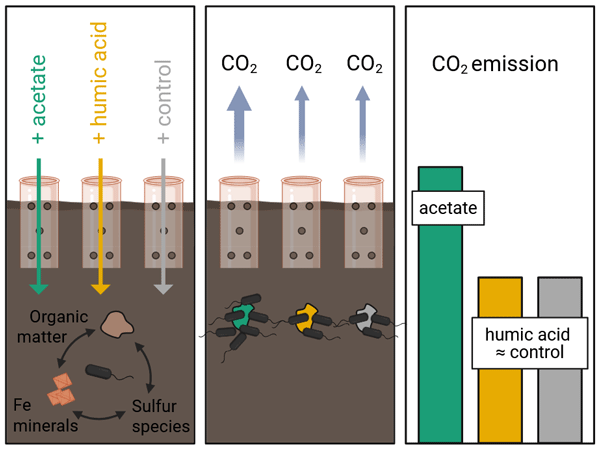
Salt marshes, a type of coastal wetland, store “blue” carbon. At the same time, these ecosystems can release the greenhouse gases carbon dioxide (CO2) and methane (CH4) via microbial decomposition of stored carbon. In this study, we studied what drives the release of CO2 from mineral-rich salt marshes and found that the quantity and form of carbon are the most important factors. Our results improve understanding of salt marsh carbon cycling, allowing better prediction of future changes.
Michael Lintner, Irina Polovodova Asteman, Wolfgang Wanek, Petra Heinz, Jan Goleń, and Jarosław Tyszka
J. Micropalaeontol., 44, 263–273, https://doi.org/10.5194/jm-44-263-2025, https://doi.org/10.5194/jm-44-263-2025, 2025
Short summary
Short summary
Foraminifera are microorganisms which, due to their abundance and diversity, are often used as proxies to describe climatic changes in marine environments. For this purpose, experiments containing antibiotics that are intended to reduce the activity of other microorganisms are carried out with foraminifera. In our study, we examined the influence of antibiotics on foraminifera and tested whether these chemicals are really harmless for foraminifera or not.
Lisa Noll, Shasha Zhang, Qing Zheng, Yuntao Hu, Florian Hofhansl, and Wolfgang Wanek
Biogeosciences, 19, 5419–5433, https://doi.org/10.5194/bg-19-5419-2022, https://doi.org/10.5194/bg-19-5419-2022, 2022
Short summary
Short summary
Cleavage of proteins to smaller nitrogen compounds allows microorganisms and plants to exploit the largest nitrogen reservoir in soils and is considered the bottleneck in soil organic nitrogen cycling. Results from soils covering a European transect show that protein turnover is constrained by soil geochemistry, shifts in climate and associated alterations in soil weathering and should be considered as a driver of soil nitrogen availability with repercussions on carbon cycle processes.
Cited articles
Aanderud, Z. T., Jones, S. E., Fierer, N., and Lennon, J. T.: Resuscitation of the rare biosphere contributes to pulses of ecosystem activity, Front. Microbiol., 6, https://doi.org/10.3389/fmicb.2015.00024, 2015.
Agrarmeteorologie Baden-Württemberg: Wetterdaten, Station Unterjesingen, https://www.wetter-bw.de/Internet/AM/NotesBwAM.nsf/bwweb/4262596897754529c1257ca8002f9d19?OpenDocument, last access: 14 October 2021.
Allen, R. G., Pereira, L. S., Raes, D., and Smith, M.: FAO Irrigation and drainage paper 56 – Crop evapotranspiration – Guidelines for computing crop water requirements, FAO – Food and Agriculture Organization of the United Nations, Rome, ISBN 92-5-104219-5, 1998.
American Meteorological Society: “Rain”. Glossary of Meteorology, https://glossary.ametsoc.org/wiki/Rain (last access: 29 October 2026), 2026.
Appel, T.: Non-biomass soil organic N – the substrate for N mineralization flushes following soil drying–rewetting and for organic N rendered CaCl2-extractable upon soil drying, Soil Biol. Biochem., 30, 1445–1456, https://doi.org/10.1016/S0038-0717(97)00230-7, 1998.
Armstrong, A., Valverde, A., Ramond, J.-B., Makhalanyane, T. P., Jansson, J. K., Hopkins, D. W., Aspray, T. J., Seely, M., Trindade, M. I., and Cowan, D. A.: Temporal dynamics of hot desert microbial communities reveal structural and functional responses to water input, Sci. Rep., 6, 34434, https://doi.org/10.1038/srep34434, 2016.
Baldwin, D. S. and Mitchell, A. M.: The effects of drying and re-flooding on the sediment and soil nutrient dynamics of lowland river–floodplain systems: a synthesis, Regul. River., 16, 457–467, https://doi.org/10.1002/1099-1646(200009/10)16:5<457::AID-RRR597>3.0.CO;2-B, 2000.
Barnard, R. L., Osborne, C. A., and Firestone, M. K.: Responses of soil bacterial and fungal communities to extreme desiccation and rewetting, ISME J., 7, 2229-2241, https://doi.org/10.1038/ismej.2013.104, 2013.
Beven, K. and Germann, P.: Macropores and water flow in soils revisited, Water Resour. Res., 49, 3071–3092, https://doi.org/10.1002/wrcr.20156, 2013.
Beyn, F., Matthias, V., and Dähnke, K.: Changes in atmospheric nitrate deposition in Germany – An isotopic perspective, Environ. Pollut., 194, 1–10, https://doi.org/10.1016/j.envpol.2014.06.043, 2014.
Birch, H. F.: The effect of soil drying on humus decomposition and nitrogen availability, Plant Soil, 10, 9–31, https://doi.org/10.1007/BF01343734, 1958.
Birch, H. F.: Nitrification in soils after different periods of dryness, Plant Soil, 12, 81–96, https://doi.org/10.1007/BF01377763, 1960.
Blazewicz, S. J., Schwartz, E., and Firestone, M. K.: Growth and death of bacteria and fungi underlie rainfall-induced carbon dioxide pulses from seasonally dried soil, Ecology, 95, 1162–1172, https://doi.org/10.1890/13-1031.1, 2014.
Blume, H.-P., Brümmer, G. W., Fleige, H., Horn, R., Kandeler, E., Kögel-Knabner, I., Kretzschmar, R., Stahr, K., and Wilke, B.-M.: Scheffer/Schachtschabel Soil Science, Springer, Berlin, Heidelberg, Berlin, Heidelberg, XVIII, 618 pp., https://doi.org/10.1007/978-3-642-30942-7, 2016.
Bronswijk, J. J. B., Hamminga, W., and Oostindie, K.: Rapid nutrient leaching to groundwater and surface water in clay soil areas, Eur. J. Agron., 4, 431–439, https://doi.org/10.1016/S1161-0301(14)80095-6, 1995.
Buss, S., Herbert, A., Morgan, P., Thornton, S., and Smith, J.: A Review of Ammonium Attenuation in Soil and Groundwater, Q. J. Eng. Geol. Hydroge., 37, 347–359, https://doi.org/10.1144/1470-9236/04-005, 2004.
Callahan, B. J., McMurdie, P. J., and Holmes, S. P.: Exact sequence variants should replace operational taxonomic units in marker-gene data analysis, ISME J., 11, 2639–2643, https://doi.org/10.1038/ismej.2017.119, 2017.
Carini, P., Marsden, P. J., Leff, J. W., Morgan, E. E., Strickland, M. S., and Fierer, N.: Relic DNA is abundant in soil and obscures estimates of soil microbial diversity, Nat. Microbiol., 2, 16242, https://doi.org/10.1038/nmicrobiol.2016.242, 2016.
Cavalli, D., Consolati, G., Marino, P., and Bechini, L.: Measurement and simulation of soluble, exchangeable, and non-exchangeable ammonium in three soils, Geoderma, 259–260, 116–125, https://doi.org/10.1016/j.geoderma.2015.05.011, 2015.
Coby, A. J., Picardal, F., Shelobolina, E., Xu, H., and Roden, E. E.: Repeated anaerobic microbial redox cycling of iron, Appl. Environ. Microb., 77, 6036–6042, https://doi.org/10.1128/AEM.00276-11, 2011.
Coumou, D. and Rahmstorf, S.: A decade of weather extremes, Nat. Clim. Change, 2, 491–496, https://doi.org/10.1038/nclimate1452, 2012.
Cui, M. and Caldwell, M. M.: A large ephemeral release of nitrogen upon wetting of dry soil and corresponding root responses in the field, Plant Soil, 191, 291–299, https://doi.org/10.1023/A:1004290705961, 1997.
DIN Deutsches Institut für Normung e.V.: DIN EN ISO 17892-4 Geotechnical investigation and testing – Laboratory testing of soil – Part 4: Determination of particle size distribution, Beuth, Berlin, 7, https://doi.org/10.3403/30295182, 2017.
Durner, W., Iden, S. C., and von Unold, G.: The integral suspension pressure method (ISP) for precise particle-size analysis by gravitational sedimentation, Water Resour. Res., 53, 33–48, https://doi.org/10.1002/2016WR019830, 2017.
Fierer, N. and Schimel, J. P.: Effects of drying–rewetting frequency on soil carbon and nitrogen transformations, Soil Biol. Biochem., 34, 777–787, https://doi.org/10.1016/S0038-0717(02)00007-X, 2002.
Fierer, N., Schimel, J. P., and Holden, P. A.: Influence of Drying–Rewetting Frequency on Soil Bacterial Community Structure, Microb. Ecol., 45, 63–71, https://doi.org/10.1007/s00248-002-1007-2, 2003.
German Meteorological Service (DWD): Monatliche Mittel/Summen, Niederschlag, Station Stuttgart-Echterdingen, https://www.dwd.de/DE/leistungen/kvo/baden_wuerttemberg.html?nn=480164, last access: 2 February 2024.
Geyer, O. F., Gwinner, M. P., Geyer, M., Nitsch, E., and Simon, T.: Geologie von Baden-Württemberg, ISBN 978-3-510-65267-9, 2011.
Grathwohl, P., Rügner, H., Wöhling, T., Osenbrück, K., Schwientek, M., Gayler, S., Wollschläger, U., Selle, B., Pause, M., Delfs, J.-O., Grzeschik, M., Weller, U., Ivanov, M., Cirpka, O. A., Maier, U., Kuch, B., Nowak, W., Wulfmeyer, V., Warrach-Sagi, K., Streck, T., Attinger, S., Bilke, L., Dietrich, P., Fleckenstein, J. H., Kalbacher, T., Kolditz, O., Rink, K., Samaniego, L., Vogel, H.-J., Werban, U., and Teutsch, G.: Catchments as reactors: a comprehensive approach for water fluxes and solute turnover, Environ. Earth Sci., 69, 317–333, https://doi.org/10.1007/s12665-013-2281-7, 2013.
Hefting, M., Clément, J. C., Dowrick, D., Cosandey, A. C., Bernal, S., Cimpian, C., Tatur, A., Burt, T. P., and Pinay, G.: Water table elevation controls on soil nitrogen cycling in riparian wetlands along a European climatic gradient, Biogeochemistry, 67, 113–134, https://doi.org/10.1023/B:BIOG.0000015320.69868.33, 2004.
Horton, R. M., Mankin, J. S., Lesk, C., Coffel, E., and Raymond, C.: A Review of Recent Advances in Research on Extreme Heat Events, Current Climate Change Reports, 2, 242–259, https://doi.org/10.1007/s40641-016-0042-x, 2016.
ISO 13395: Water quality – Determination of nitrite nitrogen and nitrate nitrogen and the sum of both by flow analysis (CFA and FIA) and spectrometric detection International Organization for Standardization (ISO), Geneva, Switzerland, https://doi.org/10.31030/7304958, 1996.
ISO 11732: Water quality – Determination of ammonium nitrogen – Method by flow analysis (CFA and FIA) and spectrometric detection International Organization for Standardization (ISO), Geneva, Switzerland, 2005.
Jarvis, N., Koestel, J., and Larsbo, M.: Understanding Preferential Flow in the Vadose Zone: Recent Advances and Future Prospects, Vadose Zone J., 15, 1–11, https://doi.org/10.2136/vzj2016.09.0075, 2016.
Jarvis, P., Rey, A., Petsikos, C., Wingate, L., Rayment, M., Pereira, J., Banza, J., David, J., Miglietta, F., Borghetti, M., Manca, G., and Valentini, R.: Drying and wetting of Mediterranean soils stimulates decomposition and carbon dioxide emission: the “Birch effect”, Tree Physiol., 27, 929–940, https://doi.org/10.1093/treephys/27.7.929, 2007.
Kelly, B. P. and Pomes, M. L.: Preferential Flow and Transport of Nitrate and Bromide in Clay pan Soil, Groundwater, 36, 484–494, https://doi.org/10.1111/j.1745-6584.1998.tb02820.x, 1998.
Lair, G. J., Zehetner, F., Fiebig, M., Gerzabek, M. H., Van Gestel, C. A. M., Hein, T., Hohensinner, S., Hsu, P., Jones, K. C., Jordan, G., and Koelmans, A. A.: How do long-term development and periodical changes of river-floodplain systems affect the fate of contaminants? Results from European rivers, Environ. Pollut., 157, 3336–3346, https://doi.org/10.1016/j.envpol.2009.06.004, 2009.
Lennon, J. T., Muscarella, M. E., Placella, S. A., and Lehmkuhl, B. K.: How, when, and where relic DNA affects microbial diversity, mBio, 9, https://doi.org/10.1128/mbio.00637-18, 2018.
Mansfeldt, T.: In situ long-term redox potential measurements in a dyked marsh soil, J. Plant Nutr. Soil Sc., 166, 210–219, https://doi.org/10.1002/jpln.200390031, 2003.
Martin, S., Klingler, S., Dietrich, P., Leven, C., and Cirpka, O. A.: Structural controls on the hydrogeological functioning of a floodplain, Hydrogeol. J., 28, 2675–2696, https://doi.org/10.1007/s10040-020-02225-8, 2020.
Maxwell, T. L., Canarini, A., Bigdanovic, I., Böckle, T., Martin, V., Noll, L., Prommer, J., Seneca, J., Simon, E., Piepho, H.-P., Herndl, M., Pötsch, E. M., Kaiser, C., Richter, A., Bahn, M., and Wanek, W.: Contrasting drivers of belowground nitrogen cycling in a montane grassland exposed to a multifactorial global change experiment with elevated CO2, warming, and drought, Glob. Change Biol., 28, 2425–2441, https://doi.org/10.1111/gcb.16035, 2022.
Moche, M., Gutknecht, J., Schulz, E., Langer, U., and Rinklebe, J.: Monthly dynamics of microbial community structure and their controlling factors in three floodplain soils, Soil Biol. Biochem., 90, 169–178, https://doi.org/10.1016/j.soilbio.2015.07.006, 2015.
Nimmo, J. R.: The processes of preferential flow in the unsaturated zone, Soil Sci. Soc. Am. J., 85, 1–27, https://doi.org/10.1002/saj2.20143, 2021.
Perkins, S. E., Alexander, L. V., and Nairn, J. R.: Increasing frequency, intensity and duration of observed global heatwaves and warm spells, Geophys. Res. Lett., 39, https://doi.org/10.1029/2012GL053361, 2012.
Pjevac, P., Schauberger, C., Poghosyan, L., Herbold, C. W., van Kessel, M. A. H. J., Daebeler, A., Steinberger, M., Jetten, M. S. M., Lücker, S., Wagner, M., and Daims, H.: AmoA-Targeted Polymerase Chain Reaction Primers for the Specific Detection and Quantification of Comammox Nitrospira in the Environment, Front. Microbiol., 8, https://doi.org/10.3389/fmicb.2017.01508, 2017.
Rinklebe, J. and Langer, U.: Microbial diversity in three floodplain soils at the Elbe River (Germany), Soil Biol. Biochem., 38, 2144–2151, https://doi.org/10.1016/j.soilbio.2006.01.018, 2006.
Saetre, P. and Stark, J. M.: Microbial dynamics and carbon and nitrogen cycling following re-wetting of soils beneath two semi-arid plant species, Oecologia, 142, 247–260, https://doi.org/10.1007/s00442-004-1718-9, 2005.
Schimel, J. P.: Life in Dry Soils: Effects of Drought on Soil Microbial Communities and Processes, Annu. Rev. Ecol. Evol. S., 49, 409–432, https://doi.org/10.1146/annurev-ecolsys-110617-062614, 2018.
Schlögl, J., Wimmer, B., Cramaro, L., Wirsching, J., Poll, C., Pagel, H., Kandeler, E., Huhn, C., Griebler, C., Stumpp, C., and Haderlein, S. B.: Heavy rainfall following a summer drought stimulates soil redox dynamics and facilitates rapid and deep translocation of glyphosate in floodplain soils, Environ. Sci.-Proc. Imp., 24, 825–838, https://doi.org/10.1039/D1EM00527H, 2022.
Schlögl, J., Karwautz, C., Cramaro, L., Wanek, W., Prommer, J., Böckle, T., Kappler, A., Haderlein, S., and Griebler, C.: Data from an irrigation experiment in the Ammer valley 2019 – Data on soil nitrate and ammonium, and extracellular enzyme activities, University of Tübingen [data set], https://doi.org/10.57754/FDAT.qz8p1-3dr53, 2026.
' Schwientek, M., Osenbrück, K., and Fleischer, M.: Investigating hydrological drivers of nitrate export dynamics in two agricultural catchments in Germany using high-frequency data series, Environ. Earth Sci., 69, 381–393, https://doi.org/10.1007/s12665-013-2322-2, 2013.
Tian, Y., Schindlbacher, A., Malo, C. U., Shi, C., Heinzle, J., Kwatcho Kengdo, S., Inselsbacher, E., Borken, W., and Wanek, W.: Long-term warming of a forest soil reduces microbial biomass and its carbon and nitrogen use efficiencies, Soil Biol. Biochem., 184, 109109, https://doi.org/10.1016/j.soilbio.2023.109109, 2023.
Tournier, E., Amenc, L., Pablo, A. L., Legname, E., Blanchart, E., Plassard, C., Robin, A., and Bernard, L.: Modification of a commercial DNA extraction kit for safe and rapid recovery of DNA and RNA simultaneously from soil, without the use of harmful solvents, MethodsX, 2, 182–191, https://doi.org/10.1016/j.mex.2015.03.007, 2015.
Unger, S., Máguas, C., Pereira, J. S., David, T. S., and Werner, C.: The influence of precipitation pulses on soil respiration – Assessing the “Birch effect” by stable carbon isotopes, Soil Biol. Biochem., 42, 1800–1810, https://doi.org/10.1016/j.soilbio.2010.06.019, 2010.
Veach, A. M. and Zeglin, L. H.: Historical Drought Affects Microbial Population Dynamics and Activity During Soil Drying and Re-Wet, Microb. Ecol., 79, 662–674, https://doi.org/10.1007/s00248-019-01432-5, 2020.
Venterink, H. O., Wiegman, F., Van der Lee, G. E. M., and Vermaat, J. E.: Role of Active Floodplains for Nutrient Retention in the River Rhine, J. Environ. Qual., 32, 1430–1435, https://doi.org/10.2134/jeq2003.1430, 2003.
Vos, M., Wolf, A. B., Jennings, S. J., and Kowalchuk, G. A.: Micro-scale determinants of bacterial diversity in soil, FEMS Microbiol. Rev., 37, 936–954, https://doi.org/10.1111/1574-6976.12023, 2013.
Wassenaar, L. I., Hendry, M. J., Chostner, V. L., and Lis, G. P.: High Resolution Pore Water δ2H and δ18O Measurements by H2O(liquid)−H2O(vapor) Equilibration Laser Spectroscopy, Environ. Sci. Technol., 42, 9262–9267, https://doi.org/10.1021/es802065s, 2008.
Wirsching, J., Wimmer, B., Ditterich, F., Schlögl, J., Martin-Laurent, F., Huhn, C., Haderlein, S., Kandeler, E., and Poll, C.: 13C assimilation as well as functional gene abundance and expression elucidate the biodegradation of glyphosate in a field experiment, Environ. Pollut., 306, 119382, https://doi.org/10.1016/j.envpol.2022.119382, 2022.
Short summary
Climate change enhances the occurrence of summer droughts and heavy rainfall events in Central Europe. We investigated the response of inorganic nitrogen cycling, redox conditions and microbial community composition to an artificial heavy rain event following a drought in shallow arable soil. Redox conditions changed fast with the hydraulic event triggering nitrogen transport and turnover. Microbial communities remained rather stable in terms of composition but exhibited enzyme activity changes.
Climate change enhances the occurrence of summer droughts and heavy rainfall events in Central...
Altmetrics
Final-revised paper
Preprint