Articles | Volume 23, issue 22
https://doi.org/10.5194/bg-23-8407-2026
© Author(s) 2026. This work is distributed under
the Creative Commons Attribution 4.0 License.
https://doi.org/10.5194/bg-23-8407-2026
© Author(s) 2026. This work is distributed under
the Creative Commons Attribution 4.0 License.
Disentangling the biotic and abiotic drivers of evapotranspiration in a degraded raised bog

Vincent E. Flemming
CORRESPONDING AUTHOR
Institute of Landscape Ecology, University of Münster, Münster, 48149, Germany
Nicolas Behrens
Institute of Landscape Ecology, University of Münster, Münster, 48149, Germany
Mana Gharun
Institute of Landscape Ecology, University of Münster, Münster, 48149, Germany
Related authors
No articles found.
Nicolas Behrens, Klaus-Holger Knorr, Christoph Rückriem, and Mana Gharun
Biogeosciences, 23, 5071–5094, https://doi.org/10.5194/bg-23-5071-2026, https://doi.org/10.5194/bg-23-5071-2026, 2026
Short summary
Short summary
We analysed carbon fluxes and their response to climate in a drained bog. Annual budgets varied from net emissions to near-neutral. Warm spring temperatures increased CO2 uptake, a warm autumn increased emissions. Atmospheric drought early in the year reduced CO2 uptake more than later. Our results show that carbon fluxes from drained bogs are variable and the timing of climate anomalies controls their impact on carbon fluxes. This will be increasingly important with ongoing climate warming.
Mana Gharun, Ankit Shekhar, Lukas Hörtnagl, Luana Krebs, Nicola Arriga, Mirco Migliavacca, Marilyn Roland, Bert Gielen, Leonardo Montagnani, Enrico Tomelleri, Ladislav Šigut, Matthias Peichl, Peng Zhao, Marius Schmidt, Thomas Grünwald, Mika Korkiakoski, Annalea Lohila, and Nina Buchmann
Biogeosciences, 22, 1393–1411, https://doi.org/10.5194/bg-22-1393-2025, https://doi.org/10.5194/bg-22-1393-2025, 2025
Short summary
Short summary
The effect of winter warming on forest CO2 fluxes has rarely been investigated. We tested the effect of the warm winter of 2020 on the forest CO2 fluxes across 14 sites in Europe and found that the net ecosystem productivity (NEP) across most sites declined during the warm winter due to increased respiration fluxes.
Mana Gharun, Ankit Shekhar, Jingfeng Xiao, Xing Li, and Nina Buchmann
Biogeosciences, 21, 5481–5494, https://doi.org/10.5194/bg-21-5481-2024, https://doi.org/10.5194/bg-21-5481-2024, 2024
Short summary
Short summary
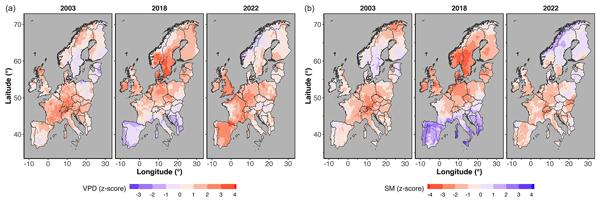
In 2022, Europe's forests faced unprecedented dry conditions. Our study aimed to understand how different forest types respond to extreme drought. Using meteorological data and satellite imagery, we compared 2022 with two previous extreme years, 2003 and 2018. Despite less severe drought in 2022, forests showed a 30 % greater decline in photosynthesis compared to 2018 and 60 % more than 2003. This suggests an alarming level of vulnerability of forests across Europe to more frequent droughts.
Jacob A. Nelson, Sophia Walther, Fabian Gans, Basil Kraft, Ulrich Weber, Kimberly Novick, Nina Buchmann, Mirco Migliavacca, Georg Wohlfahrt, Ladislav Šigut, Andreas Ibrom, Dario Papale, Mathias Göckede, Gregory Duveiller, Alexander Knohl, Lukas Hörtnagl, Russell L. Scott, Jiří Dušek, Weijie Zhang, Zayd Mahmoud Hamdi, Markus Reichstein, Sergio Aranda-Barranco, Jonas Ardö, Maarten Op de Beeck, Dave Billesbach, David Bowling, Rosvel Bracho, Christian Brümmer, Gustau Camps-Valls, Shiping Chen, Jamie Rose Cleverly, Ankur Desai, Gang Dong, Tarek S. El-Madany, Eugenie Susanne Euskirchen, Iris Feigenwinter, Marta Galvagno, Giacomo A. Gerosa, Bert Gielen, Ignacio Goded, Sarah Goslee, Christopher Michael Gough, Bernard Heinesch, Kazuhito Ichii, Marcin Antoni Jackowicz-Korczynski, Anne Klosterhalfen, Sara Knox, Hideki Kobayashi, Kukka-Maaria Kohonen, Mika Korkiakoski, Ivan Mammarella, Mana Gharun, Riccardo Marzuoli, Roser Matamala, Stefan Metzger, Leonardo Montagnani, Giacomo Nicolini, Thomas O'Halloran, Jean-Marc Ourcival, Matthias Peichl, Elise Pendall, Borja Ruiz Reverter, Marilyn Roland, Simone Sabbatini, Torsten Sachs, Marius Schmidt, Christopher R. Schwalm, Ankit Shekhar, Richard Silberstein, Maria Lucia Silveira, Donatella Spano, Torbern Tagesson, Gianluca Tramontana, Carlo Trotta, Fabio Turco, Timo Vesala, Caroline Vincke, Domenico Vitale, Enrique R. Vivoni, Yi Wang, William Woodgate, Enrico A. Yepez, Junhui Zhang, Donatella Zona, and Martin Jung
Biogeosciences, 21, 5079–5115, https://doi.org/10.5194/bg-21-5079-2024, https://doi.org/10.5194/bg-21-5079-2024, 2024
Short summary
Short summary
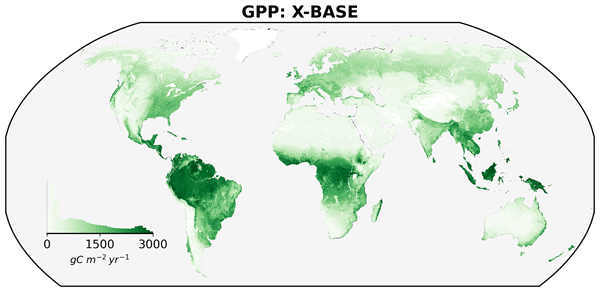
The movement of water, carbon, and energy from the Earth's surface to the atmosphere, or flux, is an important process to understand because it impacts our lives. Here, we outline a method called FLUXCOM-X to estimate global water and CO2 fluxes based on direct measurements from sites around the world. We go on to demonstrate how these new estimates of net CO2 uptake/loss, gross CO2 uptake, total water evaporation, and transpiration from plants compare to previous and independent estimates.
Liliana Scapucci, Ankit Shekhar, Sergio Aranda-Barranco, Anastasiia Bolshakova, Lukas Hörtnagl, Mana Gharun, and Nina Buchmann
Biogeosciences, 21, 3571–3592, https://doi.org/10.5194/bg-21-3571-2024, https://doi.org/10.5194/bg-21-3571-2024, 2024
Short summary
Short summary
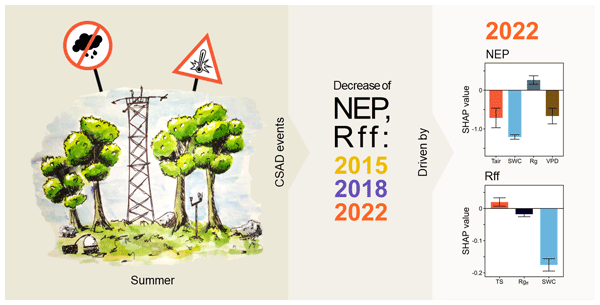
Forests face increased exposure to “compound soil and atmospheric drought” (CSAD) events due to global warming. We examined the impacts and drivers of CO2 fluxes during CSAD events at multiple layers of a deciduous forest over 18 years. Results showed reduced net ecosystem productivity and forest-floor respiration during CSAD events, mainly driven by soil and atmospheric drought. This unpredictability in forest CO2 fluxes jeopardises reforestation projects aimed at mitigating CO2 emissions.
Luana Krebs, Susanne Burri, Iris Feigenwinter, Mana Gharun, Philip Meier, and Nina Buchmann
Biogeosciences, 21, 2005–2028, https://doi.org/10.5194/bg-21-2005-2024, https://doi.org/10.5194/bg-21-2005-2024, 2024
Short summary
Short summary
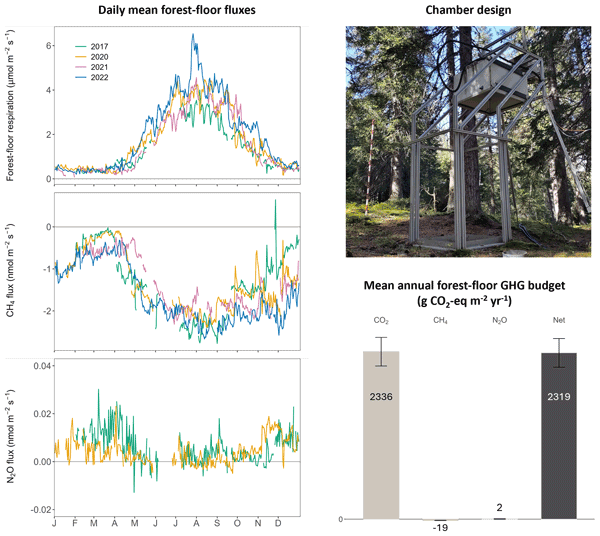
This study explores year-round forest-floor greenhouse gas (GHG) fluxes in a Swiss spruce forest. Soil temperature and snow depth affected forest-floor respiration, while CH4 uptake was linked to snow cover. Negligible N2O fluxes were observed. In 2022, a warm year, CO2 emissions notably increased. The study suggests rising forest-floor GHG emissions due to climate change, impacting carbon sink behavior. Thus, for future forest management, continuous year-round GHG flux measurements are crucial.
Cited articles
Aitken, A. C.: IV. – On Least Squares and Linear Combination of Observations, Proc. R. Soc. Edinb., 55, 42–48, https://doi.org/10.1017/S0370164600014346, 1936.
Akaike, H.: A new look at the statistical model identification, IEEE T. Automat. Contr., 19, 716–723, https://doi.org/10.1109/TAC.1974.1100705, 1974.
Alekseychik, P., Mammarella, I., Karpov, D., Dengel, S., Terentieva, I., Sabrekov, A., Glagolev, M., and Lapshina, E.: Net ecosystem exchange and energy fluxes measured with the eddy covariance technique in a western Siberian bog, Atmos. Chem. Phys., 17, 9333–9345, https://doi.org/10.5194/acp-17-9333-2017, 2017.
Beck, P. S., Atzberger, C., Høgda, K. A., Johansen, B., and Skidmore, A. K.: Improved monitoring of vegetation dynamics at very high latitudes: A new method using MODIS NDVI, Remote Sens. Environ., 100, 321–334, https://doi.org/10.1016/j.rse.2005.10.021, 2006.
Beniston, M., Stephenson, D. B., Christensen, O. B., Ferro, C. A. T., Frei, C., Goyette, S., Halsnaes, K., Holt, T., Jylhä, K., Koffi, B., Palutikof, J., Schöll, R., Semmler, T., and Woth, K.: Future extreme events in European climate: an exploration of regional climate model projections, Climatic Change, 81, 71–95, https://doi.org/10.1007/s10584-006-9226-z, 2007.
Bönsel, A. and Sonneck, A.-G.: Effects of a hydrological protection zone on the restoration of a raised bog: a case study from Northeast-Germany 1997–2008, Wetlands Ecol Manage, 19, 183–194, https://doi.org/10.1007/s11273-011-9210-x, 2011.
Chen, T. and Guestrin, C.: XGBoost, Machinery, New York, USA, 785–794, https://doi.org/10.1145/2939672.2939785, 2016.
Cochrane, D. and Orcutt, G. H.: Application of Least Squares Regression to Relationships Containing Auto-Correlated Error Terms, J. Am. Stat. Assoc., 44, 32–61, https://doi.org/10.1080/01621459.1949.10483290, 1949.
Deutscher Wetterdienst (DWD): Climate Data Center: https://cdc.dwd.de/portal/202209231028/view1 (last access: 12 November 2026), 2022.
Dingman, S. L.: Physical hydrology, Third edn., Waveland Press Inc, Long Grove, Illinois, 643 pp., ISBN 10: 1-4786-1118-9, ISBN 13: 978-1-4786-1118-9, 2015.
Directorate-General for Environment: Natura 2000, European Commission, https://environment.ec.europa.eu/topics/nature-and-biodiversity/natura-2000_en (last access: 12 November 2026), 2024.
Dormann, C. F., Elith, J., Bacher, S., Buchmann, C., Carl, G., Carré, G., Marquéz, J. R. G., Gruber, B., Lafourcade, B., Leitão, P. J., Münkemüller, T., McClean, C., Osborne, P. E., Reineking, B., Schröder, B., Skidmore, A. K., Zurell, D., and Lautenbach, S.: Collinearity: a review of methods to deal with it and a simulation study evaluating their performance, Ecography, 36, 27–46, https://doi.org/10.1111/j.1600-0587.2012.07348.x, 2013.
Du, Q., Guan, Q., Sun, Y., Wang, Q., Zhang, J., Xiao, X., Liu, H., Yang, X., and Zhang, E.: Legacy effects of extreme drought and wetness events on mountain grassland ecosystems and their elevation dependence, J. Hydrol., 630, 130757, https://doi.org/10.1016/j.jhydrol.2024.130757, 2024.
Durbin, J. and Watson, G. S.: Testing for Serial Correlation in Least Squares Regression: I, Biometrika, 37, 409, https://doi.org/10.2307/2332391, 1950.
Durbin, J. and Watson, G. S.: Testing for Serial Correlation in Least Squares Regression. II, Biometrika, 38, 159–178, https://doi.org/10.1093/biomet/38.1-2.159, 1951.
Durbin, J. and Watson, G. S.: Testing for Serial Correlation in Least Squares Regression. III, Biometrika, 58, 1, https://doi.org/10.2307/2334313, 1971.
Eichelmann, E., Mantoani, M. C., Chamberlain, S. D., Hemes, K. S., Oikawa, P. Y., Szutu, D., Valach, A., Verfaillie, J., and Baldocchi, D. D.: A novel approach to partitioning evapotranspiration into evaporation and transpiration in flooded ecosystems, Glob. Change Biol., 28, 990–1007, https://doi.org/10.1111/gcb.15974, 2022.
Europäische Union: Standard-Datenbogen: DE3807301, in: Natura 2000-Gebiete in Nordrhein-Westfalen – Fachinformation – Listen der Natura 2000-Gebiete, Landesamt für Natur, Umwelt und Verbraucherschutz Nordrhein-Westfalen, https://natura2000-meldedok.naturschutzinformationen.nrw.de/natura2000-meldedok/de/fachinfo/listen/meldedok/DE-3807-301 (last access: 12 November 2026), 2021.
Fu, Z., Ciais, P., Prentice, I. C., Gentine, P., Makowski, D., Bastos, A., Luo, X., Green, J. K., Stoy, P. C., Yang, H., and Hajima, T.: Atmospheric dryness reduces photosynthesis along a large range of soil water deficits, Nat. Commun., 13, 989, https://doi.org/10.1038/s41467-022-28652-7, 2022.
Gerling, L., Weber, T. K., Reineke, D., Durner, W., Martin, S., and Weber, S.: Eddy covariance based surface-atmosphere exchange and crop coefficient determination in a mountainous peatland, Ecohydrology, 12, https://doi.org/10.1002/eco.2047, 2019.
Gharun, M. and Behrens, N.: ETC L2 ARCHIVE from Amtsvenn, 2023–2025, ICOS RI: https://hdl.handle.net/11676/eRi-GMPnHz5rPsp425TmPiQv (last access: 12 November 2026), 2026.
Gharun, M., Hörtnagl, L., Paul-Limoges, E., Ghiasi, S., Feigenwinter, I., Burri, S., Marquardt, K., Etzold, S., Zweifel, R., Eugster, W., and Buchmann, N.: Physiological response of Swiss ecosystems to 2018 drought across plant types and elevation, Philos. T. R. Soc. Lond., 375, 20190521, https://doi.org/10.1098/rstb.2019.0521, 2020.
Gobin, R., Korboulewsky, N., Dumas, Y., and Balandier, P.: Transpiration of four common understorey plant species according to drought intensity in temperate forests, Ann. Forest Sci., 72, 1053–1064, https://doi.org/10.1007/s13595-015-0510-9, 2015.
Grossiord, C., Buckley, T. N., Cernusak, L. A., Novick, K. A., Poulter, B., Siegwolf, R. T. W., Sperry, J. S., and McDowell, N. G.: Plant responses to rising vapor pressure deficit, New Phytol., 226, 1550–1566, https://doi.org/10.1111/nph.16485, 2020.
Gunawardhana, M., Silvester, E., Jones, O. A., and Grover, S.: Evapotranspiration and biogeochemical regulation in a mountain peatland: insights from eddy covariance and ionic balance measurements, J. Hydrol.: Regional Studies, 36, 100851, https://doi.org/10.1016/j.ejrh.2021.100851, 2021.
Harris, C. R., Millman, K. J., van der Walt, S. J., Gommers, R., Virtanen, P., Cournapeau, D., Wieser, E., Taylor, J., Berg, S., Smith, N. J., Kern, R., Picus, M., Hoyer, S., van Kerkwijk, M. H., Brett, M., Haldane, A., Del Río, J. F., Wiebe, M., Peterson, P., Gérard-Marchant, P., Sheppard, K., Reddy, T., Weckesser, W., Abbasi, H., Gohlke, C., and Oliphant, T. E.: Array programming with NumPy, Nature, 585, 357–362, https://doi.org/10.1038/s41586-020-2649-2, 2020.
Heijmans, M. M. P. D., van der Knaap, Y. A. M., Holmgren, M., and Limpens, J.: Persistent versus transient tree encroachment of temperate peat bogs: effects of climate warming and drought events, Glob. Change Biol., 19, 2240–2250, https://doi.org/10.1111/gcb.12202, 2013.
Hirschi, M., Seneviratne, S. I., Alexandrov, V., Boberg, F., Boroneant, C., Christensen, O. B., Formayer, H., Orlowsky, B., and Stepanek, P.: Observational evidence for soil-moisture impact on hot extremes in southeastern Europe, Nat. Geosci., 4, 17–21, https://doi.org/10.1038/ngeo1032, 2011.
Humphreys, E. R., Lafleur, P. M., Flanagan, L. B., Hedstrom, N., Syed, K. H., Glenn, A. J., and Granger, R.: Summer carbon dioxide and water vapor fluxes across a range of northern peatlands, J. Geophys. Res., 111, https://doi.org/10.1029/2005JG000111, 2006.
Hunter, J. D.: Matplotlib: A 2D Graphics Environment, Comput. Sci. Eng., 9, 90–95, https://doi.org/10.1109/MCSE.2007.55, 2007.
Karimi, S., Maher Hasselquist, E., Salimi, S., Järveoja, J., and Laudon, H.: Rewetting impact on the hydrological function of a drained peatland in the boreal landscape, J. Hydrol., 641, 131729, https://doi.org/10.1016/j.jhydrol.2024.131729, 2024.
Kettridge, N. and Waddington, J. M.: Towards quantifying the negative feedback regulation of peatland evaporation to drought, Hydrol. Process., 28, 3728–3740, https://doi.org/10.1002/hyp.9898, 2014.
Kottek, M., Grieser, J., Beck, C., Rudolf, B., and Rubel, F.: World Map of the Köppen-Geiger climate classification updated, metz, 15, 259–263, https://doi.org/10.1127/0941-2948/2006/0130, 2006.
Lafleur, P. M., Hember, R. A., Admiral, S. W., and Roulet, N. T.: Annual and seasonal variability in evapotranspiration and water table at a shrub-covered bog in southern Ontario, Canada, Hydrol. Process., 19, 3533–3550, https://doi.org/10.1002/hyp.5842, 2005.
Limpens, J., Holmgren, M., Jacobs, C. M. J., van der Zee, S. E. A. T. M., Karofeld, E., and Berendse, F.: How does tree density affect water loss of peatlands? A mesocosm experiment, PloS one, 9, e91748, https://doi.org/10.1371/journal.pone.0091748, 2014.
Liu, H., Rezanezhad, F., and Lennartz, B.: Impact of land management on available water capacity and water storage of peatlands, Geoderma, 406, 115521, https://doi.org/10.1016/j.geoderma.2021.115521, 2022.
Loescher, H. W., Hanson, C. V., and Ocheltree, T. W.: The Psychrometric Constant Is Not Constant: A Novel Approach to Enhance the Accuracy and Precision of Latent Energy Fluxes through Automated Water Vapor Calibrations, J. Hydrometeorol., 10, 1271–1284, https://doi.org/10.1175/2009JHM1148.1, 2009.
Lu, Q., Liu, H., Wei, L., Zhong, Y., and Zhou, Z.: Global prediction of gross primary productivity under future climate change, Sci. Total Environ., 912, 169239, https://doi.org/10.1016/j.scitotenv.2023.169239, 2024.
Mamadou, O., Galle, S., Cohard, J.-M., Peugeot, C., Kounouhewa, B., Biron, R., Hector, B., and Zannou, A. B.: Dynamics of water vapor and energy exchanges above two contrasting Sudanian climate ecosystems in Northern Benin (West Africa), J. Geophys. Res.-Atmos., 121, https://doi.org/10.1002/2016JD024749, 2016.
Massmann, A., Gentine, P., and Lin, C.: When Does Vapor Pressure Deficit Drive or Reduce Evapotranspiration?, J. Adv. Model. Earth Sy., 11, 3305–3320, https://doi.org/10.1029/2019MS001790, 2019.
Matos, K. A., Bowen, G. J., Good, S. P., and Allen, S. T.: Evapotranspiration Partitioning Across US Ecoregions: A Multi-Site Study Using Field Stable-Isotope Observations, Geophys. Res. Lett., 52, https://doi.org/10.1029/2025gl115367, 2025.
Mauder, M., Jung, M., Stoy, P., Nelson, J., and Wanner, L.: Energy balance closure at FLUXNET sites revisited, Agr. Forest Meteorol., 358, 110235, https://doi.org/10.1016/j.agrformet.2024.110235, 2024.
Miralles, D. G., Vilà-Guerau de Arellano, J., McVicar, T. R., and Mahecha, M. D.: Vegetation-climate feedbacks across scales, Ann. NY Acad. Sci., 1544, 27–41, https://doi.org/10.1111/nyas.15286, 2025.
Morgan, B. E., Araki, R., Trugman, A. T., and Caylor, K. K.: Ecological and hydroclimatic determinants of vegetation water-use strategies, Nature Ecology & Evolution, 9, 1791–1799, https://doi.org/10.1038/s41559-025-02810-8, 2025.
Nguyen, M. N., Hao, Y., Baik, J., and Choi, M.: Partitioning evapotranspiration based on the total ecosystem conductance fractions of soil, interception, and canopy in different biomes, J. Hydrol., 603, 126970, https://doi.org/10.1016/j.jhydrol.2021.126970, 2021.
Nicolini, G., Durden, D., Di Fiore, L., Florian, C., Sabbatini, S., Gielen, B., Iserbyt, A., Loubet, B., Mammarella, I., Mariotti, A., Beeck, M. op de, Slemmons, C., Trotta, C., Young, A., Chabbi, A., Feigenwinter, I., Heinesch, B., Kowalska, N., Mauder, M., Šigut, L., van der Molen, M., Bastos Campos, F., Berveiller, D., Brümmer, C., Cuntz, M., Domec, J.-C., Dumont, B., Fares, S., Gianelle, D., Jensen, R., Kalalian, C., Kljun, N., Lange, H., Limousin, J.-M., Lundin, E., Manco, A., Montagnani, L., Nemitz, E., Peichl, M., Rinne, E., Roland, M., Schmidt, M., Simioni, G., Thomas, A., Vincke, C., and Papale, D.: Bridging the Energy Balance Gap in Eddy-Covariance Measurements: Insights From Standardized Network Data, Glob. Change Biol., 32, e70892, https://doi.org/10.1111/gcb.70892, 2026.
Nijp, J. J., Metselaar, K., Limpens, J., Teutschbein, C., Peichl, M., Nilsson, M. B., Berendse, F., and van der Zee, S. E. A. T. M.: Including hydrological self-regulating processes in peatland models: Effects on peatmoss drought projections, Sci. Total Environ., 580, 1389–1400, https://doi.org/10.1016/j.scitotenv.2016.12.104, 2017.
Pastorello, G., Trotta, C., Canfora, E., et al.: The FLUXNET2015 dataset and the ONEFlux processing pipeline for eddy covariance data, Sci. Data, 7, 225, https://doi.org/10.1038/s41597-020-0534-3, 2020.
Pedregosa, F., Varoquaux, G., Gramfort, A., Michel, V., Thirion, B., Grisel, O., Blondel, M., Prettenhofer, P., Weiss, R., Dubourg, V., VanderPlas, J., Passos, A., Cournapeau, D., Brucher, M., Perrot, M., and Duchesnay, É.: Scikit-learn: Machine Learning in Python, J. Mach. Learn. Res., 12, 2825–2830, 2011.
Plotly Technologies Inc.: Collaborative data science, https://plot.ly (last access: 12 November 2026), 2015.
Rogiers, N., Eugster, W., Furger, M., and Siegwolf, R.: Effect of land management on ecosystem carbon fluxes at a subalpine grassland site in the Swiss Alps, Theor. Appl. Climatol., 80, 187–203, https://doi.org/10.1007/s00704-004-0099-7, 2005.
Runkle, B. R. K., Wille, C., Gažovič, M., Wilmking, M., and Kutzbach, L.: The surface energy balance and its drivers in a boreal peatland fen of northwestern Russia, J. Hydrol., 511, 359–373, https://doi.org/10.1016/j.jhydrol.2014.01.056, 2014.
Seabold, S. and Perktold, J.: Statsmodels: Econometric and Statistical Modeling with Python, Proceedings of the 9th Python in Science Conference, SciPy, 92–96, https://doi.org/10.25080/Majora-92bf1922-011, 2010.
Shekhar, A., Buchmann, N., Humphrey, V., and Gharun, M.: More than three-fold increase in compound soil and air dryness across Europe by the end of 21st century, Weather and Climate Extremes, 44, 100666, https://doi.org/10.1016/j.wace.2024.100666, 2024.
Song, L., Zhu, J., Li, X., Wang, K., Wang, G., and Sun, H.: Transpiration of Pinus sylvestris var. mongolica trees at different positions of sand dunes in a semiarid sandy region of Northeast China, Trees, 36, 749–762, https://doi.org/10.1007/s00468-021-02247-z, 2022.
Sonnentag, O., van der Kamp, G., Barr, A. G., and Chen, J. M.: On the relationship between water table depth and water vapor and carbon dioxide fluxes in a minerotrophic fen, Glob. Change Biol., 16, 1762–1776, https://doi.org/10.1111/j.1365-2486.2009.02032.x, 2010.
Speranskaya, L., Campbell, D. I., Lafleur, P. M., and Humphreys, E. R.: Peatland evaporation across hemispheres: contrasting controls and sensitivity to climate warming driven by plant functional types, Biogeosciences, 21, 1173–1190, https://doi.org/10.5194/bg-21-1173-2024, 2024.
The pandas development team: pandas-dev/pandas: Pandas, Zenodo [code], https://doi.org/10.5281/zenodo.3509134, 2025.
Truong, C., Oudre, L., and Vayatis, N.: Selective review of offline change point detection methods, Signal Processing, 167, 107299, https://doi.org/10.1016/j.sigpro.2019.107299, 2020.
Türk, H., Stumpp, C., Stockinger, M., and Benettin, P.: Tracking Event-Scale Precipitation Partitioning Reveals Comparable Roles of Event Characteristics and Seasonality in Shaping Precipitation Fate in a Forested Landscape, Hydrol. Process., 40, https://doi.org/10.1002/hyp.70466, 2026.
Twine, T. E., Kustas, W. P., Norman, J. M., Cook, D. R., Houser, P. R., Meyers, T. P., Prueger, J. H., Starks, P. J., and Wesely, M. L.: Correcting eddy-covariance flux underestimates over a grassland, Agr. Forest Meteorol., 103, 279–300, https://doi.org/10.1016/S0168-1923(00)00123-4, 2000.
Utikal, J. and Rückriem, C.: Maßnahmenkonzept: Natura 2000 Amtsvenn und Hündfelder Moor DE-3807-301, in: Natura 2000-Gebiete in Nordrhein-Westfalen – Fachinformation – Listen der Natura 2000-Gebiete, Landesamt für Natur, Umwelt und Verbraucherschutz Nordrhein-Westfalen, https://natura2000-meldedok.naturschutzinformationen.nrw.de/natura2000-meldedok/de/fachinfo/listen/meldedok/DE-3807-301 (last access: 12 November 2026), 2019.
van Rossum, G. and Drake, F. L.: Python 3 reference manual, Documentation for Python, Createspace Independent Pub, 244 pp., ISBN-10: 1441412697, ISBN-13: 978-1441412690, 2009.
Wilusz, D. C., Harman, C. J., and Ball, W. P.: Sensitivity of Catchment Transit Times to Rainfall Variability Under Present and Future Climates, Water Resour. Res., 53, 10231–10256, https://doi.org/10.1002/2017WR020894, 2017.
Wutzler, T., Lucas-Moffat, A., Migliavacca, M., Knauer, J., Sickel, K., Šigut, L., Menzer, O., and Reichstein, M.: Basic and extensible post-processing of eddy covariance flux data with REddyProc, Biogeosciences, 15, 5015–5030, https://doi.org/10.5194/bg-15-5015-2018, 2018.
Xu, J., Wu, B., Ryu, D., Yan, N., Zhu, W., and Ma, Z.: Quantifying the contribution of biophysical and environmental factors in uncertainty of modeling canopy conductance, J. Hydrol., 592, 125612, https://doi.org/10.1016/j.jhydrol.2020.125612, 2021.
Yu, Z. C.: Northern peatland carbon stocks and dynamics: a review, Biogeosciences, 9, 4071–4085, https://doi.org/10.5194/bg-9-4071-2012, 2012.
Yuan, W., Zheng, Y., Piao, S., Ciais, P., Lombardozzi, D., Wang, Y., Ryu, Y., Chen, G., Dong, W., Hu, Z., Jain, A. K., Jiang, C., Kato, E., Li, S., Lienert, S., Liu, S., Nabel, J. E. M. S., Qin, Z., Quine, T., Sitch, S., Smith, W. K., Wang, F., Wu, C., Xiao, Z., and Yang, S.: Increased atmospheric vapor pressure deficit reduces global vegetation growth, Science Advances, 5, eaax1396, https://doi.org/10.1126/sciadv.aax1396, 2019.
Zhang, Y., Liu, X., Wang, K., Zhang, D., and Liu, W.: Widespread Increasing Control of Water Supply on Evapotranspiration, Water Resour. Res., 60, https://doi.org/10.1029/2024WR038353, 2024.
Short summary
In the context of a changing climate, we examined how vegetation productivity and weather conditions effect cooling in peatland ecosystems. While radiation and vegetation productivity have the greatest influence on cooling during the growing season, water table depth and air dryness are the foremost factors outside growing season. A drought threshold limits evapotranspiration via canopy water regulation. Our results are crucial for understanding future heat and climate regulation of peatlands.
In the context of a changing climate, we examined how vegetation productivity and weather...
Altmetrics
Final-revised paper
Preprint