
Articles | Volume 23, issue 2
https://doi.org/10.5194/bg-23-851-2026
© Author(s) 2026. This work is distributed under
the Creative Commons Attribution 4.0 License.
the Creative Commons Attribution 4.0 License.
https://doi.org/10.5194/bg-23-851-2026
© Author(s) 2026. This work is distributed under
the Creative Commons Attribution 4.0 License.
the Creative Commons Attribution 4.0 License.
Research article
| 
30 Jan 2026
Research article |
| 30 Jan 2026
| 30 Jan 2026
Carbon sequestration along a gradient of tidal marsh degradation in response to sea level rise
Mona Huyzentruyt
CORRESPONDING AUTHOR

ECOSPHERE Research Group, University of Antwerp, Antwerp, Belgium
Maarten Wens
ECOSPHERE Research Group, University of Antwerp, Antwerp, Belgium
Gregory S. Fivash
ECOSPHERE Research Group, University of Antwerp, Antwerp, Belgium
David Walters
U.S. Geological Survey, Eastern Ecological Science Center, Laurel, MD, USA
Steven Bouillon
Department of Earth and Environmental Sciences, KU Leuven, Leuven, Belgium
Joel Carr
U.S. Geological Survey, Eastern Ecological Science Center, Laurel, MD, USA
Glenn Guntenspergen
U.S. Geological Survey, Eastern Ecological Science Center, Duluth, MN, USA
Matt L. Kirwan
Virginia Institute of Marine Science, William & Mary, Gloucester Point, Virginia, USA
Stijn Temmerman
ECOSPHERE Research Group, University of Antwerp, Antwerp, Belgium
Related authors
Mona Huyzentruyt, Lennert Schepers, Matthew L. Kirwan, Glenn R. Guntenspergen, and Stijn Temmerman
Biogeosciences, 23, 751–766, https://doi.org/10.5194/bg-23-751-2026, https://doi.org/10.5194/bg-23-751-2026, 2026
Short summary
Short summary
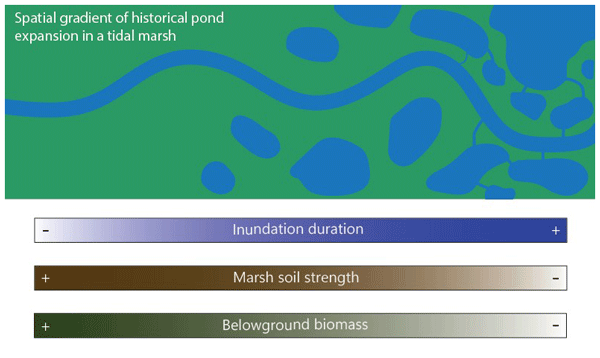
In some tidal marshes, vegetation can convert to ponds as a result of sea level rise. We investigated to what extent this is related to decreasing strength of the marsh soil in relation to sea level rise. We found a reduction of marsh soil strength in areas with more inundation by sea water and more ponding, which results in easier erosion of the marsh and thus further expansion of ponds. This decrease in marsh soil strength is highly related to lower content of roots in the soil.
Cedric Goossens, Steven Bouillon, Filip J. R. Meysman, and Sebastiaan J. van de Velde
Biogeosciences, 23, 6447–6464, https://doi.org/10.5194/bg-23-6447-2026, https://doi.org/10.5194/bg-23-6447-2026, 2026
Short summary
Short summary
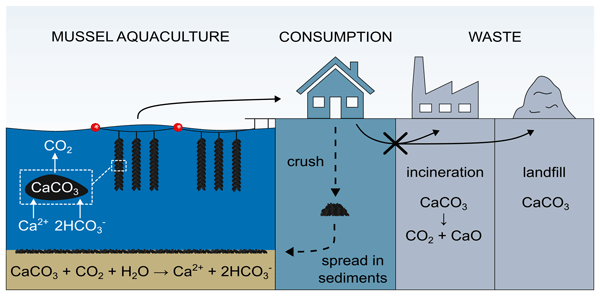
Shell growth in bivalve aquaculture removes ocean alkalinity, leading to CO2 emissions. Here, we explore a circular solution by crushing shell waste and distributing it into coastal sediments, where its dissolution releases alkalinity that can compensate these emissions. Laboratory experiments showed substantial shell dissolution and alkalinity production, highlighting the potential for aquaculture circularity under suitable sediment conditions.
Alberto V. Borges, Cédric Morana, Loris Deirmendjian, William Okello, Patrick Omeja, Mwapu Isumbisho, Jean-Pierre Descy, and Steven Bouillon
EGUsphere, https://doi.org/10.5194/egusphere-2026-1976, https://doi.org/10.5194/egusphere-2026-1976, 2026
Short summary
Short summary
We report 168 measurements of paired bottom- and surface-water CH4 concentrations from 46 African lakes spanning a wide range of surface area and maximum depth. Bottom-water and surface-water CH4 concentrations increased with stratification. The ratio of surface to bottom CH4 concentrations was negatively related to bottom depth and stratification, indicating that the relative increase in surface-water CH4 might be greater in shallower and less stratified systems.
Mona Huyzentruyt, Lennert Schepers, Matthew L. Kirwan, Glenn R. Guntenspergen, and Stijn Temmerman
Biogeosciences, 23, 751–766, https://doi.org/10.5194/bg-23-751-2026, https://doi.org/10.5194/bg-23-751-2026, 2026
Short summary
Short summary
In some tidal marshes, vegetation can convert to ponds as a result of sea level rise. We investigated to what extent this is related to decreasing strength of the marsh soil in relation to sea level rise. We found a reduction of marsh soil strength in areas with more inundation by sea water and more ponding, which results in easier erosion of the marsh and thus further expansion of ponds. This decrease in marsh soil strength is highly related to lower content of roots in the soil.
Junyan Ding, Nate McDowell, Vanessa Bailey, Nate Conroy, Donnie J. Day, Yilin Fang, Kenneth M. Kemner, Matthew L. Kirwan, Charlie D. Koven, Matthew Kovach, Patrick Megonigal, Kendalynn A. Morris, Teri O'Meara, Stephanie C. Pennington, Roberta B. Peixoto, Peter Thornton, Mike Weintraub, Peter Regier, Leticia Sandoval, Fausto Machado-Silva, Alice Stearns, Nick Ward, and Stephanie J. Wilson
Biogeosciences, 22, 6963–6978, https://doi.org/10.5194/bg-22-6963-2025, https://doi.org/10.5194/bg-22-6963-2025, 2025
Short summary
Short summary
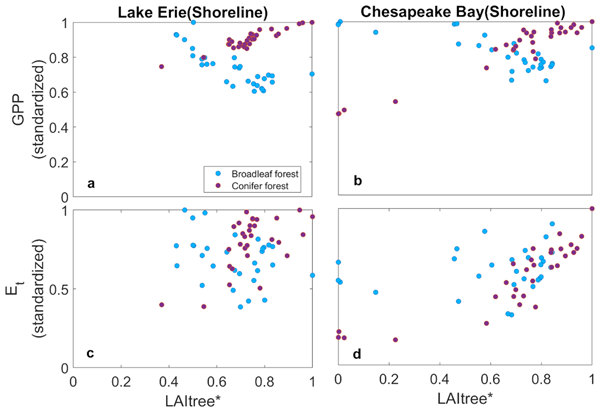
We used a vegetation model to study why coastal forests are dying due to rising water levels and what happens to the ecosystem when marshes take over. We found that tree death is mainly caused by water-damaged roots, leading to major changes in the environment, such as reduced water use and carbon storage. Our study helps explain how coastal ecosystems are shifting and offers new ideas to explore in future field research.
Zita Kelemen, David P. Gillikin, and Steven Bouillon
Biogeosciences, 22, 2621–2635, https://doi.org/10.5194/bg-22-2621-2025, https://doi.org/10.5194/bg-22-2621-2025, 2025
Short summary
Short summary
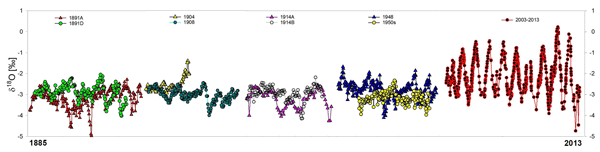
We analysed the C and O stable isotope composition (δ13C, δ18O) across the growth axis of museum-archived and recent Chambardia wissmanni shells from the Oubangui River (Congo basin) covering sections of the past ~120 years. Recent shells showed a much wider range of δ18O values compared to historical specimens, consistent with the suggestion that dry periods in the upper Congo basin have become more extreme in recent times and highlighting the potential of this species to reconstruct hydroclimatic conditions.
Vao Fenotiana Razanamahandry, Alberto Vieira Borges, Liesa Brosens, Cedric Morana, Tantely Razafimbelo, Tovonarivo Rafolisy, Gerard Govers, and Steven Bouillon
Biogeosciences, 22, 2403–2424, https://doi.org/10.5194/bg-22-2403-2025, https://doi.org/10.5194/bg-22-2403-2025, 2025
Short summary
Short summary
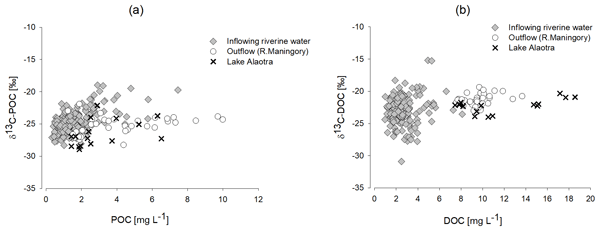
A comprehensive survey of the biogeochemistry of the Lake Alaotra system showed that the lake and surrounding wetlands acted as a substantial source of new organic carbon (OC), which was exported downstream. Marsh vegetation was the main source of dissolved OC, while phytoplankton contributed to the particulate OC pool. The biogeochemical functioning of Lake Alaotra differs from most East African lakes studied, likely due to its large surface area, shallow water depth, and surrounding wetlands.
Sarah Hautekiet, Jan-Eike Rossius, Olivier Gourgue, Maarten Kleinhans, and Stijn Temmerman
Earth Surf. Dynam., 12, 601–619, https://doi.org/10.5194/esurf-12-601-2024, https://doi.org/10.5194/esurf-12-601-2024, 2024
Short summary
Short summary
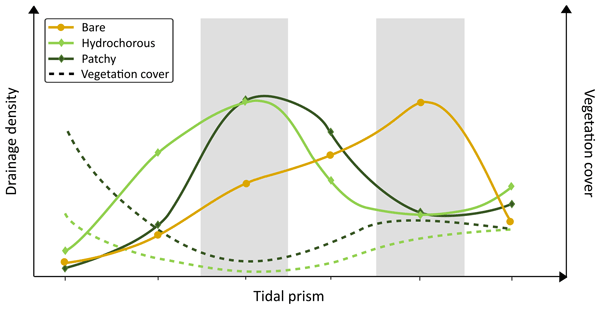
This study examined how vegetation growing in marshes affects the formation of tidal channel networks. Experiments were conducted to imitate marsh development, both with and without vegetation. The results show interdependency between biotic and abiotic factors in channel development. They mainly play a role when the landscape changes from bare to vegetated. Overall, the study suggests that abiotic factors are more important near the sea, while vegetation plays a larger role closer to the land.
Ignace Pelckmans, Jean-Philippe Belliard, Olivier Gourgue, Luis Elvin Dominguez-Granda, and Stijn Temmerman
Hydrol. Earth Syst. Sci., 28, 1463–1476, https://doi.org/10.5194/hess-28-1463-2024, https://doi.org/10.5194/hess-28-1463-2024, 2024
Short summary
Short summary
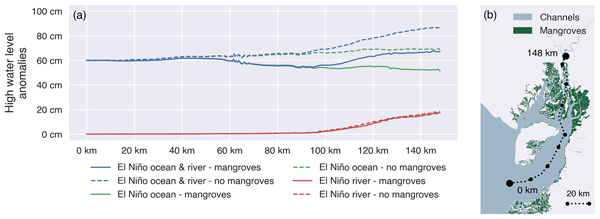
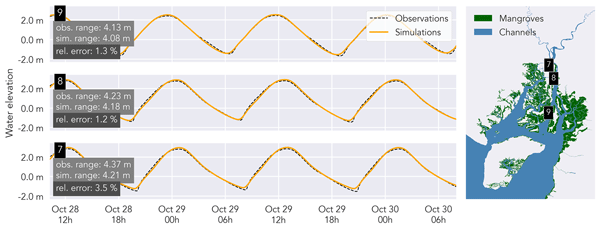
The combination of extreme sea levels with increased river flow typically can lead to so-called compound floods. Often these are caused by storms (< 1 d), but climatic events such as El Niño could trigger compound floods over a period of months. We show that the combination of increased sea level and river discharge causes extreme water levels to amplify upstream. Mangrove forests, however, can act as a nature-based flood protection by lowering the extreme water levels coming from the sea.
Christian Lønborg, Cátia Carreira, Gwenaël Abril, Susana Agustí, Valentina Amaral, Agneta Andersson, Javier Arístegui, Punyasloke Bhadury, Mariana B. Bif, Alberto V. Borges, Steven Bouillon, Maria Ll. Calleja, Luiz C. Cotovicz Jr., Stefano Cozzi, Maryló Doval, Carlos M. Duarte, Bradley Eyre, Cédric G. Fichot, E. Elena García-Martín, Alexandra Garzon-Garcia, Michele Giani, Rafael Gonçalves-Araujo, Renee Gruber, Dennis A. Hansell, Fuminori Hashihama, Ding He, Johnna M. Holding, William R. Hunter, J. Severino P. Ibánhez, Valeria Ibello, Shan Jiang, Guebuem Kim, Katja Klun, Piotr Kowalczuk, Atsushi Kubo, Choon-Weng Lee, Cláudia B. Lopes, Federica Maggioni, Paolo Magni, Celia Marrase, Patrick Martin, S. Leigh McCallister, Roisin McCallum, Patricia M. Medeiros, Xosé Anxelu G. Morán, Frank E. Muller-Karger, Allison Myers-Pigg, Marit Norli, Joanne M. Oakes, Helena Osterholz, Hyekyung Park, Maria Lund Paulsen, Judith A. Rosentreter, Jeff D. Ross, Digna Rueda-Roa, Chiara Santinelli, Yuan Shen, Eva Teira, Tinkara Tinta, Guenther Uher, Masahide Wakita, Nicholas Ward, Kenta Watanabe, Yu Xin, Youhei Yamashita, Liyang Yang, Jacob Yeo, Huamao Yuan, Qiang Zheng, and Xosé Antón Álvarez-Salgado
Earth Syst. Sci. Data, 16, 1107–1119, https://doi.org/10.5194/essd-16-1107-2024, https://doi.org/10.5194/essd-16-1107-2024, 2024
Short summary
Short summary
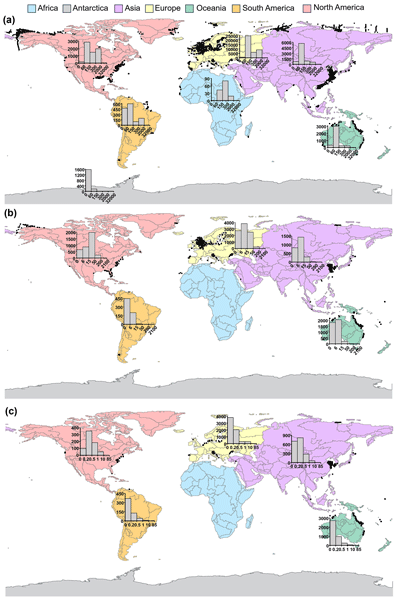
In this paper, we present the first edition of a global database compiling previously published and unpublished measurements of dissolved organic matter (DOM) collected in coastal waters (CoastDOM v1). Overall, the CoastDOM v1 dataset will be useful to identify global spatial and temporal patterns and to facilitate reuse in studies aimed at better characterizing local biogeochemical processes and identifying a baseline for modelling future changes in coastal waters.
Ignace Pelckmans, Jean-Philippe Belliard, Luis E. Dominguez-Granda, Cornelis Slobbe, Stijn Temmerman, and Olivier Gourgue
Nat. Hazards Earth Syst. Sci., 23, 3169–3183, https://doi.org/10.5194/nhess-23-3169-2023, https://doi.org/10.5194/nhess-23-3169-2023, 2023
Short summary
Short summary
Mangroves are increasingly recognized as a coastal protection against extreme sea levels. Their effectiveness in doing so, however, is still poorly understood, as mangroves are typically located in tropical countries where data on mangrove vegetation and topography properties are often scarce. Through a modelling study, we identified the degree of channelization and the mangrove forest floor topography as the key properties for regulating high water levels in a tropical delta.
Vao Fenotiana Razanamahandry, Marjolein Dewaele, Gerard Govers, Liesa Brosens, Benjamin Campforts, Liesbet Jacobs, Tantely Razafimbelo, Tovonarivo Rafolisy, and Steven Bouillon
Biogeosciences, 19, 3825–3841, https://doi.org/10.5194/bg-19-3825-2022, https://doi.org/10.5194/bg-19-3825-2022, 2022
Short summary
Short summary
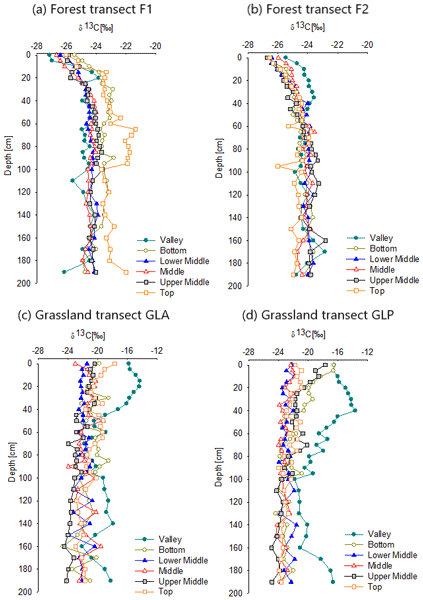
In order to shed light on possible past vegetation shifts in the Central Highlands of Madagascar, we measured stable isotope ratios of organic carbon in soil profiles along both forested and grassland hillslope transects in the Lake Alaotra region. Our results show that the landscape of this region was more forested in the past: soils in the C4-dominated grasslands contained a substantial fraction of C3-derived carbon, increasing with depth.
Olivier Gourgue, Jim van Belzen, Christian Schwarz, Wouter Vandenbruwaene, Joris Vanlede, Jean-Philippe Belliard, Sergio Fagherazzi, Tjeerd J. Bouma, Johan van de Koppel, and Stijn Temmerman
Earth Surf. Dynam., 10, 531–553, https://doi.org/10.5194/esurf-10-531-2022, https://doi.org/10.5194/esurf-10-531-2022, 2022
Short summary
Short summary
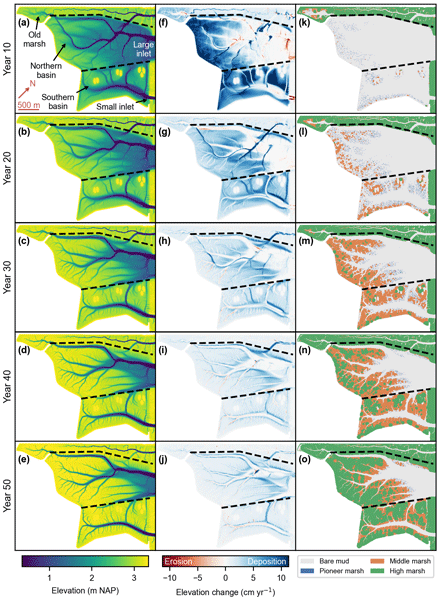
There is an increasing demand for tidal-marsh restoration around the world. We have developed a new modeling approach to reduce the uncertainty associated with this development. Its application to a real tidal-marsh restoration project in northwestern Europe illustrates how the rate of landscape development can be steered by restoration design, with important consequences for restored tidal-marsh resilience to increasing sea level rise and decreasing sediment supply.
Rey Harvey Suello, Simon Lucas Hernandez, Steven Bouillon, Jean-Philippe Belliard, Luis Dominguez-Granda, Marijn Van de Broek, Andrea Mishell Rosado Moncayo, John Ramos Veliz, Karem Pollette Ramirez, Gerard Govers, and Stijn Temmerman
Biogeosciences, 19, 1571–1585, https://doi.org/10.5194/bg-19-1571-2022, https://doi.org/10.5194/bg-19-1571-2022, 2022
Short summary
Short summary
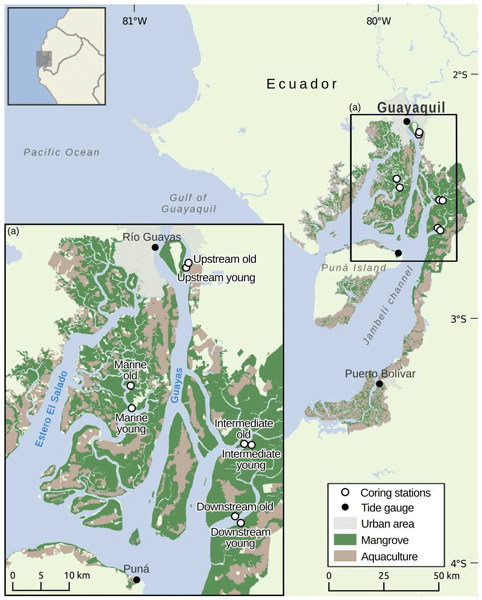
This research shows indications that the age of the mangrove forest and its position along a deltaic gradient (upstream–downstream) play a vital role in the amount and sources of carbon stored in the mangrove sediments. Our findings also imply that carbon capture by the mangrove ecosystem itself contributes partly but relatively little to long-term sediment organic carbon storage. This finding is particularly relevant for budgeting the potential of mangrove ecosystems to mitigate climate change.
Florian Lauryssen, Philippe Crombé, Tom Maris, Elliot Van Maldegem, Marijn Van de Broek, Stijn Temmerman, and Erik Smolders
Biogeosciences, 19, 763–776, https://doi.org/10.5194/bg-19-763-2022, https://doi.org/10.5194/bg-19-763-2022, 2022
Short summary
Short summary
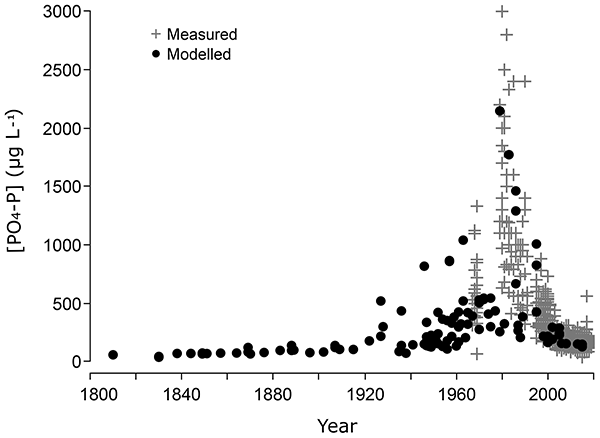
Surface waters in lowland regions have a poor surface water quality, mainly due to excess nutrients like phosphate. Therefore, we wanted to know the phosphate levels without humans, also called the pre-industrial background. Phosphate binds strongly to sediment particles, suspended in the river water. In this research we used sediments deposited by a river as an archive for surface water phosphate back to 1800 CE. Pre-industrial phosphate levels were estimated at one-third of the modern levels.
Cited articles
Allen, J. R. L.: Morphodynamics of Holocene salt marshes: a review sketch from the Atlantic and Southern North Sea coasts of Europe, Quaternary Science Reviews, https://doi.org/10.1016/S0277-3791(99)00034-7, 2000.
Armstrong, W., Wright, E. J., Lythe, S., and Gaynard, T. J.: Plant Zonation and the Effects of the Spring-Neap Tidal Cycle on Soil Aeration in a Humber salt marsh, Journal of Ecology, 73, 323–339, 1985.
Arvidsson, J.: Influence of soil texture and organic matter content on bulk density, air content, compression index and crop yield in field and laboratory compression experiments, Soil and Tillage Research, 49, 159–170, https://doi.org/10.1016/S0167-1987(98)00164-0, 1998.
Balling, S. S. and Resh, V. H.: The influence of mosquito control recirculation ditches on plant biomass, production and composition in two San Francisco Bay salt marshes, Estuarine, Coastal and Shelf Science, 16, 151–161, https://doi.org/10.1016/0272-7714(83)90137-3, 1983.
Bates, D., Mächler, M., Bolker, B., and Walker, S.: Fitting Linear Mixed-Effects Models Using lme4. Journal of Statistical Software, 67, 1–48, https://doi.org/10.18637/jss.v067.i01, 2015.
Bouillon, S. and Boschker, H. T. S.: Bacterial carbon sources in coastal sediments: a cross-system analysis based on stable isotope data of biomarkers, Biogeosciences, 3, 175–185, https://doi.org/10.5194/bg-3-175-2006, 2006.
Bricker-Urso, S., Nixon, S. W., Cochran, J. K., Hirschberg, D. J., and Hunt, C.: Accretion rates and sediment accumulation in Rhode Island salt marshes, Estuaries, 12, 300–317, https://doi.org/10.2307/1351908, 1998.
Callaway, J. C., Delaune, I. R. D., and Patrick, W. H.: Sediment Accretion Rates from Four Coastal Wetlands Along the Gulf of Mexico, Journal of Coastal Research, 13, 181–191, 1997.
Chen, Y., Thompson, C. E. L., and Collins, M. B.: Saltmarsh creek bank stability: Biostabilisation and consolidation with depth. Continental Shelf Research, 35, 64–74, https://doi.org/10.1016/j.csr.2011.12.009, 2012.
Christiansen, T., Wiberg, P. L., and Milligan, T. G.: Flow and sediment transport on a tidal salt marsh surface, Estuarine, Coastal and Shelf Science, 50, 315–331, https://doi.org/10.1006/ecss.2000.0548, 2000.
Coleman, D. J., Ganju, N. K., and Kirwan, M. L.: Sediment Delivery to a Tidal Marsh Platform Is Minimized by Source Decoupling and Flux Convergence, Journal of Geophysical Research: Earth Surface, 125, https://doi.org/10.1029/2020JF005558, 2020.
Craft, C., Clough, J., Ehman, J., Jove, S., Park, R., Pennings, S., Guo, H., and Machmuller, M.: Forecasting the effects of accelerated sea-level rise on tidal marsh ecosystem services, Frontiers in Ecology and the Environment, 7, 73–78, https://doi.org/10.1890/070219, 2009.
Day, J., Anthony, E., Costanza, R., Edmonds, D., Gunn, J., Hopkinson, C., Mann, M. E., Morris, J., Osland, M., Quirk, T., Rovai, A., Rybczyk, J., Spencer, T., Stephens, J., Syvitski, J., Twilley, R., Visser, J., and White, J. R.: Coastal Wetlands in the Anthropocene, 56, https://doi.org/10.1146/annurev-environ-121922-041109, 2024.
DeLaune, R. D. and White, J. R.: Will coastal wetlands continue to sequester carbon in response to an increase in global sea level?: A case study of the rapidly subsiding Mississippi river deltaic plain, Climatic Change, 110, 297–314, https://doi.org/10.1007/s10584-011-0089-6, 2012.
Duarte, C. M., Middelburg, J. J., and Caraco, N.: Major role of marine vegetation on the oceanic carbon cycle, Biogeosciences, 2, 1–8, https://doi.org/10.5194/bg-2-1-2005, 2005.
Duran Vinent, O., Herbert, E. R., Coleman, D. J., Himmelstein, J. D., and Kirwan, M. L.: Onset of runaway fragmentation of salt marshes, One Earth, 4, 506–516, https://doi.org/10.1016/j.oneear.2021.02.013, 2021.
Fagherazzi, S., Carniello, L., D'alpaos, L., and Defina, A.: Critical bifurcation of shallow microtidal landforms in tidal flats and salt marshes, PNAS, 103, https://doi.org/10.1073/pnas.0508379103, 2006.
Farquhar, G. D., Ehleringer, I. J. R., and Hubick, K. T.: Carbon isotope discrimination and photosynthesis, Annu. Rev. Plant Physiol. Plant Mol. Biol., 40, https://doi.org/10.1146/annurev.pp.40.060189.002443, 1989.
FitzGerald, D. M., Hein, C. J., Connell, J. E., Hughes, Z. J., Georgiou, I. Y., and Novak, A. B.: Largest marsh in New England near a precipice, Geomorphology, 379, https://doi.org/10.1016/j.geomorph.2021.107625, 2021.
French, J., Spencer, T., Murray, A., and Arnold, N.: Geostatistical Analysis of Sediment Deposition In Two Small Tidal Wetlands, Norfolk, UK, Journal of Coastal Research, https://www.jstor.org/stable/4298342 (last access: 14 May 2025), 1995.
Friedrichs, C. T. and Perry, J. E.: Tidal Salt Marsh Morphodynamics: A Synthesis, Journal of Coastal Research, 27, 7–37, 2001.
Ganju, N. K., Nidzieko, N. J., and Kirwan, M. L.: Inferring tidal wetland stability from channel sediment fluxes: Observations and a conceptual model, Journal of Geophysical Research: Earth Surface, 118, 2045–2058, https://doi.org/10.1002/jgrf.20143, 2013.
Ganju, N. K., Defne, Z., Kirwan, M. L., Fagherazzi, S., D'Alpaos, A., and Carniello, L.: Spatially integrative metrics reveal hidden vulnerability of microtidal salt marshes, Nature Communications, 8, https://doi.org/10.1038/ncomms14156, 2017.
Gehrels, W. R.: Middle and Late Holocene Sea-Level Changes in Eastern Maine Reconstructed from Foraminiferal Saltmarsh Stratigraphy and AMS 14C Dates on Basal Peat, Quaternary Research, 52, 350–359, https://doi.org/10.1006/qres.1999.2076, 1999.
Gleason, M. L. and Zieman, J. C.: Influence of Tidal Inundation on Internal Oxygen Supply of Spartina alterniflora and Spartina patens, Estuarine, Coastal and Shelf Science, 13, https://doi.org/10.1016/S0302-3524(81)80104-1, 1981.
Gonneea, M. E., Maio, C. V., Kroeger, K. D., Hawkes, A. D., Mora, J., Sullivan, R., Madsen, S., Buzard, R. M., Cahill, N., and Donnelly, J. P.: Salt marsh ecosystem restructuring enhances elevation resilience and carbon storage during accelerating relative sea-level rise, Estuarine, Coastal and Shelf Science, 217, 56–68, https://doi.org/10.1016/j.ecss.2018.11.003, 2019.
Hatton, R. S., DeLaune, R. D., and Patrick, W. H.: Sedimentation, accretion, and subsidence in marshes of Barataria Basin, Louisiana, Limnology and Oceanography, 28, 494–502, https://doi.org/10.4319/lo.1983.28.3.0494, 1983.
Herbert, E. R., Windham-Myers, L., and Kirwan, M. L.: Sea-level rise enhances carbon accumulation in United States tidal wetlands, One Earth, 4, 425–433, https://doi.org/10.1016/j.oneear.2021.02.011, 2021.
Himmelstein, J., Vinent, O. D., Temmerman, S., and Kirwan, M. L.: Mechanisms of Pond Expansion in a Rapidly Submerging Marsh, Frontiers in Marine Science, 8, https://doi.org/10.3389/fmars.2021.704768, 2021.
Hopkinson, C. S., Morris, J. T., Fagherazzi, S., Wollheim, W. M., and Raymond, P. A.: Lateral Marsh Edge Erosion as a Source of Sediments for Vertical Marsh Accretion, Journal of Geophysical Research: Biogeosciences, 123, 2444–2465, https://doi.org/10.1029/2017JG004358, 2018.
Huyzentruyt, M., Belliard, J. P., Saintilan, N., and Temmerman, S.: Identifying drivers of global spatial variability in organic carbon sequestration in tidal marsh sediments, Science of the Total Environment, 957, https://doi.org/10.1016/j.scitotenv.2024.177746, 2024.
Huyzentruyt, M., Wens, M., Fivash, G., Walters, D., Bouillon, S., Carr, J., Guntenspergen, G., Kirwan, M., and Temmerman, S.: Carbon sequestration along a gradient of tidal marsh degradation in response to sea level rise; supporting data, Zenodo [data set], https://doi.org/10.5281/zenodo.15470320, 2025.
Janousek, C. N., Buffington, K. J., Thorne, K. M., Guntenspergen, G. R., Takekawa, J. Y., and Dugger, B. D.: Potential effects of sea-level rise on plant productivity: Species-specific responses in northeast Pacific tidal marshes, Marine Ecology Progress Series, 548, 111–125, https://doi.org/10.3354/meps11683, 2016.
Kearney, M. S., Grace, R. E., and Stevenson, J. C.: Marsh Loss in Nanticoke Estuary, Geographical Review, 78, https://doi.org/10.2307/214178, 1988.
Kirby, C. J. and Gosselink, J. G.: Primary Production in a Louisiana Gulf Coast Spartina Alterniflora Marsh, Ecology, 27, 1052–1059, https://doi.org/10.2307/1941070, 1976.
Kirwan, M. L. and Guntenspergen, G. R.: Response of plant productivity to experimental flooding in a stable and a submerging marsh, Ecosystems, 18, 903–913, https://doi.org/10.1007/s10021-015-9870-0, 2015.
Kirwan, M. L. and Megonigal, J. P.: Tidal wetland stability in the face of human impacts and sea-level rise, Nature, 504, 53–60, https://doi.org/10.1038/nature12856, 2013.
Kirwan, M. L. and Mudd, S. M.: Response of salt-marsh carbon accumulation to climate change. Nature, 489, 550–553, https://doi.org/10.1038/nature11440, 2012.
Kirwan, M. L., Temmerman, S., Skeehan, E. E., Guntenspergen, G. R., and Fagherazzi, S.: Overestimation of marsh vulnerability to sea level rise, Nature Climate Change, 6, 253–260, https://doi.org/10.1038/nclimate2909, 2016.
Kostka, J. E., Roychoudhury, A., and Van Cappellen, P.: Rates and controls of anaerobic microbial respiration across spatial and temporal gradients in saltmarsh sediments, Biogeochemistry, 60, 49–76, https://doi.org/10.1023/A:1016525216426, 2002.
Krishnaswamy, D. L., Martin, J. M., and Meybeck, M.: Geochronology of lake sediments, Earth and Planetary Science Letters, 11, 407–414, https://doi.org/10.1016/0012-821X(71)90202-0, 1971.
Langley, A. J., Mozdzer, T. J., Shepard, K. A., Hagerty, S. B., and Megonigal, P. J.: Tidal marsh plant responses to elevated CO2, nitrogen fertilization, and sea level rise, Global Change Biology, 19, 1495–1503, https://doi.org/10.1111/gcb.12147, 2013.
Lenth, R., Piaskowski, J., Banfai, B., Buerkner, P., Giné-Vázquez, I., Hervé, M., Jung, M., Love, J., Miguez, F., Riebl, H., and Singmann, H.: emmeans: Estimated Marginal Means, aka Least-Squares Means, R package version 1.11.2-80001, https://doi.org/10.32614/CRAN.package.emmeans, 2025.
Linthurst, R. A.: The effect of aeration on the growth of Spartina alterniflora Loisel, American Journal of Botany, 66, 685–691, https://doi.org/10.1002/j.1537-2197.1979.tb06272.x, 1979.
Luk, S., Eagle, M. J., Mariotti, G., Gosselin, K., Sanderman, J., and Spivak, A. C.: Peat Decomposition and Erosion Contribute to Pond Deepening in a Temperate Salt Marsh, Journal of Geophysical Research: Biogeosciences, 128, https://doi.org/10.1029/2022JG007063, 2023.
Luo, M., Huang, J. F., Zhu, W. F., and Tong, C.: Impacts of increasing salinity and inundation on rates and pathways of organic carbon mineralization in tidal wetlands: a review, Hydrobiologia 827, 31–49, https://doi.org/10.1007/s10750-017-3416-8, 2019.
McLeod, E., Chmura, G. L., Bouillon, S., Salm, R., Björk, M., Duarte, C. M., Lovelock, C. E., Schlesinger, W. H., and Silliman, B. R.: A blueprint for blue carbon: Toward an improved understanding of the role of vegetated coastal habitats in sequestering CO2, Frontiers in Ecology and the Environment, 9, 552–560, https://doi.org/10.1890/110004, 2011.
Mendelssohn, I. A.: Eco-physiological aspects of the height forms of Spartina alterniflora in North Carolina: nitrogen nutrition and soil waterlogging, PhD thesis, North Carolina State University, Raleigh, 1981.
Mendelssohn, I. A. and Mckee, K. L.: Spartina Alterniflora Die-Back in Louisiana: Time-Course Investigation of Soil Waterlogging Effects, Journal of Ecology, 76, https://www.jstor.org/stable/2260609 (last access: 14 May 2025), 1988.
Mendelssohn, I. A. and Seneca, E. D.: The influence of soil drainage on the growth of salt marsh cordgrass Spartina alterniflora in North Carolina, Estuarine and Coastal Marine Science, 11, 27–40, https://doi.org/10.1016/S0302-3524(80)80027-2, 1980.
Middelburg, J. J., Nieuwenhuize, J., Lubberts, R. K., and Van De Plassche, O.: Organic Carbon Isotope Systematics of Coastal Marshes, Estuarine, Coastal and Shelf Science, 45, https://doi.org/10.1006/ecss.1997.0247, 1997.
Morris, J. T., Sundareshwar, P. V., Nietch, C. T., Kjerfve, B., and Cahoon, D. R.: Responses of coastal wetlands to rising sea level, Ecology, 83, 2869–2877, https://doi.org/10.1890/0012-9658(2002)083[2869:ROCWTR]2.0.CO;2, 2002.
Mudd, S. M., Howell, S. M., and Morris, J. T.: Impact of dynamic feedbacks between sedimentation, sea-level rise, and biomass production on near-surface marsh stratigraphy and carbon accumulation, Estuarine, Coastal and Shelf Science, 82, 377–389, https://doi.org/10.1016/j.ecss.2009.01.028, 2009.
Müller, P. J. and Suess, E.: Productivity, sedimentation rate, and sedimentary organic matter in the oceans – I. Organic carbon preservation, Deep-Sea Research, 26, 1347–1362, https://doi.org/10.1016/0198-0149(79)90003-7, 1979.
Nyman, J. A., Delaune, R. D., Roberts, H. H., and Patrick, W. H.: Relationship between vegetation and soil formation in a rapidly submerging coastal marsh, Marine Ecology Progress Series, 96, 269–279, https://doi.org/10.3354/meps096269, 1993.
Ortiz, A. C., Roy, S., and Edmonds, D. A.: Land loss by pond expansion on the Mississippi River Delta Plain, Geophysical Research Letters, 44, 3635–3642, https://doi.org/10.1002/2017GL073079, 2017.
Qi, M., MacGregor, J., and Gedan, K.: Biogeomorphic patterns emerge with pond expansion in deteriorating marshes affected by relative sea level rise, Limnology and Oceanography, 66, 1036–1049, https://doi.org/10.1002/lno.11661, 2021.
R Core Team: R: A language and environment for statistical computing, R foundation for Statistical Computing, Vienna, Austria, https://www.R-project.org/ (last access: 16 October 2025), 2022.
Redfield, A. C.: Development of a New England Salt Marsh, Ecological Monographs, 42, https://doi.org/10.2307/1942263, 1972.
Reed, D. J., Spencer, T., Murray, A. L., French, J. R, and Leonard, L.: Marsh surface sediment deposition and the role of tidal creeks: Implications for created and managed coastal marshes, Journal of Coastal Conservation, 5, 81–90, https://doi.org/10.1007/BF02802742, 1999.
Rietl, A. J., Megonigal, J. P., Herbert, E. R., and Kirwan, M. L.: Vegetation Type and Decomposition Priming Mediate Brackish Marsh Carbon Accumulation Under Interacting Facets of Global Change, Geophysical Research Letters, 48, https://doi.org/10.1029/2020GL092051, 2021.
Rogers, K., Kelleway, J. J., Saintilan, N., Megonigal, J. P., Adams, J. B., Holmquist, J. R., Lu, M., Schile-Beers, L., Zawadzki, A., Mazumder, D., and Woodroffe, C. D.: Wetland carbon storage controlled by millennial-scale variation in relative sea-level rise, Nature, 567, 91–95, https://doi.org/10.1038/s41586-019-0951-7, 2019.
Schepers, L., Kirwan, M., Guntenspergen, G., and Temmerman, S.: Spatio-temporal development of vegetation die-off in a submerging coastal marsh, Limnology and Oceanography, 62, 137–150, https://doi.org/10.1002/lno.10381, 2017.
Schepers, L., Kirwan, M. L., Guntenspergen, G. R., and Temmerman, S.: Evaluating indicators of marsh vulnerability to sea level rise along a historical marsh loss gradient, Earth Surface Processes and Landforms, 45, 2107–2117, https://doi.org/10.1002/esp.4869, 2020.
Schuerch, M., Spencer, T., Temmerman, S., Kirwan, M. L., Wolff, C., Lincke, D., McOwen, C. J., Pickering, M. D., Reef, R., Vafeidis, A. T., Hinkel, J., Nicholls, R. J., and Brown, S.: Future response of global coastal wetlands to sea-level rise. Nature, 561, 231–234, https://doi.org/10.1038/s41586-018-0476-5, 2018.
Snedden, G. A., Cretini, K., and Patton, B.: Inundation and salinity impacts to above- and belowground productivity in Spartina patens and Spartina alterniflora in the Mississippi River deltaic plain: Implications for using river diversions as restoration tools, Ecological Engineering, 81, 133–139, https://doi.org/10.1016/j.ecoleng.2015.04.035, 2015.
Stalter, R. and Lonard, R. I.: Biological Flora of Coastal Wetlands: Sporobolus cynosuroides (L.) P.M. Peterson & Saarela, Journal of Coastal Research 38(5), 1061–1069, https://doi.org/10.2112/JCOASTRES-D-22A-00002.1, 2022.
Stevenson, J. C., Kearney, M. S., and Pendleton, E. C.: Sedimentation and erosion in a brackish marsh system, Marine Geology, 67, 213–235, https://doi.org/10.1016/0025-3227(85)90093-3, 1985.
Suello, R. H., Temmerman, D., Bouillon, S., Khalifeh, Z., van Puijenbroek, M., Elschot, K., Pelckmans, I., Andersen, T. J., Smit, C., Bakker, J., and Temmerman, S.: Increased sea level rise accelerates carbon sequestration in a macro-tidal salt marsh, Science of the Total Environment, 958, https://doi.org/10.1016/j.scitotenv.2024.178075, 2025.
Temmerman, S., Govers, G., Wartel, S., and Meire, P.: Spatial and temporal factors controlling short-term sedimentation in a salt and freshwater tidal marsh, Scheldt estuary, Belgium, SW Netherlands, Earth Surface Processes and Landforms, 28, 739–755, https://doi.org/10.1002/esp.495, 2003
Temmink, R. J. M., Lamers, L. P. M., Angelini, C., Bouma, T. J., Fritz, C., van de Koppel, J., Lexmond, R., Rietkerk, M., Silliman, B. R., Joosten, H., and van der Heide, T.: Recovering wetland biogeomorphic feedbacks to restore the world's biotic carbon hotspots, Science, 376, 6593, https://doi.org/10.1126/science.abn1479, 2022.
Ursino, N., Silvestri, S., and Marani, M.: Subsurface flow and vegetation patterns in tidal environments, Water Resources Research, 40, https://doi.org/10.1029/2003WR002702, 2004.
Valentine, K., Herbert, E. R., Walters, D. C., Chen, Y., Smith, A. J., and Kirwan, M. L.: Climate-driven tradeoffs between landscape connectivity and the maintenance of the coastal carbon sink, Nature Communications, 14, https://doi.org/10.1038/s41467-023-36803-7, 2023.
Van de Broek, M., Temmerman, S., Merckx, R., and Govers, G.: Controls on soil organic carbon stocks in tidal marshes along an estuarine salinity gradient, Biogeosciences, 13, 6611–6624, https://doi.org/10.5194/bg-13-6611-2016, 2016.
van Huissteden, J. and van de Plassche, O.: Sulphate reduction as a geomorphological agent in tidal marshes (`Great Marshes' at Barnstable, Cape Cod, USA), Earth Surface Processes and Landforms, 23, 223–236, https://doi.org/10.1002/(SICI)1096-9837(199803)23:3<223::AID-ESP843>3.0.CO;2-I, 1998.
Van Putte, N., Temmerman, S., Verreydt, G., Seuntjens, P., Maris, T., Heyndrickx, M., Boone, M., Joris, I., and Meire, P.: Groundwater dynamics in a restored tidal marsh are limited by historical soil compaction, Estuarine, Coastal and Shelf Science, 244, https://doi.org/10.1016/j.ecss.2019.02.006, 2020.
Wang, F., Lu, X., Sanders, C. J., and Tang, J.: Tidal wetland resilience to sea level rise increases their carbon sequestration capacity in United States, Nature Communications, 10, https://doi.org/10.1038/s41467-019-13294-z, 2019.
Wang, F., Sanders, C. J., Santos, I. R., Tang, J., Schuerch, M., Kirwan, M. L., Kopp, R. E., Zhu, K., Li, X., Yuan, J., Liu, W., and Li, Z.: Global blue carbon accumulation in tidal wetlands increases with climate change, National Science Review, 8, https://doi.org/10.1093/nsr/nwaa296, 2021.
Watson, E. B., Oczkowski, A. J., Wigand, C., Hanson, A. R., Davey, E. W., Crosby, S. C., Johnson, R. L., and Andrews, H. M.: Nutrient enrichment and precipitation changes do not enhance resiliency of salt marshes to sea level rise in the Northeastern U.S., Climatic Change, 125, 501–509, https://doi.org/10.1007/s10584-014-1189-x, 2014.
Williamson, P., Gore, C., Johannessen, S., Kristensen, E., Michaelowa, A., Wang, F., and Zhang, J.: Additionality Revisited for Blue Carbon Ecosystems: Ensuring Real Climate Mitigation, Global Change Biology, 31, https://doi.org/10.1111/gcb.70181, 2025.
Short summary
Vegetated environments from forests to peatlands store carbon in the soil, which mitigates climate change. But which environment does this best? In this study, we show how the levees of tidal marshes are one of the most effective carbon sequestering environments in the world. This is because soil water-logging and high salinity inhibits carbon degradation while the levee fosters fast vegetation growth, complimented also by the preferential settlement of carbon-rich sediments on the marsh levee.
Vegetated environments from forests to peatlands store carbon in the soil, which mitigates...


Altmetrics
Final-revised paper
Preprint