
Articles | Volume 22, issue 23
https://doi.org/10.5194/bg-22-7973-2025
© Author(s) 2025. This work is distributed under
the Creative Commons Attribution 4.0 License.
the Creative Commons Attribution 4.0 License.
https://doi.org/10.5194/bg-22-7973-2025
© Author(s) 2025. This work is distributed under
the Creative Commons Attribution 4.0 License.
the Creative Commons Attribution 4.0 License.
Research article
| Highlight paper
| 
12 Dec 2025
Research article | Highlight paper |
| 12 Dec 2025
| 12 Dec 2025
Orbital-scale variability in the contribution of foraminifera and coccolithophores to pelagic carbonate production
Pauline Cornuault
CORRESPONDING AUTHOR
University of Bremen, MARUM – Center for Marine Environmental Sciences, Leobener Straße 8, 28359 Bremen, Germany
Luc Beaufort
Aix Marseille Univ, CNRS, IRD, INRAE, Coll France, CEREGE, Avenue Louis Philibert, 13090 Aix-en-Provence, France
Heiko Pälike
University of Bremen, MARUM – Center for Marine Environmental Sciences, Leobener Straße 8, 28359 Bremen, Germany
University of Bremen, Geoscience Department, Klagenfurter Straße, P.O. Box 330440, 28359 Bremen, Germany
Torsten Bickert
University of Bremen, MARUM – Center for Marine Environmental Sciences, Leobener Straße 8, 28359 Bremen, Germany
Karl-Heinz Baumann
University of Bremen, MARUM – Center for Marine Environmental Sciences, Leobener Straße 8, 28359 Bremen, Germany
University of Bremen, Geoscience Department, Klagenfurter Straße, P.O. Box 330440, 28359 Bremen, Germany
Michal Kucera
University of Bremen, MARUM – Center for Marine Environmental Sciences, Leobener Straße 8, 28359 Bremen, Germany
Related authors
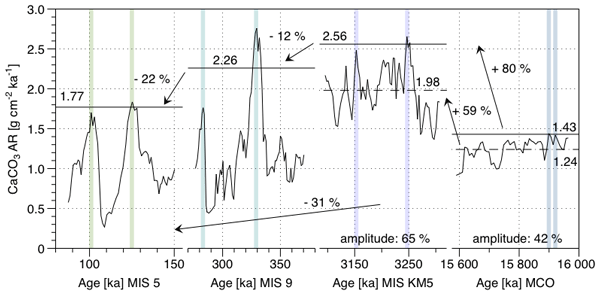
Pauline Cornuault, Thomas Westerhold, Heiko Pälike, Torsten Bickert, Karl-Heinz Baumann, and Michal Kucera
Biogeosciences, 20, 597–618, https://doi.org/10.5194/bg-20-597-2023, https://doi.org/10.5194/bg-20-597-2023, 2023
Short summary
Short summary
We generated high-resolution records of carbonate accumulation rate from the Miocene to the Quaternary in the tropical Atlantic Ocean to characterize the variability in pelagic carbonate production during warm climates. It follows orbital cycles, responding to local changes in tropical conditions, as well as to long-term shifts in climate and ocean chemistry. These changes were sufficiently large to play a role in the carbon cycle and global climate evolution.
Luc Beaufort, Denis Dollfus, Yves Gally, Nicolas Barbarin, Martin Tetard, Baptiste Sucheras-Marx, Alexander Nistor, and Mathieu Biaut
EGUsphere, https://doi.org/10.5194/egusphere-2026-3901, https://doi.org/10.5194/egusphere-2026-3901, 2026
This preprint is open for discussion and under review for Biogeosciences (BG).
Short summary
Short summary
Microscopic marine algae produce much of the calcium carbonate that sinks to the deep ocean and plays an important role in the carbon cycle. We describe how thirty years of advances in automated microscopy and artificial intelligence have improved the analysis of these tiny fossils. Using the same samples studied decades ago, the new approach provides more detailed information, helping scientists better understand changes in marine ecosystems and the carbon cycle through time.
Guillaume Lassus, Luc Beaufort, Martine Couapel, and David Mendels
EGUsphere, https://doi.org/10.5194/egusphere-2026-3055, https://doi.org/10.5194/egusphere-2026-3055, 2026
This preprint is open for discussion and under review for Biogeosciences (BG).
Short summary
Short summary
We combined automated imaging and calcite measurement to assess how coccolithophores species contribute to calcium carbonate production across the South Pacific, from nutrient-poor open ocean waters to productive upwelling regions. Carbonate production was highest in nutrient-rich areas but remained significant in the oligotrophic gyre, where deeper communities played an important role. The study shows that different species contribute very differently to ocean carbonate cycling.
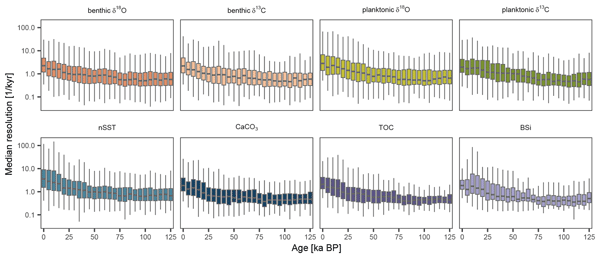
Lukas Jonkers, Martina Hollstein, Michael Siccha, and Michal Kucera
Earth Syst. Sci. Data, 18, 3013–3068, https://doi.org/10.5194/essd-18-3013-2026, https://doi.org/10.5194/essd-18-3013-2026, 2026
Short summary
Short summary
Palaeoclimate data can provide a long-term perspective on climate change and serve as an benchmark for climate models. We have compiled a multi-parameter marine palaeoclimate data synthesis that contains time series spanning 0 to 130 000 years ago with rich metadata to facilitate reuse. We describe the methodology, contents and format of version 2 of this synthesis that presents a large increase in spatiotemporal coverage. We end with recommendations for palaeodata stewardship.
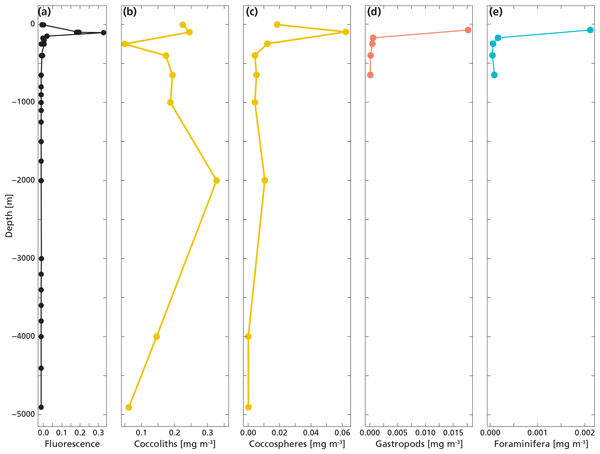
Anne L. Kruijt, Robin van Dijk, Olivier Sulpis, Luc Beaufort, Guillaume Lassus, Geert-Jan Brummer, A. Daniëlle van der Burg, Ben A. Cala, Yasmina Ourradi, Katja T. C. A. Peijnenburg, Matthew P. Humphreys, Sonia Chaabane, Appy Sluijs, and Jack J. Middelburg
Biogeosciences, 23, 531–563, https://doi.org/10.5194/bg-23-531-2026, https://doi.org/10.5194/bg-23-531-2026, 2026
Short summary
Short summary
We measured the three main types of plankton that produce calcium carbonate in the ocean, at the same time and location. While coccolithophores were the biggest contributors, we found that planktonic gastropods, not foraminifera, were the second largest contributor. This challenges the current view and improves our understanding of how these organisms influence oceans’ carbon cycling.
Anna Sancho Vaquer, Erika Griesshaber, Julie Meilland, Xiaofei Yin, Michael Siccha, Michal Kucera, and Wolfgang W. Schmahl
EGUsphere, https://doi.org/10.5194/egusphere-2025-6224, https://doi.org/10.5194/egusphere-2025-6224, 2025
Preprint archived
Short summary
Short summary
Microscopic features in shells of marine organisms store crucial information about past environments, which can be altered after burial. This study uses a shell crystal structure measurement method to explore shell crystal change by comparing modern and fossil shells. A characteristic structural signal in the shells decreases as alteration increases. Even very small changes can be measured. This proves that this method can reliably identify such changes.
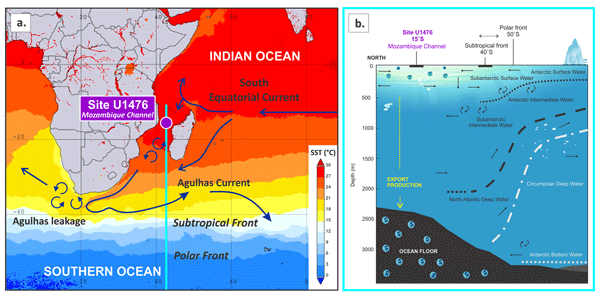
Deborah N. Tangunan, Ian R. Hall, Luc Beaufort, Melissa A. Berke, Alexandra Nederbragt, and Paul R. Bown
Clim. Past, 21, 2541–2560, https://doi.org/10.5194/cp-21-2541-2025, https://doi.org/10.5194/cp-21-2541-2025, 2025
Short summary
Short summary
We investigated sediments from the tropical Indian Ocean to study water column structure and carbon cycling during the mid-Piacenzian Warm Period, about 3 million years ago, when atmospheric carbon dioxide levels were similar to today. Our findings reveal persistent upper ocean stratification and niche separation among plankton groups, which limited nutrient mixing and carbon export to the deep ocean. These results highlight how ocean layering can influence climate feedback in a warmer world.
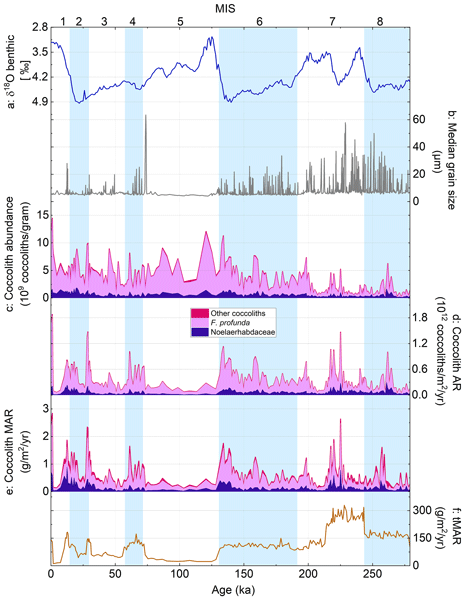
Medhavi Srivastava, Clara T. Bolton, Luc Beaufort, Franck Bassinot, and Katarína Holcová
J. Micropalaeontol., 44, 555–571, https://doi.org/10.5194/jm-44-555-2025, https://doi.org/10.5194/jm-44-555-2025, 2025
Short summary
Short summary
The Bay of Bengal is a unique region influenced by the Asian monsoon. We present a record of past ocean productivity and carbonate flux based on the fossil remains of calcifying algae over the last 279 000 years from a core in the northern Bay of Bengal. We used AI microscopy to count and measure plankton fossils and identify species. Results show that coccolith export, including of the species Florisphaera profunda, is highest when the monsoon is weak and the water column is more mixed.
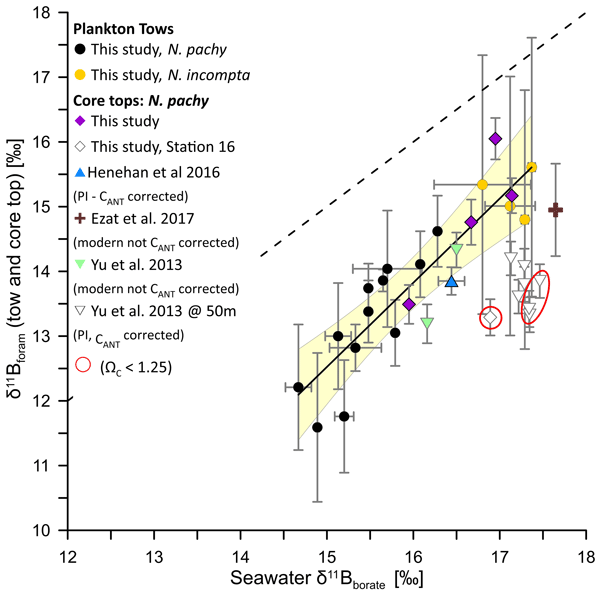
Elwyn de la Vega, Markus Raitzsch, Gavin L. Foster, Jelle Bijma, Ulysses S. Ninnemann, Michal Kucera, Tali Lea Babila, Jessica Crumpton Banks, Mohamed M. Ezat, and Audrey Morley
Biogeosciences, 22, 6765–6785, https://doi.org/10.5194/bg-22-6765-2025, https://doi.org/10.5194/bg-22-6765-2025, 2025
Short summary
Short summary
The boron isotopic composition (δ11B) of foraminifera shells is an established proxy for the reconstruction of ocean pH. Applications to the Arctic oceans are however limited as robust calibrations in these regions are lacking. Here, we present a new calibration linking δ11B measured in two high-latitude foraminifera species to seawater pH. We show that the δ11B of the species analysed is well correlated with seawater pH and that this calibration can be applied to the paleorecord.
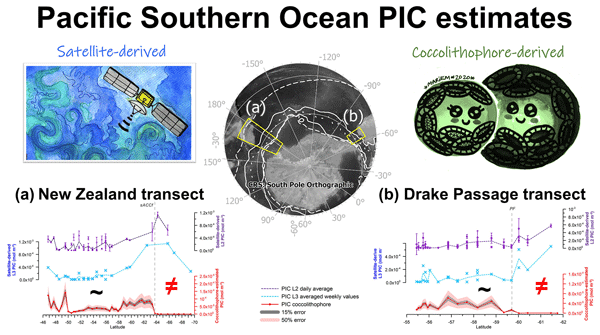
Mariem Saavedra-Pellitero, Karl-Heinz Baumann, Nuria Bachiller-Jareno, Harold Lovell, Nele Manon Vollmar, and Elisa Malinverno
Biogeosciences, 22, 3143–3164, https://doi.org/10.5194/bg-22-3143-2025, https://doi.org/10.5194/bg-22-3143-2025, 2025
Short summary
Short summary
This study combines micropaleontology and satellite remote sensing to investigate particulate inorganic carbon in the Pacific sector of the Southern Ocean. We compare estimates of calcium carbonate produced by coccolithophores (tiny marine algae) to satellite measurements of particulate inorganic carbon. Both datasets show good agreement north of the Polar Front, but large differences are observed to the south of it, likely because of highly reflective small opal particles in this zone.
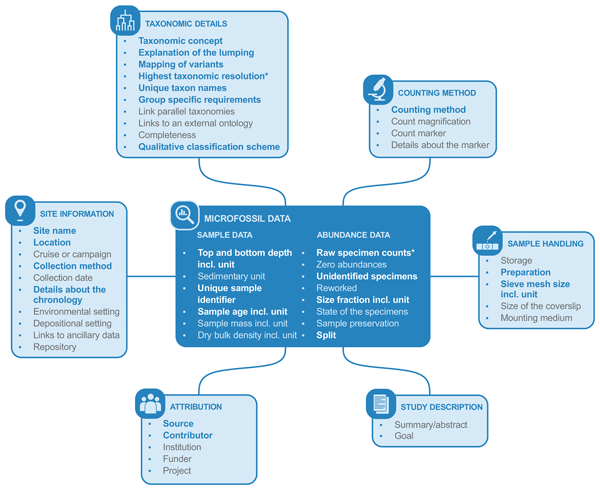
Lukas Jonkers, Tonke Strack, Montserrat Alonso-Garcia, Simon D'haenens, Robert Huber, Michal Kucera, Iván Hernández-Almeida, Chloe L. C. Jones, Brett Metcalfe, Rajeev Saraswat, Lóránd Silye, Sanjay K. Verma, Muhamad Naim Abd Malek, Gerald Auer, Cátia F. Barbosa, Maria A. Barcena, Karl-Heinz Baumann, Flavia Boscolo-Galazzo, Joeven Austine S. Calvelo, Lucilla Capotondi, Martina Caratelli, Jorge Cardich, Humberto Carvajal-Chitty, Markéta Chroustová, Helen K. Coxall, Renata M. de Mello, Anne de Vernal, Paula Diz, Kirsty M. Edgar, Helena L. Filipsson, Ángela Fraguas, Heather L. Furlong, Giacomo Galli, Natalia L. García Chapori, Robyn Granger, Jeroen Groeneveld, Adil Imam, Rebecca Jackson, David Lazarus, Julie Meilland, Marína Molčan Matejová, Raphael Morard, Caterina Morigi, Sven N. Nielsen, Diana Ochoa, Maria Rose Petrizzo, Andrés S. Rigual-Hernández, Marina C. Rillo, Matthew L. Staitis, Gamze Tanık, Raúl Tapia, Nishant Vats, Bridget S. Wade, and Anna E. Weinmann
J. Micropalaeontol., 44, 145–168, https://doi.org/10.5194/jm-44-145-2025, https://doi.org/10.5194/jm-44-145-2025, 2025
Short summary
Short summary
Our study provides guidelines improving the reuse of marine microfossil assemblage data, which are valuable for understanding past ecosystems and environmental change. Based on a survey of 113 researchers, we identified key data attributes required for effective reuse. Analysis of a selection of datasets available online reveals a gap between the attributes scientists consider essential and the data currently available, highlighting the need for clearer data documentation and sharing practices.
Luc Beaufort and Anta-Clarisse Sarr
Clim. Past, 20, 1283–1301, https://doi.org/10.5194/cp-20-1283-2024, https://doi.org/10.5194/cp-20-1283-2024, 2024
Short summary
Short summary
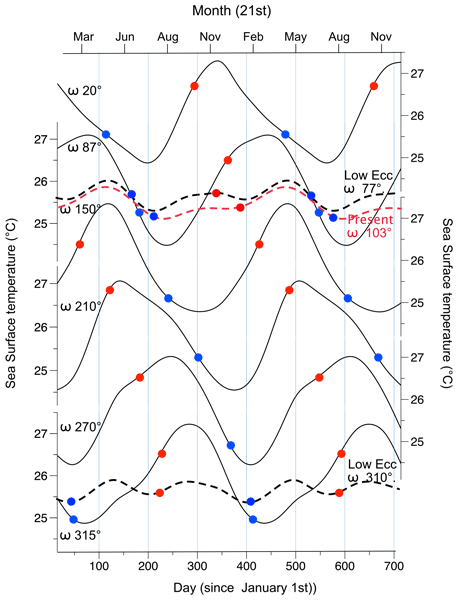
At present, under low eccentricity, the tropical ocean experiences a limited seasonality. Based on eight climate simulations of sea surface temperature and primary production, we show that, during high-eccentricity times, significant seasons existed in the tropics due to annual changes in the Earth–Sun distance. Those tropical seasons are slowly shifting in the calendar year to be distinct from classical seasons. Their past dynamics should have influenced phenomena like ENSO and monsoons.
Celina Rebeca Valença, Luc Beaufort, Gustaaf Marinus Hallegraeff, and Marius Nils Müller
Biogeosciences, 21, 1601–1611, https://doi.org/10.5194/bg-21-1601-2024, https://doi.org/10.5194/bg-21-1601-2024, 2024
Short summary
Short summary
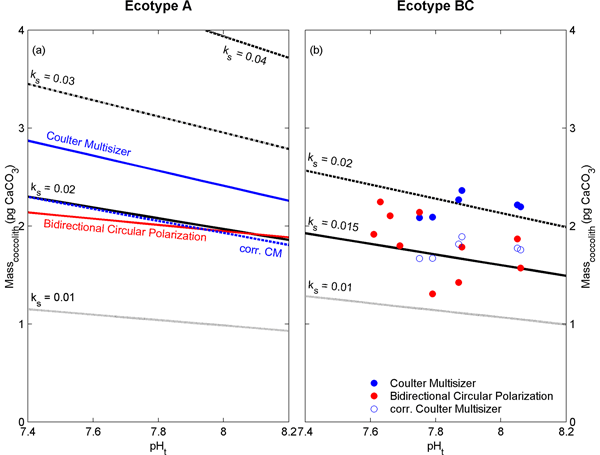
Coccolithophores contribute to the global carbon cycle and their calcite structures (coccoliths) are used as a palaeoproxy to understand past oceanographic conditions. Here, we compared three frequently used methods to estimate coccolith mass from the model species Emiliania huxleyi and the results allow for a high level of comparability between the methods, facilitating future comparisons and consolidation of mass changes observed from ecophysiological and biogeochemical studies.
Heather M. Stoll, Leopoldo D. Pena, Ivan Hernandez-Almeida, José Guitián, Thomas Tanner, and Heiko Pälike
Clim. Past, 20, 25–36, https://doi.org/10.5194/cp-20-25-2024, https://doi.org/10.5194/cp-20-25-2024, 2024
Short summary
Short summary
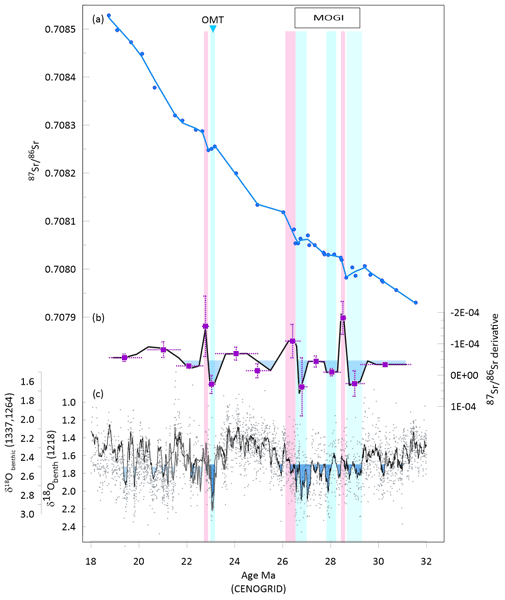
The Oligocene and early Miocene periods featured dynamic glacial cycles on Antarctica. In this paper, we use Sr isotopes in marine carbonate sediments to document a change in the location and intensity of continental weathering during short periods of very intense Antarctic glaciation. Potentially, the weathering intensity of old continental rocks on Antarctica was reduced during glaciation. We also show improved age models for correlation of Southern Ocean and North Atlantic sediments.
Sabrina Hohmann, Michal Kucera, and Anne de Vernal
Clim. Past, 19, 2027–2051, https://doi.org/10.5194/cp-19-2027-2023, https://doi.org/10.5194/cp-19-2027-2023, 2023
Short summary
Short summary
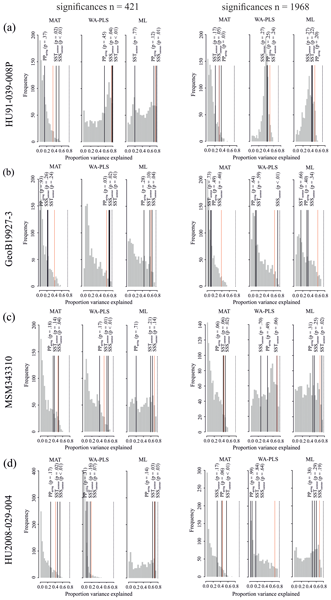
Drivers for dinocyst assemblage compositions differ regionally and through time. Shifts in the assemblages can sometimes only be interpreted robustly by locally and sometimes globally calibrated transfer functions, questioning the reliability of environmental reconstructions. We suggest the necessity of a thorough evaluation of transfer function performance and significance for downcore applications to disclose the drivers for present and fossil dinocyst assemblages in a studied core location.
Michal Kučera and Geert-Jan A. Brummer
J. Micropalaeontol., 42, 33–34, https://doi.org/10.5194/jm-42-33-2023, https://doi.org/10.5194/jm-42-33-2023, 2023
Pauline Cornuault, Thomas Westerhold, Heiko Pälike, Torsten Bickert, Karl-Heinz Baumann, and Michal Kucera
Biogeosciences, 20, 597–618, https://doi.org/10.5194/bg-20-597-2023, https://doi.org/10.5194/bg-20-597-2023, 2023
Short summary
Short summary
We generated high-resolution records of carbonate accumulation rate from the Miocene to the Quaternary in the tropical Atlantic Ocean to characterize the variability in pelagic carbonate production during warm climates. It follows orbital cycles, responding to local changes in tropical conditions, as well as to long-term shifts in climate and ocean chemistry. These changes were sufficiently large to play a role in the carbon cycle and global climate evolution.
Franziska Tell, Lukas Jonkers, Julie Meilland, and Michal Kucera
Biogeosciences, 19, 4903–4927, https://doi.org/10.5194/bg-19-4903-2022, https://doi.org/10.5194/bg-19-4903-2022, 2022
Short summary
Short summary
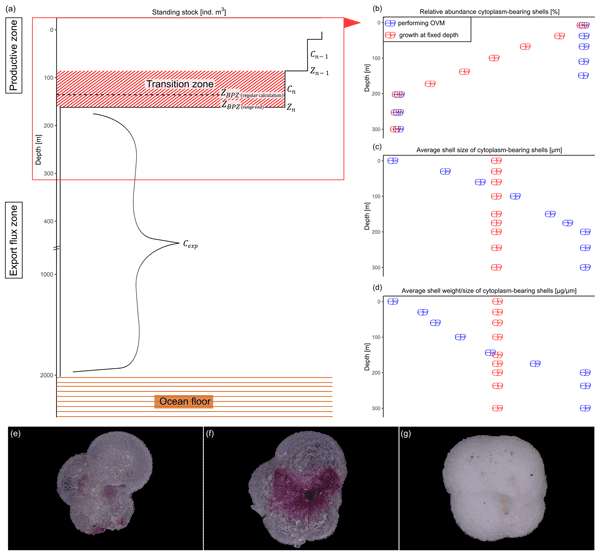
This study analyses the production of calcite shells formed by one of the main Arctic pelagic calcifiers, the foraminifera N. pachyderma. Using vertically resolved profiles of shell concentration, size and weight, we show that calcification occurs throughout the upper 300 m with an average production flux below the calcification zone of 8 mg CaCO3 m−2 d−1 representing 23 % of the total pelagic biogenic carbonate production. The production flux is attenuated in the twilight zone by dissolution.
Stefan Mulitza, Torsten Bickert, Helen C. Bostock, Cristiano M. Chiessi, Barbara Donner, Aline Govin, Naomi Harada, Enqing Huang, Heather Johnstone, Henning Kuhnert, Michael Langner, Frank Lamy, Lester Lembke-Jene, Lorraine Lisiecki, Jean Lynch-Stieglitz, Lars Max, Mahyar Mohtadi, Gesine Mollenhauer, Juan Muglia, Dirk Nürnberg, André Paul, Carsten Rühlemann, Janne Repschläger, Rajeev Saraswat, Andreas Schmittner, Elisabeth L. Sikes, Robert F. Spielhagen, and Ralf Tiedemann
Earth Syst. Sci. Data, 14, 2553–2611, https://doi.org/10.5194/essd-14-2553-2022, https://doi.org/10.5194/essd-14-2553-2022, 2022
Short summary
Short summary
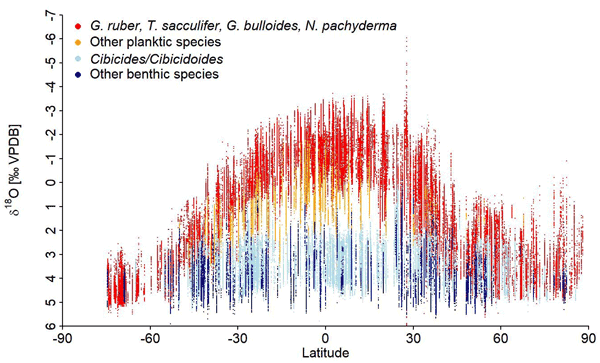
Stable isotope ratios of foraminiferal shells from deep-sea sediments preserve key information on the variability of ocean circulation and ice volume. We present the first global atlas of harmonized raw downcore oxygen and carbon isotope ratios of various planktonic and benthic foraminiferal species. The atlas is a foundation for the analyses of the history of Earth system components, for finding future coring sites, and for teaching marine stratigraphy and paleoceanography.
David De Vleeschouwer, Marion Peral, Marta Marchegiano, Angelina Füllberg, Niklas Meinicke, Heiko Pälike, Gerald Auer, Benjamin Petrick, Christophe Snoeck, Steven Goderis, and Philippe Claeys
Clim. Past, 18, 1231–1253, https://doi.org/10.5194/cp-18-1231-2022, https://doi.org/10.5194/cp-18-1231-2022, 2022
Short summary
Short summary
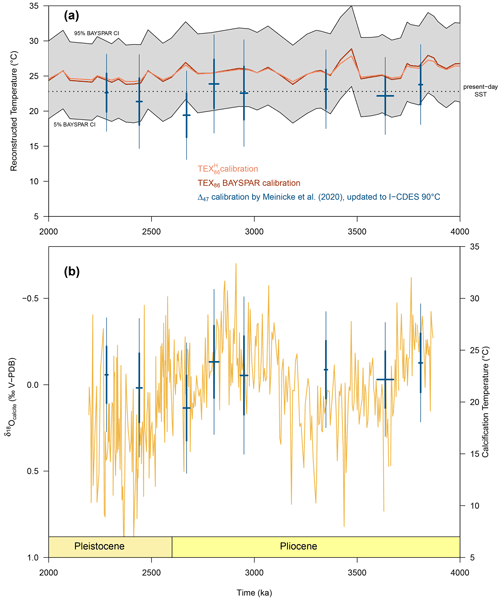
The Leeuwin Current transports warm water along the western coast of Australia: from the tropics to the Southern Hemisphere midlatitudes. Therewith, the current influences climate in two ways: first, as a moisture source for precipitation in southwestern Australia; second, as a vehicle for Equator-to-pole heat transport. In this study, we study sediment cores along the Leeuwin Current pathway to understand its ocean–climate interactions between 4 and 2 Ma.
Geert-Jan A. Brummer and Michal Kučera
J. Micropalaeontol., 41, 29–74, https://doi.org/10.5194/jm-41-29-2022, https://doi.org/10.5194/jm-41-29-2022, 2022
Short summary
Short summary
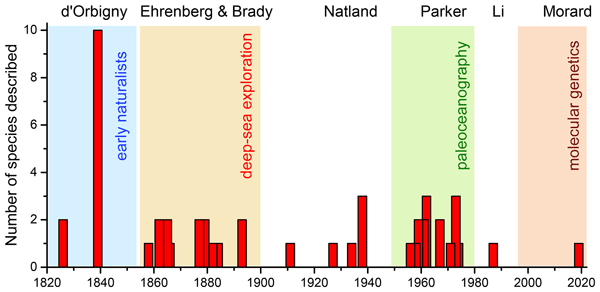
To aid researchers working with living planktonic foraminifera, we provide a comprehensive review of names that we consider appropriate for extant species. We discuss the reasons for the decisions we made and provide a list of species and genus-level names as well as other names that have been used in the past but are considered inappropriate for living taxa, stating the reasons.
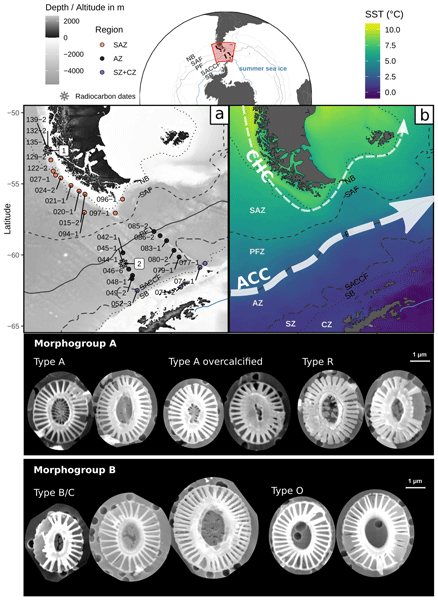
Nele Manon Vollmar, Karl-Heinz Baumann, Mariem Saavedra-Pellitero, and Iván Hernández-Almeida
Biogeosciences, 19, 585–612, https://doi.org/10.5194/bg-19-585-2022, https://doi.org/10.5194/bg-19-585-2022, 2022
Short summary
Short summary
We studied recent (sub-)fossil remains of a type of algae (coccolithophores) off southernmost Chile and across the Drake Passage, adding to the scarce knowledge that exists in the Southern Ocean, a rapidly changing environment. We found that those can be used to reconstruct the surface ocean conditions in the north but not in the south. We also found variations in shape in the dominant species Emiliania huxleyi depending on the location, indicating subtle adaptations to environmental conditions.
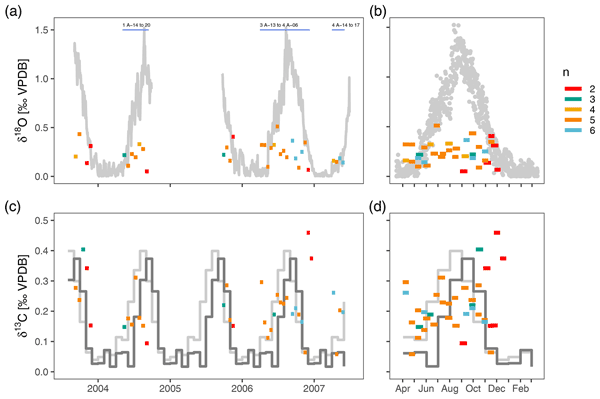
Lukas Jonkers, Geert-Jan A. Brummer, Julie Meilland, Jeroen Groeneveld, and Michal Kucera
Clim. Past, 18, 89–101, https://doi.org/10.5194/cp-18-89-2022, https://doi.org/10.5194/cp-18-89-2022, 2022
Short summary
Short summary
The variability in the geochemistry among individual foraminifera is used to reconstruct seasonal to interannual climate variability. This method requires that each foraminifera shell accurately records environmental conditions, which we test here using a sediment trap time series. Even in the absence of environmental variability, planktonic foraminifera display variability in their stable isotope ratios that needs to be considered in the interpretation of individual foraminifera data.
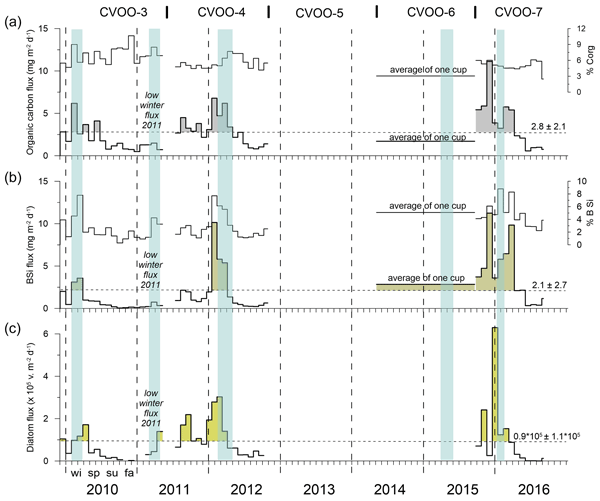
Gerhard Fischer, Oscar E. Romero, Johannes Karstensen, Karl-Heinz Baumann, Nasrollah Moradi, Morten Iversen, Götz Ruhland, Marco Klann, and Arne Körtzinger
Biogeosciences, 18, 6479–6500, https://doi.org/10.5194/bg-18-6479-2021, https://doi.org/10.5194/bg-18-6479-2021, 2021
Short summary
Short summary
Low-oxygen eddies in the eastern subtropical North Atlantic can form an oasis for phytoplankton growth. Here we report on particle flux dynamics at the oligotrophic Cape Verde Ocean Observatory. We observed consistent flux patterns during the passages of low-oxygen eddies. We found distinct flux peaks in late winter, clearly exceeding background fluxes. Our findings suggest that the low-oxygen eddies sequester higher organic carbon than expected for oligotrophic settings.
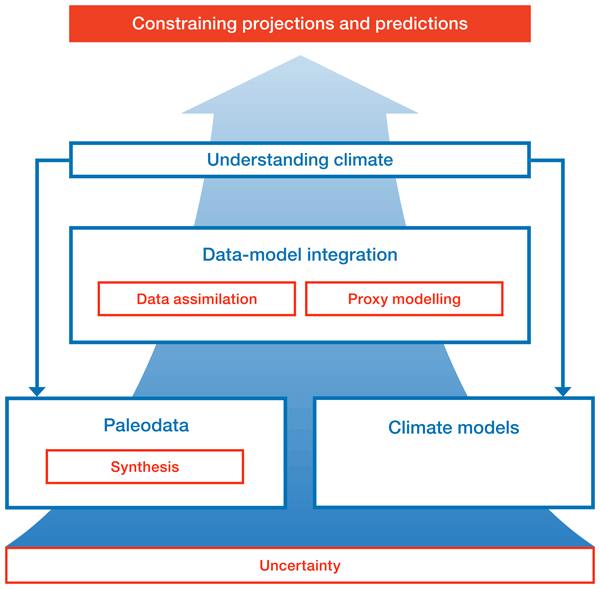
Lukas Jonkers, Oliver Bothe, and Michal Kucera
Clim. Past, 17, 2577–2581, https://doi.org/10.5194/cp-17-2577-2021, https://doi.org/10.5194/cp-17-2577-2021, 2021
Julie Meilland, Michael Siccha, Maike Kaffenberger, Jelle Bijma, and Michal Kucera
Biogeosciences, 18, 5789–5809, https://doi.org/10.5194/bg-18-5789-2021, https://doi.org/10.5194/bg-18-5789-2021, 2021
Short summary
Short summary
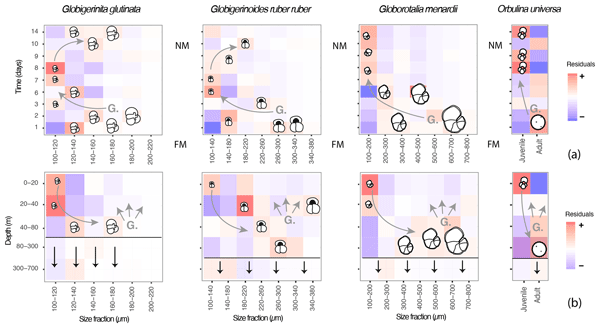
Planktonic foraminifera population dynamics has long been assumed to be controlled by synchronous reproduction and ontogenetic vertical migration (OVM). Due to contradictory observations, this concept became controversial. We here test it in the Atlantic ocean for four species of foraminifera representing the main clades. Our observations support the existence of synchronised reproduction and OVM but show that more than half of the population does not follow the canonical trajectory.

Anna Joy Drury, Diederik Liebrand, Thomas Westerhold, Helen M. Beddow, David A. Hodell, Nina Rohlfs, Roy H. Wilkens, Mitchell Lyle, David B. Bell, Dick Kroon, Heiko Pälike, and Lucas J. Lourens
Clim. Past, 17, 2091–2117, https://doi.org/10.5194/cp-17-2091-2021, https://doi.org/10.5194/cp-17-2091-2021, 2021
Short summary
Short summary
We use the first high-resolution southeast Atlantic carbonate record to see how climate dynamics evolved since 30 million years ago (Ma). During ~ 30–13 Ma, eccentricity (orbital circularity) paced carbonate deposition. After the mid-Miocene Climate Transition (~ 14 Ma), precession (Earth's tilt direction) increasingly drove carbonate variability. In the latest Miocene (~ 8 Ma), obliquity (Earth's tilt) pacing appeared, signalling increasing high-latitude influence.
Cited articles
Barrett, R., De Vries, J., and Schmidt, D. N.: What controls planktic foraminiferal calcification?, Biogeosciences, 22, 791–807, https://doi.org/10.5194/bg-22-791-2025, 2025.
Baumann, K.-H., Böckel, B., and Frenz, M.: Coccolith contribution to South Atlantic carbonate sedimentation, in: Coccolithophores, edited by: Thierstein, H. R. and Young, J. R., Springer Berlin Heidelberg, Berlin, Heidelberg, 367–402, https://doi.org/10.1007/978-3-662-06278-4_14, 2004.
Beaufort, L. and Dollfus, D.: Automatic recognition of coccoliths by dynamical neural networks, Marine Micropaleontology, 51, 57–73, https://doi.org/10.1016/j.marmicro.2003.09.003, 2004.
Beaufort, L., Lancelot, Y., Camberlin, P., Cayre, O., Vincent, E., Bassinot, F., and Labeyrie, L.: Insolation cycles as a major control of equatorial Indian Ocean primary production, Science, 278, 1451–1454, 1997.
Beaufort, L., Probert, I., de Garidel-Thoron, T., Bendif, E. M., Ruiz-Pino, D., Metzl, N., Goyet, C., Buchet, N., Coupel, P., Grelaud, M., Rost, B., Rickaby, R. E. M., and de Vargas, C.: Sensitivity of coccolithophores to carbonate chemistry and ocean acidification, Nature, 476, 80–83, https://doi.org/10.1038/nature10295, 2011.
Beaufort, L., Barbarin, N., and Gally, Y.: Optical measurements to determine the thickness of calcite crystals and the mass of thin carbonate particles such as coccoliths, Nature Protocols, 9, 633–642, https://doi.org/10.1038/nprot.2014.028, 2014.
Beaufort, L., Bolton, C. T., Sarr, A.-C., Suchéras-Marx, B., Rosenthal, Y., Donnadieu, Y., Barbarin, N., Bova, S., Cornuault, P., Gally, Y., Gray, E., Mazur, J.-C., and Tetard, M.: Cyclic evolution of phytoplankton forced by changes in tropical seasonality, Nature, 601, 79–84, https://doi.org/10.1038/s41586-021-04195-7, 2022.
Béjard, T. M., Rigual-Hernández, A. S., Flores, J. A., Tarruella, J. P., Durrieu De Madron, X., Cacho, I., Haghipour, N., Hunter, A., and Sierro, F. J.: Calcification response of planktic foraminifera to environmental change in the western Mediterranean Sea during the industrial era, Biogeosciences, 20, 1505–1528, https://doi.org/10.5194/bg-20-1505-2023, 2023.
Berger, W. H., Bonneau, M. C., and Parker, F. L.: Foraminifera on the deep-sea floor – lysocline and dissolution rate, Oceanologica Acta (0399-1784) (Gauthier-Villars), Vol. 5, 249–258, 1982.
Boudreau, B. P., Middelburg, J. J., and Luo, Y.: The role of calcification in carbonate compensation, Nature Geoscience, 11, 894–900, https://doi.org/10.1038/s41561-018-0259-5, 2018.
Brummer, G. J. A. and van Eijden, A. J. M.: “Blue-ocean” paleoproductivity estimates from pelagic carbonate mass accumulation rates, Marine Micropaleontology, 19, 99–117, https://doi.org/10.1016/0377-8398(92)90023-D, 1992.
Chaabane, S., De Garidel-Thoron, T., Meilland, J., Sulpis, O., Chalk, T. B., Brummer, G.-J. A., Mortyn, P. G., Giraud, X., Howa, H., Casajus, N., Kuroyanagi, A., Beaugrand, G., and Schiebel, R.: Migrating is not enough for modern planktonic foraminifera in a changing ocean, Nature, 636, 390–396, https://doi.org/10.1038/s41586-024-08191-5, 2024.
Chiu, T.-C. and Broecker, W. S.: Toward better paleocarbonate ion reconstructions: New insights regarding the CaCO3 size index, Paleoceanography, 23, PA2216, https://doi.org/10.1029/2008PA001599, 2008.
Clark, P. U. and Huybers, P.: Interglacial and future sea level: Global change, Nature, 462, 856–857, https://doi.org/10.1038/462856a, 2009.
Cornuault, P., Westerhold, T., Pälike, H., Bickert, T., Baumann, K.-H., and Kucera, M.: Nature and origin of variations in pelagic carbonate production in the tropical ocean since the mid-Miocene (ODP Site 927), Biogeosciences, 20, 597–618, https://doi.org/10.5194/bg-20-597-2023, 2023.
Cornuault, P., Beaufort, L., Pälike, H., Bickert, T., Baumann, K.-H., and Kucera, M.: Coarse and small fraction carbonate content and accumulation rate from Miocene to Quaternary, at ODP Site 154-927, Ceara Rise, tropical Atlantic, PANGAEA [data set], https://doi.org/10.1594/PANGAEA.974795, 2025.
Cullen, J. L. and Curry, W. B.: Variations in planktonic foraminifer faunas and carbonate preservation at Site 927: evidence for changing surface water conditions in the western tropical Atlantic Ocean during the middle Pleistocene, in: Proc. ODP, Sci. Results, 154: College Station, TX (Ocean Drilling Program), edited by: Shackleton, N. J., Curry, W. B., Richter, C., and Bralower, T. J., Vol. 154, 207–228, https://doi.org/10.2973/odp.proc.sr.154.111.1997, 1997.
Curry, W. B., Shackleton, N. J., Richter, C., et al. (Eds.): Proceedings of the Ocean Drilling Program, 154 Initial Reports, Ocean Drilling Program, https://doi.org/10.2973/odp.proc.ir.154.1995, 1995.
D'Amario, B., Pérez, C., Grelaud, M., Pitta, P., Krasakopoulou, E., and Ziveri, P.: Coccolithophore community response to ocean acidification and warming in the Eastern Mediterranean Sea: results from a mesocosm experiment, Sci. Rep., 10, 12637, https://doi.org/10.1038/s41598-020-69519-5, 2020.
Drury, A. J., Liebrand, D., Westerhold, T., Beddow, H. M., Hodell, D. A., Rohlfs, N., Wilkens, R. H., Lyle, M., Bell, D. B., Kroon, D., Pälike, H., and Lourens, L. J.: Climate, cryosphere and carbon cycle controls on Southeast Atlantic orbital-scale carbonate deposition since the Oligocene (30–0 Ma), Clim. Past, 17, 2091–2117, https://doi.org/10.5194/cp-17-2091-2021, 2021.
Fischer, G. and Karakaş, G.: Sinking rates and ballast composition of particles in the Atlantic Ocean: implications for the organic carbon fluxes to the deep ocean, Biogeosciences, 6, 85–102, https://doi.org/10.5194/bg-6-85-2009, 2009.
Foster, G. L., Lear, C. H., and Rae, J. W. B.: The evolution of pCO2, ice volume and climate during the middle Miocene, Earth and Planetary Science Letters, 341–344, 243–254, https://doi.org/10.1016/j.epsl.2012.06.007, 2012.
Frenz, M., Baumann, K.-H., Boeckel, B., Hoppner, R., and Henrich, R.: Quantification of Foraminifer and Coccolith Carbonate in South Atlantic Surface Sediments by Means of Carbonate Grain-Size Distributions, Journal of Sedimentary Research, 75, 464–475, https://doi.org/10.2110/jsr.2005.036, 2005.
Frenz, M., Henrich, R., and Zychla, B.: Carbonate preservation patterns at the Ceará Rise – Evidence for the Pliocene super conveyor, Marine Geology, 232, 173–180, https://doi.org/10.1016/j.margeo.2006.07.006, 2006.
Gafar, N. A., Eyre, B. D., and Schulz, K. G.: A Conceptual Model for Projecting Coccolithophorid Growth, Calcification and Photosynthetic Carbon Fixation Rates in Response to Global Ocean Change, Front. Mar. Sci., 4, 433, https://doi.org/10.3389/fmars.2017.00433, 2018.
Gehlen, M., Gangstø, R., Schneider, B., Bopp, L., Aumont, O., and Ethe, C.: The fate of pelagic CaCO3 production in a high CO2 ocean: a model study, Biogeosciences, 4, 505–519, https://doi.org/10.5194/bg-4-505-2007, 2007.
Goosse, H.: Climate System Dynamics and Modelling, 1st Edn., Cambridge University Press, https://doi.org/10.1017/CBO9781316018682, 2015.
Grigoratou, M., Monteiro, F. M., Wilson, J. D., Ridgwell, A., and Schmidt, D. N.: Exploring the impact of climate change on the global distribution of non-spinose planktonic foraminifera using a trait-based ecosystem model, Global Change Biology, 28, 1063–1076, https://doi.org/10.1111/gcb.15964, 2022.
Gröger, M., Henrich, R., and Bickert, T.: Glacial–interglacial variability in lower North Atlantic deep water: inference from silt grain-size analysis and carbonate preservation in the western equatorial Atlantic, Marine Geology, 201, 321–332, https://doi.org/10.1016/S0025-3227(03)00263-9, 2003a.
Gröger, M., Henrich, R., and Bickert, T.: Variability of silt grain size and planktonic foraminiferal preservation in Plio/Pleistocene sediments from the western equatorial Atlantic and Caribbean, Marine Geology, 201, 307–320, https://doi.org/10.1016/S0025-3227(03)00264-0, 2003b.
Han, Y., Steiner, Z., Cao, Z., Fan, D., Chen, J., Yu, J., and Dai, M.: Coccolithophore abundance and production and their impacts on particulate inorganic carbon cycling in the western North Pacific, Biogeosciences, 22, 3681–3697, https://doi.org/10.5194/bg-22-3681-2025, 2025.
Harris, S. E., Mix, A. C., and King, T.: Biogenic and terrigenous sedimentation at Ceara Rise, western tropical Atlantic, supports Pliocene–Pleistocene deep-water linkage between hemispheres, in: Proc. ODP, Sci. Results, 154: College Station, TX (Ocean Drilling Program), edited by: Shackleton, N. J., Curry, W. B., Richter, C., and Bralower, T. J., Vol. 154, 331–345, https://doi.org/10.2973/odp.proc.sr.154.114.1997, 1997.
Havard, E., Cherry, K., Benitez-Nelson, C., Tappa, E., and Davis, C. V.: Decreasing foraminiferal flux in response to ongoing climate change in the Santa Barbara Basin, California, EGUsphere [preprint], https://doi.org/10.5194/egusphere-2024-3374, 2024.
Henderiks, J. and Bollmann, J.: The Gephyrocapsa sea surface palaeothermometer put to the test: comparison with alkenone and foraminifera proxies off NW Africa, Marine Micropaleontology, 50, 161–184, https://doi.org/10.1016/S0377-8398(03)00070-7, 2004.
Holbourn, A., Kuhnt, W., Lyle, M., Schneider, L., Romero, O., and Andersen, N.: Middle Miocene climate cooling linked to intensification of eastern equatorial Pacific upwelling, Geology, 42, 19–22, https://doi.org/10.1130/G34890.1, 2014.
Honjo, S. and Erez, J.: Dissolution rates of calcium carbonate in the deep ocean; an in-situ experiment in the North Atlantic Ocean, Earth and Planetary Science Letters, 40, 287–300, https://doi.org/10.1016/0012-821X(78)90099-7, 1978.
Hutchins, D. A. and Tagliabue, A.: Feedbacks between phytoplankton and nutrient cycles in a warming ocean, Nat. Geosci., 17, 495–502, https://doi.org/10.1038/s41561-024-01454-w, 2024.
Kiss, P., Jonkers, L., Hudáčková, N., Reuter, R. T., Donner, B., Fischer, G., and Kucera, M.: Determinants of Planktonic Foraminifera Calcite Flux: Implications for the Prediction of Intra- and Inter-Annual Pelagic Carbonate Budgets, Global Biogeochem Cycles, 35, https://doi.org/10.1029/2020GB006748, 2021.
Kopp, R. E., Simons, F. J., Mitrovica, J. X., Maloof, A. C., and Oppenheimer, M.: Probabilistic assessment of sea level during the last interglacial stage, Nature, 462, 6, https://doi.org/10.1038/nature08686, 2009.
Kucera, M. and Schönfeld, J.: The origin of modern oceanic foraminiferal faunas and Neogene climate change, in: Deep-Time Perspectives on Climate Change: Marrying the Signal from Computer Models and Biological Proxies, edited by: Williams, M., Haywood, A. M., Gregory, F. J., and Schmidt, D. N., The Geological Society of London on behalf of The Micropalaeontological Society, 409–425, https://doi.org/10.1144/TMS002.18, 2007.
Landschützer, P., Gruber, N., Bakker, D. C. E., and Schuster, U.: Recent variability of the global ocean carbon sink, Global Biogeochem. Cycles, 28, 927–949, https://doi.org/10.1002/2014GB004853, 2014.
Langer, M. R.: Assessing the Contribution of Foraminiferan Protists to Global Ocean Carbonate Production, Journal of Eukaryotic Microbiology, 55, 163–169, https://doi.org/10.1111/j.1550-7408.2008.00321.x, 2008.
Laskar, J., Robutel, P., Joutel, F., Gastineau, M., Correia, A. C. M., and Levrard, B.: A long-term numerical solution for the insolation quantities of the Earth, Astronomy and Astrophysics, 428, 261–285, https://doi.org/10.1051/0004-6361:20041335, 2004.
Liebrand, D., Beddow, H. M., Lourens, L. J., Pälike, H., Raffi, I., Bohaty, S. M., Hilgen, F. J., Saes, M. J. M., Wilson, P. A., van Dijk, A. E., Hodell, D. A., Kroon, D., Huck, C. E., and Batenburg, S. J.: Cyclostratigraphy and eccentricity tuning of the early Oligocene through early Miocene (30.1–17.1 Ma): Cibicides mundulus stable oxygen and carbon isotope records from Walvis Ridge Site 1264, Earth and Planetary Science Letters, 450, 392–405, https://doi.org/10.1016/j.epsl.2016.06.007, 2016.
Longhurst, A. R.: Ecological geography of the sea, 2nd ed., Academic Press, Amsterdam, Boston, MA, 542 pp., ISBN 978-0-1245-5521-1, 2007.
Meyer, J. and Riebesell, U.: Reviews and Syntheses: Responses of coccolithophores to ocean acidification: a meta-analysis, Biogeosciences, 12, 1671–1682, https://doi.org/10.5194/bg-12-1671-2015, 2015.
Neukermans, G., Bach, L. T., Butterley, A., Sun, Q., Claustre, H., and Fournier, G. R.: Quantitative and mechanistic understanding of the open ocean carbonate pump – perspectives for remote sensing and autonomous in situ observation, Earth-Science Reviews, 239, 104359, https://doi.org/10.1016/j.earscirev.2023.104359, 2023.
Oliver, H., Krumhardt, K. M., McGillicuddy, D. J., Mitchell, C., and Balch, W. M.: Mechanisms Regulating Coccolithophore Dynamics in the Great Calcite Belt in the Southern Ocean in the Community Earth System Model, J. Geophys Res.-Ocean., 129, e2024JC021371, https://doi.org/10.1029/2024JC021371, 2024.
Pälike, H., Frazier, J., and Zachos, J. C.: Extended orbitally forced palaeoclimatic records from the equatorial Atlantic Ceara Rise, Quaternary Science Reviews, 25, 3138–3149, https://doi.org/10.1016/j.quascirev.2006.02.011, 2006.
Past Interglacials Working Group of PAGES: Interglacials of the last 800,000 years: Interglacials of the Last 800,000 Years, Rev. Geophys., 54, 162–219, https://doi.org/10.1002/2015RG000482, 2016.
Pound, M. J., Haywood, A. M., Salzmann, U., and Riding, J. B.: Global vegetation dynamics and latitudinal temperature gradients during the Mid to Late Miocene (15.97–5.33 Ma), Earth-Science Reviews, 112, 1–22, https://doi.org/10.1016/j.earscirev.2012.02.005, 2012.
Preiss-Daimler, I. V., Henrich, R., and Bickert, T.: The final Miocene carbonate crash in the Atlantic: Assessing carbonate accumulation, preservation and production, Marine Geology, 343, 39–46, https://doi.org/10.1016/j.margeo.2013.06.010, 2013.
R Core Team: R: A language and environment for statistical computing. R Foundation for Statistical Computing, Vienna, Austria, [software], 2021.
Ramaswamy, V. and Gaye, B.: Regional variations in the fluxes of foraminifera carbonate, coccolithophorid carbonate and biogenic opal in the northern Indian Ocean, Deep Sea Research Part I: Oceanographic Research Papers, 53, 271–293, https://doi.org/10.1016/j.dsr.2005.11.003, 2006.
Ravelo, A. C., Andreasen, D. H., Lyle, M., Olivarez Lyle, A., and Wara, M. W.: Regional climate shifts caused by gradual global cooling in the Pliocene epoch, Nature, 429, 263–267, https://doi.org/10.1038/nature02567, 2004.
Richardson, T. L. and Jackson, G. A.: Small Phytoplankton and Carbon Export from the Surface Ocean, Science, 315, 838–840, https://doi.org/10.1126/science.1133471, 2007.
Rigual-Hernández, A. S., Trull, T. W., Flores, J. A., Nodder, S. D., Eriksen, R., Davies, D. M., Hallegraeff, G. M., Sierro, F. J., Patil, S. M., Cortina, A., Ballegeer, A. M., Northcote, L. C., Abrantes, F., and Rufino, M. M.: Full annual monitoring of Subantarctic Emiliania huxleyi populations reveals highly calcified morphotypes in high-CO2 winter conditions, Sci. Rep., 10, 2594, https://doi.org/10.1038/s41598-020-59375-8, 2020.
Roesch, A. and Schmidbauer, H.: WaveletComp: Computational Wavelet Analysis, [software], 2018.
Sauterey, B., Gland, G. L., Cermeño, P., Aumont, O., Lévy, M., and Vallina, S. M.: Phytoplankton adaptive resilience to climate change collapses in case of extreme events – A modeling study, Ecological Modelling, 483, 110437, https://doi.org/10.1016/j.ecolmodel.2023.110437, 2023.
Schiebel, R.: Planktic foraminiferal sedimentation and the marine calcite budget, Global Biogeochem. Cy., 16, 3-1–3-21, https://doi.org/10.1029/2001GB001459, 2002.
Schmidt, D. N., Lazarus, D., Young, J. R., and Kucera, M.: Biogeography and evolution of body size in marine plankton, Earth-Science Reviews, 78, 239–266, https://doi.org/10.1016/j.earscirev.2006.05.004, 2006.
Shemi, A., Gal, A., and Vardi, A.: Uncertain fate of pelagic calcifying protists: a cellular perspective on a changing ocean, The ISME Journal, wraf007, https://doi.org/10.1093/ismejo/wraf007, 2025.
Si, W. and Rosenthal, Y.: Reduced continental weathering and marine calcification linked to late Neogene decline in atmospheric CO2, Nat. Geosci., 12, 833–838, https://doi.org/10.1038/s41561-019-0450-3, 2019.
Voelker, A. H. L., Rodrigues, T., Billups, K., Oppo, D., McManus, J., Stein, R., Hefter, J., and Grimalt, J. O.: Variations in mid-latitude North Atlantic surface water properties during the mid-Brunhes (MIS 9–14) and their implications for the thermohaline circulation, Clim. Past, 6, 531–552, https://doi.org/10.5194/cp-6-531-2010, 2010.
WestgÅrd, A., Ezat, M. M., Chalk, T. B., Chierici, M., Foster, G. L., and Meilland, J.: Large-scale culturing of Neogloboquadrina pachyderma, its growth in, and tolerance of, variable environmental conditions, Journal of Plankton Research, 45, 732–745, https://doi.org/10.1093/plankt/fbad034, 2023.
Winter, A., Henderiks, J., Beaufort, L., Rickaby, R. E. M., and Brown, C. W.: Poleward expansion of the coccolithophore Emiliania huxleyi, Journal of Plankton Research, 36, 316–325, https://doi.org/10.1093/plankt/fbt110, 2014.
Ying, R., Monteiro, F. M., Wilson, J. D., Ödalen, M., and Schmidt, D. N.: Past foraminiferal acclimatization capacity is limited during future warming, Nature, 636, 385–389, https://doi.org/10.1038/s41586-024-08029-0, 2024.
You, Y., Huber, M., Muller, R. D., Poulsen, C. J., and Ribbe, J.: Simulation of the Middle Miocene Climate Optimum, Geophysical Research Letters, 36, 5, https://doi.org/10.1029/2008GL036571, 2009.
Zachos, J. C., Dickens, G. R., and Zeebe, R. E.: An early Cenozoic perspective on greenhouse warming and carbon-cycle dynamics, Nature, 451, 279–283, https://doi.org/10.1038/nature06588, 2008.
Zarkogiannis, S. D., Rae, J. W. B., Shipley, B. R., and Mortyn, P. G.: Planktonic foraminifera regulate calcification according to ocean density, Commun Earth Environ, 6, 605, https://doi.org/10.1038/s43247-025-02558-w, 2025.
Ziveri, P., de Bernardi, B., Baumann, K.-H., Stoll, H. M., and Mortyn, P. G.: Sinking of coccolith carbonate and potential contribution to organic carbon ballasting in the deep ocean, Deep-Sea Res. Pt. II, 54, 659–675, https://doi.org/10.1016/j.dsr2.2007.01.006, 2007.
Ziveri, P., Gray, W. R., Anglada-Ortiz, G., Manno, C., Grelaud, M., Incarbona, A., Rae, J. W. B., Subhas, A. V., Pallacks, S., White, A., Adkins, J. F., and Berelson, W.: Pelagic calcium carbonate production and shallow dissolution in the North Pacific Ocean, Nat. Commun., 14, 805, https://doi.org/10.1038/s41467-023-36177-w, 2023.
Editorial statement
Understanding the role of calcifying organism communities (here: coccolithophores vs. foraminifera) in determining the long-term burial of carbonate is of fundamental importance to understanding the carbon cycle over geologic time scales. This study proposes that the amount of carbonate buried through time does not primarily depend on whether coccolithophores or foraminifera were the dominant calcifying marine organisms at the time of sediment deposition.
Understanding the role of calcifying organism communities (here: coccolithophores vs....
Short summary
We present new high-resolution data of the relative contribution of the two main pelagic carbonate producers (coccoliths and foraminifera) to the total pelagic carbonate production from the tropical Atlantic in past warm periods since the Miocene. Our findings suggests that the two groups responded differently to orbital forcing and oceanic changes in tropical ocean, but their proportion changes did not drive the changes in overall pelagic carbonate deposition.
We present new high-resolution data of the relative contribution of the two main pelagic...


Altmetrics
Final-revised paper
Preprint