
Articles | Volume 23, issue 3
https://doi.org/10.5194/bg-23-1043-2026
© Author(s) 2026. This work is distributed under
the Creative Commons Attribution 4.0 License.
the Creative Commons Attribution 4.0 License.
https://doi.org/10.5194/bg-23-1043-2026
© Author(s) 2026. This work is distributed under
the Creative Commons Attribution 4.0 License.
the Creative Commons Attribution 4.0 License.
Research article
| 
04 Feb 2026
Research article |
| 04 Feb 2026
| 04 Feb 2026
Machine learning for estimating phytoplankton size structure from satellite ocean color imagery in optically complex Pacific Arctic waters

International Arctic Research Center, University of Alaska Fairbanks, Alaska, USA
National Institute of Polar Research, Tokyo, Japan
Amane Fujiwara
Institute of Arctic Climate and Environment Research, Japan Agency for Marine-Earth Science and Technology, Kanagawa, Japan
Wesley J. Moses
Remote Sensing Division, Naval Research Laboratory, Washington, D.C., USA
Steven G. Ackleson
Remote Sensing Division, Naval Research Laboratory, Washington, D.C., USA
Daniel Koestner
Department of Physics and Technology, University of Bergen, Bergen, Norway
Maria Tzortziou
Earth and Atmospheric Sciences, City College of New York, New York, USA
Kyle Turner
Earth and Atmospheric Sciences, City College of New York, New York, USA
Alana Menendez
Earth and Atmospheric Sciences, City College of New York, New York, USA
Toru Hirawake
National Institute of Polar Research, Tokyo, Japan
Koji Suzuki
Faculty of Environmental Earth Science, Hokkaido University, Hokkaido, Japan
Sei-Ichi Saitoh
Arctic Research Center, Hokkaido University, Hokkaido, Japan
Related authors
No articles found.

Asta C. Heidemann, Alexander Hayward, Philipp Assmy, Atreya Basu, Astrid Bracher, Giulia Castellani, Giacomo Ditullio, Katarzyna Dragańska-Deja, Amane Fujiwara, Glaucia Moreira Fragoso, Jacob Høyer, Jiwoon Hwang, Morten Iversen, Anabel von Jackowski, Thomas Juul-Pedersen, Piotr Kowalczuk, Youngju Lee, Maria A. van Leeuwe, Atsushi Matsuoka, Alenya Merz, Christopher John Mundy, Else Ostermann, Ilka Peeken, Matt Pinkerton, Joanna Stoń-Egiert, Jacqueline Stefels, Antonia U. Thielecke, Gaëlle Veyssiere, Hongyan Xi, Eun Jin Yang, and Rafael Gonçalves-Araujo
Earth Syst. Sci. Data, 18, 5505–5529, https://doi.org/10.5194/essd-18-5505-2026, https://doi.org/10.5194/essd-18-5505-2026, 2026
Short summary
Short summary
Algal pigments are widely used to quantify algal biomass and composition. These organisms form the basis of marine food webs and are vital for the wider ecosystem. Here, we present a pan-Arctic dataset of algal pigments, containing 10 798 measurements collected between 2000 and 2024. This publicly available dataset represents an international collaborative effort and provides an important resource for assessing environmental change and advancing future Arctic ecological and modelling studies.
Yuzo Miyazaki, Yunhan Wang, Eri Tachibana, Koji Suzuki, Youhei Yamashita, and Jun Nishioka
Atmos. Chem. Phys., 25, 18325–18340, https://doi.org/10.5194/acp-25-18325-2025, https://doi.org/10.5194/acp-25-18325-2025, 2025
Short summary
Short summary
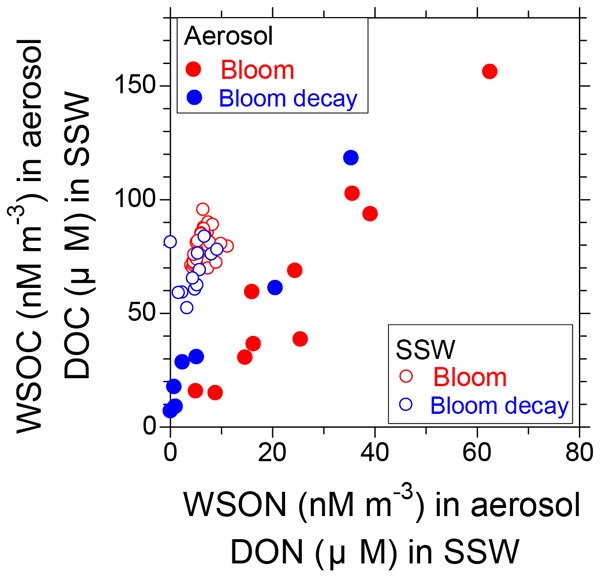
It is essential to understand how biologically productive oceanic regions during spring phytoplankton blooms after sea ice melting contribute to the sea-to-air emission flux of atmospheric organic aerosols (OAs) in the subarctic oceans. Our shipboard measurements highlight the preferential formation of N-containing secondary water-soluble OAs associated with the predominant diatoms including ice algae during the bloom after sea ice melting/retreat in the subarctic ocean.
Huailin Deng, Koji Suzuki, Ichiro Yasuda, Hiroshi Ogawa, and Jun Nishioka
Biogeosciences, 22, 1495–1508, https://doi.org/10.5194/bg-22-1495-2025, https://doi.org/10.5194/bg-22-1495-2025, 2025
Short summary
Short summary
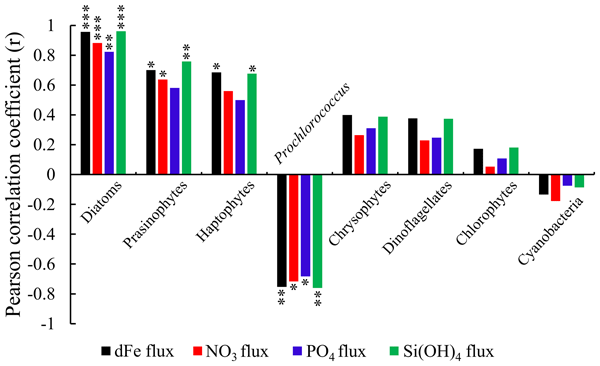
Iron (Fe) and nitrate are vital for primary production in the North Pacific. Sedimentary Fe is carried by North Pacific Intermediate Water to the North Pacific, but the nutrient return path and its effect on phytoplankton are unclear. By combining Fe and macronutrient fluxes with phytoplankton composition, this study firstly revealed that Fe supply from the subsurface greatly controls diatom abundance and identified the nutrient return path in the subarctic gyre and Kuroshio–Oyashio transition area.
Patrick J. Neale, J. Patrick Megonigal, Maria Tzortziou, Elizabeth A. Canuel, Christina R. Pondell, and Hannah Morrissette
Biogeosciences, 21, 2599–2620, https://doi.org/10.5194/bg-21-2599-2024, https://doi.org/10.5194/bg-21-2599-2024, 2024
Short summary
Short summary
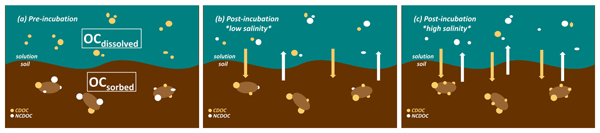
Adsorption/desorption incubations were conducted with tidal marsh soils to understand the differential sorption behavior of colored vs. noncolored dissolved organic carbon. The wetland soils varied in organic content, and a range of salinities of fresh to 35 was used. Soils primarily adsorbed colored organic carbon and desorbed noncolored organic carbon. Sorption capacity increased with salinity, implying that salinity variations may shift composition of dissolved carbon in tidal marsh waters.
Zhibo Shao, Yangchun Xu, Hua Wang, Weicheng Luo, Lice Wang, Yuhong Huang, Nona Sheila R. Agawin, Ayaz Ahmed, Mar Benavides, Mikkel Bentzon-Tilia, Ilana Berman-Frank, Hugo Berthelot, Isabelle C. Biegala, Mariana B. Bif, Antonio Bode, Sophie Bonnet, Deborah A. Bronk, Mark V. Brown, Lisa Campbell, Douglas G. Capone, Edward J. Carpenter, Nicolas Cassar, Bonnie X. Chang, Dreux Chappell, Yuh-ling Lee Chen, Matthew J. Church, Francisco M. Cornejo-Castillo, Amália Maria Sacilotto Detoni, Scott C. Doney, Cecile Dupouy, Marta Estrada, Camila Fernandez, Bieito Fernández-Castro, Debany Fonseca-Batista, Rachel A. Foster, Ken Furuya, Nicole Garcia, Kanji Goto, Jesús Gago, Mary R. Gradoville, M. Robert Hamersley, Britt A. Henke, Cora Hörstmann, Amal Jayakumar, Zhibing Jiang, Shuh-Ji Kao, David M. Karl, Leila R. Kittu, Angela N. Knapp, Sanjeev Kumar, Julie LaRoche, Hongbin Liu, Jiaxing Liu, Caroline Lory, Carolin R. Löscher, Emilio Marañón, Lauren F. Messer, Matthew M. Mills, Wiebke Mohr, Pia H. Moisander, Claire Mahaffey, Robert Moore, Beatriz Mouriño-Carballido, Margaret R. Mulholland, Shin-ichiro Nakaoka, Joseph A. Needoba, Eric J. Raes, Eyal Rahav, Teodoro Ramírez-Cárdenas, Christian Furbo Reeder, Lasse Riemann, Virginie Riou, Julie C. Robidart, Vedula V. S. S. Sarma, Takuya Sato, Himanshu Saxena, Corday Selden, Justin R. Seymour, Dalin Shi, Takuhei Shiozaki, Arvind Singh, Rachel E. Sipler, Jun Sun, Koji Suzuki, Kazutaka Takahashi, Yehui Tan, Weiyi Tang, Jean-Éric Tremblay, Kendra Turk-Kubo, Zuozhu Wen, Angelicque E. White, Samuel T. Wilson, Takashi Yoshida, Jonathan P. Zehr, Run Zhang, Yao Zhang, and Ya-Wei Luo
Earth Syst. Sci. Data, 15, 3673–3709, https://doi.org/10.5194/essd-15-3673-2023, https://doi.org/10.5194/essd-15-3673-2023, 2023
Short summary
Short summary
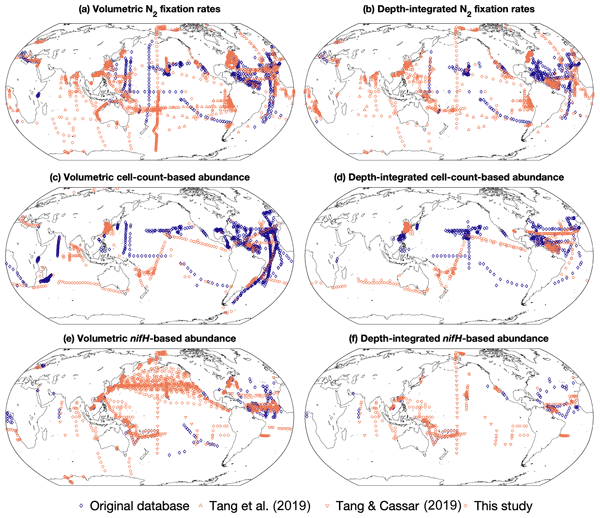
N2 fixation by marine diazotrophs is an important bioavailable N source to the global ocean. This updated global oceanic diazotroph database increases the number of in situ measurements of N2 fixation rates, diazotrophic cell abundances, and nifH gene copy abundances by 184 %, 86 %, and 809 %, respectively. Using the updated database, the global marine N2 fixation rate is estimated at 223 ± 30 Tg N yr−1, which triplicates that using the original database.

Maria Tzortziou, Charlotte F. Kwong, Daniel Goldberg, Luke Schiferl, Róisín Commane, Nader Abuhassan, James J. Szykman, and Lukas C. Valin
Atmos. Chem. Phys., 22, 2399–2417, https://doi.org/10.5194/acp-22-2399-2022, https://doi.org/10.5194/acp-22-2399-2022, 2022
Short summary
Short summary
The COVID-19 pandemic created an extreme natural experiment in which sudden changes in human behavior significantly impacted urban air quality. Using a combination of model, satellite, and ground-based data, we examine the impact of multiple waves and phases of the pandemic on atmospheric nitrogen pollution in the New York metropolitan area, and address the role of weather as a key driver of high pollution episodes observed even during – and despite – the stringent early lockdowns.
Cited articles
Bao, S., Zhang, R., Wang, H., Yan, H., Chen, J., and Wang, Y.: Correction of Satellite Sea Surface Salinity Products Using Ensemble Learning Method, IEEE Access, 11, 17870–17881, https://doi.org/10.1109/ACCESS.2021.3057886, 2023.
Behrenfeld, M. J. and Falkowski, P. G.: Photosynthetic rates derived from satellite-based chlorophyll concentration, Limnol. Oceanogr., 42, 1–20, https://doi.org/10.4319/lo.1997.42.1.0001, 1997.
Bricaud, A. and Morel, A.: Light attenuation and scattering by phytoplanktonic cells: a theoretical modeling, Appl. Optics, 25, 571, https://doi.org/10.1364/ao.25.000571, 1986a.
Bricaud, A. and Morel, A.: Light attenuation and scattering by phytoplanktonic cells: a theoretical modeling, Appl. Optics, 25, 571–580, https://doi.org/10.1364/AO.25.000571, 1986b.
Campbell, R. G., Sherr, E. B., Ashjian, C. J., Plourde, S., Sherr, B. F., Hill, V., and Stockwell, D. A.: Mesozooplankton prey preference and grazing impact in the western Arctic Ocean, Deep-Sea Res. Pt. II, 56, 1274–1289, https://doi.org/10.1016/j.dsr2.2008.10.027, 2009.
Chaves, J. E., Werdell, P. J., Proctor, C. W., Neeley, A. R., Freeman, S. A., Thomas, C. S., and Hooker, S. B.: Assessment of ocean color data records from MODIS-Aqua in the western Arctic Ocean, Deep-Sea Res. Pt. II, 118, 32–43, https://doi.org/10.1016/j.dsr2.2015.02.011, 2015.
Chen, J., Zhu, Y., Wu, Y., Cui, T., Ishizaka, J., and Ju, Y.: A Neural Network Model for K(λ) Retrieval and Application to Global Kpar Monitoring, PLoS One, 10, e0127514, https://doi.org/10.1371/journal.pone.0127514, 2015.
Chen, J., Chen, S., Fu, R., Wang, C., Li, D., Peng, Y., Wang, L., Jiang, H., and Zheng, Q.: Remote sensing estimation of chlorophyll-A in case-II waters of coastal areas: Three-band model versus genetic algorithm–artificial neural networks model, IEEE J. Sel. Top. Appl. Earth Obs., 14, 3640–3658, https://doi.org/10.1109/jstars.2021.3066697, 2021.
Chen, N., Li, W., Gatebe, C., Tanikawa, T., Hori, M., Shimada, R., Aoki, T., and Stamnes, K.: New neural network cloud mask algorithm based on radiative transfer simulations, Remote Sens. Environ., 219, 62–71, https://doi.org/10.1016/j.rse.2018.09.029, 2018.
Chen, S., Hu, C., Barnes, B. B., Xie, Y., Lin, G., and Qiu, Z.: Improving ocean color data coverage through machine learning, Remote Sens. Environ., 222, 286–302, https://doi.org/10.1016/j.rse.2018.12.023, 2019.
Ciotti, Á. M., Lewis, M. R., and Cullen, J. J.: Assessment of the relationships between dominant cell size in natural phytoplankton communities and the spectral shape of the absorption coefficient, Limnol. Oceanogr., 47, 404–417, https://doi.org/10.4319/lo.2002.47.2.0404, 2002.
Coachman, L. K., Aagaard, K., and Tripp, R. B.: Bering strait: Regional physical oceanography, University of Washington Press, Washington, D.C., DC, 172 pp., 1976.
Corte-Real, N. M. F.: Bioinformatic Tools to Decipher Biological Patterns in the Cytoskeleton of Nervous System Cells, Master Thesis, Universidade do Porto, Portugal, 2020.
Danielson, S. L., Eisner, L., Ladd, C., Mordy, C., Sousa, L., and Weingartner, T. J.: A comparison between late summer 2012 and 2013 water masses, macronutrients, and phytoplankton standing crops in the northern Bering and Chukchi Seas, Deep-Sea Res. Pt. II, 135, 7–26, 2017.
Deng, L., Zhou, W., Cao, W., Zheng, W., Wang, G., Xu, Z., Li, C., Yang, Y., Hu, S., and Zhao, W.: Retrieving Phytoplankton Size Class from the Absorption Coefficient and Chlorophyll A Concentration Based on Support Vector Machine, Remote Sens., 11, 1054, https://doi.org/10.3390/rs11091054, 2019.
Dierssen, H. M., Gierach, M., Guild, L. S., Mannino, A., Salisbury, J., Schollaert Uz, S., Scott, J., Townsend, P. A., Turpie, K., Tzortziou, M., Urquhart, E., Vandermeulen, R., and Werdell, P. J.: Synergies between NASA's hyperspectral aquatic missions PACE, GLIMR, and SBG: Opportunities for new science and applications, J. Geophys. Res.-Biogeo., 128, https://doi.org/10.1029/2023jg007574, 2023.
Fasnacht, Z., Joiner, J., Haffner, D., Qin, W., Vasilkov, A., Castellanos, P., and Krotkov, N.: Using machine learning for timely estimates of ocean color information from hyperspectral satellite measurements in the presence of clouds, aerosols, and sunglint, Front. Remote Sens., 3, 846174, https://doi.org/10.3389/frsen.2022.846174, 2022.
Finkel, Z. V., Beardall, J., Flynn, K. J., Quigg, A., Rees, T. A. V., and Raven, J. A.: Phytoplankton in a changing world: cell size and elemental stoichiometry, J. Plankton Res., 32, 119–137, https://doi.org/10.1093/plankt/fbp098, 2010.
Fujiwara, A., Hirawake, T., Suzuki, K., and Saitoh, S.-I.: Remote sensing of size structure of phytoplankton communities using optical properties of the Chukchi and Bering Sea shelf region, Biogeosciences, 8, 3567–3580, https://doi.org/10.5194/bg-8-3567-2011, 2011.
Fujiwara, A., Hirawake, T., Suzuki, K., Eisner, L., Imai, I., Nishino, S., Kikuchi, T., and Saitoh, S.-I.: Influence of timing of sea ice retreat on phytoplankton size during marginal ice zone bloom period on the Chukchi and Bering shelves, Biogeosciences, 13, 115–131, https://doi.org/10.5194/bg-13-115-2016, 2016.
Fujiwara, A., Nishino, S., Matsuno, K., Onodera, J., Kawaguchi, Y., Hirawake, T., Suzuki, K., Inoue, J., and Kikuchi, T.: Changes in phytoplankton community structure during wind-induced fall bloom on the central Chukchi shelf, Polar Biol., 41, 1279–1295, https://doi.org/10.1007/s00300-018-2284-7, 2018.
Gordon, H. R., Clark, D. K., Mueller, J. L., and Hovis, W. A.: Phytoplankton pigments from the nimbus-7 coastal zone color scanner: comparisons with surface measurements, Science, 210, 63–66, https://doi.org/10.1126/science.210.4465.63, 1980.
Grebmeier, J. M.: A major ecosystem shift in the northern Bering Sea, Science, 311, 1461–1464, https://doi.org/10.1126/science.1121365, 2006.
Grebmeier, J. M. and McRoy, C. P.: Pelagic-benthic coupling on the shelf of the northern Bering and Chukchi Seas. Ill Benthic food supply and carbon cycling, Mar. Ecol. Prog. Ser., 53, 79–91, https://doi.org/10.3354/meps053079, 1989.
Grebmeier, J. M., McRoy, C. P., and Feder, H. M.: Pelagic-benthic coupling on the shelf of the northern Bering and Chukchi Seas. I. Food supply source and benthic bio-mass, Mar. Ecol. Prog. Ser., 48, 57–67, 1988.
Grebmeier, J. M., Feder, H. M., and McRoy, C. P.: Pelagic-benthic coupling on the shelf of the northern Bering and Chukchi Seas. II. Benthic community structure, Mar. Ecol. Prog. Ser., 51, 253–268, 1989.
Grebmeier, J. M., Bluhm, B. A., Cooper, L. W., Danielson, S. L., Arrigo, K. R., Blanchard, A. L., Clarke, J. T., Day, R. H., Frey, K. E., Gradinger, R. R., Kędra, M., Konar, B., Kuletz, K. J., Lee, S. H., Lovvorn, J. R., Norcross, B. L., and Okkonen, S. R.: Ecosystem characteristics and processes facilitating persistent macrobenthic biomass hotspots and associated benthivory in the Pacific Arctic, Prog. Oceanogr., 136, 92–114, https://doi.org/10.1016/j.pocean.2015.05.006, 2015a.
Grebmeier, J. M., Bluhm, B., Cooper, L., Denisenko, S., Iken, K., Kedra, M., and Serratos, C.: Time-Series Benthic Community Composition and Biomass and Associated Environmental Characteristics in the Chukchi Sea During the RUSALCA 20042012 Program, Oceanography, 28, 116–133, 2015b.
Hall, O., Ohlsson, M., and Rögnvaldsson, T.: A review of explainable AI in the satellite data, deep machine learning, and human poverty domain, Patterns Prejudice, 3, 100600, https://doi.org/10.1016/j.patter.2022.100600, 2022.
Hayward, A., Pinkerton, M. H., and Gutierrez-Rodriguez, A.: phytoclass: A pigment-based chemotaxonomic method to determine the biomass of phytoplankton classes, Limnol. Oceanogr. Methods, 21, 220–241, https://doi.org/10.1002/lom3.10541, 2023.
Hirata, T., Hardman-Mountford, N. J., Brewin, R. J. W., Aiken, J., Barlow, R., Suzuki, K., Isada, T., Howell, E., Hashioka, T., Noguchi-Aita, M., and Yamanaka, Y.: Synoptic relationships between surface Chlorophyll-a and diagnostic pigments specific to phytoplankton functional types, Biogeosciences, 8, 311–327, https://doi.org/10.5194/bg-8-311-2011, 2011.
Hood, R. R., Laws, E. A., Armstrong, R. A., Bates, N. R., Brown, C. W., Carlson, C. A., Chai, F., Doney, S. C., Falkowski, P. G., Feely, R. A., Friedrichs, M. A. M., Landry, M. R., Keith Moore, J., Nelson, D. M., Richardson, T. L., Salihoglu, B., Schartau, M., Toole, D. A., and Wiggert, J. D.: Pelagic functional group modeling: Progress, challenges and prospects, Deep-Sea Res. Pt. II, 53, 459–512, https://doi.org/10.1016/j.dsr2.2006.01.025, 2006.
Hooker, S. B. and McClain, C. R.: The calibration and validation of SeaWiFS data, Prog. Oceanogr., 45, 427–465, 2000.
Hu, C., Feng, L., and Guan, Q.: A Machine Learning Approach to Estimate Surface Chlorophyll a Concentrations in Global Oceans From Satellite Measurements, IEEE T. Geosci. Remote, 59, 4590–4607, https://doi.org/10.1109/TGRS.2020.3016473, 2021.
Hu, S., Liu, H., Zhao, W., Shi, T., Hu, Z., Li, Q., and Wu, G.: Comparison of Machine Learning Techniques in Inferring Phytoplankton Size Classes, Remote Sens., 10, 191, https://doi.org/10.3390/rs10030191, 2018.
Huot, Y., Brown, C. A., and Cullen, J. J.: New algorithms for MODIS sun-induced chlorophyll fluorescence and a comparison with present data products, Limnol. Oceanogr. Methods, 3, 108–130, https://doi.org/10.4319/lom.2005.3.108, 2005.
IOCCG: Phytoplankton functional types from space, edited by: Sathyendranath, S., International Ocean Colour Coordinating Group (IOCCG), Dartmouth, Canada, https://doi.org/10.25607/OBP-106, 2014.
IOCCG: Ocean optics and biogeochemistry protocols for satellite ocean colour sensor validation; Volume 1.0. Inherent optical property measurements and protocols: Absorption coefficient, edited by: Neeley, A. R. and Mannino, A., International Ocean Colour Coordinating Group (IOCCG), Dartmouth, NS, Canada, https://doi.org/10.25607/OBP-119, 2018.
Isada, T., Hirawake, T., Kobayashi, T., Nosaka, Y., Natsuike, M., Imai, I., Suzuki, K., and Saitoh, S.-I.: Hyperspectral optical discrimination of phytoplankton community structure in Funka Bay and its implications for ocean color remote sensing of diatoms, Remote Sens. Environ., 159, 134–151, https://doi.org/10.1016/j.rse.2014.12.006, 2015.
Kawaguchi, Y., Nishioka, J., Nishino, S., Fujio, S., Lee, K., Fujiwara, A., Yanagimoto, D., Mitsudera, H., and Yasuda, I.: Cold Water Upwelling Near the Anadyr Strait: Observations and Simulations, J. Geophys. Res.-Oceans, 125, e2020JC016238, https://doi.org/10.1029/2020JC016238, 2020.
Ko, E., Gorbunov, M. Y., Jung, J., Joo, H. M., Lee, Y., Cho, K.-H., Yang, E. J., Kang, S.-H., and Park, J.: Effects of Nitrogen Limitation on Phytoplankton Physiology in the Western Arctic Ocean in Summer, J. Geophys. Res.-Oceans, 125, e2020JC016501, https://doi.org/10.1029/2020JC016501, 2020.
Kolluru, S. and Tiwari, S. P.: Modeling ocean surface chlorophyll-a concentration from ocean color remote sensing reflectance in global waters using machine learning, Sci. Total Environ., 844, 157191, https://doi.org/10.1016/j.scitotenv.2022.157191, 2022.
Kostadinov, T. S., Siegel, D. A., and Maritorena, S.: Global variability of phytoplankton functional types from space: assessment via the particle size distribution, Biogeosciences, 7, 3239–3257, https://doi.org/10.5194/bg-7-3239-2010, 2010.
Krasnopolsky, V., Nadiga, S., Mehra, A., Bayler, E., and Behringer, D.: Neural networks technique for filling gaps in satellite measurements: Application to ocean color observations, Comput. Intell. Neurosci., 2016, 6156513, https://doi.org/10.1155/2016/6156513, 2016.
Laney, S. R. and Sosik, H. M.: Phytoplankton assemblage structure in and around a massive under-ice bloom in the Chukchi Sea, Deep-Sea Res. Pt. II, 105, 30–41, https://doi.org/10.1016/j.dsr2.2014.03.012, 2014.
Lee, Z. P., Carder, K. L., and Arnone, R. A.: Deriving inherent optical properties from water color: a multiband quasi-analytical algorithm for optically deep waters, Appl. Optics, 41, 5755–5772, https://doi.org/10.1364/AO.41.005755, 2002.
Le Quéré, C., Harrison, S. P., Prentice, I. C., Buitenhuis, E. T., Aumont, O., Bopp, L., Claustre, H., Da Cunha, L. C., Geider, R., Giraud, X., Klaas, C., Kohfeld, K. E., Legendre, L., Manizza, M., Platt, T., Rivkin, R. B., Sathyendranath, S., Uitz, J., Watson, A. J., and Gladrow, D. W.: Ecosystem dynamics based on plankton functional types for global ocean biogeochemistry models, Glob. Chang. Biol., 11, 2016–2040, 2005.
Li, X., Bellerby, R. G. J., Wallhead, P., Ge, J., Liu, J., Liu, J., and Yang, A.: A neural network-based analysis of the seasonal variability of surface total alkalinity on the east China Sea shelf, Front. Marine Sci., 7, 219, https://doi.org/10.3389/fmars.2020.00219, 2020.
Li, X., Yang, Y., Ishizaka, J., and Li, X.: Global estimation of phytoplankton pigment concentrations from satellite data using a deep-learning-based model, Remote Sens. Environ., 294, 113628, https://doi.org/10.1016/j.rse.2023.113628, 2023.
Li, Z., Li, L., Song, K., and Cassar, N.: Estimation of phytoplankton size fractions based on spectral features of remote sensing ocean color data, J. Geophys. Res.-Oceans, 118, 1445–1458, https://doi.org/10.1002/jgrc.20137, 2013.
Mackey, M. D., Mackey, D. J., Higgins, H. W., and Wright, S. W.: CHEMTAX – a program for estimating class abundances from chemical markers:application to HPLC measurements of phytoplankton, Mar. Ecol. Prog. Ser., 144, 265–283, 1996.
Makridakis, S., Spiliotis, E., and Assimakopoulos, V.: M5 accuracy competition: Results, findings, and conclusions, Int. J. Forecast., 38, 1346–1364, https://doi.org/10.1016/j.ijforecast.2021.11.013, 2022.
Martens, H. A. and Dardenne, P.: Validation and verification of regression in small data sets, Chemometrics Intellig. Lab. Syst., 44, 99–121, https://doi.org/10.1016/S0169-7439(98)00167-1, 1998.
Marzban, C.: Basic statistics and basic AI: Neural networks, in: Artificial Intelligence Methods in the Environmental Sciences, edited by: Haupt, S. E., Pasini, A., and Marzban, C., Springer Netherlands, Dordrecht, 15–47, https://doi.org/10.1007/978-1-4020-9119-3_2, 2009.
Matsuoka, A., Huot, Y., Shimada, K., Saitoh, S.-I., and Babin, M.: Bio-optical characteristics of the western Arctic Ocean: implications for ocean color algorithms, Can. J. Remote Sens., 33, 503–518, 2007.
McClain, C. R.: A decade of satellite ocean color observations, Ann. Rev. Mar. Sci., 1, 19–42, https://doi.org/10.1146/annurev.marine.010908.163650, 2009.
Mitchell, B. G.: Algorithms for determining the absorption coefficient for aquatic particulates using the quantitative filter technique, Ocean Optics, X, 137–148, https://doi.org/10.1117/12.21440, 1990.
Mobley, C. D.: Light and water, Academic Press, San Diego, CA, 608 pp., ISBN 0-12-502750-8, 1994.
Mouw, C. B., Hardman-Mountford, N. J., Alvain, S., Bracher, A., Brewin, R. J. W., Bricaud, A., Ciotti, A. M., Devred, E., Fujiwara, A., Hirata, T., Hirawake, T., Kostadinov, T. S., Roy, S., and Uitz, J.: A consumer's guide to satellite remote sensing of multiple phytoplankton groups in the global ocean, Front. Marine Sci., 4, 497, https://doi.org/10.3389/fmars.2017.00041, 2017.
Mukonza, S. S. and Chiang, J.-L.: Quantifying cross-validation uncertainties for linear regression machine learning algorithm used to estimate chlorophyll-a in mundan water reservoir based on Landsat derived spectral indices, in: 2022 IEEE Mediterranean and Middle-East Geoscience and Remote Sensing Symposium (M2GARSS), 2022 IEEE Mediterranean and Middle-East Geoscience and Remote Sensing Symposium (M2GARSS), Istanbul, Turkey, 2022/3/7-2022/3/9, https://doi.org/10.1109/m2garss52314.2022.9840135, 2022.
Mustapha, S. B., Bélanger, S., and Larouche, P.: Evaluation of ocean color algorithms in the southeastern Beaufort Sea, Canadian Arctic: New parameterization using SeaWiFS, MODIS, and MERIS spectral bands, Can. J. Remote Sens./J. Can. Teledetect., 38, 535–556, https://doi.org/10.5589/m12-045, 2012.
Nishino, S., Kawaguchi, Y., Inoue, J., Hirawake, T., Fujiwara, A., Futsuki, R., Onodera, J., and Aoyama, M.: Nutrient supply and biological response to wind-induced mixing, inertial motion, internal waves, and currents in the northern Chukchi Sea, J. Geophys. Res.-Oceans, 120, 1975–1992, https://doi.org/10.1002/2014JC010407, 2015.
Nishioka, J., Hirawake, T., Nomura, D., Yamashita, Y., Ono, K., Murayama, A., Shcherbinin, A., Volkov, Y. N., Mitsudera, H., Ebuchi, N., Wakatsuchi, M., and Yasuda, I.: Iron and nutrient dynamics along the East Kamchatka Current, western Bering Sea Basin and Gulf of Anadyr, Prog. Oceanogr., 198, 102662, https://doi.org/10.1016/j.pocean.2021.102662, 2021.
O'Daly, S. H., Danielson, S. L., Hardy, S. M., Hopcroft, R. R., Lalande, C., Stockwell, D. A., and McDonnell, A. M. P.: Extraordinary carbon fluxes on the shallow pacific arctic shelf during a remarkably warm and low sea ice period, Front. Mar. Sci., 7, https://doi.org/10.3389/fmars.2020.548931, 2020.
O'Reilly, J. E., Maritorena, S., Mitchell, B. G., Siegel, D. A., Carder, K. L., Garver, S. A., Kahru, M., and McClain, C.: Ocean color chlorophyll algorithms for SeaWiFS, J. Geophys. Res.-Oceans, 103, 24937–24953, https://doi.org/10.1029/98JC02160, 1998.
Pasolli, L., Melgani, F., and Blanzieri, E.: Gaussian Process Regression for Estimating Chlorophyll Concentration in Subsurface Waters From Remote Sensing Data, IEEE Geosci. Remote Sens. Lett., 7, 464–468, https://doi.org/10.1109/LGRS.2009.2039191, 2010.
Paul, S. and Huntemann, M.: Improved machine-learning-based open-water–sea-ice–cloud discrimination over wintertime Antarctic sea ice using MODIS thermal-infrared imagery, The Cryosphere, 15, 1551–1565, https://doi.org/10.5194/tc-15-1551-2021, 2021.
Pope, R. M. and Fry, E. S.: Absorption spectrum (380–700 nm) of pure water. II. Integrating cavity measurements, Appl. Optics, 36, 8710–8723, 1997.
Qi, J., Liu, C., Chi, J., Li, D., Gao, L., and Yin, B.: An Ensemble-Based Machine Learning Model for Estimation of Subsurface Thermal Structure in the South China Sea, Remote Sens., 14, 3207, https://doi.org/10.3390/rs14133207, 2022.
Qiao, B., Wu, Z., Ma, L., Zhou, Y., and Sun, Y.: Effective ensemble learning approach for SST field prediction using attention-based PredRNN, Front. Comput. Sci., 17, 171601, https://doi.org/10.1007/s11704-021-1080-7, 2022.
Ray, S.: A quick review of machine learning algorithms, in: 2019 International Conference on Machine Learning, Big Data, Cloud and Parallel Computing (COMITCon), 2019 International Conference on Machine Learning, Big Data, Cloud and Parallel Computing (COMITCon), 14–16 February 2019, Faridabad, India, https://doi.org/10.1109/comitcon.2019.8862451, 2019.
Reynolds, C. S., Huszar, V., Kruk, C., Naselli-Flores, L., and Melo, S.: Towards a functional classification of the freshwater phytoplankton, J. Plankton Res., 24, 417–428, https://doi.org/10.1093/plankt/24.5.417, 2002.
Roy, S., Sathyendranath, S., and Platt, T.: Size-partitioned phytoplankton carbon and carbon-to-chlorophyll ratio from ocean colour by an absorption-based bio-optical algorithm, Remote Sens. Environ., 194, 177–189, https://doi.org/10.1016/j.rse.2017.02.015, 2017.
Sauzède, R., Claustre, H., Uitz, J., Jamet, C., Dall'Olmo, G., D'Ortenzio, F., Gentili, B., Poteau, A., and Schmechtig, C.: A neural network-based method for merging ocean color and Argo data to extend surface bio-optical properties to depth: Retrieval of the particulate backscattering coefficient, J. Geophys. Res.-Oceans, 121, 2552–2571, 2016.
Seegers, B. N., Stumpf, R. P., Schaeffer, B. A., Loftin, K. A., and Werdell, P. J.: Performance metrics for the assessment of satellite data products: an ocean color case study, Opt. Express, 26, 7404–7422, https://doi.org/10.1364/OE.26.007404, 2018.
Selvaraju, S., Jancy, P. L., Vinod Kumar, D., Prabha, R., Karthikeyan, and Babu, D. V.: Support Vector Machine based Remote Sensing using Satellite Data Image, in: 2021 2nd International Conference on Smart Electronics and Communication (ICOSEC), 2021 2nd International Conference on Smart Electronics and Communication (ICOSEC), 7–9 October 2021, Trichy, India, https://doi.org/10.1109/icosec51865.2021.9591631, 2021.
Stabeno, P., Napp, J., Mordy, C., and Whitledge, T.: Factors influencing physical structure and lower trophic levels of the eastern Bering Sea shelf in 2005: Sea ice, tides and winds, Prog. Oceanogr., 85, 180–196, 2010.
Stock, A.: Spatiotemporal distribution of labeled data can bias the validation and selection of supervised learning algorithms: A marine remote sensing example, ISPRS J. Photogramm. Remote, 187, 46–60, https://doi.org/10.1016/j.isprsjprs.2022.02.023, 2022.
Stock, A. and Subramaniam, A.: Iterative spatial leave-one-out cross-validation and gap-filling based data augmentation for supervised learning applications in marine remote sensing, GIsci Remote Sens., 59, 1281–1300, https://doi.org/10.1080/15481603.2022.2107113, 2022.
Su, H., Wu, X., Yan, X.-H., and Kidwell, A.: Estimation of subsurface temperature anomaly in the Indian Ocean during recent global surface warming hiatus from satellite measurements: A support vector machine approach, Remote Sens. Environ., 160, 63–71, 2015.
Suzuki, K., Yoshino, Y., Nosaka, Y., Nishioka, J., Hooker, S. B., and Hirawake, T.: Diatoms contributing to new production in surface waters of the northern Bering and Chukchi Seas during summer with reference to water column stratification, Prog. Oceanogr., 199, 102692, https://doi.org/10.1016/j.pocean.2021.102692, 2021.
Syariz, M. A., Lin, C.-H., Van Nguyen, M., Jaelani, L. M., and Blanco, A. C.: WaterNet: A Convolutional Neural Network for Chlorophyll-a Concentration Retrieval, Remote Sens., 12, 1966, https://doi.org/10.3390/rs12121966, 2020.
Vabalas, A., Gowen, E., Poliakoff, E., and Casson, A. J.: Machine learning algorithm validation with a limited sample size, PLoS One, 14, e0224365, https://doi.org/10.1371/journal.pone.0224365, 2019.
Vollmer, S., Mateen, B. A., Bohner, G., Király, F. J., Ghani, R., Jonsson, P., Cumbers, S., Jonas, A., McAllister, K. S. L., Myles, P., Granger, D., Birse, M., Branson, R., Moons, K. G. M., Collins, G. S., Ioannidis, J. P. A., Holmes, C., and Hemingway, H.: Machine learning and artificial intelligence research for patient benefit: 20 critical questions on transparency, replicability, ethics, and effectiveness, BMJ, 368, l6927, https://doi.org/10.1136/bmj.l6927, 2020.
Wachter, S., Mittelstadt, B., and Russell, C.: Counterfactual explanations without opening the black box: Automated decisions and the GDPR, SSRN Electron. J., 31, https://doi.org/10.2139/ssrn.3063289, 2017.
Waga, H.: Matlab code for Machine Learning-based Chlorophyll-a Size Distribution (CSD) model in the Pacific Arctic (v1.0.0), Zenodo [code], https://doi.org/10.5281/zenodo.18355097, 2026.
Waga, H. and Hirawake, T.: Changing occurrences of fall blooms associated with variations in phytoplankton size structure in the Pacific Arctic, Front. Marine Sci., 7, https://doi.org/10.3389/fmars.2020.00209, 2020.
Waga, H., Hirawake, T., Fujiwara, A., Kikuchi, T., Nishino, S., Suzuki, K., Takao, S., and Saitoh, S.-I.: Differences in Rate and Direction of Shifts between Phytoplankton Size Structure and Sea Surface Temperature, Remote Sens., 9, 222, https://doi.org/10.3390/rs9030222, 2017.
Waga, H., Hirawake, T., Fujiwara, A., Grebmeier, J. M., and Saitoh, S.-I.: Impact of spatiotemporal variability in phytoplankton size structure on benthic macrofaunal distribution in the Pacific Arctic, Deep-Sea Res. Pt. II, 162, 114–126, https://doi.org/10.1016/j.dsr2.2018.10.008, 2019a.
Waga, H., Hirawake, T., and Ueno, H.: Impacts of Mesoscale Eddies on Phytoplankton Size Structure, Geophys. Res. Lett., 46, 13191–13198, https://doi.org/10.1029/2019GL085150, 2019b.
Waga, H., Eicken, H., Hirawake, T., and Fukamachi, Y.: Variability in spring phytoplankton blooms associated with ice retreat timing in the Pacific Arctic from 2003–2019, PLoS One, 16, e0261418, https://doi.org/10.1371/journal.pone.0261418, 2021a.
Waga, H., Hirawake, T., and Nakaoka, M.: Influences of size structure and post-bloom supply of phytoplankton on body size variations in a common Pacific Arctic bivalve (Macoma calcarea), Polar Sci., 27, 100554, https://doi.org/10.1016/j.polar.2020.100554, 2021b.
Waga, H., Eicken, H., Light, B., and Fukamachi, Y.: A neural network-based method for satellite-based mapping of sediment-laden sea ice in the Arctic, Remote Sens. Environ., 270, 112861, https://doi.org/10.1016/j.rse.2021.112861, 2022.
Walsh, J. J., McRoy, C. P., Coachman, L. K., Goering, J. J., Nihoul, J. J., Whitledge, T. E., Blackburn, T. H., Parker, P. L., Wirick, C. D., Shuert, P. G., Grebmeier, J. M., Springer, A. M., Tripp, R. D., Hansell, D. A., Djenidi, S., Deleersnijder, E., Henriksen, K., Lund, B. A., Andersen, P., Muller-Karger, F. E., and Dean, K.: Carbon and nitrogen cycling within the Bering/Chukchi Seas: Source regions for organic matter effecting AOU demands of the Arctic Ocean, Prog. Oceanogr., 22, 277–359, 1989.
Wang, J. and Cota, G. F.: Remote-sensing reflectance in the Beaufort and Chukchi seas: observations and models, Appl. Optics, 42, 2754–2765, 2003.
Wang, J., Kong, F., Niu, Z., and Yu, R.: Selection of protocols for phytoplankton pigment analysis: a comparative study, J. Oceanol. Limnol., 43, 817–830, https://doi.org/10.1007/s00343-024-4025-9, 2025.
Wang, S., Ishizaka, J., Hirawake, T., Watanabe, Y., Zhu, Y., Hayashi, M., and Yoo, S.: Remote estimation of phytoplankton size fractions using the spectral shape of light absorption, Opt. Express, 23, 10301, https://doi.org/10.1364/OE.23.010301, 2015.
Werdell, P. J., McKinna, L. I. W., Boss, E., Ackleson, S. G., Craig, S. E., Gregg, W. W., Lee, Z., Maritorena, S., Roesler, C. S., Rousseaux, C. S., Stramski, D., Sullivan, J. M., Twardowski, M. S., Tzortziou, M., and Zhang, X.: An overview of approaches and challenges for retrieving marine inherent optical properties from ocean color remote sensing, Prog. Oceanogr., 160, 186–212, https://doi.org/10.1016/j.pocean.2018.01.001, 2018.
Zhang, Y., Shen, F., Sun, X., and Tan, K.: Marine big data-driven ensemble learning for estimating global phytoplankton group composition over two decades (1997–2020), Remote Sens. Environ., 294, 113596, https://doi.org/10.1016/j.rse.2023.113596, 2023.
Zhuang, Y., Jin, H., Li, H., Chen, J., Lin, L., Bai, Y., Ji, Z., Zhang, Y., and Gu, F.: Pacific inflow control on phytoplankton community in the Eastern Chukchi Shelf during summer, Cont. Shelf Res., 129, 23–32, https://doi.org/10.1016/j.csr.2016.09.010, 2016.
Short summary
The present study developed a satellite remote sensing algorithm for estimating phytoplankton size structure from space using machine learning approaches in optically complex Pacific Arctic waters. One of the key findings is that more complex machine learning approaches do not always produce more effective performance compared with the simple ones. This study demonstrated the benefits of utilizing machine learning approaches for developing satellite remote sensing algorithms.
The present study developed a satellite remote sensing algorithm for estimating phytoplankton...


Altmetrics
Final-revised paper
Preprint