
Articles | Volume 23, issue 3
https://doi.org/10.5194/bg-23-1245-2026
© Author(s) 2026. This work is distributed under
the Creative Commons Attribution 4.0 License.
the Creative Commons Attribution 4.0 License.
https://doi.org/10.5194/bg-23-1245-2026
© Author(s) 2026. This work is distributed under
the Creative Commons Attribution 4.0 License.
the Creative Commons Attribution 4.0 License.
Technical note
| 
12 Feb 2026
Technical note |
| 12 Feb 2026
| 12 Feb 2026
Technical note: Comparison of simultaneously applied chamber-based gas flux measurements from arable soils using gas chromatography (static chamber) and mid-infrared laser absorption spectroscopy (dynamic chamber)

Department of Applied Ecology, Hochschule Geisenheim University, Von-Lade-Str.1, 65366 Geisenheim, Germany
Section of Ecological Plant Protection, University of Kassel, Nordbahnhofstr. 1a, 37213 Witzenhausen, Germany
Morten Möller
CORRESPONDING AUTHOR
Section of Organic Farming and Cropping Systems, University of Kassel, Nordbahnhofstr. 1a, 37213 Witzenhausen, Germany
Carolyn-Monika Görres
Department of Applied Ecology, Hochschule Geisenheim University, Von-Lade-Str.1, 65366 Geisenheim, Germany
Christian Eckhardt
Institute for Plant Ecology, Justus-Liebig University Giessen, Heinrich-Buff-Ring 26, 35392 Gießen, Germany
Tobias Karl David Weber
Section of Soil Science and Agrohydrology, University of Kassel, Nordbahnhofstr. 1a, 37213 Witzenhausen, Germany
Carolina Bilibio
Section of Soil Science and Agrohydrology, University of Kassel, Nordbahnhofstr. 1a, 37213 Witzenhausen, Germany
Christian Bruns
Section of Organic Farming and Cropping Systems, University of Kassel, Nordbahnhofstr. 1a, 37213 Witzenhausen, Germany
Andreas Gattinger
Chair of Organic Farming, Institute of Agronomy and Plant Breeding II, Justus-Liebig University Giessen, Karl-Glöckner-Str. 21 C, 35392 Gießen, Germany
Maria Renate Finckh
Section of Ecological Plant Protection, University of Kassel, Nordbahnhofstr. 1a, 37213 Witzenhausen, Germany
Claudia Kammann
Department of Applied Ecology, Hochschule Geisenheim University, Von-Lade-Str.1, 65366 Geisenheim, Germany
Related authors
Wolfgang Aumer, Ingo Hartmeyer, Carolyn-Monika Görres, Daniel Uteau, Maike Offer, and Stephan Peth
Earth Surf. Dynam., 13, 473–493, https://doi.org/10.5194/esurf-13-473-2025, https://doi.org/10.5194/esurf-13-473-2025, 2025
Short summary
Short summary
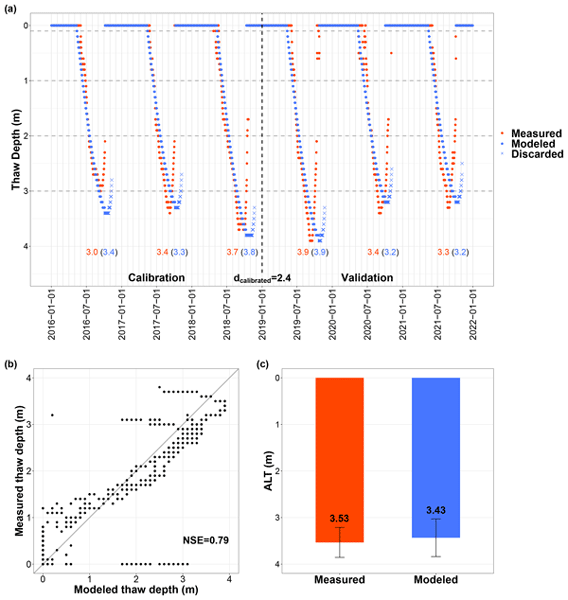
The summertime thaw depth of permanently frozen ground (active layer thickness, ALT) is of critical importance for natural hazard management (e.g., rock avalanches) and construction (foundation stability) in mountain permafrost regions. We report the first analytical heat transport model for simulating ALT based on near-surface temperature in permafrost rock walls. Our results show that the ALT will likely increase by more than 50 % by 2050 at 3000 m a.s.l. in the European Alps.
Jan Henrik Schmidt, Stephan König, Morten Möller, Miriam Athmann, and Christian Bruns
EGUsphere, https://doi.org/10.5194/egusphere-2025-5843, https://doi.org/10.5194/egusphere-2025-5843, 2026
Short summary
Short summary
Legumes constitute up to 50 % of all crops in organic rotations surrendering these susceptible towards a range of soil-borne pests and diseases. We investigated how plant-parasitic and other free-living trophic nematode guilds are affected by four diverse organic farming types. The Mixed Farm type (50 % legumes in the rotation) harbored the highest numbers of nematodes of all farm types. Pratylenchus was the most abundant genus and built-up large populations during the clover grass ley period.
Fawad Khan, Samuel Franco Luesma, Frederik Hartmann, Michael Dannenmann, Rainer Gasche, Clemens Scheer, Andreas Gattinger, Wiebke Niether, Elizabeth Gachibu Wangari, Ricky Mwangada Mwanake, Ralf Kiese, and Benjamin Wolf
Biogeosciences, 22, 5081–5102, https://doi.org/10.5194/bg-22-5081-2025, https://doi.org/10.5194/bg-22-5081-2025, 2025
Short summary
Short summary
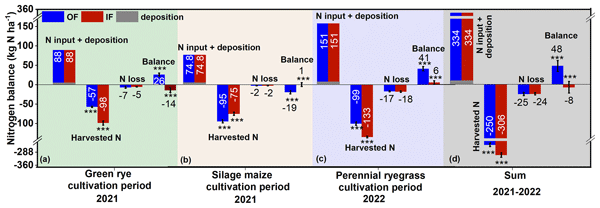
Crop rotations with legumes and use of organic and mineral fertilizers show potential to reduce agricultural N losses. This study examined N losses, including direct N2 flux, on two adjacent sites with different management histories: organic farming (OF) with legume cultivation and integrated farming (IF) using synthetic and organic N inputs. IF increased soil organic carbon and nitrogen content and 15N recovery and showed a balanced N budget (i.e. more efficient N cycling compared to OF).
Wolfgang Aumer, Ingo Hartmeyer, Carolyn-Monika Görres, Daniel Uteau, Maike Offer, and Stephan Peth
Earth Surf. Dynam., 13, 473–493, https://doi.org/10.5194/esurf-13-473-2025, https://doi.org/10.5194/esurf-13-473-2025, 2025
Short summary
Short summary
The summertime thaw depth of permanently frozen ground (active layer thickness, ALT) is of critical importance for natural hazard management (e.g., rock avalanches) and construction (foundation stability) in mountain permafrost regions. We report the first analytical heat transport model for simulating ALT based on near-surface temperature in permafrost rock walls. Our results show that the ALT will likely increase by more than 50 % by 2050 at 3000 m a.s.l. in the European Alps.
Tobias Karl David Weber, Lutz Weihermüller, Attila Nemes, Michel Bechtold, Aurore Degré, Efstathios Diamantopoulos, Simone Fatichi, Vilim Filipović, Surya Gupta, Tobias L. Hohenbrink, Daniel R. Hirmas, Conrad Jackisch, Quirijn de Jong van Lier, John Koestel, Peter Lehmann, Toby R. Marthews, Budiman Minasny, Holger Pagel, Martine van der Ploeg, Shahab Aldin Shojaeezadeh, Simon Fiil Svane, Brigitta Szabó, Harry Vereecken, Anne Verhoef, Michael Young, Yijian Zeng, Yonggen Zhang, and Sara Bonetti
Hydrol. Earth Syst. Sci., 28, 3391–3433, https://doi.org/10.5194/hess-28-3391-2024, https://doi.org/10.5194/hess-28-3391-2024, 2024
Short summary
Short summary
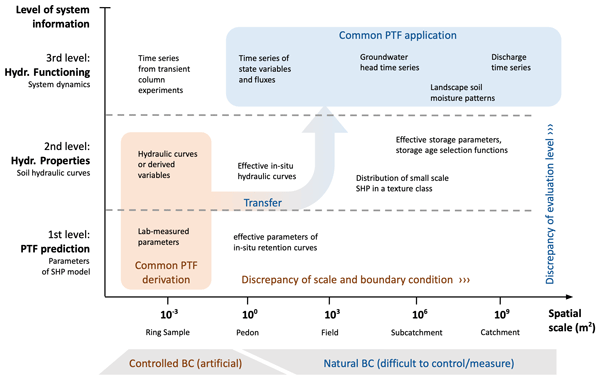
Pedotransfer functions (PTFs) are used to predict parameters of models describing the hydraulic properties of soils. The appropriateness of these predictions critically relies on the nature of the datasets for training the PTFs and the physical comprehensiveness of the models. This roadmap paper is addressed to PTF developers and users and critically reflects the utility and future of PTFs. To this end, we present a manifesto aiming at a paradigm shift in PTF research.
Benjamin Guillaume, Hanane Aroui Boukbida, Gerben Bakker, Andrzej Bieganowski, Yves Brostaux, Wim Cornelis, Wolfgang Durner, Christian Hartmann, Bo V. Iversen, Mathieu Javaux, Joachim Ingwersen, Krzysztof Lamorski, Axel Lamparter, András Makó, Ana María Mingot Soriano, Ingmar Messing, Attila Nemes, Alexandre Pomes-Bordedebat, Martine van der Ploeg, Tobias Karl David Weber, Lutz Weihermüller, Joost Wellens, and Aurore Degré
SOIL, 9, 365–379, https://doi.org/10.5194/soil-9-365-2023, https://doi.org/10.5194/soil-9-365-2023, 2023
Short summary
Short summary
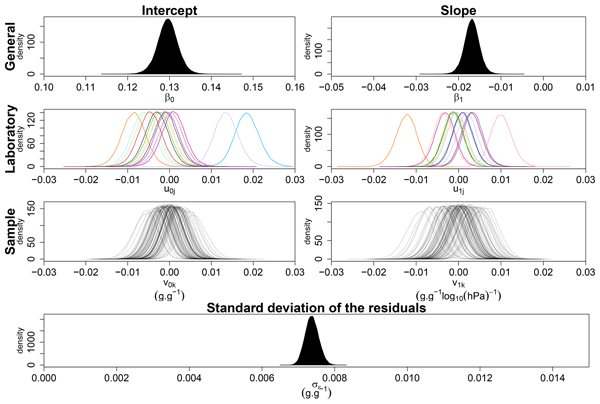
Measurements of soil water retention properties play an important role in a variety of societal issues that depend on soil water conditions. However, there is little concern about the consistency of these measurements between laboratories. We conducted an interlaboratory comparison to assess the reproducibility of the measurement of the soil water retention curve. Results highlight the need to harmonize and standardize procedures to improve the description of unsaturated processes in soils.
Florian Späth, Verena Rajtschan, Tobias K. D. Weber, Shehan Morandage, Diego Lange, Syed Saqlain Abbas, Andreas Behrendt, Joachim Ingwersen, Thilo Streck, and Volker Wulfmeyer
Geosci. Instrum. Method. Data Syst., 12, 25–44, https://doi.org/10.5194/gi-12-25-2023, https://doi.org/10.5194/gi-12-25-2023, 2023
Short summary
Short summary
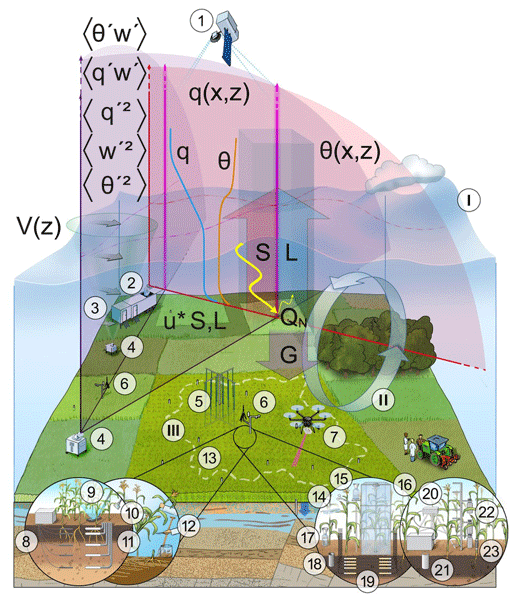
Important topics in land–atmosphere feedback research are water and energy balances and heterogeneities of fluxes at the land surface and in the atmosphere. To target these questions, the Land–Atmosphere Feedback Observatory (LAFO) has been installed in Germany. The instrumentation allows for comprehensive measurements from the bedrock to the troposphere. The LAFO observation strategy aims for simultaneous measurements in all three compartments: atmosphere, soil and land surface, and vegetation.
Michelle Viswanathan, Tobias K. D. Weber, Sebastian Gayler, Juliane Mai, and Thilo Streck
Biogeosciences, 19, 2187–2209, https://doi.org/10.5194/bg-19-2187-2022, https://doi.org/10.5194/bg-19-2187-2022, 2022
Short summary
Short summary
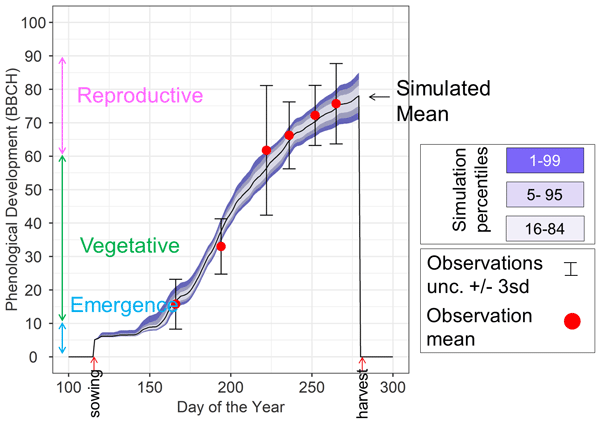
We analysed the evolution of model parameter uncertainty and prediction error as we updated parameters of a maize phenology model based on yearly observations, by sequentially applying Bayesian calibration. Although parameter uncertainty was reduced, prediction quality deteriorated when calibration and prediction data were from different maize ripening groups or temperature conditions. The study highlights that Bayesian methods should account for model limitations and inherent data structures.
Tobias K. D. Weber, Joachim Ingwersen, Petra Högy, Arne Poyda, Hans-Dieter Wizemann, Michael Scott Demyan, Kristina Bohm, Ravshan Eshonkulov, Sebastian Gayler, Pascal Kremer, Moritz Laub, Yvonne Funkiun Nkwain, Christian Troost, Irene Witte, Tim Reichenau, Thomas Berger, Georg Cadisch, Torsten Müller, Andreas Fangmeier, Volker Wulfmeyer, and Thilo Streck
Earth Syst. Sci. Data, 14, 1153–1181, https://doi.org/10.5194/essd-14-1153-2022, https://doi.org/10.5194/essd-14-1153-2022, 2022
Short summary
Short summary
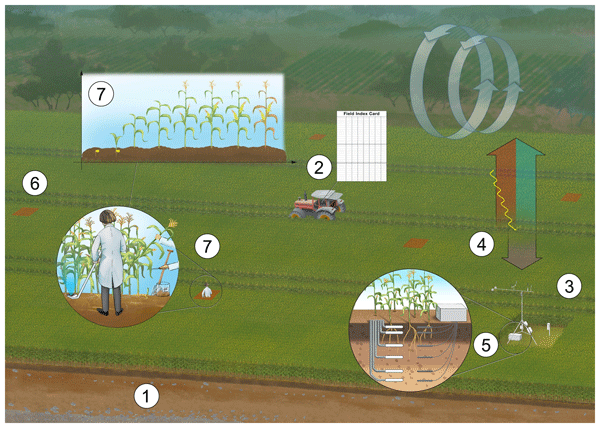
Presented are measurement results from six agricultural fields operated by local farmers in southwestern Germany over 9 years. Six eddy-covariance stations measuring water, energy, and carbon fluxes between the vegetated soil surface and the atmosphere provided the backbone of the measurement sites and were supplemented by extensive soil and vegetation state monitoring. The dataset is ideal for testing process models characterizing fluxes at the vegetated soil surface and in the atmosphere.
Cited articles
Aumer, W., Möller, M., and Eckhardt, C.: Closed chamber flux dataset comparing gas chromatography and mid-infrared laser absorption spectroscopy for greenhouse gas measurements, Zenodo [data set], https://doi.org/10.5281/zenodo.15674498, 2025.
Bilibio, C., Weber, T. K. D., Hammer-Weis, M., Junge, S. M., Leisch-Waskoenig, S., Wack, J., Niether, W., Gattinger, A., Finckh, M. R., and Peth, S.: Changes in soil mechanical and hydraulic properties through regenerative cultivation measures in long-term and farm experiments in Germany, Soil and Tillage Research, 246, 106345, https://doi.org/10.1016/j.still.2024.106345, 2025.
Bond-Lamberty, B., Christianson, D. S., Malhotra, A., Pennington, S. C., Sihi, D., AghaKouchak, A., Anjileli, H., Altaf Arain, M., Armesto, J. J., Ashraf, S., Ataka, M., Baldocchi, D., Andrew Black, T., Buchmann, N., Carbone, M. S., Chang, S.-C., Crill, P., Curtis, P. S., Davidson, E. A., Desai, A. R., Drake, J. E., El-Madany, T. S., Gavazzi, M., Görres, C.-M., Gough, C. M., Goulden, M., Gregg, J., Del Gutiérrez Arroyo, O., He, J.-S., Hirano, T., Hopple, A., Hughes, H., Järveoja, J., Jassal, R., Jian, J., Kan, H., Kaye, J., Kominami, Y., Liang, N., Lipson, D., Macdonald, C. A., Maseyk, K., Mathes, K., Mauritz, M., Mayes, M. A., McNulty, S., Miao, G., Migliavacca, M., Miller, S., Miniat, C. F., Nietz, J. G., Nilsson, M. B., Noormets, A., Norouzi, H., O'Connell, C. S., Osborne, B., Oyonarte, C., Pang, Z., Peichl, M., Pendall, E., Perez-Quezada, J. F., Phillips, C. L., Phillips, R. P., Raich, J. W., Renchon, A. A., Ruehr, N. K., Sánchez-Cañete, E. P., Saunders, M., Savage, K. E., Schrumpf, M., Scott, R. L., Seibt, U., Silver, W. L., Sun, W., Szutu, D., Takagi, K., Takagi, M., Teramoto, M., Tjoelker, M. G., Trumbore, S., Ueyama, M., Vargas, R., Varner, R. K., Verfaillie, J., Vogel, C., Wang, J., Winston, G., Wood, T. E., Wu, J., Wutzler, T., Zeng, J., Zha, T., Zhang, Q., and Zou, J.: COSORE: A community database for continuous soil respiration and other soil-atmosphere greenhouse gas flux data, Global Change biology, 26, 7268–7283, https://doi.org/10.1111/gcb.15353, 2020.
Brümmer, C., Lyshede, B., Lempio, D., Delorme, J.-P., Rüffer, J. J., Fuß, R., Moffat, A. M., Hurkuck, M., Ibrom, A., Ambus, P., Flessa, H., and Kutsch, W. L.: Gas chromatography vs. quantum cascade laser-based N2O flux measurements using a novel chamber design, Biogeosciences, 14, 1365–1381, https://doi.org/10.5194/bg-14-1365-2017, 2017.
Butterbach-Bahl, K., Willibald, G., and Papen, H.: Soil core method for direct simultaneous determination of N2 and N2O emissions from forest soils, Plant Soil, 240, 105–116, https://doi.org/10.1023/A:1015870518723, 2002.
Cavigelli, M. and Robertson, G.: Role of denitrifier diversity in rates of nitrous oxide consumption in a terrestrial ecosystem, Soil Biology and Biochemistry, 33, 297–310, https://doi.org/10.1016/S0038-0717(00)00141-3, 2001.
Chapuis-Lardy, L., Wrage, N., Metay, A., Chotte, J.-L., and Berenoux, M.: Soils, a sink for N2O? A review, Global Change Biology, 13, 1–17, https://doi.org/10.1111/j.1365-2486.2006.01280.x, 2007.
Christiansen, J. R., Outhwaite, J., and Smukler, S. M.: Comparison of CO2, CH4 and N2O soil-atmosphere exchange measured in static chambers with cavity ring-down spectroscopy and gas chromatography, Agricultural and Forest Meteorology, 211–212, 48–57, https://doi.org/10.1016/j.agrformet.2015.06.004, 2015a.
Christiansen, J. R., Romero, A. J. B., Jørgensen, N. O. G., Glaring, M. A., Jørgensen, C. J., Berg, L. K., and Elberling, B.: Methane fluxes and the functional groups of methanotrophs and methanogens in a young Arctic landscape on Disko Island, West Greenland, Biogeochemistry, 122, 15–33, https://doi.org/10.1007/s10533-014-0026-7, 2015b.
Cowan, N., Levy, P., Tigli, M., Toteva, G., and Drewer, J.: Characterisation of Analytical Uncertainty in Chamber Soil Flux Measurements, European J. Soil Science, 76, https://doi.org/10.1111/ejss.70104, 2025.
Dix, B. A., Hauschild, M. E., Niether, W., Wolf, B., and Gattinger, A.: Regulating soil microclimate and greenhouse gas emissions with rye mulch in cabbage cultivation, Agriculture, Ecosystems & Environment, 367, 108951, https://doi.org/10.1016/j.agee.2024.108951, 2024.
Flessa, H., Ruser, R., Schilling, R., Loftfield, N., Munch, J., Kaiser, E., and Beese, F.: N2O and CH4 fluxes in potato fields: automated measurement, management effects and temporal variation, Geoderma, 105, 307–325, https://doi.org/10.1016/S0016-7061(01)00110-0, 2002.
Fuss, R. and Hüppi, R.: gasfluxes (Version 0.4-4): Greenhouse Gas Flux Calculation from Chamber Measurements, CRAN – The Comprehensive R Archive Network, https://doi.org/10.32614/CRAN.package.gasfluxes, 2024.
Glatzel, S. and Stahr, K.: Methane and nitrous oxide exchange in differently fertilised grassland in southern Germany, Plant Soil, 231, 21–35, https://doi.org/10.1023/A:1010315416866, 2001.
Hupp, J. and McDermitt, D.: The Importance of Water Vapor Measurements and Corrections in Non-dispersive Infrared Gas Analysis, Application Note, LI-COR, Inc. Updated version 2023, https://www.licor.com/support/AppNotes/irg4110-h2o-measurement.html (last access: 4 February 2026), 2012.
Hüppi, R., Felber, R., Krauss, M., Six, J., Leifeld, J., and Fuß, R.: Restricting the nonlinearity parameter in soil greenhouse gas flux calculation for more reliable flux estimates, PloS one, 13, e0200876, https://doi.org/10.1371/journal.pone.0200876, 2018.
Hutchinson, G. L. and Livingston, G. P.: Vents and seals in non-steady-state chambers used for measuring gas exchange between soil and the atmosphere, European J. Soil Science, 52, 675–682, https://doi.org/10.1046/j.1365-2389.2001.00415.x, 2001.
Hutchinson, G. L. and Mosier, A. R.: Improved Soil Cover Method for Field Measurement of Nitrous Oxide Fluxes, Soil Science Society of America Journal, 45, 311–316, https://doi.org/10.2136/sssaj1981.03615995004500020017x, 1981.
Hütsch, B. W.: Tillage and land use effects on methane oxidation rates and their vertical profiles in soil, Biology and Fertility of Soils, 27, 284–292, https://doi.org/10.1007/s003740050435, 1998.
Johannesson, C.-F., Nordén, J., Lange, H., Silvennoinen, H., and Larsen, K. S.: Optimizing the closure period for improved accuracy of chamber-based greenhouse gas flux estimates, Agricultural and Forest Meteorology, 359, 110289, https://doi.org/10.1016/j.agrformet.2024.110289, 2024.
Kong, M., Mitu, F. F., Petersen, S. O., Lærke, P. E., Abalos, D., Sørensen, P., Brændholt, A., Bruun, S., Eriksen, J., and Dold, C.: A comparison of chamber-based methods for measuring N2O emissions from arable soils, Agricultural and Forest Meteorology, 370, 110591, https://doi.org/10.1016/j.agrformet.2025.110591, 2025.
Kottek, M., Grieser, J., Beck, C., Rudolf, B., and Rubel, F.: World Map of the Köppen-Geiger climate classification updated, Metz, 15, 259–263, https://doi.org/10.1127/0941-2948/2006/0130, 2006.
Krauss, M., Ruser, R., Müller, T., Hansen, S., Mäder, P., and Gattinger, A.: Impact of reduced tillage on greenhouse gas emissions and soil carbon stocks in an organic grass-clover ley – winter wheat cropping sequence, Agriculture, Ecosystems & Environment, 239, 324–333, https://doi.org/10.1016/j.agee.2017.01.029, 2017.
Le Mer, J. and Roger, P.: Production, oxidation, emission and consumption of methane by soils: A review, European Journal of Soil Biology, 37, 25–50, https://doi.org/10.1016/S1164-5563(01)01067-6, 2001.
Leisch, S., Bilibio, C., Weber, T., and Finckh, M. R.: Focus Area – Site Neu Eichenberg Research Farm, Leibniz Centre for Agricultural Landscape Research (ZALF) [data set], https://doi.org/10.4228/ZALF-R29F-BA86, 2025.
Livingston, G. P. and Hutchinson, G. L.: Enclosure-based measurement of trace gas exchange: applications and sources of error, in: Biogenic trace gases: measuring emissions from soil and water, edited by: Matson, P. A. and Harris, R. C., Blackwell Science Ltd., Oxford, UK, 14–51, ISBN 978-0-632-03641-7, 1995.
Lundegardh, H.: Carbon dioxide evolution of soil and crop growth, Soil Science, 23, 417–453, https://doi.org/10.1097/00010694-192706000-00001, 1927.
Maier, M., Weber, T. K. D., Fiedler, J., Fuß, R., Glatzel, S., Huth, V., Jordan, S., Jurasinski, G., Kutzbach, L., Schäfer, K., Weymann, D., and Hagemann, U.: Introduction of a guideline for measurements of greenhouse gas fluxes from soils using non-steady-state chambers, J. Plant Nutr. Soil Sci., 185, 447–461, https://doi.org/10.1002/jpln.202200199, 2022.
Nickerson, N. R.: Evaluating gas emission measurements using Minimum Detectable Flux (MDF) (White Paper), http://eosense.com/wp-content/uploads/2019/11/Eosense-white-paper-Minimum-Detectable-Flux.pdf (last access: 4 February 2026), 2016.
Obalum, S. E., Uteau-Puschmann, D., and Peth, S.: Reduced tillage and compost effects on soil aggregate stability of a silt-loam Luvisol using different aggregate stability tests, Soil and Tillage Research, 189, 217–228, https://doi.org/10.1016/j.still.2019.02.002, 2019.
Pavelka, M., Acosta, M., Kiese, R., Altimir, N., Brümmer, C., Crill, P., Darenova, E., Fuß, R., Gielen, B., Graf, A., Klemedtsson, L., Lohila, A., Longdoz, B., Lindroth, A., Nilsson, M., Jiménez, S. M., Merbold, L., Montagnani, L., Peichl, M., Pihlatie, M., Pumpanen, J., Ortiz, P. S., Silvennoinen, H., Skiba, U., Vestin, P., Weslien, P., Janous, D., and Kutsch, W.: Standardisation of chamber technique for CO2, N2O and CH4 fluxes measurements from terrestrial ecosystems, International Agrophysics, 32, 569–587, https://doi.org/10.1515/intag-2017-0045, 2018.
Powlson, D. S., Stirling, C. M., Jat, M. L., Gerard, B. G., Palm, C. A., Sanchez, P. A., and Cassman, K. G.: Limited potential of no-till agriculture for climate change mitigation, Nature Clim. Change, 4, 678–683, https://doi.org/10.1038/nclimate2292, 2014.
Rheault, K., Christiansen, J. R., and Larsen, K. S.: goFlux: A user-friendly way to calculate GHG fluxes yourself, regardless of user experience, JOSS, 9, 6393, https://doi.org/10.21105/joss.06393, 2024.
Schmidt, J. H., Bergkvist, G., Campiglia, E., Radicetti, E., Wittwer, R. A., Finckh, M. R., and Hallmann, J.: Effect of tillage, subsidiary crops and fertilisation on plant-parasitic nematodes in a range of agro-environmental conditions within Europe, Annals of Applied Biology, 171, 477–489, https://doi.org/10.1111/aab.12389, 2017.
Themistokleous, G., Savvides, A. M., Philippou, K., Ioannides, I. M., and Omirou, M.: A high-frequency greenhouse gas flux analysis tool: Insights from automated non-steady-state transparent soil chambers, European J. Soil Science, 75, https://doi.org/10.1111/ejss.13560, 2024.
Triches, N. Y., Engel, J., Bolek, A., Vesala, T., Marushchak, M. E., Virkkala, A.-M., Heimann, M., and Göckede, M.: Practical guidelines for reproducible N2O flux chamber measurements in nutrient-poor ecosystems, Atmos. Meas. Tech., 18, 3407–3424, https://doi.org/10.5194/amt-18-3407-2025, 2025.
Welles, J., Demetriades-Shah, T., and McDermitt, D.: Considerations for measuring ground CO2 effluxes with chambers, Chemical Geology, 177, 3–13, https://doi.org/10.1016/S0009-2541(00)00388-0, 2001.
Yao, Z., Zheng, X., Xie, B., Liu, C., Mei, B., Dong, H., Butterbach-Bahl, K., and Zhu, J.: Comparison of manual and automated chambers for field measurements of N2O, CH4, CO2 fluxes from cultivated land, Atmospheric Environment, 43, 1888–1896, https://doi.org/10.1016/j.atmosenv.2008.12.031, 2009.
Yu, C. and Yao, W.: Robust linear regression: A review and comparison, Communications in Statistics – Simulation and Computation, 46, 6261–6282, https://doi.org/10.1080/03610918.2016.1202271, 2017.
Zhang, Y., Mu, Y., Fang, S., and Liu, J.: An improved GC-ECD method for measuring atmospheric N2O, Journal of Environmental Sciences (China), 25, 547–553, https://doi.org/10.1016/S1001-0742(12)60090-4, 2013.
Zheng, X., Mei, B., Wang, Y., Xie, B., Wang, Y., Dong, H., Xu, H., Chen, G., Cai, Z., Yue, J., Gu, J., Su, F., Zou, J., and Zhu, J.: Quantification of N2O fluxes from soil–plant systems may be biased by the applied gas chromatograph methodology, Plant Soil, 311, 211–234, https://doi.org/10.1007/s11104-008-9673-6, 2008.
Short summary
Arable soils emit or absorb greenhouse gases such as carbon dioxide, nitrous oxide and methane. This study compared two gas analysis techniques for determining greenhouse gas fluxes under field conditions using the closed chamber method. Fluxes were measured simultaneously using the widely applied gas chromatography (GC) and the emerging mid-infrared laser absorption spectroscopy (LAS) technique. Our results showed that LAS is a reliable alternative to GC, particularly for low flux rates.
Arable soils emit or absorb greenhouse gases such as carbon dioxide, nitrous oxide and methane....


Altmetrics
Final-revised paper
Preprint