
Articles | Volume 23, issue 1
https://doi.org/10.5194/bg-23-155-2026
© Author(s) 2026. This work is distributed under
the Creative Commons Attribution 4.0 License.
the Creative Commons Attribution 4.0 License.
https://doi.org/10.5194/bg-23-155-2026
© Author(s) 2026. This work is distributed under
the Creative Commons Attribution 4.0 License.
the Creative Commons Attribution 4.0 License.
Research article
| 
08 Jan 2026
Research article |
| 08 Jan 2026
| 08 Jan 2026
Subsoils, but not toeslopes, store millennia-old PyC in a gently sloping catchment under temperate climate after centuries of cultivation
Johanne Lebrun Thauront
CORRESPONDING AUTHOR

Laboratoire de Géologie de l'ENS, ENS-PSL, CNRS, Paris, France
Philippa Ascough
NEIF Radiocarbon Laboratory, Scottish Universities Environmental Research Centre, East Kilbride, UK
Sebastian Doetterl
Soil Resources Group, ETHZ, Zurich, Switzerland
Negar Haghipour
Geological Institute, ETHZ, Zurich, Switzerland
Laboratory of Ion Beam Physics, ETHZ, Zurich, Switzerland
Pierre Barré
Laboratoire de Géologie de l'ENS, ENS-PSL, CNRS, Paris, France
Christian Walter
SAS, INRAE, Institut Agro Rennes Angers, Rennes, France
Samuel Abiven
Laboratoire de Géologie de l'ENS, ENS-PSL, CNRS, Paris, France
CEREEP-Ecotron Île-de-France, ENS-PSL, CNRS, Saint-Pierre-lès-Nemours, France
Related authors
No articles found.
Zoé Ott, Zoé Favaro, Samuel Abiven, Priscia Oliva, Hugo Pradalier, Jonathan Prunier, Christophe Jourdan, Laurent Ruiz, Baptiste Alran, Sambuddha Misra, Muddu Sekhar, and Jean Riotte
EGUsphere, https://doi.org/10.5194/egusphere-2026-4848, https://doi.org/10.5194/egusphere-2026-4848, 2026
This preprint is open for discussion and under review for SOIL (SOIL).
Short summary
Short summary
We investigate the impact of depth and two land-uses on the decomposition of soil organic matter (SOM) and fine roots in one South-Indian conventional irrigated agriculture and agroforestry, at 0–15 cm and 8 to 10 m depths. We demonstrate that mineralization of SOM and of roots exert strong but element-specific effects on nutrient mobility, with soil depth being the primary control. Decomposition-driven nutrient mobilization is also filtered by the chemical adsorption and ion exchange pools.
Marco A. Bolandini, Jordon D. Hemingway, Negar Haghipour, Kirsi H. Keskitalo, Jorien E. Vonk, Timothy I. Eglinton, and Lisa Bröder
Biogeosciences, 23, 4447–4462, https://doi.org/10.5194/bg-23-4447-2026, https://doi.org/10.5194/bg-23-4447-2026, 2026
Short summary
Short summary
Abrupt permafrost thaw mobilizes ancient organic matter, which could fuel further warming, yet its fate remains uncertain. We studied thaw slumps in Arctic Canada using thermal, radiocarbon, and molecular analyses. Recently thawed debris and runoff exiting the slumps contained old, thermally stable organic matter, compositionally similar to surrounding permafrost. This suggests that much of the thaw-mobilised carbon survives initial transport and may be processed or sequestered downstream.
Baptiste Hulin, Florent Massol, Simon Chollet, Francis Dohou, Stéphane Paolillo, and Samuel Abiven
Biogeosciences, 23, 4343–4359, https://doi.org/10.5194/bg-23-4343-2026, https://doi.org/10.5194/bg-23-4343-2026, 2026
Short summary
Short summary
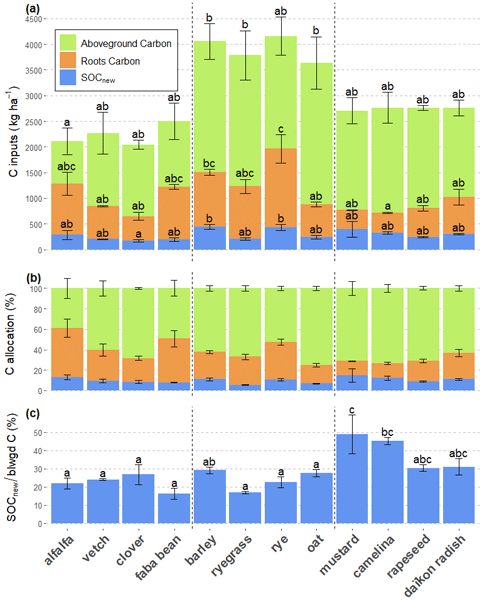
Root-derived carbon is a major input fuelling soil organic carbon stock. However, root sampling generally omits a considerable fraction of this input. Here, we used isotopic tracing, performed on 12 crops, to quantify this carbon pool and to evaluate its persistence through an 18-month field incubation experiment. We highlighted that it represents a large share of root-derived carbon (27 %) with differences between plant families, and that its persistence in the soil might exceed that of roots.
Laura Summerauer, Fernando Bamba, Bendicto Akoraebirungi, Ahurra Wobusobozi, Marijn Bauters, Travis William Drake, Negar Haghipour, Clovis Kabaseke, Daniel Muhindo, Landry Cizungu Ntaboba, Leonardo Ramirez-Lopez, Johan Six, Daniel Wasner, and Sebastian Doetterl
Biogeosciences, 23, 3907–3938, https://doi.org/10.5194/bg-23-3907-2026, https://doi.org/10.5194/bg-23-3907-2026, 2026
Short summary
Short summary
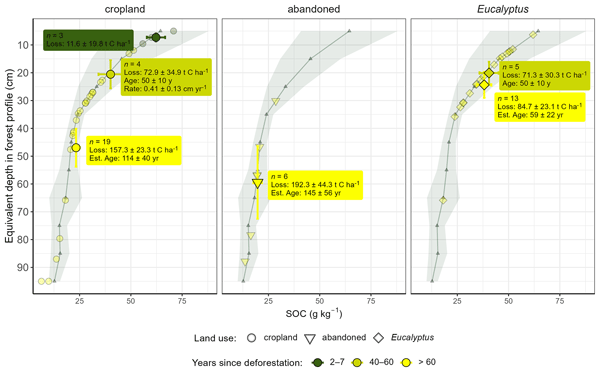
Deforestation for croplands on tropical hillslopes causes severe soil degradation and loss of fertile topsoil. We found that this leads to a steep decline in soil fertility, including organic carbon, nitrogen, and phosphorus. This makes the land unproductive, often leading farmers to abandon it. Replanting with Eucalyptus trees doesn't restore fertility. This degradation leads to cropland lifespans of only 145±56 years and poses a serious threat to future food production.

Luisa I. Minich, Dylan Geissbühler, Stefan Tobler, Annegret Udke, Alexander S. Brunmayr, Margaux Moreno Duborgel, Ciriaco McMackin, Lukas Wacker, Philip Gautschi, Negar Haghipour, Markus Egli, Ansgar Kahmen, Jens Leifeld, Timothy I. Eglinton, and Frank Hagedorn
Biogeosciences, 23, 811–829, https://doi.org/10.5194/bg-23-811-2026, https://doi.org/10.5194/bg-23-811-2026, 2026
Short summary
Short summary
We developed a conceptual framework using rates and 14C-derived ages of soil-respired CO2 and its sources (autotrophic, heterotrophic) to identify carbon cycling pathways in different land-use types. Rates, ages and sources of respired CO2 varied across forests, grasslands, croplands, and managed peatlands. Our results suggest that the relationship between rates and ages of respired CO2 serves as a robust indicator of carbon retention and loss from natural to disturbed systems.
Madeleine Santos, Lisa Bröder, Matt O'Regan, Iván Hernández-Almeida, Tommaso Tesi, Lukas Bigler, Negar Haghipour, Daniel B. Nelson, Michael Fritz, and Julie Lattaud
Clim. Past, 22, 187–203, https://doi.org/10.5194/cp-22-187-2026, https://doi.org/10.5194/cp-22-187-2026, 2026
Short summary
Short summary
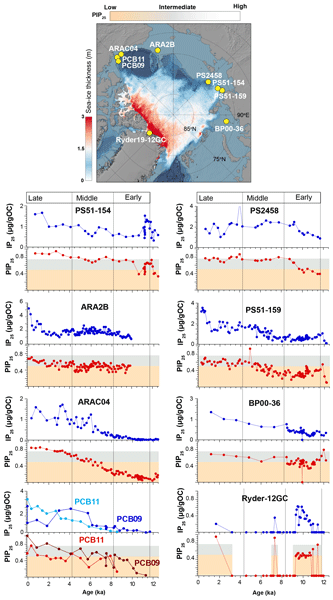
Our study examined how sea ice in the Beaufort Sea has changed over the past 13 000 years to better understand today's rapid losses. By analyzing chemical tracers preserved in seafloor sediments, we found that the Early Holocene was largely ice-free, with warmer waters and lower salinity. Seasonal ice began forming about 7000 years ago and expanded as the climate cooled. These long-term patterns show that continued warming could return the region to mostly ice-free conditions.
Chantal Schmidt, David Mair, Naki Akçar, Marcus Christl, Negar Haghipour, Christof Vockenhuber, Philip Gautschi, Brian McArdell, and Fritz Schlunegger
Earth Surf. Dynam., 14, 33–53, https://doi.org/10.5194/esurf-14-33-2026, https://doi.org/10.5194/esurf-14-33-2026, 2026
Short summary
Short summary
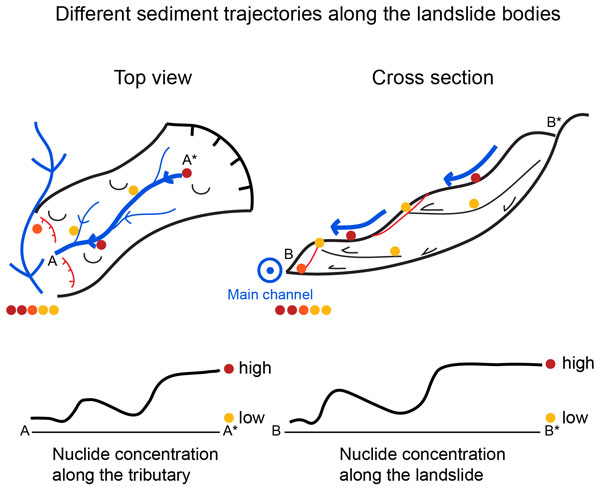
Our study examines erosion in a small, pre-Alpine basin by using cosmogenic nuclides in river sediments. Based on a dense measuring network we were able to distinguish two main zones: an upper zone with slow erosion of surface material, and a steeper, lower zone where faster erosion is driven by landslides. The data suggests that sediment has been constantly produced over thousands of years, indicating a stable, long-term balance between contrasting erosion processes.
Annina Maier, Maria E. Macfarlane, Marco Griepentrog, and Sebastian Doetterl
Biogeosciences, 22, 7337–7361, https://doi.org/10.5194/bg-22-7337-2025, https://doi.org/10.5194/bg-22-7337-2025, 2025
Short summary
Short summary
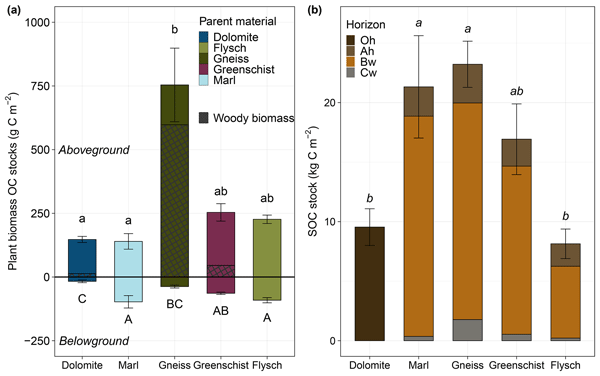
A systematic analysis of the interaction between pedo- and biosphere in shaping alpine soil organic carbon (SOC) stocks remains missing. Our regional-scale study of alpine SOC stocks across five parent materials shows that plant biomass stock is not a strong control of SOC stocks. Rather, the greatest SOC stocks are linked to more weathered soil profiles with higher Fe and Al pedogenic oxide content, showing the importance of parent material weatherability and geochemistry for SOC stabilization.
Benedict V. A. Mittelbach, Margot E. White, Timo M. Y. Rhyner, Negar Haghipour, Marie-Elodie Perga, Nathalie Dubois, and Timothy I. Eglinton
Biogeosciences, 22, 6749–6763, https://doi.org/10.5194/bg-22-6749-2025, https://doi.org/10.5194/bg-22-6749-2025, 2025
Short summary
Short summary
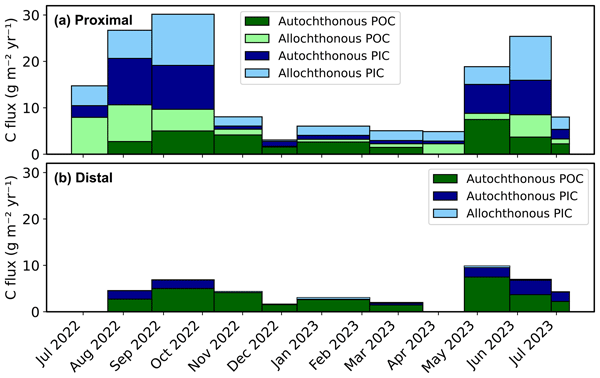
Lakes can emit carbon dioxide but also store carbon in their sediments. In hardwater lakes like Lake Geneva, calcite precipitates in the water column, releasing CO2 to the atmosphere, but upon sinking these particles also transport carbon to the sediment. Using sediment traps and radiocarbon isotopes, we show that much of the precipitated calcite is buried, highlighting an overlooked carbon sink that partly offsets the CO2 outgassing and should be included in lake carbon budgets.
Sarah Paradis, Hannah Gies, Davide Moccia, Julie Lattaud, Lisa Bröder, Negar Haghipour, Antonio Pusceddu, Albert Palanques, Pere Puig, Claudio Lo Iacono, and Timothy I. Eglinton
Biogeosciences, 22, 5921–5941, https://doi.org/10.5194/bg-22-5921-2025, https://doi.org/10.5194/bg-22-5921-2025, 2025
Short summary
Short summary
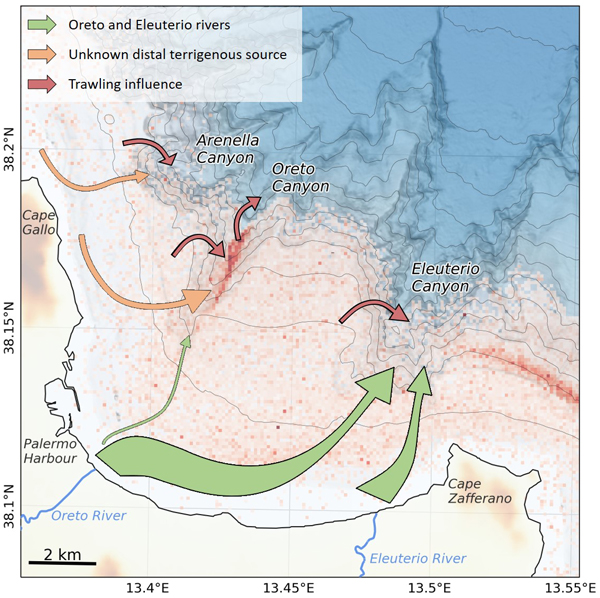
The Gulf of Palermo features several submarine canyons, where 50–70 % of the organic carbon deposited in them is terrigenous (OC-terr). The contribution of OC-terr generally decreases offshore and across canyons. Rivers deliver OC-terr, which is redistributed by regional currents and intercepted by the farthest down-current canyon, while the other submarine canyons receive terrigenous organic carbon from more distal sources. Bottom trawling also contributes to the transfer of OC-terr down-canyon.
Baptiste Hulin, Scott Saleska, Didier Jehanno, Simon Chollet, Katerina Dontsova, Hannes Bauser, Valerie Milici, and Samuel Abiven
EGUsphere, https://doi.org/10.5194/egusphere-2025-4243, https://doi.org/10.5194/egusphere-2025-4243, 2025
Short summary
Short summary
Studying biogeochemical processes requires expertise in many disciplines. To meet this challenge, we set up an experimental facility that combines 15 lysimeters and a climate chamber. We developed instrumentation that would enable us to monitor the water cycle and facilitate sampling for all lysimeters, thus allowing replication. By providing automated access to a variety of data, this facility fosters interdisciplinarity and offers an alternative to field and laboratory studies.
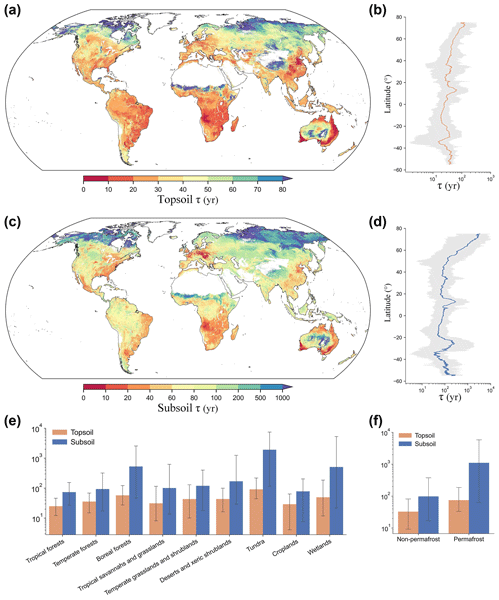
Lei Zhang, Lin Yang, Thomas W. Crowther, Constantin M. Zohner, Sebastian Doetterl, Gerard B. M. Heuvelink, Alexandre M. J.-C. Wadoux, A.-Xing Zhu, Yue Pu, Feixue Shen, Haozhi Ma, Yibiao Zou, and Chenghu Zhou
Earth Syst. Sci. Data, 17, 2605–2623, https://doi.org/10.5194/essd-17-2605-2025, https://doi.org/10.5194/essd-17-2605-2025, 2025
Short summary
Short summary
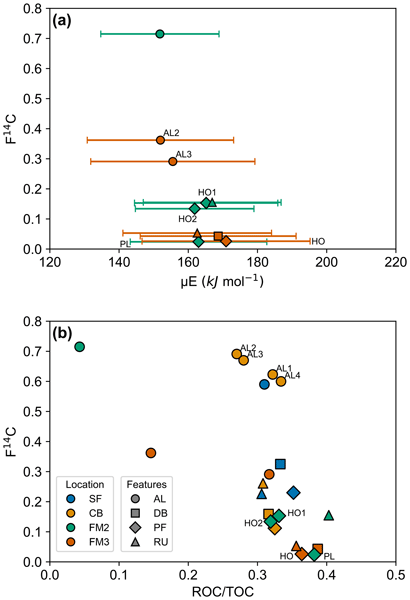
Current understandings of depth-dependent variations and controls of soil organic carbon turnover time (τ) at global, biome, and local scales remain incomplete. We used the state-of-the-art soil and root profile databases and satellite observations to generate new spatially explicit global maps of topsoil and subsoil τ, with quantified uncertainties for better user applications. The new insights from the resulting maps will facilitate efforts to model the carbon cycle and will support effective carbon management.
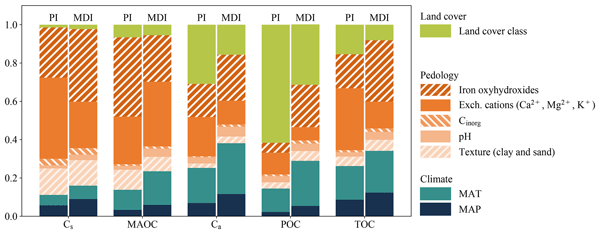
Amicie A. Delahaie, Lauric Cécillon, Marija Stojanova, Samuel Abiven, Pierre Arbelet, Dominique Arrouays, François Baudin, Antonio Bispo, Line Boulonne, Claire Chenu, Jussi Heinonsalo, Claudy Jolivet, Kristiina Karhu, Manuel Martin, Lorenza Pacini, Christopher Poeplau, Céline Ratié, Pierre Roudier, Nicolas P. A. Saby, Florence Savignac, and Pierre Barré
SOIL, 10, 795–812, https://doi.org/10.5194/soil-10-795-2024, https://doi.org/10.5194/soil-10-795-2024, 2024
Short summary
Short summary
This paper compares the soil organic carbon fractions obtained from a new thermal fractionation scheme and a well-known physical fractionation scheme on an unprecedented dataset of French topsoil samples. For each fraction, we use a machine learning model to determine its environmental drivers (pedology, climate, and land cover). Our results suggest that these two fractionation schemes provide different fractions, which means they provide complementary information.
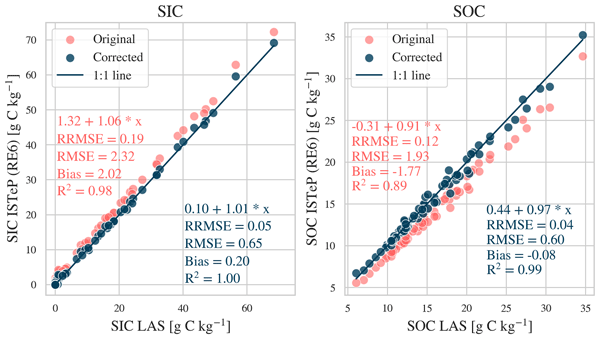
Marija Stojanova, Pierre Arbelet, François Baudin, Nicolas Bouton, Giovanni Caria, Lorenza Pacini, Nicolas Proix, Edouard Quibel, Achille Thin, and Pierre Barré
Biogeosciences, 21, 4229–4237, https://doi.org/10.5194/bg-21-4229-2024, https://doi.org/10.5194/bg-21-4229-2024, 2024
Short summary
Short summary
Because of its importance for climate regulation and soil health, many studies focus on carbon dynamics in soils. However, quantifying organic and inorganic carbon remains an issue in carbonated soils. In this technical note, we propose a validated correction method to quantify organic and inorganic carbon in soils using Rock-Eval® thermal analysis. With this correction, the Rock-Eval® method has the potential to become the standard method for quantifying carbon in carbonate soils.
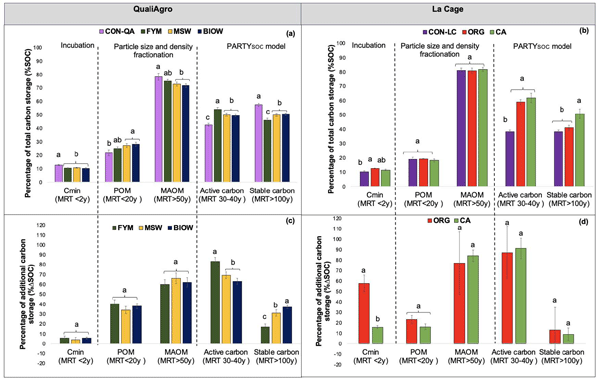
Tchodjowiè P. I. Kpemoua, Pierre Barré, Sabine Houot, François Baudin, Cédric Plessis, and Claire Chenu
SOIL, 10, 533–549, https://doi.org/10.5194/soil-10-533-2024, https://doi.org/10.5194/soil-10-533-2024, 2024
Short summary
Short summary
Several agroecological management options foster soil organic C stock accrual. What is behind the persistence of this "additional" C? We used three different methodological approaches and >20 years of field experiments under temperate conditions to find out. We found that the additional C is less stable at the pluri-decadal scale than the baseline C. This highlights the need to maintain agroecological practices to keep these carbon stocks at a high level over time.
Johan Six, Sebastian Doetterl, Moritz Laub, Claude R. Müller, and Marijn Van de Broek
SOIL, 10, 275–279, https://doi.org/10.5194/soil-10-275-2024, https://doi.org/10.5194/soil-10-275-2024, 2024
Short summary
Short summary
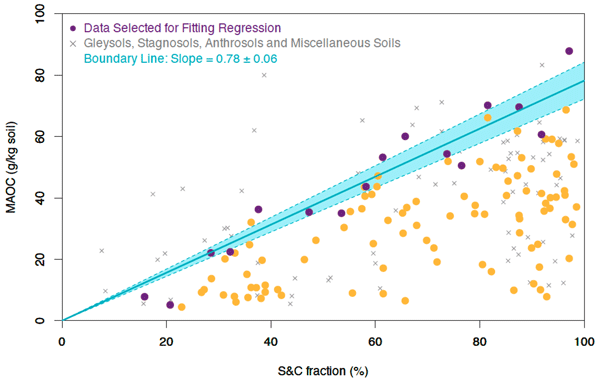
Soil C saturation has been tested in several recent studies and led to a debate about its existence. We argue that, to test C saturation, one should pay attention to six fundamental principles: the right measures, the right units, the right dispersive energy and application, the right soil type, the right clay type, and the right saturation level. Once we take care of those six rights across studies, we find support for a maximum of C stabilized by minerals and thus soil C saturation.
Bertrand Guenet, Jérémie Orliac, Lauric Cécillon, Olivier Torres, Laura Sereni, Philip A. Martin, Pierre Barré, and Laurent Bopp
Biogeosciences, 21, 657–669, https://doi.org/10.5194/bg-21-657-2024, https://doi.org/10.5194/bg-21-657-2024, 2024
Short summary
Short summary
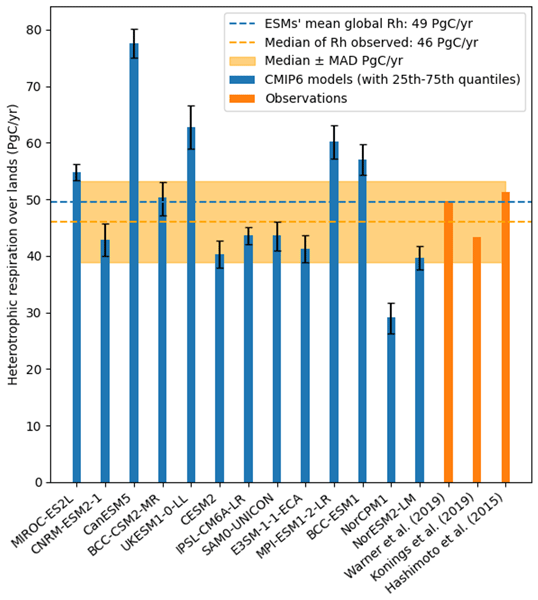
Heterotrophic respiration fluxes are a major flux between surfaces and the atmosphere, but Earth system models do not yet represent them correctly. Here we benchmarked Earth system models against observation-based products, and we identified the important mechanisms that need to be improved in the next-generation Earth system models.
Gina Garland, John Koestel, Alice Johannes, Olivier Heller, Sebastian Doetterl, Dani Or, and Thomas Keller
SOIL, 10, 23–31, https://doi.org/10.5194/soil-10-23-2024, https://doi.org/10.5194/soil-10-23-2024, 2024
Short summary
Short summary
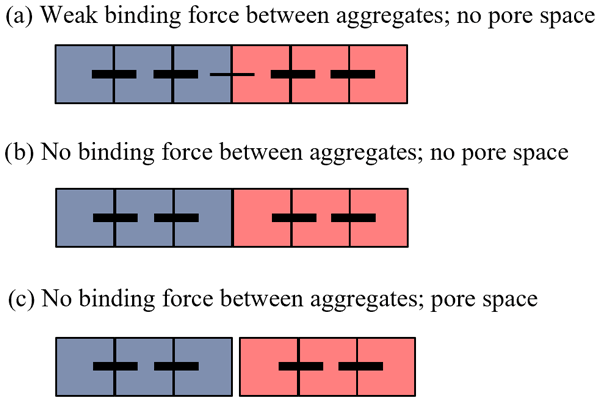
The concept of soil aggregates is hotly debated, leading to confusion about their function or relevancy to soil processes. We propose that the use of conceptual figures showing detached and isolated aggregates can be misleading and has contributed to this skepticism. Here, we conceptually illustrate how aggregates can form and dissipate within the context of undisturbed soils, highlighting the fact that aggregates do not necessarily need to have distinct physical boundaries.
Shane W. Stoner, Marion Schrumpf, Alison Hoyt, Carlos A. Sierra, Sebastian Doetterl, Valier Galy, and Susan Trumbore
Biogeosciences, 20, 3151–3163, https://doi.org/10.5194/bg-20-3151-2023, https://doi.org/10.5194/bg-20-3151-2023, 2023
Short summary
Short summary
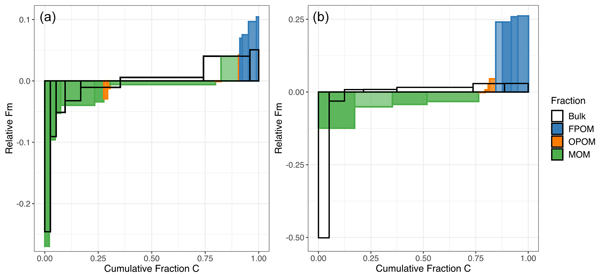
Soils store more carbon (C) than any other terrestrial C reservoir, but the processes that control how much C stays in soil, and for how long, are very complex. Here, we used a recent method that involves heating soil in the lab to measure the range of C ages in soil. We found that most C in soil is decades to centuries old, while some stays for much shorter times (days to months), and some is thousands of years old. Such detail helps us to estimate how soil C may react to changing climate.
Amicie A. Delahaie, Pierre Barré, François Baudin, Dominique Arrouays, Antonio Bispo, Line Boulonne, Claire Chenu, Claudy Jolivet, Manuel P. Martin, Céline Ratié, Nicolas P. A. Saby, Florence Savignac, and Lauric Cécillon
SOIL, 9, 209–229, https://doi.org/10.5194/soil-9-209-2023, https://doi.org/10.5194/soil-9-209-2023, 2023
Short summary
Short summary
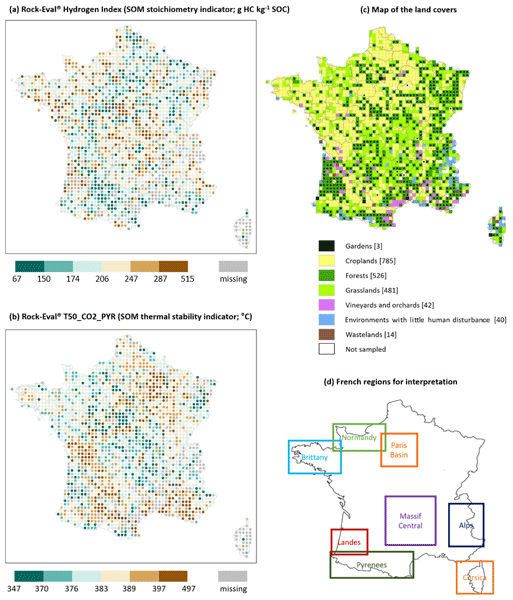
We characterized organic matter in French soils by analysing samples from the French RMQS network using Rock-Eval thermal analysis. We found that thermal analysis is appropriate to characterize large set of samples (ca. 2000) and provides interpretation references for Rock-Eval parameter values. This shows that organic matter in managed soils is on average more oxidized and more thermally stable and that some Rock-Eval parameters are good proxies for organic matter biogeochemical stability.
Moritz Mainka, Laura Summerauer, Daniel Wasner, Gina Garland, Marco Griepentrog, Asmeret Asefaw Berhe, and Sebastian Doetterl
Biogeosciences, 19, 1675–1689, https://doi.org/10.5194/bg-19-1675-2022, https://doi.org/10.5194/bg-19-1675-2022, 2022
Short summary
Short summary
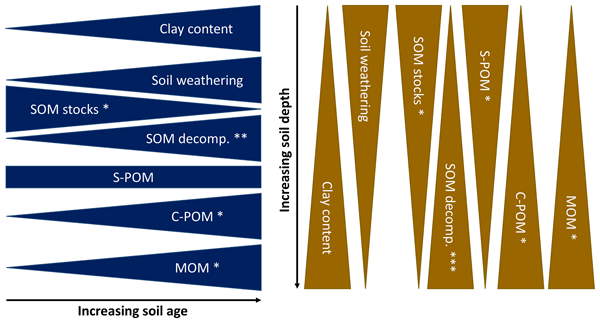
The largest share of terrestrial carbon is stored in soils, making them highly relevant as regards global change. Yet, the mechanisms governing soil carbon stabilization are not well understood. The present study contributes to a better understanding of these processes. We show that qualitative changes in soil organic matter (SOM) co-vary with alterations of the soil matrix following soil weathering. Hence, the type of SOM that is stabilized in soils might change as soils develop.
Eva Kanari, Lauric Cécillon, François Baudin, Hugues Clivot, Fabien Ferchaud, Sabine Houot, Florent Levavasseur, Bruno Mary, Laure Soucémarianadin, Claire Chenu, and Pierre Barré
Biogeosciences, 19, 375–387, https://doi.org/10.5194/bg-19-375-2022, https://doi.org/10.5194/bg-19-375-2022, 2022
Short summary
Short summary
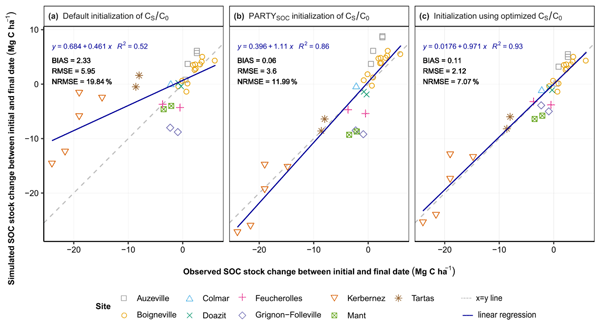
Soil organic carbon (SOC) is crucial for climate regulation, soil quality, and food security. Predicting its evolution over the next decades is key for appropriate land management policies. However, SOC projections lack accuracy. Here we show for the first time that PARTYSOC, an approach combining thermal analysis and machine learning optimizes the accuracy of SOC model simulations at independent sites. This method can be applied at large scales, improving SOC projections on a continental scale.
Pengzhi Zhao, Daniel Joseph Fallu, Sara Cucchiaro, Paolo Tarolli, Clive Waddington, David Cockcroft, Lisa Snape, Andreas Lang, Sebastian Doetterl, Antony G. Brown, and Kristof Van Oost
Biogeosciences, 18, 6301–6312, https://doi.org/10.5194/bg-18-6301-2021, https://doi.org/10.5194/bg-18-6301-2021, 2021
Short summary
Short summary
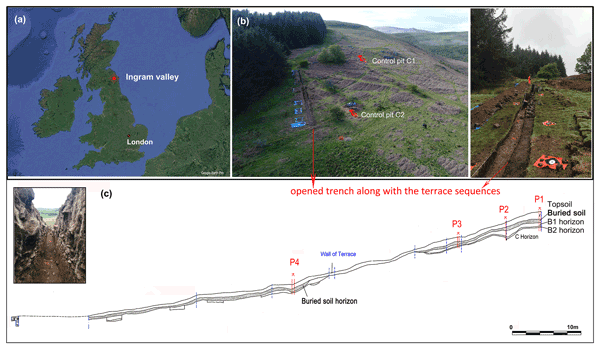
We investigate the factors controlling the soil organic carbon (SOC) stability and temperature sensitivity of abandoned prehistoric agricultural terrace soils. Results suggest that the burial of former topsoil due to terracing provided an SOC stabilization mechanism. Both the soil C : N ratio and SOC mineral protection regulate soil SOC temperature sensitivity. However, which mechanism predominantly controls SOC temperature sensitivity depends on the age of the buried terrace soils.
Laura Summerauer, Philipp Baumann, Leonardo Ramirez-Lopez, Matti Barthel, Marijn Bauters, Benjamin Bukombe, Mario Reichenbach, Pascal Boeckx, Elizabeth Kearsley, Kristof Van Oost, Bernard Vanlauwe, Dieudonné Chiragaga, Aimé Bisimwa Heri-Kazi, Pieter Moonen, Andrew Sila, Keith Shepherd, Basile Bazirake Mujinya, Eric Van Ranst, Geert Baert, Sebastian Doetterl, and Johan Six
SOIL, 7, 693–715, https://doi.org/10.5194/soil-7-693-2021, https://doi.org/10.5194/soil-7-693-2021, 2021
Short summary
Short summary
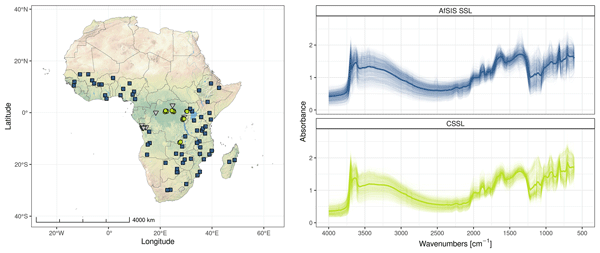
We present a soil mid-infrared library with over 1800 samples from central Africa in order to facilitate soil analyses of this highly understudied yet critical area. Together with an existing continental library, we demonstrate a regional analysis and geographical extrapolation to predict total carbon and nitrogen. Our results show accurate predictions and highlight the value that the data contribute to existing libraries. Our library is openly available for public use and for expansion.
Cited articles
Abiven, S., Hengartner, P., Schneider, M. P., Singh, N., and Schmidt, M. W.: Pyrogenic Carbon Soluble Fraction Is Larger and More Aromatic in Aged Charcoal than in Fresh Charcoal, Soil Biology and Biochemistry, 43, 1615–1617, https://doi.org/10.1016/j.soilbio.2011.03.027, 2011. a, b, c
Abney, R., Barnes, M. E., Moss, A., and Santos, F.: Constraints and Drivers of Dissolved Fluxes of Pyrogenic Carbon in Soil and Freshwater Systems: A Global Review and Meta-Analysis, Global Biogeochemical Cycles, 38, e2023GB008092, https://doi.org/10.1029/2023GB008092, 2024. a, b
Abney, R. B. and Berhe, A. A.: Pyrogenic Carbon Erosion: Implications for Stock and Persistence of Pyrogenic Carbon in Soil, Frontiers in Earth Science, 6, 26, https://doi.org/10.3389/feart.2018.00026, 2018. a, b
Abney, R. B., Kuhn, T. J., Chow, A., Hockaday, W. C., Fogel, M. L., and Berhe, A. A.: Pyrogenic Carbon Erosion after the Rim Fire, Yosemite National Park: The Role of Burn Severity and Slope, Journal of Geophysical Research: Biogeosciences, 124, 432–449, https://doi.org/10.1029/2018JG004787, 2019. a, b
Agarwal, T. and Bucheli, T. D.: Adaptation, Validation and Application of the Chemo-Thermal Oxidation Method to Quantify Black Carbon in Soils, Environmental Pollution, 159, 532–538, https://doi.org/10.1016/j.envpol.2010.10.012, 2011. a, b, c
Alexis, M., Rasse, D., Knicker, H., Anquetil, C., and Rumpel, C.: Evolution of Soil Organic Matter after Prescribed Fire: A 20-Year Chronosequence, Geoderma, 189–190, 98–107, https://doi.org/10.1016/j.geoderma.2012.05.003, 2012. a, b, c, d
Andreeva, D., Leiber, K., Glaser, B., Hambach, U., Erbajeva, M., Chimitdorgieva, G., Tashak, V., and Zech, W.: Genesis and Properties of Black Soils in Buryatia, Southeastern Siberia, Russia, Quaternary International, 243, 313–326, https://doi.org/10.1016/j.quaint.2010.12.017, 2011. a
Ascough, P., Bompard, N., Garnett, M. H., Gulliver, P., Murray, C., Newton, J.-A., and Taylor, C.: 14C Measurement of Samples for Environmental Science Applications at the National Environmental Isotope Facility (NEIF) Radiocarbon Laboratory, SUERC, UK, Radiocarbon, 66, 1020–1031, https://doi.org/10.1017/RDC.2024.9, 2024. a
Azzi, E. S., Li, H., Cederlund, H., Karltun, E., and Sundberg, C.: Modelling biochar long-term carbon storage in soil with harmonized analysis of decomposition data, Geoderma, 441, 116761, https://doi.org/10.1016/j.geoderma.2023.116761, 2024. a, b
Barré, P., Plante, A. F., Cécillon, L., Lutfalla, S., Baudin, F., Bernard, S., Christensen, B. T., Eglin, T., Fernandez, J. M., Houot, S., Kätterer, T., Le Guillou, C., Macdonald, A., Van Oort, F., and Chenu, C.: The Energetic and Chemical Signatures of Persistent Soil Organic Matter, Biogeochemistry, 130, 1–12, https://doi.org/10.1007/s10533-016-0246-0, 2016. a
Belcher, C. M. (Ed.): Fire Phenomena and the Earth System: An Interdisciplinary Guide to Fire Science, John Wiley & Sons, Ltd, https://doi.org/10.1002/9781118529539.ch11, 2013. a
Bellè, S.-L., Berhe, A. A., Hagedorn, F., Santin, C., Schiedung, M., van Meerveld, I., and Abiven, S.: Key drivers of pyrogenic carbon redistribution during a simulated rainfall event, Biogeosciences, 18, 1105–1126, https://doi.org/10.5194/bg-18-1105-2021, 2021. a, b, c
Berhe, A. A., Barnes, R. T., Six, J., and Marín-Spiotta, E.: Role of Soil Erosion in Biogeochemical Cycling of Essential Elements: Carbon, Nitrogen, and Phosphorus, Annual Review of Earth and Planetary Sciences, 46, 521–548, https://doi.org/10.1146/annurev-earth-082517-010018, 2018. a
Bird, M. I., Wynn, J. G., Saiz, G., Wurster, C. M., and McBeath, A.: The Pyrogenic Carbon Cycle, Annual Review of Earth and Planetary Sciences, 43, 273–298, https://doi.org/10.1146/annurev-earth-060614-105038, 2015. a
Bonhage, A., Raab, T., Schneider, A., Fischer, T., Ramezany, S., Ouimet, W., Raab, A., and Hirsch, F.: Vertical SOC Distribution and Aromatic Carbon in Centuries Old Charcoal-rich Technosols, European Journal of Soil Science, 73, e13293, https://doi.org/10.1111/ejss.13293, 2022. a
Boot, C. M., Haddix, M., Paustian, K., and Cotrufo, M. F.: Distribution of black carbon in ponderosa pine forest floor and soils following the High Park wildfire, Biogeosciences, 12, 3029–3039, https://doi.org/10.5194/bg-12-3029-2015, 2015. a, b, c
Bosq, M., Kreutzer, S., Bertran, P., Lanos, P., Dufresne, P., and Schmidt, C.: Last Glacial loess in Europe: luminescence database and chronology of deposition, Earth Syst. Sci. Data, 15, 4689–4711, https://doi.org/10.5194/essd-15-4689-2023, 2023. a, b
Bowring, S. P., Jones, M. W., Ciais, P., Guenet, B., and Abiven, S.: Pyrogenic carbon decomposition critical to resolving fire's role in the Earth system, Nature Geoscience, 15, 135–142, https://doi.org/10.1038/s41561-021-00892-0, 2022. a
Briard, J., Gebhardt, A., Marguerie, D., and Querré, G.: Archéologie et environnement en forêt de Broceliande, un exemple d'études pluridisciplinaires, Bulletin de la Société préhistorique française, 86, 397–403, https://doi.org/10.3406/bspf.1989.9899, 1989. a, b
Brodowski, S., Rodionov, A., Haumaier, L., Glaser, B., and Amelung, W.: Revised Black Carbon Assessment Using Benzene Polycarboxylic Acids, Organic Geochemistry, 36, 1299–1310, https://doi.org/10.1016/j.orggeochem.2005.03.011, 2005. a, b
Brodowski, S., Amelung, W., Haumaier, L., and Zech, W.: Black Carbon Contribution to Stable Humus in German Arable Soils, Geoderma, 139, 220–228, https://doi.org/10.1016/j.geoderma.2007.02.004, 2007. a, b
Butnor, J. R., Samuelson, L. J., Johnsen, K. H., Anderson, P. H., González Benecke, C. A., Boot, C. M., Cotrufo, M. F., Heckman, K. A., Jackson, J. A., Stokes, T. A., and Zarnoch, S. J.: Vertical Distribution and Persistence of Soil Organic Carbon in Fire-Adapted Longleaf Pine Forests, Forest Ecology and Management, 390, 15–26, https://doi.org/10.1016/j.foreco.2017.01.014, 2017. a, b, c, d, e, f
Caria, G., Arrouays, D., Dubromel, E., Jolivet, C., Ratié, C., Bernoux, M., Barthès, B. G., Brunet, D., and Grinand, C.: Black Carbon Estimation in French Calcareous Soils Using Chemo-thermal Oxidation Method, Soil Use and Management, https://doi.org/10.1111/j.1475-2743.2011.00349.x, 333–339, 2011. a
Chaplot, V., Van Vliet-Lanoë, B., Walter, C., Curmi, P., and Cooper, M.: Soil Spatial Distribution in the Armorican Massif, Western France: Effect of Soil-Forming Factors, Soil Science, 168, 856–868, https://doi.org/10.1097/01.ss.0000106405.84926.f9, 2003. a
Chaplot, V. A. M., Rumpel, C., and Valentin, C.: Water Erosion Impact on Soil and Carbon Redistributions within Uplands of Mekong River, Global Biogeochemical Cycles, 19, 2005GB002493, https://doi.org/10.1029/2005GB002493, 2005. a, b, c, d
Chassé, M., Lutfalla, S., Cécillon, L., Baudin, F., Abiven, S., Chenu, C., and Barré, P.: Long-term bare-fallow soil fractions reveal thermo-chemical properties controlling soil organic carbon dynamics, Biogeosciences, 18, 1703–1718, https://doi.org/10.5194/bg-18-1703-2021, 2021. a
Cheng, C.-H., Lehmann, J., Thies, J. E., and Burton, S. D.: Stability of Black Carbon in Soils across a Climatic Gradient, Journal of Geophysical Research: Biogeosciences, 113, 2007JG000642, https://doi.org/10.1029/2007JG000642, 2008. a
Cotrufo, M. F., Boot, C., Abiven, S., Foster, E. J., Haddix, M., Reisser, M., Wurster, C. M., Bird, M. I., and Schmidt, M. W.: Quantification of Pyrogenic Carbon in the Environment: An Integration of Analytical Approaches, Organic Geochemistry, 100, 42–50, https://doi.org/10.1016/j.orggeochem.2016.07.007, 2016a. a, b, c
Cotrufo, M. F., Boot, C. M., Kampf, S., Nelson, P. A., Brogan, D. J., Covino, T., Haddix, M. L., MacDonald, L. H., Rathburn, S., Ryan-Bukett, S., Schmeer, S., and Hall, E.: Redistribution of Pyrogenic Carbon from Hillslopes to Stream Corridors Following a Large Montane Wildfire, Global Biogeochemical Cycles, 30, 1348–1355, https://doi.org/10.1002/2016GB005467, 2016b. a, b, c
Courchesne, F. and Turmel, M.-C.: Extractable Al, Fe, Mn, and Si, in: Soil sampling and methods of analysis, CRC press, Boca Raton (Fla.), ISBN 978-0-8493-3586-0, 2008. a
Curmi, P., Walter, C., Hallaire, V., Gascuel-Odoux, C., Widiatmaka, Taha, A., and Zida, M.: Les sols du bassin versant du Coët Dan: caractéristiques hydrodynamiques des volumes pédologiques, Science update, Institut national de la recherche agronomique, Paris, 1998. a
Czimczik, C. I., Schmidt, M. W. I., and Schulze, E.-D.: Effects of Increasing Fire Frequency on Black Carbon and Organic Matter in Podzols of Siberian Scots Pine Forests, European Journal of Soil Science, 56, 417–428, https://doi.org/10.1111/j.1365-2389.2004.00665.x, 2005. a, b
Dai, X., Boutton, T., Glaser, B., Ansley, R., and Zech, W.: Black Carbon in a Temperate Mixed-Grass Savanna, Soil Biology and Biochemistry, 37, 1879–1881, https://doi.org/10.1016/j.soilbio.2005.02.021, 2005. a, b, c
Eckmeier, E., Egli, M., Schmidt, M., Schlumpf, N., Nötzli, M., Minikus-Stary, N., and Hagedorn, F.: Preservation of Fire-Derived Carbon Compounds and Sorptive Stabilisation Promote the Accumulation of Organic Matter in Black Soils of the Southern Alps, Geoderma, 159, 147–155, https://doi.org/10.1016/j.geoderma.2010.07.006, 2010. a
Elmquist, M., Gustafsson, Ö., and Andersson, P.: Quantification of Sedimentary Black Carbon Using the Chemothermal Oxidation Method: An Evaluation of Ex Situ Pretreatments and Standard Additions Approaches, Limnology and Oceanography: Methods, 2, 417–427, https://doi.org/10.4319/lom.2004.2.417, 2004. a, b
Forrest, M., Hetzer, J., Billing, M., Bowring, S. P. K., Kosczor, E., Oberhagemann, L., Perkins, O., Warren, D., Arrogante-Funes, F., Thonicke, K., and Hickler, T.: Understanding and simulating cropland and non-cropland burning in Europe using the BASE (Burnt Area Simulator for Europe) model, Biogeosciences, 21, 5539–5560, https://doi.org/10.5194/bg-21-5539-2024, 2024. a, b
Gaudin, L., Bernard, V., and Marguerie, D.: Forêts, friches, landes, marais… et cultures dans l'ouest de la Gaule: dynamique spatio-temporelle des données archéobotaniques au début du Subatlantique dans le massif Armoricain, in: Silva et saltus en Gaule Romaine: Dynamique et gestion des forêts et des zones rurales marginales, edited by: Bernard, V., Favory, F., and Fiches, J.-L., Presses universitaires de Franche-Comté, pp. 81–89, https://doi.org/10.4000/books.pufc.8353, 2014. a, b, c, d
Gavin, D. G., Brubaker, L. B., and Lertzman, K. P.: Holocene Fire History of a Coastal Temperate Rain Forest Based on Soil Charcoal Radiocarbon Dates, Ecology, 84, 186–201, https://doi.org/10.1890/0012-9658(2003)084[0186:HFHOAC]2.0.CO;2, 2023. a, b
Girona-García, A., Vieira, D., Doerr, S., Panagos, P., and Santín, C.: Into the Unknown: The Role of Post-fire Soil Erosion in the Carbon Cycle, Global Change Biology, 30, e17354, https://doi.org/10.1111/gcb.17354, 2024. a
Güereña, D. T., Lehmann, J., Walter, T., Enders, A., Neufeldt, H., Odiwour, H., Biwott, H., Recha, J., Shepherd, K., Barrios, E., and Wurster, C.: Terrestrial Pyrogenic Carbon Export to Fluvial Ecosystems: Lessons Learned from the White Nile Watershed of East Africa, Global Biogeochemical Cycles, 29, 1911–1928, https://doi.org/10.1002/2015GB005095, 2015. a, b, c, d, e
Guggenberger, G., Rodionov, A., Shibistova, O., Grabe, M., Kasansky, O. A., Fuchs, H., Mikheyeva, N., Zrazhevskaya, G., and Flessa, H.: Storage and Mobility of Black Carbon in Permafrost Soils of the Forest Tundra Ecotone in Northern Siberia, Global Change Biology, 14, 1367–1381, https://doi.org/10.1111/j.1365-2486.2008.01568.x, 2008. a, b
Gustafsson, Ö., Haghseta, F., Chan, C., MacFarlane, J., and Gschwend, P. M.: Quantification of the Dilute Sedimentary Soot Phase: Implications for PAH Speciation and Bioavailability, Environmental Science & Technology, 31, 203–209, https://doi.org/10.1021/es960317s, 1997. a
Gustafsson, Ö., Bucheli, T. D., Kukulska, Z., Andersson, M., Largeau, C., Rouzaud, J.-N., Reddy, C. M., and Eglinton, T. I.: Evaluation of a Protocol for the Quantification of Black Carbon in Sediments, Global Biogeochemical Cycles, 15, 881–890, https://doi.org/10.1029/2000GB001380, 2001. a, b
Hajdas, I., Schlumpf, N., Minikus-Stary, N., Hagedorn, F., Eckmeier, E., Schoch, W., Burga, C., Bonani, G., Schmidt, M. W., and Cherubini, P.: Radiocarbon Ages of Soil Charcoals from the Southern Alps, Ticino, Switzerland, Nuclear Instruments and Methods in Physics Research Section B: Beam Interactions with Materials and Atoms, 259, 398–402, https://doi.org/10.1016/j.nimb.2007.02.075, 2007. a, b, c
Hammes, K. and Abiven, S.: Identification of Black Carbon in the Earth System, in: Fire Phenomena and the Earth System, 1 edn., edited by: Belcher, C. M., Wiley, pp. 157–176,https://doi.org/10.1002/9781118529539.ch9, 2013. a, b, c
Hammes, K., Schmidt, M. W. I., Smernik, R. J., Currie, L. A., Ball, W. P., Nguyen, T. H., Louchouarn, P., Houel, S., Gustafsson, Ö., Elmquist, M., Cornelissen, G., Skjemstad, J. O., Masiello, C. A., Song, J., Peng, P., Mitra, S., Dunn, J. C., Hatcher, P. G., Hockaday, W. C., Smith, D. M., Hartkopf-Fröder, C., Böhmer, A., Lüer, B., Huebert, B. J., Amelung, W., Brodowski, S., Huang, L., Zhang, W., Gschwend, P. M., Flores-Cervantes, D. X., Largeau, C., Rouzaud, J.-N., Rumpel, C., Guggenberger, G., Kaiser, K., Rodionov, A., Gonzalez-Vila, F. J., Gonzalez-Perez, J. A., De La Rosa, J. M., Manning, D. A. C., López-Capél, E., and Ding, L.: Comparison of Quantification Methods to Measure Fire-derived (Black/Elemental) Carbon in Soils and Sediments Using Reference Materials from Soil, Water, Sediment and the Atmosphere, Global Biogeochemical Cycles, 21, 2006GB002914, https://doi.org/10.1029/2006GB002914, 2007. a, b, c
Hammes, K., Smernik, R. J., Skjemstad, J. O., and Schmidt, M. W.: Characterisation and evaluation of reference materials for black carbon analysis using elemental composition, colour, BET surface area and 13C NMR spectroscopy, Applied Geochemistry, 23, 2113–2122, https://doi.org/10.1016/j.apgeochem.2008.04.023, 2008a. a
Hammes, K., Torn, M. S., Lapenas, A. G., and Schmidt, M. W. I.: Centennial black carbon turnover observed in a Russian steppe soil, Biogeosciences, 5, 1339–1350, https://doi.org/10.5194/bg-5-1339-2008, 2008b. a, b
Hilscher, A. and Knicker, H.: Degradation of Grass-Derived Pyrogenic Organic Material, Transport of the Residues within a Soil Column and Distribution in Soil Organic Matter Fractions during a 28month Microcosm Experiment, Organic Geochemistry, 42, 42–54, https://doi.org/10.1016/j.orggeochem.2010.10.005, 2011. a, b, c, d, e
Hobbs, R. and Gimingham, C.: Vegetation, Fire and Herbivore Interactions in Heathland, Advances in Ecological Research, 16, 87–173, https://doi.org/10.1016/S0065-2504(08)60088-4, 1987. a, b
Hockaday, W. C., Grannas, A. M., Kim, S., and Hatcher, P. G.: Direct Molecular Evidence for the Degradation and Mobility of Black Carbon in Soils from Ultrahigh-Resolution Mass Spectral Analysis of Dissolved Organic Matter from a Fire-Impacted Forest Soil, Organic Geochemistry, 37, 501–510, https://doi.org/10.1016/j.orggeochem.2005.11.003, 2006. a
IGN: BD ALTI, 2015. a
IUSS Working Group WRB: World Reference Base for Soil Resources. International Soil Classification System for Naming Soils and Creating Legends for Soil Maps, no. 106 in World Soil Resources Reports, 4th edition edn., International Union of Soil Sciences (IUSS), Vienna, Austria, ISBN 978-92-5-108370-3, 2022. a
Jeanneau, L., Jaffrezic, A., Pierson-Wickmann, A.-C., Gruau, G., Lambert, T., and Petitjean, P.: Constraints on the Sources and Production Mechanisms of Dissolved Organic Matter in Soils from Molecular Biomarkers, Vadose Zone Journal, 13, 1–9, https://doi.org/10.2136/vzj2014.02.0015, 2014. a, b
Jones, M. W., Santín, C., Van Der Werf, G. R., and Doerr, S. H.: Global Fire Emissions Buffered by the Production of Pyrogenic Carbon, Nature Geoscience, 12, 742–747, https://doi.org/10.1038/s41561-019-0403-x, 2019. a, b
Kane, E. S., Kasischke, E. S., Valentine, D. W., Turetsky, M. R., and McGuire, A. D.: Topographic Influences on Wildfire Consumption of Soil Organic Carbon in Interior Alaska: Implications for Black Carbon Accumulation, Journal of Geophysical Research: Biogeosciences, 112, 2007JG000458, https://doi.org/10.1029/2007JG000458, 2007. a
Kane, E. S., Hockaday, W. C., Turetsky, M. R., Masiello, C. A., Valentine, D. W., Finney, B. P., and Baldock, J. A.: Topographic Controls on Black Carbon Accumulation in Alaskan Black Spruce Forest Soils: Implications for Organic Matter Dynamics, Biogeochemistry, 100, 39–56, https://doi.org/10.1007/s10533-009-9403-z, 2010. a, b
Keiluweit, M., Nico, P. S., Johnson, M., and Kleber, M.: Dynamic molecular structure of plant biomass-derived black carbon (biochar), Environmental Science and Technology, 44, 1247–1253, https://doi.org/10.1021/es9031419, 2010. a
Koele, N., Bird, M. I., Haig, J., Marimon-Junior, B. H., Marimon, B. S., Phillips, O. L., De Oliveira, E. A., Quesada, C., and Feldpausch, T. R.: Amazon Basin Forest Pyrogenic Carbon Stocks: First Estimate of Deep Storage, Geoderma, 306, 237–243, https://doi.org/10.1016/j.geoderma.2017.07.029, 2017. a
Krull, E. S., Swanston, C. W., Skjemstad, J. O., and McGowan, J. A.: Importance of Charcoal in Determining the Age and Chemistry of Organic Carbon in Surface Soils, Journal of Geophysical Research: Biogeosciences, 111, 2006JG000194, https://doi.org/10.1029/2006JG000194, 2006. a, b, c
Lambert, T., Pierson-Wickmann, A.-C., Gruau, G., Jaffrezic, A., Petitjean, P., Thibault, J.-N., and Jeanneau, L.: Hydrologically Driven Seasonal Changes in the Sources and Production Mechanisms of Dissolved Organic Carbon in a Small Lowland Catchment: Seasonal Changes in Doc Dynamics, Water Resources Research, 49, 5792–5803, https://doi.org/10.1002/wrcr.20466, 2013. a, b
Lambert, T., Pierson-Wickmann, A.-C., Gruau, G., Jaffrezic, A., Petitjean, P., Thibault, J. N., and Jeanneau, L.: DOC sources and DOC transport pathways in a small headwater catchment as revealed by carbon isotope fluctuation during storm events, Biogeosciences, 11, 3043–3056, https://doi.org/10.5194/bg-11-3043-2014, 2014. a
Lebrun Thauront, J., Ascough, P., Haghipour, N., and Walter, C.: Pyrogenic carbon and other soil physico-chemical characteristics in a small agricultural watershed in the west of France, Zenodo [data set], https://doi.org/10.5281/zenodo.17936907, 2025. a
Lehndorff, E., Roth, P. J., Cao, Z. H., and Amelung, W.: Black Carbon Accrual during 2000 Years of Paddy-Rice and Non-Paddy Cropping in the Yangtze River Delta, China, Global Change Biology, 20, 1968–1978, https://doi.org/10.1111/gcb.12468, 2014. a, b
Lehndorff, E., Houtermans, M., Winkler, P., Kaiser, K., Kölbl, A., Romani, M., Said-Pullicino, D., Utami, S., Zhang, G., Cao, Z., Mikutta, R., Guggenberger, G., and Amelung, W.: Black Carbon and Black Nitrogen Storage under Long-Term Paddy and Non-Paddy Management in Major Reference Soil Groups, Geoderma, 284, 214–225, https://doi.org/10.1016/j.geoderma.2016.08.026, 2016. a, b, c, d
Leifeld, J., Fenner, S., and Müller, M.: Mobility of black carbon in drained peatland soils, Biogeosciences, 4, 425–432, https://doi.org/10.5194/bg-4-425-2007, 2007. a, b
Leng, L., Xu, X., Wei, L., Fan, L., Huang, H., Li, J., Lu, Q., Li, J., and Zhou, W.: Biochar stability assessment by incubation and modelling: Methods, drawbacks and recommendations, Science of the Total Environment, 664, 11–23, https://doi.org/10.1016/j.scitotenv.2019.01.298, 2019. a
Liang, B., Lehmann, J., Solomon, D., Sohi, S., Thies, J. E., Skjemstad, J. O., Luizão, F. J., Engelhard, M. H., Neves, E. G., and Wirick, S.: Stability of Biomass-Derived Black Carbon in Soils, Geochimica et Cosmochimica Acta, 72, 6069–6078, https://doi.org/10.1016/j.gca.2008.09.028, 2008. a, b
Lutfalla, S., Abiven, S., Barré, P., Wiedemeier, D. B., Christensen, B. T., Houot, S., Kätterer, T., Macdonald, A. J., Van Oort, F., and Chenu, C.: Pyrogenic Carbon Lacks Long-Term Persistence in Temperate Arable Soils, Frontiers in Earth Science, 5, 96, https://doi.org/10.3389/feart.2017.00096, 2017. a, b, c
Maestrini, B., Abiven, S., Singh, N., Bird, J., Torn, M. S., and Schmidt, M. W. I.: Carbon losses from pyrolysed and original wood in a forest soil under natural and increased N deposition, Biogeosciences, 11, 5199–5213, https://doi.org/10.5194/bg-11-5199-2014, 2014. a, b, c
Major, J., Lehmann, J., Rondon, M., and Goodale, C.: Fate of Soil-applied Black Carbon: Downward Migration, Leaching and Soil Respiration, Global Change Biology, 1366–1379, https://doi.org/10.1111/j.1365-2486.2009.02044.x, 2010. a, b, c
Masiello, C. A. and Berhe, A. A.: First Interactions with the Hydrologic Cycle Determine Pyrogenic Carbon's Fate in the Earth System, Earth Surface Processes and Landforms, 45, 2394–2398, https://doi.org/10.1002/esp.4925, 2020. a
Matosziuk, L. M., Gallo, A., Hatten, J., Bladon, K. D., Ruud, D., Bowman, M., Egan, J., Heckman, K., SanClements, M., Strahm, B., and Weiglein, T.: Short-Term Effects of Recent Fire on the Production and Translocation of Pyrogenic Carbon in Great Smoky Mountains National Park, Frontiers in Forests and Global Change, 3, 6, https://doi.org/10.3389/ffgc.2020.00006, 2020. a, b
McGuire, L. A., Rasmussen, C., Youberg, A. M., Sanderman, J., and Fenerty, B.: Controls on the Spatial Distribution of Near-Surface Pyrogenic Carbon on Hillslopes 1 Year Following Wildfire, Journal of Geophysical Research: Earth Surface, 126, e2020JF005996, https://doi.org/10.1029/2020JF005996, 2021. a, b, c, d
Mehra, O. P. and Jackson, M. L.: Iron Oxide Removal from Soils and Clays by a Dithionite-Citrate System Buffered with Sodium Bicarbonate, in: Clays and Clay Minerals, Elsevier, Washington DC, pp. 317–327, https://doi.org/10.1016/B978-0-08-009235-5.50026-7, 1960. a
Meredith, W., Ascough, P. L., Bird, M. I., Large, D., Snape, C., Sun, Y., and Tilston, E.: Assessment of Hydropyrolysis as a Method for the Quantification of Black Carbon Using Standard Reference Materials, Geochimica et Cosmochimica Acta, 97, 131–147, https://doi.org/10.1016/j.gca.2012.08.037, 2012. a, b, c
Ministère des Finances, Direction départementale des contributions directes, Bureau du cadastre: Naizin – 1833 – Section B de Penvern et Section E du Boterf, in: Plans du cadastre dit “Napoléonien” dans le Morbihan, edited by: Chiron, H. and Pellerin, D., Patrimoine et Archives – Département du Morbihan, 2007. a, b
Nam, J. J., Gustafsson, O., Kurt-Karakus, P., Breivik, K., Steinnes, E., and Jones, K. C.: Relationships between Organic Matter, Black Carbon and Persistent Organic Pollutants in European Background Soils: Implications for Sources and Environmental Fate, Environmental Pollution, 156, 809–817, https://doi.org/10.1016/j.envpol.2008.05.027, 2008. a
Nesbitt, H. W. and Young, G. M.: Early Proterozoic Climates and Plate Motions Inferred from Major Element Chemistry of Lutites, Nature, 299, 715–717, https://doi.org/10.1038/299715a0, 1982. a
Nicolay, R. E., Mkhize, N. R., Tedder, M. J., and Kirkman, K. P.: Fire Suppression Interacts with Soil Acidity to Maintain Stable Recalcitrant Pyrogenic Carbon Fractions in South African Mesic Grasslands Soil, African Journal of Range & Forage Science, 41, 204–212, https://doi.org/10.2989/10220119.2024.2355909, 2024. a
O'Hagan, A., Cox, M., and Wright, L.: Anomalous Behaviour of the Welch-Satterthwaite Approximation, https://tonyohagan.co.uk/academic/pdf/WS_Anomaly_JAS.pdf (last access: May 2025), 2021. a
Ohlson, M., Dahlberg, B., Økland, T., Brown, K. J., and Halvorsen, R.: The Charcoal Carbon Pool in Boreal Forest Soils, Nature Geoscience, 2, 692–695, https://doi.org/10.1038/ngeo617, 2009. a, b, c
Paroissien, J.-B., Orton, T. G., Saby, N. P. A., Martin, M. P., Jolivet, C. C., Ratie, C., Caria, G., and Arrouays, D.: Mapping Black Carbon Content in Topsoils of Central France, Soil Use and Management, 28, 488–496, https://doi.org/10.1111/j.1475-2743.2012.00452.x, 2012. a, b
Pellerin, J. and Van Vliet-Lanoe, B.: Le du bassin versant du Coët-Dan au coeur du massif armoricain. 2. Analyse cartographique de la région de Naizin, in: Agriculture intensive et qualité des eaux, edited by: Cheverry, C., Science update, Institut national de la recherche agronomique, Paris, ISBN 978-2-7380-0801-5, 1998. a
Pignatello, J. J., Uchimiya, M., Abiven, S., and Schmidt, M. W. I.: Evolution of Biochar Properties in Soil, 2nd ed edn., Routledge, London, 2015. a
Poeplau, C., Vos, C., and Don, A.: Soil organic carbon stocks are systematically overestimated by misuse of the parameters bulk density and rock fragment content, SOIL, 3, 61–66, https://doi.org/10.5194/soil-3-61-2017, 2017. a
Pyle, L. A., Magee, K. L., Gallagher, M. E., Hockaday, W. C., and Masiello, C. A.: Short-Term Changes in Physical and Chemical Properties of Soil Charcoal Support Enhanced Landscape Mobility, Journal of Geophysical Research: Biogeosciences, 122, 3098–3107, https://doi.org/10.1002/2017JG003938, 2017. a, b
Qi, F., Naidu, R., Bolan, N. S., Dong, Z., Yan, Y., Lamb, D., Bucheli, T. D., Choppala, G., Duan, L., and Semple, K. T.: Pyrogenic Carbon in Australian Soils, Science of The Total Environment, 586, 849–857, https://doi.org/10.1016/j.scitotenv.2017.02.064, 2017. a, b, c
R Core Team: R: A language and environment for statistical computing, https://www.r-project.org (last access: 6 January 2026), 2021. a
Rasmussen, P. E., Rickman, R. W., and Douglas, C. L.: Air and Soil Temperatures during Spring Burning of Standing Wheat Stubble, Agronomy Journal, 78, 261–263, https://doi.org/10.2134/agronj1986.00021962007800020009x, 1986. a, b
Rasse, D. P., Mulder, J., Moni, C., and Chenu, C.: Carbon Turnover Kinetics with Depth in a French Loamy Soil, Soil Science Society of America Journal, 70, 2097–2105, https://doi.org/10.2136/sssaj2006.0056, 2006. a
Reimer, P. J., Brown, T. A., and Reimer, R. W.: Discussion: Reporting and Calibration of Post-Bomb 14C Data, Radiocarbon, 46, 1299–1304, https://doi.org/10.1017/S0033822200033154, 2004. a
Reisser, M., Purves, R. S., Schmidt, M. W. I., and Abiven, S.: Pyrogenic Carbon in Soils: A Literature-Based Inventory and a Global Estimation of Its Content in Soil Organic Carbon and Stocks, Frontiers in Earth Science, 4, https://doi.org/10.3389/feart.2016.00080, 2016. a
Rodionov, A., Amelung, W., Peinemann, N., Haumaier, L., Zhang, X., Kleber, M., Glaser, B., Urusevskaya, I., and Zech, W.: Black Carbon in Grassland Ecosystems of the World, Global Biogeochemical Cycles, 24, 2009GB003669, https://doi.org/10.1029/2009GB003669, 2010. a
Rstudio: RStudio, https://posit.co/download/rstudio-desktop/ (last access: 6 January 2026), 2021. a
Rumpel, C., Alexis, M., Chabbi, A., Chaplot, V., Rasse, D., Valentin, C., and Mariotti, A.: Black Carbon Contribution to Soil Organic Matter Composition in Tropical Sloping Land under Slash and Burn Agriculture, Geoderma, 130, 35–46, https://doi.org/10.1016/j.geoderma.2005.01.007, 2006a. a, b, c
Rumpel, C., Chaplot, V., Planchon, O., Bernadou, J., Valentin, C., and Mariotti, A.: Preferential Erosion of Black Carbon on Steep Slopes with Slash and Burn Agriculture, CATENA, 65, 30–40, https://doi.org/10.1016/j.catena.2005.09.005, 2006b. a, b, c
Rumpel, C., Ba, A., Darboux, F., Chaplot, V., and Planchon, O.: Erosion Budget and Process Selectivity of Black Carbon at Meter Scale, Geoderma, 154, 131–137, https://doi.org/10.1016/j.geoderma.2009.10.006, 2009. a, b, c, d
Rumpel, C., Leifeld, J., Santin, C., and Doerr, S. H.: Movement of Biochar in the Environment, in: Biochar for environmental management: science, technology and implementation, edited by: Lehmann, J. and Stephen, J., 2nd ed edn., Routledge, London, 2015. a
Sanderman, J., Baldock, J. A., Dangal, S. R. S., Ludwig, S., Potter, S., Rivard, C., and Savage, K.: Soil Organic Carbon Fractions in the Great Plains of the United States: An Application of Mid-Infrared Spectroscopy, Biogeochemistry, 156, 97–114, https://doi.org/10.1007/s10533-021-00755-1, 2021. a, b
Santín, C., Doerr, S. H., Kane, E. S., Masiello, C. A., Ohlson, M., De La Rosa, J. M., Preston, C. M., and Dittmar, T.: Towards a Global Assessment of Pyrogenic Carbon from Vegetation Fires, Global Change Biology, 22, 76–91, https://doi.org/10.1111/gcb.12985, 2016. a
Santos, F., Wagner, S., Rothstein, D., Jaffe, R., and Miesel, J. R.: Impact of a Historical Fire Event on Pyrogenic Carbon Stocks and Dissolved Pyrogenic Carbon in Spodosols in Northern Michigan, Frontiers in Earth Science, 5, 80, https://doi.org/10.3389/feart.2017.00080, 2017. a, b, c
Santos, F., Bird, J. A., and Asefaw Berhe, A.: Dissolved Pyrogenic Carbon Leaching in Soil: Effects of Soil Depth and Pyrolysis Temperature, Geoderma, 424, 116011, https://doi.org/10.1016/j.geoderma.2022.116011, 2022. a
Sass, O. and Kloss, S.: Distribution of Macro Charcoal from Forest Fires in Shallow Soils of the Northern Alps, Journal of Soils and Sediments, 15, 748–758, https://doi.org/10.1007/s11368-014-0954-9, 2015. a
Schiedung, M., Bellè, S.-L., Hoeschen, C., Schweizer, S. A., and Abiven, S.: Enhanced Loss but Limited Mobility of Pyrogenic and Organic Matter in Continuous Permafrost-Affected Forest Soils, Soil Biology and Biochemistry, 178, 108959, https://doi.org/10.1016/j.soilbio.2023.108959, 2023. a, b
Schiedung, M., Ascough, P. L., Bellè, S.-L., Bird, M. I., Bröder, L., Haghipour, N., Hilton, R. G., Lattaud, J., and Abiven, S.: Millennial-Aged Pyrogenic Carbon in High-Latitude Mineral Soils, Communications Earth & Environment, 5, 177, https://doi.org/10.1038/s43247-024-01343-5, 2024. a, b, c, d, e
Schmidt, M. W. I., Torn, M. S., Abiven, S., Dittmar, T., Guggenberger, G., Janssens, I. A., Kleber, M., Kögel-Knabner, I., Lehmann, J., Manning, D. A. C., Nannipieri, P., Rasse, D. P., Weiner, S., and Trumbore, S. E.: Persistence of Soil Organic Matter as an Ecosystem Property, Nature, 478, 49–56, https://doi.org/10.1038/nature10386, 2011. a
Selvalakshmi, S., De La Rosa, J. M., Zhijun, H., Guo, F., and Ma, X.: Effects of Ageing and Successive Slash-and-Burn Practice on the Chemical Composition of Charcoal and Yields of Stable Carbon, CATENA, 162, 141–147, https://doi.org/10.1016/j.catena.2017.11.028, 2018. a, b
Silva, L. J. D., Oliveira, D. M. D. S., Nóbrega, G. N., Barbosa, R. I., and Cordeiro, R. C.: Pyrogenic Carbon Stocks and Its Spatial Variability in Soils from Savanna-Forest Ecotone in Amazon, Journal of Environmental Management, 340, 117980, https://doi.org/10.1016/j.jenvman.2023.117980, 2023. a, b, c
Singh, B. P., Fang, Y., Boersma, M., Collins, D., Van Zwieten, L., and Macdonald, L. M.: In Situ Persistence and Migration of Biochar Carbon and Its Impact on Native Carbon Emission in Contrasting Soils under Managed Temperate Pastures, PLOS ONE, 10, 1–20, https://doi.org/10.1371/journal.pone.0141560, 2015. a
Singh, N., Abiven, S., Maestrini, B., Bird, J. A., Torn, M. S., and Schmidt, M. W. I.: Transformation and Stabilization of Pyrogenic Organic Matter in a Temperate Forest Field Experiment, Global Change Biology, 20, 1629–1642, https://doi.org/10.1111/gcb.12459, 2014. a
Skjemstad, J., Clarke, P., Taylor, J., Oades, J., and Mcclure, S.: The Chemistry and Nature of Protected Carbon in Soil, Soil Research, 34, 251, https://doi.org/10.1071/SR9960251, 1996. a
Smil, V.: Crop Residues: Agriculture's Largest Harvest, BioScience, 49, 299–308, https://doi.org/10.2307/1313613, 1999. a
Sokol, N. W., Kuebbing, S. E., Karlsen-Ayala, E., and Bradford, M. A.: Evidence for the Primacy of Living Root Inputs, Not Root or Shoot Litter, in Forming Soil Organic Carbon, New Phytologist, 221, 233–246, https://doi.org/10.1111/nph.15361, 2019. a
Solomon, D., Lehmann, J., Wang, J., Kinyangi, J., Heymann, K., Lu, Y., Wirick, S., and Jacobsen, C.: Micro- and Nano-Environments of C Sequestration in Soil: A Multi-Elemental STXM–NEXAFS Assessment of Black C and Organomineral Associations, Science of The Total Environment, 438, 372–388, https://doi.org/10.1016/j.scitotenv.2012.08.071, 2012. a
Sorrenti, G., Masiello, C. A., Dugan, B., and Toselli, M.: Biochar Physico-Chemical Properties as Affected by Environmental Exposure, Science of The Total Environment, 563–564, 237–246, https://doi.org/10.1016/j.scitotenv.2016.03.245, 2016. a
Soucémarianadin, L., Reisser, M., Cécillon, L., Barré, P., Nicolas, M., and Abiven, S.: Pyrogenic Carbon Content and Dynamics in Top and Subsoil of French Forests, Soil Biology and Biochemistry, 133, 12–15, https://doi.org/10.1016/j.soilbio.2019.02.013, 2019. a, b
Synal, H.-A., Stocker, M., and Suter, M.: MICADAS: A New Compact Radiocarbon AMS System, Nuclear Instruments and Methods in Physics Research Section B: Beam Interactions with Materials and Atoms, 259, 7–13, https://doi.org/10.1016/j.nimb.2007.01.138, 2007. a
Torn, M. S., Swanston, C. W., Castanha, C., and Trumbore, S.: Storage and Turnover of Organic Matter in Soil, in: Biophysico-Chemical Processes Involving Natural Nonliving Organic Matter in Environmental Systems, edited by: Senesi, N., Xing, B., and Huang, P. M., Wiley, https://doi.org/10.1002/9780470494950, 2009. a
Van Oost, K. and Six, J.: Reconciling the paradox of soil organic carbon erosion by water, Biogeosciences, 20, 635–646, https://doi.org/10.5194/bg-20-635-2023, 2023. a, b
Van Vliet-Lanoe, B., Hallegouet, B., and Monnier, J. L.: The Quaternary of Brittany – Guide Book of the Excursion of the Quaternary Research Association in Britanny, 12–15 September 1997, vol. Special volume of Travaux Du Laboratoire d'Anthropologie, Université Rennes 1, 1997. a
Van Vliet-Lanoé, B., Pellerin, J., and Chauvel, J.: Le du bassin versant du Coët-Dan au coeur du massif armoricain. 1. Le cadre géologique et géomorphologique, in: Agriculture intensive et qualité des eaux, edited by: Cheverry, C., Science update, Institut national de la recherche agronomique, Paris, 1998. a
Vasilyeva, N. A., Abiven, S., Milanovskiy, E. Y., Hilf, M., Rizhkov, O. V., and Schmidt, M. W.: Pyrogenic Carbon Quantity and Quality Unchanged after 55 Years of Organic Matter Depletion in a Chernozem, Soil Biology and Biochemistry, 43, 1985–1988, https://doi.org/10.1016/j.soilbio.2011.05.015, 2011. a, b, c, d
Velasco-Molina, M., Berns, A. E., Macías, F., and Knicker, H.: Biochemically Altered Charcoal Residues as an Important Source of Soil Organic Matter in Subsoils of Fire-Affected Subtropical Regions, Geoderma, 262, 62–70, https://doi.org/10.1016/j.geoderma.2015.08.016, 2016. a, b, c, d
Vongvixay, A., Grimaldi, C., Dupas, R., Fovet, O., Birgand, F., Gilliet, N., and Gascuel-Odoux, C.: Contrasting Suspended Sediment Export in Two Small Agricultural Catchments: Cross-influence of Hydrological Behaviour and Landscape Degradation or Stream Bank Management, Land Degradation & Development, 29, 1385–1396, https://doi.org/10.1002/ldr.2940, 2018. a, b, c
Wagner, S., Jaffé, R., and Stubbins, A.: Dissolved Black Carbon in Aquatic Ecosystems, Limnology and Oceanography Letters, 3, 168–185, https://doi.org/10.1002/lol2.10076, 2018. a
Wei, T. and Simko, V.: R package “corrplot”: Vizualization of a Correlation Matrix, https://github.com/taiyun/corrplot (last access: 6 January 2026), 2021. a
Wickham, H., Averick, M., Bryan, J., Chang, W., D'Agostino McGowan, L., François, R., Grolemund, G., Hayes, A., Henry, L., Hester, J., Kuhn, M., Pedersen, T. L., Miller, E., Milton Bache, S., Müller, K., Ooms, J., Robinson, D., Seidel, D. P., Spinu, V., Takahashi, K., Vaughan, D., Wilke, C., Woo, K., and Yutani, H.: Welcome to the tidyverse, Journal of Open Source Software, 4, 1686, https://doi.org/10.21105/joss.01686, 2019. a
Wiedemeier, D. B., Abiven, S., Hockaday, W. C., Keiluweit, M., Kleber, M., Masiello, C. A., McBeath, A. V., Nico, P. S., Pyle, L. A., Schneider, M. P., Smernik, R. J., Wiesenberg, G. L., and Schmidt, M. W.: Aromaticity and Degree of Aromatic Condensation of Char, Organic Geochemistry, 78, 135–143, https://doi.org/10.1016/j.orggeochem.2014.10.002, 2015. a
Wurster, C. M., Saiz, G., Schneider, M. P., Schmidt, M. W., and Bird, M. I.: Quantifying pyrogenic carbon from thermosequences of wood and grass using hydrogen pyrolysis, Organic Geochemistry, 62, 28–32, https://doi.org/10.1016/j.orggeochem.2013.06.009, 2013. a
Zheng, H., Miao, C., Huntingford, C., Tarolli, P., Li, D., Panagos, P., Yue, Y., Borrelli, P., and Van Oost, K.: The Impacts of Erosion on the Carbon Cycle, Reviews of Geophysics, 63, e2023RG000829, https://doi.org/10.1029/2023RG000829, 2025. a
Short summary
Fire-derived carbon is a form of organic carbon that has a long persistence in soils. However, its persistence at the landscape scale may be underestimated due to lateral and vertical redistribution. We measured fire-derived carbon in soils of a hilly agricultural watershed to identify the result of transport processes on the centennial time-scale. We show that the subsoil stores a large amount of fire-derived carbon and that erosion can redistribute it to localized accumulation zones.
Fire-derived carbon is a form of organic carbon that has a long persistence in soils. However,...


Altmetrics
Final-revised paper
Preprint