
Articles | Volume 23, issue 5
https://doi.org/10.5194/bg-23-2003-2026
© Author(s) 2026. This work is distributed under
the Creative Commons Attribution 4.0 License.
the Creative Commons Attribution 4.0 License.
https://doi.org/10.5194/bg-23-2003-2026
© Author(s) 2026. This work is distributed under
the Creative Commons Attribution 4.0 License.
the Creative Commons Attribution 4.0 License.
Research article
| 
17 Mar 2026
Research article |
| 17 Mar 2026
| 17 Mar 2026
Alternative dynamic regimes of marine biogeochemical models in perturbed environments
National Institute of Oceanography and Applied Geophysics - OGS, via Beirut 2, Trieste, 34014, Italy
NBFC, National Biodiversity Future Center, Palermo, 90133, Italy
MARBEC, Univ Montpellier, CNRS, Ifremer, IRD, Sète, France
Davide Valenti
Dipartimento di Fisica e Chimica “Emilio Segrè”, Università degli Studi di Palermo, Viale delle Scienze, Ed. 18, Palermo, 90128, Italy
Paolo Lazzari
National Institute of Oceanography and Applied Geophysics - OGS, via Beirut 2, Trieste, 34014, Italy
NBFC, National Biodiversity Future Center, Palermo, 90133, Italy
Related authors
Paolo Lazzari, Francesco Dattilo, Ivano Vascotto, Alberto Ghedin, Guido Occhipinti, and Eva Álvarez
EGUsphere, https://doi.org/10.5194/egusphere-2026-1437, https://doi.org/10.5194/egusphere-2026-1437, 2026
Short summary
Short summary
Diatoms are phytoplankton that can reach hundreds of microns in size and are characterized by a peculiar life cycle in which successive divisions progressively reduce cell size until sexual reproduction restores it. Here we investigate how these size transformations interact with size-dependent ecological processes—growth, nutrient uptake, and predation—and show that the rate of size reduction can strongly influence plankton community structure.
Paolo Lazzari, Francesco Dattilo, Ivano Vascotto, Alberto Ghedin, Guido Occhipinti, and Eva Álvarez
EGUsphere, https://doi.org/10.5194/egusphere-2026-1437, https://doi.org/10.5194/egusphere-2026-1437, 2026
Short summary
Short summary
Diatoms are phytoplankton that can reach hundreds of microns in size and are characterized by a peculiar life cycle in which successive divisions progressively reduce cell size until sexual reproduction restores it. Here we investigate how these size transformations interact with size-dependent ecological processes—growth, nutrient uptake, and predation—and show that the rate of size reduction can strongly influence plankton community structure.
Carlos Enmanuel Soto López, Mirna Gharbi Dit Kacem, Fabio Anselmi, and Paolo Lazzari
Geosci. Model Dev., 18, 7575–7602, https://doi.org/10.5194/gmd-18-7575-2025, https://doi.org/10.5194/gmd-18-7575-2025, 2025
Short summary
Short summary
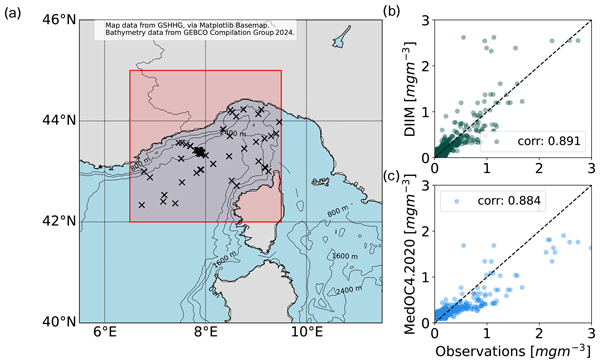
We used a semi-analytical expression to estimate the concentration of optically active constituents, allowing us to have an interpretable formulation consistent with the laws of physics. We focused on a probabilistic approach, inverting the model with its respective uncertainty. Considering future applications to big data, we explored a neural-network-based method, retrieving computationally efficient estimates with an accuracy comparable to existing state-of-the-art algorithms.
Eva Álvarez, Gianpiero Cossarini, Anna Teruzzi, Jorn Bruggeman, Karsten Bolding, Stefano Ciavatta, Vincenzo Vellucci, Fabrizio D'Ortenzio, David Antoine, and Paolo Lazzari
Biogeosciences, 20, 4591–4624, https://doi.org/10.5194/bg-20-4591-2023, https://doi.org/10.5194/bg-20-4591-2023, 2023
Short summary
Short summary
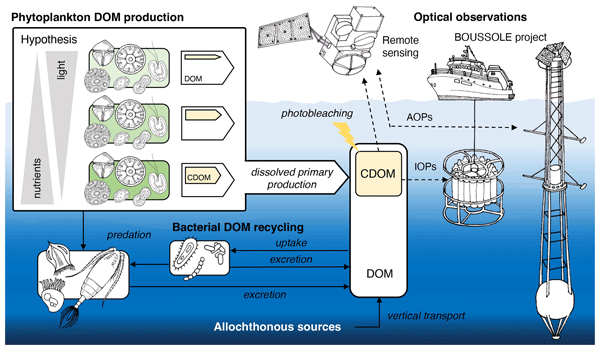
Chromophoric dissolved organic matter (CDOM) interacts with the ambient light and gives the waters of the Mediterranean Sea their colour. We propose a novel parameterization of the CDOM cycle, whose parameter values have been optimized by using the data of the monitoring site BOUSSOLE. Nutrient and light limitations for locally produced CDOM caused aCDOM(λ) to covary with chlorophyll, while the above-average CDOM concentrations observed at this site were maintained by allochthonous sources.
Giovanni Coppini, Emanuela Clementi, Gianpiero Cossarini, Stefano Salon, Gerasimos Korres, Michalis Ravdas, Rita Lecci, Jenny Pistoia, Anna Chiara Goglio, Massimiliano Drudi, Alessandro Grandi, Ali Aydogdu, Romain Escudier, Andrea Cipollone, Vladyslav Lyubartsev, Antonio Mariani, Sergio Cretì, Francesco Palermo, Matteo Scuro, Simona Masina, Nadia Pinardi, Antonio Navarra, Damiano Delrosso, Anna Teruzzi, Valeria Di Biagio, Giorgio Bolzon, Laura Feudale, Gianluca Coidessa, Carolina Amadio, Alberto Brosich, Arnau Miró, Eva Alvarez, Paolo Lazzari, Cosimo Solidoro, Charikleia Oikonomou, and Anna Zacharioudaki
Ocean Sci., 19, 1483–1516, https://doi.org/10.5194/os-19-1483-2023, https://doi.org/10.5194/os-19-1483-2023, 2023
Short summary
Short summary
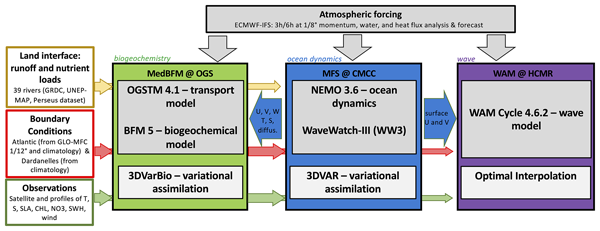
The paper presents the Mediterranean Forecasting System evolution and performance developed in the framework of the Copernicus Marine Service.
Alexandre Mignot, Hervé Claustre, Gianpiero Cossarini, Fabrizio D'Ortenzio, Elodie Gutknecht, Julien Lamouroux, Paolo Lazzari, Coralie Perruche, Stefano Salon, Raphaëlle Sauzède, Vincent Taillandier, and Anna Teruzzi
Biogeosciences, 20, 1405–1422, https://doi.org/10.5194/bg-20-1405-2023, https://doi.org/10.5194/bg-20-1405-2023, 2023
Short summary
Short summary
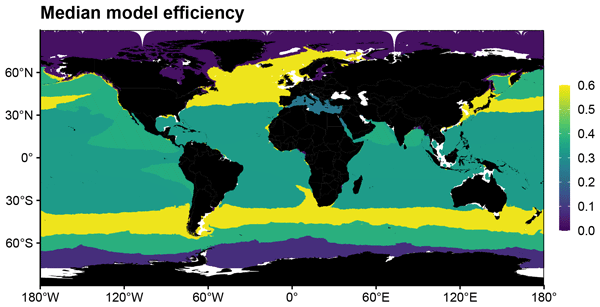
Numerical models of ocean biogeochemistry are becoming a major tool to detect and predict the impact of climate change on marine resources and monitor ocean health. Here, we demonstrate the use of the global array of BGC-Argo floats for the assessment of biogeochemical models. We first detail the handling of the BGC-Argo data set for model assessment purposes. We then present 23 assessment metrics to quantify the consistency of BGC model simulations with respect to BGC-Argo data.
Marco Reale, Gianpiero Cossarini, Paolo Lazzari, Tomas Lovato, Giorgio Bolzon, Simona Masina, Cosimo Solidoro, and Stefano Salon
Biogeosciences, 19, 4035–4065, https://doi.org/10.5194/bg-19-4035-2022, https://doi.org/10.5194/bg-19-4035-2022, 2022
Short summary
Short summary
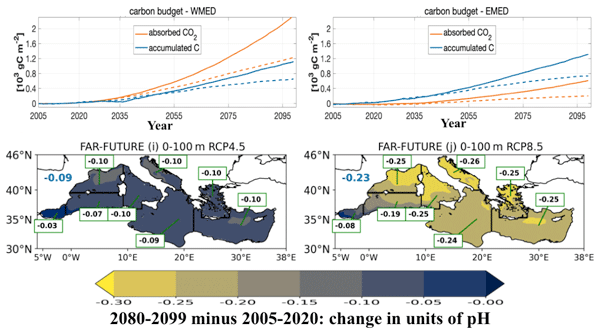
Future projections under the RCP8.5 and RCP4.5 emission scenarios of the Mediterranean Sea biogeochemistry at the end of the 21st century show different levels of decline in nutrients, oxygen and biomasses and an acidification of the water column. The signal intensity is stronger under RCP8.5 and in the eastern Mediterranean. Under RCP4.5, after the second half of the 21st century, biogeochemical variables show a recovery of the values observed at the beginning of the investigated period.
Ginevra Rosati, Donata Canu, Paolo Lazzari, and Cosimo Solidoro
Biogeosciences, 19, 3663–3682, https://doi.org/10.5194/bg-19-3663-2022, https://doi.org/10.5194/bg-19-3663-2022, 2022
Short summary
Short summary
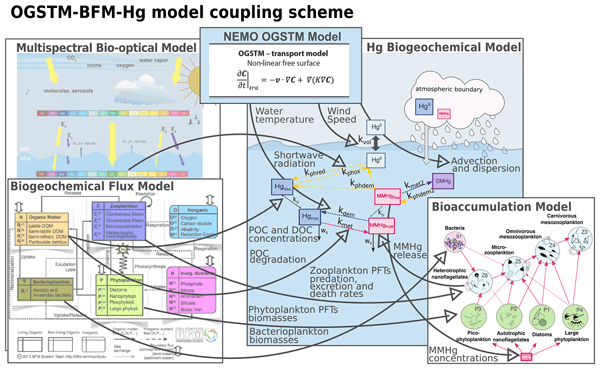
Methylmercury (MeHg) is produced and bioaccumulated in marine food webs, posing concerns for human exposure through seafood consumption. We modeled and analyzed the fate of MeHg in the lower food web of the Mediterranean Sea. The modeled spatial–temporal distribution of plankton bioaccumulation differs from the distribution of MeHg in surface water. We also show that MeHg exposure concentrations in temperate waters can be lowered by winter convection, which is declining due to climate change.
Cited articles
Aksnes, D., Dupont, N., Staby, A., Fiksen, Ø., Kaartvedt, S., and Aure, J.: Coastal water darkening and implications for mesopelagic regime shifts in Norwegian fjords, Marine Ecol. Prog. Ser., 387, 39–49, https://doi.org/10.3354/meps08120, 2009. a
Álvarez, E., Cossarini, G., Teruzzi, A., Bruggeman, J., Bolding, K., Ciavatta, S., Vellucci, V., D'Ortenzio, F., Antoine, D., and Lazzari, P.: Chromophoric dissolved organic matter dynamics revealed through the optimization of an optical–biogeochemical model in the northwestern Mediterranean Sea, Biogeosciences, 20, 4591–4624, https://doi.org/10.5194/bg-20-4591-2023, 2023. a, b, c, d
Antoine, D., Chami, M., Claustre, H., d’Ortenzio, F., Morel, A., Bécu, G., Gentili, B., Louis, F., Ras, J., Roussier, E., Scott, A. J., Tailliez, D., Hooker, S. B., Guevel, P., Desté, J.-F., Dempsey, C., and Adams, D.: BOUSSOLE: A joint CNRS-INSU, ESA, CNES, and NASA ocean color calibration and validation activity, Tech. rep., NASA Technical Memorandum, 2006. a, b
Anugerahanti, P., Roy, S., and Haines, K.: Perturbed Biology and Physics Signatures in a 1-D Ocean Biogeochemical Model Ensemble, Front. Marine Sci., 7, 549, https://doi.org/10.3389/fmars.2020.00549, 2020. a
Arnoldi, J., Loreau, M., and Haegeman, B.: The inherent multidimensionality of temporal variability: how common and rare species shape stability patterns, Ecol. Lett., 22, 1557–1567, https://doi.org/10.1111/ele.13345, 2019. a
Arroyave Gómez, D. M., Bartoli, M., Bresciani, M., Luciani, G., and Toro-Botero, M.: Biogeochemical modelling of a tropical coastal area undergoing seasonal upwelling and impacted by untreated submarine outfall, Marine Pollution Bulletin, 172, 112771, https://doi.org/10.1016/j.marpolbul.2021.112771, 2021. a
Beaugrand, G.: Theoretical basis for predicting climate-induced abrupt shifts in the oceans, Philos. T. Roy. Soc. B, 370, 20130264, https://doi.org/10.1098/rstb.2013.0264, 2015. a
Beisner, B., Haydon, D., and Cuddington, K.: Alternative stable states in ecology, Front. Ecol. Environ., 1, 376–382, https://doi.org/10.1890/1540-9295(2003)001[0376:ASSIE]2.0.CO;2, 2003. a, b, c
Blackford, J. C., Allen, J. I., and Gilbert, F. J.: Ecosystem dynamics at six contrasting sites: a generic modelling study, J. Marine Syst., 52, 191–215, https://doi.org/10.1016/j.jmarsys.2004.02.004, 2004. a
Blanchard-Wrigglesworth, E., Cox, T., Espinosa, Z. I., and Donohoe, A.: The Largest Ever Recorded Heatwave–Characteristics and Attribution of the Antarctic Heatwave of March 2022, Geophys. Res. Lett., 50, e2023GL104, https://doi.org/10.1029/2023GL104910, 2023. a
Blomquist, B. W., Brumer, S. E., Fairall, C. W., Huebert, B. J., Zappa, C. J., Brooks, I. M., Yang, M., Bariteau, L., Prytherch, J., Hare, J. E., Czerski, H., Matei, A., and Pascal, R. W.: Wind Speed and Sea State Dependencies of Air‐Sea Gas Transfer: Results From the High Wind Speed Gas Exchange Study (HiWinGS), J. Geophys. Res.-Oceans, 122, 8034–8062, https://doi.org/10.1002/2017JC013181, 2017. a
Bode, A.: Synchronized multidecadal trends and regime shifts in North Atlantic plankton populations, ICES J. Marine Sci., 81, 575–586, https://doi.org/10.1093/icesjms/fsad095, 2024. a, b
Boersma, M., Wiltshire, K. H., Kong, S.-M., Greve, W., and Renz, J.: Long-term change in the copepod community in the southern German Bight, J. Sea Res., 101, 41–50, https://doi.org/10.1016/j.seares.2014.12.004, 2015. a
Bruggeman, J. and Bolding, K.: Framework for Aquatic Biogeochemical Models, Zenodo [software], https://doi.org/10.5281/ZENODO.8424553, 2023. a
Burchard, H. and Petersen, O.: Models of turbulence in the marine environment – a comparative study of two-equation turbulence models, J. Marine Syst., 21, 29–53, https://doi.org/10.1016/S0924-7963(99)00004-4, 1999. a
Carpenter, S. R., Ludwig, D., and Brock, W. A.: MANAGEMENT OF EUTROPHICATION FOR LAKES SUBJECT TO POTENTIALLY IRREVERSIBLE CHANGE, Ecol. Appl., 9, 751–771, https://doi.org/10.1890/1051-0761(1999)009[0751:MOEFLS]2.0.CO;2, 1999. a, b
Ciavatta, S., Lazzari, P., Álvarez, E., Bruggeman, J., Capet, A., Cossarini, G., Daryabor, F., Nerger, L., Skakala, J., Teruzzi, A., Wakamatsu, T., and Çağlar Yumruktepe: D3.2 Observability of the target indicators and parameter sensitivity in the 1D CMEMS sites, Deliverable report of project H2020 SEAMLESS (grant 101004032), Zenodo [project report], https://doi.org/10.5281/ZENODO.6580236, 2022. a
Ciavatta, S., Lazzari, P., Álvarez, E., Bertino, L., Bolding, K., Bruggeman, J., Capet, A., Cossarini, G., Daryabor, F., Nerger, L., Popov, M., Skákala, J., Spada, S., Teruzzi, A., Wakamatsu, T., Yumruktepe, V., and Brasseur, P.: Control of simulated ocean ecosystem indicators by biogeochemical observations, Prog. Oceanogr., 231, 103384, https://doi.org/10.1016/j.pocean.2024.103384, 2025. a
Cossarini, G., Feudale, L., Teruzzi, A., Bolzon, G., Coidessa, G., Solidoro, C., Di Biagio, V., Amadio, C., Lazzari, P., Brosich, A., and Salon, S.: High-Resolution Reanalysis of the Mediterranean Sea Biogeochemistry (1999–2019), Front. Marine Sci., 8, 741486, https://doi.org/10.3389/fmars.2021.741486, 2021. a, b
Dai, M., Luo, Y., Achterberg, E. P., Browning, T. J., Cai, Y., Cao, Z., Chai, F., Chen, B., Church, M. J., Ci, D., Du, C., Gao, K., Guo, X., Hu, Z., Kao, S., Laws, E. A., Lee, Z., Lin, H., Liu, Q., Liu, X., Luo, W., Meng, F., Shang, S., Shi, D., Saito, H., Song, L., Wan, X. S., Wang, Y., Wang, W., Wen, Z., Xiu, P., Zhang, J., Zhang, R., and Zhou, K.: Upper Ocean Biogeochemistry of the Oligotrophic North Pacific Subtropical Gyre: From Nutrient Sources to Carbon Export, Rev. Geophys., 61, e2022RG000800, https://doi.org/10.1029/2022RG000800, 2023. a
Dakos, V., Boulton, C. A., Buxton, J. E., Abrams, J. F., Arellano-Nava, B., Armstrong McKay, D. I., Bathiany, S., Blaschke, L., Boers, N., Dylewsky, D., López-Martínez, C., Parry, I., Ritchie, P., van der Bolt, B., van der Laan, L., Weinans, E., and Kéfi, S.: Tipping point detection and early warnings in climate, ecological, and human systems, Earth Syst. Dynam., 15, 1117–1135, https://doi.org/10.5194/esd-15-1117-2024, 2024. a
DeMalach, N., Shnerb, N., and Fukami, T.: Alternative States in Plant Communities Driven by a Life-History Trade-Off and Demographic Stochasticity, The American Naturalist, 198, E27–E36, https://doi.org/10.1086/714418, 2021. a
Donovan, M. K., Friedlander, A. M., Lecky, J., Jouffray, J.-B., Williams, G. J., Wedding, L. M., Crowder, L. B., Erickson, A. L., Graham, N. A. J., Gove, J. M., Kappel, C. V., Karr, K., Kittinger, J. N., Norström, A. V., Nyström, M., Oleson, K. L. L., Stamoulis, K. A., White, C., Williams, I. D., and Selkoe, K. A.: Combining fish and benthic communities into multiple regimes reveals complex reef dynamics, Sci. Rep., 8, 16943, https://doi.org/10.1038/s41598-018-35057-4, 2018. a
Eyring, V., Bony, S., Meehl, G. A., Senior, C. A., Stevens, B., Stouffer, R. J., and Taylor, K. E.: Overview of the Coupled Model Intercomparison Project Phase 6 (CMIP6) experimental design and organization, Geosci. Model Dev., 9, 1937–1958, https://doi.org/10.5194/gmd-9-1937-2016, 2016. a
Falkowski, P. G., Barber, R. T., and Smetacek, V.: Biogeochemical Controls and Feedbacks on Ocean Primary Production, Science, 281, 200–206, https://doi.org/10.1126/science.281.5374.200, 1998. a, b
Fennel, K., Mattern, J. P., Doney, S. C., Bopp, L., Moore, A. M., Wang, B., and Yu, L.: Ocean biogeochemical modelling, Nature Reviews Methods Primers, 2, 76, https://doi.org/10.1038/s43586-022-00154-2, 2022. a
Fransner, F., Counillon, F., Bethke, I., Tjiputra, J., Samuelsen, A., Nummelin, A., and Olsen, A.: Ocean Biogeochemical Predictions – Initialization and Limits of Predictability, Front. Marine Sci., 7, 386, https://doi.org/10.3389/fmars.2020.00386, 2020. a
Gentleman, W., Leising, A., Frost, B., Strom, S., and Murray, J.: Functional responses for zooplankton feeding on multiple resources: a review of assumptions and biological dynamics, Deep-Sea Res. Pt. II, 50, 2847–2875, https://doi.org/10.1016/j.dsr2.2003.07.001, 2003. a
Gladstone-Gallagher, R. V., Hewitt, J. E., Low, J. M., Pilditch, C. A., Stephenson, F., Thrush, S. F., and Ellis, J. I.: Coupling marine ecosystem state with environmental management and conservation: A risk-based approach, Biological Conservation, 292, 110516, https://doi.org/10.1016/j.biocon.2024.110516, 2024. a, b
Grisogono, B. and Belušić, D.: A review of recent advances in understanding the meso- and microscale properties of the severe Bora wind, Tellus A, 61, 1–16, https://doi.org/10.1111/j.1600-0870.2008.00369.x, 2009. a
Gruber, N., Boyd, P. W., Frölicher, T. L., and Vogt, M.: Biogeochemical extremes and compound events in the ocean, Nature, 600, 395–407, https://doi.org/10.1038/s41586-021-03981-7, 2021. a
Guarini, J.-M. and Coston-Guarini, J.: Alternate Stable States Theory: Critical Evaluation and Relevance to Marine Conservation, J. Marine Sci. Eng., 12, 261, https://doi.org/10.3390/jmse12020261, 2024. a, b
Hare, S. R. and Mantua, N. J.: Empirical evidence for North Pacific regime shifts in 1977 and 1989, Prog. Oceanogr., 47, 103–145, https://doi.org/10.1016/S0079-6611(00)00033-1, 2000. a
Hewitt, J. and Thrush, S.: Empirical evidence of an approaching alternate state produced by intrinsic community dynamics, climatic variability and management actions, Marine Ecol. Prog. Ser., 413, 267–276, https://doi.org/10.3354/meps08626, 2010. a
Kléparski, L., Beaugrand, G., Ostle, C., Edwards, M., Skogen, M. D., Djeghri, N., and Hátún, H.: Ocean climate and hydrodynamics drive decadal shifts in Northeast Atlantic dinoflagellates, Glob. Change Biol., 30, e17163, https://doi.org/10.1111/gcb.17163, 2024. a
Knowlton, N.: Thresholds and Multiple Stable States in Coral Reef Community Dynamics, American Zoologist, 32, 674–682, https://doi.org/10.1093/icb/32.6.674, 1992. a
Kriest, I., Oschlies, A., and Khatiwala, S.: Sensitivity analysis of simple global marine biogeochemical models, Global Biogeochem. Cycles, 26, 2011GB004072, https://doi.org/10.1029/2011GB004072, 2012. a
Lazzari, P., Grimaudo, R., Solidoro, C., and Valenti, D.: Stochastic 0-dimensional Biogeochemical Flux Model: Effect of temperature fluctuations on the dynamics of the biogeochemical properties in a marine ecosystem, Communications in Nonlinear Science and Numerical Simulation, 103, 105994, https://doi.org/10.1016/j.cnsns.2021.105994, 2021a. a
Lazzari, P., Salon, S., Terzić, E., Gregg, W. W., D'Ortenzio, F., Vellucci, V., Organelli, E., and Antoine, D.: Assessment of the spectral downward irradiance at the surface of the Mediterranean Sea using the radiative Ocean-Atmosphere Spectral Irradiance Model (OASIM), Ocean Sci., 17, 675–697, https://doi.org/10.5194/os-17-675-2021, 2021b. a, b
Lindegren, M., Dakos, V., Gröger, J. P., Gårdmark, A., Kornilovs, G., Otto, S. A., and Möllmann, C.: Early Detection of Ecosystem Regime Shifts: A Multiple Method Evaluation for Management Application, PLoS ONE, 7, e38 410, https://doi.org/10.1371/journal.pone.0038410, 2012. a
Lindo, Z., Bolger, T., and Caruso, T.: Stochastic processes in the structure and functioning of soil biodiversity, Front. Ecology Evol., 11, 1055336, https://doi.org/10.3389/fevo.2023.1055336, 2023. a
Llort, J., Lévy, M., Sallée, J. B., and Tagliabue, A.: Nonmonotonic Response of Primary Production and Export to Changes in Mixed‐Layer Depth in the Southern Ocean, Geophys. Res. Lett., 46, 3368–3377, https://doi.org/10.1029/2018GL081788, 2019. a
Lohmann, G., Butzin, M., Eissner, N., Shi, X., and Stepanek, C.: Abrupt Climate and Weather Changes Across Time Scales, Paleoceanogr. Paleocl., 35, e2019PA003782, https://doi.org/10.1029/2019PA003782, 2020. a
Manizza, M., Le Quéré, C., Watson, A. J., and Buitenhuis, E. T.: Ocean biogeochemical response to phytoplankton-light feedback in a global model, J. Geophys. Res.-Oceans, 113, 2007JC004478, https://doi.org/10.1029/2007JC004478, 2008. a
Melbourne, B. A.: Stochasticity, Demographic, 706–712, University of California Press, Berkeley, ISBN 9780520951785, https://doi.org/10.1525/9780520951785-123, 2012. a
Molinero, J. C., Reygondeau, G., and Bonnet, D.: Climate variance influence on the non-stationary plankton dynamics, Marine Environ. Res., 89, 91–96, https://doi.org/10.1016/j.marenvres.2013.04.006, 2013. a, b
Möllmann, C. and Diekmann, R.: Marine Ecosystem Regime Shifts Induced by Climate and Overfishing, 47, 303–347, Elsevier, https://doi.org/10.1016/B978-0-12-398315-2.00004-1, 2012. a
Morse, R., Friedland, K., Tommasi, D., Stock, C., and Nye, J.: Distinct zooplankton regime shift patterns across ecoregions of the U.S. Northeast continental shelf Large Marine Ecosystem, J. Marine Syst., 165, 77–91, https://doi.org/10.1016/j.jmarsys.2016.09.011, 2017. a
Mumby, P. J., Hastings, A., and Edwards, H. J.: Thresholds and the resilience of Caribbean coral reefs, Nature, 450, 98–101, https://doi.org/10.1038/nature06252, 2007. a
Naselli-Flores, L. and Padisák, J.: Ecosystem services provided by marine and freshwater phytoplankton, Hydrobiologia, 850, 2691–2706, https://doi.org/10.1007/s10750-022-04795-y, 2023. a
Neder, C., Fofonova, V., Androsov, A., Kuznetsov, I., Abele, D., Falk, U., Schloss, I. R., Sahade, R., and Jerosch, K.: Modelling suspended particulate matter dynamics at an Antarctic fjord impacted by glacier melt, J. Marine Syst., 231, 103734, https://doi.org/10.1016/j.jmarsys.2022.103734, 2022. a
Nicholson, S.-A., Ryan-Keogh, T. J., Thomalla, S. J., Chang, N., and Smith, M. E.: Satellite-derived global-ocean phytoplankton phenology indices, Earth Syst. Sci. Data, 17, 1959–1975, https://doi.org/10.5194/essd-17-1959-2025, 2025. a
Norström, A., Nyström, M., Lokrantz, J., and Folke, C.: Alternative states on coral reefs: beyond coral–macroalgal phase shifts, Marine Ecol. Prog. Ser., 376, 295–306, https://doi.org/10.3354/meps07815, 2009. a
Occhipinti, G.: Alternative dynamic regimes of plankton communities in perturbed environments, Zenodo [code], https://doi.org/10.5281/zenodo.15622626, 2025. a
Occhipinti, G.: Alternative regimes of marine biogeochemistry - Demographic Noise BFM model, Zenodo [code], https://doi.org/10.5281/zenodo.18681931, 2026. a
Occhipinti, G. and Lazzari, P.: Alternative dynamic regimes of marine biogeochemical models in perturbed environments – MODEL CODE, Zenodo [code], https://doi.org/10.5281/zenodo.18681839, 2026. a
Occhipinti, G., Solidoro, C., Grimaudo, R., Valenti, D., and Lazzari, P.: Marine ecosystem models of realistic complexity rarely exhibits significant endogenous non-stationary dynamics, Chaos, Solitons & Fractals, 175, 113961, https://doi.org/10.1016/j.chaos.2023.113961, 2023. a
Occhipinti, G., Piani, S., and Lazzari, P.: Stochastic effects on plankton dynamics: Insights from a realistic 0-dimensional marine biogeochemical model, Ecol. Inform., 83, 102778, https://doi.org/10.1016/j.ecoinf.2024.102778, 2024. a, b
Occhipinti, G., Solidoro, C., Grimaudo, R., Valenti, D., and Lazzari, P.: Plankton Communities Behave Chaotically Under Seasonal or Stochastic Temperature Forcings, Ecol. Evol., 15, e71930, https://doi.org/10.1002/ece3.71930, 2025. a
Oziel, L., Neukermans, G., Ardyna, M., Lancelot, C., Tison, J., Wassmann, P., Sirven, J., Ruiz‐Pino, D., and Gascard, J.: Role for Atlantic inflows and sea ice loss on shifting phytoplankton blooms in the Barents Sea, J. Geophys. Res.-Oceans, 122, 5121–5139, https://doi.org/10.1002/2016JC012582, 2017. a
Palter, J. B., Lozier, M. S., and Barber, R. T.: The effect of advection on the nutrient reservoir in the North Atlantic subtropical gyre, Nature, 437, 687–692, https://doi.org/10.1038/nature03969, 2005. a
Payne, C. M., Lovenduski, N. S., Holland, M. M., Krumhardt, K. M., and DuVivier, A. K.: End-of-century Arctic Ocean phytoplankton blooms start a month earlier due to anthropogenic climate change, Commun. Earth Environ., 6, 874, https://doi.org/10.1038/s43247-025-02807-y, 2025. a
Peperzak, L. and Witte, H.: Abiotic drivers of interannual phytoplankton variability and a 1999–2000 regime shift in the North Sea examined by multivariate statistics, J. Phycol., 55, 1274–1289, https://doi.org/10.1111/jpy.12893, 2019. a
Petraitis, P.: Multiple Stable States in Natural Ecosystems, Oxford University Press, ISBN 978-0-19-956934-2, https://doi.org/10.1093/acprof:osobl/9780199569342.001.0001, 2013. a
Phlips, E. J., Badylak, S., Nelson, N. G., Hall, L. M., Jacoby, C. A., Lasi, M. A., Lockwood, J. C., and Miller, J. D.: Cyclical Patterns and a Regime Shift in the Character of Phytoplankton Blooms in a Restricted Sub-Tropical Lagoon, Indian River Lagoon, Florida, United States, Front. Marine Sci., 8, 730934, https://doi.org/10.3389/fmars.2021.730934, 2021. a
Reale, M., Cossarini, G., Lazzari, P., Lovato, T., Bolzon, G., Masina, S., Solidoro, C., and Salon, S.: Acidification, deoxygenation, and nutrient and biomass declines in a warming Mediterranean Sea, Biogeosciences, 19, 4035–4065, https://doi.org/10.5194/bg-19-4035-2022, 2022. a
Reid, P. C., Hari, R. E., Beaugrand, G., Livingstone, D. M., Marty, C., Straile, D., Barichivich, J., Goberville, E., Adrian, R., Aono, Y., Brown, R., Foster, J., Groisman, P., Hélaouët, P., Hsu, H., Kirby, R., Knight, J., Kraberg, A., Li, J., Lo, T., Myneni, R. B., North, R. P., Pounds, J. A., Sparks, T., Stübi, R., Tian, Y., Wiltshire, K. H., Xiao, D., and Zhu, Z.: Global impacts of the 1980s regime shift, Glob. Change Biol., 22, 682–703, https://doi.org/10.1111/gcb.13106, 2016. a
Richon, C. and Tagliabue, A.: Biogeochemical feedbacks associated with the response of micronutrient recycling by zooplankton to climate change, Glob. Change Biol., 27, 4758–4770, https://doi.org/10.1111/gcb.15789, 2021. a
Rohr, T., Richardson, A. J., Lenton, A., Chamberlain, M. A., and Shadwick, E. H.: Zooplankton grazing is the largest source of uncertainty for marine carbon cycling in CMIP6 models, Commun. Earth Environ., 4, 212, https://doi.org/10.1038/s43247-023-00871-w, 2023. a
Salon, S., Cossarini, G., Bolzon, G., Feudale, L., Lazzari, P., Teruzzi, A., Solidoro, C., and Crise, A.: Novel metrics based on Biogeochemical Argo data to improve the model uncertainty evaluation of the CMEMS Mediterranean marine ecosystem forecasts, Ocean Sci., 15, 997–1022, https://doi.org/10.5194/os-15-997-2019, 2019. a
Sánchez-Pinillos, M., Kéfi, S., De Cáceres, M., and Dakos, V.: Ecological dynamic regimes: Identification, characterization, and comparison, Ecol. Monogr., 93, e1589, https://doi.org/10.1002/ecm.1589, 2023. a
Scheffer, M. and Carpenter, S. R.: Catastrophic regime shifts in ecosystems: linking theory to observation, Trends Ecol. Evol., 18, 648–656, https://doi.org/10.1016/j.tree.2003.09.002, 2003. a, b, c
Schmitt, R. J., Holbrook, S. J., Davis, S. L., Brooks, A. J., and Adam, T. C.: Experimental support for alternative attractors on coral reefs, P. Natl. Acad. Sci. USA, 116, 4372–4381, https://doi.org/10.1073/pnas.1812412116, 2019. a, b
Schooler, S. S., Salau, B., Julien, M. H., and Ives, A. R.: Alternative stable states explain unpredictable biological control of Salvinia molesta in Kakadu, Nature, 470, 86–89, https://doi.org/10.1038/nature09735, 2011. a
Schröder, A., Persson, L., and De Roos, A. M.: Direct experimental evidence for alternative stable states: a review, Oikos, 110, 3–19, https://doi.org/10.1111/j.0030-1299.2005.13962.x, 2005. a, b
Soulié, T., Vidussi, F., Mas, S., and Mostajir, B.: Functional Stability of a Coastal Mediterranean Plankton Community During an Experimental Marine Heatwave, Front. Marine Sci., 9, 831496, https://doi.org/10.3389/fmars.2022.831496, 2022. a, b
Stecher, M. and Baumgärtner, S.: A stylized model of stochastic ecosystems with alternative stable states, Natural Resource Modeling, 35, e12345, https://doi.org/10.1111/nrm.12345, 2022. a
Stone, L. and Berman, T.: Positive feedback in aquatic ecosystems: The case of the microbial loop, B. Math. Biol., 55, 919–936, https://doi.org/10.1016/S0092-8240(05)80196-X, 1993. a
Suding, K. N., Gross, K. L., and Houseman, G. R.: Alternative states and positive feedbacks in restoration ecology, Trends Ecol. Evol., 19, 46–53, https://doi.org/10.1016/j.tree.2003.10.005, 2004. a, b
Uhlenbeck, G. E. and Ornstein, L. S.: On the Theory of the Brownian Motion, Phys. Rev., 36, 823–841, https://doi.org/10.1103/PhysRev.36.823, 1930. a
Van De Leemput, I. A., Hughes, T. P., Van Nes, E. H., and Scheffer, M.: Multiple feedbacks and the prevalence of alternate stable states on coral reefs, Coral Reefs, 35, 857–865, https://doi.org/10.1007/s00338-016-1439-7, 2016. a
Vandermeer, J., Granzow De La Cerda, I., Perfecto, I., Boucher, D., Ruiz, J., and Kaufmann, A.: MULTIPLE BASINS OF ATTRACTION IN A TROPICAL FOREST: EVIDENCE FOR NONEQUILIBRIUM COMMUNITY STRUCTURE, Ecology, 85, 575–579, https://doi.org/10.1890/02-3140, 2004. a
Van Westen, R. M., Kliphuis, M., and Dijkstra, H. A.: Physics-based early warning signal shows that AMOC is on tipping course, Sci. Adv., 10, eadk1189, https://doi.org/10.1126/sciadv.adk1189, 2024. a
Walbröl, A., Michaelis, J., Becker, S., Dorff, H., Ebell, K., Gorodetskaya, I., Heinold, B., Kirbus, B., Lauer, M., Maherndl, N., Maturilli, M., Mayer, J., Müller, H., Neggers, R. A. J., Paulus, F. M., Röttenbacher, J., Rückert, J. E., Schirmacher, I., Slättberg, N., Ehrlich, A., Wendisch, M., and Crewell, S.: Contrasting extremely warm and long-lasting cold air anomalies in the North Atlantic sector of the Arctic during the HALO-(𝒜𝒞)3 campaign, Atmos. Chem. Phys., 24, 8007–8029, https://doi.org/10.5194/acp-24-8007-2024, 2024. a
Wendt, K. A., Nehrbass-Ahles, C., Niezgoda, K., Noone, D., Kalk, M., Menviel, L., Gottschalk, J., Rae, J. W. B., Schmitt, J., Fischer, H., Stocker, T. F., Muglia, J., Ferreira, D., Marcott, S. A., Brook, E., and Buizert, C.: Southern Ocean drives multidecadal atmospheric CO2 rise during Heinrich Stadials, P. Natl. Acad. Sci. USA, 121, e2319652121, https://doi.org/10.1073/pnas.2319652121, 2024. a
Yamaguchi, R., Rodgers, K. B., Timmermann, A., Stein, K., Schlunegger, S., Bianchi, D., Dunne, J. P., and Slater, R. D.: Trophic level decoupling drives future changes in phytoplankton bloom phenology, Nat. Clim. Change, 12, 469–476, https://doi.org/10.1038/s41558-022-01353-1, 2022. a
Yan, F., He, B., Lyne, V., Fan, R., Cui, Y., Wang, X., Fu, D., Meadows, M., Wilson, J., Chen, Z., Ju, C., and Su, F.: Global coastal water clarity has increased due to human intervention, Commun. Earth Environ., 6, 641, https://doi.org/10.1038/s43247-025-02638-x, 2025. a
Zhuang, Y., Jin, H., Cai, W.-J., Li, H., Jin, M., Qi, D., and Chen, J.: Freshening leads to a three-decade trend of declining nutrients in the western Arctic Ocean, Environ. Res. Lett., 16, 054047, https://doi.org/10.1088/1748-9326/abf58b, 2021. a
Short summary
Due to climate change shifts in ecosystem structure and function have been increasingly documented in marine ecosystems around the globe. We tested whether a marine biogeochemical model can predict shifts to alternative regimes in plankton and biogeochemical processes under environmental perturbations. Simulations show that perturbations can drive the system into new regimes, with responses that are either reversible or hysteretic, depending on the type and intensity of the disturbance.
Due to climate change shifts in ecosystem structure and function have been increasingly...


Altmetrics
Final-revised paper
Preprint