
Articles | Volume 23, issue 11
https://doi.org/10.5194/bg-23-3735-2026
© Author(s) 2026. This work is distributed under
the Creative Commons Attribution 4.0 License.
the Creative Commons Attribution 4.0 License.
https://doi.org/10.5194/bg-23-3735-2026
© Author(s) 2026. This work is distributed under
the Creative Commons Attribution 4.0 License.
the Creative Commons Attribution 4.0 License.
Research article
| 
05 Jun 2026
Research article |
| 05 Jun 2026
| 05 Jun 2026
The impact of large-scale macroalgae cultivation and harvesting strategies on the marine carbon dioxide removal efficacy and marine biogeochemistry

National Oceanography Centre, Joseph Proudman Building, 6 Brownlow Street, Liverpool L3 5DA, UK
Julien Palmiéri
National Oceanography Centre, European Way, Southampton SO14 3ZH, UK
Chelsey A. Baker
National Oceanography Centre, European Way, Southampton SO14 3ZH, UK
Ekaterina Popova
National Oceanography Centre, European Way, Southampton SO14 3ZH, UK
Andrew Yool
National Oceanography Centre, European Way, Southampton SO14 3ZH, UK
Related authors
Onur Kerimoglu, Markus Pahlow, Prima Anugerahanti, and Sherwood Lan Smith
Geosci. Model Dev., 16, 95–108, https://doi.org/10.5194/gmd-16-95-2023, https://doi.org/10.5194/gmd-16-95-2023, 2023
Short summary
Short summary
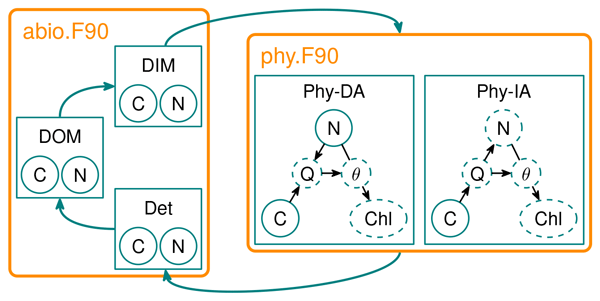
In classical models that track the changes in the elemental composition of phytoplankton, additional state variables are required for each element resolved. In this study, we show how the behavior of such an explicit model can be approximated using an
instantaneous acclimationapproach, in which the elemental composition of the phytoplankton is assumed to adjust to an optimal value instantaneously. Through rigorous tests, we evaluate the consistency of this scheme.
Onur Kerimoglu, Prima Anugerahanti, and Sherwood Lan Smith
Geosci. Model Dev., 14, 6025–6047, https://doi.org/10.5194/gmd-14-6025-2021, https://doi.org/10.5194/gmd-14-6025-2021, 2021
Short summary
Short summary
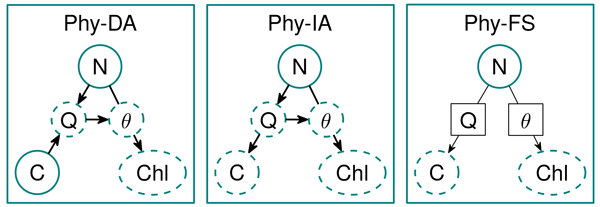
In large-scale models, variations in cellular composition of phytoplankton are often insufficiently represented. Detailed modeling approaches exist, but they require additional state variables that increase the computational costs. In this study, we test an instantaneous acclimation model in a spatially explicit setup and show that its behavior is mostly similar to that of a variant with an additional state variable but different from that of a fixed composition variant.
Adrian P. Martin, Anieke Brombacher, Noëlie Benoist, Brian J. Bett, Jennifer M. Durden, Sophy Oliver, and Andrew Yool
Geosci. Model Dev., 19, 4907–4930, https://doi.org/10.5194/gmd-19-4907-2026, https://doi.org/10.5194/gmd-19-4907-2026, 2026
Short summary
Short summary
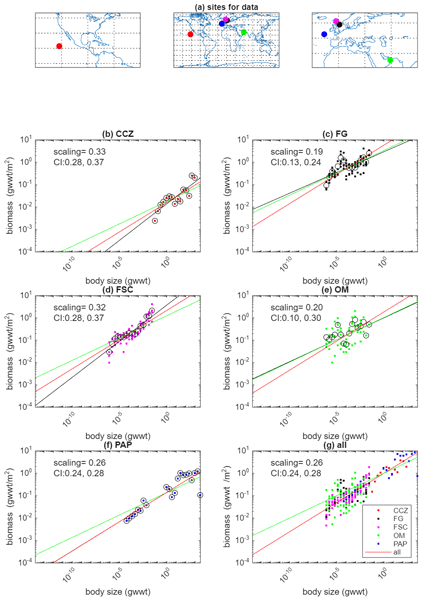
Although under huge pressure and with permanent darkness, the seafloor has a diversity of organisms. They are almost entirely dependent on food sinking from the ocean surface onto the seafloor. This model allows us to study how these organisms survive in this hostile environment. Making use of evidence that biological characteristics, like lifetime, vary with size of organism and temperature, this model can simulate the fate of seafloor creatures from bacteria to large sea cucumbers.
Robin S. Smith, Tarkan A. Bilge, Thomas J. Bracegirdle, Paul R. Holland, Till Kuhlbrodt, Charlotte Lang, Spencer Liddicoat, Tom Mitcham, Jane Mulcahy, Kaitlin A. Naughten, Andrew Orr, Julien Palmieri, Antony J. Payne, Steven Rumbold, Marc Stringer, Ranjini Swaminathan, Sarah Taylor, Jeremy Walton, and Colin Jones
Earth Syst. Dynam., 17, 475–493, https://doi.org/10.5194/esd-17-475-2026, https://doi.org/10.5194/esd-17-475-2026, 2026
Short summary
Short summary
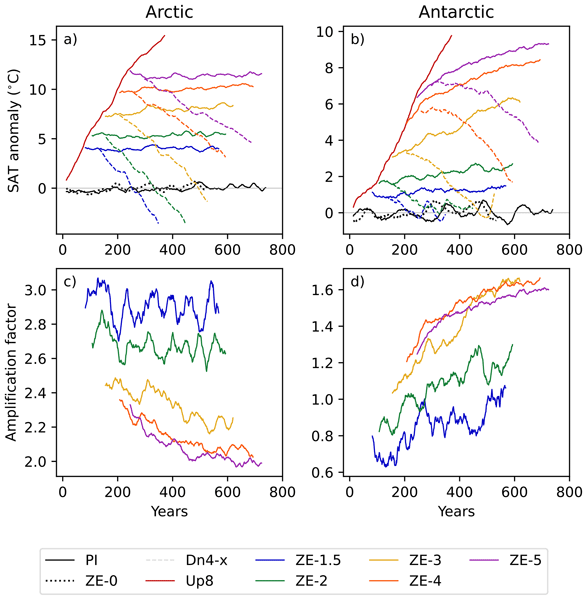
There is a dangerous amount of uncertainty in our predictions of climate change in polar regions because some of feedbacks that might lead to changes that are too rapid for us to adapt to, or that cannot be reversed. We have run a set of simulations with a state-of-the-art Earth System Model that helps improve our understanding of how climate in these regions might change. Some of the aspects we investigate are reversible but many are not, especially those affecting ice sheets and sea level.
David A. Stappard, Jamie D. Wilson, Andrew Yool, and Toby Tyrrell
Geosci. Model Dev., 18, 6805–6834, https://doi.org/10.5194/gmd-18-6805-2025, https://doi.org/10.5194/gmd-18-6805-2025, 2025
Short summary
Short summary
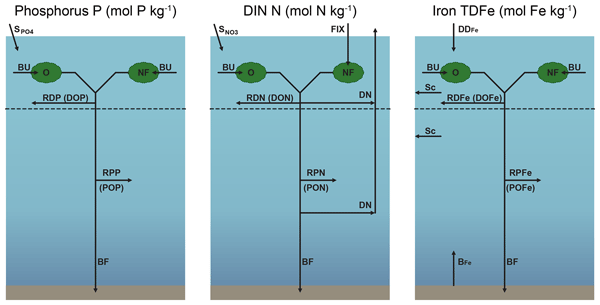
This research explores nutrient limitations in oceanic primary production. While traditional experiments identify the immediate limiting nutrient at specific locations, this study aims to identify the ultimate limiting nutrient (ULN), which governs long-term productivity. A mathematical model incorporating nitrogen, phosphorus, and iron nutrient cycles is used. The model's results are compared with ocean observational data to assess its effectiveness in investigating the ULN.
Théo Picard, Chelsey A. Baker, Jonathan Gula, Ronan Fablet, Laurent Mémery, and Richard Lampitt
Biogeosciences, 22, 4309–4331, https://doi.org/10.5194/bg-22-4309-2025, https://doi.org/10.5194/bg-22-4309-2025, 2025
Short summary
Short summary
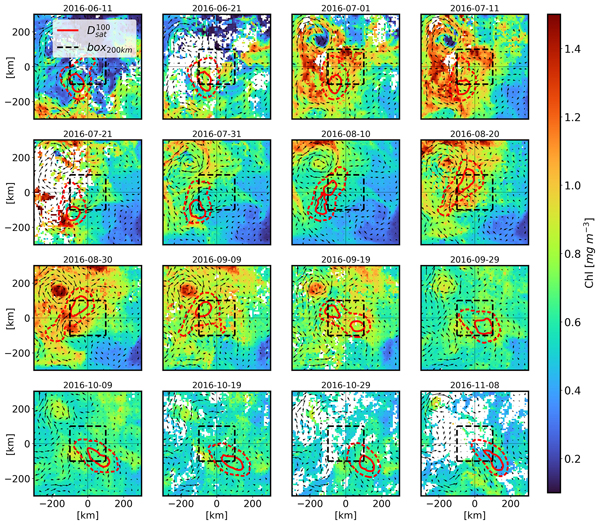
Ocean sediment traps measure the sequestrated sinking organic carbon. While sinking, the particles are affected by local currents, which presents a challenge with regard to linking the deep flux with the surface. We present a machine learning tool that predicts the source location of the sinking particles based on satellite data. The predictions demonstrate a stronger correlation between surface and deep carbon fluxes, allowing a more comprehensive understanding of the deep carbon sequestration drivers.
Lee de Mora, Ranjini Swaminathan, Richard P. Allan, Jerry C. Blackford, Douglas I. Kelley, Phil Harris, Chris D. Jones, Colin G. Jones, Spencer Liddicoat, Robert J. Parker, Tristan Quaife, Jeremy Walton, and Andrew Yool
Earth Syst. Dynam., 14, 1295–1315, https://doi.org/10.5194/esd-14-1295-2023, https://doi.org/10.5194/esd-14-1295-2023, 2023
Short summary
Short summary
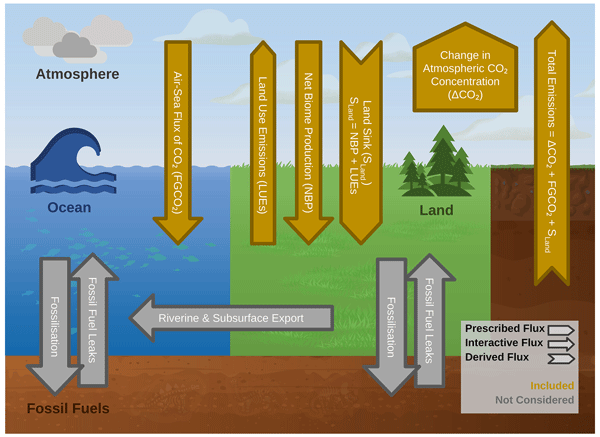
We investigate the flux of carbon from the atmosphere into the land surface and ocean for multiple models and over a range of future scenarios. We did this by comparing simulations after the same change in the global-mean near-surface temperature. Using this method, we show that the choice of scenario can impact the carbon allocation to the land, ocean, and atmosphere. Scenarios with higher emissions reach the same warming levels sooner, but also with relatively more carbon in the atmosphere.
Christoph Heinze, Thorsten Blenckner, Peter Brown, Friederike Fröb, Anne Morée, Adrian L. New, Cara Nissen, Stefanie Rynders, Isabel Seguro, Yevgeny Aksenov, Yuri Artioli, Timothée Bourgeois, Friedrich Burger, Jonathan Buzan, B. B. Cael, Veli Çağlar Yumruktepe, Melissa Chierici, Christopher Danek, Ulf Dieckmann, Agneta Fransson, Thomas Frölicher, Giovanni Galli, Marion Gehlen, Aridane G. González, Melchor Gonzalez-Davila, Nicolas Gruber, Örjan Gustafsson, Judith Hauck, Mikko Heino, Stephanie Henson, Jenny Hieronymus, I. Emma Huertas, Fatma Jebri, Aurich Jeltsch-Thömmes, Fortunat Joos, Jaideep Joshi, Stephen Kelly, Nandini Menon, Precious Mongwe, Laurent Oziel, Sólveig Ólafsdottir, Julien Palmieri, Fiz F. Pérez, Rajamohanan Pillai Ranith, Juliano Ramanantsoa, Tilla Roy, Dagmara Rusiecka, J. Magdalena Santana Casiano, Yeray Santana-Falcón, Jörg Schwinger, Roland Séférian, Miriam Seifert, Anna Shchiptsova, Bablu Sinha, Christopher Somes, Reiner Steinfeldt, Dandan Tao, Jerry Tjiputra, Adam Ulfsbo, Christoph Völker, Tsuyoshi Wakamatsu, and Ying Ye
Biogeosciences Discuss., https://doi.org/10.5194/bg-2023-182, https://doi.org/10.5194/bg-2023-182, 2023
Revised manuscript not accepted
Short summary
Short summary
For assessing the consequences of human-induced climate change for the marine realm, it is necessary to not only look at gradual changes but also at abrupt changes of environmental conditions. We summarise abrupt changes in ocean warming, acidification, and oxygen concentration as the key environmental factors for ecosystems. Taking these abrupt changes into account requires greenhouse gas emissions to be reduced to a larger extent than previously thought to limit respective damage.
Alban Planchat, Lester Kwiatkowski, Laurent Bopp, Olivier Torres, James R. Christian, Momme Butenschön, Tomas Lovato, Roland Séférian, Matthew A. Chamberlain, Olivier Aumont, Michio Watanabe, Akitomo Yamamoto, Andrew Yool, Tatiana Ilyina, Hiroyuki Tsujino, Kristen M. Krumhardt, Jörg Schwinger, Jerry Tjiputra, John P. Dunne, and Charles Stock
Biogeosciences, 20, 1195–1257, https://doi.org/10.5194/bg-20-1195-2023, https://doi.org/10.5194/bg-20-1195-2023, 2023
Short summary
Short summary
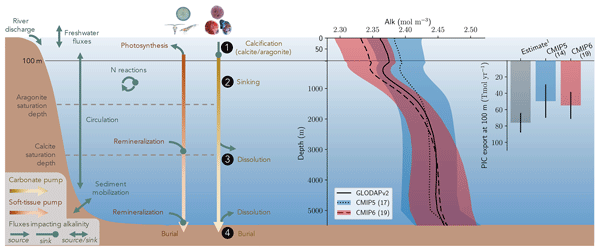
Ocean alkalinity is critical to the uptake of atmospheric carbon and acidification in surface waters. We review the representation of alkalinity and the associated calcium carbonate cycle in Earth system models. While many parameterizations remain present in the latest generation of models, there is a general improvement in the simulated alkalinity distribution. This improvement is related to an increase in the export of biotic calcium carbonate, which closer resembles observations.
Jane P. Mulcahy, Colin G. Jones, Steven T. Rumbold, Till Kuhlbrodt, Andrea J. Dittus, Edward W. Blockley, Andrew Yool, Jeremy Walton, Catherine Hardacre, Timothy Andrews, Alejandro Bodas-Salcedo, Marc Stringer, Lee de Mora, Phil Harris, Richard Hill, Doug Kelley, Eddy Robertson, and Yongming Tang
Geosci. Model Dev., 16, 1569–1600, https://doi.org/10.5194/gmd-16-1569-2023, https://doi.org/10.5194/gmd-16-1569-2023, 2023
Short summary
Short summary
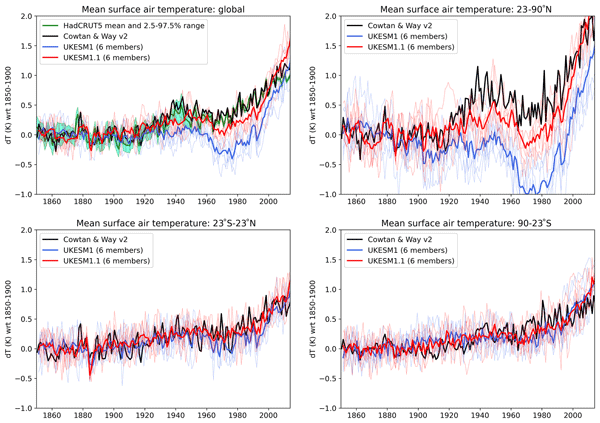
Recent global climate models simulate historical global mean surface temperatures which are too cold, possibly to due to excessive aerosol cooling. This raises questions about the models' ability to simulate important climate processes and reduces confidence in future climate predictions. We present a new version of the UK Earth System Model, which has an improved aerosols simulation and a historical temperature record. Interestingly, the long-term response to CO2 remains largely unchanged.
Jeff Polton, James Harle, Jason Holt, Anna Katavouta, Dale Partridge, Jenny Jardine, Sarah Wakelin, Julia Rulent, Anthony Wise, Katherine Hutchinson, David Byrne, Diego Bruciaferri, Enda O'Dea, Michela De Dominicis, Pierre Mathiot, Andrew Coward, Andrew Yool, Julien Palmiéri, Gennadi Lessin, Claudia Gabriela Mayorga-Adame, Valérie Le Guennec, Alex Arnold, and Clément Rousset
Geosci. Model Dev., 16, 1481–1510, https://doi.org/10.5194/gmd-16-1481-2023, https://doi.org/10.5194/gmd-16-1481-2023, 2023
Short summary
Short summary
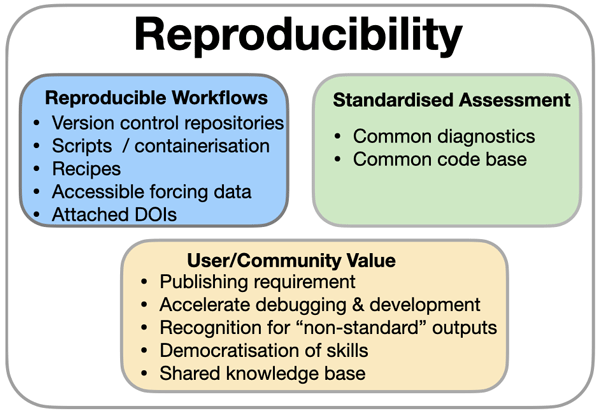
The aim is to increase the capacity of the modelling community to respond to societally important questions that require ocean modelling. The concept of reproducibility for regional ocean modelling is developed: advocating methods for reproducible workflows and standardised methods of assessment. Then, targeting the NEMO framework, we give practical advice and worked examples, highlighting key considerations that will the expedite development cycle and upskill the user community.
Onur Kerimoglu, Markus Pahlow, Prima Anugerahanti, and Sherwood Lan Smith
Geosci. Model Dev., 16, 95–108, https://doi.org/10.5194/gmd-16-95-2023, https://doi.org/10.5194/gmd-16-95-2023, 2023
Short summary
Short summary
In classical models that track the changes in the elemental composition of phytoplankton, additional state variables are required for each element resolved. In this study, we show how the behavior of such an explicit model can be approximated using an
instantaneous acclimationapproach, in which the elemental composition of the phytoplankton is assumed to adjust to an optimal value instantaneously. Through rigorous tests, we evaluate the consistency of this scheme.

Stephanie Woodward, Alistair A. Sellar, Yongming Tang, Marc Stringer, Andrew Yool, Eddy Robertson, and Andy Wiltshire
Atmos. Chem. Phys., 22, 14503–14528, https://doi.org/10.5194/acp-22-14503-2022, https://doi.org/10.5194/acp-22-14503-2022, 2022
Short summary
Short summary
We describe the dust scheme in the UKESM1 Earth system model and show generally good agreement with observations. Comparing with the closely related HadGEM3-GC3.1 model, we show that dust differences are not only due to inter-model differences but also to the dust size distribution. Under climate change, HadGEM3-GC3.1 dust hardly changes, but UKESM1 dust decreases because that model includes the vegetation response which, in our models, has a bigger impact on dust than climate change itself.
Pradeebane Vaittinada Ayar, Laurent Bopp, Jim R. Christian, Tatiana Ilyina, John P. Krasting, Roland Séférian, Hiroyuki Tsujino, Michio Watanabe, Andrew Yool, and Jerry Tjiputra
Earth Syst. Dynam., 13, 1097–1118, https://doi.org/10.5194/esd-13-1097-2022, https://doi.org/10.5194/esd-13-1097-2022, 2022
Short summary
Short summary
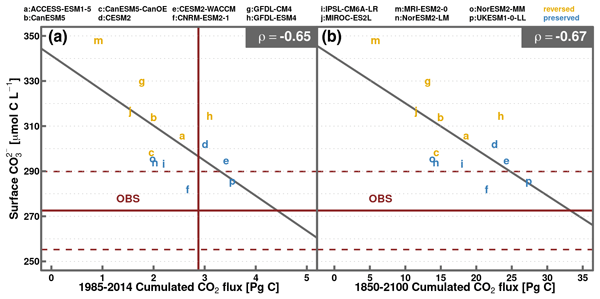
The El Niño–Southern Oscillation is the main driver for the natural variability of global atmospheric CO2. It modulates the CO2 fluxes in the tropical Pacific with anomalous CO2 influx during El Niño and outflux during La Niña. This relationship is projected to reverse by half of Earth system models studied here under the business-as-usual scenario. This study shows models that simulate a positive bias in surface carbonate concentrations simulate a shift in the ENSO–CO2 flux relationship.

Reint Fischer, Delphine Lobelle, Merel Kooi, Albert Koelmans, Victor Onink, Charlotte Laufkötter, Linda Amaral-Zettler, Andrew Yool, and Erik van Sebille
Biogeosciences, 19, 2211–2234, https://doi.org/10.5194/bg-19-2211-2022, https://doi.org/10.5194/bg-19-2211-2022, 2022
Short summary
Short summary
Since current estimates show that only about 1 % of the all plastic that enters the ocean is floating at the surface, we look at subsurface processes that can cause vertical movement of (micro)plastic. We investigate how modelled algal attachment and the ocean's vertical movement can cause particles to sink and oscillate in the open ocean. Particles can sink to depths of > 5000 m in regions with high wind intensity and mainly remain close to the surface with low winds and biological activity.
Onur Kerimoglu, Prima Anugerahanti, and Sherwood Lan Smith
Geosci. Model Dev., 14, 6025–6047, https://doi.org/10.5194/gmd-14-6025-2021, https://doi.org/10.5194/gmd-14-6025-2021, 2021
Short summary
Short summary
In large-scale models, variations in cellular composition of phytoplankton are often insufficiently represented. Detailed modeling approaches exist, but they require additional state variables that increase the computational costs. In this study, we test an instantaneous acclimation model in a spatially explicit setup and show that its behavior is mostly similar to that of a variant with an additional state variable but different from that of a fixed composition variant.
Cited articles
Aldridge, J., Mooney, K., Dabrowski, T., and Capuzzo, E.: Modelling effects of seaweed aquaculture on phytoplankton and mussel production. Application to Strangford Lough (Northern Ireland), Aquaculture, 536, 736400, https://doi.org/10.1016/j.aquaculture.2021.736400, 2021. a
Alevizos, E. and Barillé, L.: Global ocean spatial suitability for macroalgae offshore cultivation and sinking, Front. Mar. Sci., 10, 1320642, https://doi.org/10.3389/fmars.2023.1320642, 2023. a
Anugerahanti, P., Palmieri, J., and Yool, A.: The Impact of Large-Scale Macroalgae Cultivation and Harvesting Strategies on the Marine Carbon Dioxide Removal Efficacy and Marine Biogeochemistry – Supplementary materials, Zenodo [code and data set], https://doi.org/10.5281/zenodo.20154696, 2026. a
Arzeno-Soltero, I. B., Saenz, B. T., Frieder, C. A., Long, M. C., DeAngelo, J., Davis, S. J., and Davis, K. A.: Large global variations in the carbon dioxide removal potential of seaweed farming due to biophysical constraints, Commun. Earth Environ., 4, 185, https://doi.org/10.1038/s43247-023-00833-2, 2023. a, b, c, d, e, f, g, h, i, j, k, l, m, n, o
Bach, L. T., Vaughan, N. E., Law, C. S., and Williamson, P.: Implementation of marine CO2 removal for climate mitigation: The challenges of additionality, predictability, and governability, Elem. Sci. Anth., 12, 00034, https://doi.org/10.1525/elementa.2023.00034, 2024. a, b, c
Bak, U. G., Mols-Mortensen, A., and Gregersen, O.: Production method and cost of commercial-scale offshore cultivation of kelp in the Faroe Islands using multiple partial harvesting, Algal Res., 33, 36–47, https://doi.org/10.1016/j.algal.2018.05.001, 2018. a, b, c, d
Bak, U. G., Gregersen, O., and Infante, J.: Technical challenges for offshore cultivation of kelp species: lessons learned and future directions, Bot. Mar., 63, 341–353, https://doi.org/10.1515/bot-2019-0005, 2020. a, b
Barrett, L. T., Theuerkauf, S. J., Rose, J. M., Alleway, H. K., Bricker, S. B., Parker, M., Petrolia, D. R., and Jones, R. C.: Sustainable growth of non-fed aquaculture can generate valuable ecosystem benefits, Ecosyst. Serv., 53, 101396, https://doi.org/10.1016/j.ecoser.2021.101396, 2022. a
Behera, D. P., Vadodariya, V., Veeragurunathan, V., Sigamani, S., Moovendhan, M., Srinivasan, R., Kolandhasamy, P., and Ingle, K. N.: Seaweeds cultivation methods and their role in climate mitigation and environmental cleanup, Total Environment Research Themes, 3–4, 100016, https://doi.org/10.1016/j.totert.2022.100016, 2022. a
Berger, M., Kwiatkowski, L., Bopp, L., and Ho, D. T.: Efficacy of seaweed-based carbon dioxide removal reduced by iron limitation and nutrient competition with phytoplankton, CDRxiv [Preprints], https://doi.org/10.70212/cdrxiv.2025385.v1, 2025. a, b, c
Boderskov, T., Rasmussen, M. B., and Bruhn, A.: Upscaling cultivation of Saccharina latissima on net or line systems; comparing biomass yields and nutrient extraction potentials, Front. Mar. Sci., 10, 992179, https://doi.org/10.3389/fmars.2023.992179, 2023. a
Boyd, P. and Vivian, C. M. G., e.: GESAMP “High level review of a wide range of proposed marine geoengineering techniques”, Tech. rep., Joint Group of Experts on the Scientific Aspects of Marine Environmental Protection, 2019. a
Boyd, P. W., Bach, L. T., Hurd, C. L., Paine, E., Raven, J. A., and Tamsitt, V.: Potential negative effects of ocean afforestation on offshore ecosystems, Nat. Ecol. Evol., 6, 675–683, https://doi.org/10.1038/s41559-022-01722-1, 2022. a, b
Bullen, C. D., Driscoll, J., Burt, J., Stephens, T., Hessing-Lewis, M., and Gregr, E. J.: The potential climate benefits of seaweed farming in temperate waters, Sci. Rep., 14, 15021, https://doi.org/10.1038/s41598-024-65408-3, 2024. a, b
Chen, J., Li, H., Zhang, Z., He, C., Shi, Q., Jiao, N., and Zhang, Y.: DOC dynamics and bacterial community succession during long-term degradation of Ulva prolifera and their implications for the legacy effect of green tides on refractory DOC pool in seawater, Water Res., 185, 116268, https://doi.org/10.1016/j.watres.2020.116268, 2020. a
Choi, D., Lee, H.-G., Jung, Y.-H., Lee, D.-W., Han, J., Hyeon, J.-Y., and Choi, Y.-U.: Pilot-Scale Cultivation of Seaweed (Undaria pinnatifida) Along an Offshore Wind Farm in Southwestern Korea, J. Mar. Sci. Eng., 13, https://doi.org/10.3390/jmse13050882, 2025. a
Chopin, T., Costa-Pierce, B. A., Troell, M., Hurd, C. L., Costello, M. J., Backman, S., Buschmann, A. H., Cuhel, R., Duarte, C. M., Gröndahl, F., Heasman, K., Haroun, R. J., Johansen, J., Jueterbock, A., Lench, M., Lindell, S., Pavia, H., Ricart, A. M., Sundell, K. S., and Yarish, C.: Deep-ocean seaweed dumping for carbon sequestration: Questionable, risky, and not the best use of valuable biomass, One Earth, 7, S2590332224000356, https://doi.org/10.1016/j.oneear.2024.01.013, 2024. a
Chung, I. K., Beardall, J., Mehta, S., Sahoo, D., and Stojkovic, S.: Using marine macroalgae for carbon sequestration: a critical appraisal, J. Appl. Phycol., 23, 877–886, https://doi.org/10.1007/s10811-010-9604-9, 2011. a
Coleman, S., Dewhurst, T., Fredriksson, D. W., St. Gelais, A. T., Cole, K. L., MacNicoll, M., Laufer, E., and Brady, D. C.: Quantifying baseline costs and cataloging potential optimization strategies for kelp aquaculture carbon dioxide removal, Front. Marine Sci., 9, https://doi.org/10.3389/fmars.2022.966304, 2022. a
Corrigan, S., Brown, A. R., Ashton, I. G. C., Smale, D. A., and Tyler, C. R.: Quantifying habitat provisioning at macroalgal cultivation sites, Rev. Aquacult., 14, 1671–1694, https://doi.org/10.1111/raq.12669, 2022. a
DeAngelo, J., Azevedo, I., Bistline, J., Clarke, L., Luderer, G., Byers, E., and Davis, S. J.: Energy systems in scenarios at net-zero CO2 emissions, Nat. Commun., 12, 6096, https://doi.org/10.1038/s41467-021-26356-y, 2021. a
DeAngelo, J., Saenz, B. T., Arzeno-Soltero, I. B., Frieder, C. A., Long, M. C., Hamman, J., Davis, K. A., and Davis, S. J.: Economic and biophysical limits to seaweed farming for climate change mitigation, Nat. Plants, 9, 45–57, https://doi.org/10.1038/s41477-022-01305-9, 2022. a, b, c
Duarte, C. M., Wu, J., Xiao, X., Bruhn, A., and Krause-Jensen, D.: Can Seaweed Farming Play a Role in Climate Change Mitigation and Adaptation?, Front. Mar. Sci., 4, https://doi.org/10.3389/fmars.2017.00100, 2017. a, b
Duarte, C. M., Bruhn, A., and Krause-Jensen, D.: A seaweed aquaculture imperative to meet global sustainability targets, Nat. Sustain., 5, 185–193, https://doi.org/10.1038/s41893-021-00773-9, 2021. a
Enríquez, S., Duarte, C. M., Sand-Jensen, K., and Nielsen, S. L.: Broad-scale comparison of photosynthetic rates across phototrophic organisms, Oecologia, 108, 197–206, https://doi.org/10.1007/BF00334642, 1996. a
Froehlich, H. E., Afflerbach, J. C., Frazier, M., and Halpern, B. S.: Blue Growth Potential to Mitigate Climate Change through Seaweed Offsetting, Curr. Biol., 29, 3087–3093.e3, https://doi.org/10.1016/j.cub.2019.07.041, 2019. a, b, c, d
Gallagher, J. B., Shelamoff, V., and Layton, C.: Seaweed ecosystems may not mitigate CO2 emissions, ICES J. Mar. Sci., 79, 585–592, https://doi.org/10.1093/icesjms/fsac011, 2022. a
Guibourd de Luzinais, V., du Pontavice, H., Reygondeau, G., Barrier, N., Blanchard, J. L., Bornarel, V., Büchner, M., Cheung, W. W. L., Eddy, T. D., Everett, J. D., Guiet, J., Harrison, C. S., Maury, O., Novaglio, C., Petrik, C. M., Steenbeek, J., Tittensor, D. P., and Gascuel, D.: Trophic amplification: A model intercomparison of climate driven changes in marine food webs, PLOS ONE, 18, 1–23, https://doi.org/10.1371/journal.pone.0287570, 2023. a
Hayashi, L., Reis, R. P., Dos Santos, A. A., Castelar, B., Robledo, D., De Vega, G. B., Msuya, F. E., Eswaran, K., Yasir, S. M., Ali, M. K. M., and Hurtado, A. Q.: The Cultivation of Kappaphycus and Eucheuma in Tropical and Sub-Tropical Waters, in: Tropical Seaweed Farming Trends, Problems and Opportunities, edited by: Hurtado, A. Q., Critchley, A. T., and Neish, I. C., Springer International Publishing, Cham, pp. 55–90, https://doi.org/10.1007/978-3-319-63498-2_4, 2017. a
Hersbach, H., Bell, B., Berrisford, P., Hirahara, S., Horányi, A., Muñoz-Sabater, J., Nicolas, J., Peubey, C., Radu, R., Schepers, D., Simmons, A., Soci, C., Abdalla, S., Abellan, X., Balsamo, G., Bechtold, P., Biavati, G., Bidlot, J., Bonavita, M., De Chiara, G., Dahlgren, P., Dee, D., Diamantakis, M., Dragani, R., Flemming, J., Forbes, R., Fuentes, M., Geer, A., Haimberger, L., Healy, S., Hogan, R. J., Hólm, E., Janisková, M., Keeley, S., Laloyaux, P., Lopez, P., Lupu, C., Radnoti, G., de Rosnay, P., Rozum, I., Vamborg, F., Villaume, S., and Thépaut, J.-N.: The ERA5 global reanalysis, Q. J. Roy. Meteor. Soc., 146, 1999–2049, https://doi.org/10.1002/qj.3803, 2020. a
Hurd, C. L., Harrison, P. J., Bischof, K., and Lobban, C. S.: Seaweed Ecology and Physiology, Cambridge University Press, Cambridge, ISBN 9781139192637, https://doi.org/10.1017/CBO9781139192637, 2014. a
Hurd, C. L., Law, C. S., Bach, L. T., Britton, D., Hovenden, M., Paine, E. R., Raven, J. A., Tamsitt, V., and Boyd, P. W.: Forensic carbon accounting: Assessing the role of seaweeds for carbon sequestration, J. Phycol., 58, 347–363, https://doi.org/10.1111/jpy.13249, 2022. a
Hurd, C. L., Gattuso, J., and Boyd, P. W.: Air-sea carbon dioxide equilibrium: Will it be possible to use seaweeds for carbon removal offsets?, J. Phycol., 60, jpy.13405, https://doi.org/10.1111/jpy.13405, 2023. a, b, c
Hwang, E. K., Liu, F., Lee, K. H., Ha, D. S., and Park, C. S.: Comparison of the cultivation performance between Korean (Sugwawon No. 301) and Chinese strains (Huangguan No. 1) of kelp Saccharina japonica in an aquaculture farm in Korea, Algae, 33, 101–108, https://doi.org/10.4490/algae.2018.33.2.4, 2018. a
IPCC: Summary for Policymakers, Cambridge University Press, 3–48, https://doi.org/10.1017/9781009157896.001, 2022. a, b, c
Jiang, Z., Fang, J., Mao, Y., Han, T., and Wang, G.: Influence of Seaweed Aquaculture on Marine Inorganic Carbon Dynamics and Sea-air CO2 Flux, J. World Aquacult. Soc., 44, 133–140, https://doi.org/10.1111/jwas.12000, 2013. a
Jiao, T., Feng, E. Y., Li, Y., and Tian, Y.: Carbon dioxide removal dilemma of macroalgae products: Evidence from carbon footprint and profitability, J. Clean. Prod., 492, 144870, https://doi.org/10.1016/j.jclepro.2025.144870, 2025. a, b
Jones, D. C., Ito, T., Takano, Y., and Hsu, W.-C.: Spatial and seasonal variability of the air-sea equilibration timescale of carbon dioxide, Global Biogeochem. Cy., 28, 1163–1178, https://doi.org/10.1002/2014GB004813, 2014. a
Kennedy, J. R. and Blain, C. O.: A systematic review of marine macroalgal degradation: Toward a better understanding of macroalgal carbon sequestration potential, J. Phycol., 61, 399–432, https://doi.org/10.1111/jpy.70031, 2025. a
Koesling, M., Kvadsheim, N. P., Halfdanarson, J., Emblemsvåg, J., and Rebours, C.: Environmental impacts of protein-production from farmed seaweed: Comparison of possible scenarios in Norway, J. Clean. Prod., 307, 127301, https://doi.org/10.1016/j.jclepro.2021.127301, 2021. a
Krause-Jensen, D. and Duarte, C. M.: Substantial role of macroalgae in marine carbon sequestration, Nat. Geosci., 9, 737–742, https://doi.org/10.1038/ngeo2790, 2016. a
Kwiatkowski, L., Aumont, O., and Bopp, L.: Consistent trophic amplification of marine biomass declines under climate change, Glob. Change Biol., 25, 218–229, https://doi.org/10.1111/gcb.14468, 2019. a
Kwon, H., Hawkins, T. R., Zaimes, G. G., Infante, J., Kite-Powell, H. L., Stekoll, M. S., Roberson, L., Zotter, B., Augyte, S., Rocheleau, G., and Sims, N.: Life-cycle analysis of offshore macroalgae production systems in the United States, Algal Rese., 82, 103654, https://doi.org/10.1016/j.algal.2024.103654, 2024. a
Lauvset, S. K., Key, R. M., Olsen, A., van Heuven, S., Velo, A., Lin, X., Schirnick, C., Kozyr, A., Tanhua, T., Hoppema, M., Jutterström, S., Steinfeldt, R., Jeansson, E., Ishii, M., Perez, F. F., Suzuki, T., and Watelet, S.: A new global interior ocean mapped climatology: the 1° × 1° GLODAP version 2, Earth Syst. Sci. Data, 8, 325–340, https://doi.org/10.5194/essd-8-325-2016, 2016. a
Levin, L. A., Ekau, W., Gooday, A. J., Jorissen, F., Middelburg, J. J., Naqvi, S. W. A., Neira, C., Rabalais, N. N., and Zhang, J.: Effects of natural and human-induced hypoxia on coastal benthos, Biogeosciences, 6, 2063–2098, https://doi.org/10.5194/bg-6-2063-2009, 2009. a
Levin, L. A., Alfaro-Lucas, J. M., Colaço, A., Cordes, E. E., Craik, N., Danovaro, R., Hoving, H.-J., Ingels, J., Mestre, N. C., Seabrook, S., Thurber, A. R., Vivian, C., and Yasuhara, M.: Deep-sea impacts of climate interventions, Science, 379, 978–981, https://doi.org/10.1126/science.ade7521, 2023. a, b, c
Macreadie, P. I., Costa, M. D. P., Atwood, T. B., Friess, D. A., Kelleway, J. J., Kennedy, H., Lovelock, C. E., Serrano, O., and Duarte, C. M.: Blue carbon as a natural climate solution, Nat. Rev. Earth Environ., 2, 826–839, https://doi.org/10.1038/s43017-021-00224-1, 2021. a
Madec, G.: NEMO ocean engine, Tech. rep., publication Title: Note du Pole de modelisation Issue: 27, Institut Pierre-Simon Laplace No 27, ISSN No 1288-1619, 2016. a
Magcanta-Mortos, M. L. M., Tahiluddin, A. B., Mortos, J. M. R., Aspe, N. M., Aaron-Amper, J., Leopardas, V. E., and Uy, W. H.: Sargassum hatchery-based cultivation and mariculture techniques in the Philippines: Practices, challenges, and future prospects, Aquat. Bot., 201, 103925, https://doi.org/10.1016/j.aquabot.2025.103925, 2025. a
Naylor, R. L., Hardy, R. W., Buschmann, A. H., Bush, S. R., Cao, L., Klinger, D. H., Little, D. C., Lubchenco, J., Shumway, S. E., and Troell, M.: A 20-year retrospective review of global aquaculture, Nature, 591, 551–563, https://doi.org/10.1038/s41586-021-03308-6, 2021. a
N‘Yeurt, A. D. R., Chynoweth, D. P., Capron, M. E., Stewart, J. R., and Hasan, M. A.: Negative carbon via Ocean Afforestation, Process Saf. Environ., 90, 467–474, https://doi.org/10.1016/j.psep.2012.10.008, 2012. a
Ocean Visions and Monterey Bay Aquarium Research Institute: Answering Critical Questions About Sinking Macroalgae for Carbon Dioxide Removal: A Research Framework to Investigate Sequestration Efficacy and Environmental Impacts, Tech. rep., Ocean Visions, Monterey Bay Aquarium Research Institute, https://oceanvisions.org/wp-content/uploads/2022/10/Ocean-Visions-Sinking-Seaweed-Report_FINAL.pdf (last access: 29 October 2025), 2022. a
Orr, J. C. and Epitalon, J.-M.: Improved routines to model the ocean carbonate system: mocsy 2.0, Geosci. Model Dev., 8, 485–499, https://doi.org/10.5194/gmd-8-485-2015, 2015. a
Paine, E. R., Schmid, M., Boyd, P. W., Diaz-Pulido, G., and Hurd, C. L.: Rate and fate of dissolved organic carbon release by seaweeds: A missing link in the coastal ocean carbon cycle, J. Phycol., 57, 1375–1391, https://doi.org/10.1111/jpy.13198, 2021. a, b
Paine, E. R., Boyd, P. W., Strzepek, R. F., Ellwood, M., Brewer, E. A., Diaz-Pulido, G., Schmid, M., and Hurd, C. L.: Iron limitation of kelp growth may prevent ocean afforestation, Commun. Biol., 6, 607, https://doi.org/10.1038/s42003-023-04962-4, 2023. a, b, c
Palmiéri, J. and Yool, A.: Global-Scale Evaluation of Coastal Ocean Alkalinity Enhancement in a Fully Coupled Earth System Model, Earths Future, 12, e2023EF004018, https://doi.org/10.1029/2023EF004018, 2024. a, b
Pessarrodona, A., Franco-Santos, R. M., Wright, L. S., Vanderklift, M. A., Howard, J., Pidgeon, E., Wernberg, T., and Filbee-Dexter, K.: Carbon sequestration and climate change mitigation using macroalgae: a state of knowledge review, Biol. Rev., 98, 1945–1971, https://doi.org/10.1111/brv.12990, 2023. a
Peteiro, C., Sánchez, N., Dueñas-Liaño, C., and Martínez, B.: Open-sea cultivation by transplanting young fronds of the kelp Saccharina latissima, J. Appl. Phycol., 26, 519–528, https://doi.org/10.1007/s10811-013-0096-2, 2014. a
Reagan, J. R., Boyer, T. P., García, H. E., Locarnini, R. A., Baranova, O. K., Bouchard, C., Cross, S. L., Mishonov, A. V., Paver, C. R., Seidov, D., Wang, Z., and Dukhovskoy, D.: World Ocean Atlas 2023, NCEI [data set], https://doi.org/10.25921/va26-hv25, 2024. a
Roberts, D. A., Paul, N. A., Dworjanyn, S. A., Bird, M. I., and De Nys, R.: Biochar from commercially cultivated seaweed for soil amelioration, Sci. Rep., 5, 9665, https://doi.org/10.1038/srep09665, 2015. a
Roque, B. M., Salwen, J. K., Kinley, R., and Kebreab, E.: Inclusion of Asparagopsis armata in lactating dairy cows' diet reduces enteric methane emission by over 50 percent, J. Clean. Prod., 234, 132–138, 2019. a
Ross, F., Tarbuck, P., and Macreadie, P. I.: Seaweed afforestation at large-scales exclusively for carbon sequestration: Critical assessment of risks, viability and the state of knowledge, Front. Mar. Sci., 9, 1015612, https://doi.org/10.3389/fmars.2022.1015612, 2022. a
Sato, Y., Fujiwara, T., and Endo, H.: Density regulation of aquaculture production and its effects on commercial profit and quality as food in the cosmopolitan edible seaweed Undaria pinnatifida, Front. Mar. Sci., 10, https://doi.org/10.3389/fmars.2023.1085054, 2023. a
Sato, Y., Saito, D., Inomata, E., Tanaka, A., and Nishihara, G. N.: Carbon and nitrogen contents depends on macroalgal species, their tissue section, and development stage, Phycol. Res., 74, https://doi.org/10.1111/pre.70007, 2025. a
Sharma, S., Neves, L., Funderud, J., Mydland, L. T., Øverland, M., and Horn, S. J.: Seasonal and depth variations in the chemical composition of cultivated Saccharina latissima, Algal Rese., 32, 107–112, https://doi.org/10.1016/j.algal.2018.03.012, 2018. a, b
Sheppard, E. J., Hurd, C. L., Britton, D. D., Reed, D. C., and Bach, L. T.: Seaweed biogeochemistry: Global assessment of C:N and C:P ratios and implications for ocean afforestation, J. Phycol., 59, 879–892, https://doi.org/10.1111/jpy.13381, 2023. a
Tagliabue, A., Aumont, O., DeAth, R., Dunne, J. P., Dutkiewicz, S., Galbraith, E., Misumi, K., Moore, J. K., Ridgwell, A., Sherman, E., Stock, C., Vichi, M., Völker, C., and Yool, A.: How well do global ocean biogeochemistry models simulate dissolved iron distributions?, Global Biogeochem. Cy., 30, 149–174, https://doi.org/10.1002/2015GB005289, 2016. a
Tagliabue, A., Twining, B. S., Barrier, N., Maury, O., Berger, M., and Bopp, L.: Ocean iron fertilization may amplify climate change pressures on marine animal biomass for limited climate benefit, Glob. Change Biol., 29, 5250–5260, https://doi.org/10.1111/gcb.16854, 2023. a, b
Tullberg, R. M., Nguyen, H. P., and Wang, C. M.: Review of the Status and Developments in Seaweed Farming Infrastructure, J. Mar. Sci. Eng., 10, https://doi.org/10.3390/jmse10101447, 2022. a
Valderrama, D., Cai, J., Hishamunda, N., and Ridler, N.: Social and economic dimensions of carrageenan seaweed farming, Fisheries and aquaculture technical paper no. 580, Food and Agriculture Organization of the United Nations (FAO), Rome, Italy, https://www.fao.org/4/i3344e/i3344e.pdf (last access: 29 October 2025), 2013. a
Vancoppenolle, M., Rousset, C., Blockley, E., Aksenov, Y., Feltham, D., Fichefet, T., Garric, G., Guémas, V., Iovino, D., Keeley, S., Madec, G., Massonnet, F., Ridley, J., Schroeder, D., and Tietsche, S.: Sea Ice modelling Integrated Initiative (SI3) – The NEMO sea ice engine, Zenodo [software], https://doi.org/10.5281/zenodo.7534900, 2023. a
van der Molen, J., Ruardij, P., Mooney, K., Kerrison, P., O'Connor, N. E., Gorman, E., Timmermans, K., Wright, S., Kelly, M., Hughes, A. D., and Capuzzo, E.: Modelling potential production of macroalgae farms in UK and Dutch coastal waters, Biogeosciences, 15, 1123–1147, https://doi.org/10.5194/bg-15-1123-2018, 2018. a
Veenhof, R. J., Burrows, M. T., Hughes, A. D., Michalek, K., Ross, M. E., Thomson, A. I., Fedenko, J., and Stanley, M. S.: Sustainable seaweed aquaculture and climate change in the North Atlantic: challenges and opportunities, Front. Mar. Sci., 11, 1483330, https://doi.org/10.3389/fmars.2024.1483330, 2024. a
Wang, M., Hu, C., Barnes, B. B., Mitchum, G., Lapointe, B., and Montoya, J. P.: The great Atlantic Sargassum belt, Science, 365, 83–87, https://doi.org/10.1126/science.aaw7912, 2019. a
Wang, X., He, L., Ma, Y., Huan, L., Wang, Y., Xia, B., and Wang, G.: Economically important red algae resources along the Chinese coast: History, status, and prospects for their utilization, Algal Rese., 46, 101817, https://doi.org/10.1016/j.algal.2020.101817, 2020. a, b
Wanninkhof, R.: Relationship between wind speed and gas exchange over the ocean revisited, Limnol. Oceanogr.-Meth., 12, 351–362, https://doi.org/10.4319/lom.2014.12.351, 2014. a, b
Yamamoto, M., Kato, T., Kanayama, S., Nakase, K., and Tsutsumi, N.: Effectiveness of Iron Fertilization for Seaweed Bed Restoration in Coastal Areas, J. Water Environ. Tech., 15, 186–197, https://doi.org/10.2965/jwet.16-080, 2017. a, b
Yool, A., Popova, E. E., and Anderson, T. R.: MEDUSA-2.0: an intermediate complexity biogeochemical model of the marine carbon cycle for climate change and ocean acidification studies, Geosci. Model Dev., 6, 1767–1811, https://doi.org/10.5194/gmd-6-1767-2013, 2013. a, b, c
Yool, A., Palmiéri, J., Jones, C. G., de Mora, L., Kuhlbrodt, T., Popova, E. E., Nurser, A. J. G., Hirschi, J., Blaker, A. T., Coward, A. C., Blockley, E. W., and Sellar, A. A.: Evaluating the physical and biogeochemical state of the global ocean component of UKESM1 in CMIP6 historical simulations, Geosci. Model Dev., 14, 3437–3472, https://doi.org/10.5194/gmd-14-3437-2021, 2021. a, b, c
Zhang, J., Fang, J., Wang, W., Du, M., Gao, Y., and Zhang, M.: Growth and loss of mariculture kelp Saccharina japonica in Sungo Bay, China, J. Appl. Phycol., 24, 1209–1216, https://doi.org/10.1007/s10811-011-9762-4, 2012. a
Zhang, J., Wu, W., Ren, J. S., and Lin, F.: A model for the growth of mariculture kelp Saccharina japonica in Sanggou Bay, China, Aquacult. Env. Interac., 8, 273–283, https://doi.org/10.3354/aei00171, 2016. a
Zollmann, M., Liberzon, A., Palatnik, R. R., Zilberman, D., and Golberg, A.: Effects of season, depth and pre-cultivation fertilizing on Ulva growth dynamics offshore the Eastern Mediterranean Sea, Sci. Rep., 13, 14784, https://doi.org/10.1038/s41598-023-41605-4, 2023. a
Short summary
We used an ocean biogeochemistry model to investigate carbon removal potential of large-scale seaweed cultivation with multiple operational strategies and how it impacts the natural ocean biogeochemistry. Our results show that cultivation can increase atmospheric CO2 uptake, but at the expense of decreasing nutrients, phytoplankton production, and deoxygenation. These trade-offs need to be assessed before considering large-scale seaweed cultivation for carbon dioxide removal.
We used an ocean biogeochemistry model to investigate carbon removal potential of large-scale...


Altmetrics
Final-revised paper
Preprint