
Articles | Volume 23, issue 12
https://doi.org/10.5194/bg-23-3981-2026
© Author(s) 2026. This work is distributed under
the Creative Commons Attribution 4.0 License.
the Creative Commons Attribution 4.0 License.
https://doi.org/10.5194/bg-23-3981-2026
© Author(s) 2026. This work is distributed under
the Creative Commons Attribution 4.0 License.
the Creative Commons Attribution 4.0 License.
Research article
| 
17 Jun 2026
Research article |
| 17 Jun 2026
| 17 Jun 2026
Point-scale organic-matter decomposition in streambeds is weakly associated with reach-scale respiration

Pacific Northwest National Laboratory, Richland, WA, United States
Washington State University, Pullman, WA, United States
Morgan Barnes
Pacific Northwest National Laboratory, Richland, WA, United States
Dillman Delgado
Pacific Northwest National Laboratory, Richland, WA, United States
Brieanne Forbes
Pacific Northwest National Laboratory, Richland, WA, United States
Vanessa A. Garayburu-Caruso
Pacific Northwest National Laboratory, Richland, WA, United States
Amy E. Goldman
Pacific Northwest National Laboratory, Richland, WA, United States
Maggi Laan
Pacific Northwest National Laboratory, Richland, WA, United States
University of California, Riverside, CA, United States
Sophia McKever
Pacific Northwest National Laboratory, Richland, WA, United States
Peter Regier
Pacific Northwest National Laboratory, Richland, WA, United States
Lupita Renteria
Pacific Northwest National Laboratory, Richland, WA, United States
Scott D. Tiegs
Oakland University, Rochester, MI, United States
Related authors
Anna B. Turețcaia, Matthew H. Kaufman, Adam J. Kessler, Bing Li, Philip C. Bennett, Xingyuan Chen, Xiaofeng Liu, Pawel M. Wojtowicz, James C. Stegen, and M. Bayani Cardenas
EGUsphere, https://doi.org/10.5194/egusphere-2026-5532, https://doi.org/10.5194/egusphere-2026-5532, 2026
This preprint is open for discussion and under review for Biogeosciences (BG).
Short summary
Short summary
River corridors are important for organic matter (OM) cycles because river channels and sediment with hyporheic zones (HZs) are hot spots for reactions. We conducted low-flow flume experiments to understand the relative contributions to aerobic respiration (AR) from the channel and from the HZ in response to OM loading. The experiments showed that the HZ can be a relative biogeochemical cold spot during a channel hot moment because of low-flow hydrologic conditions.
Firnaaz Ahamed, James C. Stegen, Emily B. Graham, Timothy D. Scheibe, and Hyun-Seob Song
Biogeosciences, 23, 6817–6833, https://doi.org/10.5194/bg-23-6817-2026, https://doi.org/10.5194/bg-23-6817-2026, 2026
Short summary
Short summary
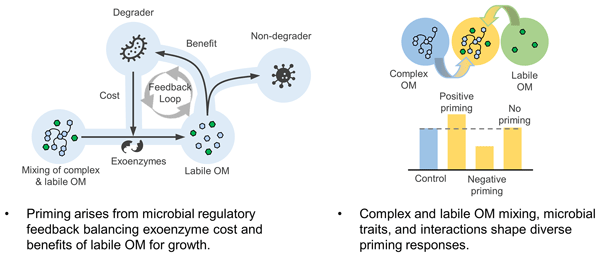
This research examines how labile organic matter influences the breakdown of complex organic matter (termed priming). Using a new modeling method, the study shows how microbial growth traits and interactions determine whether priming effects are positive or negative. By identifying microbial strategies as critical drivers of decomposition, this work provides a unified framework to improve predictions of nutrient cycling and carbon sequestration across diverse ecosystems.
Amy E. Goldman, James C. Stegen, Elizabeth T. Borer, Robert Hensley, Allison Myers-Pigg, Mikayla A. Borton, Paytsar Muradyan, Nicholas D. Ward, Jean M. Andino, Andrew D. Richardson, Alexandro B. Leverkus, Christopher S. Lowry, Nate G. McDowell, Kaizad F. Patel, Scott J. Davidson, Brieanne Forbes, Martha R. Downs, W. Robert Bolton, Timothy D. Scheibe, and Avni Malhotra
EGUsphere, https://doi.org/10.5194/egusphere-2026-3537, https://doi.org/10.5194/egusphere-2026-3537, 2026
Short summary
Short summary
Distributed data generation, or data collected from multiple sources and locations using standardized approaches and coordination among researchers, is powerful for scalable environmental knowledge. This paper helps readers understand options for distributed data generation, offers practical guidance for outreach, operations, and sharing outcomes, and explores how artificial intelligence can help address longstanding challenges.
Maggi M. Laan, Stephanie G. Fulton, Vanessa A. Garayburu-Caruso, Morgan E. Barnes, Mikayla A. Borton, Xingyuan Chen, Yuliya Farris, Brieanne Forbes, Amy E. Goldman, Samantha Grieger, Robert O. Hall Jr., Matthew H. Kaufman, Xinming Lin, Erin L. M. Zionce, Sophia A. McKever, Allison Myers-Pigg, Opal Otenburg, Aaron C. Pelly, Huiying Ren, Lupita Renteria, Timothy D. Scheibe, Kyongho Son, Jerry Tagestad, Joshua M. Torgeson, and James C. Stegen
Biogeosciences, 22, 6137–6152, https://doi.org/10.5194/bg-22-6137-2025, https://doi.org/10.5194/bg-22-6137-2025, 2025
Short summary
Short summary
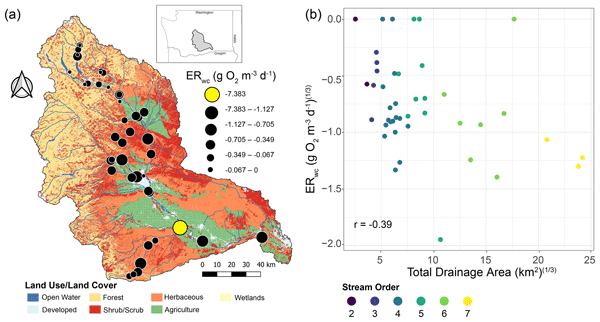
Respiration is a process that combines carbon and oxygen to generate energy for living organisms. Within a river, respiration in sediments and water makes variable contributions to the respiration of the whole river system. Contrary to conventional wisdom, we found that water column respiration did not increase strongly when moving from small streams to big rivers. Instead, it was locally influenced by temperature, nutrients, and suspended solids.

James Stegen, Amy J. Burgin, Michelle H. Busch, Joshua B. Fisher, Joshua Ladau, Jenna Abrahamson, Lauren Kinsman-Costello, Li Li, Xingyuan Chen, Thibault Datry, Nate McDowell, Corianne Tatariw, Anna Braswell, Jillian M. Deines, Julia A. Guimond, Peter Regier, Kenton Rod, Edward K. P. Bam, Etienne Fluet-Chouinard, Inke Forbrich, Kristin L. Jaeger, Teri O'Meara, Tim Scheibe, Erin Seybold, Jon N. Sweetman, Jianqiu Zheng, Daniel C. Allen, Elizabeth Herndon, Beth A. Middleton, Scott Painter, Kevin Roche, Julianne Scamardo, Ross Vander Vorste, Kristin Boye, Ellen Wohl, Margaret Zimmer, Kelly Hondula, Maggi Laan, Anna Marshall, and Kaizad F. Patel
Biogeosciences, 22, 995–1034, https://doi.org/10.5194/bg-22-995-2025, https://doi.org/10.5194/bg-22-995-2025, 2025
Short summary
Short summary
The loss and gain of surface water (variable inundation) are common processes across Earth. Global change shifts variable inundation dynamics, highlighting a need for unified understanding that transcends individual variably inundated ecosystems (VIEs). We review the literature, highlight challenges, and emphasize opportunities to generate transferable knowledge by viewing VIEs through a common lens. We aim to inspire the emergence of a cross-VIE community based on a proposed continuum approach.
Robert E. Danczak, Amy E. Goldman, Mikayla A. Borton, Rosalie K. Chu, Jason G. Toyoda, Vanessa A. Garayburu-Caruso, Emily B. Graham, Joseph W. Morad, Lupita Renteria, Jacqueline R. Hager, Shai Arnon, Scott Brooks, Edo Bar-Zeev, Michael Jones, Nikki Jones, Jorg Lewandowski, Christof Meile, Birgit M. Muller, John Schalles, Hanna Schulz, Adam Ward, and James C. Stegen
EGUsphere, https://doi.org/10.1101/2024.01.10.575030, https://doi.org/10.1101/2024.01.10.575030, 2025
Preprint archived
Short summary
Short summary
As dissolved organic matter (DOM) is transported from land to the ocean through rivers, it interacts with the environment and some is converted to CO2. We used high-resolution carbon analysis to show that DOM from seven rivers exhibited ecological patterns particular to the corresponding river. These results indicate that local processes play an outsized role in shaping DOM. By understanding these interactions across environments, we can predict DOM across spatial scales or under perturbations.
William Kew, Allison Myers-Pigg, Christine H. Chang, Sean M. Colby, Josie Eder, Malak M. Tfaily, Jeffrey Hawkes, Rosalie K. Chu, and James C. Stegen
Biogeosciences, 21, 4665–4679, https://doi.org/10.5194/bg-21-4665-2024, https://doi.org/10.5194/bg-21-4665-2024, 2024
Short summary
Short summary
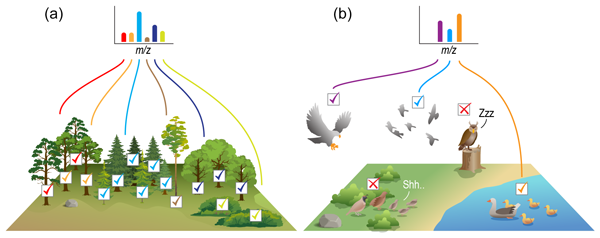
Natural organic matter (NOM) is often studied via Fourier transform mass spectrometry (FTMS), which identifies organic molecules as mass spectra peaks. The intensity of peaks is data that is often discarded due to technical concerns. We review the theory behind these concerns and show they are supported empirically. However, simulations show that ecological analyses of NOM data that include FTMS peak intensities are often valid. This opens a path for robust use of FTMS peak intensities for NOM.
Stephanie G. Fulton, Morgan Barnes, Mikayla A. Borton, Xingyuan Chen, Yuliya Farris, Brieanne Forbes, Vanessa A. Garayburu-Caruso, Amy E. Goldman, Samantha Grieger, Robert Hall Jr., Matthew H. Kaufman, Xinming Lin, Erin McCann, Sophia A. McKever, Allison Myers-Pigg, Opal C. Otenburg, Aaron C. Pelly, Huiying Ren, Lupita Renteria, Timothy D. Scheibe, Kyongho Son, Jerry Tagestad, Joshua M. Torgeson, and James C. Stegen
EGUsphere, https://doi.org/10.5194/egusphere-2023-3038, https://doi.org/10.5194/egusphere-2023-3038, 2024
Preprint archived
Short summary
Short summary
This research examines oxygen use in rivers, which is central to the carbon cycle and water quality. The study focused on an environmentally diverse river basin in the western United States and found that oxygen use in river water was very slow and influenced by factors like water temperature and concentrations of nutrients and carbon in the water. Results suggest that in the study system, most of the oxygen use occurs via mechanisms directly or indirectly associated with riverbed sediments.
Emily B. Graham, Hyun-Seob Song, Samantha Grieger, Vanessa A. Garayburu-Caruso, James C. Stegen, Kevin D. Bladon, and Allison N. Myers-Pigg
Biogeosciences, 20, 3449–3457, https://doi.org/10.5194/bg-20-3449-2023, https://doi.org/10.5194/bg-20-3449-2023, 2023
Short summary
Short summary
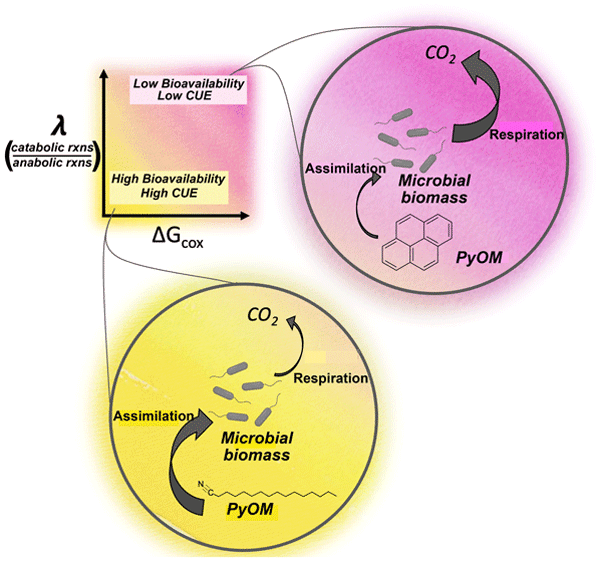
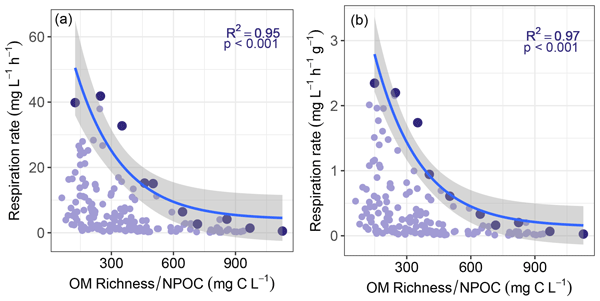
Intensifying wildfires are increasing pyrogenic organic matter (PyOM) production and its impact on water quality. Recent work indicates that PyOM may have a greater impact on aquatic biogeochemistry than previously assumed, driven by higher bioavailability. We provide a full assessment of the potential bioavailability of PyOM across its chemical spectrum. We indicate that PyOM can be actively transformed within the river corridor and, therefore, may be a growing source of riverine C emissions.
James C. Stegen, Vanessa A. Garayburu-Caruso, Robert E. Danczak, Amy E. Goldman, Lupita Renteria, Joshua M. Torgeson, and Jacqueline Hager
Biogeosciences, 20, 2857–2867, https://doi.org/10.5194/bg-20-2857-2023, https://doi.org/10.5194/bg-20-2857-2023, 2023
Short summary
Short summary
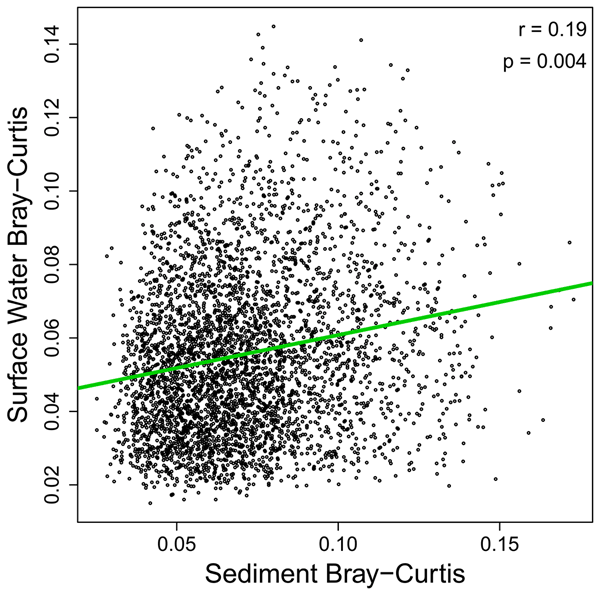
Chemical reactions in river sediments influence how clean the water is and how much greenhouse gas comes out of a river. Our study investigates why some sediments have higher rates of chemical reactions than others. We find that to achieve high rates, sediments need to have two things: only a few different kinds of molecules, but a lot of them. This result spans about 80 rivers such that it could be a general rule, helpful for predicting the future of rivers and our planet.
James C. Stegen, Sarah J. Fansler, Malak M. Tfaily, Vanessa A. Garayburu-Caruso, Amy E. Goldman, Robert E. Danczak, Rosalie K. Chu, Lupita Renteria, Jerry Tagestad, and Jason Toyoda
Biogeosciences, 19, 3099–3110, https://doi.org/10.5194/bg-19-3099-2022, https://doi.org/10.5194/bg-19-3099-2022, 2022
Short summary
Short summary
Rivers are vital to Earth, and in rivers, organic matter (OM) is an energy source for microbes that make greenhouse gas and remove contaminants. Predicting Earth’s future requires understanding how and why river OM is transformed. Our results help meet this need. We found that the processes influencing OM transformations diverge between river water and riverbed sediments. This can be used to build new models for predicting the future of rivers and, in turn, the Earth system.
Anna B. Turețcaia, Matthew H. Kaufman, Adam J. Kessler, Bing Li, Philip C. Bennett, Xingyuan Chen, Xiaofeng Liu, Pawel M. Wojtowicz, James C. Stegen, and M. Bayani Cardenas
EGUsphere, https://doi.org/10.5194/egusphere-2026-5532, https://doi.org/10.5194/egusphere-2026-5532, 2026
This preprint is open for discussion and under review for Biogeosciences (BG).
Short summary
Short summary
River corridors are important for organic matter (OM) cycles because river channels and sediment with hyporheic zones (HZs) are hot spots for reactions. We conducted low-flow flume experiments to understand the relative contributions to aerobic respiration (AR) from the channel and from the HZ in response to OM loading. The experiments showed that the HZ can be a relative biogeochemical cold spot during a channel hot moment because of low-flow hydrologic conditions.
Firnaaz Ahamed, James C. Stegen, Emily B. Graham, Timothy D. Scheibe, and Hyun-Seob Song
Biogeosciences, 23, 6817–6833, https://doi.org/10.5194/bg-23-6817-2026, https://doi.org/10.5194/bg-23-6817-2026, 2026
Short summary
Short summary
This research examines how labile organic matter influences the breakdown of complex organic matter (termed priming). Using a new modeling method, the study shows how microbial growth traits and interactions determine whether priming effects are positive or negative. By identifying microbial strategies as critical drivers of decomposition, this work provides a unified framework to improve predictions of nutrient cycling and carbon sequestration across diverse ecosystems.
Amy E. Goldman, James C. Stegen, Elizabeth T. Borer, Robert Hensley, Allison Myers-Pigg, Mikayla A. Borton, Paytsar Muradyan, Nicholas D. Ward, Jean M. Andino, Andrew D. Richardson, Alexandro B. Leverkus, Christopher S. Lowry, Nate G. McDowell, Kaizad F. Patel, Scott J. Davidson, Brieanne Forbes, Martha R. Downs, W. Robert Bolton, Timothy D. Scheibe, and Avni Malhotra
EGUsphere, https://doi.org/10.5194/egusphere-2026-3537, https://doi.org/10.5194/egusphere-2026-3537, 2026
Short summary
Short summary
Distributed data generation, or data collected from multiple sources and locations using standardized approaches and coordination among researchers, is powerful for scalable environmental knowledge. This paper helps readers understand options for distributed data generation, offers practical guidance for outreach, operations, and sharing outcomes, and explores how artificial intelligence can help address longstanding challenges.
Junyan Ding, Nate McDowell, Vanessa Bailey, Nate Conroy, Donnie J. Day, Yilin Fang, Kenneth M. Kemner, Matthew L. Kirwan, Charlie D. Koven, Matthew Kovach, Patrick Megonigal, Kendalynn A. Morris, Teri O'Meara, Stephanie C. Pennington, Roberta B. Peixoto, Peter Thornton, Mike Weintraub, Peter Regier, Leticia Sandoval, Fausto Machado-Silva, Alice Stearns, Nick Ward, and Stephanie J. Wilson
Biogeosciences, 22, 6963–6978, https://doi.org/10.5194/bg-22-6963-2025, https://doi.org/10.5194/bg-22-6963-2025, 2025
Short summary
Short summary
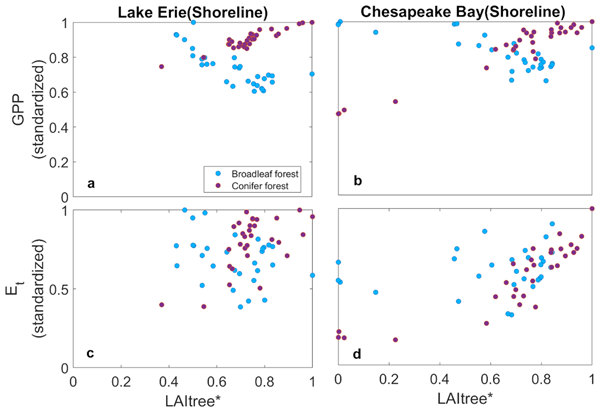
We used a vegetation model to study why coastal forests are dying due to rising water levels and what happens to the ecosystem when marshes take over. We found that tree death is mainly caused by water-damaged roots, leading to major changes in the environment, such as reduced water use and carbon storage. Our study helps explain how coastal ecosystems are shifting and offers new ideas to explore in future field research.
Maggi M. Laan, Stephanie G. Fulton, Vanessa A. Garayburu-Caruso, Morgan E. Barnes, Mikayla A. Borton, Xingyuan Chen, Yuliya Farris, Brieanne Forbes, Amy E. Goldman, Samantha Grieger, Robert O. Hall Jr., Matthew H. Kaufman, Xinming Lin, Erin L. M. Zionce, Sophia A. McKever, Allison Myers-Pigg, Opal Otenburg, Aaron C. Pelly, Huiying Ren, Lupita Renteria, Timothy D. Scheibe, Kyongho Son, Jerry Tagestad, Joshua M. Torgeson, and James C. Stegen
Biogeosciences, 22, 6137–6152, https://doi.org/10.5194/bg-22-6137-2025, https://doi.org/10.5194/bg-22-6137-2025, 2025
Short summary
Short summary
Respiration is a process that combines carbon and oxygen to generate energy for living organisms. Within a river, respiration in sediments and water makes variable contributions to the respiration of the whole river system. Contrary to conventional wisdom, we found that water column respiration did not increase strongly when moving from small streams to big rivers. Instead, it was locally influenced by temperature, nutrients, and suspended solids.
Morgan E. Barnes, J. Alan Roebuck Jr., Samantha Grieger, Paul J. Aronstein, Vanessa A. Garayburu-Caruso, Kathleen Munson, Robert P. Young, Kevin D. Bladon, John D. Bailey, Emily B. Graham, Lupita Renteria, Peggy A. O'Day, Timothy D. Scheibe, and Allison N. Myers-Pigg
Biogeosciences, 22, 4491–4505, https://doi.org/10.5194/bg-22-4491-2025, https://doi.org/10.5194/bg-22-4491-2025, 2025
Short summary
Short summary
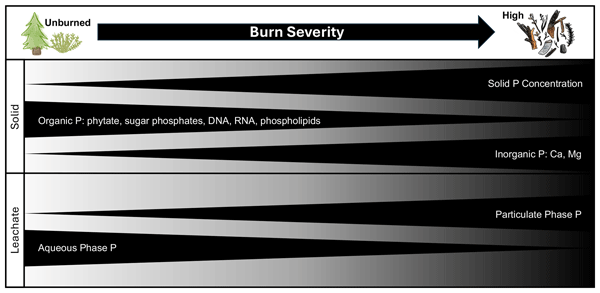
Wildfires impact nutrient cycles on land and in water. We used burning experiments to understand the types of phosphorous (P), an essential nutrient, that might be released to the environment after different types of fires. We found the amount of P moving through the environment post-fire is dependent on the type of vegetation and degree of burning, which may influence when and where this material is processed or stored.
Kristin Jones, Lenaïg G. Hemery, Nicholas D. Ward, Peter J. Regier, Mallory C. Ringham, and Matthew D. Eisaman
Biogeosciences, 22, 1615–1630, https://doi.org/10.5194/bg-22-1615-2025, https://doi.org/10.5194/bg-22-1615-2025, 2025
Short summary
Short summary
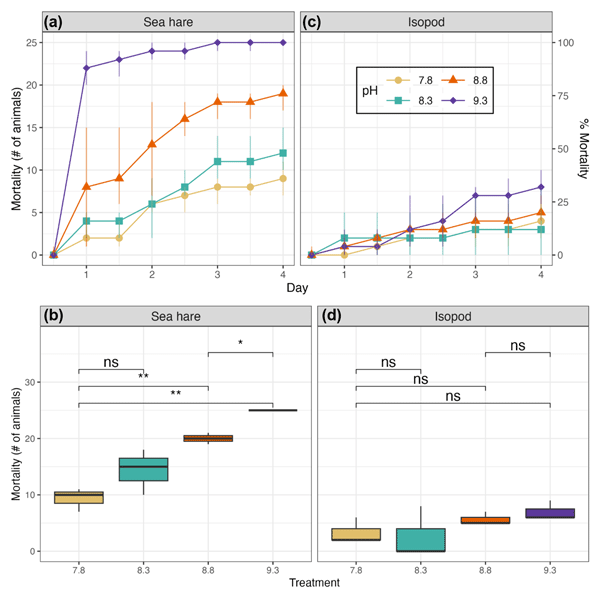
Ocean alkalinity enhancement is a marine carbon dioxide removal method that aims to mitigate the effects of climate change. This method causes localized increases in ocean pH, but the biological impacts of such changes are not well known. Our study investigated the response of two nearshore invertebrate species to increased pH and found the sea hare to be sensitive to pH changes, whereas the isopod was more resilient. Understanding interactions with biology is important as this field expands.
James Stegen, Amy J. Burgin, Michelle H. Busch, Joshua B. Fisher, Joshua Ladau, Jenna Abrahamson, Lauren Kinsman-Costello, Li Li, Xingyuan Chen, Thibault Datry, Nate McDowell, Corianne Tatariw, Anna Braswell, Jillian M. Deines, Julia A. Guimond, Peter Regier, Kenton Rod, Edward K. P. Bam, Etienne Fluet-Chouinard, Inke Forbrich, Kristin L. Jaeger, Teri O'Meara, Tim Scheibe, Erin Seybold, Jon N. Sweetman, Jianqiu Zheng, Daniel C. Allen, Elizabeth Herndon, Beth A. Middleton, Scott Painter, Kevin Roche, Julianne Scamardo, Ross Vander Vorste, Kristin Boye, Ellen Wohl, Margaret Zimmer, Kelly Hondula, Maggi Laan, Anna Marshall, and Kaizad F. Patel
Biogeosciences, 22, 995–1034, https://doi.org/10.5194/bg-22-995-2025, https://doi.org/10.5194/bg-22-995-2025, 2025
Short summary
Short summary
The loss and gain of surface water (variable inundation) are common processes across Earth. Global change shifts variable inundation dynamics, highlighting a need for unified understanding that transcends individual variably inundated ecosystems (VIEs). We review the literature, highlight challenges, and emphasize opportunities to generate transferable knowledge by viewing VIEs through a common lens. We aim to inspire the emergence of a cross-VIE community based on a proposed continuum approach.
Robert E. Danczak, Amy E. Goldman, Mikayla A. Borton, Rosalie K. Chu, Jason G. Toyoda, Vanessa A. Garayburu-Caruso, Emily B. Graham, Joseph W. Morad, Lupita Renteria, Jacqueline R. Hager, Shai Arnon, Scott Brooks, Edo Bar-Zeev, Michael Jones, Nikki Jones, Jorg Lewandowski, Christof Meile, Birgit M. Muller, John Schalles, Hanna Schulz, Adam Ward, and James C. Stegen
EGUsphere, https://doi.org/10.1101/2024.01.10.575030, https://doi.org/10.1101/2024.01.10.575030, 2025
Preprint archived
Short summary
Short summary
As dissolved organic matter (DOM) is transported from land to the ocean through rivers, it interacts with the environment and some is converted to CO2. We used high-resolution carbon analysis to show that DOM from seven rivers exhibited ecological patterns particular to the corresponding river. These results indicate that local processes play an outsized role in shaping DOM. By understanding these interactions across environments, we can predict DOM across spatial scales or under perturbations.
Katherine A. Muller, Peishi Jiang, Glenn Hammond, Tasneem Ahmadullah, Hyun-Seob Song, Ravi Kukkadapu, Nicholas Ward, Madison Bowe, Rosalie K. Chu, Qian Zhao, Vanessa A. Garayburu-Caruso, Alan Roebuck, and Xingyuan Chen
Geosci. Model Dev., 17, 8955–8968, https://doi.org/10.5194/gmd-17-8955-2024, https://doi.org/10.5194/gmd-17-8955-2024, 2024
Short summary
Short summary
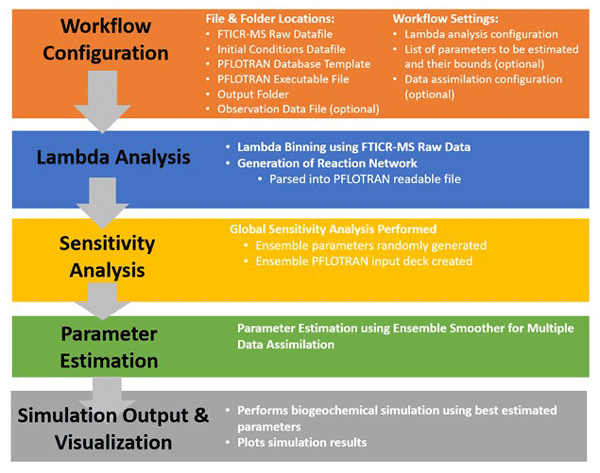
The new Lambda-PFLOTRAN workflow incorporates organic matter chemistry into reaction networks to simulate aerobic respiration and biogeochemistry. Lambda-PFLOTRAN is a Python-based workflow in a Jupyter notebook interface that digests raw organic matter chemistry data via Fourier transform ion cyclotron resonance mass spectrometry, develops a representative reaction network, and completes a biogeochemical simulation with the open-source, parallel-reactive-flow, and transport code PFLOTRAN.
William Kew, Allison Myers-Pigg, Christine H. Chang, Sean M. Colby, Josie Eder, Malak M. Tfaily, Jeffrey Hawkes, Rosalie K. Chu, and James C. Stegen
Biogeosciences, 21, 4665–4679, https://doi.org/10.5194/bg-21-4665-2024, https://doi.org/10.5194/bg-21-4665-2024, 2024
Short summary
Short summary
Natural organic matter (NOM) is often studied via Fourier transform mass spectrometry (FTMS), which identifies organic molecules as mass spectra peaks. The intensity of peaks is data that is often discarded due to technical concerns. We review the theory behind these concerns and show they are supported empirically. However, simulations show that ecological analyses of NOM data that include FTMS peak intensities are often valid. This opens a path for robust use of FTMS peak intensities for NOM.
Stephanie G. Fulton, Morgan Barnes, Mikayla A. Borton, Xingyuan Chen, Yuliya Farris, Brieanne Forbes, Vanessa A. Garayburu-Caruso, Amy E. Goldman, Samantha Grieger, Robert Hall Jr., Matthew H. Kaufman, Xinming Lin, Erin McCann, Sophia A. McKever, Allison Myers-Pigg, Opal C. Otenburg, Aaron C. Pelly, Huiying Ren, Lupita Renteria, Timothy D. Scheibe, Kyongho Son, Jerry Tagestad, Joshua M. Torgeson, and James C. Stegen
EGUsphere, https://doi.org/10.5194/egusphere-2023-3038, https://doi.org/10.5194/egusphere-2023-3038, 2024
Preprint archived
Short summary
Short summary
This research examines oxygen use in rivers, which is central to the carbon cycle and water quality. The study focused on an environmentally diverse river basin in the western United States and found that oxygen use in river water was very slow and influenced by factors like water temperature and concentrations of nutrients and carbon in the water. Results suggest that in the study system, most of the oxygen use occurs via mechanisms directly or indirectly associated with riverbed sediments.
Emily B. Graham, Hyun-Seob Song, Samantha Grieger, Vanessa A. Garayburu-Caruso, James C. Stegen, Kevin D. Bladon, and Allison N. Myers-Pigg
Biogeosciences, 20, 3449–3457, https://doi.org/10.5194/bg-20-3449-2023, https://doi.org/10.5194/bg-20-3449-2023, 2023
Short summary
Short summary
Intensifying wildfires are increasing pyrogenic organic matter (PyOM) production and its impact on water quality. Recent work indicates that PyOM may have a greater impact on aquatic biogeochemistry than previously assumed, driven by higher bioavailability. We provide a full assessment of the potential bioavailability of PyOM across its chemical spectrum. We indicate that PyOM can be actively transformed within the river corridor and, therefore, may be a growing source of riverine C emissions.
James C. Stegen, Vanessa A. Garayburu-Caruso, Robert E. Danczak, Amy E. Goldman, Lupita Renteria, Joshua M. Torgeson, and Jacqueline Hager
Biogeosciences, 20, 2857–2867, https://doi.org/10.5194/bg-20-2857-2023, https://doi.org/10.5194/bg-20-2857-2023, 2023
Short summary
Short summary
Chemical reactions in river sediments influence how clean the water is and how much greenhouse gas comes out of a river. Our study investigates why some sediments have higher rates of chemical reactions than others. We find that to achieve high rates, sediments need to have two things: only a few different kinds of molecules, but a lot of them. This result spans about 80 rivers such that it could be a general rule, helpful for predicting the future of rivers and our planet.
James C. Stegen, Sarah J. Fansler, Malak M. Tfaily, Vanessa A. Garayburu-Caruso, Amy E. Goldman, Robert E. Danczak, Rosalie K. Chu, Lupita Renteria, Jerry Tagestad, and Jason Toyoda
Biogeosciences, 19, 3099–3110, https://doi.org/10.5194/bg-19-3099-2022, https://doi.org/10.5194/bg-19-3099-2022, 2022
Short summary
Short summary
Rivers are vital to Earth, and in rivers, organic matter (OM) is an energy source for microbes that make greenhouse gas and remove contaminants. Predicting Earth’s future requires understanding how and why river OM is transformed. Our results help meet this need. We found that the processes influencing OM transformations diverge between river water and riverbed sediments. This can be used to build new models for predicting the future of rivers and, in turn, the Earth system.
Cited articles
Allan, J. D., Castillo, M. M., and Capps, K. A.: Stream Ecology: Structure and Function of Running Waters, Springer International Publishing, Cham, https://doi.org/10.1007/978-3-030-61286-3, 2021.
Appling, A. P., Hall Jr., R. O., Yackulic, C. B., and Arroita, M.: Overcoming Equifinality: Leveraging Long Time Series for Stream Metabolism Estimation, J. Geophys. Res.-Biogeo., 123, 624–645, https://doi.org/10.1002/2017JG004140, 2018.
Battin, T. J., Lauerwald, R., Bernhardt, E. S., Bertuzzo, E., Gener, L. G., Hall, R. O., Hotchkiss, E. R., Maavara, T., Pavelsky, T. M., Ran, L., Raymond, P., Rosentreter, J. A., and Regnier, P.: River ecosystem metabolism and carbon biogeochemistry in a changing world, Nature, 613, 449–459, https://doi.org/10.1038/s41586-022-05500-8, 2023.
Benbi, D. K., Boparai, A. K., and Brar, K.: Decomposition of particulate organic matter is more sensitive to temperature than the mineral associated organic matter, Soil Biol. Biochem., 70, 183–192, https://doi.org/10.1016/j.soilbio.2013.12.032, 2014.
Benfield, E. F., Fritz, K. M., and Tiegs, S. D.: Leaf-Litter Breakdown, Chapt. 27, in: Methods in Stream Ecology, 3rd edn., edited by: Lamberti, G. A. and Hauer, F. R., Academic Press, 71–82, https://doi.org/10.1016/B978-0-12-813047-6.00005-X, 2017.
Bernhardt, E. S., Savoy, P., Vlah, M. J., Appling, A. P., Koenig, L. E., Hall, R. O., Arroita, M., Blaszczak, J. R., Carter, A. M., Cohen, M., Harvey, J. W., Heffernan, J. B., Helton, A. M., Hosen, J. D., Kirk, L., McDowell, W. H., Stanley, E. H., Yackulic, C. B., and Grimm, N. B.: Light and flow regimes regulate the metabolism of rivers, P. Natl. Acad. Sci. USA, 119, e2121976119, https://doi.org/10.1073/pnas.2121976119, 2022.
Boano, F., Harvey, J. W., Marion, A., Packman, A. I., Revelli, R., Ridolfi, L., and Wörman, A.: Hyporheic flow and transport processes: Mechanisms, models, and biogeochemical implications, Rev. Geophys., 52, 603–679, https://doi.org/10.1002/2012RG000417, 2014.
Boulton, A. J., Findlay, S., Marmonier, P., Stanley, E. H., and Valett, H. M.: The functional significance of the hyporheic zone in streams and rivers, Annu. Rev. Ecol. Evol. S., 29, 59–81, https://doi.org/10.1146/annurev.ecolsys.29.1.59, 1998.
Burrows, R. M., Rutlidge, H., Bond, N. R., Eberhard, S. M., Auhl, A., Andersen, M. S., Valdez, D. G., and Kennard, M. J.: High rates of organic carbon processing in the hyporheic zone of intermittent streams, Sci. Rep.-UK, 7, 13198, https://doi.org/10.1038/s41598-017-12957-5, 2017.
Clapcott, J. E. and Barmuta, L. A.: Metabolic patch dynamics in small headwater streams: exploring spatial and temporal variability in benthic processes, Freshwater Biol., 55, 806–824, https://doi.org/10.1111/j.1365-2427.2009.02324.x, 2010.
Colas, F., Woodward, G., Burdon, F. J., Guérold, F., Chauvet, E., Cornut, J., Cébron, A., Clivot, H., Danger, M., Danner, M. C., Pagnout, C., and Tiegs, S. D.: Towards a simple global-standard bioassay for a key ecosystem process: organic-matter decomposition using cotton strips, Ecol. Indic., 106, 105466, https://doi.org/10.1016/j.ecolind.2019.105466, 2019.
Cole, J. J., Prairie, Y. T., Caraco, N. F., McDowell, W. H., Tranvik, L. J., Striegl, R. G., Duarte, C. M., Kortelainen, P., Downing, J. A., Middelburg, J. J., and Melack, J.: Plumbing the Global Carbon Cycle: Integrating Inland Waters into the Terrestrial Carbon Budget, Ecosystems, 10, 172–185, https://doi.org/10.1007/s10021-006-9013-8, 2007.
Collier, K. J., Clapcott, J. E., Hamer, M. P., and Young, R. G.: Extent estimates and land cover relationships for functional indicators in non-wadeable rivers, Ecol. Indic., 34, 53–59, https://doi.org/10.1016/j.ecolind.2013.04.010, 2013a.
Collier, K. J., Clapcott, J. E., Duggan, I. C., Hamilton, D. P., Hamer, M., and Young, R. G.: Spatial Variation of Structural and Functional Indicators in a Large New Zealand River, River Res. Appl., 29, 1277–1290, https://doi.org/10.1002/rra.2609, 2013b.
Danger, M., Cornut, J., Chauvet, E., Chavez, P., Elger, A., and Lecerf, A.: Benthic algae stimulate leaf litter decomposition in detritus-based headwater streams: a case of aquatic priming effect?, Ecology, 94, 1604–1613, https://doi.org/10.1890/12-0606.1, 2013.
Delgado, D., Barnes, M., Boehnke, B. T., Chen, X., Chen, Y., Cornwell, K., Forbes, B., Fulton, S. G., Garayburu-Caruso, V. A., Goldman, A. E., Gonzalez, B. I., Grieger, S., Hammond, G. E., Jiang, P., Kaufman, M. H., Laan, M., Li, B., Li, Z., Lin, X., McKever, S. A., Mudunuru, M. K., Muller, K. A., Myers-Pigg, A., Otenburg, O., Pelly, A., Peta, K., Powers-McCormack, B., Regier, P., Renteria, L., Roebuck, A., Scheibe, T. D., Son, K., Torgeson, J. M., Zheng, J., and Stegen, J. C.: Spatial Study 2022: Surface Water Samples, Cotton Strip Degradation, and Hydrologic Sensor Data across the Yakima River Basin, Washington, USA (v3), River Corridor and Watershed Biogeochemistry SFA, ESS-DIVE repository [data set], https://doi.org/10.15485/1969566, 2023.
Demars, B. O. L., Thompson, J., and Manson, J. R.: Stream metabolism and the open diel oxygen method: Principles, practice, and perspectives, Limnol. Oceanogr.-Meth., 13, 356–374, https://doi.org/10.1002/lom3.10030, 2015.
Drake, T. W., Raymond, P. A., and Spencer, R. G. M.: Terrestrial carbon inputs to inland waters: A current synthesis of estimates and uncertainty, Limnology and Oceanography Letters, 3, 132–142, https://doi.org/10.1002/lol2.10055, 2018.
Estapa, M. L. and Mayer, L. M.: Photooxidation of particulate organic matter, carbon/oxygen stoichiometry, and related photoreactions, Mar. Chem., 122, 138–147, https://doi.org/10.1016/j.marchem.2010.06.003, 2010.
Fellows, C. S., Valett, M. H., and Dahm, C. N.: Whole stream metabolism in two montane streams: Contribution of the hyporheic zone, Limnol. Oceanogr., 46, 523–531, https://doi.org/10.4319/lo.2001.46.3.0523, 2001.
Ferreira, V., Castagneyrol, B., Koricheva, J., Gulis, V., Chauvet, E., and Graça, M. A. S.: A meta-analysis of the effects of nutrient enrichment on litter decomposition in streams, Biol. Rev., 90, 669–688, https://doi.org/10.1111/brv.12125, 2015.
Filbee-Dexter, K., Feehan, C. J., Smale, D. A., Krumhansl, K. A., Augustine, S., Bettignies, F. de, Burrows, M. T., Byrnes, J. E. K., Campbell, J., Davoult, D., Dunton, K. H., Franco, J. N., Garrido, I., Grace, S. P., Hancke, K., Johnson, L. E., Konar, B., Moore, P. J., Norderhaug, K. M., O'Dell, A., Pedersen, M. F., Salomon, A. K., Sousa-Pinto, I., Tiegs, S., Yiu, D., and Wernberg, T.: Kelp carbon sink potential decreases with warming due to accelerating decomposition, PLOS Biol., 20, e3001702, https://doi.org/10.1371/journal.pbio.3001702, 2022.
Forbes, B., Barnes, M., Boehnke, B. T., Bowden, M. E., Chen, X., Cornwell, K., Crawford, M., Delgado, D., Fulton, S. G., Garayburu-Caruso, V. A., Gary, S., Goldman, A. E., Gonzalez, B. I., Grieger, S., Hammond, G. E., Jiang, P., Kaufman, M. H., Laan, M., Li, B., Li, Z., McKever, S. A., Mudunuru, M. K., Muller, K. A., Myers-Pigg, A., Ocejo, J. A., Otenburg, O., Pelly, A., Peta, K., Powers-McCormack, B., Regier, P., Renteria, L., Roebuck, A., Scheibe, T. D., Son, K., Tfaily, M. M., Torgeson, J. M., Stegen, J. C., and Consortium, T. W.: WHONDRS River Corridor Sediment and Water Geochemistry and In Situ Sensor Data from Machine-Learning-Informed Sites across the Contiguous United States (v6), River Corridor and Watershed Biogeochemistry SFA, ESS-DIVE Repository [data set], https://doi.org/10.15485/1923689, 2023.
Friedman, J., Hastie, T., and Tibshirani, R.: Regularization Paths for Generalized Linear Models via Coordinate Descent, J. Stat. Softw., 33, 1–22, https://doi.org/10.18637/jss.v033.i01, 2010.
Garayburu-Caruso, V. A., Kaufman, M. H., Delgado, D., Barnes, M., Boehnke, B. T., Chen, X., Cornwell, K., Forbes, B., Fulton, S. G., Goldman, A. E., Gonzalez, B. I., Grieger, S., Jr, R. O. H., Hammond, G. E., Jiang, P., Laan, M., Li, B., Li, Z., Lin, X., McKever, S. A., Mudunuru, M. K., Muller, K. A., Myers-Pigg, A., Otenburg, O., Pelly, A., Peta, K., Regier, P., Renteria, L., Roebuck, A., Scheibe, T. D., Son, K., Torgeson, J. M., and Stegen, J. C.: Spatial Study 2022: Water Column, Sediment, and Total Ecosystem Respiration Rates across the Yakima River Basin, Washington, USA (v2), River Corridor Hydro-biogeochemistry from Molecular to Multi-Basin Scales SFA, ESS-DIVE repository [data set], https://doi.org/10.15485/1987520, 2023.
Garayburu-Caruso, V. A., Kaufman, M., Forbes, B., Hall, R. O., Laan, M., Chen, X., Lin, X., Fulton, S., Renteria, L., Fang, Y., Son, K., and Stegen, J. C.: Sediment-associated processes account for most of the spatial variation in ecosystem respiration in the Yakima River basin, bioRxiv, 2024.03.22.586339, https://doi.org/10.1101/2024.03.22.586339, 2025.
Gardner, J. R. and Doyle, M. W.: Sediment–Water Surface Area Along Rivers: Water Column Versus Benthic, Ecosystems, 21, 1505–1520, https://doi.org/10.1007/s10021-018-0236-2, 2018.
Griffiths, N. A. and Tiegs, S. D.: Organic-matter decomposition along a temperature gradient in a forested headwater stream, Freshw. Sci., 35, 518–533, 2016.
Grimm, N. B. and Fisher, S. G.: Stability of Periphyton and Macroinvertebrates to Disturbance by Flash Floods in a Desert Stream, J. N. Am. Benthol. Soc., 8, 293–307, https://doi.org/10.2307/1467493, 1989.
Hall, R. O. and Hotchkiss, E. R.: Chapter 34 - Stream Metabolism, in: Methods in Stream Ecology, 4rd edn., edited by: Lamberti, G. A. and Hauer, F. R., Academic Press, 219–233, https://doi.org/10.1016/B978-0-12-813047-6.00012-7, 2017a.
Hall, R. O. and Hotchkiss, E. R.: Stream Metabolism, in: Methods in Stream Ecology, Academic Press, 219–233, https://doi.org/10.1016/B978-0-12-813047-6.00012-7, 2017b.
Hall, R. O. and Tank, J. L.: Correcting whole-stream estimates of metabolism for groundwater input, Limnol. Oceanogr.-Meth., 3, 222–229, https://doi.org/10.4319/lom.2005.3.222, 2005.
Howard-Parker, B., White, B., Halvorson, H. M., and Evans-White, M. A.: Light and dissolved nutrients mediate recalcitrant organic matter decomposition via microbial priming in experimental streams, Freshwater Biol., 65, 1189–1199, https://doi.org/10.1111/fwb.13503, 2020.
Krause, S., Hannah, D. M., Fleckenstein, J. H., Heppell, C. M., Kaeser, D., Pickup, R., Pinay, G., Robertson, A. L., and Wood, P. J.: Inter-disciplinary perspectives on processes in the hyporheic zone, Ecohydrology, 4, 481–499, https://doi.org/10.1002/eco.176, 2011.
Laan, M. M., Fulton, S. G., Garayburu-Caruso, V. A., Barnes, M. E., Borton, M. A., Chen, X., Farris, Y., Forbes, B., Goldman, A. E., Grieger, S., Hall Jr., R. O., Kaufman, M. H., Lin, X., Zionce, E. L. M., McKever, S. A., Myers-Pigg, A., Otenburg, O., Pelly, A. C., Ren, H., Renteria, L., Scheibe, T. D., Son, K., Tagestad, J., Torgeson, J. M., and Stegen, J. C.: Water column respiration in the Yakima River basin is explained by temperature, nutrients, and suspended solids, Biogeosciences, 22, 6137–6152, https://doi.org/10.5194/bg-22-6137-2025, 2025.
Lewandowski, J., Arnon, S., Banks, E., Batelaan, O., Betterle, A., Broecker, T., Coll, C., Drummond, J. D., Gaona Garcia, J., Galloway, J., Gomez-Velez, J., Grabowski, R. C., Herzog, S. P., Hinkelmann, R., Höhne, A., Hollender, J., Horn, M. A., Jaeger, A., Krause, S., Löchner Prats, A., Magliozzi, C., Meinikmann, K., Mojarrad, B. B., Mueller, B. M., Peralta-Maraver, I., Popp, A. L., Posselt, M., Putschew, A., Radke, M., Raza, M., Riml, J., Robertson, A., Rutere, C., Schaper, J. L., Schirmer, M., Schulz, H., Shanafield, M., Singh, T., Ward, A. S., Wolke, P., Wörman, A., and Wu, L.: Is the Hyporheic Zone Relevant beyond the Scientific Community?, Water, 11, 2230, https://doi.org/10.3390/w11112230, 2019.
Mancuso, J., Messick, E., and Tiegs, S. D.: Parsing spatial and temporal variation in stream ecosystem functioning, Ecosphere, 13, e4202, https://doi.org/10.1002/ecs2.4202, 2022.
Mancuso, J., Tank, J. L., Mahl, U. H., Vincent, A., and Tiegs, S. D.: Monthly variation in organic-matter decomposition in agricultural stream and riparian ecosystems, Aquat. Sci., 85, 83, https://doi.org/10.1007/s00027-023-00975-7, 2023.
McClain, M. E., Boyer, E. W., Dent, C. L., Gergel, S. E., Grimm, N. B., Groffman, P. M., Hart, S. C., Harvey, J. W., Johnston, C. A., Mayorga, E., McDowell, W. H., and Pinay, G.: Biogeochemical Hot Spots and Hot Moments at the Interface of Terrestrial and Aquatic Ecosystems, Ecosystems, 6, 301–312, 2003.
Mulholland, P. J., Fellows, C. S., Tank, J. L., Grimm, N. B., Webster, J. R., Hamilton, S. K., Martí, E., Ashkenas, L., Bowden, W. B., Dodds, W. K., Mcdowell, W. H., Paul, M. J., and Peterson, B. J.: Inter-biome comparison of factors controlling stream metabolism, Freshwater Biol., 46, 1503–1517, https://doi.org/10.1046/j.1365-2427.2001.00773.x, 2001.
Naegeli, M. W. and Uehlinger, U.: Contribution of the hyporheic zone to ecosystem metabolism in a prealpine gravel-bed-river, J. N. Am. Benthol. Soc., 16, 794–804, 1997.
Odum, H. T.: Primary production in flowing waters 1, Limnol. Oceanogr., 1, 102–117, 1956.
Piatka, D. R., Wild, R., Hartmann, J., Kaule, R., Kaule, L., Gilfedder, B., Peiffer, S., Geist, J., Beierkuhnlein, C., and Barth, J. A. C.: Transfer and transformations of oxygen in rivers as catchment reflectors of continental landscapes: A review, Earth-Sci. Rev., 220, 103729, https://doi.org/10.1016/j.earscirev.2021.103729, 2021.
Pingram, M. A., Clapcott, J. E., Hamer, M. P., Atalah, J., and Özkundakci, D.: Exploring temporal and spatial variation in cotton tensile-strength loss to assess the ecosystem health of non-wadeable rivers, Ecol. Indic., 108, 105773, https://doi.org/10.1016/j.ecolind.2019.105773, 2020.
Roley, S. S., Hall Jr., R. O., Perkins, W., Garayburu-Caruso, V. A., and Stegen, J. C.: Coupled primary production and respiration in a large river contrasts with smaller rivers and streams, Limnol. Oceanogr., 68, 2461–2475, https://doi.org/10.1002/lno.12435, 2023.
Rosemond, Amy D. et al.: Experimental nutrient additions accelerate terrestrial carbon loss from stream ecosystems, Science, 347, 1142–1145, https://doi.org/10.1126/science.aaa1958, 2015.
Stegen, J. C., Barnes, M. E., Delgado, D., Forbes, B., Garayburu-Caruso, V. A., Goldman, A. E., Laan, M., McKever, S. A., Regier, P., Renteria, L., and Tiegs, S. D.: Data and scripts associated with “Basin-scale connections between reach-scale sediment respiration and point-scale organic-matter decomposition”, River Corridor Hydro-biogeochemistry from Molecular to Multi-Basin Scales SFA, ESS-DIVE repository [data set], https://doi.org/10.15485/3008446, 2025.
Talluto, L., del Campo, R., Estévez, E., Altermatt, F., Datry, T., and Singer, G.: Towards (better) fluvial meta-ecosystem ecology: a research perspective, npj biodivers, 3, 1–10, https://doi.org/10.1038/s44185-023-00036-0, 2024.
Tank, J. L., Rosi-Marshall, E. J., Griffiths, N. A., Entrekin, S. A., and Stephen, M. L.: A review of allochthonous organic matter dynamics and metabolism in streams, J. N. Am. Benthol. Soc., 29, 118–146, 2010.
Tiegs, S. D., Clapcott, J. E., Griffiths, N. A., and Boulton, A. J.: A standardized cotton-strip assay for measuring organic-matter decomposition in streams, Ecol. Indic., 32, 131–139, https://doi.org/10.1016/j.ecolind.2013.03.013, 2013.
Tiegs, S. D., Capps, K. A., Costello, D. M., Schmidt, J. P., Patrick, C. J., Follstad Shah, J. J., Leroy, C. J., and CELLDEX Consortium‡: Human activities shape global patterns of decomposition rates in rivers, Science, 384, 1191–1195, 2024.
Vyšná, V., Dyer, F., Maher, W., and Norris, R.: Cotton-strip decomposition rate as a river condition indicator – Diel temperature range and deployment season and length also matter, Ecol. Indic., 45, 508–521, https://doi.org/10.1016/j.ecolind.2014.05.011, 2014.
Webb, J. R., Pearce, N. J. T., Painter, K. J., and Yates, A. G.: Hierarchical variation in cellulose decomposition in least-disturbed reference streams: a multi-season study using the cotton strip assay, Landscape Ecol., 34, 2353–2369, https://doi.org/10.1007/s10980-019-00893-w, 2019.
Wondzell, S. M.: The role of the hyporheic zone across stream networks, Hydrol. Process., 25, 3525–3532, https://doi.org/10.1002/hyp.8119, 2011.
Woodward, G., Gessner, M. O., Giller, P. S., Gulis, V., Hladyz, S., Lecerf, A., Malmqvist, B., McKie, B. G., Tiegs, S. D., and Cariss, H.: Continental-scale effects of nutrient pollution on stream ecosystem functioning, Science, 336, 1438–1440, 2012.
Young, R. G. and Collier, K. J.: Contrasting responses to catchment modification among a range of functional and structural indicators of river ecosystem health, Freshwater Biol., 54, 2155–2170, https://doi.org/10.1111/j.1365-2427.2009.02239.x, 2009.
Young, R. G. and Huryn, A. D.: Effects of Land Use on Stream Metabolism and Organic Matter Turnover, Ecol. Appl., 9, 1359–1376, https://doi.org/10.1890/1051-0761(1999)009%5B1359:EOLUOS%5D2.0.CO;2, 1999.
Zarnetske, J. P., Haggerty, R., Wondzell, S. M., and Baker, M. A.: Dynamics of nitrate production and removal as a function of residence time in the hyporheic zone, J. Geophys. Res.-Biogeo., 116, https://doi.org/10.1029/2010JG001356, 2011.
Short summary
Streams move and break down organic material, but it is unclear how small-scale decomposition relates to larger scale respiration. We used cotton strips at 48 sites in the Yakima River Basin, Washington, to measure decomposition and different components of river respiration. Decomposition tracked whole-river respiration more than local sediment activity, showing that spatial variation in decomposition results from integrated watershed features.
Streams move and break down organic material, but it is unclear how small-scale decomposition...


Altmetrics
Final-revised paper
Preprint