
Articles | Volume 23, issue 13
https://doi.org/10.5194/bg-23-4843-2026
© Author(s) 2026. This work is distributed under
the Creative Commons Attribution 4.0 License.
the Creative Commons Attribution 4.0 License.
https://doi.org/10.5194/bg-23-4843-2026
© Author(s) 2026. This work is distributed under
the Creative Commons Attribution 4.0 License.
the Creative Commons Attribution 4.0 License.
Research article
| 
14 Jul 2026
Research article |
| 14 Jul 2026
| 14 Jul 2026
Root turnover and soil indicators capture belowground recovery following saltmarsh restoration
Sabrina K. B. Olsson
CORRESPONDING AUTHOR
Centre for Nature Positive Solutions, Department of Biology, School of Science, RMIT University, Victoria, Australia
School of Life and Environmental Science, Deakin Marine Research and Innovation Centre, Deakin University, Victoria, Australia
Anirban Akhand
Centre for Nature Positive Solutions, Department of Biology, School of Science, RMIT University, Victoria, Australia
School of Life and Environmental Science, Deakin Marine Research and Innovation Centre, Deakin University, Victoria, Australia
Peter I. Macreadie
Centre for Nature Positive Solutions, Department of Biology, School of Science, RMIT University, Victoria, Australia
School of Life and Environmental Science, Deakin Marine Research and Innovation Centre, Deakin University, Victoria, Australia
Joeri Kaal
Pyrolyscience, Santiago de Compostela, Spain
Siegmund Nuyts
School of Life and Environmental Science, Deakin Marine Research and Innovation Centre, Deakin University, Victoria, Australia
Paul E. Carnell
Centre for Nature Positive Solutions, Department of Biology, School of Science, RMIT University, Victoria, Australia
School of Life and Environmental Science, Deakin Marine Research and Innovation Centre, Deakin University, Victoria, Australia
Stacey M. Trevathan-Tackett
CORRESPONDING AUTHOR
Centre for Nature Positive Solutions, Department of Biology, School of Science, RMIT University, Victoria, Australia
School of Life and Environmental Science, Deakin Marine Research and Innovation Centre, Deakin University, Victoria, Australia
Related authors
No articles found.
Martino E. Malerba, Blake Edwards, Lukas Schuster, Omosalewa Odebiri, Josh Glen, Rachel Kelly, Paul Phan, Alistair Grinham, and Peter I. Macreadie
Biogeosciences, 22, 5051–5067, https://doi.org/10.5194/bg-22-5051-2025, https://doi.org/10.5194/bg-22-5051-2025, 2025
Short summary
Short summary
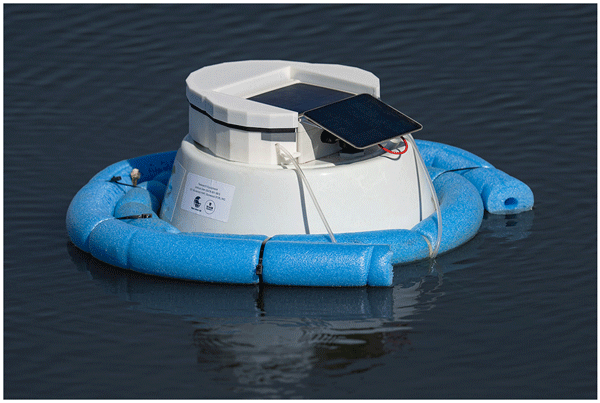
The Pondi is a cost-effective, lightweight logger designed for long-term monitoring of carbon dioxide, methane, and nitrous oxide emissions in both terrestrial and aquatic ecosystems. It addresses key challenges in greenhouse gas monitoring by providing an automated, low-cost, solar-powered solution with cloud connectivity and real-time analytics. Its robust design enables deployment in diverse environmental conditions, supporting large-scale, high-resolution emission assessments.
Cited articles
Adame, M., Zakaria, R., Fry, B., Chong, V., Then, Y., Brown, C., and Lee, S.: Loss and recovery of carbon and nitrogen after mangrove clearing, Ocean Coast. Manage., 161, 117–126, https://doi.org/10.1016/j.ocecoaman.2018.04.019, 2018.
Arnaud, M., Bakhos, M., Rumpel, C., Dignac, M.-F., Bottinelli, N., Norby, R. J., Geairon, P., Deborde, J., Kostyrka, P., and Gernigon, J.: Salt marsh litter decomposition varies more by litter type than by extent of sea-level inundation, Commun. Earth Environ., 5, 686, https://doi.org/10.1038/s43247-024-01855-0, 2024.
Bayraktarov, E., Brisbane, S., Hagger, V., Smith, C. S., Wilson, K. A., Lovelock, C. E., Gillies, C., Steven, A. D., and Saunders, M. I.: Priorities and motivations of marine coastal restoration research, Front. Mar. Sci., 7, 484, https://doi.org/10.3389/fmars.2020.00484, 2020.
Benjamin, A., Benedicte, D., Chaumillon, E., Rumpel, C., Dignac, M. F., Felbacq, A., Schmidt, S., Destampes, M., Arnaud, M., Metzger, E., Lacoue-Labarthe, T., and Dupuy, C.: Organic carbon composition and preservation in macrotidal coastal wetland sediment: insights from biomarkers and isotopic signatures, Sci. Total Environ., 1020, 181542, https://doi.org/10.1016/j.scitotenv.2026.181542, 2026.
Brooks, H., Moeller, I., Spencer, T., Royse, K., Price, S., and Kirkham, M.: How strong are salt marshes? Geotechnical properties of coastal wetland soils, Earth Surf. Proc. Land., 47, 1390–1408, https://doi.org/10.1002/esp.5322, 2022.
Burden, A., Garbutt, R., Evans, C., Jones, D., and Cooper, D.: Carbon sequestration and biogeochemical cycling in a saltmarsh subject to coastal managed realignment, Estuar. Coast. Shelf S., 120, 12–20, https://doi.org/10.1016/j.ecss.2013.01.014, 2013.
Burger, D., Bauke, S., Schneider, F., Kappenberg, A., and Gocke, M.: Root-derived carbon stocks in formerly deep-ploughed soils – a biomarker-based approach, Org. Geochem., 190, 104756, https://doi.org/10.1016/j.orggeochem.2024.104756, 2024.
Cadier, C., Bayraktarov, E., Piccolo, R., and Adame, M. F.: Indicators of coastal wetlands restoration success: a systematic review, Front. Mar. Sci., 7, 600220, https://doi.org/10.3389/fmars.2020.600220, 2020.
Cahoon, D. R., McKee, K. L., and Morris, J. T.: How plants influence resilience of salt marsh and mangrove wetlands to sea-level rise, Estuaries Coasts, 44, 883–898, https://doi.org/10.1007/s12237-020-00834-w, 2021.
Carnell, P. E., Palacios, M. M., Waryszak, P., Trevathan-Tackett, S. M., Masqué, P., and Macreadie, P. I.: Blue carbon drawdown by restored mangrove forests improves with age, J. Environ. Manage., 306, 114301, https://doi.org/10.1016/j.jenvman.2021.114301, 2022.
Challinor, J. M.: The development and applications of thermally assisted hydrolysis and methylation reactions, J. Anal. Appl. Pyrol., 61, 3–34, https://doi.org/10.1016/S0165-2370(01)00146-2, 2001.
Chang, E. R., Veeneklaas, R. M., Bakker, J. P., Daniels, P., and Esselink, P.: What factors determined restoration success of a salt marsh ten years after de-embankment?, Appl. Veg. Sci., 19, 66–77, https://doi.org/10.1111/avsc.12195, 2016.
Chirol, C., Spencer, K. L., Carr, S. J., Möller, I., Evans, B., Lynch, J., Brooks, H., and Royse, K. R.: Effect of vegetation cover and sediment type on 3D subsurface structure and shear strength in saltmarshes, Earth Surf. Proc. Land., 46, 2279–2297, https://doi.org/10.1002/esp.5174, 2021.
Curcó, A., Ibàñez, C., Day, J. W., and Prat, N.: Net primary production and decomposition of salt marshes of the Ebre Delta (Catalonia, Spain), Estuaries, 25, 309–324, https://doi.org/10.1007/BF02695976, 2002.
Daniel, J., Potter, K., Altom, W., Aljoe, H., and Stevens, R.: Long-term grazing density impacts on soil compaction, T. ASAE, 45, 1911–1915, https://doi.org/10.13031/2013.11442, 2002.
Davidson, N. C.: Wetland losses and the status of wetland-dependent species, in: The wetland book, edited by: Finlayson, C., Milton, G., Prentice, R., and Davidson, N. C., Springer, 1–14, https://doi.org/10.1007/978-94-007-6173-5_197-1, 2016.
Ferreira, F. P., Vidal-Torrado, P., Buurman, P., Macias, F., Otero, X. L., and Boluda, R.: Pyrolysis-gas chromatography/mass spectrometry of soil organic matter extracted from a Brazilian mangrove and Spanish salt marshes, Soil Sci. Soc. Am. J., 73, 841–851, https://doi.org/10.2136/sssaj2008.0028, 2009.
Gifford, R. M. and Roderick, M. L.: Soil carbon stocks and bulk density: spatial or cumulative mass coordinates as a basis of expression?, Glob. Change Biol., 9, 1507–1514, https://doi.org/10.1046/j.1365-2486.2003.00677.x, 2003.
Greiner, J. T., McGlathery, K. J., Gunnell, J., and McKee, B. A.: Seagrass restoration enhances “blue carbon” sequestration in coastal waters, PLoS One, 8, e72469, https://doi.org/10.1371/journal.pone.0072469, 2013.
Gulliver, A., Carnell, P. E., Trevathan-Tackett, S. M., Duarte de Paula Costa, M., Masqué, P., and Macreadie, P. I.: Estimating the potential blue carbon gains from tidal marsh rehabilitation: a case study from south eastern Australia, Front. Mar. Sci., 7, 403, https://doi.org/10.3389/fmars.2020.00403, 2020.
Harvey, R. J., Garbutt, A., Hawkins, S. J., and Skov, M. W.: No detectable broad-scale effect of livestock grazing on soil blue-carbon stock in salt marshes, Front. Ecol. Evol., 7, 151, https://doi.org/10.3389/fevo.2019.00151, 2019.
He, Q., Li, Z. A., Daleo, P., Lefcheck, J. S., Thomsen, M. S., Adams, J. B., and Bouma, T. J.: Coastal wetland resilience through local, regional and global conservation, Nat. Rev. Biodivers., 1, 50–67, https://doi.org/10.1038/s44358-024-00004-x, 2025.
He, Y., Buch, A., Szopa, C., Williams, A. J., Millan, M., Guzman, M., Freissinet, C., Malespin, C., Glavin, D. P., Eigenbrode, J. L., Coscia, D., Teinturier, S., Cabane, M., and Mahaffy, P.: The search for organic compounds with TMAH thermochemolysis: from Earth analyses to space exploration experiments, Trends Anal. Chem., 127, 115896, https://doi.org/10.1016/j.trac.2020.115896, 2020.
Howard, J., Hoyt, S., Isensee, K., Pidgeon, E., and Telszewski, M.: Coastal Blue Carbon: Methods for assessing carbon stocks and emissions factors in mangroves, tidal salt marshes, and seagrass meadows, UNESCO, https://unesdoc.unesco.org/ark:/48223/pf0000372868 (last access: 12 June 2026), 2014.
Ibanez-Alvarez, M., Baraza, E., Serrano, E., Romero-Munar, A., Cardona, C., Bartolome, J., and Krumins, J. A.: Ungulates alter plant cover without consistent effect on soil ecosystem functioning, Agr. Ecosyst. Environ., 326, 107796, https://doi.org/10.1016/j.agee.2021.107796, 2022.
Kaal, J., Martinez Cortizas, A., Mateo, M.-A., and Serrano, O.: Deciphering organic matter sources and ecological shifts in blue carbon ecosystems based on molecular fingerprinting, Sci. Total Environ., 742, 140554, https://doi.org/10.1016/j.scitotenv.2020.140554, 2020.
Keuskamp, J. A., Dingemans, B. J., Lehtinen, T., Sarneel, J. M., and Hefting, M. M.: Tea Bag Index: a novel approach to collect uniform decomposition data across ecosystems, Methods Ecol. Evol., 4, 1070–1075, https://doi.org/10.1111/2041-210X.12097, 2013.
Kirwan, M. L., Langley, J. A., Guntenspergen, G. R., and Megonigal, J. P.: The impact of sea-level rise on organic matter decay rates in Chesapeake Bay brackish tidal marshes, Biogeosciences, 10, 1869–1876, https://doi.org/10.5194/bg-10-1869-2013, 2013.
Kolattukudy, P. E.: Polyesters in higher plants, in: Biopolyesters, edited by: Babel, W. and Steinbüchel, A., Springer, 1–49, https://doi.org/10.1007/3-540-40021-4_1, 2001.
Laegdsgaard, P.: Ecology, disturbance and restoration of coastal saltmarsh in Australia: a review, Wetl. Ecol. Manag., 14, 379–399, https://doi.org/10.1007/s11273-005-8827-z, 2006.
Ledford, T. C., Mortazavi, B., Tatariw, C., Starr, S. F., Smyth, E., Wood, A. G., Simpson, L. T., and Cherry, J. A.: Ecosystem carbon exchange and nitrogen removal rates in two 33-year-old constructed salt marshes are similar to those in a nearby natural marsh, Restor. Ecol., 29, e13439, https://doi.org/10.1111/rec.13439, 2021.
Legesse, F., Degefa, S., and Soromessa, T.: Estimating carbon stock using vegetation indices and empirical data in the upper Awash River Basin, Discov. Environ., 2, 137, https://doi.org/10.1007/s44274-024-00165-8, 2024.
Lovelock, C. E., Adame, M. F., Bradley, J., Dittmann, S., Hagger, V., Hickey, S. M., Hutley, L. B., Jones, A., Kelleway, J. J., and Lavery, P. S.: An Australian blue carbon method to estimate climate change mitigation benefits of coastal wetland restoration, Restor. Ecol., 31, e13739, https://doi.org/10.1111/rec.13739, 2022.
Macreadie, P. I., Akhand, A., Trevathan-Tackett, S. M., Duarte, C. M., Baldock, J., Bowen, J. L., and Connolly, R. M.: Stabilisation and destabilisation of coastal blue carbon: the key factors, Earth-Sci. Rev., 265, 105133, https://doi.org/10.1016/j.earscirev.2025.105133, 2025.
Macreadie, P. I., Costa, M. D., Atwood, T. B., Friess, D. A., Kelleway, J. J., Kennedy, H., Lovelock, C. E., Serrano, O., and Duarte, C. M.: Blue carbon as a natural climate solution, Nat. Rev. Earth Environ., 2, 826–839, https://doi.org/10.1038/s43017-021-00224-1, 2021.
Meier, C. L. and Bowman, W. D.: Links between plant litter chemistry, species diversity, and below-ground ecosystem function, P. Natl. Acad. Sci. USA, 105, 19780–19785, https://doi.org/10.1073/pnas.0805600105, 2008.
Meli, P., Rey Benayas, J. M., Balvanera, P., and Martínez Ramos, M.: Restoration enhances wetland biodiversity and ecosystem service supply, but results are context-dependent: a meta-analysis, PLoS One, 9, e93507, https://doi.org/10.1371/journal.pone.0093507, 2014.
Mueller, P., Hai Thi, D., Jensen, K., and Nolte, S.: Origin of organic carbon in the topsoil of Wadden Sea salt marshes, Mar. Ecol. Prog. Ser., 624, 39–50, https://doi.org/10.3354/meps13009, 2019.
Mueller, P., Schile-Beers, L. M., Mozdzer, T. J., Chmura, G. L., Dinter, T., Kuzyakov, Y., de Groot, A. V., Esselink, P., Smit, C., D'Alpaos, A., Ibáñez, C., Lazarus, M., Neumeier, U., Johnson, B. J., Baldwin, A. H., Yarwood, S. A., Montemayor, D. I., Yang, Z., Wu, J., Jensen, K., and Nolte, S.: Global-change effects on early-stage decomposition processes in tidal wetlands – implications from a global survey using standardized litter, Biogeosciences, 15, 3189–3202, https://doi.org/10.5194/bg-15-3189-2018, 2018.
Nordström, M. C., Demopoulos, A. W., Whitcraft, C. R., Rismondo, A., McMillan, P., Gonzalez, J. P., and Levin, L. A.: Food web heterogeneity and succession in created saltmarshes, J. Appl. Ecol., 52, 1343–1354, https://doi.org/10.1111/1365-2664.12473, 2015.
Olsen, Y. S., Dausse, A., Garbutt, A., Ford, H., Thomas, D. N., and Jones, D. L.: Cattle grazing drives nitrogen and carbon cycling in a temperate salt marsh, Soil Biol. Biochem., 43, 531–541, https://doi.org/10.1016/j.soilbio.2010.11.018, 2011.
Ouyang, X., Lee, S. Y., and Connolly, R. M.: The role of root decomposition in global mangrove and saltmarsh carbon budgets, Earth-Sci. Rev., 166, 53–63, https://doi.org/10.1016/j.earscirev.2017.01.004, 2017.
Pages, J. F., Jenkins, S. R., Bouma, T. J., Sharps, E., and Skov, M. W.: Opposing indirect effects of domestic herbivores on saltmarsh erosion, Ecosystems, 22, 1055–1068, https://doi.org/10.1007/s10021-018-0322-5, 2019.
Pennings, S. C., Glazner, R. M., Hughes, Z. J., Kominoski, J. S., and Armitage, A. R.: Effects of mangrove cover on coastal erosion during a hurricane in Texas, USA, Ecology, 102, e03309, https://doi.org/10.1002/ecy.3309, 2021.
Petraglia, A., Cacciatori, C., Chelli, S., Fenu, G., Calderisi, G., Gargano, D., Abeli, T., Orsenigo, S., and Carbognani, M.: Litter decomposition: effects of temperature driven by soil moisture and vegetation type, Plant Soil, 435, 187–200, https://www.jstor.org/stable/48703674 (last access: 12 June 2026), 2019.
Pineiro-Juncal, N., Diaz-Almela, E., Leiva-Duenas, C., Deulofeu, O., Frigola, J., Soler, M., Martinez-Cortizas, A., Giralt, S., Garcia-Orellana, J., and Mateo, M. Á.: Processes driving seagrass soils composition along the western Mediterranean: the case of the southeast Iberian Peninsula, Sci. Total Environ., 768, 144352, https://doi.org/10.1016/j.scitotenv.2020.144352, 2021.
Prahalad, V. N.: Human impacts and saltmarsh loss in the Circular Head coast, north-west Tasmania, 1952–2006: implications for management, Pac. Conserv. Biol., 20, 272–285, https://doi.org/10.1071/PC140272, 2014.
Rayment, G. and Lyons, D.: Carbonates by pressure change-transducer (Method 19B2), in: Australian Laboratory Handbook of Soil and Water Chemical Methods, edited by: Rayment, G. and Lyons, D., Inkata Press, Melbourne, Australia, 420–422, 2011.
Rowland, P. I. and Lovelock, C. E.: Global impacts of introduced ungulates on wetland carbon and biodiversity: a review, Biol. Conserv., 290, 110432, https://doi.org/10.1016/j.biocon.2023.110432, 2024.
Rupprecht, F., Wanner, A., Stock, M., and Jensen, K.: Succession in salt marshes – large-scale and long-term patterns after abandonment of grazing and drainage, Appl. Veg. Sci., 18, 86–98, https://doi.org/10.1111/avsc.12126, 2015.
Santini, N. S., Lovelock, C. E., Hua, Q., Zawadzki, A., Mazumder, D., Mercer, T. R., Muñoz-Rojas, M., Hardwick, S. A., Madala, B. S., Cornwell, W., Thomas, T., Marzinelli, E. M., Adam, P., Paul, S., and Vergés, A.: Natural and regenerated saltmarshes exhibit similar soil and belowground organic carbon stocks, root production and soil respiration, Ecosystems, 22, 1803–1822, https://doi.org/10.1007/s10021-019-00373-x, 2019.
Scarton, F., Day, J. W., and Rismondo, A.: Primary production and decomposition of Sarcocornia fruticosa (L.) Scott and Phragmites australis Trin. ex Steudel in the Po Delta, Italy, Estuaries, 25, 325–336, https://www.jstor.org/stable/1352958 (last access: 12 June 2026), 2002.
Sherrod, L., Dunn, G., Peterson, G., and Kolberg, R.: Inorganic carbon analysis by modified pressure-calcimeter method, Soil Sci. Soc. Am. J., 66, 299–305, https://doi.org/10.2136/sssaj2002.2990, 2002.
Sloane, D. R., Ens, E., Wunungmurra, Y., Gumana, Y., Wunungmurra, B., Wirrpanda, M., Towler, G., Preece, D., and Rangers, Y.: Lessons from old fenced plots: eco-cultural impacts of feral ungulates and potential decline in sea-level rise resilience of coastal floodplains in northern Australia, Ecol. Manag. Restor., 22, 191–203, https://doi.org/10.1111/emr.12464, 2021.
Strobl, K., Kollmann, J., and Teixeira, L. H.: Integrated assessment of ecosystem recovery using a multifunctionality approach, Ecosphere, 10, e02930, https://doi.org/10.1002/ecs2.2930, 2019.
Trevathan-Tackett, S. M., Brodersen, K. E., and Macreadie, P. I.: Effects of elevated temperature on microbial breakdown of seagrass leaf and tea litter biomass, Biogeochemistry, 151, 171–185, https://doi.org/10.1007/s10533-020-00715-1, 2020.
Trevathan-Tackett, S. M., Kepfer-Rojas, S., Engelen, A. H., York, P. H., Ola, A., Li, J., Kelleway, J. J., Jinks, K. I., Jackson, E. L., Adame, M. F., Pendall, E., Lovelock, C. E., Connolly, R. M., Watson, A., Visby, I., Trethowan, A., Taylor, B., Roberts, T. N. B., Petch, J., and Macreadie, P. I.: Ecosystem type drives tea litter decomposition and associated prokaryotic microbiome communities in freshwater and coastal wetlands at a continental scale, Sci. Total Environ., 782, 146819, https://doi.org/10.1016/j.scitotenv.2021.146819, 2021.
Trevathan-Tackett, S. M., Kepfer-Rojas, S., Malerba, M., Macreadie, P. I., Djukic, I., Zhao, J., Young, E. B., York, P. H., Yeh, S.-C., and Xiong, Y.: Climate effects on belowground tea litter decomposition depend on ecosystem and organic matter types in global wetlands, Environ. Sci. Technol., 58, 21589–21603, https://doi.org/10.1021/acs.est.4c02116, 2024.
Turner, R. E.: Beneath the salt marsh canopy: loss of soil strength with increasing nutrient loads, Estuaries Coasts, 34, 1084–1093, https://doi.org/10.1007/s12237-010-9341-y, 2011.
Veenklaas, R. M., Koppenaal, E. C., Bakker, J. P., and Esselink, P.: Salinization during salt-marsh restoration after managed realignment, J. Coast. Conserv., 19, 405–415, https://doi.org/10.1007/s11852-015-0390-z, 2015.
Voorhees, K. J.: Analytical pyrolysis: techniques and applications, Elsevier, Amsterdam, ISBN 9781483192284, 2013.
Wampler, T. P.: Applied pyrolysis handbook, 2nd edn., CRC Press, Boca Raton, https://rexresearch1.com/CoalLibrary/AppliedPyrolysisHandbook.pdf (last access: 12 June 2026), 2006.
Ward, N. D., Morrison, E. S., Liu, Y., Rivas-Ubach, A., Osborne, T. Z., Ogram, A. V., and Bianchi, T. S.: Marine microbial community responses related to wetland carbon mobilization in the coastal zone, Limnol. Oceanogr. Lett., 4, 25–33, https://doi.org/10.1002/lol2.10101, 2019.
Wasson, K., Tanner, K. E., Woofolk, A., McCain, S., and Suraci, J. P.: Top-down and sideways: herbivory and cross-ecosystem connectivity shape restoration success at the salt marsh–upland ecotone, PLoS One, 16, e0247374, https://doi.org/10.1371/journal.pone.0247374, 2021.
Xiao, Y., Wang, J., Wang, B., Fan, B., and Zhou, G.: Soil microbial network complexity predicts soil multifunctionality better than soil microbial diversity during grassland–farmland–shrubland conversion on the Qinghai–Tibetan Plateau, Agr . Ecosyst. Environ., 379, 109356, https://doi.org/10.1016/j.agee.2024.109356, 2025.
Short summary
The recovery of saltmarsh ecosystems after restoration is poorly understood. We studied saltmarsh soils in Victoria, Australia, 25 years after fencing was installed to exclude livestock. Fenced and natural areas had more plant cover, softer soils and more organic carbon in the surface soils than grazed areas. Our results show that assessing restoration outcomes should go beyond measuring carbon stocks alone.
The recovery of saltmarsh ecosystems after restoration is poorly understood. We studied...


Altmetrics
Final-revised paper
Preprint