
Articles | Volume 23, issue 13
https://doi.org/10.5194/bg-23-4893-2026
© Author(s) 2026. This work is distributed under
the Creative Commons Attribution 4.0 License.
the Creative Commons Attribution 4.0 License.
https://doi.org/10.5194/bg-23-4893-2026
© Author(s) 2026. This work is distributed under
the Creative Commons Attribution 4.0 License.
the Creative Commons Attribution 4.0 License.
Research article
| 
16 Jul 2026
Research article |
| 16 Jul 2026
| 16 Jul 2026
Are ghost forest trees a substantial source of methane from reservoirs?
Johannes Dittmann
CORRESPONDING AUTHOR
Faculty of Science and Engineering, Southern Cross University, Lismore, NSW, 2480, Australia
Damien T. Maher
Faculty of Science and Engineering, Southern Cross University, Lismore, NSW, 2480, Australia
Scott G. Johnston
Faculty of Science and Engineering, Southern Cross University, Lismore, NSW, 2480, Australia
Douglas R. Tait
Faculty of Science and Engineering, Southern Cross University, Lismore, NSW, 2480, Australia
Paula Gomez-Alvarez
Faculty of Science and Engineering, Southern Cross University, Lismore, NSW, 2480, Australia
Alistair Grinham
School of Civil Engineering, The University of Queensland, Brisbane, Queensland, 4072, Australia
Katrin Sturm
Seqwater, 117 Brisbane Street, Ipswich, QLD, 4305, Australia
Luke C. Jeffrey
Faculty of Science and Engineering, Southern Cross University, Lismore, NSW, 2480, Australia
Related authors
No articles found.
Martino E. Malerba, Blake Edwards, Lukas Schuster, Omosalewa Odebiri, Josh Glen, Rachel Kelly, Paul Phan, Alistair Grinham, and Peter I. Macreadie
Biogeosciences, 22, 5051–5067, https://doi.org/10.5194/bg-22-5051-2025, https://doi.org/10.5194/bg-22-5051-2025, 2025
Short summary
Short summary
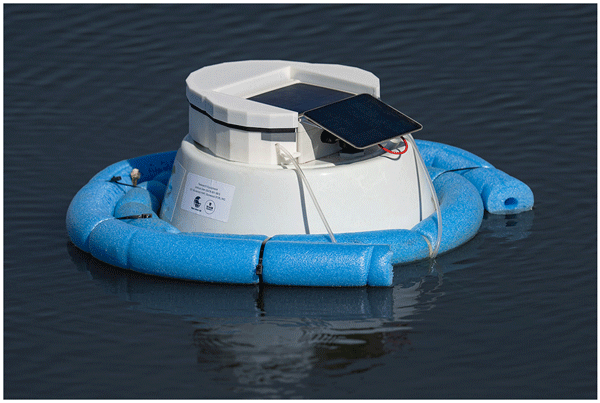
The Pondi is a cost-effective, lightweight logger designed for long-term monitoring of carbon dioxide, methane, and nitrous oxide emissions in both terrestrial and aquatic ecosystems. It addresses key challenges in greenhouse gas monitoring by providing an automated, low-cost, solar-powered solution with cloud connectivity and real-time analytics. Its robust design enables deployment in diverse environmental conditions, supporting large-scale, high-resolution emission assessments.
Naima Iram, Emad Kavehei, Damien T. Maher, Stuart E. Bunn, Mehran Rezaei Rashti, Bahareh Shahrabi Farahani, and Maria Fernanda Adame
Biogeosciences, 18, 5085–5096, https://doi.org/10.5194/bg-18-5085-2021, https://doi.org/10.5194/bg-18-5085-2021, 2021
Short summary
Short summary
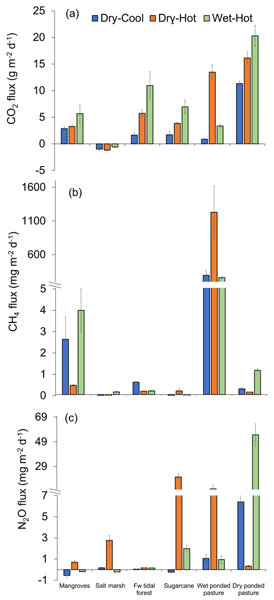
Greenhouse gas emissions were measured and compared from natural coastal wetlands and their converted agricultural lands across annual seasonal cycles in tropical Australia. Ponded pastures emitted ~ 200-fold-higher methane than any other tested land use type, suggesting the highest greenhouse gas mitigation potential and financial incentives by the restoration of ponded pastures to natural coastal wetlands.
Cited articles
Aben, R. C. H., Barros, N., van Donk, E., Frenken, T., Hilt, S., Kazanjian, G., Lamers, L. P. M., Peeters, E. T. H. M., Roelofs, J. G. M., de Senerpont Domis, L. N., Stephan, S., Velthuis, M., Van de Waal, D. B., Wik, M., Thornton, B. F., Wilkinson, J., DelSontro, T., and Kosten, S.: Cross continental increase in methane ebullition under climate change, Nat. Commun., 8, 1682, https://doi.org/10.1038/s41467-017-01535-y, 2017.
Abril, G., Parize, M., Pérez, M. A. P., and Filizola, N.: Wood decomposition in Amazonian hydropower reservoirs: An additional source of greenhouse gases, J. South Am. Earth Sci., 44, 104–107, https://doi.org/10.1016/j.jsames.2012.11.007, 2013.
Amaral, J. H., Barbosa, P. M., MacIntyre, S., and Melack, J. M.: Methane and carbon dioxide evasion from a mosaic of Amazon lakes, river channels, and inundated forests, Inland Waters, 15, https://doi.org/10.1080/20442041.2024.2432804, 2025.
Anthony, K. M. W. and Anthony, P.: Constraining spatial variability of methane ebullition seeps in thermokarst lakes using point process models, J. Geophys. Res.-Biogeo., 118, 1015–1034, https://doi.org/10.1002/jgrg.20087, 2013.
Barba, J., Bradford, M. A., Brewer, P. E., Bruhn, D., Covey, K., and van Haren, J.: Methane emissions from tree stems: a new frontier in the global carbon cycle, New Phytol., 222, 18–28, https://doi.org/10.1111/nph.15582, 2019.
Barba, J., Brewer, P. E., Pangala, S. R., and Machacova, K.: Methane emissions from tree stems – current knowledge and challenges: an introduction to a Virtual Issue, New Phytol., 241, 1377–1380, https://doi.org/10.1111/nph.19512, 2024.
Bastviken, D., Cole, J., Pace, M., and Tranvik, L.: Methane emissions from lakes: Dependence of lake characteristics, two regional assessments, and a global estimate, Glob. Biogeochem. Cy., 18, GB4009, https://doi.org/10.1029/2004gb002238, 2004.
Bastviken, D., Cole, J. J., Pace, M. L., and Van de Bogert, M. C.: Fates of methane from different lake habitats: Connecting whole-lake budgets and CH4 emissions, J. Geophys. Res.-Biogeo., 113, G02024, https://doi.org/10.1029/2007jg000608, 2008.
Bastviken, D., Treat, C. C., Pangala, S. R., Gauci, V., Enrich-Prast, A., Karlson, M., Gålfalk, M., Romano, M. B., and Sawakuchi, H. O.: The importance of plants for methane emission at the ecosystem scale, Aquat. Bot., 184, 103596, https://doi.org/10.1016/j.aquabot.2022.103596, 2023.
Berberich, M. E., Beaulieu, J. J., Hamilton, T. L., Waldo, S., and Buffam, I.: Spatial variability of sediment methane production and methanogen communities within a eutrophic reservoir: Importance of organic matter source and quantity, Limnol. Oceanogr., 65, 1–23, https://doi.org/10.1002/lno.11392, 2020.
Boucher, O., Friedlingstein, P., Collins, B., and Shine, K. P.: The indirect global warming potential and global temperature change potential due to methane oxidation, Environ. Res. Lett., 4, 0440077, https://doi.org/10.1088/1748-9326/4/4/044007, 2009.
Caldwell, J. M. and Doyle, M. C.: Sediment Oxygen Demand in the Lower Willamette River, Oregon, United States Geological Survey Water-Resources Investigations Report 95–4196, 1–14, 1994.
Carmichael, M. J. and Smith, W. K.: Standing Dead Trees: a Conduit for the Atmospheric Flux of Greenhouse Gases from Wetlands?, Wetlands, 36, 1183–1188, https://doi.org/10.1007/s13157-016-0845-5, 2016.
Carmichael, M. J., Bernhardt, E. S., Bräuer, S. L., and Smith, W. K.: The role of vegetation in methane flux to the atmosphere: should vegetation be included as a distinct category in the global methane budget?, Biogeochemistry, 119, 1–24, https://doi.org/10.1007/s10533-014-9974-1, 2014.
Carmichael, M. J., Helton, A. M., White, J. C., and Smith, W. K.: Standing Dead Trees are a Conduit for the Atmospheric Flux of CH4 and CO2 from Wetlands, Wetlands, 38, 133–143, https://doi.org/10.1007/s13157-017-0963-8, 2018.
Carmichael, M. J., Martinez, M., Brauer, S. L., and Ardon, M.: Microbial Communities in Standing Dead Trees in Ghost Forests are Largely Aerobic, Saprophytic, and Methanotrophic, Curr. Microbiol., 81, 229, https://doi.org/10.1007/s00284-024-03767-w, 2024.
Casper, P., Maberly, G. H., Hall, G. H., and Finlay, B. J.: Fluxes of methane and carbon dioxide from a small productive lake to the atmosphere, Biogeochemistry, 49, 1–19, 2000.
Chanton, J. P., Whiting, G. J., Showers, W. J., and Crill, M. P.: Methane Flux from Peltandra Virginica: Stable Isotope Tracing and Chamber Effects, Glob. Biogeochem. Cy., 6, 15–31, 1992.
Covey, K. R. and Megonigal, J. P.: Methane production and emissions in trees and forests, New Phytol., 222, 35–51, https://doi.org/10.1111/nph.15624, 2019.
Covey, K. R., Bueno de Mesquita, C. P., Oberle, B., Maynard, D. S., Bettigole, C., Crowther, T. W., Duguid, M. C., Steven, B., Zanne, A. E., Lapin, M., Ashton, M. S., Oliver, C. D., Lee, X., and Bradford, M. A.: Greenhouse trace gases in deadwood, Biogeochemistry, 130, 215–226, https://doi.org/10.1007/s10533-016-0253-1, 2016.
de la Paz, M., Ferron S., Borges, A. V., and Upstill-Goddard, R. C.: Standard Operating Protocol: Quantification of methane and nitrous oxide via headspace equilibrium, in: A Best Practice Guide to Dissolved CH4 and N2O Measurements, 2021.
DelSontro, T., Kunz, M. J., Kempter, T., Wuest, A., Wehrli, B., and Senn, D. B.: Spatial heterogeneity of methane ebullition in a large tropical reservoir, Environ. Sci. Technol., 45, 9866–9873, https://doi.org/10.1021/es2005545, 2011.
Desrosiers, K., DelSontro, T., and del Giorgio, P. A.: Disproportionate Contribution of Vegetated Habitats to the CH4 and CO2 Budgets of a Boreal Lake, Ecosystems, 25, 1522–1541, https://doi.org/10.1007/s10021-021-00730-9, 2022.
Dittmann, J.: Dataset supporting the manuscript: “Are ghost forests a substantial source of methane from reservoirs?”, Mendeley Data [data set], https://doi.org/10.17632/vryhr6gcxr.1, 2025.
Duc, N. T., Crill, P., and Bastviken, D.: Implications of temperature and sediment characteristics on methane formation and oxidation in lake sediments, Biogeochemistry, 100, 185–196, https://doi.org/10.1007/s10533-010-9415-8, 2010.
FAO: Case Study on Long Rotation Eucalypt Plantations in New South Wales by R. Heathcote, Forest Plantations Working Paper 22, 2002.
Freschet, G. T., Weedon, J. T., Aerts, R., van Hal, J. R., and Cornelissen, J. H. C.: Interspecific differences in wood decay rates: insights from a new short-term method to study long-term wood decomposition, J. Ecol., 100, 161–170, https://doi.org/10.1111/j.1365-2745.2011.01896.x, 2012.
Fuss, R., Hueppi, R., and Asger, R.: Gasfluxes: Greenhouse gas flux calculation from chamber measurements, R package version 0.4–4, 2020.
Gauci, V., Figueiredo, V., Gedney, N., Pangala, S. R., Stauffer, T., Weedon, G. P., and Enrich-Prast, A.: Non-flooded riparian Amazon trees are a regionally significant methane source, Phil. Trans. R. Soc. A, 380, 20200446, https://doi.org/10.1098/rsta.2020.0446, 2022.
Grasset, C., Mendonca, R., Saucedo, G. V., Bastviken, D., Roland, F., and Sobek, S.: Large but variable methane production in anoxic freshwater sediment upon addition of allochthonous and autochthonous organic matter, Limnol. Oceanogr., 63, 1488–1501, https://doi.org/10.1002/lno.10786, 2018.
Grinham, A., Albert, S., Deering, N., Dunbabin, M., Bastviken, D., Sherman, B., Lovelock, C. E., and Evans, C. D.: The importance of small artificial water bodies as sources of methane emissions in Queensland, Australia, Hydrol. Earth Syst. Sci., 22, 5281–5298, https://doi.org/10.5194/hess-22-5281-2018, 2018a.
Grinham, A., Dunbabin, M., and Albert, S.: Importance of sediment organic matter to methane ebullition in a sub-tropical freshwater reservoir, Sci. Total Environ., 621, 1199–1207, https://doi.org/10.1016/j.scitotenv.2017.10.108, 2018b.
Harrison, J. A., Prairie, Y. T., Mercier-Blais, S., and Soued, C.: Year-2020 Global Distribution and Pathways of Reservoir Methane and Carbon Dioxide Emissions According to the Greenhouse Gas From Reservoirs (G-res) Model, Glob. Biogeochem. Cy., 35, https://doi.org/10.1029/2020gb006888, 2021.
Hoffmann, M., Schulz-Hanke, M., Garcia Alba, J., Jurisch, N., Hagemann, U., Sachs, T., Sommer, M., and Augustin, J.: A simple calculation algorithm to separate high-resolution CH4 flux measurements into ebullition- and diffusion-derived components, Atmos. Meas. Tech., 10, 109–118, https://doi.org/10.5194/amt-10-109-2017, 2017.
Hu, Z., Xu, C., McDowell, N. G., Johnson, D. J., Wang, M., Luo, Y., Zhou, X., and Huang, Z.: Linking microbial community composition to C loss rates during wood decomposition, Soil Biol. Biochem., 104, 108–116, https://doi.org/10.1016/j.soilbio.2016.10.017, 2017.
Jeffrey, L. C., Maher, D. T., Johnston, S. G., Kelaher, B. P., Steven, A., and Tait, D. R.: Wetland methane emissions dominated by plant-mediated fluxes: Contrasting emissions pathways and seasons within a shallow freshwater subtropical wetland, Limnol. Oceanogr., 64, 1895–1912, https://doi.org/10.1002/lno.11158, 2019a.
Jeffrey, L. C., Reithmaier, G. M., Sippo, J. Z., Johnston, S. G., Tait, D. R., Harada, Y., and Maher, D. T.: Are methane emissions from mangrove stems a cryptic carbon loss pathway? Insights from a catastrophic forest mortality, New Phytol., 224, 146–154, https://doi.org/10.1111/nph.15995, 2019b.
Jeffrey, L. C., Maher, D. T., Tait, D. R., Euler, S., and Johnston, S. G.: Tree stem methane emissions from subtropical lowland forest (Melaleuca quinquenervia) regulated by local and seasonal hydrology, Biogeochemistry, 151, 273–290, https://doi.org/10.1007/s10533-020-00726-y, 2020a.
Jeffrey, L. C., Maher, D. T., Tait, D. R., and Johnston, S. G.: A Small Nimble In Situ Fine-Scale Flux Method for Measuring Tree Stem Greenhouse Gas Emissions and Processes (S. N. I. F. F), Ecosystems, 23, 1676–1689, https://doi.org/10.1007/s10021-020-00496-6, 2020b.
Jeffrey, L. C., Moras, C. A., Tait, D. R., Johnston, S. G., Call, M., Sippo, J. Z., Jeffrey, N. C., Laicher-Edwards, D., and Maher, D. T.: Large Methane Emissions From Tree Stems Complicate the Wetland Methane Budget, J. Geophys. Res.-Biogeo., 128, https://doi.org/10.1029/2023jg007679, 2023.
Jeffrey, L. C., Johnston, S. G., Tait, D. R., Dittmann, J., and Maher, D. T.: Rapid bark-mediated tree stem methane transport occurs independently of the transpiration stream in Melaleuca quinquenervia, New Phytol., 242, 49–60, https://doi.org/10.1111/nph.19404, 2024.
Johnson, M. S., Matthews, E., Bastviken, D., Deemer, B., Du, J., and Genovese, V.: Spatiotemporal Methane Emission From Global Reservoirs, J. Geophys. Res.-Biogeo., 126, https://doi.org/10.1029/2021jg006305, 2021.
Kahl, T., Arnstadt, T., Baber, K., Bässler, C., Bauhus, J., Borken, W., Buscot, F., Floren, A., Heibl, C., Hessenmöller, D., Hofrichter, M., Hoppe, B., Kellner, H., Krüger, D., Linsenmair, K. E., Matzner, E., Otto, P., Purahong, W., Seilwinder, C., Schulze, E.-D., Wende, B., Weisser, W. W., and Gossner, M. M.: Wood decay rates of 13 temperate tree species in relation to wood properties, enzyme activities and organismic diversities, For. Ecol. Manage., 391, 86–95, https://doi.org/10.1016/j.foreco.2017.02.012, 2017.
Kellner, E., Baird A. J., Oosterwoud M., Harrison K., and Waddington J. M.: Effect of temperature and atmospheric pressure on methane (CH4) ebullition from near-surface peats, Geophys. Res. Lett., 33, https://doi.org/10.1029/2006GL027509, 2006.
Kipping, L., Gossner, M. M., Koschorreck, M., Muszynski, S., Maurer, F., Weisser, W. W., Jehmlich, N., and Noll, M.: Emission of CO2 and CH4 From 13 Deadwood Tree Species Is Linked to Tree Species Identity and Management Intensity in Forest and Grassland Habitats, Glob. Biogeochem. Cy., 36, https://doi.org/10.1029/2021gb007143, 2022.
Kumar, A. M., Ezhumalai, R., Pandey, A. K., and Rao, M. S.: Emission of Methane from Dead Trees/Snags of Tropical and Sub-Tropical Forest Ecoregions, Int. J. Curr. Microbiol. App. Sci., 10, 418–428, https://doi.org/10.20546/ijcmas.2021.1005.049, 2021.
Liikanen, A., Murtoniemi, T., Tanskanen, H., Vaisanen, T., and Martikainen, P. J.: Effects of temperature and oxygen availability on greenhouse gas and nutrient dynamics in sediment of a eutrophic mid-boreal lake, Biogeochemistry, 59, 269–286, 2002.
Linkhorst, A., Hiller, C., DelSontro, T. M., Azevedo, G., Barros, N., Mendonça, R., and Sobek, S.: Comparing methane ebullition variability across space and time in a Brazilian reservoir, Limnol. Oceanogr., 65, 1623–1634, https://doi.org/10.1002/lno.11410, 2020.
MacPherson, T. A., Cahoon, L. B., and Mallin, M. A.: Water column oxygen demand and sediment oxygen flux: patterns of oxygen depletion in tidal creeks, Hydrobiologia, 586, 235–248, https://doi.org/10.1007/s10750-007-0643-4, 2007.
Martinez, M. and Ardón, M.: Drivers of greenhouse gas emissions from standing dead trees in ghost forests, Biogeochemistry, 154, 471–488, https://doi.org/10.1007/s10533-021-00797-5, 2021.
Martinez, M., Ardón, M., and Carmichael, M. J.: Identifying Sources and Oxidation of Methane in Standing Dead Trees in Freshwater Forested Wetlands, Front. Environ. Sci., 9, https://doi.org/10.3389/fenvs.2021.737379, 2022.
Megonigal, J. P., Hines, M. E., and Visscher, P. T.: Anaerobic metabolism: linkages to trace gases and aerobic process, Treatise Geochem., 8, 317–424, 2003.
Oltean, L., Teischinger, A., and Hansmann, C.: Influence of Temperature on Cracking and Mechanical Properties of Wood During Wood Drying – A Review, BioResources, 2, 789–811, 2007.
Pangala, S. R., Moore, S., Hornibrook, E. R. C., and Gauci, V.: Trees are major conduits for methane egress from tropical forested wetlands, New Phytol., 197, 524–531, https://doi.org/10.1111/nph.12031, 2013.
Pangala, S. R., Enrich-Prast, A., Basso, L. S., Peixoto, R. B., Bastviken, D., Hornibrook, E. R. C., Gatti, L. V., Marotta, H., Calazans, L. S. B., Sakuragui, C. M., Bastos, W. R., Malm, O., Gloor, E., Miller, J. B., and Gauci, V.: Large emissions from floodplain trees close the Amazon methane budget, Nature, 552, 230–234, https://doi.org/10.1038/nature24639, 2017.
Praetzel, L. S. E., Plenter, N., Schilling, S., Schmiedeskamp, M., Broll, G., and Knorr, K.-H.: Organic matter and sediment properties determine in-lake variability of sediment CO2 and CH4 production and emissions of a small and shallow lake, Biogeosciences, 17, 5057–5078, https://doi.org/10.5194/bg-17-5057-2020, 2020.
Roden, E. E. and Wetzel, R. G.: Kinetics of microbial Fe(III) oxide reduction in freshwater wetland sediments, Limnol. Oceanogr., 47, 198–211, https://doi.org/10.4319/lo.2002.47.1.0198, 2002.
Romero-Uribe, H. M., Lopez-Portillo, J., Reverchon, F., and Hernandez, M. E.: Effect of degradation of a black mangrove forest on seasonal greenhouse gas emissions, Environ. Sci. Pollut. R., 29, 11951–11965, https://doi.org/10.1007/s11356-021-16597-1, 2022.
Rosentreter, J. A., Borges, A. V., Deemer, B. R., Holgerson, M. A., Liu, S., Song, C., Melack, J., Raymond, P. A., Duarte, C. M., Allen, G. H., Olefeldt, D., Poulter, B., Battin, T. I., and Eyre, B. D.: Half of global methane emissions come from highly variable aquatic ecosystem sources, Nat. Geosci., 14, 225–230, https://doi.org/10.1038/s41561-021-00715-2, 2021.
Rosentreter, J. A., Alcott, L., Maavara, T., Sun, X., Zhou, Y., Planavsky, N. J., and Raymond, P. A.: Revisiting the Global Methane Cycle Through Expert Opinion, Earth's Future, 12, https://doi.org/10.1029/2023ef004234, 2024.
Rudd, J. W. M. and Hamilton, R. D.: Methane cycling in a eutrophic shield lake and its effects on whole lake metabolism, Limnol. Oceanogr., 23, 337–348, https://doi.org/10.4319/lo.1978.23.2.0337, 1978.
Sakabe, A., Liu, Z., and Kosugi, Y.: Methane Emissions from the Stems of Living and Dead Chamaecyparis obtusa Sieb. Et Zucc, Wetlands, 45, 54, https://doi.org/10.1007/s13157-025-01941-9, 2025.
Sanches, L. F., Guenet, B., Marinho, C. C., Barros, N., and de Assis Esteves, F.: Global regulation of methane emission from natural lakes, Sci. Rep.-UK, 9, 255, https://doi.org/10.1038/s41598-018-36519-5, 2019.
Saunois, M., Martinez, A., Poulter, B., Zhang, Z., Raymond, P. A., Regnier, P., Canadell, J. G., Jackson, R. B., Patra, P. K., Bousquet, P., Ciais, P., Dlugokencky, E. J., Lan, X., Allen, G. H., Bastviken, D., Beerling, D. J., Belikov, D. A., Blake, D. R., Castaldi, S., Crippa, M., Deemer, B. R., Dennison, F., Etiope, G., Gedney, N., Höglund-Isaksson, L., Holgerson, M. A., Hopcroft, P. O., Hugelius, G., Ito, A., Jain, A. K., Janardanan, R., Johnson, M. S., Kleinen, T., Krummel, P. B., Lauerwald, R., Li, T., Liu, X., McDonald, K. C., Melton, J. R., Mühle, J., Müller, J., Murguia-Flores, F., Niwa, Y., Noce, S., Pan, S., Parker, R. J., Peng, C., Ramonet, M., Riley, W. J., Rocher-Ros, G., Rosentreter, J. A., Sasakawa, M., Segers, A., Smith, S. J., Stanley, E. H., Thanwerdas, J., Tian, H., Tsuruta, A., Tubiello, F. N., Weber, T. S., van der Werf, G. R., Worthy, D. E. J., Xi, Y., Yoshida, Y., Zhang, W., Zheng, B., Zhu, Q., Zhu, Q., and Zhuang, Q.: Global Methane Budget 2000–2020, Earth Syst. Sci. Data, 17, 1873–1958, https://doi.org/10.5194/essd-17-1873-2025, 2025.
Schmiedeskamp, M., Praetzel, L. S. E., Bastviken, D., and Knorr, K. H.: Whole-lake methane emissions from two temperate shallow lakes with fluctuating water levels: Relevance of spatiotemporal patterns, Limnol. Oceanogr., 66, 2455–2469, https://doi.org/10.1002/lno.11764, 2021.
Sherman, B. and Ford, P.: Methane Emissions from Two Reservoirs in a Steep, Sub-Tropical Rainforest Catchment, in: Science Forum and Stakeholder Engagement: Building Linkages, Collaboration and Science Quality, edited by: Begbie, D. K. and Wakem, S. L., Brisbane, Queensland, 129 pp., 2011.
Shi, W., Wu, W., Fan, H., Sun, Q., Niu, X., Wang, S., Li, S.-l., Liang, S., and Yan, Z.: Estimating CO2 and CH4 fluxes from reservoirs: Model development and site-level study, J. Hydrol., 654, https://doi.org/10.1016/j.jhydrol.2025.132794, 2025.
Siegenthaler, A., Welch, B., Pangala, S. R., Peacock, M., and Gauci, V.: Technical Note: Semi-rigid chambers for methane gas flux measurements on tree stems, Biogeosciences, 13, 1197–1207, https://doi.org/10.5194/bg-13-1197-2016, 2016.
Sjogersten, S., Siegenthaler, A., Lopez, O. R., Aplin, P., Turner, B., and Gauci, V.: Methane emissions from tree stems in neotropical peatlands, New Phytol., 225, 769–781, https://doi.org/10.1111/nph.16178, 2020.
Smart, L. S., Taillie, P. J., Poulter, B., Vukomanovic, J., Singh, K. K., Swenson, J. J., Mitasova, H., Smith, J. W., and Meentemeyer, R. K.: Aboveground carbon loss associated with the spread of ghost forests as sea levels rise, Environ. Res. Lett., 15, https://doi.org/10.1088/1748-9326/aba136, 2020.
Sø, J. S., Sand-Jensen, K., and Kragh, T.: Self-Made Equipment for Automatic Methane Diffusion and Ebullition Measurements from Aquatic Environments, J. Geophys. Res.-Biogeo., 129, https://doi.org/10.1029/2024jg008035, 2024.
Sobek, S., DelSontro, T., Wongfun, N., and Wehrli, B.: Extreme organic carbon burial fuels intense methane bubbling in a temperate reservoir, Geophys. Res. Lett., 39, https://doi.org/10.1029/2011gl050144, 2012.
Tokida, T., Miyazaki, T., Mizogucki, M., Nagata, O., Takakai, F., Kagemoto, A., and Hatano, R.: Falling atmospheric pressure as a trigger for methane ebullition from peatland, Glob. Biogeochem. Cy., 21, https://doi.org/10.1029/2006GB002790, 2007.
Tušer, M., Picek, T., Sajdlová, Z., Jùza, T., Muška, M., and Frouzová, J.: Seasonal and Spatial Dynamics of Gas Ebullition in a Temperate Water-Storage Reservoir, Water Resour. Res., 53, 8266–8276, https://doi.org/10.1002/2017wr020694, 2017.
Vroom, R. J. E., van den Berg, M., Pangala, S. R., van der Scheer, O. E., and Sorrell, B. K.: Physiological processes affecting methane transport by wetland vegetation – A review, Aquat. Bot., 182, https://doi.org/10.1016/j.aquabot.2022.103547, 2022.
Wannikhof, R.: Relationship Bewtween Wind Speed and Gas Exchange Over the Ocean, J. Geophys. Res., 97, 7373–7385, 1992.
Warner, D. L., Villarreal, S., McWilliams, K., Inamdar, S., and Vargas, R.: Carbon Dioxide and Methane Fluxes From Tree Stems, Coarse Woody Debris, and Soils in an Upland Temperate Forest, Ecosystems, 20, 1205–1216, https://doi.org/10.1007/s10021-016-0106-8, 2017.
Whiting, G. J. and Chanton, J. P.: Plant-dependent CH4 emission in a subarctic Canadian fen, Glob. Biogeochem. Cy., 6, 225–231, 1992.
Xun, F., Feng, M., Ma, S., Chen, H., Zhang, W., Mao, Z., Zhou, Y., Xiao, Q., Wu, Q. L., and Xing, P.: Methane ebullition fluxes and temperature sensitivity in a shallow lake, Sci. Total Environ., 912, 169589, https://doi.org/10.1016/j.scitotenv.2023.169589, 2024.
Yvon-Durocher, G., Allen, A. P., Bastviken, D., Conrad, R., Gudasz, C., St-Pierre, A., Thanh-Duc, N., and del Giorgio, P. A.: Methane fluxes show consistent temperature dependence across microbial to ecosystem scales, Nature, 507, 488–491, https://doi.org/10.1038/nature13164, 2014.
Zarfl, C., Lumsdon, A. E., Berlekamp, J., Tydecks, L., and Tockner, K.: A global boom in hydropower dam construction, Aquat. Sci., 77, 161–170, https://doi.org/10.1007/s00027-014-0377-0, 2015.
Zhou, Y., Zhang, T., Zhou, L., Zhang, Y., Xu, H., Jang, K. S., Drake, T. W., Grasset, C., Davidson, T. A., Keneally, C. C., Brookes, J. D., and Jeppesen, E.: Terrestrial Organic Matter Inputs Modulate Methane Emissions from a Mega-Reservoir, Environ. Sci. Technol., 59, 6590–6599, https://doi.org/10.1021/acs.est.4c13190, 2025.
Short summary
Reservoir dead trees (‘ghost forests’) are an overlooked methane (CH4) source in standing freshwaters. We measured CH4 fluxes from 34 trees at multiple stem heights, alongside aquatic CH4 fluxes and physicochemistry, across two field campaigns. Ghost forest CH4 fluxes were highest near reservoir inflows, with tree CH4 contributing extra emissions of 14–15 % on top of the commonly quantified pathways of ebullition and diffusion.
Reservoir dead trees (‘ghost forests’) are an overlooked methane (CH4) source in standing...


Altmetrics
Final-revised paper
Preprint