
Articles | Volume 23, issue 15
https://doi.org/10.5194/bg-23-5399-2026
© Author(s) 2026. This work is distributed under
the Creative Commons Attribution 4.0 License.
the Creative Commons Attribution 4.0 License.
https://doi.org/10.5194/bg-23-5399-2026
© Author(s) 2026. This work is distributed under
the Creative Commons Attribution 4.0 License.
the Creative Commons Attribution 4.0 License.
Research article
| 
04 Aug 2026
Research article |
| 04 Aug 2026
| 04 Aug 2026
Air–sea CO2 exchange in the Southern Adriatic Sea: assessing its role as a moderate carbon sink over the last decade (2015–2024)
Carlotta Dentico
CORRESPONDING AUTHOR

Department of Environmental Sciences, Informatics and Statistics, Università Cà Foscari, Venice, Italy
National Institute of Oceanography and Applied Geophysics (OGS), Trieste, Italy
Gianpiero Cossarini
National Institute of Oceanography and Applied Geophysics (OGS), Trieste, Italy
Giuseppe Civitarese
National Institute of Oceanography and Applied Geophysics (OGS), Trieste, Italy
Michele Giani
National Institute of Oceanography and Applied Geophysics (OGS), Trieste, Italy
Angelo Rubino
Department of Environmental Sciences, Informatics and Statistics, Università Cà Foscari, Venice, Italy
Vanessa Cardin
National Institute of Oceanography and Applied Geophysics (OGS), Trieste, Italy
Related authors
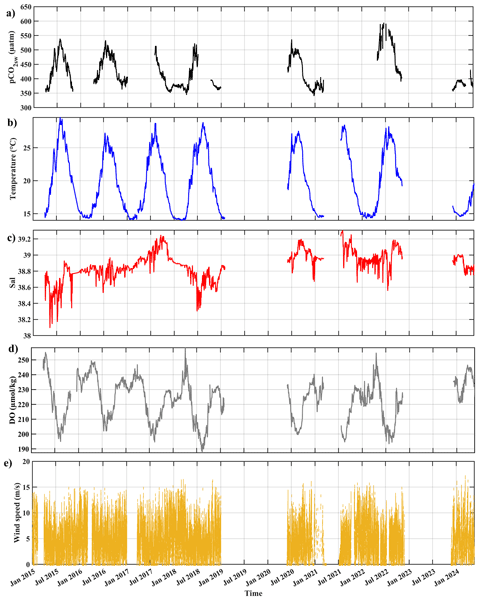
Carlotta Dentico, Angelo Rubino, Giuseppe Civitarese, Michele Giani, Giuseppe Siena, Stefano Kuchler, Julien Le Meur, Andrea Corbo, and Vanessa Cardin
Earth Syst. Sci. Data, 18, 2119–2131, https://doi.org/10.5194/essd-18-2119-2026, https://doi.org/10.5194/essd-18-2119-2026, 2026
Short summary
Short summary
The ocean absorbs excess heat and carbon dioxide from human-driven climate change, causing warming, acidification, and impacts on marine life and coastal communities. The southern Adriatic, an important area for air-sea CO2 exchange, is still poorly characterized. Using high-resolution oceanographic measurements, local physical and biogeochemical changes were investigated, providing a dataset to improve future understanding of the role of the southern Adriatic as a carbon source or sink.
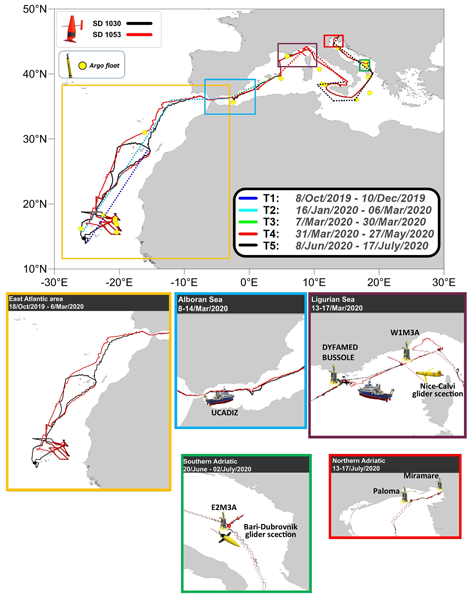
Riccardo Martellucci, Michele Giani, Elena Mauri, Laurent Coppola, Melf Paulsen, Marine Fourrier, Sara Pensieri, Vanessa Cardin, Carlotta Dentico, Roberto Bozzano, Carolina Cantoni, Anna Lucchetta, Alfredo Izquierdo, Miguel Bruno, and Ingunn Skjelvan
Earth Syst. Sci. Data, 16, 5333–5356, https://doi.org/10.5194/essd-16-5333-2024, https://doi.org/10.5194/essd-16-5333-2024, 2024
Short summary
Short summary
As part of the ATL2MED demonstration experiment, two autonomous surface vehicles undertook a 9-month mission from the northeastern Atlantic to the Adriatic Sea. Biofouling affected the measurement of variables such as conductivity and dissolved oxygen. COVID-19 limited the availability of discrete samples for validation. We present correction methods for salinity and dissolved oxygen. We use model products to correct salinity and apply the Argo floats in-air correction method for oxygen
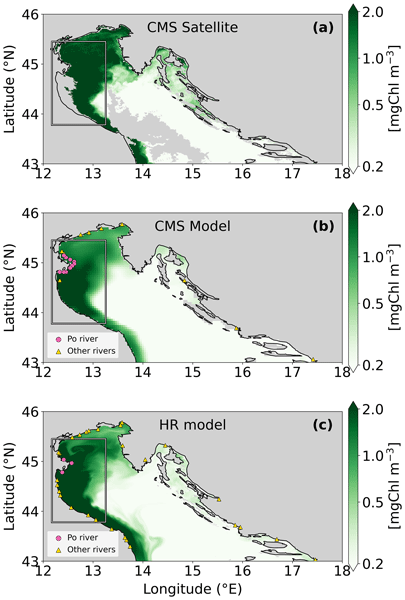
Valeria Di Biagio, Stefano Querin, Carolina Amadio, Giorgio Bolzon, Laura Feudale, Stefano Piani, Simone Spada, and Gianpiero Cossarini
State Planet, 7-osr10, 18, https://doi.org/10.5194/sp-7-osr10-18-2026, https://doi.org/10.5194/sp-7-osr10-18-2026, 2026
Short summary
Short summary
Anomalous eutrophication levels characterised the northern Adriatic Sea in 2024 spring and fall. We analysed the anomaly in marine chlorophyll and primary production by using satellite and models, in connection with multiple events of very intense river discharges, high temperatures and circulation structures. Our study proves the importance of coastal forecasting models to monitor ocean-land dynamics.
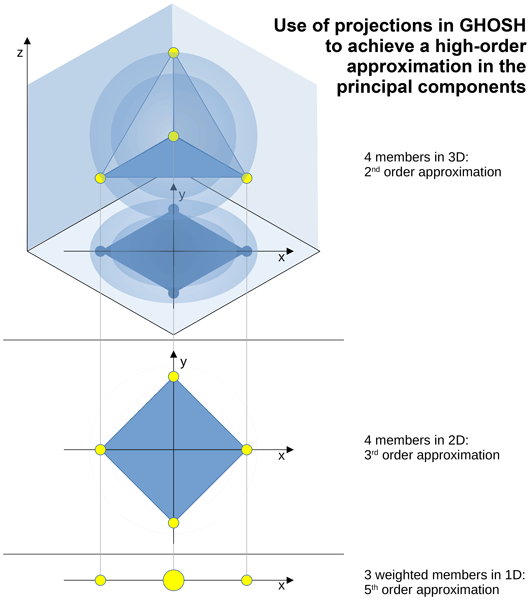
Simone Spada, Anna Teruzzi, Stefano Maset, Stefano Salon, Cosimo Solidoro, and Gianpiero Cossarini
Geosci. Model Dev., 19, 8321–8347, https://doi.org/10.5194/gmd-19-8321-2026, https://doi.org/10.5194/gmd-19-8321-2026, 2026
Short summary
Short summary
In geosciences, data assimilation (DA) combines modeled dynamics and observations to reduce simulation uncertainties. Uncertainties can be dynamically and effectively estimated in ensemble DA methods. With respect to current techniques, the novel Gauss-Hermite High-Order Sampling Hybrid filter (GHOSH) ensemble DA scheme is designed to improve accuracy by reaching a higher approximation order, without increasing computational costs, as demonstrated in idealized Lorenz96 tests.
Simone Spada, Anna Teruzzi, Stefano Maset, Stefano Salon, Cosimo Solidoro, and Gianpiero Cossarini
EGUsphere, https://doi.org/10.5194/egusphere-2026-3182, https://doi.org/10.5194/egusphere-2026-3182, 2026
This preprint is open for discussion and under review for Geoscientific Model Development (GMD).
Short summary
Short summary
In geosciences, data assimilation (DA) combines modeled dynamics and observations to reduce simulation uncertainties. With respect to current techniques, the novel GHOSH ensemble DA scheme is designed to improve accuracy and uncertainty estimate by reaching a higher approximation order, without increasing computational costs. In this work, GHOSH is implemented and evaluated in realistic simulations of the Mediterranean Sea biogeochemistry.
Valeria Di Biagio, Vittorio Ernesto Brando, Simone Colella, Francesco D'Adamo, Anna Teruzzi, Gianluca Volpe, and Gianpiero Cossarini
State Planet Discuss., https://doi.org/10.5194/sp-2026-23, https://doi.org/10.5194/sp-2026-23, 2026
Preprint under review for SP
Short summary
Short summary
In marine ecosystems, primary production is the process by which organisms create organic matter, supporting marine life, carbon storage and fisheries. We tracked spatial and temporal changes in primary production across the Mediterranean Sea by combining four datasets from satellites and models, including global and regional estimates, identifying areas affected by larger discrepancies among estimates. We found a small but significant decrease in basin-wide primary production since 1999.
Laura Feudale, Giorgio Bolzon, Gianpiero Cossarini, Anna Teruzzi, Emanuela Clementi, and Stefano Salon
EGUsphere, https://doi.org/10.5194/egusphere-2026-3413, https://doi.org/10.5194/egusphere-2026-3413, 2026
This preprint is open for discussion and under review for Ocean Science (OS).
Short summary
Short summary
We investigate the impact of physical forcing frequency on Mediterranean biogeochemical simulations. Using 6-hourly instead of daily ocean fields improves phytoplankton bloom and nutrient patterns through a better representation of vertical transport processes, highlighting the importance of high-frequency variability for ecosystem forecasting.
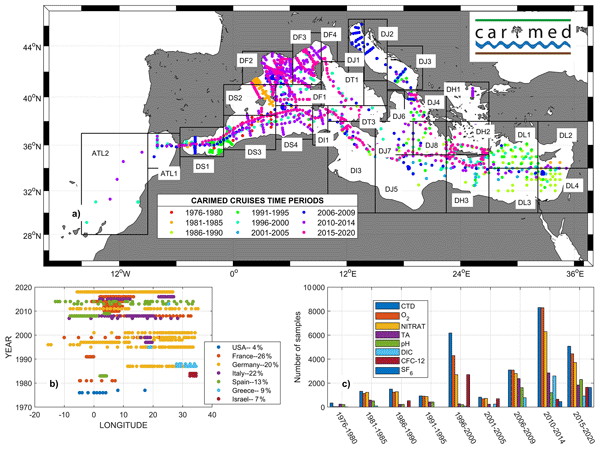
Marta Álvarez, Maribel I. García-Ibáñez, Nico Lange, Alex Kozyr, Antón Velo, Toste Tanhua, Giuseppe Civitarese, Carolina Cantoni, Malek Belgacem, Katrin Schroeder, Rubén Acerbi, Laurent Coppola, Thibaut Wagener, Noelia M. Fajar, Susana Flecha, Michele Giani, Louisa Giannoudi, Elisa F. Guallart, Abed El Rahman Hassoun, Emma I. Huertas, Valeria Ibello, Mehdia A. Keraghel, Férial Louanchi, Anna Luchetta, Fiz F. Pérez, Carsten Schirnick, Ekaterini Souvermezoglou, Lidia Urbini, Montserrat Vidal, and Patrizia Ziveri
Earth Syst. Sci. Data, 18, 4915–4941, https://doi.org/10.5194/essd-18-4915-2026, https://doi.org/10.5194/essd-18-4915-2026, 2026
Short summary
Short summary
CARIMED (CARbon, tracers, and ancillary data In the MEDiterranean Sea) is a high-quality, FAIR (Findability, Accessibility, Interoperability, and Reusability) dataset integrating hydrographic, biogeochemical, and transient tracer data from 46 research cruises (1976–2018) across the Mediterranean Sea. The data underwent rigorous, basin-adapted quality control to remove systematic biases, unifying four decades of fragmented data, delivering two complementary products: the aggregated original cruise data product and the bias-adjusted data synthesis product.
Manuel Vargas-Yáñez, Orens Pasqueron de Fommervault, Emanuela Clementi, Christian Ferrarin, Svitlana Liubertseva, Diego Álvarez-Berastegui, Baptiste Mourre, Salvatore Aronica, Rosa Balbin, Joaquín Ballabrera-Poy, Sana Ben Ismail, Nathaniel Benssousan, Ismail Bessa, Alicia Blanco, Anthony Bosse, Evi Bourma, François Bourrin, Carlo Brandini, Fulvio Capodici, Clara Casals-Baixas, Branko Cermelj, Giuseppe Ciraolo, Pascal Conan, Laurent Coppola, Lorenzo Corgnati, Joaquín del Río, Emilie Diamond Riquier, Lara Diaz-Barroso, Bartolomeo Doronzo, Xavier Durrieu de Madron, Milad Fakhri, Costantine Frangoulis, Claudia Fratianni, Emilio García-Ladona, Jesus García-Lafuente, M. Carmen García-Martínez, Joaquín Garrabou, Josep Gasol, Adam Gauci, Frédéric Gazeau, Gerard Gregory, Abed El Raman Hassoun, Jordi Isern-Fontanet, Dominique Lefevre, Nadia Lo Bue, Guiomar López, Pablo Lorente, Deny Malengros, Ramon Massana, Sinan Mavruk, Stefano Miserocchi, Behzad Mostajir, Laure Mousseau, Francina Moya, Antonio Novellino, Arianna Orasi, Emanuele Organelli, Vicent Ouisse, Tal Ozer, Begoña Pérez-Gómez, Susana Pérez-Rubio, Leonidas Perivoliotis, Georges Petihakis, Anne Petrenko, Sebastien Pinel, Xavier Pitarch, Angela Pomaro, Lucía Quirós-Collazos, Emma Reyes, Simone Sammartino, Anna Sánchez-Vidal, Katrin Schroeder, Stefano Taddei, Elena Tel, Pierre Testor, Marco Torri, Daniela Turk, Laura Ursella, Dimitris Velaoras, Francesca Vidussi, Ivica Vilivić, Enrico Zambiachi, D. Nikolaos Zarokanellos, George Zodiatis, and Vanessa Cardin
EGUsphere, https://doi.org/10.5194/egusphere-2026-2632, https://doi.org/10.5194/egusphere-2026-2632, 2026
Short summary
Short summary
This work compiles current marine observation capabilities in the Mediterranean Sea, making this information accessible to scientists, organizations, stakeholders, and environmental policymakers. It supports initiatives such as Copernicus Marine Service, EMODNet, the European Ocean Pact, and EU directives. It is intended as a living resource to be updated, identifying strengths and gaps in Mediterranean observation systems.
Marilaure Grégoire, Gianpiero Cossarini, Corinne Derval, Elodie Gutknecht, Susan Kay, Julien Lamouroux, Helen Morrison, Coralie Perruche, Annette Samuelsen, Lena Spruch, Anna Teruzzi, Luc Vandenbulcke, Karina Von Schuckmann, and Tsuyoshi Wakamatsu
EGUsphere, https://doi.org/10.5194/egusphere-2026-813, https://doi.org/10.5194/egusphere-2026-813, 2026
Short summary
Short summary
We review the advancements in our capabilities to predict the green ocean in the frame of the European Copernicus Marine Service since its start in 2015 and for the five European seas, the Arctic and Global oceans. The evolutions of the prediction systems, delivered products and computing resources requirements are reviewed. Recommendations for future developments are proposed based on a SWOT analysis of current CMEMS green ocean prediction systems and products.
Carlotta Dentico, Angelo Rubino, Giuseppe Civitarese, Michele Giani, Giuseppe Siena, Stefano Kuchler, Julien Le Meur, Andrea Corbo, and Vanessa Cardin
Earth Syst. Sci. Data, 18, 2119–2131, https://doi.org/10.5194/essd-18-2119-2026, https://doi.org/10.5194/essd-18-2119-2026, 2026
Short summary
Short summary
The ocean absorbs excess heat and carbon dioxide from human-driven climate change, causing warming, acidification, and impacts on marine life and coastal communities. The southern Adriatic, an important area for air-sea CO2 exchange, is still poorly characterized. Using high-resolution oceanographic measurements, local physical and biogeochemical changes were investigated, providing a dataset to improve future understanding of the role of the southern Adriatic as a carbon source or sink.
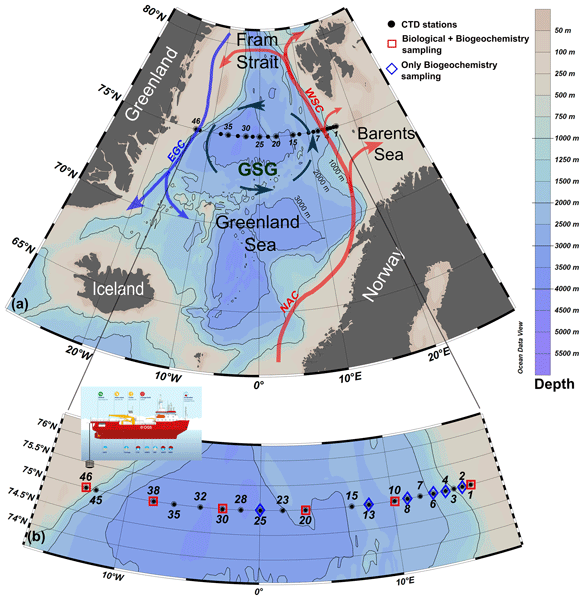
Manuel Bensi, Giuseppe Civitarese, Diego Borme, Carmela Caroppo, Gabriella Caruso, Federica Cerino, Franco Decembrini, Alessandra de Olazabal, Tommaso Diociaiuti, Michele Giani, Vedrana Kovacevic, Martina Kralj, Angelina Lo Giudice, Giovanna Maimone, Marina Monti, Maria Papale, Luisa Patrolecco, Elisa Putelli, Alessandro Ciro Rappazzo, Federica Relitti, Carmen Rizzo, Francesca Spataro, Valentina Tirelli, Clara Turetta, and Maurizio Azzaro
Earth Syst. Sci. Data, 17, 3701–3719, https://doi.org/10.5194/essd-17-3701-2025, https://doi.org/10.5194/essd-17-3701-2025, 2025
Short summary
Short summary
In September 2021, the Italian Arctic Research Programme funded a multidisciplinary study along 75° N in the Greenland Sea as part of the CASSANDRA project and the Synoptic Arctic Survey (SAS) programme. This study emphasises the spatial variability of water properties, nutrient distribution, and biological communities determined by oceanographic dynamics in a region influenced by sea ice melting, Atlantic Water inflow, and climatic teleconnections during a record low summer sea ice extent.

Gianpiero Cossarini, Andrew Moore, Stefano Ciavatta, and Katja Fennel
State Planet, 5-opsr, 12, https://doi.org/10.5194/sp-5-opsr-12-2025, https://doi.org/10.5194/sp-5-opsr-12-2025, 2025
Short summary
Short summary
Marine biogeochemistry refers to the cycling of chemical elements resulting from physical transport, chemical reaction, uptake, and processing by living organisms. Biogeochemical models can have a wide range of complexity, from a single nutrient to fully explicit representations of multiple nutrients, trophic levels, and functional groups. Uncertainty sources are the lack of knowledge about the parameterizations, the initial and boundary conditions, and the lack of observations.
Riccardo Martellucci, Michele Giani, Elena Mauri, Laurent Coppola, Melf Paulsen, Marine Fourrier, Sara Pensieri, Vanessa Cardin, Carlotta Dentico, Roberto Bozzano, Carolina Cantoni, Anna Lucchetta, Alfredo Izquierdo, Miguel Bruno, and Ingunn Skjelvan
Earth Syst. Sci. Data, 16, 5333–5356, https://doi.org/10.5194/essd-16-5333-2024, https://doi.org/10.5194/essd-16-5333-2024, 2024
Short summary
Short summary
As part of the ATL2MED demonstration experiment, two autonomous surface vehicles undertook a 9-month mission from the northeastern Atlantic to the Adriatic Sea. Biofouling affected the measurement of variables such as conductivity and dissolved oxygen. COVID-19 limited the availability of discrete samples for validation. We present correction methods for salinity and dissolved oxygen. We use model products to correct salinity and apply the Argo floats in-air correction method for oxygen
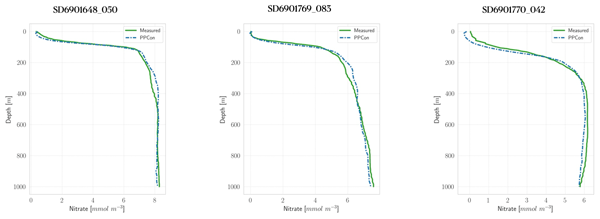
Gloria Pietropolli, Luca Manzoni, and Gianpiero Cossarini
Geosci. Model Dev., 17, 7347–7364, https://doi.org/10.5194/gmd-17-7347-2024, https://doi.org/10.5194/gmd-17-7347-2024, 2024
Short summary
Short summary
Monitoring the ocean is essential for studying marine life and human impact. Our new software, PPCon, uses ocean data to predict key factors like nitrate and chlorophyll levels, which are hard to measure directly. By leveraging machine learning, PPCon offers more accurate and efficient predictions.
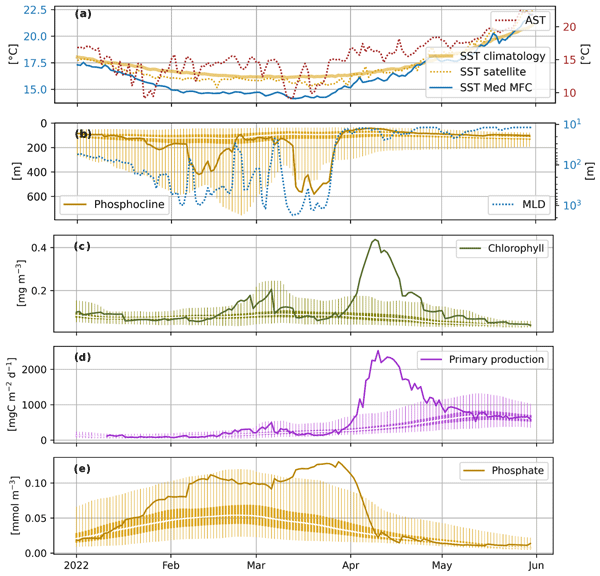
Anna Teruzzi, Ali Aydogdu, Carolina Amadio, Emanuela Clementi, Simone Colella, Valeria Di Biagio, Massimiliano Drudi, Claudia Fanelli, Laura Feudale, Alessandro Grandi, Pietro Miraglio, Andrea Pisano, Jenny Pistoia, Marco Reale, Stefano Salon, Gianluca Volpe, and Gianpiero Cossarini
State Planet, 4-osr8, 15, https://doi.org/10.5194/sp-4-osr8-15-2024, https://doi.org/10.5194/sp-4-osr8-15-2024, 2024
Short summary
Short summary
A noticeable cold spell occurred in Eastern Europe at the beginning of 2022 and was the main driver of intense deep-water formation and the associated transport of nutrients to the surface. Southeast of Crete, the availability of both light and nutrients in the surface layer stimulated an anomalous phytoplankton bloom. In the area, chlorophyll concentration (a proxy for bloom intensity) and primary production were considerably higher than usual, suggesting possible impacts on fishery catches.
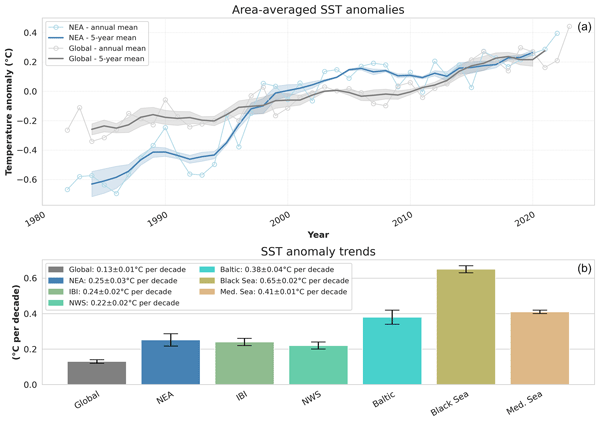
Karina von Schuckmann, Lorena Moreira, Mathilde Cancet, Flora Gues, Emmanuelle Autret, Ali Aydogdu, Lluis Castrillo, Daniele Ciani, Andrea Cipollone, Emanuela Clementi, Gianpiero Cossarini, Alvaro de Pascual-Collar, Vincenzo De Toma, Marion Gehlen, Rianne Giesen, Marie Drevillon, Claudia Fanelli, Kevin Hodges, Simon Jandt-Scheelke, Eric Jansen, Melanie Juza, Ioanna Karagali, Priidik Lagemaa, Vidar Lien, Leonardo Lima, Vladyslav Lyubartsev, Ilja Maljutenko, Simona Masina, Ronan McAdam, Pietro Miraglio, Helen Morrison, Tabea Rebekka Panteleit, Andrea Pisano, Marie-Isabelle Pujol, Urmas Raudsepp, Roshin Raj, Ad Stoffelen, Simon Van Gennip, Pierre Veillard, and Chunxue Yang
State Planet, 4-osr8, 2, https://doi.org/10.5194/sp-4-osr8-2-2024, https://doi.org/10.5194/sp-4-osr8-2-2024, 2024
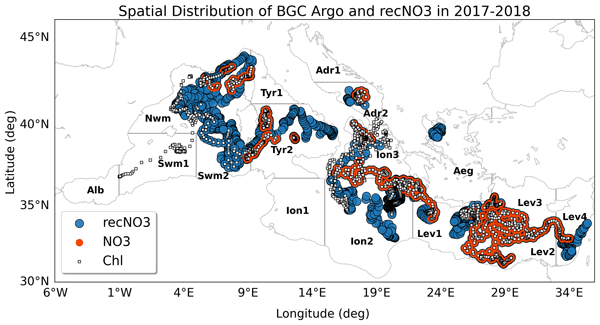
Carolina Amadio, Anna Teruzzi, Gloria Pietropolli, Luca Manzoni, Gianluca Coidessa, and Gianpiero Cossarini
Ocean Sci., 20, 689–710, https://doi.org/10.5194/os-20-689-2024, https://doi.org/10.5194/os-20-689-2024, 2024
Short summary
Short summary
Forecasting of marine biogeochemistry can be improved via the assimilation of observations. Floating buoys provide multivariate information about the status of the ocean interior. Information on the ocean interior can be expanded/augmented by machine learning. In this work, we show the enhanced impact of assimilating new in situ variables (oxygen) and reconstructed variables (nitrate) in the operational forecast system (MedBFM) model of the Mediterranean Sea.
Felipe L. L. Amorim, Julien Le Meur, Achim Wirth, and Vanessa Cardin
Ocean Sci., 20, 463–474, https://doi.org/10.5194/os-20-463-2024, https://doi.org/10.5194/os-20-463-2024, 2024
Short summary
Short summary
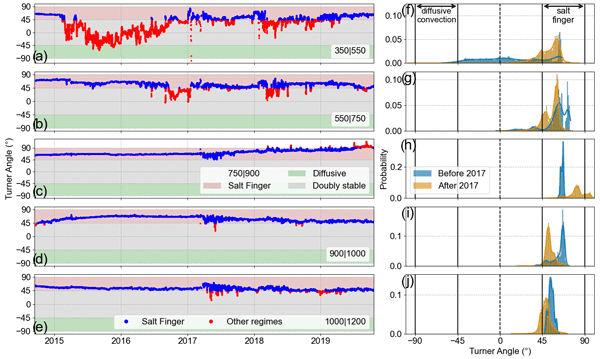
Analysis of a high-frequency time series of thermohaline data measured at the EMSO-E2M3A regional facility in the southern Adriatic Pit (SAP) reveals a significant change in the double-diffusive regime in 2017 associated with the intrusion of extremely salty waters into the area, suggesting salt fingering as the dominant regime. The strong heat loss at the surface during this winter allowed deep convection to transport this high-salinity water from the intermediate to deep layers of the pit.
Christian Lønborg, Cátia Carreira, Gwenaël Abril, Susana Agustí, Valentina Amaral, Agneta Andersson, Javier Arístegui, Punyasloke Bhadury, Mariana B. Bif, Alberto V. Borges, Steven Bouillon, Maria Ll. Calleja, Luiz C. Cotovicz Jr., Stefano Cozzi, Maryló Doval, Carlos M. Duarte, Bradley Eyre, Cédric G. Fichot, E. Elena García-Martín, Alexandra Garzon-Garcia, Michele Giani, Rafael Gonçalves-Araujo, Renee Gruber, Dennis A. Hansell, Fuminori Hashihama, Ding He, Johnna M. Holding, William R. Hunter, J. Severino P. Ibánhez, Valeria Ibello, Shan Jiang, Guebuem Kim, Katja Klun, Piotr Kowalczuk, Atsushi Kubo, Choon-Weng Lee, Cláudia B. Lopes, Federica Maggioni, Paolo Magni, Celia Marrase, Patrick Martin, S. Leigh McCallister, Roisin McCallum, Patricia M. Medeiros, Xosé Anxelu G. Morán, Frank E. Muller-Karger, Allison Myers-Pigg, Marit Norli, Joanne M. Oakes, Helena Osterholz, Hyekyung Park, Maria Lund Paulsen, Judith A. Rosentreter, Jeff D. Ross, Digna Rueda-Roa, Chiara Santinelli, Yuan Shen, Eva Teira, Tinkara Tinta, Guenther Uher, Masahide Wakita, Nicholas Ward, Kenta Watanabe, Yu Xin, Youhei Yamashita, Liyang Yang, Jacob Yeo, Huamao Yuan, Qiang Zheng, and Xosé Antón Álvarez-Salgado
Earth Syst. Sci. Data, 16, 1107–1119, https://doi.org/10.5194/essd-16-1107-2024, https://doi.org/10.5194/essd-16-1107-2024, 2024
Short summary
Short summary
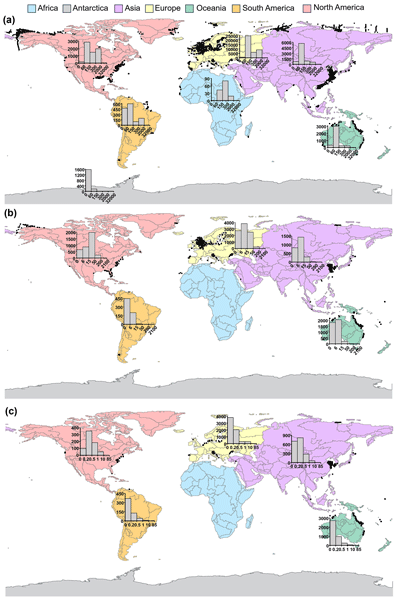
In this paper, we present the first edition of a global database compiling previously published and unpublished measurements of dissolved organic matter (DOM) collected in coastal waters (CoastDOM v1). Overall, the CoastDOM v1 dataset will be useful to identify global spatial and temporal patterns and to facilitate reuse in studies aimed at better characterizing local biogeochemical processes and identifying a baseline for modelling future changes in coastal waters.
Eva Álvarez, Gianpiero Cossarini, Anna Teruzzi, Jorn Bruggeman, Karsten Bolding, Stefano Ciavatta, Vincenzo Vellucci, Fabrizio D'Ortenzio, David Antoine, and Paolo Lazzari
Biogeosciences, 20, 4591–4624, https://doi.org/10.5194/bg-20-4591-2023, https://doi.org/10.5194/bg-20-4591-2023, 2023
Short summary
Short summary
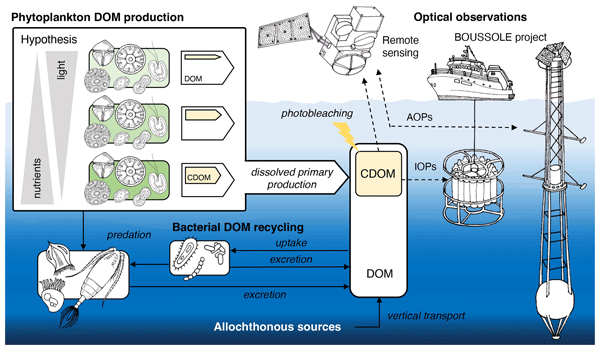
Chromophoric dissolved organic matter (CDOM) interacts with the ambient light and gives the waters of the Mediterranean Sea their colour. We propose a novel parameterization of the CDOM cycle, whose parameter values have been optimized by using the data of the monitoring site BOUSSOLE. Nutrient and light limitations for locally produced CDOM caused aCDOM(λ) to covary with chlorophyll, while the above-average CDOM concentrations observed at this site were maintained by allochthonous sources.
Giovanni Coppini, Emanuela Clementi, Gianpiero Cossarini, Stefano Salon, Gerasimos Korres, Michalis Ravdas, Rita Lecci, Jenny Pistoia, Anna Chiara Goglio, Massimiliano Drudi, Alessandro Grandi, Ali Aydogdu, Romain Escudier, Andrea Cipollone, Vladyslav Lyubartsev, Antonio Mariani, Sergio Cretì, Francesco Palermo, Matteo Scuro, Simona Masina, Nadia Pinardi, Antonio Navarra, Damiano Delrosso, Anna Teruzzi, Valeria Di Biagio, Giorgio Bolzon, Laura Feudale, Gianluca Coidessa, Carolina Amadio, Alberto Brosich, Arnau Miró, Eva Alvarez, Paolo Lazzari, Cosimo Solidoro, Charikleia Oikonomou, and Anna Zacharioudaki
Ocean Sci., 19, 1483–1516, https://doi.org/10.5194/os-19-1483-2023, https://doi.org/10.5194/os-19-1483-2023, 2023
Short summary
Short summary
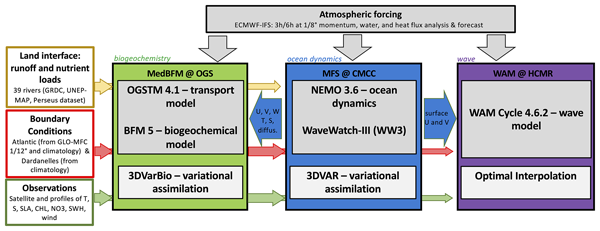
The paper presents the Mediterranean Forecasting System evolution and performance developed in the framework of the Copernicus Marine Service.
Stefania A. Ciliberti, Enrique Alvarez Fanjul, Jay Pearlman, Kirsten Wilmer-Becker, Pierre Bahurel, Fabrice Ardhuin, Alain Arnaud, Mike Bell, Segolene Berthou, Laurent Bertino, Arthur Capet, Eric Chassignet, Stefano Ciavatta, Mauro Cirano, Emanuela Clementi, Gianpiero Cossarini, Gianpaolo Coro, Stuart Corney, Fraser Davidson, Marie Drevillon, Yann Drillet, Renaud Dussurget, Ghada El Serafy, Katja Fennel, Marcos Garcia Sotillo, Patrick Heimbach, Fabrice Hernandez, Patrick Hogan, Ibrahim Hoteit, Sudheer Joseph, Simon Josey, Pierre-Yves Le Traon, Simone Libralato, Marco Mancini, Pascal Matte, Angelique Melet, Yasumasa Miyazawa, Andrew M. Moore, Antonio Novellino, Andrew Porter, Heather Regan, Laia Romero, Andreas Schiller, John Siddorn, Joanna Staneva, Cecile Thomas-Courcoux, Marina Tonani, Jose Maria Garcia-Valdecasas, Jennifer Veitch, Karina von Schuckmann, Liying Wan, John Wilkin, and Romane Zufic
State Planet, 1-osr7, 2, https://doi.org/10.5194/sp-1-osr7-2-2023, https://doi.org/10.5194/sp-1-osr7-2-2023, 2023
Valeria Di Biagio, Riccardo Martellucci, Milena Menna, Anna Teruzzi, Carolina Amadio, Elena Mauri, and Gianpiero Cossarini
State Planet, 1-osr7, 10, https://doi.org/10.5194/sp-1-osr7-10-2023, https://doi.org/10.5194/sp-1-osr7-10-2023, 2023
Short summary
Short summary
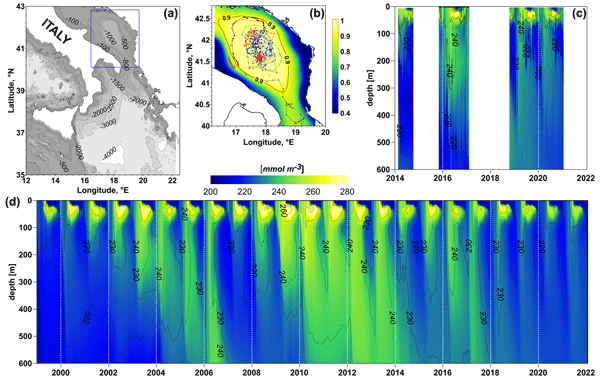
Oxygen is essential to all aerobic organisms, and its content in the marine environment is continuously under assessment. By integrating observations with a model, we describe the dissolved oxygen variability in a sensitive Mediterranean area in the period 1999–2021 and ascribe it to multiple acting physical and biological drivers. Moreover, the reduction recognized in 2021, apparently also due to other mechanisms, requires further monitoring in light of its possible impacts.
Alexandre Mignot, Hervé Claustre, Gianpiero Cossarini, Fabrizio D'Ortenzio, Elodie Gutknecht, Julien Lamouroux, Paolo Lazzari, Coralie Perruche, Stefano Salon, Raphaëlle Sauzède, Vincent Taillandier, and Anna Teruzzi
Biogeosciences, 20, 1405–1422, https://doi.org/10.5194/bg-20-1405-2023, https://doi.org/10.5194/bg-20-1405-2023, 2023
Short summary
Short summary
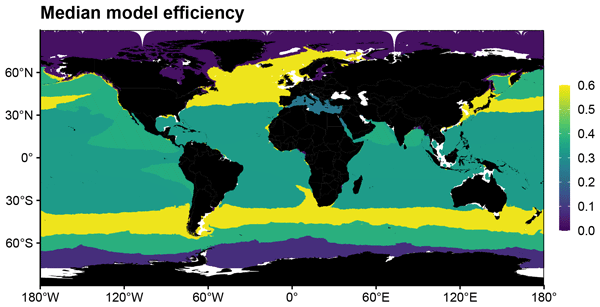
Numerical models of ocean biogeochemistry are becoming a major tool to detect and predict the impact of climate change on marine resources and monitor ocean health. Here, we demonstrate the use of the global array of BGC-Argo floats for the assessment of biogeochemical models. We first detail the handling of the BGC-Argo data set for model assessment purposes. We then present 23 assessment metrics to quantify the consistency of BGC model simulations with respect to BGC-Argo data.
Valeria Di Biagio, Stefano Salon, Laura Feudale, and Gianpiero Cossarini
Biogeosciences, 19, 5553–5574, https://doi.org/10.5194/bg-19-5553-2022, https://doi.org/10.5194/bg-19-5553-2022, 2022
Short summary
Short summary
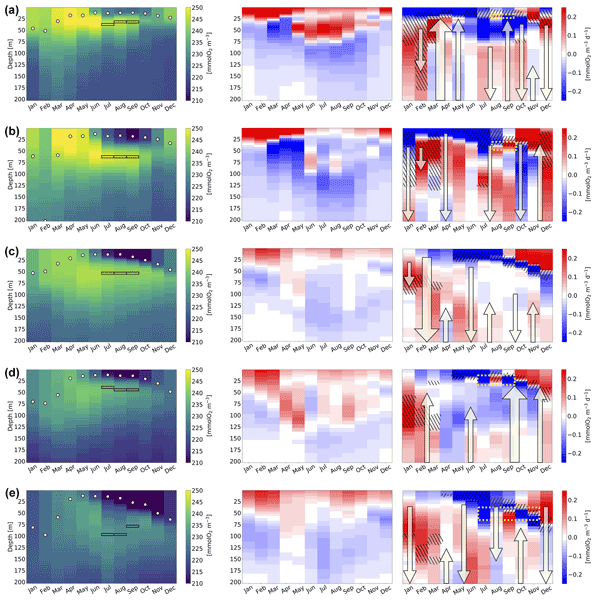
The amount of dissolved oxygen in the ocean is the result of interacting physical and biological processes. Oxygen vertical profiles show a subsurface maximum in a large part of the ocean. We used a numerical model to map this subsurface maximum in the Mediterranean Sea and to link local differences in its properties to the driving processes. This emerging feature can help the marine ecosystem functioning to be better understood, also under the impacts of climate change.

Nydia Catalina Reyes Suárez, Valentina Tirelli, Laura Ursella, Matjaž Ličer, Massimo Celio, and Vanessa Cardin
Ocean Sci., 18, 1321–1337, https://doi.org/10.5194/os-18-1321-2022, https://doi.org/10.5194/os-18-1321-2022, 2022
Short summary
Short summary
Explaining the dynamics of jellyfish blooms is a challenge for scientists. Biological and meteo-oceanographic data were combined on different timescales to explain the exceptional bloom of the jellyfish Rhizostoma pulmo in the Gulf of Trieste (Adriatic Sea) in April 2021. The bloom was associated with anomalously warm seasonal sea conditions. Then, a strong bora wind event enhanced upwelling and mixing of the water column, causing jellyfish to rise to the surface and accumulate along the coast.
Marco Reale, Gianpiero Cossarini, Paolo Lazzari, Tomas Lovato, Giorgio Bolzon, Simona Masina, Cosimo Solidoro, and Stefano Salon
Biogeosciences, 19, 4035–4065, https://doi.org/10.5194/bg-19-4035-2022, https://doi.org/10.5194/bg-19-4035-2022, 2022
Short summary
Short summary
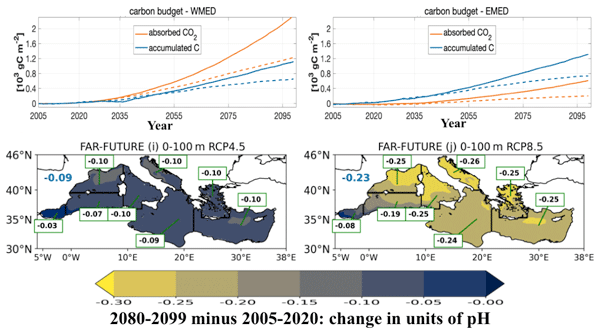
Future projections under the RCP8.5 and RCP4.5 emission scenarios of the Mediterranean Sea biogeochemistry at the end of the 21st century show different levels of decline in nutrients, oxygen and biomasses and an acidification of the water column. The signal intensity is stronger under RCP8.5 and in the eastern Mediterranean. Under RCP4.5, after the second half of the 21st century, biogeochemical variables show a recovery of the values observed at the beginning of the investigated period.
Pablo Lorente, Eva Aguiar, Michele Bendoni, Maristella Berta, Carlo Brandini, Alejandro Cáceres-Euse, Fulvio Capodici, Daniela Cianelli, Giuseppe Ciraolo, Lorenzo Corgnati, Vlado Dadić, Bartolomeo Doronzo, Aldo Drago, Dylan Dumas, Pierpaolo Falco, Maria Fattorini, Adam Gauci, Roberto Gómez, Annalisa Griffa, Charles-Antoine Guérin, Ismael Hernández-Carrasco, Jaime Hernández-Lasheras, Matjaž Ličer, Marcello G. Magaldi, Carlo Mantovani, Hrvoje Mihanović, Anne Molcard, Baptiste Mourre, Alejandro Orfila, Adèle Révelard, Emma Reyes, Jorge Sánchez, Simona Saviano, Roberta Sciascia, Stefano Taddei, Joaquín Tintoré, Yaron Toledo, Laura Ursella, Marco Uttieri, Ivica Vilibić, Enrico Zambianchi, and Vanessa Cardin
Ocean Sci., 18, 761–795, https://doi.org/10.5194/os-18-761-2022, https://doi.org/10.5194/os-18-761-2022, 2022
Short summary
Short summary
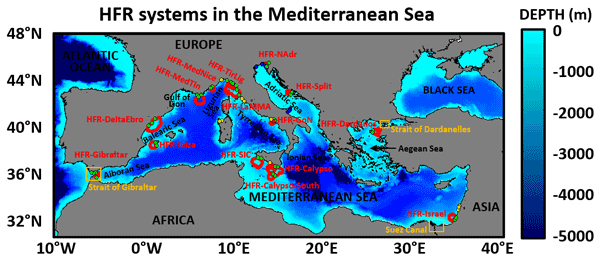
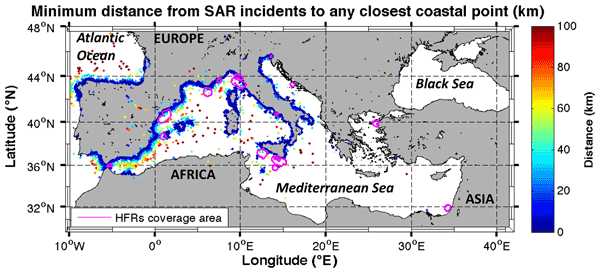
High-frequency radar (HFR) is a land-based remote sensing technology that can provide maps of the surface circulation over broad coastal areas, along with wave and wind information. The main goal of this work is to showcase the current status of the Mediterranean HFR network as well as present and future applications of this sensor for societal benefit such as search and rescue operations, safe vessel navigation, tracking of marine pollutants, and the monitoring of extreme events.
Emma Reyes, Eva Aguiar, Michele Bendoni, Maristella Berta, Carlo Brandini, Alejandro Cáceres-Euse, Fulvio Capodici, Vanessa Cardin, Daniela Cianelli, Giuseppe Ciraolo, Lorenzo Corgnati, Vlado Dadić, Bartolomeo Doronzo, Aldo Drago, Dylan Dumas, Pierpaolo Falco, Maria Fattorini, Maria J. Fernandes, Adam Gauci, Roberto Gómez, Annalisa Griffa, Charles-Antoine Guérin, Ismael Hernández-Carrasco, Jaime Hernández-Lasheras, Matjaž Ličer, Pablo Lorente, Marcello G. Magaldi, Carlo Mantovani, Hrvoje Mihanović, Anne Molcard, Baptiste Mourre, Adèle Révelard, Catalina Reyes-Suárez, Simona Saviano, Roberta Sciascia, Stefano Taddei, Joaquín Tintoré, Yaron Toledo, Marco Uttieri, Ivica Vilibić, Enrico Zambianchi, and Alejandro Orfila
Ocean Sci., 18, 797–837, https://doi.org/10.5194/os-18-797-2022, https://doi.org/10.5194/os-18-797-2022, 2022
Short summary
Short summary
This work reviews the existing advanced and emerging scientific and societal applications using HFR data, developed to address the major challenges identified in Mediterranean coastal waters organized around three main topics: maritime safety, extreme hazards and environmental transport processes. It also includes a discussion and preliminary assessment of the capabilities of existing HFR applications, finally providing a set of recommendations towards setting out future prospects.
Anna Teruzzi, Giorgio Bolzon, Laura Feudale, and Gianpiero Cossarini
Biogeosciences, 18, 6147–6166, https://doi.org/10.5194/bg-18-6147-2021, https://doi.org/10.5194/bg-18-6147-2021, 2021
Short summary
Short summary
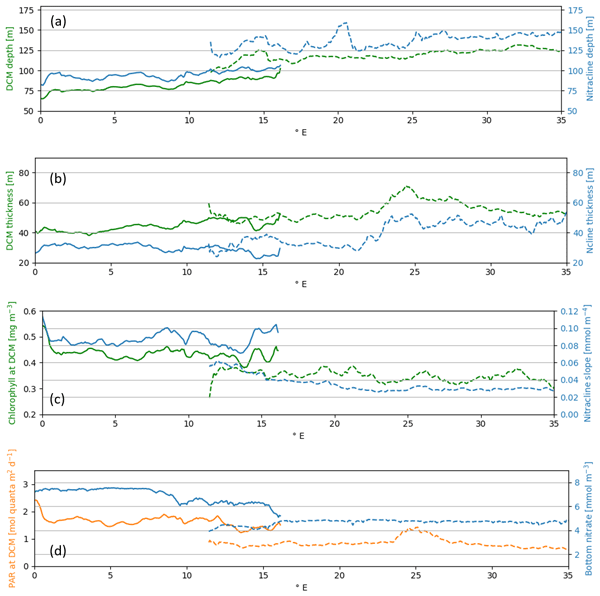
During summer, maxima of phytoplankton chlorophyll concentration (DCM) occur in the subsurface of the Mediterranean Sea and can play a relevant role in carbon sequestration into the ocean interior. A numerical model based on in situ and satellite observations provides insights into the range of DCM conditions across the relatively small Mediterranean Sea and shows a western DCM that is 25 % shallower and with a higher phytoplankton chlorophyll concentration than in the eastern Mediterranean.
Cited articles
Agustí-Panareda, A., Barré, J., Massart, S., Inness, A., Aben, I., Ades, M., Baier, B. C., Balsamo, G., Borsdorff, T., Bousserez, N., Boussetta, S., Buchwitz, M., Cantarello, L., Crevoisier, C., Engelen, R., Eskes, H., Flemming, J., Garrigues, S., Hasekamp, O., Huijnen, V., Jones, L., Kipling, Z., Langerock, B., McNorton, J., Meilhac, N., Noël, S., Parrington, M., Peuch, V.-H., Ramonet, M., Razinger, M., Reuter, M., Ribas, R., Suttie, M., Sweeney, C., Tarniewicz, J., and Wu, L.: Technical note: The CAMS greenhouse gas reanalysis from 2003 to 2020, Atmos. Chem. Phys., 23, 3829–3859, https://doi.org/10.5194/acp-23-3829-2023, 2023.
Álvarez, M., Sanleón-Bartolomé, H., Tanhua, T., Mintrop, L., Luchetta, A., Cantoni, C., Schroeder, K., and Civitarese, G.: The CO2 system in the Mediterranean Sea: a basin wide perspective, Ocean Sci., 10, 69–92, https://doi.org/10.5194/os-10-69-2014, 2014.
Álvarez, M., Catala, S.T., Civitarese, G., Coppola, L., Hassoun, A., Ibello, V., Lazzari, P., Lefevre, D., Macias, D., Santinelli, C., and Ulse, C.: Mediterranean Sea general biogeochem istry, in: Oceanography of the Mediterranean Sea, edited by: Schroeder, K., and Chiggiato, J., Elsevier, Amsterdam, 387–451, https://doi.org/10.1016/B978-0-12-823692-5.00004-2, 2023.
Álvarez, M., García-Ibáñez, M. I., Lange, N., Kozyr, A., Velo, A., Tanhua, T., Civitarese, G., Cantoni, C., Belgacem, M., Schroeder, K., Acerbi, R., Coppola, L., Wagener, T., Fajar, N. M., Flecha, S., Giani, M., Giannoudi, L., Guallart, E. F., Hassoun, A. E. R., Huertas, E. I., Ibello, V., Keraghel, M. A., Louanchi, F., Luchetta, A., Pérez, F. F., Schirnick, C., Souvermezoglou, E., Urbini, L., Vidal, M., and Ziveri, P.: CARIMED (CARbon, tracers, and ancillary data In the MEDiterranean Sea): a ship-based data synthesis product – overview and quality control procedures, Earth Syst. Sci. Data, 18, 4915–4941, https://doi.org/10.5194/essd-18-4915-2026, 2026.
Amitai, Y., Ashkenazy, Y., and Gildor, H.: The Effect of the Source of Deep Water in the Eastern Mediterranean on Western Mediterranean Intermediate and Deep Water, Front. Mar. Sci., 7, 615975, https://doi.org/10.3389/fmars.2020.615975, 2021.
Amorim, F. L. L., Le Meur, J., Wirth, A., and Cardin, V.: Tipping of the double-diffusive regime in the southern Adriatic Pit in 2017 in connection with record high-salinity values, Ocean Sci., 20, 463–474, https://doi.org/10.5194/os-20-463-2024, 2024.
Bakker, D. C. E., Pfeil, B., Landa, C. S., Metzl, N., O'Brien, K. M., Olsen, A., Smith, K., Cosca, C., Harasawa, S., Jones, S. D., Nakaoka, S., Nojiri, Y., Schuster, U., Steinhoff, T., Sweeney, C., Takahashi, T., Tilbrook, B., Wada, C., Wanninkhof, R., Alin, S. R., Balestrini, C. F., Barbero, L., Bates, N. R., Bianchi, A. A., Bonou, F., Boutin, J., Bozec, Y., Burger, E. F., Cai, W.-J., Castle, R. D., Chen, L., Chierici, M., Currie, K., Evans, W., Featherstone, C., Feely, R. A., Fransson, A., Goyet, C., Greenwood, N., Gregor, L., Hankin, S., Hardman-Mountford, N. J., Harlay, J., Hauck, J., Hoppema, M., Humphreys, M. P., Hunt, C. W., Huss, B., Ibánhez, J. S. P., Johannessen, T., Keeling, R., Kitidis, V., Körtzinger, A., Kozyr, A., Krasakopoulou, E., Kuwata, A., Landschützer, P., Lauvset, S. K., Lefèvre, N., Lo Monaco, C., Manke, A., Mathis, J. T., Merlivat, L., Millero, F. J., Monteiro, P. M. S., Munro, D. R., Murata, A., Newberger, T., Omar, A. M., Ono, T., Paterson, K., Pearce, D., Pierrot, D., Robbins, L. L., Saito, S., Salisbury, J., Schlitzer, R., Schneider, B., Schweitzer, R., Sieger, R., Skjelvan, I., Sullivan, K. F., Sutherland, S. C., Sutton, A. J., Tadokoro, K., Telszewski, M., Tuma, M., van Heuven, S. M. A. C., Vandemark, D., Ward, B., Watson, A. J., and Xu, S.: A multi-decade record of high-quality fCO2 data in version 3 of the Surface Ocean CO2 Atlas (SOCAT), Earth Syst. Sci. Data, 8, 383–413, https://doi.org/10.5194/essd-8-383-2016, 2016.
Bakker, D. C., Alin, S. R., Bates, N. R., Becker, M., Feely, R. A., and Gritzalis, T.: SOCAT version 2023 – An alarming decline in the ocean CO2 observing capacity, NCEI [data set], https://doi.org/10.25921/r7xa-bt92 (last access: 1 June 2026), 2023.
Benson, B. B. and Krause, D.: The concentration and isotopic fractionation of oxygen dissolved in freshwater and seawater in equilibrium with the atmosphere1, Limnol. Oceanogr., 29, 620–632, https://doi.org/10.4319/lo.1984.29.3.0620, 1984.
Cantoni, C., Luchetta, A., Chiggiato, J., Cozzi, S., Schroeder, K., and Langone, L.: Dense water flow and carbonate system in the southern Adriatic: A focus on the 2012 event, Marine Geol., 375, 15–27, https://doi.org/10.1016/j.margeo.2015.08.013, 2016.
Cantoni, C., De Vittor, C., Faganeli, J., Giani, M., Kovač, N., Malej, A., Ogrinc, N., Tamše, S., and Turk, V.: Carbonate system and acidification of the Adriatic Sea, Marine Chemistry, 267, 104462, https://doi.org/10.1016/j.marchem.2024.104462, 2024.
Cardin, V., Bensi, M., and Pacciaroni, M.: Variability of water mass properties in the last two decades in the South Adriatic Sea with emphasis on the period 2006–2009, Cont. Shelf Res., 31, 951–965, https://doi.org/10.1016/j.csr.2011.03.002, 2011.
Cardin, V., Dentico, C., Brunetti, F., Bubbi, A., Chiaruttini, L., Civitarese, G., Comici, C., Corbo, A., Gerin, R., Giani, M., Kuchler, S., Le Meur, J., Mansutti, P., Savonitto, G., and Siena, G.: EMSO-E2M3A-B-Surface-time-series-South-Adriatic, National Institute of Oceanography and Applied Geophysics [data set], https://doi.org/10.13120/y2hw-1j63, 2025a.
Cardin, V., Le Meur, J., Ursella, L., Dentico, C., Siena, G., Mansutti, P., Brunetti, F., and Partescano, E.: EMSOE2M3A-Water-Column-time-series-South-Adriatic, OGS [data set], https://doi.org/10.13120/ZE9Q-3E51, 2025b.
Catalano, G., Azzaro, M., Bastianini, M., Bellucci, L. G., Bernardi Aubry, F., Bianchi, F., Burca, M., Cantoni, C., Caruso, G., Casotti, R., Cozzi, S., Del Negro, P., Fonda Umani, S., Giani, M., Giuliani, S., Kovacevic, V., La Ferla, R., Langone, L., Luchetta, A., Monticelli, L. S., Piacentino, S., Pugnetti, A., Ravaioli, M., Socal, G., Spagnoli, F., and Ursella, L.: The carbon budget in the northern Adriatic Sea, a winter case study, J. Geophys. Res.-Biogeo., 119, 1399–1417, https://doi.org/10.1002/2013JG002559, 2014.
Cerino, F., Bernardi Aubry, F., Coppola, J., La Ferla, R., Maimone, G., Socal, G., and Totti, C.: Spatial and temporal variability of pico-, nano- and microphytoplankton in the offshore waters of the southern Adriatic Sea (Mediterranean Sea), Cont. Shelf Res., 44, 94–105, https://doi.org/10.1016/j.csr.2011.06.006, 2012.
Chiggiato, J., Bergamasco, A., Borghini, M., Falcieri, F. M., Falco, P., Langone, L., Miserocchi, S., Russo, A., and Schroeder, K.: Dense-water bottom currents in the Southern Adriatic Sea in spring 2012, Marine Geol., 375, 134–145, https://doi.org/10.1016/j.margeo.2015.09.005, 2016.
Civitarese, G., Gačić, M., Lipizer, M., and Eusebi Borzelli, G. L.: On the impact of the Bimodal Oscillating System (BiOS) on the biogeochemistry and biology of the Adriatic and Ionian Seas (Eastern Mediterranean), Biogeosciences, 7, 3987–3997, https://doi.org/10.5194/bg-7-3987-2010, 2010.
Civitarese, G., Gačić, M., Batistić, M., Bensi, M., Cardin, V., Dulčić, J., Garić, R., and Menna, M.: The BiOS mechanism: History, theory, implications, Prog. Oceanogr., 216, 103056, https://doi.org/10.1016/j.pocean.2023.103056, 2023.
Coppola, L., Boutin, J., Gattuso, J., Lefevre, D., and Metzl, N.: The Carbonate System in the Ligurian Sea, in: The Mediterranean Sea in the Era of Global Change 1, edited by: Migon, C., Nival, P., and Sciandra, A., Wiley, 79–103, https://doi.org/10.1002/9781119706960.ch4, 2020.
Cossarini, G., Feudale, L., Teruzzi, A., Bolzon, G., Coidessa, G., Solidoro, C., Di Biagio, V., Amadio, C., Lazzari, P., Brosich, A., and Salon, S.: High-Resolution Reanalysis of the Mediterranean Sea Biogeochemistry (1999–2019), Front. Mar. Sci., 8, 741486, https://doi.org/10.3389/fmars.2021.741486, 2021.
Dentico, C., Rubino, A., Civitarese, G., Giani, M., Siena, G., Kuchler, S., Le Meur, J., Corbo, A., and Cardin, V.: Surface pCO2 and hydrography in the dense water formation area of the southern Adriatic, Earth Syst. Sci. Data, 18, 2119–2131, https://doi.org/10.5194/essd-18-2119-2026, 2026.
di Sarra, A., Di Iorio, T., Piacentino, S., and Sferlazzo, D.: ICOS ATC NRT CO2 growing time series from Lampedusa (8.0 m), 2025-04-01–2025-10-19, ICOS RI [data set], https://hdl.handle.net/11676/jZB47zujZMJcR_Hl5CtLEVHD (last access: 28 May 2026), 2025.
Doney, S. C., Fabry, V. J., Feely, R. A., and Kleypas, J. A.: Ocean Acidification: The Other CO2 Problem, Annu. Rev. Mar. Sci., 1, 169–192, https://doi.org/10.1146/annurev.marine.010908.163834, 2009.
Escudier, R., Clementi, E., Omar, M., Cipollone, A., Pistoia, J., Aydogdu, A., Drudi, M., Grandi, A., Lyubartsev, V., Lecci, R., Cretí, S., Masina, S., Coppini, G., and Pinardi, N.: Mediterranean Sea Physical Reanalysis (CMEMS MED-Currents) (Version 1), Copernicus Monitoring Environment Marine Service (CMEMS) [data set], https://doi.org/10.25423/CMCC/MEDSEA_MULTIYEAR_PHY _006_004_E3R1 (last access: 28 May 2026), 2020.
Escudier, R., Clementi, E., Cipollone, A., Pistoia, J., Drudi, M., Grandi, A., Lyubartsev, V., Lecci, R., Aydogdu, A., Delrosso, D., Omar, M., Masina, S., Coppini, G., and Pinardi, N.: A High Resolution Reanalysis for the Mediterranean Sea, Front. Earth Sci., 9, 702285, https://doi.org/10.3389/feart.2021.702285, 2021.
Fay, A. R., Munro, D. R., McKinley, G. A., Pierrot, D., Sutherland, S. C., Sweeney, C., and Wanninkhof, R.: Updated climatological mean ΔfCO2 and net sea–air CO2 flux over the global open ocean regions, Earth Syst. Sci. Data, 16, 2123–2139, https://doi.org/10.5194/essd-16-2123-2024, 2024.
Feudale, L., Bolzon, G., Lazzari, P., Salon, S., Teruzzi, A., Di Biagio, V., Coidessa, G., Alvarez, E., Amadio, C., and Cossarini, G.: Mediterranean Sea Biogeochemical Analysis and Forecast (Copernicus Marine Service MED-Biogeochemistry, MedBFM4 system) (Version 2), Copernicus Marine Service [data set], https://doi.org/10.25423/cmcc/medsea_analysisforecast_bgc_006 _014_medbfm4 (last access: 28 May 2026), 2023.
Fourrier, M., Coppola, L., D'Ortenzio, F., Migon, C., and Gattuso, J.: Impact of Intermittent Convection in the Northwestern Mediterranean Sea on Oxygen Content, Nutrients, and the Carbonate System, J. Geophys. Res.-Oceans, 127, e2022JC018615, https://doi.org/10.1029/2022JC018615, 2022.
Frangoulis, C., Stamataki, N., Pettas, M., Michelinakis, S., King, A. L., Giannoudi, L., Tsiaras, K., Christodoulaki, S., Seppälä, J., Thyssen, M., Borges, A. V., and Krasakopoulou, E.: A carbonate system time series in the Eastern Mediterranean Sea. Two years of high-frequency in-situ observations and remote sensing, Front. Mar. Sci., 11, 1348161, https://doi.org/10.3389/fmars.2024.1348161, 2024.
Gačić, M., Borzelli, G. L. E., Civitarese, G., Cardin, V., and Yari, S.: Can internal processes sustain reversals of the ocean upper circulation? The Ionian Sea example, Geophys. Res. Lett., 37, 2010GL043216, https://doi.org/10.1029/2010GL043216, 2010.
Gačić, M., Civitarese, G., Miserocchi, S., Cardin, V., Crise, A., and Mauri, E.: The open-ocean convection in the Southern Adriatic: a controlling mechanism of the spring phytoplankton bloom, Cont. Shelf Res., 22, 1897–1908, https://doi.org/10.1016/S0278-4343(02)00050-X, 2002.
Garcia, H. E. and Gordon, L. I.: Oxygen solubility in seawater: Better fitting equations, Limnol. Oceanogr., 37, 1307–1312, https://doi.org/10.4319/lo.1992.37.6.1307, 1992.
García-Ibáñez, M. I., Guallart, E. F., Lucas, A., Pascual, J., Gasol, J. M., Marrasé, C., Calvo, E., and Pelejero, C.: Two new coastal time-series of seawater carbonate system variables in the NW Mediterranean Sea: rates and mechanisms controlling pH changes, Front. Mar. Sci., 11, 1348133, https://doi.org/10.3389/fmars.2024.1348133, 2024.
Gattuso, J.-P. and Hansson, L. (Eds.): Ocean acidification. Oxford University Press, ISBN 978-0-19-959108-4, 2011.
Giani, M., Ogrinc, N., Tamše, S., and Cozzi, S.: Elevated River Inputs of the Total Alkalinity and Dissolved Inorganic Carbon in the Northern Adriatic Sea, Water, 15, 894, https://doi.org/10.3390/w15050894, 2023.
Gruber, N., Bakker, D. C. E., DeVries, T., Gregor, L., Hauck, J., Landschützer, P., McKinley, G. A., and Müller, J. D.: Trends and variability in the ocean carbon sink, Nat. Rev. Earth Environ., 4, 119–134, https://doi.org/10.1038/s43017-022-00381-x, 2023.
Gulev, S. K., Thorne, P. W., Ahn, J., Dentener, F. J., Domingues, C. M., Gerland, S., Gong, D., Kaufman, D. S., Nnamchi, H. C., Quaas, J., Rivera, J. A., Sathyendranath, S., Smith, S. L., Trewin, B., von Schuckmann, K., and Vose, R. S.: Changing State of the Climate System, in: Climate Change 2021: The Physical Science Basis. Contribution of Working Group I to the Sixth Assessment Report of the Intergovernmental Panel on Climate Change, edited by: Masson-Delmotte, V., Zhai, P., Pirani, A., Connors, S. L., Péan, C., Berger, S., Caud, N., Chen, Y., Goldfarb, L., Gomis, M. I., Huang, M., Leitzell, K., Lonnoy, E., Matthews, J. B. R., Maycock, T. K., Waterfield, T., Yelekçi, O., Yu, R., and Zhou, B., Cambridge University Press, Cambridge, United Kingdom and New York, NY, USA, 287–422, https://doi.org/10.1017/9781009157896.004, 2021.
Hassoun, A. E. R., Fakhri, M., Raad, N., Abboud-Abi Saab, M., Gemayel, E., and De Carlo, E. H.: The carbonate system of the Eastern-most Mediterranean Sea, Levantine Sub-basin: Variations and drivers, Deep-Sea Res. Pt. II, 164, 54–73, https://doi.org/10.1016/j.dsr2.2019.03.008, 2019.
Hassoun, A. E. R., Bantelman, A., Canu, D., Comeau, S., Galdies, C., Gattuso, J.-P., Giani, M., Grelaud, M., Hendriks, I. E., Ibello, V., Idrissi, M., Krasakopoulou, E., Shaltout, N., Solidoro, C., Swarzenski, P. W., and Ziveri, P.: Ocean acidification research in the Mediterranean Sea: Status, trends and next steps, Front. Mar. Sci., 9, 892670, https://doi.org/10.3389/fmars.2022.892670, 2022.
Hersbach, H., Bell, B., Berrisford, P., Biavati, G., Horányi, A., Muñoz Sabater, J., Nicolas, J., Peubey, C., Radu, R., Rozum, I., Schepers, D., Simmons, A., Soci, C., Dee, D., and Thépaut, J.-N.: ERA5 hourly data on single levels from 1940 to present, Copernicus Climate Change Service (C3S) Climate Data Store (CDS) [data set], https://doi.org/10.24381/cds.adbb2d47, 2023.
Ilyina, T., Zeebe, R. E., Maier-Reimer, E., and Heinze, C.: Early detection of ocean acidification effects on marine calcification, Glob. Biogeochem. Cycles, 23, 2008GB003278, https://doi.org/10.1029/2008GB003278, 2009.
Ingrosso, G., Giani, M., Comici, C., Kralj, M., Piacentino, S., De Vittor, C., and Del Negro, P.: Drivers of the carbonate system seasonal variations in a Mediterranean gulf, Estuar. Coast. Shelf Sci., 168, 58–70, https://doi.org/10.1016/j.ecss.2015.11.001, 2016.
Ingrosso, G., Bensi, M., Cardin, V., and Giani, M.: Anthropogenic CO2 in a dense water formation area of the Mediterranean Sea, Deep-Sea Res. Pt. I, 123, 118–128, https://doi.org/10.1016/j.dsr.2017.04.004, 2017.
Iona, A., Theodorou, A., Sofianos, S., Watelet, S., Troupin, C., and Beckers, J.-M.: Mediterranean Sea climatic indices: monitoring long-term variability and climate changes, Earth Syst. Sci. Data, 10, 1829–1842, https://doi.org/10.5194/essd-10-1829-2018, 2018.
Kapsenberg, L., Alliouane, S., Gazeau, F., Mousseau, L., and Gattuso, J.-P.: Coastal ocean acidification and increasing total alkalinity in the northwestern Mediterranean Sea, Ocean Sci., 13, 411–426, https://doi.org/10.5194/os-13-411-2017, 2017.
Lan, X., Tans, P., and Thoning, K. W.: Trends in globally-averaged CO2 determined from NOAA Global Monitoring Laboratory measurements, Version Friday, 5 December 2025 11:36:40 MST, https://gml.noaa.gov/ccgg/trends/global.html (last access: 16 December 2025), 2025.
Laruelle, G. G., Cai, W.-J., Hu, X., Gruber, N., Mackenzie, F. T., and Regnier, P.: Continental shelves as a variable but increasing global sink for atmospheric carbon dioxide, Nat. Commun., 9, 454, https://doi.org/10.1038/s41467-017-02738-z, 2018.
Lee, K., Sabine, C. L., Tanhua, T., Kim, T.-W., Feely, R. A., and Kim, H.-C.: Roles of marginal seas in absorbing and storing fossil fuel CO2, Energy Environ. Sci., 4, 1133, https://doi.org/10.1039/c0ee00663g, 2011.
Le Meur, J., Wirth, A., Paladini De Mendoza, F., Miserocchi, S., and Cardin, V.: Intermittent supply of dense water to the deep South Adriatic Pit: an observational study, Front. Mar. Sci., 12, 1516780, https://doi.org/10.3389/fmars.2025.1516780, 2025.
Le Traon, P. Y., Reppucci, A., Alvarez Fanjul, E., Aouf, L., Behrens, A., Belmonte, M., Bentamy, A., Bertino, L., Brando, V. E., Kreiner, M. B., Benkiran, M., Carval, T., Ciliberti, S. A., Claustre, H., Clementi, E., Coppini, G., Cossarini, G., De Alfonso Alonso-Muñoyerro, M., Delamarche, A., Dibarboure, G., Dinessen, F., Drevillon, M., Drillet, Y., Faugere, Y., Fernández, V., Fleming, A., Garcia-Hermosa, M. I., Sotillo, M. G., Garric, G., Gasparin, F., Giordan, C., Gehlen, M., Gregoire, M. L., Guinehut, S., Hamon, M., Harris, C., Hernandez, F., Hinkler, J. B., Hoyer, J., Karvonen, J., Kay, S., King, R., Lavergne, T., Lemieux-Dudon, B., Lima, L., Mao, C., Martin, M. J., Masina, S., Melet, A., Buongiorno Nardelli, B., Nolan, G., Pascual, A., Pistoia, J., Palazov, A., Piolle, J. F., Pujol, M. I., Pequignet, A. C., Peneva, E., Pérez Gómez, B., Petit De La Villeon, L., Pinardi, N., Pisano, A., Pouliquen, S., Reid, R., Remy, E., Santoleri, R., Siddorn, J., She, J., Staneva, J., Stoffelen, A., Tonani, M., Vandenbulcke, L., Von Schuckmann, K., Volpe, G., Wettre, C., and Zacharioudaki, A.: From Observation to Information and Users: The Copernicus Marine Service Perspective, Front. Mar. Sci., 6, 234, https://doi.org/10.3389/fmars.2019.00234, 2019.
Lohbeck, K. T., Riebesell, U., and Reusch, T. B. H.: Adaptive evolution of a key phytoplankton species to ocean acidification, Nat. Geosci., 5, 346–351, https://doi.org/10.1038/ngeo1441, 2012.
Mantziafou, A. and Lascaratos, A.: An eddy resolving numerical study of the general circulation and deep-water formation in the Adriatic Sea, Deep-Sea Res. Pt. I, 51, 921–952, https://doi.org/10.1016/j.dsr.2004.03.006, 2004.
Martellucci, R., Giani, M., Mauri, E., Coppola, L., Paulsen, M., Fourrier, M., Pensieri, S., Cardin, V., Dentico, C., Bozzano, R., Cantoni, C., Lucchetta, A., Izquierdo, A., Bruno, M., and Skjelvan, I.: CO2 and hydrography acquired by autonomous surface vehicles from the Atlantic Ocean to the Mediterranean Sea: data correction and validation, Earth Syst. Sci. Data, 16, 5333–5356, https://doi.org/10.5194/essd-16-5333-2024, 2024a.
Martellucci, R., Menna, M., Mauri, E., Pirro, A., Gerin, R., Paladini De Mendoza, F., Garić, R., Batistić, M., Di Biagio, V., Giordano, P., Langone, L., Miserocchi, S., Gallo, A., Notarstefano, G., Savonitto, G., Bussani, A., Pacciaroni, M., Zuppelli, P., and Poulain, P.-M.: Recent changes of the dissolved oxygen distribution in the deep convection cell of the southern Adriatic Sea, J. Marine Syst., 245, 103988, https://doi.org/10.1016/j.jmarsys.2024.103988, 2024b.
Martellucci, R., Dentico, C., Coppola, L., Skjelvan, I., Giani, M., Pensieri, S., Cantoni, C., Cardin, V., Fourrier, M., Bozzano, R., Paulsen, M., and Mauri, E.: Air-sea CO2 exchange in the Eastern Atlantic and the Mediterranean Sea based on autonomous surface measurements, Front. Mar. Sci., 12, 1633617, https://doi.org/10.3389/fmars.2025.1633617, 2025.
Marullo, S., Pitarch, J., Bellacicco, M., Sarra, A. G. D., Meloni, D., Monteleone, F., Sferlazzo, D., Artale, V., and Santoleri, R.: Air–Sea Interaction in the Central Mediterranean Sea: Assessment of Reanalysis and Satellite Observations, Remote Sens., 13, 2188, https://doi.org/10.3390/rs13112188, 2021.
Matek, A., Mucko, M., Casotti, R., Trano, A. C., Achterberg, E. P., Mihanović, H., Čižmek, H., Čolić, B., Cuculić, V., and Ljubešić, Z.: Phytoplankton Diversity and Co-Dependency in a Stratified Oligotrophic Ecosystem in the South Adriatic Sea, Water, 15, 2299, https://doi.org/10.3390/w15122299, 2023.
Menna, M., Martellucci, R., Notarstefano, G., Mauri, E., Gerin, R., Pacciaroni, M., Bussani, A., Pirro, A., and Poulain, P.-M.: Record-breaking high salinity in the South Adriatic Pit in 2020, in: Copernicus Ocean State Report, issue 6, J. Oper. Oceanogr., 15, 1–220, https://doi.org/10.1080/1755876X.2022.2095169, 2022.
Merlivat, L., Boutin, J., Antoine, D., Beaumont, L., Golbol, M., and Vellucci, V.: Increase of dissolved inorganic carbon and decrease in pH in near-surface waters in the Mediterranean Sea during the past two decades, Biogeosciences, 15, 5653–5662, https://doi.org/10.5194/bg-15-5653-2018, 2018.
Metzl, N., Fin, J., Lo Monaco, C., Mignon, C., Alliouane, S., Bombled, B., Boutin, J., Bozec, Y., Comeau, S., Conan, P., Coppola, L., Cuet, P., Ferreira, E., Gattuso, J.-P., Gazeau, F., Goyet, C., Grossteffan, E., Lansard, B., Lefèvre, D., Lefèvre, N., Leseurre, C., Petton, S., Pujo-Pay, M., Rabouille, C., Reverdin, G., Ridame, C., Rimmelin-Maury, P., Ternon, J.-F., Touratier, F., Tribollet, A., Wagener, T., and Wimart-Rousseau, C.: An updated synthesis of ocean total alkalinity and dissolved inorganic carbon measurements from 1993 to 2023: the SNAPO-CO2-v2 dataset, Earth Syst. Sci. Data, 17, 1075–1100, https://doi.org/10.5194/essd-17-1075-2025, 2025.
Meyer, J. and Riebesell, U.: Reviews and Syntheses: Responses of coccolithophores to ocean acidification: a meta-analysis, Biogeosciences, 12, 1671–1682, https://doi.org/10.5194/bg-12-1671-2015, 2015.
Naegler, T., Ciais, P., Rodgers, K., and Levin, I.: Excess radiocarbon constraints on air-sea gas exchange and the uptake of CO2 by the oceans, Geophys. Res. Lett., 33, 2005GL025408, https://doi.org/10.1029/2005GL025408, 2006.
Nickford, S., Palter, J. B., and Mu, L.: The Importance of Contemporaneous Wind and pCO2 Measurements for Regional Air-Sea CO2 Flux Estimates, J. Geophys. Res.-Oceans, 129, e2023JC020744, https://doi.org/10.1029/2023JC020744, 2024.
Nightingale, P. D., Malin, G., Law, C. S., Watson, A. J., Liss, P. S., Liddicoat, M. I., Boutin, J., and Upstill-Goddard, R. C.: In situ evaluation of air-sea gas exchange parameterizations using novel conservative and volatile tracers, Glob. Biogeochem. Cycles, 14, 373–387, https://doi.org/10.1029/1999GB900091, 2000.
Otero, P., Padin, X. A., Ruiz-Villarreal, M., García-García, L. M., Ríos, A. F., and Pérez, F. F.: Net sea–air CO2 flux uncertainties in the Bay of Biscay based on the choice of wind speed products and gas transfer parameterizations, Biogeosciences, 10, 2993–3005, https://doi.org/10.5194/bg-10-2993-2013, 2013.
Ovchinnikov, I. M., Zats, V. I., Krivosheya, V. G., and Udodov, A. I.: Formation of deep Eastern Mediterranean waters in the Adriatic Sea, Oceanology, 25, 704–707, 1985.
Park, J., Stock, C. A., Yang, X., Dunne, J. P., Rosati, A., John, J., and Zhang, S.: Modeling Global Ocean Biogeochemistry With Physical Data Assimilation: A Pragmatic Solution to the Equatorial Instability, J. Adv. Model Earth Sy., 10, 891–906, https://doi.org/10.1002/2017MS001223, 2018.
Pecci, M., Sferlazzo, D., Anello, F., Becagli, S., Colella, S., De Silvestri, L., Di Iorio, T., Iaccarino, A., Meloni, D., Monteleone, F., Piacentino, S., Principato, E., and di Sarra, A.: First Derivations of Air-Sea CO2 Fluxes in the Central Mediterranean and Possible Impact of the 2022–2023 Marine Heatwave, J. Geophys. Res.-Oceans, 131, e2025JC023007, https://doi.org/10.1029/2025JC023007, 2026.
Peixoto, J. P. and Oort, A. H.: Physics of Climate, American Institute of Physics, New York, https://doi.org/10.1063/1.2809772, 1992.
Pérez, F. F., Becker, M., Goris, N., Gehlen, M., López-Mozos, M., Tjiputra, J., Olsen, A., Müller, J. D., Huertas, I. E., Chau, T. T. T., Cainzos, V., Velo, A., Benard, G., Hauck, J., Gruber, N., and Wanninkhof, R.: An Assessment of CO2 Storage and Sea-Air Fluxes for the Atlantic Ocean and Mediterranean Sea Between 1985 and 2018, Glob. Biogeochem. Cycles, 38, e2023GB007862, https://doi.org/10.1029/2023GB007862, 2024.
Pirro, A., Martellucci, R., Gallo, A., Kubin, E., Mauri, E., Juza, M., Notarstefano, G., Pacciaroni, M., Bussani, A., and Menna, M.: Subsurface warming derived from Argo floats during the 2022 Mediterranean marine heat wave, in: 8th edition of the Copernicus Ocean State Report (OSR8), edited by: von Schuckmann, K., Moreira, L., Grégoire, M., Marcos, M., Staneva, J., Brasseur, P., Garric, G., Lionello, P., Karstensen, J., and Neukermans, G., Copernicus Publications, State Planet, 4-osr8, 18, https://doi.org/10.5194/sp-4-osr8-18-2024, 2024.
Ravaioli, M., Bergami, C., Riminucci, F., Langone, L., Cardin, V., di Sarra, A., Aracri, S., Bastianini, M., Bensi, M., Bergamasco, A., Bommarito, C., Borghini, M., Bortoluzzi, G., Bozzano, R., Cantoni, C., Chiggiato, J., Crisafi, E., D'Adamo, R., Durante, S., Fanara, C., Grilli, F., Lipizer, M., Marini, M., Miserocchi, S., Paschini, E., Penna, P., Pensieri, S., Pugnetti, A., Raicich, F., Schroeder, K., Siena, G., Specchiulli, A., Stanghellini, G., Vetrano, A., and Crise, A.: The RITMARE Italian Fixed-Point Observatory Network (IFON) for marine environmental monitoring: a case study, J. Oper. Oceanogr., 9, s202–s214, https://doi.org/10.1080/1755876X.2015.1114806, 2016.
Resplandy, L., Hogikyan, A., Müller, J. D., Najjar, R. G., Bange, H. W., Bianchi, D., Weber, T., Cai, W. -J., Doney, S. C., Fennel, K., Gehlen, M., Hauck, J., Lacroix, F., Landschützer, P., Le Quéré, C., Roobaert, A., Schwinger, J., Berthet, S., Bopp, L., Chau, T. T. T., Dai, M., Gruber, N., Ilyina, T., Kock, A., Manizza, M., Lachkar, Z., Laruelle, G. G., Liao, E., Lima, I. D., Nissen, C., Rödenbeck, C., Séférian, R., Toyama, K., Tsujino, H., and Regnier, P.: A Synthesis of Global Coastal Ocean Greenhouse Gas Fluxes, Glob. Biogeochem. Cycles, 38, e2023GB007803, https://doi.org/10.1029/2023GB007803, 2024.
Robinson, A. R., Leslie, W. G., Theocharis, A., and Lascaratos, A.: Mediterranean Sea Circulation, in: Encyclopedia of Ocean Sciences, Elsevier, 1689–1705, https://doi.org/10.1006/rwos.2001.0376, 2001.
Roether, W. and Schlitzer, R.: Eastern Mediterranean deep water renewal on the basis of chlorofluoromethane and tritium data, Dynam. Atmos. Oceans, 15, 333–354, https://doi.org/10.1016/0377-0265(91)90025-B, 1991.
Roobaert, A., Resplandy, L., Laruelle, G. G., Liao, E., and Regnier, P.: Unraveling the Physical and Biological Controls of the Global Coastal CO2 Sink, Glob. Biogeochem. Cycles, 38, e2023GB007799, https://doi.org/10.1029/2023GB007799, 2024.
Rubino, A., Gačić, M., Bensi, M., Kovačević, V., Malačič, V., Menna, M., Negretti, M. E., Sommeria, J., Zanchettin, D., Barreto, R. V., Ursella, L., Cardin, V., Civitarese, G., Orlić, M., Petelin, B., and Siena, G.: Experimental evidence of long-term oceanic circulation reversals without wind influence in the North Ionian Sea, Sci. Rep., 10, 1905, https://doi.org/10.1038/s41598-020-57862-6, 2020.
Salon, S., Cossarini, G., Bolzon, G., Feudale, L., Lazzari, P., Teruzzi, A., Solidoro, C., and Crise, A.: Novel metrics based on Biogeochemical Argo data to improve the model uncertainty evaluation of the CMEMS Mediterranean marine ecosystem forecasts, Ocean Sci., 15, 997–1022, https://doi.org/10.5194/os-15-997-2019, 2019.
Schlitzer, R., Roether, W., Oster, H., Junghans, H.-G., Hausmann, M., Johannsen, H., and Michelato, A.: Chlorofluoromethane and oxygen in the Eastern Mediterranean, Deep-Sea Res. Pt. A, 38, 1531–1551, https://doi.org/10.1016/0198-0149(91)90088-W, 1991.
Schroeder, K. and Chiggiato, J.: Oceanography of the Mediterranean Sea: An Introductory Guide, Elsevier, ISBN 978-0-12-823692-5, 2022.
Sisma-Ventura, G., Bialik, O. M., Yam, R., Herut, B., and Silverman, J.: pCO2 variability in the surface waters of the ultra-oligotrophic Levantine Sea: Exploring the air–sea CO2 fluxes in a fast warming region, Marine Chemistry, 196, 13–23, https://doi.org/10.1016/j.marchem.2017.06.006, 2017.
Takahashi, T., Sutherland, S. C., Sweeney, C., Poisson, A., Metzl, N., Tilbrook, B., Bates, N., Wanninkhof, R., Feely, R. A., Sabine, C., Olafsson, J., and Nojiri, Y.: Global sea–air CO2 flux based on climatological surface ocean pCO2, and seasonal biological and temperature effects, Deep-Sea Res. Pt. II, 49, 1601–1622, https://doi.org/10.1016/S0967-0645(02)00003-6, 2002.
Tanhua, T., McCurdy, A., Fischer, A., Appeltans, W., Bax, N., Currie, K., DeYoung, B., Dunn, D., Heslop, E., Glover, L. K., Gunn, J., Hill, K., Ishii, M., Legler, D., Lindstrom, E., Miloslavich, P., Moltmann, T., Nolan, G., Palacz, A., Simmons, S., Sloyan, B., Smith, L. M., Smith, N., Telszewski, M., Visbeck, M., and Wilkin, J.: What We Have Learned From the Framework for Ocean Observing: Evolution of the Global Ocean Observing System, Front. Mar. Sci., 6, 471, https://doi.org/10.3389/fmars.2019.00471, 2019.
Teruzzi, A., Di Biagio, V., Feudale, L., Bolzon, G., Lazzari, P., Salon, S., Coidessa, G., and Cossarini, G.: Mediterranean Sea Biogeochemical Reanalysis (CMEMS MED-Biogeochemistry, MedBFM3 system) (Version 1), Copernicus Monitoring Environment Marine Service (CMEMS) [data set], https://doi.org/10.25423/CMCC/MEDSEA_MULTIYEAR_BGC _006_008_MEDBFM3 (last access: 28 May 2026), 2021.
Touratier, F., Goyet, C., Houpert, L., De Madron, X. D., Lefèvre, D., Stabholz, M., and Guglielmi, V.: Role of deep convection on anthropogenic CO2 sequestration in the Gulf of Lions (northwestern Mediterranean Sea), Deep-Sea Res. Pt. I, 113, 33–48, https://doi.org/10.1016/j.dsr.2016.04.003, 2016.
Tsiaras, K., Frangoulis, C., and Stamataki, N.: Carbonate system variability in the Mediterranean Sea: a modelling study, Front. Mar. Sci., 11, 1347990, https://doi.org/10.3389/fmars.2024.1347990, 2024.
Turchetto, M., Boldrin, A., Langone, L., and Miserocchi, S.: Physical and biogeochemical processes controlling particle fluxes variability and carbon export in the Southern Adriatic, Cont. Shelf Res., 44, 72–82, https://doi.org/10.1016/j.csr.2011.05.005, 2012.
Ulses, C., Estournel, C., Marsaleix, P., Soetaert, K., Fourrier, M., Coppola, L., Lefèvre, D., Touratier, F., Goyet, C., Guglielmi, V., Kessouri, F., Testor, P., and Durrieu de Madron, X.: Seasonal dynamics and annual budget of dissolved inorganic carbon in the northwestern Mediterranean deep-convection region, Biogeosciences, 20, 4683–4710, https://doi.org/10.5194/bg-20-4683-2023, 2023.
Urbini, L., Ingrosso, G., Djakovac, T., Piacentino, S., and Giani, M.: Temporal and Spatial Variability of the CO2 System in a Riverine Influenced Area of the Mediterranean Sea, the Northern Adriatic, Front. Mar. Sci., 7, 679, https://doi.org/10.3389/fmars.2020.00679, 2020.
Volpe, G., Colella, S., Brando, V. E., Forneris, V., La Padula, F., Di Cicco, A., Sammartino, M., Bracaglia, M., Artuso, F., and Santoleri, R.: Mediterranean ocean colour Level 3 operational multi-sensor processing, Ocean Sci., 15, 127–146, https://doi.org/10.5194/os-15-127-2019, 2019a.
Volpe, G., Colella, S., Brando, V. E., Forneris, V., La Padula, F., Di Cicco, A., Sammartino, M., Bracaglia, M., Artuso, F., and Santoleri, R.: Mediterranean Sea, Bio-Geo-Chemical, L4, monthly means, daily gapfree and climatology Satellite Observations (1997–ongoing), Copernicus Monitoring Environment Marine Service (CMEMS) [data set], https://doi.org/10.48670/moi-00300 (last access: 28 May 2026), 2019b.
Wanninkhof, R.: Relationship between wind speed and gas exchange over the ocean, J. Geophys. Res., 97, 7373–7382, https://doi.org/10.1029/92JC00188, 1992.
Wanninkhof, R.: Relationship between wind speed and gas exchange over the ocean revisited, Limnol. Ocean Methods, 12, 351–362, https://doi.org/10.4319/lom.2014.12.351, 2014.
Wanninkhof, R. and McGillis, W. R.: A cubic relationship between air-sea CO2 exchange and wind speed, Geophys. Res. Lett., 26, 1889–1892, https://doi.org/10.1029/1999GL900363, 1999.
Weiss, R. F.: Carbon dioxide in water and seawater: the solubility of a non-ideal gas, Marine Chemistry, 2, 203–215, https://doi.org/10.1016/0304-4203(74)90015-2, 1974.
Weiss, R. F. and Price, B. A.: Nitrous oxide solubility in water and seawater, Marine Chemistry, 8, 347–359, https://doi.org/10.1016/0304-4203(80)90024-9, 1980.
Zeebe, R. E. and Wolf-Gladrow, D.: CO2 in seawater: equilibrium, kinetics, isotopes, in: Elsevier Oceanography Series, vol. 65, edited by: Halpem, D., Elsevier B.V, Amsterdam, the Netherlands, http://geosci.uchicago.edu/~kite/doc/Zeebe_CO2_In_Seawater_Ch_1.pdf (last access: 30 June 2026), 2001.
Short summary
The concentration of carbon dioxide in the atmosphere is rising due to human activities. The ocean has absorbed almost 30 % of the total emissions and stored in deeper waters. We studied the southern Adriatic, an area where dense water forms and sinks, helping move carbon from the surface to depth. Using a recently validated long-term dataset, we found that over the past decade this region acted as a net sink of carbon dioxide, highlighting its role in storing carbon in the Mediterranean Sea.
The concentration of carbon dioxide in the atmosphere is rising due to human activities. The...


Altmetrics
Final-revised paper
Preprint