
Articles | Volume 23, issue 16
https://doi.org/10.5194/bg-23-5961-2026
© Author(s) 2026. This work is distributed under
the Creative Commons Attribution 4.0 License.
the Creative Commons Attribution 4.0 License.
Special issue:
https://doi.org/10.5194/bg-23-5961-2026
© Author(s) 2026. This work is distributed under
the Creative Commons Attribution 4.0 License.
the Creative Commons Attribution 4.0 License.
Research article
| 
28 Aug 2026
Research article |
| 28 Aug 2026
| 28 Aug 2026
Buoyancy and polarity driven accumulation of dissolved organic matter in the sea surface microlayer during a phytoplankton bloom
Jasper Zöbelein
CORRESPONDING AUTHOR

Institute for Chemistry and Biology of the Marine Environment (ICBM), School of Mathematics and Science, Carl von Ossietzky Universität Oldenburg, Oldenburg, Germany
Shubham Sawle
Institute of Physical Chemistry, Christian-Albrechts-University Kiel, Kiel, Germany
Gernot Friedrichs
Institute of Physical Chemistry, Christian-Albrechts-University Kiel, Kiel, Germany
KMS Kiel Marine Science-Centre for Interdisciplinary Marine Science, Kiel University, Kiel, Germany
Mariana Ribas-Ribas
Institute for Chemistry and Biology of the Marine Environment (ICBM), School of Mathematics and Science, Carl von Ossietzky Universität Oldenburg, Oldenburg, Germany
Carola Lehners
Institute for Chemistry and Biology of the Marine Environment (ICBM), School of Mathematics and Science, Carl von Ossietzky Universität Oldenburg, Oldenburg, Germany
Katharina Paetz
Institute for Chemistry and Biology of the Marine Environment (ICBM), School of Mathematics and Science, Carl von Ossietzky Universität Oldenburg, Oldenburg, Germany
Maximilian Pflaum
Institute of Physical Chemistry, Christian-Albrechts-University Kiel, Kiel, Germany
Hannelore Waska
Institute for Chemistry and Biology of the Marine Environment (ICBM), School of Mathematics and Science, Carl von Ossietzky Universität Oldenburg, Oldenburg, Germany
Related authors
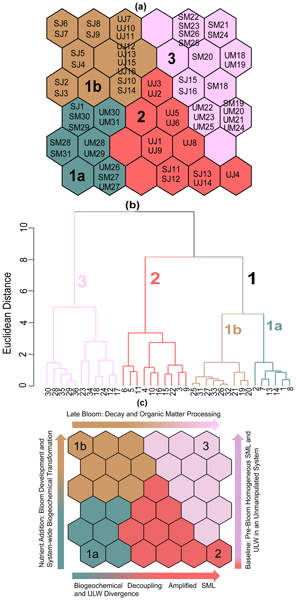
Riaz Bibi, Mariana Ribas-Ribas, Leonie Jaeger, Carola Lehners, Lisa Gassen, Edgar Fernando Cortés-Espinoza, Jochen Wollschläger, Claudia Thölen, Hannelore Waska, Jasper Zöbelein, Thorsten Brinkhoff, Isha Athale, Rüdiger Röttgers, Michael Novak, Anja Engel, Theresa Barthelmeß, Josefine Karnatz, Thomas Reinthaler, Dmytro Spriahailo, Gernot Friedrichs, Falko Asmussen Schäfer, and Oliver Wurl
Biogeosciences, 22, 7563–7589, https://doi.org/10.5194/bg-22-7563-2025, https://doi.org/10.5194/bg-22-7563-2025, 2025
Short summary
Short summary
A multidisciplinary mesocosm study was conducted to investigate biogeochemical processes and their relationships in the sea-surface microlayer and underlying water during an induced phytoplankton bloom. Phytoplankton-derived organic matter, fuelled microbial activity and biofilm formation, supporting high bacterial abundance. Distinct temporal patterns in biogeochemical parameters and greater variability in the sea-surface microlayer highlight its influence on air–sea interactions.
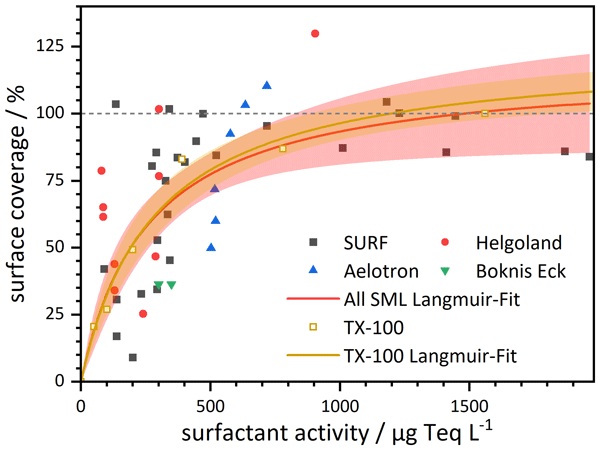
Falko Asmussen-Schäfer, Mariana Ribas-Ribas, Oliver Wurl, and Gernot Friedrichs
Biogeosciences, 23, 3159–3178, https://doi.org/10.5194/bg-23-3159-2026, https://doi.org/10.5194/bg-23-3159-2026, 2026
Short summary
Short summary
We developed an approach to quantify how molecules accumulate at the ocean surface on a nanometer scale. By combining laser spectroscopy with an electrochemical technique, we determined how densely these molecular films cover the water surface. Such single-molecule-thick layers can strongly affect gas transfer between the ocean and the atmosphere. Comparing our measurements with existing datasets allowed us to generate an initial global estimate of surfactant surface coverage potential.
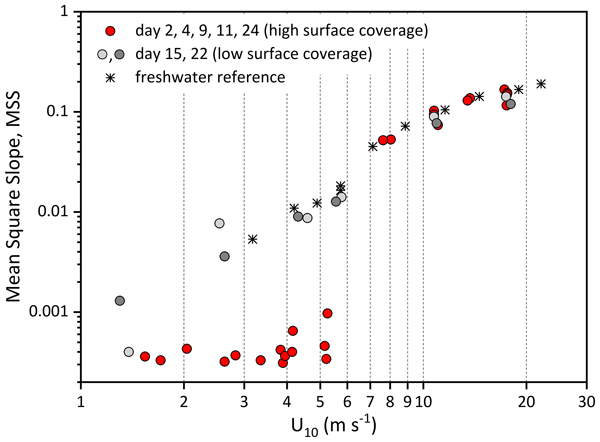
Anja Engel, Gernot Friedrichs, Kerstin E. Krall, and Bernd Jähne
Biogeosciences, 23, 2101–2117, https://doi.org/10.5194/bg-23-2101-2026, https://doi.org/10.5194/bg-23-2101-2026, 2026
Short summary
Short summary
We investigated how organic molecules in the ocean's surface layer accumulate and respond to wind. Using a large wind-wave tank filled with seawater, we found that natural molecules produced by marine microbes gather at the surface under light winds, slowing the exchange of gases such as carbon dioxide. When winds increase, this layer rapidly breaks down. These findings suggest that marine life can influence how the ocean and atmosphere interact, particularly in calm conditions.

Carsten Rauch, Lisa Deyle, Leonie Jaeger, Edgar Fernando Cortés-Espinoza, Mariana Ribas-Ribas, Josefine Karnatz, Anja Engel, and Oliver Wurl
Ocean Sci., 22, 403–426, https://doi.org/10.5194/os-22-403-2026, https://doi.org/10.5194/os-22-403-2026, 2026
Short summary
Short summary
Microsensors measuring oxygen and temperature were used to gain high-resolution profiles across the surface of a water basin, in which an algal bloom was induced. These novel data show that the oxygen at the sea surface is highly influenced by algal blooms, while the temperature is only indirectly affected by them. Since algal blooms occur globally, this has considerable implications for calculating global air-sea exchanges of gases or heat, especially under low-wind conditions.
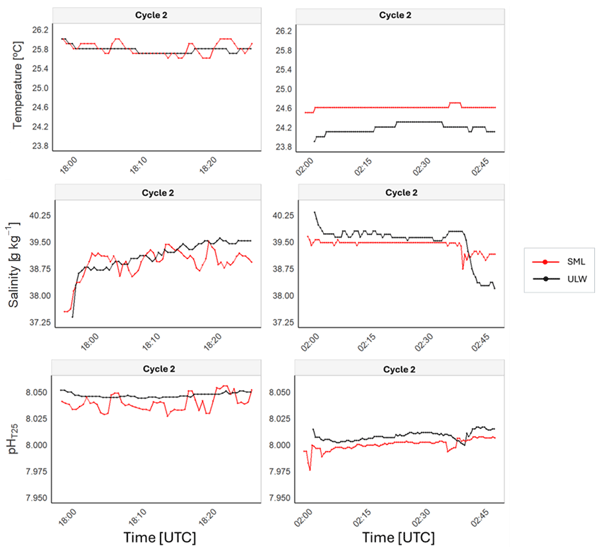
Ander López-Puertas, Oliver Wurl, Sanja Frka, and Mariana Ribas-Ribas
Ocean Sci., 21, 3471–3485, https://doi.org/10.5194/os-21-3471-2025, https://doi.org/10.5194/os-21-3471-2025, 2025
Short summary
Short summary
We studied how daily cycles affect inorganic carbon variables in the ocean's surface microlayer. Using data from three full days and nights off the Croatian coast, we found that thermohaline properties and key indicators like pH and pCO₂ change significantly from day to night. Ignoring nighttime conditions may lead to global carbon budget errors and highlights the need for continuous ocean observations.
Riaz Bibi, Mariana Ribas-Ribas, Leonie Jaeger, Carola Lehners, Lisa Gassen, Edgar Fernando Cortés-Espinoza, Jochen Wollschläger, Claudia Thölen, Hannelore Waska, Jasper Zöbelein, Thorsten Brinkhoff, Isha Athale, Rüdiger Röttgers, Michael Novak, Anja Engel, Theresa Barthelmeß, Josefine Karnatz, Thomas Reinthaler, Dmytro Spriahailo, Gernot Friedrichs, Falko Asmussen Schäfer, and Oliver Wurl
Biogeosciences, 22, 7563–7589, https://doi.org/10.5194/bg-22-7563-2025, https://doi.org/10.5194/bg-22-7563-2025, 2025
Short summary
Short summary
A multidisciplinary mesocosm study was conducted to investigate biogeochemical processes and their relationships in the sea-surface microlayer and underlying water during an induced phytoplankton bloom. Phytoplankton-derived organic matter, fuelled microbial activity and biofilm formation, supporting high bacterial abundance. Distinct temporal patterns in biogeochemical parameters and greater variability in the sea-surface microlayer highlight its influence on air–sea interactions.
Edgar Fernando Cortés-Espinoza, Alisa Wüst, Ander Lopéz-Puertas, Oliver Wurl, José Martín Hernández-Ayón, Hannelore Waska, and Mariana Ribas-Ribas
EGUsphere, https://doi.org/10.5194/egusphere-2025-5265, https://doi.org/10.5194/egusphere-2025-5265, 2025
Short summary
Short summary
In a mesocosm experiment, we measured carbon system variables to examine how organic matter accumulation increases organic alkalinity and alters seawater pH in the sea-surface microlayer and underlying water during an induced phytoplankton bloom. Organic alkalinity was consistently higher in the sea-surface microlayer, and during bloom peak its pH effect extended into the underlying water, reducing and sometimes reversing surface–subsurface pH differences.
Lisa Gassen, Samuel M. Ayim, Leonie Jaeger, Jens Meyerjürgens, Mariana Ribas-Ribas, and Oliver Wurl
Ocean Sci., 21, 2787–2804, https://doi.org/10.5194/os-21-2787-2025, https://doi.org/10.5194/os-21-2787-2025, 2025
Short summary
Short summary
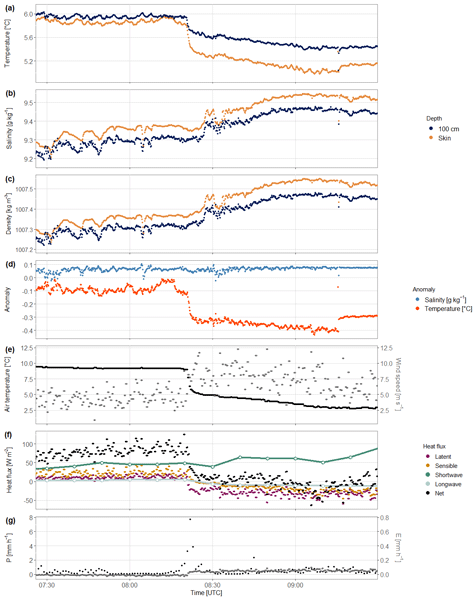
This study investigates how abrupt weather changes, such as shifts in air temperature, wind speed and precipitation, impact temperature and salinity in the ocean’s skin layer (upper first millimetre). Two events in the harbour of Bremerhaven and one event in the North Sea revealed that the skin layer reacts instantly, with greater temperature changes than those at a depth of 100 cm, underscoring its key role in air-sea interactions and climate dynamics.
Damian L. Arévalo-Martínez, Amir Haroon, Hermann W. Bange, Ercan Erkul, Marion Jegen, Nils Moosdorf, Jens Schneider von Deimling, Christian Berndt, Michael Ernst Böttcher, Jasper Hoffmann, Volker Liebetrau, Ulf Mallast, Gudrun Massmann, Aaron Micallef, Holly A. Michael, Hendrik Paasche, Wolfgang Rabbel, Isaac Santos, Jan Scholten, Katrin Schwalenberg, Beata Szymczycha, Ariel T. Thomas, Joonas J. Virtasalo, Hannelore Waska, and Bradley A. Weymer
Biogeosciences, 20, 647–662, https://doi.org/10.5194/bg-20-647-2023, https://doi.org/10.5194/bg-20-647-2023, 2023
Short summary
Short summary
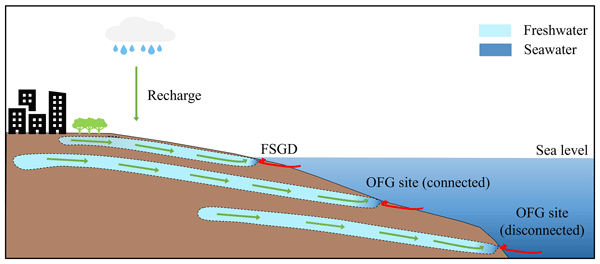
Groundwater flows at the land–ocean transition and the extent of freshened groundwater below the seafloor are increasingly relevant in marine sciences, both because they are a highly uncertain term of biogeochemical budgets and due to the emerging interest in the latter as a resource. Here, we discuss our perspectives on future research directions to better understand land–ocean connectivity through groundwater and its potential responses to natural and human-induced environmental changes.
Cited articles
Abdulla, H. A. N., Minor, E. C., Dias, R. F., and Hatcher, P. G.: Changes in the compound classes of dissolved organic matter along an estuarine transect: A study using FTIR and 13C NMR, Geochim. Cosmochim. Ac., 74, 3815–3838, https://doi.org/10.1016/j.gca.2010.04.006, 2010.
Allard, B., Borén, H., Pettersson, C., and Zhang, G.: Degradation of humic substances by UV irradiation, Environ. Int., 20, 97–101, https://doi.org/10.1016/0160-4120(94)90072-8, 1994.
Aluwihare, L. I., Repeta, D. J., and Chen, R. F.: A major biopolymeric component to dissolved organic carbon in surface sea water, Nature, 387, 166–169, https://doi.org/10.1038/387166a0, 1997.
Artz, R. R. E., Chapman, S. J., Jean Robertson, A. H., Potts, J. M., Laggoun-Défarge, F., Gogo, S., Comont, L., Disnar, J.-R., and Francez, A.-J.: FTIR spectroscopy can be used as a screening tool for organic matter quality in regenerating cutover peatlands, Soil Biol. Biochem., 40, 515–527, https://doi.org/10.1016/j.soilbio.2007.09.019, 2008.
Asmussen-Schäfer, F., Ribas-Ribas, M., Wurl, O., and Friedrichs, G.: Linking surface coverage with surfactant activity to refine the role of surfactants for air-sea gas exchange, Biogeosciences, 23, 3159–3178, https://doi.org/10.5194/bg-23-3159-2026, 2026.
Badr, E.-S. A., Achterberg, E. P., Tappin, A. D., Hill, S. J., and Braungardt, C. B.: Determination of dissolved organic nitrogen in natural waters using high-temperature catalytic oxidation, TrAC-Trend. Anal. Chem., 22, 819–827, https://doi.org/10.1016/S0165-9936(03)01202-0, 2003.
Bahr, U., Pfenninger, A., Karas, M., and Stahl, B.: High-Sensitivity Analysis of Neutral Underivatized Oligosaccharides by Nanoelectrospray Mass Spectrometry, Anal. Chem., 69, 4530–4535, https://doi.org/10.1021/ac970624w, 1997.
Balch, W. M., Holligan, P. M., and Kilpatrick, K. A.: Calcification, photosynthesis and growth of the bloom-forming coccolithophore, Emiliania huxleyi, Cont. Shelf Res., 12, 1353–1374, https://doi.org/10.1016/0278-4343(92)90059-S, 1992.
Barthelmeß, T. and Engel, A.: How biogenic polymers control surfactant dynamics in the surface microlayer: insights from a coastal Baltic Sea study, Biogeosciences, 19, 4965–4992, https://doi.org/10.5194/bg-19-4965-2022, 2022.
Becker, S., Tebben, J., Coffinet, S., Wiltshire, K., Iversen, M. H., Harder, T., Hinrichs, K.-U., and Hehemann, J.-H.: Laminarin is a major molecule in the marine carbon cycle, P. Natl. Acad. Sci. USA, 117, 6599–6607, https://doi.org/10.1073/pnas.1917001117, 2020.
Bercovici, S. K., Dittmar, T., and Niggemann, J.: Processes in the Surface Ocean Regulate Dissolved Organic Matter Distributions in the Deep, Global Biogeochem. Cy., 37, e2023GB007740, https://doi.org/10.1029/2023GB007740, 2023.
Bergmann, D., Matarrita-Rodríguez, J., and Abdulla, H.: Toward a More Comprehensive Approach for Dissolved Organic Matter Chemical Characterization Using an Orbitrap Fusion Tribrid Mass Spectrometer Coupled with Ion and Liquid Chromatography Techniques, Anal. Chem., 96, 3744–3753, https://doi.org/10.1021/acs.analchem.3c02599, 2024.
Bibi, R., Ribas-Ribas, M., Jaeger, L., Lehners, C., Gassen, L., Cortés-Espinoza, E. F., Wollschläger, J., Thölen, C., Waska, H., Zöbelein, J., Brinkhoff, T., Athale, I., Röttgers, R., Novak, M., Engel, A., Barthelmeß, T., Karnatz, J., Reinthaler, T., Spriahailo, D., Friedrichs, G., Schäfer, F. A., and Wurl, O.: Biogeochemical dynamics of the sea-surface microlayer in a multidisciplinary mesocosm study, Biogeosciences, 22, 7563–7589, https://doi.org/10.5194/bg-22-7563-2025, 2025a.
Bibi, R., Ribas-Ribas, M., Jaeger, L., Lehners, C., Gassen, L., Cortés-Espinoza, E. F., Wollschläger, J., Thölen, C., Waska, H., Zöbelein, J., Brinkhoff, T., Athale, I., Röttgers, R., Novak, M., Engel, A., Barthelmeß, T., Karnatz, J., Reinthaler, T., Spriahailo, D., Friedrichs, G., Schäfer, F., and Wurl, O.: Physical, chemical, and biogeochemical parameters from a mesocosm experiment at the Sea Surface Facility (SURF), Wilhelmshaven, Germany, spring 2023, PANGAEA [data set bundled publication], https://doi.org/10.1594/PANGAEA.984101, 2025b.
Biersmith, A. and Benner, R.: Carbohydrates in phytoplankton and freshly produced dissolved organic matter, Mar. Chem., 63, 131–144, https://doi.org/10.1016/S0304-4203(98)00057-7, 1998.
Böttcher, M. E., Oelschläger, B., Höpner, T., Brumsack, H.-J., and Rullkötter, J.: Sulfate reduction related to the early diagenetic degradation of organic matter and “black spot” formation in tidal sandflats of the German Wadden Sea (southern North Sea): stable isotope (13C, 34S, 18O) and other geochemical results, Org. Geochem., 29, 1517–1530, https://doi.org/10.1016/S0146-6380(98)00124-7, 1998.
Carlson, D. J.: A field evaluation of plate and screen microlayer sampling techniques, Mar. Chem., 11, 189–208, https://doi.org/10.1016/0304-4203(82)90015-9, 1982.
Carlson, D. J.: The Early Diagenesis of Organic Matter: Reaction at the Air-Sea Interface, in: Org. Geochem., vol. 11, edited by: Engel, M. H. and Macko, S. A., Springer US, Boston, MA, 255–268, https://doi.org/10.1007/978-1-4615-2890-6_12, 1993.
Carlson, D. J. and Mayer, L. M.: Enrichment of dissolved phenolic material in the surface microlayer of coastal waters, Nature, 286, 482–483, https://doi.org/10.1038/286482a0, 1980.
Celi, L., Schnitzer, M., and Nègre, M.: Analysis of Carboxyl Groups in Soil Humic Acids by a Wet Chemical Method, Fourier Transform Infrared Spectrophotometry, and Solution-State Carbon-13 Nuclear Magnetic Resonance: A Comparative Study, Soil Science, 162, 189–197, https://doi.org/10.1097/00010694-199703000-00004, 1997.
Chavez, F. P., Messié, M., and Pennington, J. T.: Marine Primary Production in Relation to Climate Variability and Change, Annu. Rev. Mar. Sci., 3, 227–260, https://doi.org/10.1146/annurev.marine.010908.163917, 2011.
Chin, W.-C., Orellana, M. V., and Verdugo, P.: Spontaneous assembly of marine dissolved organic matter into polymer gels, Nature, 391, 568–572, https://doi.org/10.1038/35345, 1998.
Coffey, N. R., Agblemanyo, F. E., McKenna, A. M., and Wozniak, A. S.: Unsaturated aliphatic and sulfur-containing organic matter as surfactants in the surface microlayer, Mar. Chem., 272, 104547, https://doi.org/10.1016/j.marchem.2025.104547, 2025.
Corzo, A., Morillo, J. A., and Rodríguez, S.: Production of transparent exopolymer particles (TEP) in cultures of Chaetoceros calcitrans under nitrogen limitation, Aquat. Microb. Ecol., 23, 63–72, https://doi.org/10.3354/ame023063, 2000.
Croot, P. L., Passow, U., Assmy, P., Jansen, S., and Strass, V. H.: Surface active substances in the upper water column during a Southern Ocean Iron Fertilization Experiment (EIFEX), Geophys. Res. Lett., 34, https://doi.org/10.1029/2006GL028080, 2007.
Cunliffe, M. and Murrell, J. C.: The sea-surface microlayer is a gelatinous biofilm, ISME J., 3, 1001–1003, https://doi.org/10.1038/ismej.2009.69, 2009.
Cunliffe, M. and Wurl, Oliver: Guide to best practices to study the ocean's surface, Occasional Publications of the Marine Biological Association of the United Kingdom for SCOR, Plymouth, UK, 118 pp., https://doi.org/10.25607/OBP-1512, 2014.
Cunliffe, M., Engel, A., Frka, S., Gašparović, B., Guitart, C., Murrell, J. C., Salter, M., Stolle, C., Upstill-Goddard, R., and Wurl, O.: Sea surface microlayers: A unified physicochemical and biological perspective of the air–ocean interface, Prog. Oceanogr., 109, 104–116, https://doi.org/10.1016/j.pocean.2012.08.004, 2013.
D'Andrilli, J., Cooper, W. T., Foreman, C. M., and Marshall, A. G.: An ultrahigh-resolution mass spectrometry index to estimate natural organic matter lability, Rapid Commun. Mass Sp., 29, 2385–2401, https://doi.org/10.1002/rcm.7400, 2015.
D'Andrilli, J., Junker, J. R., Smith, H. J., Scholl, E. A., and Foreman, C. M.: DOM composition alters ecosystem function during microbial processing of isolated sources, Biogeochemistry, 142, 281–298, https://doi.org/10.1007/s10533-018-00534-5, 2019.
de Vries, J., Poulton, A. J., Young, J. R., Monteiro, F. M., Sheward, R. M., Johnson, R., Hagino, K., Ziveri, P., and Wolf, L. J.: CASCADE: Dataset of extant coccolithophore size, carbon content and global distribution, Sci. Data, 11, 920, https://doi.org/10.1038/s41597-024-03724-z, 2024.
Dittmar, T., Koch, B., Hertkorn, N., and Kattner, G.: A simple and efficient method for the solid-phase extraction of dissolved organic matter (SPE-DOM) from seawater, Limnol. Oceanogr.-Meth., 6, 230–235, https://doi.org/10.4319/lom.2008.6.230, 2008.
Dring, M. J., Wagner, A., Franklin, L. A., Kuhlenkamp, R., and Lüning, K.: Seasonal and diurnal variations in ultraviolet-B and ultraviolet-A irradiances at and below the sea surface at Helgoland (North Sea) over a 6-year period, Helgol. Mar. Res., 55, 3–11, https://doi.org/10.1007/s101520000063, 2001.
Duan, J., Sontarp, E. J., and Myneni, S. C. B.: Detecting Structural Environments of Carboxyl Groups in Dissolved Natural Organic Molecules, ACS EST Water, 4, 555–563, https://doi.org/10.1021/acsestwater.3c00609, 2024.
Elliott, S., Burrows, S., Cameron-Smith, P., Hoffman, F., Hunke, E., Jeffery, N., Liu, Y., Maltrud, M., Menzo, Z., Ogunro, O., Van Roekel, L., Wang, S., Brunke, M., Jin, M., Letscher, R., Meskhidze, N., Russell, L., Simpson, I., Stokes, D., and Wingenter, O.: Does Marine Surface Tension Have Global Biogeography? Addition for the OCEANFILMS Package, Atmosphere, 9, 216, https://doi.org/10.3390/atmos9060216, 2018.
Ellison, G. B., Tuck, A. F., and Vaida, V.: Atmospheric processing of organic aerosols, J. Geophys. Res.-Atmos., 104, 11633–11641, https://doi.org/10.1029/1999JD900073, 1999.
Engel, A. and Passow, U.: Carbon and nitrogen content of transparent exopolymer particles (TEP) in relation to their Alcian Blue adsorption, Mar. Ecol. Prog. Ser., 219, 1–10, https://doi.org/10.3354/meps219001, 2001.
Engel, A., Delille, B., Jacquet, S., Riebesell, U., Rochelle-Newall, E., Terbrüggen, A., and Zondervan, I.: Transparent exopolymer particles and dissolved organic carbon production by Emiliania huxleyi exposed to different CO2 concentrations: a mesocosm experiment, Aquat. Microb. Ecol., 34, 93–104, https://doi.org/10.3354/ame034093, 2004.
Engel, A., Bange, H. W., Cunliffe, M., Burrows, S. M., Friedrichs, G., Galgani, L., Herrmann, H., Hertkorn, N., Johnson, M., Liss, P. S., Quinn, P. K., Schartau, M., Soloviev, A., Stolle, C., Upstill-Goddard, R. C., van Pinxteren, M., and Zäncker, B.: The Ocean's Vital Skin: Toward an Integrated Understanding of the Sea Surface Microlayer, Front. Mar. Sci., 4, https://doi.org/10.3389/fmars.2017.00165, 2017.
Flerus, R., Lechtenfeld, O. J., Koch, B. P., McCallister, S. L., Schmitt-Kopplin, P., Benner, R., Kaiser, K., and Kattner, G.: A molecular perspective on the ageing of marine dissolved organic matter, Biogeosciences, 9, 1935–1955, https://doi.org/10.5194/bg-9-1935-2012, 2012.
Frew, N. M., Nelson, R. K., and Johnson, C. G.: Sea slicks: variability in chemical composition and surface elasticity, in: Marine Surface Films: Chemical Characteristics, Influence on Air-Sea Interactions and Remote Sensing, edited by: Gade, M., Hühnerfuss, H., and Korenowski, G. M., Springer, Berlin, Heidelberg, 45–56, https://doi.org/10.1007/3-540-33271-5_6, 2006.
Gašparović, B., Ćosović, B., and Vojvodić, V.: Contribution of organic acids to the pool of surface active substances in model and marine samples using o-nitrophenol as an electrochemical probe, Org. Geochem., 29, 1025–1032, https://doi.org/10.1016/S0146-6380(98)00055-2, 1998a.
Gašparović, B., Vojvodić, V., and Ćosović, B.: Excretion of Organic Matter during an Experimental Phytoplankton Bloom Followed Using o-Nitrophenol as an Electrochemical Probe, Croat. Chem. Acta, 71, 271–284, 1998b.
Gašparović, B., Kozarac, Z., Saliot, A., Ćosović, B., and Möbius, D.: Physicochemical Characterization of Natural andex-SituReconstructed Sea-Surface Microlayers, J. Colloid Interf. Sci., 208, 191–202, https://doi.org/10.1006/jcis.1998.5792, 1998c.
Goes, J. I., Handa, N., Taguchi, S., Hama, T., and Saito, H.: Metabolism of neutral monosaccharide constituents of storage and structural carbohydrates in natural assemblages of marine phytoplankton exposed to ultraviolet radiation, Limnol. Oceanogr., 41, 1478–1489, https://doi.org/10.4319/lo.1996.41.7.1478, 1996.
Gonsior, M., Peake, B. M., Cooper, W. T., Podgorski, D., D'Andrilli, J., and Cooper, W. J.: Photochemically Induced Changes in Dissolved Organic Matter Identified by Ultrahigh Resolution Fourier Transform Ion Cyclotron Resonance Mass Spectrometry, Environ. Sci. Technol., 43, 698–703, https://doi.org/10.1021/es8022804, 2009.
Griffiths, P. R. and Haseth, J. A.: Fourier Transform Infrared Spectrometry, 2nd ed., Wiley, Hoboken, https://doi.org/10.1002/047010631X, 2007.
Grossart, H., Engel, A., Arnosti, C., De La Rocha, C., Murray, A., and Passow, U.: Microbial dynamics in autotrophic and heterotrophic seawater mesocosms. III. Organic matter fluxes, Aquat. Microb. Ecol., 49, 143–156, https://doi.org/10.3354/ame01140, 2007.
Hammer, K. and Kattner, G.: Dissolved free amino acids in the marine environment: a carbon to nitrogen ratio shift during diatom blooms, Mar. Ecol. Prog. Ser., 31, 35–45, https://doi.org/10.3354/meps031035, 1986.
He, W., Chen, M., Schlautman, M. A., and Hur, J.: Dynamic exchanges between DOM and POM pools in coastal and inland aquatic ecosystems: A review, Sci. Total Environ., 551–552, 415–428, https://doi.org/10.1016/j.scitotenv.2016.02.031, 2016.
Hertkorn, N., Ruecker, C., Meringer, M., Gugisch, R., Frommberger, M., Perdue, E. M., Witt, M., and Schmitt-Kopplin, P.: High-precision frequency measurements: indispensable tools at the core of the molecular-level analysis of complex systems, Anal. Bioanal. Chem., 389, 1311–1327, https://doi.org/10.1007/s00216-007-1577-4, 2007.
Hunter, K. A. and Liss, P. S.: Chapter 9 Organic Sea Surface Films, in: Elsevier Oceanography Series, vol. 31, edited by: Duursma, E. K. and Dawson, R., Elsevier, 259–298, https://doi.org/10.1016/S0422-9894(08)70331-3, 1981.
Ittekkot, V., Brockmann, U., Michaelis, W., and Degens, E. T.: Dissolved Free and Combined Carbohydrates During a Phytoplankton Bloom in the Northern North Sea, Mar. Ecol. Prog. Ser., 4, 299–305, 1981.
Jacoby, W. G.: Loess:: a nonparametric, graphical tool for depicting relationships between variables, Elect. Stud., 19, 577–613, https://doi.org/10.1016/S0261-3794(99)00028-1, 2000.
Jibaja Valderrama, O., Scheres Firak, D., Schaefer, T., van Pinxteren, M., Fomba, K. W., and Herrmann, H.: Photochemistry of the sea-surface microlayer (SML) influenced by a phytoplankton bloom: a mesocosm study, Biogeosciences, 23, 1965–1985, https://doi.org/10.5194/bg-23-1965-2026, 2026.
Kepkay, P., Jellett, J., and Niven, S.: Respiration and the carbon-to-nitrogen ratio of a phytoplankton bloom, Mar. Ecol. Prog. Ser., 150, 249–261, https://doi.org/10.3354/meps150249, 1997.
Kim, D. H., Kim, D. H., Lee, S.-H., and Kim, K. H.: A novel β-glucosidase from Saccharophagus degradans 2–40T for the efficient hydrolysis of laminarin from brown macroalgae, Biotechnology for Biofuels, 11, 64, https://doi.org/10.1186/s13068-018-1059-2, 2018.
Kitaoka, M., Matsuoka, Y., Mori, K., Nishimoto, M., and Hayashi, K.: Characterization of a Bacterial Laminaribiose Phosphorylase, Biosci. Biotech. Bioch., 76, 343–348, https://doi.org/10.1271/bbb.110772, 2012.
Koch, B. P. and Dittmar, T.: From mass to structure: an aromaticity index for high-resolution mass data of natural organic matter, Rapid Comm. Mass Sp., 20, 926–932, https://doi.org/10.1002/rcm.2386, 2006.
Koch, B. P., Dittmar, T., Witt, M., and Kattner, G.: Fundamentals of Molecular Formula Assignment to Ultrahigh Resolution Mass Data of Natural Organic Matter, Anal. Chem., 79, 1758–1763, https://doi.org/10.1021/ac061949s, 2007.
Koch, B. P., Ludwichowski, K.-U., Kattner, G., Dittmar, T., and Witt, M.: Advanced characterization of marine dissolved organic matter by combining reversed-phase liquid chromatography and FT-ICR-MS, Mar. Chem., 111, 233–241, https://doi.org/10.1016/j.marchem.2008.05.008, 2008.
Koch, B. P., Kattner, G., Witt, M., and Passow, U.: Molecular insights into the microbial formation of marine dissolved organic matter: recalcitrant or labile?, Biogeosciences, 11, 4173–4190, https://doi.org/10.5194/bg-11-4173-2014, 2014.
Konermann, L. and Douglas, D. J.: Unfolding of proteins monitored by electrospray ionization mass spectrometry: a comparison of positive and negative ion modes, J. Am. Soc. Mass Spectrom., 9, 1248–1254, https://doi.org/10.1016/S1044-0305(98)00103-2, 1998.
Kumagai, Y., Satoh, T., Inoue, A., and Ojima, T.: A laminaribiose-hydrolyzing enzyme, AkLab, from the common sea hare Aplysia kurodai and its transglycosylation activity, Comp. Biochem. Phys. B, 167, 1–7, https://doi.org/10.1016/j.cbpb.2013.07.008, 2014.
Laß, K. and Friedrichs, G.: Revealing structural properties of the marine nanolayer from vibrational sum frequency generation spectra, J. Geophys. Res.-Oceans, 116, https://doi.org/10.1029/2010JC006609, 2011.
Laß, K., Bange, H. W., and Friedrichs, G.: Seasonal signatures in SFG vibrational spectra of the sea surface nanolayer at Boknis Eck Time Series Station (SW Baltic Sea), Biogeosciences, 10, 5325–5334, https://doi.org/10.5194/bg-10-5325-2013, 2013.
Lavaud, J., Rousseau, B., and Etienne, A.: General Features of Photoprotection by Energy Dissipation in Planktonic Diatoms (Bacillariophyceae), J. Phycol., 40, 130–137, https://doi.org/10.1046/j.1529-8817.2004.03026.x, 2004.
Lechtenfeld, O. J., Koch, B. P., Gašparović, B., Frka, S., Witt, M., and Kattner, G.: The influence of salinity on the molecular and optical properties of surface microlayers in a karstic estuary, Mar. Chem., 150, 25–38, https://doi.org/10.1016/j.marchem.2013.01.006, 2013.
Liss, P. S. and Duce, R. A. (Eds.): The Sea Surface and Global Change, Cambridge University Press, Cambridge, https://doi.org/10.1017/CBO9780511525025, 1997.
Logan, B. E., Passow, U., Alldredge, A. L., Grossartt, H.-P., and Simont, M.: Rapid formation and sedimentation of large aggregates is predictable from coagulation rates (half-lives) of transparent exopolymer particles (TEP), Deep-Sea Res. Pt. II, 42, 203–214, https://doi.org/10.1016/0967-0645(95)00012-F, 1995.
Malviya, S., Scalco, E., Audic, S., Vincent, F., Veluchamy, A., Poulain, J., Wincker, P., Iudicone, D., de Vargas, C., Bittner, L., Zingone, A., and Bowler, C.: Insights into global diatom distribution and diversity in the world's ocean, P. Natl. Acad. Sci. USA, 113, E1516–E1525, https://doi.org/10.1073/pnas.1509523113, 2016.
Mannino, A. and Harvey, H. R.: Biochemical Composition of Dissolved Organic Matter Released During Experimental Diatom Blooms, https://ntrs.nasa.gov/citations/20030020914 (last access: 15 July 2026), 1 January 2002.
Marty, J. C. and Saliot, A.: Hydrocarbons (normal alkanes) in the surface microlayer of seawater, Deep Sea Research and Oceanographic Abstracts, 23, 863–873, https://doi.org/10.1016/0011-7471(76)90853-6, 1976.
Maúre, E. D. R., Terauchi, G., Ishizaka, J., Clinton, N., and DeWitt, M.: Globally consistent assessment of coastal eutrophication, Nat. Commun., 12, 6142, https://doi.org/10.1038/s41467-021-26391-9, 2021.
Menschel, E., González, H. E., and Giesecke, R.: Coastal-oceanic distribution gradient of coccolithophores and their role in the carbonate flux of the upwelling system off Concepción, Chile (36° S), J. Plankton Res., 38, 798–817, https://doi.org/10.1093/plankt/fbw037, 2016.
Merder, J., Freund, J. A., Feudel, U., Hansen, C. T., Hawkes, J. A., Jacob, B., Klaproth, K., Niggemann, J., Noriega-Ortega, B. E., Osterholz, H., Rossel, P. E., Seidel, M., Singer, G., Stubbins, A., Waska, H., and Dittmar, T.: ICBM-OCEAN: Processing Ultrahigh-Resolution Mass Spectrometry Data of Complex Molecular Mixtures, Anal. Chem., 92, 6832–6838, https://doi.org/10.1021/acs.analchem.9b05659, 2020.
Miller, W. L. and Moran, M. A.: Interaction of photochemical and microbial processes in the degradation of refractory dissolved organic matter from a coastal marine environment, Limnol. Oceanogr., 42, 1317–1324, https://doi.org/10.4319/lo.1997.42.6.1317, 1997.
Minor, E. and Stephens, B.: Dissolved organic matter characteristics within the Lake Superior watershed, Org. Geochem., 39, 1489–1501, https://doi.org/10.1016/j.orggeochem.2008.08.001, 2008.
Minor, E. C., Swenson, M. M., Mattson, B. M., and Oyler, A. R.: Structural characterization of dissolved organic matter: a review of current techniques for isolation and analysis, Environ. Sci.: Processes Impacts, 16, 2064–2079, https://doi.org/10.1039/C4EM00062E, 2014.
Mopper, K., Zhou, J., Sri Ramana, K., Passow, U., Dam, H. G., and Drapeau, D. T.: The role of surface-active carbohydrates in the flocculation of a diatom bloom in a mesocosm, Deep-Sea Res. Pt. II, 42, 47–73, https://doi.org/10.1016/0967-0645(95)00004-A, 1995.
Moran, M. A. and Zepp, R. G.: Role of photoreactions in the formation of biologically labile compounds from dissolved organic matter, Limnol. Oceanogr., 42, 1307–1316, https://doi.org/10.4319/lo.1997.42.6.1307, 1997.
Moran, M. A., Sheldon, W. M., and Zepp, R. G.: Carbon loss and optical property changes during long-term photochemical and biological degradation of estuarine dissolved organic matter, Limnol. Oceanogr., 45, 1254–1264, https://doi.org/10.4319/lo.2000.45.6.1254, 2000.
Myklestad, S. M.: Release of extracellular products by phytoplankton with special emphasis on polysaccharides, Sci. Total Environ., 165, 155–164, https://doi.org/10.1016/0048-9697(95)04549-G, 1995.
Niggemann, J., Gerdts, G., and Dittmar, T.: Geo-metabolomics A key for understanding function and reactivity of dissolved organic matter, in: EPIC3Goldschmidt Conference 2011, Prague., Goldschmidt Conference 2011, Prague, https://epic.awi.de/id/eprint/24847/ (last access: 15 July 2026), 2011.
Nišavić, M., Hozić, A., Hameršak, Z., Radić, M., Butorac, A., Duvnjak, M., and Cindrić, M.: High-Efficiency Microflow and Nanoflow Negative Electrospray Ionization of Peptides Induced by Gas-Phase Proton Transfer Reactions, Anal. Chem., 89, 4847–4854, https://doi.org/10.1021/acs.analchem.6b04466, 2017.
Ortega-Retuerta, E., Passow, U., Duarte, C. M., and Reche, I.: Effects of ultraviolet B radiation on (not so) transparent exopolymer particles, Biogeosciences, 6, 3071–3080, https://doi.org/10.5194/bg-6-3071-2009, 2009.
Pärnpuu, S., Astover, A., Tõnutare, T., Penu, P., and Kauer, K.: Soil organic matter qualification with FTIR spectroscopy under different soil types in Estonia, Geoderma Regional, 28, e00483, https://doi.org/10.1016/j.geodrs.2022.e00483, 2022.
Passow, U.: Formation of transparent exopolymer particles, TEP, from dissolved precursor material, Mar. Ecol. Prog. Ser., 192, 1–11, https://doi.org/10.3354/meps192001, 2000.
Passow, U.: Transparent exopolymer particles (TEP) in aquatic environments, Prog. Oceanogr., 55, 287–333, https://doi.org/10.1016/S0079-6611(02)00138-6, 2002.
Passow, U. and Engel, A.: The Role of Transparent Exopolymer Particles (TEP) in determining C:N ratios of particulate matter, ASLO Aquatic Sciences Meeting 2001, https://oceanrep.geomar.de/id/eprint/12321 (last access: 15 July 2026), 2001.
Passow, U., Alldredge, A. L., and Logan, B. E.: The role of particulate carbohydrate exudates in the flocculation of diatom blooms, Deep-Sea Res. Pt. I, 41, 335–357, https://doi.org/10.1016/0967-0637(94)90007-8, 1994.
Penna, A.: Influence of nutrient ratios on the in vitro extracellular polysaccharide production by marine diatoms from the Adriatic Sea, J. Plankton Res., 21, 1681–1690, https://doi.org/10.1093/plankt/21.9.1681, 1999.
Petras, D., Koester, I., Da Silva, R., Stephens, B. M., Haas, A. F., Nelson, C. E., Kelly, L. W., Aluwihare, L. I., and Dorrestein, P. C.: High-Resolution Liquid Chromatography Tandem Mass Spectrometry Enables Large Scale Molecular Characterization of Dissolved Organic Matter, Front. Mar. Sci., 4, https://doi.org/10.3389/fmars.2017.00405, 2017.
Poulton, A. J., Adey, T. R., Balch, W. M., and Holligan, P. M.: Relating coccolithophore calcification rates to phytoplankton community dynamics: Regional differences and implications for carbon export, Deep-Sea Res. Pt. II, 54, 538–557, https://doi.org/10.1016/j.dsr2.2006.12.003, 2007.
Raeke, J., Lechtenfeld, O. J., Wagner, M., Herzsprung, P., and Reemtsma, T.: Selectivity of solid phase extraction of freshwater dissolved organic matter and its effect on ultrahigh resolution mass spectra, Environ. Sci.: Processes Impacts, 18, 918–927, https://doi.org/10.1039/C6EM00200E, 2016.
Ribas-Ribas, M., Mustaffa, N. I. H., Rahlff, J., Stolle, C., and Wurl, O.: Sea surface scanner (S3): A catamaran for high-resolution measurements of biogeochemical properties of the sea surface microlayer, J. Atmos. Ocean. Tech., 34, 1433–1448, https://doi.org/10.1175/JTECH-D-17-0017.1, 2017.
Rickard, P. C., Uher, G., Upstill-Goddard, R. C., Frka, S., Mustaffa, N. I. H., Banko-Kubis, H. M., Cvitešić Kušan, A., Gašparović, B., Stolle, C., Wurl, O., and Ribas-Ribas, M.: Reconsideration of seawater surfactant activity analysis based on an inter-laboratory comparison study, Mar. Chem., 208, 103–111, https://doi.org/10.1016/j.marchem.2018.11.012, 2019.
Sadat, A. and Joye, I. J.: Peak Fitting Applied to Fourier Transform Infrared and Raman Spectroscopic Analysis of Proteins, Applied Sciences, 10, 5918, https://doi.org/10.3390/app10175918, 2020.
Schmitt-Kopplin, P., Liger-Belair, G., Koch, B. P., Flerus, R., Kattner, G., Harir, M., Kanawati, B., Lucio, M., Tziotis, D., Hertkorn, N., and Gebefügi, I.: Dissolved organic matter in sea spray: a transfer study from marine surface water to aerosols, Biogeosciences, 9, 1571–1582, https://doi.org/10.5194/bg-9-1571-2012, 2012.
Schnetger, B. and Lehners, C.: Determination of nitrate plus nitrite in small volume marine water samples using vanadium(III)chloride as a reduction agent, Mar. Chem/, 160, 91–98, https://doi.org/10.1016/j.marchem.2014.01.010, 2014.
Scholz, B., Rúa, A., and Liebezeit, G.: Effects of UV radiation on five marine microphytobenthic Wadden sea diatoms, isolated from the Solthörn tidal flat (Lower Saxony, southern North Sea) – Part II: changes in carbohydrate, amino acid and fatty acid composition, European J. Phycol., 49, 97–114, https://doi.org/10.1080/09670262.2014.893589, 2014.
Seidel, M., Beck, M., Riedel, T., Waska, H., Suryaputra, I. G. N. A., Schnetger, B., Niggemann, J., Simon, M., and Dittmar, T.: Biogeochemistry of dissolved organic matter in an anoxic intertidal creek bank, Geochim. Cosmochim. Ac., 140, 418–434, https://doi.org/10.1016/j.gca.2014.05.038, 2014.
Seidel, M., Beck, M., Greskowiak, J., Riedel, T., Waska, H., Suryaputra, Ig. N. A., Schnetger, B., Niggemann, J., Simon, M., and Dittmar, T.: Benthic-pelagic coupling of nutrients and dissolved organic matter composition in an intertidal sandy beach, Mar. Chem., 176, 150–163, https://doi.org/10.1016/j.marchem.2015.08.011, 2015.
Seidel, M., Manecki, M., Herlemann, D. P. R., Deutsch, B., Schulz-Bull, D., Jürgens, K., and Dittmar, T.: Composition and Transformation of Dissolved Organic Matter in the Baltic Sea, Front. Earth Sci., 5, https://doi.org/10.3389/feart.2017.00031, 2017.
Setschenow, J.: Über die Konstitution der Salzlösungen auf Grund ihres Verhaltens zu Kohlensäure, Zeitschrift für Physikalische Chemie, 4U, 117–125, https://doi.org/10.1515/zpch-1889-0409, 1889.
Silva, A., Nikzad, S., Barthelmeß, T., Engel, A., Herrmann, H., van Pinxteren, M., Wirtz, K., Wurl, O., and Schartau, M.: Meta-analytical insights into organic matter enrichment in the surface microlayer, Biogeosciences, 23, 1697–1718, https://doi.org/10.5194/bg-23-1697-2026, 2026.
Socrates, G.: Infrared and Raman Characteristic Group Frequencies: Tables and Charts, 3rd ed., John Wiley & Sons, Chichester, ISBN 978-0-470-09307-8, 2004.
Soong, J. L., Calderón, F. J., Betzen, J., and Cotrufo, M. F.: Quantification and FTIR characterization of dissolved organic carbon and total dissolved nitrogen leached from litter: a comparison of methods across litter types, Plant Soil, 385, 125–137, https://doi.org/10.1007/s11104-014-2232-4, 2014.
Stubbins, A. and Dittmar, T.: Illuminating the deep: Molecular signatures of photochemical alteration of dissolved organic matter from North Atlantic Deep Water, Mar. Chem., 177, 318–324, https://doi.org/10.1016/j.marchem.2015.06.020, 2015.
Stubbins, A., Spencer, R. G. M., Chen, H., Hatcher, P. G., Mopper, K., Hernes, P. J., Mwamba, V. L., Mangangu, A. M., Wabakanghanzi, J. N., and Six, J.: Illuminated darkness: Molecular signatures of Congo River dissolved organic matter and its photochemical alteration as revealed by ultrahigh precision mass spectrometry, Limnol. Oceanogr., 55, 1467–1477, https://doi.org/10.4319/lo.2010.55.4.1467, 2010.
Sugimura, Y. and Suzuki, Y.: A high-temperature catalytic oxidation method for the determination of non-volatile dissolved organic carbon in seawater by direct injection of a liquid sample, Mar. Chem., 24, 105–131, https://doi.org/10.1016/0304-4203(88)90043-6, 1988.
Thacker, J. B. and Schug, K. A.: Effects of solvent parameters on the electrospray ionization tandem mass spectrometry response of glucose, Rapid Comm. Mass Sp., 32, 1191–1198, https://doi.org/10.1002/rcm.8155, 2018.
Thornton, D. C. O.: Dissolved organic matter (DOM) release by phytoplankton in the contemporary and future ocean, European J. Phycol., 49, 20–46, https://doi.org/10.1080/09670262.2013.875596, 2014.
Underwood, G. J. C., Nilsson, C., Sundbäck, K., and Wulff, A.: Short-Term Effects of Uvb Radiation on Chlorophyll Fluorescence, Biomass, Pigments, and Carbohydrate Fractions in a Benthic Diatom Mat, J. Phycol., 35, 656–666, https://doi.org/10.1046/j.1529-8817.1999.3540656.x, 1999.
Van Den Meersche, K., Middelburg, J. J., Soetaert, K., Van Rijswijk, P., Boschker, H. T. S., and Heip, C. H. R.: Carbon-nitrogen coupling and algal-bacterial interactions during an experimental bloom: Modeling a 13C tracer experiment, Limnol. Oceanogr., 49, 862–878, https://doi.org/10.4319/lo.2004.49.3.0862, 2004.
Van Oostende, N., Moerdijk-Poortvliet, T. C. W., Boschker, H. T. S., Vyverman, W., and Sabbe, K.: Release of dissolved carbohydrates by Emiliania huxleyi and formation of transparent exopolymer particles depend on algal life cycle and bacterial activity, Environ Microbiol, 15, 1514–1531, https://doi.org/10.1111/j.1462-2920.2012.02873.x, 2013.
Wang, F.-Q., Bartosik, D., Sidhu, C., Siebers, R., Lu, D.-C., Trautwein-Schult, A., Becher, D., Huettel, B., Rick, J., Kirstein, I. V., Wiltshire, K. H., Schweder, T., Fuchs, B. M., Bengtsson, M. M., Teeling, H., and Amann, R. I.: Particle-attached bacteria act as gatekeepers in the decomposition of complex phytoplankton polysaccharides, Microbiome, 12, 32, https://doi.org/10.1186/s40168-024-01757-5, 2024.
Waska, H. and Banko-Kubis, H. M.: Dissolved organic matter released from beach wrack is source-specific and molecularly highly diverse, Biogeochemistry, 167, 1057–1078, https://doi.org/10.1007/s10533-024-01159-7, 2024.
Waska, H., Simon, H., Ahmerkamp, S., Greskowiak, J., Ahrens, J., Seibert, S. L., Schwalfenberg, K., Zielinski, O., and Dittmar, T.: Molecular Traits of Dissolved Organic Matter in the Subterranean Estuary of a High-Energy Beach: Indications of Sources and Sinks, Front. Mar. Sci., 8, 607083, https://doi.org/10.3389/fmars.2021.607083, 2021.
Weeks, A. R., Fasham, M. J. R., Aiken, J., Harbour, D. S., Read, J. F., and Bellan, I.: The spatial and temporal development of the spring bloom during the JGOFS North Atlantic Bloom Experiment, 1989, J. Mar. Biol. Assoc. UK, 73, 253–282, https://doi.org/10.1017/S0025315400032847, 1993.
Wood, A. M. and Van Valen, L. M.: Paradox lost on the release of energy rich compounds by phytoplankton, Marine Microbial Food Webs, 4, 103–116, 1990.
Wurl, O. and Holmes, M.: The gelatinous nature of the sea-surface microlayer, Mar. Chem., 110, 89–97, https://doi.org/10.1016/j.marchem.2008.02.009, 2008.
Wurl, O. and Obbard, J. P.: A review of pollutants in the sea-surface microlayer (SML): a unique habitat for marine organisms, Mar. Pollut. Bull., 48, 1016–1030, https://doi.org/10.1016/j.marpolbul.2004.03.016, 2004.
Wurl, O., Miller, L., Röttgers, R., and Vagle, S.: The distribution and fate of surface-active substances in the sea-surface microlayer and water column, Mar. Chem., 115, 1–9, https://doi.org/10.1016/J.MARCHEM.2009.04.007, 2009.
Wurl, O., Miller, L., and Vagle, S.: Production and fate of transparent exopolymer particles in the ocean, J. Geophys. Res., 116, https://doi.org/10.1029/2011jc007342, 2011.
Wurl, O., Ekau, W., Landing, W. M., and Zappa, C. J.: Sea surface microlayer in a changing ocean – A perspective, Elementa, 5, 31, https://doi.org/10.1525/elementa.228, 2017.
Wurl, O., Gassen, L., Badewien, T. H., Braun, A., Emig, S., Holthusen, L. A., Lehners, C., Meyerjürgens, J., and Ribas, M. R.: HALOBATES: An Autonomous Surface Vehicle for High-Resolution Mapping of the Sea Surface Microlayer and Near-Surface Layer on Essential Climate Variables, J. Atmos. Ocean. Tech., 41, 1197–1211, https://doi.org/10.1175/JTECH-D-24-0021.1, 2024.
Xie, W.-H., Shiu, W.-Y., and Mackay, D.: A review of the effect of salts on the solubility of organic compounds in seawater, Mar. Environ. Res., 44, 429–444, https://doi.org/10.1016/S0141-1136(97)00017-2, 1997.
Zark, M., Christoffers, J., and Dittmar, T.: Molecular properties of deep-sea dissolved organic matter are predictable by the central limit theorem: Evidence from tandem FT-ICR-MS, Mar. Chem., 191, 9–15, https://doi.org/10.1016/j.marchem.2017.02.005, 2017.
Zhou, J., Mopper, K., and Passow, U.: The role of surface-active carbohydrates in the formation of transparent exopolymer particles by bubble adsorption of seawater, Limnol. Oceanogr., 43, 1860–1871, https://doi.org/10.4319/lo.1998.43.8.1860, 1998.
Zöbelein, J., Sawle, S., Friedrichs, G., Ribas-Ribas, M., Lehners, C., Paetz, K., Pflaum, M., and Waska, H.: Dissolved organic matter composition in the sea surface microlayer during a Mesocosm study in Wilhelmshaven, Germany (FT-ICR-MS and ATR-FTIR), PANGAEA [data set bundled publication], https://doi.org/10.1594/PANGAEA.995053, 2026.
Ẑutić, V., Ćosović, B., Marčenko, E., Bihari, N., and Kršinić, F.: Surfactant production by marine phytoplankton, Mar. Chem., 10, 505–520, https://doi.org/10.1016/0304-4203(81)90004-9, 1981.
Short summary
The ocean is glazed with a one-millimetre biofilm that controls the flow of gases and energy from the atmosphere. To investigate how this film forms, we cultivated microscopic algae in a tank under controlled, windless conditions. Our results show that carbohydrates released by these algae rise to the surface, forming "carbo-slicks" that create a gel-like layer. This demonstrates that biological production is a key driver of the sea surface, which is crucial for understanding carbon exchange.
The ocean is glazed with a one-millimetre biofilm that controls the flow of gases and energy...


Special issue
Altmetrics
Final-revised paper
Preprint