
Articles | Volume 23, issue 2
https://doi.org/10.5194/bg-23-605-2026
© Author(s) 2026. This work is distributed under
the Creative Commons Attribution 4.0 License.
the Creative Commons Attribution 4.0 License.
https://doi.org/10.5194/bg-23-605-2026
© Author(s) 2026. This work is distributed under
the Creative Commons Attribution 4.0 License.
the Creative Commons Attribution 4.0 License.
Reviews and syntheses
| 
22 Jan 2026
Reviews and syntheses |
| 22 Jan 2026
| 22 Jan 2026
Reviews and syntheses: The role of process-based modeling of the CO2 : CH4 production ratio in predicting future terrestrial Arctic methane emissions

Department of Earth System Sciences, Universität Hamburg, 20146, Hamburg, Germany
Lara Kaiser
Department of Earth System Sciences, Universität Hamburg, 20146, Hamburg, Germany
Victor Brovkin
Max Planck Institute for Meteorology, 20146, Hamburg, Germany
Center for Earth System Research and Sustainability, Universität Hamburg, 20146, Hamburg, Germany
Christian Beer
Department of Earth System Sciences, Universität Hamburg, 20146, Hamburg, Germany
Center for Earth System Research and Sustainability, Universität Hamburg, 20146, Hamburg, Germany
Related authors
No articles found.
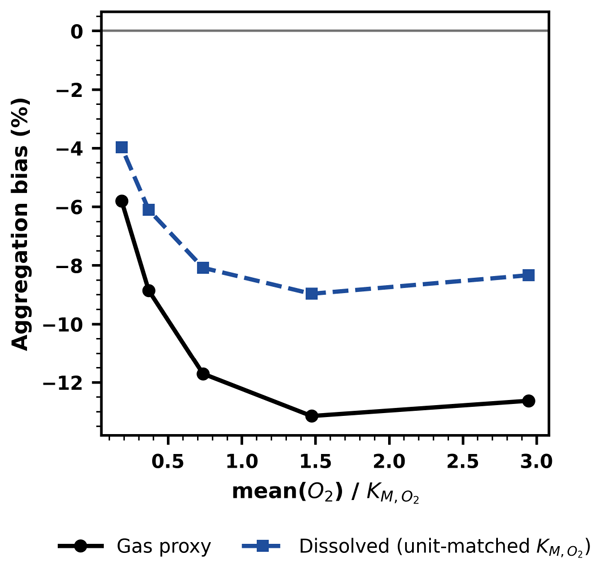
Youssef Saadaoui, Christian Beer, Peter Mueller, Friederike Neiske, Joscha N. Becker, Annette Eschenbach, and Philipp Porada
Biogeosciences, 23, 6803–6816, https://doi.org/10.5194/bg-23-6803-2026, https://doi.org/10.5194/bg-23-6803-2026, 2026
Short summary
Short summary
In marsh soils, oxygen concentrations are high close to plant roots and decline to near zero within millimetres. Microorganisms do not decompose organic matter in proportion to oxygen. Many models nevertheless use a single average oxygen concentration. Using Elbe River soils, we compared this approach with a calculation over the full range. The single average overestimated carbon dioxide release by about 12 %. Marsh soils may therefore store more carbon than models predict.
This article is included in the Encyclopedia of Geosciences
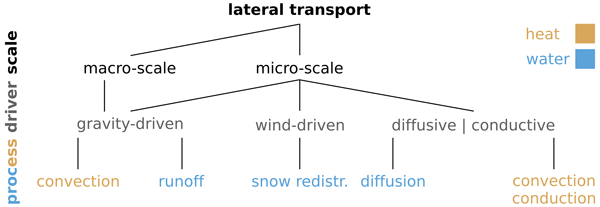
Philipp de Vrese, Tobias Stacke, Veronika Gayler, Helena Bergstedt, Clemens von Baeckmann, Melanie Thurner, Christian Beer, and Victor Brovkin
Geosci. Model Dev., 19, 9203–9234, https://doi.org/10.5194/gmd-19-9203-2026, https://doi.org/10.5194/gmd-19-9203-2026, 2026
Short summary
Short summary
The spatial variability in the land surface properties is often not captured by the resolution of land surface models. To overcome this limitation, most models subdivide the grid cells into fractions with homogeneous characteristics, for which the land processes are calculated separately. In reality, the fractions interact via the lateral exchange of water and heat, and the present manuscript details an approach to include these fluxes in the land component of the ICON modeling framework.
This article is included in the Encyclopedia of Geosciences
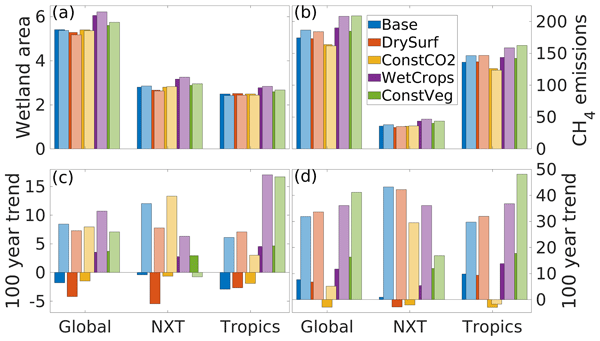
Stiig Wilkenskjeld, Thomas Kleinen, Tobias Stacke, and Victor Brovkin
Biogeosciences, 23, 6583–6598, https://doi.org/10.5194/bg-23-6583-2026, https://doi.org/10.5194/bg-23-6583-2026, 2026
Short summary
Short summary
Methane is the second most important greenhouse gas with high potential for short term reductions of human induced global warming. We model methane emissions from the most important and most uncertain natural source: wetlands. We investigate how a number of assumptions, including human impact on natural wetlands, influences the wetlands and their methane emissions. Of the tested influences we find the most important to be how humans are altering the soil surface.
This article is included in the Encyclopedia of Geosciences
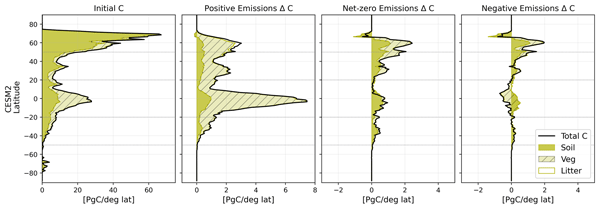
Abigail L. S. Swann, Charles D. Koven, Cristian Proistosecu, Rosie A. Fisher, Benjamin M. Sanderson, Victor Brovkin, Tomohiro Hajima, Chris D. Jones, Nancy Y. Kiang, David M. Lawrence, Spencer Liddicoat, Hannah Liddy, Anastasia Romanou, Roland Séférian, Lori T. Sentman, Norman J. Steinert, Jerry Tjiputra, and Tilo Ziehn
Earth Syst. Dynam., 17, 1237–1275, https://doi.org/10.5194/esd-17-1237-2026, https://doi.org/10.5194/esd-17-1237-2026, 2026
Short summary
Short summary
We analyzed simulations from Earth system models (ESM) with a constant rate of emissions, zero emissions, and negative emissions of CO2 to quantify the response of land carbon sinks. We found that under positive emissions vegetation in the tropics gained carbon. Under zero emissions and negative emissions most ESMs lost carbon from vegetation in the tropics but gained carbon in mid- and high-latitudes, mostly in soils. Our findings imply that tropical carbon is vulnerable under zero emissions.
This article is included in the Encyclopedia of Geosciences
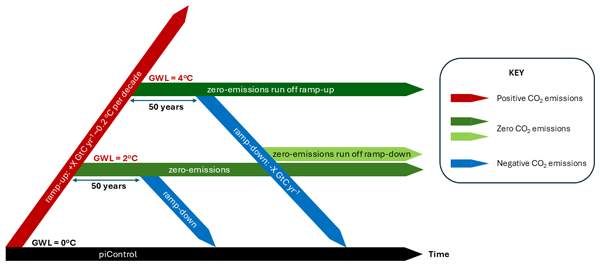
Colin Jones, Isaline Bossert, Donovan P. Dennis, Hazel A. Jeffery, Chris D. Jones, Torben Koenigk, Sina Loriani, Benjamin Sanderson, Roland Séférian, Klaus Wyser, Shuting Yang, Manabu Abe, Sebastian Bathiany, Pascale Braconnot, Victor Brovkin, Friedrich A. Burger, Patrica Cadule, Frederic S. Castruccio, Gokhan Danabasoglu, Andrea Dittus, Jonathan F. Donges, Friederike Fröb, Thomas L. Frölicher, Goran Georgievski, Chuncheng Guo, Aixue Hu, Peter Lawrence, Paul Lerner, José Licón-Saláiz, Bette Otto-Bliesner, Anastasia Romanou, Elena Shevliakova, Yona Silvy, Didier Swingedouw, Jerry Tjiputra, Jeremy Walton, Andy Wiltshire, Ricarda Winkelmann, Richard Wood, Tokuta Yokohata, and Tilo Ziehn
Geosci. Model Dev., 19, 6941–6966, https://doi.org/10.5194/gmd-19-6941-2026, https://doi.org/10.5194/gmd-19-6941-2026, 2026
Short summary
Short summary
We introduce a new Earth system model experiment protocol to help researchers understand how Earth might respond to positive, zero, and negative carbon emissions. This protocol enables different models to be compared following similar warming and cooling rates. Researchers use the models to explore how the Earth reacts to different climate futures, including the risk of tipping points being exceeded and whether changes can be reversed. The results will support improved long-term climate policy.
This article is included in the Encyclopedia of Geosciences
Thomas Kleinen, Helena Bergstedt, Philipp de Vrese, Tobias Stacke, and Victor Brovkin
EGUsphere, https://doi.org/10.5194/egusphere-2026-3098, https://doi.org/10.5194/egusphere-2026-3098, 2026
Short summary
Short summary
The Arctic holds a large amount of carbon in frozen permafrost soils. Climate change will thaw the permafrost, leading to carbon decomposition and CO2 emission. Using a land surface model, we tested the effect of plant distribution changes in low, medium and high warming futures. If the plant distribution is allowed to adapt to a changed climate, biomass increases strongly, limiting carbon losses to ~70 PgC under high warming, and even a small net gain of carbon in low warming scenarios.
This article is included in the Encyclopedia of Geosciences
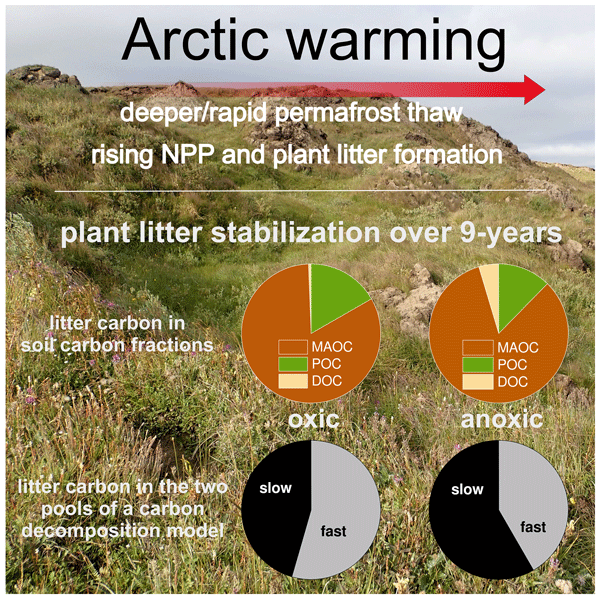
Christian Knoblauch, Christian Beer, and Carolina Voigt
Biogeosciences, 23, 3615–3635, https://doi.org/10.5194/bg-23-3615-2026, https://doi.org/10.5194/bg-23-3615-2026, 2026
Short summary
Short summary
Carbon release from thawing permafrost receives ample attention since it may cause rising greenhouse gas concentrations in the atmosphere. However, we demonstrate through a 9-year lasting incubation experiment that thawing permafrost stabilizes a substantial amount of fresh plant litter carbon from increasing plant productivity for decades. Although litter carbon is faster decomposed than the permafrost carbon it may contribute to the build-up of organic carbon in thawing permafrost soils.
This article is included in the Encyclopedia of Geosciences
Benjamin M. Sanderson, Marit Sandstad, Alejandro Romero-Prieto, Stuart Jenkins, Charles Koven, Glen Peters, Roland Séfèrian, Andrew H. MacDougall, Ashwin Seshadri, Victor Brovkin, John Dunne, Abigail L. S. Swann, Torben Koenigk, Rosie A. Fisher, David Hohn, Tatiana Ilyina, Chris D. Jones, Hongmei Li, Peter Lawrence, Spencer Liddicoat, Nadine Mengis, Anastasia Romanou, Lori T. Sentman, Chris Smith, Norman J. Steinert, Jerry Tjiputra, and Tilo Ziehn
EGUsphere, https://doi.org/10.5194/egusphere-2026-1875, https://doi.org/10.5194/egusphere-2026-1875, 2026
Short summary
Short summary
When humanity stops emitting carbon dioxide, will temperatures keep rising, stabilize, or fall? Our study reveals in most models, temperatures remain nearly stable, but this hides a balance between the warming in response to radiation imbalance, and the cooling due to uptake of carbon in the land and ocean. Understanding this balance helps refine how much more CO2 we can safely emit.
This article is included in the Encyclopedia of Geosciences
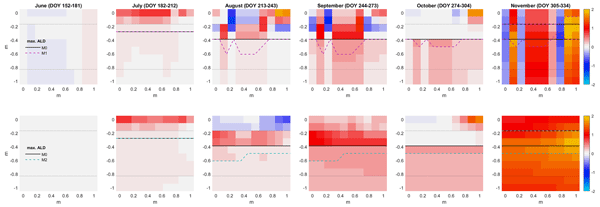
Melanie Alexandra Thurner, Xavier Rodriguez-Lloveras, and Christian Beer
Geosci. Model Dev., 19, 3509–3530, https://doi.org/10.5194/gmd-19-3509-2026, https://doi.org/10.5194/gmd-19-3509-2026, 2026
Short summary
Short summary
Soil texture varies over centimeters, which is overseen by large-scale models, likely causing simulation errors. We developed a 2-dimesional geophysical soil model (DynSoM-2D) with a resolution of 10 cm and ran it with different setups at a permafrost-affected site. Using high-resolution input, DynSoM-2D simulates a warmer soil, which thaws deeper and has an extended snow-free period in summer. These changes can impact ecosystem dynamics, but have little effect on yearly soil-air heat exchange.
This article is included in the Encyclopedia of Geosciences
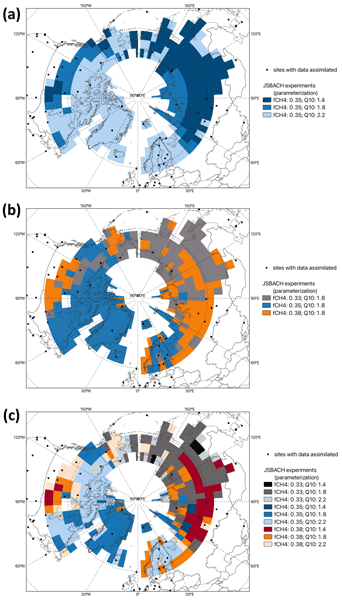
Luana S. Basso, Goran Georgievski, Victor Brovkin, Christian Beer, Christian Rödenbeck, and Mathias Göckede
Biogeosciences, 23, 2815–2830, https://doi.org/10.5194/bg-23-2815-2026, https://doi.org/10.5194/bg-23-2815-2026, 2026
Short summary
Short summary
This study examines how combining atmospheric inversion with process-based modelling can reduce discrepancies in estimates of Arctic wetland CH4 emissions. We conducted a series of inversion experiments, each incorporating CH4 wetland fluxes from process-based models with different CH4 production parameterizations. Our results showed that no single parameterization captures the complexity of Arctic–Boreal emissions; instead, region-specific adjustments are needed to reduce discrepancies.
This article is included in the Encyclopedia of Geosciences
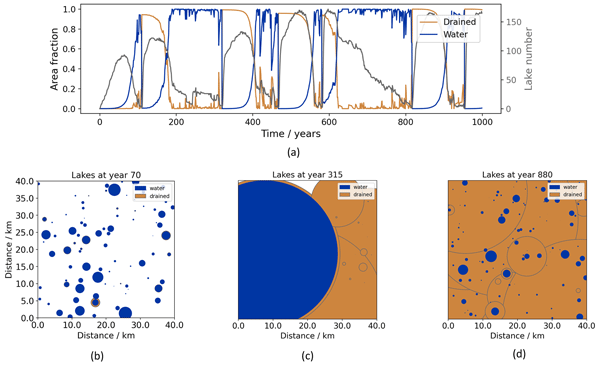
Constanze Reinken, Victor Brovkin, Philipp de Vrese, Ingmar Nitze, Helena Bergstedt, and Guido Grosse
The Cryosphere, 20, 1967–1995, https://doi.org/10.5194/tc-20-1967-2026, https://doi.org/10.5194/tc-20-1967-2026, 2026
Short summary
Short summary
Thermokarst lakes are dynamic features of ice-rich permafrost landscapes, altering energy, water and carbon cycles, but have so far mostly been modeled on site-level scale. A deterministic modelling approach would be challenging on larger scales due to the lack of extensive high-resolution data of sub-surface conditions. We therefore develop a conceptual stochastic model of thermokarst lake dynamics that treats the involved processes as probabilistic.
This article is included in the Encyclopedia of Geosciences
Tamara Emmerichs, Fabrice Lacroix, Victor Brovkin, Sönke Zaehle, Cheng Gong, Yu Zhu, Sofie Sjogersten, Carolina Voigt, Klaus Steenberg Larsen, and Eeva-Stiina Tuitila
EGUsphere, https://doi.org/10.5194/egusphere-2026-1514, https://doi.org/10.5194/egusphere-2026-1514, 2026
Short summary
Short summary
Shrubs use water and carbon differently and are expanding in warming tundra and grasslands, yet global models lack accuracy. We added two shrub types to a vegetation model including soil nutrients and carbon exchange. Half of the modeled shrubs showed good performance whereas their growth is 40 % higher as at grasses. Deciduous shrubs reduce nitrogen more than evergreens. Including shrubs improves Arctic carbon cycle predictions, revealing nitrogen limits cause underestimation in global models.
This article is included in the Encyclopedia of Geosciences
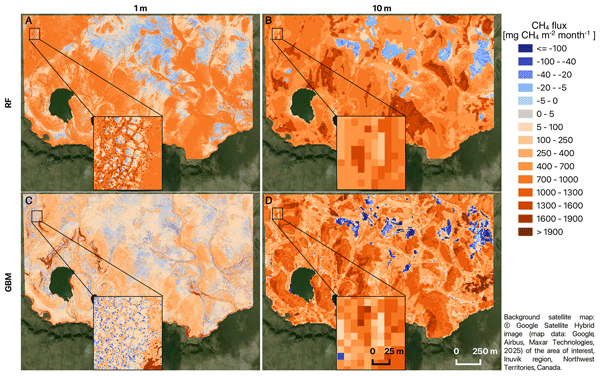
Kseniia Ivanova, Anna-Maria Virkkala, Victor Brovkin, Tobias Stacke, Barbara Widhalm, Annett Bartsch, Carolina Voigt, Oliver Sonnentag, and Mathias Göckede
Biogeosciences, 23, 233–262, https://doi.org/10.5194/bg-23-233-2026, https://doi.org/10.5194/bg-23-233-2026, 2026
Short summary
Short summary
We measured over 13,000 methane fluxes at a site in the Canadian Arctic and linked them with drone and free satellite images. We tested four machine-learning methods and two map scales. Metre-scale maps captured small wet and dry features that strongly affect methane release, while coarser maps blurred them. Different models shifted the monthly methane estimate. This helps choose the right data and tools to map methane, design monitoring networks, and check climate models.
This article is included in the Encyclopedia of Geosciences
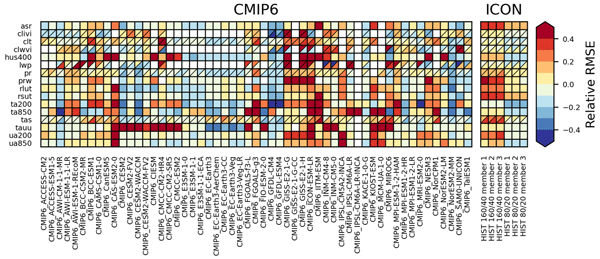
Wolfgang A. Müller, Stephan Lorenz, Trang V. Pham, Andrea Schneidereit, Renate Brokopf, Victor Brovkin, Nils Brüggemann, Fatemeh Chegini, Dietmar Dommenget, Kristina Fröhlich, Barbara Früh, Veronika Gayler, Helmuth Haak, Stefan Hagemann, Moritz Hanke, Tatiana Ilyina, Johann Jungclaus, Martin Köhler, Peter Korn, Luis Kornblueh, Clarissa A. Kroll, Julian Krüger, Karel Castro-Morales, Ulrike Niemeier, Holger Pohlmann, Iuliia Polkova, Roland Potthast, Thomas Riddick, Manuel Schlund, Tobias Stacke, Roland Wirth, Dakuan Yu, and Jochem Marotzke
Geosci. Model Dev., 18, 9385–9415, https://doi.org/10.5194/gmd-18-9385-2025, https://doi.org/10.5194/gmd-18-9385-2025, 2025
Short summary
Short summary
We provide a new Earth System model configuration framed into the ICON architecture, which provides the baseline for the next generation of climate predictions and projections (hereafter ICON XPP). Two resolutions of ICON XPP are presented that show high runtime performances making it suitable to run long integrations and large-ensemble experiments. ICON XPP similarly perform to CMIP6-class of climate models making it a good basis for climate forecasts and projections, and climate research.
This article is included in the Encyclopedia of Geosciences
Marina Falke, Leena Leppänen, Jaakko Nissilä, and Christian Beer
EGUsphere, https://doi.org/10.5194/egusphere-2025-5771, https://doi.org/10.5194/egusphere-2025-5771, 2025
Short summary
Short summary
The study examined spatial and temporal variability of taiga snowpack during spring melt using weekly measurements of height, stratigraphy, temperature, and density at four Sodankylä sites. Snow height peaked on 30 Mar. Density increased through melt, reaching ~ 500 kg/m³ by late Apr–early May. Snow structure shifted from depth hoar to melt forms, and temperatures reached 0 °C throughout. By 10 May, snow cover disappeared. Findings highlight evolving, heterogeneous melt-season snow properties.
This article is included in the Encyclopedia of Geosciences
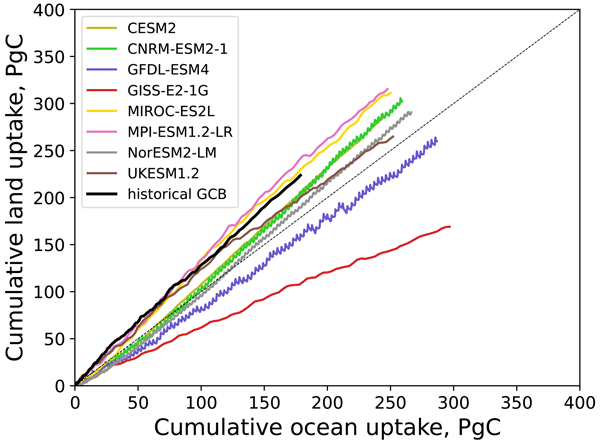
Victor Brovkin, Benjamin M. Sanderson, Noel G. Brizuela, Tomohiro Hajima, Tatiana Ilyina, Chris D. Jones, Charles Koven, David Lawrence, Peter Lawrence, Hongmei Li, Spencer Liddcoat, Anastasia Romanou, Roland Séférian, Lori T. Sentman, Abigail L. S. Swann, Jerry Tjiputra, Tilo Ziehn, and Alexander J. Winkler
Earth Syst. Dynam., 16, 2021–2034, https://doi.org/10.5194/esd-16-2021-2025, https://doi.org/10.5194/esd-16-2021-2025, 2025
Short summary
Short summary
Idealized experiments with Earth system models provide a basis for understanding the response of the carbon cycle to emissions. We show that most models exhibit a quasi-linear relationship between cumulative carbon uptake on land and in the ocean and hypothesize that this relationship does not depend on emission pathways. We reduce the coupled system to only one differential equation, which represents a powerful simplification of the Earth system dynamics as a function of fossil fuel emissions.
This article is included in the Encyclopedia of Geosciences
Lin Yu, Thomas Kleinen, Min Jung Kwon, Christian Knoblauch, and Christian Beer
EGUsphere, https://doi.org/10.5194/egusphere-2025-4648, https://doi.org/10.5194/egusphere-2025-4648, 2025
Short summary
Short summary
We studied how adding biochar to soils might affect future climate. Using computer simulations, we found that while global averages of temperature and rainfall change little, extreme events respond more clearly. Heat waves and heavy rain are reduced in many regions, though drought risks rise in some dry areas. These results suggest that biochar could help moderate harmful climate extremes, especially on land, but with region-specific effects.
This article is included in the Encyclopedia of Geosciences
Christian Beer
Earth Syst. Dynam., 16, 1527–1537, https://doi.org/10.5194/esd-16-1527-2025, https://doi.org/10.5194/esd-16-1527-2025, 2025
Short summary
Short summary
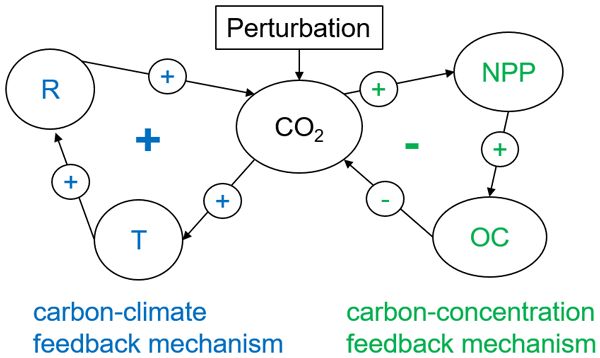
Fauna and flora respire carbon dioxide into the atmosphere, which is a major carbon flux into the atmosphere. The underlying biochemical processes are complex, and we generalize them either assuming a first-order chemical reaction of carbon and oxygen to carbon dioxide or assuming enzymatic reactions. Here, we show that these assumptions lead to large differences in estimating the carbon–climate feedback until 2100 and the remaining carbon budget to keep warming below 2°C.
This article is included in the Encyclopedia of Geosciences
Nathaelle Bouttes, Lester Kwiatkowski, Elodie Bougeot, Manon Berger, Victor Brovkin, and Guy Munhoven
Biogeosciences, 22, 4531–4544, https://doi.org/10.5194/bg-22-4531-2025, https://doi.org/10.5194/bg-22-4531-2025, 2025
Short summary
Short summary
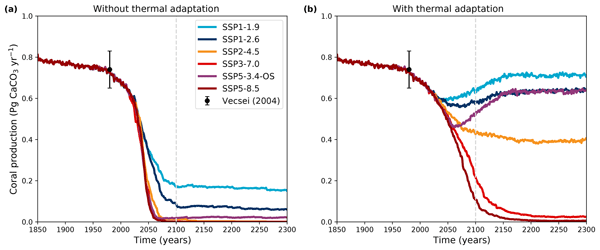
Coral reefs are under threat due to warming and ocean acidification. It is difficult to project future coral reef production due to uncertainties in climate models, socioeconomic scenarios and coral adaptation to warming. Here we have included a coral reef module within a climate model for the first time to evaluate the range of possible futures. We show that coral reef production decreases in most future scenarios, but in some cases coral reef carbonate production can persist.
This article is included in the Encyclopedia of Geosciences
Benjamin M. Sanderson, Victor Brovkin, Rosie A. Fisher, David Hohn, Tatiana Ilyina, Chris D. Jones, Torben Koenigk, Charles Koven, Hongmei Li, David M. Lawrence, Peter Lawrence, Spencer Liddicoat, Andrew H. MacDougall, Nadine Mengis, Zebedee Nicholls, Eleanor O'Rourke, Anastasia Romanou, Marit Sandstad, Jörg Schwinger, Roland Séférian, Lori T. Sentman, Isla R. Simpson, Chris Smith, Norman J. Steinert, Abigail L. S. Swann, Jerry Tjiputra, and Tilo Ziehn
Geosci. Model Dev., 18, 5699–5724, https://doi.org/10.5194/gmd-18-5699-2025, https://doi.org/10.5194/gmd-18-5699-2025, 2025
Short summary
Short summary
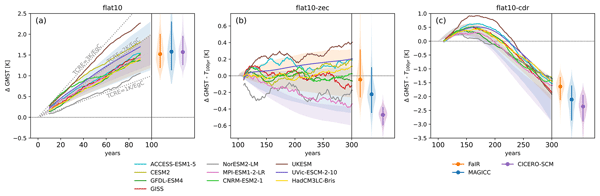
This study investigates how climate models warm in response to simplified carbon emissions trajectories, refining the understanding of climate reversibility and commitment. Metrics are defined for warming response to cumulative emissions and for the cessation of emissions or ramp-down to net-zero and net-negative levels. Results indicate that previous concentration-driven experiments may have overstated the Zero Emissions Commitment due to emissions rates exceeding historical levels.
This article is included in the Encyclopedia of Geosciences
Ricarda Winkelmann, Donovan P. Dennis, Jonathan F. Donges, Sina Loriani, Ann Kristin Klose, Jesse F. Abrams, Jorge Alvarez-Solas, Torsten Albrecht, David Armstrong McKay, Sebastian Bathiany, Javier Blasco Navarro, Victor Brovkin, Eleanor Burke, Gokhan Danabasoglu, Reik V. Donner, Markus Drüke, Goran Georgievski, Heiko Goelzer, Anna B. Harper, Gabriele Hegerl, Marina Hirota, Aixue Hu, Laura C. Jackson, Colin Jones, Hyungjun Kim, Torben Koenigk, Peter Lawrence, Timothy M. Lenton, Hannah Liddy, José Licón-Saláiz, Maxence Menthon, Marisa Montoya, Jan Nitzbon, Sophie Nowicki, Bette Otto-Bliesner, Francesco Pausata, Stefan Rahmstorf, Karoline Ramin, Alexander Robinson, Johan Rockström, Anastasia Romanou, Boris Sakschewski, Christina Schädel, Steven Sherwood, Robin S. Smith, Norman J. Steinert, Didier Swingedouw, Matteo Willeit, Wilbert Weijer, Richard Wood, Klaus Wyser, and Shuting Yang
EGUsphere, https://doi.org/10.5194/egusphere-2025-1899, https://doi.org/10.5194/egusphere-2025-1899, 2025
Short summary
Short summary
The Tipping Points Modelling Intercomparison Project (TIPMIP) is an international collaborative effort to systematically assess tipping point risks in the Earth system using state-of-the-art coupled and stand-alone domain models. TIPMIP will provide a first global atlas of potential tipping dynamics, respective critical thresholds and key uncertainties, generating an important building block towards a comprehensive scientific basis for policy- and decision-making.
This article is included in the Encyclopedia of Geosciences
Amali A. Amali, Clemens Schwingshackl, Akihiko Ito, Alina Barbu, Christine Delire, Daniele Peano, David M. Lawrence, David Wårlind, Eddy Robertson, Edouard L. Davin, Elena Shevliakova, Ian N. Harman, Nicolas Vuichard, Paul A. Miller, Peter J. Lawrence, Tilo Ziehn, Tomohiro Hajima, Victor Brovkin, Yanwu Zhang, Vivek K. Arora, and Julia Pongratz
Earth Syst. Dynam., 16, 803–840, https://doi.org/10.5194/esd-16-803-2025, https://doi.org/10.5194/esd-16-803-2025, 2025
Short summary
Short summary
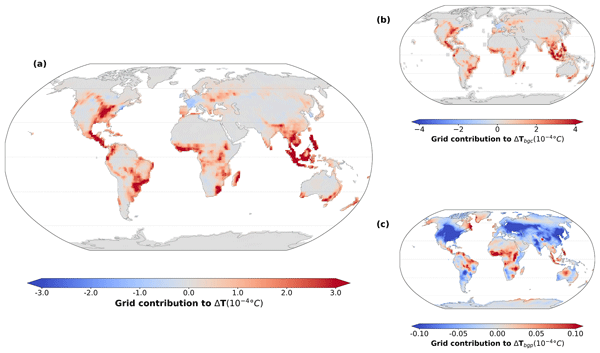
Our study explored the impact of anthropogenic land-use change (LUC) on climate dynamics, focusing on biogeophysical (BGP) and biogeochemical (BGC) effects using data from the Land Use Model Intercomparison Project (LUMIP) and the Coupled Model Intercomparison Project Phase 6 (CMIP6). We found that LUC-induced carbon emissions contribute to a BGC warming of 0.21 °C, with BGC effects dominating globally over BGP effects, which show regional variability. Our findings highlight discrepancies in model simulations and emphasize the need for improved representations of LUC processes.
This article is included in the Encyclopedia of Geosciences
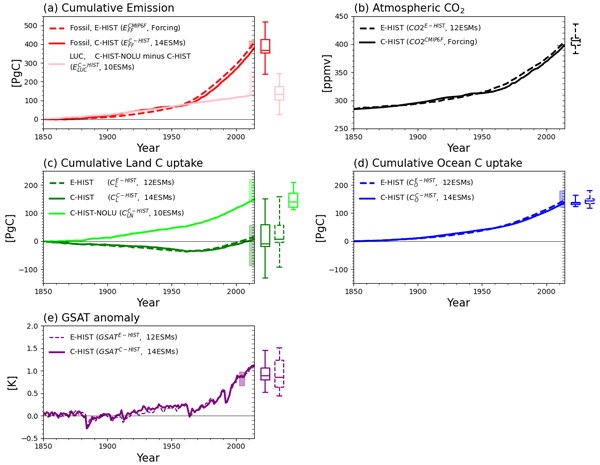
Tomohiro Hajima, Michio Kawamiya, Akihiko Ito, Kaoru Tachiiri, Chris D. Jones, Vivek Arora, Victor Brovkin, Roland Séférian, Spencer Liddicoat, Pierre Friedlingstein, and Elena Shevliakova
Biogeosciences, 22, 1447–1473, https://doi.org/10.5194/bg-22-1447-2025, https://doi.org/10.5194/bg-22-1447-2025, 2025
Short summary
Short summary
This study analyzes atmospheric CO2 concentrations and global carbon budgets simulated by multiple Earth system models, using several types of simulations (CO2 concentration- and emission-driven experiments). We successfully identified problems with regard to the global carbon budget in each model. We also found urgent issues with regard to land use change CO2 emissions that should be solved in the latest generation of models.
This article is included in the Encyclopedia of Geosciences
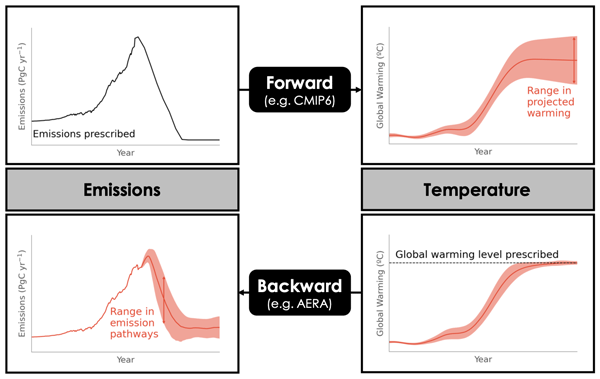
Yona Silvy, Thomas L. Frölicher, Jens Terhaar, Fortunat Joos, Friedrich A. Burger, Fabrice Lacroix, Myles Allen, Raffaele Bernardello, Laurent Bopp, Victor Brovkin, Jonathan R. Buzan, Patricia Cadule, Martin Dix, John Dunne, Pierre Friedlingstein, Goran Georgievski, Tomohiro Hajima, Stuart Jenkins, Michio Kawamiya, Nancy Y. Kiang, Vladimir Lapin, Donghyun Lee, Paul Lerner, Nadine Mengis, Estela A. Monteiro, David Paynter, Glen P. Peters, Anastasia Romanou, Jörg Schwinger, Sarah Sparrow, Eric Stofferahn, Jerry Tjiputra, Etienne Tourigny, and Tilo Ziehn
Earth Syst. Dynam., 15, 1591–1628, https://doi.org/10.5194/esd-15-1591-2024, https://doi.org/10.5194/esd-15-1591-2024, 2024
Short summary
Short summary
The adaptive emission reduction approach is applied with Earth system models to generate temperature stabilization simulations. These simulations provide compatible emission pathways and budgets for a given warming level, uncovering uncertainty ranges previously missing in the Coupled Model Intercomparison Project scenarios. These target-based emission-driven simulations offer a more coherent assessment across models for studying both the carbon cycle and its impacts under climate stabilization.
This article is included in the Encyclopedia of Geosciences

Colin G. Jones, Fanny Adloff, Ben B. B. Booth, Peter M. Cox, Veronika Eyring, Pierre Friedlingstein, Katja Frieler, Helene T. Hewitt, Hazel A. Jeffery, Sylvie Joussaume, Torben Koenigk, Bryan N. Lawrence, Eleanor O'Rourke, Malcolm J. Roberts, Benjamin M. Sanderson, Roland Séférian, Samuel Somot, Pier Luigi Vidale, Detlef van Vuuren, Mario Acosta, Mats Bentsen, Raffaele Bernardello, Richard Betts, Ed Blockley, Julien Boé, Tom Bracegirdle, Pascale Braconnot, Victor Brovkin, Carlo Buontempo, Francisco Doblas-Reyes, Markus Donat, Italo Epicoco, Pete Falloon, Sandro Fiore, Thomas Frölicher, Neven S. Fučkar, Matthew J. Gidden, Helge F. Goessling, Rune Grand Graversen, Silvio Gualdi, José M. Gutiérrez, Tatiana Ilyina, Daniela Jacob, Chris D. Jones, Martin Juckes, Elizabeth Kendon, Erik Kjellström, Reto Knutti, Jason Lowe, Matthew Mizielinski, Paola Nassisi, Michael Obersteiner, Pierre Regnier, Romain Roehrig, David Salas y Mélia, Carl-Friedrich Schleussner, Michael Schulz, Enrico Scoccimarro, Laurent Terray, Hannes Thiemann, Richard A. Wood, Shuting Yang, and Sönke Zaehle
Earth Syst. Dynam., 15, 1319–1351, https://doi.org/10.5194/esd-15-1319-2024, https://doi.org/10.5194/esd-15-1319-2024, 2024
Short summary
Short summary
We propose a number of priority areas for the international climate research community to address over the coming decade. Advances in these areas will both increase our understanding of past and future Earth system change, including the societal and environmental impacts of this change, and deliver significantly improved scientific support to international climate policy, such as future IPCC assessments and the UNFCCC Global Stocktake.
This article is included in the Encyclopedia of Geosciences

Nathaelle Bouttes, Lester Kwiatkowski, Manon Berger, Victor Brovkin, and Guy Munhoven
Geosci. Model Dev., 17, 6513–6528, https://doi.org/10.5194/gmd-17-6513-2024, https://doi.org/10.5194/gmd-17-6513-2024, 2024
Short summary
Short summary
Coral reefs are crucial for biodiversity, but they also play a role in the carbon cycle on long time scales of a few thousand years. To better simulate the future and past evolution of coral reefs and their effect on the global carbon cycle, hence on atmospheric CO2 concentration, it is necessary to include coral reefs within a climate model. Here we describe the inclusion of coral reef carbonate production in a carbon–climate model and its validation in comparison to existing modern data.
This article is included in the Encyclopedia of Geosciences
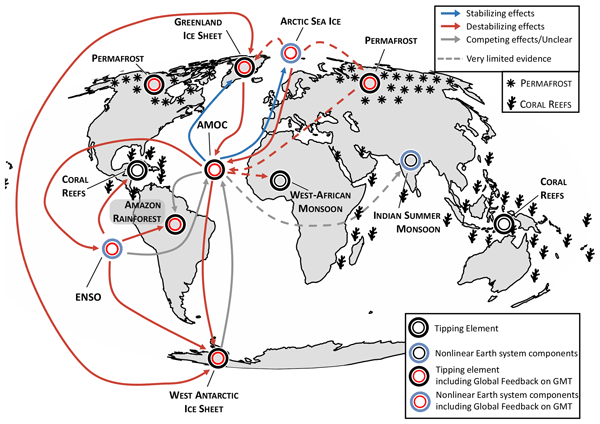
Nico Wunderling, Anna S. von der Heydt, Yevgeny Aksenov, Stephen Barker, Robbin Bastiaansen, Victor Brovkin, Maura Brunetti, Victor Couplet, Thomas Kleinen, Caroline H. Lear, Johannes Lohmann, Rosa Maria Roman-Cuesta, Sacha Sinet, Didier Swingedouw, Ricarda Winkelmann, Pallavi Anand, Jonathan Barichivich, Sebastian Bathiany, Mara Baudena, John T. Bruun, Cristiano M. Chiessi, Helen K. Coxall, David Docquier, Jonathan F. Donges, Swinda K. J. Falkena, Ann Kristin Klose, David Obura, Juan Rocha, Stefanie Rynders, Norman Julius Steinert, and Matteo Willeit
Earth Syst. Dynam., 15, 41–74, https://doi.org/10.5194/esd-15-41-2024, https://doi.org/10.5194/esd-15-41-2024, 2024
Short summary
Short summary
This paper maps out the state-of-the-art literature on interactions between tipping elements relevant for current global warming pathways. We find indications that many of the interactions between tipping elements are destabilizing. This means that tipping cascades cannot be ruled out on centennial to millennial timescales at global warming levels between 1.5 and 2.0 °C or on shorter timescales if global warming surpasses 2.0 °C.
This article is included in the Encyclopedia of Geosciences
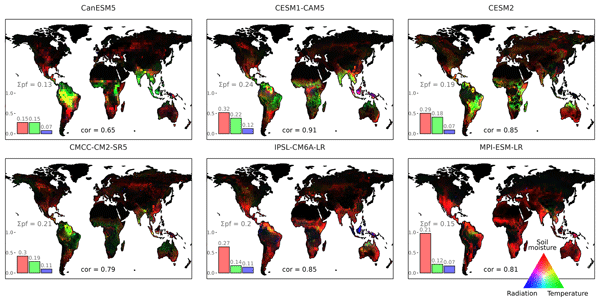
István Dunkl, Nicole Lovenduski, Alessio Collalti, Vivek K. Arora, Tatiana Ilyina, and Victor Brovkin
Biogeosciences, 20, 3523–3538, https://doi.org/10.5194/bg-20-3523-2023, https://doi.org/10.5194/bg-20-3523-2023, 2023
Short summary
Short summary
Despite differences in the reproduction of gross primary productivity (GPP) by Earth system models (ESMs), ESMs have similar predictability of the global carbon cycle. We found that, although GPP variability originates from different regions and is driven by different climatic variables across the ESMs, the ESMs rely on the same mechanisms to predict their own GPP. This shows that the predictability of the carbon cycle is limited by our understanding of variability rather than predictability.
This article is included in the Encyclopedia of Geosciences
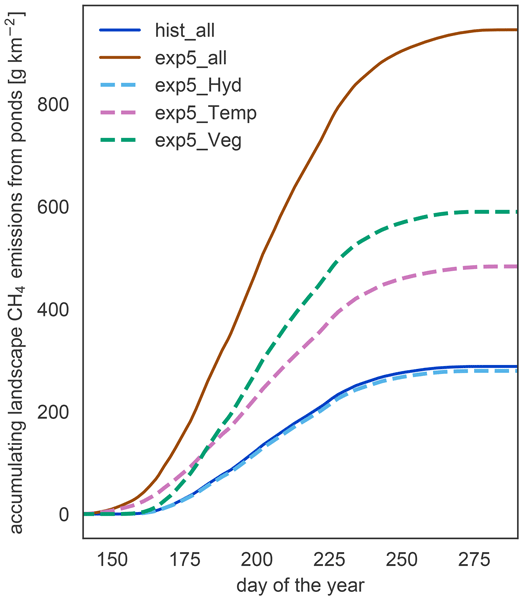
Zoé Rehder, Thomas Kleinen, Lars Kutzbach, Victor Stepanenko, Moritz Langer, and Victor Brovkin
Biogeosciences, 20, 2837–2855, https://doi.org/10.5194/bg-20-2837-2023, https://doi.org/10.5194/bg-20-2837-2023, 2023
Short summary
Short summary
We use a new model to investigate how methane emissions from Arctic ponds change with warming. We find that emissions increase substantially. Under annual temperatures 5 °C above present temperatures, pond methane emissions are more than 3 times higher than now. Most of this increase is caused by an increase in plant productivity as plants provide the substrate microbes used to produce methane. We conclude that vegetation changes need to be included in predictions of pond methane emissions.
This article is included in the Encyclopedia of Geosciences
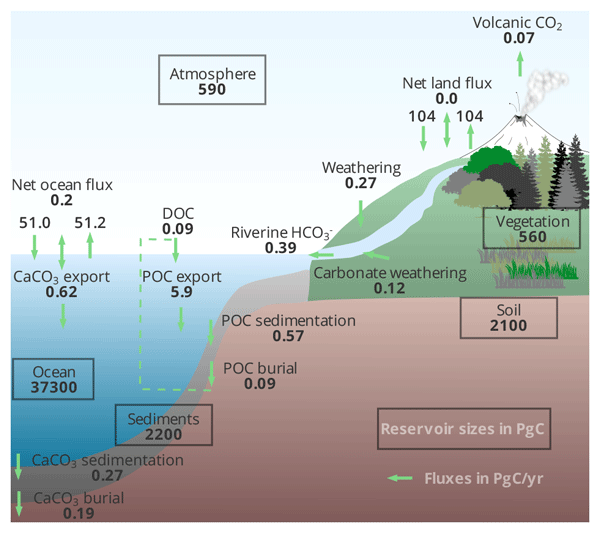
Matteo Willeit, Tatiana Ilyina, Bo Liu, Christoph Heinze, Mahé Perrette, Malte Heinemann, Daniela Dalmonech, Victor Brovkin, Guy Munhoven, Janine Börker, Jens Hartmann, Gibran Romero-Mujalli, and Andrey Ganopolski
Geosci. Model Dev., 16, 3501–3534, https://doi.org/10.5194/gmd-16-3501-2023, https://doi.org/10.5194/gmd-16-3501-2023, 2023
Short summary
Short summary
In this paper we present the carbon cycle component of the newly developed fast Earth system model CLIMBER-X. The model can be run with interactive atmospheric CO2 to investigate the feedbacks between climate and the carbon cycle on temporal scales ranging from decades to > 100 000 years. CLIMBER-X is expected to be a useful tool for studying past climate–carbon cycle changes and for the investigation of the long-term future evolution of the Earth system.
This article is included in the Encyclopedia of Geosciences
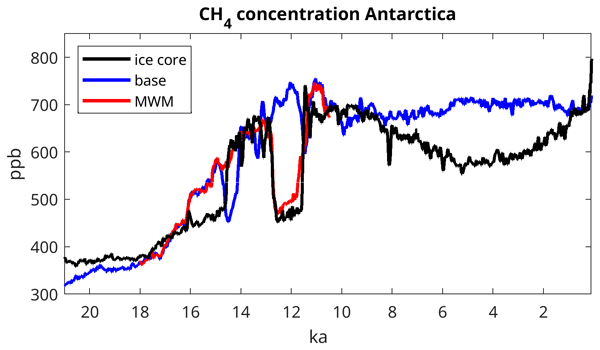
Thomas Kleinen, Sergey Gromov, Benedikt Steil, and Victor Brovkin
Clim. Past, 19, 1081–1099, https://doi.org/10.5194/cp-19-1081-2023, https://doi.org/10.5194/cp-19-1081-2023, 2023
Short summary
Short summary
We modelled atmospheric methane continuously from the last glacial maximum to the present using a state-of-the-art Earth system model. Our model results compare well with reconstructions from ice cores and improve our understanding of a very intriguing period of Earth system history, the deglaciation, when atmospheric methane changed quickly and strongly. Deglacial methane changes are driven by emissions from tropical wetlands, with wetlands in high northern latitudes being secondary.
This article is included in the Encyclopedia of Geosciences
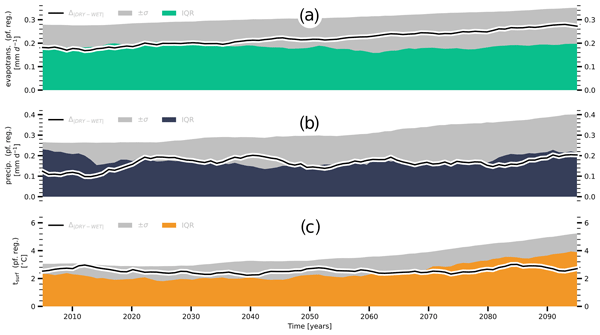
Philipp de Vrese, Goran Georgievski, Jesus Fidel Gonzalez Rouco, Dirk Notz, Tobias Stacke, Norman Julius Steinert, Stiig Wilkenskjeld, and Victor Brovkin
The Cryosphere, 17, 2095–2118, https://doi.org/10.5194/tc-17-2095-2023, https://doi.org/10.5194/tc-17-2095-2023, 2023
Short summary
Short summary
The current generation of Earth system models exhibits large inter-model differences in the simulated climate of the Arctic and subarctic zone. We used an adapted version of the Max Planck Institute (MPI) Earth System Model to show that differences in the representation of the soil hydrology in permafrost-affected regions could help explain a large part of this inter-model spread and have pronounced impacts on important elements of Earth systems as far to the south as the tropics.
This article is included in the Encyclopedia of Geosciences
Mateo Duque-Villegas, Martin Claussen, Victor Brovkin, and Thomas Kleinen
Clim. Past, 18, 1897–1914, https://doi.org/10.5194/cp-18-1897-2022, https://doi.org/10.5194/cp-18-1897-2022, 2022
Short summary
Short summary
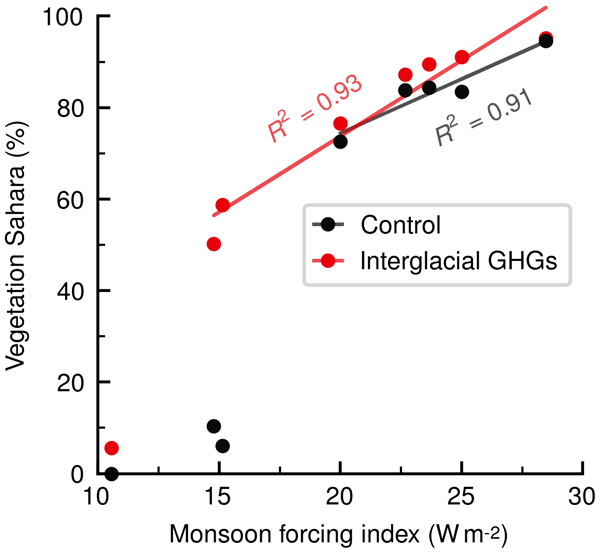
Using an Earth system model of intermediate complexity, we quantify contributions of the Earth's orbit, greenhouse gases (GHGs) and ice sheets to the strength of Saharan greening during late Quaternary African humid periods (AHPs). Orbital forcing is found as the dominant factor, having a critical threshold and accounting for most of the changes in the vegetation response. However, results suggest that GHGs may influence the orbital threshold and thus may play a pivotal role for future AHPs.
This article is included in the Encyclopedia of Geosciences
Stiig Wilkenskjeld, Frederieke Miesner, Paul P. Overduin, Matteo Puglini, and Victor Brovkin
The Cryosphere, 16, 1057–1069, https://doi.org/10.5194/tc-16-1057-2022, https://doi.org/10.5194/tc-16-1057-2022, 2022
Short summary
Short summary
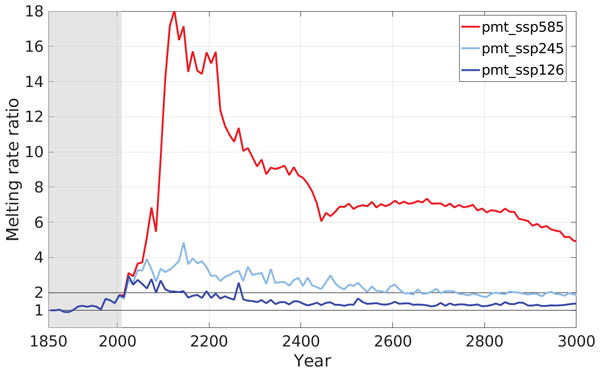
Thawing permafrost releases carbon to the atmosphere, enhancing global warming. Part of the permafrost soils have been flooded by rising sea levels since the last ice age, becoming subsea permafrost (SSPF). The SSPF is less studied than the part on land. In this study we use a global model to obtain rates of thawing of SSPF under different future climate scenarios until the year 3000. After the year 2100 the scenarios strongly diverge, closely connected to the eventual disappearance of sea ice.
This article is included in the Encyclopedia of Geosciences

István Dunkl, Aaron Spring, Pierre Friedlingstein, and Victor Brovkin
Earth Syst. Dynam., 12, 1413–1426, https://doi.org/10.5194/esd-12-1413-2021, https://doi.org/10.5194/esd-12-1413-2021, 2021
Short summary
Short summary
The variability in atmospheric CO2 is largely controlled by terrestrial carbon fluxes. These land–atmosphere fluxes are predictable for around 2 years, but the mechanisms providing the predictability are not well understood. By decomposing the predictability of carbon fluxes into individual contributors we were able to explain the spatial and seasonal patterns and the interannual variability of CO2 flux predictability.
This article is included in the Encyclopedia of Geosciences
Aaron Spring, István Dunkl, Hongmei Li, Victor Brovkin, and Tatiana Ilyina
Earth Syst. Dynam., 12, 1139–1167, https://doi.org/10.5194/esd-12-1139-2021, https://doi.org/10.5194/esd-12-1139-2021, 2021
Short summary
Short summary
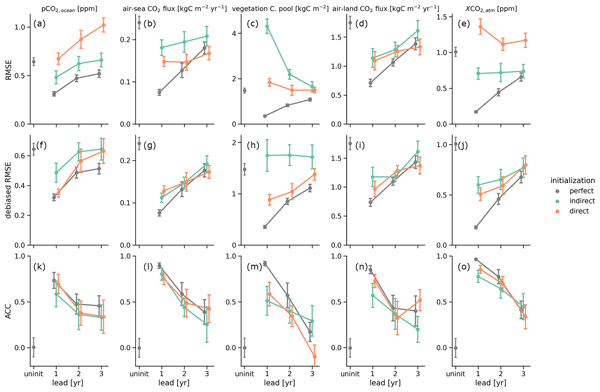
Numerical carbon cycle prediction models usually do not start from observed carbon states due to sparse observations. Instead, only physical climate is reconstructed, assuming that the carbon cycle follows indirectly. Here, we test in an idealized framework how well this indirect and direct reconstruction with perfect observations works. We find that indirect reconstruction works quite well and that improvements from the direct method are limited, strengthening the current indirect use.
This article is included in the Encyclopedia of Geosciences
Cited articles
Andresen, C. G., Lawrence, D. M., Wilson, C. J., McGuire, A. D., Koven, C., Schaefer, K., Jafarov, E., Peng, S., Chen, X., Gouttevin, I., Burke, E., Chadburn, S., Ji, D., Chen, G., Hayes, D., and Zhang, W.: Soil moisture and hydrology projections of the permafrost region – a model intercomparison, The Cryosphere, 14, 445–459, https://doi.org/10.5194/tc-14-445-2020, 2020. a
Beer, C.: The Arctic carbon count, Nature Geoscience, 1, 569–570, https://doi.org/10.1038/ngeo292, 2008. a
Beer, C.: Permafrost Sub-grid Heterogeneity of Soil Properties Key for 3-D Soil Processes and Future Climate Projections, Frontiers in Earth Science, 4, https://doi.org/10.3389/feart.2016.00081, 2016. a
Beer, C., Knoblauch, C., Hoyt, A. M., Hugelius, G., Palmtag, J., Mueller, C. W., and Trumbore, S.: Vertical pattern of organic matter decomposability in cryoturbated permafrost-affected soils, Environmental Research Letters, 17, 104023, https://doi.org/10.1088/1748-9326/ac9198, 2022. a
Beven, K. J. and Kirkby, M. J.: A physically based, variable contributing area model of basin hydrology / Un modèle à base physique de zone d'appel variable de l'hydrologie du bassin versant, Hydrological Sciences Bulletin, 24, 43–69, https://doi.org/10.1080/02626667909491834, 1979. a
Biskaborn, B. K., Smith, S. L., Noetzli, J., Matthes, H., Vieira, G., Streletskiy, D. A., Schoeneich, P., Romanovsky, V. E., Lewkowicz, A. G., Abramov, A., Allard, M., Boike, J., Cable, W. L., Christiansen, H. H., Delaloye, R., Diekmann, B., Drozdov, D., Etzelmüller, B., Grosse, G., Guglielmin, M., Ingeman-Nielsen, T., Isaksen, K., Ishikawa, M., Johansson, M., Johannsson, H., Joo, A., Kaverin, D., Kholodov, A., Konstantinov, P., Kröger, T., Lambiel, C., Lanckman, J.-P., Luo, D., Malkova, G., Meiklejohn, I., Moskalenko, N., Oliva, M., Phillips, M., Ramos, M., Sannel, A. B. K., Sergeev, D., Seybold, C., Skryabin, P., Vasiliev, A., Wu, Q., Yoshikawa, K., Zheleznyak, M., and Lantuit, H.: Permafrost is warming at a global scale, Nature Communications, 10, 264, https://doi.org/10.1038/s41467-018-08240-4, 2019. a
Burke, E. J., Ekici, A., Huang, Y., Chadburn, S. E., Huntingford, C., Ciais, P., Friedlingstein, P., Peng, S., and Krinner, G.: Quantifying uncertainties of permafrost carbon–climate feedbacks, Biogeosciences, 14, 3051–3066, https://doi.org/10.5194/bg-14-3051-2017, 2017. a
Canadell, J. G., Monteiro, P. M. S., Costa, M. H., Cotrim Da Cunha, L., Cox, P. M., Eliseev, A. V., Henson, S., Ishii, M., Jaccard, S., Koven, C., Lohila, A., Patra, P. K., Piao, S., Rogelj, J., Syampungani, S., Zaehle, S., and Zickfeld, K.: Global Carbon and other Biogeochemical Cycles and Feedbacks, in: Climate Change 2021: The Physical Science Basis. Contribution of Working Group I to the Sixth Assessment Report of the Intergovernmental Panel on Climate Change, https://doi.org/10.1017/9781009157896.007, 2021. a, b, c, d, e, f
Chadburn, S. E., Aalto, T., Aurela, M., Baldocchi, D., Biasi, C., Boike, J., Burke, E. J., Comyn-Platt, E., Dolman, A. J., Duran-Rojas, C., Fan, Y., Friborg, T., Gao, Y., Gedney, N., Göckede, M., Hayman, G. D., Holl, D., Hugelius, G., Kutzbach, L., Lee, H., Lohila, A., Parmentier, F.-J. W., Sachs, T., Shurpali, N. J., and Westermann, S.: Modeled Microbial Dynamics Explain the Apparent Temperature Sensitivity of Wetland Methane Emissions, Global Biogeochemical Cycles, 34, https://doi.org/10.1029/2020GB006678, 2020. a, b, c, d, e, f, g, h, i
Chapin, F. S., Sturm, M., Serreze, M. C., McFadden, J. P., Key, J. R., Lloyd, A. H., McGuire, A. D., Rupp, T. S., Lynch, A. H., Schimel, J. P., Beringer, J., Chapman, W. L., Epstein, H. E., Euskirchen, E. S., Hinzman, L. D., Jia, G., Ping, C.-L., Tape, K. D., Thompson, C. D. C., Walker, D. A., and Welker, J. M.: Role of land-surface changes in arctic summer warming, Science, 310, 657–660, https://doi.org/10.1126/science.1117368, 2005. a
Cho, M.-H., Yang, A.-R., Baek, E.-H., Kang, S. M., Jeong, S.-J., Kim, J. Y., and Kim, B.-M.: Vegetation-cloud feedbacks to future vegetation changes in the Arctic regions, Climate Dynamics, 50, 3745–3755, https://doi.org/10.1007/s00382-017-3840-5, 2018. a
Clark, D. B., Mercado, L. M., Sitch, S., Jones, C. D., Gedney, N., Best, M. J., Pryor, M., Rooney, G. G., Essery, R. L. H., Blyth, E., Boucher, O., Harding, R. J., Huntingford, C., and Cox, P. M.: The Joint UK Land Environment Simulator (JULES), model description – Part 2: Carbon fluxes and vegetation dynamics, Geosci. Model Dev., 4, 701–722, https://doi.org/10.5194/gmd-4-701-2011, 2011. a, b, c
Comyn-Platt, E., Hayman, G., Huntingford, C., Chadburn, S. E., Burke, E. J., Harper, A. B., Collins, W. J., Webber, C. P., Powell, T., Cox, P. M., Gedney, N., and Sitch, S.: Carbon budgets for 1.5 and 2 °C targets lowered by natural wetland and permafrost feedbacks, Nature Geoscience, 11, 568–573, https://doi.org/10.1038/s41561-018-0174-9, 2018. a, b, c
de Vrese, P., Stacke, T., Kleinen, T., and Brovkin, V.: Diverging responses of high-latitude CO2 and CH4 emissions in idealized climate change scenarios, The Cryosphere, 15, 1097–1130, https://doi.org/10.5194/tc-15-1097-2021, 2021. a, b, c, d
de Vrese, P., Beckebanze, L., Galera, L. d. A., Holl, D., Kleinen, T., Kutzbach, L., Rehder, Z., and Brovkin, V.: Sensitivity of Arctic CH4 emissions to landscape wetness diminished by atmospheric feedbacks, Nature Climate Change, 13, 832–839, https://doi.org/10.1038/s41558-023-01715-3, 2023. a
Dettling, M. D., Yavitt, J. B., and Zinder, S. H.: Control of organic carbon mineralization by alternative electron acceptors in four peatlands, Central New York State, USA, Wetlands, 26, 917–927, https://doi.org/10.1672/0277-5212(2006)26[917:COOCMB]2.0.CO;2, 2006. a
Diekert, G. and Wohlfarth, G.: Metabolism of homocetogens, Antonie van Leeuwenhoek, 66, 209–221, https://doi.org/10.1007/BF00871640, 1994. a, b, c
Dion-Kirschner, H., Nguyen, N. H., Frankenberg, C., and Fischer, W. W.: Evaluating the contribution of methanotrophy kinetics to uncertainty in the soil methane sink, Environmental Research Letters, 19, 064059, https://doi.org/10.1088/1748-9326/ad4c7a, 2024. a
Eyring, V., Bony, S., Meehl, G. A., Senior, C. A., Stevens, B., Stouffer, R. J., and Taylor, K. E.: Overview of the Coupled Model Intercomparison Project Phase 6 (CMIP6) experimental design and organization, Geosci. Model Dev., 9, 1937–1958, https://doi.org/10.5194/gmd-9-1937-2016, 2016. a
Folberth, G. A., Staniaszek, Z., Archibald, A. T., Gedney, N., Griffiths, P. T., Jones, C. D., O'Connor, F. M., Parker, R. J., Sellar, A. A., and Wiltshire, A.: Description and Evaluation of an Emission–Driven and Fully Coupled Methane Cycle in UKESM1, Journal of Advances in Modeling Earth Systems, 14, https://doi.org/10.1029/2021MS002982, 2022. a
Forbrich, I., Yazbeck, T., Sulman, B., Morin, T. H., Tang, A. C. I., and Bohrer, G.: Three Decades of Wetland Methane Surface Flux Modeling by Earth System Models – Advances, Applications, and Challenges, Journal of Geophysical Research: Biogeosciences, 129, https://doi.org/10.1029/2023JG007915, 2024. a
Friedlingstein, P., O'Sullivan, M., Jones, M. W., Andrew, R. M., Gregor, L., Hauck, J., Le Quéré, C., Luijkx, I. T., Olsen, A., Peters, G. P., Peters, W., Pongratz, J., Schwingshackl, C., Sitch, S., Canadell, J. G., Ciais, P., Jackson, R. B., Alin, S. R., Alkama, R., Arneth, A., Arora, V. K., Bates, N. R., Becker, M., Bellouin, N., Bittig, H. C., Bopp, L., Chevallier, F., Chini, L. P., Cronin, M., Evans, W., Falk, S., Feely, R. A., Gasser, T., Gehlen, M., Gkritzalis, T., Gloege, L., Grassi, G., Gruber, N., Gürses, Ö., Harris, I., Hefner, M., Houghton, R. A., Hurtt, G. C., Iida, Y., Ilyina, T., Jain, A. K., Jersild, A., Kadono, K., Kato, E., Kennedy, D., Klein Goldewijk, K., Knauer, J., Korsbakken, J. I., Landschützer, P., Lefèvre, N., Lindsay, K., Liu, J., Liu, Z., Marland, G., Mayot, N., McGrath, M. J., Metzl, N., Monacci, N. M., Munro, D. R., Nakaoka, S.-I., Niwa, Y., O'Brien, K., Ono, T., Palmer, P. I., Pan, N., Pierrot, D., Pocock, K., Poulter, B., Resplandy, L., Robertson, E., Rödenbeck, C., Rodriguez, C., Rosan, T. M., Schwinger, J., Séférian, R., Shutler, J. D., Skjelvan, I., Steinhoff, T., Sun, Q., Sutton, A. J., Sweeney, C., Takao, S., Tanhua, T., Tans, P. P., Tian, X., Tian, H., Tilbrook, B., Tsujino, H., Tubiello, F., van der Werf, G. R., Walker, A. P., Wanninkhof, R., Whitehead, C., Willstrand Wranne, A., Wright, R., Yuan, W., Yue, C., Yue, X., Zaehle, S., Zeng, J., and Zheng, B.: Global Carbon Budget 2022, Earth Syst. Sci. Data, 14, 4811–4900, https://doi.org/10.5194/essd-14-4811-2022, 2022. a
Fumoto, T., Kobayashi, K., Li, C., Yagi, K., and Hasegawa, T.: Revising a process–based biogeochemistry model (DNDC) to simulate methane emission from rice paddy fields under various residue management and fertilizer regimes, Global Change Biology, 14, 382–402, https://doi.org/10.1111/j.1365-2486.2007.01475.x, 2008. a
Galera, L. d. A., Eckhardt, T., Beer, C., Pfeiffer, E.-M., and Knoblauch, C.: Ratio of In Situ CO2 to CH4 Production and Its Environmental Controls in Polygonal Tundra Soils of Samoylov Island, Northeastern Siberia, Journal of Geophysical Research: Biogeosciences, 128, https://doi.org/10.1029/2022JG006956, 2023. a, b, c, d, e, f, g, h
Gasser, T., Kechiar, M., Ciais, P., Burke, E. J., Kleinen, T., Zhu, D., Huang, Y., Ekici, A., and Obersteiner, M.: Path-dependent reductions in CO2 emission budgets caused by permafrost carbon release, Nature Geoscience, 11, 830–835, https://doi.org/10.1038/s41561-018-0227-0, 2018. a
Grant, R. F.: Simulation of methanotrophy in the mathematical model ecosys, Soil Biology and Biochemistry, 31, 287–297, https://doi.org/10.1016/S0038-0717(98)00119-9, 1999. a
Guimberteau, M., Zhu, D., Maignan, F., Huang, Y., Yue, C., Dantec-Nédélec, S., Ottlé, C., Jornet-Puig, A., Bastos, A., Laurent, P., Goll, D., Bowring, S., Chang, J., Guenet, B., Tifafi, M., Peng, S., Krinner, G., Ducharne, A., Wang, F., Wang, T., Wang, X., Wang, Y., Yin, Z., Lauerwald, R., Joetzjer, E., Qiu, C., Kim, H., and Ciais, P.: ORCHIDEE-MICT (v8.4.1), a land surface model for the high latitudes: model description and validation, Geosci. Model Dev., 11, 121–163, https://doi.org/10.5194/gmd-11-121-2018, 2018. a, b
Hamdi, S., Moyano, F., Sall, S., Bernoux, M., and Chevallier, T.: Synthesis analysis of the temperature sensitivity of soil respiration from laboratory studies in relation to incubation methods and soil conditions, Soil Biology and Biochemistry, 58, 115–126, https://doi.org/10.1016/j.soilbio.2012.11.012, 2013. a, b, c, d
Heslop, J. K., Winkel, M., Walter Anthony, K. M., Spencer, R., Podgorski, D. C., Zito, P., Kholodov, A., Zhang, M., and Liebner, S.: Increasing Organic Carbon Biolability With Depth in Yedoma Permafrost: Ramifications for Future Climate Change, Journal of Geophysical Research: Biogeosciences, 124, 2021–2038, https://doi.org/10.1029/2018JG004712, 2019. a, b, c
Hobbie, S. E.: Temperature and Plant Species Control Over Litter Decomposition in Alaskan Tundra, Ecological Monographs, 66, 503–522, https://doi.org/10.2307/2963492, 1996. a
Hugelius, G., Strauss, J., Zubrzycki, S., Harden, J. W., Schuur, E. A. G., Ping, C.-L., Schirrmeister, L., Grosse, G., Michaelson, G. J., Koven, C. D., O'Donnell, J. A., Elberling, B., Mishra, U., Camill, P., Yu, Z., Palmtag, J., and Kuhry, P.: Estimated stocks of circumpolar permafrost carbon with quantified uncertainty ranges and identified data gaps, Biogeosciences, 11, 6573–6593, https://doi.org/10.5194/bg-11-6573-2014, 2014. a
Inglett, K. S., Inglett, P. W., Reddy, K. R., and Osborne, T. Z.: Temperature sensitivity of greenhouse gas production in wetland soils of different vegetation, Biogeochemistry, 108, 77–90, https://doi.org/10.1007/s10533-011-9573-3, 2012. a
IPCC: Climate change 2021: The physical science basis: Working Group I contribution to the Sixth Assessment Report of the Intergovernmental Panel on Climate Change, https://doi.org/10.1017/9781009157896, 2021. a, b
Ito, A., Li, T., Qin, Z., Melton, J. R., Tian, H., Kleinen, T., Zhang, W., Zhang, Z., Joos, F., Ciais, P., Hopcroft, P. O., Beerling, D. J., Liu, X., Zhuang, Q., Zhu, Q., Peng, C., Chang, K.-Y., Fluet-Chouinard, E., McNicol, G., Patra, P., Poulter, B., Sitch, S., and Riley, W.: Cold–Season Methane Fluxes Simulated by GCP–CH4 Models, Geophysical Research Letters, 50, https://doi.org/10.1029/2023GL103037, 2023. a, b, c, d, e
Kaiser, S., Göckede, M., Castro-Morales, K., Knoblauch, C., Ekici, A., Kleinen, T., Zubrzycki, S., Sachs, T., Wille, C., and Beer, C.: Process-based modelling of the methane balance in periglacial landscapes (JSBACH-methane), Geosci. Model Dev., 10, 333–358, https://doi.org/10.5194/gmd-10-333-2017, 2017. a, b, c, d, e
Khvorostyanov, D. V., Ciais, P., Krinner, G., Zimov, S. A., Corradi, C., and Guggenberger, G.: Vulnerability of permafrost carbon to global warming. Part II: sensitivity of permafrost carbon stock to global warming, Tellus B: Chemical and Physical Meteorology, 60, 265, https://doi.org/10.1111/j.1600-0889.2007.00336.x, 2008a. a, b, c, d
Khvorostyanov, D. V., Krinner, G., Ciais, P., Heimann, M., and Zimov, S. A.: Vulnerability of permafrost carbon to global warming. Part I: model description and role of heat generated by organic matter decomposition, Tellus B: Chemical and Physical Meteorology, 60, 250, https://doi.org/10.1111/j.1600-0889.2007.00333.x, 2008b. a, b, c
Kirschbaum, M. U.: The temperature dependence of soil organic matter decomposition, and the effect of global warming on soil organic C storage, Soil Biology and Biochemistry, 27, 753–760, https://doi.org/10.1016/0038-0717(94)00242-S, 1995. a
Kleinen, T., Gromov, S., Steil, B., and Brovkin, V.: Erratum: Atmospheric methane underestimated in future climate projections (2021 Environ. Res. Lett. 16 094006), Environmental Research Letters, 16, 119502, https://doi.org/10.1088/1748-9326/ac2f66, 2021. a, b, c
Knoblauch, C., Spott, O., Evgrafova, S., Kutzbach, L., and Pfeiffer, E.-M.: Regulation of methane production, oxidation, and emission by vascular plants and bryophytes in ponds of the northeast Siberian polygonal tundra, Journal of Geophysical Research: Biogeosciences, 120, 2525–2541, https://doi.org/10.1002/2015JG003053, 2015. a, b, c, d
Koven, C. D., Ringeval, B., Friedlingstein, P., Ciais, P., Cadule, P., Khvorostyanov, D., Krinner, G., and Tarnocai, C.: Permafrost carbon-climate feedbacks accelerate global warming, Proceedings of the National Academy of Sciences of the United States of America, 108, 14769–14774, https://doi.org/10.1073/pnas.1103910108, 2011. a
LeeWays, C., McCullough, L. L., Hopple, A. M., Keller, J. K., and Bridgham, S. D.: Homoacetogenesis competes with hydrogenotrophic methanogenesis for substrates in a peatland experiencing ecosystem warming, Soil Biology and Biochemistry, 172, 108759, https://doi.org/10.1016/j.soilbio.2022.108759, 2022. a, b
Li, J., Pei, J., Fang, C., Li, B., and Nie, M.: Opposing seasonal temperature dependencies of CO2 and CH4 emissions from wetlands, Global Change Biology, 29, 1133–1143, https://doi.org/10.1111/gcb.16528, 2023. a, b, c
Liu, Y., Conrad, R., Yao, T., Gleixner, G., and Claus, P.: Change of methane production pathway with sediment depth in a lake on the Tibetan plateau, Palaeogeography, Palaeoclimatology, Palaeoecology, 474, 279–286, https://doi.org/10.1016/j.palaeo.2016.06.021, 2017. a
Lovley, D. R.: Dissimilatory Fe(III) and Mn(IV) reduction, Microbiological Reviews, 55, 259–287, https://doi.org/10.1128/mr.55.2.259-287.1991, 1991. a, b, c
Lupascu, M., Wadham, J. L., Hornibrook, E. R. C., and Pancost, R. D.: Temperature Sensitivity of Methane Production in the Permafrost Active Layer at Stordalen, Sweden: A Comparison with Non-permafrost Northern Wetlands, Arctic, Antarctic, and Alpine Research, 44, 469–482, https://doi.org/10.1657/1938-4246-44.4.469, 2012. a
Ma, S., Jiang, J., Huang, Y., Shi, Z., Wilson, R. M., Ricciuto, D., Sebestyen, S. D., Hanson, P. J., and Luo, Y.: Data–Constrained Projections of Methane Fluxes in a Northern Minnesota Peatland in Response to Elevated CO2 and Warming, Journal of Geophysical Research: Biogeosciences, 122, 2841–2861, https://doi.org/10.1002/2017JG003932, 2017. a, b, c, d, e
Ma, S., Worden, J. R., Bloom, A. A., Zhang, Y., Poulter, B., Cusworth, D. H., Yin, Y., Pandey, S., Maasakkers, J. D., Lu, X., Shen, L., Sheng, J., Frankenberg, C., Miller, C. E., and Jacob, D. J.: Satellite Constraints on the Latitudinal Distribution and Temperature Sensitivity of Wetland Methane Emissions, AGU Advances, 2, https://doi.org/10.1029/2021AV000408, 2021. a, b
Mastepanov, M., Sigsgaard, C., Dlugokencky, E. J., Houweling, S., Ström, L., Tamstorf, M. P., and Christensen, T. R.: Large tundra methane burst during onset of freezing, Nature, 456, 628–630, https://doi.org/10.1038/nature07464, 2008. a
Masyagina, O. V. and Menyailo, O. V.: The impact of permafrost on carbon dioxide and methane fluxes in Siberia: A meta-analysis, Environmental Research, 182, 109096, https://doi.org/10.1016/j.envres.2019.109096, 2020. a, b
Mauritsen, T., Bader, J., Becker, T., Behrens, J., Bittner, M., Brokopf, R., Brovkin, V., Claussen, M., Crueger, T., Esch, M., Fast, I., Fiedler, S., Fläschner, D., Gayler, V., Giorgetta, M., Goll, D. S., Haak, H., Hagemann, S., Hedemann, C., Hohenegger, C., Ilyina, T., Jahns, T., Jimenéz-de-la Cuesta, D., Jungclaus, J., Kleinen, T., Kloster, S., Kracher, D., Kinne, S., Kleberg, D., Lasslop, G., Kornblueh, L., Marotzke, J., Matei, D., Meraner, K., Mikolajewicz, U., Modali, K., Möbis, B., Müller, W. A., Nabel, J. E. M. S., Nam, C. C. W., Notz, D., Nyawira, S.-S., Paulsen, H., Peters, K., Pincus, R., Pohlmann, H., Pongratz, J., Popp, M., Raddatz, T. J., Rast, S., Redler, R., Reick, C. H., Rohrschneider, T., Schemann, V., Schmidt, H., Schnur, R., Schulzweida, U., Six, K. D., Stein, L., Stemmler, I., Stevens, B., von Storch, J.-S., Tian, F., Voigt, A., Vrese, P., Wieners, K.-H., Wilkenskjeld, S., Winkler, A., and Roeckner, E.: Developments in the MPI-M Earth System Model version 1.2 (MPI-ESM1.2) and Its Response to Increasing CO2, Journal of Advances in Modeling Earth Systems, 11, 998–1038, https://doi.org/10.1029/2018MS001400, 2019. a, b
McGuire, A. D., Lawrence, D. M., Koven, C., Clein, J. S., Burke, E., Chen, G., Jafarov, E., MacDougall, A. H., Marchenko, S., Nicolsky, D., Peng, S., Rinke, A., Ciais, P., Gouttevin, I., Hayes, D. J., Ji, D., Krinner, G., Moore, J. C., Romanovsky, V., Schädel, C., Schaefer, K., Schuur, E. A. G., and Zhuang, Q.: Dependence of the evolution of carbon dynamics in the northern permafrost region on the trajectory of climate change, Proceedings of the National Academy of Sciences of the United States of America, 115, 3882–3887, https://doi.org/10.1073/pnas.1719903115, 2018. a
McNorton, J., Gloor, E., Wilson, C., Hayman, G. D., Gedney, N., Comyn-Platt, E., Marthews, T., Parker, R. J., Boesch, H., and Chipperfield, M. P.: Role of regional wetland emissions in atmospheric methane variability, Geophysical Research Letters, 43, https://doi.org/10.1002/2016GL070649, 2016. a
Miner, K. R., Turetsky, M. R., Malina, E., Bartsch, A., Tamminen, J., McGuire, A. D., Fix, A., Sweeney, C., Elder, C. D., and Miller, C. E.: Permafrost carbon emissions in a changing Arctic, Nature Reviews Earth & Environment, 3, 55–67, https://doi.org/10.1038/s43017-021-00230-3, 2022. a, b, c, d
Mishra, U., Hugelius, G., Shelef, E., Yang, Y., Strauss, J., Lupachev, A., Harden, J. W., Jastrow, J. D., Ping, C.-L., Riley, W. J., Schuur, E. A. G., Matamala, R., Siewert, M., Nave, L. E., Koven, C. D., Fuchs, M., Palmtag, J., Kuhry, P., Treat, C. C., Zubrzycki, S., Hoffman, F. M., Elberling, B., Camill, P., Veremeeva, A., and Orr, A.: Spatial heterogeneity and environmental predictors of permafrost region soil organic carbon stocks, Science Advances, 7, https://doi.org/10.1126/sciadv.aaz5236, 2021. a
Morel, X., Decharme, B., Delire, C., Krinner, G., Lund, M., Hansen, B. U., and Mastepanov, M.: A New Process–Based Soil Methane Scheme: Evaluation Over Arctic Field Sites With the ISBA Land Surface Model, Journal of Advances in Modeling Earth Systems, 11, 293–326, https://doi.org/10.1029/2018MS001329, 2019. a, b, c, d, e, f, g
Mozafari, B., Bruen, M., Donohue, S., Renou-Wilson, F., and O'Loughlin, F.: Peatland dynamics: A review of process-based models and approaches, The Science of the Total Environment, 877, 162890, https://doi.org/10.1016/j.scitotenv.2023.162890, 2023. a
Murguia-Flores, F., Arndt, S., Ganesan, A. L., Murray-Tortarolo, G., and Hornibrook, E. R. C.: Soil Methanotrophy Model (MeMo v1.0): a process-based model to quantify global uptake of atmospheric methane by soil, Geosci. Model Dev., 11, 2009–2032, https://doi.org/10.5194/gmd-11-2009-2018, 2018. a
Myhre, G., Highwood, E. J., Shine, K. P., and Stordal, F.: New estimates of radiative forcing due to well mixed greenhouse gases, Geophysical Research Letters, 25, 2715–2718, https://doi.org/10.1029/98GL01908, 1998. a
Nitzbon, J., Schneider von Deimling, T., Aliyeva, M., Chadburn, S. E., Grosse, G., Laboor, S., Lee, H., Lohmann, G., Steinert, N. J., Stuenzi, S. M., Werner, M., Westermann, S., and Langer, M.: No respite from permafrost-thaw impacts in the absence of a global tipping point, Nature Climate Change, https://doi.org/10.1038/s41558-024-02011-4, 2024. a
Noilhan, J. and Planton, S.: A Simple Parameterization of Land Surface Processes for Meteorological Models, Monthly Weather Review, 117, 536–549, https://doi.org/10.1175/1520-0493(1989)117%3C0536:ASPOLS%3E2.0.CO;2, 1989. a
Oh, Y., Zhuang, Q., Liu, L., Welp, L. R., Lau, M. C. Y., Onstott, T. C., Medvigy, D., Bruhwiler, L., Dlugokencky, E. J., Hugelius, G., D'Imperio, L., and Elberling, B.: Reduced net methane emissions due to microbial methane oxidation in a warmer Arctic, Nature Climate Change, 10, 317–321, https://doi.org/10.1038/s41558-020-0734-z, 2020. a, b, c
Parmentier, F.-J. W., Thornton, B. F., Silyakova, A., and Christensen, T. R.: Vulnerability of Arctic-Boreal methane emissions to climate change, Frontiers in Environmental Science, 12, https://doi.org/10.3389/fenvs.2024.1460155, 2024. a
Philben, M., Zhang, L., Yang, Z., Taş, N., Wullschleger, S. D., Graham, D. E., and Gu, B.: Anaerobic respiration pathways and response to increased substrate availability of Arctic wetland soils, Environmental Science: Processes & Impacts, 22, 2070–2083, https://doi.org/10.1039/d0em00124d, 2020. a, b, c, d
Pongracz, A., Wårlind, D., Miller, P. A., and Parmentier, F.-J. W.: Model simulations of arctic biogeochemistry and permafrost extent are highly sensitive to the implemented snow scheme in LPJ-GUESS, Biogeosciences, 18, 5767–5787, https://doi.org/10.5194/bg-18-5767-2021, 2021. a, b
Qiu, C., Zhu, D., Ciais, P., Guenet, B., Peng, S., Krinner, G., Tootchi, A., Ducharne, A., and Hastie, A.: Modelling northern peatland area and carbon dynamics since the Holocene with the ORCHIDEE-PEAT land surface model (SVN r5488), Geosci. Model Dev., 12, 2961–2982, https://doi.org/10.5194/gmd-12-2961-2019, 2019. a, b, c, d
Reichstein, M. and Beer, C.: Soil respiration across scales: The importance of a model–data integration framework for data interpretation, Journal of Plant Nutrition and Soil Science, 171, 344–354, https://doi.org/10.1002/jpln.200700075, 2008. a, b, c, d
Ricciuto, D. M., Xu, X., Shi, X., Wang, Y., Song, X., Schadt, C. W., Griffiths, N. A., Mao, J., Warren, J. M., Thornton, P. E., Chanton, J., Keller, J. K., Bridgham, S. D., Gutknecht, J., Sebestyen, S. D., Finzi, A., Kolka, R., and Hanson, P. J.: An Integrative Model for Soil Biogeochemistry and Methane Processes: I. Model Structure and Sensitivity Analysis, Journal of Geophysical Research: Biogeosciences, 126, https://doi.org/10.1029/2019JG005468, 2021. a, b, c, d, e, f, g, h, i, j, k
Riley, W. J., Subin, Z. M., Lawrence, D. M., Swenson, S. C., Torn, M. S., Meng, L., Mahowald, N. M., and Hess, P.: Barriers to predicting changes in global terrestrial methane fluxes: analyses using CLM4Me, a methane biogeochemistry model integrated in CESM, Biogeosciences, 8, 1925–1953, https://doi.org/10.5194/bg-8-1925-2011, 2011. a, b, c, d, e, f, g, h, i, j, k
Roy Chowdhury, T., Herndon, E. M., Phelps, T. J., Elias, D. A., Gu, B., Liang, L., Wullschleger, S. D., and Graham, D. E.: Stoichiometry and temperature sensitivity of methanogenesis and CO2 production from saturated polygonal tundra in Barrow, Alaska, Global Change Biology, 21, 722–737, https://doi.org/10.1111/gcb.12762, 2015. a, b, c, d, e
Sabrekov, A. F., Glagolev, M. V., Alekseychik, P. K., Smolentsev, B. A., Terentieva, I. E., Krivenok, L. A., and Maksyutov, S. S.: A process-based model of methane consumption by upland soils, Environmental Research Letters, 11, 075001, https://doi.org/10.1088/1748-9326/11/7/075001, 2016. a
Salmon, E., Jégou, F., Guenet, B., Jourdain, L., Qiu, C., Bastrikov, V., Guimbaud, C., Zhu, D., Ciais, P., Peylin, P., Gogo, S., Laggoun-Défarge, F., Aurela, M., Bret-Harte, M. S., Chen, J., Chojnicki, B. H., Chu, H., Edgar, C. W., Euskirchen, E. S., Flanagan, L. B., Fortuniak, K., Holl, D., Klatt, J., Kolle, O., Kowalska, N., Kutzbach, L., Lohila, A., Merbold, L., Pawlak, W., Sachs, T., and Ziemblińska, K.: Assessing methane emissions for northern peatlands in ORCHIDEE-PEAT revision 7020, Geosci. Model Dev., 15, 2813–2838, https://doi.org/10.5194/gmd-15-2813-2022, 2022. a, b, c, d, e
Saunois, M., Stavert, A. R., Poulter, B., Bousquet, P., Canadell, J. G., Jackson, R. B., Raymond, P. A., Dlugokencky, E. J., Houweling, S., Patra, P. K., Ciais, P., Arora, V. K., Bastviken, D., Bergamaschi, P., Blake, D. R., Brailsford, G., Bruhwiler, L., Carlson, K. M., Carrol, M., Castaldi, S., Chandra, N., Crevoisier, C., Crill, P. M., Covey, K., Curry, C. L., Etiope, G., Frankenberg, C., Gedney, N., Hegglin, M. I., Höglund-Isaksson, L., Hugelius, G., Ishizawa, M., Ito, A., Janssens-Maenhout, G., Jensen, K. M., Joos, F., Kleinen, T., Krummel, P. B., Langenfelds, R. L., Laruelle, G. G., Liu, L., Machida, T., Maksyutov, S., McDonald, K. C., McNorton, J., Miller, P. A., Melton, J. R., Morino, I., Müller, J., Murguia-Flores, F., Naik, V., Niwa, Y., Noce, S., O'Doherty, S., Parker, R. J., Peng, C., Peng, S., Peters, G. P., Prigent, C., Prinn, R., Ramonet, M., Regnier, P., Riley, W. J., Rosentreter, J. A., Segers, A., Simpson, I. J., Shi, H., Smith, S. J., Steele, L. P., Thornton, B. F., Tian, H., Tohjima, Y., Tubiello, F. N., Tsuruta, A., Viovy, N., Voulgarakis, A., Weber, T. S., van Weele, M., van der Werf, G. R., Weiss, R. F., Worthy, D., Wunch, D., Yin, Y., Yoshida, Y., Zhang, W., Zhang, Z., Zhao, Y., Zheng, B., Zhu, Q., Zhu, Q., and Zhuang, Q.: The Global Methane Budget 2000–2017, Earth Syst. Sci. Data, 12, 1561–1623, https://doi.org/10.5194/essd-12-1561-2020, 2020. a, b, c
Schädel, C., Bader, M. K.-F., Schuur, E. A. G., Biasi, C., Bracho, R., Čapek, P., de Baets, S., Diáková, K., Ernakovich, J., Estop-Aragones, C., Graham, D. E., Hartley, I. P., Iversen, C. M., Kane, E., Knoblauch, C., Lupascu, M., Martikainen, P. J., Natali, S. M., Norby, R. J., O'Donnell, J. A., Chowdhury, T. R., Šantrůčková, H., Shaver, G., Sloan, V. L., Treat, C. C., Turetsky, M. R., Waldrop, M. P., and Wickland, K. P.: Potential carbon emissions dominated by carbon dioxide from thawed permafrost soils, Nature Climate Change, 6, 950–953, https://doi.org/10.1038/nclimate3054, 2016. a, b
Schädel, C., Rogers, B. M., Lawrence, D. M., Koven, C. D., Brovkin, V., Burke, E. J., Genet, H., Huntzinger, D. N., Jafarov, E., McGuire, A. D., Riley, W. J., and Natali, S. M.: Earth system models must include permafrost carbon processes, Nature Climate Change, 14, 114–116, https://doi.org/10.1038/s41558-023-01909-9, 2024. a, b, c, d, e, f, g, h
Schuur, E. A., Abbott, B. W., Commane, R., Ernakovich, J., Euskirchen, E., Hugelius, G., Grosse, G., Jones, M., Koven, C., Leshyk, V., Lawrence, D., Loranty, M. M., Mauritz, M., Olefeldt, D., Natali, S., Rodenhizer, H., Salmon, V., Schädel, C., Strauss, J., Treat, C., and Turetsky, M.: Permafrost and Climate Change: Carbon Cycle Feedbacks From the Warming Arctic, Annual Review of Environment and Resources, 47, 343–371, https://doi.org/10.1146/annurev-environ-012220-011847, 2022. a, b, c, d
Schuur, E. A. G., Bockheim, J., Canadell, J. G., Euskirchen, E., Field, C. B., Goryachkin, S. V., Hagemann, S., Kuhry, P., Lafleur, P. M., Lee, H., Mazhitova, G., Nelson, F. E., Rinke, A., Romanovsky, V. E., Shiklomanov, N., Tarnocai, C., Venevsky, S., Vogel, J. G., and Zimov, S. A.: Vulnerability of Permafrost Carbon to Climate Change: Implications for the Global Carbon Cycle, BioScience, 58, 701–714, https://doi.org/10.1641/B580807, 2008. a
Schuur, E. A. G., McGuire, A. D., Schädel, C., Grosse, G., Harden, J. W., Hayes, D. J., Hugelius, G., Koven, C. D., Kuhry, P., Lawrence, D. M., Natali, S. M., Olefeldt, D., Romanovsky, V. E., Schaefer, K., Turetsky, M. R., Treat, C. C., and Vonk, J. E.: Climate change and the permafrost carbon feedback, Nature, 520, 171–179, https://doi.org/10.1038/nature14338, 2015. a
Sellar, A. A., Jones, C. G., Mulcahy, J. P., Tang, Y., Yool, A., Wiltshire, A., O'Connor, F. M., Stringer, M., Hill, R., Palmieri, J., Woodward, S., de Mora, L., Kuhlbrodt, T., Rumbold, S. T., Kelley, D. I., Ellis, R., Johnson, C. E., Walton, J., Abraham, N. L., Andrews, M. B., Andrews, T., Archibald, A. T., Berthou, S., Burke, E., Blockley, E., Carslaw, K., Dalvi, M., Edwards, J., Folberth, G. A., Gedney, N., Griffiths, P. T., Harper, A. B., Hendry, M. A., Hewitt, A. J., Johnson, B., Jones, A., Jones, C. D., Keeble, J., Liddicoat, S., Morgenstern, O., Parker, R. J., Predoi, V., Robertson, E., Siahaan, A., Smith, R. S., Swaminathan, R., Woodhouse, M. T., Zeng, G., and Zerroukat, M.: UKESM1: Description and Evaluation of the U. K. Earth System Model, Journal of Advances in Modeling Earth Systems, 11, 4513–4558, https://doi.org/10.1029/2019MS001739, 2019. a, b, c
Song, C., Luan, J., Xu, X., Ma, M., Aurela, M., Lohila, A., Mammarella, I., Alekseychik, P., Tuittila, E.-S., Gong, W., Chen, X., Meng, X., and Yuan, W.: A Microbial Functional Group–Based CH4 Model Integrated Into a Terrestrial Ecosystem Model: Model Structure, Site–Level Evaluation, and Sensitivity Analysis, Journal of Advances in Modeling Earth Systems, 12, https://doi.org/10.1029/2019MS001867, 2020. a, b, c, d, e, f, g, h, i, j, k, l, m, n, o, p, q
Song, Y., Chen, L., Kang, L., Yang, G., Qin, S., Zhang, Q., Mao, C., Kou, D., Fang, K., Feng, X., and Yang, Y.: Methanogenic Community, CH4 Production Potential and Its Determinants in the Active Layer and Permafrost Deposits on the Tibetan Plateau, Environmental Science & Technology, https://doi.org/10.1021/acs.est.0c07267, 2021. a, b
Stimmler, P., Goeckede, M., Elberling, B., Natali, S., Kuhry, P., Perron, N., Lacroix, F., Hugelius, G., Sonnentag, O., Strauss, J., Minions, C., Sommer, M., and Schaller, J.: Pan-Arctic soil element bioavailability estimations, Earth Syst. Sci. Data, 15, 1059–1075, https://doi.org/10.5194/essd-15-1059-2023, 2023. a, b, c
Su, R., Wu, X., Hu, J., Li, H., Xiao, H., Zhao, J., and Hu, R.: Carbon availability and microbial activity manipulate the temperature sensitivity of anaerobic degradation in a paddy soil profile, Environmental Research, 252, 118453, https://doi.org/10.1016/j.envres.2024.118453, 2024. a
Suleymanov, A., Abakumov, E., Alekseev, I., and Nizamutdinov, T.: Digital mapping of soil properties in the high latitudes of Russia using sparse data, Geoderma Regional, 36, e00776, https://doi.org/10.1016/j.geodrs.2024.e00776, 2024. a, b, c, d
Sulman, B. N., Moore, J. A. M., Abramoff, R., Averill, C., Kivlin, S., Georgiou, K., Sridhar, B., Hartman, M. D., Wang, G., Wieder, W. R., Bradford, M. A., Luo, Y., Mayes, M. A., Morrison, E., Riley, W. J., Salazar, A., Schimel, J. P., Tang, J., and Classen, A. T.: Multiple models and experiments underscore large uncertainty in soil carbon dynamics, Biogeochemistry, 141, 109–123, https://doi.org/10.1007/s10533-018-0509-z, 2018. a, b
Sulman, B. N., Yuan, F., O'Meara, T., Gu, B., Herndon, E. M., Zheng, J., Thornton, P. E., and Graham, D. E.: Simulated Hydrological Dynamics and Coupled Iron Redox Cycling Impact Methane Production in an Arctic Soil, Journal of Geophysical Research: Biogeosciences, 127, https://doi.org/10.1029/2021JG006662, 2022. a, b, c, d, e, f, g, h, i, j, k, l, m, n, o, p, q, r, s, t, u, v
Sulman, B. N., Wang, J., LaFond-Hudson, S., O'Meara, T. A., Yuan, F., Molins, S., Hammond, G., Forbrich, I., Cardon, Z. G., and Giblin, A.: Integrating Tide–Driven Wetland Soil Redox and Biogeochemical Interactions Into a Land Surface Model, Journal of Advances in Modeling Earth Systems, 16, https://doi.org/10.1029/2023MS004002, 2024. a, b
Swann, A. L., Fung, I. Y., Levis, S., Bonan, G. B., and Doney, S. C.: Changes in Arctic vegetation amplify high-latitude warming through the greenhouse effect, Proceedings of the National Academy of Sciences of the United States of America, 107, 1295–1300, https://doi.org/10.1073/pnas.0913846107, 2010. a
Tang, G., Yuan, F., Bisht, G., Hammond, G. E., Lichtner, P. C., Kumar, J., Mills, R. T., Xu, X., Andre, B., Hoffman, F. M., Painter, S. L., and Thornton, P. E.: Addressing numerical challenges in introducing a reactive transport code into a land surface model: a biogeochemical modeling proof-of-concept with CLM–PFLOTRAN 1.0, Geosci. Model Dev., 9, 927–946, https://doi.org/10.5194/gmd-9-927-2016, 2016a. a
Tang, G., Zheng, J., Xu, X., Yang, Z., Graham, D. E., Gu, B., Painter, S. L., and Thornton, P. E.: Biogeochemical modeling of CO2 and CH4 production in anoxic Arctic soil microcosms, Biogeosciences, 13, 5021–5041, https://doi.org/10.5194/bg-13-5021-2016, 2016b. a, b, c, d
Tang, J., Zhuang, Q., Shannon, R. D., and White, J. R.: Quantifying wetland methane emissions with process-based models of different complexities, Biogeosciences, 7, 3817–3837, https://doi.org/10.5194/bg-7-3817-2010, 2010. a, b
Thornton, P. E. and Rosenbloom, N. A.: Ecosystem model spin-up: Estimating steady state conditions in a coupled terrestrial carbon and nitrogen cycle model, Ecological Modelling, 189, 25–48, https://doi.org/10.1016/j.ecolmodel.2005.04.008, 2005. a, b, c
Treat, C. C., Natali, S. M., Ernakovich, J., Iversen, C. M., Lupascu, M., McGuire, A. D., Norby, R. J., Roy Chowdhury, T., Richter, A., Šantrůčková, H., Schädel, C., Schuur, E. A. G., Sloan, V. L., Turetsky, M. R., and Waldrop, M. P.: A pan-Arctic synthesis of CH4 and CO2 production from anoxic soil incubations, Global Change Biology, 21, 2787–2803, https://doi.org/10.1111/gcb.12875, 2015. a, b
Treat, C. C., Bloom, A. A., and Marushchak, M. E.: Nongrowing season methane emissions-a significant component of annual emissions across northern ecosystems, Global Change Biology, 24, 3331–3343, https://doi.org/10.1111/gcb.14137, 2018. a, b, c
Turetsky, M. R., Abbott, B. W., Jones, M. C., Anthony, K. W., Olefeldt, D., Schuur, E. A. G., Grosse, G., Kuhry, P., Hugelius, G., Koven, C., Lawrence, D. M., Gibson, C., Sannel, A. B. K., and McGuire, A. D.: Carbon release through abrupt permafrost thaw, Nature Geoscience, 13, 138–143, https://doi.org/10.1038/s41561-019-0526-0, 2020. a, b
van Bodegom, P. M. and Scholten, J. C.: Microbial processes of CH4 production in a rice paddy soil: model and experimental validation, Geochimica et Cosmochimica Acta, 65, 2055–2066, https://doi.org/10.1016/S0016-7037(01)00563-4, 2001. a, b, c
Voigt, C., Virkkala, A.-M., Hould Gosselin, G., Bennett, K. A., Black, T. A., Detto, M., Chevrier-Dion, C., Guggenberger, G., Hashmi, W., Kohl, L., Kou, D., Marquis, C., Marsh, P., Marushchak, M. E., Nesic, Z., Nykänen, H., Saarela, T., Sauheitl, L., Walker, B., Weiss, N., Wilcox, E. J., and Sonnentag, O.: Arctic soil methane sink increases with drier conditions and higher ecosystem respiration, Nature Climate Change, 13, 1095–1104, https://doi.org/10.1038/s41558-023-01785-3, 2023. a
Walter, B. P. and Heimann, M.: A process–based, climate–sensitive model to derive methane emissions from natural wetlands: Application to five wetland sites, sensitivity to model parameters, and climate, Global Biogeochemical Cycles, 14, 745–765, https://doi.org/10.1029/1999GB001204, 2000. a, b
Wu, Q., Ye, R., Bridgham, S. D., and Jin, Q.: Limitations of the Q10 Coefficient for Quantifying Temperature Sensitivity of Anaerobic Organic Matter Decomposition: A Modeling Based Assessment, Journal of Geophysical Research: Biogeosciences, 126, https://doi.org/10.1029/2021JG006264, 2021. a, b, c, d, e
Xu, X., Elias, D. A., Graham, D. E., Phelps, T. J., Carroll, S. L., Wullschleger, S. D., and Thornton, P. E.: A microbial functional group–based module for simulating methane production and consumption: Application to an incubated permafrost soil, Journal of Geophysical Research: Biogeosciences, 120, 1315–1333, https://doi.org/10.1002/2015JG002935, 2015. a, b, c, d, e, f, g, h, i, j
Xu, X., Yuan, F., Hanson, P. J., Wullschleger, S. D., Thornton, P. E., Riley, W. J., Song, X., Graham, D. E., Song, C., and Tian, H.: Reviews and syntheses: Four decades of modeling methane cycling in terrestrial ecosystems, Biogeosciences, 13, 3735–3755, https://doi.org/10.5194/bg-13-3735-2016, 2016. a, b, c, d, e, f, g, h, i, j, k, l, m, n, o
Yang, W. H., McNicol, G., Teh, Y. A., Estera-Molina, K., Wood, T. E., and Silver, W. L.: Evaluating the Classical Versus an Emerging Conceptual Model of Peatland Methane Dynamics, Global Biogeochemical Cycles, 31, 1435–1453, https://doi.org/10.1002/2017GB005622, 2017. a
Yang, Z., Wullschleger, S. D., Liang, L., Graham, D. E., and Gu, B.: Effects of warming on the degradation and production of low-molecular-weight labile organic carbon in an Arctic tundra soil, Soil Biology and Biochemistry, 95, 202–211, https://doi.org/10.1016/j.soilbio.2015.12.022, 2016. a, b, c, d, e, f
Yazbeck, T., Bohrer, G., Scyphers, M. E., Missik, J. E. C., Shchehlov, O., Ward, E. J., Merino, S. L., Bordelon, R., Taj, D., Villa, J. A., Wrighton, K., Zhu, Q., and Riley, W. J.: ELM–Wet: Inclusion of a Wet–Landunit With Sub–Grid Representation of Eco–Hydrological Patches and Hydrological Forcing Improves Methane Emission Estimations in the E3SM Land Model (ELM), Journal of Advances in Modeling Earth Systems, 17, https://doi.org/10.1029/2024MS004396, 2025. a, b
Ying, Q., Poulter, B., Watts, J. D., Arndt, K. A., Virkkala, A.-M., Bruhwiler, L., Oh, Y., Rogers, B. M., Natali, S. M., Sullivan, H., Armstrong, A., Ward, E. J., Schiferl, L. D., Elder, C. D., Peltola, O., Bartsch, A., Desai, A. R., Euskirchen, E., Göckede, M., Lehner, B., Nilsson, M. B., Peichl, M., Sonnentag, O., Tuittila, E.-S., Sachs, T., Kalhori, A., Ueyama, M., and Zhang, Z.: WetCH4: a machine-learning-based upscaling of methane fluxes of northern wetlands during 2016–2022, Earth Syst. Sci. Data, 17, 2507–2534, https://doi.org/10.5194/essd-17-2507-2025, 2025. a
Yvon-Durocher, G., Allen, A. P., Bastviken, D., Conrad, R., Gudasz, C., St-Pierre, A., Thanh-Duc, N., and del Giorgio, P. A.: Methane fluxes show consistent temperature dependence across microbial to ecosystem scales, Nature, 507, 488–491, https://doi.org/10.1038/nature13164, 2014. a, b, c, d, e, f, g, h
Zechlau, S., Schlund, M., Cox, P. M., Friedlingstein, P., and Eyring, V.: Do Emergent Constraints on Carbon Cycle Feedbacks Hold in CMIP6?, Journal of Geophysical Research: Biogeosciences, 127, https://doi.org/10.1029/2022JG006985, 2022. a
Zheng, J., Thornton, P. E., Painter, S. L., Gu, B., Wullschleger, S. D., and Graham, D. E.: Modeling anaerobic soil organic carbon decomposition in Arctic polygon tundra: insights into soil geochemical influences on carbon mineralization, Biogeosciences, 16, 663–680, https://doi.org/10.5194/bg-16-663-2019, 2019. a, b, c, d, e, f, g, h, i, j, k, l, m, n, o
Zhu, Q., Liu, J., Peng, C., Chen, H., Fang, X., Jiang, H., Yang, G., Zhu, D., Wang, W., and Zhou, X.: Modelling methane emissions from natural wetlands by development and application of the TRIPLEX-GHG model, Geosci. Model Dev., 7, 981–999, https://doi.org/10.5194/gmd-7-981-2014, 2014. a
Zhuang, Q., Melillo, J. M., Kicklighter, D. W., Prinn, R. G., McGuire, A. D., Steudler, P. A., Felzer, B. S., and Hu, S.: Methane fluxes between terrestrial ecosystems and the atmosphere at northern high latitudes during the past century: A retrospective analysis with a process–based biogeochemistry model, Global Biogeochemical Cycles, 18, https://doi.org/10.1029/2004GB002239, 2004. a
Zhuang, Q., Chen, M., Xu, K., Tang, J., Saikawa, E., Lu, Y., Melillo, J. M., Prinn, R. G., and McGuire, A. D.: Response of global soil consumption of atmospheric methane to changes in atmospheric climate and nitrogen deposition, Global Biogeochemical Cycles, 27, 650–663, https://doi.org/10.1002/gbc.20057, 2013. a
Zona, D., Gioli, B., Commane, R., Lindaas, J., Wofsy, S. C., Miller, C. E., Dinardo, S. J., Dengel, S., Sweeney, C., Karion, A., Chang, R. Y.-W., Henderson, J. M., Murphy, P. C., Goodrich, J. P., Moreaux, V., Liljedahl, A., Watts, J. D., Kimball, J. S., Lipson, D. A., and Oechel, W. C.: Cold season emissions dominate the Arctic tundra methane budget, Proceedings of the National Academy of Sciences of the United States of America, 113, 40–45, https://doi.org/10.1073/pnas.1516017113, 2016. a, b
Short summary
Arctic warming might lead to increased carbon dioxide and methane emissions. Process-based prediction of their ratio is important for projecting the future carbon cycle. However, land surface models often assume a constant ratio. To overcome this limitation, we identify three core processes for representing methanogenesis accurately in land surface models: fermentation, acetoclastic methanogenesis, and hydrogenotrophic methanogenesis.
Arctic warming might lead to increased carbon dioxide and methane emissions. Process-based...


Altmetrics
Final-revised paper
Preprint