
Articles | Volume 23, issue 19
https://doi.org/10.5194/bg-23-6947-2026
© Author(s) 2026. This work is distributed under
the Creative Commons Attribution 4.0 License.
the Creative Commons Attribution 4.0 License.
https://doi.org/10.5194/bg-23-6947-2026
© Author(s) 2026. This work is distributed under
the Creative Commons Attribution 4.0 License.
the Creative Commons Attribution 4.0 License.
Research article
| 
06 Oct 2026
Research article |
| 06 Oct 2026
| 06 Oct 2026
Towards constraining the drivers of variability and trends in subantarctic productivity
Christopher D. Traill
CORRESPONDING AUTHOR

Institute for Marine and Antarctic Studies, University of Tasmania, Hobart, TAS, Australia
Australian Antarctic Program Partnership (AAPP), University of Tasmania, Hobart, TAS, Australia
Tyler W. Rohr
Institute for Marine and Antarctic Studies, University of Tasmania, Hobart, TAS, Australia
Australian Antarctic Program Partnership (AAPP), University of Tasmania, Hobart, TAS, Australia
Elizabeth H. Shadwick
Australian Antarctic Program Partnership (AAPP), University of Tasmania, Hobart, TAS, Australia
Environment, Commonwealth Scientific and Industrial Research Organisation (CSIRO), Hobart, TAS, Australia
Pearse J. Buchanan
Australian Antarctic Program Partnership (AAPP), University of Tasmania, Hobart, TAS, Australia
Environment, Commonwealth Scientific and Industrial Research Organisation (CSIRO), Hobart, TAS, Australia
Alessandro Tagliabue
Department of Earth, Ocean and Ecological Sciences, School of Environmental Sciences, University of Liverpool, Liverpool, UK
Andrew R. Bowie
Institute for Marine and Antarctic Studies, University of Tasmania, Hobart, TAS, Australia
Australian Antarctic Program Partnership (AAPP), University of Tasmania, Hobart, TAS, Australia
Related authors
No articles found.
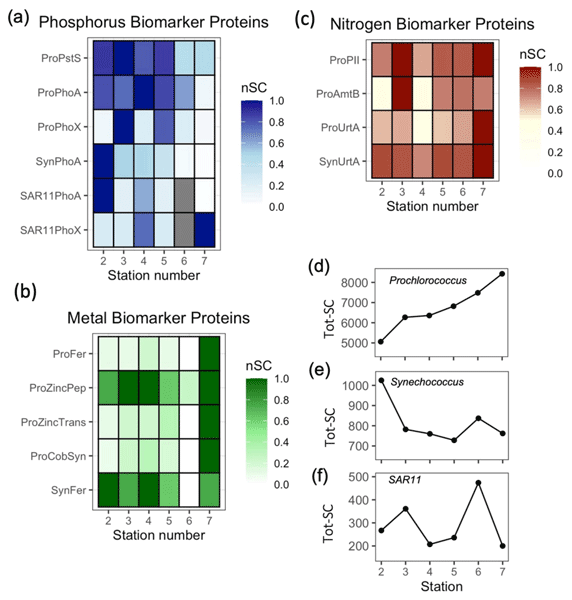
Claire Mahaffey, Noelle A. Held, Korinne Kunde, Clare Davis, Neil Wyatt, E. Matthew R. McIlvin, E. Malcolm S. Woodward, Lewis Wrightson, Alessandro Tagliabue, Maeve C. Lohan, and Mak Saito
Biogeosciences, 23, 905–922, https://doi.org/10.5194/bg-23-905-2026, https://doi.org/10.5194/bg-23-905-2026, 2026
Short summary
Short summary
Primary production helps regulate climate and is governed by nutrient availability. We used biogeochemical states and rates with proteomics to study how resource availability shapes metabolism in Prochlorococcus and Synechococcus. Both picocyanobacteria were phosphorus stressed in the western Atlantic, but Prochlorococcus was nitrogen, iron, zinc and cobalamin stressed in the east. Our findings provide species and ecotype level insights into oceanic nutrient acquisition and metabolism.
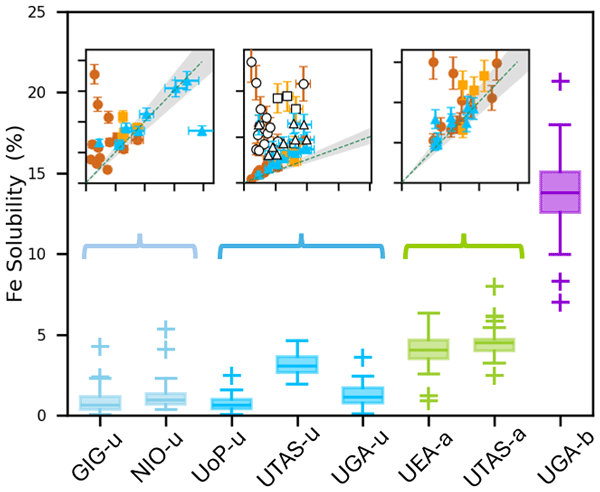
Mingjin Tang, Morgane M. G. Perron, Alex R. Baker, Rui Li, Andrew R. Bowie, Clifton S. Buck, Ashwini Kumar, Rachel Shelley, Simon J. Ussher, Robert Clough, Scott Meyerink, Prema P. Panda, Ashley T. Townsend, and Neil Wyatt
Atmos. Meas. Tech., 18, 6125–6141, https://doi.org/10.5194/amt-18-6125-2025, https://doi.org/10.5194/amt-18-6125-2025, 2025
Short summary
Short summary
This work, initiated by the SCOR (Scientific Committee on Oceanic Research) Working Group 167, has examined eight leaching protocols commonly used in the literature, is the first large-scale international laboratory comparison for aerosol trace element leaching protocols.
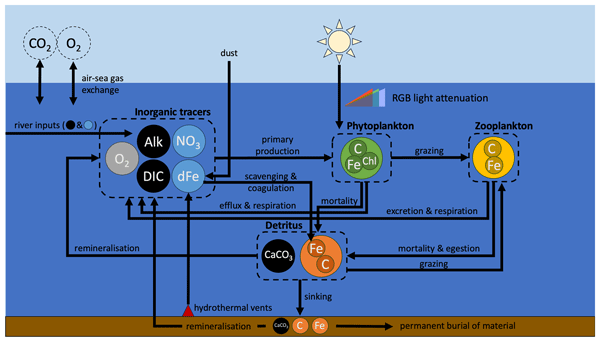
Pearse J. Buchanan, P. Jyoteeshkumar Reddy, Richard J. Matear, Matthew A. Chamberlain, Tyler Rohr, Dougal Squire, and Elizabeth H. Shadwick
Biogeosciences, 22, 5349–5385, https://doi.org/10.5194/bg-22-5349-2025, https://doi.org/10.5194/bg-22-5349-2025, 2025
Short summary
Short summary
We calibrate a new version of the World Ocean Model of Biogeochemistry and Trophic dynamics (WOMBAT-lite) using a surrogate machine learning approach. A Gaussian process surrogate trained on 512 simulations emulated tens of thousands, enabling global sensitivity analysis and Bayesian optimization of 26 parameters. We constrain 13 key parameters, improving fit to 8 datasets (chlorophyll a, air–sea CO₂ fluxes, nutrient limitation), and provide an optimal set for community use.
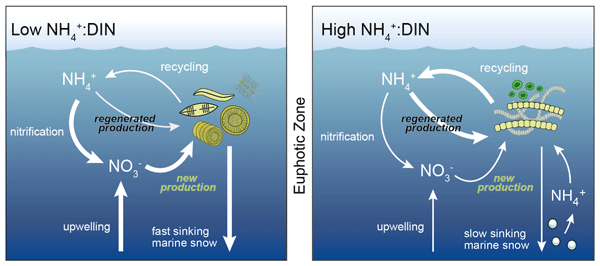
Pearse J. Buchanan, Juan J. Pierella Karlusich, Robyn E. Tuerena, Roxana Shafiee, E. Malcolm S. Woodward, Chris Bowler, and Alessandro Tagliabue
Biogeosciences, 22, 4865–4883, https://doi.org/10.5194/bg-22-4865-2025, https://doi.org/10.5194/bg-22-4865-2025, 2025
Short summary
Short summary
Ammonium is a form of nitrogen that may become more important for growth of marine primary producers (i.e., phytoplankton) in the future. Because some phytoplankton taxa have a greater affinity for ammonium than others, the relative increase in ammonium could cause shifts in community composition. We quantify ammonium enrichment, identify its drivers and isolate the possible effect on phytoplankton community composition under a high-emissions scenario.

Elizabeth H. Shadwick, Cathryn A. Wynn-Edwards, Ruth S. Eriksen, Peter Jansen, Xiang Yang, Gemma Woodward, and Diana Davies
Ocean Sci., 21, 1549–1573, https://doi.org/10.5194/os-21-1549-2025, https://doi.org/10.5194/os-21-1549-2025, 2025
Short summary
Short summary
The Southern Ocean Time Series acquires observations in subantarctic waters south of Australia. We present the seasonality in hydrography, biogeochemistry, phytoplankton community composition, and particulate organic and inorganic carbon export to the deep sea using observations collected between 1997 and 2022. We also review recent research underpinned by these observations and emphasize the value of long time series for understanding ocean processes and responses to a changing climate.
Claudia Hird, Morgane M. G. Perron, Thomas M. Holmes, Scott Meyerink, Christopher Nielsen, Ashley T. Townsend, Patrice de Caritat, Michal Strzelec, and Andrew R. Bowie
Aerosol Research, 2, 315–327, https://doi.org/10.5194/ar-2-315-2024, https://doi.org/10.5194/ar-2-315-2024, 2024
Short summary
Short summary
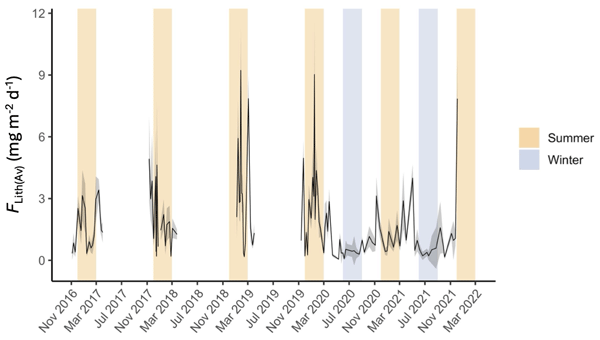
Dust deposition flux was investigated in lutruwita / Tasmania, Australia, between 2016–2021. Results show that the use of direct measurements of aluminium, iron, thorium, and titanium in aerosols to estimate average dust deposition fluxes limits biases associated with using single elements. Observations of dust deposition fluxes in the Southern Hemisphere are critical to validate model outputs and better understand the seasonal and interannual impacts of dust deposition on biogeochemical cycles.
Daniela König and Alessandro Tagliabue
Biogeosciences, 20, 4197–4212, https://doi.org/10.5194/bg-20-4197-2023, https://doi.org/10.5194/bg-20-4197-2023, 2023
Short summary
Short summary
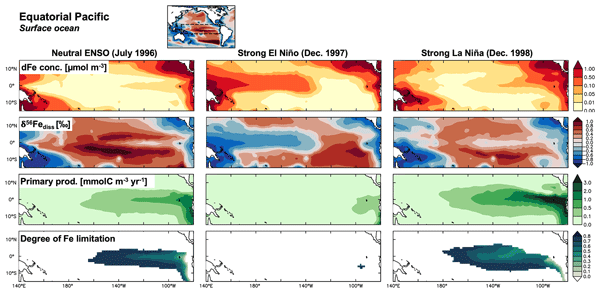
Using model simulations, we show that natural and anthropogenic changes in the global climate leave a distinct fingerprint in the isotopic signatures of iron in the surface ocean. We find that these climate effects on iron isotopes are often caused by the redistribution of iron from different external sources to the ocean, due to changes in ocean currents, and by changes in algal growth, which take up iron. Thus, isotopes may help detect climate-induced changes in iron supply and algal uptake.
Cited articles
Anugerahanti, P. and Tagliabue, A.: Response of Southern Ocean Resource Stress in a Changing Climate, Geophys. Res. Lett., 51, https://doi.org/10.1029/2023gl107870, 2024.
Auger, M., Morrow, R., Kestenare, E., Sallee, J. B., and Cowley, R.: Southern Ocean in-situ temperature trends over 25 years emerge from interannual variability, Nat. Commun., 12, 514, https://doi.org/10.1038/s41467-020-20781-1, 2021.
Aumont, O., Ethé, C., Tagliabue, A., Bopp, L., and Gehlen, M.: PISCES-v2: an ocean biogeochemical model for carbon and ecosystem studies, Geosci. Model Dev., 8, 2465–2513, https://doi.org/10.5194/gmd-8-2465-2015, 2015.
Barrett, P. M., Grun, R., and Ellwood, M. J.: Tracing iron along the flowpath of East Australian Current using iron stable isotopes, Mar. Chem., 237, https://doi.org/10.1016/j.marchem.2021.104039, 2021.
Behrenfeld, M. J.: Abandoning Sverdrup's Critical Depth Hypothesis on phytoplankton blooms, Ecology, 91, 977–989, https://doi.org/10.1890/09-1207.1, 2010.
Behrenfeld, M. J. and Falkowski, P. G.: Photosynthetic rates derived from satellite-based chlorophyll concentration, Limnol. Oceanogr., 42, 1–20, https://doi.org/10.4319/lo.1997.42.1.0001, 1997.
Bindoff, N. L. and Hobbs, W. R.: Deep ocean freshening, Nat. Clim. Change, 3, 864–865, https://doi.org/10.1038/nclimate2014, 2013.
Bonnet, R., Boucher, O., Deshayes, J., Gastineau, G., Hourdin, F., Mignot, J., Servonnat, J., and Swingedouw, D.: Presentation and Evaluation of the IPSL-CM6A-LR Ensemble of Extended Historical Simulations, J. Adv. Model. Earth Syst., 13, e2021MS002565, https://doi.org/10.1029/2021MS002565, 2021.
Boucher, O., Denvil, S., Levavasseur, G., Cozic, A., Caubel, A., Foujols, M.-A., Meurdesoif, Y., Cadule, P., Devilliers, M., Ghattas, J., Lebas, N., Lurton, T., Mellul, L., Musat, I., Mignot, J., and Cheruy, F.: IPSL IPSL-CM6A-LR model output prepared for CMIP6 CMIP historical, Earth System Grid Federation [data set], https://doi.org/10.22033/ESGF/CMIP6.5195, 2018.
Bowie, A. R., Lannuzel, D., Remenyi, T. A., Wagener, T., Lam, P. J., Boyd, P. W., Guieu, C., Townsend, A. T., and Trull, T. W.: Biogeochemical iron budgets of the Southern Ocean south of Australia: Decoupling of iron and nutrient cycles in the subantarctic zone by the summertime supply, Glob. Biogeochem. Cycles, 23, https://doi.org/10.1029/2009GB003500, 2009.
Bressac, M., Guieu, C., Ellwood, M. J., Tagliabue, A., Wagener, T., Laurenceau-Cornec, E. C., Whitby, H., Sarthou, G., and Boyd, P. W.: Resupply of mesopelagic dissolved iron controlled by particulate iron composition, Nat. Geosci., 12, 995–1000, https://doi.org/10.1038/s41561-019-0476-6, 2019.
Buchanan, P. J. and Tagliabue, A.: The Regional Importance of Oxygen Demand and Supply for Historical Ocean Oxygen Trends, Geophys. Res. Lett., 48, https://doi.org/10.1029/2021gl094797, 2021.
Cheng, L., von Schuckmann, K., Abraham, J. P., Trenberth, K. E., Mann, M. E., Zanna, L., England, M. H., Zika, J. D., Fasullo, J. T., Yu, Y., Pan, Y., Zhu, J., Newsom, E. R., Bronselaer, B., and Lin, X.: Past and future ocean warming, Nat. Rev. Earth Environ., 3, 776–794, https://doi.org/10.1038/s43017-022-00345-1, 2022.
Christian, J. R., Denman, K. L., Hayashida, H., Holdsworth, A. M., Lee, W. G., Riche, O. G. J., Shao, A. E., Steiner, N., and Swart, N. C.: Ocean biogeochemistry in the Canadian Earth System Model version 5.0.3: CanESM5 and CanESM5-CanOE, Geosci. Model Dev., 15, 4393–4424, https://doi.org/10.5194/gmd-15-4393-2022, 2022.
Copernicus Marine Service: Multi Observation Global Ocean ARMOR-3D L4 Analysis, E.U. Copernicus Marine Service Information (CMEMS), Marine Data Store (MDS) [data set], https://doi.org/10.48670/moi-00052, 2025.
Danabasoglu, G.: NCAR CESM2 model output prepared for CMIP6 CMIP historical, Earth System Grid Federation [data set], https://doi.org/10.22033/ESGF/CMIP6.7627, 2019.
Danabasoglu, G., Lamarque, J. F., Bacmeister, J., Bailey, D. A., DuVivier, A. K., Edwards, J., Emmons, L. K., Fasullo, J., Garcia, R., Gettelman, A., Hannay, C., Holland, M. M., Large, W. G., Lauritzen, P. H., Lawrence, D. M., Lenaerts, J. T. M., Lindsay, K., Lipscomb, W. H., Mills, M. J., Neale, R., Oleson, K. W., Otto-Bliesner, B., Phillips, A. S., Sacks, W., Tilmes, S., van Kampenhout, L., Vertenstein, M., Bertini, A., Dennis, J., Deser, C., Fischer, C., Fox-Kemper, B., Kay, J. E., Kinnison, D., Kushner, P. J., Larson, V. E., Long, M. C., Mickelson, S., Moore, J. K., Nienhouse, E., Polvani, L., Rasch, P. J., and Strand, W. G.: The Community Earth System Model Version 2 (CESM2), J. Adv. Model. Earth Syst., 12, e2019MS001916, https://doi.org/10.1029/2019MS001916, 2020.
De Boyer Montégut, C., Madec, G., Fischer, A. S., Lazar, A., and Iudicone, D.: Mixed layer depth over the global ocean: An examination of profile data and a profile-based climatology, J. Geophys. Res.-Oceans, 109, https://doi.org/10.1029/2004JC002378, 2004.
Deppeler, S. L. and Davidson, A. T.: Southern Ocean Phytoplankton in a Changing Climate, Front. Mar. Sci., 4, https://doi.org/10.3389/fmars.2017.00040, 2017.
Dunne, J. P., Horowitz, L. W., Adcroft, A. J., Ginoux, P., Held, I. M., John, J. G., Krasting, J. P., Malyshev, S., Naik, V., Paulot, F., Shevliakova, E., Stock, C. A., Zadeh, N., Balaji, V., Blanton, C., Dunne, K. A., Dupuis, C., Durachta, J., Dussin, R., Gauthier, P. P. G., Griffies, S. M., Guo, H., Hallberg, R. W., Harrison, M., He, J., Hurlin, W., McHugh, C., Menzel, R., Milly, P. C. D., Nikonov, S., Paynter, D. J., Ploshay, J., Radhakrishnan, A., Rand, K., Reichl, B. G., Robinson, T., Schwarzkopf, D. M., Sentman, L. T., Underwood, S., Vahlenkamp, H., Winton, M., Wittenberg, A. T., Wyman, B., Zeng, Y., and Zhao, M.: The GFDL Earth System Model Version 4.1 (GFDL-ESM 4.1): Overall Coupled Model Description and Simulation Characteristics, J. Adv. Model. Earth Syst., 12, e2019MS002015, https://doi.org/10.1029/2019MS002015, 2020.
Elsworth, G. W., Lovenduski, N. S., McKinnon, K. A., Krumhardt, K. M., and Brady, R. X.: Finding the Fingerprint of Anthropogenic Climate Change in Marine Phytoplankton Abundance, Curr. Clim. Change Rep., 6, 37–46, https://doi.org/10.1007/s40641-020-00156-w, 2020.
Eppley, R. W.: Temperature and phytoplankton growth in the sea, Fish. Bull., 70, 1063–1085, 1972.
Eriksen, R., Trull, T. W., Davies, D., Jansen, P., Davidson, A. T., Westwood, K., and van den Enden, R.: Seasonal succession of phytoplankton community structure from autonomous sampling at the Australian Southern Ocean Time Series (SOTS) observatory, Mar. Ecol. Prog. Ser., 589, 13–31, https://doi.org/10.3354/meps12420, 2018.
Evans, G. T. and Parslow, J. S.: A Model of Annual Plankton Cycles, Biol. Oceanogr., 3, 327–347, https://www.tandfonline.com/doi/abs/10.1080/01965581.1985.10749478 (last access: 1 October 2026), 1985.
Feely, R. A., Sabine, C. L., Lee, K., Berelson, W., Kleypas, J., Fabry, V. J., and Millero, F. J.: Impact of anthropogenic CO2 on the CaCO3 system in the oceans, Science, 305, 362–366, https://doi.org/10.1126/science.1097329, 2004.
Fisher, B. J., Poulton, A. J., Meredith, M. P., Baldry, K., Schofield, O., and Henley, S. F.: Climate-driven shifts in Southern Ocean primary producers and biogeochemistry in CMIP6 models, Biogeosciences, 22, 975–994, https://doi.org/10.5194/bg-22-975-2025, 2025.
Gentleman, W., Leising, A., Frost, B., Strom, S., and Murray, J.: Functional responses for zooplankton feeding on multiple resources: a review of assumptions and biological dynamics, Deep-Sea Res. II: Top. Stud. Oceanogr., 50, 2847–2875, https://doi.org/10.1016/j.dsr2.2003.07.001, 2003.
Gentleman, W. C. and Neuheimer, A. B.: Functional responses and ecosystem dynamics: how clearance rates explain the influence of satiation, food-limitation and acclimation, J. Plankt. Res., 30, 1215–1231, https://doi.org/10.1093/plankt/fbn078, 2008.
Good, S. A., Martin, M. J., and Rayner, N. A.: EN4: Quality controlled ocean temperature and salinity profiles and monthly objective analyses with uncertainty estimates, J. Geophys. Res.-Oceans, 118, 6704–6716, https://doi.org/10.1002/2013jc009067, 2013.
Gouretski, V. and Reseghetti, F.: On depth and temperature biases in bathythermograph data: Development of a new correction scheme based on analysis of a global ocean database, Deep-Sea Res. I: Oceanogr. Res. Pap., 57, 812–833, https://doi.org/10.1016/j.dsr.2010.03.011, 2010.
Guinehut, S., Dhomps, A.-L., Larnicol, G., and Le Traon, P.-Y.: High resolution 3-D temperature and salinity fields derived from in situ and satellite observations, Ocean Sci., 8, 845–857, https://doi.org/10.5194/os-8-845-2012, 2012.
Henley, S. F., Cavan, E. L., Fawcett, S. E., Kerr, R., Monteiro, T., Sherrell, R. M., Bowie, A. R., Boyd, P. W., Barnes, D. K. A., Schloss, I. R., Marshall, T., Flynn, R., and Smith, S.: Changing Biogeochemistry of the Southern Ocean and Its Ecosystem Implications, Front. Mar. Sci., 7, https://doi.org/10.3389/fmars.2020.00581, 2020.
Henson, S., Baker, C. A., Halloran, P., McQuatters-Gollop, A., Painter, S., Planchat, A., and Tagliabue, A.: Knowledge Gaps in Quantifying the Climate Change Response of Biological Storage of Carbon in the Ocean, Earth's Future, 12, https://doi.org/10.1029/2023ef004375, 2024.
Hutchins, D. A. and Tagliabue, A.: Feedbacks between phytoplankton and nutrient cycles in a warming ocean, Nat. Geosci., 17, 495–502, https://doi.org/10.1038/s41561-024-01454-w, 2024.
Keeling, R. F., Körtzinger, A., and Gruber, N.: Ocean Deoxygenation in a Warming World, Ann. Rev. Mar. Sci., 2, 199–229, https://doi.org/10.1146/annurev.marine.010908.163855, 2010.
Khatiwala, S., Tanhua, T., Mikaloff Fletcher, S., Gerber, M., Doney, S. C., Graven, H. D., Gruber, N., McKinley, G. A., Murata, A., Ríos, A. F., and Sabine, C. L.: Global ocean storage of anthropogenic carbon, Biogeosciences, 10, 2169–2191, https://doi.org/10.5194/bg-10-2169-2013, 2013.
Krasting, J. P., John, J. G., Blanton, C., McHugh, C., Nikonov, S., Radhakrishnan, A., Rand, K., Zadeh, N. T., Balaji, V., Durachta, J., Dupuis, C., Menzel, R., Robinson, T., Underwood, S., Vahlenkamp, H., Dunne, K. A., Gauthier, P. P. G., Ginoux, P., Griffies, S. M., Hallberg, R., Harrison, M., Hurlin, W., Malyshev, S., Naik, V., Paulot, F., Paynter, D. J., Ploshay, J., Reichl, B. G., Schwarzkopf, D. M., Seman, C. J., Silvers, L., Wyman, B., Zeng, Y., Adcroft, A., Dunne, J. P., Dussin, R., Guo, H., He, J., Held, I. M., Horowitz, L. W., Lin, P., Milly, P. C. D., Shevliakova, E., Stock, C., Winton, M., Wittenberg, A. T., Xie, Y., and Zhao, M.: NOAA-GFDL GFDL-ESM4 model output prepared for CMIP6 CMIP historical, Earth System Grid Federation [data set], https://doi.org/10.22033/ESGF/CMIP6.8597, 2018.
Kwiatkowski, L., Aumont, O., Bopp, L., and Ciais, P.: The Impact of Variable Phytoplankton Stoichiometry on Projections of Primary Production, Food Quality, and Carbon Uptake in the Global Ocean, Glob. Biogeochem. Cycles, 32, 516–528, https://doi.org/10.1002/2017gb005799, 2018.
Kwiatkowski, L., Torres, O., Bopp, L., Aumont, O., Chamberlain, M., Christian, J. R., Dunne, J. P., Gehlen, M., Ilyina, T., John, J. G., Lenton, A., Li, H., Lovenduski, N. S., Orr, J. C., Palmieri, J., Santana-Falcón, Y., Schwinger, J., Séférian, R., Stock, C. A., Tagliabue, A., Takano, Y., Tjiputra, J., Toyama, K., Tsujino, H., Watanabe, M., Yamamoto, A., Yool, A., and Ziehn, T.: Twenty-first century ocean warming, acidification, deoxygenation, and upper-ocean nutrient and primary production decline from CMIP6 model projections, Biogeosciences, 17, 3439–3470, https://doi.org/10.5194/bg-17-3439-2020, 2020.
Laufkötter, C., Vogt, M., Gruber, N., Aita-Noguchi, M., Aumont, O., Bopp, L., Buitenhuis, E., Doney, S. C., Dunne, J., Hashioka, T., Hauck, J., Hirata, T., John, J., Le Quéré, C., Lima, I. D., Nakano, H., Seferian, R., Totterdell, I., Vichi, M., and Völker, C.: Drivers and uncertainties of future global marine primary production in marine ecosystem models, Biogeosciences, 12, 6955–6984, https://doi.org/10.5194/bg-12-6955-2015, 2015.
Law, R. M., Ziehn, T., Matear, R. J., Lenton, A., Chamberlain, M. A., Stevens, L. E., Wang, Y.-P., Srbinovsky, J., Bi, D., Yan, H., and Vohralik, P. F.: The carbon cycle in the Australian Community Climate and Earth System Simulator (ACCESS-ESM1) – Part 1: Model description and pre-industrial simulation, Geosci. Model Dev., 10, 2567–2590, https://doi.org/10.5194/gmd-10-2567-2017, 2017.
Lee, Z., Lance, V. P., Shang, S., Vaillancourt, R., Freeman, S., Lubac, B., Hargreaves, B. R., Del Castillo, C., Miller, R., Twardowski, M., and Wei, G.: An assessment of optical properties and primary production derived from remote sensing in the Southern Ocean (SO GasEx), J. Geophys. Res., 116, https://doi.org/10.1029/2010jc006747, 2011.
Lenton, A., Tilbrook, B., Law, R. M., Bakker, D., Doney, S. C., Gruber, N., Ishii, M., Hoppema, M., Lovenduski, N. S., Matear, R. J., McNeil, B. I., Metzl, N., Mikaloff Fletcher, S. E., Monteiro, P. M. S., Rödenbeck, C., Sweeney, C., and Takahashi, T.: Sea–air CO2 fluxes in the Southern Ocean for the period 199–2009, Biogeosciences, 10, 4037–4054, https://doi.org/10.5194/bg-10-4037-2013, 2013.
Llort, J., Lévy, M., Sallée, J. B., and Tagliabue, A.: Nonmonotonic Response of Primary Production and Export to Changes in Mixed-Layer Depth in the Southern Ocean, Geophys. Res. Lett., 46, 3368–3377, https://doi.org/10.1029/2018gl081788, 2019.
Long, M. C., Moore, J. K., Lindsay, K., Levy, M., Doney, S. C., Luo, J. Y., Krumhardt, K. M., Letscher, R. T., Grover, M., and Sylvester, Z. T.: Simulations With the Marine Biogeochemistry Library (MARBL), J. Adv. Model. Earth Syst., 13, https://doi.org/10.1029/2021ms002647, 2021.
Lovato, T., Peano, D., and Butenschön, M.: CMCC CMCC-ESM2 model output prepared for CMIP6 CMIP historical, Earth System Grid Federation [data set], https://doi.org/10.22033/ESGF/CMIP6.13195, 2021.
Lovato, T., Peano, D., Butenschön, M., Materia, S., Iovino, D., Scoccimarro, E., Fogli, P. G., Cherchi, A., Bellucci, A., Gualdi, S., Masina, S., and Navarra, A.: CMIP6 Simulations With the CMCC Earth System Model (CMCC-ESM2), J. Adv. Model. Earth Syst., 14, e2021MS002814, https://doi.org/10.1029/2021MS002814, 2022.
Orr, J. C., Fabry, V. J., Aumont, O., Bopp, L., Doney, S. C., Feely, R. A., Gnanadesikan, A., Gruber, N., Ishida, A., Joos, F., Key, R. M., Lindsay, K., Maier-Reimer, E., Matear, R., Monfray, P., Mouchet, A., Najjar, R. G., Plattner, G.-K., Rodgers, K. B., Sabine, C. L., Sarmiento, J. L., Schlitzer, R., Slater, R. D., Totterdell, I. J., Weirig, M.-F., Yamanaka, Y., and Yool, A.: Anthropogenic ocean acidification over the twenty-first century and its impact on calcifying organisms, Nature, 437, 681–686, https://doi.org/10.1038/nature04095, 2005.
Orsi, A. H., Whitworth, T., and Nowlin, W. D.: On the meridional extent and fronts of the Antarctic Circumpolar Current, Deep-Sea Res. I: Oceanogr. Res. Pap., 42, 641–673, https://doi.org/10.1016/0967-0637(95)00021-W, 1995.
Pardo, P. C., Tilbrook, B., Langlais, C., Trull, T. W., and Rintoul, S. R.: Carbon uptake and biogeochemical change in the Southern Ocean, south of Tasmania, Biogeosciences, 14, 5217–5237, https://doi.org/10.5194/bg-14-5217-2017, 2017.
Pinkerton, M. H., Boyd, P. W., Deppeler, S., Hayward, A., Höfer, J., and Moreau, S.: Evidence for the Impact of Climate Change on Primary Producers in the Southern Ocean, Front. Ecol. Evol., 9, https://doi.org/10.3389/fevo.2021.592027, 2021.
Rohr, T., Richardson, A. J., Lenton, A., and Shadwick, E.: Recommendations for the formulation of grazing in marine biogeochemical and ecosystem models, Prog. Oceanogr., 208, https://doi.org/10.1016/j.pocean.2022.102878, 2022.
Rohr, T., Richardson, A. J., Lenton, A., Chamberlain, M. A., and Shadwick, E. H.: Zooplankton grazing is the largest source of uncertainty for marine carbon cycling in CMIP6 models, Commun. Earth Environ., 4, https://doi.org/10.1038/s43247-023-00871-w, 2023.
Ryan-Keogh, T.: Net primary production from the Lee-AbPM algorithm (1.2), Zenodo [data set], https://doi.org/10.5281/zenodo.14999308, 2025.
Ryan-Keogh, T. J., Thomalla, S. J., Chang, N., and Moalusi, T.: A new global oceanic multi-model net primary productivity data product, Earth Syst. Sci. Data, 15, 4829–4848, https://doi.org/10.5194/essd-15-4829-2023, 2023a.
Ryan-Keogh, T. J., Thomalla, S. J., Monteiro, P. M. S., and Tagliabue, A.: Multidecadal trend of increasing iron stress in Southern Ocean phytoplankton, Science, 379, 834–840, https://doi.org/10.1126/science.abl5237, 2023b.
Ryan-Keogh, T., Thomalla, S., Chang, N., and Moalusi, T.: Net primary production from the Eppley-VGPM, Behrenfeld-VGPM, Behrenfeld-CbPM, Westberry-CbPM and Silsbe-CAFE algorithms (1.3), Zenodo [data set], https://doi.org/10.5281/zenodo.14999403, 2025a.
Ryan-Keogh, T. J., Tagliabue, A., and Thomalla, S. J.: Global decline in net primary production underestimated by climate models, Commun. Earth Environ., 6, 75, https://doi.org/10.1038/s43247-025-02051-4, 2025b.
Saba, V. S., Friedrichs, M. A. M., Antoine, D., Armstrong, R. A., Asanuma, I., Behrenfeld, M. J., Ciotti, A. M., Dowell, M., Hoepffner, N., Hyde, K. J. W., Ishizaka, J., Kameda, T., Marra, J., Mélin, F., Morel, A., O'Reilly, J., Scardi, M., Smith Jr., W. O., Smyth, T. J., Tang, S., Uitz, J., Waters, K., and Westberry, T. K.: An evaluation of ocean color model estimates of marine primary productivity in coastal and pelagic regions across the globe, Biogeosciences, 8, 489–503, https://doi.org/10.5194/bg-8-489-2011, 2011.
Sabine, C. L., Feely, R. A., Gruber, N., Key, R. M., Lee, K., Bullister, J. L., Wanninkhof, R., Wong, C. S., Wallace, D. W., Tilbrook, B., Millero, F. J., Peng, T. H., Kozyr, A., Ono, T., and Rios, A. F.: The oceanic sink for anthropogenic CO2, Science, 305, 367–371, https://doi.org/10.1126/science.1097403, 2004.
Schallenberg, C., Harley, J. W., Jansen, P., Davies, D. M., and Trull, T. W.: Multi-Year Observations of Fluorescence and Backscatter at the Southern Ocean Time Series (SOTS) Shed Light on Two Distinct Seasonal Bio-Optical Regimes, Front. Mar. Sci., 6, https://doi.org/10.3389/fmars.2019.00595, 2019.
Schallenberg, C., Strzepek, R. F., Schuback, N., Clementson, L. A., Boyd, P. W., and Trull, T. W.: Diel quenching of Southern Ocean phytoplankton fluorescence is related to iron limitation, Biogeosciences, 17, 793–812, https://doi.org/10.5194/bg-17-793-2020, 2020.
Seferian, R.: CNRM-CERFACS CNRM-ESM2-1 model output prepared for CMIP6 CMIP historical, Earth System Grid Federation [data set], https://doi.org/10.22033/ESGF/CMIP6.4068, 2018.
Séférian, R., Nabat, P., Michou, M., Saint-Martin, D., Voldoire, A., Colin, J., Decharme, B., Delire, C., Berthet, S., Chevallier, M., Sénési, S., Franchisteguy, L., Vial, J., Mallet, M., Joetzjer, E., Geoffroy, O., Guérémy, J.-F., Moine, M.-P., Msadek, R., Ribes, A., Rocher, M., Roehrig, R., Salas-y-Mélia, D., Sanchez, E., Terray, L., Valcke, S., Waldman, R., Aumont, O., Bopp, L., Deshayes, J., Éthé, C., and Madec, G.: Evaluation of CNRM Earth System Model, CNRM-ESM2-1: Role of Earth System Processes in Present-Day and Future Climate, J. Adv. Model. Earth Syst., 11, 4182–4227, https://doi.org/10.1029/2019MS001791, 2019.
Shadwick, E. H., Trull, T. W., Tilbrook, B., Sutton, A. J., Schulz, E., and Sabine, C. L.: Seasonality of biological and physical controls on surface ocean CO2 from hourly observations at the Southern Ocean Time Series site south of Australia, Glob. Biogeochem. Cycles, 29, 223–238, https://doi.org/10.1002/2014gb004906, 2015.
Shadwick, E. H., Wynn-Edwards, C. A., Matear, R. J., Jansen, P., Schulz, E., and Sutton, A. J.: Observed amplification of the seasonal CO2 cycle at the Southern Ocean Time Series, Front. Mar. Sci., 10, https://doi.org/10.3389/fmars.2023.1281854, 2023.
Shadwick, E. H., Wynn-Edwards, C. A., Eriksen, R. S., Jansen, P., Yang, X., Woodward, G., and Davies, D.: The Southern Ocean Time Series: a climatological view of hydrography, biogeochemistry, phytoplankton community composition, and carbon export in the Subantarctic Zone, Ocean Sci., 21, 1549–1573, https://doi.org/10.5194/os-21-1549-2025, 2025.
Silsbe, G. M., Behrenfeld, M. J., Halsey, K. H., Milligan, A. J., and Westberry, T. K.: The CAFE model: A net production model for global ocean phytoplankton, Global Biogeochem. Cy., 30, 1756–1777, https://doi.org/10.1002/2016gb005521, 2016.
Stock, C. A., Dunne, J. P., Fan, S., Ginoux, P., John, J., Krasting, J. P., Laufkötter, C., Paulot, F., and Zadeh, N.: Ocean Biogeochemistry in GFDL's Earth System Model 4.1 and Its Response to Increasing Atmospheric CO2, J. Adv. Model. Earth Syst., 12, e2019MS002043, https://doi.org/10.1029/2019MS002043, 2020.
Swart, N. C., Cole, J. N. S., Kharin, V. V., Lazare, M., Scinocca, J. F., Gillett, N. P., Anstey, J., Arora, V., Christian, J. R., Jiao, Y., Lee, W. G., Majaess, F., Saenko, O. A., Seiler, C., Seinen, C., Shao, A., Solheim, L., von Salzen, K., Yang, D., Winter, B., and Sigmond, M.: CCCma CanESM5 model output prepared for CMIP6 CMIP historical, Earth System Grid Federation [data set], https://doi.org/10.22033/ESGF/CMIP6.3610, 2019a.
Swart, N. C., Cole, J. N. S., Kharin, V. V., Lazare, M., Scinocca, J. F., Gillett, N. P., Anstey, J., Arora, V., Christian, J. R., Jiao, Y., Lee, W. G., Majaess, F., Saenko, O. A., Seiler, C., Seinen, C., Shao, A., Solheim, L., von Salzen, K., Yang, D., Winter, B., and Sigmond, M.: CCCma CanESM5-CanOE model output prepared for CMIP6 CMIP historical, Earth System Grid Federation [data set], https://doi.org/10.22033/ESGF/CMIP6.10260, 2019b.
Swart, S., Thomalla, S. J., and Monteiro, P. M. S.: The seasonal cycle of mixed layer dynamics and phytoplankton biomass in the Sub-Antarctic Zone: A high-resolution glider experiment, J. Mar. Syst., 147, 103–115, https://doi.org/10.1016/j.jmarsys.2014.06.002, 2015.
Swart, S., du Plessis, M. D., Nicholson, S. A., Monteiro, P. M. S., Dove, L. A., Thomalla, S., Thompson, A. F., Biddle, L. C., Edholm, J. M., Giddy, I., Heywood, K. J., Lee, C., Mahadevan, A., Shilling, G., and de Souza, R. B.: The Southern Ocean mixed layer and its boundary fluxes: fine-scale observational progress and future research priorities, Philos. Trans. A Math. Phys. Eng. Sci., 381, 20220058, https://doi.org/10.1098/rsta.2022.0058, 2023.
Tagliabue, A. and Traill, C. D.: Towards Constraining the Drivers of Variability and Trends in Subantarctic Productivity, Zenodo [data set], https://doi.org/10.5281/zenodo.18041475, 2026.
Tagliabue, A., Mtshali, T., Aumont, O., Bowie, A. R., Klunder, M. B., Roychoudhury, A. N., and Swart, S.: A global compilation of dissolved iron measurements: focus on distributions and processes in the Southern Ocean, Biogeosciences, 9, 2333–2349, https://doi.org/10.5194/bg-9-2333-2012, 2012.
Tagliabue, A., Sallée, J.-B., Bowie, A. R., Lévy, M., Swart, S., and Boyd, P. W.: Surface-water iron supplies in the Southern Ocean sustained by deep winter mixing, Nat. Geosci., 7, 314–320, https://doi.org/10.1038/ngeo2101, 2014.
Tagliabue, A., Bowie, A. R., DeVries, T., Ellwood, M. J., Landing, W. M., Milne, A., Ohnemus, D. C., Twining, B. S., and Boyd, P. W.: The interplay between regeneration and scavenging fluxes drives ocean iron cycling, Nat. Commun., 10, 4960, https://doi.org/10.1038/s41467-019-12775-5, 2019.
Tagliabue, A., Kwiatkowski, L., Bopp, L., Butenschön, M., Cheung, W., Lengaigne, M., and Vialard, J.: Persistent Uncertainties in Ocean Net Primary Production Climate Change Projections at Regional Scales Raise Challenges for Assessing Impacts on Ecosystem Services, Front. Clim., 3, https://doi.org/10.3389/fclim.2021.738224, 2021.
Tagliabue, A., Buck, K. N., Sofen, L. E., Twining, B. S., Aumont, O., Boyd, P. W., Caprara, S., Homoky, W. B., Johnson, R., Konig, D., Ohnemus, D. C., Sohst, B., and Sedwick, P.: Authigenic mineral phases as a driver of the upper-ocean iron cycle, Nature, 620, 104–109, https://doi.org/10.1038/s41586-023-06210-5, 2023.
Tagliabue, A., Ryan-Keogh, T., Baker, A., Bibby, T. S., Follett, C., Lohan, M. C., Naveira-Garabato, A., Mayor, D. J., Milne, A., Moore, C. M., and Ussher, S.: The Evolution of Southern Ocean Net Primary Production in a Changing Climate: Challenges and Opportunities, Glob. Chang Biol., 31, e70653, https://doi.org/10.1111/gcb.70653, 2025.
Thomalla, S. J., Nicholson, S.-A., Ryan-Keogh, T. J., and Smith, M. E.: Widespread changes in Southern Ocean phytoplankton blooms linked to climate drivers, Nat. Clim. Change, 13, 975–984, https://doi.org/10.1038/s41558-023-01768-4, 2023.
Traill, C. D.: cdtraill/Traill-et-al.-2025-Towards-constraining-drivers-of-subantarctic-productivity-variability-and-trends: Code for analysis and figures in “Towards Constraining the Drivers of Variability and Trends in Subantarctic Productivity” (Version v1.0.0), Zenodo [code], https://doi.org/10.5281/zenodo.18148573, 2026.
Traill, C. D., Conde-Pardo, P., Rohr, T., van der Merwe, P., Townsend, A. T., Latour, P., Gault-Ringold, M., Wuttig, K., Corkill, M., Holmes, T. M., Warner, M. J., Shadwick, E., and Bowie, A. R.: Mechanistic Constraints on the Drivers of Southern Ocean Meridional Iron Distributions Between Tasmania and Antarctica, Glob. Biogeochem. Cycles, 38, https://doi.org/10.1029/2023gb007856, 2024.
Traill, C. D., Rohr, T., Shadwick, E., Schallenberg, C., Ellwood, M., and Bowie, A.: Coupling Between the Subantarctic Seasonal Iron Cycle and Productivity at the Southern Ocean Time Series (SOTS), AGU Adv., 6, https://doi.org/10.1029/2024av001599, 2025.
Trull, T. W., Bray, S. G., Manganini, S. J., Honjo, S., and François, R.: Moored sediment trap measurements of carbon export in the Subantarctic and Polar Frontal zones of the Southern Ocean, south of Australia, J. Geophys. Res.-Oceans, 106, 31489–31509, https://doi.org/10.1029/2000JC000308, 2001.
Trull, T. W., Jansen, P., Schulz, E., Weeding, B., Davies, D. M., and Bray, S. G.: Autonomous Multi-Trophic Observations of Productivity and Export at the Australian Southern Ocean Time Series (SOTS) Reveal Sequential Mechanisms of Physical-Biological Coupling, Front. Mar. Sci., 6, 525, https://doi.org/10.3389/fmars.2019.00525, 2019.
Tsujino, H., Urakawa, S., Nakano, H., Small, R. J., Kim, W. M., Yeager, S. G., Danabasoglu, G., Suzuki, T., Bamber, J. L., Bentsen, M., Böning, C. W., Bozec, A., Chassignet, E. P., Curchitser, E., Boeira Dias, F., Durack, P. J., Griffies, S. M., Harada, Y., Ilicak, M., Josey, S. A., Kobayashi, C., Kobayashi, S., Komuro, Y., Large, W. G., Le Sommer, J., Marsland, S. J., Masina, S., Scheinert, M., Tomita, H., Valdivieso, M., and Yamazaki, D.: JRA-55 based surface dataset for driving ocean–sea-ice models (JRA55-do), Ocean Model., 130, 79–139, https://doi.org/10.1016/j.ocemod.2018.07.002, 2018.
Westberry, T., Behrenfeld, M. J., Siegel, D. A., and Boss, E.: Carbon-based primary productivity modeling with vertically resolved photoacclimation, Glob. Biogeochem. Cycles, 22, GB2024, https://doi.org/10.1029/2007gb003078, 2008.
Wu, J., Lee, Z., Goes, J., Gomes, H. d. R., and Wei, J.: Evaluation of three contrasting models in estimating primary production from ocean color remote sensing using long-term time-series data at oceanic and coastal sites, Remote Sens. Environ., 302, https://doi.org/10.1016/j.rse.2023.113983, 2024.
Wynn-Edwards, C. A., Shadwick, E. H., Davies, D. M., Bray, S. G., Jansen, P., Trinh, R., and Trull, T. W.: Particle Fluxes at the Australian Southern Ocean Time Series (SOTS) Achieve Organic Carbon Sequestration at Rates Close to the Global Median, Are Dominated by Biogenic Carbonates, and Show No Temporal Trends Over 20-Years, Front. Earth Sci., 8, 329, https://doi.org/10.3389/feart.2020.00329, 2020.
Yang, X., Wynn-Edwards, C. A., Strutton, P. G., and Shadwick, E. H.: Drivers of Air-Sea CO2 Flux in the Subantarctic Zone Revealed by Time Series Observations, Glob. Biogeochem. Cycles, 38, https://doi.org/10.1029/2023gb007766, 2024a.
Yang, X., Wynn-Edwards, C. A., Strutton, P. G., and Shadwick, E. H.: Carbon Export in the Subantarctic Zone Revealed by Multi-Year Observations From Biogeochemical-Argo Floats and Sediment Traps, Glob. Biogeochem. Cycles, 38, 10.1029/2024gb008135, 2024b.
Zahariev, K., Christian, J. R., and Denman, K. L.: Preindustrial, historical, and fertilization simulations using a global ocean carbon model with new parameterizations of iron limitation, calcification, and N2 fixation, Prog. Oceanogr., 77, 56–82, https://doi.org/10.1016/j.pocean.2008.01.007, 2008.
Ziehn, T., Chamberlain, M., Lenton, A., Law, R., Bodman, R., Dix, M., Wang, Y., Dobrohotoff, P., Srbinovsky, J., Stevens, L., Vohralik, P., Mackallah, C., Sullivan, A., O'Farrell, S., and Druken, K.: CSIRO ACCESS-ESM1.5 model output prepared for CMIP6 CMIP historical, Earth System Grid Federation [data set], https://doi.org/10.22033/ESGF/CMIP6.4272, 2019.
Short summary
Southern Ocean phytoplankton are a key part of the carbon cycle, yet year-to-year changes in ocean productivity are poorly understood. Using model simulations, this study shows how deeper mixing in the most productive years increases nutrient supply and changes the predator-prey relationship between phytoplankton and zooplankton. This helps explain why satellite productivity estimates disagree, and the reasons for why climate projections might be getting inaccurate estimates of future production.
Southern Ocean phytoplankton are a key part of the carbon cycle, yet year-to-year changes in...


Altmetrics
Final-revised paper
Preprint