
Articles | Volume 23, issue 19
https://doi.org/10.5194/bg-23-7151-2026
© Author(s) 2026. This work is distributed under
the Creative Commons Attribution 4.0 License.
the Creative Commons Attribution 4.0 License.
https://doi.org/10.5194/bg-23-7151-2026
© Author(s) 2026. This work is distributed under
the Creative Commons Attribution 4.0 License.
the Creative Commons Attribution 4.0 License.
Research article
| 
12 Oct 2026
Research article |
| 12 Oct 2026
| 12 Oct 2026
What matters when? Temporal development of drivers and sources of nitrous oxide emissions in winter wheat

Department of Environmental Systems Science, ETH Zurich, Zurich, Switzerland
Iris Feigenwinter
Department of Environmental Systems Science, ETH Zurich, Zurich, Switzerland
Lorenz Allemann
Department of Environmental Systems Science, ETH Zurich, Zurich, Switzerland
Lukas Hörtnagl
Department of Environmental Systems Science, ETH Zurich, Zurich, Switzerland
Frank Liebisch
Department of Agroecology and Environment, Agroscope, Zurich, Switzerland
Nina Buchmann
Department of Environmental Systems Science, ETH Zurich, Zurich, Switzerland
Related authors
Sarah Maxwell, Fabio Turco, Yi Wang, Lukas Hörtnagl, Nina Buchmann, and Flavian Tschurr
EGUsphere, https://doi.org/10.5194/egusphere-2026-5253, https://doi.org/10.5194/egusphere-2026-5253, 2026
This preprint is open for discussion and under review for Biogeosciences (BG).
Short summary
Short summary
To understand what shapes crop growth under climate change, we analyzed 20 years of field data from a Swiss farm. We found that light, temperature, and nitrogen fertilizer strongly drive carbon fluxes in winter wheat, barley, and rapeseed. Interestingly, two decades of rising heat occurred post-harvest, allowing crops to escape adverse summer conditions. Ultimately, this shows that long-term observations integrating farm management with climate data are essential for evaluating crop resilience.
Aolin Jia, Helge Aasen, Lukas Hörtnagl, Iris Feigenwinter, Sélène Ledain, Thomas Lauber, Kukka-Maaria Kohonen, Flavian Tschurr, Lorenz Allemann, Fabio Turco, and Nina Buchmann
EGUsphere, https://doi.org/10.5194/egusphere-2026-3522, https://doi.org/10.5194/egusphere-2026-3522, 2026
Short summary
Short summary
Farm management affects how fields exchange water and greenhouse gases with the air, but records of mowing, harvest, and bare soil periods are often incomplete. We used satellite observations and field measurements from Swiss grasslands and croplands to test whether these actions can be tracked from space. The satellite information improved daily estimates of water use and greenhouse gas exchange, especially carbon dioxide, nitrous oxide, and methane, supporting agricultural climate monitoring.
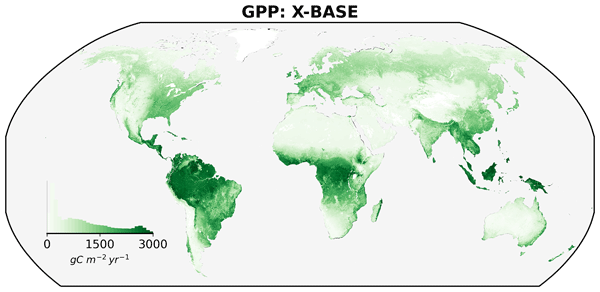
Jacob A. Nelson, Sophia Walther, Fabian Gans, Basil Kraft, Ulrich Weber, Kimberly Novick, Nina Buchmann, Mirco Migliavacca, Georg Wohlfahrt, Ladislav Šigut, Andreas Ibrom, Dario Papale, Mathias Göckede, Gregory Duveiller, Alexander Knohl, Lukas Hörtnagl, Russell L. Scott, Jiří Dušek, Weijie Zhang, Zayd Mahmoud Hamdi, Markus Reichstein, Sergio Aranda-Barranco, Jonas Ardö, Maarten Op de Beeck, Dave Billesbach, David Bowling, Rosvel Bracho, Christian Brümmer, Gustau Camps-Valls, Shiping Chen, Jamie Rose Cleverly, Ankur Desai, Gang Dong, Tarek S. El-Madany, Eugenie Susanne Euskirchen, Iris Feigenwinter, Marta Galvagno, Giacomo A. Gerosa, Bert Gielen, Ignacio Goded, Sarah Goslee, Christopher Michael Gough, Bernard Heinesch, Kazuhito Ichii, Marcin Antoni Jackowicz-Korczynski, Anne Klosterhalfen, Sara Knox, Hideki Kobayashi, Kukka-Maaria Kohonen, Mika Korkiakoski, Ivan Mammarella, Mana Gharun, Riccardo Marzuoli, Roser Matamala, Stefan Metzger, Leonardo Montagnani, Giacomo Nicolini, Thomas O'Halloran, Jean-Marc Ourcival, Matthias Peichl, Elise Pendall, Borja Ruiz Reverter, Marilyn Roland, Simone Sabbatini, Torsten Sachs, Marius Schmidt, Christopher R. Schwalm, Ankit Shekhar, Richard Silberstein, Maria Lucia Silveira, Donatella Spano, Torbern Tagesson, Gianluca Tramontana, Carlo Trotta, Fabio Turco, Timo Vesala, Caroline Vincke, Domenico Vitale, Enrique R. Vivoni, Yi Wang, William Woodgate, Enrico A. Yepez, Junhui Zhang, Donatella Zona, and Martin Jung
Biogeosciences, 21, 5079–5115, https://doi.org/10.5194/bg-21-5079-2024, https://doi.org/10.5194/bg-21-5079-2024, 2024
Short summary
Short summary
The movement of water, carbon, and energy from the Earth's surface to the atmosphere, or flux, is an important process to understand because it impacts our lives. Here, we outline a method called FLUXCOM-X to estimate global water and CO2 fluxes based on direct measurements from sites around the world. We go on to demonstrate how these new estimates of net CO2 uptake/loss, gross CO2 uptake, total water evaporation, and transpiration from plants compare to previous and independent estimates.
Sarah Maxwell, Fabio Turco, Yi Wang, Lukas Hörtnagl, Nina Buchmann, and Flavian Tschurr
EGUsphere, https://doi.org/10.5194/egusphere-2026-5253, https://doi.org/10.5194/egusphere-2026-5253, 2026
This preprint is open for discussion and under review for Biogeosciences (BG).
Short summary
Short summary
To understand what shapes crop growth under climate change, we analyzed 20 years of field data from a Swiss farm. We found that light, temperature, and nitrogen fertilizer strongly drive carbon fluxes in winter wheat, barley, and rapeseed. Interestingly, two decades of rising heat occurred post-harvest, allowing crops to escape adverse summer conditions. Ultimately, this shows that long-term observations integrating farm management with climate data are essential for evaluating crop resilience.
Jize Jiang, Lenny H. E. Winkel, Andrea Stenke, Magdalena Necpalova, Moritz Laub, Iris Feigenwinter, Nina Buchmann, and Johan Six
EGUsphere, https://doi.org/10.5194/egusphere-2026-4445, https://doi.org/10.5194/egusphere-2026-4445, 2026
Short summary
Short summary
We studied how fertiliser management and a warming climate affect nitrous oxide emissions from agricultural soils in Switzerland over the past fourty years. Using computer simulations and nationwide data, we found that lower fertiliser use reduced emissions, but rising temperatures cancelled part of these mitigations. The results show a trade-off between mitigation actions and environmental-driven feedback, highlighting future efforts must also account for the effects of a changing climate.
Aolin Jia, Helge Aasen, Lukas Hörtnagl, Iris Feigenwinter, Sélène Ledain, Thomas Lauber, Kukka-Maaria Kohonen, Flavian Tschurr, Lorenz Allemann, Fabio Turco, and Nina Buchmann
EGUsphere, https://doi.org/10.5194/egusphere-2026-3522, https://doi.org/10.5194/egusphere-2026-3522, 2026
Short summary
Short summary
Farm management affects how fields exchange water and greenhouse gases with the air, but records of mowing, harvest, and bare soil periods are often incomplete. We used satellite observations and field measurements from Swiss grasslands and croplands to test whether these actions can be tracked from space. The satellite information improved daily estimates of water use and greenhouse gas exchange, especially carbon dioxide, nitrous oxide, and methane, supporting agricultural climate monitoring.
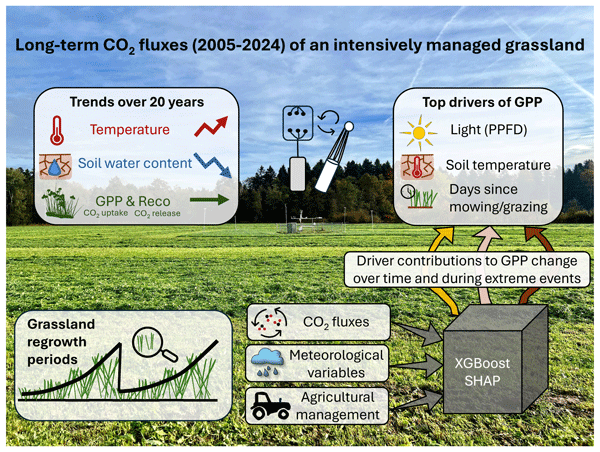
Yi Wang, Iris Feigenwinter, Lukas Hörtnagl, Anna K. Gilgen, and Nina Buchmann
Biogeosciences, 23, 1625–1652, https://doi.org/10.5194/bg-23-1625-2026, https://doi.org/10.5194/bg-23-1625-2026, 2026
Short summary
Short summary
Analyzing 20 years (2005–2024) of CO2 flux, meteorological, and agricultural management data from an intensively managed grassland in Switzerland using machine learning, we identified drivers of ecosystem productivity (gross primary production (GPP)), respiration (ecosystem respiration (Reco)) and their changes over time. Moreover, we showed how agricultural management interacted and could partly offset negative impacts of extreme events on GPP. Our findings offer observational evidence to inform climate adaptation strategies in grasslands.
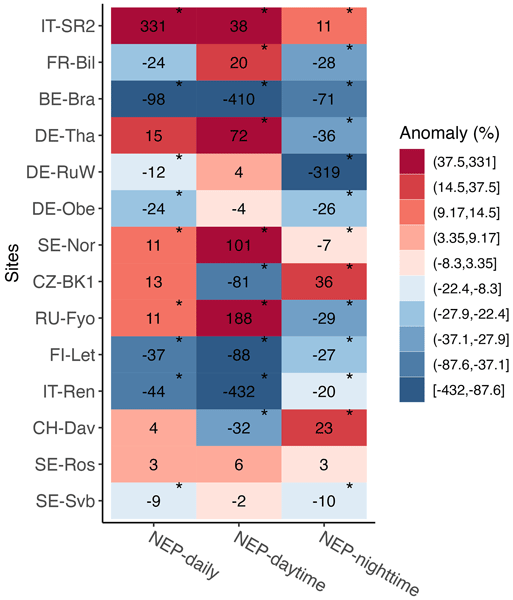
Mana Gharun, Ankit Shekhar, Lukas Hörtnagl, Luana Krebs, Nicola Arriga, Mirco Migliavacca, Marilyn Roland, Bert Gielen, Leonardo Montagnani, Enrico Tomelleri, Ladislav Šigut, Matthias Peichl, Peng Zhao, Marius Schmidt, Thomas Grünwald, Mika Korkiakoski, Annalea Lohila, and Nina Buchmann
Biogeosciences, 22, 1393–1411, https://doi.org/10.5194/bg-22-1393-2025, https://doi.org/10.5194/bg-22-1393-2025, 2025
Short summary
Short summary
The effect of winter warming on forest CO2 fluxes has rarely been investigated. We tested the effect of the warm winter of 2020 on the forest CO2 fluxes across 14 sites in Europe and found that the net ecosystem productivity (NEP) across most sites declined during the warm winter due to increased respiration fluxes.
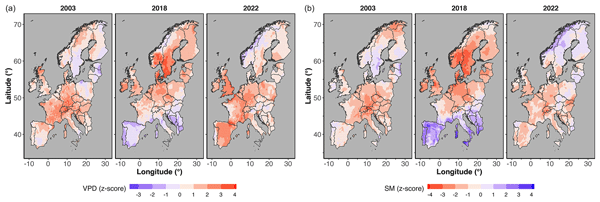
Mana Gharun, Ankit Shekhar, Jingfeng Xiao, Xing Li, and Nina Buchmann
Biogeosciences, 21, 5481–5494, https://doi.org/10.5194/bg-21-5481-2024, https://doi.org/10.5194/bg-21-5481-2024, 2024
Short summary
Short summary
In 2022, Europe's forests faced unprecedented dry conditions. Our study aimed to understand how different forest types respond to extreme drought. Using meteorological data and satellite imagery, we compared 2022 with two previous extreme years, 2003 and 2018. Despite less severe drought in 2022, forests showed a 30 % greater decline in photosynthesis compared to 2018 and 60 % more than 2003. This suggests an alarming level of vulnerability of forests across Europe to more frequent droughts.
Jacob A. Nelson, Sophia Walther, Fabian Gans, Basil Kraft, Ulrich Weber, Kimberly Novick, Nina Buchmann, Mirco Migliavacca, Georg Wohlfahrt, Ladislav Šigut, Andreas Ibrom, Dario Papale, Mathias Göckede, Gregory Duveiller, Alexander Knohl, Lukas Hörtnagl, Russell L. Scott, Jiří Dušek, Weijie Zhang, Zayd Mahmoud Hamdi, Markus Reichstein, Sergio Aranda-Barranco, Jonas Ardö, Maarten Op de Beeck, Dave Billesbach, David Bowling, Rosvel Bracho, Christian Brümmer, Gustau Camps-Valls, Shiping Chen, Jamie Rose Cleverly, Ankur Desai, Gang Dong, Tarek S. El-Madany, Eugenie Susanne Euskirchen, Iris Feigenwinter, Marta Galvagno, Giacomo A. Gerosa, Bert Gielen, Ignacio Goded, Sarah Goslee, Christopher Michael Gough, Bernard Heinesch, Kazuhito Ichii, Marcin Antoni Jackowicz-Korczynski, Anne Klosterhalfen, Sara Knox, Hideki Kobayashi, Kukka-Maaria Kohonen, Mika Korkiakoski, Ivan Mammarella, Mana Gharun, Riccardo Marzuoli, Roser Matamala, Stefan Metzger, Leonardo Montagnani, Giacomo Nicolini, Thomas O'Halloran, Jean-Marc Ourcival, Matthias Peichl, Elise Pendall, Borja Ruiz Reverter, Marilyn Roland, Simone Sabbatini, Torsten Sachs, Marius Schmidt, Christopher R. Schwalm, Ankit Shekhar, Richard Silberstein, Maria Lucia Silveira, Donatella Spano, Torbern Tagesson, Gianluca Tramontana, Carlo Trotta, Fabio Turco, Timo Vesala, Caroline Vincke, Domenico Vitale, Enrique R. Vivoni, Yi Wang, William Woodgate, Enrico A. Yepez, Junhui Zhang, Donatella Zona, and Martin Jung
Biogeosciences, 21, 5079–5115, https://doi.org/10.5194/bg-21-5079-2024, https://doi.org/10.5194/bg-21-5079-2024, 2024
Short summary
Short summary
The movement of water, carbon, and energy from the Earth's surface to the atmosphere, or flux, is an important process to understand because it impacts our lives. Here, we outline a method called FLUXCOM-X to estimate global water and CO2 fluxes based on direct measurements from sites around the world. We go on to demonstrate how these new estimates of net CO2 uptake/loss, gross CO2 uptake, total water evaporation, and transpiration from plants compare to previous and independent estimates.
Liliana Scapucci, Ankit Shekhar, Sergio Aranda-Barranco, Anastasiia Bolshakova, Lukas Hörtnagl, Mana Gharun, and Nina Buchmann
Biogeosciences, 21, 3571–3592, https://doi.org/10.5194/bg-21-3571-2024, https://doi.org/10.5194/bg-21-3571-2024, 2024
Short summary
Short summary
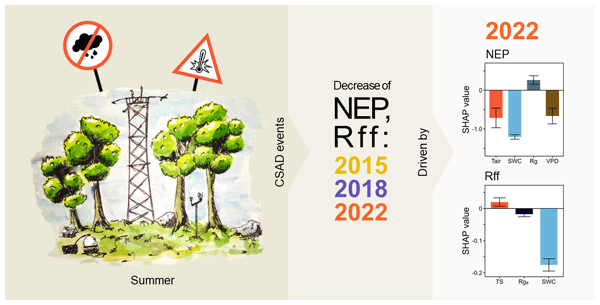
Forests face increased exposure to “compound soil and atmospheric drought” (CSAD) events due to global warming. We examined the impacts and drivers of CO2 fluxes during CSAD events at multiple layers of a deciduous forest over 18 years. Results showed reduced net ecosystem productivity and forest-floor respiration during CSAD events, mainly driven by soil and atmospheric drought. This unpredictability in forest CO2 fluxes jeopardises reforestation projects aimed at mitigating CO2 emissions.
Luana Krebs, Susanne Burri, Iris Feigenwinter, Mana Gharun, Philip Meier, and Nina Buchmann
Biogeosciences, 21, 2005–2028, https://doi.org/10.5194/bg-21-2005-2024, https://doi.org/10.5194/bg-21-2005-2024, 2024
Short summary
Short summary
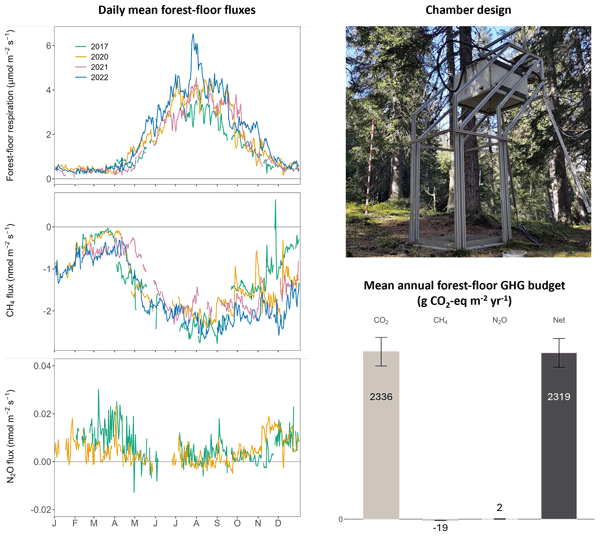
This study explores year-round forest-floor greenhouse gas (GHG) fluxes in a Swiss spruce forest. Soil temperature and snow depth affected forest-floor respiration, while CH4 uptake was linked to snow cover. Negligible N2O fluxes were observed. In 2022, a warm year, CO2 emissions notably increased. The study suggests rising forest-floor GHG emissions due to climate change, impacting carbon sink behavior. Thus, for future forest management, continuous year-round GHG flux measurements are crucial.
Qing Sun, Valentin H. Klaus, Raphaël Wittwer, Yujie Liu, Marcel G. A. van der Heijden, Anna K. Gilgen, and Nina Buchmann
Biogeosciences, 19, 1853–1869, https://doi.org/10.5194/bg-19-1853-2022, https://doi.org/10.5194/bg-19-1853-2022, 2022
Short summary
Short summary
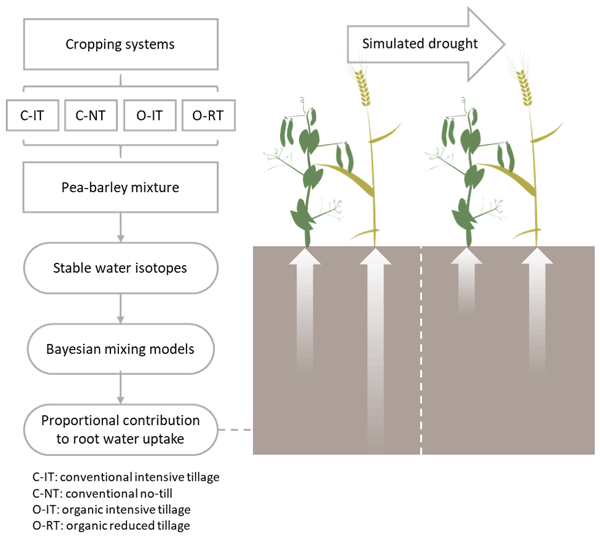
Drought is one of the biggest challenges for future food production globally. During a simulated drought, pea and barley mainly relied on water from shallow soil depths, independent of different cropping systems.
Andreas Riedl, Yafei Li, Jon Eugster, Nina Buchmann, and Werner Eugster
Hydrol. Earth Syst. Sci., 26, 91–116, https://doi.org/10.5194/hess-26-91-2022, https://doi.org/10.5194/hess-26-91-2022, 2022
Short summary
Short summary
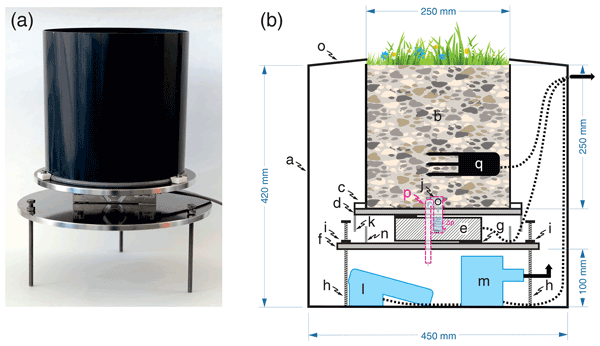
The aim of this study was to develop a high-accuracy micro-lysimeter system for the quantification of non-rainfall water inputs that overcomes existing drawbacks. The micro-lysimeter system had a high accuracy and allowed us to quantify and distinguish between different types of non-rainfall water inputs, like dew and fog. Non-rainfall water inputs occurred frequently in a Swiss Alpine grassland ecosystem. These water inputs can be an important water source for grasslands during dry periods.
Cited articles
Abalos, D., van Groenigen, J. W., and De Deyn, G. B.: What plant functional traits can reduce nitrous oxide emissions from intensively managed grasslands?, Glob. Change Biol., 24, e248–e258, https://doi.org/10.1111/gcb.13827, 2018.
Akiyama, H., Yan, X., and Yagi, K.: Evaluation of effectiveness of enhanced-efficiency fertilizers as mitigation options for N2O and NO emissions from agricultural soils: meta-analysis, Glob. Change Biol., 16, 1837–1846, https://doi.org/10.1111/j.1365-2486.2009.02031.x, 2010.
Alaoui, A. and Goetz, B.: Dye tracer and infiltration experiments to investigate macropore flow, Geoderma, 144, 279–286, https://doi.org/10.1016/j.geoderma.2007.11.020, 2008.
Ammann, C., Flechard, C. R., Leifeld, J., Neftel, A., and Fuhrer, J.: The carbon budget of newly established temperate grassland depends on management intensity, Agric. Ecosyst. Environ., 121, 5–20, https://doi.org/10.1016/j.agee.2006.12.002, 2007.
Ammann, C., Neftel, A., Jocher, M., Fuhrer, J., and Leifeld, J.: Effect of management and weather variations on the greenhouse gas budget of two grasslands during a 10-year experiment, Agric. Ecosyst. Environ., 292, 106814, https://doi.org/10.1016/j.agee.2019.106814, 2020.
Aubinet, M., Chermanne, B., Vandenhaute, M., Longdoz, B., Yernaux, M., and Laitat, E.: Long term carbon dioxide exchange above a mixed forest in the Belgian Ardennes, Agr. Forest Meteorol., 108, 293–315, https://doi.org/10.1016/S0168-1923(01)00244-1, 2001.
Aubinet, M., Vesala, T., and Papale, D. (Eds.): Eddy covariance: a practical guide to measurement and data analysis, Springer Netherlands, Dordrecht, https://doi.org/10.1007/978-94-007-2351-1, 2012.
Bateman, E. J. and Baggs, E. M.: Contributions of nitrification and denitrification to N2O emissions from soils at different water-filled pore space, Biol. Fertil. Soils, 41, 379–388, https://doi.org/10.1007/s00374-005-0858-3, 2005.
Beiküfner, M., Kühling, I., Vergara-Hernandez, M. E., and Trautz, D.: Nitrogen mineralization and nitrogen loss potential following grass-clover termination in fall: insights from incubation experiments and modeling approaches, Arch. Agron. Soil Sci., 71, 1–15, https://doi.org/10.1080/03650340.2025.2545191, 2025.
Bigaignon, L., Fieuzal, R., Delon, C., and Tallec, T.: Combination of two methodologies, artificial neural network and linear interpolation, to gap-fill daily nitrous oxide flux measurements, Agr. Forest Meteorol., 291, 108037, https://doi.org/10.1016/j.agrformet.2020.108037, 2020.
Blackmer, A. M. and Bremner, J. M.: Inhibitory effect of nitrate on reduction of N2O to N2 by soil microorganisms, Soil Biol. Biochem., 10, 187–191, https://doi.org/10.1016/0038-0717(78)90095-0, 1978.
Bouwman, A. F.: Direct emission of nitrous oxide from agricultural soils, Nutr. Cycl. Agroecosyst., 46, 53–70, https://doi.org/10.1007/BF00210224, 1996.
Breiman, L.: Random forests, Mach. Learn., 45, 5–32, https://doi.org/10.1023/A:1010933404324, 2001.
Buchen, C., Well, R., Helfrich, M., Fuß, R., Kayser, M., Gensior, A., Benke, M., and Flessa, H.: Soil mineral N dynamics and N2O emissions following grassland renewal, Agric. Ecosyst. Environ., 246, 325–342, https://doi.org/10.1016/j.agee.2017.06.013, 2017.
Buchen, C., Lewicka-Szczebak, D., Flessa, H., and Well, R.: Estimating N2O processes during grassland renewal and grassland conversion to maize cropping using N2O isotopocules, Rapid Commun. Mass Spectrom., 32, 1053–1067, https://doi.org/10.1002/rcm.8132, 2018.
Buerge, D.: Die Nmin bestimmung: probenahme, aufbereitung, extraktion und NO
Butterbach-Bahl, K., Baggs, E. M., Dannenmann, M., Kiese, R., and Zechmeister-Boltenstern, S.: Nitrous oxide emissions from soils: how well do we understand the processes and their controls?, Philos. Trans. R. Soc. B, 368, 20130122, https://doi.org/10.1098/rstb.2013.0122, 2013.
Butterbach-Bahl, K., Philippot, L., Serra, J., Silver, W. L., Ogle, S., and Abalos, D.: Three decades of soil N2O research – insights and gaps, Glob. Change Biol., 32, e71038, https://doi.org/10.1111/gcb.71038, 2026.
Carlson, K. M., Gerber, J. S., Mueller, N. D., Herrero, M., MacDonald, G. K., Brauman, K. A., Havlik, P., O'Connell, C. S., Johnson, J. A., Saatchi, S., and West, P. C.: Greenhouse gas emissions intensity of global croplands, Nat. Clim. Change, 7, 63–68, https://doi.org/10.1038/nclimate3158, 2017.
Cassman, K. G., Dobermann, A., and Walters, D. T.: Agroecosystems, nitrogen-use efficiency, and nitrogen management, Ambio, 31, 132–140, https://doi.org/10.1579/0044-7447-31.2.132, 2002.
Cassman, K. G. and Dobermann, A.: Nitrogen and the future of agriculture: 20 years on, Ambio, 51, 17–24, https://doi.org/10.1007/s13280-021-01526-w, 2022.
Chatskikh, D. and Olesen, J. E.: Soil tillage enhanced CO2 and N2O emissions from loamy sand soil under spring barley, Soil Till. Res., 97, 5–18, https://doi.org/10.1016/j.still.2007.08.004, 2007.
Chen, T. and Guestrin, C.: Xgboost: a scalable tree boosting system, in: Proceedings of the 22nd ACM SIGKDD International Conference on Knowledge Discovery and Data Mining, New York, NY, USA, 785–794, https://doi.org/10.1145/2939672.2939785, 2016.
Ciais, P., Wattenbach, M., Vuichard, N., Smith, P., Piao, S. L., Don, A., Luyssaert, S., Janssens, I. A., Bondeau, A., Dechow, R., Leip, A., Smith, Pc., Beer, C., Van Der Werf, G. R., Gervois, S., Van Oost, K., Tomelleri, E., Freibauer, A., Schulze, E. D., and Team, C. S.: The European carbon balance. Part 2: croplands, Glob. Change Biol., 16, 1409–1428, https://doi.org/10.1111/j.1365-2486.2009.02055.x, 2010.
Cowan, N., Levy, P., Maire, J., Coyle, M., Leeson, S. R., Famulari, D., Carozzi, M., Nemitz, E., and Skiba, U.: An evaluation of four years of nitrous oxide fluxes after application of ammonium nitrate and urea fertilisers measured using the eddy covariance method, Agr. Forest Meteorol., 280, 107812, https://doi.org/10.1016/j.agrformet.2019.107812, 2020.
Cowan, N., Maire, J., Krol, D., Cloy, J. M., Hargreaves, P., Murphy, R., Carswell, A., Jones, S. K., Hinton, N., Anderson, M., Famulari, D., Bell, M. J., Stack, P., Levy, P., Skiba, U., and Drewer, J.: Agricultural soils: a sink or source of methane across the British Isles?, Eur. J. Soil Sci., 72, 1842–1862, https://doi.org/10.1111/ejss.13075, 2021.
Danielson, R. E. and Sutherland, P. L.: Porosity, in: Methods of Soil Analysis, Part 1: Physical and Mineralogical Methods, edited by: Klute, A., ASA and SSSA, Madison, WI, 443–461, https://doi.org/10.2136/sssabookser5.1.2ed.c18, 1986.
Davidson, E. A.: Fluxes of nitrous oxide and nitric oxide from terrestrial ecosystems, in: Microbial production and consumption of greenhouse gases: methane, nitrogen oxide, and halomethanes, edited by: Rogers, J. E. and Whitman, W. B., ASM Press, Washington, D.C., 219–235, 1991.
Decock, C. and Six, J.: How reliable is the intramolecular distribution of 15N in N2O to source partition N2O emitted from soil?, Soil Biol. Biochem., 65, 114–127, https://doi.org/10.1016/j.soilbio.2013.05.012, 2013.
Del Grosso, S. J., Smith, W., Kraus, D., Massad, R. S., Vogeler, I., and Fuchs, K.: Approaches and concepts of modelling denitrification: increased process understanding using observational data can reduce uncertainties, Curr. Opin. Environ. Sustain., 47, 37–45, https://doi.org/10.1016/j.cosust.2020.07.003, 2020.
Diacono, M., Rubino, P., and Montemurro, F.: Precision nitrogen management of wheat. A review, Agron. Sustain. Dev., 33, 219–241, https://doi.org/10.1007/s13593-012-0111-z, 2013.
Dittert, K., Lampe, C., Gasche, R., Butterbach-Bahl, K., Wachendorf, M., Papen, H., Sattelmacher, B., and Taube, F.: Short-term effects of single or combined application of mineral N fertilizer and cattle slurry on the fluxes of radiatively active trace gases from grassland soil, Soil Biol. Biochem., 37, 1665–1674, https://doi.org/10.1016/j.soilbio.2005.01.029, 2005.
Ehleringer, J. R. and Osmond, C. B.: Stable isotopes, in: Plant Physiological Ecology: Field methods and instrumentation, edited by: Pearcy, R. W., Ehleringer, J. R., Mooney, H. A., and Rundel, P. W., Springer Netherlands, Dordrecht, 281–300, https://doi.org/10.1007/978-94-010-9013-1_13, 2000.
Emmel, C., Winkler, A., Hörtnagl, L., Revill, A., Ammann, C., D'Odorico, P., Buchmann, N., and Eugster, W.: Integrated management of a Swiss cropland is not sufficient to preserve its soil carbon pool in the long term, Biogeosciences, 15, 5377–5393, https://doi.org/10.5194/bg-15-5377-2018, 2018.
Epper, C. A., Zavattaro, L., Velthof, G. L., Thuriès, L., Steinsberger, T., Sørensen, P., Richards, K., Oberson, A., Möller, K., Merbold, L., Menzi, H., Liebisch, F., Levavasseur, F., Leiber, F., Kupper, T., Krol, D., Janke, D., Hofmeier, M., Hoekstra, N. J., Guillaume, T., Gilgen, A., Ghiasi, S., Frick, H., Dragoni, F., Otálora, X. D. de, Chadwick, D. R., Cavalli, D., Bretscher, D., Bischoff, W.-A., Bechini, L., Argento, F., Amon, B., Ammann, C., and Mayer, J.: Chapter Six – Optimizing nitrogen use efficiency in European livestock systems: from feed to plant growth, Vol. 191, edited by: Sparks, D. L., Academic Press, 277–362, https://doi.org/10.1016/bs.agron.2025.01.003, 2025.
Erisman, J. W., Sutton, M. A., Galloway, J., Klimont, Z., and Winiwarter, W.: How a century of ammonia synthesis changed the world, Nat. Geosci., 1, 636–639, https://doi.org/10.1038/ngeo325, 2008.
European Commission: Council Directive 91/676/EEC of 12 December 1991 concerning the protection of waters against pollution caused by nitrates from agricultural sources, https://eur-lex.europa.eu/eli/dir/1991/676/oj (last access: 9 October 2026), 1991.
Feigenwinter, I., Hörtnagl, L., and Buchmann, N.: N2O and CH4 fluxes from intensively managed grassland: the importance of biological and environmental drivers vs. management, Sci. Total Environ., 903, 166389, https://doi.org/10.1016/j.scitotenv.2023.166389, 2023.
Finkelstein, P. L. and Sims, P. F.: Sampling error in eddy correlation flux measurements, J. Geophys. Res.-Atmos., 106, 3503–3509, https://doi.org/10.1029/2000JD900731, 2001.
FOEN: Switzerland's greenhouse gas inventory 1990–2024: national inventory document and reporting tables (CRT). Submission of 2026 under the United Nations framework convention on climate change and under the Paris agreement., Federal Office for the Environment, Bern, https://www.bafu.admin.ch/en/ghg-inventories (last access: 9 October 2026), 2026.
Forster, P., Storelvmo, T., Armour, K., Collins, W., Dufresne, J.-L., Frame, D., Lunt, D. J., Mauritsen, T., Palmer, M. D., Watanabe, M., Wild, M., and Zhang, H.: The Earth's energy budget, climate feedbacks, and climate sensitivity, in: Climate change 2021: the physical science basis, Contribution of working group I to the sixth assessment report of the intergovernmental panel on climate change, edited by: Masson-Delmotte, V., Zhai, P., Pirani, A., Connors, S. L., Péan, C., Berger, S., Caud, N., Chen, Y., Goldfarb, L., Gomis, M. I., Huang, M., Leitzell, K., Lonnoy, E., Matthews, J. B. R., Maycock, T. K., Waterfield, T., Yelekçi, O., Yu, R., and Zhou, B., Cambridge University Press, Cambridge, United Kingdom and New York, NY, USA, 923–1054, https://doi.org/10.1017/9781009157896.009, 2021.
Fratini, G., Ibrom, A., Arriga, N., Burba, G., and Papale, D.: Relative humidity effects on water vapour fluxes measured with closed-path eddy-covariance systems with short sampling lines, Agr. Forest Meteorol., 165, 53–63, https://doi.org/10.1016/j.agrformet.2012.05.018, 2012.
Gallarotti, N., Barthel, M., Verhoeven, E., Pereira, E. I. P., Bauters, M., Baumgartner, S., Drake, T. W., Boeckx, P., Mohn, J., Longepierre, M., Mugula, J. K., Makelele, I. A., Ntaboba, L. C., and Six, J.: In-depth analysis of N2O fluxes in tropical forest soils of the Congo Basin combining isotope and functional gene analysis, ISME J., 15, 3357–3374, https://doi.org/10.1038/s41396-021-01004-x, 2021.
Garnier, J., Casquin, A., Mercier, B., Martinez, A., Gréhan, E., Azougui, A., Bosc, S., Pomet, A., Billen, G., and Mary, B.: Six years of nitrous oxide emissions from temperate cropping systems under real-farm rotational management, Agr. Forest Meteorol., 354, 110085, https://doi.org/10.1016/j.agrformet.2024.110085, 2024.
Gnisia, G., Weik, J., Ruser, R., Essich, L., Lewandowski, I., and Stein, A.: Machine learning-based prediction of nitrous oxide emissions from arable farming: exploring management practices as predictor variables, Ecol. Indic., 172, 113233, https://doi.org/10.1016/j.ecolind.2025.113233, 2025.
Goodrich, J. P., Wall, A. M., Campbell, D. I., Fletcher, D., Wecking, A. R., and Schipper, L. A.: Improved gap filling approach and uncertainty estimation for eddy covariance N2O fluxes, Agr. Forest Meteorol., 297, 108280, https://doi.org/10.1016/j.agrformet.2020.108280, 2021.
Grandy, A. S. and Robertson, G. P.: Initial cultivation of a temperate-region soil immediately accelerates aggregate turnover and CO2 and N2O fluxes, Glob. Change Biol., 12, 1507–1520, https://doi.org/10.1111/j.1365-2486.2006.01166.x, 2006.
Grossel, A., Nicoullaud, B., Bourennane, H., Lacoste, M., Guimbaud, C., Robert, C., and Hénault, C.: The effect of tile-drainage on nitrous oxide emissions from soils and drainage streams in a cropped landscape in Central France, Agric. Ecosyst. Environ., 230, 251–260, https://doi.org/10.1016/j.agee.2016.06.015, 2016.
Guyon, I., Weston, J., Barnhill, S., and Vapnik, V.: Gene selection for cancer classification using support vector machines, Mach. Learn., 46, 389–422, https://doi.org/10.1023/A:1012487302797, 2002.
Hamrani, A., Akbarzadeh, A., and Madramootoo, C. A.: Machine learning for predicting greenhouse gas emissions from agricultural soils, Sci. Total Environ., 741, 140338, https://doi.org/10.1016/j.scitotenv.2020.140338, 2020.
Harris, C. R., Millman, K. J., van der Walt, S. J., Gommers, R., Virtanen, P., Cournapeau, D., Wieser, E., Taylor, J., Berg, S., Smith, N. J., Kern, R., Picus, M., Hoyer, S., van Kerkwijk, M. H., Brett, M., Haldane, A., del Río, J. F., Wiebe, M., Peterson, P., Gérard-Marchant, P., Sheppard, K., Reddy, T., Weckesser, W., Abbasi, H., Gohlke, C., and Oliphant, T. E.: Array programming with NumPy, Nature, 585, 357–362, https://doi.org/10.1038/s41586-020-2649-2, 2020a.
Harris, S. J., Liisberg, J., Xia, L., Wei, J., Zeyer, K., Yu, L., Barthel, M., Wolf, B., Kelly, B. F. J., Cendón, D. I., Blunier, T., Six, J., and Mohn, J.: N2O isotopocule measurements using laser spectroscopy: analyzer characterization and intercomparison, Atmos. Meas. Tech., 13, 2797–2831, https://doi.org/10.5194/amt-13-2797-2020, 2020b.
Helfrich, M., Nicolay, G., Well, R., Buchen-Tschiskale, C., Dechow, R., Fuß, R., Gensior, A., Paulsen, H. M., Berendonk, C., and Flessa, H.: Effect of chemical and mechanical grassland conversion to cropland on soil mineral N dynamics and N2O emission, Agric. Ecosyst. Environ., 298, 106975, https://doi.org/10.1016/j.agee.2020.106975, 2020.
Hoben, J. P., Gehl, R. J., Millar, N., Grace, P. R., and Robertson, G. P.: Nonlinear nitrous oxide (N2O) response to nitrogen fertilizer in on-farm corn crops of the US Midwest, Glob. Change Biol., 17, 1140–1152, https://doi.org/10.1111/j.1365-2486.2010.02349.x, 2011.
Horst, T. W. and Lenschow, D. H.: Attenuation of scalar fluxes measured with spatially-displaced sensors, Bound.-Lay. Meteorol., 130, 275–300, https://doi.org/10.1007/s10546-008-9348-0, 2009.
Hörtnagl, L.: diive, Zenodo, https://doi.org/10.5281/zenodo.16386810, 2025.
Hörtnagl, L., Barthel, M., Buchmann, N., Eugster, W., Butterbach-Bahl, K., Díaz-Pinés, E., Zeeman, M., Klumpp, K., Kiese, R., Bahn, M., Hammerle, A., Lu, H., Ladreiter-Knauss, T., Burri, S., and Merbold, L.: Greenhouse gas fluxes over managed grasslands in Central Europe, Glob. Change Biol., 24, 1843–1872, https://doi.org/10.1111/gcb.14079, 2018.
Hunter, J. D.: Matplotlib: A 2D graphics environment, Comput. Sci. Eng., 9, 90–95, https://doi.org/10.1109/MCSE.2007.55, 2007.
IPCC: N2O emissions from managed soils, and CO2 emissions from lime and urea application, Chap. 11, in: 2019 refinement to the 2006 IPCC guidelines for national greenhouse gas inventories, edited by: Calvo Buendia, E., Tanabe, K., Kranjc, A., Baasansuren, J., Fukuda, M., Ngarize, S., Osako, A., Pyrozhenko, Y., Shermanau, P., and Federici, S., Intergovernmental Panel on Climate Change (IPCC), Geneva, Switzerland, https://www.ipcc-nggip.iges.or.jp/public/2019rf/pdf/4_Volume4/19R_V4_Ch11_Soils_N2O_CO2.pdf (last access: 9 October 2026), 2019.
IPCC: Climate change 2021: the physical science basis, Contribution of working group I to the sixth assessment report of the Intergovernmental Panel on Climate Change, edited by: Masson-Delmotte, V., Zhai, P., Pirani, A., Connors, S. L., Péan, C., Berger, S., Caud, N., Chen, Y., Goldfarb, L., Gomis, M. I., Huang, M., Leitzell, K., Lonnoy, E., Matthews, J. B. R., Maycock, T. K., Waterfield, T., Yelekçi, O., Yu, R., and Zhou, B., Cambridge University Press, Cambridge, United Kingdom and New York, NY, USA, https://doi.org/10.1017/9781009157896, 2021.
Irvin, J., Zhou, S., McNicol, G., Lu, F., Liu, V., Fluet-Chouinard, E., Ouyang, Z., Knox, S. H., Lucas-Moffat, A., Trotta, C., Papale, D., Vitale, D., Mammarella, I., Alekseychik, P., Aurela, M., Avati, A., Baldocchi, D., Bansal, S., Bohrer, G., Campbell, D. I., Chen, J., Chu, H., Dalmagro, H. J., Delwiche, K. B., Desai, A. R., Euskirchen, E., Feron, S., Goeckede, M., Heimann, M., Helbig, M., Helfter, C., Hemes, K. S., Hirano, T., Iwata, H., Jurasinski, G., Kalhori, A., Kondrich, A., Lai, D. Y. F., Lohila, A., Malhotra, A., Merbold, L., Mitra, B., Ng, A., Nilsson, M. B., Noormets, A., Peichl, M., Rey-Sanchez, A. C., Richardson, A. D., Runkle, B. R. K., Schäfer, K. V. R., Sonnentag, O., Stuart-Haëntjens, E., Sturtevant, C., Ueyama, M., Valach, A. C., Vargas, R., Vourlitis, G. L., Ward, E. J., Wong, G. X., Zona, D., Alberto, M. C. R., Billesbach, D. P., Celis, G., Dolman, H., Friborg, T., Fuchs, K., Gogo, S., Gondwe, M. J., Goodrich, J. P., Gottschalk, P., Hörtnagl, L., Jacotot, A., Koebsch, F., Kasak, K., Maier, R., Morin, T. H., Nemitz, E., Oechel, W. C., Oikawa, P. Y., Ono, K., Sachs, T., Sakabe, A., Schuur, E. A., Shortt, R., Sullivan, R. C., Szutu, D. J., Tuittila, E.-S., Varlagin, A., Verfaillie, J. G., Wille, C., Windham-Myers, L., Poulter, B., and Jackson, R. B.: Gap-filling eddy covariance methane fluxes: Comparison of machine learning model predictions and uncertainties at FLUXNET-CH4 wetlands, Agr. Forest Meteorol., 308–309, 108528, https://doi.org/10.1016/j.agrformet.2021.108528, 2021.
Jordan-Meille, L., Denoroy, P., Dittert, K., Cugnon, T., Quemada, M., Wall, D., Bechini, L., Marx, S., Oenema, O., Reijneveld, A., Liebisch, F., Diedhiou, K., Degan, F., and Higgins, S.: Comparison of nitrogen fertilisation recommendations of West European Countries, Eur. J. Soil Sci., 74, e13436, https://doi.org/10.1111/ejss.13436, 2023.
Kim, Y., Johnson, M. S., Knox, S. H., Black, T. A., Dalmagro, H. J., Kang, M., Kim, J., and Baldocchi, D.: Gap-filling approaches for eddy covariance methane fluxes: A comparison of three machine learning algorithms and a traditional method with principal component analysis, Glob. Change Biol., 26, 1499–1518, https://doi.org/10.1111/gcb.14845, 2020.
Kljun, N., Calanca, P., Rotach, M. W., and Schmid, H. P.: A simple two-dimensional parameterisation for Flux Footprint Prediction (FFP), Geosci. Model Dev., 8, 3695–3713, https://doi.org/10.5194/gmd-8-3695-2015, 2015.
Krebs, L., Hörtnagl, L., Scapucci, L., Gharun, M., Feigenwinter, I., and Buchmann, N.: Net ecosystem CO2 exchange of a subalpine spruce forest in Switzerland over 26 years: effects of phenology and contributions of abiotic drivers at daily time scales, Glob. Change Biol., 31, e70371, https://doi.org/10.1111/gcb.70371, 2025.
Ladha, J. K., Pathak, H., J. Krupnik, T., Six, J., and van Kessel, C.: Efficiency of fertilizer nitrogen in cereal production: retrospects and prospects, in: Advances in Agronomy, Vol. 87, Academic Press, 85–156, https://doi.org/10.1016/S0065-2113(05)87003-8, 2005.
Lassaletta, L., Billen, G., Grizzetti, B., Anglade, J., and Garnier, J.: 50 year trends in nitrogen use efficiency of world cropping systems: the relationship between yield and nitrogen input to cropland, Environ. Res. Lett., 9, 105011, https://doi.org/10.1088/1748-9326/9/10/105011, 2014.
Le Mer, J. and Roger, P.: Production, oxidation, emission and consumption of methane by soils: a review, Eur. J. Soil Biol., 37, 25–50, https://doi.org/10.1016/S1164-5563(01)01067-6, 2001.
Lewicka-Szczebak, D., Lewicki, M. P., and Well, R.: N2O isotope approaches for source partitioning of N2O production and estimation of N2O reduction – validation with the 15N gas-flux method in laboratory and field studies, Biogeosciences, 17, 5513–5537, https://doi.org/10.5194/bg-17-5513-2020, 2020.
Lewicki, M. P., Lewicka-Szczebak, D., and Skrzypek, G.: FRAME – Monte Carlo model for evaluation of the stable isotope mixing and fractionation, PLOS ONE, 17, e0277204, https://doi.org/10.1371/journal.pone.0277204, 2022.
Liang, G.: Nitrogen fertilization mitigates global food insecurity by increasing cereal yield and its stability, Glob. Food Secur., 34, 100652, https://doi.org/10.1016/j.gfs.2022.100652, 2022.
Liu, L., Xu, S., Tang, J., Guan, K., Griffis, T. J., Erickson, M. D., Frie, A. L., Jia, X., Kim, T., Miller, L. T., Peng, B., Wu, S., Yang, Y., Zhou, W., Kumar, V., and Jin, Z.: KGML-ag: a modeling framework of knowledge-guided machine learning to simulate agroecosystems: a case study of estimating N2O emission using data from mesocosm experiments, Geosci. Model Dev., 15, 2839–2858, https://doi.org/10.5194/gmd-15-2839-2022, 2022.
Lognoul, M., Debacq, A., De Ligne, A., Dumont, B., Manise, T., Bodson, B., Heinesch, B., and Aubinet, M.: N2O flux short-term response to temperature and topsoil disturbance in a fertilized crop: an eddy covariance campaign, Agr. Forest Meteorol., 271, 193–206, https://doi.org/10.1016/j.agrformet.2019.02.033, 2019.
Lundberg, S. M. and Lee, S.-I.: A unified approach to interpreting model predictions, Adv. Neural Inf. Proces. Syst., 30, https://proceedings.neurips.cc/paper/2017/hash/8a20a8621978632d76c43dfd28b67767-Abstract.html (last access: 9 October 2026), 2017.
Lundberg, S. M., Erion, G., Chen, H., DeGrave, A., Prutkin, J. M., Nair, B., Katz, R., Himmelfarb, J., Bansal, N., and Lee, S.-I.: From local explanations to global understanding with explainable AI for trees, Nat. Mach. Intell., 2, 56–67, https://doi.org/10.1038/s42256-019-0138-9, 2020.
Lussich, F., Ackett, R., Dhaliwal, J. K., Gan, H., and Saha, D.: Enhancing predictions of nitrous oxide emissions from agricultural soils using a classification-swap machine learning approach, J. Environ. Qual., 55, e70126, https://doi.org/10.1002/jeq2.70126, 2026.
Maier, R., Hörtnagl, L., and Buchmann, N.: Greenhouse gas fluxes (CO2, N2O and CH4) of pea and maize during two cropping seasons: drivers, budgets, and emission factors for nitrous oxide, Sci. Total Environ., 849, 157541, https://doi.org/10.1016/j.scitotenv.2022.157541, 2022.
Maier, R., Hörtnagl, L., and Buchmann, N.: Large nitrous oxide emissions from arable soils after crop harvests prior to sowing, Nutr. Cycl. Agroecosystems, 130, 161–175, https://doi.org/10.1007/s10705-024-10395-0, 2025.
Mauder, M. and Foken, T.: Documentation and instruction manual of the eddy covariance software package TK2, University of Bayreuth, Department of Micrometeorology, Bayreuth, Germany, https://epub.uni-bayreuth.de/id/eprint/884/1/ARBERG026.pdf (last access: 9 October 2026), 2004.
McKinney, W.: Data structures for statistical computing in Python, in: Proceedings of the 9th Python in Science Conference, 56–61, https://doi.org/10.25080/Majora-92bf1922-00a, 2010.
Meier, U.: Growth stages of mono- and dicotyledonous plants: BBCH Monograph, Julius Kühn-Institut, Quedlinburg, Germany, 204 pp., https://doi.org/10.5073/20180906-074619, 2018
Mohn, J., Wolf, B., Toyoda, S., Lin, C.-T., Liang, M.-C., Brüggemann, N., Wissel, H., Steiker, A. E., Dyckmans, J., Szwec, L., Ostrom, N. E., Casciotti, K. L., Forbes, M., Giesemann, A., Well, R., Doucett, R. R., Yarnes, C. T., Ridley, A. R., Kaiser, J., and Yoshida, N.: Interlaboratory assessment of nitrous oxide isotopomer analysis by isotope ratio mass spectrometry and laser spectroscopy: current status and perspectives, Rapid Commun. Mass Spectrom., 28, 1995–2007, https://doi.org/10.1002/rcm.6982, 2014.
Moncrieff, J., Clement, R., Finnigan, J., and Meyers, T.: Averaging, detrending, and filtering of eddy covariance time series, in: Handbook of micrometeorology: a guide for surface flux measurement and analysis, edited by: Lee, X., Massman, W., and Law, B., Springer Netherlands, Dordrecht, 7–31, https://doi.org/10.1007/1-4020-2265-4_2, 2005.
Nabuurs, G.-J., Mrabet, R., Abu Hatab, A., Bustamante, M., Clark, H., Havlík, P., House, J., Mbow, C., Ninan, K. N., Popp, A., Roe, S., Sohngen, B., and Towprayoon, S.: Agriculture, forestry and other land uses (AFOLU), in: Climate change 2022: mitigation of climate change. Contribution of working group III to the sixth assessment report of the intergovernmental panel on climate change, edited by: Shukla, P. R., Skea, J., Slade, R., Al Khourdajie, A., van Diemen, R., McCollum, D., Pathak, M., Some, S., Vyas, P., Fradera, R., Belkacemi, M., Hasija, A., Lisboa, G., Luz, S., and Malley, J., Cambridge University Press, Cambridge, UK and New York, USA, https://doi.org/10.1017/9781009157926.009, 2022.
Nemitz, E., Mammarella, I., Ibrom, A., Aurela, M., Burba, G. G., Dengel, S., Gielen, B., Grelle, A., Heinesch, B., Herbst, M., Hörtnagl, L., Klemedtsson, L., Lindroth, A., Lohila, A., McDermitt, D. K., Meier, P., Merbold, L., Nelson, D., Nicolini, G., Nilsson, M. B., Peltola, O., Rinne, J., and Zahniser, M.: Standardisation of eddy-covariance flux measurements of methane and nitrous oxide, Int. Agrophys., 32, 517–549, https://doi.org/10.1515/intag-2017-0042, 2018.
Omonode, R. A., Halvorson, A. D., Gagnon, B., and Vyn, T. J.: Achieving lower nitrogen balance and higher nitrogen recovery efficiency reduces nitrous oxide emissions in North America's maize cropping systems, Front. Plant Sci., 8, 1080, https://doi.org/10.3389/fpls.2017.01080, 2017.
Papale, D., Reichstein, M., Aubinet, M., Canfora, E., Bernhofer, C., Kutsch, W., Longdoz, B., Rambal, S., Valentini, R., Vesala, T., and Yakir, D.: Towards a standardized processing of net ecosystem exchange measured with eddy covariance technique: algorithms and uncertainty estimation, Biogeosciences, 3, 571–583, https://doi.org/10.5194/bg-3-571-2006, 2006.
Pedregosa, F., Varoquaux, G., Gramfort, A., Michel, V., Thirion, B., Grisel, O., Blondel, M., Prettenhofer, P., Weiss, R., Dubourg, V., Vanderplas, J., Passos, A., Cournapeau, D., Brucher, M., Perrot, M., and Duchesnay, É.: Scikit-learn: machine learning in Python, J. Mach. Learn. Res., 12, 2825–2830, https://www.jmlr.org/papers/v12/pedregosa11a.html (last access: 9 October 2026), 2011.
Pérez, T., Trumbore, S. E., Tyler, S. C., Matson, P. A., Ortiz-Monasterio, I., Rahn, T., and Griffith, D. W. T.: Identifying the agricultural imprint on the global N2O budget using stable isotopes, J. Geophys. Res.-Atmos., 106, 9869–9878, https://doi.org/10.1029/2000JD900809, 2001.
Philibert, A., Loyce, C., and Makowski, D.: Prediction of N2O emission from local information with Random Forest, Environ. Pollut., 177, 156–163, https://doi.org/10.1016/j.envpol.2013.02.019, 2013.
Philippot, L., Hallin, S., Börjesson, G., and Baggs, E. M.: Biochemical cycling in the rhizosphere having an impact on global change, Plant Soil, 321, 61–81, https://doi.org/10.1007/s11104-008-9796-9, 2009.
Portmann, R. W., Daniel, J. S., and Ravishankara, A. R.: Stratospheric ozone depletion due to nitrous oxide: influences of other gases, Philos. Trans. R. Soc. B Biol. Sci., 367, 1256–1264, https://doi.org/10.1098/rstb.2011.0377, 2012.
Qian, H., Yuan, Z., Chen, N., Zhu, X., Huang, S., Lu, C., Liu, K., Zhou, F., Smith, P., Tian, H., Xu, Q., Zou, J., Liu, S., Song, Z., Zhang, W., Wang, S., Liu, Z., Li, G., Shang, Z., Ding, Y., van Groenigen, K. J., and Jiang, Y.: Legacy effects cause systematic underestimation of N2O emission factors, Nat. Commun., 16, 2775, https://doi.org/10.1038/s41467-025-58090-0, 2025.
Quemada, M., Lassaletta, L., Leip, A., Jones, A., and Lugato, E.: Integrated management for sustainable cropping systems: Looking beyond the greenhouse balance at the field scale, Glob. Change Biol., 26, 2584–2598, https://doi.org/10.1111/gcb.14989, 2020.
Ravishankara, A. R., Daniel, J. S., and Portmann, R. W.: Nitrous oxide (N2O): the dominant ozone-depleting substance emitted in the 21st century, Science, 326, 123–125, https://doi.org/10.1126/science.1176985, 2009.
Reichstein, M., Falge, E., Baldocchi, D., Papale, D., Aubinet, M., Berbigier, P., Bernhofer, C., Buchmann, N., Gilmanov, T., Granier, A., Grünwald, T., Havránková, K., Ilvesniemi, H., Janous, D., Knohl, A., Laurila, T., Lohila, A., Loustau, D., Matteucci, G., Meyers, T., Miglietta, F., Ourcival, J.-M., Pumpanen, J., Rambal, S., Rotenberg, E., Sanz, M., Tenhunen, J., Seufert, G., Vaccari, F., Vesala, T., Yakir, D., and Valentini, R.: On the separation of net ecosystem exchange into assimilation and ecosystem respiration: review and improved algorithm, Glob. Change Biol., 11, 1424–1439, https://doi.org/10.1111/j.1365-2486.2005.001002.x, 2005.
Rummel, P. S., Englert, P., Beule, L., and Pausch, J.: N2O flux dynamics and production pathways modulated by soil organic matter and litter turnover, Biol. Fertil. Soils, 61, 1235–1251, https://doi.org/10.1007/s00374-025-01925-1, 2025.
Ruosteenoja, K., Markkanen, T., Venäläinen, A., Räisänen, P., and Peltola, H.: Seasonal soil moisture and drought occurrence in Europe in CMIP5 projections for the 21st century, Clim. Dyn., 50, 1177–1192, https://doi.org/10.1007/s00382-017-3671-4, 2018.
Sabbatini, S., Mammarella, I., Arriga, N., Fratini, G., Graf, A., Hörtnagl, L., Ibrom, A., Longdoz, B., Mauder, M., Merbold, L., Metzger, S., Montagnani, L., Pitacco, A., Rebmann, C., Sedlák, P., Šigut, L., Vitale, D., and Papale, D.: Eddy covariance raw data processing for CO2 and energy fluxes calculation at ICOS ecosystem stations, Int. Agrophys., 32, 495–515, https://doi.org/10.1515/intag-2017-0043, 2018.
Saggar, S., Jha, N., Deslippe, J., Bolan, N. S., Luo, J., Giltrap, D. L., Kim, D.-G., Zaman, M., and Tillman, R. W.: Denitrification and N2O:N2 production in temperate grasslands: Processes, measurements, modelling and mitigating negative impacts, Sci. Total Environ., 465, 173–195, https://doi.org/10.1016/j.scitotenv.2012.11.050, 2013.
Saha, D., Basso, B., and Robertson, G. P.: Machine learning improves predictions of agricultural nitrous oxide (N2O) emissions from intensively managed cropping systems, Environ. Res. Lett., 16, 024004, https://doi.org/10.1088/1748-9326/abd2f3, 2021.
Scapucci, L., Shekhar, A., Aranda-Barranco, S., Bolshakova, A., Hörtnagl, L., Gharun, M., and Buchmann, N.: Compound soil and atmospheric drought (CSAD) events and CO2 fluxes of a mixed deciduous forest: the occurrence, impact, and temporal contribution of main drivers, Biogeosciences, 21, 3571–3592, https://doi.org/10.5194/bg-21-3571-2024, 2024.
Scapucci, L., Krebs, L., Burri, S., Hörtnagl, L., and Buchmann, N.: Soil and forest floor respiration already acclimated to increasing temperatures in a mixed deciduous forest, Ecol. Process., 14, 71, https://doi.org/10.1186/s13717-025-00639-4, 2025.
Scheer, C., Fuchs, K., Pelster, D. E., and Butterbach-Bahl, K.: Estimating global terrestrial denitrification from measured N2O:(N2O + N2) product ratios, Curr. Opin. Environ. Sustain., 47, 72–80, https://doi.org/10.1016/j.cosust.2020.07.005, 2020.
Scheer, C., Fuchs, K., Grosz, B., Smerald, A., Dechow, R., Jarrah, M., Ouattara, B., Pasley, H. R., Kuhnert, M., and Kraus, D.: Denitrification in biogeochemical models – challenges and advances in simulating N2 and N2O emission in agricultural systems, Environ. Res. Lett., 20, 124061, https://doi.org/10.1088/1748-9326/ae2494, 2025.
Schils, R. L. M., van Groenigen, J. W., Velthof, G. L., and Kuikman, P. J.: Nitrous oxide emissions from multiple combined applications of fertiliser and cattle slurry to grassland, Plant Soil, 310, 89–101, https://doi.org/10.1007/s11104-008-9632-2, 2008.
Schulze, E. D., Luyssaert, S., Ciais, P., Freibauer, A., Janssens, I. A., Soussana, J. F., Smith, P., Grace, J., Levin, I., Thiruchittampalam, B., Heimann, M., Dolman, A. J., Valentini, R., Bousquet, P., Peylin, P., Peters, W., Rödenbeck, C., Etiope, G., Vuichard, N., Wattenbach, M., Nabuurs, G. J., Poussi, Z., Nieschulze, J., and Gash, J. H.: Importance of methane and nitrous oxide for Europe's terrestrial greenhouse-gas balance, Nat. Geosci., 2, 842–850, https://doi.org/10.1038/ngeo686, 2009.
Senbayram, M., Budai, A., Bol, R., Chadwick, D., Marton, L., Gündogan, R., and Wu, D.: Soil NO
Shang, Z., Cui, X., van Groenigen, K. J., Kuhnert, M., Abdalla, M., Luo, J., Zhang, W., Song, Z., Jiang, Y., Smith, P., and Zhou, F.: Global cropland nitrous oxide emissions in fallow period are comparable to growing-season emissions, Glob. Change Biol., 30, e17165, https://doi.org/10.1111/gcb.17165, 2024.
Sharma, P., Basso, B., Manuraj, A., Murillo, M. S., Millar, N., Tadiello, T., Sharma, M., Delandmeter, M., and Robertson, G. P.: Coupled machine learning–ecosystem ensemble models substantially improve predictions of nitrous oxide (N2O) fluxes from US croplands, P. Natl. Acad. Sci. USA, 123, e2524808123, https://doi.org/10.1073/pnas.2524808123, 2026.
Shcherbak, I., Millar, N., and Robertson, G. P.: Global meta-analysis of the nonlinear response of soil nitrous oxide (N2O) emissions to fertilizer nitrogen, P. Natl. Acad. Sci. USA, 111, 9199–9204, https://doi.org/10.1073/pnas.1322434111, 2014.
Smith, K. A.: Changing views of nitrous oxide emissions from agricultural soil: key controlling processes and assessment at different spatial scales, Eur. J. Soil Sci., 68, 137–155, https://doi.org/10.1111/ejss.12409, 2017.
Smith, K. A., McTaggart, I. P., Dobbie, K. E., and Conen, F.: Emissions of N2O from Scottish agricultural soils, as a function of fertilizer N, Nutr. Cycl. Agroecosyst., 52, 123–130, https://doi.org/10.1023/A:1009781518738, 1998.
Swiss Federal Council: Water Protection Ordinance (WPO, 814.201) of 28 October 1998, https://www.fedlex.admin.ch/eli/cc/1998/2863_2863_2863/en (last access: 9 October 2026), 1998.
Swiss Federal Council: Verordnung über die Direktzahlungen an die Landwirtschaft (Direktzahlungsverordnung, DZV) vom 23. Oktober 2013 (Stand am 1. Januar 2025), https://www.fedlex.admin.ch/eli/cc/2013/765/de (last access: 9 October 2026), 2025.
Tallec, T., Bigaignon, L., Delon, C., Brut, A., Ceschia, E., Mordelet, P., Zawilski, B., Granouillac, F., Claverie, N., Fieuzal, R., Lemaire, B., and Le Dantec, V.: Dynamics of nitrous oxide emissions from two cropping systems in southwestern France over 5 years: cross impact analysis of heterogeneous agricultural practices and local climate variability, Agr. Forest Meteorol., 323, 109093, https://doi.org/10.1016/j.agrformet.2022.109093, 2022.
Taki, R., Wagner-Riddle, C., Parkin, G., Gordon, R., and VanderZaag, A.: Comparison of two gap-filling techniques for nitrous oxide fluxes from agricultural soil, Can. J. Soil Sci., 99, 12–24, https://doi.org/10.1139/cjss-2018-0041, 2019.
Tian, H., Pan, N., Thompson, R. L., Canadell, J. G., Suntharalingam, P., Regnier, P., Davidson, E. A., Prather, M., Ciais, P., Muntean, M., Pan, S., Winiwarter, W., Zaehle, S., Zhou, F., Jackson, R. B., Bange, H. W., Berthet, S., Bian, Z., Bianchi, D., Bouwman, A. F., Buitenhuis, E. T., Dutton, G., Hu, M., Ito, A., Jain, A. K., Jeltsch-Thömmes, A., Joos, F., Kou-Giesbrecht, S., Krummel, P. B., Lan, X., Landolfi, A., Lauerwald, R., Li, Y., Lu, C., Maavara, T., Manizza, M., Millet, D. B., Mühle, J., Patra, P. K., Peters, G. P., Qin, X., Raymond, P., Resplandy, L., Rosentreter, J. A., Shi, H., Sun, Q., Tonina, D., Tubiello, F. N., van der Werf, G. R., Vuichard, N., Wang, J., Wells, K. C., Western, L. M., Wilson, C., Yang, J., Yao, Y., You, Y., and Zhu, Q.: Global nitrous oxide budget (1980–2020), Earth Syst. Sci. Data, 16, 2543–2604, https://doi.org/10.5194/essd-16-2543-2024, 2024.
Timilsina, A., Neupane, P., Yao, J., Raseduzzaman, M., Bizimana, F., Pandey, B., Feyissa, A., Li, X., Dong, W., Yadav, R. K. P., Gomez-Casanovas, N., and Hu, C.: Plants mitigate ecosystem nitrous oxide emissions primarily through reductions in soil nitrate content: evidence from a meta-analysis, Sci. Total Environ., 949, 175115, https://doi.org/10.1016/j.scitotenv.2024.175115, 2024.
Toyoda, S., Yoshida, N., Miwa, T., Matsui, Y., Yamagishi, H., Tsunogai, U., Nojiri, Y., and Tsurushima, N.: Production mechanism and global budget of N2O inferred from its isotopomers in the western North Pacific, Geophys. Res. Lett., 29, 7–1, https://doi.org/10.1029/2001GL014311, 2002.
Turco, F.: fabioturc/dataset_ch-oe2_2021-23_flux_product: FP2025.12, Zenodo [code], https://doi.org/10.5281/zenodo.17975468, 2025.
Turco, F.: fabioturc/n2o-wheat-drivers-sources: version 2026-10-05, Zenodo [data set and code], https://doi.org/10.5281/zenodo.23159096, 2026.
Turco, F., Hörtnagl, L., and Buchmann, N.: Eddy covariance ecosystem fluxes, meteorological data and detailed management information for the cropland site Oensingen in Switzerland, collected between 2021 and 2023, ETH Zurich [data set], https://doi.org/10.3929/ethz-c-000782868, 2025.
Van Groenigen, J. W., Velthof, G. L., Oenema, O., Van Groenigen, K. J., and Van Kessel, C.: Towards an agronomic assessment of N2O emissions: a case study for arable crops, Eur. J. Soil Sci., 61, 903–913, https://doi.org/10.1111/j.1365-2389.2009.01217.x, 2010.
Verhoeven, E., Barthel, M., Yu, L., Celi, L., Said-Pullicino, D., Sleutel, S., Lewicka-Szczebak, D., Six, J., and Decock, C.: Early season N2O emissions under variable water management in rice systems: source-partitioning emissions using isotope ratios along a depth profile, Biogeosciences, 16, 383–408, https://doi.org/10.5194/bg-16-383-2019, 2019.
Vickers, D. and Mahrt, L.: Quality control and flux sampling problems for tower and aircraft data, J. Atmospheric Ocean. Technol., 14, 512–526, https://doi.org/10.1175/1520-0426(1997)014<0512:QCAFSP>2.0.CO;2, 1997.
Virtanen, P., Gommers, R., Oliphant, T. E., Haberland, M., Reddy, T., Cournapeau, D., Burovski, E., Peterson, P., Weckesser, W., Bright, J., van der Walt, S. J., Brett, M., Wilson, J., Millman, K. J., Mayorov, N., Nelson, A. R. J., Jones, E., Kern, R., Larson, E., Carey, C. J., Polat, İ., Feng, Y., Moore, E. W., VanderPlas, J., Laxalde, D., Perktold, J., Cimrman, R., Henriksen, I., Quintero, E. A., Harris, C. R., Archibald, A. M., Ribeiro, A. H., Pedregosa, F., and van Mulbregt, P.: SciPy 1.0: fundamental algorithms for scientific computing in Python, Nat. Methods, 17, 261–272, https://doi.org/10.1038/s41592-019-0686-2, 2020.
Waskom, M. L.: Seaborn: statistical data visualization, J. Open Source Softw., 6, 3021, https://doi.org/10.21105/joss.03021, 2021.
Werner, R. A. and Brand, W. A.: Referencing strategies and techniques in stable isotope ratio analysis, Rapid Commun. Mass Spectrom., 15, 501–519, https://doi.org/10.1002/rcm.258, 2001.
Wilczak, J. M., Oncley, S. P., and Stage, S. A.: Sonic anemometer tilt correction algorithms, Bound.-Lay. Meteorol., 99, 127–150, https://doi.org/10.1023/A:1018966204465, 2001.
Wutzler, T., Lucas-Moffat, A., Migliavacca, M., Knauer, J., Sickel, K., Šigut, L., Menzer, O., and Reichstein, M.: Basic and extensible post-processing of eddy covariance flux data with REddyProc, Biogeosciences, 15, 5015–5030, https://doi.org/10.5194/bg-15-5015-2018, 2018.
Yao, Z., Guo, H., Wang, Y., Zhan, Y., Zhang, T., Wang, R., Zheng, X., and Butterbach-Bahl, K.: A global meta-analysis of yield-scaled N2O emissions and its mitigation efforts for maize, wheat, and rice, Glob. Change Biol., 30, e17177, https://doi.org/10.1111/gcb.17177, 2024.
Yu, L., Harris, E., Lewicka-Szczebak, D., Barthel, M., Blomberg, M. R. A., Harris, S. J., Johnson, M. S., Lehmann, M. F., Liisberg, J., Müller, C., Ostrom, N. E., Six, J., Toyoda, S., Yoshida, N., and Mohn, J.: What can we learn from N2O isotope data? Analytics, processes and modelling, Rapid Commun. Mass Spectrom., 34, https://doi.org/10.1002/rcm.8858, 2020.
Yu, X., Keitel, C., Zhang, Y., Wangeci, A. N., and Dijkstra, F. A.: Global meta-analysis of nitrogen fertilizer use efficiency in rice, wheat and maize, Agric. Ecosyst. Environ., 338, 108089, https://doi.org/10.1016/j.agee.2022.108089, 2022.
Short summary
Fertilized cropland is a major source of nitrous oxide, but when and why it is emitted within a season is still poorly known. We measured it continuously above a Swiss winter wheat field for a year. Emissions exceeded those typical for wheat, and machine learning showed they peaked during crop establishment and early spring, when wet soil and large amounts of nitrogen met low plant uptake. Vigorous growth lowered emissions, so matching nitrogen supply to plant demand is a promising lever.
Fertilized cropland is a major source of nitrous oxide, but when and why it is emitted within a...


Altmetrics
Final-revised paper
Preprint