
Articles | Volume 23, issue 20
https://doi.org/10.5194/bg-23-7203-2026
© Author(s) 2026. This work is distributed under
the Creative Commons Attribution 4.0 License.
the Creative Commons Attribution 4.0 License.
https://doi.org/10.5194/bg-23-7203-2026
© Author(s) 2026. This work is distributed under
the Creative Commons Attribution 4.0 License.
the Creative Commons Attribution 4.0 License.
Research article
| 
15 Oct 2026
Research article |
| 15 Oct 2026
| 15 Oct 2026
The integrated benthic silicate flux in the Baltic Sea suggests a major land- or freshwater-derived reactive silicon source
Nils Ekeroth
NIRAS Sweden AB, Stockholm, Sweden
currently at: Sweco Sverige AB, Stockholm, Sweden
Mikhail Kononets
Department of Marine Sciences, University of Gothenburg, Gothenburg, Sweden
Stefano Bonaglia
Department of Marine Sciences, University of Gothenburg, Gothenburg, Sweden
Volker Brüchert
Department of Geological Sciences, Stockholm University, Stockholm, Sweden
Elizabeth K. Robertson
Department of Marine Sciences, University of Gothenburg, Gothenburg, Sweden
Anders Tengberg
Department of Marine Sciences, University of Gothenburg, Gothenburg, Sweden
currently at: Aanderaa-Xylem, Sanddalsringen 5b, Bergen, Norway

Department of Marine Sciences, University of Gothenburg, Gothenburg, Sweden
Related authors
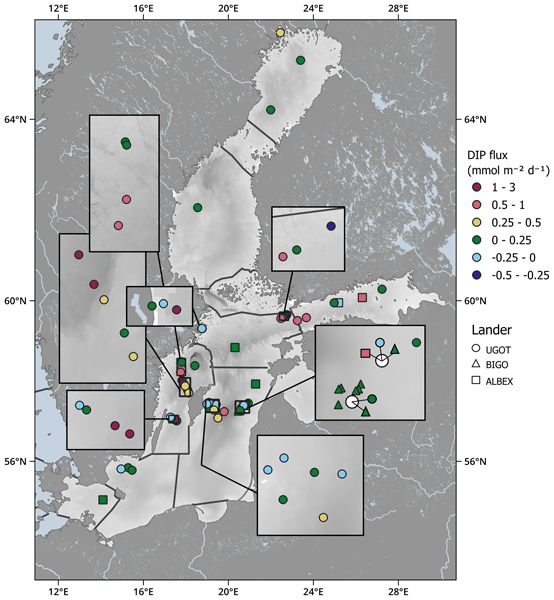
Astrid Hylén, Nils Ekeroth, Hannah Berk, Andy W. Dale, Mikhail Kononets, Wytze K. Lenstra, Aada Palo, Anders Tengberg, Sebastiaan J. van de Velde, Stefan Sommer, Caroline P. Slomp, and Per O. J. Hall
Earth Syst. Sci. Data, 17, 6423–6443, https://doi.org/10.5194/essd-17-6423-2025, https://doi.org/10.5194/essd-17-6423-2025, 2025
Short summary
Short summary
Phosphorus is an essential element for life and its cycling strongly impact primary production. Here, we present a dataset of sediment-water fluxes of dissolved inorganic phosphorus from the Baltic Sea, an area with a long history of eutrophication. The fluxes were measured in situ with three types of benthic chamber landers at 59 stations over 20 years. The data show clear spatial patterns and will be important for marine management and studies on mechanisms in benthic phosphorus cycling.
Alban Souche, Camilla M. Marnor, Ebbe H. Hartz, Anders Tengberg, and Daniel W. Schmid
EGUsphere, https://doi.org/10.5194/egusphere-2026-1261, https://doi.org/10.5194/egusphere-2026-1261, 2026
Preprint archived
Short summary
Short summary
Deep-sea currents are difficult to measure yet essential for understanding and protecting seafloor ecosystems. Using ocean models, seafloor sensors, and sponge alignments from underwater vehicle videos, we document flow at a seamount on the Arctic Mid-Oceanic Ridge. Sponge morphology appears to align in the direction of food supply rather than the seasonal mean flow. Summit and base currents flow in opposite directions for most of the year, showing how conditions can differ across a single site.
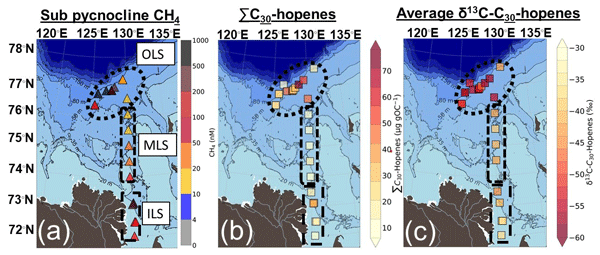
Albin Eriksson, Birgit Wild, Wei-Li Hong, Henry Holmstrand, Francisco J. A. Nascimento, Stefano Bonaglia, Denis Kosmach, Igor Semiletov, Natalia Shakhova, and Örjan Gustafsson
Biogeosciences, 23, 1459–1475, https://doi.org/10.5194/bg-23-1459-2026, https://doi.org/10.5194/bg-23-1459-2026, 2026
Short summary
Short summary
Thawing subsea permafrost in the East Siberian Arctic Seas releases methane, a potent greenhouse gas. Using molecular fossils in sediments, we traced aerobic methane oxidation as a proxy of enhanced methane cycling across the Laptev Sea, including in regions once thought low in emissions. This approach captures long-term patterns of methane cycling over years-decades , overcoming limits of short-term seawater measurements and highlights the importance of the Laptev Sea in Arctic methane cycling.
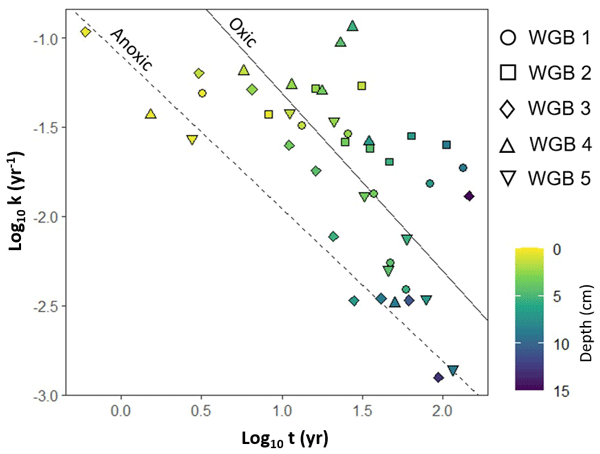
Silvia Placitu, Sebastiaan J. van de Velde, Astrid Hylén, Mats Eriksson, Per O. J. Hall, and Steeve Bonneville
Biogeosciences, 22, 8065–8076, https://doi.org/10.5194/bg-22-8065-2025, https://doi.org/10.5194/bg-22-8065-2025, 2025
Short summary
Short summary
Marine sediments store organic carbon and help regulate climate. Oxygen-depleted waters are thought to enhance this, however Western Gotland Basin sediments show low carbon despite such conditions. We studied the role of mineral protection, which can shield carbon from microbes, and found it limited. This suggests that without physical protection, carbon remains accessible and gets degraded, making mineral protection a key factor in carbon preservation.
Astrid Hylén, Nils Ekeroth, Hannah Berk, Andy W. Dale, Mikhail Kononets, Wytze K. Lenstra, Aada Palo, Anders Tengberg, Sebastiaan J. van de Velde, Stefan Sommer, Caroline P. Slomp, and Per O. J. Hall
Earth Syst. Sci. Data, 17, 6423–6443, https://doi.org/10.5194/essd-17-6423-2025, https://doi.org/10.5194/essd-17-6423-2025, 2025
Short summary
Short summary
Phosphorus is an essential element for life and its cycling strongly impact primary production. Here, we present a dataset of sediment-water fluxes of dissolved inorganic phosphorus from the Baltic Sea, an area with a long history of eutrophication. The fluxes were measured in situ with three types of benthic chamber landers at 59 stations over 20 years. The data show clear spatial patterns and will be important for marine management and studies on mechanisms in benthic phosphorus cycling.
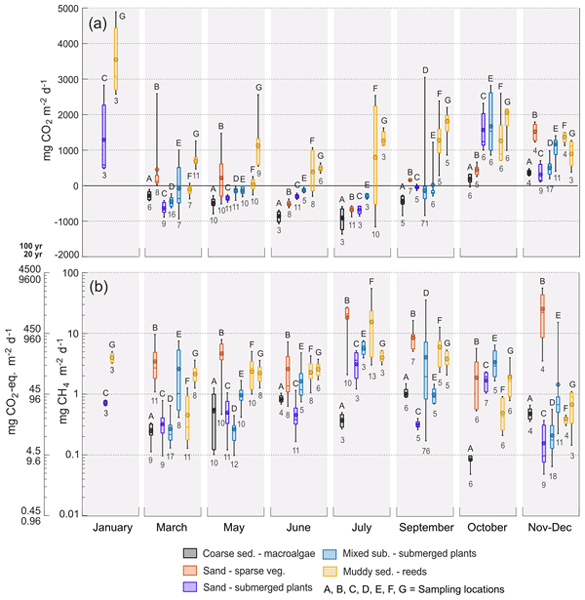
Thea Bisander, John Prytherch, and Volker Brüchert
Biogeosciences, 22, 4779–4796, https://doi.org/10.5194/bg-22-4779-2025, https://doi.org/10.5194/bg-22-4779-2025, 2025
Short summary
Short summary
Coastal waters exchange greenhouse gases with the atmosphere, but their exact contributions are not well understood. This study measured carbon dioxide and methane emissions in different Baltic Sea habitats using floating chambers. The results show that methane emissions, especially from bubbling, play a dominant role in the total exchange of many habitats. When scaled up over the Stockholm archipelago, the coastal emissions add significantly to the regional greenhouse gas budget.
John Prytherch, Sonja Murto, Ian Brown, Adam Ulfsbo, Brett F. Thornton, Volker Brüchert, Michael Tjernström, Anna Lunde Hermansson, Amanda T. Nylund, and Lina A. Holthusen
Biogeosciences, 21, 671–688, https://doi.org/10.5194/bg-21-671-2024, https://doi.org/10.5194/bg-21-671-2024, 2024
Short summary
Short summary
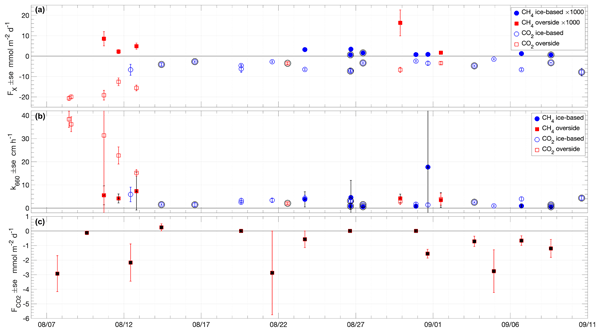
We directly measured methane and carbon dioxide exchange between ocean or sea ice and the atmosphere during an icebreaker-based expedition to the central Arctic Ocean (CAO) in summer 2021. These measurements can help constrain climate models and carbon budgets. The methane measurements, the first such made in the CAO, are lower than previous estimates and imply that the CAO is an insignificant contributor to Arctic methane emission. Gas exchange rates are slower than previous estimates.
Mindaugas Žilius, Rūta Barisevičiūtė, Stefano Bonaglia, Isabell Klawonn, Elise Lorre, Tobia Politi, Irma Vybernaite-Lubiene, Maren Voss, and Paul Bukaveckas
EGUsphere, https://doi.org/10.5194/egusphere-2023-3054, https://doi.org/10.5194/egusphere-2023-3054, 2024
Preprint archived
Short summary
Short summary
This study analyzes the mechanisms driving nitrate retention and elimination within a large estuarine system. Simultaneous measurements of pelagic and benthic processes provide insight into how nitrates are transformed. Finally, our findings are consistent with the paradigm that eutrophication favors a shift from benthic to pelagic-dominated processes.
Karol Kuliński, Gregor Rehder, Eero Asmala, Alena Bartosova, Jacob Carstensen, Bo Gustafsson, Per O. J. Hall, Christoph Humborg, Tom Jilbert, Klaus Jürgens, H. E. Markus Meier, Bärbel Müller-Karulis, Michael Naumann, Jørgen E. Olesen, Oleg Savchuk, Andreas Schramm, Caroline P. Slomp, Mikhail Sofiev, Anna Sobek, Beata Szymczycha, and Emma Undeman
Earth Syst. Dynam., 13, 633–685, https://doi.org/10.5194/esd-13-633-2022, https://doi.org/10.5194/esd-13-633-2022, 2022
Short summary
Short summary
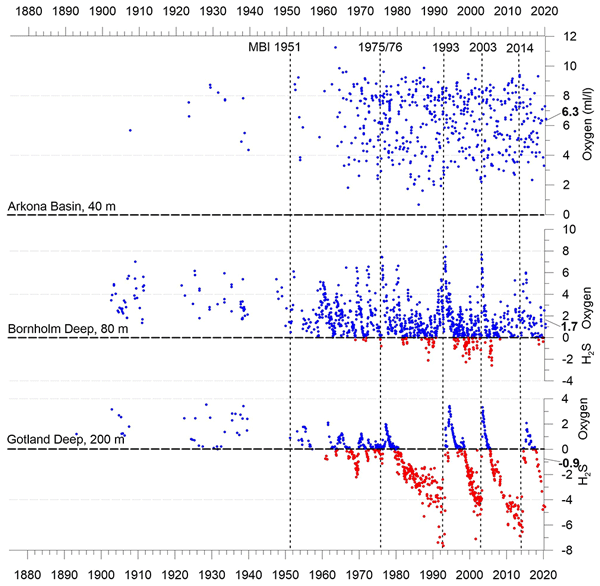
The paper covers the aspects related to changes in carbon, nitrogen, and phosphorus (C, N, P) external loads; their transformations in the coastal zone; changes in organic matter production (eutrophication) and remineralization (oxygen availability); and the role of sediments in burial and turnover of C, N, and P. Furthermore, this paper also focuses on changes in the marine CO2 system, the structure of the microbial community, and the role of contaminants for biogeochemical processes.
Cited articles
Aigars, J., Poikāne, R., Dalsgaard, T., Eglīte, E., and Jansons, M.: Biogeochemistry of N, P and Si in the Gulf of Riga surface sediments: Implications of seasonally changing factors, Cont. Shelf Res., 105, 112–120, https://doi.org/10.1016/j.csr.2015.06.008, 2015.
Aller, R. C. and Wehrmann, L. M.: Sedimentary diagenesis, depositional environments, and benthic fluxes, in: Treatise on Geochemistry (Third Edition), edited by: Holland, H. D. and Turekian, K. K., Elsevier, 293–334, https://doi.org/10.1016/B978-0-08-095975-7.00611-2, 2024.
Almroth, E., Tengberg, A., Andersson, J. H., Pakhomova, S., and Hall, P. O. J.: Effects of resuspension on benthic fluxes of oxygen, nutrients, dissolved inorganic carbon, iron and manganese in the Gulf of Finland, Baltic Sea, Cont. Shelf Res., 29, 807–818, https://doi.org/10.1016/j.csr.2008.12.011, 2009.
Bonaglia, S., Bartoli, M., Gunnarsson, J. S., Rahm, L., Raymond, C., Svensson, O., Shakeri Yekta, S., and Brüchert, V.: Effect of reoxygenation and Marenzelleria spp. bioturbation on Baltic Sea sediment metabolism, Mar. Ecol. Prog. Ser., 482, 43–55, https://doi.org/10.3354/meps10232, 2013.
Borawska, Z., Szymcycha, B., Silberberger, M. J., Kozziorowska-Makuch, K., Szczepanek, M., and Kędra, M.: Benthic fluxes of dissolved silica are an important component of the marine Si cycle in the coastal zone, Estuar. Coast. Shelf Sci., 273, 107880, https://doi.org/10.1016/j.ecss.2022.107880, 2022.
Boynton, W. R., Ceballos, M. A. C., Bailey, E. M., Hodgkins, C. L. S., Humphrey, J. L., and Testa, J. M.: Oxygen and nutrient exchanges at the sediment-water interface: a global synthesis and critique of estuarine and coastal data, Estuaries Coasts, 41, 301–333, https://doi.org/10.1007/s12237-017-0275-5, 2018.
Brzezinski, M. A.: The Si:C:N ratio of marine diatoms: interspecific variability and the effect of some environmental variables, J. Phycol., 21, 347–357, https://doi.org/10.1111/j.0022-3646.1985.00347.x, 1985.
Cho, H.-M., Kim, G., Kwon, E. Y., Moosdorf, N., Garcia-Orellana, J., and Santos, I. R.: Radium tracing nutrient inputs through submarine groundwater discharge in the global ocean, Sci. Rep., 8, 20806, https://doi.org/10.1038/s41598-018-20806-2, 2018.
Conley, D. J.: Riverine contribution of biogenic silica to the oceanic silica budget, Limnol. Oceanogr., 42, 774–777, https://doi.org/10.4319/lo.1997.42.4.0774, 1997.
Conley, D. J., Stockenberg, A., Carman, R., Johnstone, R. W., Rahm, L., and Wulff, F.: Sediment-water nutrient fluxes in the Gulf of Finland, Baltic Sea, Estuar. Coast. Shelf Sci., 45, 591–598, https://doi.org/10.1006/ecss.1997.0246, 1997.
Conley, D. J., Humborg, C., Smedberg, E., Rahm, L., Papush, L., Danielsson, Å., Clarke, A., Pastuszak, M., Aigars, J., Ciuffa, D., and Mörth, C.-M.: Past, present and future state of the biogeochemical Si cycle in the Baltic Sea, J. Mar. Syst., 73, 338–346, https://doi.org/10.1016/j.jmarsys.2007.10.016, 2008.
Cornwell, J. C., Glibert, P. M., and Owens, M. S.: Nutrient fluxes from sediments in the San Francisco Bay Delta, Estuaries Coasts, 37, 1120–1133, https://doi.org/10.1007/s12237-013-9755-4, 2014.
Cowan, J. L. W. and Boynton, W. R.: Sediment-water oxygen and nutrient exchanges along the longitudinal axis of Chesapeake Bay: Seasonal patterns, controlling factors and ecological significance, Estuaries, 19, 562–580, https://doi.org/10.2307/1352518, 1996.
Cowan, J. L. W., Pennock, J. R., and Boynton, W. R.: Seasonal and interannual patterns of sediment-water nutrient and oxygen fluxes in Mobile Bay, Alabama (USA): regulating factors and ecological significance, Mar. Ecol. Prog. Ser., 141, 229–245, https://doi.org/10.3354/meps141229, 1996.
Donis, D., Janssen, F., Liu, B., Wenzhöfer, F., Dellwig, O., Escher, P., Spitzy, A., and Böttcher, M. E.: Biogeochemical impact of submarine water discharge on coastal surface sands of the southern Baltic Sea, Estuar. Coast. Shelf Sci., 189, 131–142, https://doi.org/10.1016/j.ecss.2017.03.003, 2017.
Ehlert, C., Doering, K., Wallmann, K., Scholz, F., Sommer, S., Grasse, P., Geilert, S., and Frank, M.: Stable silicon isotope signatures of marine pore waters – Biogenic opal dissolution versus authigenic clay mineral formation, Geochim. Cosmochim. Ac., 191, 102–117, https://doi.org/10.1016/j.gca.2016.07.021, 2016a.
Ehlert, C., Reckhardt, A., Greskowiak, J., Liguori, B. T. P., Böning, P., Paffrath, R., Brumsack, H.-J., and Pahnke, K.: Transformation of silicon in a sandy beach ecosystem: Insights from stable silicon isotopes from fresh and saline groundwaters, Chem. Geol., 440, 207–218, https://doi.org/10.1016/j.chemgeo.2016.07.015, 2016b.
Ekeroth, N., Kononets, M., Walve, J., Blomqvist, S., and Hall, P. O. J.: Effects of oxygen on recycling of biogenic elements from sediments of a stratified coastal Baltic Sea basin, J. Mar. Syst., 154, 206–219, https://doi.org/10.1016/j.jmarsys.2015.10.005, 2016a.
Ekeroth, N., Blomqvist, S., and Hall, P. O. J.: Nutrient fluxes from reduced Baltic Sea sediment: effects of oxygenation and macrobenthos, Mar. Ecol. Prog. Ser., 544, 77–92, https://doi.org/10.3354/meps11592, 2016b.
Ekeroth, N., Kononets, M., Bonaglia, S., Bruchert, V., Robertson, E., Tengberg, A., and Hall, P.: The integrated benthic silicate flux in the Baltic Sea suggests a major land-derived reactive silicon source, Zenodo [data set], https://doi.org/10.5281/zenodo.18484732, 2026.
Emelyanov, E. M.: Biogenic components of the Baltic Sea sediments, Russ. Geol. Geophys., 55, 1404–1417, https://doi.org/10.1016/j.rgg.2014.11.010, 2014.
EMODnet: Seabed substrate 1:1 000 000 – Europe, version September 2021 © EMODnet Geology, European Commission, Data product, http://www.emodnet-geology.eu (last access: 24 September 2021), 2021.
Fabre, S., Jeandel, C., Zambardi, T., Roustan, M., and Almar, R.: An overlooked silica source of the modern oceans: Are sandy beaches the key?, Front. Earth Sci., 7, 231, https://doi.org/10.3389/feart.2019.00231, 2019.
Fredriksson, J. P., Attard, K., Stranne, C., Koszalka, I. M., Glud, R. N., Andersen, T. J., Humborg, C., and Brüchert, V.: Hidden seafloor hypoxia in coastal waters, Limnol. Oceanogr., 69, 2489–2502, https://doi.org/10.1002/lno.12538, 2024.
Friedl, G., Dinkel, C., and Wehrli, B.: Benthic fluxes of nutrients in the northwestern Black Sea, Mar. Chem., 62, 77–88, https://doi.org/10.1016/S0304-4203(98)00029-2, 1998.
Friedrich, J., Dinkel, C., Friedl, G., Pimenov, N., Wijsman, J., Gomoiu, M.-T., Cociasu, A., Popa, L., and Wehrli, B.: Benthic nutrient cycling and diagenetic pathways in the north-western Black Sea, Estuar. Coast. Shelf Sci., 54, 369–383, https://doi.org/10.1006/ecss.2000.0658, 2002.
Geilert, S., Grasse, P., Doering, K., Wallmann, K., Ehlert, C., Scholz, F., Frank, M., Schmidt, M., and Hensen, C.: Impact of ambient conditions on the Si isotope fractionation in marine pore fluids during early diagenesis, Biogeosciences, 17, 1745–1763, https://doi.org/10.5194/bg-17-1745-2020, 2020.
Grasshoff, K., Kremling, K., and Ehrhardt, M.: Methods of Seawater Analysis, 3rd edn., Wiley-VCH Verlag GmbH, Weinheim, 203–223, https://doi.org/10.1002/9783527613984, 1999.
Grenz, C., Cloern, J. E., Hager, S. W., and Cole, B. E.: Dynamics of nutrient cycling and related benthic nutrient and oxygen fluxes during a spring phytoplankton bloom in South San Francisco Bay (USA), Mar. Ecol. Prog. Ser., 197, 67–80, https://doi.org/10.3354/meps197067, 2000.
Gogina, M., Lipka, M., Woelfel, J., Liu, B., Morys, C., Böttcher, M. E., and Zettler, M. L.: In search of a field-based relationship between benthic macrofauna and biogeochemistry in a modern brackish coastal sea, Front. Mar. Sci., 5, 489, https://doi.org/10.3389/fmars.2018.00489, 2018.
Gustafsson, Ö., Gelting, J., Andersson, P., Larsson, U., and Roos, P.: An assessment of upper ocean carbon and nitrogen export fluxes on the boreal continental shelf: A 3-year study in the open Baltic Sea comparing sediment traps, 234Th proxy, nutrient, and oxygen budgets, Limnol. Oceanogr.-Meth., 11, 495–510, https://doi.org/10.4319/lom.2013.11.495, 2013.
Hall, P. O. J., Almroth Rosell, E., Bonaglia, S., Dale, A. W., Hylén, A., Kononets, M., Nilsson, M., Sommer, S., van de Velde, S., and Viktorsson, L.: Influence of natural oxygenation of Baltic proper deep water on benthic recycling and removal of phosphorus, nitrogen, silicon and carbon, Front. Mar. Sci., 4, 27, https://doi.org/10.3389/fmars.2017.00027, 2017.
Hatton, J. E., Ng, H. C., Meire, L., Woodward, E. M. S., Leng, M. J., Coath, C. D., Stuart-Lee, A., Wang, T., Annett, A. L., and Hendry, K. R.: Silicon isotopes highlight the role of glaciated fjords in modifying coastal waters, J. Geophys. Res.-Biogeo., 128, e2022JG007242, https://doi.org/10.1029/2022JG007242, 2023.
Heiskanen, A.-S. and Tallberg, P.: Sedimentation and particulate nutrient dynamics along a coastal gradient from a fjord-like bay to the open sea, Hydrobiologia, 393, 127–140, https://doi.org/10.1023/A:1003539230715, 1999.
HELCOM: HELCOM Subbasins 2022 (Division of the Baltic Sea into 17 sub-basins), ESRI shapefile, downloaded from HELCOM Metadata Catalogue, https://metadata.helcom.fi/geonetwork/srv/eng/catalog.search (last access: May 2025), 2022.
Humborg, C., Mörth, C.-M., Sundbom, M., and Wulff, F.: Riverine transport of biogenic elements to the Baltic Sea – past and possible future perspectives, Hydrol. Earth Syst. Sci., 11, 1593–1607, https://doi.org/10.5194/hess-11-1593-2007, 2007.
Humborg, C., Smedberg, E., Rodriguez Medina, M., and Mörth, C.-M.: Changes in dissolved silicate loads to the Baltic Sea – The effects of lakes and reservoirs, J. Mar. Syst., 73, 223–235, https://doi.org/10.1016/j.jmarsys.2007.12.005, 2008.
Hylén, A., van de Velde, S. J., Kononets, M., Luo, M., Almroth-Rosell, E., and Hall, P. O. J.: Deep-water inflow event increases sedimentary phosphorus release on a multi-year scale, Biogeosciences, 18, 2981–3004, https://doi.org/10.5194/bg-18-2981-2021, 2021.
Hylén, A., Ekeroth, N., Berk, H., Dale, A. W., Kononets, M., Lenstra, W. K., Palo, A., Tengberg, A., van de Velde, S. J., Sommer, S., Slomp, C. P., and Hall, P. O. J.: In situ-measured benthic fluxes of dissolved inorganic phosphorus in the Baltic Sea, Earth Syst. Sci. Data, 17, 6423–6443, https://doi.org/10.5194/essd-17-6423-2025, 2025.
Kaskela, A. M., Kotilainen, A. T., Alanen, U., Cooper, R., Green, S., Guinan, J., van Heteren, S., Kihlman, S., Van Lancker, V., and Stevenson, A.: Picking up the pieces – Harmonising and collecting seabed substrate data for European maritime areas, Geosciences, 9, 84, https://doi.org/10.3390/geosciences9020084, 2019.
Kendzierska, H., Łukawska-Matuszewska, K., Burska, D., and Janas, U.: Benthic fluxes of oxygen and nutrients under the influence of microbenthic fauna on the periphery of the intermittently hypoxic zone in the Baltic Sea, J. Exp. Mar. Biol. Ecol., 530–531, 151439, https://doi.org/10.1016/j.jembe.2020.151439, 2020.
Kononets, M., Tengberg, A., Nilsson, M., Ekeroth, N., Hylén, A., Robertson, E. K., van de Velde, S., Bonaglia, S., Rütting, T., Blomqvist, S., and Hall, P. O. J.: In situ incubations with the Gothenburg benthic chamber landers: Applications and quality control, J. Mar. Syst., 214, 103475, https://doi.org/10.1016/j.jmarsys.2020.103475, 2021.
Kreuzburg, M., Scholten, J., Hsu, F.-H., Liebetrau, V., Sültenfuß, J., Rapaglia, J., and Schlüter, M.: Submarine groundwater discharge-derived nutrient fluxes in Eckernförde Bay (Western Baltic Sea), Estuaries Coasts, 46, 1190–1207, https://doi.org/10.1007/S12237-023-01202-0, 2023.
Lehtimäki, M., Tallberg, P., and Siipola, V.: Seasonal dynamics of amorphous silica in Vantaa river estuary, Silicon, 5, 35–51, https://doi.org/10.1007/s12633-012-9126-y, 2013.
Leppäranta, M. and Myrberg, K.: Physical oceanography of the Baltic Sea, Springer-Verlag, Berlin, 378 pp., https://doi.org/10.1007/978-3-540-79703-6, 2009.
McKenzie, T., Singh Tomer, A., Cardis, T., Majtényi Hill, C., Szymczycha, B., Hall, P. O. J., Zhao, S., Bonaglia, S., Böttcher, M., and Santos, I. R.: Radium isotopes quantify vertical mixing and reveal large benthic silicate fluxes in anoxic deep waters, Limnol. Oceanogr., 70, 2332–2347, https://doi.org/10.1002/lno.12686, 2025.
Michalopoulos, P. and Aller, R. C.: Early diagenesis of biogenic silica in the Amazon delta: Alteration, authigenic clay formation, and storage, Geochim. Cosmochim. Ac., 68, 1061–1085, https://doi.org/10.1016/j.gca.2003.07.018, 2004.
Nelson, D. M., Tréguer, P., Brzezinski, M. A., Leynaert, A., and Quéguiner, B.: Production and dissolution of biogenic silica in the ocean: Revised global estimates, comparison with regional data and relationship to biogenic sedimentation, Global Biogeochem. Cy., 9, 359–372, https://doi.org/10.1029/95GB01070, 1995.
Nilsson, M. M., Kononets, M., Ekeroth, N., Viktorsson, L., Hylén, A., Sommer, S., Pfannkuche, O., Almroth-Rosell, E., Atamanchuk, D., Andersson, J. H., Roos, P., Tengberg, A., and Hall, P. O. J.: Organic carbon recycling in Baltic Sea sediments – An integrated estimate on the system scale based on in situ measurements, Mar. Chem., 209, 81–93, https://doi.org/10.1016/j.marchem.2018.11.004, 2019.
Nilsson, M. M., Hylén, A., Ekeroth, N., Kononets, M. Y., Viktorsson, L., Almroth-Rosell, E., Roos, P., Tengberg, A., and Hall, P. O. J.: Particle shuttling and oxidation capacity of sedimentary organic carbon on the Baltic Sea system scale, Mar. Chem., 232, 103963, https://doi.org/10.1016/j.marchem.2021.103963, 2021.
Olli, K., Clarke, A., Danielsson, Å., Aigars, J., Conley, D. J., and Tamminen, T.: Diatom stratigraphy and long-term dissolved silica concentrations in the Baltic Sea, J. Mar. Syst., 73, 284–299, https://doi.org/10.1016/j.jmarsys.2007.04.009, 2008.
Ostrowska, M., Ficek, D., Stoltmann, D., Stoń-Eigert, J., Zdun, A., Kowalewski, M., Zapadka, T., Majchrowski, R., Pawlik, M., and Dera, J.: Ten years of remote sensing and analyses of the Baltic Sea primary production (2010–2019), Remote Sens. Appl.: Soc. Environ., 26, 100715, https://doi.org/10.1016/j.rsase.2022.100715, 2022.
Papush, L. and Danielsson, Å.: Silicon in the marine environment: Dissolved silica trends in the Baltic Sea, Estuar. Coast. Shelf Sci., 67, 53–63, https://doi.org/10.1016/j.ecss.2005.10.015, 2006.
Papush, L., Danielsson, Å., and Rahm, L.: Dissolved silica budget for the Baltic Sea, J. Sea Res., 62, 31–41, https://doi.org/10.1016/j.seares.2009.03.001, 2009.
Papush, L.: Silicon cycling in the Baltic Sea: Trends and budget of dissolved silica, PhD thesis, Department of Thematic Studies, Linköping University, Linköping, Sweden, ISBN 978-91-7393-112-0, 2011.
Pickering, R. A., Cassarino, L., Hendry, K. R., Wang, X. L., Maiti, K., and Krause, J. W.: Using stable isotopes to disentangle marine sedimentary signals in reactive silicon pools, Geophys. Res. Lett., 47, e2020GL087877, https://doi.org/10.1029/2020GL087877, 2020.
QGIS Development Team: QGIS Geographic Information System, Open Source Geospatial Foundation Project, http://www.qgis.org (last access: May 2025), 2016.
Raimonet, M., Ragueneau, O., Soetaert, K., Khalil, K., Leynaert, A., Michaud, E., Moriceau, B., Raboulli, C., and Memery, L.: Benthic contribution to seasonal silica budgets in two macrotidal estuaries in North-Western France, Front. Mar. Sci., 10, 1269142, https://doi.org/10.3389/fmars.2023.1269142, 2023.
Ragueneau, O., Conley, D. J., Leynaert, A., Ni Longphuirt, S., and Slomp, C. P.: Role of diatoms in silica cycling and coastal marine food webs, in: The silicon cycle: Human perturbations and impacts on aquatic systems, edited by: Ittekkot, V., Unger, D., Humborg, C., and An, N. T., Island Press, Washington, D.C., 163–195, https://doi.org/10.2307/jj.41379822, 2006.
Saccone, L., Conley, D. J., Koning, E., Sauer, D., Sommer, M., Kaczorek, D., Blecker, S. W., and Kelly, E. F.: Assessing the extraction and quantification of amorphous silica in soils of forest and grassland ecosystems, Eur. J. Soil Sci., 58, 1446–1459, https://doi.org/10.1111/j.1365-2389.2007.00949.x, 2007.
Sandén, P., Rahm, L., and Wulff, F.: Non-parametric trend test of Baltic Sea data, Environmetrics, 2, 263–278, https://doi.org/10.1002/env.3770020303, 1991.
Skjevik, A. T., Wesslander, K., Viktorsson, L., and Johansson, M.: The Swedish National Marine Monitoring Programme 2023. Hydrography, Nutrients, Phytoplankton, SMHI Report Oceanography No. 78, Appendix III, Nutrient content per basin in the Baltic Sea and the Gulf of Bothnia, Swedish Meteorological and Hydrological Institute, ISSN 0283-1112, 2024.
Strickland, J. D. H. and Parsons, T. R.: A Practical Handbook of Seawater Analysis, Fisheries Research Board of Canada Bulletin 157, 2nd ed., 310 pp., Legacy PEIN ID: 56530, 1972.
Ståhl, H., Tengberg, A., Brunnegård, J., and Hall, P. O. J.: Recycling and burial of organic carbon in sediments of the Porcupine Abyssal Plain, NE Atlantic, Deep-Sea Res. I, 51, 777–791, https://doi.org/10.1016/j.dsr.2004.01.003, 2004.
Szymczycha, B., Maciejewska, A., Winogradow, A., and Pempkowiak, J.: Could submarine groundwater discharge be a significant carbon source to the southern Baltic Sea, Oceanologia, 56, 327–347, https://doi.org/10.5697/oc.56-2.327, 2014.
Tallberg, P., Heiskanen, A.-S., Niemistö, J., Hall, P. O. J., and Lehtoranta, J.: Are benthic fluxes important for the availability of Si in the Gulf of Finland?, J. Mar. Syst., 171, 89–100, https://doi.org/10.1016/j.jmarsys.2016.12.006, 2017.
Thoms, F., Burmeister, C., Dippner, J. W., Gogina, M., Janas, U., Kendzierska, H., Liskow, I., and Voss, M.: Impact of macrofaunal communities on the coastal filter function in the Bay of Gdansk, Baltic Sea, Front. Mar. Sci., 5, 201, https://doi.org/10.3389/fmars.2018.00201, 2018.
Trapp-Müller, G., Rugenstein, J. C., Conley, D. J., Geilert, S., Hagens, M., Hong, W.-L., Jeandel, C., Longman, J., Mason, P. R. D., Middelburg, J. J., Milliken, K. L., Navarre-Sitchler, A., Planavsky, N. J., Reichart, G.-J., Slomp, C. P., Sluijs, A., van Hinsbergen, D. J. J., and Zhang, X. Y.: Earth's silicate weathering continuum, Nat. Geosci., 18, 691–701, https://doi.org/10.1038/s41561-025-01743-y, 2025.
Tréguer, P., Nelson, D. M., van Bennekom, A. J., DeMaster, D. J., Leynaert, A., and Quéguiner, B.: The silica balance in the world ocean: A reestimate, Science, 268, 375–379, https://doi.org/10.1126/science.268.5209.375, 1995.
Tréguer, P. J. and De La Rocha, C. L.: The World Ocean silica cycle, Annu. Rev. Mar. Sci., 5, 477–501, https://doi.org/10.1146/annurev-marine-121211-172346, 2013.
Tréguer, P. J., Sutton, J. N., Brzezinski, M., Charette, M. A., Devries, T., Dutkiewicz, S., Ehlert, C., Hawkings, J., Leynaert, A., Liu, S. M., Llopis Monferrer, N., López-Acosta, M., Maldonado, M., Rahman, S., Ran, L., and Rouxel, O.: Reviews and syntheses: The biogeochemical cycle of silicon in the modern ocean, Biogeosciences, 18, 1269–1289, https://doi.org/10.5194/bg-18-1269-2021, 2021.
Ward, J. P. J., Hendry, K. R., Arndt, S., Faust, J. C., Freitas, F. S., Henley, S. F., Krause, J. W., März, C., Ng, H. C., Pickering, R. A., and Tessin, A. C.: Stable silicon isotopes uncover a mineralogical control on the benthic silicon cycle in the Arctic Barents Sea, Geochim. Cosmochim. Ac., 329, 206–230, https://doi.org/10.1016/j.gca.2022.04.013, 2022a.
Ward, J. P. J., Hendry, K. R., Arndt, S., Faust, J. C., Freitas, F. S., Henley, S. F., Krause, J. W., März, C., Tessin, A. C., and Airs, R. L.: Benthic silicon cycling in the Arctic Barents Sea: a reaction–transport model study, Biogeosciences, 19, 3445–3467, https://doi.org/10.5194/bg-19-3445-2022, 2022b.
Wasmund, N., Nausch, G., and Feistel, R.: Silicate consumption: an indicator for long-term trends in spring diatom development in the Baltic Sea, J. Plankton Res., 35, 393–406, https://doi.org/10.1093/plankt/fbs101, 2013.
Wulff, F., Stigebrandt, A., and Rahm, L.: Nutrient dynamics of the Baltic Sea, Ambio, 19, 126–133, 1990.
Short summary
We measured 305 benthic fluxes of silicate (dSi) on the major sediment types across the Baltic Sea. Upscaling these data together with literature values suggested an integrated annual benthic release of dSi for the Baltic Sea being about three times larger than the diatom export production. This may explain the trend of increasing Baltic water column dSi standing stock. Reactive Si of terrestrial origin should have a much more profound influence on the Baltic Si cycle than previously known.
We measured 305 benthic fluxes of silicate (dSi) on the major sediment types across the Baltic...


Altmetrics
Final-revised paper
Preprint