
Articles | Volume 23, issue 20
https://doi.org/10.5194/bg-23-7469-2026
© Author(s) 2026. This work is distributed under
the Creative Commons Attribution 4.0 License.
the Creative Commons Attribution 4.0 License.
https://doi.org/10.5194/bg-23-7469-2026
© Author(s) 2026. This work is distributed under
the Creative Commons Attribution 4.0 License.
the Creative Commons Attribution 4.0 License.
Research article
| 
26 Oct 2026
Research article |
| 26 Oct 2026
| 26 Oct 2026
DMS, MeSH and nanoparticles in semi-controlled deck-borne experiments using Antarctic seawater: on the effect of UV light
Guillaume Chamba
Laboratoire de Météorologie Physique, CNRS UMR 6016, Université Clermont Auvergne, avenue Blaise Pascal, Aubière, France
Karine Sellegri
CORRESPONDING AUTHOR

Laboratoire de Météorologie Physique, CNRS UMR 6016, Université Clermont Auvergne, avenue Blaise Pascal, Aubière, France
Valérie Gros
Laboratoire des Sciences du Climat et de l'Environnement, CNRS-CEA-UVSQ UMR 8212, IPSL, Gif sur Yvette, France
Clémence Rose
Laboratoire de Météorologie Physique, CNRS UMR 6016, Université Clermont Auvergne, avenue Blaise Pascal, Aubière, France
Leah Williams
Aerodyne Research, Billerica, MA 01821, USA
Elisa Berdalet
Department of Marine Biology and Oceanography, Institut de Ciències del Mar (ICM-CSIC), Passeig Marítim de la Barceloneta, 37-49, 08003 Barcelona, Catalonia, Spain
Dolors Vaqué
Department of Marine Biology and Oceanography, Institut de Ciències del Mar (ICM-CSIC), Passeig Marítim de la Barceloneta, 37-49, 08003 Barcelona, Catalonia, Spain
Magda Vila
Department of Marine Biology and Oceanography, Institut de Ciències del Mar (ICM-CSIC), Passeig Marítim de la Barceloneta, 37-49, 08003 Barcelona, Catalonia, Spain
Queralt Güell-Bujons
Department of Marine Biology and Oceanography, Institut de Ciències del Mar (ICM-CSIC), Passeig Marítim de la Barceloneta, 37-49, 08003 Barcelona, Catalonia, Spain
Elisabet-Laia Sà
Department of Marine Biology and Oceanography, Institut de Ciències del Mar (ICM-CSIC), Passeig Marítim de la Barceloneta, 37-49, 08003 Barcelona, Catalonia, Spain
Yaiza M. Castillo
Department of Marine Biology and Oceanography, Institut de Ciències del Mar (ICM-CSIC), Passeig Marítim de la Barceloneta, 37-49, 08003 Barcelona, Catalonia, Spain
Arianna Rocchi
Department of Marine Biology and Oceanography, Institut de Ciències del Mar (ICM-CSIC), Passeig Marítim de la Barceloneta, 37-49, 08003 Barcelona, Catalonia, Spain
Aurélie Colomb
Laboratoire de Météorologie Physique, CNRS UMR 6016, Université Clermont Auvergne, avenue Blaise Pascal, Aubière, France
Jean-Marc Pichon
Laboratoire de Météorologie Physique, CNRS UMR 6016, Université Clermont Auvergne, avenue Blaise Pascal, Aubière, France
Mickaël Ribeiro
Laboratoire de Météorologie Physique, CNRS UMR 6016, Université Clermont Auvergne, avenue Blaise Pascal, Aubière, France
Charel Wohl
Department of Marine Biology and Oceanography, Institut de Ciències del Mar (ICM-CSIC), Passeig Marítim de la Barceloneta, 37-49, 08003 Barcelona, Catalonia, Spain
Centre of Ocean and Atmospheric Sciences, University of East Anglia, Norwich, UK
National Centre for Atmospheric Science, University of East Anglia, Norwich, UK
Manuel Dall'Osto
Department of Marine Biology and Oceanography, Institut de Ciències del Mar (ICM-CSIC), Passeig Marítim de la Barceloneta, 37-49, 08003 Barcelona, Catalonia, Spain
Rafel Simó
CORRESPONDING AUTHOR
Department of Marine Biology and Oceanography, Institut de Ciències del Mar (ICM-CSIC), Passeig Marítim de la Barceloneta, 37-49, 08003 Barcelona, Catalonia, Spain
Related authors
Charel Wohl, Leah R. Williams, Elisabeth S. M. Deschaseaux, Lauriane L. J. Quéléver, David C. S. Beddows, Harald Stark, Veronika Pospisilova, Felipe D. Lopez-Hilfiker, Guillaume Chamba, Karine Sellegri, Elisabet L. Sà, Queralt Güell-Bujons, Magda Vila, Yaiza M. Castillo, Arianna Rocchi, Ana Sotomayor, Dolors Vaqué, Manuel Dall'Osto, Elisa Berdalet, and Rafel Simó
Atmos. Chem. Phys., 26, 10149–10165, https://doi.org/10.5194/acp-26-10149-2026, https://doi.org/10.5194/acp-26-10149-2026, 2026
Short summary
Short summary
Methanethiol and dimethyl sulfide are precursors to aerosols which cool the climate. Here we present measurements of these compounds in surface seawater and ambient air around the Antarctic Peninsula and in the Weddell Sea, highlighting that a large fraction of volatile sulfur emissions from the ocean is biogenic methanethiol. This dataset presents some of the factors driving the variability of these compounds.
Pauline Buysse, Florence Lafouge, Raluca Ciuraru, Brigitte Durand, Olivier Zurfluh, Céline Décuq, Olivier Fanucci, Lais Gonzaga Gomez, Jean-Christophe Gueudet, Sandy Bsaibes, Nora Zannoni, Valérie Gros, and Benjamin Loubet
Atmos. Chem. Phys., 26, 12131–12150, https://doi.org/10.5194/acp-26-12131-2026, https://doi.org/10.5194/acp-26-12131-2026, 2026
Short summary
Short summary
This research aimed at quantifying biogenic volatile organic compounds (BVOCs) emissions by a rapeseed crop field. Such compounds are precursors of atmospheric pollutants. Our study revealed that methanol, a BVOC that is not very reactive in the atmosphere, is by far the most emitted BVOC, while monoterpenes, being highly reactive, were emitted in larger quantities than expected. Our study therefore points out the potentially more significant contribution of croplands to atmospheric pollution.
Juliette Brochet, Hasna Chebaicheb, Olivier Favez, Laura Cadeo, Tanguy Amodeo, Yunjiang Zhang, Antonin Bergé, Philip Croteau, Vincent Crenn, Valérie Gros, and Jean-Eudes Petit
Earth Syst. Sci. Data Discuss., https://doi.org/10.5194/essd-2026-490, https://doi.org/10.5194/essd-2026-490, 2026
Preprint under review for ESSD
Short summary
Short summary
This work proposes a new methodology for robust, homogeneous processing of long-term datasets of aerosol mass spectrometer measurements to remedy the challenges posed by the emergence of juxtaposed data processing periods over the years. The results showed a global decrease in PM1 at a semi-urban site in the Paris region between 2011 and 2024, along with a decrease in the frequency of persistent pollution episodes. Finally, it highlights the need for Sulfate source apportionment analysis.
Charel Wohl, Leah R. Williams, Elisabeth S. M. Deschaseaux, Lauriane L. J. Quéléver, David C. S. Beddows, Harald Stark, Veronika Pospisilova, Felipe D. Lopez-Hilfiker, Guillaume Chamba, Karine Sellegri, Elisabet L. Sà, Queralt Güell-Bujons, Magda Vila, Yaiza M. Castillo, Arianna Rocchi, Ana Sotomayor, Dolors Vaqué, Manuel Dall'Osto, Elisa Berdalet, and Rafel Simó
Atmos. Chem. Phys., 26, 10149–10165, https://doi.org/10.5194/acp-26-10149-2026, https://doi.org/10.5194/acp-26-10149-2026, 2026
Short summary
Short summary
Methanethiol and dimethyl sulfide are precursors to aerosols which cool the climate. Here we present measurements of these compounds in surface seawater and ambient air around the Antarctic Peninsula and in the Weddell Sea, highlighting that a large fraction of volatile sulfur emissions from the ocean is biogenic methanethiol. This dataset presents some of the factors driving the variability of these compounds.
Aino Ovaska, Daniel Holmberg, Elio Rauth, Mansour Alghamdi, Paulo Artaxo, Eija Asmi, John Backman, Benjamin Bergmans, Matthew Boyer, Liezl Bredenkamp, Maurizio Busetto, Delano Campos De Oliveira, Juan Andrés Casquero-Vera, Darius Ceburnis, Tak Chan, Tommy Chan, Sebastien Conil, Daniele Contini, Suzanne Crumeyrolle, Valentin Duflot, Kostas Eleftheriadis, Johan Esveld, Ekaterina Ezhova, Markus Fiebig, Shahzad Gani, Olga Garmash, Francisco Gómez-Moreno, Roy M. Harrison, Andras Hoffer, Rakesh Hooda, Antti Hyvärinen, Tareq Hussein, Jorma Joutsensaari, Nikos Kalivitis, Heinz Kaminski, Jutta Kesti, Radovan Krejci, Adam Kristensson, Chongai Kuang, Markku Kulmala, Lauri Laakso, Ari Leskinen, Heikki Lihavainen, Andreas Massling, Maik Merkel, Steffen Noe, Jakub Ondracek, Noemí Perez, Jean-Eudes Petit, Tuukka Petäjä, Michael Pikridas, Christopher Pöhlker, Mira Pöhlker, Jean-Philippe Putaud, Ximeng Qi, Cristina Reche, Sergio Rodríguez, Petr Roztocil, Jean Sciare, Karine Sellegri, Dongjie Shang, Ashish Singh, Mikko Sipilä, Henrik Skov, Mar Sorribas, Tamanna Subba, Junying Sun, Peter Tunved, Ville Vakkari, Pieter G. Van Zyl, Aki Virkkula, Jens Voigtländer, Kay Weinhold, Alfred Wiedensohler, Hee-Jung Yoo, Putian Zhou, Kai Puolamäki, Tuomo Nieminen, Veli-Matti Kerminen, Victoria A. Sinclair, and Pauli Paasonen
Earth Syst. Sci. Data Discuss., https://doi.org/10.5194/essd-2026-415, https://doi.org/10.5194/essd-2026-415, 2026
Preprint under review for ESSD
Short summary
Short summary
All clouds form around aerosol particles, and their abundance influences cloud properties. In turn, clouds affect climate by changing how energy moves through the atmosphere, making them important for climate change. To better understand these interactions, we need accurate information on how many aerosol particles are in the atmosphere. Therefore, we have developed a new 21-year global dataset of particle concentrations relevant for cloud formation.
Wenche Aas, Thérèse Salameh, Robert Wegener, Heidi Hellén, Jean-Luc Jaffrezo, Pontus Roldin, Elisabeth Alonso-Blanco, Andres Alastuey, Crist Amelynck, Jgor Arduini, Benjamin Bergmans, Marie Bertrand, Agnes Borbon, Efstratios Bourtsoukidis, Laetitia Bouvier, David Butterfield, Iris Buxbaum, Darius Ceburnis, Anja Claude, Augustin Colette, Aurélie Colomb, Sophie Darfeuil, James Dernie, Maximilien Desservettaz, Elías Díaz-Ramiro, Marvin Dufresne, René Dubus, Mario Duval, Marie Dury, Anna Font, Kirsten N. Fossum, Evelyn Freney, Gotzon Gangoiti, Yao Ge, Maria Carmen Gomez, Francisco J. Gómez-Moreno, Marie Gohy, Valérie Gros, Paul Hamer, Bryan Hellack, Hartmut Herrmann, Robert Holla, Adéla Holubová, Niels R. Jensen, Tuija Jokinen, Matthew Jones, Uwe Käfer, Lukas Kesper, Dieter Klemp, Dagmar Kubistin, Angela Marinoni, Martina Mazzini, Vy Ngoc Thuy Dinh, Jurgita Ovadnevaite, Tuukka Petäjä, Miguel Portillo-Estrada, Jitka Přívozníková, Jean-Philippe Putaud, Stefan Reimann, Laura Renzi, Veronique Riffault, Stuart Ritchie, Chris Robins, Begoña Artíñano Rodríguez de Torres, Laurent Poulain, Julian Rüdiger, Agnieszka Sanocka, Estibaliz Saez de Camara Oleaga, Niels Schoon, Roger Seco, Ivan Simmons, Leïla Simon, David Simpson, Sverre Solberg, Emmanuel Tison, August Thomasson, Svetlana Tsyro, Marsailidh Twigg, Toni Tykkä, Bert Verreyken, Ågot Watne, Katie Williams, Ana Maria Yáñez-Serrano, Karen Yeung, Ilona Ylivinkka, and Karl Espen Yttri
Atmos. Chem. Phys., 26, 8717–8751, https://doi.org/10.5194/acp-26-8717-2026, https://doi.org/10.5194/acp-26-8717-2026, 2026
Short summary
Short summary
A one-week intensive measurement campaign during the 2022 European heatwave included monitoring of ozone, volatile organic compounds, aerosol chemical composition, and organic tracers to investigate air pollution sources. Results showed that emissions from vegetation and human activities contributed to peaks in ozone and secondary organic aerosol particles. Differences between measurements and model simulations underline the need for better characterization of sources and formation pathways.
Theresa Barthelmeß, Karine Sellegri, Benjamin Pontiller, Lindsay Scheidemann, Karl Safi, and Anja Engel
EGUsphere, https://doi.org/10.5194/egusphere-2026-1873, https://doi.org/10.5194/egusphere-2026-1873, 2026
Short summary
Short summary
Sea spray transports marine organic particles into the atmosphere where they contribute to climate-relevant processes such as cloud formation. We investigated small biogenic gels which were enriched in sea spray aerosols in dependence on the surface sea water conditions as e.g. defined by phytoplankton composition and different organic matter pools. Moreover, the composition of these gels was size-dependent and did not directly mirror the composition of their marine precursors.
Laura Bouillon, Valérie Gros, Morgan Lopez, Nicolas Bonnaire, Carole Philippon, Camille Yver Kwok, Leslie David, Olivier Perrussel, Olivier Sanchez, Simone Kotthaus, Jean-Eudes Petit, Philippe Ciais, and Michel Ramonet
Earth Syst. Sci. Data Discuss., https://doi.org/10.5194/essd-2025-602, https://doi.org/10.5194/essd-2025-602, 2025
Revised manuscript accepted for ESSD
Short summary
Short summary
The Saclay observatory, 20 km southwest of Paris, monitored greenhouse and reactive gases, as well as aerosols, over 10 years to assess the impact of urban emissions. By comparing downwind and background conditions, the study revealed significant reductions in pollutants linked to traffic: -35.6 % for CO, -52.3 % for NOₓ, -56.7 % for eBC, and -15 % for CO2. These trends align with emission decrease estimates from AIRPARIF inventories over the same period.
Yugo Kanaya, Roberto Sommariva, Alfonso Saiz-Lopez, Andrea Mazzeo, Theodore K. Koenig, Kaori Kawana, James E. Johnson, Aurélie Colomb, Pierre Tulet, Suzie Molloy, Ian E. Galbally, Rainer Volkamer, Anoop Mahajan, John W. Halfacre, Paul B. Shepson, Julia Schmale, Hélène Angot, Byron Blomquist, Matthew D. Shupe, Detlev Helmig, Junsu Gil, Meehye Lee, Sean C. Coburn, Ivan Ortega, Gao Chen, James Lee, Kenneth C. Aikin, David D. Parrish, John S. Holloway, Thomas B. Ryerson, Ilana B. Pollack, Eric J. Williams, Brian M. Lerner, Andrew J. Weinheimer, Teresa Campos, Frank M. Flocke, J. Ryan Spackman, Ilann Bourgeois, Jeff Peischl, Chelsea R. Thompson, Ralf M. Staebler, Amir A. Aliabadi, Wanmin Gong, Roeland Van Malderen, Anne M. Thompson, Ryan M. Stauffer, Debra E. Kollonige, Juan Carlos Gómez Martin, Masatomo Fujiwara, Katie Read, Matthew Rowlinson, Keiichi Sato, Junichi Kurokawa, Yoko Iwamoto, Fumikazu Taketani, Hisahiro Takashima, Mónica Navarro-Comas, Marios Panagi, and Martin G. Schultz
Earth Syst. Sci. Data, 17, 4901–4932, https://doi.org/10.5194/essd-17-4901-2025, https://doi.org/10.5194/essd-17-4901-2025, 2025
Short summary
Short summary
The first comprehensive dataset of tropospheric ozone over oceans/polar regions is presented, including 77 ship/buoy and 48 aircraft campaign observations (1977–2022, 0–5000 m altitude), supplemented by ozonesonde and surface data. Air masses isolated from land for 72+ hours are systematically selected as essentially oceanic. Among the 11 global regions, they show daytime decreases of 11–16 % in the tropics, while near-zero depletions are rare, unlike in the Arctic, implying different mechanisms.
Arianna Rocchi, Mark F. Fitzsimons, Preston Akenga, Ana Sotomayor, Elisabet L. Sà, Queralt Güell-Bujons, Magda Vila, Yaiza M. Castillo, Manuel Dall'Osto, Dolors Vaqué, Charel Wohl, Rafel Simó, and Elisa Berdalet
Biogeosciences, 22, 3429–3448, https://doi.org/10.5194/bg-22-3429-2025, https://doi.org/10.5194/bg-22-3429-2025, 2025
Short summary
Short summary
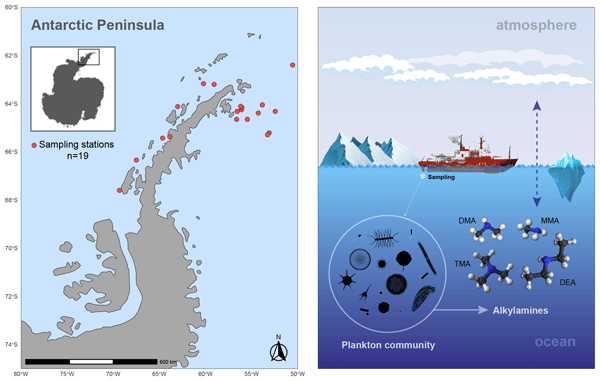
During the PolarChange expedition, volatile alkylamines, important players in nitrogen cycling and cloud formation, were measured in Antarctic waters using a high-sensitivity method. Trimethylamine was the dominant alkylamine in marine particles, associated with nanophytoplankton. Dissolved dimethylamine likely originated from trimethylamine degradation, while diethylamine sources remain unclear. These findings confirm the biological origin of alkylamines in polar marine microbial food webs.
Dongwook Kim, Pedro Campuzano-Jost, Hongyu Guo, Douglas A. Day, Da Yang, Suresh Dhaniyala, Leah Williams, Philip Croteau, John Jayne, Douglas Worsnop, Rainer Volkamer, and Jose L. Jimenez
Aerosol Research, 3, 371–404, https://doi.org/10.5194/ar-3-371-2025, https://doi.org/10.5194/ar-3-371-2025, 2025
Short summary
Short summary
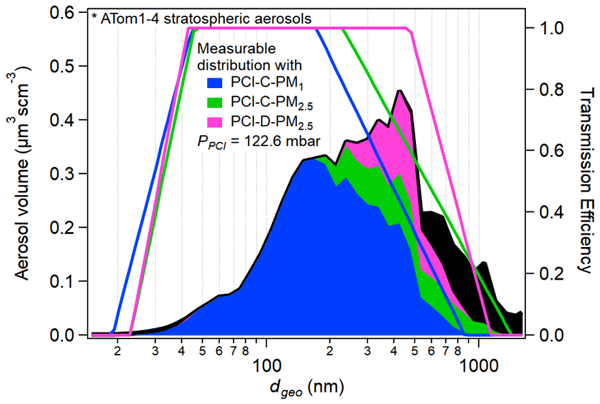
Quantitative real-time aerosol sampling on board aircraft platforms is challenging, especially at higher altitudes. Herein, we present comprehensive analyses of a new aircraft inlet system and tools for aerosol beam diagnostics for aerosol mass spectrometers (AMSs). The beam focusing of aerodynamic lenses and the thermal decomposition on the vaporizer were investigated. The new inlet system can be operated at higher altitudes while sampling aerosols over a broader size range than previous versions.
Ludovico Di Antonio, Matthias Beekmann, Guillaume Siour, Vincent Michoud, Christopher Cantrell, Astrid Bauville, Antonin Bergé, Mathieu Cazaunau, Servanne Chevaillier, Manuela Cirtog, Joel F. de Brito, Paola Formenti, Cecile Gaimoz, Olivier Garret, Aline Gratien, Valérie Gros, Martial Haeffelin, Lelia N. Hawkins, Simone Kotthaus, Gael Noyalet, Diana L. Pereira, Jean-Eudes Petit, Eva Drew Pronovost, Véronique Riffault, Chenjie Yu, Gilles Foret, Jean-François Doussin, and Claudia Di Biagio
Atmos. Chem. Phys., 25, 4803–4831, https://doi.org/10.5194/acp-25-4803-2025, https://doi.org/10.5194/acp-25-4803-2025, 2025
Short summary
Short summary
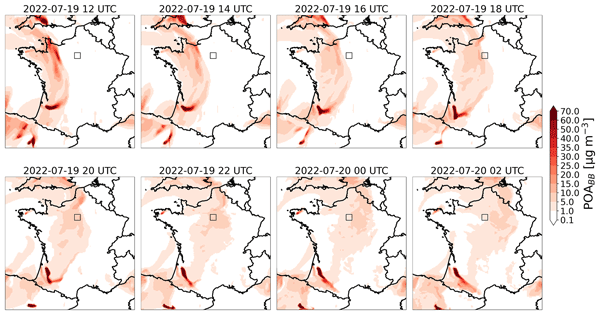
The summer of 2022 has been considered a proxy for future climate scenarios due to its hot and dry conditions. In this paper, we use the measurements from the Atmospheric Chemistry of the Suburban Forest (ACROSS) campaign, conducted in the Paris area in June–July 2022, along with observations from existing networks, to evaluate a 3D chemistry transport model (WRF–CHIMERE) simulation. Results are shown to be satisfactory, allowing us to explain the gas and aerosol variability at the campaign sites.
James Brean, David C. S. Beddows, Eija Asmi, Aki Virkkula, Lauriane L. J. Quéléver, Mikko Sipilä, Floortje Van Den Heuvel, Thomas Lachlan-Cope, Anna Jones, Markus Frey, Angelo Lupi, Jiyeon Park, Young Jun Yoon, Rolf Weller, Giselle L. Marincovich, Gabriela C. Mulena, Roy M. Harrison, and Manuel Dall'Osto
Atmos. Chem. Phys., 25, 1145–1162, https://doi.org/10.5194/acp-25-1145-2025, https://doi.org/10.5194/acp-25-1145-2025, 2025
Short summary
Short summary
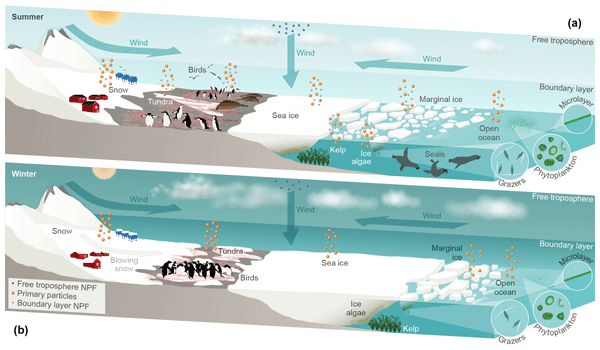
Our results emphasise how understanding the geographical variation in surface types across the Antarctic is key to understanding secondary aerosol sources.
Xiansheng Liu, Xun Zhang, Marvin Dufresne, Tao Wang, Lijie Wu, Rosa Lara, Roger Seco, Marta Monge, Ana Maria Yáñez-Serrano, Marie Gohy, Paul Petit, Audrey Chevalier, Marie-Pierre Vagnot, Yann Fortier, Alexia Baudic, Véronique Ghersi, Grégory Gille, Ludovic Lanzi, Valérie Gros, Leïla Simon, Heidi Héllen, Stefan Reimann, Zoé Le Bras, Michelle Jessy Müller, David Beddows, Siqi Hou, Zongbo Shi, Roy M. Harrison, William Bloss, James Dernie, Stéphane Sauvage, Philip K. Hopke, Xiaoli Duan, Taicheng An, Alastair C. Lewis, James R. Hopkins, Eleni Liakakou, Nikolaos Mihalopoulos, Xiaohu Zhang, Andrés Alastuey, Xavier Querol, and Thérèse Salameh
Atmos. Chem. Phys., 25, 625–638, https://doi.org/10.5194/acp-25-625-2025, https://doi.org/10.5194/acp-25-625-2025, 2025
Short summary
Short summary
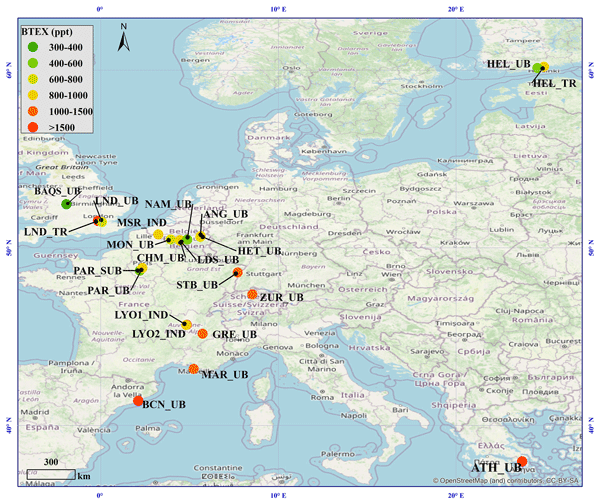
This study examines BTEX (benzene, toluene, ethylbenzene, xylenes) pollution in urban areas across seven European countries. Analyzing data from 22 monitoring sites, we found traffic and industrial activities significantly impact BTEX levels, with peaks during rush hours. The risk from BTEX exposure remains moderate, especially in high-traffic and industrial zones, highlighting the need for targeted air quality management to protect public health and improve urban air quality.
Sankirna D. Joge, Anoop S. Mahajan, Shrivardhan Hulswar, Christa A. Marandino, Martí Galí, Thomas G. Bell, Mingxi Yang, and Rafel Simó
Biogeosciences, 21, 4453–4467, https://doi.org/10.5194/bg-21-4453-2024, https://doi.org/10.5194/bg-21-4453-2024, 2024
Short summary
Short summary
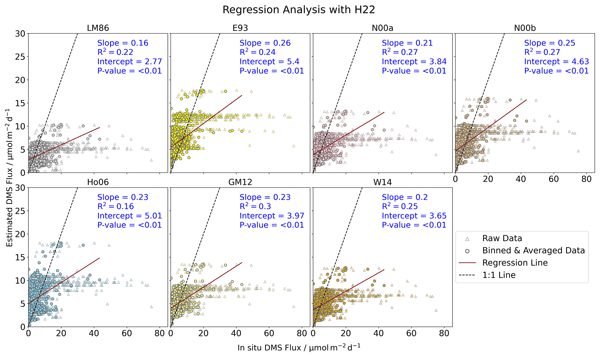
Dimethyl sulfide (DMS) is the largest natural source of sulfur in the atmosphere and leads to the formation of cloud condensation nuclei. DMS emissions and quantification of their impacts have large uncertainties, but a detailed study on the range of emissions and drivers of their uncertainty is missing to date. The emissions are calculated from the seawater DMS concentrations and a flux parameterization. Here we quantify the differences in the effect of flux parameterizations used in models.
Sankirna D. Joge, Anoop S. Mahajan, Shrivardhan Hulswar, Christa A. Marandino, Martí Galí, Thomas G. Bell, and Rafel Simó
Biogeosciences, 21, 4439–4452, https://doi.org/10.5194/bg-21-4439-2024, https://doi.org/10.5194/bg-21-4439-2024, 2024
Short summary
Short summary
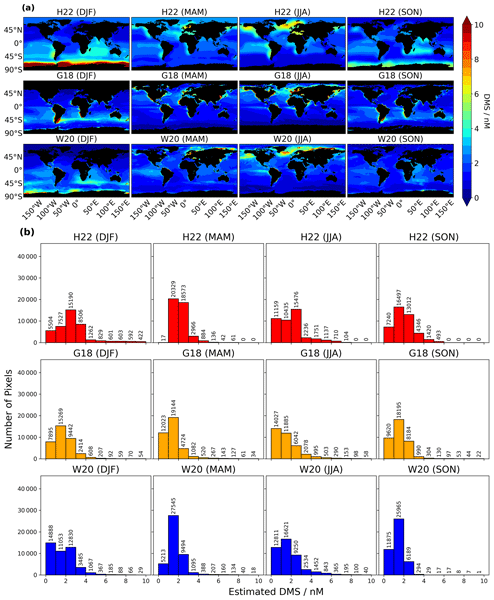
Dimethyl sulfide (DMS) is the largest natural source of sulfur in the atmosphere and leads to the formation of cloud condensation nuclei. DMS emission and quantification of its impacts have large uncertainties, but a detailed study on the emissions and drivers of their uncertainty is missing to date. The emissions are usually calculated from the seawater DMS concentrations and a flux parameterization. Here we quantify the differences in DMS seawater products, which can affect DMS fluxes.
Pierre Tulet, Joel Van Baelen, Pierre Bosser, Jérome Brioude, Aurélie Colomb, Philippe Goloub, Andrea Pazmino, Thierry Portafaix, Michel Ramonet, Karine Sellegri, Melilotus Thyssen, Léa Gest, Nicolas Marquestaut, Dominique Mékiès, Jean-Marc Metzger, Gilles Athier, Luc Blarel, Marc Delmotte, Guillaume Desprairies, Mérédith Dournaux, Gaël Dubois, Valentin Duflot, Kevin Lamy, Lionel Gardes, Jean-François Guillemot, Valérie Gros, Joanna Kolasinski, Morgan Lopez, Olivier Magand, Erwan Noury, Manuel Nunes-Pinharanda, Guillaume Payen, Joris Pianezze, David Picard, Olivier Picard, Sandrine Prunier, François Rigaud-Louise, Michael Sicard, and Benjamin Torres
Earth Syst. Sci. Data, 16, 3821–3849, https://doi.org/10.5194/essd-16-3821-2024, https://doi.org/10.5194/essd-16-3821-2024, 2024
Short summary
Short summary
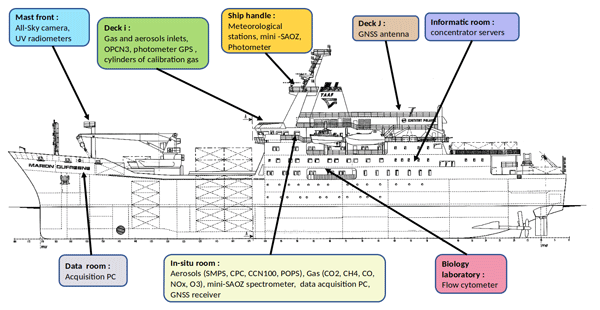
The MAP-IO program aims to compensate for the lack of atmospheric and oceanographic observations in the Southern Ocean by equipping the ship Marion Dufresne with a set of 17 scientific instruments. This program collected 700 d of measurements under different latitudes, seasons, sea states, and weather conditions. These new data will support the calibration and validation of numerical models and the understanding of the atmospheric composition of this region of Earth.
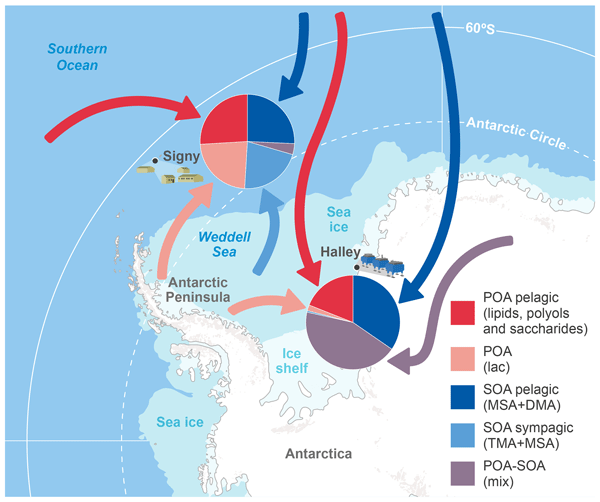
Marco Paglione, David C. S. Beddows, Anna Jones, Thomas Lachlan-Cope, Matteo Rinaldi, Stefano Decesari, Francesco Manarini, Mara Russo, Karam Mansour, Roy M. Harrison, Andrea Mazzanti, Emilio Tagliavini, and Manuel Dall'Osto
Atmos. Chem. Phys., 24, 6305–6322, https://doi.org/10.5194/acp-24-6305-2024, https://doi.org/10.5194/acp-24-6305-2024, 2024
Short summary
Short summary
Applying factor analysis techniques to H-NMR spectra, we present the organic aerosol (OA) source apportionment of PM1 samples collected in parallel at two Antarctic stations, namely Signy and Halley, allowing investigation of aerosol–climate interactions in an unperturbed atmosphere. Our results show remarkable differences between pelagic (open-ocean) and sympagic (sea-ice-influenced) air masses and indicate that various sources and processes are controlling Antarctic aerosols.
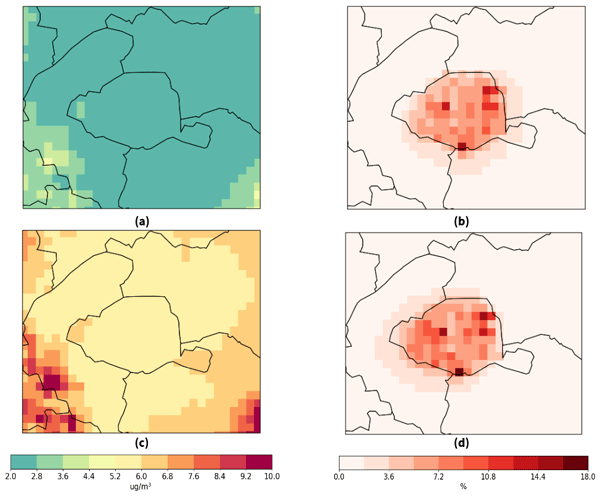
Alice Maison, Lya Lugon, Soo-Jin Park, Alexia Baudic, Christopher Cantrell, Florian Couvidat, Barbara D'Anna, Claudia Di Biagio, Aline Gratien, Valérie Gros, Carmen Kalalian, Julien Kammer, Vincent Michoud, Jean-Eudes Petit, Marwa Shahin, Leila Simon, Myrto Valari, Jérémy Vigneron, Andrée Tuzet, and Karine Sartelet
Atmos. Chem. Phys., 24, 6011–6046, https://doi.org/10.5194/acp-24-6011-2024, https://doi.org/10.5194/acp-24-6011-2024, 2024
Short summary
Short summary
This study presents the development of a bottom-up inventory of urban tree biogenic emissions. Emissions are computed for each tree based on their location and characteristics and are integrated in the regional air quality model WRF-CHIMERE. The impact of these biogenic emissions on air quality is quantified for June–July 2022. Over Paris city, urban trees increase the concentrations of particulate organic matter by 4.6 %, of PM2.5 by 0.6 %, and of ozone by 1.0 % on average over 2 months.
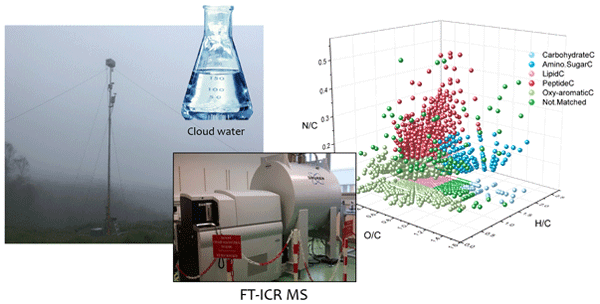
Lucas Pailler, Laurent Deguillaume, Hélène Lavanant, Isabelle Schmitz, Marie Hubert, Edith Nicol, Mickaël Ribeiro, Jean-Marc Pichon, Mickaël Vaïtilingom, Pamela Dominutti, Frédéric Burnet, Pierre Tulet, Maud Leriche, and Angelica Bianco
Atmos. Chem. Phys., 24, 5567–5584, https://doi.org/10.5194/acp-24-5567-2024, https://doi.org/10.5194/acp-24-5567-2024, 2024
Short summary
Short summary
The composition of dissolved organic matter of cloud water has been investigated through non-targeted high-resolution mass spectrometry on only a few samples collected in the Northern Hemisphere. In this work, the chemical composition of samples collected at Réunion Island (SH) is investigated and compared to samples collected at Puy de Dôme (NH). Sampling, analysis and data treatment with the same methodology produced a unique dataset for investigating the molecular composition of clouds.
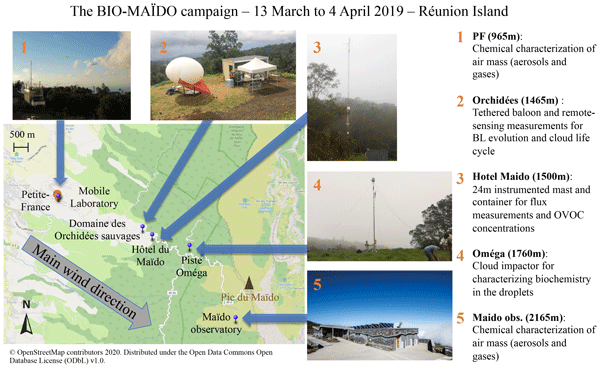
Maud Leriche, Pierre Tulet, Laurent Deguillaume, Frédéric Burnet, Aurélie Colomb, Agnès Borbon, Corinne Jambert, Valentin Duflot, Stéphan Houdier, Jean-Luc Jaffrezo, Mickaël Vaïtilingom, Pamela Dominutti, Manon Rocco, Camille Mouchel-Vallon, Samira El Gdachi, Maxence Brissy, Maroua Fathalli, Nicolas Maury, Bert Verreyken, Crist Amelynck, Niels Schoon, Valérie Gros, Jean-Marc Pichon, Mickael Ribeiro, Eric Pique, Emmanuel Leclerc, Thierry Bourrianne, Axel Roy, Eric Moulin, Joël Barrie, Jean-Marc Metzger, Guillaume Péris, Christian Guadagno, Chatrapatty Bhugwant, Jean-Mathieu Tibere, Arnaud Tournigand, Evelyn Freney, Karine Sellegri, Anne-Marie Delort, Pierre Amato, Muriel Joly, Jean-Luc Baray, Pascal Renard, Angelica Bianco, Anne Réchou, and Guillaume Payen
Atmos. Chem. Phys., 24, 4129–4155, https://doi.org/10.5194/acp-24-4129-2024, https://doi.org/10.5194/acp-24-4129-2024, 2024
Short summary
Short summary
Aerosol particles in the atmosphere play a key role in climate change and air pollution. A large number of aerosol particles are formed from the oxidation of volatile organic compounds (VOCs and secondary organic aerosols – SOA). An important field campaign was organized on Réunion in March–April 2019 to understand the formation of SOA in a tropical atmosphere mostly influenced by VOCs emitted by forest and in the presence of clouds. This work synthesizes the results of this campaign.
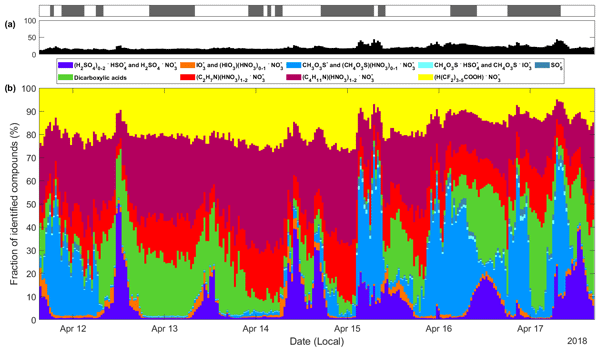
Romain Salignat, Matti Rissanen, Siddharth Iyer, Jean-Luc Baray, Pierre Tulet, Jean-Marc Metzger, Jérôme Brioude, Karine Sellegri, and Clémence Rose
Atmos. Chem. Phys., 24, 3785–3812, https://doi.org/10.5194/acp-24-3785-2024, https://doi.org/10.5194/acp-24-3785-2024, 2024
Short summary
Short summary
Using mass spectrometry data collected at the Maïdo Observatory (2160 m a.s.l., Réunion), we provide the first detailed analysis of molecular cluster chemical composition specifically in the marine free troposphere. The abundance of the identified species is related both to in situ meteorological parameters and air mass history, which also provide insight into their origin. Our work makes an important contribution to documenting the chemistry and physics of the marine free troposphere.
Pauline Buysse, Benjamin Loubet, Raluca Ciuraru, Florence Lafouge, Brigitte Durand, Olivier Zurfluh, Céline Décuq, Olivier Fanucci, Lais Gonzaga Gomez, Jean-Christophe Gueudet, Sandy Bsaibes, Nora Zannoni, and Valérie Gros
EGUsphere, https://doi.org/10.5194/egusphere-2023-2438, https://doi.org/10.5194/egusphere-2023-2438, 2024
Preprint withdrawn
Short summary
Short summary
This research aimed at quantifying biogenic volatile organic compounds (BVOCs) emissions by a rapeseed crop field. Such compounds are precursors of atmospheric pollutants. Our study revealed that methanol, a BVOC that is not very reactive in the atmosphere, is by far the most emitted BVOC, while monoterpenes, being highly reactive, were emitted in larger quantities than expected. Our study therefore points out the potentially more significant contribution of croplands to atmospheric pollution.
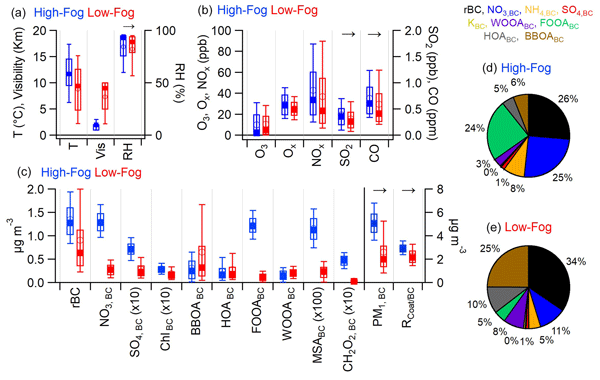
Ryan N. Farley, Sonya Collier, Christopher D. Cappa, Leah R. Williams, Timothy B. Onasch, Lynn M. Russell, Hwajin Kim, and Qi Zhang
Atmos. Chem. Phys., 23, 15039–15056, https://doi.org/10.5194/acp-23-15039-2023, https://doi.org/10.5194/acp-23-15039-2023, 2023
Short summary
Short summary
Soot particles, also known as black carbon (BC), have important implications for global climate and regional air quality. After the particles are emitted, BC can be coated with other material, impacting the aerosol properties. We selectively measured the composition of particles containing BC to explore their sources and chemical transformations in the atmosphere. We focus on a persistent, multiday fog event in order to study the effects of chemical reactions occurring within liquid droplets.
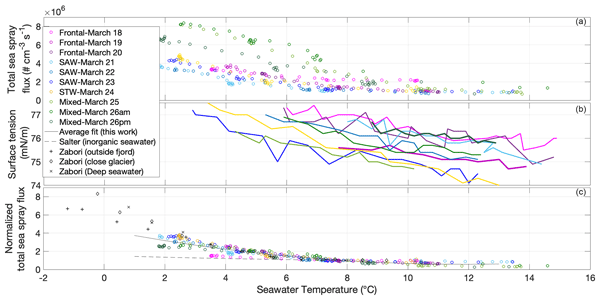
Karine Sellegri, Theresa Barthelmeß, Jonathan Trueblood, Antonia Cristi, Evelyn Freney, Clémence Rose, Neill Barr, Mike Harvey, Karl Safi, Stacy Deppeler, Karen Thompson, Wayne Dillon, Anja Engel, and Cliff Law
Atmos. Chem. Phys., 23, 12949–12964, https://doi.org/10.5194/acp-23-12949-2023, https://doi.org/10.5194/acp-23-12949-2023, 2023
Short summary
Short summary
The amount of sea spray emitted to the atmosphere depends on the ocean temperature, but this dependency is not well understood, especially when ocean biology is involved. In this study, we show that sea spray emissions are increased by up to a factor of 4 at low seawater temperatures compared to moderate temperatures, and we quantify the temperature dependence as a function of the ocean biogeochemistry.
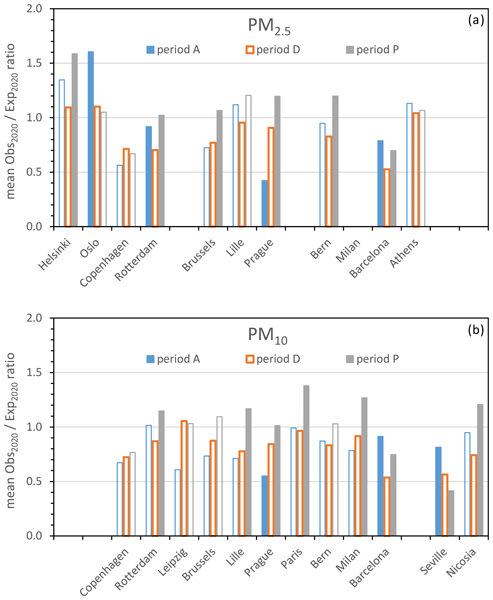
Jean-Philippe Putaud, Enrico Pisoni, Alexander Mangold, Christoph Hueglin, Jean Sciare, Michael Pikridas, Chrysanthos Savvides, Jakub Ondracek, Saliou Mbengue, Alfred Wiedensohler, Kay Weinhold, Maik Merkel, Laurent Poulain, Dominik van Pinxteren, Hartmut Herrmann, Andreas Massling, Claus Nordstroem, Andrés Alastuey, Cristina Reche, Noemí Pérez, Sonia Castillo, Mar Sorribas, Jose Antonio Adame, Tuukka Petaja, Katrianne Lehtipalo, Jarkko Niemi, Véronique Riffault, Joel F. de Brito, Augustin Colette, Olivier Favez, Jean-Eudes Petit, Valérie Gros, Maria I. Gini, Stergios Vratolis, Konstantinos Eleftheriadis, Evangelia Diapouli, Hugo Denier van der Gon, Karl Espen Yttri, and Wenche Aas
Atmos. Chem. Phys., 23, 10145–10161, https://doi.org/10.5194/acp-23-10145-2023, https://doi.org/10.5194/acp-23-10145-2023, 2023
Short summary
Short summary
Many European people are still exposed to levels of air pollution that can affect their health. COVID-19 lockdowns in 2020 were used to assess the impact of the reduction in human mobility on air pollution across Europe by comparing measurement data with values that would be expected if no lockdown had occurred. We show that lockdown measures did not lead to consistent decreases in the concentrations of fine particulate matter suspended in the air, and we investigate why.
Anita M. Avery, Mariam Fawaz, Leah R. Williams, Tami Bond, and Timothy B. Onasch
Atmos. Chem. Phys., 23, 8837–8854, https://doi.org/10.5194/acp-23-8837-2023, https://doi.org/10.5194/acp-23-8837-2023, 2023
Short summary
Short summary
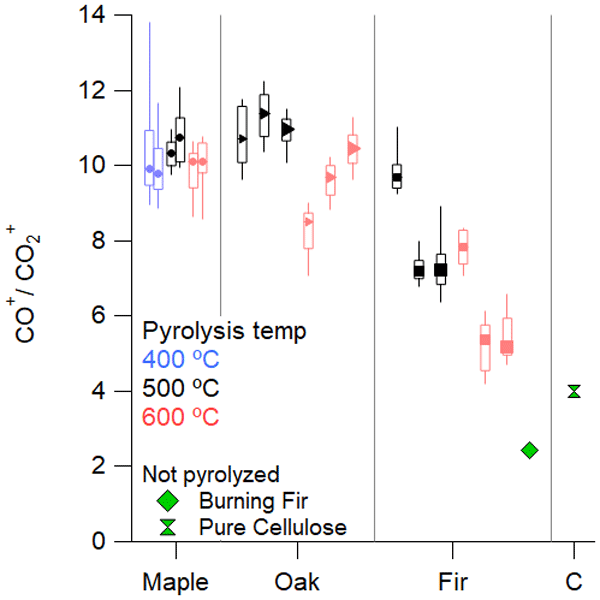
Pyrolysis is the thermal decomposition of fuels like wood which occurs during combustion or as an isolated process. During combustion, some pyrolysis products are emitted directly, while others are oxidized in the combustion process. This work describes the chemical composition of particle-phase pyrolysis products in order to investigate both the uncombusted emissions from wildfires and the fuel that participates in combustion.
George Manville, Thomas G. Bell, Jane P. Mulcahy, Rafel Simó, Martí Galí, Anoop S. Mahajan, Shrivardhan Hulswar, and Paul R. Halloran
Biogeosciences, 20, 1813–1828, https://doi.org/10.5194/bg-20-1813-2023, https://doi.org/10.5194/bg-20-1813-2023, 2023
Short summary
Short summary
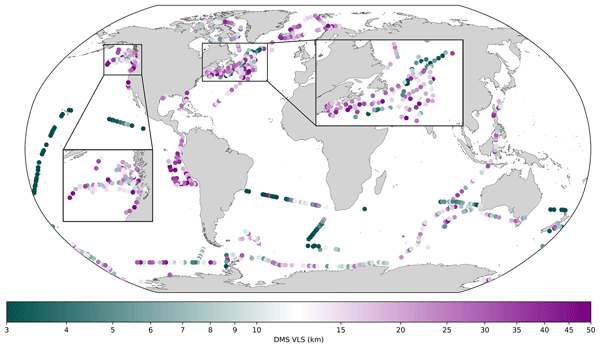
We present the first global investigation of controls on seawater dimethylsulfide (DMS) spatial variability over scales of up to 100 km. Sea surface height anomalies, density, and chlorophyll a help explain almost 80 % of DMS variability. The results suggest that physical and biogeochemical processes play an equally important role in controlling DMS variability. These data provide independent confirmation that existing parameterisations of seawater DMS concentration use appropriate variables.
Leïla Simon, Valérie Gros, Jean-Eudes Petit, François Truong, Roland Sarda-Estève, Carmen Kalalian, Alexia Baudic, Caroline Marchand, and Olivier Favez
Earth Syst. Sci. Data, 15, 1947–1968, https://doi.org/10.5194/essd-15-1947-2023, https://doi.org/10.5194/essd-15-1947-2023, 2023
Short summary
Short summary
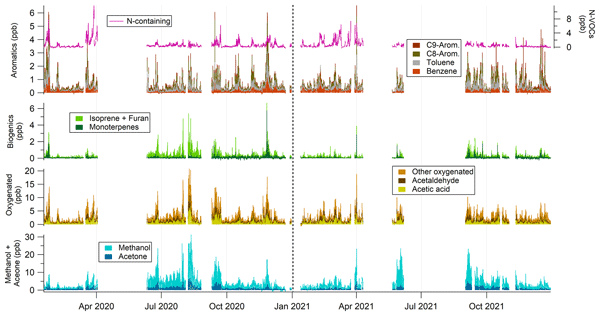
Long-term measurements of volatile organic compounds (VOCs) have been set up to better characterize the atmospheric chemistry at the SIRTA national facility (Paris area, France). Results obtained from the first 2 years (2020–2021) confirm the importance of local sources for short-lived compounds and the role played by meteorology and air mass origins in the long-term analysis of VOCs. They also point to a substantial influence of anthropogenic on the monoterpene loadings.

Maija Peltola, Clémence Rose, Jonathan V. Trueblood, Sally Gray, Mike Harvey, and Karine Sellegri
Atmos. Chem. Phys., 23, 3955–3983, https://doi.org/10.5194/acp-23-3955-2023, https://doi.org/10.5194/acp-23-3955-2023, 2023
Short summary
Short summary
We measured the chemical composition of ambient ions at a coastal New Zealand site and connected these data with aerosol size distribution data to study the chemical precursors of new particle formation at the site. Our results showed that iodine oxides and sulfur species were important for particle formation in marine air, while in land-influenced air sulfuric acid and organics were connected to new particle formation events.
Valérie Gros, Bernard Bonsang, Roland Sarda-Estève, Anna Nikolopoulos, Katja Metfies, Matthias Wietz, and Ilka Peeken
Biogeosciences, 20, 851–867, https://doi.org/10.5194/bg-20-851-2023, https://doi.org/10.5194/bg-20-851-2023, 2023
Short summary
Short summary
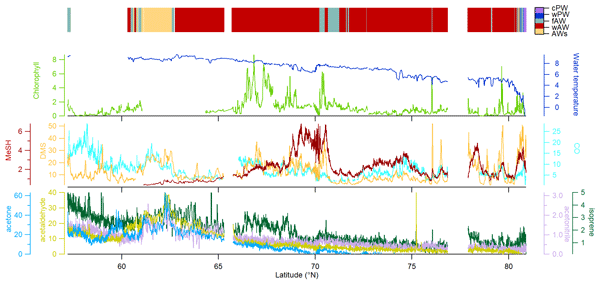
The oceans are both sources and sinks for trace gases important for atmospheric chemistry and marine ecology. Here, we quantified selected trace gases (including the biological metabolites dissolved dimethyl sulfide, methanethiol and isoprene) along a 2500 km transect from the North Atlantic to the Arctic Ocean. In the context of phytoplankton and bacterial communities, our study suggests that methanethiol (rarely measured before) might substantially influence ocean–atmosphere cycling.
James Brean, David C. S. Beddows, Roy M. Harrison, Congbo Song, Peter Tunved, Johan Ström, Radovan Krejci, Eyal Freud, Andreas Massling, Henrik Skov, Eija Asmi, Angelo Lupi, and Manuel Dall'Osto
Atmos. Chem. Phys., 23, 2183–2198, https://doi.org/10.5194/acp-23-2183-2023, https://doi.org/10.5194/acp-23-2183-2023, 2023
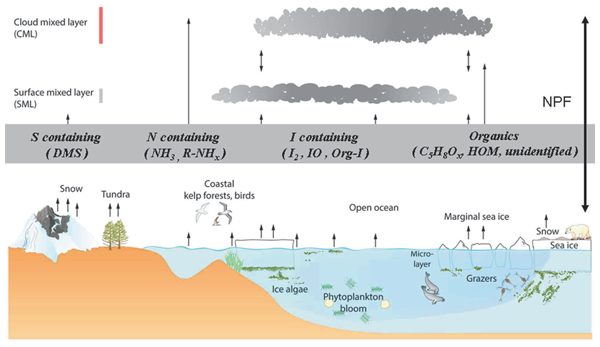
Short summary
Short summary
Our results emphasize how understanding the geographical variation in surface types across the Arctic is key to understanding secondary aerosol sources. We provide a harmonised analysis of new particle formation across the Arctic.
Matthew Boyer, Diego Aliaga, Jakob Boyd Pernov, Hélène Angot, Lauriane L. J. Quéléver, Lubna Dada, Benjamin Heutte, Manuel Dall'Osto, David C. S. Beddows, Zoé Brasseur, Ivo Beck, Silvia Bucci, Marina Duetsch, Andreas Stohl, Tiia Laurila, Eija Asmi, Andreas Massling, Daniel Charles Thomas, Jakob Klenø Nøjgaard, Tak Chan, Sangeeta Sharma, Peter Tunved, Radovan Krejci, Hans Christen Hansson, Federico Bianchi, Katrianne Lehtipalo, Alfred Wiedensohler, Kay Weinhold, Markku Kulmala, Tuukka Petäjä, Mikko Sipilä, Julia Schmale, and Tuija Jokinen
Atmos. Chem. Phys., 23, 389–415, https://doi.org/10.5194/acp-23-389-2023, https://doi.org/10.5194/acp-23-389-2023, 2023
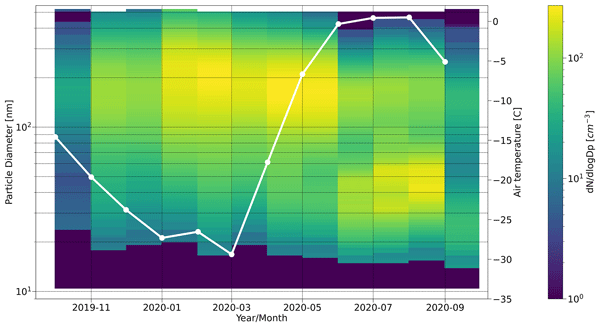
Short summary
Short summary
The Arctic is a unique environment that is warming faster than other locations on Earth. We evaluate measurements of aerosol particles, which can influence climate, over the central Arctic Ocean for a full year and compare the data to land-based measurement stations across the Arctic. Our measurements show that the central Arctic has similarities to but also distinct differences from the stations further south. We note that this may change as the Arctic warms and sea ice continues to decline.
Suzanne Crumeyrolle, Jenni S. S. Kontkanen, Clémence Rose, Alejandra Velazquez Garcia, Eric Bourrianne, Maxime Catalfamo, Véronique Riffault, Emmanuel Tison, Joel Ferreira de Brito, Nicolas Visez, Nicolas Ferlay, Frédérique Auriol, and Isabelle Chiapello
Atmos. Chem. Phys., 23, 183–201, https://doi.org/10.5194/acp-23-183-2023, https://doi.org/10.5194/acp-23-183-2023, 2023
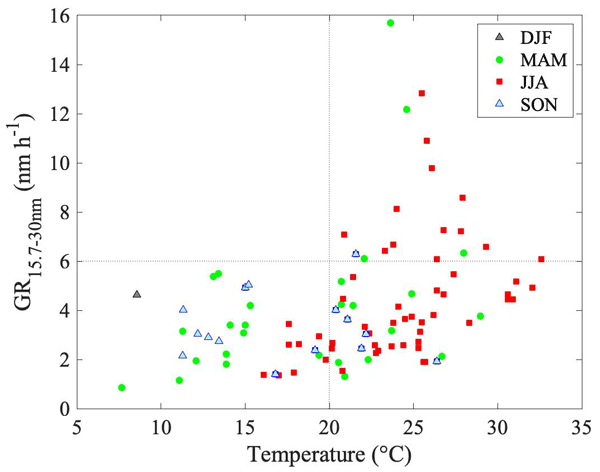
Short summary
Short summary
Ultrafine particles (UFPs) are particles with an aerodynamic diameter of 100 nm or less and negligible mass concentration but are the dominant contributor to the total particle number concentration. The present study aims to better understand the environmental factors favoring or inhibiting atmospheric new particle formation (NPF) over Lille, a large city in the north of France, and to analyze the impact of such an event on urban air quality using a long-term dataset (3 years).

Shrivardhan Hulswar, Rafel Simó, Martí Galí, Thomas G. Bell, Arancha Lana, Swaleha Inamdar, Paul R. Halloran, George Manville, and Anoop Sharad Mahajan
Earth Syst. Sci. Data, 14, 2963–2987, https://doi.org/10.5194/essd-14-2963-2022, https://doi.org/10.5194/essd-14-2963-2022, 2022
Short summary
Short summary
The third climatological estimation of sea surface dimethyl sulfide (DMS) concentrations based on in situ measurements was created (DMS-Rev3). The update includes a much larger input dataset and includes improvements in the data unification, filtering, and smoothing algorithm. The DMS-Rev3 climatology provides more realistic monthly estimates of DMS, and shows significant regional differences compared to past climatologies.

Maija Peltola, Clémence Rose, Jonathan V. Trueblood, Sally Gray, Mike Harvey, and Karine Sellegri
Atmos. Chem. Phys., 22, 6231–6254, https://doi.org/10.5194/acp-22-6231-2022, https://doi.org/10.5194/acp-22-6231-2022, 2022
Short summary
Short summary
Despite the importance of marine aerosol measurements for constraining climate models, these measurements are scarce. We measured the aerosol particle number size distribution in coastal New Zealand over a total period of 10 months. This paper analyses the aerosol properties at the site, with a special focus on new particle formation and marine air masses. New particle formation was observed frequently, but in marine air masses it did not follow traditional event criteria.
Benjamin Loubet, Pauline Buysse, Lais Gonzaga-Gomez, Florence Lafouge, Raluca Ciuraru, Céline Decuq, Julien Kammer, Sandy Bsaibes, Christophe Boissard, Brigitte Durand, Jean-Christophe Gueudet, Olivier Fanucci, Olivier Zurfluh, Letizia Abis, Nora Zannoni, François Truong, Dominique Baisnée, Roland Sarda-Estève, Michael Staudt, and Valérie Gros
Atmos. Chem. Phys., 22, 2817–2842, https://doi.org/10.5194/acp-22-2817-2022, https://doi.org/10.5194/acp-22-2817-2022, 2022
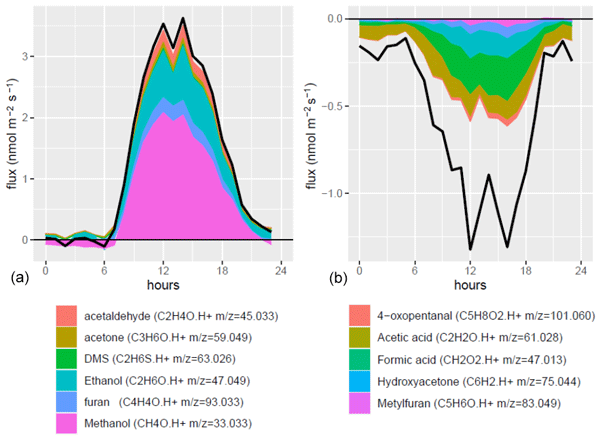
Short summary
Short summary
Volatile organic compounds (VOCs) are precursors of tropospheric pollutants like ozone or aerosols. Emission by agricultural land was still poorly characterized. We report experimental measurements of ecosystem-scale VOC fluxes above a wheat field with a highly sensitive proton transfer mass spectrometer. We report the fluxes of 123 compounds and confirm that methanol is the most emitted VOC by wheat. The second most emitted compound was C6H4O. Around 75 % of the compounds were deposited.
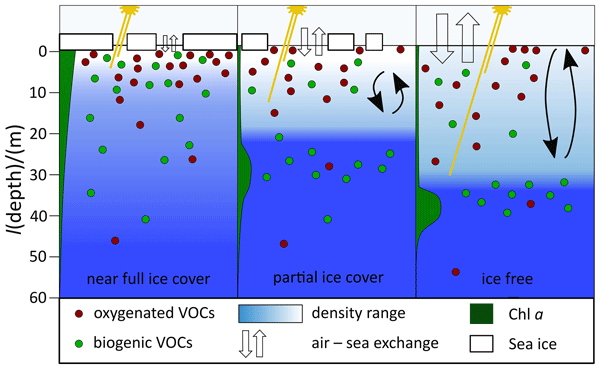
Charel Wohl, Anna E. Jones, William T. Sturges, Philip D. Nightingale, Brent Else, Brian J. Butterworth, and Mingxi Yang
Biogeosciences, 19, 1021–1045, https://doi.org/10.5194/bg-19-1021-2022, https://doi.org/10.5194/bg-19-1021-2022, 2022
Short summary
Short summary
We measured concentrations of five different organic gases in seawater in the high Arctic during summer. We found higher concentrations near the surface of the water column (top 5–10 m) and in areas of partial ice cover. This suggests that sea ice influences the concentrations of these gases. These gases indirectly exert a slight cooling effect on the climate, and it is therefore important to measure the levels accurately for future climate predictions.
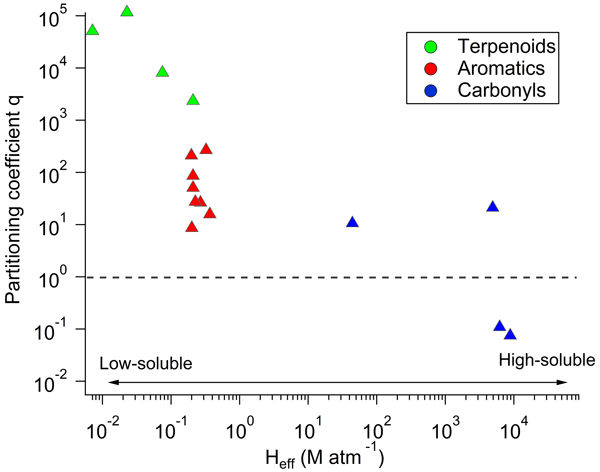
Pamela A. Dominutti, Pascal Renard, Mickaël Vaïtilingom, Angelica Bianco, Jean-Luc Baray, Agnès Borbon, Thierry Bourianne, Frédéric Burnet, Aurélie Colomb, Anne-Marie Delort, Valentin Duflot, Stephan Houdier, Jean-Luc Jaffrezo, Muriel Joly, Martin Leremboure, Jean-Marc Metzger, Jean-Marc Pichon, Mickaël Ribeiro, Manon Rocco, Pierre Tulet, Anthony Vella, Maud Leriche, and Laurent Deguillaume
Atmos. Chem. Phys., 22, 505–533, https://doi.org/10.5194/acp-22-505-2022, https://doi.org/10.5194/acp-22-505-2022, 2022
Short summary
Short summary
We present here the results obtained during an intensive field campaign conducted in March to April 2019 in Reunion. Our study integrates a comprehensive chemical and microphysical characterization of cloud water. Our investigations reveal that air mass history and cloud microphysical properties do not fully explain the variability observed in their chemical composition. This highlights the complexity of emission sources, multiphasic exchanges, and transformations in clouds.
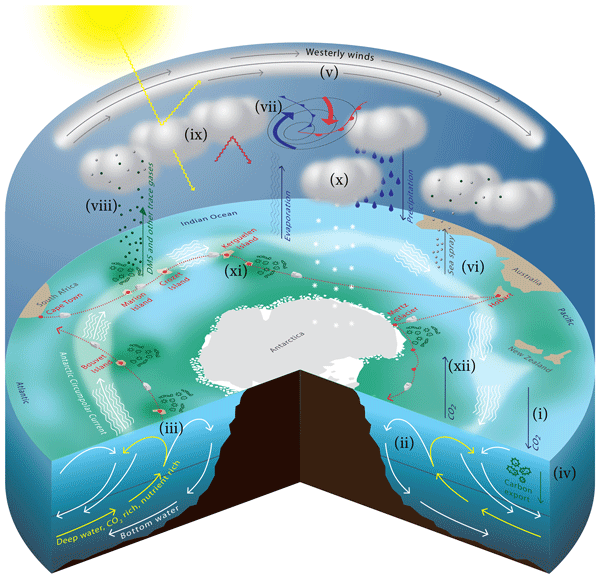
Sebastian Landwehr, Michele Volpi, F. Alexander Haumann, Charlotte M. Robinson, Iris Thurnherr, Valerio Ferracci, Andrea Baccarini, Jenny Thomas, Irina Gorodetskaya, Christian Tatzelt, Silvia Henning, Rob L. Modini, Heather J. Forrer, Yajuan Lin, Nicolas Cassar, Rafel Simó, Christel Hassler, Alireza Moallemi, Sarah E. Fawcett, Neil Harris, Ruth Airs, Marzieh H. Derkani, Alberto Alberello, Alessandro Toffoli, Gang Chen, Pablo Rodríguez-Ros, Marina Zamanillo, Pau Cortés-Greus, Lei Xue, Conor G. Bolas, Katherine C. Leonard, Fernando Perez-Cruz, David Walton, and Julia Schmale
Earth Syst. Dynam., 12, 1295–1369, https://doi.org/10.5194/esd-12-1295-2021, https://doi.org/10.5194/esd-12-1295-2021, 2021
Short summary
Short summary
The Antarctic Circumnavigation Expedition surveyed a large number of variables describing the dynamic state of ocean and atmosphere, freshwater cycle, atmospheric chemistry, ocean biogeochemistry, and microbiology in the Southern Ocean. To reduce the dimensionality of the dataset, we apply a sparse principal component analysis and identify temporal patterns from diurnal to seasonal cycles, as well as geographical gradients and
hotspotsof interaction. Code and data are open access.
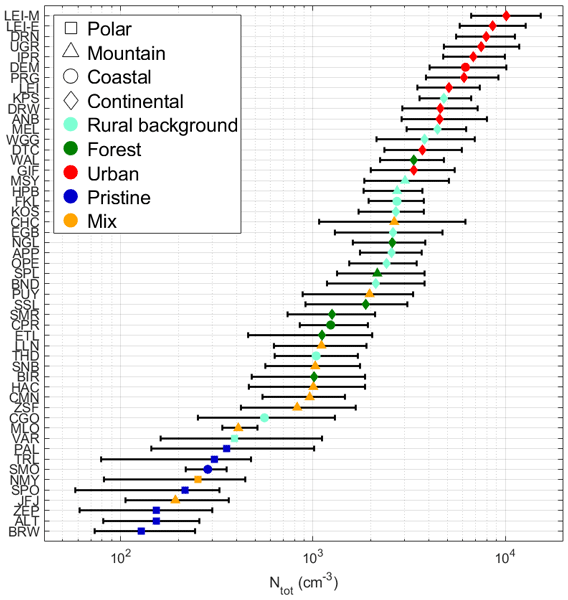
Clémence Rose, Martine Collaud Coen, Elisabeth Andrews, Yong Lin, Isaline Bossert, Cathrine Lund Myhre, Thomas Tuch, Alfred Wiedensohler, Markus Fiebig, Pasi Aalto, Andrés Alastuey, Elisabeth Alonso-Blanco, Marcos Andrade, Begoña Artíñano, Todor Arsov, Urs Baltensperger, Susanne Bastian, Olaf Bath, Johan Paul Beukes, Benjamin T. Brem, Nicolas Bukowiecki, Juan Andrés Casquero-Vera, Sébastien Conil, Konstantinos Eleftheriadis, Olivier Favez, Harald Flentje, Maria I. Gini, Francisco Javier Gómez-Moreno, Martin Gysel-Beer, Anna Gannet Hallar, Ivo Kalapov, Nikos Kalivitis, Anne Kasper-Giebl, Melita Keywood, Jeong Eun Kim, Sang-Woo Kim, Adam Kristensson, Markku Kulmala, Heikki Lihavainen, Neng-Huei Lin, Hassan Lyamani, Angela Marinoni, Sebastiao Martins Dos Santos, Olga L. Mayol-Bracero, Frank Meinhardt, Maik Merkel, Jean-Marc Metzger, Nikolaos Mihalopoulos, Jakub Ondracek, Marco Pandolfi, Noemi Pérez, Tuukka Petäjä, Jean-Eudes Petit, David Picard, Jean-Marc Pichon, Veronique Pont, Jean-Philippe Putaud, Fabienne Reisen, Karine Sellegri, Sangeeta Sharma, Gerhard Schauer, Patrick Sheridan, James Patrick Sherman, Andreas Schwerin, Ralf Sohmer, Mar Sorribas, Junying Sun, Pierre Tulet, Ville Vakkari, Pieter Gideon van Zyl, Fernando Velarde, Paolo Villani, Stergios Vratolis, Zdenek Wagner, Sheng-Hsiang Wang, Kay Weinhold, Rolf Weller, Margarita Yela, Vladimir Zdimal, and Paolo Laj
Atmos. Chem. Phys., 21, 17185–17223, https://doi.org/10.5194/acp-21-17185-2021, https://doi.org/10.5194/acp-21-17185-2021, 2021
Short summary
Short summary
Aerosol particles are a complex component of the atmospheric system the effects of which are among the most uncertain in climate change projections. Using data collected at 62 stations, this study provides the most up-to-date picture of the spatial distribution of particle number concentration and size distribution worldwide, with the aim of contributing to better representation of aerosols and their interactions with clouds in models and, therefore, better evaluation of their impact on climate.
Jean-Eudes Petit, Jean-Charles Dupont, Olivier Favez, Valérie Gros, Yunjiang Zhang, Jean Sciare, Leila Simon, François Truong, Nicolas Bonnaire, Tanguy Amodeo, Robert Vautard, and Martial Haeffelin
Atmos. Chem. Phys., 21, 17167–17183, https://doi.org/10.5194/acp-21-17167-2021, https://doi.org/10.5194/acp-21-17167-2021, 2021
Short summary
Short summary
The COVID-19 outbreak led to lockdowns at national scales in spring 2020. Large cuts in emissions occurred, but the quantitative assessment of their role from observations is hindered by weather and interannual variability. That is why we developed an innovative methodology in order to best characterize the impact of lockdown on atmospheric chemistry. We find that a local decrease in traffic-related pollutants triggered a decrease of secondary aerosols and an increase in ozone.
Sharmine Akter Simu, Yuzo Miyazaki, Eri Tachibana, Henning Finkenzeller, Jérôme Brioude, Aurélie Colomb, Olivier Magand, Bert Verreyken, Stephanie Evan, Rainer Volkamer, and Trissevgeni Stavrakou
Atmos. Chem. Phys., 21, 17017–17029, https://doi.org/10.5194/acp-21-17017-2021, https://doi.org/10.5194/acp-21-17017-2021, 2021
Short summary
Short summary
The tropical Indian Ocean (IO) is expected to be a significant source of water-soluble organic carbon (WSOC), which is relevant to cloud formation. Our study showed that marine secondary organic formation dominantly contributed to the aerosol WSOC mass at the high-altitude observatory in the southwest IO in the wet season in both marine boundary layer and free troposphere (FT). This suggests that the effect of marine secondary sources is important up to FT, a process missing in climate models.
Cited articles
Andersen, S. T., Nelson, B. S., Read, K. A., Punjabi, S., Neves, L., Rowlinson, M. J., Hopkins, J., Sherwen, T., Whalley, L. K., Lee, J. D., and Carpenter, L. J.: Fundamental oxidation processes in the remote marine atmosphere investigated using the NO–NO2–O3 photostationary state, Atmos. Chem. Phys., 22, 15747–15765, https://doi.org/10.5194/acp-22-15747-2022, 2022.
Andreae, M. O.: Ocean-atmosphere interactions in the global biogeochemical sulfur cycle, Mar. Chem., 30, 1–29, https://doi.org/10.1016/0304-4203(90)90059-L, 1990.
Asher, E. C., Dacey, J. W. H., Stukel, M., Long, M. C., and Tortell, P. D.: Processes driving seasonal variability in DMS, DMSP, and DMSO concentrations and turnover in coastal Antarctic waters, Limnol. Oceanogr., 62, 104–124, https://doi.org/10.1002/lno.10379, 2017.
Bates, T. S., Lamb, B. K., Guenther, A., Dignon, J., and Stoiber, R. E.: Sulfur emissions to the atmosphere from natural sourees, J. Atmos. Chem., 14, 315–337, https://doi.org/10.1007/BF00115242, 1992.
Benjamini, Y. and Hochberg, Y.: Controlling the False Discovery Rate: A Practical and Powerful Approach to Multiple Testing, J. R. Stat. Soc. B, 57, 289–300, https://doi.org/10.1111/j.2517-6161.1995.tb02031.x, 1995.
Biggs, T. E. G., Huisman, J., and Brussaard, C. P. D.: Viral lysis modifies seasonal phytoplankton dynamics and carbon flow in the Southern Ocean, ISME J., 15, 3615–3622, https://doi.org/10.1038/s41396-021-01033-6, 2021.
Bouillon, R.-C. and Miller, W. L.: Photodegradation of Dimethyl Sulfide (DMS) in Natural Waters: Laboratory Assessment of the Nitrate-Photolysis-Induced DMS Oxidation, Environ. Sci. Technol., 39, 9471–9477, https://doi.org/10.1021/es048022z, 2005.
Bower, J. S., Broughton, G. F. J., and Willis, P. G.: Measurements of urban photochemical oxidants, in: The Chemistry and Deposition of Nitrogen Species in the Troposphere, edited by: Cocks, A. T., Royal Society of Chemistry, 23–44, ISBN-10: 0-85186-355-8, 1993.
Brimblecombe, P. and Shooter, D.: Photo-oxidation of dimethylsulphide in aqueous solution, Mar. Chem., 19, 343–353, https://doi.org/10.1016/0304-4203(86)90055-1, 1986.
Brussaard, C. P. D.: Optimization of Procedures for Counting Viruses by Flow Cytometry, Appl. Environ. Microb., 70, 1506–1513, https://doi.org/10.1128/AEM.70.3.1506-1513.2004, 2004.
Carpenter, L. J., Archer, S. D., and Beale, R.: Ocean-atmosphere trace gas exchange, Chem. Soc. Rev., 41, 6473, https://doi.org/10.1039/c2cs35121h, 2012.
Chamba, G., Rissanen, M., Barthelmeß, T., Saiz-Lopez, A., Rose, C., Iyer, S., Saint-Macary, A., Rocco, M., Safi, K., Deppeler, S., Barr, N., Harvey, M., Engel, A., Dunne, E., Law, C. S., and Sellegri, K.: Evidence of nitrate-based nighttime atmospheric nucleation driven by marine microorganisms in the South Pacific, P. Natl. Acad. Sci. USA, 120, e2308696120, https://doi.org/10.1073/pnas.2308696120, 2023.
Chamba, G., Gros, V., Pichon, J.-M., Aurélie, C., and Sellegri, K.: ASITs experiments data for the 2023 POLAR-CHANGE campaign, Zenodo [data set], https://doi.org/10.5281/zenodo.19222956, 2026.
Charlson, R. J., Lovelock, J. E., Andreae, M. O., and Warren, S. G.: Oceanic phytoplankton, atmospheric sulphur, cloud albedo and climate, Nature, 326, 655–661, https://doi.org/10.1038/326655a0, 1987.
Constable, A. J., Harper, S., Dawson, J., Holsman, K., Mustonen, T., Piepenburg, D., and Rost, B.: Cross-Chapter Paper 6: Polar Regions, in: Climate Change 2022: Impacts, Adaptation and Vulnerability. Contribution of Working Group II to the Sixth Assessment Report of the Intergovernmental Panel on Climate Change, 2319–2368 edited by: Pörtner, H. O., Roberts, D. C., Tignor, M., Poloczanska, E. S., Mintenbeck, K., Alegría, A., Craig, M., Langsdorf, S., Löschke, S., Möller, V., Okem, A., and Rama, B., Cambridge University Press, https://doi.org/10.1017/9781009325844.023, 2022.
Crabeck, O., Rocchi, A., Wohl, C., Fitzsimons, M. F., Akenga, P. C., Sotomayor, A., Vila, M., Vaqué, D., Sà, E. L., Delille, B., Muller, S., Castillo, Y. M., Barthelmeß, T., Engel, A., Dall'Osto, M., Berdalet, E., and Simó, R.: Biogenic aerosol precursors in decaying Antarctic sea ice and brines in late summer, Elementa: Science of the Anthropocene, in press, https://doi.org/10.1525/elementa.2025.00078, 2026.
Dacey, J. W. H., Wakeham, S. G., and Howes, B. L.: Henry’s law constants for dimethylsulfide in freshwater and seawater, Geophys. Res. Lett., 11, 991–994, https://doi.org/10.1029/GL011i010p00991, 1984.
Edler, L. and Elbrächter, M.: The Utermöhl method for quantitative phytoplankton analysis, in: Microscopic and Molecular Methods for Quantitative Phytoplankton Analysis, Manuals and Guides 55, edited by: Karlson, B., Godhe, A., Cusack, C., and Bresnan, E., Intergovernmental Oceanographic Commission, 5–12, https://unesdoc.unesco.org/ark:/48223/pf0000187824 (last access: June 2025), 2010.
Evans, C., Pearce, I., and Brussaard, C. P. D.: Viral-mediated lysis of microbes and carbon release in the sub-Antarctic and Polar Frontal zones of the Australian Southern Ocean, Environ. Microbiol., 11, 2924–2934, https://doi.org/10.1111/j.1462-2920.2009.02050.x, 2009.
Ferracci, V., Weber, J., Bolas, C. G., Robinson, A. D., Tummon, F., Rodríguez-Ros, P., Cortés-Greus, P., Baccarini, A., Jones, R. L., Galí, M., Simó, R., Schmale, J., and Harris, N. R. P.: Atmospheric isoprene measurements reveal larger-than-expected Southern Ocean emissions, Nat. Commun., 15, 2571, https://doi.org/10.1038/s41467-024-46744-4, 2024.
Galí, M., Devred, E., Pérez, G. L., Kieber, D. J., and Simó, R.: Global Ocean dimethylsulfide photolysis rates quantified with a spectrally and vertically resolved model, Limnol. Oceanogr. Lett., 8, 760–769, https://doi.org/10.1002/lol2.10342, 2023.
Gasol, J. M. and Del Giorgio, P. A.: Using flow cytometry for counting natural planktonic bacteria and understanding the structure of planktonic bacterial communities, Sci. Mar., 64, 197–224, https://doi.org/10.3989/scimar.2000.64n2197, 2000.
Gorbunov, M., Shirsin, E., Nikonova, E., Fadeev, V., and Falkowski, P.: A multi-spectral fluorescence induction and relaxation (FIRe) technique for physiological and taxonomic analysis of phytoplankton communities, Mar. Ecol.-Prog. Ser., 644, 1–13, https://doi.org/10.3354/meps13358, 2020.
Gorbunov, M. Y. and Falkowski, P. G.: Using Chlorophyll Fluorescence to Determine the Fate of Photons Absorbed by Phytoplankton in the World's Oceans, Annu. Rev. Mar. Sci., 14, 213–238, https://doi.org/10.1146/annurev-marine-032621-122346, 2022.
Gros, V., Bonsang, B., Sarda-Estève, R., Nikolopoulos, A., Metfies, K., Wietz, M., and Peeken, I.: Concentrations of dissolved dimethyl sulfide (DMS), methanethiol and other trace gases in context of microbial communities from the temperate Atlantic to the Arctic Ocean, Biogeosciences, 20, 851–867, https://doi.org/10.5194/bg-20-851-2023, 2023.
Häder, D. P., Kumar, H. D., Smith, R. C., and Worrest, R. C.: Effects of solar UV radiation on aquatic ecosystems and interactions with climate change, Photochem. Photobiol. Sci., 6, 267–285, https://doi.org/10.1039/b700020k, 2007.
Hernando, M., Varela, D. E., Malanga, G., Almandoz, G. O., and Schloss, I. R.: Effects of climate-induced changes in temperature and salinity on phytoplankton physiology and stress responses in coastal Antarctica, J. Exp. Mar. Biol. Ecol., 530–531, 151400, https://doi.org/10.1016/j.jembe.2020.151400, 2020.
Hoffmann, E. H., Tilgner, A., Schrödner, R., Bräuer, P., Wolke, R., and Herrmann, H.: An advanced modeling study on the impacts and atmospheric implications of multiphase dimethyl sulfide chemistry, P. Natl. Acad. Sci. USA, 113, 11776–11781, https://doi.org/10.1073/pnas.1606320113, 2016.
Hopkins, F. E., Archer, S. D., Bell, T. G., Suntharalingam, P., and Todd, J. D.: The biogeochemistry of marine dimethylsulfide, Nat. Rev. Earth. Environ., 4, 361–376, https://doi.org/10.1038/s43017-023-00428-7, 2023.
Jackson, R. and Gabric, A.: Climate Change Impacts on the Marine Cycling of Biogenic Sulfur: A Review, Microorganisms, 10, 1581, https://doi.org/10.3390/microorganisms10081581, 2022.
Joge, S. D., Mansour, K., Simó, R., Galí, M., Steiner, N., Saiz-Lopez, A., and Mahajan, A. S.: Climate warming increases global oceanic dimethyl sulfide emissions, P. Natl. Acad. Sci. USA, 122, e2502077122, https://doi.org/10.1073/pnas.2502077122, 2025.
Kerminen, V.-M., Chen, X., Vakkari, V., Petäjä, T., Kulmala, M., and Bianchi, F.: Atmospheric new particle formation and growth: review of field observations, Environ. Res. Lett., 13, 103003, https://doi.org/10.1088/1748-9326/aadf3c, 2018.
Kettle, A. J., Rhee, T. S., Von Hobe, M., Poulton, A., Aiken, J., and Andreae, M. O.: Assessing the flux of different volatile sulfur gases from the ocean to the atmosphere, J. Geophys. Res., 106, 12193–12209, https://doi.org/10.1029/2000JD900630, 2001.
Kiene, R. P.: Production of methanethiol from dimethylsulfoniopropionate in marine surface waters, Mar. Chem., 54, 69–83, https://doi.org/10.1016/0304-4203(96)00006-0, 1996.
Kiene, R. P. and Linn, L. J.: The fate of dissolved dimethylsulfoniopropionate (DMSP) in seawater: tracer studies using 35S-DMSP, Geochim. Cosmochim. Ac., 64, 2797–2810, https://doi.org/10.1016/S0016-7037(00)00399-9, 2000.
Kilgour, D. B., Novak, G. A., Sauer, J. S., Moore, A. N., Dinasquet, J., Amiri, S., Franklin, E. B., Mayer, K., Winter, M., Morris, C. K., Price, T., Malfatti, F., Crocker, D. R., Lee, C., Cappa, C. D., Goldstein, A. H., Prather, K. A., and Bertram, T. H.: Marine gas-phase sulfur emissions during an induced phytoplankton bloom, Atmos. Chem. Phys., 22, 1601–1613, https://doi.org/10.5194/acp-22-1601-2022, 2022.
Kilgour, D. B., Novak, G. A., Claflin, M. S., Lerner, B. M., and Bertram, T. H.: Production of oxygenated volatile organic compounds from the ozonolysis of coastal seawater, Atmos. Chem. Phys., 24, 3729–3742, https://doi.org/10.5194/acp-24-3729-2024, 2024.
Latorre, M. P., Iachetti, C. M., Schloss, I. R., Antoni, J., Malits, A., De La Rosa, F., De Troch, M., Garcia, M. D., Flores-Melo, X., Romero, S. I., Gil, M. N., and Hernando, M.: Summer heatwaves affect coastal Antarctic plankton metabolism and community structure, J. Exp. Mar. Biol. Ecol., 567, 151926, https://doi.org/10.1016/j.jembe.2023.151926, 2023.
Lawson, S. J., Law, C. S., Harvey, M. J., Bell, T. G., Walker, C. F., de Bruyn, W. J., and Saltzman, E. S.: Methanethiol, dimethyl sulfide and acetone over biologically productive waters in the southwest Pacific Ocean, Atmos. Chem. Phys., 20, 3061–3078, https://doi.org/10.5194/acp-20-3061-2020, 2020.
Leck, C. and Rodhe, H.: Emissions of marine biogenic sulfur to the atmosphere of northern Europe, J. Atmos. Chem., 12, 63–86, https://doi.org/10.1007/BF00053934, 1991.
Li, C., Chen, K., Sun, X., Liu, L., Xin, M., Liu, X., and Wang, B.: Summer sea ice melting enhances phytoplankton and dimethyl sulfide production, Limnol. Oceanogr., 69, 2453–2472, https://doi.org/10.1002/lno.12681, 2024.
McParland, E. L. and Levine, N. M.: The role of differential DMSP production and community composition in predicting variability of global surface DMSP concentrations, Limnol. Oceanogr., 64, 757–773, https://doi.org/10.1002/lno.11076, 2019.
Morley, S. A., Abele, D., Barnes, D. K. A., Cárdenas, C. A., Cotté, C., Gutt, J., Henley, S. F., Höfer, J., Hughes, K. A., Martin, S. M., Moffat, C., Raphael, M., Stammerjohn, S. E., Suckling, C. C., Tulloch, V. J. D., Waller, C. L., and Constable, A. J.: Global Drivers on Southern Ocean Ecosystems: Changing Physical Environments and Anthropogenic Pressures in an Earth System, Front. Mar. Sci., 7, 547188, https://doi.org/10.3389/fmars.2020.547188, 2020.
Mynard, C., Franklin, E. B., Alroe, J., Somerville, N., Patti, A., Siems, S. T., Williams, A., Mallet, M. D., Humphries, R., and Dunne, E.: Constraining Atmospheric Methanethiol Estimates Over the Southern Ocean, Geophys. Res. Lett., 52, e2025GL116470, https://doi.org/10.1029/2025GL116470, 2025.
Novak, G. A., Kilgour, D. B., Jernigan, C. M., Vermeuel, M. P., and Bertram, T. H.: Oceanic emissions of dimethyl sulfide and methanethiol and their contribution to sulfur dioxide production in the marine atmosphere, Atmos. Chem. Phys., 22, 6309–6325, https://doi.org/10.5194/acp-22-6309-2022, 2022.
Petrou, K., Raina, J., Fernandez, E., Ostrowski, M., O'Brien, J., Haydon, T. D., Brown, M. V., Seymour, J. R., and Nielsen, D. A.: Dimethylsulfoniopropionate and marine microbial associations along an Antarctic glacial–open ocean interface, Limnol. Oceanogr., 71, e70290, https://doi.org/10.1002/lno.70290, 2026.
Rocchi, A., Fitzsimons, M. F., Akenga, P., Sotomayor, A., Sà, E. L., Güell-Bujons, Q., Vila, M., Castillo, Y. M., Dall'Osto, M., Vaqué, D., Wohl, C., Simó, R., and Berdalet, E.: Distribution of alkylamines in surface waters around the Antarctic Peninsula and Weddell Sea, Biogeosciences, 22, 3429–3448, https://doi.org/10.5194/bg-22-3429-2025, 2025.
Rocco, M., Dunne, E., Peltola, M., Barr, N., Williams, J., Colomb, A., Safi, K., Saint-Macary, A., Marriner, A., Deppeler, S., Harnwell, J., Law, C., and Sellegri, K.: Oceanic phytoplankton are a potentially important source of benzenoids to the remote marine atmosphere, Commun. Earth Environ., 2, 175, https://doi.org/10.1038/s43247-021-00253-0, 2021.
Rocco, M., Dunne, E., Peltola, M., Barthelmeß, T., Salignat, R., Chamba, G., Saint-Macary, A., Barr, N., Safi, K., Marriner, A., Deppeler, S., Harnwell, J., Engel, A., Colomb, A., Saiz-Lopez, A., Law, C. S., and Sellegri, K.: Fluxes of Biogenic and Oxygenated VOCs From In Situ Mesocosm Studies of Seawaters From the South-West Pacific Ocean, J. Geophys. Res.-Atmos., 130, e2024JD043056, https://doi.org/10.1029/2024JD043056, 2025a.
Rocco, M., Dunne, E., Salignat, R., Saint-Macary, A., Peltola, M., Barthelmeß, T., Chamba, G., Barr, N., Safi, K., Marriner, A., Deppeler, S., Rose, C., Uitz, J., Harnwell, J., Engel, A., Colomb, A., Saiz-Lopez, A., Harvey, M. J., Law, C. S., and Sellegri, K.: Relating Dimethyl Sulphide and Methanethiol Fluxes to Surface Biota in the South-West Pacific Using Shipboard Air-Sea Interface Tanks, J. Geophys. Res.-Atmos., 130, e2024JD041072, https://doi.org/10.1029/2024JD041072, 2025b.
Royer, S.-J., Galí, M., Saltzman, E. S., McCormick, C. A., Bell, T. G., and Simó, R.: Development and validation of a shipboard system for measuring high-resolution vertical profiles of aqueous dimethylsulfide concentrations using chemical ionisation mass spectrometry, Environ. Chem., 11, 309–317, https://doi.org/10.1071/EN13203, 2014.
Salignat, R., Rose, C., Banson, S., Berthet, S., Lupascu, A., Uitz, J., Mallet, M., Seferian, R., Rocco, M., Colomb, A., Dunne, E., Saint-Macary, A., Marriner, A., Law, C. S., and Sellegri, K.: Sensitivity Study of Atmospheric DMS Simulated in WRF-Chem to Various Oceanic DMS Fields Over the South West Pacific, J. Geophys. Res.-Atmos., 130, e2024JD042271, https://doi.org/10.1029/2024JD042271, 2025.
Salignat, R., Chamba, G., Pailler, L., Colomb, A., Leriche, M., Deguillaume, L., Rose, C., and Sellegri, K.: New Insights Into Nighttime Marine Sulfur and Nitrogen Chemistry and Related New Particle Formation Using the CLEPS Model, J. Geophys. Res.-Atmos., 131, e2025JD044824, https://doi.org/10.1029/2025JD044824, 2026.
Sallée, J.-B., Pellichero, V., Akhoudas, C., Pauthenet, E., Vignes, L., Schmidtko, S., Garabato, A. N., Sutherland, P., and Kuusela, M.: Summertime increases in upper-ocean stratification and mixed-layer depth, Nature, 591, 592–598, https://doi.org/10.1038/s41586-021-03303-x, 2021.
Sander, R.: Compilation of Henry's law constants (version 5.0.0) for water as solvent, Atmos. Chem. Phys., 23, 10901–12440, https://doi.org/10.5194/acp-23-10901-2023, 2023.
Sellegri, K., Harvey, M., Peltola, M., Saint-Macary, A., Barthelmeß, T., Rocco, M., Moore, K. A., Cristi, A., Peyrin, F., Barr, N., Labonnote, L., Marriner, A., McGregor, J., Safi, K., Deppeler, S., Archer, S., Dunne, E., Harnwell, J., Delanoe, J., Freney, E., Rose, C., Bazantay, C., Planche, C., Saiz-Lopez, A., Quintanilla-López, J. E., Lebrón-Aguilar, R., Rinaldi, M., Banson, S., Joseph, R., Lupascu, A., Jourdan, O., Mioche, G., Colomb, A., Olivares, G., Querel, R., McDonald, A., Plank, G., Bukosa, B., Dillon, W., Pelon, J., Baray, J.-L., Tridon, F., Donnadieu, F., Szczap, F., Engel, A., DeMott, P. J., and Law, C. S.: Sea2Cloud: From Biogenic Emission Fluxes to Cloud Properties in the Southwest Pacific, B. Am. Meteorol. Soc., 104, E1017–E1043, https://doi.org/10.1175/BAMS-D-21-0063.1, 2023.
Sheehan, C. E. and Petrou, K.: Dimethylated sulfur production in batch cultures of Southern Ocean phytoplankton, Biogeochemistry, 147, 53–69, https://doi.org/10.1007/s10533-019-00628-8, 2020.
Shaw, D. K., Sekar, J., and Ramalingam, P. V.: Recent insights into oceanic dimethylsulfoniopropionate biosynthesis and catabolism, Environ. Microbiol., 24, 2669–2700, https://doi.org/10.1111/1462-2920.16045, 2022.
Sieracki, M. E., Johnson, P. W., and Sieburth, J. M.: Detection, enumeration, and sizing of planktonic bacteria by image-analyzed epifluorescence microscopy, Appl. Environ. Microb., 49, 799–810, https://doi.org/10.1128/aem.49.4.799-810.1985, 1985.
Simó, R.: Production of atmospheric sulfur by oceanic plankton: biogeochemical, ecological and evolutionary links, Trends Ecol. Evol., 16, 287–294, https://doi.org/10.1016/S0169-5347(01)02152-8, 2001.
Stefels, J., Steinke, M., Turner, S., Malin, G., and Belviso, S.: Environmental constraints on the production and removal of the climatically active gas dimethylsulphide (DMS) and implications for ecosystem modelling, Biogeochemistry, 83, 245–275, https://doi.org/10.1007/s10533-007-9091-5, 2007.
Sun, J., Todd, J. D., Thrash, J. C., Qian, Y., Qian, M. C., Temperton, B., Guo, J., Fowler, E. K., Aldrich, J. T., Nicora, C. D., Lipton, M. S., Smith, R. D., De Leenheer, P., Payne, S. H., Johnston, A. W. B., Davie-Martin, C. L., Halsey, K. H., and Giovannoni, S. J.: The abundant marine bacterium Pelagibacter simultaneously catabolizes dimethylsulfoniopropionate to the gases dimethyl sulfide and methanethiol, Nat. Microbiol., 1, 16065, https://doi.org/10.1038/nmicrobiol.2016.65, 2016.
Vaqué, D., Berdalet, E., Sotomayor-Garcia, A., Estrada, M., Cabrera-Brufau, M., Masdeu-Navarro, M., Rocchi, A., López-Alforja, X., Vila, M., Marrasé, C., Simó, R., Dall'osto, M., and Sala, M. M.: Assessing the relationship between viruses and protists and their role in dimethylsulphoniopropionate release in Antarctic surface microlayers, Antarct. Sci., 37, 265–277, https://doi.org/10.1017/S0954102025100205, 2025.
Vaulot, D., Courties, C., and Partensky, F.: A simple method to preserve oceanic phytoplankton for flow cytometric analyses, Cytometry, 10, 629–635, https://doi.org/10.1002/cyto.990100519, 1989.
Willeke, K. and Baron, P. A.: Aerosol measurement: principles, techniques, and applications, Van Nostrand Reinhold, New York, ISBN 0-442-00486-9, 1993.
Williams, L.: Measurements of acetone, alpha-pinene, benzene and isoprene in air during POLAR-CHANGE Antarctic expedition 2023 on board the BIO Hesperides (v1), Zenodo [data set], https://doi.org/10.5281/zenodo.23192921, 2026.
Wittek, B., Carnat, G., Tison, J.-L., and Gypens, N.: Response of dimethylsulfoniopropionate (DMSP) and dimethylsulfoxide (DMSO) cell quotas to salinity and temperature shifts in the sea-ice diatom Fragilariopsis cylindrus, Polar Biol., 43, 483–494, https://doi.org/10.1007/s00300-020-02651-0, 2020.
Wohl, C., Villamayor, J., Galí, M., Mahajan, A. S., Fernández, R. P., Cuevas, C. A., Bossolasco, A., Li, Q., Kettle, A. J., Williams, T., Sarda-Esteve, R., Gros, V., Simó, R., and Saiz-Lopez, A.: Marine emissions of methanethiol increase aerosol cooling in the Southern Ocean, Sci. Adv., 10, eadq2465, https://doi.org/10.1126/sciadv.adq2465, 2024.
Wohl, C., Williams, L. R., Deschaseaux, E. S. M., Quéléver, L. L. J., Beddows, D. C. S., Stark, H., Pospisilova, V., Lopez-Hilfiker, F. D., Chamba, G., Sellegri, K., Sà, E. L., Güell-Bujons, Q., Vila, M., Castillo, Y. M., Rocchi, A., Sotomayor, A., Vaqué, D., Dall'Osto, M., Berdalet, E., and Simó, R.: Methanethiol and dimethyl sulfide measurements in seawater and the atmosphere around the Antarctic Peninsula and in the Weddell Sea, Atmos. Chem. Phys., 26, 10149–10165, https://doi.org/10.5194/acp-26-10149-2026, 2026.
Yentsch, C. S. and Menzel, D. W.: A method for the determination of phytoplankton chlorophyll and phaeophytin by fluorescence, Deep Sea Research and Oceanographic Abstracts, 10, 221–231, https://doi.org/10.1016/0011-7471(63)90358-9, 1963.
Short summary
Oceans are a natural source of sulfur compounds that can influence climate by forming aerosol particles. During an oceanographic expedition around the Antarctic Peninsula, we measured the emissions of two of these compounds (DMS and methanethiol), their links to seawater microorganisms and particle formation in large enclosures exposed to natural or reduced UV radiation. Our results suggest that UV reduces these emissions and the formation of nanoparticles.
Oceans are a natural source of sulfur compounds that can influence climate by forming aerosol...


Altmetrics
Final-revised paper
Preprint